The Ultimate Art History Timeline: From Cave Walls to Digital Canvas & Beyond | Zen Museum
Unravel art history with our definitive timeline. Explore primal expressions, monumental empires, Renaissance humanism, modern revolutions, and contemporary challenges to AI art. Your comprehensive, engaging guide.

The Ultimate Art History Timeline: From Cave Walls to Digital Canvas & Beyond
I remember the first time I genuinely tried to wrap my head around art history. I was in a massive museum, feeling incredibly small, staring at a timeline on the wall that must have been thirty feet long. It was just a sea of names, dates, and 'isms'. My brain just... shut down. Sound familiar? That overwhelming surge of information, where grandeur is reduced to a blur of dates, stuck with me. So, this isn't going to be that. Think of this less as a textbook and more as a conversation, a curated road trip through time, designed to be the definitive, most engaging, and authoritative resource you'll find. My goal here is to light that spark of connection to art within you, helping you see the grand narrative, not just the isolated facts. I'll be pointing out the interesting sights along the way, hopefully making a few surprising connections you hadn't considered, and revealing the broader narratives that tie it all together. We'll see how a smudge of charcoal on a cave wall eventually leads to a soup can in a gallery, and beyond. It’s a wild, weird, and wonderful story about us, about humanity's ceaseless urge to make a mark, to communicate, to express. For a quick visual overview that I've personally curated, you can always check out my own [/timeline].
A Word on Labels: Why Do We Categorize Art?
First, a small confession: these neat little boxes we call 'periods' and 'movements'? They're mostly made up. Artists didn't wake up one morning and say, "Alright lads, time to start the Baroque period!" These are labels we've (academics, curators, critics, and historians) applied in hindsight to make sense of the beautiful, chaotic mess of human creativity, a relatively modern academic endeavor that began in earnest in the 19th century, profoundly shaped by thinkers like Johann Joachim Winckelmann and later, Jakob Burckhardt, whose work The Civilization of the Renaissance in Italy helped solidify the very idea of a distinct "Renaissance" period. Early attempts, like Giorgio Vasari's "Lives of the Artists" in the 16th century, tried to create a lineage, but the systematic categorization we use today is much newer. Art historians typically group works by stylistic similarities, chronological proximity, and geographical origin, but these classifications are fluid and constantly re-evaluated. Think of them like chapters in a very, very long book – helpful for navigation, but the story flows across them, overlaps, and sometimes jumps back and forth. They argue with each other, they merge, and some artists don't fit in any box at all. And that's okay. The labels are useful, giving us a common language to discuss this grand conversation, but they're certainly not the law. They're more like signposts on our road trip, pointing us in a general direction, but not dictating every turn. Now, let's hit the road and see what stories these signposts help us uncover.
The Dawn of Creation: Prehistoric & Ancient Art (c. 40,000 BCE – 400 CE)
It's mind-boggling to consider the sheer span of time covered here. What does it tell us about ourselves that even before we had written language or permanent shelters, we were already driven to make art? It’s a fundamental part of the human story, a primal impulse to express and connect, often rooted in spiritual beliefs, daily survival, or community identity. This enduring need for meaning and communication is a testament to our humanity. It truly gives me shivers.
Prehistoric Art (The Stone Age)
Way back when, before written language, before cities, before even agriculture, we were making art. We were painting magnificent beasts and hunting scenes on cave walls in places like Lascaux and Chauvet in France, or Altamira in Spain. They used natural earth pigments (ochre, manganese), charcoal, and sometimes blowpipes made of bone to apply color to uneven cave surfaces. Beyond painting, early humans also adorned themselves with beads, shells, and even ochre body paint, showing a primal urge for self-expression and decoration, often for ritualistic purposes, perhaps guided by shamans or spiritual leaders. Finding these sites, preserved for millennia, gives me shivers – it's like a direct line to our earliest ancestors. We were also carving small, voluptuous figures of women—what we now call 'Venus' figurines (like the Venus of Willendorf)—their purpose still debated, but certainly more than mere decoration. Beyond fertility, theories suggest they were objects of shamanistic ritual, protective amulets, pedagogical tools, or even early self-portraits (imagine looking down at your own body – the parts you see are exaggerated!). This period also saw the emergence of impressive megalithic structures like Stonehenge in England or the even older Göbekli Tepe in Turkey, whose precise alignments suggest astronomical or ritualistic functions, hinting at an early, complex understanding of the cosmos. What's truly mind-blowing about Göbekli Tepe is that it was built before settled agriculture, challenging our assumptions about the origins of complex human societies and monumental architecture. Whatever its exact purpose, it was a fundamental human impulse: to make a mark, to say, "I was here. I saw this. This is important." This primal urge to create would profoundly evolve as humanity began to build complex societies.
Ancient Civilizations (c. 3,000 BCE – 400 CE)
As we started building cities and complex societies, art began to serve a more defined and grander purpose. It became about power, religion, and storytelling on an epic scale, often reflecting the stability and ambition of these early empires. This is where we see art becoming a deliberate tool for rulers and priests, a testament to collective belief and sophisticated engineering. Personally, I find it fascinating how the stability of a society often directly correlates with the scale and ambition of its artistic output, like building mountains for eternity, a trend that would profoundly influence later cultures.
Civilization  | Key Characteristics & Innovations | Key Techniques/Materials | Main Purpose / Key Themes |
|---|---|---|---|
| Mesopotamian (Sumerian, Babylonian, Assyrian) | Warlike and religious imagery, hierarchical scale (larger figures signify greater importance, ensuring the most important figure, like a king or god, visually dominated the scene!), cuneiform scripts often integrated into art, elaborate relief sculptures on palaces for narrative and propaganda, monumental ziggurats as temple platforms. Think of the dazzling Ishtar Gate with its vibrant blue glazed bricks. Its narratives profoundly influenced later Near Eastern art. | Clay (for tablets and early pottery), stone (alabaster, limestone, diorite), bronze, gold, glazed bricks. | To glorify rulers and the pantheon of gods (like Ishtar or Enlil), record laws and history (Code of Hammurabi), assert political power of city-states, facilitate religious rituals (often within towering ziggurats, seen as mountains connecting earth and sky), and document military triumphs. |
| Egyptian | Stiff, composite figures (profile head, frontal body – designed for eternity, not realism, ensuring the deceased was depicted in their most complete form), obsession with permanence and the afterlife, hieroglyphs as both text and art, monumental sarcophagi, ka statues (vessels for the ka, or life force, of the deceased to inhabit, ensuring their continued existence in the afterlife), and tomb paintings. Strongly influenced by Ma'at (the fundamental principle of cosmic order, truth, and justice, which underpinned all aspects of life and dictated strict artistic conventions to ensure stability and continuity). Pyramids weren't just tombs; they were mountains built for eternity, ensuring the pharaoh's journey to the afterlife, alongside monumental sculptures like the Great Sphinx. The Amarna Period, though brief, showed a surprising, naturalistic departure under Akhenaten, temporarily breaking from traditional rigidity to depict more intimate, elongated figures. | Mineral pigments on plaster (fresco secco), stone (limestone, granite, basalt), wood, gold, faience. | To prepare the deceased for eternity, honor divine pharaohs (ka statues, funerary masks), maintain cosmic order, tell stories of gods (Osiris, Isis, Horus), and act as visual record for the Book of the Dead. |
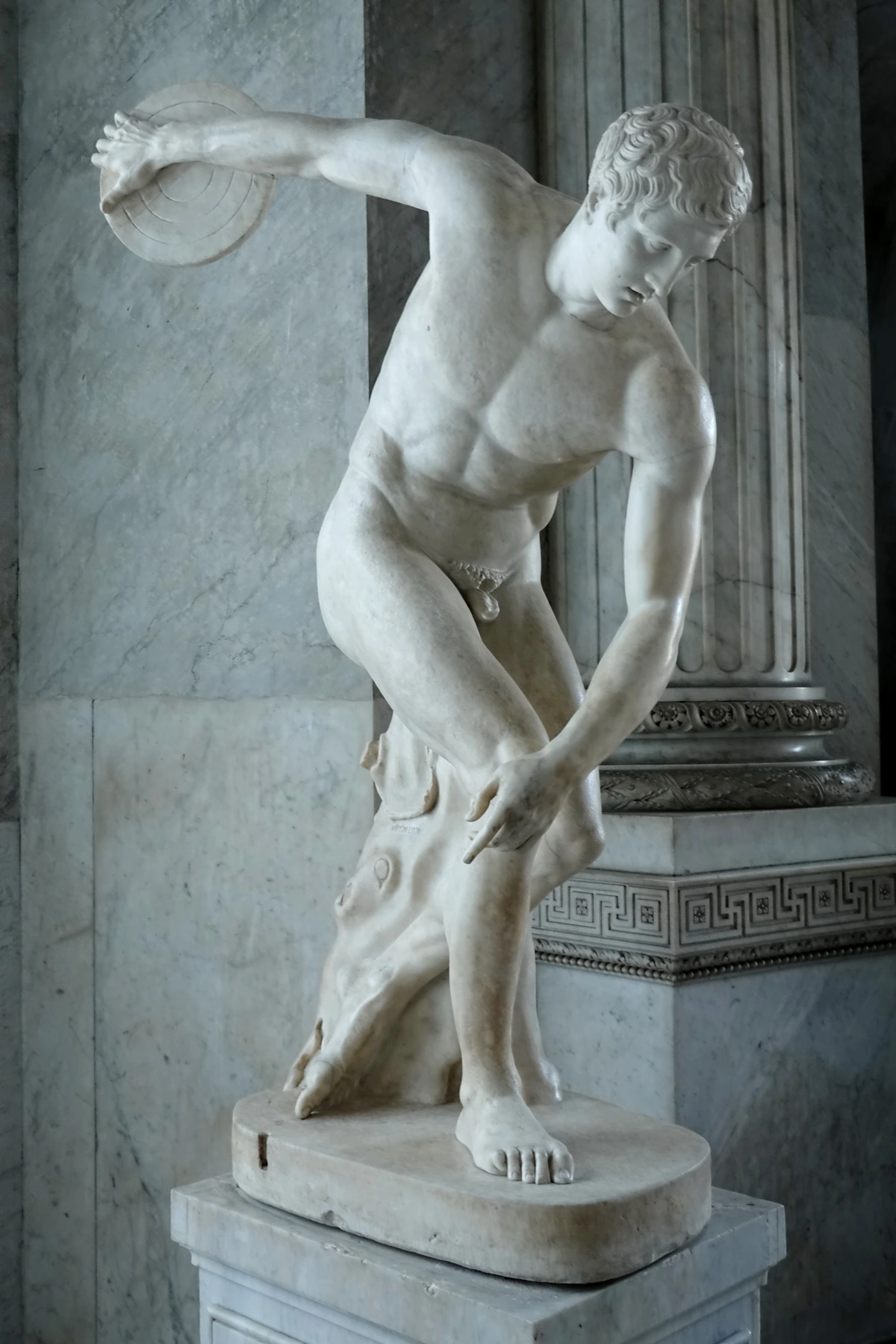
| Greek (Archaic, Classical, Hellenistic) | Idealized human forms (from the rigid, stylized Kouros and Kore figures of the Archaic period, through the dynamic perfection of the Classical period exemplified by Doryphoros with its balanced contrapposto (a natural weight shift, creating a relaxed, dynamic pose), to the emotional drama, realism, and movement of the Hellenistic period like the Dying Gaul), balance, harmony, athleticism, democratic ideals reflected in public art and architecture (e.g., the Parthenon), rich mythology, development of Doric, Ionic, and Corinthian architectural orders. Mimesis (the lifelike imitation or representation of nature and the human form, often idealized, reflecting a core Greek philosophical value) was a core value. | Marble, bronze, terracotta, tempera (on panels). | To honor the gods, celebrate human potential and achievement, adorn public spaces, reflect civic values and mimesis, and narrate mythological tales. |
| Roman | Realistic portraits (verism – an unflinching depiction of age and imperfections, reflecting a uniquely Roman pragmatism, civic duty, and the celebration of individual character gained through experience), grand architectural feats (aqueducts, coliseums, Pantheon – enabled by the revolutionary use of concrete, allowing for unprecedented scale and complex spatial arrangements), narrative reliefs documenting history and military triumphs (Trajan's Column), extensive propaganda (like the Augustus of Prima Porta explicitly communicating imperial power and divine lineage), vibrant frescoes and mosaics. Practical, civic focus, often a statement of engineering prowess, heavily influenced by, but innovating upon, Greek art, particularly Hellenistic naturalism. | Concrete, marble, bronze, fresco (on walls), mosaic (on floors/walls), extensive use of brick. | Propaganda, documenting history, glorifying emperors and the Republic, practical engineering and civic embellishment (forums, baths), commemoration of public works, and private domestic decoration. |
Key Takeaway: Ancient art was monumental, reflecting power, religion, and the foundational ideals of nascent civilizations, often setting aesthetic precedents for millennia to come.
The Age of Faith: Medieval Art (c. 500 – 1400)
After Rome's splendor faded, Europe entered an era profoundly shaped by the Christian church, often referred to as the Dark Ages (a somewhat misleading term that speaks more to the political fragmentation and loss of classical knowledge after Rome's fall), though in reality, it was a period of vibrant artistic and intellectual reorientation, particularly within monastic communities. Art's purpose shifted dramatically; it wasn't just about human ideals anymore, but about conveying the divine. For a largely illiterate populace, art became the primary visual scripture, telling biblical stories and conveying dogma, inspiring awe and devotion, especially for pilgrims traveling to holy sites. Monastic communities, too, were vital centers for art's preservation and creation, particularly through manuscript illumination. To me, the transition from the grandeur of empires to the intense focus on spiritual narratives is quite a profound shift, reflecting a deep longing for reassurance and connection in a chaotic world. The decline of unified empires didn't mean the end of art, but rather a redirection of its monumental ambitions towards the heavens.
Period/Movement | Key Characteristics & Innovations | Key Techniques/Materials | Main Purpose / Key Themes |
|---|---|---|---|
| Byzantine Art | Emerging from the Eastern Roman Empire, centered in Constantinople, this style is characterized by glittering gold mosaics, flat, stylized, almost floating figures with huge, expressive eyes, and a profound sense of otherworldly majesty. Icons (religious images for veneration) were central, seen not merely as images but as windows to the divine, acting as conduits for spiritual presence, with precise iconography (symbolic meanings for colors, gestures, and figures). The Iconoclast Controversy (periods of icon destruction and intense theological debate over the veneration of images, questioning if such images constituted idolatry) profoundly shaped its history and theology. The Iconostasis, a screen of icons separating the nave from the sanctuary, became a central feature in Orthodox churches. Its influence was immense, especially across Orthodox Christian lands like Russia and the Balkans, and notably affecting early Renaissance painting with its distinct color palettes. You can dive into the influence of Byzantine art on Renaissance painting. | Glass tesserae (mosaics), tempera (icons), fresco (often featuring gold leaf). | To convey the divine, inspire religious devotion, facilitate spiritual connection through icons, and assert imperial and ecclesiastical power. |
| Romanesque Art | This period saw the construction of heavy, solid churches with rounded arches, thick walls, and dark interiors, built to convey spiritual gravity and permanence, often as pilgrimage churches (like the Church of Sainte-Foy at Conques). Their sculpture, integrated directly into the architecture (like on tympanums depicting the Last Judgment at Autun Cathedral, or carved capitals), acted as visual sermons for pilgrims—highly didactic stone storytelling, teaching an often illiterate populace biblical narratives and moral lessons. The Bayeux Tapestry is a unique example of secular narrative art from this era. The spread of monasticism and pilgrimage routes led to a widespread, identifiable style across Europe. | Stone, fresco, enamel, manuscript illumination (especially in monasteries). | To instruct and inspire a largely illiterate populace (didactic art), glorify God, provide awe-inspiring spaces for worship and pilgrimage, and assert church authority. |
| Gothic Art | As greater prosperity arrived, everything started reaching for the heavens. This style evolved from Romanesque, driven by theological advancements (like Abbot Suger's philosophy of divine light, where light streaming through stained glass was seen as a direct manifestation of God's presence, transforming the mundane into the sacred) and a desire for more light and height. Think soaring pointed arches, intricate ribbed vaults (which efficiently channeled weight downwards), and magnificent stained-glass windows (including iconic rose windows) that flooded cathedrals with ethereal, colored light. The development of flying buttresses was key, allowing for thinner, taller walls and immense windows by expertly distributing the outward thrust of the vaults. Gothic sculpture, unlike its Romanesque predecessors, began to break free from architectural confines, becoming more naturalistic and expressive. Manuscript illumination also flourished, creating intricate and beautiful religious texts, often in cathedral schools. It was art as a transcendent, awe-inspiring experience, literally elevating the worshipper's gaze towards the divine, with light seen as a metaphor for God's presence. When I stand in a Gothic cathedral, I still feel that powerful upward pull; it's a testament to human aspiration. | Stained glass, stone (often sculpted and painted), tempera (manuscripts and panel paintings). | To glorify God, to elevate the worshipper spiritually, to create a sense of heavenly light and space on Earth, to tell biblical stories visually to the faithful, and to showcase civic pride. |
Key Takeaway: Medieval art was profoundly spiritual and didactic, serving primarily to convey religious narratives, inspire devotion, and express humanity's longing for divine connection in a shifting world.
Rebirth and Revolution: The Renaissance & Beyond (c. 1400 – 1850)
The Renaissance (c. 1400 – 1600)
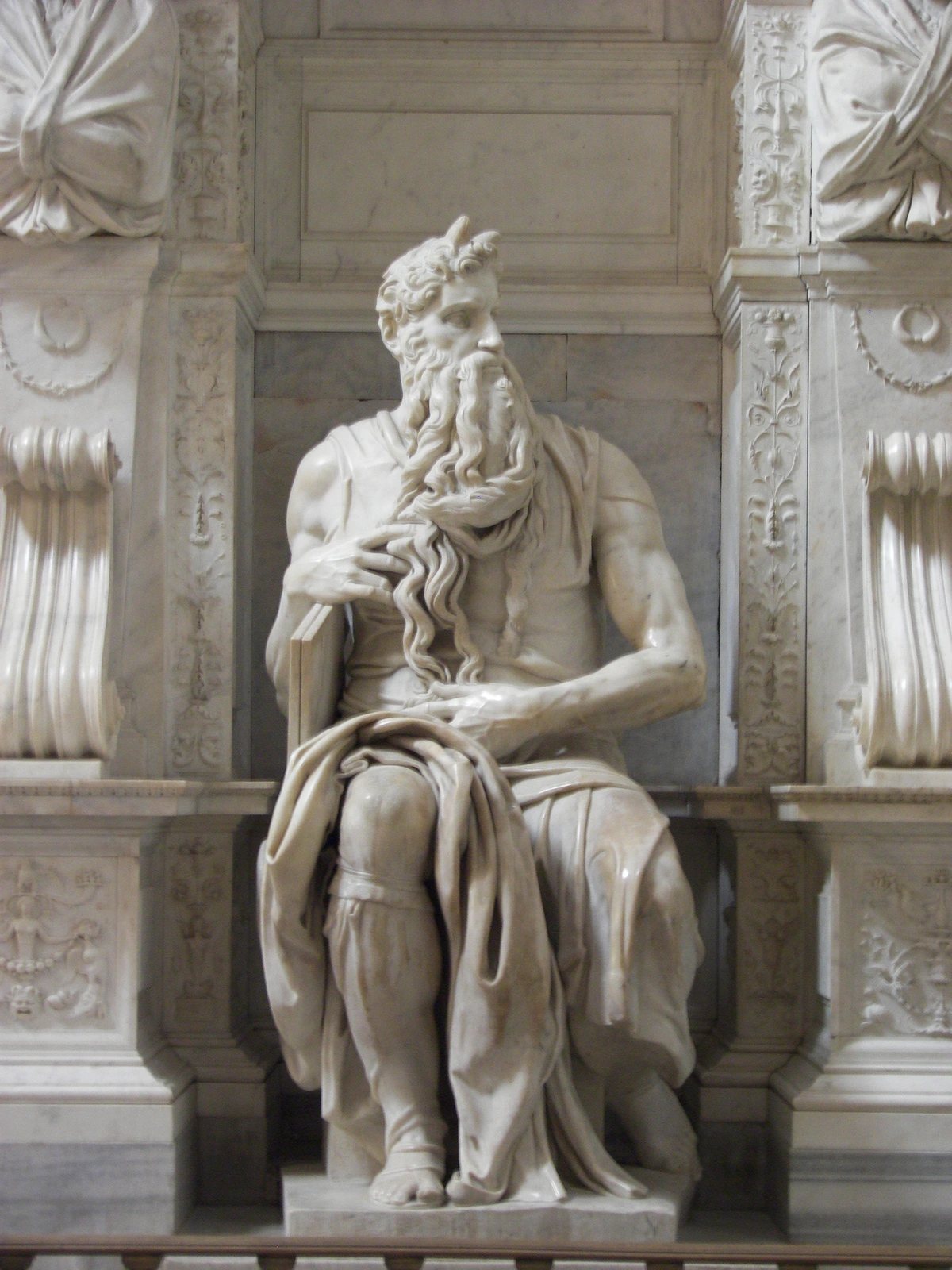
Then, something incredible happened. We call it the Renaissance, which literally means 'rebirth'. After centuries of divine focus, there was a renewed interest in the 'pagan' ideas of ancient Greece and Rome, fueled by the rediscovery of classical texts and philosophies (like those of Vitruvius, influencing architecture, or Plato and Aristotle, influencing human thought, studied through a renewed humanist education). This led to a blossoming of humanism—the philosophical belief in the value and agency of human beings, celebrating human intellect, achievement, and individual potential, shifting focus dramatically from a purely divine back to humanity. Early Florentine masters like Masaccio and Donatello laid crucial groundwork, pioneering techniques that would define the era. This was the era of celebrity artists like Leonardo da Vinci and Michelangelo, who were seen as divinely inspired geniuses, not just anonymous craftsmen, thanks to a robust patronage system from powerful families like the Medici and the Papacy. Michelangelo's David, for instance, isn't just a statue; it's a monumental celebration of the idealized human form, embodying strength, beauty, and intellect—pure humanism in marble.
Mathematical perspective (specifically, linear perspective) was invented by Brunelleschi and codified by Alberti, creating the illusion of three-dimensional space and a 'window onto the world' for the first time, revolutionizing realism. The innovative application of oil painting techniques was a game-changer. Its slow drying time allowed for unprecedented blending, glazing, and layering, creating incredible subtlety, rich luminosity, and deep tonal ranges. This facilitated techniques like sfumato (soft, hazy transitions, famously used in the Mona Lisa) and chiaroscuro (dramatic light and shadow), fundamentally changing the possibilities for realism and expressive depth. The human body was studied, idealized, and celebrated through anatomical understanding, influencing figures like Donatello. The advent of the Gutenberg printing press also dramatically increased the dissemination of images (like reproducible prints by artists such as Dürer), art treatises (such as Alberti's On Painting, codifying perspective), and classical texts. This further fueled intellectual and artistic exchange, accelerating innovation, and elevating the artist's status from artisan to intellectual, transforming how knowledge and visual culture spread across Europe. It was a complete game-changer in almost every way imaginable. Simultaneously, we see the Northern Renaissance flourishing in regions like Flanders, with a distinct focus on minute detail, rich symbolism (where every object could carry hidden meaning, as seen in Jan van Eyck's Arnolfini Portrait), and the mastery of oil paint, as seen in artists like Jan van Eyck and Albrecht Dürer, who served as a bridge between the detailed naturalism of the North and the humanism of the South. For a deeper dive, the ultimate guide to Renaissance art is a great place to start.

Key Takeaway: The Renaissance marked a profound shift back to human-centered ideals, embracing classical learning, scientific realism, and elevating the artist to a position of intellectual genius.
Baroque & Rococo (c. 1600 – 1780)
After the order, balance, and harmony of the High Renaissance, things got wonderfully dramatic. The shift was less a rejection and more an evolution, amplifying emotion and movement, almost as if art itself took a deep, theatrical breath. The Baroque era saw a profound increase in intensity, often fueled by the Counter-Reformation's desire to reassert the power, majesty, and emotional appeal of the Catholic Church after the Protestant Reformation, using dramatic, awe-inspiring art to engage and persuade the faithful. But it wasn't just religious; it also served the grandeur of absolute monarchies. Baroque art is all about intense emotion, dynamic movement, and a jaw-dropping sense of theatricality. Think of deep shadows and brilliant highlights (chiaroscuro), swirling compositions, and intense emotional moments designed to overwhelm the senses. It's the art of masters like Rembrandt van Rijn and Bernini, or Caravaggio, who pioneered hyper-realistic, dramatic use of light (tenebrism). Often employed by the Church, it also found expression in grand secular palaces and public spaces, celebrating earthly power with equal fervor. Its dynamism was even influenced by the burgeoning Scientific Revolution's understanding of motion, optics, and anatomy (like Galileo's studies or new anatomical atlases), inspiring artists to capture movement, light, and the human body with unprecedented realism and energy. It’s grand, opulent, and, in my opinion, utterly captivating.
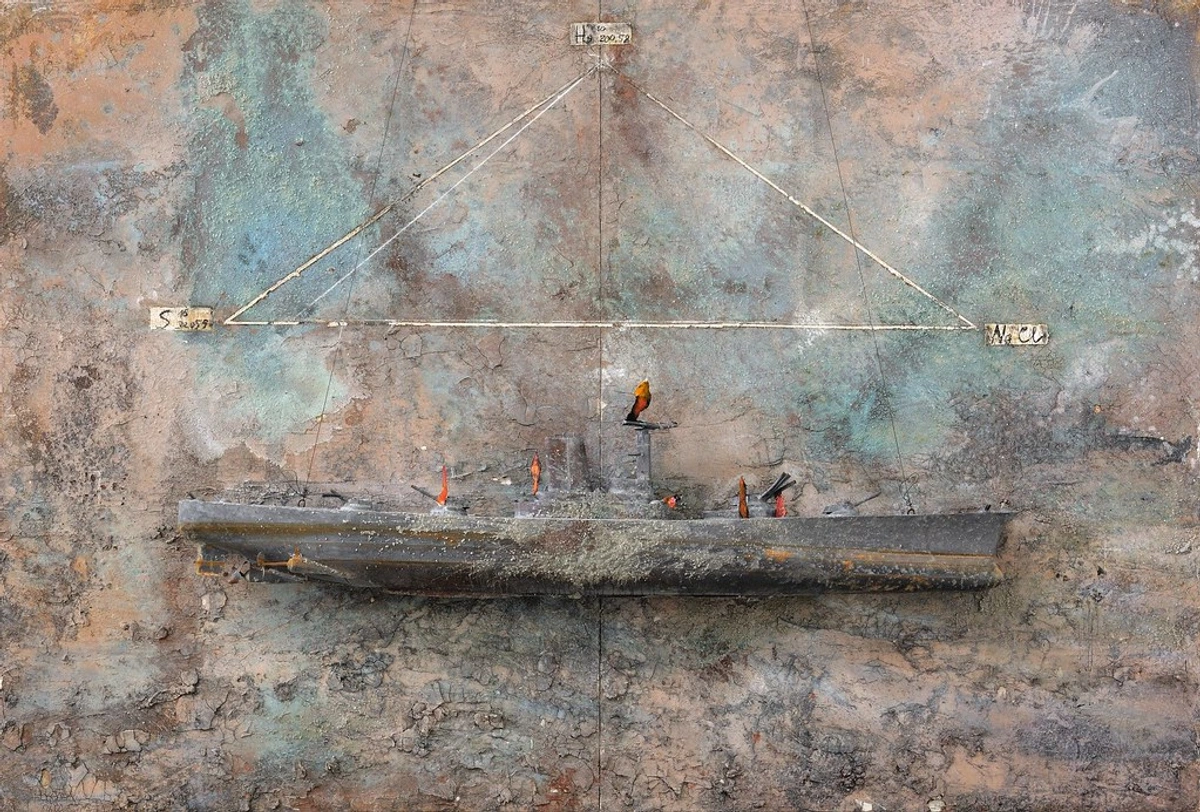
Rococo was, in many ways, a charming reaction to Baroque's grandeur, emerging from the French aristocracy, particularly after the death of Louis XIV. It moved away from grand public statements to intimate, playful, and often flirtatious scenes, perfectly suited for the opulent salons and private residences of the wealthy, which became key centers of artistic and intellectual life. It's lighter, fluffier, and frankly, more fun—filled with pastel colors, delicate ornamentation (like gilded furniture), playful scenes of love and leisure, and extravagant decorative swirls, often seen dominating furniture, porcelain, and exquisite interior design. The influence of Asian decorative arts, particularly Chinese Chinoiserie, was also felt. Think of Jean-Honoré Fragonard's "The Swing" – it’s pure, delightful indulgence, almost a whispered secret compared to Baroque's shout. If you want to explore this elegant and joyful style, check out this guide on Rococo master Jean-Honoré Fragonard.
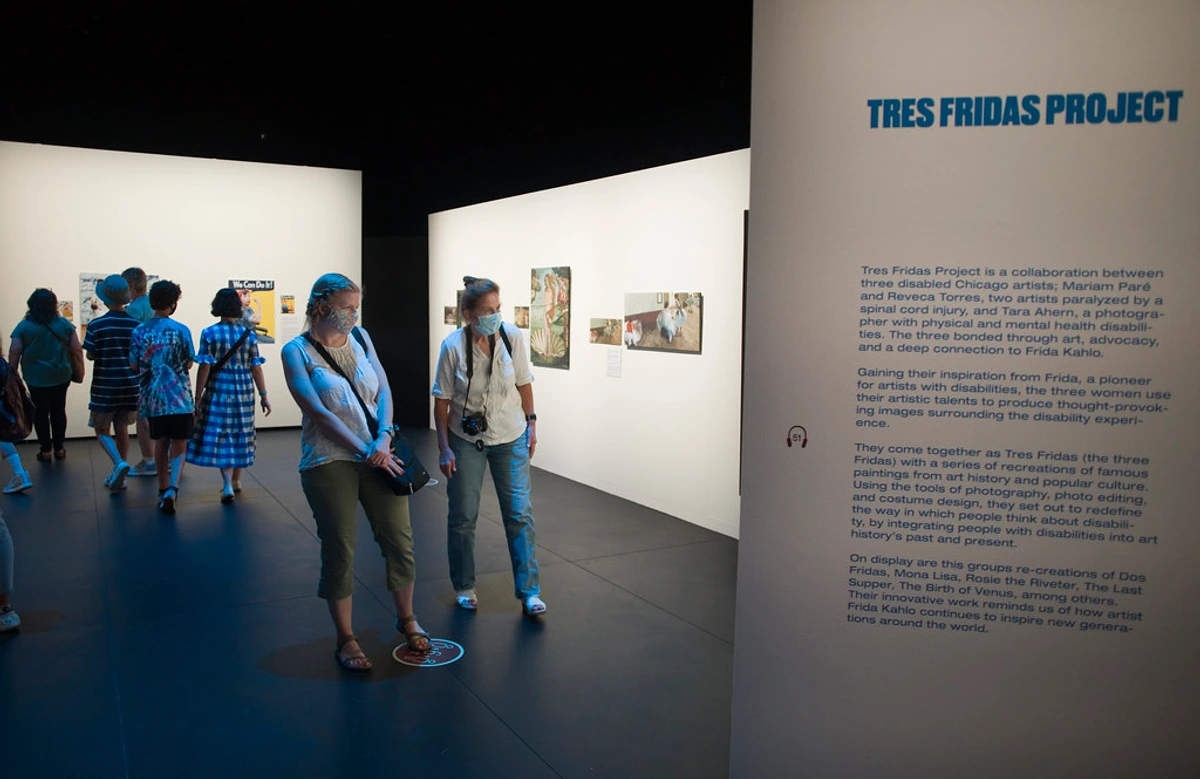
Key Takeaway: Baroque art amplified drama and emotion for religious and monarchical power, while Rococo offered a lighter, intimate, and often decorative counterpoint for aristocratic leisure.
The Modern Rupture: Shaking Up Tradition (c. 1850 – 1960)
This is where things really start to get wild. The mid-19th century brought a profound shift that challenged the very definition of art. The invention of the camera, capable of capturing reality with perfect fidelity, was a huge blow to painting's traditional role of accurate representation. If a machine could capture reality perfectly, what was the point of a painter doing it? This crisis, however, became a liberation. It forced artists to redefine their purpose, pushing them to explore what cameras couldn't capture: feelings, ideas, and the subjective act of seeing itself, rather than mere objective truth. Photography didn't just challenge painting; it emerged as a new art form, influencing how painters thought about composition, framing, and capturing fleeting moments. The rapid industrialization and urbanization of the era also fed into new themes of alienation, the machine age, and changing social structures, prompting artists to question established norms and seek new, often radical, forms of expression. It’s almost as if the world was speeding up, and art was trying to catch its breath and make sense of it all through a series of conscious rebellions.
A New Way of Seeing: Impressionism & Post-Impressionism
Movement | Approximate Dates | Key Innovations/Characteristics | Key Techniques/Materials | Major Artists (Examples) |
|---|---|---|---|---|
| Impressionism | 1865–1885 | Rebelling against academic traditions, artists left the studio to paint outdoors (plein air – meaning 'open air') with newly available paint tubes, trying to capture the fleeting effects of light and atmosphere, often with visible, broken brushstrokes and vibrant, unmixed colors. Their aim wasn't to render objective reality, but to convey the impression of a moment, almost like a visual diary entry of modern life – café scenes, leisure, and urban landscapes. I find it so refreshing, this dedication to capturing a fleeting glance, almost like seeing a memory. Check out the ultimate guide to Impressionism to see how it all began. | Oil paint (newly available in portable tubes, enabling plein air painting), canvas, smaller formats for portability, emphasis on synthetic pigments and their vibrant, new colors. | Claude Monet, Pierre-Auguste Renoir, Edgar Degas, Mary Cassatt, Berthe Morisot |
| Post-Impressionism | 1885–1910 | Emerging from the Impressionist groundwork, this wasn't a unified movement but a collective of artists pushing beyond simply capturing light. Figures like Vincent van Gogh, Paul Cézanne, Paul Gauguin, and Georges Seurat imbued their work with deeper emotional content, symbolic meaning, and structural integrity, laying crucial foundations for even more radical departures. Cézanne's analytical approach broke down forms into geometric components (like his famous "cylinder, sphere, cone" concept) and explored multiple perspectives as a precursor to Cubism (almost like seeing objects in building blocks, viewed from several angles simultaneously). Gauguin explored symbolism and often problematic "primitivism" (a fascination with non-Western cultures, often without full understanding or respect for their context, sometimes leading to cultural appropriation). Van Gogh poured emotional intensity onto the canvas with swirling brushstrokes, and Seurat pioneered Pointillism with scientific color theory. Toulouse-Lautrec captured the vivid nightlife of Paris with bold graphic forms, influencing modern poster art. It was about expressing an inner world and enduring structure, not just reflecting the outer one. Van Gogh’s swirling brushstrokes, for example, convey a profound emotional intensity that Impressionism only hinted at – it's art that feels like it's screaming with feeling. | Oil paint, canvas, often larger formats, scientific color application (Pointillism), bold outlines, expressive brushwork. | Vincent van Gogh, Paul Cézanne, Paul Gauguin, Georges Seurat, Henri de Toulouse-Lautrec |

Key Takeaway: Impressionism broke with academic tradition to capture fleeting light and modern life, while Post-Impressionism pushed further, seeking deeper emotional expression, structural integrity, and symbolic meaning.
A Wild Kaleidoscope of 'Isms': The Early 20th Century Explosion
The early 20th century was an explosion of new ideas and manifestos, a veritable kaleidoscope of 'isms' as artists grappled with a rapidly changing world and the aftermath of global conflicts. Each one was a conversation, a pushback, a new way of seeing, often solidified by public declarations and manifestos. It felt like every artist was shouting their new vision from the rooftops, and I loved the audacity of it all. This was art consciously breaking from the past, embracing the new machine age, and questioning everything, driven by societal upheaval and a desire for radical artistic innovation.
Movement | Approximate Dates | Key Innovations/Characteristics | Key Techniques/Materials | Major Artists (Examples) |
|---|---|---|---|---|
| Fauvism | 1905–1908 | Led by Henri Matisse, the 'Fauves' (a French term for 'wild beasts' coined by a critic at the Salon d'Automne of 1905, shocked by their raw, expressive use of color), shocked the art world with their audacious use of wild, arbitrary colors to express emotion rather than describe reality. They painted with a joyful, almost aggressive, passion, often depicting landscapes and portraits with vibrant hues and simplified forms. Though short-lived, its impact on color liberation was immense, setting the stage for future abstraction. | Oil paint, canvas, bold, arbitrary color application, direct brushwork. | Henri Matisse, André Derain, Maurice de Vlaminck |
| Cubism | 1907–1914 | Pioneers like Pablo Picasso and Georges Braque shattered objects into geometric forms, showing them from multiple angles simultaneously (known as simultaneity – imagine seeing the front, side, and top of an object all at once on a flat canvas!), fundamentally challenging traditional perspective and representation. This evolved from Analytical Cubism (fragmenting objects into monochromatic, almost indistinguishable facets, focusing on structure and form, heavily influenced by the abstract forms found in African and Iberian sculpture) to Synthetic Cubism (building up forms from larger, flatter, more distinct shapes, often incorporating brighter color and collage elements like newspaper clippings). It's less about what you see, and more about how you see it – a truly intellectual approach to painting. Dive deeper with our guide to Cubism. | Oil paint, canvas, collage elements (Synthetic Cubism), muted palettes (Analytical Cubism). | Pablo Picasso, Georges Braque, Juan Gris |
| Expressionism | c. 1905–1920s | Prioritizing emotional experience over physical reality, Expressionists distorted reality to convey intense inner feelings—alienation, anxiety, spiritual longing—with raw, powerful brushstrokes, jagged lines, and vivid, often jarring, colors. Think Edvard Munch's 'The Scream' or the German groups Die Brücke (The Bridge), focused on urban alienation and raw, direct emotion, and Der Blaue Reiter (The Blue Rider), which explored spiritual abstraction and color symbolism (like Kandinsky's belief in painting as a vehicle for inner spiritual necessity). It was art as an outpouring of the soul, aiming to evoke an emotional response. Explore its depth in our guide to Expressionism. | Oil paint, woodcut prints, bold brushstrokes, distorted forms. | Ernst Ludwig Kirchner, Edvard Munch, Wassily Kandinsky, Franz Marc |
| Futurism | 1909–1916 | An Italian movement that enthusiastically embraced speed, technology, youth, and violence. They aimed to capture the dynamism and energy of the modern industrial world, often with fragmented, overlapping forms to suggest motion, and famously declared their desire to destroy museums and libraries. It was a radical call for a new aesthetic for a new, fast-paced age, explicitly glorifying machinery and war, often with manifestos championing revolution. | Oil paint, bronze (sculpture), fragmented forms, lines of force. | Umberto Boccioni, Giacomo Balla, Carlo Carrà |
| Suprematism | c. 1913–1920s | Founded by Kazimir Malevich, Suprematism advocated for the supremacy of pure artistic feeling over the depiction of objects. It was characterized by basic geometric forms (squares, circles, lines) painted in a limited range of colors on a white background, aiming for spiritual purity and absolute abstraction, a truly radical stripping away of all representation. | Oil paint, canvas, geometric forms, limited color palette. | Kazimir Malevich, Lyubov Popova |
| Dadaism | 1916–1920s | Born out of the horrors of World War I, largely in Zurich and Paris, Dada was an anti-art, anti-logic movement that reveled in nonsense, irrationality, and chance. It was a radical rejection of the societal values they felt led to the war, laying groundwork for conceptual art by questioning the very nature of art itself through public provocations, performance art, and unconventional exhibitions. They took art off its pedestal and put a mustache on the Mona Lisa with Marcel Duchamp's readymades (everyday objects presented as art, like a urinal titled "Fountain" that was famously submitted and rejected from an exhibition), effectively challenging the definition of art itself and paving the way for future movements. I love how audacious and subversive it was, reminding us not to take art too seriously, and it frequently involved performance art and public provocations. | Collage, photomontage, found objects (readymades), performance. | Marcel Duchamp, Man Ray, Hannah Höch, Jean Arp |
Key Takeaway: The early 20th century was a period of intense artistic rebellion and experimentation, with movements like Fauvism, Cubism, Expressionism, Futurism, Suprematism, and Dadaism shattering traditional norms and redefining what art could be in a rapidly changing world.
Beyond Representation: Abstract Expressionism & Surrealism
Some artists abandoned reality altogether, feeling that depicting the visible world was no longer sufficient for expressing the complexities of modern experience or the depths of the inner self. Abstract art (which you can explore in the definitive guide to the history of abstract art) explores pure form and color, finding beauty and meaning in non-representational compositions, moving away from depicting identifiable objects entirely. This isn't random; it's a deliberate exploration of line, shape, and color for their own expressive potential, often as a response to the limits of representation or a desire to tap into spiritual realms. Others, like the Surrealists, led by figures like Salvador Dalí and René Magritte, dived deep into the world of dreams, the subconscious, and the irrational, creating startling and often bizarre imagery that challenges logic and wakes up the sleeping mind. Heavily influenced by Freudian psychoanalysis and its exploration of dreams and repressed desires, their method of automatism (creating art without conscious control, akin to automatic writing or dream transcription) aimed to bypass conscious thought, tapping directly into the subconscious for raw, unfiltered imagery. It was art plumbing the depths of the psyche, often as a response to the perceived failures of reason that led to WWI.

Movement | Approximate Dates | Key Innovations/Characteristics | Key Techniques/Materials | Major Artists (Examples) |
|---|---|---|---|---|
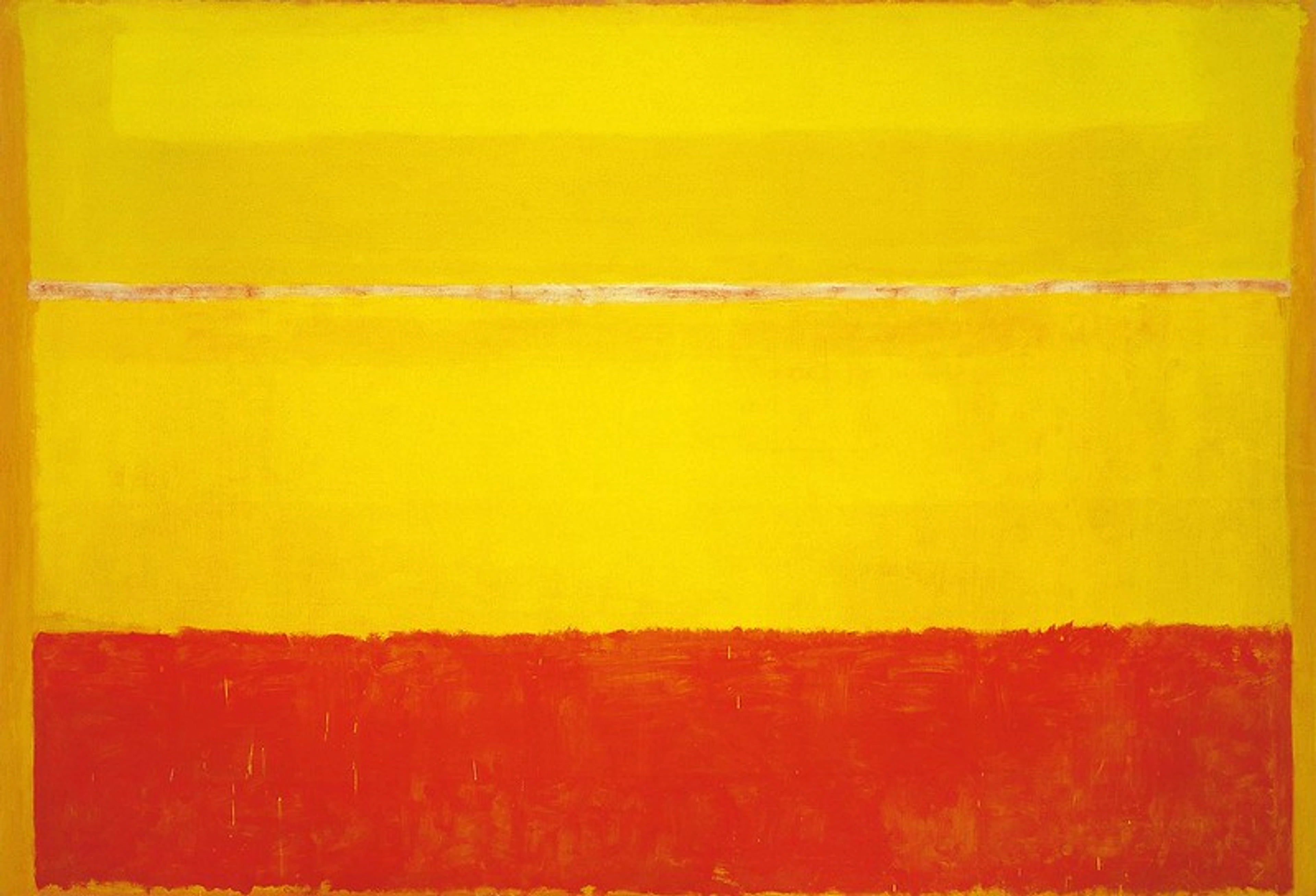
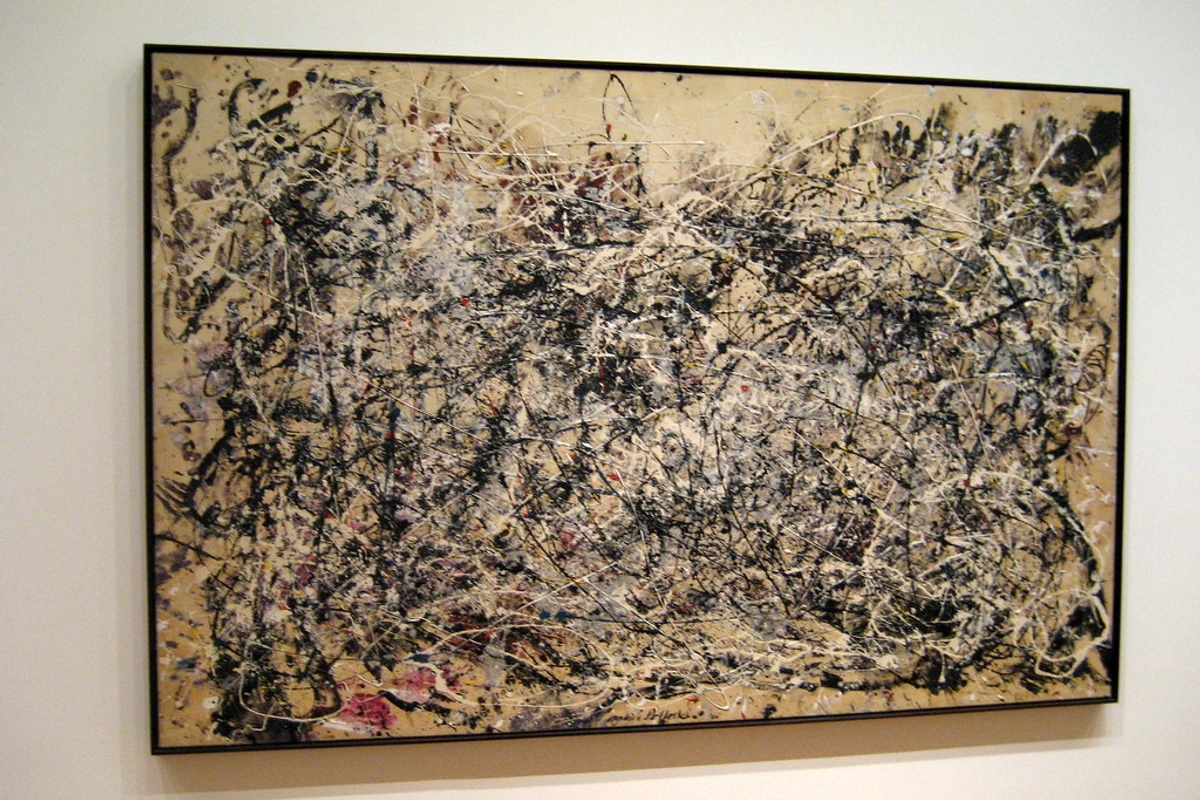
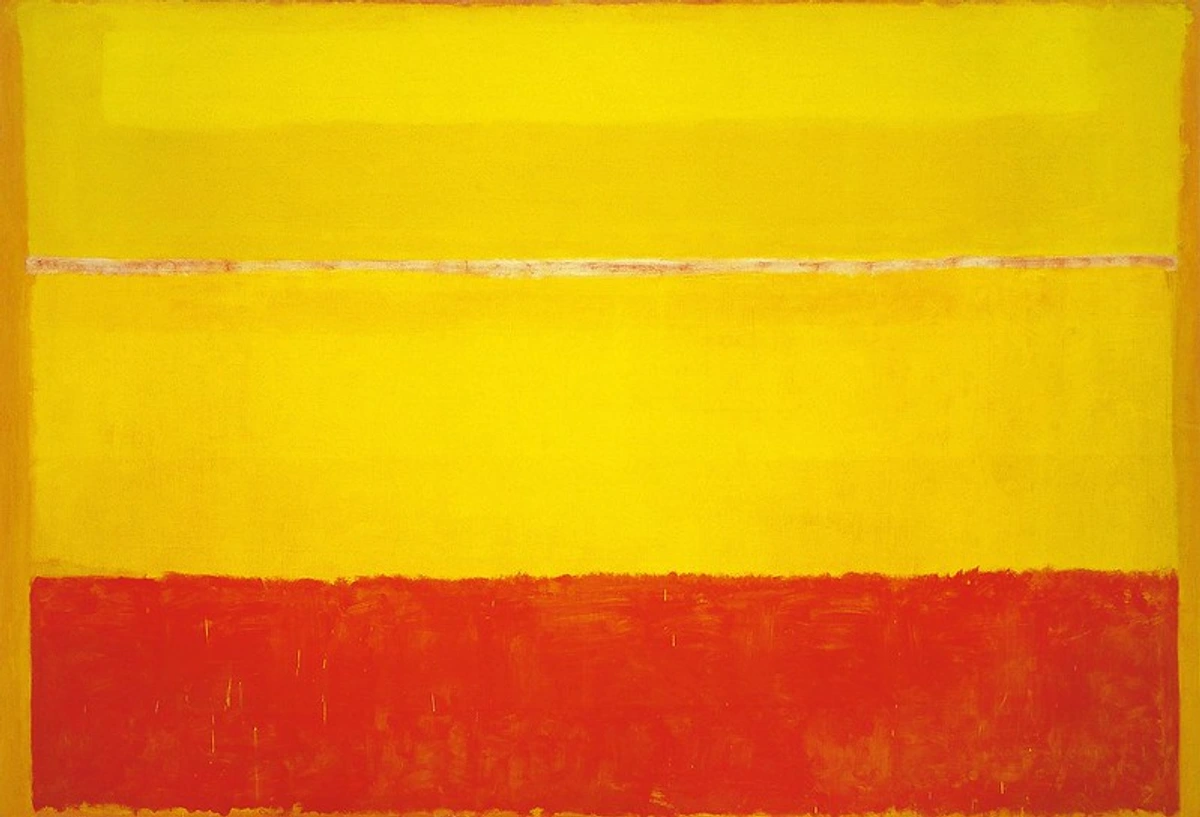
| Abstract Expressionism | 1940s–1950s | After World War II, a new American art movement emerged, reflecting post-war anxieties and an existential search for meaning, shifting the art world's center from Paris to New York. This "New York School" brought a raw, visceral approach. Artists like Jackson Pollock and Willem de Kooning created large-scale, gestural, non-representational works, often focusing on the physical act of painting itself (Action Painting), where the canvas became an arena for emotion and energy, sometimes using dripping and splattering. Others explored vast fields of color to evoke profound emotional and spiritual experiences (Color Field Painting), exemplified by artists like Mark Rothko, using color for its own sake, creating an almost meditative experience. It was a deeply personal approach, where the canvas became an arena for emotion, reflecting a distinctly American artistic identity. Lee Krasner was also a significant figure. | Oil and enamel paint on large canvases, dripping, splattering, broad brushstrokes. | Jackson Pollock, Willem de Kooning, Mark Rothko, Lee Krasner |
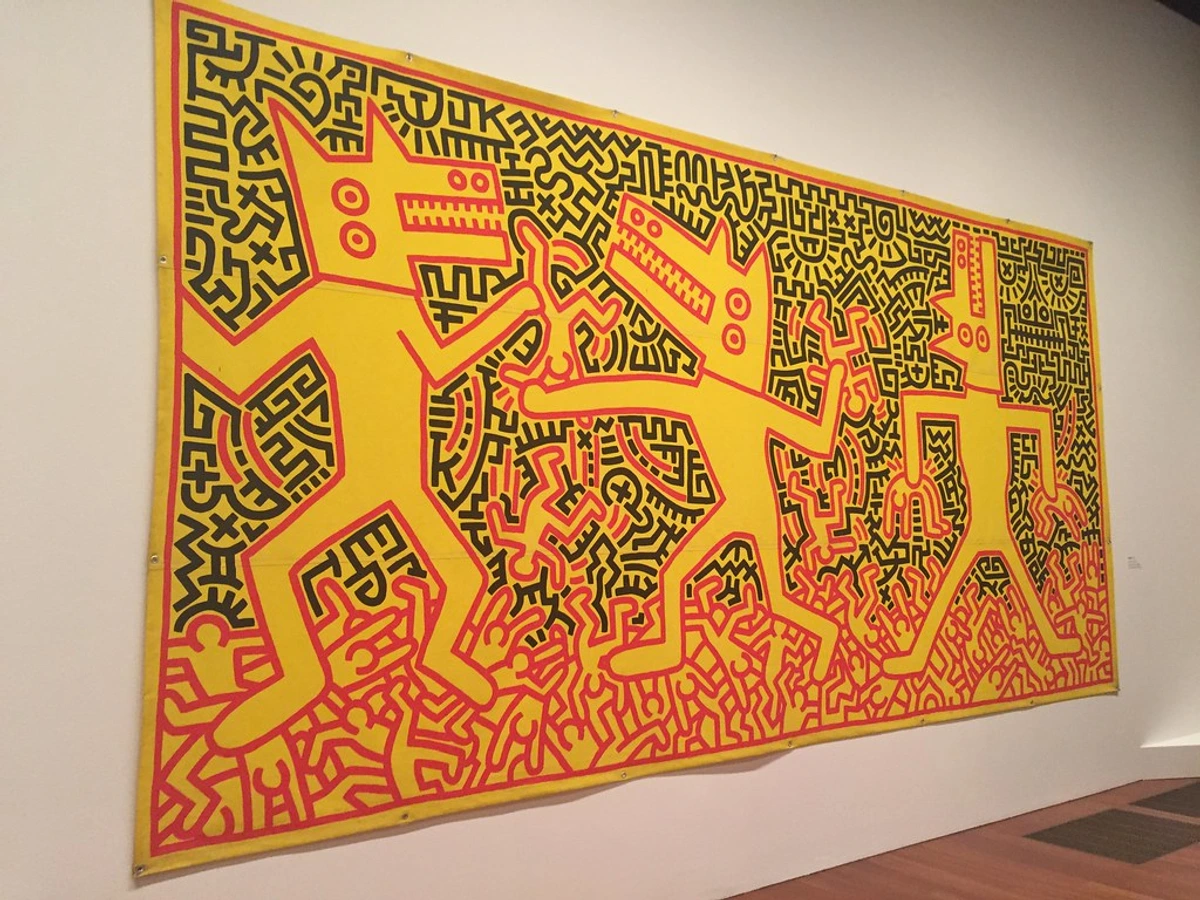
| Pop Art | 1950s–1960s | Reacting against the seriousness and perceived elitism of Abstract Expressionism, Pop Art looked at the world of advertising, mass media, and celebrity culture and turned it into high art. Drawing inspiration from Dada's embrace of everyday objects, artists like Andy Warhol, Roy Lichtenstein, Claes Oldenburg, and James Rosenquist used everyday objects—soup cans, comic book panels, famous faces—and commercial techniques (like silkscreen printing) to create works that were cheeky, brilliant, and fundamentally challenged the elitist idea of what 'art' could be. Suddenly, the mundane was magnificent, blurring the lines between commerce and creativity, often with a subtle critical edge, asking us to re-evaluate what we consider valuable. Was it a biting critique of rampant consumerism, an ironic observation, or perhaps even a joyful celebration of popular culture? This deliberate ambiguity is part of its lasting fascination, inviting you to decide. Pop Art's aesthetic also profoundly influenced graphic design and visual culture. | Silkscreen printing, commercial imagery, collage, sculpture from everyday objects, bright, unmixed colors. | Andy Warhol, Roy Lichtenstein, Claes Oldenburg, James Rosenquist |
Key Takeaway: The mid-20th century saw art dive into the subconscious with Surrealism, erupt into raw emotion and abstraction with Abstract Expressionism, and then playfully challenge high art by embracing popular culture with Pop Art.
Here and Now: Contemporary Art (c. 1960 – Present)
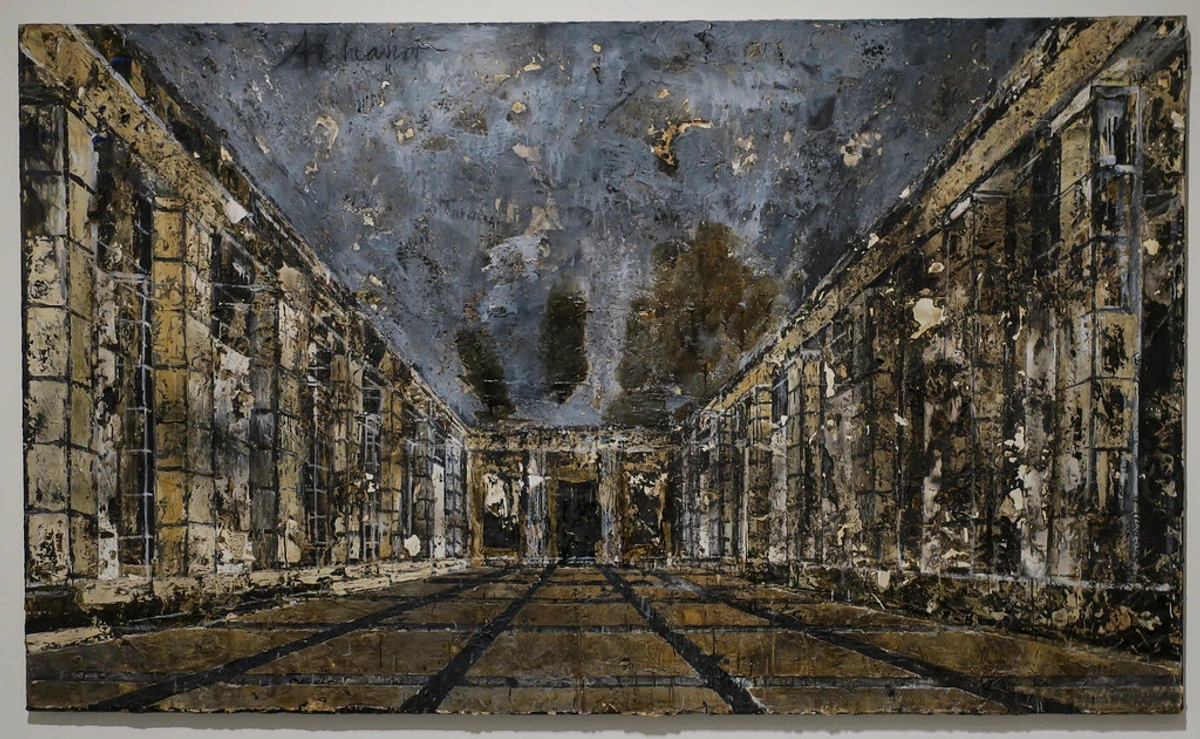
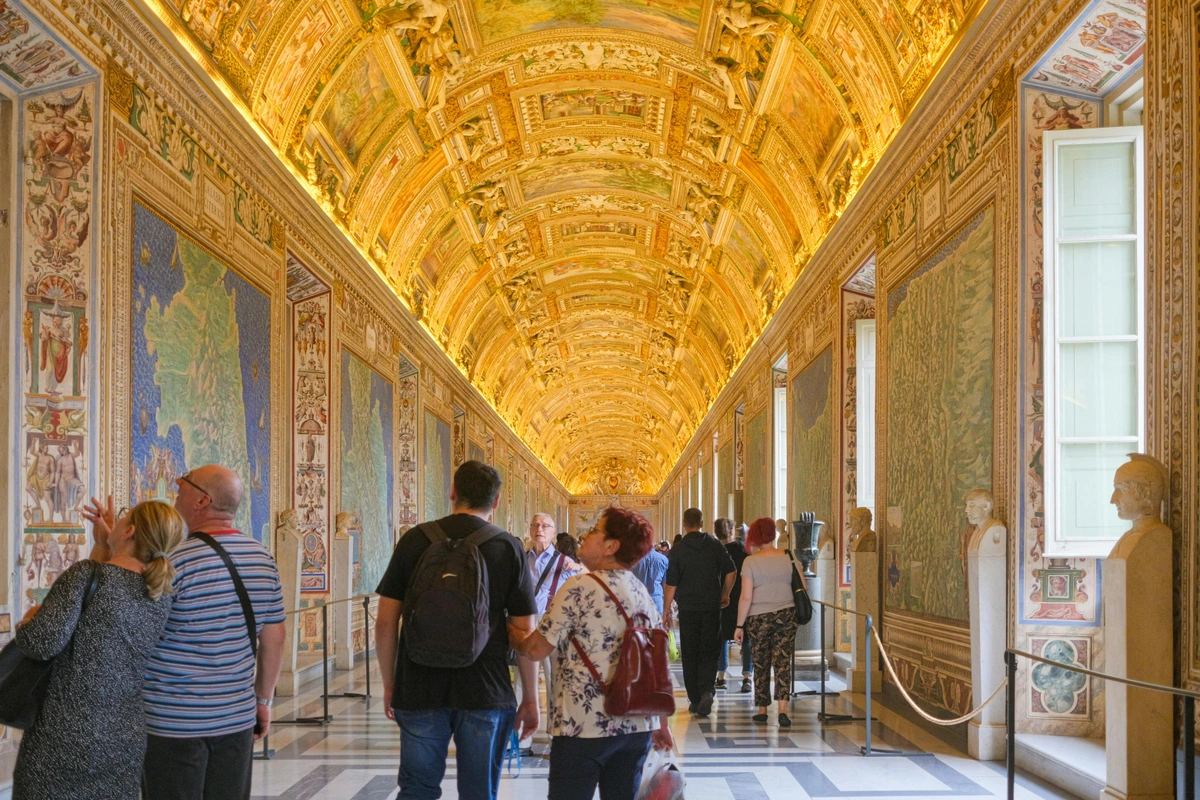
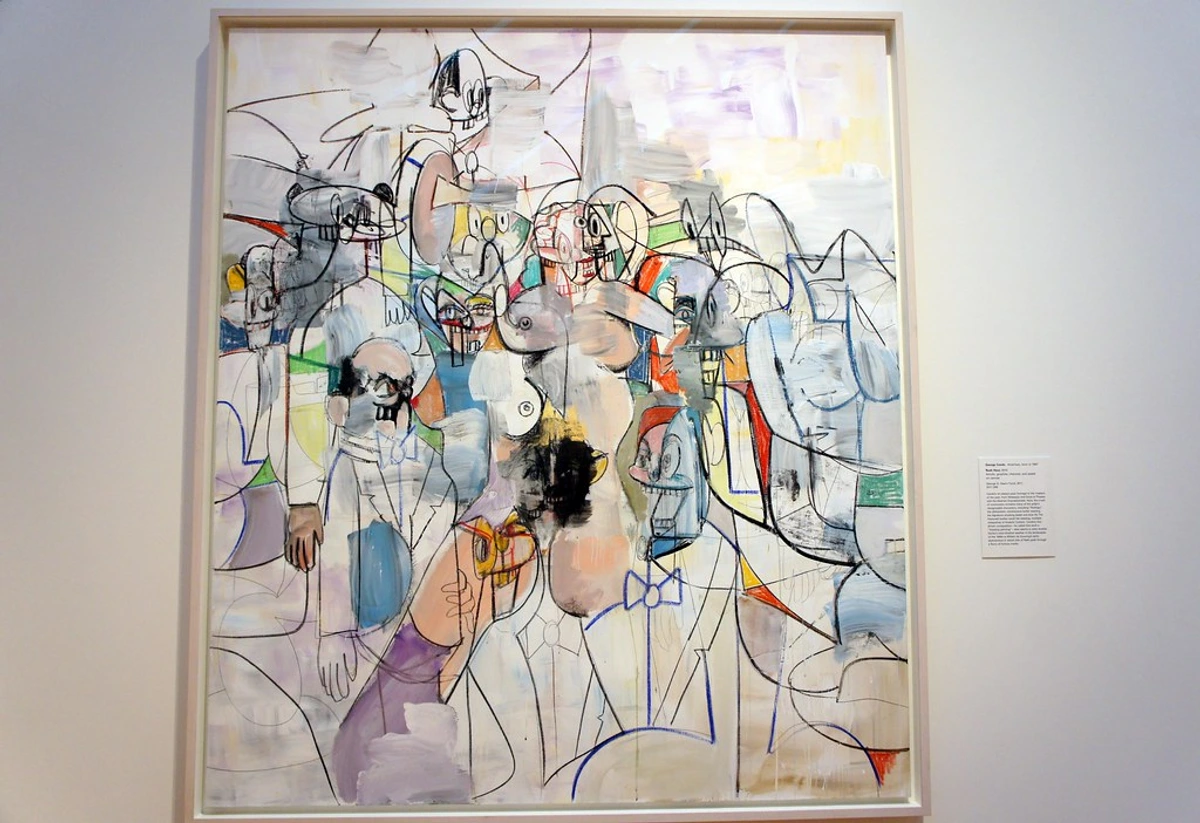
And that brings us, more or less, to today. Contemporary art is the art of our lifetime, beginning roughly in the 1960s and continuing to evolve with us. It's not one single style; it's a thousand different conversations, questions, and experiments happening at once, often building upon the ideas of Post-Modernism, which emerged as a critical response to Modernism, questioning grand narratives, challenging notions of objective truth, blurring distinctions between high and low culture, and embracing irony and appropriation. It's often conceptual art, where the idea or concept behind the work is considered more important than the finished material object itself – it's about the 'why' as much as the 'what', a direct descendant of Duchamp's inquiries. Think of Sol LeWitt's instructions for wall drawings or Yoko Ono's instruction pieces. It can be a painting, an immersive installation that fills a whole room (sometimes site-specific, meaning created to exist in a certain place only, like Christo and Jeanne-Claude's wrapped environments), an ephemeral performance art piece that lasts only a moment (like Marina Abramović's endurance work or Nam June Paik's pioneering video art), a thought-provoking video, or a politically charged piece of street art. Digital tools and the internet have also profoundly shaped its production and dissemination, allowing for unprecedented global reach and new forms of expression, from digital manipulation and net art (art created for and existing on the internet) to virtual reality art and AI-generated compositions. This period, still actively unfolding, is messy, exciting, confusing, and utterly vital. It’s the art that truly holds a mirror to our now, engaging directly with social, political, and cultural commentary.
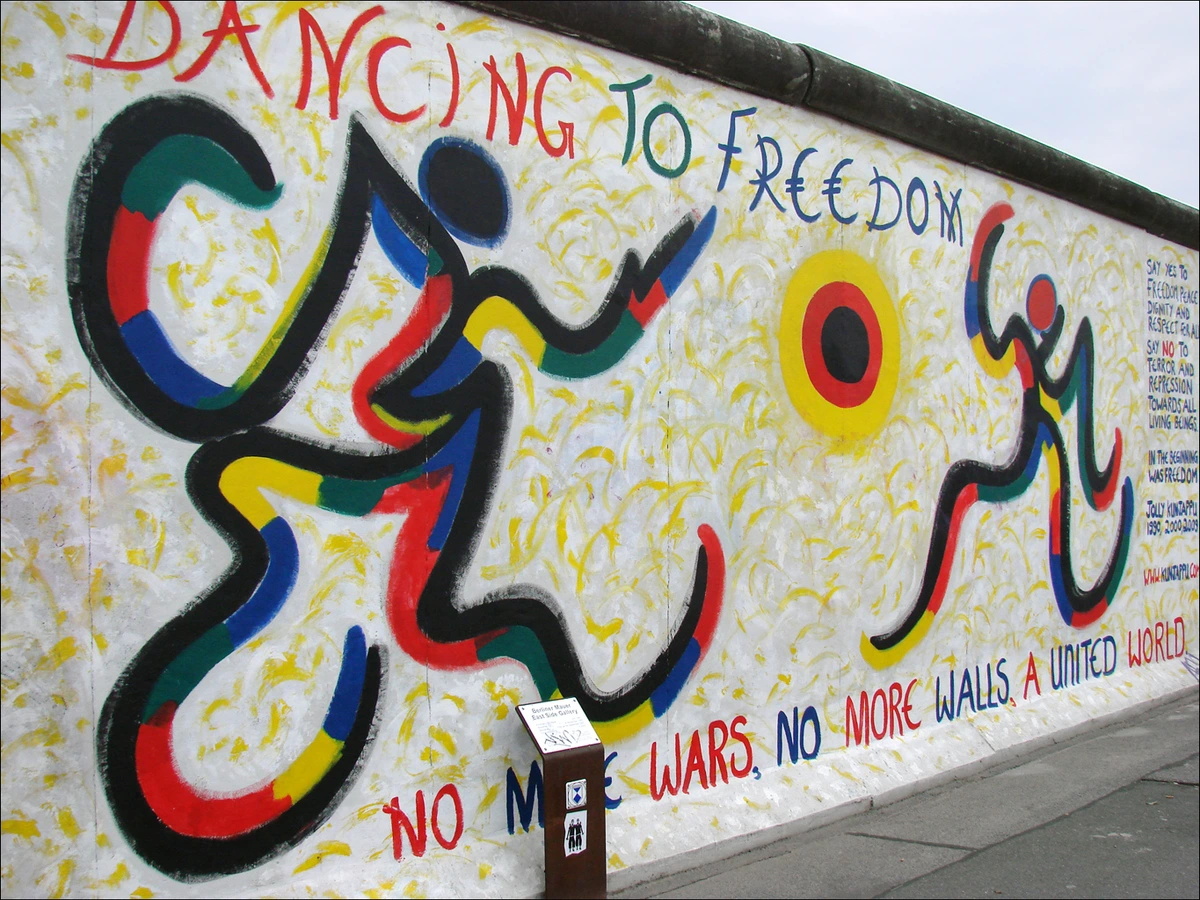
Artists like Jean-Michel Basquiat brought a raw, graffiti-like energy back to painting with Neo-Expressionism. Artists like Banksy use the street as their canvas, making powerful political statements that often spark widespread debate. While new digital frontiers like NFTs (Non-Fungible Tokens) are being explored by some for provenance and unique digital ownership (essentially a digital certificate of ownership for a digital asset), I've found that their long-term artistic impact, environmental sustainability, and fundamental relationship with traditional artistic value remain subjects of active debate and critical scrutiny. It's an area where the market often outpaces genuine critical discourse, and, speaking from my own experience as an artist, it raises profound questions about what constitutes 'value' and 'art' in the digital age—questions that echo centuries of similar debates. In many ways, contemporary art is the messy, exciting, confusing, and utterly vital period we are all living in, often more engaged with social, political, and cultural commentary than its Modern predecessors, reflecting our triumphs, anxieties, and ever-changing world. It’s the art that holds a mirror to our now, a constant dialogue about what it means to be human in this very moment. And that's precisely why it's so important.
Key Takeaway: Contemporary art is characterized by extreme diversity, conceptual depth, and a direct engagement with social, political, and technological themes, often blurring traditional artistic boundaries.
A Global Perspective: Beyond the Western Narrative
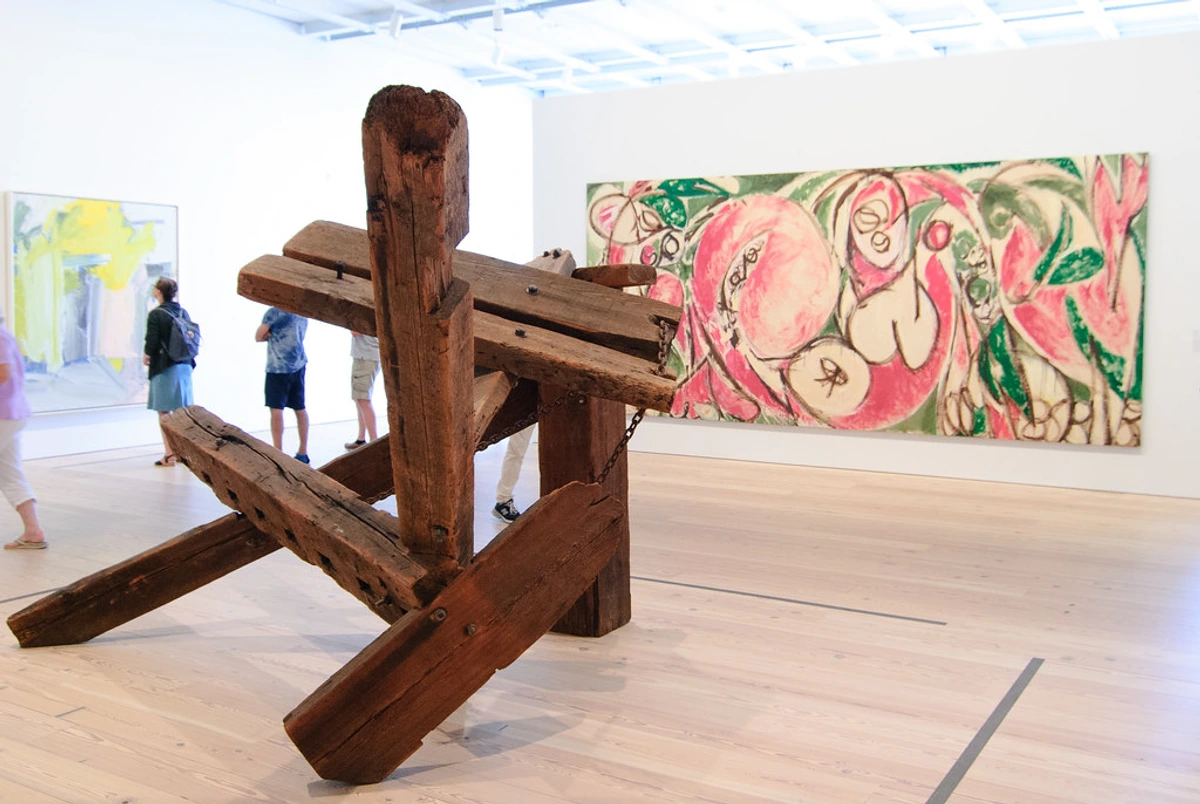
While our journey has primarily explored Western art movements (which, let's be honest, often dominate the textbooks), it's crucial to remember that art is a universal human impulse, manifesting in countless vibrant traditions across the globe. To truly grasp the breadth of human creativity, we must glance beyond Europe and North America, acknowledging these other major players in the grand story of art. This is by no means exhaustive, but a vital acknowledgment, and a necessary correction to the often Eurocentric bias of traditional art history. As an artist and admirer, I've found that stepping outside the familiar Eurocentric narrative has profoundly enriched my understanding of human ingenuity and expression. It's like discovering entire new continents of artistic thought, revealing a vast, interconnected tapestry of human creativity.
Diverse Global Artistic Landscapes
- African Art: Incredibly diverse across a vast continent (as diverse as Europe!), African art is deeply intertwined with spiritual beliefs, social structures, and daily life. It often features powerful masks (e.g., Dogon, Yoruba, Punu; used in rituals and performances to embody spirits or ancestors and facilitate communication with the spiritual realm, often as part of rich oral traditions, acting as dynamic spiritual conduits), monumental sculptural figures (often ancestral or deity representations like the famed Benin bronzes from Nigeria, or Kongo power figures, Nok terracotta figures, or the impressive stone walls of Great Zimbabwe), intricate textiles (e.g., Kuba cloth from Congo, known for geometric patterns and complex weaving techniques), and elaborate body adornment. Artists often worked with materials like wood, metal (especially bronze and gold), ivory, and beads, often imbuing them with profound symbolic meanings and aesthetic sophistication. Its profound influence on early 20th-century European Modernism, especially Cubism and Expressionism (as seen in artists like Modigliani), was immense and undeniable, though sadly, often appreciated out of context or through a lens of problematic "primitivism"—a deeply flawed and now widely rejected term. This term, with its colonial undertones, wrongly suggests art from non-Western cultures is less developed or sophisticated, ignoring their complex aesthetic and philosophical systems. The ongoing efforts to reclaim and repatriate African art stolen during colonial eras are vital for preserving this rich cultural heritage.
- Asian Art: Spanning millennia and vast cultures, Asian art encompasses rich traditions like:
- Chinese Art: Renowned for its calligraphy (considered the highest art form, intertwining writing with artistic expression and deep philosophical meaning), delicate ink wash landscape paintings (often emphasizing harmony with nature and philosophical contemplation, profoundly influenced by Daoist and Buddhist philosophies, and featuring vast, often sparse, contemplative spaces designed to evoke inner peace), magnificent bronze ritual vessels (from ancient dynasties like Shang and Zhou), exquisite ceramics (e.g., Tang Sancai with its vibrant glazes, Song celadon known for its subtle beauty, and Ming porcelain that influenced global ceramics for centuries), and monumental Buddhist sculptures (like the Terracotta Army protecting Emperor Qin Shi Huang, or the serene cave sculptures of Dunhuang). Scholar's rocks also hold significant artistic and philosophical value, admired for their natural forms. The Silk Road was a crucial conduit for artistic exchange.
- Japanese Art: Celebrated for its exquisite woodblock prints (Ukiyo-e, 'pictures of the floating world,' depicting geishas, sumo wrestlers, landscapes like Hokusai's waves, and actors, profoundly influencing Western Impressionists), detailed screens (e.g., byobu), serene Zen ink painting (often characterized by minimalist brushstrokes and philosophical depth), refined ceramics (often linked to the tea ceremony, embodying Wabi-sabi aesthetics of imperfection, impermanence, and rustic, understated beauty, celebrating the natural cycle of life), and impressive samurai armor. Aesthetics often prioritize asymmetry, simplicity, and natural motifs, often influenced by Shintoism and Zen Buddhism.
- Indian Art: Characterized by elaborate temple architecture (like the rock-cut Ellora Caves, the stunning Khajuraho temples, or the towering gopurams of South Indian temples), expressive sculpture (often depicting deities and mythical beings from Hindu, Buddhist, and Jain traditions in dynamic poses, narrating religious cycles, like the sensuous carvings of Khajuraho), intricate miniature paintings (e.g., highly detailed Mughal and Rajput courts scenes, portraits, and religious narratives with rich symbolism), and vibrant textiles (like kalamkari or pashmina). The Ajanta Caves' frescoes are another stunning example of early Buddhist painting, demonstrating sophisticated mural techniques.
- Indigenous Art of the Americas: From the sophisticated monumental architecture and complex iconography of Mesoamerican civilizations (distinct Maya hieroglyphs and monumental stelae recording history, powerful Aztec monumental sculpture of deities like Coatlicue and Tlaloc, and detailed codices—folding screen books documenting religious beliefs, genealogies, and historical events) and the intricate textiles (e.g., Paracas, Inca, known for their complex weaving and symbolic patterns) and metalwork (e.g., Moche, Chimú, Inca goldwork) of Andean cultures (with examples like the mysterious Nazca Lines) to the diverse forms of Indigenous North American art (Pueblo pottery with geometric designs and spiritual motifs, Northwest Coast totem poles and masks rich with clan symbols and narratives, Plains beadwork and ledger art documenting history and personal experience) – these traditions are rich with cosmology, storytelling, and deep connections to land and community, often serving sacred, spiritual, social, and ceremonial functions, often reflecting animistic beliefs. The preservation and study of these traditions are vital.
- Art of Oceania and Australia: This vast category includes the intricate wood carvings, tattooing, and woven arts of the Pacific Islands (e.g., the Maori of New Zealand with their powerful tiki figures and elaborate whakairo carvings), often deeply linked to ancestral veneration, status, and mythologies. Indigenous Australian art, dating back tens of thousands of years, includes an extraordinary array of rock art, bark paintings, and dot paintings—often serving as visual maps to sacred sites and conveying complex ancestral narratives and knowledge about the land and Dreamtime, reflecting a profound spiritual connection to country. These traditions, too, are essential for a complete understanding of global art history.
This brief detour only scratches the surface, of course, but it's a vital reminder that the human story of art is far richer and more varied than any single, Eurocentric timeline can fully capture. I believe embracing this global perspective is essential for any true appreciation of human creativity.
Key Takeaway: Global art traditions showcase an immense diversity of human creativity, deeply intertwined with spiritual beliefs, social structures, and unique cultural expressions, providing a vital counterpoint to traditional Eurocentric narratives.
A Visual Summary: The Art History Timeline at a Glance
For those of you who just want the cheat sheet (I see you, and I respect it), here’s a quick-and-dirty table summarizing our journey. I’ve included some major artists, but remember, there are countless others who contributed to each era's unique identity.
Period/Movement | Approximate Dates | Key Innovations/Characteristics | Key Techniques/Materials | Key Themes / Purpose | Major Artists (Examples) |
|---|---|---|---|---|---|
| Prehistoric | 40,000–4,000 BCE | Cave paintings (Lascaux, Altamira), fertility figurines (Venus of Willendorf), early mark-making, communal expression, megalithic structures (Göbekli Tepe, Stonehenge), shamanistic practices. | Natural earth pigments (ochre, manganese), charcoal, bone (carvings), stone. | Ritualistic, spiritual, communication, marking territory, fertility, early self-expression, cosmological understanding. | Anonymous |
| Ancient | 3,000 BCE–400 CE | Idealized or rigid forms, mythological and ruler-focused, engineering feats (concrete), hierarchical scale, composite figures, verism, architectural orders, cuneiform, hieroglyphs, contrapposto, mimesis. | Clay, stone (marble, granite), bronze, fresco, mosaic, concrete. | Glorify rulers/gods, record history (Code of Hammurabi), prepare for afterlife (ka statues, funerary masks), assert power, civic pride, cosmic order (Ma'at), human potential. | Phidias, Praxiteles, Roman portrait sculptors, Narmer, Tutankhamun |
| Medieval | 500–1400 CE | Religious, flat, symbolic, not realistic, gold mosaics (icons, iconography, Iconostasis), soaring cathedrals, stained glass, didactic sculpture (tympanums), flying buttresses, manuscript illumination. | Glass tesserae, stone, tempera, enamel, stained glass. | Convey divine, inspire devotion, visual scripture for illiterate, spiritual elevation, pilgrimage, church authority. | Giotto, Duccio, Master Theodoric, Hildegard of Bingen |
| Renaissance | 1400–1600 | Humanism, realism, mathematical perspective, classical revival, individual genius, patronage, sfumato, chiaroscuro, anatomical study, printing press impact, rich symbolism (Northern), oil painting mastery, humanist education. | Oil painting, fresco, marble, bronze, tempera. | Celebration of human potential, beauty, intellect; secularism; classical learning; naturalism, individual artistic expression. | Leonardo da Vinci, Michelangelo, Raphael, Botticelli, Jan van Eyck, Albrecht Dürer |
| Baroque | 1600–1750 | Drama, emotion, deep contrast (chiaroscuro), dynamic compositions, theatricality, grandeur, movement, opulence, Counter-Reformation & absolute monarchy patronage, Scientific Revolution influence. | Oil paint, fresco, marble, bronze, intense light/shadow. | Religious fervor (Counter-Reformation), absolute monarchy, intense emotion, dramatic storytelling, projecting power. | Caravaggio, Rembrandt, Bernini, Artemisia Gentileschi, Peter Paul Rubens |
| Rococo | 1720–1780 | Light, playful, aristocratic, pastel colors, elaborate ornamentation, intimate scenes, gilded furniture, decorative arts focus, asymmetry, Chinoiserie influence, salons. | Oil paint, porcelain, elaborate carving (furniture), delicate brushwork. | Pleasure, frivolity, sensuality, aristocratic leisure, domestic intimacy, escapism. | Fragonard, Boucher, Watteau, Élisabeth Vigée Le Brun |
| Impressionism | 1865–1885 | Capturing fleeting light, visible brushstrokes, plein air painting, subjective 'impressions' of modern life, photography influence, synthetic pigments, portable paint tubes. | Oil paint (often in tubes), canvas, broken brushstrokes, unmixed colors. | Capturing modern life, transient moments, effects of light and atmosphere, breaking academic rules. | Claude Monet, Pierre-Auguste Renoir, Edgar Degas, Mary Cassatt |
| Post-Impressionism | 1885–1910 | Emotional and symbolic color, structured forms, personal expression, inner world focus, Pointillism, critique of "primitivism", geometric fragmentation (Cézanne's cylinder, sphere, cone), urban nightlife. | Oil paint, scientific color theory, bold outlines, expressive brushwork. | Expressing emotion/symbolism, structural integrity, subjective reality, individual vision. | Vincent van Gogh, Paul Cézanne, Paul Gauguin, Georges Seurat, Henri de Toulouse-Lautrec |
| Fauvism | 1905–1908 | Wild, arbitrary colors for emotional impact, audacious color liberation, simplified forms, coined at Salon d'Automne 1905, influential for abstraction. | Oil paint, bold, arbitrary color application, direct brushwork. | Expressive color, emotional intensity, rejection of descriptive realism, joyful rebellion. | Henri Matisse, André Derain, Maurice de Vlaminck |
| Cubism | 1907–1914 | Geometric, multiple viewpoints (simultaneity), fragmented reality, intellectual approach, Analytical and Synthetic phases, African/Iberian sculpture influence. | Oil paint, collage elements, muted (Analytical) or vibrant (Synthetic) palettes. | Challenging perception, deconstructing reality, showing multiple perspectives, intellectualism. | Pablo Picasso, Georges Braque, Juan Gris |
| Expressionism | c. 1905–1920s | Distorted reality to convey intense inner emotion, raw feeling, spiritual longing, manifestos, vivid, often jarring, colors, Die Brücke, Der Blaue Reiter. | Oil paint, woodcut prints, bold brushstrokes, distorted forms. | Conveying anxiety, alienation, spiritual crisis, inner torment, social commentary. | Ernst Ludwig Kirchner, Edvard Munch, Wassily Kandinsky, Franz Marc |
| Futurism | 1909–1916 | Dynamism, speed, technology, rejection of the past, capturing motion, manifestos, explicit celebration of violence and machinery. | Oil paint, bronze (sculpture), fragmented forms, lines of force. | Celebrating modernity, speed, war, technology, destruction of old forms, dynamism. | Umberto Boccioni, Giacomo Balla, Carlo Carrà |
| Suprematism | c. 1913–1920s | Supremacy of pure artistic feeling, basic geometric forms, absolute abstraction, spiritual purity. | Oil paint, canvas, geometric forms, limited color palette. | Radical abstraction, spiritual purity, rejection of representation, pure form. | Kazimir Malevich, Lyubov Popova |
| Dadaism | 1916–1920s | Anti-art, irrationality, nonsense, questioning art's definition, protest against war, chance, readymades (Duchamp's "Fountain"), performance art, WWI impact. | Collage, photomontage, found objects (readymades), performance, subversive tactics. | Rejection of reason, protest against war, absurdity, questioning art's value, nihilism. | Marcel Duchamp, Man Ray, Hannah Höch, Jean Arp |
| Surrealism | 1924–1950 | Dream imagery, the subconscious, irrational juxtapositions, psychological depth, automatism, Freudian psychoanalysis influence. | Oil paint, automatic drawing, collage, frottage, psychological realism. | Exploring dreams, subconscious mind, irrationality, liberation of thought, psychoanalysis. | Salvador Dalí, René Magritte, Joan Miró, Frida Kahlo |
| Abstract Expressionism | 1940s–1950s | Large scale, gestural (Action Painting), non-representational, Color Field Painting, raw emotion, New York School, post-war anxiety, American identity. | Oil and enamel paint on large canvases, dripping, splattering, broad brushstrokes. | Post-war existentialism, individual expression, emotion, the subconscious, American identity. | Jackson Pollock, Willem de Kooning, Mark Rothko, Lee Krasner |
| Pop Art | 1950s–1960s | Using imagery from popular culture and commercial techniques, blurring high/low art, celebrity focus, silkscreen printing, subtle critique/celebration of consumerism. | Silkscreen printing, commercial imagery, sculpture from everyday objects, bright colors. | Critique/celebration of consumerism, mass media, celebrity culture, blurring art/life. | Andy Warhol, Roy Lichtenstein, Claes Oldenburg, James Rosenquist |
| Contemporary | 1960–Present | Conceptual, performance, installation, video, digital, global, diverse, idea-driven, social/political commentary, site-specific, net art, AI art, NFTs (debated), Post-Modernism. | Mixed media, digital tools, performance, found objects, light, sound, virtual reality, AI. | Questioning art's definition, social/political commentary, personal identity, globalization, environmentalism, technology. | Jean-Michel Basquiat, Banksy, Damien Hirst, Kara Walker, Marina Abramović, Ai Weiwei |
Frequently Asked Questions (FAQ)
What is art?
Oh, the million-dollar question! If you've made it this far, you'll know that art is less a static definition and more an ever-evolving conversation. In prehistoric times, it might have been ritual or communication. For ancient civilizations, it was about power and the divine. The Renaissance celebrated human beauty, while Modernists questioned the very act of seeing. Today, art can be anything from a painting to a performance, a digital image, or just an idea. For me, art is humanity's ceaseless urge to make a mark, to express, to question, to connect, and to reflect its culture and times. As we've seen across this timeline, its purpose has shifted from ritual and power to beauty, expression, and social commentary. It’s a mirror, a window, and sometimes, a hammer shattering old perceptions. Its definition is as fluid as human experience itself, always encompassing both subjective interpretation and objective analysis of form and technique, often challenging norms and expressing identity, even serving as a catalyst for social change. It's truly a profound and essential aspect of being human.
What are the main periods of art history?
The big ones are generally considered Ancient, Medieval, Renaissance, Baroque, and Modern/Contemporary. However, as we've journeyed, you can see there's a lot of nuance and a ton of smaller, incredibly important movements within those big buckets. Each period is a vast conversation on its own, and really, these main periods are just convenient chapter breaks in a continuous story—often fluid, overlapping, and constantly influencing one another! It's also important to note that these classifications are often Eurocentric, focusing primarily on European and North American developments. Contemporary art historians are actively working to decolonize and broaden this timeline to include rich global traditions from Africa, Asia, and the Americas, as we've explored, recognizing art as a truly universal phenomenon.
How did the Renaissance change art?
In almost every way imaginable! It brought back a fervent interest in realism and the scientific study of human anatomy, introduced mathematical perspective (linear perspective) to create convincing depth and a "window onto the world," and, perhaps most importantly, elevated the status of the artist from a simple craftsman to a respected intellectual and creative genius. This was largely thanks to a powerful patronage system that valued individual talent, alongside the establishment of new artistic academies and workshops that formalized training and artistic theory. The invention and widespread application of oil painting techniques also allowed for greater subtlety, richer colors, and deeper tonal ranges, facilitating techniques like sfumato and chiaroscuro. The printing press also played a huge role in spreading these new ideas, allowing images and texts, including art treatises, to circulate faster than ever before. It truly was a 'rebirth' of human-centered thought, shifting focus from the divine to human potential and beauty.
What's the difference between Modern and Contemporary art?
This is a common point of confusion, and I get why! Modern Art generally refers to the period from the 1860s (often marked by Impressionism's rejection of academic tradition) to the 1960s. It was a time of radical experimentation and a conscious breaking away from traditional academic rules, often focusing on artistic innovation for its own sake – driven by a belief in progress and a distinct break from the past, actively seeking to define new ways of making art. Contemporary Art is more loosely defined as art made from the 1960s to the present day. It's the art of our time, and its history is still actively being written, characterized by incredible diversity in medium, style, and concept. While Modern art was about breaking the rules, Contemporary art often asks, 'What rules?' (or if there even are any), embracing plurality and questioning boundaries. It is frequently more engaged with social, political, and cultural commentary, reflecting our triumphs and anxieties in the present moment, often building on Post-Modern ideas.
Why are there so many 'isms' in art?
I know, right? Fauvism, Cubism, Surrealism... The 'isms' were often more than just labels; they were manifestos, philosophical movements, or groups of artists uniting under a shared philosophy to push art in a new direction. They were particularly a product of the Modern era, where the pace of societal and technological change was accelerating, and artists were constantly questioning and reinventing the rules of perception, representation, and meaning itself. Each 'ism' was a response to the one before it, a dialogue unfolding in paint, sculpture, and new media, often defining themselves by what they reacted against. Many of these movements were also characterized by manifestos and public declarations, further solidifying their identity and purpose, and allowing artists to assert their unique visions and build communities in a rapidly evolving world, staking their claim in a quickly changing art market. I see them as a testament to humanity's ceaseless curiosity and refusal to stand still, always pushing the boundaries of expression.
How did art materials and techniques evolve over time?
From early natural pigments and charcoal on cave walls, we moved to mineral pigments on wet plaster for frescoes in ancient times, then to egg yolk-based tempera paints during the Medieval and Early Renaissance periods. The invention and widespread adoption of oil painting in the Renaissance was a game-changer, allowing for richer colors, smoother blends, and greater luminosity. The 19th century brought manufactured synthetic pigments (like cadmium yellow, cobalt blue) and paint tubes, making painting outdoors (plein air) much more practical for Impressionists. Sculpture evolved from stone carvings to bronze casting, and later to various industrial materials like steel, plastic, and even light itself. The 19th century also brought photography, challenging painting's role, and the 20th century saw artists experimenting with collage, found objects, and new media like video. Today, digital tools, virtual reality, and AI-generated art, alongside the use of non-traditional and everyday materials, continue to push the boundaries of what's possible, constantly redefining the artist's palette and the very medium of art itself. It’s a dynamic, ongoing relationship, with technology always opening new doors for expression.
What role has technology played in the evolution of art?
Technology has been a constant, if sometimes subtle, force. From early innovations like improved tools for carving and painting, to the development of specific mediums like egg tempera, then oil paint, each technological leap offered new possibilities. The invention of the printing press revolutionized the dissemination of images and ideas. The invention of the camera in the 19th century was revolutionary, challenging painting's traditional role and pushing artists towards abstraction and subjective expression, while also establishing photography as an art form. In the 20th century, new industrial materials and processes opened up sculpture and installation art, while film and video became new artistic mediums. Today, digital technologies – from Photoshop to virtual reality and AI – are fundamentally reshaping how art is created, disseminated, and experienced, offering artists unprecedented new tools for expression and interaction. It’s a dynamic, ongoing relationship. Beyond creation, technology has also revolutionized the dissemination of art through digital reproduction and the internet, raising new questions about originality, authenticity, and value—questions artists continue to explore as they adopt and adapt new tech to their vision. The internet enables unprecedented global reach for art and artists.
Who were some influential female artists throughout history?
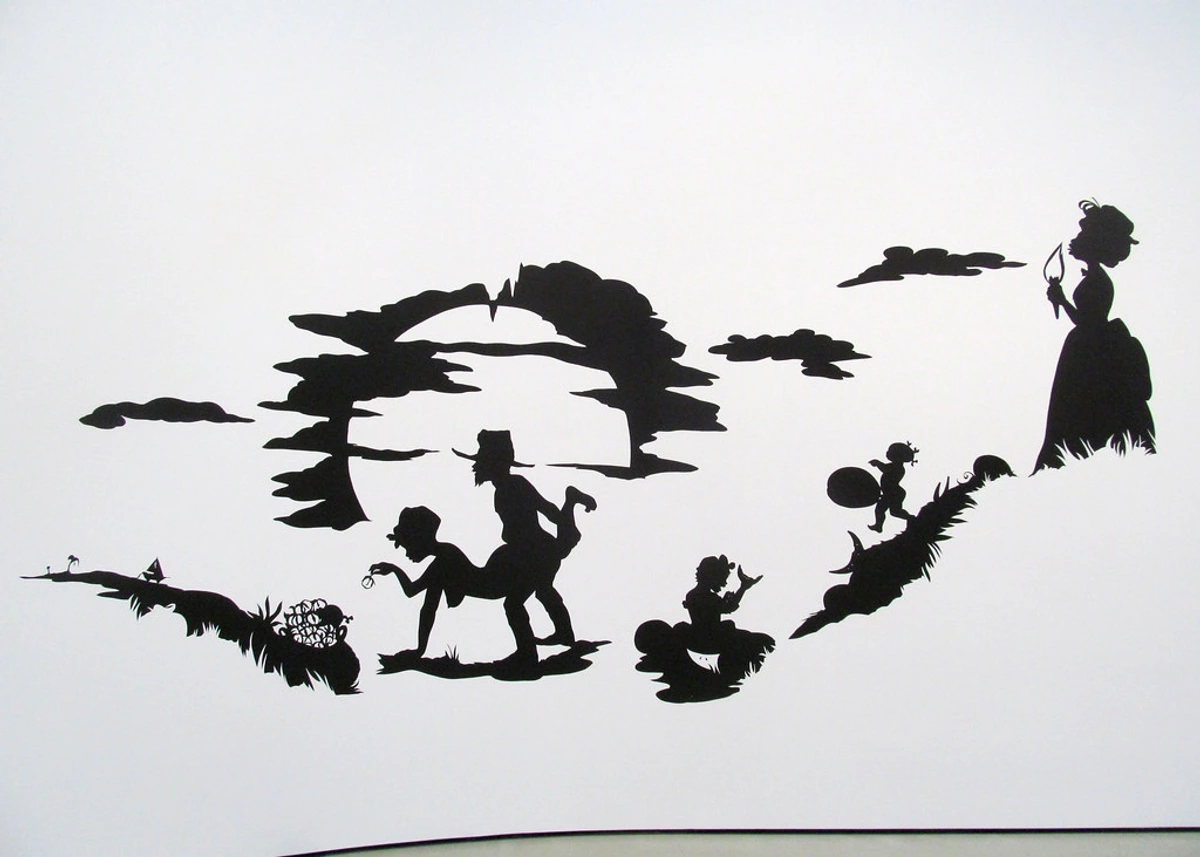
While historical narratives often centered on male artists, countless women have made profound contributions, often against significant societal barriers such as denial of formal artistic training, limited access to patronage, and restrictive social expectations. Early examples include Hildegard of Bingen (a Medieval illuminator and composer) and Lavinia Fontana (a prominent Renaissance portraitist who managed a successful career while raising a family). The Baroque era saw the powerful work of Artemisia Gentileschi, known for her dramatic biblical scenes that often depicted strong female protagonists. In the Rococo and Neoclassical periods, Élisabeth Vigée Le Brun excelled as a court painter to Marie Antoinette. The Impressionist movement included groundbreaking figures like Mary Cassatt and Berthe Morisot, who brought intimate domestic scenes and female perspectives to the forefront. The 20th century exploded with talent, featuring Frida Kahlo's surreal self-portraits, Georgia O'Keeffe's distinctive modernism, Lee Krasner's Abstract Expressionism, and today, artists like Marina Abramović (performance art), Kara Walker (silhouettes addressing race and gender), Louise Bourgeois (sculpture), and Yayoi Kusama (installations, performance) continue to reshape the art world. Their resilience and vision are endlessly inspiring.


How is traditional art history biased, and how is that changing?
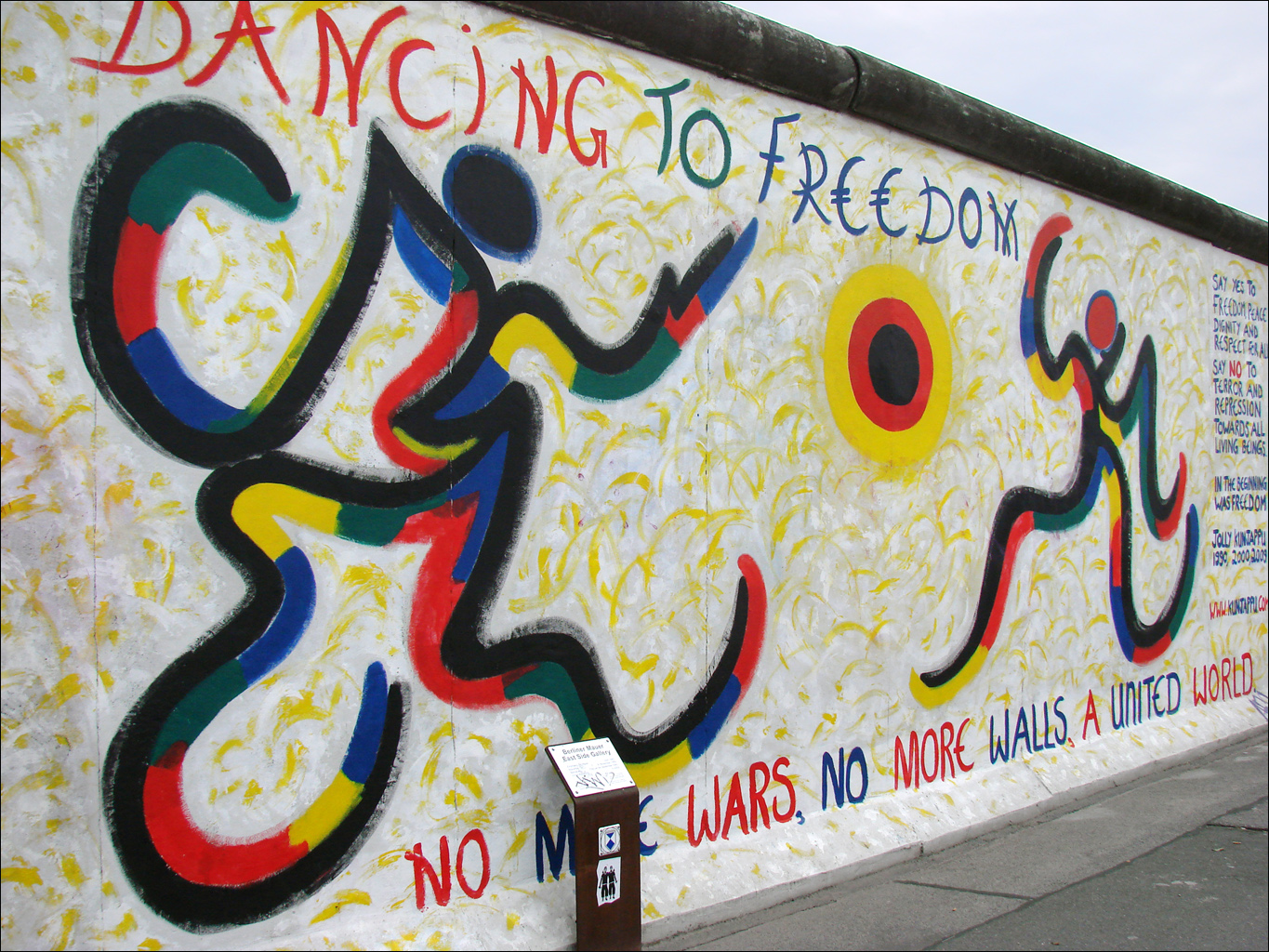
Traditional art history, particularly as it developed in the Western academy, has historically been heavily Eurocentric, focusing almost exclusively on European and North American movements and artists. This bias often overlooked or misrepresented the rich, diverse artistic traditions of Africa, Asia, Indigenous Americas, and Oceania, frequently framing them through a colonial or "primitive" lens, which is a term now widely rejected for its problematic associations, implying a lack of sophistication. However, contemporary scholarship is actively working to decolonize art history by broadening curricula, researching and integrating global art traditions, emphasizing intercultural exchange, and critically re-evaluating historical narratives. The goal is to create a more inclusive and accurate understanding of humanity's artistic heritage, recognizing art as a truly universal phenomenon, not just a Western one. Our "Beyond the Western Narrative" section is a small but vital step in that direction, a recognition that the story is far bigger than one continent, and a continuous reminder of the imperative to decolonize and globalize art history.
Where can I see this art?
Great question! Major museums around the world are your best bet. A trip to the Met in New York (which has fantastic Cubism collections and extensive African and Asian art galleries!), the Louvre in Paris (home to the Mona Lisa), the Uffizi in Florence (Renaissance masterpieces), or the Rijksmuseum in Amsterdam (Dutch Golden Age paintings) will let you see huge chunks of this timeline in person. Many museums also offer extensive online collections and virtual tours, making art accessible from anywhere at any time, which is a fantastic resource for deepening your knowledge. But don't forget local galleries and smaller, independent museums – they often house incredible collections, including contemporary works, sometimes even my own pieces, like at [/den-bosch-museum]. There's nothing quite like seeing art 'in the flesh' to make those historical connections tangible and truly feel the scale, texture, and presence of a masterpiece! I highly encourage you to go explore!

It’s All One Big Story
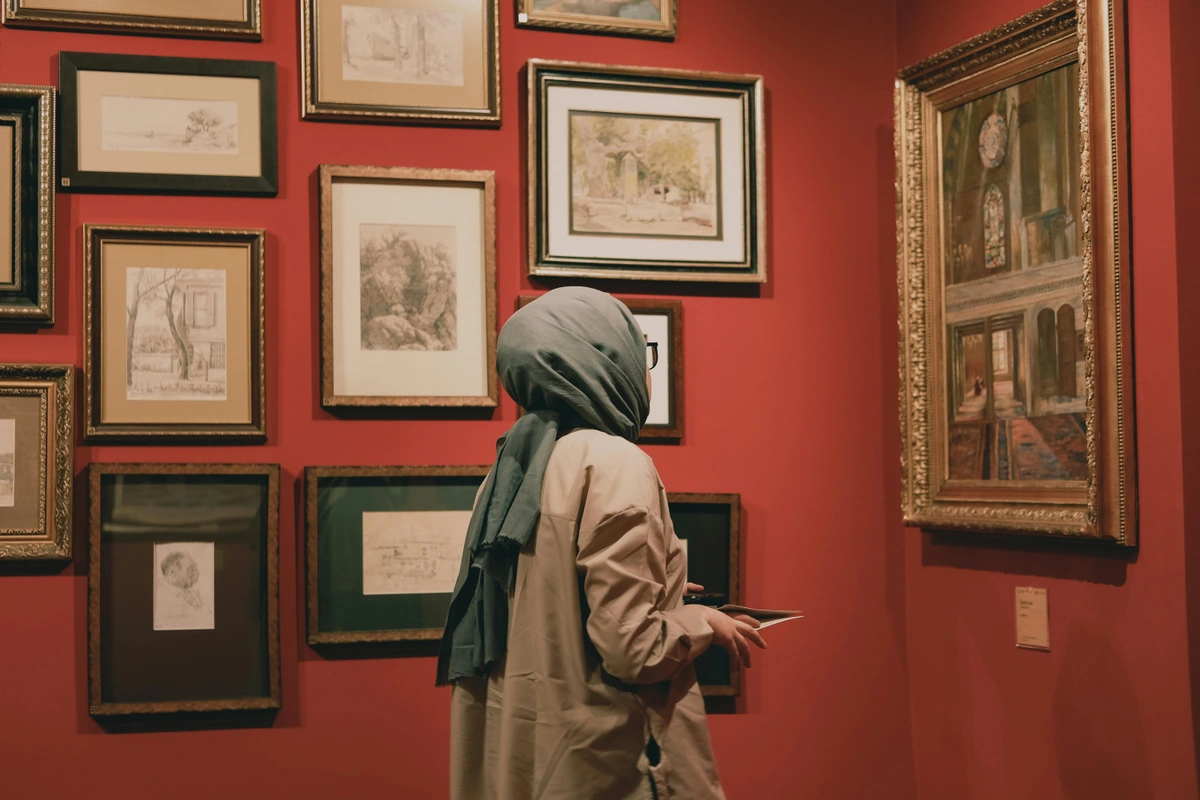
Looking back at it all, it's easy to see this timeline not as a series of disconnected events, but as one long, continuous story. Each movement is, in some way, a reaction to the one before it, a question posed, a boundary pushed, a new perspective offered. It’s a conversation across centuries, across cultures, and even across different ways of seeing the world. Often, artists even drew inspiration from earlier traditions, even while rebelling against them. It’s the story of humanity trying to understand its place in the universe, using whatever tools we have—charcoal, paint, marble, pixels, or even just an idea. It's truly a testament to our ceaseless desire to make meaning.
And the best part is, the story isn't over. It's still being written, in studios, on streets, and on screens all over the world, often asking profound questions about our place in this constantly shifting landscape. What conversations is art having today? And what might you have to add to that dialogue? If all this history inspires you to own a piece of the now, a fragment of this ongoing human story, consider browsing some contemporary art prints right here [/buy]. Maybe you'll find a piece that sparks your own conversation with history and helps you make your mark, adding your voice to this incredible, ongoing narrative, and perhaps even becoming part of the history that someone else will read about a century from now.