
Asian Dragon Meaning: Power, Wisdom, Fortune in Art & Culture
Uncover the profound meaning of Asian dragons as symbols of power, wisdom, and fortune in art and culture. Explore their origins, imperial ties, and how they inspire contemporary abstract art, including my personal creative journey. A comprehensive guide.

The Dragon's True Meaning in Asian Art: Power, Wisdom, Fortune, and Beyond: An Artist's Journey
Have you ever found yourself completely mistaken about something you thought you knew? I certainly have. I mean, who hasn't? For many of us in the West, the word 'dragon' immediately conjures images of fire-breathing beasts guarding gold in some dark fantasy realm. And yes, I've absolutely been there, imaginary sword in hand, ready for battle, completely immersed in that thrilling Western narrative. I even once tried to sculpt a Western dragon, and let's just say it looked more like a grumpy lizard with indigestion than a fearsome beast – a minor artistic misadventure I still laugh about. But then, a distinct shift happened. My first real dive into the shimmering world of Asian art felt like encountering a familiar face, only to realize it belonged to someone profoundly different – someone far more complex, deeply revered, and frankly, a bit misunderstood from my initial viewpoint. The dragon, it turns out, is a master of cultural disguise, artfully concealing its true, benevolent nature from the casual Western observer. In Asia, these magnificent creatures are rarely adversaries; they are revered symbols of supreme power, profound wisdom, and boundless fortune. This journey into their multifaceted meanings – from commanding the skies to guarding ancient knowledge and ushering in prosperity – is, I think, a vital one for understanding a huge part of global art and culture. It's a perspective that has, in unexpected ways, even shaped my own abstract art. Today, I want to explore these enduring spirits, bridge my initial misconceptions, and perhaps uncover a universal appreciation for these majestic beings.
The Dragon's Genesis: More Than Just Myth
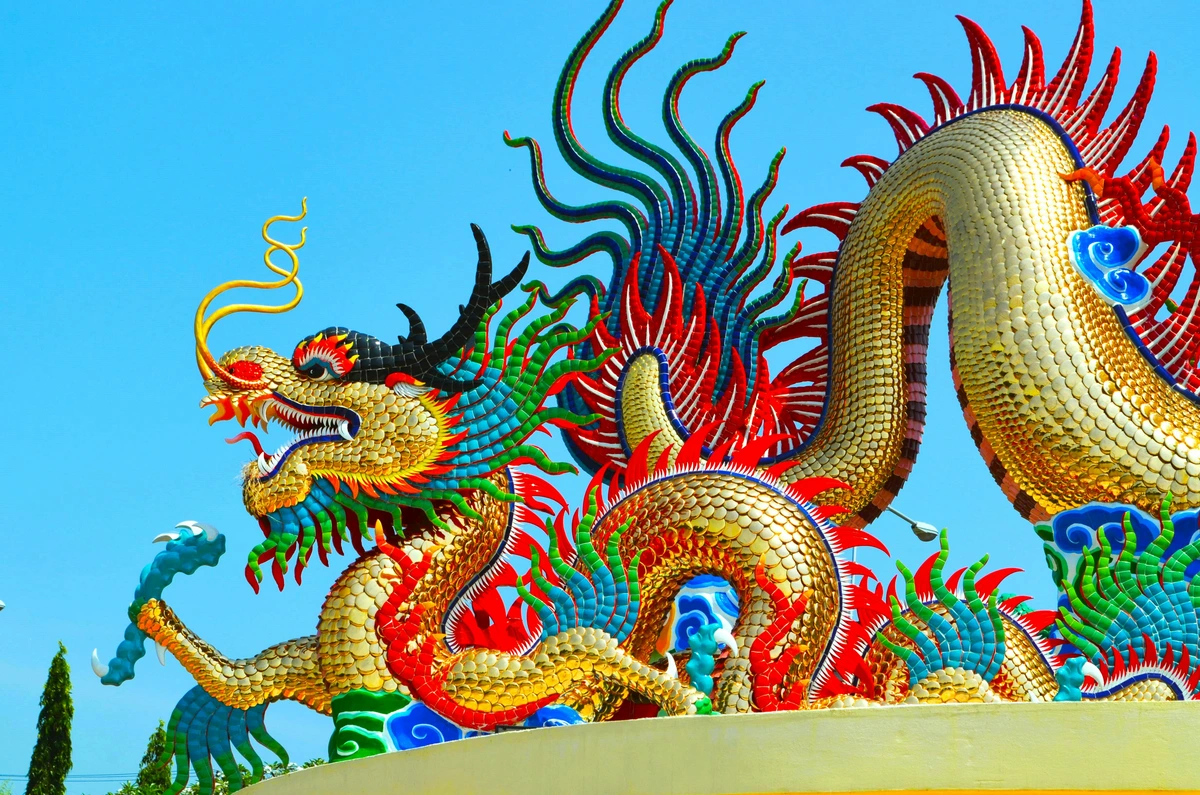
Before we even get to their deeper meanings, it helps to understand what kind of beings we're actually talking about. Unlike their winged Western cousins, Asian dragons typically sport a long, serpentine body, often with four powerful legs ending in sharp claws. Their heads are a fascinating mosaic: a camel's head, deer's antlers, an ox's ears, and a snake's neck are common descriptions, all topped off with a magnificent flowing mane or beard. They fly not with leathery wings, but through sheer mystical energy – a feat that, frankly, still baffles my practical artist's mind, but makes for incredible visual storytelling. This blend of features, drawing from diverse animals, always struck me as a brilliant artistic choice, vividly hinting at their multifaceted nature and how they draw power from so many sources. It’s like these creatures are living composites of the most powerful and graceful parts of the natural world, a challenge I often find myself taking on in my own abstract work.
So, with that image in mind, where did these magnificent scaly beings truly come from? My early grasp of mythological creatures in art was admittedly shaped by simplified narratives, almost like the bedtime stories I grew up with, and it took a deeper dive into art history to appreciate the profound symbolic layers cultures infuse into their fantastical beings. If you're interested in just how deeply these stories run, you might find this piece on understanding the symbolism of mythological creatures in art history quite illuminating.
Asian dragons, particularly in cultures like Chinese, Japanese, and Korean, are far more than mere legends; they are primal elemental forces, often benevolent deities intricately woven into the very fabric of society and belief. Their origins are as ancient as the civilizations themselves, deeply rooted in early animistic beliefs, celestial observations, and the raw power of nature. Imagine living in a world where your survival depended entirely on the whims of the weather; these creatures naturally became personifications of rivers, rains, and the heavens themselves. This deep connection to nature also anchors them within ancient cosmology. The universe, in many of these traditions, was seen as infused with qi – a vital, flowing life force energy that permeates all things. Dragons embodied this, literally flowing through the earth and sky, animating all existence – think of it like the invisible energy that makes a seed sprout or the subtle hum of magnetic forces; it's everywhere, even if you can't quite see it. And sometimes, I wonder, if early observations of powerful natural phenomena like lightning or the discovery of large fossilized remains of ancient reptiles might have also sparked the imagination, shaping the terrifying yet revered forms these creatures took.
They are intrinsically linked to water, capable of bringing both life-sustaining rains and devastating floods. In Chinese folklore, some origins tie dragons to the Yellow Emperor, a legendary sovereign credited with founding Chinese civilization, or to the powerful Dragon Kings (Longwang), who are believed to rule the Four Seas (a symbolic term encompassing all the world's bodies of water and the entire world itself). In Japan, figures like Ryujin, the dragon god of the sea, hold sway, while Korean mythology features beings like Imugi (serpent-like creatures aspiring to become full dragons) or Yong (the fully realized, powerful dragons), often associated with waterways and rain. Beyond these, across Southeast Asia—in places like Vietnam, Thailand, Cambodia, and Indonesia—distinct yet equally revered dragon or serpent-like figures, often known as Naga, exist, each embodying unique cultural nuances but consistently sharing that core reverence for their power over natural elements. It always makes me think, how did so many distinct cultures independently arrive at such similar reverence for these majestic, powerful beings? It's a question that keeps me coming back to the universality of certain symbols in art, and the deep human need to explain the inexplicable. This profound connection to the elemental forces laid the groundwork for their ascent into realms of imperial and cosmic authority.
Wielding the Heavens: Imperial Power and Cosmic Order
From their ancient origins as elemental forces, deeply intertwined with nature, Asian dragons quickly ascended to symbolize something even grander: supreme imperial power and cosmic order. When I first learned that Chinese emperors were often hailed as the 'Sons of Dragons,' I was absolutely captivated. This wasn’t a mere honorific; it signified a direct divine mandate, an unparalleled authority bestowed by heaven itself. The dragon, with its awe-inspiring ability to command the skies—bringing both life-giving rain and formidable storms—perfectly embodied this supreme power. Its scaly hide, often shimmering and impenetrable, even hinted at a divine armor, reinforcing the idea of a ruler's invincibility. It's a power not simply of brute force, but of dynamic control, cosmic balance, and the very shaping of destiny. Essentially, this potent symbolism was the ultimate stamp of approval, legitimizing a ruler's right to govern and reinforcing social order by presenting the emperor as a mediator between heaven and earth. Rulers literally sought shelter under the dragon's auspicious shadow, seeking its divine favor and legitimacy for their reign.
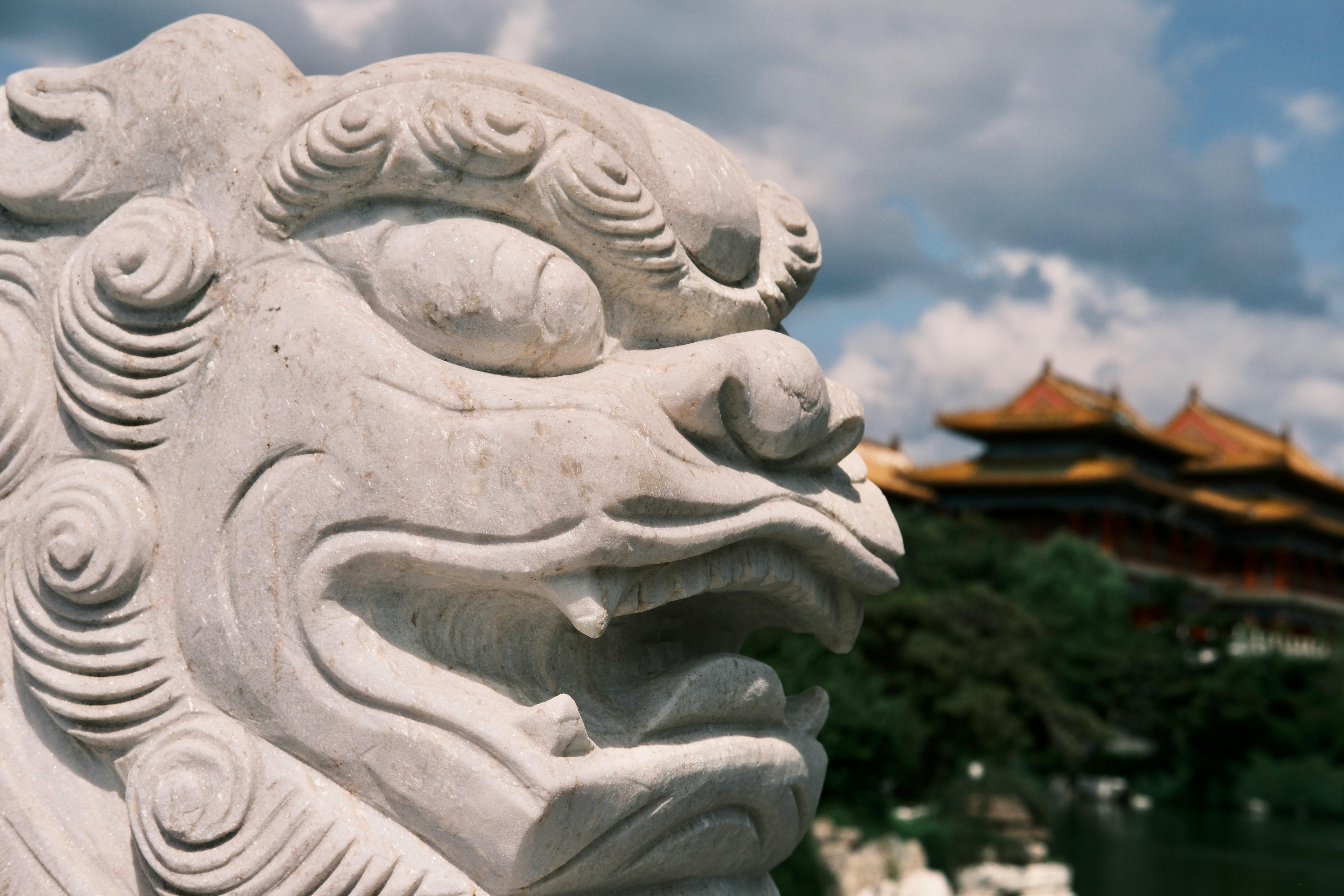
You can trace this symbolism everywhere, from the exquisitely embroidered dragon robes (often featuring nine dragons for the emperor, as the number nine was considered supremely auspicious and associated with the emperor) worn by the imperial family to the grand architectural designs of the Forbidden City's Nine-Dragon Wall, and intricate imperial seals. I always imagine what it must have been like to live in a world where the dragon's authority was literally woven into every fabric of imperial life – from ceremonial objects and weaponry to the furniture and everyday articles used by the court. It wasn't just decoration; it was a constant, tangible reminder of divine power.
https://images.pexels.com/photos/28747438/pexels-photo-28747438.jpeg?cs=srgb&dl=pexels-elizara-28747438.jpg&fm=jpg, https://creativecommons.org/public-domain/
I often ponder how artists even begin to capture such immense, almost intangible energy. When I look at abstract pieces with vibrant, intersecting lines, I can almost feel the raw, untamed force that early artists must have striven to depict when illustrating the dragon's mastery over nature. It isn't just a creature; it's the very embodiment of dynamic, life-altering power. This inherent strength and divine oversight solidified the dragon's place as a pervasive and revered symbol of power throughout Asian history. It forged a direct link between the earthly ruler and the cosmic order. This connection also extends to the cardinal directions and seasons in Chinese cosmology, where the Azure Dragon (Qing Long) is the divine beast of the East and spring, powerfully symbolizing growth, renewal, and the dawn of a new cycle.
https://images.pexels.com/photos/28747438/pexels-photo-28747438.jpeg?cs=srgb&dl=pexels-elizara-28747438.jpg&fm=jpg, https://creativecommons.org/public-domain/
For me, as an artist, this dynamic control is fascinating. I've often tried to capture that same sense of powerful, unseen forces in my own abstract work—the feeling of raw energy shaping a canvas, much like a dragon commands the weather. What does this profound connection between leadership and elemental force tell us about the societal values of these ancient cultures? Perhaps it's a reminder that true power isn't about brute strength, but about balance and influence, a concept that deeply informs my own creative process when I explore the symbolism of geometric shapes in abstract art. But beyond the visible displays of might, what quiet truths might the dragon hold? It's time to delve into something far more subtle: wisdom.
Ancient Eyes, Ancient Wisdom: Guardians of Knowledge
Moving from the visible might of emperors, we delve into the quiet, shimmering depths of the dragon's profound wisdom and ancient knowledge. They are believed to have witnessed millennia, dwelling in the depths of oceans and soaring through the heights of heavens, accumulating insights that mere mortals can only dream of. Visually, this wisdom is most powerfully symbolized by the glowing orb they are frequently depicted holding or chasing – the 'wisdom pearl' or 'flaming pearl.' This isn't just a decorative element; it's a microcosm of enlightenment, much like a tiny, perfect sphere holding the universe's secrets. Some traditions even link it to the concept of the philosopher's stone, hinting at a transformative power or the ultimate pursuit of truth.
In Taoism, it often represents the 'Dao' itself – the interconnectedness of all things and the underlying natural order, much like the perfect balance of a smoothly polished stone. In Buddhist philosophy, it can symbolize the 'true mind,' the spiritual essence, or even śūnyatā (emptiness). But don't let that word fool you! It's not about an absence of things, but rather the ultimate interconnectedness and interdependence of all phenomena, a state where all rigid concepts dissolve into a deeper, unified reality. Think of it less as 'nothingness' and more like the vast, open sky – it appears empty, but it contains all clouds, stars, and birds, allowing them to exist without defining itself by them. It represents the very essence of cosmic harmony and ultimate truth, an echo of the dragon's deep understanding of the universe. Artistic techniques, such as the meticulous rendering of the pearl with ethereal glows and swirling mists around the dragon, emphasize its mystical significance and the profound nature of the wisdom it embodies as a guardian of esoteric knowledge.
This is a wisdom honed over millennia, a slow, deliberate understanding of the world, much like an old sage quietly contemplating the flow of a river. This depth of understanding is something I continually strive for in my own artistic process. There are moments when a painting feels 'stuck,' and it's only by stepping back, patiently observing, and letting intuition guide me that the true path forward reveals itself – much like a dragon's patient, ancient wisdom uncovering hidden truths. It makes me wonder, how do we, in our modern world, seek out and preserve such timeless wisdom, especially when everything feels so fast-paced? Perhaps by looking beyond the obvious, as the dragon invites us to do. And speaking of things we all seek – and, let's be honest, often need a bit of help with – let's talk about fortune.
Fortune's Embrace: Prosperity and Auspicious Blessings
Now, who amongst us isn't quietly hoping for a bit of good fortune? In Asian cultures, dragons are consistently seen as bringers of wealth, abundance, and auspicious blessings. Their undeniable connection to water made them absolutely vital for agrarian societies, directly ensuring fertile lands and bountiful harvests. Just imagine living in a time when your very survival hinged on the rains; the dragon, delivering that life-giving water, would be nothing short of a divine blessing, a literal bringer of prosperity. It’s a deep, practical connection, not just an abstract idea. They are also sometimes depicted guarding vast treasures within mountains or associated with precious materials like jade, pearls, jewels, and magical artifacts, amplifying their link to material wealth and prosperity. Interestingly, some ancient texts even hint at dragons' involvement in early forms of Chinese medicine and alchemy, where their mystical essence was sought for elixirs of longevity and formulas for transformation, further solidifying their role as purveyors of both health and prosperity. This pervasive symbolism isn't just confined to art; you'll find dragon imagery on everyday objects like intricate jade pendants, household ornaments, and even auspicious banners displayed during celebrations, all hoping for good luck.
They're also believed to guide positive qi (or chi), the vital life force energy that permeates all things – think of it like an invisible current of positive flow that brings balance and vitality, much like a gentle breeze guiding a boat. This makes them integral to practices like Feng Shui. Placing dragon imagery—perhaps a statue or a painting—in specific areas of a home or business, particularly in the east or water-related sectors, is thought to attract prosperity, harmony, and even ward off malevolent spirits. Their very presence is considered a powerful charm for good luck and a robust protective force. This strong association with good fortune and protection extends into vibrant cultural celebrations; the famous Dragon Dance during the Lunar New Year, for example, features elaborate dragon puppets paraded through streets to usher in prosperity and ward off evil for the coming year. Similarly, the Dragon Boat Festival sees dynamic boat races commemorating ancient legends and invoking the dragon's power over water and luck. Other festivals, like the Naga Fireballs in Thailand and Laos, though distinct, also highlight revered serpent-like entities and their connection to natural phenomena and local belief, reinforcing the broader cultural significance of these beings.
As an artist, I often try to imbue my abstract pieces with that same vibrant energy, hoping they bring a touch of that dragon-blessed fortune into a room. You can always check out some of my work available here. Perhaps we’re all, in our own ways, seeking to harness that ancient energy for a better tomorrow, and perhaps this pursuit of deeper meaning is what truly connects ancient symbolism to contemporary art. What kind of symbols of fortune do you gravitate towards, and how do you invite positive energy into your own space?
Expanding the Dragon's Persona: A Spectrum of Qualities
But the dragon's story certainly doesn't end with might, knowledge, and luck. While power, wisdom, and fortune are often cited as the dragon's primary attributes, their symbolism extends to encompass an array of other profound qualities, painting a truly holistic picture of their significance. They are seen as embodiments of benevolence, acting as protectors and providers, especially of life-sustaining water. Dragons also represent justice and cosmic balance, ensuring harmony within the natural and social worlds – think of the legend of the Dragon King settling disputes among river creatures or bringing judgment upon corrupt officials. Moreover, their ability to shed their skin or transform suggests renewal and metamorphosis, a potent symbol of change and continuous growth, much like the changing seasons or, dare I say, the artist's evolving style. Their presence signifies robust protection against malevolent spirits and negative influences, standing guard over sacred places and imperial domains. In some mythologies, they are also associated with fertility and procreation, symbolizing the generation of life and abundance. And in some Chinese traditions, the dragon is even linked to the element of metal, symbolizing strength, resilience, and unyielding will. For me, these expanded meanings highlight the holistic view Asian cultures held (and still hold) of these magnificent creatures – not just mighty beasts, but complex moral, spiritual, and life-giving entities. What other hidden depths can we uncover when we look past the obvious in art and folklore, or even in our own lives?
Modern Echoes: The Dragon in Contemporary Art and Culture
So, with centuries of profound meaning woven into their scales, how do these magnificent beings fare in our modern world? Even as centuries pass, the dragon's potent symbolism hasn't faded; it continues to evolve and resonate in modern Asian art and popular culture. While traditional motifs persist, contemporary artists often reinterpret dragons through abstract forms, digital media, or integrate them into urban street art, adapting their ancient significance to new narratives and aesthetics. Artists like Cai Guo-Qiang use gunpowder art to create explosive, ephemeral dragons, while others, such as Liu Bolin, subtly weave dragon motifs into their photographic 'hiding' series, recontextualizing ancient symbols within contemporary social commentary. Even artists who utilize more traditional brushwork, like Xu Bing, often infuse their dragon imagery with contemporary critiques or ironic twists, showcasing the enduring power of the symbol even when challenging its conventional depiction. In popular culture—from iconic anime like Hayao Miyazaki's "Spirited Away" where a river spirit takes dragon form, or the powerful, wish-granting Shenron in "Dragon Ball," to video games and fashion—dragons are frequently portrayed as powerful, noble, and sometimes even playful figures. They retain their core essence of strength and auspiciousness while finding new ways to connect with audiences. This adaptability reminds me how ancient archetypes can inspire fresh perspectives, a creative process I often explore in my own work when considering the definitive guide to understanding abstraction in contemporary art. It makes me wonder, as societies shift and grow, how will future generations continue to reinterpret this timeless symbol, and what new meanings might they uncover?
My Personal Takeaway: The Enduring Spirit of the Dragon
So, after exploring these rich and multifaceted symbols, you might wonder: how does this ancient creature, this potent myth, connect to my contemporary abstract art? While I don't paint literal dragons – frankly, I'm still trying to master a convincing cloud, and honestly, keeping track of all those scales, claws, and cultural nuances can make your head spin – the spirit of their symbolism deeply resonates with me. The ideas of unseen forces, the intricate balance of nature, profound wisdom passed down through generations, and the sheer power of transformation – these are all compelling themes I explore in my art. It’s this intriguing blend of the tangible and the metaphorical that truly draws me, much like the layered meanings embedded within a dragon motif. Who really wants everything neatly spelled out, anyway?
Let me give you a glimpse into how this plays out in my own work. For instance, I created a series recently that used flowing lines and ethereal forms to suggest powerful currents, both literally of water and metaphorically of energy. Imagine cool blues contrasting with fiery oranges, and dynamic textures that twist and turn across the canvas – a direct nod to the dragon's dominion over these essential forces. One particular piece, with its swirling blues and dynamic compositions that seem to surge and recede, directly evokes the raw, benevolent power of a dragon bringing forth a storm, or perhaps the immense pressure of ocean depths where wisdom resides.
Another piece, one I often describe as 'hidden depths,' features almost ghost-like forms emerging from a swirling vortex of deep indigos and purples. It truly whispers of hidden truths and symbolic encounters, much like the profound, ancient wisdom attributed to dragons. For me, it captures a sense of the dragon's inherent mystery – not just a powerful beast, but a vessel of profound wisdom and enigmatic truths, inviting us to look closer, to delve beyond the obvious, much like the ocean depths or the vastness of the heavens where dragons are said to reside.



My journey as an artist, much like my ongoing quest to understand these complex cultural symbols, has been a continuous process of learning and evolving. It's a journey that's been as much about understanding the world as it has been about understanding myself. If you’re ever curious about that story, you can find a bit more on my timeline. And if you're ever in the Netherlands, you could even visit my museum in 's-Hertogenbosch to see some of these connections firsthand.
Frequently Asked Questions (FAQ)
What is the difference between Western and Eastern dragons?
The primary difference lies in their fundamental nature and symbolism. While Western dragons are typically malevolent, fire-breathing, winged creatures guarding treasure, often representing chaos, greed, or evil, Eastern dragons are generally benevolent, wise, and sacred deities. They are typically wingless (though they fly through mystical means and often have flowing manes or beards), strongly associated with water, bringing good fortune, rain, and symbolizing imperial power, profound wisdom, and cosmic balance. Here's a quick comparison:
Feature  | Western Dragons | Eastern Dragons |
|---|---|---|
| Nature | Malevolent, destructive, greedy | Benevolent, wise, sacred, protective |
| Appearance | Often winged, fire-breathing, reptilian | Serpentine, often wingless (mystical flight), mosaic features |
| Symbolism | Chaos, evil, greed, destruction | Power, wisdom, fortune, water, cosmic balance, benevolence |
| Association | Fire, treasure hoards | Water, rain, heavens, imperial authority, elements |
What do the colors of dragons symbolize?
Dragon colors often carry specific cultural and symbolic meanings:
- Yellow/Gold: Paramount imperial power, royalty, immense good fortune, and prosperity. These are most often associated with emperors.
- Green: Represents nature, abundant life, robust growth, health, and is frequently linked to the East.
- Blue: Symbolizes the vast sky, the deep ocean, spiritual wisdom, tranquility, and is also associated with the East.
- White: Denotes purity, virtue, and sometimes old age or wisdom. In some contexts, it can be associated with mourning, but typically signifies auspiciousness and the West.
- Red: Embodies fire, intense passion, powerful protection, and significant good luck (especially in China). It is associated with the South.
If you're interested in the broader subject of understanding the symbolism of colors in different cultures, it’s truly a fascinating rabbit hole to explore.
Are dragons always good in Asian art and folklore?
While overwhelmingly benevolent and revered, Eastern dragons are still immensely powerful and can be fierce. They are forces of nature, and if angered or disrespected—often due to human transgressions or environmental imbalance—they can unleash destructive floods, droughts, or storms. Their wrath, however, is generally a consequence, serving as a powerful reminder of the deep respect owed to natural forces and cosmic order, rather than originating from an inherently evil nature. Their fundamental role is typically that of a balancing and protective force.
What other elements are dragons associated with besides water?
Beyond water, dragons are deeply associated with several other elements and natural phenomena. They often command wind and thunder, embodying the raw power of storms and atmospheric change. Some traditions also link them to the earth, symbolizing fertility and hidden treasures within the mountains. Their celestial aspect connects them directly to the heavens and cosmic order, underscoring their comprehensive dominion over the natural world. In Chinese philosophy, especially Confucianism, dragons embody the ideal of powerful, yet benevolent, leadership and cosmic harmony, reflecting the emphasis on order and hierarchy.
Do dragon meanings differ across Asian cultures like China, Japan, and Korea?
Absolutely, while sharing core benevolent traits, there are distinct nuances. Chinese dragons, for instance, are often depicted with five claws and are highly associated with imperial power and the number nine. Japanese dragons (Ryu) typically have three claws and are more closely linked to water, rainfall, and the sea, often seen as less aggressive than their Chinese counterparts. Korean dragons (Yong) often have four claws and are frequently associated with water and the sky, with legends featuring lesser serpent-like creatures (Imugi) aspiring to become full dragons. These variations reflect the unique histories and mythologies of each nation, adding rich layers to the overall Asian dragon narrative.
How are dragons linked to the Chinese Zodiac?
The dragon is the fifth animal in the twelve-year cycle of the Chinese Zodiac, representing power, nobility, honor, luck, and success. People born in the Year of the Dragon are traditionally considered charismatic, intelligent, confident, and natural leaders. It’s a highly auspicious sign, believed to bring good fortune, making it a popular year for births.
How has Western culture adapted or sometimes misrepresented Asian dragon symbolism?
This is a fascinating and sometimes thorny question! While many Western adaptations of dragons are inspired by Asian aesthetics, they often strip away the benevolent, wise, and elemental core, re-aligning them with Western archetypes of monstrous, greedy creatures. For instance, in many fantasy narratives, dragons are still antagonists, hoards of gold are central, and their power is often depicted as destructive rather than harmonizing. While this creates compelling fiction, it can unfortunately perpetuate a misunderstanding of the deeply revered and sacred nature of dragons in their original Asian contexts. The key difference lies in purpose: Western dragons often exist to be overcome; Asian dragons exist to maintain balance and bring blessings.
Conclusion: A Deeper Gaze, A Broader Understanding
So, the next time you encounter a dragon—be it in an ancient scroll, a vibrant statue, or a contemporary artistic interpretation—I sincerely hope you see beyond just the scales and claws. I hope you perceive the sky-wielding power, the profound wisdom, the boundless fortune, and the deep, rich cultural tapestry it embodies. It’s a powerful reminder that sometimes, the greatest treasures are discovered not in hoards of gold, but when we actively challenge our preconceptions and bravely open our eyes to a different narrative. This journey, I believe, is essential for a truly comprehensive appreciation of global art and culture.
And perhaps, it’s also a reminder that even within the most fantastical symbols, there’s a profound human truth waiting to be uncovered, one that can inspire us to seek deeper meaning in the world around us and, crucially, within our own creative endeavors. For me, the enduring spirit of the dragon is a constant invitation to explore the unseen, the powerful, and the wise in my own art. So, I invite you: look closer, question what you think you know, and let the enduring spirit of the dragon inspire your next discovery, both in art and in life. Share your own thoughts on dragon symbolism in art – I'd genuinely love to hear them.