Mary Cassatt: The Ultimate Guide to Her Radical Impressionist Art & Life
Dive deep into the intimate world of Mary Cassatt. This ultimate guide explores her groundbreaking Impressionist art, tender portrayals of motherhood, and enduring legacy through a personal, engaging lens.

The Ultimate Guide to Mary Cassatt: An Intimate Glimpse into the Life and Art of a Quiet Radical
I remember the first time I really saw a Mary Cassatt. It wasn't in a textbook, or even a casual glance at a gallery wall. It was a moment of genuine connection with a piece – probably one of her many mother-and-child works – and it just… hit me differently. You know that feeling, right? When an artwork transcends being just paint on canvas and feels like a whisper across time, reaching out and grabbing you by the heart? That profound resonance, that's the essence of Mary Cassatt's enduring appeal. This article isn't just a comprehensive dive; it's an exploration into the life and legacy of an artist who, with audacious spirit and empathetic brushstrokes, profoundly redefined the portrayal of women and children. She didn't just challenge societal norms; she shattered them, leaving an indelible mark on the art world and solidifying her place as a pioneer of American Impressionism – a truly quiet radical. For me, her quiet radicalism lay not in grand pronouncements, but in the unwavering conviction behind her brush, a conviction that dared to portray the intimate, the everyday, with a dignity and psychological depth previously reserved for historical dramas or idealized portraits. It was a radicalism that whispered, rather than shouted, yet its impact still reverberates today, influencing how we perceive domesticity and the lives of women in art.
Cassatt, an American woman who dared to paint among the Parisian avant-garde, carved out a space uniquely her own in the vibrant, often tumultuous, world of Impressionism. She wasn't just another Impressionist; she was a force, a quiet radical challenging rigid societal expectations, mastering her craft with unyielding determination, and leaving behind a legacy that, for me, feels profoundly modern and deeply human. This isn't just a guide; it's an invitation to explore the quiet, yet immensely powerful, world of an artist who dared to paint life as she truly saw it, with an honesty and psychological depth that still resonates profoundly today. Get ready to dive deep into a story of artistic rebellion, fierce independence, and timeless beauty. We'll explore her early life, her crucial Impressionist connections, her iconic motherhood themes, her innovative printmaking techniques, her pivotal role as an artistic advisor and collector, and even her later life and challenges, all contributing to her undeniable impact on art history. My aim is to make sure you walk away with a richer understanding of this remarkable woman, whose unwavering commitment to her vision, despite the enormous social and professional barriers, set a powerful precedent for generations of women artists.
Who Was Mary Cassatt, Really? Breaking the Mold
Born in Allegheny City, Pennsylvania, in 1844, Mary Stevenson Cassatt came from a comfortable, well-to-do family. Her father, Robert Simpson Cassatt, was a successful banker and land speculator, a man of considerable influence. He was, to put it mildly, not thrilled with his daughter's artistic ambitions, seeing it as unsuitable for a young woman of her social standing. Her mother, Katherine Kelso Johnston, was an educated woman with a keen intellect and a strong interest in culture, particularly literature and languages. It's clear to me that Mary inherited much of her formidable drive and intellectual curiosity from her mother, who was also fluent in French. Katherine's French Huguenot background and frequent travels to Europe during Mary's childhood profoundly fostered Mary's early exposure to art and European languages, essentially preparing her for her future in Paris. This early immersion in European culture was, I believe, a crucial, if unintentional, seed planted by her parents. Mary also had several siblings, including a beloved sister, Lydia, who would later become a frequent subject in her work, and a brother, Alexander, who, despite his own established career as a railroad executive, provided both personal and financial support throughout Mary's artistic journey, especially in her efforts to champion Impressionist art in America. But comfort and societal expectations weren't enough for Mary. She wanted to paint, and not just paint – she wanted to be a serious artist, a professional in a world that largely considered such aspirations unladylike, if not outright scandalous. The mid-19th century art world was overwhelmingly male-dominated, and a woman pursuing a professional art career faced immense social pressure and institutional barriers. In an era where a woman's artistic endeavors were largely confined to decorative hobbies, or at best, polite amateurism, Cassatt's ambition was nothing short of revolutionary. Her refusal to conform to these gendered roles set the stage for her entire career, making her an early feminist icon even before the term existed. It makes me wonder, though, if her father's resistance only fueled her stubborn resolve. Sometimes, a little opposition can really sharpen your focus, don't you think?
Early Life and Artistic Rebellion: Defying Expectations
From a young age, Cassatt demonstrated an independent spirit, a fierce determination that would define her entire career. At just 15, she enrolled in the Pennsylvania Academy of the Fine Arts in Philadelphia. Now, for a woman in the mid-19th century, pursuing formal art education was a radical notion. While women were often encouraged to dabble in arts as a refined hobby, a professional career was, well, largely unheard of, almost scandalous. But Mary was undeterred. The academic training there, however, often felt slow, overly rigid, and the male-dominated environment restrictive, especially with its emphasis on drawing from plaster casts rather than live models. It was particularly frustrating for female students who were often barred from drawing from live models – a crucial aspect of artistic training – a practice deemed "improper" for women, which, honestly, infuriates me to this day. This institutional sexism, coupled with the slow pace and stifling atmosphere, pushed her toward seeking more progressive training. It wasn't long before her sights turned to the true epicenter of the art world: Paris. In her early twenties, defying her family's initial disapproval and paternal warnings against an "immoral" life abroad, she moved to France. Can you imagine the sheer audacity, the unwavering determination required for such a move in that era? To travel unchaperoned, to pursue a profession deemed scandalous – it was a bold step into a world that offered little protection or encouragement for independent women. It frankly blows my mind, a true testament to her pioneering spirit. She was truly an early pioneer for women artists, carving her own path and demonstrating an unshakeable commitment to her artistic calling, regardless of the significant personal and professional cost. It makes you think about the quiet battles fought by so many women who simply wanted to pursue their passion, and the courage it took to break free from the invisible chains of societal expectation. It wasn't just about painting; it was about defining her own life.
Her early training in Paris, which included copying Old Masters in the Louvre and studying privately with established Salon painters like Jean-Léon Gérôme, was traditional and rigorous. She spent countless hours in museums, meticulously studying and replicating the techniques of the masters, absorbing foundational skills that would later inform her revolutionary style. It’s this deep grounding in tradition, I think, that gave her the confidence to break away later. However, this academic approach, with its emphasis on historical and mythological subjects and polished finishes, felt increasingly stifling for her burgeoning independent spirit. The highly conservative and biased Salon system, with its rigid rules, traditional subject matter, and often arbitrary rejections, simply wasn't for her. The Salon, the official art exhibition of the Académie des Beaux-Arts, was the gatekeeper of artistic success, and its traditionalism clashed with Cassatt's desire for authenticity and modernity. She yearned for something more authentic, more immediate, a way to capture modern life with its fleeting moments and true emotional depth. This search led her to the burgeoning avant-garde, and ultimately to Edgar Degas, a connection that would irrevocably alter her artistic trajectory and cement her place in art history. It's a classic story of an artist needing to break free from the past to truly find their voice, isn't it?
Early Artistic Milestones: A Timeline of Her Path to Impressionism
Year  | Event/Achievement | Significance |
|---|---|---|
| 1844 | Born in Allegheny City, Pennsylvania | American roots, but European-focused career. |
| 1860 | Enrolled at Pennsylvania Academy of the Fine Arts | Early formal art education, pushing against societal norms. |
| 1866 | Moved to Paris to study art | Defiance of family, crucial step towards professional career. |
| 1868 | Exhibited first work at the Paris Salon (under pseudonym) | Initial recognition within the traditional art establishment. |
| 1870-71 | Returned to US due to Franco-Prussian War | Brief interruption, but solidified her resolve to return to Europe. |
| 1872 | Returned to Europe, studied in Italy and Spain | Deepened her study of Old Masters, influenced her figure drawing. |
| 1874 | Established studio in Paris | Independent artist, solidifying her presence in the art capital. |
| 1877 | Invited by Edgar Degas to exhibit with the Impressionists | Pivotal turning point, rejection of Salon for avant-garde. |
The Degas Connection and the Impressionist Embrace
It was 1877 when Degas, upon seeing her pastels in a gallery window, famously said, "Here is someone who feels as I do." It was an invitation, a recognition of a kindred artistic spirit, and a profound turning point in Cassatt's career. She joined the Impressionists, exhibiting with them in 1879. Think about that: she became the only American and one of only two female artists (alongside the equally brilliant Berthe Morisot) officially exhibiting with the group. Talk about finding your tribe! This wasn't just joining a movement; it was finding her artistic home, a place where her vision was not only accepted but celebrated, and where she felt an unparalleled sense of belonging. Her friendship and professional relationship with Degas were particularly intense and influential. While their personalities often clashed, leading to a notoriously challenging bond, their artistic mutual respect was undeniable. Degas, with his sharp intellect and even sharper wit, was known for his demanding nature, and Cassatt, equally strong-willed, was certainly no shrinking violet. Their exchanges, though sometimes fraught, were intellectually stimulating, pushing both artists to refine their techniques and sharpen their observational skills. Degas significantly shaped her approach to composition, encouraging her daring use of unconventional cropping and asymmetric arrangements, often inspired by Japanese prints. He also influenced her mastery of pastel, a medium he himself excelled in, inspiring her to explore its rich textures and luminous qualities. He famously encouraged her in printmaking, inspiring her to explore the medium with a rigor and inventiveness that led to some of her most celebrated works, pushing the boundaries of what was possible in color etching and aquatint. Their shared passion for capturing candid moments of contemporary life and their mutual fascination with Japanese prints forged a powerful artistic dialogue that pushed both their practices forward. Her experiences, along with those of other notable women artists of the era, truly underscore the resilience required to thrive in a male-dominated art world. It's a fascinating thought, isn't it, how even within a groundbreaking movement like Impressionism, personal rivalries and strong wills could still spark such incredible artistic growth. If you're curious about the deeper dives into her life, you might want to check out her biography.
Cassatt's Relationships with Other Impressionists
While her bond with Degas was paramount, Cassatt also cultivated important friendships and professional relationships with other members of the Impressionist group. She exhibited alongside Claude Monet, Camille Pissarro, and Pierre-Auguste Renoir, among others. I find it fascinating how, despite the group's often fractious nature, Cassatt managed to maintain respectful artistic exchanges. She was particularly close to Berthe Morisot, sharing not only artistic inclinations but also the unique challenges of being a female professional artist in 19th-century Paris. Their mutual support and shared experiences, I imagine, must have been invaluable. Cassatt's presence also provided a crucial American link to the European avant-garde, a role she would expand upon greatly in later years by championing Impressionist art to collectors across the Atlantic. I think this often overlooked aspect of her career – her almost curatorial eye – is just as significant as her painting. She was, in many ways, an early cultural ambassador, bringing the dynamism of French modernism to American shores, which profoundly shaped the collections of major American museums.

Key Impressionist Colleagues and Their Artistic Connections
Artist | Relationship/Influence | Notable Shared Traits/Interactions |
|---|---|---|
| Edgar Degas | Mentor, close friend, artistic sparring partner. | Shared interest in modern life, Japanese prints, pastels, unconventional compositions. |
| Berthe Morisot | Close friend, fellow female Impressionist. | Shared struggles and triumphs as women artists, depictions of domestic life, vibrant palettes. |
| Claude Monet | Exhibited alongside, part of the core group. | Shared commitment to capturing light and atmosphere, though Monet focused on landscapes. |
| Camille Pissarro | Exhibited alongside, a consistent supporter of the group. | Respected his commitment to Impressionist principles and social commentary. |
| Pierre-Auguste Renoir | Exhibited alongside, though their styles diverged. | Both depicted scenes of modern Parisian life, but Renoir often focused on public revelry. |
| Gustave Caillebotte | Fellow exhibitor, collector, and patron. | Shared interest in depicting contemporary urban life and social scenes. |
The Heart of Her Canvas: Motherhood and Domestic Life
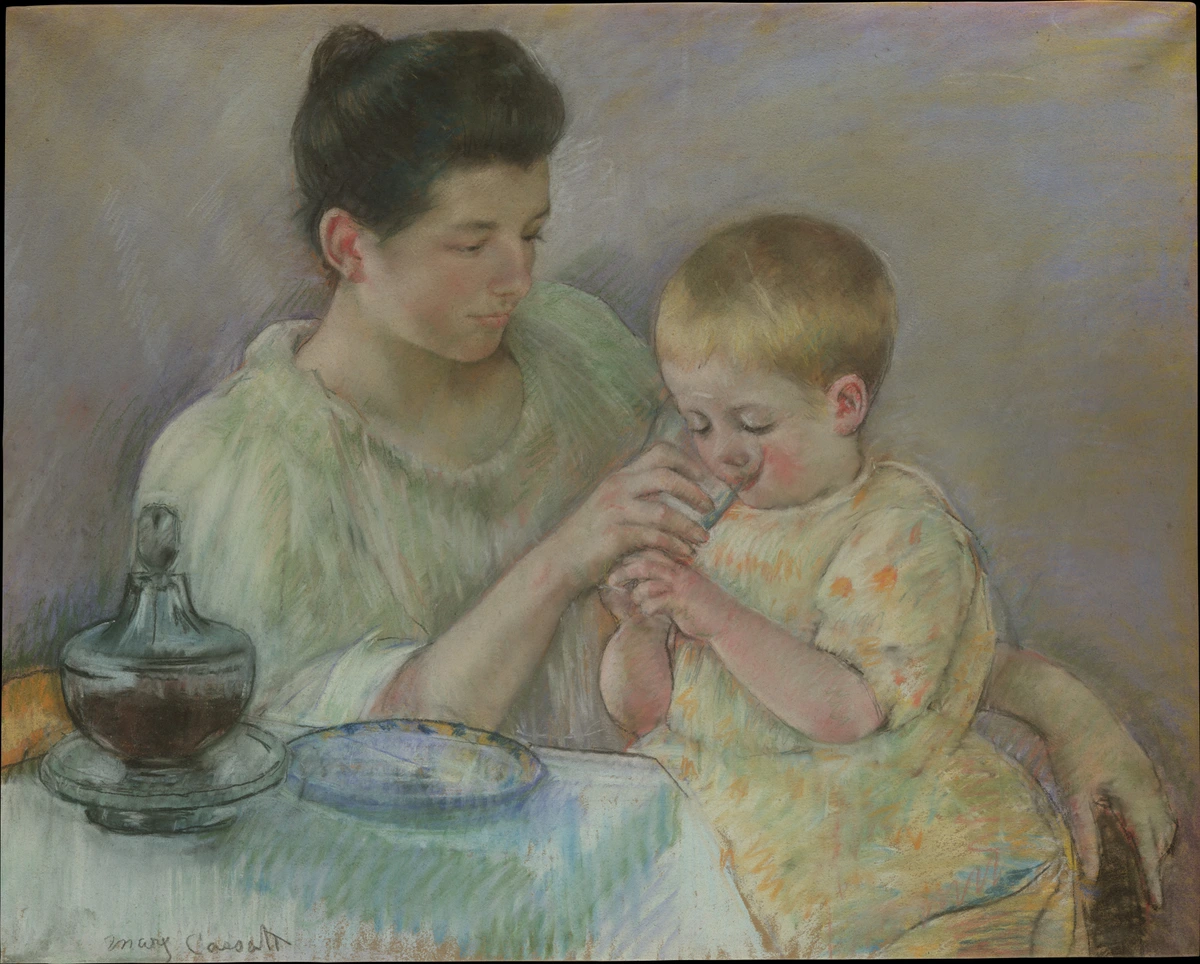
When we think of Cassatt, we often think of mothers and children. And for good reason! She dedicated a significant portion of her artistic output to exploring the tender, often unglamorous, yet profoundly real realities of motherhood. But here’s the thing: she didn't just paint sentimental scenes, sugar-coating the experience, or reducing it to a passive state. No, Cassatt's portrayals are imbued with an incredible psychological depth, an unflinching honesty, and a profound sense of dignity. She captured those fleeting moments of connection, the quiet intimacy, the playful interactions, the exhaustion, and the boundless, often unspoken, love. Her approach was revolutionary in its authenticity, presenting motherhood not as an idealized concept but as a lived experience, full of complex emotions, far removed from the overly saccharine depictions common at the time. She elevated the mundane to the magnificent, transforming domesticity into a legitimate and powerful subject for fine art. This, for me, is where her quiet radicalism truly shines. She seemed to understand that the most profound human experiences often unfold in the most unassuming of settings, a truth I find incredibly inspiring in my own artistic practice.
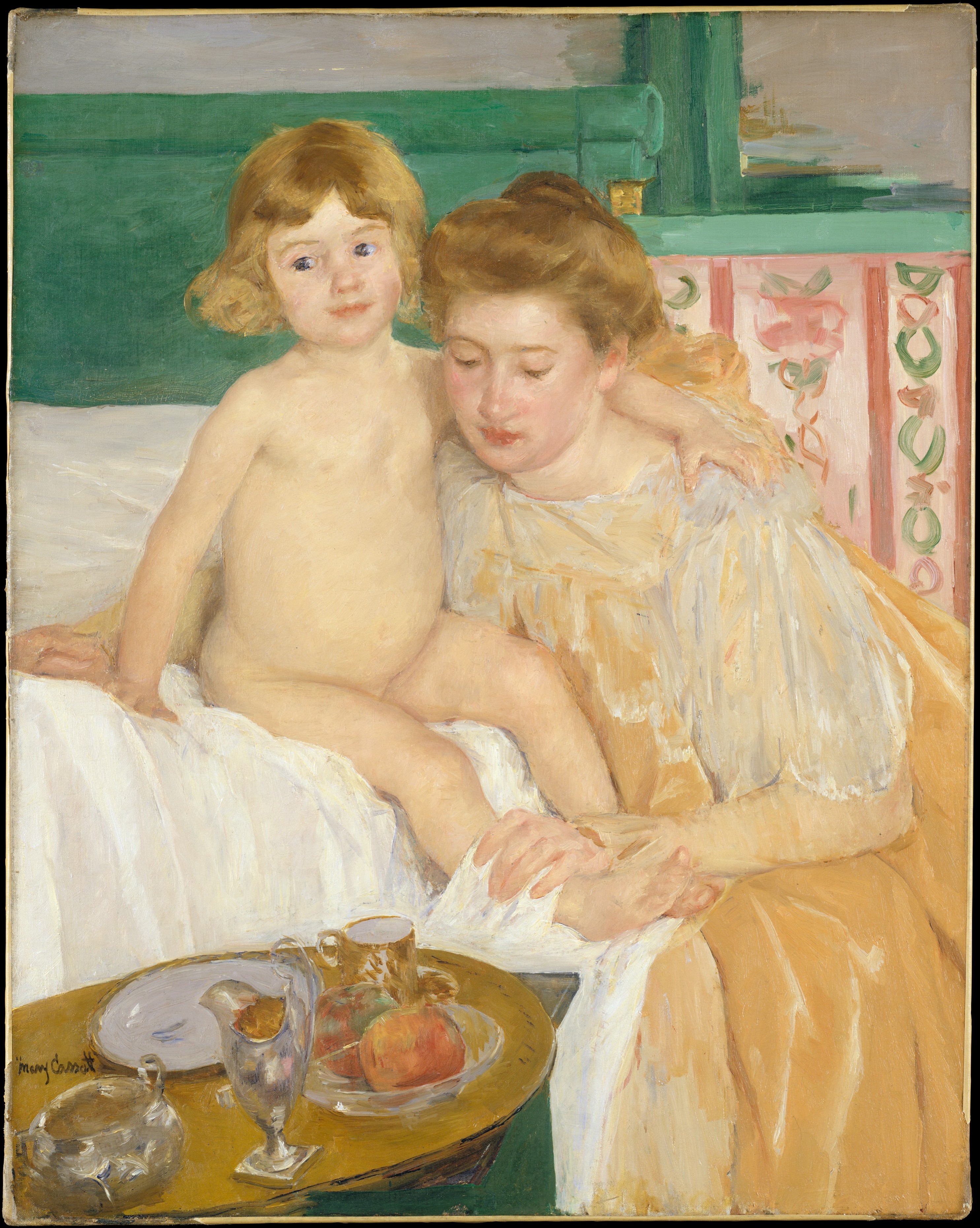
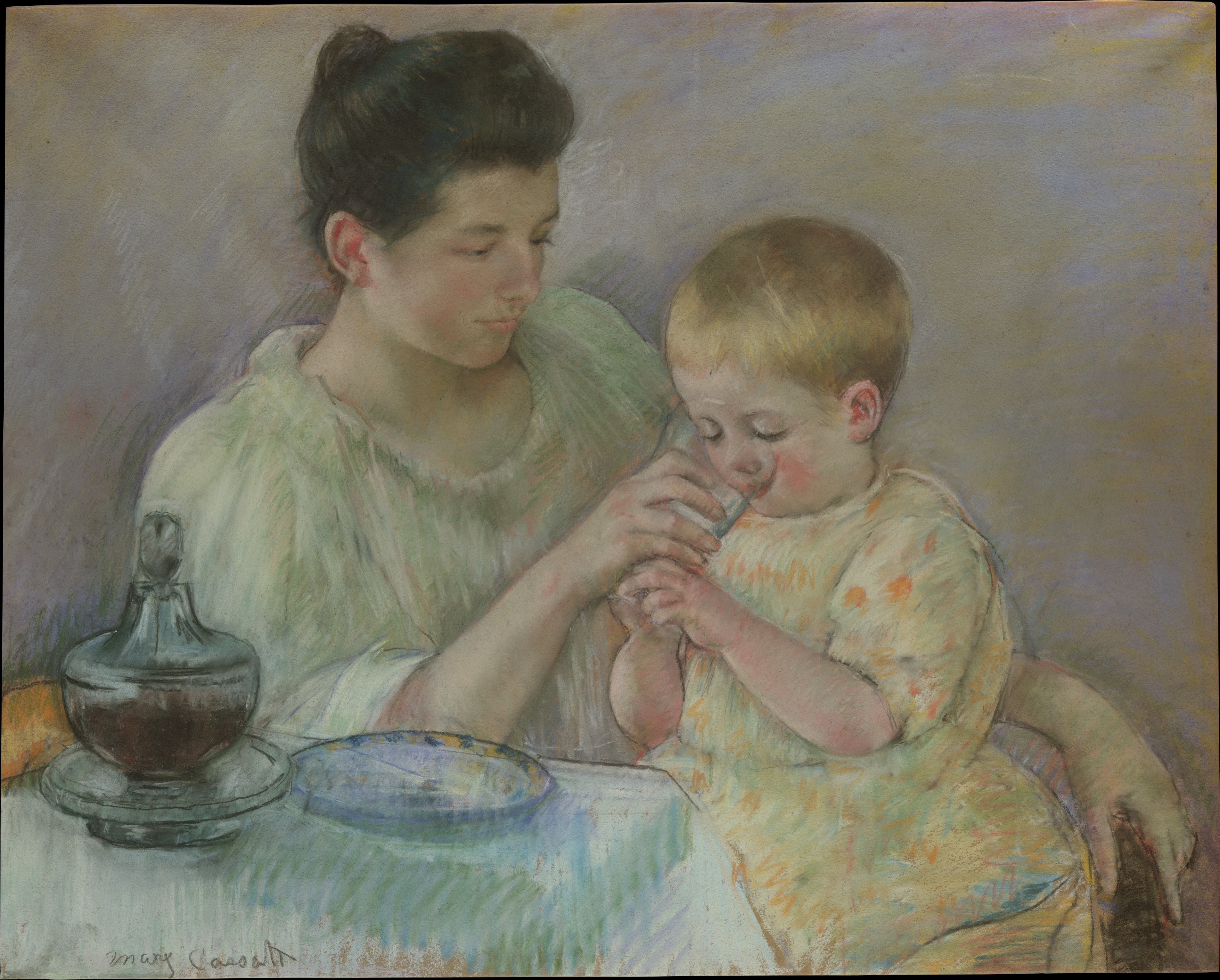
She wasn't a mother herself, which I find endlessly fascinating. This personal choice, rather than limiting her perspective, perhaps allowed her a certain objective distance, but also, crucially, a profound empathy. She saw the dignity and strength in these everyday acts, elevating them to high art at a time when such subjects were often dismissed as merely 'genre scenes' – a lower tier in the academic hierarchy. Look at a piece like 'Mother Feeding Child' or 'Mother and Child (Baby Getting Up from His Nap)' – these aren't staged theatricals or overly sentimental vignettes. They're glimpses into genuine, lived experience, moments of raw, unedited interaction. The way a child nestles against a mother, the focused gaze, the gentle touch – it’s all there, rendered with a sensitive hand and a keen eye, showcasing her unparalleled ability to convey deep emotion through subtle gestures and authentic poses. It's about capturing a universal human experience, but through a deeply personal, feminine lens, offering a fresh and vital perspective that challenged the male gaze prevalent in art history. The male gaze, a term now widely used in feminist art criticism, refers to the way women are often depicted in art from a masculine, heterosexual perspective, reducing them to objects of desire or passive figures. Cassatt consciously subverted this by portraying women with agency, intellectual engagement, and complex inner lives, giving them a subjective presence rarely seen. Her work essentially validated the domestic sphere as a legitimate and profound subject for serious artistic inquiry. She used her Impressionist training to capture the fleeting moments with vibrant color and loose brushstrokes, yet she always retained a strong sense of form and a psychological intensity that set her apart. I often wonder if her observations of her sister Lydia with her children profoundly informed these sensitive portrayals, allowing her to capture the nuances of a bond she observed rather than directly experienced.
This focus on the real dynamics of family life stands in fascinating contrast to other iconic portrayals of motherhood in art history. James McNeill Whistler's 'Arrangement in Grey and Black No. 1,' famously known as 'Whistler's Mother,' for instance, is a profound study in composition, color, and maternal dignity through a stoic, almost monumental pose. While powerful, it captures a different facet of motherhood. Cassatt, in contrast, delves into the active, intimate moments. Her subjects are rarely posed formally; instead, they are caught in the fluid, unselfconscious acts of daily care and affection. This difference highlights Cassatt's radical departure from traditional portraiture, emphasizing lived experience over idealized representation.
Let's look at how Cassatt's approach to motherhood fits within a broader art historical context:
Era/Artist/Movement | Characteristic Depiction of Motherhood | Contrast with Cassatt's Approach |
|---|---|---|
| Renaissance Madonnas | Often idealized, sacred, symbolic, distant figures; divine connection. | Cassatt's mothers are earthly, human, engaged in real-world tasks, psychologically complex. |
| 17th-18th Century Portraits | Formal, aristocratic, emphasis on social status and lineage, often stoic. | Cassatt's portrayals are informal, intimate, focused on emotional bonds rather than status. |
| Victorian Sentimentalism | Overly saccharine, idealized domesticity, often moralizing or purely decorative. | Cassatt's work is honest, showing both tenderness and the mundane, without excessive sentimentality. |
| Whistler's 'Mother' | Monumental, stoic, formal portrait of dignity and quiet strength. | Cassatt captures dynamic interaction, activity, and direct emotional engagement. |
| Mexican Muralism (Orozco) | Motherhood as a symbol of the nation's future, often amidst social struggle. | Cassatt focuses on personal, domestic, and universal human experience rather than political allegory. |
| Gustav Klimt's Symbolism | Allegorical, decorative, exploring life cycles and primal female energy. | Cassatt is grounded in observational realism and the psychological nuances of everyday life. |


Here’s a look at some recurring themes in her mother-and-child works:
Theme | Description | Example Works |
|---|---|---|
| Intimacy & Tenderness | Close-up depictions of affectionate physical contact and emotional connection. | The Caress, Mother and Child (The Oval Mirror) |
| Daily Rituals | Mothers engaged in everyday tasks of caregiving: bathing, feeding, reading. | The Bath, Mother Feeding Child |
| Childhood Innocence | Capturing the unselfconscious joy and vulnerability of young children. | Baby in a Dark Blue Suit, Looking at His Mother |
| Maternal Strength | Portraying the quiet resilience and devotion of mothers, often in moments of quiet contemplation or focused attention, highlighting their unwavering commitment and inner fortitude. | Mother and Child (Baby Getting Up from His Nap) |
| Psychological Depth | Beyond mere representation, exploring the complex emotional bond and individual personalities. | The Child's Bath |
| Children's Autonomy | Depicting children not just as passive subjects, but as individuals with their own inner worlds and nascent independence. | Little Girl in a Blue Armchair, Young Girl at a Window |
Beyond the Conventional: Capturing Children's Inner Worlds
While her depictions of the mother-child bond are central, Cassatt also excelled at portraying children as distinct individuals, often without the explicit presence of a mother. These works reveal a profound sensitivity to the nascent personalities and independent spirits of her young subjects. She avoids the saccharine idealizations common in children's portraits of the era, opting instead for an honest, often slightly melancholic or intensely focused gaze that suggests a rich inner life. In pieces like 'Children Playing on the Beach' or 'Children in a Garden,' she captures their unselfconscious engagement with their surroundings, their playful energy, and their quiet moments of contemplation. These aren't just pretty faces; they are studies of emerging identity and autonomy, underscoring her modern psychological approach to portraiture. For me, this is where she truly broke ground, depicting children not as miniature adults or props, but as fully formed beings with their own inner worlds. Take for example, 'Little Girl in a Blue Armchair' – that spirited, almost defiant posture, the direct gaze, it's not a docile, idealized child. It's a real kid, and Cassatt captures that spark of individual personality so masterfully. It speaks volumes about her respect for individual experience, no matter how young the subject.
It makes me think about how other artists, like Gustav Klimt, also explored the profound themes of womanhood and maternity, albeit through very different artistic lenses. His 'The Three Ages of Woman' immediately comes to mind, a powerful allegorical work that explores the cycles of life and female experience. While stylistically distinct from Cassatt, the underlying humanistic concerns often overlap, showcasing the universal resonance of these subjects across artistic movements, from Expressionism to more contemporary styles. And this brings me to a fascinating aspect of Cassatt's technique: her distinctive use of color and light to elevate these very personal themes.
Cassatt's Unique Use of Light and Color
Cassatt's approach to color and light was deeply rooted in Impressionism, but it also bore her unmistakable personal stamp. She employed a vibrant, often high-key palette, using pure, unmixed colors applied with visible, energetic brushstrokes to capture the fleeting effects of natural light. But where some Impressionists dissolved forms into pure light, Cassatt maintained a stronger sense of definition, especially in her figures. Her understanding of color theory allowed her to create luminous effects and subtle atmospheric changes without relying on the academic chiaroscuro she had moved away from. Look closely at the delicate play of light on skin in The Bath, or the way sunlight streams through a window in Young Mother Sewing – it's not just observed; it's felt. This mastery of light and color imbued her domestic scenes with a profound sense of warmth, intimacy, and vitality, giving them an almost tangible glow that transcends mere observation. She truly understood that color wasn't just descriptive; it was emotional. Unlike Claude Monet, who might dissolve a landscape into a symphony of light and atmosphere, Cassatt used her Impressionist palette to illuminate the inner world of her subjects, giving their forms a grounded presence even amidst shimmering light.
Beyond the Nursery: Capturing the Private Lives of Women and the Modern Woman
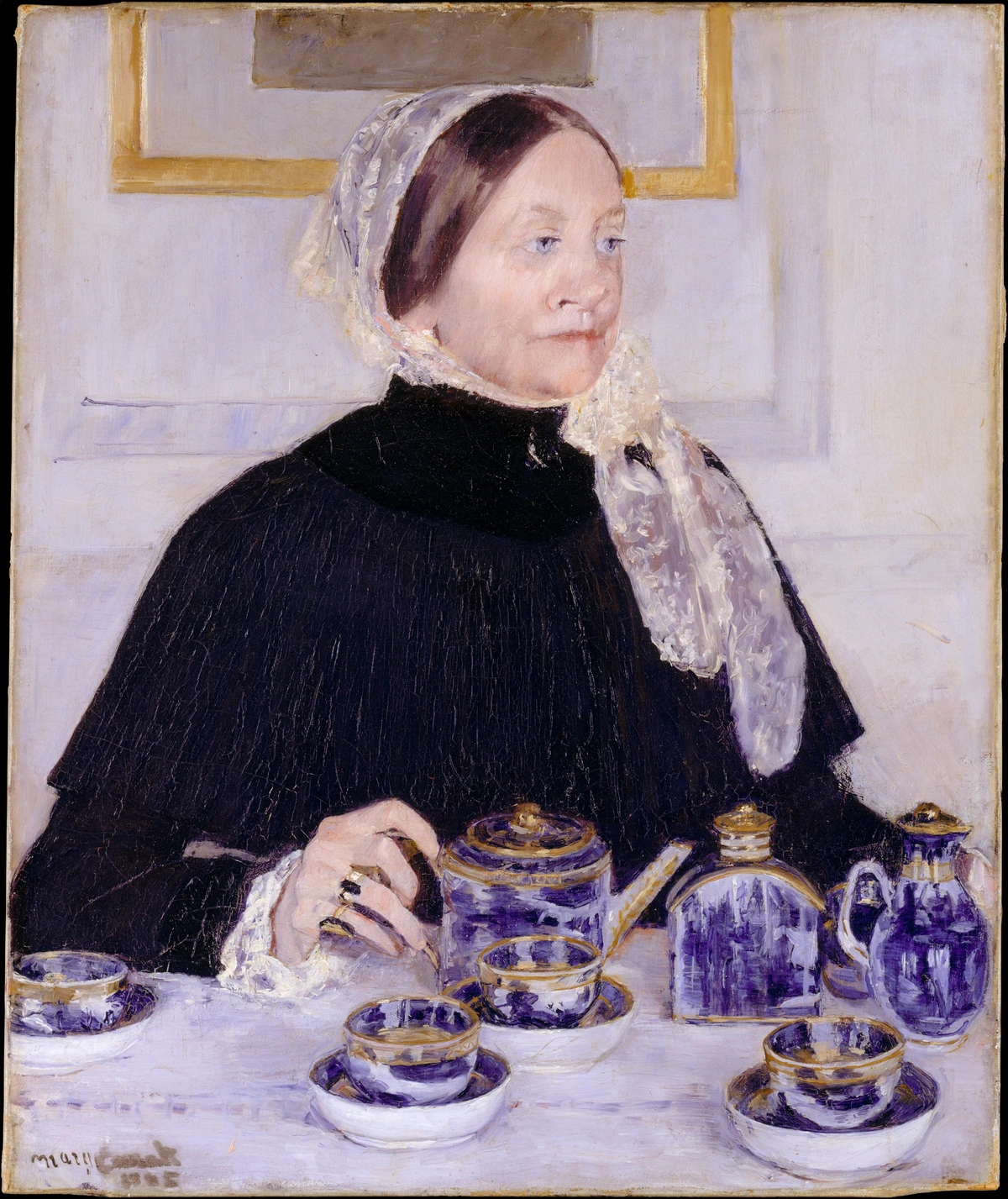
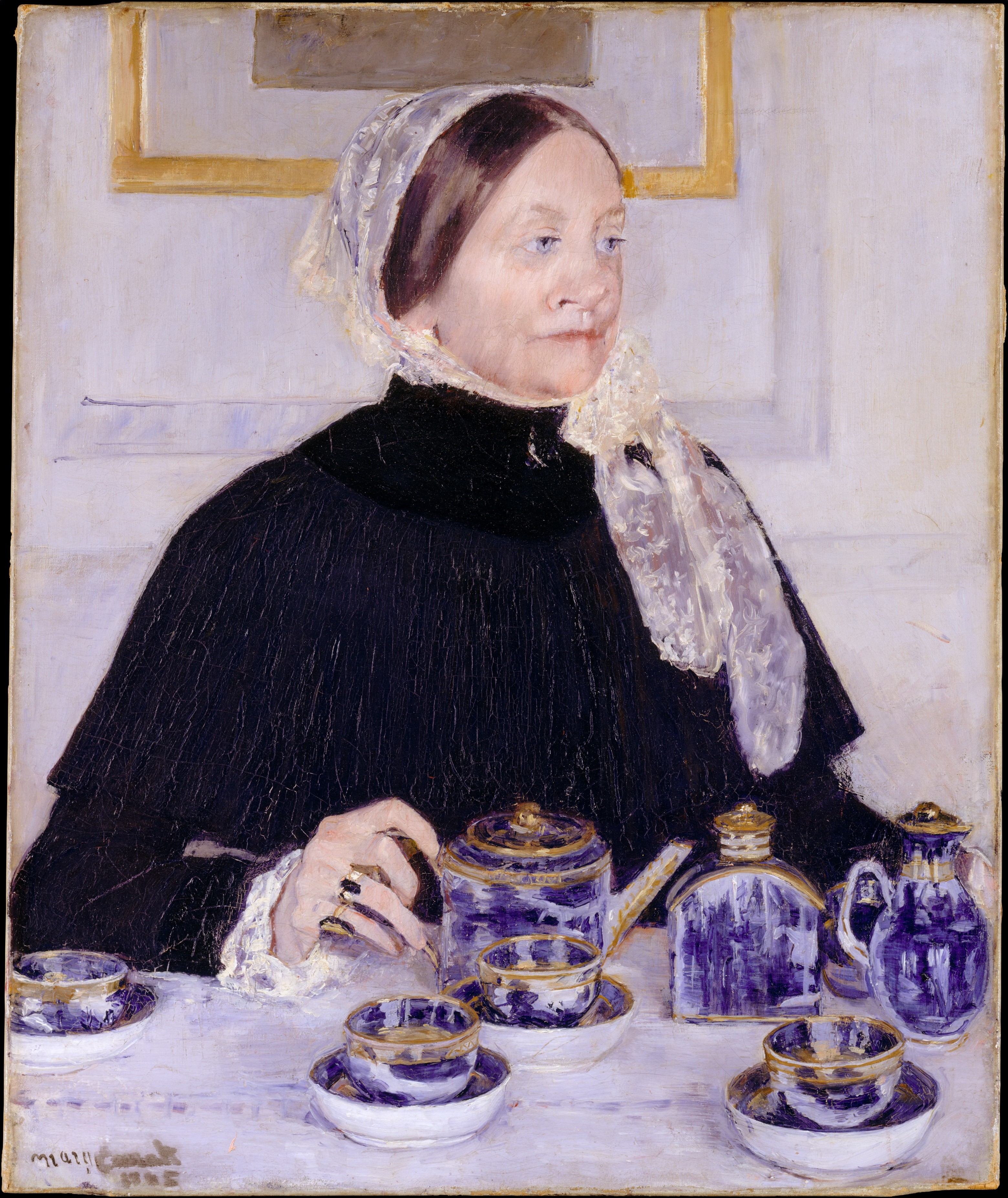
While her mother and child works are iconic, Cassatt's oeuvre extends far beyond the nursery. She was a master at depicting women in their private moments, engaged in their daily lives – reading, having tea, writing letters, attending the opera, or simply contemplating. She captured their inner worlds, their quiet strength, and their burgeoning independence, offering a rare glimpse into the evolving role of the "modern woman" in the late 19th century. Think about 'Lady at the Tea Table' – it's not a grand narrative, but a profound study of a woman's presence, her thoughtful gaze, and the delicate details of her surroundings, reflecting the quiet rituals of upper-class female life. Or consider 'Woman Reading in a Garden' or 'The Reader' – these works are snapshots of moments often overlooked, yet brimming with significance, emphasizing intellectual engagement and personal autonomy. She grants her subjects agency and respect, a refreshing and radical departure from how women were often portrayed, idealized, or objectified by her male contemporaries. Her canvases become a quiet assertion of female identity and interiority, reflecting a society on the cusp of significant change for women. She wasn't just painting what she saw; she was painting what it felt like to be a woman in that era, with all its complexities and nascent freedoms, often capturing women enjoying quiet moments of self-possession and intellectual engagement, a revolutionary act in itself. This focus on female agency and the subtle narratives of women's lives makes her work incredibly resonant even today, speaking to a universal desire for self-determination and recognition that still feels profoundly modern.
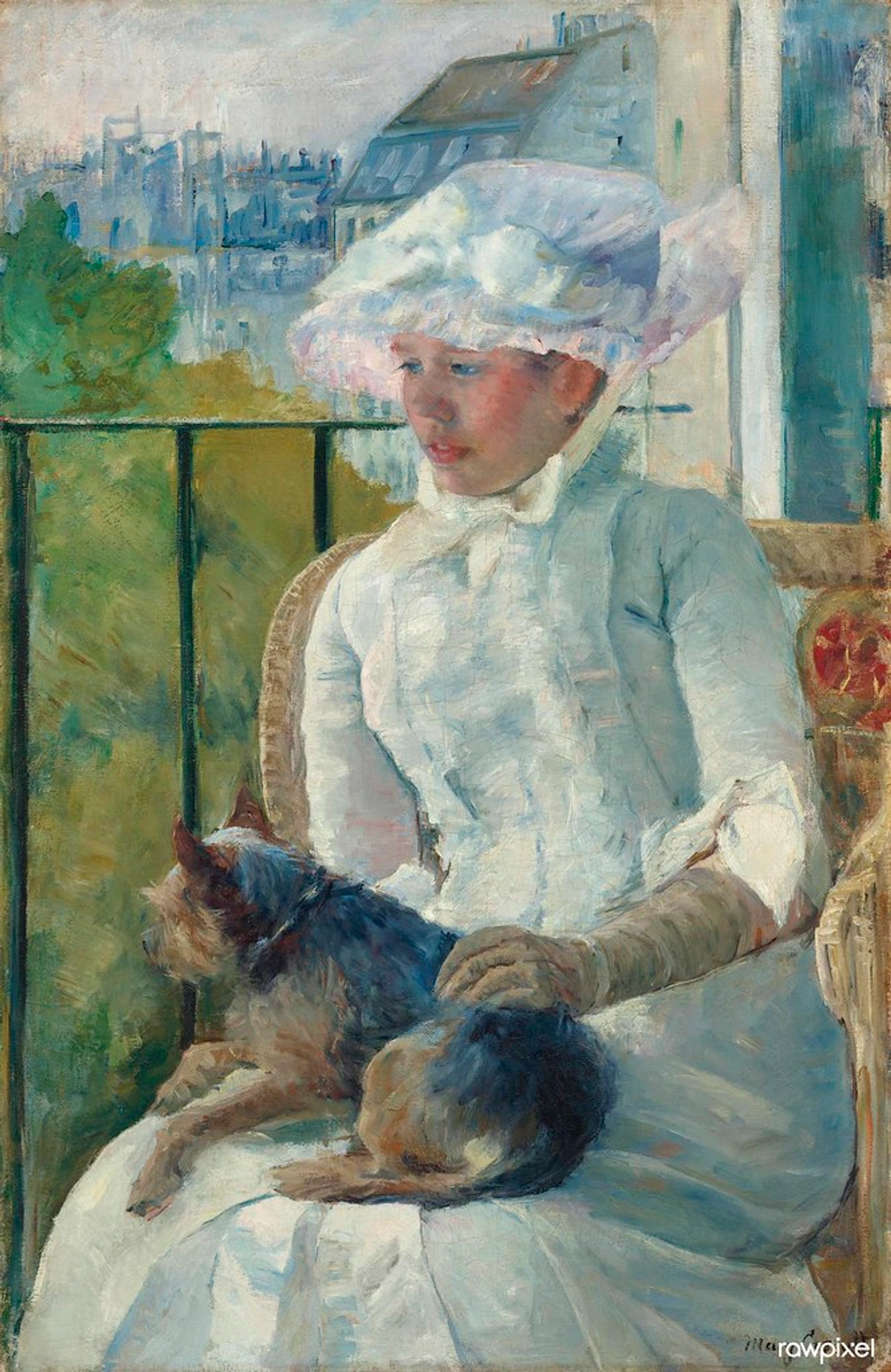
Her subjects, even the children, often possess a compelling sense of self. Take 'Young Girl at a Window' – this isn't just a sweet portrait. It's a snapshot of youthful contemplation, a moment of connection with the outside world, framed by the privacy of an interior space. The girl's thoughtful gaze and poised posture speak volumes about an emerging sense of self and agency, a far cry from the passive idealizations of women often seen in art. It reminds me how important it is to see individuals, not just archetypes, and Cassatt masterfully imbued each of her subjects with a palpable inner life. I mean, honestly, how many 19th-century artists really gave children that kind of profound interiority? It's rare, and it speaks volumes about her unique perspective.
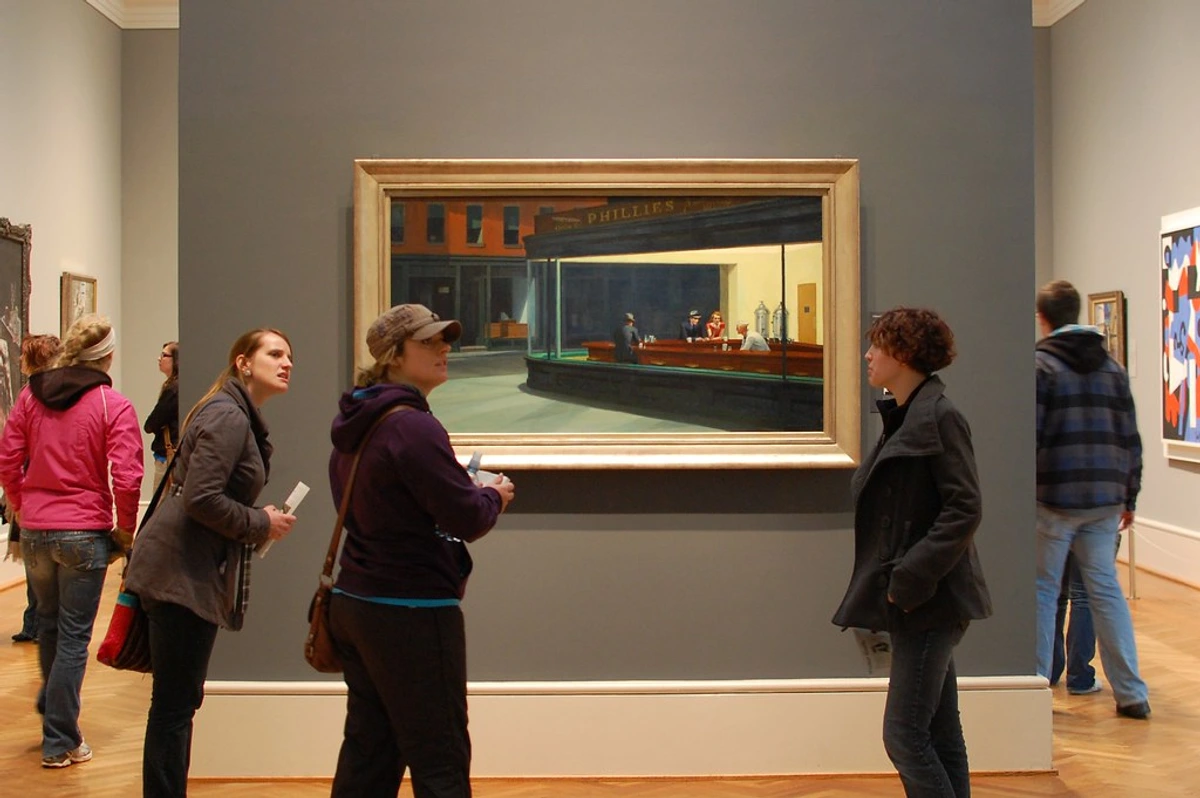
Her Place in Impressionism: A Woman's Perspective
Cassatt's Role as an Art Advisor and Champion of Modern Art
While her own paintings secured her place in art history, Mary Cassatt played an equally vital, though often unsung, role as an art advisor and tireless advocate for Impressionist art in America. She passionately championed the works of her Impressionist colleagues – Degas, Monet, Pissarro, and Morisot – to wealthy American friends and relatives, most notably the prominent collector Louisine Havemeyer. Cassatt didn't just suggest purchases; she educated, persuaded, and often accompanied these collectors to galleries and artists' studios, explaining the revolutionary nature of the art and guiding their acquisitions. This pivotal role was instrumental in shaping the collections of some of America's most important museums, including the Metropolitan Museum of Art and the Art Institute of Chicago. She essentially acted as a cultural bridge, bringing the dynamism of French modernism across the Atlantic and ensuring that American audiences and institutions had access to these groundbreaking works. It's a testament to her vision and generosity that she dedicated so much energy to supporting her peers and cultivating an appreciation for modern art, a facet of her legacy that, for me, elevates her beyond just an artist to a true cultural force. She wasn't just creating art; she was building the very infrastructure for its appreciation in a new world.
Cassatt's involvement with the Impressionists was pivotal, both for her and for the movement. She adopted their vibrant palette, their loose, energetic brushstrokes, and their dedication to capturing fleeting moments of light and color. Yet, her focus was distinct, often carving out a unique niche within the movement. While male Impressionists often depicted expansive landscapes, bustling cityscapes, and scenes of public leisure (think of Monet's haystacks or Renoir's dances at the Moulin de la Galette), Cassatt largely confined her work to the domestic sphere and the social rituals allowed to women of her class – a world she intimately understood. This wasn't a a limitation for her; it was a deliberate and strategic choice that allowed her to explore themes of profound human connection, the complexities of family life, and the subtle nuances of female experience in a way no male artist of the time truly could. Her access to the intimate domestic world provided her with an exclusive subject matter, granting her a unique vantage point into a world largely unseen in public art. She brought an unparalleled intimacy and authenticity to these scenes, offering a vital counterpoint to the predominantly male narratives of modern life. This unique perspective, born both of artistic choice and societal circumstance, is a crucial aspect of her contribution to Impressionism and her lasting relevance. It highlights how female artists, often restricted in their physical access to public life, forged innovative ways to depict their own realities with profound artistic impact, proving that true art transcends mere physical access. I mean, imagine trying to paint a truly authentic mother and child scene if you weren't constantly observing it, if you didn't have that personal understanding – it's something the male artists of her era simply couldn't replicate with the same raw honesty.
Techniques and Stylistic Innovations
Cassatt's Impressionism was never a mere imitation; it was a highly personal interpretation. She embraced the Impressionist emphasis on color and light, often using a bright, unmixed palette and visible, energetic brushstrokes to convey spontaneity and immediacy. Her keen understanding of color theory allowed her to create luminous effects and subtle atmospheric changes without resorting to traditional chiaroscuro or strong outlines typically found in academic painting. However, unlike some of her Impressionist colleagues who dissolved forms completely into light, Cassatt often retained a stronger sense of form and outline, particularly in her figures. This quality perhaps harked back to her rigorous academic training and her admiration for the Old Masters, but it was also deeply influenced by Japanese prints. Her compositions frequently featured bold diagonals, daringly cropped figures, and a flattened sense of space, all hallmarks of the Japonisme aesthetic. This fusion of Impressionist vibrancy with a more structured approach to form created a unique visual language that was both modern and profoundly expressive. Her brushwork, though energetic and visible, often had a distinct crispness when defining contours, especially in faces and hands, allowing for a compelling blend of spontaneity and precision. She wasn't afraid to experiment, constantly pushing the boundaries of her chosen mediums and developing a style that was recognizably hers. Her mastery extended to both oil paint, which she used for her large-scale canvases, and pastel, a medium she greatly favored for its speed, luminous qualities, and ability to capture the fleeting expressions of her subjects. In fact, she elevated pastel from a secondary medium to one capable of profound artistic expression, often achieving painterly effects with a unique softness and radiance.

She was also deeply influenced by Japanese prints, an aesthetic that permeated much of the Parisian art scene at the time. This fascination, known as Japonisme, significantly impacted her bold compositions, her use of flattened planes and strong outlines, and her elegant, often asymmetrical, lines. This added another layer of sophistication and modernism to her Impressionist style, distinguishing her further. The woodblock prints of Ukiyo-e masters like Utamaro and Hokusai offered new ways to think about perspective, color, and narrative, which Cassatt masterfully integrated into her own work, particularly in her printmaking. She admired the daring perspectives and simplified forms that brought a new kind of dynamism to her compositions, making her domestic scenes feel incredibly fresh and contemporary. Moreover, the Japanese aesthetic often favored flat areas of color and a lack of traditional Western chiaroscuro, an approach Cassatt adopted to create a vibrant, modern sense of space. It's this intelligent synthesis of influences that truly makes her art sing for me. If you want to dive deeper into the broader context, our ultimate guide to Impressionism is a fantastic resource, and you can also learn more about other women Impressionists, or explore the enduring impact of this art form in our article on The Enduring Legacy of Ukiyo-e: Japanese Woodblock Prints and Their Global Impact.
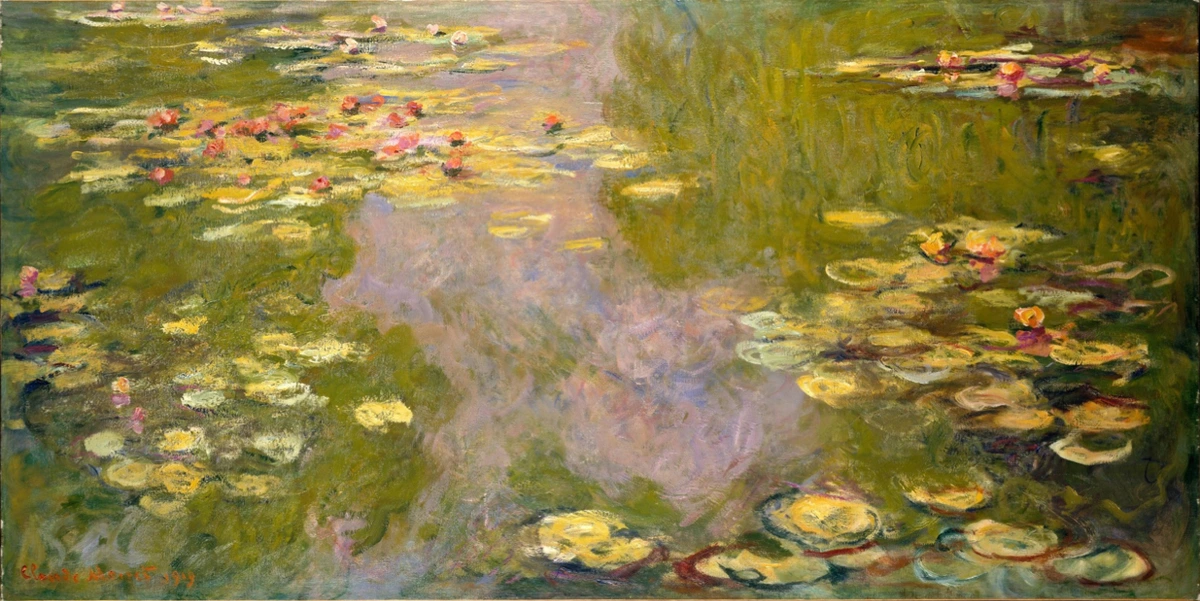
Mastering the Medium: Cassatt's Printmaking
While Cassatt is primarily celebrated for her oil paintings and pastels, her contributions to printmaking are equally significant, if not more so, in terms of their innovative technique and aesthetic impact. She began experimenting with etching, drypoint, and aquatint in the early 1880s, often drawing directly from life. This period saw a revival of interest in original printmaking, and Cassatt, ever the innovator, plunged into it with characteristic intensity. Her printmaking offered a new avenue for her distinct vision, allowing for wider dissemination of her art and exploring different aesthetic challenges. Her groundbreaking series of ten color prints, exhibited in 1891 at Durand-Ruel's gallery in Paris, are considered masterpieces of the medium. This series, often referred to as 'The Ten,' explored intimate domestic subjects such as women bathing, arranging their hair, or writing letters, all rendered with an exquisite sensitivity and innovative use of color. These works, influenced heavily by Japanese woodblock prints, showcase her remarkable skill in capturing subtle gradations of tone and intricate detail, employing multiple plates (often three or four) for each color to achieve a nuanced, painterly effect that mimicked the softness of her pastels. These prints, which often mirrored the domestic themes of her paintings, demonstrate her profound understanding of line, form, and color, and solidified her reputation as a formidable printmaker. She collaborated closely with master printer Auguste Lauze, pushing the boundaries of color printmaking at the time to achieve unprecedented levels of subtlety and complexity. It's a facet of her genius that I find incredibly compelling, revealing her continuous pursuit of artistic innovation across different mediums. These prints weren't just exercises; they were a significant contribution to the revival of printmaking as a serious art form, influencing subsequent generations of artists to explore its expressive potential.
Exhibition History and Critical Reception: Making Her Mark
Cassatt's journey through the art world was marked by her deliberate choice to align with the avant-garde. After initial successes exhibiting at the conservative Paris Salon – sometimes under a pseudonym to gain acceptance – she famously broke with the establishment to join the Impressionists. Her first exhibition with the group in 1879 was a significant moment, cementing her place among the leading artists of her time. Critics of the era often grappled with her work, particularly her unflinching portrayals of women and children, which defied traditional sentimentalism. Some praised her originality and strong draftsmanship, while others found her subjects too 'ordinary' or her style too 'masculine' – a curious criticism, don't you think? It highlights the gendered expectations placed on artists, even within a progressive movement. Yet, her consistent participation in Impressionist exhibitions through 1886, despite personal challenges and the group's internal frictions, solidified her reputation and influence. She was, quite simply, undeniable. Her work was seen as both quintessentially Impressionist in its vibrant palette and modern subjects, yet uniquely her own in its psychological depth and focus on the female sphere. This critical reception, though mixed at times, ultimately underscored her groundbreaking artistic vision and her refusal to conform.
Major Exhibitions of Mary Cassatt
Year | Exhibition/Event | Location | Significance |
|---|---|---|---|
| 1868 | Paris Salon (as Mary Stevenson) | Paris, France | First accepted work in official academic exhibition. |
| 1874 | Salon des Refusés | Paris, France | Showed works rejected by the official Salon, aligning with avant-garde. |
| 1879 | Fourth Impressionist Exhibition | Paris, France | First time exhibiting with the Impressionists, a pivotal moment. |
| 1881 | Sixth Impressionist Exhibition | Paris, France | Continued involvement with the group, establishing her presence. |
| 1886 | Eighth and final Impressionist Exhibition | Paris, France | Exhibited alongside Degas, Pissarro, and Seurat, marking the end of Impressionist group shows. |
| 1891 | Exhibition of color prints at Durand-Ruel | Paris, France | Showcased her groundbreaking printmaking series, met with critical acclaim. |
| 1893 | World's Columbian Exposition mural | Chicago, USA | Commissioned to paint 'Modern Woman' mural, a major public work for a female artist. |
| 1895 | First solo exhibition in New York (Durand-Ruel) | New York, USA | Introduced her work extensively to American audiences. |
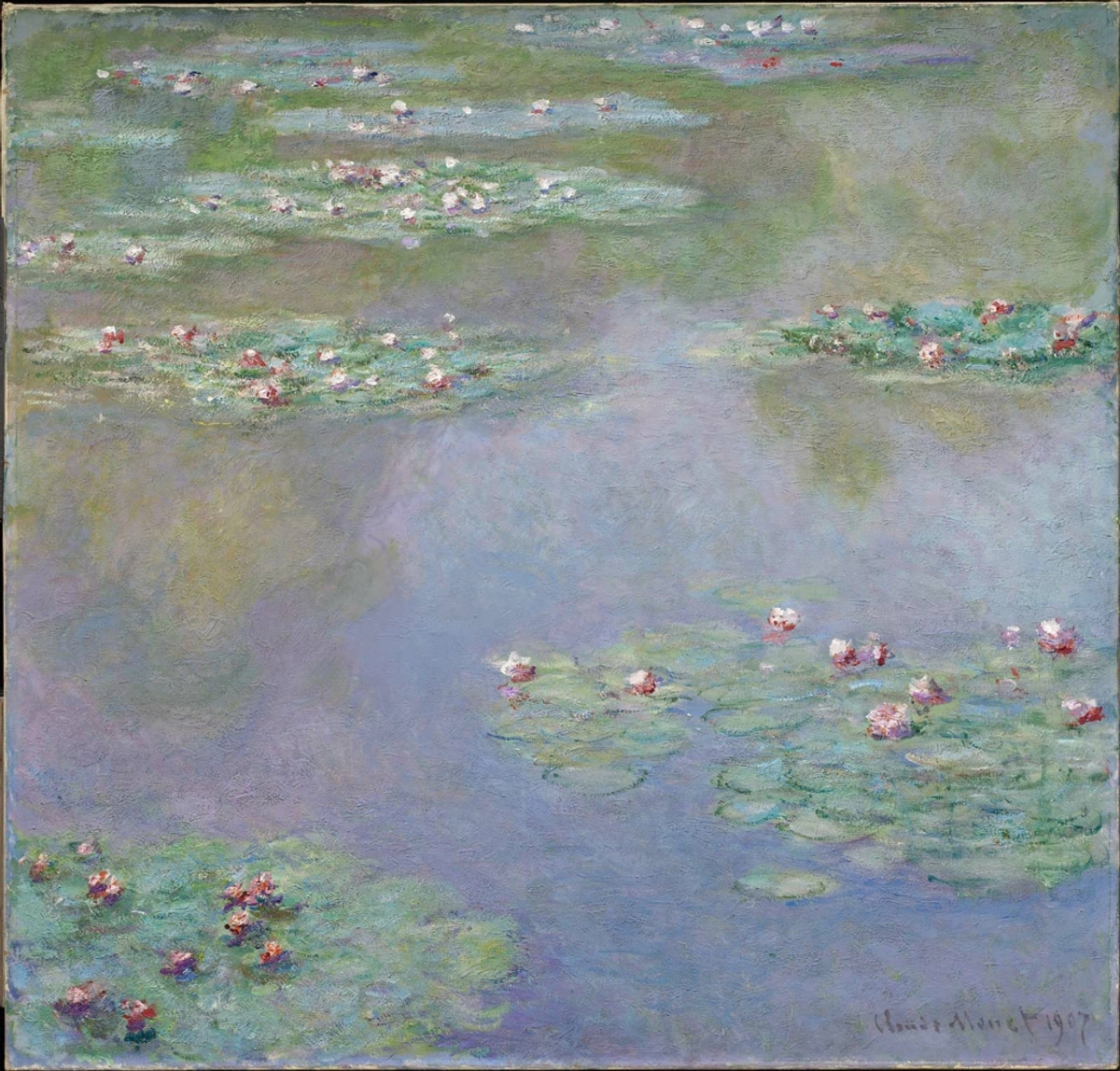
Here's a closer look at some of the printmaking techniques Cassatt mastered:

Technique | Description | Significance in Cassatt's Work |
|---|---|---|
| Drypoint | An intaglio technique where a sharp needle scratches directly into a copper plate, creating a burr that holds ink, resulting in soft, velvety lines. | Cassatt favored drypoint for its directness and ability to produce delicate, expressive lines, perfect for rendering the textures of hair, fabric, and tender skin. |
| Etching | A process where lines are incised into a metal plate using acid after drawing through a resist (ground), producing sharp, clean lines. | She used etching for the foundational structure and outlines of her compositions, providing a crispness that complemented the softer effects of other techniques. |
| Aquatint | A tonal technique using a porous ground that allows acid to bite into the plate in a finely granulated pattern, creating areas of tone similar to watercolor washes. | Aquatint was crucial for achieving the subtle gradations of light and shadow and for applying vibrant fields of color in her masterful color prints, mimicking the luminosity of her pastels. |
| Soft-Ground Etching | A variation of etching where a soft ground allows for impressions of textures (like fabric or leaves) or pencil-like drawing effects. | While less frequently highlighted, Cassatt explored soft-ground etching to achieve textural nuances and a more painterly quality in some of her prints. Her experimentation with these techniques allowed her to move beyond the purely illustrative, creating prints that rivaled the luminosity and emotional depth of her paintings and pastels. |
Later Life and Declining Eyesight
Mary Cassatt continued to paint and make prints well into her later years, but her artistic output gradually declined due to severe health issues, most notably diabetes and cataracts, which eventually led to near blindness. After 1914, her failing eyesight made it impossible for her to continue working, a heartbreaking reality for an artist whose entire life was dedicated to visual expression. Can you imagine the frustration, the profound loss, for someone who literally saw the world in brushstrokes and colors? It makes me shiver just thinking about it – the ultimate creative block for a visual artist. The physical toll of her health issues, coupled with the emotional anguish of losing her sight, must have been immense. Despite these personal challenges, her commitment to art and her influence on the art world remained. Even in her final years, though unable to paint, she continued to advise collectors and engage with the art world intellectually. She spent her final years in Grasse, France, at her country estate, Château de Beaufresne, until her death in 1926. Even in the face of such adversity, her spirit of independence and her unwavering dedication to her artistic vision endured, leaving us to wonder what more she might have created had her vision not failed.
Key Life Events and Artistic Evolution: A Snapshot
Year | Event | Artistic Impact |
|---|---|---|
| 1844 | Birth in Pennsylvania | Laid foundation for her unique American-European perspective. |
| 1860 | Enrollment at PAFA | Early formal training, but also early frustrations with academic rigidity. |
| 1866 | Move to Paris | Crucial decision to pursue art professionally in the European art capital. |
| 1872-73 | Study in Italy & Spain | Deepened understanding of Old Masters, strengthening her figure drawing. |
| 1877 | Invitation from Degas | Pivotal moment; full embrace of Impressionism, rejection of Salon. |
| 1879-1886 | Exhibitions with Impressionists | Defined her style within the avant-garde, established her unique voice. |
| Early 1880s | Printmaking experiments begin | Led to innovative color prints, influenced by Japonisme. |
| 1891 | 'The Ten' print exhibition | Major critical success, solidifying her mastery of printmaking. |
| 1893 | 'Modern Woman' mural for Chicago | Significant public commission, showcasing her feminist themes on a grand scale. |
| 1890s-1900s | Peak of mother-and-child works | Developed her most iconic and psychologically profound subject matter. |
| 1914 | Eyesight deterioration prevents painting | Tragic end to her active painting career, but her influence continued. |
| 1926 | Death in France | End of an era for a pioneering female Impressionist. |
My Favorite Cassatt Pieces (And Why They Speak to Me)
It's impossible to pick just one, but a few Cassatt pieces consistently draw me in, not just for their technical mastery, but for the feelings they evoke, for the human stories they tell. One is 'Young Mother Sewing.' The way the light, almost palpable, falls across the scene, highlighting the mother's focused concentration on her needlework, and the child's complete, trusting surrender to her lap – it's a microcosm of domestic peace, quiet industry, and the unbreakable bond between them. There’s a beautiful sense of absorbed tranquility, a moment frozen in time that speaks volumes about the rhythms of family life, about the quiet dedication of a mother and the absolute trust of a child. The textures, the colors, the composition – it all comes together to create a profoundly moving image of maternal devotion and childhood security. It’s the kind of scene that makes you pause, truly see the small, significant moments that make up a life. It’s a snapshot of a universal truth: the quiet, unassuming power of nurturing, a theme I often find myself exploring in my own abstract forms, seeking to distill that same emotional resonance without literal representation.
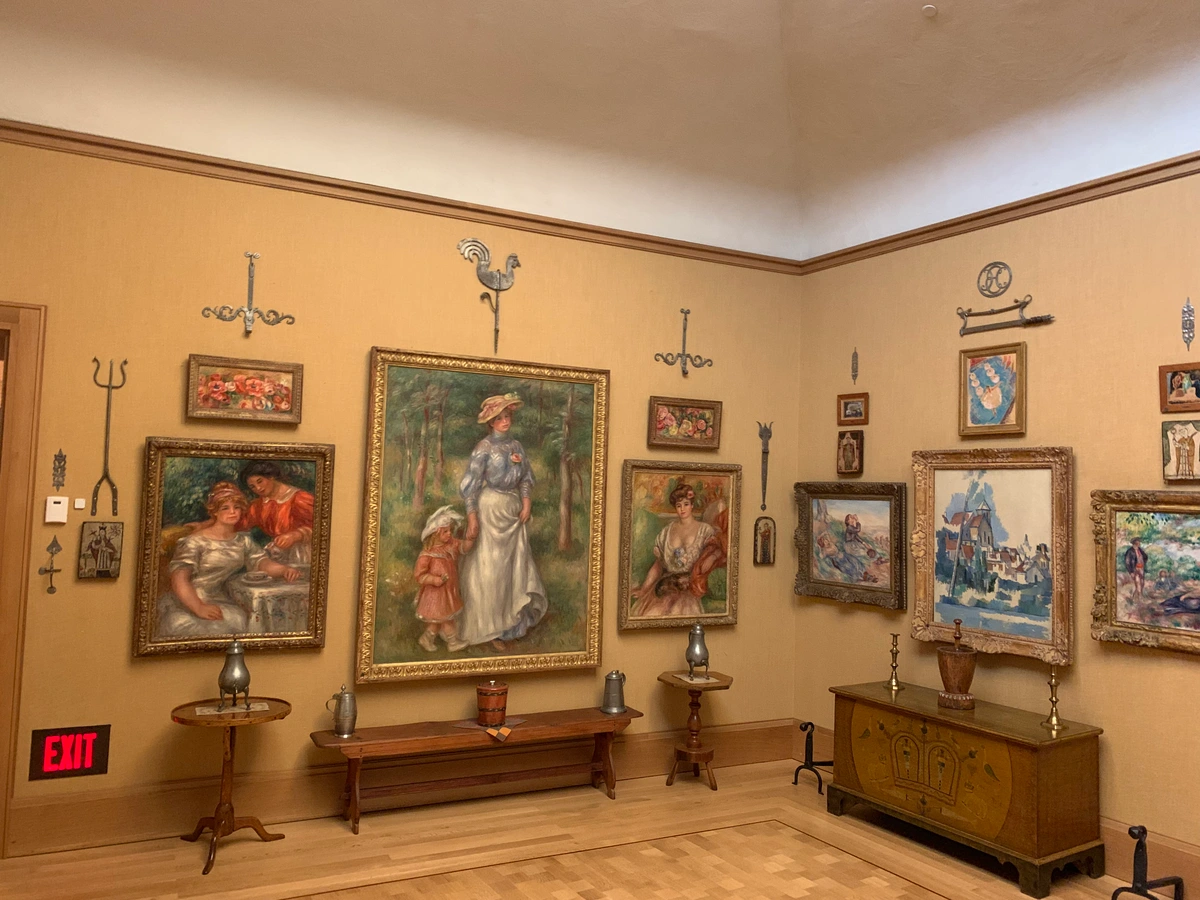
Another is 'Mother and Child (The Oval Mirror).' The way the mother holds the nude child, their reflections in the mirror – it feels incredibly intimate, almost voyeuristic, yet respectful. It's a meditation on self-awareness, identity, and the pure, unadulterated form of a child, revealing a tender bond through a clever compositional device. The subtle play of light and shadow, the delicate brushstrokes, all contribute to a sense of profound intimacy. It reminds me of the raw beauty in everyday existence, and it’s these moments, captured with such honesty and psychological insight, that often inspire my own abstract work, even if the final outcome looks vastly different. Seeing how artists like Cassatt find universal truths in specific scenes helps me understand how abstract art can also convey profound feelings without direct representation. It's all about distilling emotion, isn't it? If you're drawn to art that finds the universal in the personal, you can explore more about how contemporary artists approach this by visiting my museum in Den Bosch or checking out my timeline of work. It’s also interesting to consider how this work, with its emphasis on reflection and intimate self-presentation, subtly foreshadows later explorations of identity in modern art.

Other Notable Works by Mary Cassatt
Beyond her iconic mother-and-child works, Cassatt created a wealth of other captivating pieces that deserve attention. Here are just a few examples that showcase her versatility and keen observation:
Artwork Title | Date | Medium | Key Features / Significance |
|---|---|---|---|
| Little Girl in a Blue Armchair | 1878 | Oil on canvas | A spirited, unconventional portrait of a child, reflecting her burgeoning Impressionist style. Its bold colors and dynamic composition mark an early embrace of the avant-garde, capturing a moment of restless energy. |
| The Boating Party | 1893-1894 | Oil on canvas | A vibrant scene with bold Japanese-inspired composition, depicting leisure on the water. The strong lines, elevated perspective, and flattened forms are hallmarks of Japonisme's pervasive influence on her mature style. |
| Woman Bathing (La Toilette) | 1890-1891 | Color print (aquatint) | One of her masterful color prints, showcasing her exquisite skill in capturing intimate domestic rituals with delicate lines and flat planes of color, a direct nod to Japanese woodblock prints and their emphasis on everyday life. |
| Woman Reading | c. 1878-1879 | Oil on canvas | A quiet study of female intellectual life, emphasizing introspection and the quiet dignity of a woman absorbed in her thoughts – a powerful counterpoint to the often-objectified portrayals of women by her contemporaries. |
| The Child's Bath | 1893 | Oil on canvas | A monumental work exploring the tenderness and ritual of a mother bathing her child, renowned for its soft palette, masterful composition, and profound emotional depth, showcasing her mature handling of the mother-child theme. |
| The Coiffure | 1890-1891 | Color print (aquatint) | Another exquisite example of her color print series, depicting a woman arranging her hair, an intimate moment of personal ritual influenced by Japanese ukiyo-e, celebrating the private sphere of female experience. |
| Breakfast in Bed | 1897 | Oil on canvas | A quintessential Cassatt mother-and-child scene, capturing the gentle intimacy and informal reality of a morning routine with remarkable freshness and light, a celebration of domestic tranquility and affection. |
| Self-Portrait | c. 1878 | Gouache on paper | One of Cassatt's rare self-portraits, offering a glimpse into her own gaze and artistic identity, showcasing her directness, resolve, and a hint of the independent spirit that defined her career. |
| Lydia Crocheting in the Garden at Marly | 1880 | Oil on canvas | A tender portrait of her beloved sister, Lydia, engaged in a quiet domestic activity, demonstrating Cassatt's ability to imbue everyday moments with profound dignity and light, capturing a sense of tranquil absorption. |
| Woman with a Pearl Necklace in a Loge | 1879 | Oil on canvas | A vibrant depiction of a woman in a theatre box, capturing a moment of public leisure from a distinctly feminine perspective, reflecting the social life of Parisian women and her keen observation of modern life. |
| Children Playing on the Beach | 1884 | Oil on canvas | A lively outdoor scene capturing the uninhibited energy of children at play, reflecting her interest in depicting the natural spontaneity and autonomy of young subjects, free from adult supervision. |
| The Letter | 1891 | Color print (drypoint, aquatint, soft-ground etching) | A remarkable example of her complex printmaking techniques, depicting a woman in a private, contemplative moment, handling correspondence, highlighting the intimate rituals of female communication. |
| Summertime | 1894 | Oil on canvas | A serene portrayal of a mother and child in a boat on a lake, radiating a sense of peaceful intimacy and the quiet joy of a shared moment, with a luminous treatment of light on water. |
| Reading 'Le Figaro' | 1878 | Oil on canvas | A striking portrait of her mother reading a newspaper, underscoring Cassatt’s respect for female intellect and engagement with the wider world, a subtle yet powerful statement on women's roles. |
| The Lamp | 1890-1891 | Color print (drypoint, aquatint) | Depicts a woman reading by lamplight, another intimate domestic scene, celebrated for its subtle use of light and shadow in printmaking. |
| Mother and Child | c. 1889 | Oil on canvas | A tender and classic mother-and-child composition, showcasing her consistent theme with delicate brushwork. |
| A Cup of Tea | c. 1880 | Oil on canvas | Features a woman in a formal but intimate setting, highlighting the social rituals of upper-class women. |
| Children in a Garden (The Nurse) | 1878 | Oil on canvas | Shows children playing outdoors, with a nurse observing, reflecting her interest in children's natural environments. |
Mary Cassatt's Legacy Today
Mary Cassatt's influence stretches far beyond her lifetime, profoundly impacting the trajectory of art history. She broke significant barriers for women in the art world, proving conclusively that a female artist could achieve mastery, critical acclaim, and artistic independence without compromising her deeply personal vision. Her honest and unvarnished depictions of women and children offered a crucial counter-narrative to the often-idealized, sentimentalized, or objectified portrayals prevalent in art history by her male counterparts. Today, her works are cherished in major museums worldwide, continuing to speak to viewers about the universal experiences of family, intimacy, and the quiet dignity of domestic life, while also serving as powerful symbols of feminist art history and precursors to modern art movements that valued individual experience. In contemporary discourse, her work is often re-examined through the lens of gender studies, highlighting her radical choice of subject matter and her challenge to patriarchal artistic traditions. Perhaps less widely known, but equally significant, was her pivotal role as an advisor to American art collectors, encouraging them to acquire Impressionist works and thereby shaping the collections of major American museums, effectively acting as a cultural bridge between Europe and the United States.
For anyone interested in the intersection of art, gender, and social history, Cassatt's story is endlessly compelling. She reminds us that profound art doesn't always have to be about grand battles or heroic figures; sometimes, the most revolutionary statements are made in the tender gaze between a mother and child, or the thoughtful silence of a woman at tea. This enduring resonance, for me, lies in her ability to elevate the seemingly ordinary to the extraordinary. It encourages me to look for the art in the everyday, something I try to infuse into my own creative practice. And if you feel a connection to her spirit of capturing profound moments, perhaps you'll find something inspiring in my own collection, where I similarly aim to capture the profound in the seemingly simple. Her legacy continues to inspire artists and viewers alike to appreciate the profound beauty and revolutionary potential found in seemingly unassuming subjects. I often think about how her focus on domestic scenes, initially perceived as less significant, has now become a cornerstone of understanding women's lived experiences in art history, truly a radical shift in perspective.
Key Themes in Cassatt's Lasting Legacy
Theme | Description | Contemporary Relevance |
|---|---|---|
| Feminist Art History | Broke barriers for women artists, challenged male-dominated art world. | Inspires contemporary female artists and art historians to reclaim narratives. |
| Authentic Motherhood | Depicted realistic, unsentimental mother-child bonds. | Continues to resonate with viewers seeking honest representations of family life. |
| Female Agency & Interiority | Portrayed women with intellectual depth and self-possession. | Influences discussions on the portrayal of women in media and art today. |
| Cultural Ambassador | Shaped American museum collections through art advising. | Highlights the power of patronage and cross-cultural artistic exchange. |
| Printmaking Innovation | Elevated printmaking to a fine art, pushing technical boundaries. | Inspires modern printmakers and graphic artists to experiment with the medium. |
| Quiet Radicalism | Achieved revolutionary change through subtle, persistent vision. | Reminds us that impact isn't always loud; quiet conviction can be transformative. |

Frequently Asked Questions About Mary Cassatt: Your Quick Guide
What famous paintings did Mary Cassatt create?
While her entire oeuvre is remarkable, several of Mary Cassatt's paintings stand out as particularly iconic and beloved. Her most famous works often depict mothers and children, revealing intimate domestic scenes with profound psychological insight. Key examples include:
- The Child's Bath (1893): A monumental oil painting renowned for its tender portrayal of a mother bathing her child, celebrated for its composition and emotional depth, and a true testament to her mature style, often cited for its delicate palette and Japanese print influences.
- Little Girl in a Blue Armchair (1878): An early Impressionist masterpiece, this painting captures the spirited independence of a young girl in an unconventional pose, showcasing her burgeoning modern style with bold colors and dynamic composition. It was a controversial piece at the time, rejected by the Salon, which I think only highlights its groundbreaking nature.
- Mother and Child (The Oval Mirror) (c. 1899): An incredibly intimate piece where a mother holds her nude child before a mirror, exploring themes of identity and reflection with delicate brushstrokes and a sense of profound connection. This work exemplifies her ability to turn a simple domestic scene into a moment of profound psychological insight.
- Young Mother Sewing (c. 1900): This work beautifully depicts a mother absorbed in needlework with her child resting on her lap, a quintessential scene of domestic tranquility and maternal devotion that resonates deeply with viewers, showcasing her masterful handling of light and texture.
- The Boating Party (1893-1894): A vibrant and boldly composed oil painting showing a woman and child in a sailboat, heavily influenced by Japanese prints in its perspective and use of color planes, showcasing her innovative approach to composition and a striking departure from traditional marine painting.
- Woman Bathing (La Toilette) (1890-1891): One of her masterful color prints, this piece captures a private moment of female ritual with exquisite line work and delicate aquatint tones, showcasing her unparalleled printmaking prowess and Japonisme influences. It's truly a testament to her versatility across mediums, don't you think?
These works, among many others, demonstrate her consistent dedication to capturing the profound beauty and complexity of everyday life, particularly within the domestic sphere, making them enduring symbols of her legacy and a source of constant inspiration for me. It’s hard to pick a favorite, truly! Each one offers a window into the nuanced lives of women and children, a world often overlooked or misrepresented in the art of her time.
What was Mary Cassatt's artistic style?
Mary Cassatt's artistic style is a captivating blend of influences, primarily rooted in Impressionism but infused with her unique vision and later touches of Post-Impressionism and Symbolism. She adopted the Impressionist tenets of vibrant color, visible brushstrokes, and a focus on capturing fleeting moments of modern life. However, unlike some of her peers, she often maintained a stronger sense of form and outline in her figures, a testament to her rigorous academic training. Crucially, her style was deeply shaped by Japanese Ukiyo-e prints, which influenced her bold compositions, daring cropping, flattened planes, and elegant linear quality. Her use of pastel and innovative printmaking techniques further distinguish her, allowing for both luminous, painterly effects and delicate, expressive lines. Essentially, her style is characterized by a profound empathy for her subjects, particularly women and children, rendered with technical mastery and a distinct psychological depth that was revolutionary for its time. It's this unique combination that allows her work to feel both firmly within the Impressionist canon and yet strikingly individual. She experimented with various paint types, from traditional oils to the more immediate pastels, each medium allowing her to explore different facets of her subjects, and her brushstrokes were often decisive, a fusion of Impressionistic energy and a classical understanding of form. If you're curious about different artistic mediums, our guide to Definitive Guide to Paint Types for Artists or Basic Brushstrokes for Acrylic Painting might offer some interesting parallels to her versatile approach.
What was Mary Cassatt's artistic period?
Mary Cassatt is primarily associated with the Impressionist movement, which she joined in 1877. She exhibited with the Impressionists from 1879 to 1886. While her early training was academic, her style evolved dramatically under the influence of Impressionism, adopting its characteristic vibrant palette, visible brushstrokes, and focus on modern life. Towards the end of her career, and particularly in her printmaking, she also showed influences that leaned towards Post-Impressionism and Symbolism, demonstrating a continuous evolution in her artistic approach. For instance, the strong outlines and simplified forms in her later prints sometimes hint at Symbolist tendencies, prioritizing emotional impact over strict realism. It's not a simple label, is it? She absorbed, transformed, and transcended, leaving us with a style uniquely her own.
What is Mary Cassatt known for?
Mary Cassatt is primarily known for her captivating Impressionist paintings and innovative prints, especially her tender, psychologically insightful, and unsentimental depictions of mothers and children in intimate domestic settings. Her masterful use of color, composition, and light brought a unique and empathetic perspective to these everyday scenes, utterly revolutionizing a genre often dismissed as mere sentimentality. Critically, she was one of the few American artists, and one of only two women (alongside Berthe Morisot), to officially exhibit with the French Impressionists, solidifying her place in the avant-garde movement. Beyond these iconic works, she's also celebrated for her portraits of women in private moments, subtly challenging the male gaze prevalent in art history and portraying female autonomy and intellectual engagement – a truly radical act for her time. She also played a significant role as an art advisor, guiding American collectors to acquire Impressionist works, thereby shaping the collections of major American museums.
What kind of colors did Mary Cassatt use?
Mary Cassatt's palette was characteristic of Impressionism, favoring bright, clear, and often unmixed colors applied with visible brushstrokes to capture the effects of natural light. She famously moved away from the somber, earthy tones of academic painting, embracing a more luminous approach. Her sophisticated understanding of color theory allowed her to create luminosity and subtle atmospheric shifts, creating a sense of immediacy and vibrancy in her work. Particularly in her pastels and color prints, she demonstrated an extraordinary ability to blend and layer hues to achieve rich, painterly effects and delicate gradations, often influenced by the flat planes of color seen in Japanese prints. Her colors, for me, always feel fresh and alive, like a breath of fresh air compared to the sometimes muted palettes of earlier academic art. She famously used vibrant blues, pinks, and greens to depict skin tones and fabrics, breaking from conventional realism to create a more expressive and emotionally resonant surface. This careful selection and application of color wasn't just aesthetic; it was deeply psychological, informing the mood and emotional depth of her scenes, much like how contemporary artists explore The Psychology of Color in Abstract Art: Beyond Basic Hues.
How did Mary Cassatt fund her career?
Mary Cassatt's ability to pursue a lifelong professional art career was largely due to her advantageous family background. Coming from a wealthy and socially prominent family, she had access to resources that many aspiring female artists of her time did not. Her father's financial success, though initially accompanied by disapproval of her career choice, ultimately provided her with an independent income and enabled her to live and study abroad without the immediate necessity of selling her art for survival. This financial independence was truly crucial, allowing her the freedom to experiment, to reject the Salon system when it no longer served her artistic vision, and to pursue her art with uncompromising dedication. It’s a stark reminder of how privilege, even when contested, can empower revolutionary artistic paths.
Was Mary Cassatt an Impressionist?
Yes, absolutely! Mary Cassatt was a pivotal and celebrated member of the Impressionist movement from 1877 onwards. She not only embraced their core techniques of capturing fleeting moments, using visible brushstrokes, and focusing intensely on light and color, but she also brought her own distinctive approach. While sharing the Impressionist palette, her subject matter often focused more intensely on intimate domestic and social scenes involving women and children, offering a unique and invaluable female perspective on modern life, distinguishing her from many of her male counterparts who focused on landscapes or public leisure. Her participation in four of the Impressionist exhibitions (a significant commitment, I think) underscored her unwavering commitment to the avant-garde. So, while an Impressionist, she was always, profoundly, herself.
What was the significance of her portraits?
Mary Cassatt's portraits, particularly those of women and children, are significant for their radical departure from the norm. Instead of idealized, sentimentalized, or objectified depictions, Cassatt portrayed her subjects with a profound psychological depth and an unflinching honesty. She captured their inner worlds, their moments of introspection, and their unselfconscious interactions, granting them a sense of agency and dignity that was revolutionary for her time. Her portraits of children, for instance, avoid portraying them as miniature adults or passive props, instead revealing their nascent personalities and independent spirits. For women, she highlighted their intellectual engagement, their private rituals, and their quiet strength, effectively creating a counter-narrative to the prevailing male gaze in art history. This focus on the genuine, lived experience of her subjects elevates her portraits from mere representations to profound studies of human nature and identity.
How did Mary Cassatt challenge conventions?
Mary Cassatt challenged conventions in myriad ways, making her a truly revolutionary figure in art history. Firstly, she defied rigid societal expectations of women in the 19th century by pursuing a professional art career, choosing artistic independence over marriage and domesticity – a truly radical stance for her era. She rejected the conservative Salon system and embraced the avant-garde Impressionist movement, a radical artistic choice that put her at odds with traditional institutions. Artistically, she challenged the prevailing male gaze by depicting women and children with unprecedented honesty, psychological depth, and dignity, refusing to idealize or objectify them. Her focus on intimate domestic scenes elevated subjects often dismissed as mere "genre scenes" to the realm of high art, validating the female experience as a legitimate and profound subject. Furthermore, as an American woman exhibiting with French Impressionists, she broke national and gender barriers, becoming a crucial cultural bridge. Her innovative printmaking techniques, influenced by Japanese art, also pushed artistic boundaries, demonstrating her continuous quest for new forms of expression. In essence, her entire life and artistic output were a quiet, yet fierce, rebellion against the limitations imposed on women artists and women in society, and a powerful assertion of her unique vision.
What was her approach to self-portraiture?
Mary Cassatt's approach to self-portraiture was quite rare and understated, unlike many artists who frequently depicted themselves. She created only a handful of self-portraits throughout her career, primarily in her earlier years. These works tend to be direct and unsentimental, offering a glimpse into her own gaze and artistic identity without the overt theatricality sometimes seen in other artists' self-representations. Her most known self-portrait, a gouache on paper from around 1878, showcases her directness, resolve, and a hint of the independent spirit that defined her career. This scarcity of self-portraits might reflect her focus on the external world and her subjects, or perhaps a deliberate choice to avoid the kind of public self-scrutiny that many male artists embraced. Regardless, the few self-portraits we have are potent insights into the woman behind the brush, revealing a focused and determined individual.
Did Mary Cassatt ever paint men?
While Mary Cassatt is overwhelmingly celebrated for her portraits of women and children, she did occasionally paint men, though these works are less numerous and less iconic. Her male subjects were typically family members (like her father or brother) or men in formal portraits, or sometimes present in scenes of public life, though usually in supporting roles, such as the male figure in The Boating Party. For instance, her early Salon works sometimes included male figures, but these were often in the traditional academic style she later rejected. However, her core artistic focus remained, quite deliberately, on the intimate lives and inner worlds of women, and the tender dynamics of mother and child relationships – a powerful artistic statement in itself.
Did Mary Cassatt have children?
No, Mary Cassatt never married nor had children of her own. This was a deliberate and radical choice for a woman in the 19th century, as she chose to dedicate her life fully and uncompromisingly to her artistic career. Can you imagine the societal pressure she must have faced? It's easy to forget just how revolutionary that decision was at the time. Despite not being a mother herself, her empathetic and profound portrayals of motherhood were often inspired by observations of her sister, Lydia, and the children of her friends and family, demonstrating an extraordinary capacity for empathy and observation that transcended her personal experience. It's a testament to her profound artistic sensibility and ability to connect with universal human emotions, even without direct personal experience. For me, it proves that empathy and understanding can transcend lived experience, allowing an artist to tap into universal truths.
How did she support other women artists?
Beyond her own groundbreaking artistic practice, Mary Cassatt was a steadfast supporter of other women artists and female intellectual endeavors. Her close friendship and mutual respect with Berthe Morisot exemplifies this, as they navigated the male-dominated Parisian art scene together. Cassatt also played a crucial role in championing American female artists and ensuring their access to European art and training. For instance, she advised and encouraged American sculptress Bessie Potter Vonnoh. More broadly, her tireless work as an art advisor, guiding American collectors like Louisine Havemeyer to acquire works by Impressionists (including female artists), helped create a market and appreciation for modern art that benefited all artists, but especially women. Her advocacy extended to the 'Modern Woman' mural for the 1893 World's Columbian Exposition, a monumental opportunity for a female artist to present a feminist vision on a grand public scale. She understood the unique challenges women faced and used her influence to open doors and create opportunities, proving that sisterhood in art was a powerful force.
What techniques did Mary Cassatt use?
Mary Cassatt was a versatile artist who mastered several mediums, often combining them. She is renowned for her oil paintings, employing the Impressionist techniques of broken brushstrokes and vibrant colors to capture the effects of light, while often retaining a strong sense of form. Her pastel drawings are also highly celebrated for their rich, velvety textures and luminous quality, allowing for quick, expressive captures of her subjects with remarkable immediacy – a medium she arguably elevated to the status of a major art form, often achieving effects akin to painting but with a unique softness. Beyond these, her printmaking, particularly her groundbreaking series of color drypoints and aquatints, demonstrates exceptional technical skill and innovation, influenced heavily by Japanese woodblock prints, where she pioneered complex layering techniques for subtle color effects. She really was a master technician, always pushing the boundaries of her chosen craft, eager to explore what each medium could uniquely offer.
What was Mary Cassatt's relationship with her family?
Mary Cassatt maintained a complex but ultimately close relationship with her family, particularly her mother and siblings, throughout her life. While her father initially disapproved of her artistic ambitions, seeing them as unladylike and unsuitable for a woman of her social standing, he eventually came to accept, if not fully understand, her chosen path. Her mother, Katherine Kelso Johnston, was a significant intellectual and cultural influence, and their bond was particularly strong; Katherine often lived with Mary in Europe for extended periods and served as a frequent subject in her work. Cassatt also had a close relationship with her sister Lydia, who frequently served as a model for her works, especially during the early Impressionist years, before her premature death. Her brother, Alexander Cassatt, a prominent railroad executive, also provided financial support and encouragement, especially in her efforts to bring Impressionist art to American collectors. Despite her choice to remain unmarried and childless, her family remained a constant presence and a source of inspiration, particularly for her intimate domestic scenes, which were often inspired by observations of her family members. It’s clear to me that her family, despite their initial reservations, became an integral part of her artistic and personal world, providing both the stability and the subjects she needed to flourish.
What was her contribution to American art?
Mary Cassatt's contribution to American art is multifaceted and profound. Firstly, as the only American woman officially exhibiting with the French Impressionists, she served as a crucial cultural bridge between the European avant-garde and her home country. She introduced American audiences to the revolutionary ideas and aesthetics of Impressionism, challenging traditional tastes and opening doors for future generations of American artists. Most significantly, she played an unparalleled role as an art advisor, tirelessly guiding wealthy American collectors, such as Louisine Havemeyer, to acquire major works by her Impressionist colleagues and other European masters. Her discerning eye and persuasive arguments directly shaped the foundational collections of prestigious American museums like the Metropolitan Museum of Art, the Art Institute of Chicago, and the Museum of Fine Arts, Boston. Without her efforts, the presence of Impressionist masterpieces in American public collections would be far less extensive. In essence, she not only created significant art but also cultivated the very appreciation and collection of modern European art in America, cementing her legacy as a true pioneer and cultural ambassador.

Who influenced Mary Cassatt's art?
Mary Cassatt's art was shaped by a confluence of influences, like a beautiful tapestry woven from diverse threads. Her early academic training provided a strong foundational understanding of drawing and composition, giving her the tools to later break the rules. However, her most significant influence came from Edgar Degas and the Impressionist movement, which liberated her from the rigidities of the Salon system and encouraged her to capture modern life with its fleeting moments. Degas specifically influenced her approach to composition and her mastery of pastel and printmaking, pushing her towards formal experimentation. Additionally, Japanese Ukiyo-e prints played a crucial role, impacting her bold compositions, flattened planes, and use of strong, elegant outlines, especially evident in her masterful color prints – a true fusion of East and West. She also admired and studied the Old Masters, whose works she copied extensively in the Louvre, integrating their draftsmanship with modern artistic concerns, a blend that gave her works both timeless quality and avant-garde edge. It's this rich blend of tradition and avant-garde that makes her work so enduring, I think.
Her Studio Practice and Artistic Process
Cassatt's studio practice was characterized by intense dedication and a meticulous approach, even as she embraced the spontaneity of Impressionism. She worked primarily from live models, often women and children from her social circle or professional sitters, capturing them in unposed, natural interactions. This was a deliberate choice to achieve authenticity, contrasting sharply with the stiff, idealized figures favored by academic art. Her studios in Paris and later at her country estate, Château de Beaufresne, were her sanctuaries, spaces where she could experiment freely with light, color, and form. She often prepared elaborate sketches and studies, especially for her larger canvases and print series, demonstrating a rigorous planning process beneath the visible brushstrokes. For her pastels, however, she could work with astonishing speed and directness, layering colors to build up rich textures and luminous effects. It was a practice that blended the discipline of the Old Masters with the innovative spirit of the avant-garde, allowing her to capture profound emotional truths with both precision and immediacy.








Where can I see Mary Cassatt's art?
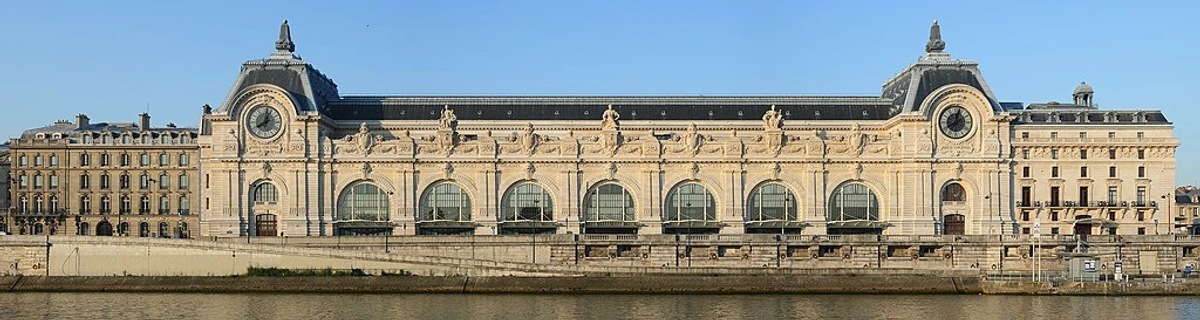
Mary Cassatt's works are held in major art museums worldwide, a testament to her enduring legacy. Prominent collections, many of which she helped build through her advice to American collectors, can be found at the Metropolitan Museum of Art (New York), the Art Institute of Chicago, the Museum of Fine Arts (Boston), the National Gallery of Art (Washington D.C.), and the Musée d'Orsay (Paris), among many others. You can also find her work in prestigious institutions like the Philadelphia Museum of Art and the National Museum of Women in the Arts. Her widespread presence in these esteemed institutions underscores her critical importance in both American and European art history, making her accessible to art lovers globally. It's a wonderful feeling to walk into a museum and find a Cassatt, knowing the story behind each brushstroke, and realizing the impact she had, not just as a painter, but as a patron and advocate for modern art.
What are some common misconceptions about Mary Cassatt?
One common misconception is that Mary Cassatt's work is simply "pretty pictures" of mothers and children, overly sentimental and lacking deeper artistic or intellectual merit. However, as we've explored, her depictions are profoundly psychologically insightful, challenging the idealized and often superficial portrayals common in her era. She brought a radical honesty and dignity to her subjects, elevating the domestic sphere to high art, a bold move in itself. Another misconception is that she was merely a follower of Edgar Degas or other male Impressionists. While she was undoubtedly influenced by them, Cassatt developed a highly distinctive style, particularly through her innovative printmaking and her unique female perspective on modern life, which stands powerfully on its own, a testament to her independent artistic vision. Lastly, some might assume her choice to remain unmarried and childless was a limitation or a sign of an unfulfilled life. On the contrary, this was a deliberate act of independence that allowed her unparalleled freedom to dedicate her life wholeheartedly to her art, a revolutionary stance for a woman in the 19th century. And frankly, her incredible output and lasting legacy prove that personal choices, when made with conviction, can lead to monumental achievements. I think it’s important to challenge these easy assumptions and look closer at the true depth of her artistic and personal choices.
What was Cassatt's role as an art advisor?
Beyond her artistic practice, Mary Cassatt played a crucial, though often unsung, role as an influential art advisor and collector. She passionately advocated for Impressionist art, especially to wealthy American friends and relatives, including the renowned collector Louisine Havemeyer. Cassatt guided them in acquiring works by her Impressionist colleagues like Degas, Monet, and Pissarro, often accompanying them to galleries and explaining the revolutionary nature of the art. This pivotal role helped shape the collections of some of America's most important museums, such as the Metropolitan Museum of Art and the Art Institute of Chicago, effectively building a bridge for modern European art to reach American audiences. It’s a remarkable legacy that highlights her commitment to the broader art world, not just her own career.
Why is Mary Cassatt important?
Mary Cassatt is profoundly important for several intertwined reasons: she was a pioneering female artist who achieved international acclaim and defied societal norms by forging a professional career in a male-dominated world. She was a crucial figure in the American Impressionist movement who helped define its unique character, bringing a distinct female perspective that was both intimate and universally resonant. Moreover, she was a tireless advocate and informal curator who helped American collectors acquire foundational Impressionist art, thereby shaping the landscape of major American museums – a true cultural ambassador. Her unique and empathetic perspective on domestic life and female subjects offered a powerful, authentic, and nuanced counterpoint to prevailing artistic trends, highlighting the dignity, complexity, and inner world of women's experiences in a way rarely seen before. She truly broadened the scope of what was considered 'high art' and proved the universal resonance of the everyday, solidifying her place as a feminist icon in art history. For me, her importance lies not just in what she painted, but in how she painted it – with a gaze that honored the quiet strength of women.
The Quiet Radical: A Concluding Thought
And that, I believe, is her greatest gift.
So, there you have it. Mary Cassatt – an artist who might seem 'quiet' at first glance, perhaps even conventional in her subjects, but whose legacy is anything but. She was a radical in her audacious choices, her groundbreaking subject matter, and her unwavering, fierce dedication to her craft. Her unparalleled ability to find profound beauty and universal truth in the everyday, in the intimate gestures of motherhood, the thoughtful solitude of women, and the unadorned reality of childhood, continues to inspire me deeply. Her work reminds us that art can be both gentle and revolutionary, that profound statements don't always require grand gestures, and that sometimes, the most powerful truths are revealed in the quietest, most human of moments. She didn't shout for attention; she earned it through the sheer power and honesty of her vision, transforming the domestic into a profound stage for human experience. What a woman. What an artist. What an indelible mark she left on the world, a mark that still whispers across time, reaching out and grabbing us by the heart, urging us to look closer at the world around us.