The Ultimate Guide to Mary Cassatt: A Visionary American Impressionist
Dive deep into the extraordinary life and art of Mary Cassatt, the American Impressionist who redefined women's roles on canvas. Discover her defiant spirit and lasting legacy.

The Ultimate Guide to Mary Cassatt: A Visionary American Impressionist
Welcome, fellow art explorers! If you've ever felt a profound connection to a painting, or found yourself captivated by the quiet dignity of a scene, then you're in for a treat. This article is your definitive, comprehensive, and deeply personal dive into the extraordinary life and groundbreaking work of Mary Cassatt, a visionary American Impressionist. My goal? To offer you the most engaging and authoritative resource on this pioneering artist, a woman whose defiant spirit and empathetic gaze reshaped the very fabric of art history, leaving an indelible mark on how we perceive modern womanhood and domestic life. I’m eager to share why I find her work so compelling and crucial to understanding the evolution of art.
When I think about artists who didn't just break the mold but utterly reshaped it, Mary Cassatt immediately comes to mind. She’s not just another name in the annals of art history; she's a force of nature, an American Impressionist who defied the stifling expectations of her era to forge a singular path in the bustling, male-dominated art world of 19th-century Paris. Born into a background that expected societal conformity, her bold decision to pursue a career as an international artist was, to me, an act of sheer audacity, driven by an unshakeable vision and a determination that still resonates. Her journey transcends the beautiful canvases she created—those intimate portrayals of mothers and children, or quiet domestic scenes—and extends to her groundbreaking printmaking and her pivotal role as an “advocate for the Impressionist movement itself”, helping to shape taste and steer collections in her native America. It's a profound exploration of identity, perseverance, and the enduring power of a woman's unique perspective, challenging us to truly see the world through her eyes and understand the monumental impact of her quiet revolution. I'm genuinely thrilled to dive deep into her story with you, because her work, her life, and her defiant spirit continue to inspire us to look closer, question norms, and appreciate the extraordinary in the everyday. We'll explore her revolutionary techniques, her unwavering independence, and the profound impact she had on the art world, both in Europe and back home in America. She was more than just a painter; she was a pioneer, a mentor, and a powerful voice for modernity, profoundly influencing the trajectory of American art appreciation.

The Unconventional Path of an American Abroad: Early Life and Artistic Awakening
Mary Stevenson Cassatt entered the world in 1844, not in some rustic, struggling artist's garret, but in Allegheny City, Pennsylvania, to a prominent and well-to-do family. I imagine her childhood was one of privilege, certainly, with access to education and culture, but also one defined by very clear, very conservative expectations for a young woman of her social standing: a good marriage, a quiet domestic life, perhaps some genteel hobbies. But from what I've pieced together, Mary Cassatt was anything but conventional. At a mere 15 years old, she declared her intention to become an artist. Can you imagine the scandal, the raised eyebrows at the dinner table? The art world of the mid-19th century was not a welcoming place for women, especially not for those aspiring to professional careers. For most, art was a pleasant pastime; for Mary, it was a profound, undeniable calling—a path that diverged sharply from the one society had so neatly laid out. Her family, particularly her father, Robert Simpson Cassat, expressed significant disapproval, seeing art as an unsuitable profession for a woman. However, her mother, Katherine Johnston Cassatt, a cultivated and well-read woman, provided crucial support and encouragement for her education, including foreign travel and language studies. This early exposure to European culture, particularly her trips to London, Berlin, and Paris, likely ignited her passion for art beyond the American context, fostering a nascent understanding that her artistic journey would be global and groundbreaking.
Her first formal foray into art began at the Pennsylvania Academy of the Fine Arts (PAFA) in Philadelphia, a reputable institution, but it quickly became apparent that this traditional academic setting couldn't contain her ambition. And frankly, I understand why. She found the pace agonizingly slow, and worse, the prevailing attitude towards female students was often openly patronizing. Women were largely confined to copying plaster casts, with severely limited—if any—access to live models, particularly nude ones, which was then considered indispensable for serious artistic training. This restrictive, almost dismissive environment, coupled with the methodical, uninspiring curriculum, convinced her that true artistic liberation lay elsewhere, far beyond the confines of the American academic system. This early frustration was a defining moment, solidifying her resolve to seek out a more rigorous and equitable artistic education, even if it meant venturing far from home. It's a reminder that even in seemingly progressive environments, systemic barriers for women artists were deeply entrenched, a challenge Cassatt was determined to overcome. I can only imagine the stifling effect of being told your ambitions were 'unsuitable' or your talent inherently 'lesser' simply due to your gender.
Her earliest travels across Europe with her family had already ignited a spark within her, exposing her to the grand museums and masterpieces of the Old World. These experiences, though perhaps initially casual, became foundational, seeding her ambition to contribute to that very tradition. She wasn't just observing; she was internalizing, preparing for a future she was determined to carve out for herself. This period cemented her understanding that a truly comprehensive art education would require immersion in the European art capitals, a bold aspiration for a young woman of her era. It was a self-directed curriculum, really, where she absorbed the lessons of the Louvre and other great institutions, laying the groundwork for her distinctive approach to figure painting and portraiture.
In 1866, with a spirit I can only describe as fiercely independent, she made a truly audacious move for a single woman of that era: she packed her bags and, with family members or other artists occasionally acting as chaperones, she moved to Paris. This wasn't just a trip abroad; it was a bold declaration of artistic and personal independence, a deliberate immersion into the heart of the European art scene, hungry to learn directly from the Old Masters in the Louvre and to absorb the vibrant energy virtually inaccessible to aspiring female painters back home. She found inspiration in the rich collections of the Louvre and eagerly sought private instruction, as women were notably barred from the prestigious École des Beaux-Arts until 1897. This early experience in Paris, including copying masterpieces in the Louvre and working in studios of academicians like Charles Chaplin and Thomas Couture, laid the groundwork for her later embrace of the avant-garde. It’s hard to overstate the courage it took for a woman like Cassatt to pursue such a path, defying not only familial expectations but also the deeply ingrained sexism of the art institutions themselves. Her perseverance during these formative years speaks volumes about her unyielding commitment to her craft, ultimately preparing her for the revolutionary shift that was about to occur in the art world. She truly saw no other path for herself than that of a dedicated professional artist.
Navigating the Parisian Art World: The Salon and Beyond
When Cassatt first arrived in Paris, the art world was still largely dominated by the official Paris Salon, a yearly exhibition that served as the primary gateway to artistic recognition and commercial success. Acceptance into the Salon was paramount for artists, signaling legitimacy and skill. The Salon championed a highly traditional, academic style, often favoring historical, mythological, or allegorical subjects, executed with meticulous detail and a polished finish. Cassatt, being the ambitious artist she was, initially sought to succeed within this traditional system. She made her Salon debut in 1868 with The Mandoline Player, a work that, while traditional in subject, hinted at her developing skill, and continued to exhibit there intermittently over the next decade. However, like many progressive artists of her generation, she soon grew disillusioned with the Salon's rigid academic style, its conservative juries, and its often arbitrary selection process. It felt stale, lifeless, a far cry from the vibrant, changing world she saw around her, the world she desperately wanted to capture. This frustration with the establishment set the stage for a pivotal shift in her artistic journey, leading her to seek out more unconventional avenues for expression. It reminds me a bit of when you're trying to find your own style, and you realize the 'rules' just don't fit anymore. This was a critical juncture, as it pushed her away from the predictable path and towards a revolutionary movement. Her submissions were often accepted, offering her a degree of early recognition, but the inherent conservatism of the Salon's juries, who often favored historical or mythological scenes over contemporary realism, became a source of increasing artistic confinement. She longed for a freedom of expression that the Salon simply couldn't offer, a sentiment that fueled her eventual break from the establishment.
She also sought private instruction, often from masters like Jean-Léon Gérôme, a prominent academic painter known for his meticulous realism, as women were not yet admitted to the École des Beaux-Arts. This period, while restrictive, honed her foundational drawing skills, a rigorous training that would remain a strong undercurrent in her later Impressionist work. Her early works in this period, though constrained by academic expectations, demonstrated her nascent ability to capture individual character and a certain naturalism, which would blossom fully with her move to Impressionism. She diligently copied Old Masters at the Louvre and worked independently, absorbing different techniques and subjects, from portraits to genre scenes, steadily building her artistic repertoire.

Embracing the Impressionist Revolution
Initially, Cassatt navigated the traditional art world, even exhibiting at the prestigious Paris Salon a few times. But she quickly grew disillusioned with the rigid, academic style that dominated the Salon. It felt stale, lifeless, a far cry from the vibrant, changing world she saw around her. It reminds me a bit of when you're trying to find your own style, and you realize the 'rules' just don't fit anymore. This growing frustration set the stage for a monumental shift in her artistic journey, a turning point that would define her legacy.
Then, in 1877, came her pivotal, life-altering moment: Edgar Degas. He encountered her work in the Salon and, as Cassatt herself famously recounted, declared: "Here is someone who feels as I do." Can you imagine the sheer validation, the seismic shift in perspective, that must have brought? Especially coming from an artist of Degas's caliber, whose own unparalleled draftsmanship and keen observation Cassatt admired immensely. Degas's invitation to exhibit with the independent, rebellious Impressionists was nothing short of a game-changer for her. This audacious group of artists was actively shaking up the art world, rejecting the staid historical and mythological narratives favored by the Salon in favor of a radical new approach. They embraced capturing contemporary life, fleeting moments, and the subjective experience of light and color, seeking to render the 'impression' of a scene rather than a painstakingly polished, traditionally realistic depiction. It was a movement that championed modernity, individuality, and a direct engagement with the visible world—all things that resonated deeply with Cassatt's own artistic sensibilities. Her readiness to abandon the traditional path for the experimental reflects a core aspect of her personality: an unwavering pursuit of artistic truth, regardless of the cost or social disapproval. She understood that true innovation often lies outside the comfort of the established order, a conviction that would fuel her groundbreaking work within the Impressionist movement, propelling her to new artistic heights.

Joining the Impressionists was, without a doubt, a huge leap for Cassatt. While the establishment viewed the Impressionists as scandalous provocateurs, for her, it was a profound liberation. She officially joined their ranks in 1879, becoming one of only three female artists—the others being the equally formidable Berthe Morisot and Eva Gonzalès—to exhibit with this groundbreaking group. Her inclusion was not merely a token gesture; it was a powerful testament to her exceptional talent and a significant moment for women artists, who, even within this avant-garde circle, still navigated a world that often dismissed or trivialized their artistic aspirations. Morisot, with her ethereal yet incisive depictions of domestic scenes and the inner lives of women, found common ground with Cassatt, sharing a nuanced understanding of feminine experience and the challenges of female artists. Gonzalès, a talented student of Édouard Manet, brought her own sophisticated eye to portraiture, often focusing on the elegance and complexity of contemporary women, further enriching the movement's diverse perspectives. Among these visionaries, Cassatt truly found her artistic home, embracing their hallmark techniques: loose, visible brushwork, vibrant palettes, and an unwavering focus on capturing the fleeting moments of modern life. It was a complete, exhilarating departure from the polished, almost photographic realism demanded by the Salon, and honestly, I believe it was the environment where her true genius could, and did, spectacularly shine, allowing her to develop her unique perspective on modern womanhood. If you're curious to explore more about the luminaries who shaped this transformative movement, I highly recommend diving into the stories of some famous impressionist artists and our ultimate guide to Impressionism, a movement that utterly redefined artistic expression.
The Woman Question and Cassatt's Unique Gaze: Portraying Modern Womanhood
What truly elevates Cassatt’s work, and what continues to captivate me, is her utterly unique and deeply empathetic perspective on the lives of women, especially the profound connection between mothers and children. While many of her male Impressionist counterparts were busy capturing bustling cityscapes, glamorous theater scenes, or idyllic landscapes, Cassatt, as a woman, possessed an unparalleled access to—and, critically, an intrinsic understanding of—the intimate, often private, and frequently unacknowledged moments of domestic life. This wasn't just a convenient choice of subject matter; it was a profound artistic and social statement. Her work directly challenged the art world's traditional hierarchy of genres, which often relegated domestic scenes to a lower status than historical or mythological subjects, viewing them as less 'important' than grand historical paintings or mythology. Cassatt proved that the domestic sphere held a profound, universal significance, worthy of monumental art, asserting the artistic validity of subjects traditionally deemed "feminine" or less serious. This was a radical act in a society that often confined women to these very spheres while simultaneously devaluing their experiences.
She dared to challenge the prevailing male gaze by depicting women not as passive objects of beauty or sentimental ideals, but as complex, autonomous individuals engaged in the rich tapestry of their daily existence. Her portrayals of mothers and children, in particular, reject the saccharine, idealized imagery often churned out for male patrons. Instead, she captured the raw, tender, sometimes weary, and undeniably human connections between them, elevating these everyday interactions to the realm of monumental art. Think about her seminal work, The Bath (The Child's Bath), completed in 1893 – it's not a coy, idealized mother, but a woman genuinely engaged in a practical, intimate act of care, with a powerful sense of dignity and focus. The composition, often influenced by Japanese prints, with its elevated viewpoint and flattened planes, further enhances the sense of a private moment observed, a quiet revolution in art that transformed genre painting. In an era when women's lives were largely confined to the domestic sphere, Cassatt's work boldly celebrated, validated, and monumentalized this experience with an honesty and directness that was revolutionary, revealing the true emotional labor and quiet strength within. It was, in essence, a feminist statement before the term was widely used in art criticism, a powerful reassertion of women's agency and interiority, making visible the often-unseen work and emotional depth of women's lives, and offering a profound counter-narrative to male artistic conventions.
Themes and Motifs in Cassatt's Work
Beyond the broad strokes of Impressionism, Cassatt continually revisited and deepened a specific set of themes that became hallmarks of her unique vision. It’s almost as if she was building a visual ethnography of modern womanhood, each painting a new insight into this often-unseen world, revealing the complexities and dignity of women's experiences.
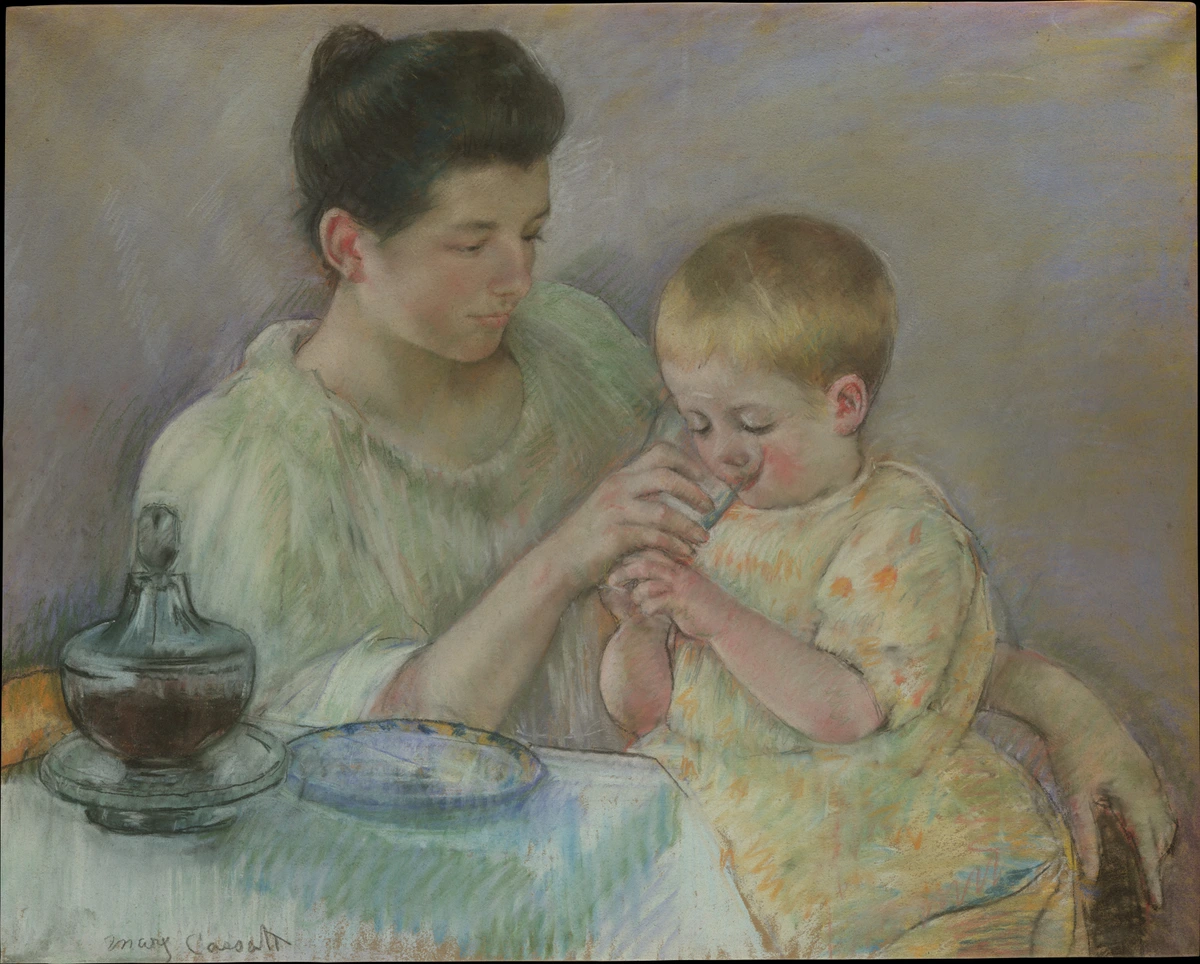
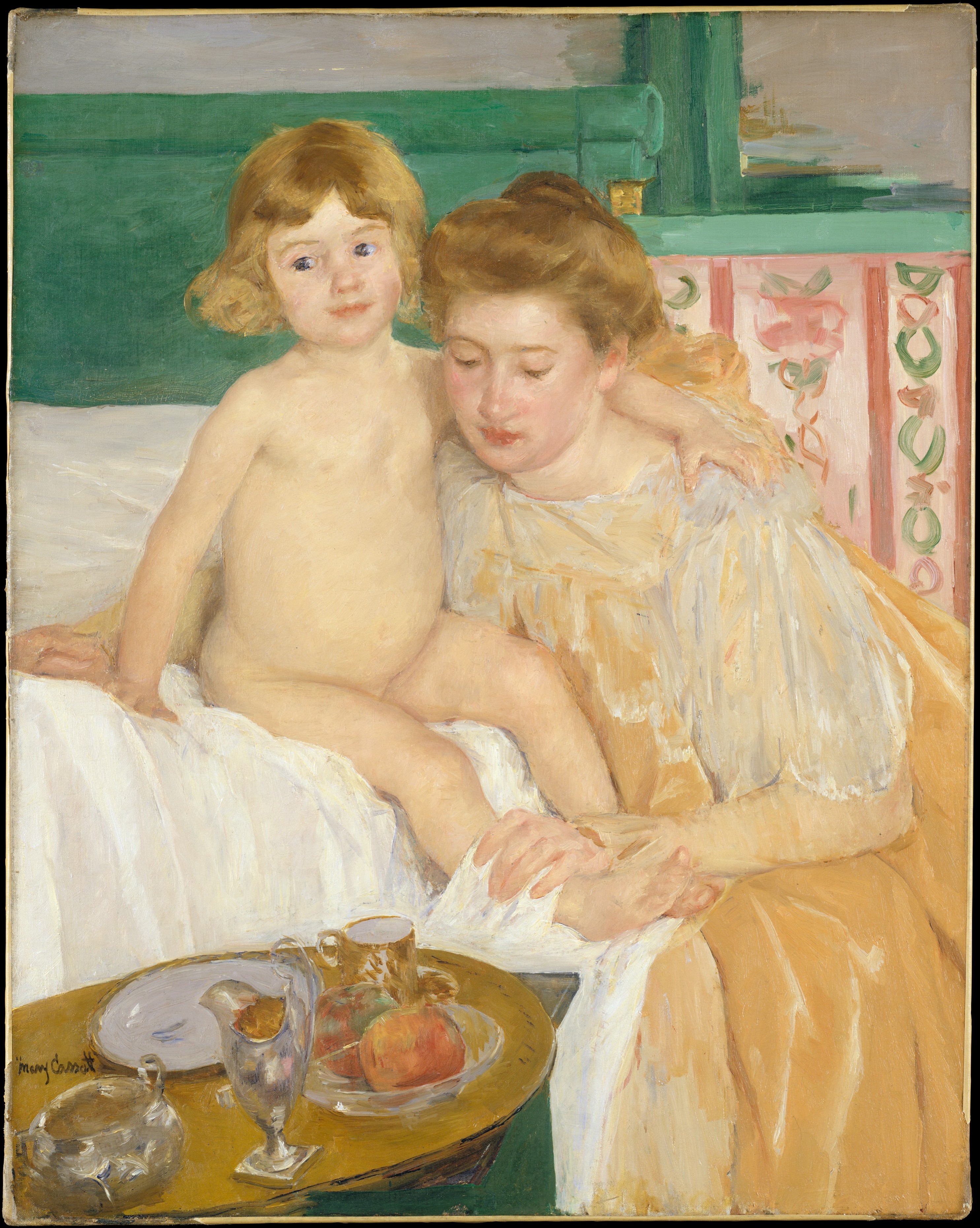
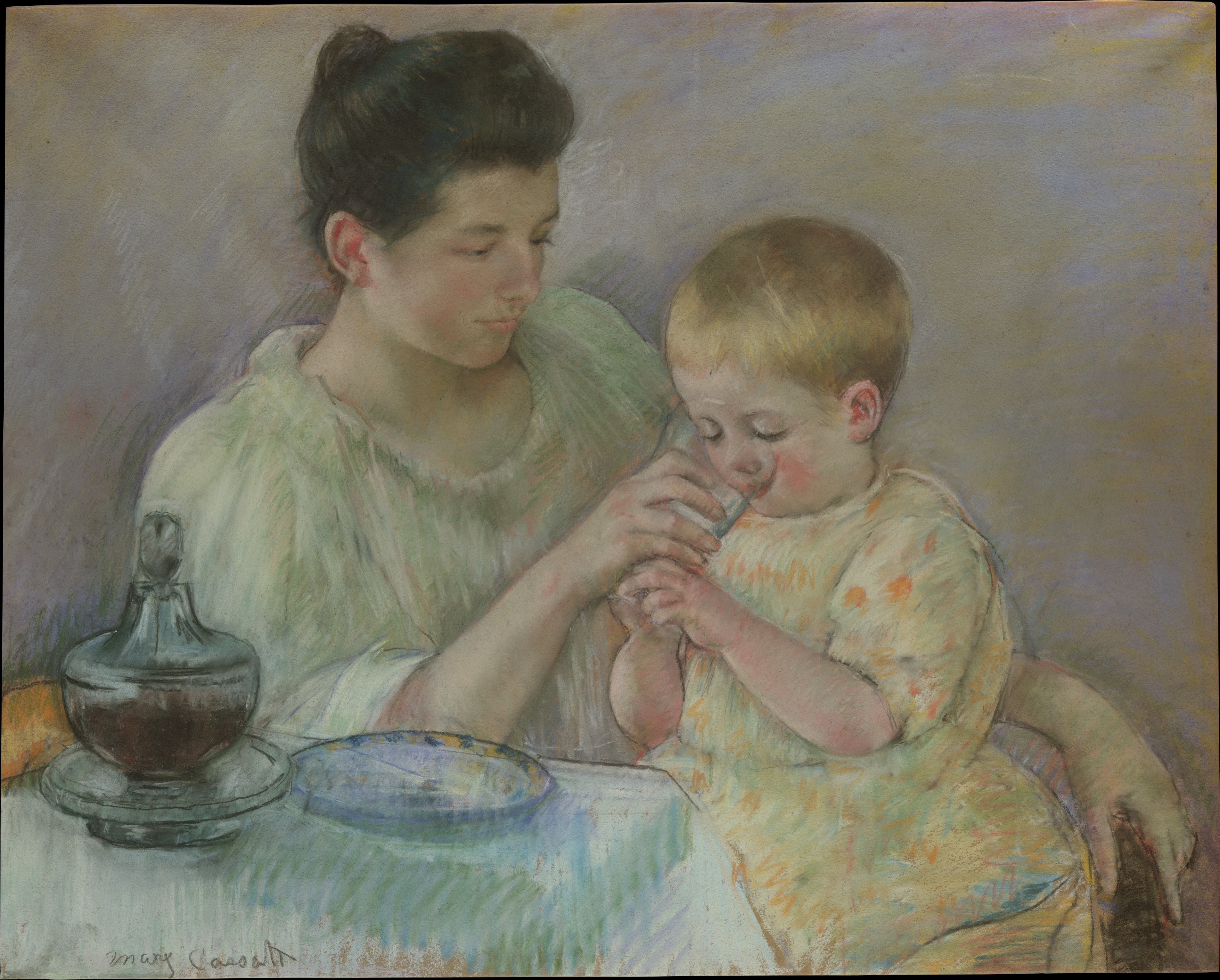
- Mother and Child: This is, without a doubt, her most iconic and enduring theme. Her depictions moved beyond mere sentimentality, portraying the psychological depth, the physical intimacy, and the inherent dignity of the maternal bond. She captured the unvarnished reality of these interactions, from playful moments to quiet reflection, often highlighting the profound, unspoken connection. Works like Mother and Child (Maternal Caress) perfectly embody this tender yet unsentimental gaze.
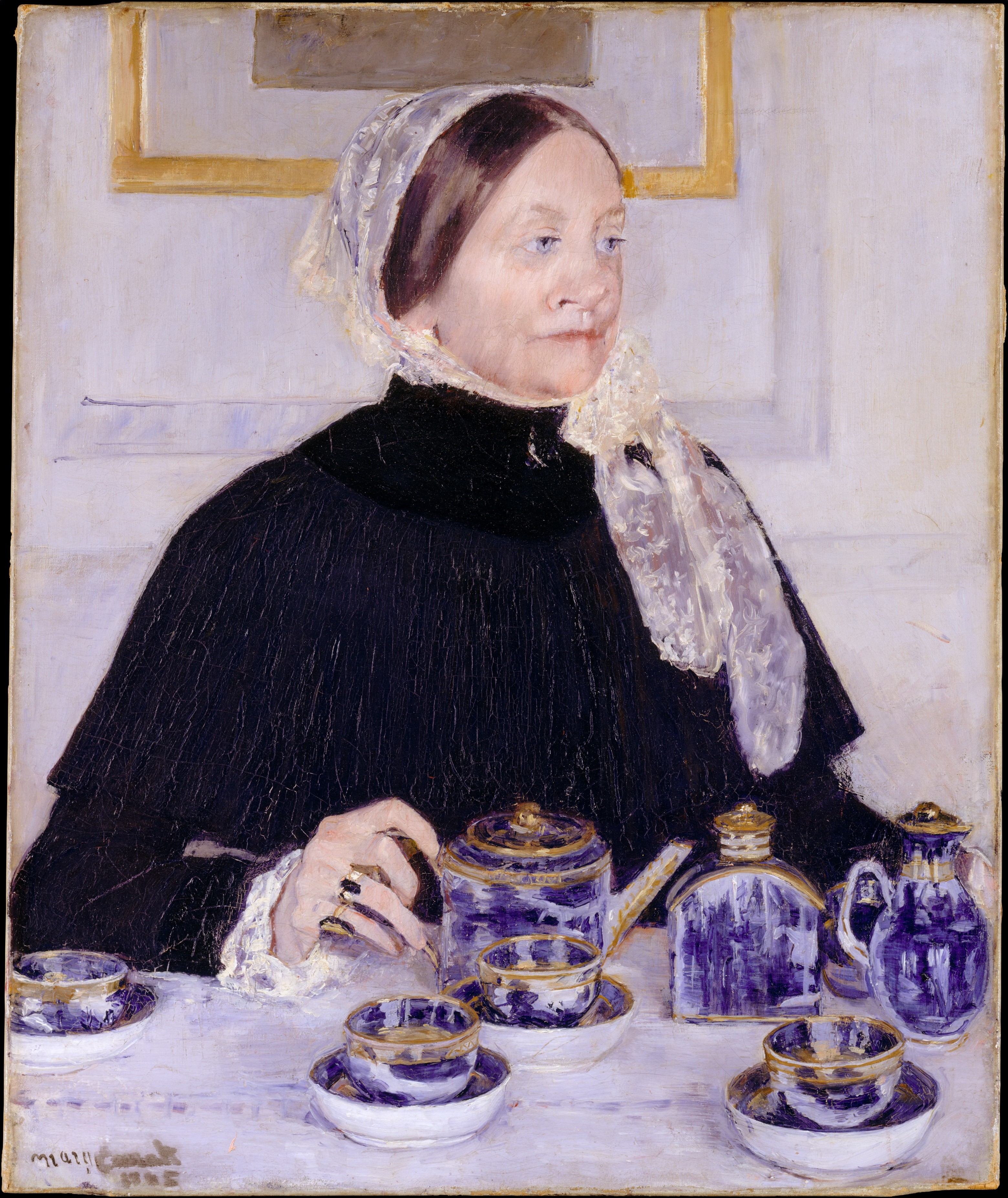
- Women in Domestic Settings: Her canvases often show women engaged in everyday activities – reading, sewing, having tea, or simply contemplating. These seemingly mundane scenes are elevated through her empathetic gaze, revealing the rich inner lives and quiet strength of her subjects. She monumentalized these private moments, challenging the notion that only grand narratives were worthy of artistic attention.
- Women in Public Spaces: While less frequent than her domestic scenes, Cassatt also depicted women in theaters, opera boxes, and gardens, often highlighting their independence and agency as observers, rather than just being observed. Woman with a Pearl Necklace in a Loge is a prime example, showing a woman confidently occupying a public sphere, her gaze outward, asserting her presence in a world largely designed for male viewing.
- Childhood: Cassatt's children are rarely posed; they are active, curious, sometimes mischievous, and always authentic. She captures their individual personalities with remarkable acuity, a stark contrast to the often idealized or miniature-adult portrayals common in the 19th century. She understood children not as props, but as fully formed individuals with their own inner worlds, as seen in Little Girl in a Blue Armchair.
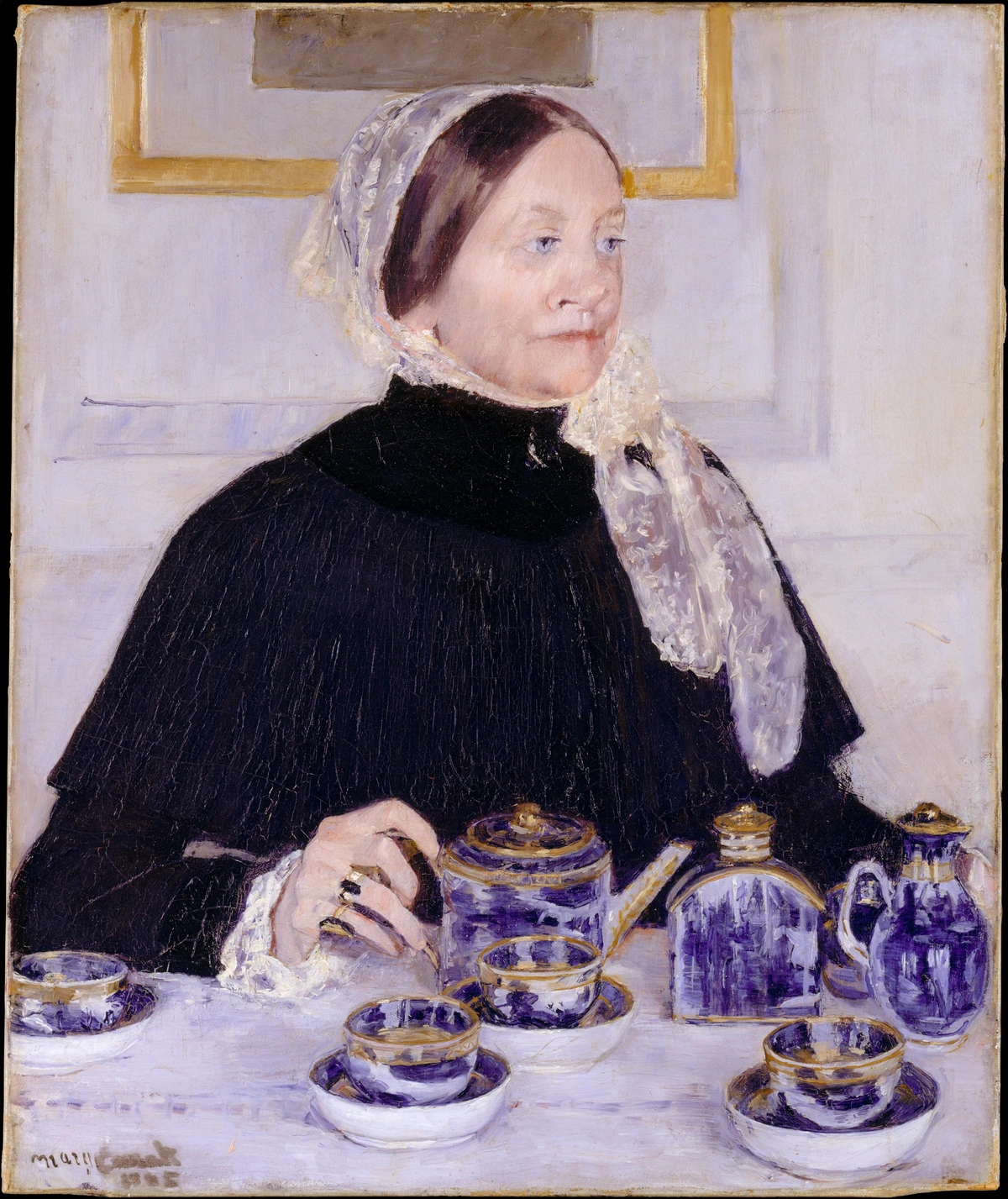
- Portraiture Beyond Mother and Child: While her maternal scenes are famous, Cassatt was also a formidable portraitist of individual women, capturing their intelligence and self-possession. Her portraits, such as Portrait of a Lady (Lydia Cassatt), often depicted her sister or other female acquaintances, revealing their unique personalities rather than adhering to conventional beauty standards.

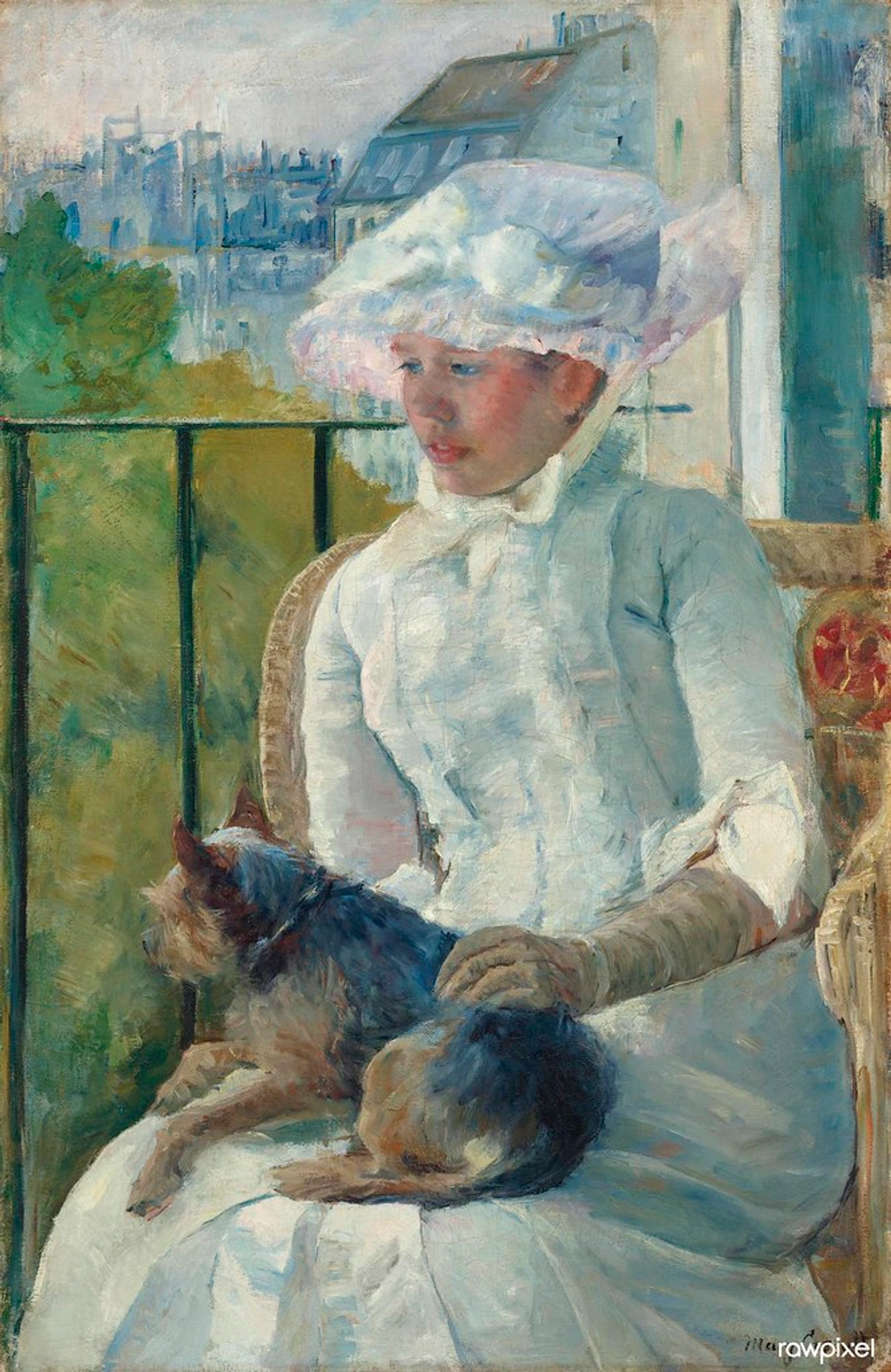
Her subjects were never passive objects of beauty; they were complex individuals engaged in rich, authentic acts of care, play, and quiet contemplation. I find her portraits of children particularly compelling, like the evocative 'Young Girl at a Window' (1883-1884). Look at that girl—she’s not posed in a stiff, idealized fashion; there’s a captivating restlessness, a raw, youthful energy captured in her posture and gaze. Cassatt had this incredible ability to depict children as real, multifaceted beings, not as mere cherubic ornaments or miniature adults. This was a radical departure for its time, offering an unvarnished window into a world often overlooked, idealized, or heavily sentimentalized by male artists. It’s a profound celebration of the everyday, elevated to the realm of fine art—a truly powerful statement about the inherent dignity and profound beauty found within domesticity and the unpretentious world of childhood. Her nuanced understanding of child psychology, perhaps honed through her observations of nieces, nephews, and the children of her friends, allowed her to imbue these subjects with a startling authenticity that still resonates, making the ordinary feel profoundly significant.
Psychological Realism and Narrative
Cassatt's ability to imbue her domestic scenes with a subtle psychological realism is, for me, one of her most compelling attributes. Her works often suggest a narrative, a moment caught mid-thought or mid-action, rather than a static pose. The figures engage with each other, or with their own internal worlds, in ways that invite the viewer to speculate on their feelings and relationships. This wasn't merely about visual accuracy; it was about capturing the essence of human interaction and emotion within the private sphere, making the ordinary feel profoundly significant. Her canvases become windows into unspoken narratives, a testament to her profound empathy and observational acumen. She truly believed that the deepest truths about human experience could be found in these quiet, everyday moments, a belief she translated onto canvas with unparalleled skill.
Cassatt's Models and Observational Acumen
Given her masterful depictions of women and children, it's natural to wonder about her subjects. As we'll discuss further, Cassatt famously had no children of her own. Her models were typically women from her local community, often the wives or children of her domestic staff, such as her maid Mathilde Vallet and her children, as well as nieces and nephews of her artist friends, including those of Berthe Morisot and Edgar Degas. This gave her intimate access to candid moments, allowing her to capture genuine expressions and natural poses that professional models might not offer. She observed them keenly in their daily routines, translating these fleeting moments of play, rest, and interaction into timeless works of art. This dedication to authentic observation is a cornerstone of her unique gaze, a testament to her deep empathy and commitment to portraying the unvarnished truth of human experience. It also allowed her to capture a sense of unguarded intimacy that was revolutionary for its time, contrasting sharply with the often posed and artificial quality of much academic portraiture. This approach lent her work an authenticity and emotional resonance that was unparalleled in her era, revealing the true character of her sitters.
More Than Just Paintings: Printmaking Mastery and Japonisme
Beyond her stunning oil paintings, Cassatt was an undeniable master of printmaking, excelling in techniques such as drypoint, etching, and aquatint. Her foray into printmaking wasn't just a diversion; it was a deeply influential facet of her career, allowing her to explore the same poignant themes of women and domesticity but with a distinct aesthetic. Drypoint, for example, allowed for velvety, rich lines and a spontaneous, drawn quality, offering a softness often likened to a pencil drawing, while aquatint provided tonal areas, creating a nuanced range of effects and a softer, more painterly quality to her prints, perfect for rendering subtle gradations of light and shadow. Etching, her earliest printmaking love, allowed for precise, crisp lines, showcasing her exceptional draftsmanship and forming the foundation of many compositions. It was in printmaking that Cassatt found a medium that combined her meticulous draftsmanship with a painterly sensibility, allowing for intimate scale and a wider reach for her powerful imagery, making art more accessible.
What truly sets her prints apart, for me, is the profound Japanese influence that was sweeping through Paris in the late 19th century—a phenomenon known as Japonisme. She was particularly captivated by the vibrant Ukiyo-e woodblock prints of masters like Katsushika Hokusai and Hiroshige, which introduced a fresh visual language with their bold outlines, flattened perspectives, decorative patterns, and strikingly asymmetrical compositions. Cassatt didn't just mimic; she expertly integrated these elements into her own unique style, particularly evident in her groundbreaking series of ten color prints from 1890-91. This cross-cultural pollination was more than just fashionable; it became a powerful tool that allowed her to push formal boundaries and discover entirely new ways to depict form, space, and narrative, moving away from traditional Western realism and embracing a more modern flatness and decorative quality. I've always been drawn to artists who fearlessly cross into different mediums, enriching their core vision, and Cassatt absolutely did. It speaks volumes about her dedication to craft and her relentless pursuit of artistic innovation, beautifully echoing the enduring legacy of Japanese Ukiyo-e woodblock prints and their global impact. This series, in particular, is a testament to her technical virtuosity and her bold vision in adapting Eastern aesthetics to Western subjects, creating something entirely new and modern, and firmly establishing her as an innovator in the printmaking world, a true master of the graphic arts.
Cassatt's Printmaking Techniques and Influences
Her mastery across various printmaking techniques allowed her to achieve a remarkable range of effects, pushing the boundaries of the medium.
Technique  | Characteristics & Cassatt's Application | Key Influence/Effect |
|---|---|---|
| Drypoint | Incising directly into a copper plate with a sharp point, raising a burr that creates soft, velvety lines. This allowed her to achieve a remarkable immediacy and a rich, velvety black that added a unique texture to her figures. | Allowed for spontaneity, rich blacks, and a painterly softness, ideal for intimate figures and capturing subtle emotional nuances. |
| Etching | Using acid to bite lines into a waxed plate; allows for fine detail and precise linear work. Her mastery of etching provided the precise linear framework for many of her compositions, showcasing her exceptional control and detail. | Formed the foundational drawing for many prints, showcasing her strong draftsmanship and providing structural integrity. |
| Aquatint | Creating tonal areas by dusting a porous resin onto a plate and acid-biting, producing varied shades. Cassatt often combined aquatint with etching and drypoint to achieve complex tonal gradations, mimicking the effects of painting. This technique allowed her to infuse her prints with a painterly richness, capturing subtle variations in light and shadow that were unprecedented for the medium. | Enabled subtle gradations of light and shadow, giving her prints a watercolor-like quality and allowing for profound atmospheric effects, enhancing the emotional depth of her domestic scenes. |
| Soft-Ground Etching | Drawing on a paper placed over a soft-ground coated plate, transferring texture and line. This technique offered a more delicate, grainy line, often resembling a crayon or pencil drawing. | Produced a crayon-like texture, capturing a more casual, drawn aesthetic and adding a sense of spontaneity to her prints. |
| Japonisme | Influence from Japanese Ukiyo-e woodblock prints, particularly in their bold outlines, flattened planes of color, and innovative compositional strategies. She absorbed these elements and reinterpreted them with Western subjects, using their principles to create dynamic and intimate compositions that broke away from traditional Western academic styles. | Bold outlines, flattened planes, asymmetrical compositions, elevated viewpoints, and decorative patterns. Transformed her approach to space and form, adding a distinctly modern edge to her work, and deepening the psychological resonance of her figures. |

It’s also crucial to highlight her unwavering independence, a choice that still strikes me as remarkably courageous. She never married and had no children of her own, instead dedicating her entire formidable intellect and energy to her art. This decision, in itself, flew directly in the face of nearly every societal norm for women of her standing, for whom marriage and motherhood were considered the ultimate aspirations and measures of success. Her steadfast commitment to her artistic career above all else wasn't just a personal preference; it was a quiet but profoundly powerful act of defiance, effectively paving the way for future generations of female artists. Cassatt wasn't merely a pioneer as an artist; she was a pioneer as a woman living life on her own terms, demonstrating with every brushstroke and every decision that a woman's life could be rich, fulfilling, and impactful without adhering to traditional expectations. Her life makes me reflect on the incredible fortitude of other trailblazing women in art history, from the raw social commentary of Käthe Kollwitz, who also carved her own path in a challenging era. Her deliberate choice challenged the very definition of womanhood and success in her era, making her a beacon of artistic and personal autonomy, a truly modern woman ahead of her time, proving that a woman could achieve professional greatness on her own terms.
Cassatt as a Mentor and Collector: Shaping American Taste
Beyond her own artistic output, Cassatt played a critical, though often overlooked, role in shaping the American art scene. She acted as an invaluable advisor to wealthy American collectors, most notably the Havemeyer family (H.O. and Louisine Havemeyer), encouraging them to acquire Impressionist masterpieces by her peers like Degas, Édouard Manet, Claude Monet, Camille Pissarro, and Alfred Sisley. This advocacy was crucial in bringing avant-garde French art to American shores, forming the foundations of some of the most significant Impressionist collections in major American museums today, such as the Metropolitan Museum of Art and the Art Institute of Chicago. Her keen eye and persuasive influence helped establish Impressionism's legitimacy in America, a testament to her vision not just as an artist, but as a cultural force. It’s a fascinating aspect of her legacy that her direct impact wasn't just through her paintings, but also through her strategic guidance in the art market. She was a shrewd businesswoman and a tireless advocate for the movement she believed in, recognizing the lasting value of these revolutionary works and actively brokering deals to secure their place in prominent collections. Her efforts ensured that future generations of Americans would have access to the masterpieces of a truly transformative artistic movement, bridging the cultural divide between Europe and America.

Later Years, Failing Eyesight, and Enduring Legacy
As she gracefully navigated her later years, Mary Cassatt tragically began to lose the very tool that defined her existence: her eyesight. In the 1910s, a devastating combination of cataracts and retinal detachment progressively clouded her vision, ultimately forcing her to cease working entirely by 1914. It's almost unbearable for me to imagine an artist of her caliber, whose entire life was dedicated to visual expression and meticulous observation, being stripped of the ability to create. This period of artistic inactivity must have been an immensely challenging, profoundly personal trial for such an independent and driven individual, especially given her fierce dedication to her craft. Yet, despite this profound setback, her spirit remained remarkably strong. She continued to engage with the art world, offering her sharp intellect and experience as an advisor and advocate, proving that an artist's contribution isn't solely confined to their active output. This period further solidified her role as a significant figure in the art community, even when she could no longer paint, demonstrating a profound resilience and an enduring commitment to the arts. She passed away in 1926 at her beloved country estate, Château de Beaufresne, at the age of 81, having lived a life of unwavering artistic pursuit and intellectual rigor, leaving behind a monumental legacy.
Her legacy, far from diminishing, has only deepened and broadened over time. Today, she is not merely celebrated as a brilliant Impressionist painter but stands as an absolutely crucial figure in the history of women in art and a true pioneer of modernism. Her insightful, unsentimental, and profoundly empathetic portrayals of women's lives—from moments of quiet contemplation to the raw, tender, and often complex bonds between mothers and children—continue to resonate deeply with audiences today. Her work challenges us to look at the 'ordinary' with fresh eyes, to find the monumental in the mundane. She undeniably paved the way for future generations of female artists and scholars, inspiring them to seek out, understand, and celebrate the often-unlooked-contributions of women throughout art history. Cassatt, in her own quiet revolution, truly showed that the personal is universal, and that a domestic scene, rendered with honesty and conviction, could be as profound and worthy of artistic exploration as any grand historical tableau. Her vision, despite the physical challenges she faced, remains as clear and impactful as ever, a testament to her profound artistic integrity. Her influence can be seen in the ongoing dialogue around gender and representation in art, and her canvases continue to draw viewers into her unique and deeply human world, encouraging a deeper understanding of female experience. She taught us that artistic power doesn't always roar; sometimes, it speaks with quiet, undeniable conviction, transforming the world one canvas at a time, and leaving an indelible mark on how we perceive modern womanhood.
Mary Cassatt's Studio Practice and Creative Process
When I try to envision Cassatt's studio, I see a place of intense focus and meticulous dedication, far removed from the romanticized chaos often associated with male artists of her time. She ran a highly professional operation, employing a variety of models, often women from her local community or the children of her domestic staff, carefully chosen for their natural poses and genuine expressions. Her studios, first in Paris and later at her country estate, Château de Beaufresne, were carefully organized spaces, designed for focused work. Unlike some of her Impressionist peers who worked rapidly outdoors (though she did explore plein air painting herself), Cassatt's process was often more considered, involving extensive preparatory drawings, pastels, and studies before committing to the canvas or etching plate. This blend of Impressionistic immediacy with academic rigor, influenced by her early training and Degas’s insistence on strong draftsmanship, is a hallmark of her approach. She wasn't just capturing a fleeting moment; she was constructing it with an underlying structure, a quiet power that makes her work so enduring. This methodical approach allowed her to imbue her seemingly spontaneous scenes with a profound sense of psychological depth and formal strength. She was known to work systematically, often producing numerous studies of her models in different poses or with varied lighting, ensuring the final composition was both dynamic and meticulously planned. This dedication to preliminary work is a clear indicator of her academic foundations, even as she embraced Impressionistic spontaneity. Her approach to creating a painting was a deliberate dance between observation and meticulous construction. She would often create numerous sketches and pastel studies, sometimes dozens, capturing fleeting gestures or specific lighting conditions before embarking on the final oil painting. This allowed her to infuse the spontaneity of Impressionism with an underlying structure and psychological depth that makes her work so enduring, giving her canvases a timeless quality and distinguishing her from artists who favored purely spontaneous creation.
Mary Cassatt: A Deeper Look at Her Techniques and Evolution
Beyond her revolutionary choice of subject matter, Mary Cassatt's artistic brilliance also shines through her distinctive technical approach and the fascinating evolution of her style. I find it so compelling how she seamlessly moved from the precise, formal training of academic realism to fully embracing the liberating tenets of Impressionism. Her initial grounding in academic principles meant she always maintained a strong underlying draftsmanship—a foundation I believe was further reinforced by Degas's insistence on robust drawing, which proved invaluable in giving her figures solidity and presence. However, her encounter with the Impressionists profoundly transformed her brushwork and palette. Her canvases, once more traditional in tone, became infused with brighter, clearer colors, and her brushstrokes grew looser, more visible, applied in dabs and dashes that captured a sense of light and movement. This gave her work a vibrant immediacy, a feeling of capturing life as it unfolds, yet always with a thoughtful, structured composition beneath the surface. It’s this unique synthesis—the academic foundation meeting Impressionist freedom—that, for me, makes her work so incredibly rich. She demonstrated a rare ability to retain the structural integrity learned from her academic past while embracing the fleeting atmospheric effects championed by the avant-garde. This duality is a cornerstone of her enduring appeal, demonstrating her profound versatility and intellectual rigor as an artist, creating a powerful fusion of tradition and modernity.
Artistic Style and Key Techniques
To fully appreciate Cassatt, I think it's helpful to break down some of her recurring stylistic choices and the techniques she mastered. She seamlessly blended her classical training with the revolutionary spirit of Impressionism, creating a visual language that was distinctly her own. It's this unique fusion that truly sets her apart from many of her contemporaries, offering both the immediacy of an 'impression' and the underlying strength of a well-constructed form.
Aspect | Characteristics in Cassatt's Work (Further Detail) |
|---|---|
| Brushwork | Characterized by loose, visible strokes, often applied in dabs or dashes that create a dynamic sense of movement and light. Yet, she always maintained an underlying structural quality, preventing her forms from dissolving into mere color, a testament to her academic training. Her brushwork might appear spontaneous, but it was underpinned by deliberate choices to convey texture, volume, and emotional resonance, making her figures feel alive and immediate. |
| Color Palette | Known for bright, clear, and harmonious colors that marked a significant departure from the somber tones of academic art. She frequently used pure, unmixed pigments, allowing them to vibrate with intensity, often juxtaposing complementary colors to enhance their luminosity, a hallmark of Impressionism. Her palette conveyed mood and atmosphere with striking clarity, bringing a vibrant immediacy to her canvases. |
| Composition | Heavily influenced by Japanese ukiyo-e prints, her compositions often feature asymmetrical arrangements, bold cropping of figures, elevated viewpoints (like a bird's eye view), and strong diagonals, creating intimate, often enclosed spaces that draw the viewer in and convey a sense of immediacy, as if catching a moment unawares. This innovative framing created a sense of candidness and modernity, transforming everyday scenes into visually compelling narratives. |
| Drawing & Form | Despite her Impressionistic surface, she maintained strong linear definition and solid, volumetric forms. This showcased her rigorous academic training and the lasting influence of Degas's emphasis on drawing, providing a robust structure beneath the vibrant brushwork. Her figures always possess a tangible weight and presence, feeling grounded and real, a powerful synthesis of academic precision and Impressionist vitality. |
| Use of Light | Focused primarily on natural light, often found indoors or in controlled outdoor settings. Her light wasn't purely atmospheric; it served to emphasize form, create depth, and establish a specific mood within her intimate scenes, often highlighting the tender glow on a child's skin or the soft folds of a garment. She masterfully used light to model her figures and create a sense of three-dimensionality, adding to their lifelike quality and enhancing the emotional content of her narratives. |
| Perspective | Often employed unusual or elevated perspectives, breaking from traditional Renaissance linearity to create a more immediate and modern viewing experience, drawing the viewer directly into the scene rather than observing from a distance. This unconventional framing enhances the intimacy and candidness of her subjects, inviting the viewer into their world and contributing to the dynamic modernity of her compositions. |
| Subject Treatment | Depicted subjects with an unsentimental realism, revealing the genuine emotions and complexities of women's and children's lives rather than idealized versions. Her figures possess a palpable presence and psychological depth, challenging the saccharine portrayals common in her era and elevating everyday life to high art, thereby redefining the scope of acceptable artistic subjects. |

Her dedication to capturing authentic human connection, particularly the profound bond between mother and child, remained a constant anchor, but her methods continually evolved to serve this singular vision. Her unwavering commitment to keen observation and rendering the truth of a moment, whether through the fluidity of oil paint or the intricate precision of printmaking, marks her as a truly innovative artist of her time. She even explored techniques like plein air painting to capture light and atmosphere directly, further broadening her technical repertoire. Her experiments with various mediums, including pastels, also highlight her continuous quest for new ways to express her unique artistic vision. She often used pastels for their immediacy and rich color, creating works that bridge the gap between drawing and painting, allowing for a remarkable textural quality and luminosity that captured the fleeting nature of light and color with exquisite tenderness. This versatility across mediums speaks volumes about her restless artistic curiosity and her mastery of craft, always pushing the boundaries of what art could achieve.
The Expressive Power of Pastels
Cassatt's work in pastels is a significant, often overlooked, aspect of her oeuvre. She embraced pastels for their vibrant, unblended color and their unique ability to capture both the immediacy of a sketch and the rich tonality of a painting. For me, pastels offered her a directness, almost a tactile quality, that was perfect for conveying the delicate skin of children or the soft textures of domestic interiors. They allowed her to build up layers of pure pigment, creating a shimmering effect that captured light with remarkable sensitivity. This medium, bridging drawing and painting, was a natural extension of her Impressionist sensibilities and her academic grounding in drawing, allowing her to achieve a profound emotional depth with swift, confident strokes, truly maximizing the medium's expressive potential.
Key Works by Mary Cassatt: A Selection of Masterpieces
Choosing just a few iconic pieces from an artist as prolific and brilliant as Mary Cassatt is always a challenge, but here's a glimpse into some of the works that, for me, truly capture her genius and thematic depth. These paintings and prints not only showcase her technical prowess but also encapsulate her unique perspective on modern womanhood and domestic life, offering a window into her revolutionary artistic mind. This selection highlights the breadth of her subjects and her mastery across various mediums, cementing her place as an essential figure in art history:
Year | Title | Medium | Key Characteristics & Significance |
|---|---|---|---|
| 1872 | Woman with a Pearl Necklace in a Loge | Oil on canvas | An early success at the Salon, this work showcases Cassatt's masterful portraiture before her full embrace of Impressionism, but hints at her future focus on modern female subjects in public spaces and her ability to capture a sense of contemporary life. The subject, a woman in an evening gown holding opera glasses, exudes quiet confidence and agency, actively participating in the public spectacle rather than merely being an object of male gaze, a subtle but powerful statement about women's roles, challenging traditional expectations of female passivity. |
| 1878 | Little Girl in a Blue Armchair | Oil on canvas | A captivating and unsentimental portrait of a restless child, notable for its bold brushwork, unconventional perspective (high viewpoint), and striking use of color—particularly the vibrant blue of the armchairs—a clear departure from academic norms. It captures the psychology of childhood with remarkable honesty, rejecting sentimentalization and offering a dynamic, unposed realism, making the child a vivid, independent personality, a groundbreaking approach to depicting children in art. |
| 1880 | The Bath (The Child's Bath) | Oil on canvas | An incredibly tender and intimate domestic scene, celebrating the everyday ritual of a mother bathing her child. This work subtly incorporates Japanese print influences in its flattened perspective, bold outlines, and elevated viewpoint, offering a monumental quality to a private moment and elevating a common subject to high art, defying traditional genre hierarchies and highlighting the dignity of maternal care and the profound intimacy of everyday life. |
| 1881 | Mother and Child (Maternal Caress) | Oil on canvas | A classic representation of her most cherished theme, this painting highlights the tender intimacy and protective bond between mother and child, rendered with her signature empathetic gaze and soft Impressionistic brushwork. The sense of natural movement and the genuine connection between the figures make it powerfully resonant, showcasing the profound depth of human relationships and the universality of maternal love. |
| 1888 | Summertime | Oil on canvas | Depicts women in a boat on a lake, showcasing Cassatt's vibrant color palette and her ability to capture moments of modern leisure with both intimacy and naturalism. The loose brushwork beautifully conveys the shimmering water and sun-drenched atmosphere, a wonderful example of Impressionist light and a keen observation of modern life, and a rare foray into outdoor genre scenes for the artist, capturing a moment of serene enjoyment. |
| 1891 | The Coiffure | Drypoint and aquatint | Another exquisite print from her celebrated series, this intimate domestic scene depicts a woman dressing her hair, exemplifying the elegance of Japanese influence merged with Cassatt's keen observation of feminine rituals. Its flattened perspective, strong diagonals, and decorative elements create a quiet, dignified portrayal of a private moment, a masterpiece of Japonisme and a testament to her technical virtuosity in printmaking, highlighting her innovative approach to the female form. |
| 1893 | Woman Bathing (La Toilette) | Drypoint and aquatint | Part of her famous series of ten color prints, this piece highlights her mastery of printmaking and profound Japanese influence, particularly in its flattened perspective, strong linear focus on the female form, and decorative patterns. The scene, like The Coiffure, monumentalizes a private, everyday ritual with dignity and artistic innovation, making it a powerful example of her printmaking and her modern vision, and reinforcing her commitment to depicting the unvarnished realities of women's lives. |
| 1893 | Mother and Child (The Oval Mirror) | Oil on canvas | A prime example of her signature theme, depicting a tender moment between a mother and child reflected in a mirror, showcasing her sensitive portrayal of maternal bonds and her clever use of reflective surfaces to add depth and complexity to the composition. The mirror not only expands the visual space but also adds a layer of introspection and narrative depth, inviting the viewer into a personal moment and demonstrating her innovative compositional strategies. |
| 1893-94 | The Boating Party | Oil on canvas | A powerful and boldly composed work, recognized for its striking colors (especially the vibrant blues and yellows) and the way it captures a modern leisure activity from an unconventional, elevated viewpoint, almost cinematic in its scope. The strong diagonal composition and bright, almost blinding light create a dynamic and immersive experience, making it one of her most famous and formally inventive works, a true Impressionist masterpiece that showcases her mastery of light and form. |
| c. 1898 | A Kiss for Baby Anne | Oil on canvas | This painting is lauded for its immediacy and emotional directness, capturing a fleeting, loving interaction between a mother and her child, rendered with soft brushwork and warm colors. It exemplifies her ability to portray profound emotion without sentimentality, highlighting the universal nature of maternal love and the spontaneous joy of childhood affection with remarkable authenticity, making it one of her most beloved and recognized works. |
Cassatt's Exhibitions and Critical Reception
Mary Cassatt’s artistic journey was truly punctuated by her navigation of both the entrenched traditional Salon system and the radical avant-garde Impressionist exhibitions. After achieving early successes at the Salon, her decision to exhibit with the Impressionists was not just a career move; it was a deliberate, courageous act that effectively severed her ties with the conservative establishment and marked her full embrace of modernity. She participated in four of the eight Impressionist exhibitions (in 1879, 1880, 1881, and 1886), consistently showcasing her evolving style and thematic depth alongside her revolutionary peers, including Edgar Degas, Claude Monet, and Camille Pissarro.
These exhibitions were crucial platforms for the Impressionists to present their work directly to the public, bypassing the rigid Salon juries, and forging a new path for modern art. For Cassatt, these exhibitions offered an unmediated dialogue with the public, allowing her to present her innovative vision without the filters of academic gatekeepers, a vital step in asserting her artistic independence.
Early critical reception, predictably, was a mixed bag. Many critics, firmly rooted in academic traditions, often found her work—and that of the Impressionists in general—to be 'unfinished,' 'sketchy,' or even 'crude.' Their rejection of polished realism for visible brushstrokes and fleeting impressions was simply too radical for some palates. Some reviews of her work were dismissive, even harsh, questioning her technical ability or the suitability of her chosen subjects for serious art, often framing her choice of domestic scenes as trivial. However, there were also discerning critics who quickly recognized her unique vision, her powerful draftsmanship, and, crucially, her sensitive and honest portrayal of women and children. While her bold colors and innovative compositions sometimes met with bewilderment, her unwavering dedication to representing modern life, as she saw it, ultimately garnered respect and cultivated a growing following, especially back in America, thanks in no small part to her tireless advocacy for the movement itself. It’s a testament to her strength that she persevered through initial skepticism to achieve lasting recognition, proving that artistic integrity could triumph over conventional criticism. Her resilience in the face of such criticism is a powerful reminder of the courage required to be an avant-garde artist, especially as a woman breaking societal norms and challenging the male-dominated art establishment.
Mary Cassatt and the Children in Her Life
Given her iconic representations of mothers and children, a common question I hear is whether Mary Cassatt had children of her own. As we've discussed, she famously remained unmarried and childless, dedicating her life entirely to her art. So, who were the children in her paintings? They were often the children of her friends, relatives, and, quite frequently, the children of her domestic staff, such as her housemaid Mathilde Vallet, who regularly modeled for her, providing an invaluable source of authentic, unposed interactions. She also painted nieces and nephews of fellow artists like Edgar Degas and Berthe Morisot. Cassatt cultivated relationships with these children, observing them keenly in their natural states of play, rest, and interaction. This practice allowed her to capture a genuine, unforced intimacy that would have been impossible with professional child models. Her ability to portray childhood with such realism and lack of sentimentality, despite not being a mother herself, speaks volumes about her profound observational skills and deep empathy. It reinforces my belief that art truly transcends personal experience, offering universal insights through the artist's unique lens. This keen observation allowed her to depict children not as mere idealized figures, but as active, thinking, and often mischievous individuals, a revolutionary approach in her era. It's a testament to her profound human understanding that she could capture the essence of maternal love and childhood with such authenticity, drawing on observation and empathy rather than direct personal experience, truly setting her apart from her contemporaries.
Mary Cassatt's Artistic Connections and Context
Cassatt's place within the vibrant, often tumultuous art world of the late 19th century was, to me, absolutely fascinating. She was undeniably an Impressionist, yes, but one who brought a distinctly American sensibility and an unwavering, unique focus to the movement. While she deeply admired and was profoundly influenced by her contemporaries—especially Degas—she always, always maintained her own powerful voice and vision. It's a testament to her strength that amidst such strong personalities and revolutionary ideas, she carved out an artistic identity that was both collaborative and fiercely independent. Her ability to absorb influences while remaining true to her singular vision is a mark of true artistic genius.
Artist | Relationship/Connection | Influence on Cassatt |
|---|---|---|
| Edgar Degas | Mentor, friend, fellow Impressionist. | Introduced her to Impressionism, shared intense interest in drawing and printmaking, provided constructive criticism, and pushed her to excel in draftsmanship, particularly in capturing movement and expression. His exacting standards undeniably shaped her rigorous approach, encouraging her to combine precise drawing with Impressionistic color. |
| Claude Monet | Fellow Impressionist. | Shared commitment to capturing light and atmosphere, particularly in outdoor scenes and fleeting moments, though Cassatt focused more intently on figures and their internal lives within specific settings. His innovative series of paintings, exploring the same subject under different light conditions, likely influenced her own thematic explorations of repeated subjects, especially mothers and children, revealing subtle shifts in emotion and light. |
| Pierre-Auguste Renoir | Fellow Impressionist. | Shared subject matter (women, children, social scenes), but Cassatt's approach was less overtly glamorous and more psychologically insightful, rejecting Renoir's often idealized femininity for a more direct and authentic portrayal. She depicted genuine interactions rather than purely decorative beauty, offering a more profound humanistic view, emphasizing the strength and inner life of her female subjects. |
| Berthe Morisot | Fellow female Impressionist. | Shared experiences as women navigating the male-dominated art world, focused on intimate domestic scenes, and employed innovative Impressionist techniques, often with a delicate yet firm touch. Their friendship and mutual support were crucial in a world often hostile to women artists, providing a vital network of artistic solidarity and shared purpose. |
| Camille Pissarro | Fellow Impressionist. | Although less direct in terms of personal interaction, Pissarro's dedication to depicting rural life, his radical political views, and his extensive exploration of various printmaking techniques (etching, lithography) likely resonated with Cassatt's own interests in capturing everyday life and her printmaking experiments, aligning with her commitment to modern subjects and social observation. |
| James McNeill Whistler | American expatriate artist, contemporary. | Shared experience of an American artist succeeding in Europe, though their styles differed significantly. Whistler's famed Arrangement in Grey and Black No. 1, often known as Whistler's Mother, is a testament to American portraiture abroad, and his aestheticism, with its emphasis on harmony and simplified forms, shared a certain independence of spirit with Cassatt's own modernizing tendencies. Both artists, in their distinct ways, were forging new paths for American art on the international stage. |
| Japanese Ukiyo-e Masters | Major influence on her printmaking. | Bold outlines, flattened perspective, domestic themes, asymmetrical composition, and the use of decorative patterns profoundly impacted her approach to form and space in her prints, leading to her revolutionary series of color aquatints and reshaping her understanding of visual narrative, offering new ways to interpret light and shadow. |
Her connection with Edgar Degas, in particular, evolved into a lifelong artistic dialogue—a relationship that, like many intense creative partnerships, wasn't without its significant tensions. Degas, with his own exacting standards, deeply admired Cassatt's exceptional drawing skills and her keen eye for composition. They frequently worked alongside each other, critiquing each other's work, sharing ideas about new techniques, and pushing the boundaries of their art. Their shared passion for printmaking, especially, created a fruitful ground for collaboration and experimentation. However, it's clear their strong personalities and differing perspectives often led to spirited disagreements, especially as Cassatt developed her own distinct style and fiercely independent artistic vision. Degas, despite his artistic radicalism, held some surprisingly traditional views about women's roles, which must have inevitably clashed with Cassatt's unapologetically modern and autonomous spirit and her dedication to female agency. Despite these complexities and occasional friction, their mutual respect for each other’s artistic integrity endured, forming a bond that strengthened their individual outputs. I often find myself wondering what those conversations in their studios must have sounded like—two fiery, brilliant minds pushing each other to new heights. It's a powerful reminder that even the greatest artists don't work in a vacuum; they are part of a vibrant, interconnected web of ideas, influences, and challenges. This dynamic exchange of ideas and challenges was undoubtedly a crucial factor in the development of both artists, pushing them to new heights of innovation. And if you're ever in Den Bosch, I encourage you to visit the Den Bosch Museum to experience how contemporary art continues to dialogue with, and build upon, such rich historical foundations.
Challenges, Controversies, and the Art Market: A Fierce Determination
While Mary Cassatt achieved considerable success, her journey wasn't without its share of challenges and controversies. As a female artist in the 19th century, she constantly battled against a patriarchal art establishment that often relegated women to amateur status or confined their subject matter to traditionally "feminine" pursuits. Her initial Salon successes were hard-won, and her subsequent decision to align with the Impressionists—a group often scorned by official critics—demonstrated both her artistic conviction and her willingness to embrace controversy. She faced criticism for her 'unconventional' compositions and her often unsentimental portrayals of women and children, which defied the saccharine tastes of the time. Critics often found her directness unsettling, preferring idealized or allegorical depictions of women. Furthermore, navigating the commercial art market as an independent woman required immense shrewdness and resilience. She was not just creating art; she was building a career in a world largely designed to exclude her, and she did so with a sharp business acumen, often negotiating sales and commissions directly. These struggles, far from diminishing her, highlight the sheer tenacity and strategic brilliance required to not only survive but thrive in such an environment, leaving behind a legacy that continues to inspire. Her refusal to compromise her artistic vision for commercial appeal, even in the face of financial pressures, underscores her profound integrity and unwavering belief in her work. Her shrewd business sense, honed by years of navigating the Parisian art scene, allowed her to manage her own career, make strategic decisions about sales, and ultimately build a considerable estate through her art, something remarkable for a woman of her era. This fierce determination solidified her position not just as an artist, but as a formidable cultural force, truly a trailblazer for female artists.
Common Misconceptions About Mary Cassatt: Debunking the Myths
It's all too easy for the rich, nuanced lives of historical figures to be distilled into oversimplified narratives, and Mary Cassatt is certainly no exception. I've found a few common misconceptions about her that really miss the mark.
Firstly, there's the idea that her work is solely comprised of saccharine, sentimental depictions of motherhood. While she absolutely painted mothers and children with immense tenderness, her approach was revolutionary precisely because it was unsentimental and profoundly honest, a clear departure from the often mawkish or idealized Victorian depictions. She wasn't afraid to reveal the demanding, complex, and sometimes weary aspects of maternal life, offering a far more authentic portrayal than her male contemporaries. Her mothers are active, engaged, and powerful figures, not just pretty ornaments, and her children are often depicted with a raw, unposed naturalism that challenged the idealized portrayals of the era. Her portrayal of motherhood was groundbreaking because it was rooted in realism, not saccharine fantasy; it celebrated the emotional depth and dignity of the maternal bond.
Another persistent myth suggests her work was entirely derivative of Edgar Degas. While he was undeniably a significant influence and a pivotal mentor, Cassatt very quickly developed her own distinctive style, incorporating his lessons on drawing and composition while injecting her unique sensibilities. Her use of vibrant color, her unique perspective on women’s experiences, and her specific compositional choices truly set her apart. To see her merely as Degas's protégé is to overlook her fierce individuality and artistic courage, and the distinct emotional depth that characterizes her oeuvre. Their relationship was more of a mutual artistic exchange between two strong-willed individuals, a dynamic partnership where both artists pushed each other to excel. Cassatt's vision was her own, not merely an echo of his, demonstrating her powerful artistic autonomy.
Finally, her contributions are often underemphasized beyond her painting. She was far more than just an easel painter; her mastery of printmaking, especially her innovative color aquatints, is a separate, monumental achievement that pushed the boundaries of the medium. Moreover, her pivotal role as an art advisor and champion of Impressionism, particularly in bringing French avant-garde art to American collectors, had a lasting impact that continues to shape major museum collections today. She was a fiercely independent woman, a sharp intellect, and a shrewd advocate for modern art, not just a gentle observer of domestic scenes. Dispelling these myths allows us to see the truly multifaceted and powerful artist she was, a figure whose impact stretched far beyond her canvases, firmly establishing her as a trailblazer of modern art and a champion for women artists, whose vision continues to inspire and resonate.
Frequently Asked Questions (FAQ) About Mary Cassatt
I often find that people have a lot of questions about Mary Cassatt, and I love diving into them. Here are some of the most common ones I encounter, designed to give you quick, authoritative answers about this incredible artist:

Who was Mary Cassatt?
Mary Cassatt was an incredibly influential American painter and printmaker who spent the majority of her adult life embedded in the vibrant art scene of France. She was a prominent and pioneering member of the Impressionist movement, renowned for her captivating and deeply insightful portraits of women and children, often depicting intimate domestic scenes with an honesty that was revolutionary for her time. She challenged traditional gender roles and artistic conventions, forging a unique path in a male-dominated world. For me, she represents the epitome of artistic independence and vision, and a powerful voice for modernity and the female experience in art.
What art movement was Mary Cassatt a part of?
Mary Cassatt was a key, central figure in the Impressionist art movement. She officially joined the avant-garde group in 1879 at the direct invitation of Edgar Degas, and her participation in their independent exhibitions was a powerful statement against the traditional art establishment. She fully embraced and evolved their signature techniques of loose, visible brushwork, vibrant palettes, and a focus on capturing fleeting moments of modern life and contemporary life, particularly the private worlds of women. She brought a distinctive psychological depth and focus on human relationships to Impressionism. If you're interested in learning more about this transformative period, check out our comprehensive ultimate guide to Impressionism.
What is Mary Cassatt famous for?
Cassatt is most famous for her tender yet unsentimental depictions of mothers and children, as well as her profound and honest scenes of women in their everyday lives. Her work stands out for its unique 'woman's gaze,' offering an authentic and dignified portrayal of female experience that challenged societal norms and artistic conventions of the 19th century. Beyond her painting, she is also celebrated for her masterful printmaking, particularly her innovative color aquatints influenced by Japanese woodblock prints, and her critical role as an advisor who helped shape major American art collections of Impressionist works. She was a true multi-faceted artist and advocate, a figure whose influence extended far beyond her canvases.
Why is Mary Cassatt considered an important artist?
She's important for so many reasons! Beyond her artistic brilliance as an Impressionist, Cassatt was crucial for her radical subject matter, bringing a dignified and honest perspective to women's domestic lives and challenging the idealized portrayals prevalent at the time. She was also a master printmaker, innovating in drypoint and aquatint, pushing the boundaries of the medium, and a vital link in bringing French Impressionism to American collectors, fundamentally shaping major museum collections today. Her fierce independence as a woman artist also paved the way for future generations of female artists, making her a pioneering figure in art history and a symbol of artistic autonomy. Her unwavering commitment to her vision, despite significant societal and artistic obstacles, makes her a truly inspiring figure and a foundational voice in the narrative of modern art.
Did Mary Cassatt have children?
No, Mary Cassatt famously remained unmarried and childless throughout her life, dedicating her entire existence to her art. This was a deliberate choice that allowed her to pursue her artistic career without the societal expectations and domestic responsibilities placed upon women of her era. The children she depicted in her celebrated works were often the children of friends, relatives, or her domestic staff, observed with a deep empathy and keen eye that allowed her to capture authentic interactions and the unvarnished reality of childhood. Her ability to convey such profound emotions without direct maternal experience speaks volumes about her observational genius and empathy, proving that artistry can transcend personal biography and connect with universal human experiences.
How did Japanese art influence Mary Cassatt?
Japanese Ukiyo-e woodblock prints had a profound impact on Cassatt's work, particularly her printmaking. She admired their bold outlines, flattened perspectives, decorative patterns, and asymmetrical compositions—elements that were a radical departure from Western academic art. These elements, which were part of the Japonisme craze in Paris, allowed her to experiment with new ways of depicting form, space, and narrative, moving away from traditional Western realism and contributing to the modernity of her vision. Her series of ten color prints from 1890-91 are a prime example of this cross-cultural fertilization, demonstrating how she masterfully integrated Eastern aesthetics into her uniquely Western subjects, creating a truly modern synthesis and a groundbreaking approach to the graphic arts.
What challenges did Mary Cassatt face as a female artist?
Cassatt faced numerous challenges in the male-dominated art world of the 19th century. She contended with the patriarchal art establishment's dismissive attitude towards women artists, limited access to formal training (like the École des Beaux-Arts, which women were barred from for most of her career), and the pervasive societal expectation that women would prioritize marriage and family over a serious professional career. Her decision to join the rebellious Impressionists also meant enduring critical scorn from traditionalists who deemed their work unfinished and scandalous. Despite these formidable obstacles, she persevered with unwavering determination, making her achievements all the more remarkable, not just as an artist but as a role model for female autonomy and professional ambition, blazing a trail for future generations of women in the arts.
Where can I see Mary Cassatt's work today?
Her works are held in prestigious collections worldwide! You can find major pieces in the Metropolitan Museum of Art in New York (thanks in part to her own advocacy, as she played a key role in building their Impressionist collection!), the Art Institute of Chicago, the Museum of Fine Arts, Boston, the National Gallery of Art in Washington D.C., and numerous European museums like the Musée d'Orsay in Paris and the National Gallery in London. Her influential role as an advisor to American collectors ensured that many of her contemporaries' works, alongside her own, found homes in these prominent institutions. I always recommend checking specific museum websites for current exhibitions or to plan your visit. Seeing her work in person is truly an experience that deepens one's appreciation for her artistry and her profound impact on modern art.
What was Mary Cassatt's family background?
Mary Cassatt came from a prominent and well-to-do family in Allegheny City, Pennsylvania. Her father, Robert Simpson Cassat, was a successful banker and real estate investor, and her mother, Katherine Johnston Cassatt, was a cultivated and educated woman who instilled in Mary an appreciation for culture and education. While her father initially disapproved of her artistic ambitions, her mother provided crucial support, especially for her education and early travels abroad. This privileged but socially conservative upbringing set the stage for her lifelong defiance of conventional expectations.

Did Mary Cassatt teach art?
While Mary Cassatt did not formally hold teaching positions in academies, her influence as a mentor was profound, particularly on American collectors. She enthusiastically encouraged and advised wealthy Americans, most notably the Havemeyer family, on acquiring Impressionist works by artists like Degas, Monet, and Manet. In this capacity, she effectively 'taught' them about the avant-garde, shaping their understanding of modern art and consequently helping to build significant Impressionist collections in American museums that endure to this day. Her studio was also a place of informal exchange, where fellow artists and aspiring painters could learn from her rigorous practice and innovative approach, making her an informal but powerful educator.

















How did Mary Cassatt contribute to modern art?
Mary Cassatt's contributions to modern art are multifaceted and profound. Firstly, her radical and unsentimental portrayal of women and children, challenging the male gaze and elevating domestic scenes, was a groundbreaking step in depicting modern womanhood with dignity and psychological depth, offering a truly unique perspective. Secondly, her integral role in the Impressionist movement, where she developed her unique blend of academic rigor and expressive brushwork, pushed the boundaries of painting and defined her distinctive style. Thirdly, her masterful innovation in printmaking, especially her color aquatints influenced by Japonisme, introduced new aesthetic possibilities and expanded the artistic scope of the medium. Finally, her influential role as an art advisor and champion of Impressionism significantly shaped American art collections, bringing modern European art to a wider audience and laying the groundwork for future generations of artists and art lovers, solidifying her place as a pioneer.
Conclusion: Mary Cassatt's Enduring Light
Conclusion: Mary Cassatt's Enduring Light
As we've journeyed through the remarkable life and work of Mary Cassatt, I hope you've gained a deeper appreciation for her immense contribution to art history. She wasn't just a painter; she was a pioneer who, with quiet determination and an unwavering vision, broke through the rigid barriers of her time, asserting her artistic and personal autonomy. Her art, particularly her tender yet unsentimental portrayals of women and children, continues to speak volumes about human connection, dignity, and the profound beauty found in everyday life. Her mastery of diverse mediums, her pivotal role in bringing Impressionism to America, and her fierce independence as a woman artist all combine to create a legacy that resonates as strongly today as it did over a century ago. She teaches us that true artistic power can be found not just in grand gestures, but in the intimate, the observed, and the deeply felt. To truly see Mary Cassatt's work is to connect with a powerful, empathetic intelligence that reshaped our understanding of art and womanhood forever. Her light, like the subtle interplay of colors in her canvases, continues to illuminate the path for artists and art lovers alike, inviting us to look closer, question norms, and appreciate the extraordinary in the everyday. Her unwavering spirit and unique artistic vision remain an enduring source of inspiration for all who dare to forge their own path and challenge the status quo.