Grant Wood's American Gothic: Ultimate Guide to Meaning, Legacy & Regionalism
Unlock the layers of Grant Wood's iconic American Gothic. Dive into its symbolism, Regionalist context, Great Depression impact, unique technique, and enduring pop culture legacy. Your authoritative source for the masterpiece.

Grant Wood's American Gothic: Unraveling the Masterpiece, Its Meaning, and Enduring Legacy
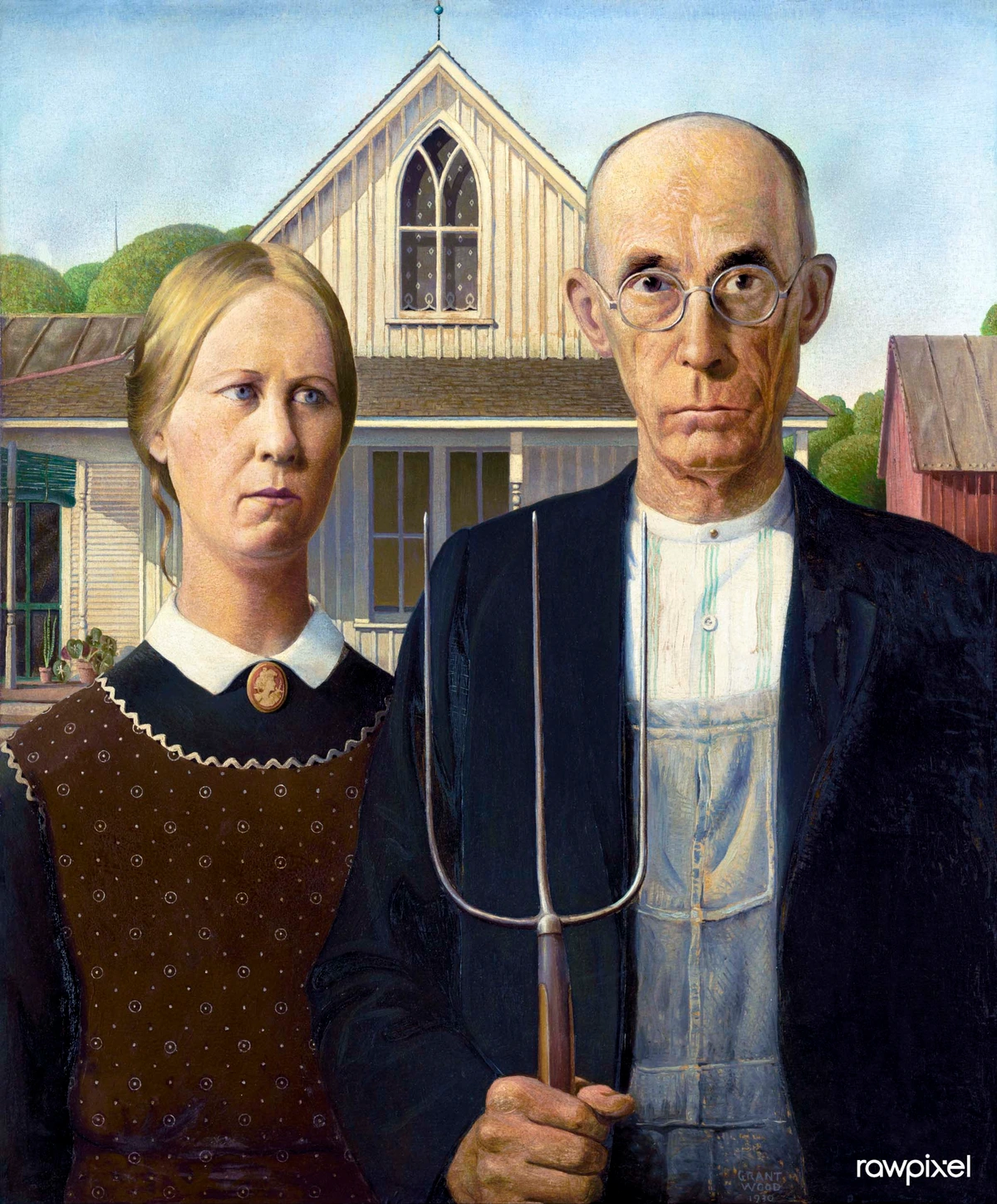
Grant Wood's American Gothic isn't just a painting; it's a cultural touchstone, a visual shorthand for an entire era, and a deeply ingrained part of the American psyche. Created in 1930, it has embedded itself so deeply in our consciousness that even if you've never stepped foot in a museum, you've likely encountered it countless times. For me, it's always been this captivating enigma: two stoic figures, a firmly held pitchfork, a quiet farmhouse. But beyond the immediate visual, what is it truly communicating? Is it a loving tribute, a biting critique, or something far more intricate? I've wrestled with its myriad meanings since I first glimpsed it (was it in a textbook, or maybe even a surprisingly sophisticated cartoon parody?), and the fact that the figures aren't a real couple, but models, only deepened the mystery for me. It makes the entire scene feel like a carefully constructed statement, almost like a play where every prop and character is meticulously chosen. I'm excited to share my journey into what makes "American Gothic" so enduringly compelling. In this comprehensive guide, we'll peel back its many layers, diving deep into its rich historical context, profound symbolism, complex reception, and the indelible mark it has left on American identity and art history.
Grant Wood: An American Artist's Journey Home to Regionalism
To truly appreciate American Gothic, I think it's crucial to understand the man behind the canvas, Grant Wood. Born in rural Iowa in 1891, Wood's early life was deeply rooted in the very landscape he would later immortalize. I imagine him as a kid, already observing the quiet dignity of the land and its people. After his father's death, his family moved to Cedar Rapids, exposing him to a wider world, but the rhythms and values of the heartland never truly left him. Now, here's where his journey gets interesting: like many ambitious American artists of his generation, Wood initially looked to Europe for inspiration, trying to find his artistic footing amidst the dominant trends.
He traveled there multiple times in the 1920s, immersing himself in the avant-garde movements of Paris and Munich. He even adopted a kind of Impressionistic style for a while, trying to fit into the prevailing trends and shed what he might have perceived as his provincial roots. But something didn't quite click for him. I picture him sketching away in a bustling Parisian café, perhaps feeling a disconnect, realizing it just wasn't him. It was during a trip to Munich, where he encountered the meticulous detail and crisp realism of Northern Renaissance masters like Jan van Eyck and Hans Memling, that something profound shifted. He realized he didn't need to chase European modernism; his unique voice lay in his own backyard. The technical precision and symbolic depth of these Old Masters resonated deeply with his craftsman's sensibility (he also had a background in stained glass!).
Returning to Iowa in the late 1920s, Wood consciously abandoned the European influence. He started to cultivate his distinctive, almost homespun persona—ditching the beret for overalls, if you will—and committed himself to depicting the American Midwest with a singular vision. This decision, this deliberate turning inward, wasn't just an artistic choice; it was a deeply personal homecoming that would define his most iconic work, including the masterpiece we're exploring today. This period saw him become a leading figure in American Regionalism, a movement that celebrated distinctly American themes and values, providing a visual counterpoint to European abstraction.
Regionalism and the Search for American Identity
To really grasp American Gothic, I think you need to understand the man behind the canvas, Grant Wood, and the artistic movement he championed: Regionalism. What always struck me about Regionalism, especially when looking at Wood's work, is how it was this deliberate turning inward, a defiant celebration of the unique spirit of the American heartland—specifically the Midwest—at a time when much of the art world looked across the Atlantic. While Europe was exploring revolutionary movements like Cubism and Surrealism, American artists like Wood, Thomas Hart Benton, and John Steuart Curry sought to create art that was distinctly American. They focused on scenes of everyday life in the heartland, celebrating its values, landscapes, and people. It was art for Americans, by Americans, and often, about Americans. This wasn't just about rejecting European trends; it was about forging a national identity through art, proving that American subjects and American artists were worthy of serious artistic exploration, perhaps especially crucial after the societal upheaval of World War I and the subsequent cultural confidence of the Roaring Twenties.
This movement gained particular traction during the Great Depression of the 1930s. As economic hardship gripped the nation, particularly rural communities facing devastating crop failures, severe dust storms, and widespread foreclosures, there was a profound desire for stability and a return to perceived traditional American values. Regionalism offered a visual antidote to the uncertainties of the era, providing reassuring images of hard work, resilience, and an idealized, yet often stark, vision of rural life. It's also worth noting the government's active role, particularly through initiatives like the WPA Federal Art Project, which provided employment for artists and encouraged the creation of public art that often celebrated American scenes and values. While Wood himself wasn't a direct recipient of a major WPA mural commission, the broader cultural climate fostered by such projects undoubtedly bolstered the Regionalist message and its public acceptance, pushing artists to depict the American story for American audiences. This governmental support further solidified the movement's presence and impact.
Wood himself was deeply rooted in Iowa. He saw a need to depict the quiet dignity and resilience of the Midwest, even if it came with a hint of provincial sternness. This commitment to portraying authentic American life, away from the perceived elitism of European modernism, is a cornerstone of Regionalism and a key to understanding American Gothic.
Key Regionalist Voices: Wood, Benton, and Curry
Now, when we talk about Regionalism, it's worth noting the distinct voices within the movement. Thomas Hart Benton, for instance, created dynamic, often muscular depictions of American labor and folk life, characterized by a fluid, almost sculptural realism that felt full of movement and energy, frequently manifesting in large-scale murals that glorified national progress. Think of his America Today murals at the New School, where powerful, swirling figures depict industries and daily life with an almost cinematic drama, their bodies contorted with physical effort.
John Steuart Curry, on the other hand, was known for his dramatic scenes of Midwestern nature and spirituality, often depicting powerful natural forces or religious themes with a sense of awe and sometimes, impending drama. His Tornado Over Kansas or Baptism in Kansas explode with energy and emotional intensity, focusing on moments of crisis or profound human experience. Wood, while sharing their commitment to American themes, carved out his own unique space. His style was often more refined, his compositions meticulously structured, and his commentary frequently more subtle. He captured an iconic stillness, a kind of monumental clarity that resonates to this day, distinguishing him from the more energetic or dramatic approaches of his contemporaries. For a broader perspective on the context of American cultural identity in art, you might explore the Harlem Renaissance.
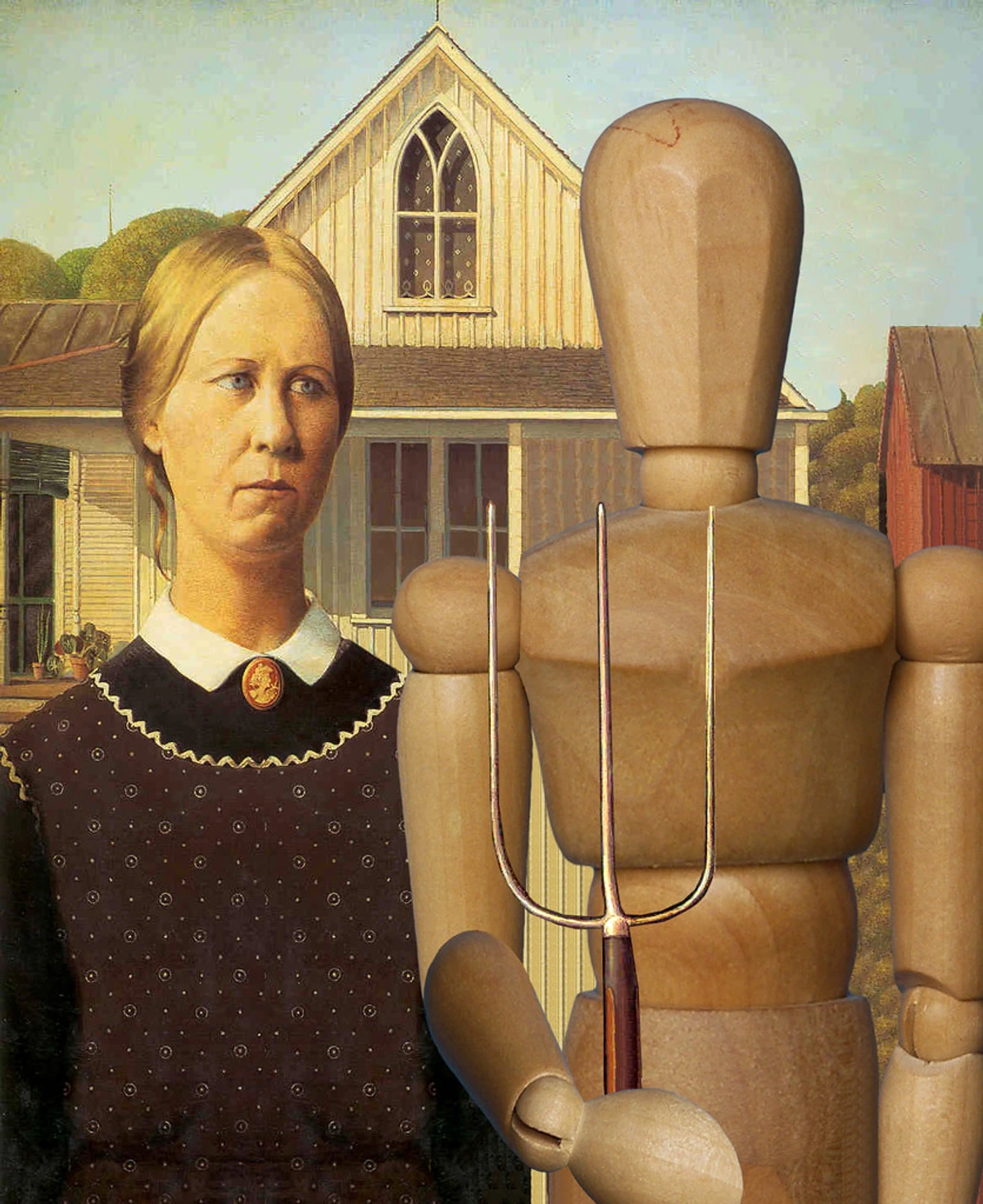
Wood's Masterful Technique and Distinct Vision
If you've ever delved into a comprehensive overview of his work, you'll know that Wood's visual style was as distinctive as his subject matter. His early training as a craftsman, particularly in stained glass, profoundly influenced his approach. While he spent time in Europe, initially dismissing modern art movements like Impressionism as too frivolous, he found deep inspiration in the meticulous detail, crisp realism, and glowing colors of Northern Renaissance masters such as Jan van Eyck and Hans Memling. He particularly admired their technique of oil glazing, where thin, translucent layers of paint are built up to create rich luminosity and profound depth, almost making the figures feel alive.
This blend of precise, almost devotional detail from the Old Masters and his craftsman's eye for clean lines and defined forms gives his figures an almost sculptural quality, a certain monumental simplicity. It’s almost as if he was building his paintings, piece by piece, just as a craftsman builds a cabinet or a stained-glass window, ensuring every element is perfectly placed and rendered. There’s also a subtle undercurrent of American Precisionism in his work, evident in the crisp lines and geometric simplification of forms, especially in his landscapes and architectural elements, blending a modern sensibility with traditional themes. The advent of photography also undoubtedly played a role, influencing his desire for hyper-realism and sharp focus, much like a carefully composed portrait photograph.
His signature technique, often described as a "licked finish," involves the application of smooth, almost invisible brushstrokes, resulting in a surface devoid of visible texture. It's a finish so seamless that the paint appears to have been licked onto the canvas, creating an effect of hyper-realism or almost photographic clarity that draws you in, making every detail pop. This meticulous rendering, combined with his precise, often geometric compositions and a unique color palette that could be both vibrant and subdued, allowed him to capture the essence of his subjects while imbuing them with symbolic weight. His careful use of stark light and shadow further accentuates the forms and contributes to the painting's powerful, almost theatrical mood.
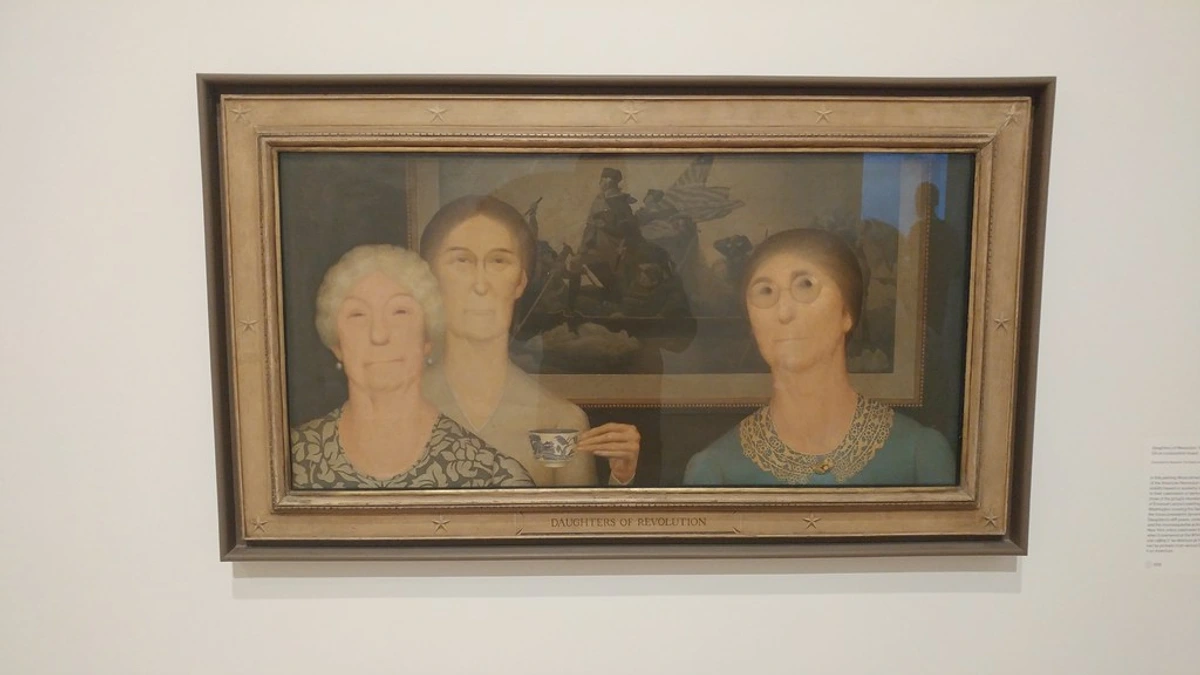
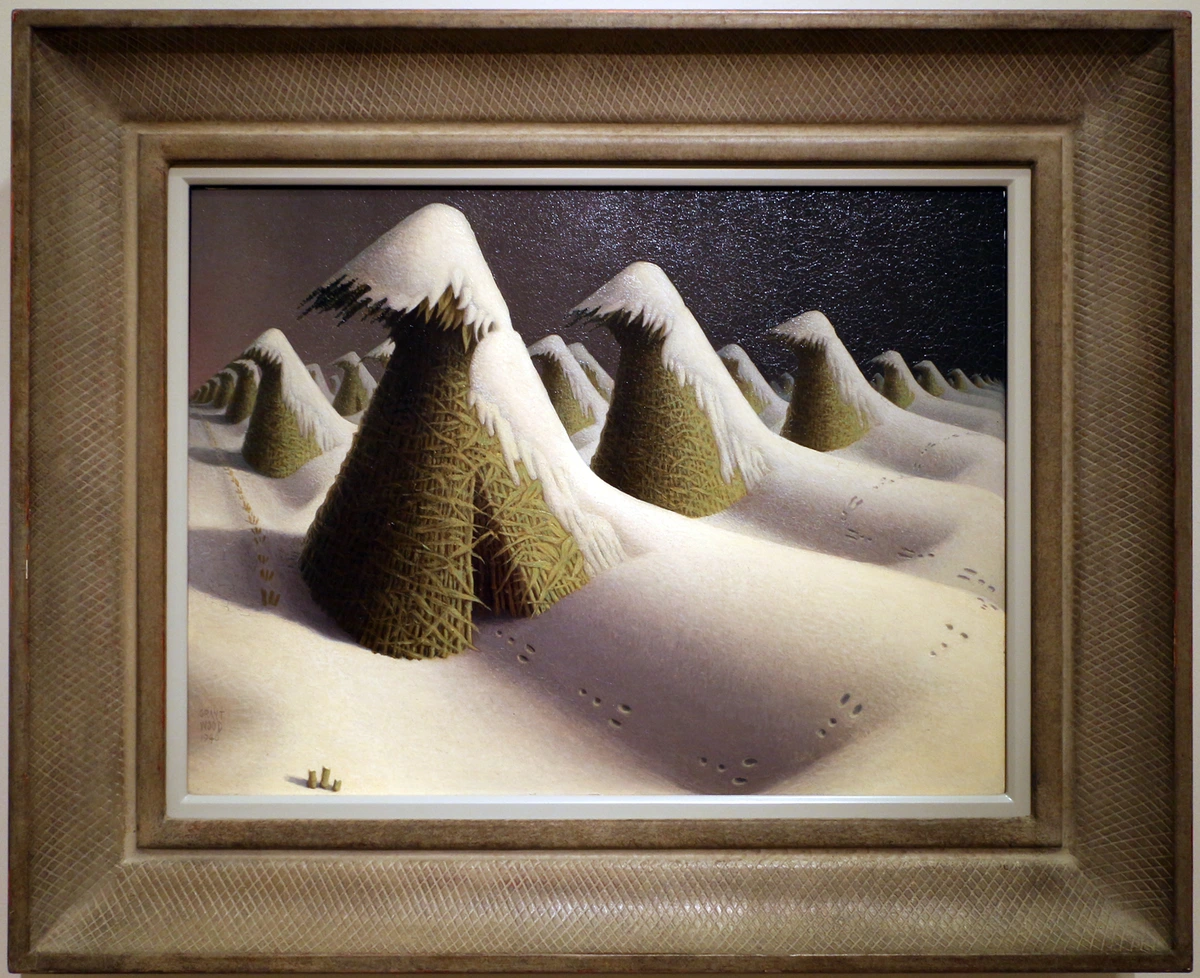
This meticulous approach is evident not only in American Gothic but also in other significant works. Take his Daughters of Revolution, for instance, with its satirical portrayal of three stern, slightly prim women. They're depicted in colonial-era clothing, standing stiffly before a reproduction of Emanuel Leutze's Washington Crossing the Delaware—a painting symbolizing American heroism. Wood's women, however, hold tea cups that look suspiciously like souvenir items, and their faces are rendered with that same "licked finish" and severe, almost self-important air, subtly poking fun at perceived ancestral snobbery and an overly sentimental view of history, rather than celebrating it. Or consider his serene winter landscape, January, which captures snow-covered haystacks with an almost geometric precision and a subdued palette that emphasizes the stark beauty and quiet endurance of the Midwestern winter. Then there's Arnold Comes of Age, a striking portrait of a young man, rendered with Wood's characteristic crisp realism against a symbolically charged landscape, encapsulating a moment of transition and deep connection to the land. These pieces, like American Gothic, perfectly encapsulate his ethos of celebrating American life, sometimes with an affectionate wink, sometimes with a subtle critique. They showcase his ability to capture an American vernacular in art, elevating everyday scenes and figures to iconic status.

Deciphering the Duo: The Models, Their Roles, and Psychological Depths
Here's a common misconception that often pops up, and it's a big one: the figures are often assumed to be husband and wife. But actually, they're not! The man is Wood's dentist, Dr. Byron McKeeby, and the woman is Wood's sister, Nan Wood Graham. Wood simply dressed them up to fit his vision. He wanted to represent a farming couple, yes, embodying the kind of people he imagined living in the distinct "Carpenter Gothic" style farmhouse he spotted in Eldon, Iowa. The fact that they aren't actually a married couple, and the considerable age difference between Dr. McKeeby (in his 60s) and Nan (32 at the time), adds another crucial layer to the ambiguity. Are they father and daughter? Siblings? Or just two people embodying a type—a symbolic representation of rural fortitude? I think this ambiguity is a huge part of its lasting power. It lets us, the viewers, fill in the gaps and project our own understanding onto their relationship, making it deeply personal.
Their expressions are undeniably key, aren't they? That unsmiling, almost dour look has been read in so many ways. Is it the stoicism of those who endure hardship? The severity of small-town judgment, a hint of provincial puritanism? Or simply the seriousness of a posed photograph, especially common in an era before casual smiling for the camera became widespread? I lean towards the former – a resilience born of tough times. This was particularly poignant given the Great Depression was just beginning when the painting was made. Rural Americans faced immense economic hardship, crop failures, and foreclosures, and these faces seem to reflect that unyielding endurance, a quiet defiance in the face of adversity. Yet, I also see a subtle weariness, perhaps even a hint of suspicion in their eyes, as if they are evaluating us, the viewers, just as much as we are scrutinizing them. It’s this psychological complexity, the blend of strength and potential vulnerability, that makes them so captivating and allows for endless interpretation. The famous farmhouse they stand before, by the way, is located at 106 Tenth Street in Eldon, Iowa. It's now preserved and open to the public, maintained by the Iowa State Historical Society, allowing visitors to see the very structure that sparked Wood's inspiration.
The Carpenter Gothic House: A Midwestern Icon
The distinctive white farmhouse with the pointed arch window isn't just a backdrop; it's practically a third character in the painting. Wood spotted this particular house at 106 Tenth Street in Eldon, Iowa, and was immediately captivated by its unique style. This is a quintessential example of Carpenter Gothic architecture, a distinctly American vernacular style that flourished in the mid-19th century.
Unlike the grand, soaring cathedrals of European Gothic architecture (which you can explore in a guide to Gothic art and architecture), Carpenter Gothic took elements of high Gothic design – like steep gables, ornate trim (often called 'gingerbread' or 'lace'), and those signature pointed arches – and rendered them in readily available timber using common carpentry techniques. Think of it as democratic Gothic, bringing a touch of architectural aspiration to ordinary homes. Often painted white, these houses were a way for ordinary Americans, particularly in rural areas, to add a touch of elegance, aspiration, and a hint of Old World charm to their humble dwellings, contrasting with the more common, plain farmhouses. In American Gothic, the house itself, with its stark white facade and single pointed window, feels both aspirational and austere, a silent, almost monumental witness to generations of lives and deeply ingrained traditions within the American landscape. It subtly blends European influence with American practicality, perfectly encapsulating the spirit of the Regionalist movement.
Symbolism in Every Stroke: A Deeper Dive
Wood was a master of detail, and American Gothic is packed with symbolism. It's like he knew every element would be scrutinized for decades to come. Let's embark on a little detective work and break down some of the most striking elements:
The Pitchfork: Labor, Protection, and a Sacred Trinity
This is perhaps the most iconic symbol, isn't it? It's clearly a tool of labor, representing the hard work of farming and a deep connection to the land. But its three prongs are echoed everywhere: in the stitching of the man's overalls, in the window frames of the house, and even subtly in the man's face; if you look closely at his nose and chin, you'll notice a similar triangular structure. This threefold repetition subtly ties the man, his work, and his home together in a deeply integrated way, suggesting an unwavering unity and perhaps even hinting at a "sacred trinity" of rural life – a connection to land, labor, and faith. Beyond labor, the pitchfork can also carry phallic symbolism, representing virility and the fertility of the land. Historically, a three-pronged staff has also been associated with St. Peter, acting as a symbolic key or a tool for guarding, further reinforcing a protective, almost defensive stance – "this is my land, this is my family" – a quiet assertion of ownership and resolve. It's a powerful statement of rootedness and a refusal to be moved.
The Clothing: Utility, Tradition, and Puritanical Restraint
Their attire is conservative, practical, and devoid of frills. The man wears simple overalls and a jacket, the woman a dark dress with a cameo brooch. It speaks volumes about a life focused on utility, tradition, and a certain puritanical restraint, far removed from urban fashion trends. This simple, unadorned clothing contrasts sharply with the intricate detail of the background, making the figures stand out as epitomes of their social standing and values, embodying a no-nonsense approach to life where extravagance is eschewed for endurance.
The Flowers: Domesticity and Quiet Fortitude
On the porch, you can spot a few plants. There are geraniums, which in Victorian floral symbolism often represent domestic comfort or melancholy, hinting at the quiet emotions of home life. More strikingly, there's a plant known as "Mother-in-Law's Tongue" (Sansevieria trifasciata), which is known for its sharp, sword-like leaves and remarkable resilience. This plant thrives in harsh conditions, requires little water, and is notoriously difficult to kill – a perfect botanical metaphor for the unyielding spirit and quiet fortitude of the rural inhabitants depicted, perhaps even an affectionate nod to a certain sharp-tongued domestic protection, or the sometimes thorny aspects of family life. These subtle domestic details hint at the complexities and quiet fortitude of home life, adding a layer of implied narrative to the stoic scene.

The Woman's Gaze and Brooch: Inwardness vs. Tradition
While the man looks directly at the viewer with an unwavering, almost challenging stare, the woman's gaze is slightly shifted to the side, perhaps towards him or into the middle distance, creating a sense of inwardness or a cautious assessment. This subtle divergence in gaze highlights her individual thoughts and feelings within their shared stoicism. Her cameo brooch, a distinctly Victorian touch, suggests a connection to past generations and enduring values, perhaps also hinting at a suppressed romanticism or domesticity that contrasts with her severe expression. It's as if this small, personal adornment offers a glimpse into a more tender, traditional aspect of her identity, quietly at odds with the public face of resilience. It's these subtle psychological cues that keep us guessing about their internal worlds and their individual thoughts within the collective portrayal.
Overall Composition and Spatial Arrangement: Monumental Stillness
Wood's meticulous composition creates a powerful sense of stability and rigidity. The figures stand in a static, almost frontal pose, their verticality mirroring the upright lines of the house and the pitchfork. This creates a monumental presence, suggesting an unyielding rootedness. The slight psychological distance between the figures and the viewer, and perhaps even a subtle detachment between the man and woman themselves, adds to the painting's tension and ambiguity. Visually, the stark, almost flat rendering of the figures against the patterned house, coupled with their stiff postures, creates this distance, making them appear almost as archetypes rather than fully accessible individuals. They are almost set in the landscape, inseparable from their environment, yet simultaneously isolated within their own frame.
It's a masterclass in using everyday objects and precise arrangements to convey deeper meaning, hinting at themes of resilience, traditional values, and the sometimes-stark reality of rural existence, all rendered with Wood's meticulous, crisp style.
Beyond the Frame: Reception, Controversy, and Enduring Legacy
When American Gothic was first exhibited at the Art Institute of Chicago, it won a prize and was quickly acquired by the museum. But its reception in Iowa was, shall we say, rather mixed. Some Iowans were outraged, feeling Wood had depicted them as grim, puritanical caricatures of backward rural folk. Grant Wood himself received angry letters from Iowans who felt personally insulted by the portrayal. Stories even say a newspaper editor suggested Wood should have his ears cut off! It seems some in his home state felt he had betrayed their image, depicting not stoic resilience but rather stern provincialism. This immediate, polarized reaction is part of what cemented the painting's notoriety. It’s fascinating how a single image can evoke such strong, conflicting emotions, isn't it? Wood himself navigated this carefully, sometimes claiming it was an affectionate portrayal, other times hinting at a more satirical undertone, perhaps letting the ambiguity speak for itself.
However, as the Great Depression deepened, the painting began to be reinterpreted. Those stern faces came to symbolize the stoicism, resilience, and unyielding spirit of Americans facing immense hardship. It transformed from a potentially controversial regional portrait into a national emblem of strength and an icon of American vernacular art. During World War II, for instance, American Gothic was even used in propaganda to symbolize the strength and character of the American people, demonstrating its ability to adapt to a new patriotic narrative.
Art Historical Interpretations & Enduring Relevance
Beyond its initial controversy and role as a Depression-era symbol, American Gothic has continued to fascinate art historians and critics. Over the decades, interpretations have shifted and deepened. Some view it as a masterful example of American realism, capturing a specific cultural moment with unflinching honesty. Others emphasize its modernist qualities, noting Wood's stylized, almost geometric approach to figures and landscape, which subtly distorts reality to amplify its symbolic power. Scholars like Wanda Corn have extensively explored how Wood synthesized European modernism with distinctly American subject matter, arguing that the painting, far from being a simple regional snapshot, is a sophisticated engagement with international avant-garde ideas filtered through an American lens, blurring the lines between regional and avant-garde. There's also been considerable discussion about its place within the broader dialogue of American identity—how it both reinforces and challenges national myths, portraying a complex vision of rural America that is neither purely idealized nor purely satirical. Psychoanalytic and feminist readings have also emerged, exploring the suppressed emotions, the woman's subservient yet watchful role, and the broader social dynamics encoded within the seemingly simple scene, often highlighting the tensions between traditional gender roles and individual agency. It's a painting that continually invites us to reflect on our perceptions of tradition, progress, and the often-contradictory aspects of the American character, proving that truly great art never settles on a single meaning.
American Gothic in Popular Culture: The Ultimate Parody Canvas
Today, it's one of the most recognized and iconic works of art in the world, endlessly parodied, referenced, and reimagined across pop culture. Its omnipresence is almost startling, isn't it? I've seen it recreated with everything from Kermit the Frog and Miss Piggy, to Homer and Marge Simpson, to famous politicians like George Bush and Tony Blair. There are versions with different animals, superheroes, and even inanimate objects. Remember the Rocky Horror Picture Show's iconic album cover parody? Or the countless political cartoons that swap out the stoic couple for contemporary figures to make a point about policy or public sentiment? This ability to transcend its original context and become a malleable cultural touchstone is, for me, a testament to its powerful, if ambiguous, visual language. Its deep embedding in our collective consciousness means it can be instantly recognized and repurposed for humor or commentary, a rare feat for any artwork. For a broader view on artists who challenged perception, you might enjoy exploring the work of a modern artist like Andy Warhol.

Aspect  | Initial Reception (1930s Iowa) | Depression Era Reinterpretation (Mid-1930s onwards) | Enduring Legacy (Today) | Key Themes Explored |
|---|---|---|---|---|
| Interpretation | Grim, satirical caricature of provincial, puritanical Iowans. | Symbol of American resilience, stoicism, national character. | Multifaceted: realism, modernism, American identity, social critique, psychological portrait. | Provincial Strictness vs. Rural Resilience; Individual Autonomy vs. National Identity; Modernity vs. Tradition; Rurality vs. Urbanity |
| Emotional Response | Outrage, embarrassment, anger; feeling of betrayal. | Admiration, pride, hope; reassurance in shared values. | Fascination, recognition, affection; basis for parody and homage. | Shame vs. Pride; Discomfort vs. Connection; Ambiguity vs. Clarity |
| Cultural Status | Local controversy, award-winning in Chicago; initially divisive. | National icon, widely reproduced in media, celebrated. | Globally recognized icon, pop culture phenomenon, a true American masterpiece; subject of ongoing academic study. | Regional art to National symbol; Art as propaganda; Art as cultural mirror |
| Artistic Debate | Authenticity of portrayal; intention of satire vs. affection. | Efficacy as a symbol of strength; representation of the "common man." | Modernist elements vs. realism; psychological depth; subversion of genre; social commentary. | Representation; Artist's intent; Viewer's interpretation; The power of visual language |
Frequently Asked Questions About American Gothic
What is the main meaning of American Gothic?
The main meaning is wonderfully multifaceted, but it's widely interpreted as a portrayal of rural American stoicism, resilience, and traditional values, particularly during the onset of the Great Depression. It can be seen as both a celebration and a subtle critique of Midwestern provincialism and puritanical attitudes – a complex duality that makes it so enduring. Grant Wood himself offered conflicting interpretations, sometimes calling it an affectionate portrayal of small-town folk, other times hinting at a more satirical view of their rigid morality. This ambiguity fuels ongoing interpretation and, frankly, keeps us talking about it decades later.

Who are the people in American Gothic?
Ah, the classic question! The models for the figures were Grant Wood's dentist, Dr. Byron McKeeby (the man, in his 60s), and his sister, Nan Wood Graham (the woman, 32 at the time). They were posed to represent a farmer and his daughter, or perhaps a farming couple, embodying the type of hardworking, resilient people Wood imagined living in the distinctive farmhouse. The fact that they are not a married couple, and the considerable age difference, adds a layer of psychological complexity and ambiguity to their relationship, inviting diverse interpretations of their bond – be it paternal, fraternal, or simply two archetypes of a community.
Why is American Gothic so famous?
American Gothic became famous for a confluence of reasons: its strikingly clear composition and distinctive, almost hyper-realistic style; its timely emergence during the Great Depression, which allowed it to become a powerful symbol of American resilience and national character; its inherent visual appeal and memorable composition that makes it instantly recognizable; and its enduring visual power that has led to countless parodies and appropriations in popular culture. It's truly a timeless snapshot of a particular slice of Americana that continues to resonate globally.
Is American Gothic satire or celebration?
This is where the debate truly lies, and it's what makes the painting so rich! Many scholars and viewers see it as both. Wood himself offered conflicting statements, sometimes calling it an affectionate portrayal, other times hinting at satire. I tend to think it's a nuanced blend – an honest depiction that captures both the admirable strength and the perhaps less admirable rigidness of the community he observed, a true testament to the complexities of the American spirit, rather than a simplistic judgment. It's the artistic equivalent of an affectionate, slightly exasperated sigh.

Where is American Gothic located?
Grant Wood's American Gothic is a permanent fixture in the collection of the Art Institute of Chicago, where it has resided since its acquisition shortly after its creation in 1930. If you ever find yourself in Chicago, it's an absolute must-see – the details are even more striking in person! Its dimensions are 78 cm × 65.3 cm (30 3/4 in × 25 3/4 in), a surprisingly modest size for such an impactful work.
What is the specific farmhouse that inspired American Gothic?
The iconic white house with the distinctive pointed arch window that inspired Grant Wood's painting is a private residence located at 106 Tenth Street in Eldon, Iowa. It's built in the Carpenter Gothic style. While still privately owned, the adjacent American Gothic House Center, managed by the Iowa State Historical Society, provides visitor information and photo opportunities, allowing people to stand in the spot where Wood imagined his famous figures. You can even borrow a pitchfork and apron for your own parody photo!
What is the significance of the two figures not being married?
This fact, widely known now, deeply informs the ambiguity and psychological depth of the painting. If they were husband and wife, the interpretation would likely be more straightforward, perhaps focusing purely on marital partnership or the struggles of a farming couple. Their actual familial relation (brother and sister playing father and daughter) allows for multiple readings of their connection: paternal, fraternal, or simply two individuals embodying a collective type. It invites viewers to project their own understanding of relationships, family dynamics, and even societal roles onto the seemingly stoic scene, making the painting more universally resonant and complex. It's less about their specific relationship and more about the archetypal rural relationship.
How does American Gothic compare to other iconic American artworks?
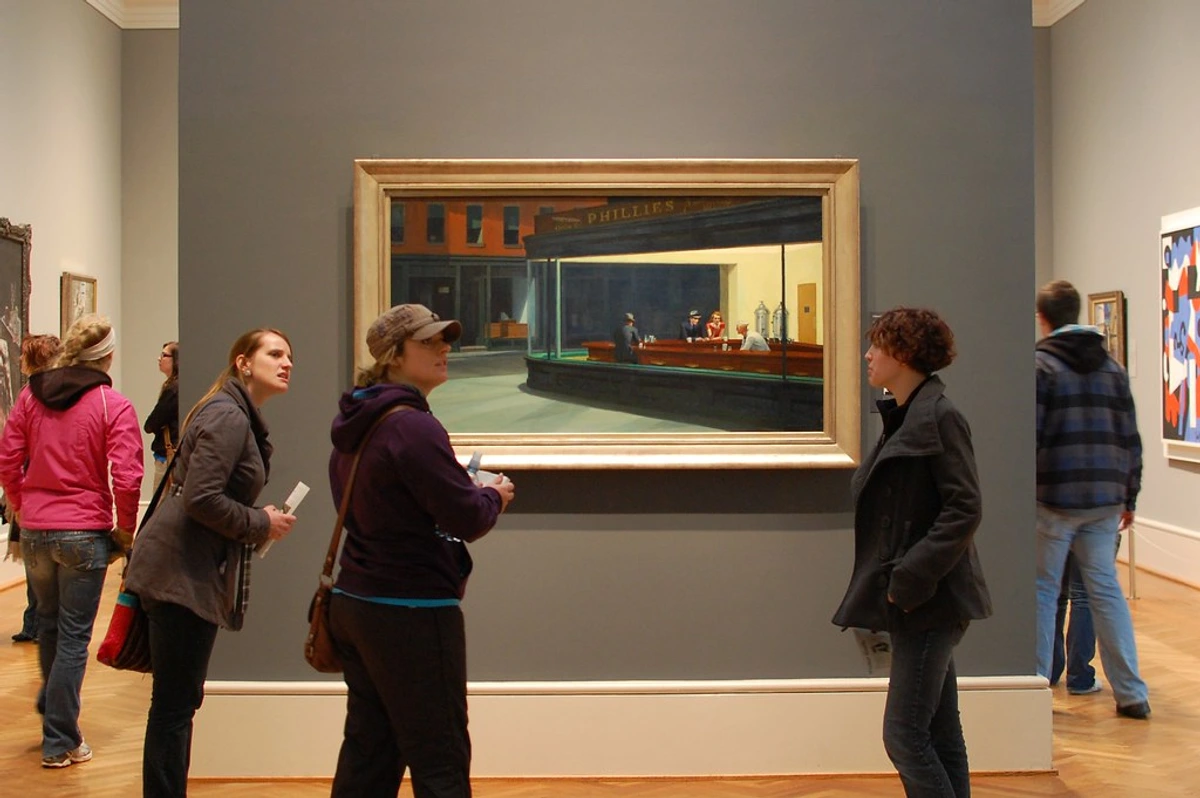
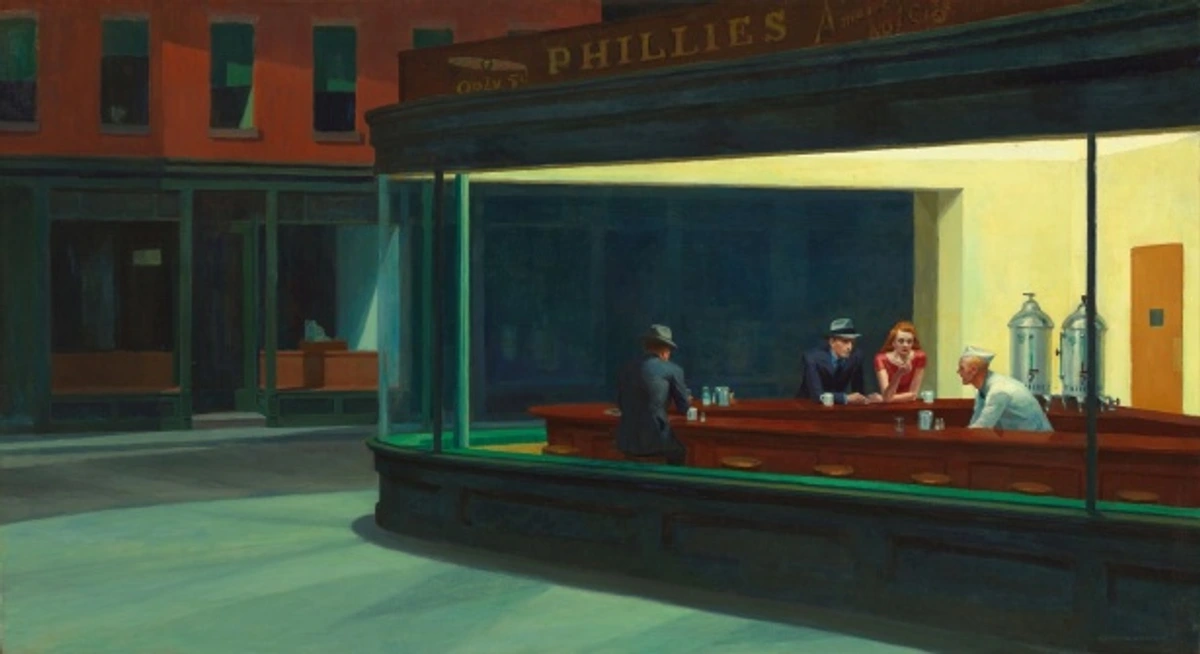
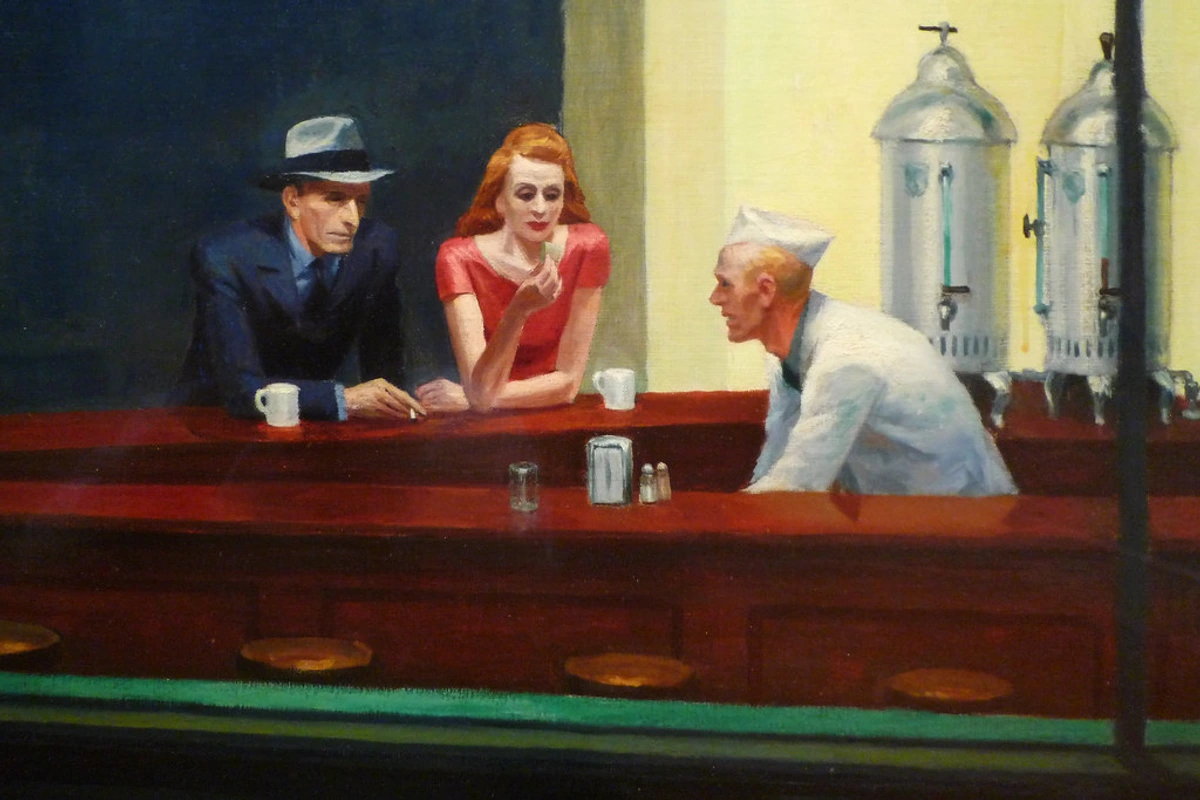
American Gothic stands with works like Edward Hopper's Nighthawks or Grant Wood's contemporary Thomas Hart Benton's murals in defining a particular period of American realism and identity. While Nighthawks captures urban isolation and an almost cinematic melancholy, American Gothic presents a stark, rooted image of rural fortitude and tradition. Both are deeply observational, yet Wood's style is often seen as more stylized and symbolic, with its precise, almost geometric forms, while Hopper's is more naturalistic, focusing on the subtle effects of light and shadow to create mood. Compared to Benton's dynamic, swirling figures celebrating physical labor, Wood's static, almost monumental portraits offer a more introspective, perhaps even unsettling, look at American character. The comparison highlights the diverse ways American artists explored national themes and challenged perceptions of American life, often in response to societal shifts like the Great Depression.




Conclusion: An Enduring Icon, Forever Asking Questions
And so, here we are, having peeled back quite a few layers of Grant Wood's American Gothic. It's a painting that refuses to be neatly categorized, isn't it? It invites questions more than it offers easy answers, and perhaps that's its true genius. Whether you see it as a wry comment on provincial life, a tribute to rural endurance, or simply a captivating portrait, its power to provoke thought and conversation remains undimmed. It stands as a testament to the fact that sometimes, the most enduring art is the art that allows us to find ourselves within its gaze, even if that gaze is a little stern. This artwork, I believe, is not just a painting; it's a lens through which we can continuously examine aspects of American identity, resilience, and the subtle complexities of human character.
It certainly makes me want to spend more time with art, whether it's in a museum or just in quiet contemplation, and I hope it does the same for you. It inspires me to keep exploring, to keep experimenting, and maybe even to step into my abstract art studio to create something as enduringly thought-provoking. Ultimately, American Gothic doesn't just hang on a wall; it lives in our minds, perpetually inviting us to look closer, think deeper, and wrestle with the complex tapestry of American life it so masterfully portrays. Perhaps you'll find your next inspiration among the new pieces I'm adding to my collection of contemporary art, and continue your own journey of artistic discovery.