The Ultimate Guide to Romanticism: Emotion, Art & Revolution
Explore Romanticism, the art movement where feelings reigned supreme. Dive into its core ideas, iconic artists, and lasting influence across art, literature, and music.

The Ultimate Guide to Romanticism: When Emotion Redefined Art (and My Own Heart)
I've always found feelings to be a bit... overwhelming, haven't you? They swirl around, sometimes beautiful, sometimes utterly chaotic, and often, I confess, I'd rather just ignore them. But then I stumbled into the world of Romanticism, and suddenly, ignoring feelings wasn't an option anymore. This wasn't just another art movement; it was a full-blown revolution of the heart, a declaration that emotion, intuition, and the wild, untamed spirit were just as valid – if not more valid – than cold, hard reason. It genuinely blew my mind, honestly. It felt like someone finally said, "Hey, it's okay to feel all of it." And in a way, writing this feels a bit like rambling, but then again, that’s quite Romantic too, isn’t it?
My First Encounter with the Roaring Heart: What Even Is Romanticism?
Imagine, if you will, that for a long time, the art world (and society, really) was pretty obsessed with order. The Enlightenment era, with its fervent belief in reason, logic, and scientific inquiry, had laid a foundation for a societal and artistic landscape that valued clarity, control, and classical ideals. Think crisp lines, ancient Greek and Roman perfection – that was the Neoclassical era, and it had its charms, I suppose. But then, as the 18th century bled into the 19th, something shifted. People started to get a bit fed up with all the rules. The Industrial Revolution was changing landscapes and lives, bringing both progress and profound social upheaval, and perhaps humanity yearned for something beyond the mechanical and purely rational.
Romanticism burst onto the scene like a sudden, glorious storm, a counter-movement that championed the individual, the subjective, the irrational, and the awe-inspiring power of nature. For me, it was like someone turned up the volume on life itself. It wasn't about what you thought was beautiful, but what you felt.
(Just a quick note: while paintings like Van Gogh's "The Starry Night" deeply embody the emotional intensity and spiritual connection to nature that Romantics cherished, it's important to remember they were created later, during the post-Impressionist era. Yet, they serve as powerful examples of the enduring spirit Romanticism unleashed.)
Not Just Pretty Pictures: Diving into the Core Ideas
When I dug deeper, I realized Romanticism wasn't merely a style but a profound philosophy that still resonates: who hasn't felt that surge of wonder or a pang of existential dread? These are the ideas that, for me, define the movement:
The Sublime: That Delicious Terror and Awe
I know what you're thinking, "Sublime? Isn't that just 'really good'?" Oh, my friend, it's so much more. The sublime in Romanticism, a concept deeply explored by thinkers like Edmund Burke, is that overwhelming feeling you get when you encounter something so vast, powerful, and majestic that it makes you feel tiny, insignificant, yet utterly exhilarated and connected to something greater. It's an emotional intensity that reason can't quite grasp. Think standing at the edge of a raging ocean, or gazing at a towering, snow-capped mountain range. It can be terrifying in its grandeur, yes, but also utterly captivating and beautiful in a way that transcends mere prettiness. It’s that exhilarating sense of profound wonder mixed with a healthy dose of fear.
Individualism & Raw Emotion: My Inner World, Unfiltered (and the Rise of Genius)
Before Romanticism, personal feelings were often secondary to grand narratives or moral lessons. But suddenly, the unique, often tumultuous inner world of the individual became the star of the show. Artists weren't just painting scenes; they were painting feelings. This era also saw the elevation of the artist as a unique, divinely inspired genius – a visionary whose personal intuition and emotional depth were paramount. This focus on individual experience, passion, and introspection is something I try to carry into my own art, even if my canvases are more abstract. It’s about expressing that raw, unfiltered part of you that’s sometimes hard to put into words, or even to acknowledge to yourself.
Nature as Mirror: More Than Just Trees and Rivers (The Pantheistic Connection)
For the Romantics, nature wasn't just a pretty backdrop; it was a living, breathing entity, a reflection of the human soul, and a source of profound spiritual connection. Many held a pantheistic view, believing that the divine was immanent within nature itself, not separate from it. It was wild, unpredictable, and powerful – just like human emotions. You see this vividly in landscapes that aren't just scenic, but dramatic, stormy, or utterly desolate, inviting contemplation. It's that feeling of being one with the world, or perhaps utterly alone in it, depending on the mood. Remember how I mentioned feelings could be demanding? Nature, for the Romantics, was a safe place to feel them all, a sanctuary where the spirit could roam free.


(Another quick reminder: like "The Starry Night," this beautiful work by Van Gogh is a later reflection of Romantic ideals, not a direct product of the 18th-19th century Romantic era itself, but its emotional power and reverence for nature certainly echo its spirit.)
Escapism and the Lure of the Unknown: The Past, the Exotic, and the Supernatural
There was also this deep yearning for simpler, purer times, often idealized versions of the Middle Ages, or a fascination with exotic, distant lands. This wasn't just nostalgia; it was a kind of escape from the perceived mundanity, harshness, and rapid changes of the industrializing present. This romanticized view of history and cultures, often fueled by an interest in folklore and national identity, fired the imagination. Alongside this, Romantics often delved into the supernatural, the mysterious, and the gothic. Think eerie ruins, haunted castles, and tales of specters and dark magic – themes that allowed artists to explore the irrational, the terrifying, and the depths of human fear and fantasy.
Philosophical Undercurrents and Revolutionary Echoes
Romanticism wasn't born in a vacuum; it was profoundly shaped by contemporary thought. Philosophers like Jean-Jacques Rousseau, with his emphasis on the natural goodness of humanity and the corrupting influence of society, resonated deeply with the Romantic idealization of nature and individual freedom. Immanuel Kant's exploration of the sublime and the subjective nature of aesthetic experience also provided a crucial intellectual framework for the movement's focus on feeling over pure reason. This intellectual ferment coincided with (and sometimes fueled) the revolutionary spirit of the era, seeing artists and thinkers alike championing freedom, rebellion against established norms, and even nationalistic fervor in their quest for self-determination.
The Artists Who Made Me Feel Things (and Maybe You Too)
When I think about the artists who truly embodied this spirit, a few names always leap out, their works practically vibrating with the emotional intensity I've been rambling about. These weren't just skilled painters; they were conduits for feeling.
Caspar David Friedrich (German): The Lonely Wanderer
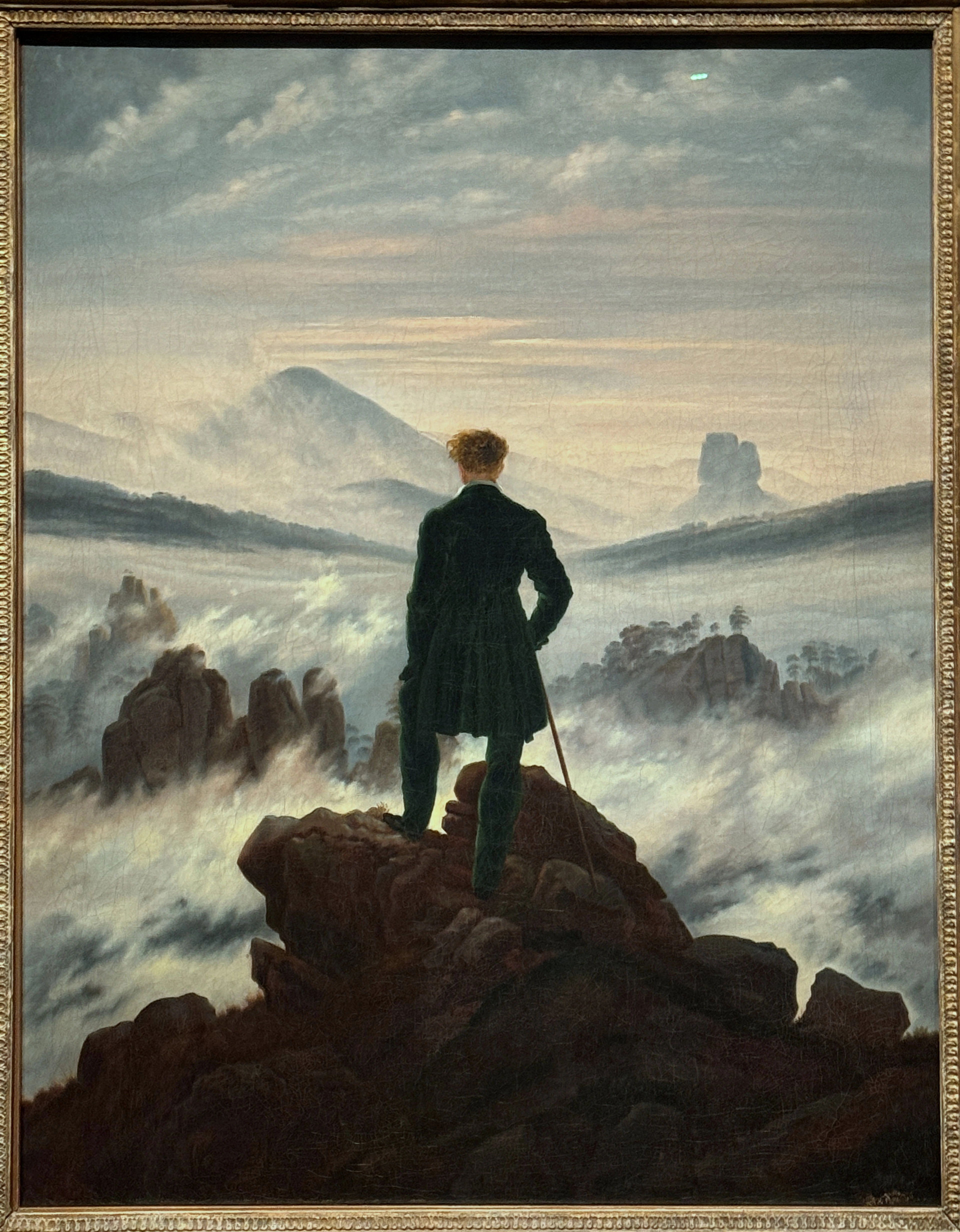
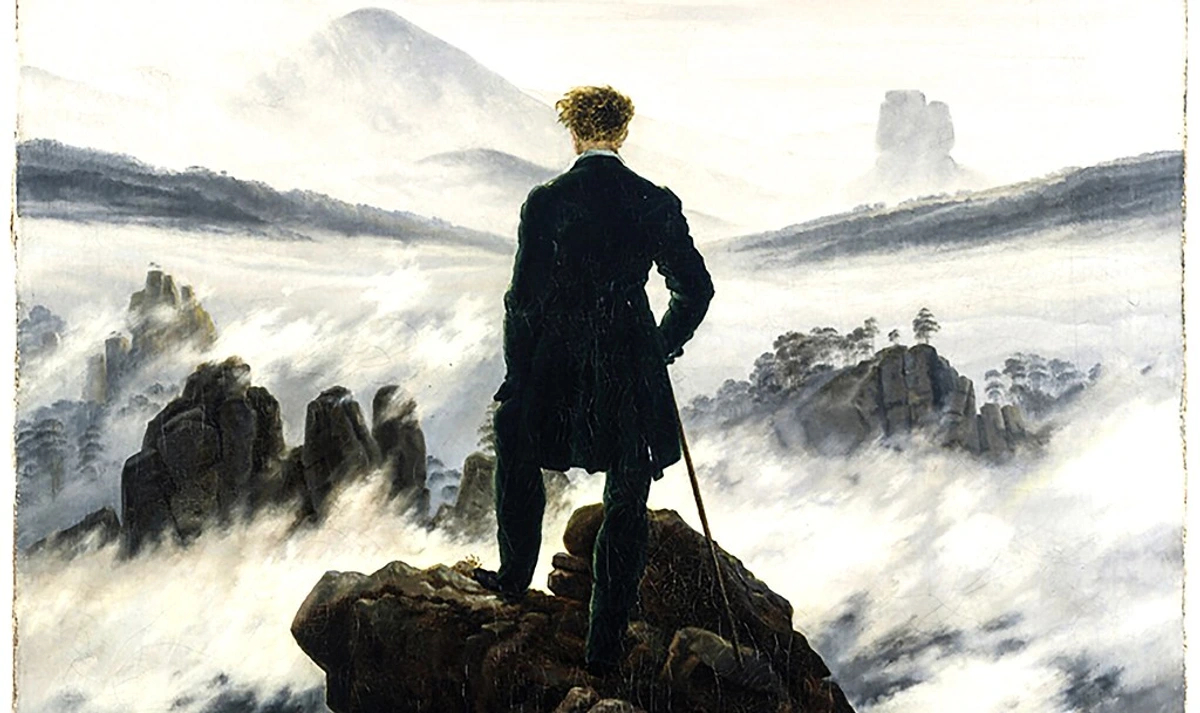
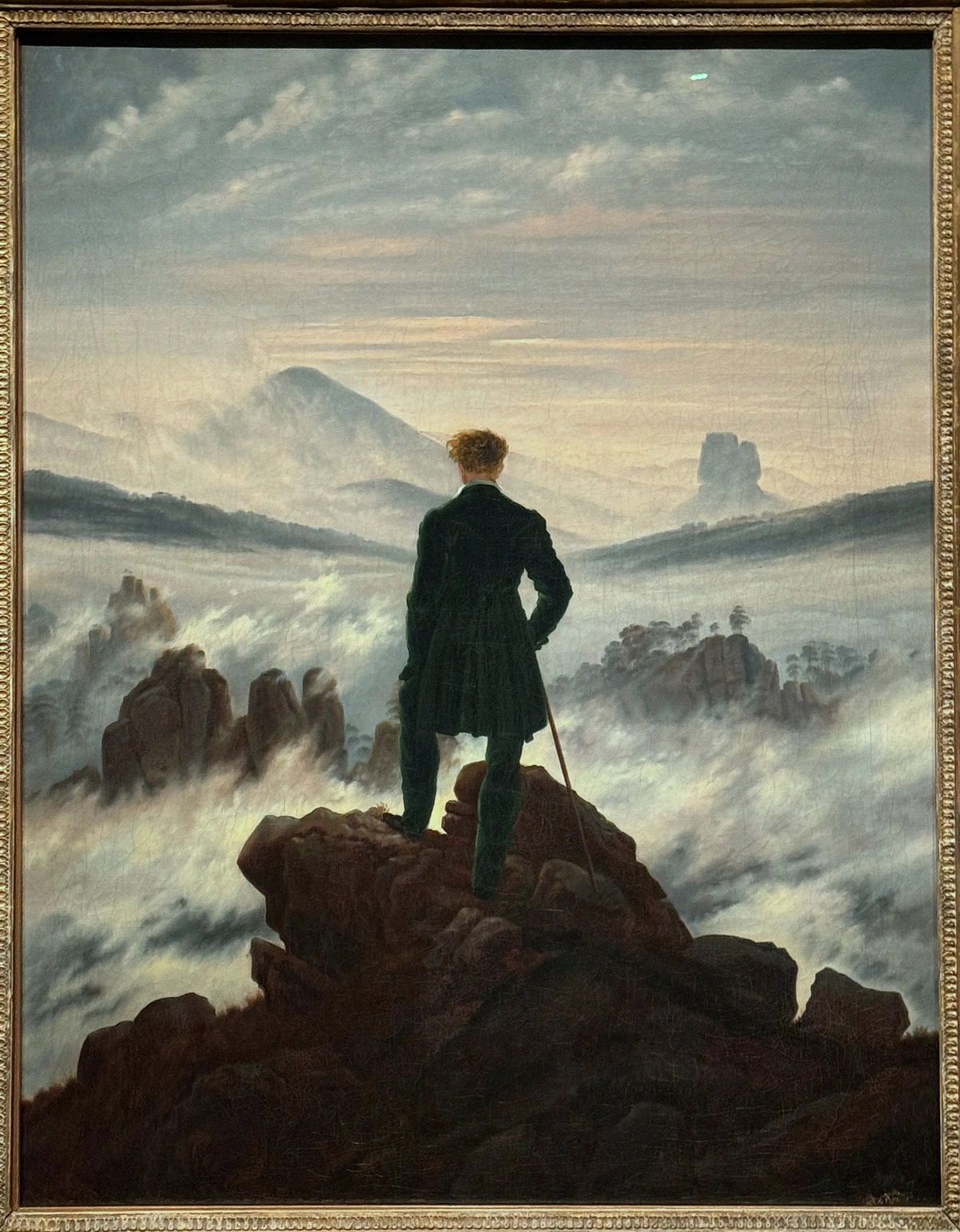
If you've ever felt a profound sense of awe mixed with a touch of solitude while gazing at a vast landscape, you've probably tapped into the spirit of Friedrich. This German painter's figures often stand alone, backs to the viewer, contemplating immense natural scenes. It’s like he’s inviting you to step into their shoes and feel the sublime for yourself, to experience that solitary communion with nature.
J.M.W. Turner (British): The Power of the Storm
Turner, for me, was a master of capturing nature's fury and beauty simultaneously. This British artist's paintings of turbulent seas, blazing fires, and atmospheric phenomena are less about precise detail and more about conveying the sheer force and overwhelming presence of the elements. They feel less like paintings and more like raw experiences, pulling you into the chaos and grandeur of the natural world.
Eugène Delacroix (French): Passion and Rebellion
Delacroix was the French painter of grand gestures, of dramatic historical and literary scenes that practically leap off the canvas with their vibrant colors and emotional intensity. Think his iconic "Liberty Leading the People" – it's not just a historical event; it's an embodiment of human passion, sacrifice, and the revolutionary spirit. Every brushstroke feels charged with purpose and a visceral energy.
Francisco Goya (Spanish): The Darker Side of the Soul
While many Romantics celebrated the beautiful sublime, the Spanish master Goya often delved into the terrifying sublime, and the darker recesses of the human psyche. His later works, especially the chilling "Black Paintings," are raw, disturbing, and incredibly powerful expressions of despair, madness, and the horrors of war. Painted directly onto the walls of his own home, these deeply personal and private visions underscore the Romantic focus on the artist's inner world, even when that world was fraught with darkness and the supernatural. It's a sobering reminder that feelings aren't always sunshine and rainbows, but they are always real.
Beyond the Canvas: Romanticism in Literature and Music
Romanticism wasn't confined to the visual arts; it was a sprawling cultural movement that swept across Europe and beyond, profoundly influencing literature, music, and philosophy. The spirit of intense emotion, individualism, and nature's power found equally powerful expression in words and sound.
In literature, we find giants like the English poet William Wordsworth, who celebrated the profound beauty of nature and the common person's emotions. Lord Byron embodied the rebellious, passionate, and often melancholic "Byronic hero," while Mary Shelley’s Frankenstein delved deep into themes of creation, isolation, and the terrifying sublime. German authors like Goethe (with Faust) and the Brothers Grimm (collecting folklore) also captured the era's spirit.
Music, too, exploded with Romantic fervor. Composers like Ludwig van Beethoven pushed classical boundaries with dramatic emotional intensity and grand scale. Frédéric Chopin poured his soul into evocative piano pieces, and Franz Schubert explored the depths of human feeling in his lieder (songs). These musical masters used harmony, rhythm, and melody to evoke soaring passions, profound melancholy, and breathtaking drama, proving that feelings could be orchestrated as powerfully as they could be painted.
From Brushstrokes to Big Ideas: Romanticism's Lasting Echoes
Even though the official Romantic era had its moment and moved on, its spirit, much like a persistent feeling, never truly left the art world. I see its DNA woven into so many subsequent movements. The emphasis on individual expression, the exploration of the subconscious, and the raw emotional power of color and form – these are threads that continue through the likes of Expressionism, Symbolism, and even Abstract Expressionism.
It’s like Romanticism cracked open the door to a more personal, subjective approach to art. Without it, I sometimes wonder if we'd have the freedom to just... feel through art in the way we do today, whether that's through a turbulent abstract piece or a deeply personal self-portrait. My own work, with its focus on vibrant colors and the interplay of raw emotion and structured form, definitely owes a debt to this idea of art as a vehicle for the inner world. If you're curious about how that translates, perhaps even feeling some of these echoes in my contemporary abstract pieces, feel free to take a peek at some of my art for sale. I'm always trying to put a bit of that human heart into my canvases, a journey you can explore more on my timeline.
FAQ: The Curiosities That Keep Me Up at Night (and Answer Them for You)
Is Romanticism Just About Love and Romance?
No, no, and definitely not! This is a common misconception, and honestly, one I had myself for a while. While passionate love (and sometimes tragic love) can be a theme, Romanticism is about all emotions, often intense and dramatic ones. It's about awe, terror, despair, ecstasy, and the individual's spiritual connection to the world, not just candlelit dinners. Think of it more as a "romance" with nature, with the past, with the extraordinary, and with one's own complex inner life.
What About Romanticism in Literature and Music?
Ah, great question! Romanticism was truly a multi-disciplinary movement. While this article focuses a lot on visual art, the spirit of Romanticism flourished just as powerfully in literature and music. Think of the brooding poets like Lord Byron, the emotional depths of Beethoven's symphonies, or the imaginative tales of Mary Shelley’s Frankenstein. If you want to dive deeper into these facets, I’ve shared a bit more in the section Beyond the Canvas: Romanticism in Literature and Music above.
How is Romanticism Different from Neoclassicism?
Ah, the classic art history showdown! If Neoclassicism (which came before it) was about reason, order, logic, and classical ideals (think ancient Greece and Rome), then Romanticism was its wild, emotional, intuitive cousin. Neoclassicism valued clarity and restraint; Romanticism embraced ambiguity and unrestraint. One looked to the past for models of perfection; the other looked to the individual's unique experience and nature's untamed power. It’s the difference between a perfectly choreographed ballet and a spontaneous, passionate dance that expresses the rawest human feelings.
Did Romanticism Only Happen in Art?
Not at all! Romanticism was a sprawling cultural movement that swept across Europe (and beyond), influencing literature, music, philosophy, and politics. Think of literary giants like Mary Shelley (Frankenstein!), Lord Byron, and William Wordsworth, or composers like Beethoven and Chopin, whose works are bursting with emotional depth and dramatic flair. It was a holistic shift in sensibility, a whole new way of looking at existence itself. It even influenced the way we perceive historical periods like the Renaissance, often romanticizing them.
My Final Thoughts on Feeling It All
So, there you have it, my somewhat rambling, deeply personal take on Romanticism. It’s an era that reminds me (and hopefully you) that feelings aren't weaknesses; they are a profound source of strength, creativity, and connection. They are what make us human, messy, glorious, and capable of creating things that genuinely move others. And sometimes, just sometimes, it’s worth letting those overwhelming feelings wash over you, just to see what kind of beauty or truth emerges on the other side. Perhaps even inspiring a trip to my museum in 's-Hertogenbosch to feel some art yourself! Embrace the storm, embrace the calm, embrace it all.