
American Gothic: The Ultimate Guide to Grant Wood's Iconic Masterpiece
Uncover the profound layers of Grant Wood's 'American Gothic' – an enduring symbol of American identity. Explore its controversial origins, intricate symbolism (from the pitchfork to the Gothic window), evolving interpretations, and lasting global impact. This is your definitive resource to understanding this unforgettable masterpiece.

American Gothic: Unraveling Grant Wood's Iconic Masterpiece, a Tapestry of American Identity
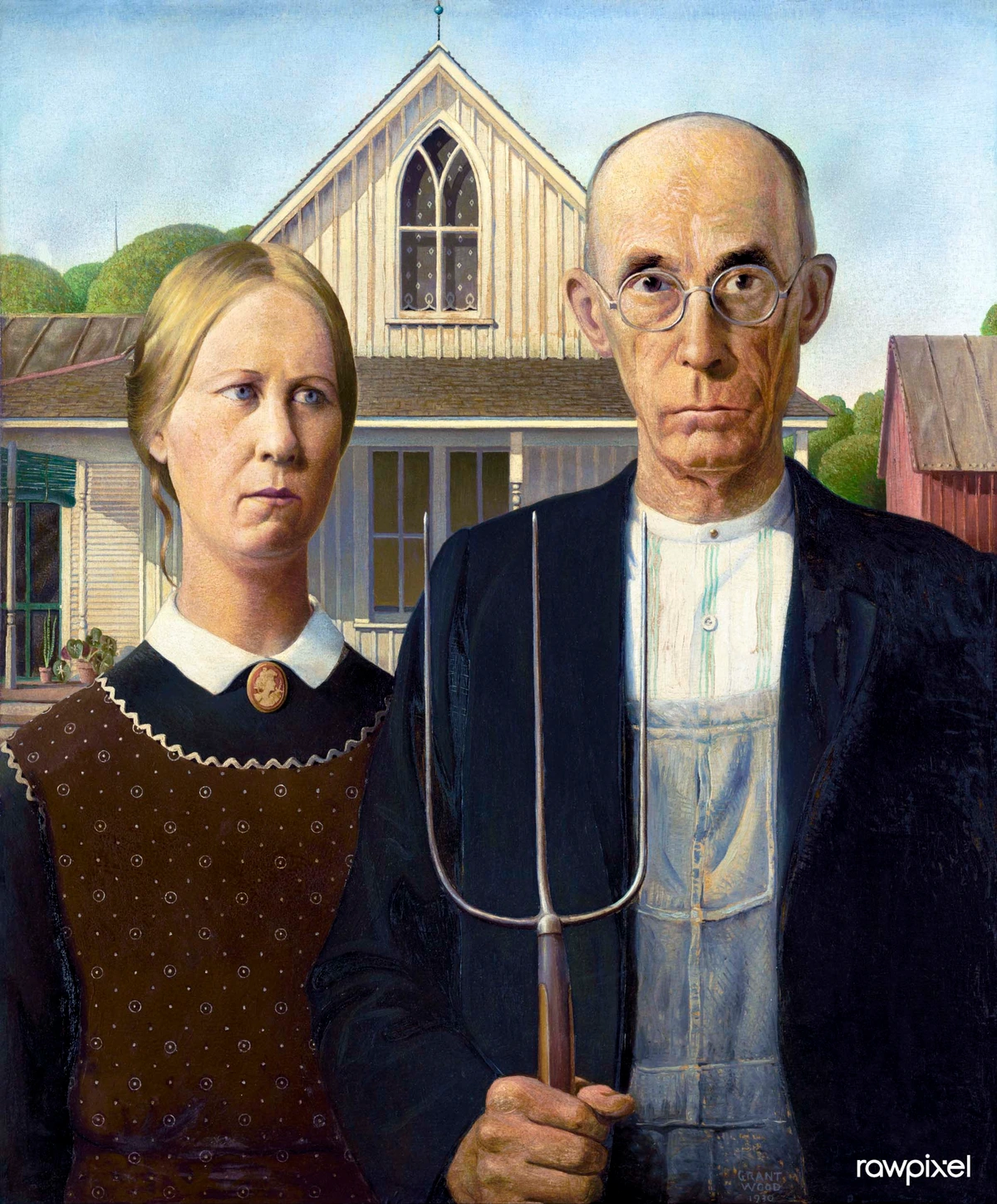
I’m going to start with a confession: like many of you, I’ve seen that iconic image a thousand times. You know the one, right? The stern-faced farmer with his pitchfork, standing rigidly beside an equally unsmiling woman, all set against a humble white house. That, of course, is Grant Wood’s American Gothic, a painting so deeply ingrained in our collective consciousness that it’s become one of the most instantly recognizable—and endlessly parodied—works in American art history. Created in 1930, it has profoundly transcended its original moment, evolving into a potent symbol of rural American life, an emblem of resilience, and, for some, a quiet critique. Its iconic status practically demands endless interpretation, making it a truly rich subject to unpack. But what truly lies behind those unflinching eyes? What unspoken stories does this stoic pair hold, and what truths about an enduring American spirit, both celebrated and scrutinized, does it reflect? Let’s dive in and see what layers we can peel back.
The Genesis of an Icon: Creation, Context, and Regionalism's Rise
To truly understand the enduring power of American Gothic, for me, it really starts with understanding Grant Wood himself and the tumultuous era it sprang from. This painting didn't just appear out of nowhere; it emerged from a United States grappling with the deepening shadows of the Great Depression. This wasn't just an economic downturn; it was a profound crisis that reshaped American society, leading to widespread unemployment, poverty, and an exodus from drought-stricken farmlands, like those impacted by the Dust Bowl. Beyond the visible dust storms, the collapse of commodity prices and a wave of farm foreclosures shattered the agrarian dream for countless families, directly influencing the stoic, resilient outlook Wood aimed to capture.
Artists of the time, feeling the nation's pulse, were intensely questioning national identity and artistic purpose, seeking to reflect the spirit of a nation under duress. While some contemporaries engaged directly with social and political revolution (think of the Mexican muralists we've explored), Wood's approach to national identity was distinctively rooted in the American heartland—a deliberate turning inward, a focus on the local rather than the global turmoil.
The Rise of Regionalism and Wood's European Roots
This artistic movement became known as Regionalism, a conscious rejection of European abstraction and a celebration of distinctly American rural life. It wasn't just an aesthetic choice; it was a cultural and political statement, asserting a unique American artistic identity, sometimes even aligning with a burgeoning sense of isolationism in the US. Regionalism, part of the broader American Scene Painting movement, was even subtly employed during WWII to reinforce a sense of national unity and idealized rural values, quietly promoting a particular vision of American strength.
Wood, an Iowa native, wasn't always the quintessential American Regionalist. He actually spent time in Europe, soaking up different artistic traditions, particularly admiring the meticulous detail and crisp lines of Northern Renaissance masters like Jan van Eyck and Albrecht Dürer. I can only imagine the contrast—going from the vibrant, experimental art scenes of Paris and Munich, where movements like Cubism and Expressionism were deconstructing reality, only to return to rural Iowa and embrace a distinctly American realism. This deep dive into European masters, however, profoundly shaped his unique, precise style. You can see it in American Gothic itself, in the almost jewel-like rendering of the fabric of the apron, the clarity of the house’s architectural details, and the individually painted hairs on the figures’ heads. Even as he consciously moved away from European modernism to celebrate his homeland, that early influence, particularly the Northern Renaissance emphasis on sharp focus, intricate texture, and vivid realism, remained a foundational pillar of his technique. For anyone curious about the masters who inspired this precision, you might enjoy exploring famous Renaissance artists or diving deeper into the works of Johannes Vermeer, another master of meticulous detail.
Other key Regionalists included Thomas Hart Benton and John Steuart Curry, each offering their unique perspective on the American scene, often depicting similar themes of rural struggle and resilience. But Wood’s distinctive precision and subtle ambiguity set him apart.
The Spark: A Gothic Window and Midwestern Types
Now, the spark for American Gothic hit Wood during a visit to Eldon, Iowa. He spotted a modest white house with a rather distinctive architectural flourish: a Gothic Revival window. It struck him immediately. He envisioned two figures, a farmer and his unmarried daughter, standing solemnly in front of it, embodying what he saw as the spirit—and perhaps the quiet dignity—of the rural Midwest. For his models, he famously enlisted his own sister, Nan Wood Graham, for the female figure, and his dentist, Dr. Byron McKeeby, for the stern-faced farmer. It’s crucial to remember that Wood intended her to be the farmer’s unmarried daughter, not his wife. Nan herself reportedly found the portrayal unflattering, feeling it made her look too old, while McKeeby, known for his reserved demeanor, embodied the sternness Wood sought. This detail fundamentally shifts the dynamic, emphasizing a paternal protective role or a generational link to the land, rather than a marital partnership, and inviting psychological interpretations of familial duty or emotional constraint.
Wood wasn't looking for specific individuals but rather 'types' who embodied the stoicism and resilience of Midwestern farmers. He aimed to capture the quintessential spirit of rural America, making these figures archetypal rather than mere portraits. Talk about an unexpected, yet perfectly cast, call!
Wood himself often maintained a degree of ambiguity about his precise intentions for the painting. He reportedly stated that he wanted to paint “pictures from his memory” and to depict a “type of people he imagined.” He denied any purely satirical intent, instead claiming it was an honest, albeit stylized, portrayal of the resilient, hardworking Midwestern folk he knew. For me, that suggests he wasn't trying to be mean-spirited; he was just trying to capture a truth, as he saw it, about a certain segment of American life. This deliberate commitment to an “open work”—meaning he left it intentionally open to multiple interpretations, much like an unfinished story—is precisely why it continues to resonate and provoke thought decades later.
Decoding the Symbolism: Wood's Intricate Visual Language
While its historical context is crucial, the enduring power of American Gothic truly lies in its intricate visual language. For me, it’s in the meticulous details, each element a carefully placed piece of a larger, enigmatic puzzle. It’s like Wood left us clues, knowing we’d spend decades trying to put them all together, inviting us to become detectives of meaning. He created a hyper-real vision that isn't about capturing a momentary glance, but an enduring, almost symbolic truth.
Composition and Stylized Precision
Wood's distinctive style, characterized by its crisp lines, flat planes of color, and meticulous detail, owes a profound debt to those Northern Renaissance portrait painters he so admired. Artists like Jan van Eyck, known for his revolutionary oil glazing techniques and almost microscopic detail in works like the Arnolfini Portrait, and Albrecht Dürer, celebrated for his precise engravings and stark realism, provided a blueprint for Wood. This precise, almost rigid rendering of the figures and setting creates a powerful sense of stillness and timelessness. It's not about fleeting moments; it's about an enduring truth. The deliberate lack of deep perspective and reliance on strong verticals contribute to the painting's powerful, almost confrontational, presence. It stands before you, demanding attention.
Unlike the fleeting, atmospheric impressions of a Monet or the fragmented reality of a Picasso, Wood's realism is sharp, almost surgically precise. Every thread in the clothing, every detail of the house, feels individually rendered, creating a heightened sense of reality that verges on the surreal—a hyper-real vision that isn't about capturing a momentary glance, but an enduring, almost symbolic truth. It's a far cry from the deconstructed realities of something like Cubism, offering instead a heightened, almost hyper-real vision. As an artist myself, I often marvel at how such meticulousness can simultaneously create a sense of the universal, almost archetypal. It’s a testament to the idea that sometimes, the most straightforward compositions hide the deepest complexities.
The Figures: Stoicism, Archetypes, and Unspoken Stories
The meticulously rendered composition serves to highlight the figures themselves: the farmer and his daughter. Their formality is arresting, isn't it? I often find myself staring at their faces, wondering what they were thinking in that moment, what unspoken stories lie behind those expressions. The man, with his gaunt face and piercing, almost judgmental gaze, holds a pitchfork firmly. It's a symbol, yes, but it also feels like an extension of him—his labor, his unwavering resolve, maybe even a hint of defensiveness. His overalls and practical attire clearly speak to a life intimately connected to the land.
The woman, younger and dressed in a colonial print apron, stands slightly behind him, her gaze averted, looking off to the side. Her expression, to me, suggests a blend of quiet resilience, perhaps a weary resignation, or simply a profound shyness in the face of the viewer’s scrutiny. It’s crucial to remember, as Wood intended, that she is the farmer’s unmarried daughter, not his wife. This detail shifts the family dynamic significantly, emphasizing a paternal protective role or a generational link to the land, rather than a marital partnership. This choice invites profound psychological interpretations: does it hint at the unspoken tensions within a tightly knit, insular family unit, or perhaps the emotional constraints placed upon women in rural America during that era? Their rigid postures and somber expressions have fueled endless debates. Are they embodying stern Puritanical values, reflecting the traditional gender roles of the era, or the sheer stoicism of rural Americans facing the immense hardships of the Great Depression? My take is that it’s probably all of the above, depending on the day you look at it and the lens you apply. From a feminist art history perspective, the woman’s portrayal, demure and positioned slightly behind the patriarchal figure, powerfully reflects the societal expectations and power dynamics of the era, even if Wood himself had no such explicit, critical intention. Their faces, weathered by time and toil, are canvases of quiet endurance. What hidden emotions do you sense in their stoic gazes?
The House: Gothic Aspirations in the Heartland
The first thing I notice, and what gives the painting its title, is that small white house. Specifically, it's the distinct Gothic Revival window on its facade. Now, Gothic architecture is usually associated with grand European cathedrals and elaborate estates, right? So seeing that intricate, pointed-arch window on a simple Midwestern farmhouse is, frankly, strikingly unusual. This detail isn't just a quirk; it speaks volumes about the aspirations of the people who built and lived in such homes. Gothic Revival architecture, popular in the 19th century, sought to recreate the grandeur of medieval Gothic cathedrals, often featuring pointed arches, elaborate tracery, and steep gables. Its presence on this humble dwelling suggests a desire for culture, for tradition, for something beyond mere function in a very unassuming setting. It was a quiet declaration of cultural ambition, a desire to imbue humble rural life with a sense of history, permanence, and even dignity. This subtly mirrors a broader American quest for cultural self-definition separate from European traditions, yet often inspired by them. The drawn curtains, partially obscuring the interior, only add to this sense of privacy, or perhaps a guarded nature, hinting at untold stories within. You could almost feel the weight of generations in that single window. For a deeper dive into the architectural roots, you might find this exploration of what is Gothic art quite insightful, even if it refers to an earlier period, the principles are fascinating. The very term “Gothic,” beyond architecture, can also evoke a sense of the mysterious, the slightly unsettling, or even the sublime, adding another layer to the painting's enigmatic atmosphere.
The Pitchfork: A Three-Pronged Declaration of Labor
The three-pronged pitchfork held by the farmer is, for me, one of the most direct and potent symbols in the painting. It’s not just a farm implement – look closely, and you’ll see its shape echoed in the stitching of his overalls, in the window frame of the house itself. This repetition is genius! It elevates the pitchfork from a mere prop to a central motif, a visual rhythm that ties the entire composition together. It signifies hard work, self-reliance, and a deep rootedness in the agrarian lifestyle. But it also acts as a quiet declaration, perhaps even a defensive stance against the encroaching modernity or the immense economic uncertainty that defined the era. It’s a statement of “this is who we are, and we stand our ground.” It acts almost as an agrarian trinity, connecting man, tool, and home—the three pillars of rural subsistence. The three tines themselves can be seen as representing the interconnectedness of land, labor, and lineage, crucial to Midwestern farming life, and perhaps even a subtle defiance against the industrial changes sweeping the nation, or even an echo of religious symbolism tied to the sanctity of labor. For me, that pitchfork is a silent vow, a commitment to a way of life.
The Subtle Play of Light and Shadow
While often overlooked in favor of its striking figures, Wood's masterful use of light and shadow plays a crucial role in American Gothic. The light, originating from an unseen source, illuminates the figures with a stark, almost theatrical clarity, emphasizing their stoicism and the meticulous details of their clothing and faces. There’s a flat, even quality to it, typical of Wood’s style, which avoids dramatic chiaroscuro and instead contributes to the painting’s timeless, almost hyper-real quality. The subtle shadows on the house and behind the figures give them a grounded presence, yet without creating a deep, inviting space. This deliberate lighting contributes to the painting’s quiet, almost confrontational mood, ensuring the viewer's focus remains squarely on the iconic pair and their austere surroundings. It’s a quiet mastery, isn’t it, how a seemingly simple lighting choice can infuse so much character?
Artistic Technique and Materials: A Deep Dive into Wood's Precision
It's easy to get lost in the symbolism and narrative of American Gothic, but it's also a fascinating object from a technical standpoint. Wood chose to paint this iconic work in oil on beaverboard, a type of fiberboard popular in the early 20th century for its smooth, non-absorbent surface and relative stability. This choice was deliberate: unlike the texture of canvas, beaverboard allowed for the incredibly crisp lines, flat planes of color, and detailed rendering that defines his style, a direct nod to his Northern Renaissance inspirations. The smooth, unyielding surface of the beaverboard was essential for achieving the almost microscopic precision he admired in masters like Jan van Eyck. The relatively small dimensions of the painting, 78 × 65.3 cm (30 3/4 × 25 3/4 in.), contribute to its intimate, almost portrait-like feel, drawing the viewer closer to its subjects. The meticulous application of oil paint, often in thin, deliberate layers, contributes to the painting’s luminous quality and the almost hyper-real detail in textures and surfaces. Every brushstroke (or lack thereof, emphasizing smoothness) was carefully considered to achieve this precise effect—a technique I find incredibly disciplined and inspiring. He wasn't just painting a scene; he was crafting an artifact.
Conservation Challenges at the Art Institute of Chicago
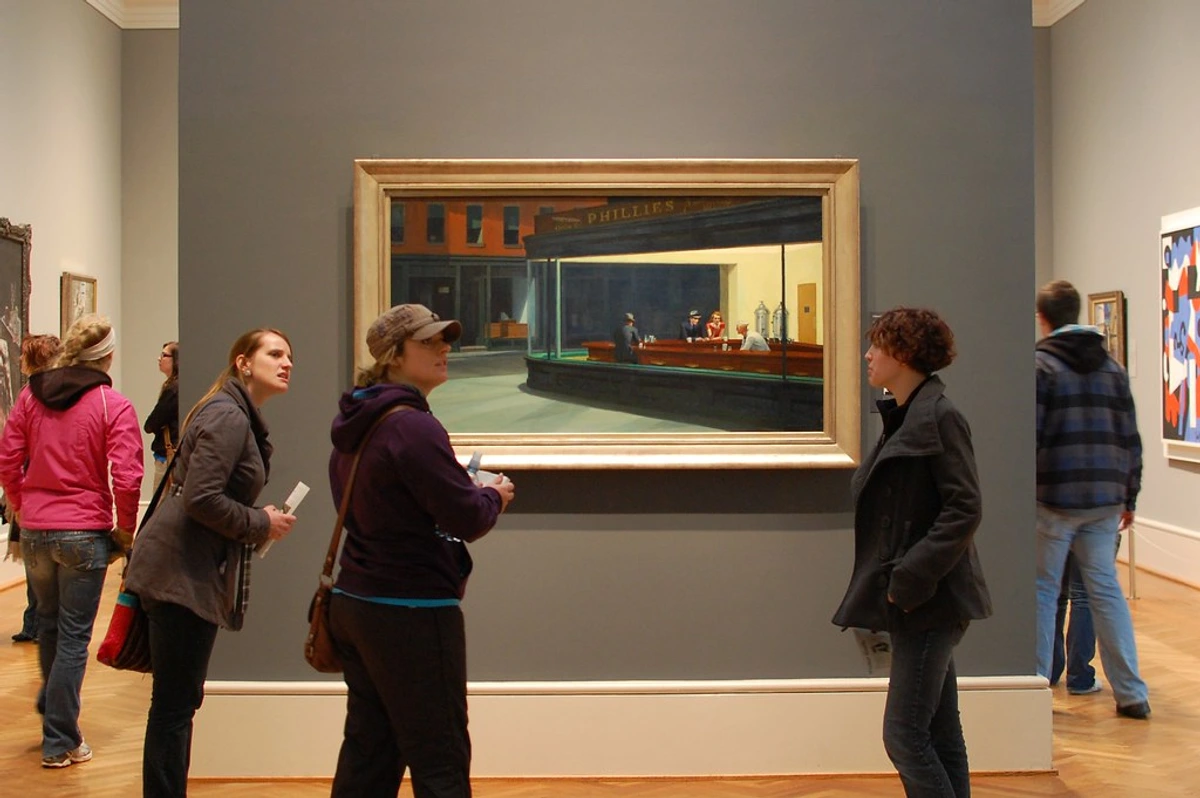
The Art Institute of Chicago, which acquired the painting shortly after its creation, has been its permanent home and custodian. Their conservators face the perpetual challenge of preserving an artwork that is not only famous but also fragile due to its age and material composition. Beaverboard, while offering a smooth painting surface, is notably susceptible to environmental changes, particularly fluctuations in humidity and temperature, which can cause warping, delamination, or cracking over time. Over the decades, conservators have implemented precise climate control systems, regular structural assessments, and careful surface cleaning to mitigate these risks. Maintaining stable temperature (around 70°F or 21°C) and humidity levels (typically 50% relative humidity) within its display environment is paramount, alongside careful cleaning, structural support, and protection from light exposure, to ensure its vividness and integrity for generations to come. It's a constant, painstaking effort to keep this masterpiece looking as Wood intended, a silent battle against time itself.

Initial Reception and Evolving Interpretations: A Mirror to America
When American Gothic was first unveiled at the Art Institute of Chicago in 1930, it immediately sparked a firestorm of controversy. Can you imagine the uproar? Many Iowans, particularly members of women's clubs, felt it was a deeply satiric portrayal, presenting them as stern, old-fashioned, and entirely uncultured. Specific critiques often centered on the perceived dourness of the figures, the woman's antiquated apron (which was seen as out of touch for the time), and the overall impression that Wood was mocking rural life, rather than celebrating it. Reports even indicate that some Iowans were so offended they reportedly threatened to sue Wood! Yet, the painting also garnered significant praise, winning a prize (a $300 award and a bronze medal in the annual exhibition) and quickly being acquired by the museum, where it has remained ever since. Critics applauded its technical skill and original vision, even amidst the public debate. It seems from day one, it was destined to divide opinions, and perhaps, to reflect them. This dual reception—simultaneously celebrated and condemned—is, for me, one of its most fascinating indicators of its profound, lasting impact.
Over the decades, its meaning has expanded and shifted dramatically, reflecting changes in American society and cultural perceptions. It’s almost like the painting itself is a mirror, reflecting what we want to see in it. While Wood’s contemporaries like Thomas Hart Benton also depicted rural life, Benton often employed a more dynamic, almost heroic style, whereas Wood’s vision here is more static and enigmatic, inviting a different kind of contemplation. The shifting interpretations chronologically reveal how America has grappled with its own identity through art: initially a source of regional pride and outrage, then a symbol of wartime resilience, later a subject for sociological critique (especially around gender and class), and enduringly, an emblem for parody. This evolution showcases the power of iconography—how an image can transcend its original intent to become a widely recognized cultural shorthand. It’s a painting that refuses to be neatly categorized, much like the complex nation it represents.
The Man Behind the Brush: Grant Wood's Complex Vision
While Wood often downplayed any satirical intent in American Gothic, his life and other works suggest a more nuanced relationship with his Midwestern roots. Born in rural Iowa, he experienced firsthand the stoicism and hardships of farm life, but also developed a sophisticated artistic eye during his European travels and studies at the Minneapolis School of Design and the Art Institute of Chicago. This dual perspective – deep affection for his homeland mingled with a subtle, wry wit – likely informs the painting’s ambiguity. He was known for his dry humor, and in later works like Daughters of Revolution, his satirical intent was far more overt. For me, this suggests that even if American Gothic wasn't purely satire, it certainly wasn't an uncritical celebration either. It was, rather, a deeply observed portrait of a people and a place, painted with both love and a keen, often ironic, understanding of their complexities. He held up a mirror, and sometimes, the reflection isn't quite what you expect.
American Gothic Key Interpretations (Expanded)
Interpretation Lens  | Description | Key Visual Clues |
|---|---|---|
| Initial Reception (1930s) | Initially, many Iowans perceived it as a satire, finding the portrayal of rural Midwesterners as stern and uncultured offensive. Simultaneously, critics and others praised its technical skill and evocative representation of American types. | The figures' stern, almost humorless expressions, rigid postures; the unusual, somewhat out-of-place Gothic window; the reports of offended Iowans and negative press. |
| Celebration of Values | Widely interpreted as a profound homage to the stoicism, resilience, and moral fiber of American pioneers and farmers. This became especially potent during the Great Depression, offering a vision of enduring American strength and agrarian virtue. | The farmer's firm grip on the pitchfork (symbol of labor); the practical attire; the sturdy, rooted house; the woman's quiet, determined resolve. |
| Satire/Critique | Some view it as a subtle jab at rural conservatism, narrow-mindedness, or the harsh, unforgiving nature of Midwestern life. A quiet rebellion against idealized notions, possibly reflecting Wood's own nuanced feelings about his rural upbringing. | The figures' stern, almost humorless expressions, rigid postures; the unusual, somewhat out-of-place Gothic window on a humble farmhouse; Wood's known dry wit and later satirical works. |
| Economic Hardship | Given the context of the Great Depression, it speaks volumes about the economic anxieties and struggles of agrarian communities, portraying quiet defiance and deep endurance in the face of immense pressure and agricultural collapse, like farm foreclosures and commodity price drops. | The gaunt faces; the utilitarian, worn clothing; the focus on the tools and modest home of rural subsistence, implying a life of toil and scarcity. |
| Gender Roles | Many analyses delve into the traditional gender roles depicted: the man as the stern, protective patriarch, and the woman as the demure, domestic figure. This reflects societal expectations of the era, and can be read through a feminist lens. | The man holding the tool of labor and standing forward; the woman in a domestic apron, standing slightly behind him, reflecting traditional power dynamics. |
| Psychological Portrait | The strained expressions and rigid stances suggest underlying tension or unspoken emotions within a family unit. It offers a fascinating, albeit unsettling, glimpse into the psychological landscape of its subjects, inviting us to imagine their inner lives and internal struggles. | The averted gaze of the woman; the piercing, almost confrontational stare of the man; their closed-off, formal body language, creating a sense of emotional distance. |
| Cultural Identity | The painting has become an undeniable emblem of American identity, particularly for the Midwest. It represents both its perceived virtues and, some might argue, its limitations, shaping how we see a significant part of the nation. It's a visual shorthand for "American." | The iconic figures (farmer, unmarried daughter); the distinct American Gothic Revival house; the familiar Midwestern setting, all rendered in an unmistakably American style. |
Regionalist Counterparts: A Comparative Look
To fully appreciate Wood's unique vision, it's helpful to see him alongside his contemporaries, both within and outside the Regionalist movement. While many sought to define 'America' through art, their approaches varied wildly, creating a rich tapestry of perspectives. Let’s compare some key artists and their works:
Artist | Key Work | Focus / Style | Relationship to American Gothic |
|---|---|---|---|
| Grant Wood | American Gothic (1930) | Meticulous, stylized realism; focus on archetypal Midwestern figures and landscapes; subtle ambiguity. | Iconic depiction of rural American stoicism and tradition, yet open to satire and critical interpretation. |
| Thomas Hart Benton | Missouri Mural (1936) | Dynamic, flowing compositions; exaggerated figures; narratives of American labor, industry, and social life. | Shares Regionalist themes of American identity, but with more overt movement, energetic brushstrokes, and social commentary. |
| John Steuart Curry | The Baptism in Kansas (1928) | Realistic, dramatic scenes of rural life and religion; often heroic portrayal of farmers and their struggles. | Captures similar rural themes and resilience but with a more raw, emotional, and less stylized approach, often emphasizing spiritual endurance. |
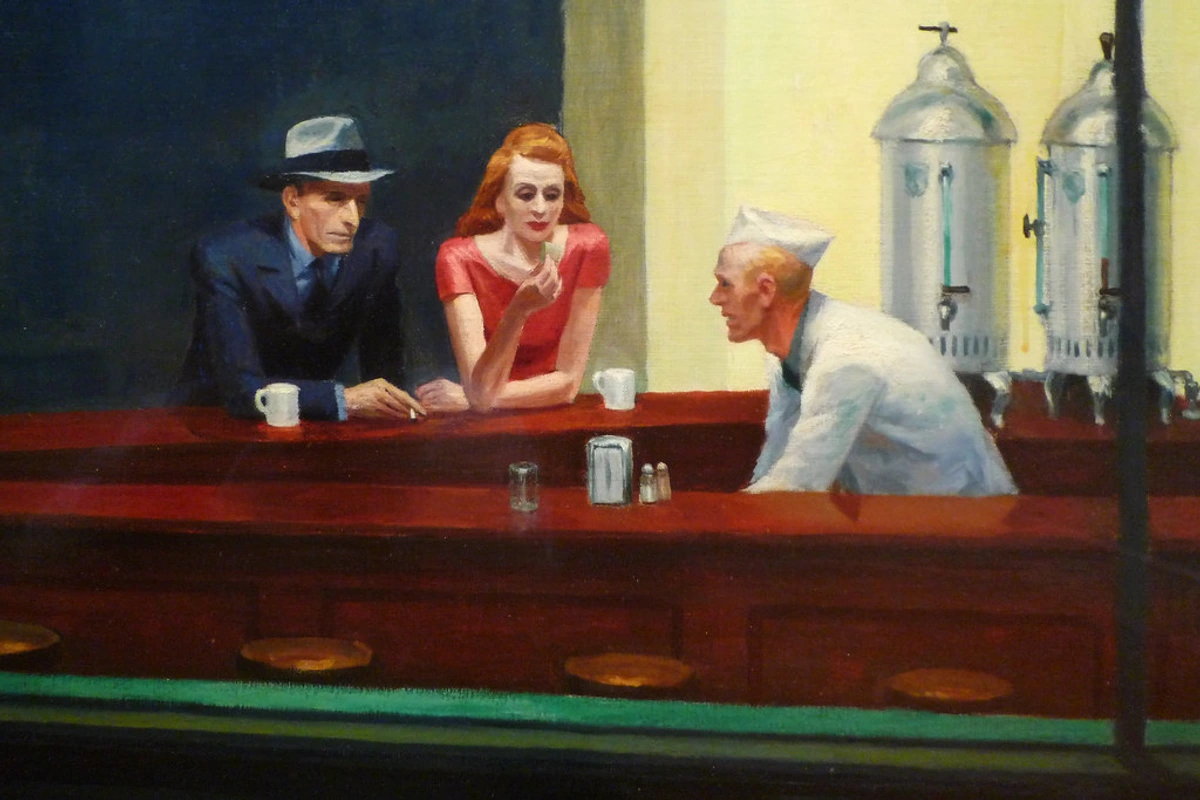
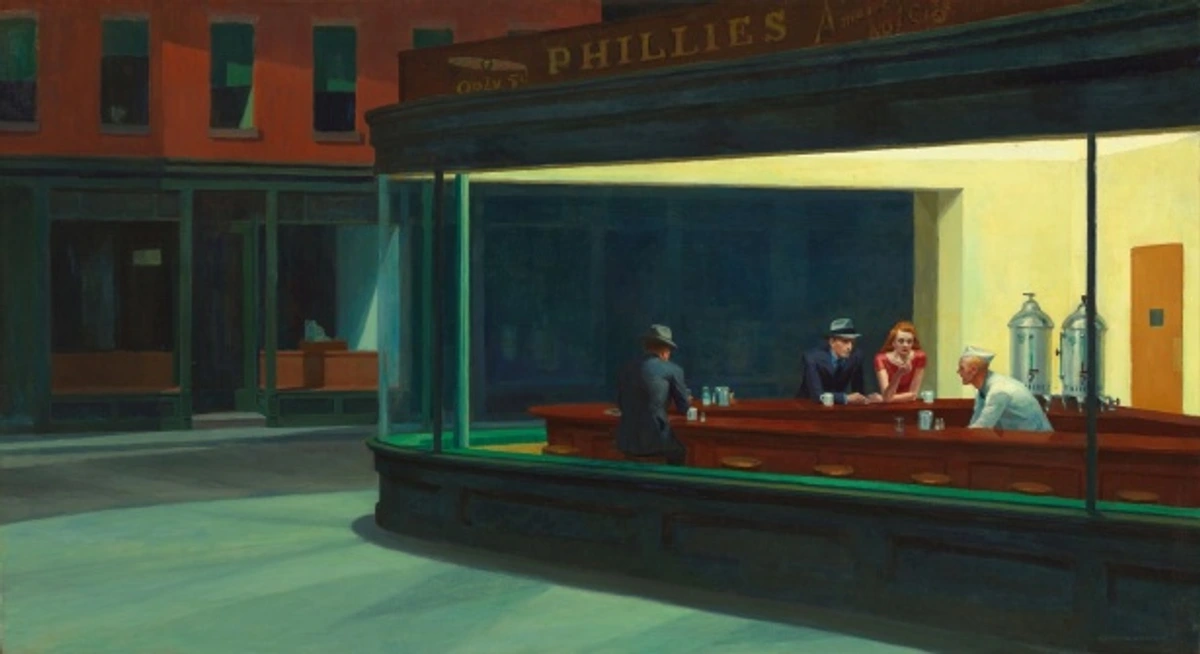
| Edward Hopper | Nighthawks (1942) | Realism with a focus on urban isolation and psychological states; stark lighting and quiet melancholy. | Though depicting urban scenes, shares a precise realism and a focus on quintessential American moments and moods, particularly a sense of quiet introspection and alienation. Hopper’s subdued portrayal of everyday American life resonates with Wood’s more austere vision. |
| Aaron Douglas | Aspiration (1936) | Stylized silhouettes and geometric forms; allegorical narratives of African American history, aspirations, and social progress during the Harlem Renaissance. | A contrasting approach to American identity, focusing on the African American experience with symbolic, rather than hyper-realistic, forms, yet equally powerful in its cultural statement. |
Impact on Popular Culture and Parody
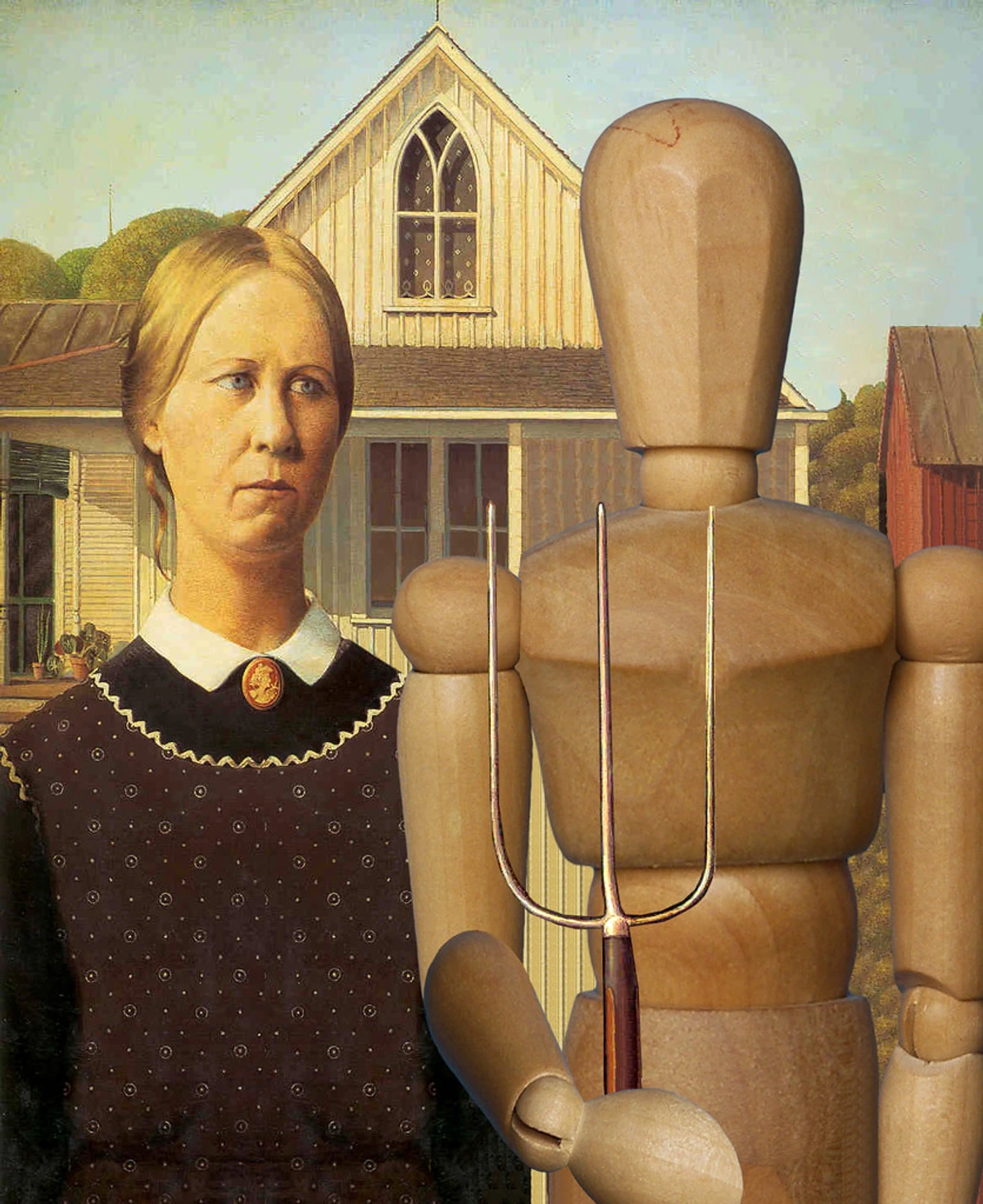
It’s truly remarkable how a painting initially met with such mixed reactions has morphed into one of the most parodied images in the world. I mean, you see it everywhere, don't you? My own experience tells me you can't go long without stumbling upon some version of it, whether it's on a political cartoon in a newspaper, a quirky commercial, or even a friend's social media meme. From political cartoons depicting world leaders to sitcoms like The Simpsons, The Muppets, Saturday Night Live sketches, or even the opening credits of The Rocky Horror Picture Show, the American Gothic pose has become a shorthand for "American." This constant re-imagining and playful subversion only underscores its profound penetration into our collective consciousness. It speaks to the universal recognizability of its composition and the archetypal nature of its figures, making it fertile ground for humor, commentary, and endless cultural references. The very rigidity and seriousness of the original make it ripe for humorous juxtaposition, allowing parodies to comment on everything from pop culture trends to political satire. It’s a bit like a visual meme, long before memes were even a thing, a truly enduring piece of shared visual language!
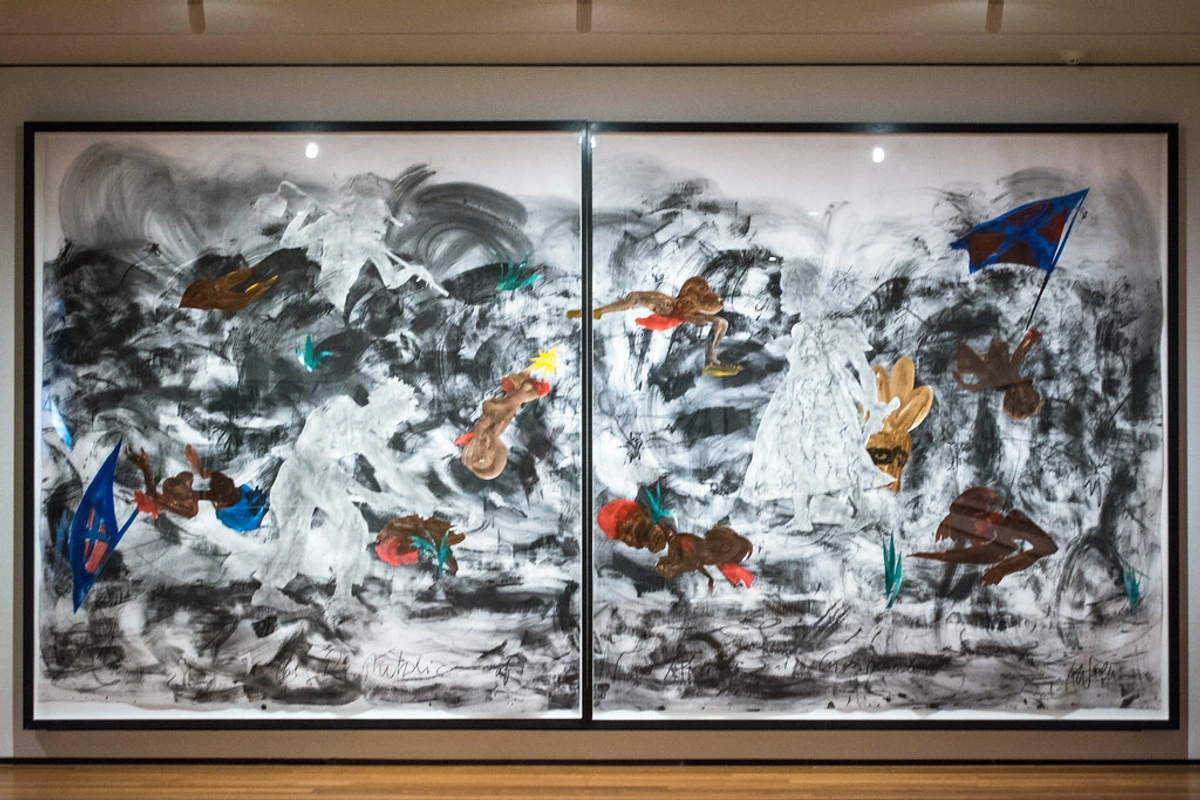
Speaking of cultural impact, the way American Gothic captures a specific 'realism' is a stark contrast to the abstract movements like that of Kandinsky, who sought to convey emotion and spirituality through non-representational forms. Yet, both convey meaning in powerful ways, albeit through different artistic philosophies. It’s a constant reminder to me that realism isn’t just about copying reality, but about interpreting it. If you're curious about the evolution of abstract art, our guide to the definitive guide to the history of abstract art might offer another fascinating perspective.

Another contemporary American artist, Aaron Douglas, explored a different facet of American identity, focusing on the African American experience during the Harlem Renaissance, often using symbolic silhouettes to depict aspirations and progress, a stark contrast to Wood's grounded realism, yet equally powerful in its cultural statement. You can delve deeper into this vibrant period with our article on the Harlem Renaissance art culture and identity in 1920s America.
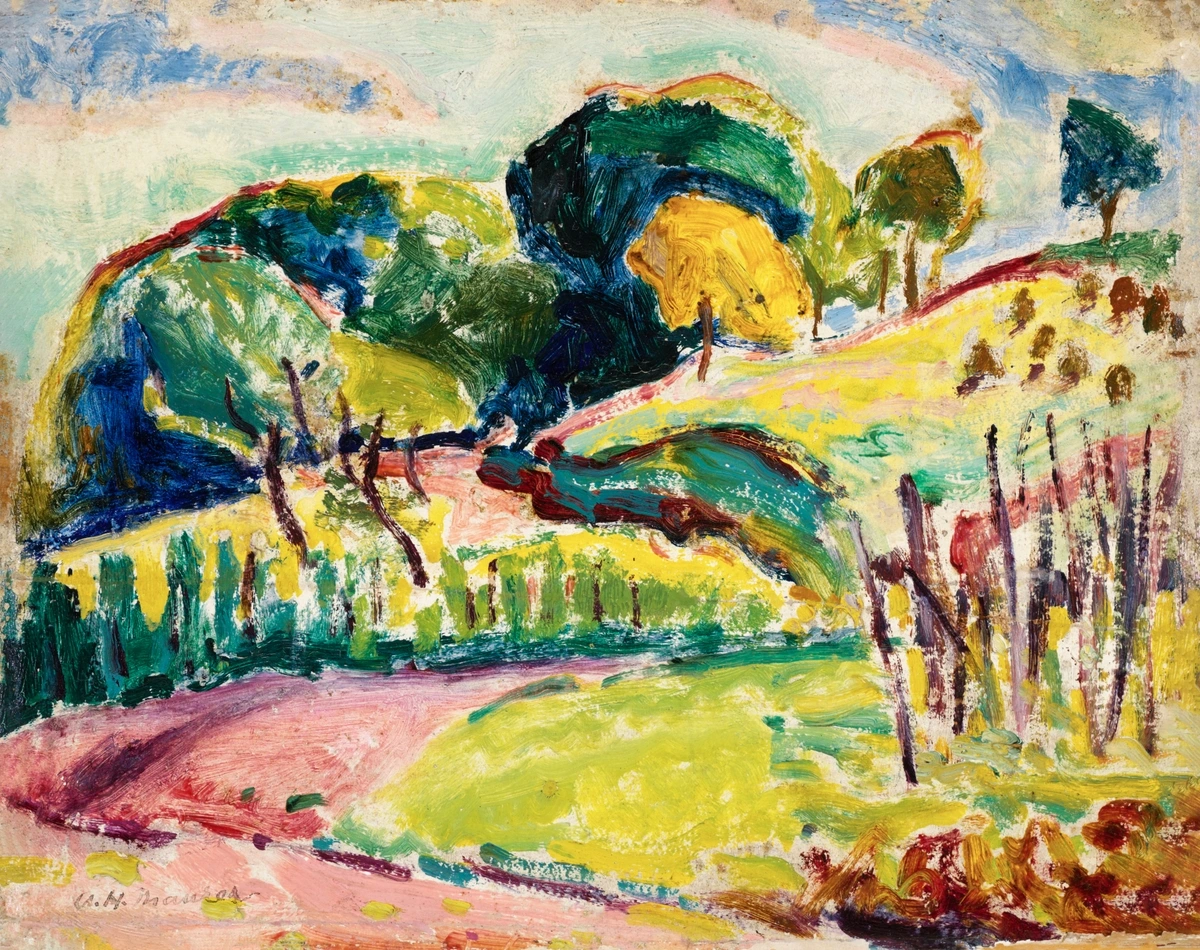
Meanwhile, artists like David Alfaro Siqueiros in Mexico were using muralism to directly engage with social and political revolution, a dramatically different approach to national identity than Wood's quiet Midwestern introspection, underscoring the diverse ways artists respond to their socio-political landscapes.
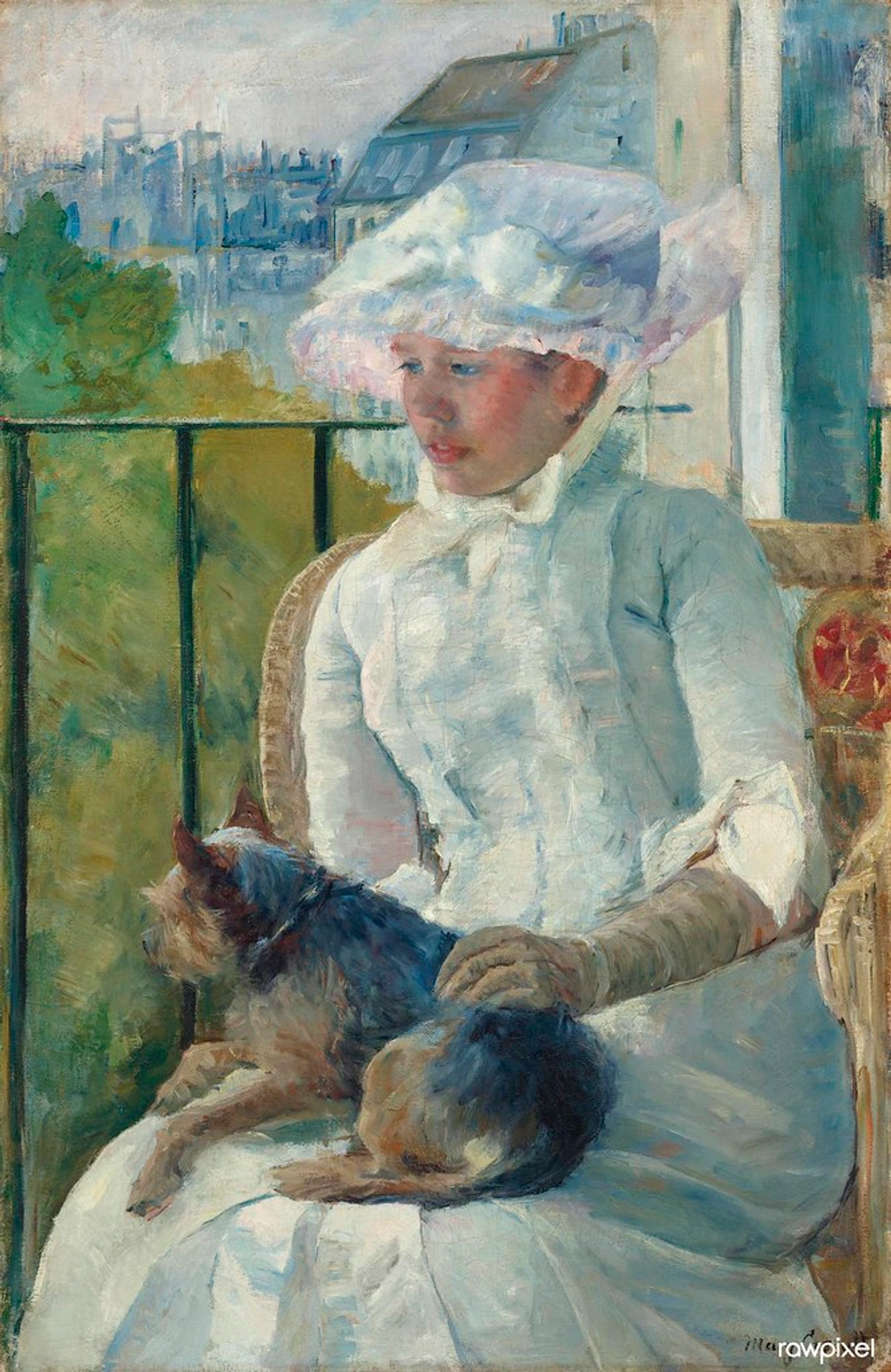
Other Iconic Works by Grant Wood: Beyond the Gothic
While American Gothic is undoubtedly his most famous, it's just one fascinating facet of Wood's broader artistic vision. He had a knack for capturing the spirit of the American Midwest with that same precise realism and subtle narrative. Looking at his other works, you really see a consistent dedication to the Regionalist movement and its ideals. It’s a testament to his unique ability to find the profound in the everyday. His artistic journey, while anchored in Iowa, demonstrates a nuanced engagement with broader American identity, even subtly influencing how the nation saw itself during times of crisis.
One of my personal favorites is Stone City, Iowa (1930), painted the same year as American Gothic. It's a whimsical, almost toy-like landscape, depicting an idealized version of his home state's rolling hills and towns. It shares that crisp, clean aesthetic, but with a sunnier, more pastoral mood. Then there's The Midnight Ride of Paul Revere (1931), which reimagines the historical event with a bird's-eye view, making it feel both grand and intimately detailed, again showcasing his unique perspective on American narratives. It’s as if he wanted to reclaim foundational American myths, not as grand historical dramas, but as relatable, almost folkloric events rooted in the landscape.
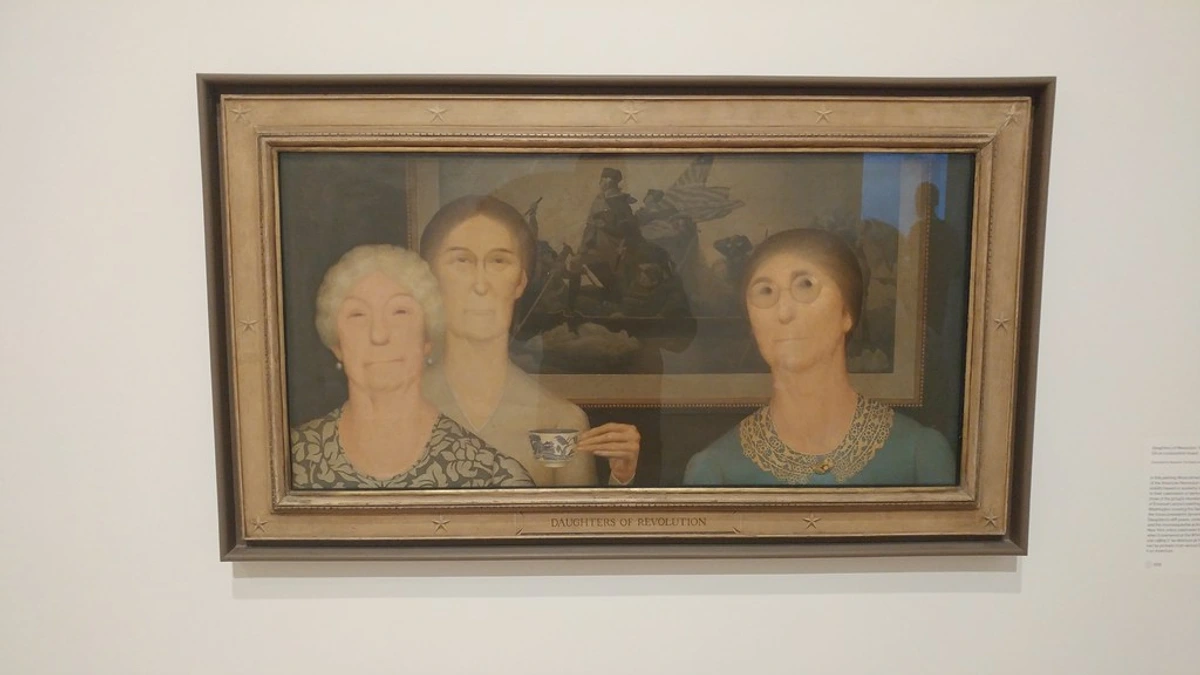
And who could forget Daughters of Revolution (1932)? This one is often seen as a gentle satire of patriotic societies, a pointed, yet gentle, poke at the sometimes-overblown self-importance of patriotic societies and their selective reverence for history. It features three rather stern-looking women against a backdrop of Emanuel Leutze's iconic Washington Crossing the Delaware. Unlike the deliberate ambiguity of American Gothic, here Wood's satirical intent is much more direct, highlighting his versatility. It definitely shows Wood’s ability to inject wry humor into his work, even when he claimed otherwise for American Gothic. He had a knack for social commentary wrapped in Midwestern charm.
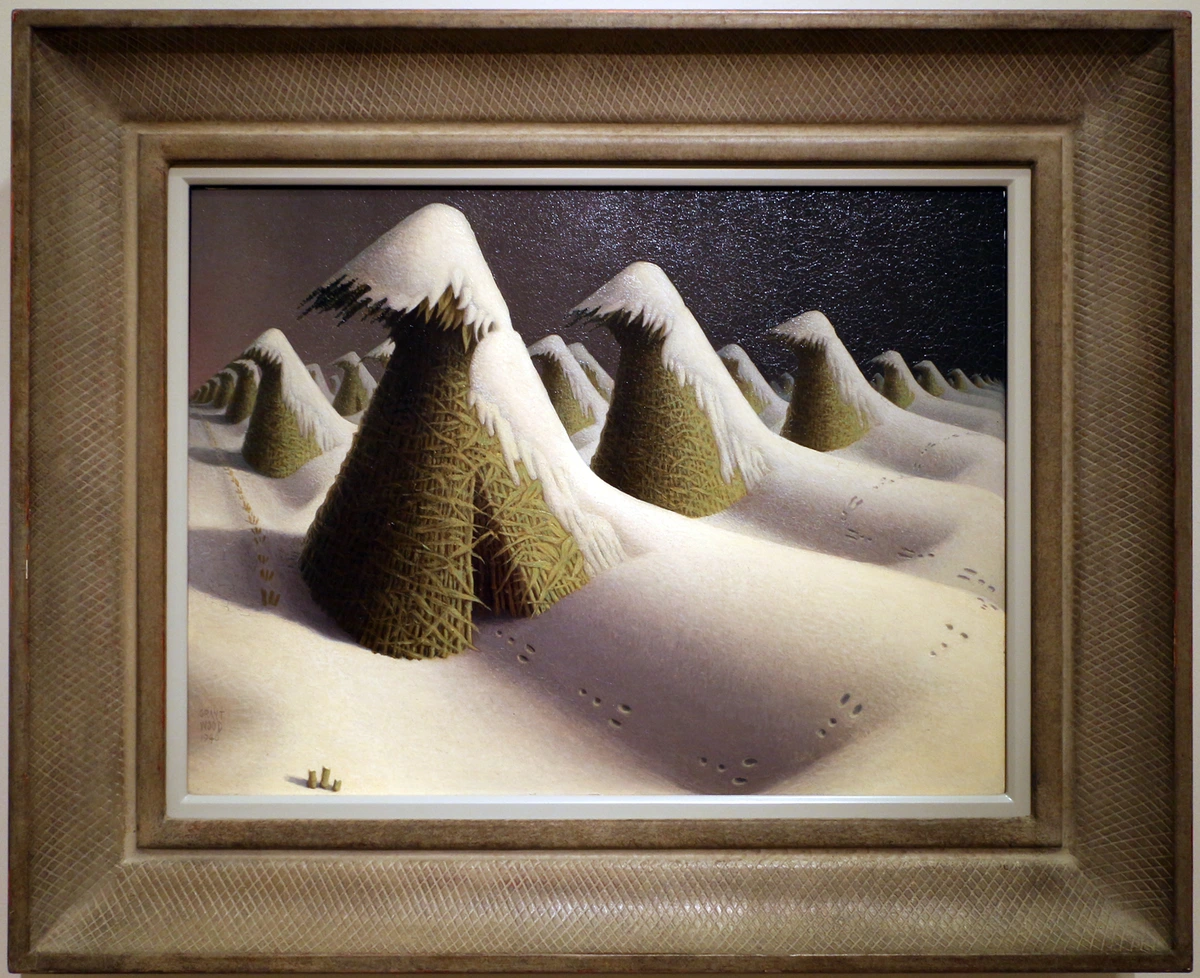
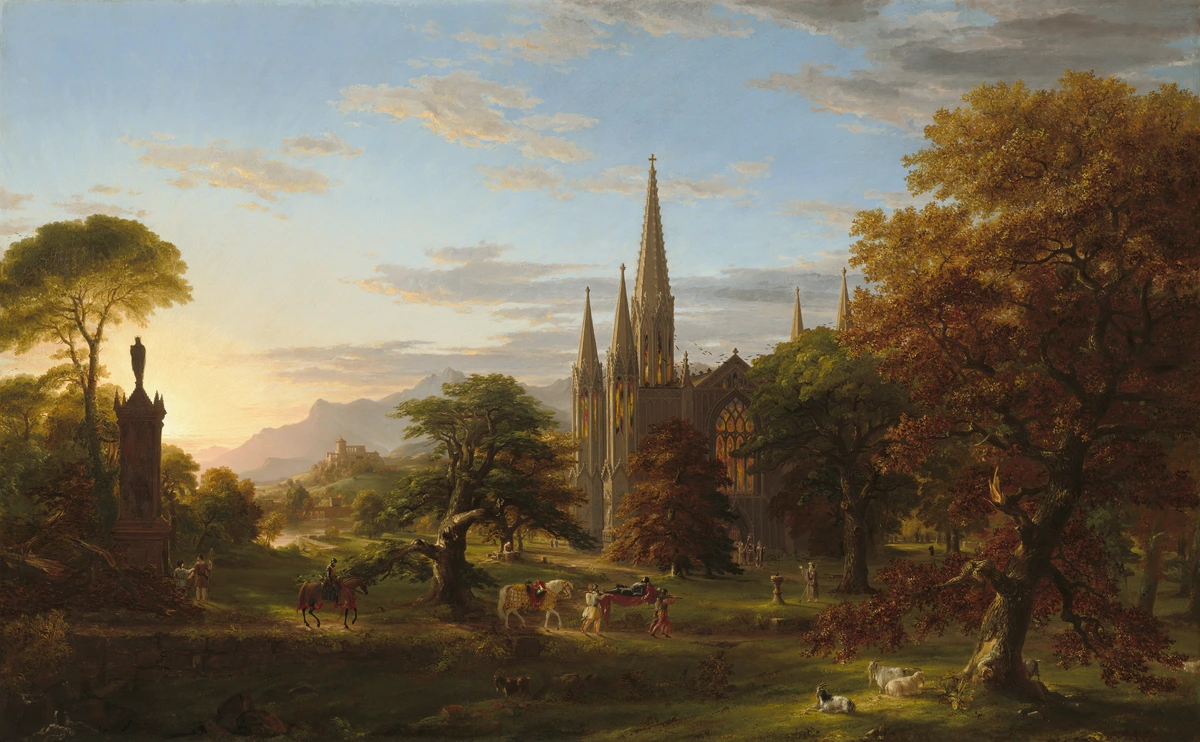
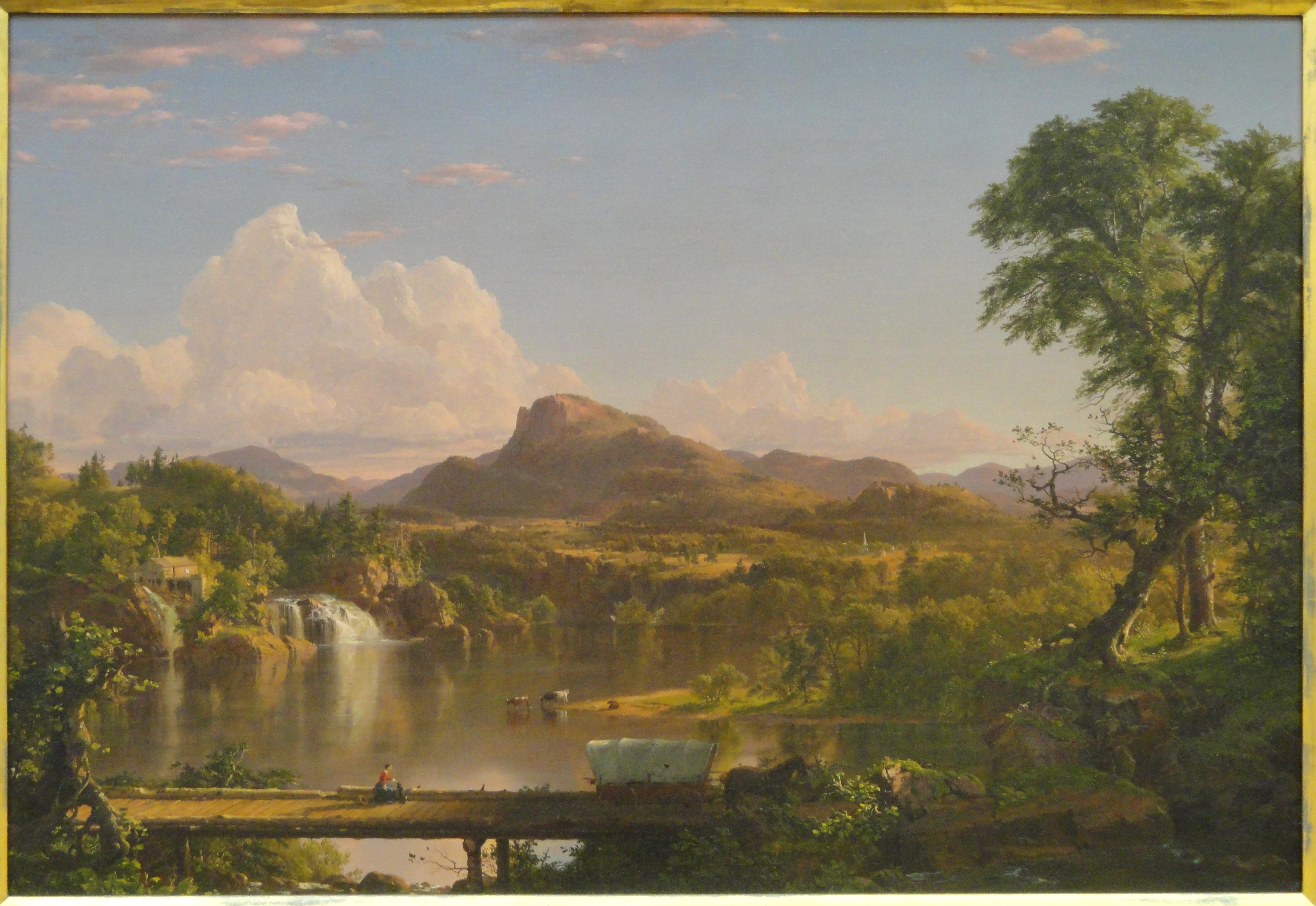
This painting, often called 'January' or 'The Plowman,' beautifully exemplifies Wood's Regionalist style, capturing the quiet dignity of rural labor and the stark beauty of the Midwestern landscape, echoing themes found in American Gothic. The stoic endurance of the land and its workers, presented with Wood's characteristic precision, connects directly to the figures in his most famous work. It's a world away from the emotional turmoil of Edvard Munch's Expressionist works, yet both artists sought to capture profound human experience, just through very different lenses. If you're interested in contrasting Wood's precision with more emotional forms of expression, our guide to Edvard Munch offers a fascinating counterpoint.
Frequently Asked Questions about American Gothic
I get it, a painting this iconic always sparks a lot of questions. Here are some of the common ones I hear, and my take on them – consider this your quick guide to the essentials!
Key Facts About American Gothic
Detail | Description |
|---|---|
| Artist | Grant Wood (American, 1891–1942) |
| Year Created | 1930 |
| Art Movement | Regionalism, part of American Scene Painting |
| Medium | Oil on beaverboard |
| Dimensions | 78 × 65.3 cm (30 3/4 × 25 3/4 in.) |
| Current Location | Art Institute of Chicago, Chicago, Illinois, USA |
| Models | Nan Wood Graham (sister, for the woman), Dr. Byron McKeeby (dentist, for the man) |
| Intention | To depict Midwestern types and values, with deliberate ambiguity regarding satire, allowing for varied interpretations. |
Q: Who painted American Gothic?
A: The painting was created by the American artist Grant Wood. He was a prominent figure in the Regionalist art movement, known for his distinctive, precise style and his focus on depicting scenes of the American Midwest. He's arguably the artist most associated with this particular movement, his work becoming a defining visual narrative of the era.
Q: Why is American Gothic famous?
A: It's a combination of things, really. When I think about why American Gothic sticks with us, I realize it's firstly, its striking and instantly recognizable composition makes it incredibly memorable. Secondly, its deep, often ambiguous symbolism resonates with universal themes of identity, resilience, and societal values, allowing for endless reinterpretation. And thirdly, its initial controversy and subsequent widespread parody in popular culture cemented its iconic status, making it a constant presence in our visual landscape. It's simply unforgettable once you've seen it, and it never stops making you think. Much like a master craftsman, Wood created something so perfectly formed that it transcends its original purpose.

Q: What kind of art is American Gothic?
A: American Gothic is a prime example of Regionalism, an American art movement of the 1930s. Regionalist artists aimed to depict realistic scenes of rural and small-town America, often celebrating its unique character and values, in contrast to the abstract and avant-garde movements popular in Europe at the time. It blends realism with a distinctive stylized precision, often attributed to Wood's study of Northern Renaissance art and his meticulous approach to his craft. It's a deliberately accessible and quintessentially American style, focusing on themes and imagery that were distinctly national and rooted in the heartland. It's an artwork that truly defines its movement.

Cultural Impact Beyond the U.S.: A Global Gaze at American Identity
It's not just Americans who find American Gothic compelling. While its initial controversy and specific parodies often resonate most deeply within the U.S. context, the painting has achieved a fascinating cultural footprint internationally. For many outside the United States, it has become a quintessential, almost stereotypical, image of America itself—often representing a perceived conservatism, industriousness, or even the quaintness of rural American life. It’s a shorthand, a visual cue, that immediately brings to mind a certain version of the American character, even if that version lacks the nuanced internal debates we have about the painting's meaning. For example, in Europe, the figures have been used in political cartoons to comment on American foreign policy, or in advertisements to evoke a sense of 'classic' or 'traditional' America, sometimes with a touch of irony or nostalgia. In Japan, I've seen it subtly referenced in fashion and pop art, playing on its instantly recognizable composition. It's proof that a powerful image, once unleashed, can take on a life of its own across borders and cultures, sometimes simplifying, sometimes solidifying, what it means to be 'American' in the global imagination. It truly speaks a universal language of perceived national character, a silent ambassador for a particular vision of America.




Conclusion: An Enduring American Legacy, and My Invitation to Look Deeper
So there you have it, my journey through the layers of Grant Wood’s American Gothic. It's more than just a painting; it's a cultural touchstone, a silent conversation between past and present, tradition and change. The more I look at it, the more I realize its power isn’t in offering easy answers, but in its endless capacity to provoke questions. It stands as a testament to the quiet dignity and complex spirit of a nation, reminding us that sometimes, the most profound stories are told not with grand gestures, but with a pitchfork, a Gothic window, and two unforgettable faces. It asks us to look closer, to question, and ultimately, to see a reflection of ourselves, our history, and our ongoing dialogue about what it truly means to be American.
This enduring dialogue is precisely why we’re so passionate about art’s power to connect us to history, culture, and ourselves. Here at Zenmuseum.com, we strive to be the most useful source of information for art lovers, just as American Gothic continues to be an inexhaustible source of inspiration and discussion. We hope this comprehensive guide has given you a deeper appreciation for this iconic work. Perhaps you’ll find inspiration in exploring pieces for your own collection or discovering how these dialogues unfold at our museum in Den Bosch, seeing how art continues to reflect and shape our world. And that, to me, is the true power of this masterpiece – its constant invitation to look, think, and engage. What new interpretations will you bring to it?