Ultimate Guide to Johannes Vermeer: The Master of Light
Dive into the quiet, luminous world of Johannes Vermeer. This guide explores the life, masterpieces like 'Girl with a Pearl Earring', and the secrets of his technique.

The Ultimate Guide to Johannes Vermeer: The Master of Light, Silence, and Subtle Brilliance
In a world that often feels relentlessly loud, demanding constant attention and immediate gratification, there's a particular kind of quiet that still has the power to stop me in my tracks. It's the profound stillness I find in a Johannes Vermeer painting. This isn’t an empty silence, mind you, but a vibrant, luminous tranquility—a silence filled with the gentle hum of everyday life, infused with light, and steeped in deep thought. It offers a pristine window into a 17th-century world of profound intimacy and extraordinary artistic skill, an experience that, for me, feels less like navigating a bustling museum and more like peeking through a keyhole into a perfectly undisturbed moment in Delft. I truly believe that if you want to understand how an artist can elevate the mundane to the monumental, how they can find the sacred in the secular, you absolutely need to spend some time with Vermeer. And trust me, once you do, you'll start seeing the world a little differently, a little more attentively. This guide aims to be your most comprehensive resource on Vermeer, a master whose influence continues to resonate globally, subtly shaping how we perceive light, space, and the quiet dignity of human existence. What truly strikes me, as an artist, is how he manages to imbue such ordinary scenes with an almost sacred quality, a quiet reverence for human existence that feels both deeply personal and universally resonant. It's a magic I constantly chase in my own work, a profound observation that I strive to translate into my own contemporary abstracts. This isn't just a guide; it's an invitation to a deeper way of seeing, a journey into the mind of a genius who, despite the historical silence, speaks volumes through his art.
What Makes a Vermeer a Vermeer? Key Characteristics of His Unmistakable Style
Before we dive into the life of the man himself, I think it's incredibly helpful to understand what defines a "Vermeer" painting. It's a unique visual language, almost like a quiet signature that speaks volumes. These are the elements that consistently draw me in and, I believe, define his lasting genius:
- Masterful Use of Light: This is perhaps his most iconic trait. Vermeer was a magician with light, not just depicting it, but capturing its very essence—how it falls, reflects, and reveals texture, creating an almost palpable atmosphere.
- Intimate Genre Scenes: He chose to paint everyday life, usually featuring one or two women engaged in quiet, domestic activities. He elevated the mundane to the monumental, finding profound beauty and psychological depth in ordinary moments.
- Exquisite Color Palette: While not using a vast array of colors, his deliberate and often lavish use of costly pigments, especially ultramarine, created unparalleled luminosity and harmony.
- Photographic Precision & Perspective: Long before cameras, Vermeer achieved an almost photographic realism, likely aided by tools like the camera obscura, resulting in incredibly accurate perspective and subtle optical effects.
- Symbolic Richness: His seemingly simple scenes are often imbued with layered iconography and symbolism, inviting deeper contemplation of morality, love, and human virtue.
- Compositional Harmony: Every element in his paintings is meticulously placed, creating balanced, serene, and often geometrically precise arrangements that draw the viewer into the scene.
These characteristics aren't just technical details; they are the heart of his artistic philosophy, a testament to his unique vision and enduring appeal.
Unveiling the Enigma: Who Was Johannes Vermeer? The Painter of Quiet Worlds
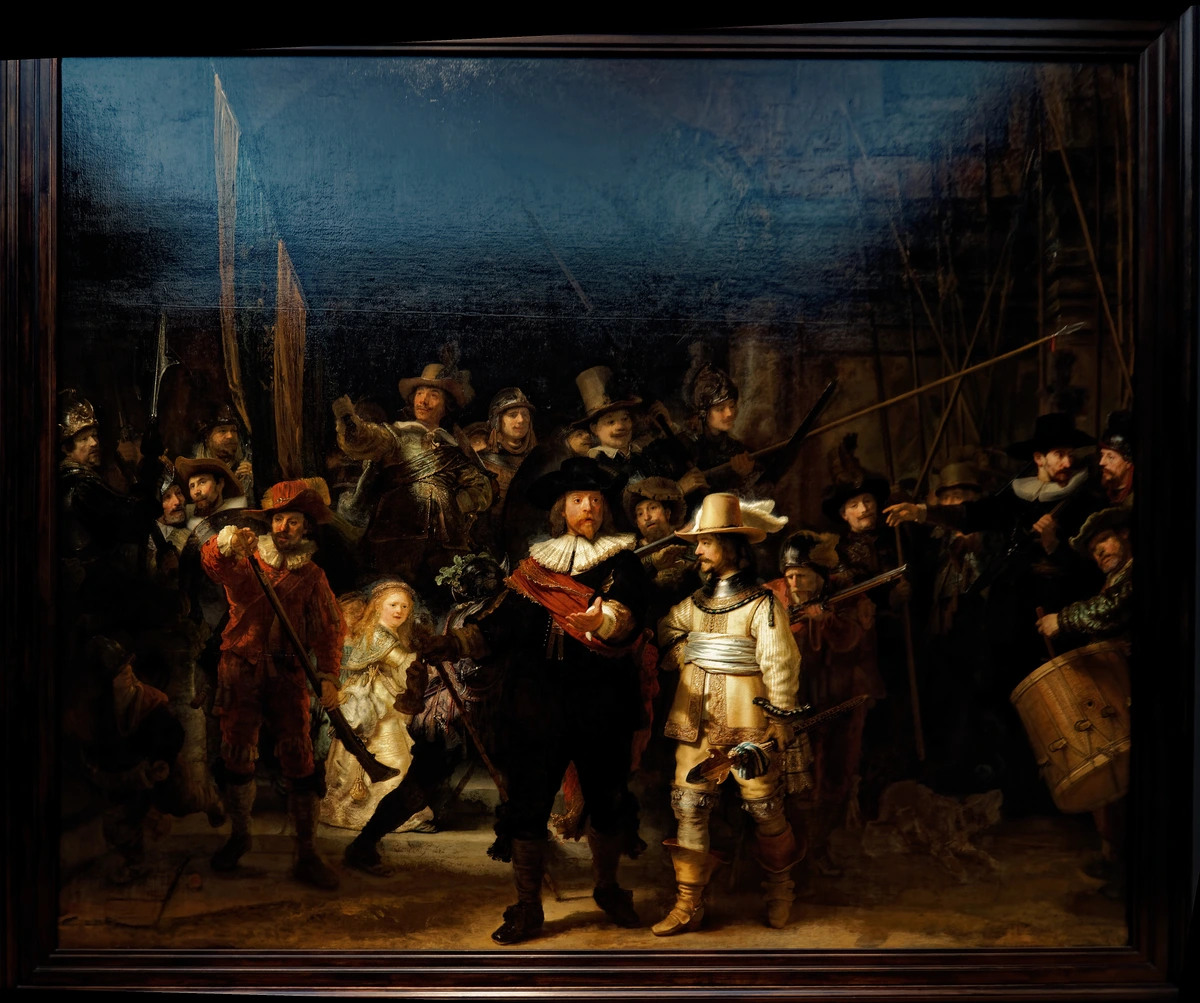
But who was the man behind these breathtaking canvases, capable of capturing such luminous tranquility with such precision? That, as I've found in my own artistic journey, is often the most intriguing and perpetually tricky part, isn't it? Johannes Vermeer (1632-1675) is, in many ways, a historical enigma, a figure whose life is shrouded in a captivating scarcity of documentation. Unlike many of his more prolific contemporaries, such as his Dutch Golden Age counterparts like Rembrandt van Rijn, he left behind virtually no personal letters, no revealing diaries, and a remarkably small, yet overwhelmingly breathtaking, collection of paintings—just 36 or so masterpieces. This scarcity of personal documentation means that piecing together his life story is a fascinating blend of meticulous detective work, informed art historical analysis, and, for me at least, a significant dash of appreciative imagination. It's like trying to solve a beautiful, quiet puzzle, and frankly, I find that the scarcity of information about Vermeer only deepens the allure. It forces you to engage more intimately with the paintings themselves, searching for clues in the way a shadow falls or a color glows, much like an art detective. It’s a profound testament to the power of art to transcend the known, offering glimpses into a life that remains largely untold. This lack of concrete biographical detail has, paradoxically, made his art even more compelling, allowing generations of viewers and scholars to project their own understandings onto his silent worlds. So, let’s pull back the curtain as much as we can and dive into the luminous world of the man they call the Master of Light, exploring what little we know of his life, his revolutionary techniques, and the enduring legacy of his quiet masterpieces. This isn't just a list of facts; it's an invitation to see the world through his eyes, and perhaps, through your own, too. It's a journey into the mind of a genius who, despite the historical silence, speaks volumes through his art.
Johannes Vermeer (1632-1675) lived his entire, relatively brief life—a mere 43 years—within the bustling, yet intimate, walls of Delft, a city whose very fabric seemed to resonate with his artistic sensibilities. This vibrant city was a prominent hub during what we now call the Dutch Golden Age, an era of unprecedented economic prosperity, groundbreaking scientific discovery, and an explosion of artistic creativity across the Netherlands. Delft itself was a crucible of intellectual and artistic life, a microcosm of Dutch ambition and innovation. It was renowned for its booming ceramic industry (the iconic Delftware, which I absolutely adore, and which often appears subtly in his paintings!), its association with scientific pioneers like Antonie van Leeuwenhoek (whose microscopic observations revolutionized biology, and who was actually the executor of Vermeer's estate), and its significant role as a base for the powerful Dutch East India Company, connecting it to global trade routes and bringing exotic goods and ideas into the city. This rich, sophisticated cultural backdrop, I believe, subtly yet profoundly informed the quiet sophistication and intricate detail we see in Vermeer's work. It's a striking contrast: while we often think of grand, dramatic figures like Rembrandt van Rijn, whose canvases are often filled with turbulent emotion and sweeping narratives, Vermeer was, in almost every conceivable way, his antithesis. Where Rembrandt was a prolific and often tumultuous figure, both in his art and his life, Vermeer was the epitome of meticulousness, slow deliberation, and profound quiet—a true master of the subtle, internal world. For me, it highlights how different artistic paths can lead to equally profound impact. Imagine the vibrant markets, the bustling canals, the hushed laboratories of scientists like Van Leeuwenhoek — all contributing to the unique atmosphere Vermeer captured. It makes me wonder how much of that daily vibrancy, filtered through his quiet temperament, found its way into the serene domestic scenes he painted.
Delft: A Microcosm of the Golden Age
Delft in the 17th century was more than just a city; it was a nexus of trade, art, and science. The wealth generated by the Dutch East India Company fueled a vibrant art market, creating a demand for new forms of art, including the intimate genre scenes that Vermeer would master. The city's intellectual climate, fostered by institutions and individuals, encouraged a scientific approach to observation—a quality that seems embedded in Vermeer’s precise renderings of light and perspective. This unique blend of material prosperity, intellectual curiosity, and artistic freedom provided the fertile ground in which Vermeer's singular vision could flourish. It’s no exaggeration to say that Delft itself was a silent collaborator in his art, providing both the subjects and the inspiration for his meticulous observations.
The Artistic Tapestry of Delft
Beyond economic prosperity, Delft harbored a rich artistic community. The city boasted numerous skilled painters, engravers, and artisans, many of whom were members of the prestigious Guild of Saint Luke, just like Vermeer. This fostered a climate of friendly competition and artistic exchange, even if Vermeer's output was comparatively small. The city's patrons, often wealthy merchants and civic leaders, not only commissioned art but also collected it, creating a sophisticated art market that valued both innovation and tradition. It's easy to imagine Vermeer discussing techniques or new pigments with fellow artists, even if history has left us few records of such conversations.
Early Life and Artistic Formation: The Foundations of a Master
Born into a middle-class family, Johannes Vermeer was the son of Reynier Janszoon, a figure of varied professions: an innkeeper, a weaver, and, crucially for Johannes, an art dealer. This meant that from his earliest days, Vermeer was quite literally surrounded by art, exposed to various styles and artists through his father’s trade and extensive connections. I often wonder what kind of conversations they had about the paintings passing through their hands, what discussions about technique or patronage might have shaped young Johannes's vision. Perhaps it was in his father's inn, 'Mechelen,' that he first observed the interplay of light and shadow on everyday objects, honing his keen eye even as a child. While the specifics of his artistic training remain tantalizingly vague—a characteristic blank space in his biography that I find both frustrating and fascinating—it's generally assumed he underwent some form of apprenticeship, likely with a local master in Delft. Possible mentors often cited by scholars include Abraham Bloemaert or Gerard van Honthorst, though direct documentary evidence is scarce. This was the standard, rigorous path for aspiring artists of the era, typically involving several years of intensive study and practice under an established master. Some scholars speculate about connections to artists like Carel Fabritius, a talented student of Rembrandt van Rijn who tragically died young in the Delft Thunderclap of 1654. Fabritius’s mastery of perspective and subtle light effects, particularly in works like The Goldfinch, resonates with elements we see in Vermeer’s later development. The influence of the Utrecht Caravaggisti, artists like Gerrit van Honthorst and Hendrick ter Brugghen, with their dramatic use of chiaroscuro and theatrical lighting, is also often cited when looking at Vermeer's earlier, more overtly theatrical works, demonstrating his early engagement with powerful artistic trends before developing his signature quiet style. His early exposure to the art market through his father instilled a deep understanding of quality and patronage, crucial for his later career.
It's clear, however, that his father's involvement in the art world provided a robust foundation, not just in exposure to art but also in understanding the art market and the business of selling paintings. By 1653, Vermeer was officially registered as a master painter in Delft's prestigious Guild of Saint Luke. This was no small feat; it meant he could officially practice his trade, take on apprentices, and sell his own work, marking his formal entry into the professional art world. The Guild was a powerful institution, regulating artistic production, setting standards for quality, and providing a social and economic network for its members. Membership conferred significant status, provided legal protection, and, importantly, allowed an artist to sell their work and train new apprentices—a formal recognition of their skill. For Vermeer, becoming a master meant a stamp of approval from his peers, signifying his readiness to operate independently. His later election as 'hoofdman' (head) of the Guild in 1662-1663 and again in 1670-1671 further solidifies his standing, demonstrating that his quiet genius was well-regarded within Delft's artistic circles, even if his fame didn't extend much beyond the city walls during his lifetime. Serving as 'hoofdman' was a significant administrative role, involving overseeing new members, mediating disputes, and managing guild finances—a testament to the respect he commanded. Despite the ambiguity of his formal training, he quickly developed a distinctive style far removed from the more overtly dramatic trends of his time, preferring instead his unique, quiet approach, which would become his enduring hallmark. I always find it inspiring how artists, even with vague beginnings, can forge such a unique and powerful path, earning recognition from their contemporaries. It's a testament to the power of a singular vision, even against the backdrop of prevailing trends. This, to me, is the mark of a true master.
Family Life and Financial Realities
Vermeer's personal life was certainly full, and undeniably complex. He married Catharina Bolnes, a woman from a considerably more affluent Catholic family, around 1653. This union was pivotal, bringing him into a more established social circle, particularly through Catharina's mother, Maria Thins, a woman of significant means and influence who initially opposed the marriage due to religious differences, but eventually became a staunch supporter. Maria Thins proved to be a crucial figure in Vermeer's life, not only offering financial assistance and helping him secure loans, but also very likely serving as a crucial patron by buying or commissioning his work and potentially accepting paintings as collateral for debts. Her home, a larger house on the Oude Langendijk, also provided more space for the growing family and for Vermeer's studio, a crucial consideration for a working artist. This connection, I believe, provided some much-needed stability, though genuine financial ease remained an elusive dream for much of his life. Together, Johannes and Catharina had an astonishing fifteen children, eleven of whom survived to adulthood—a truly remarkable number for the era, even considering high child mortality rates. I honestly can’t even begin to imagine attempting to find a moment of quiet concentration to paint with that many children underfoot; it makes the profound tranquility captured in his paintings seem even more miraculous, doesn't it? The domestic chaos he must have navigated daily stands in stark contrast to the serene order of his canvases. It makes me wonder if his art was, in some ways, a meditative escape from the hustle and bustle of his busy household. It's a profound thought that the calmest paintings might have emerged from the busiest home, perhaps as a way for Vermeer to create an internal world of perfect order and peace. This intersection of his personal life and artistic output is, for me, one of the most compelling aspects of his story.
Despite being elected head of the prestigious Guild of Saint Luke—the artists' guild in Delft, an honor that speaks volumes about his respect within the artistic community—Vermeer was never a particularly wealthy man. His painstakingly slow and meticulous artistic process, often involving expensive pigments and elaborate techniques, meant he produced perhaps only two or three paintings a year. These works were likely commissioned by a small circle of specific patrons, rather than sold on the volatile open market. When he died suddenly in 1675 at the relatively young age of 43, likely due to a sudden illness exacerbated by the devastating economic downturn following the "Rampjaar" (Disaster Year) of 1672, he left his family burdened with significant debt. The Rampjaar, or "Disaster Year," saw the Dutch Republic invaded simultaneously by France, England, and two German states. This catastrophic event crippled the Dutch economy, and the luxury art market, where Vermeer operated, was among the hardest hit. It’s truly heartbreaking to think of such a genius, whose work embodies such peace and order, facing such profound personal and national turmoil at the end of his short life. His story, therefore, is one of immense artistic achievement amidst considerable personal and financial struggle. It's a stark reminder that even the greatest artists are not immune to the harsh realities of their time.
Vermeer's Studio and Working Methods: A Slow, Meticulous Craft
Considering his famously small output of only two to three paintings a year, it’s clear that Vermeer's artistic process was exceptionally slow and meticulous. His studio, likely a dedicated room in his mother-in-law's house where he and Catharina eventually resided, was undoubtedly a sacred space for him. We can infer much about his working methods from his paintings themselves, particularly 'The Art of Painting'. His canvases often depict the same furniture, tapestries, and window arrangements, suggesting he worked from familiar, consistent settings. He didn't rush. He built up his images with painstaking layers, applying thin glazes to achieve luminous effects, and then adding those characteristic pointillé highlights. This wasn't about speed; it was about precision, about capturing the absolute essence of light and form. Imagine the quiet dedication, the countless hours spent mixing pigments, observing the subtle shifts of light through a window, and carefully applying each brushstroke. It makes me think about how much patience is truly required to create something timeless, a lesson I constantly revisit in my own abstract work, where the 'slow reveal' can be just as powerful as the initial burst of color.
That's really the core of what we know for sure about Johannes Vermeer: a devoted family man, an discerning art expert, and a painter of unparalleled vision. The richer, more intimate details of his existence, I believe, are whispered to us by the way the light falls on a wall, the texture of a map, or the gentle gaze of a young woman in his transcendent paintings. He was a master of observation, a quiet chronicler of his time, and an artist whose meticulous craft remains a source of endless fascination. It's as if he encoded his own quiet thoughts and observations into the very fabric of his canvases, waiting for us to decipher them centuries later. I often think of his paintings as silent conversations across time, revealing glimpses of a world both familiar and exquisitely foreign. It’s this profound human connection, I think, that makes him so timeless.
Vermeer's Signature Style: The Unmistakable Mark of a Master
You know a Vermeer when you see one. It’s not just a gut feeling; there are specific ingredients that make up his unique magic. He was a master of composition, color, and, most importantly, light. His works are not just paintings; they are carefully constructed worlds of intricate detail and serene beauty, almost like visual poems, each one a testament to his profound understanding of visual harmony, pulling you into their quiet narratives with an almost hypnotic allure. It's a kind of visual alchemy, transforming paint on canvas into living, breathing moments.
The Magic of Light: Capturing the Ephemeral
This, without a doubt, is Vermeer’s absolute superpower. He didn’t just meticulously depict light; he somehow managed to capture the very feeling of light, its ephemeral dance, and its profound impact on everything it touched. He possessed an almost scientific understanding of how light behaves, anticipating principles that would later be explored by scientists. It’s as if he observed the world not just as an artist, but with the precise curiosity of a natural philosopher, much like his contemporary Antonie van Leeuwenhoek. He captured how light spills in a luminous cascade from a window, how it reflects with varying intensities off different textures—the almost impossibly delicate shimmer on a pearl, the sharp, cool glint on a silver jug, the soft, inviting diffusion on the crust of a loaf of bread. To achieve this breathtaking realism and luminosity, he often employed a technique of applying paint in tiny, distinct, pearl-like dots, a method now famously known as pointillé. This wasn't merely decorative; it was a masterful optical trick, creating the illusion of vibrating, shimmering, and utterly natural light that feels almost alive on the canvas. These tiny dabs of pure color and light, particularly visible in highlights, are not blended, allowing the viewer's eye to mix them from a distance, enhancing the illusion of sparkle and texture. I see it as almost a precursor to later photographic techniques, something I've often thought about in my own work when trying to convey texture and light. Beyond pointillé, he also masterfully manipulated chiaroscuro and sfumato effects, using subtle gradations from light to dark and soft, blurred edges to create a sense of atmospheric depth and roundness in his figures, making them feel incredibly tangible. It's a testament to his innovative spirit, using paint to mimic the nuanced way our eyes perceive light, especially those glistening highlights that jump out at you. His keen observation of how light falls on surfaces and creates specular highlights is unparalleled. It’s a subtle dance between observation and illusion, creating a depth and realism that still astounds me.
Color Palette and Pigments: An Alchemist of Hues
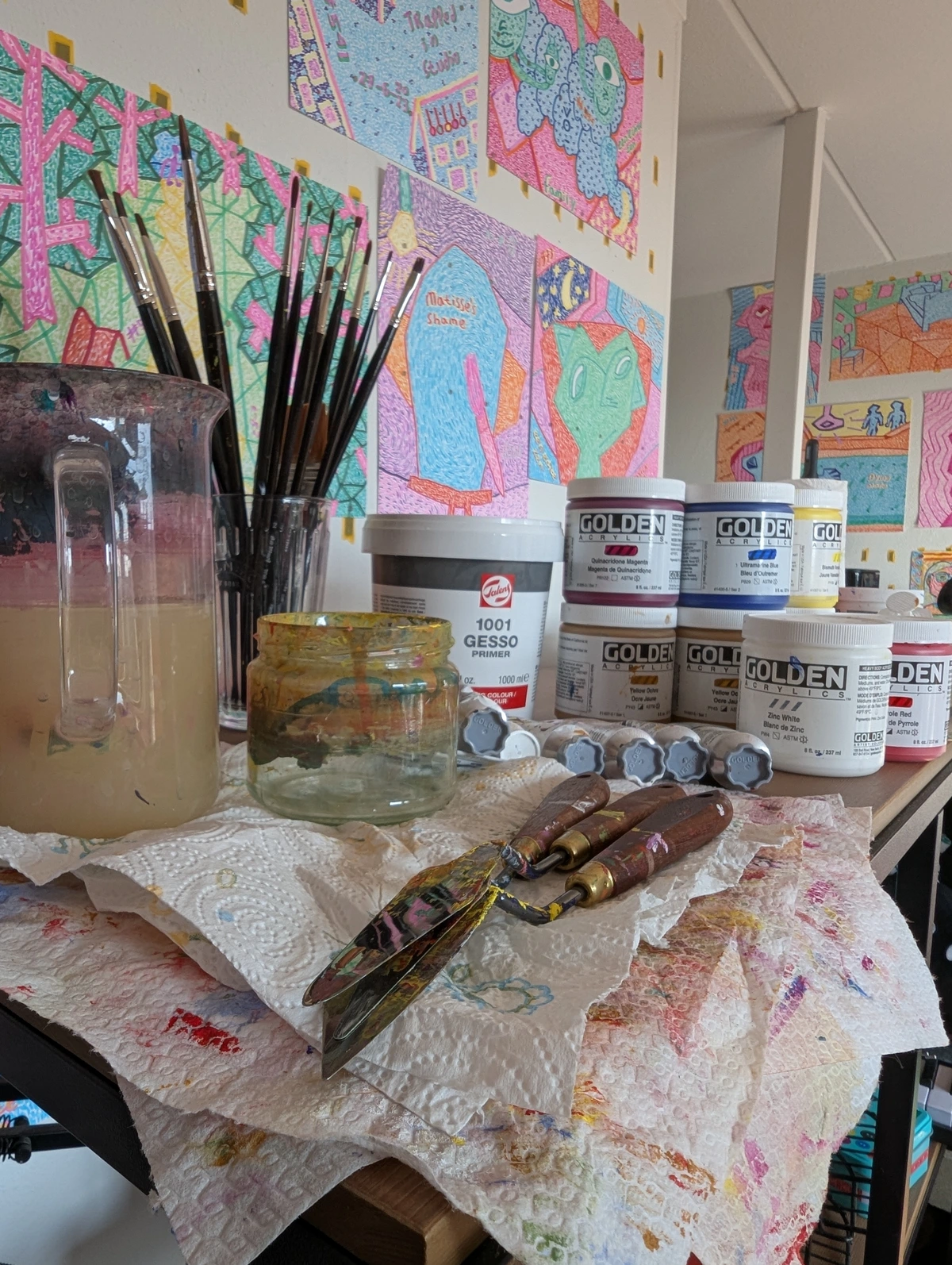
Vermeer's genius extends far beyond light into his deliberate and exquisite use of color. He famously favored rich, vibrant hues, most notably the incredibly expensive natural ultramarine (derived from lapis lazuli, imported all the way from Afghanistan), which he used lavishly, not just for the primary blue objects, but often for shadows and in subtle mixing. This wasn't a cheap choice; ultramarine was more expensive than gold, demonstrating either considerable financial backing from patrons or, more likely, a deep personal commitment to achieving certain luminous effects, regardless of cost. This dedication to quality, even at great expense, underscores his artistic integrity. Beyond ultramarine, he frequently used vermilion for its vibrant red, often layered with madder lake for depth. The luminosity of his yellows, particularly in garments (as seen strikingly in The Milkmaid or A Lady Writing), often came from lead-tin yellow, a bright and opaque pigment, lending a remarkable warmth. His greens were typically mixtures of these yellows with blues, creating nuanced and naturalistic tones that avoided flatness. He also made extensive use of madder lake (a deep, transparent red), and various earth tones like ochres and umbers, creating a harmonious and luminous palette that contributes significantly to the tranquil atmosphere of his works. He was, I think, a master alchemist of the canvas, meticulously grinding his own pigments—a time-consuming and labor-intensive process that ensured purity and consistency—and understanding how colors interact with light, using thin glazes and opaque layers to build up a rich, translucent quality that makes his surfaces glow—a technique that, as a painter myself, I can attest requires immense skill and patience. His choices weren't just aesthetic; they were often symbolic, with colors like blue sometimes representing divinity, truth, or fidelity, and yellow often signifying light, illumination, or wealth. Reds could connote love or passion. The subtle layering of these pigments, often with delicate glazes, created an almost ethereal luminescence that became a hallmark of his style. This limited but expertly managed palette, combined with his layering techniques, allowed him to achieve a remarkable depth and glow that few artists could rival. If you're curious about the emotional impact of such choices, consider exploring the psychology of color in abstract art: beyond basic hues. It makes me think about how every single choice, from the canvas preparation to the final delicate brushstroke, contributes to the overall magic of a painting.
The Camera Obscura Theory: A Window into Precision
How did Vermeer manage to achieve such breathtaking, almost photographic realism, long before the invention of photography itself? This question remains one of art history's most compelling and enduring debates. Many scholars today, and I certainly find myself persuaded by their arguments, strongly believe Vermeer utilized a camera obscura. This remarkable, rudimentary optical device was essentially a darkened box (or even a room) equipped with a small lens or pinhole that projected an inverted image of the external world onto a translucent screen or internal surface. It was, effectively, a primitive projector—a technological marvel of its time. I mean, who wouldn't be fascinated by something that sounds like a magic trick but is pure optics? The principle behind the camera obscura is simple yet profound: light rays from an illuminated scene pass through a small opening and project an inverted, real image onto an opposite surface. By tracing this projected image, an artist could achieve unparalleled accuracy in proportion, perspective, and the nuanced distribution of light and shadow. It's a fascinating example of how scientific understanding and artistic practice often intertwined during the Golden Age.
It's crucial to understand that using such a device wouldn’t have been "cheating" in any sense; rather, it would have been an innovative tool, much like a modern artist might use a projector, digital aids, or even AI tools in their process. It offered a unique way to study and capture the subtle anomalies of light, focus, and perspective that the human eye, even a highly trained one, might easily miss. Think about those soft, almost blurred, out-of-focus highlights in the foreground of some of his paintings—what art historians call circles of confusion or bokeh—a subtle effect the human eye doesn't typically register in sharp focus. Or consider the slightly exaggerated, almost telescopic perspective you can observe in works like 'The Music Lesson' or 'The Art of Painting', where distant objects seem compressed or figures appear monumental in shallow space. These precise visual quirks, combined with the incredibly accurate linear perspective, are hallmarks strikingly consistent with the optical distortions produced by an early camera obscura. For me, it adds another layer to his incredible skill; he was seeing the world in a way few others were at the time, utilizing technology to enhance his artistic vision. This forward-thinking approach even hints at the nascent stirrings of what would later become the history of photography as fine art. While no direct evidence exists of Vermeer owning or using such a device, the optical effects evident in his canvases—especially the distinct 'bokeh' or out-of-focus areas, particularly noticeable in foreground elements like the threads in The Lacemaker or the still life objects in The Milkmaid, and the precise linear perspective with its subtle distortions—strongly suggest its integral role in his artistic process. These visual quirks are so consistently present that it's difficult to attribute them purely to the human eye, even one as keen as Vermeer's.
The Art of Illusion: A Golden Age Fascination
The use of optical devices like the camera obscura wasn't entirely outside the intellectual curiosity of the Dutch Golden Age. This was an era fascinated by optics, cartography, and scientific observation. Artists, scientists, and inventors were constantly exploring new ways to depict the world with greater accuracy and to create compelling illusions. The camera obscura fits perfectly into this broader cultural context of experimentation and the pursuit of realism.
To me, embracing this theory doesn't diminish Vermeer's genius in the slightest. On the contrary, it elevates him as an incredible innovator, a forward-thinking artist who cleverly employed the cutting-edge technology of his era to push the boundaries of artistic realism and create something truly novel. As I often tell myself when grappling with new tools in my own practice, it's always the artist's vision, skill, and intention, not merely the tool itself, that ultimately gives birth to the masterpiece. It makes me wonder what other technological curiosities he might have explored if he lived today, perhaps even AI as co-creator: exploring collaborative art projects with artificial intelligence. It’s a powerful lesson that innovation in art isn't about abandoning skill, but about enhancing it.
Composition and Perspective: Orchestrating Visual Harmony
Beyond light and color, Vermeer was a compositional wizard, though perhaps a quiet one who preferred subtle elegance to dramatic pronouncements. His paintings often feature a shallow, almost stage-like space, with figures and objects arranged geometrically within a carefully defined architectural setting. He frequently employed strong diagonal lines or receding planes, often from an unseen vantage point just outside the frame, to draw the viewer’s eye deeply into the room, creating an almost voyeuristic sense of discovery. He was a master of single-point perspective, meticulously calculating vanishing points, often indicated by a small pinprick in the canvas (a fascinating detail!), to create an illusion of depth that feels utterly real and spatially coherent. This masterful manipulation of perspective creates an immersive experience, making you feel as if you are truly standing there, witnessing a private moment unfolding. Some scholars also argue that he subtly incorporated principles of the Golden Ratio or Divine Proportion into his compositions, achieving an inherent sense of aesthetic harmony and balance that feels intuitively pleasing to the eye. If you're interested in the mechanics of how artists achieve this, our guide on the definitive guide to perspective in art is an excellent resource. His compositional choices were never accidental; every element was placed with purpose, contributing to the overall sense of balance and tranquility. It's like he built a perfectly proportioned stage for his quiet dramas, each object playing a vital role in the visual narrative. It’s this understated precision that makes his scenes so captivating; nothing feels out of place, everything serves a purpose.
Framing and Architectural Elements: Inviting the Viewer In
One of Vermeer's recurring compositional devices, which I find particularly engaging, is his use of framing elements. He often places figures or scenes behind doorways, windows, or curtains (as seen in The Love Letter or The Art of Painting), inviting the viewer to 'peek' into the domestic space. This isn't just a stylistic quirk; it amplifies the feeling of intimacy and exclusion, making the viewer feel like a privileged observer of a private moment, almost a voyeur. The architectural lines and shadows within his interiors aren't just background details; they are active participants in guiding the eye and structuring the narrative, creating a sense of ordered serenity. His compositions are rarely cluttered; instead, they are models of balance and harmony, where every object, every figure, and every sliver of light plays a deliberate role, contributing to that profound sense of quiet order. This precise arrangement is key to understanding balance in art composition. He transforms mundane architectural features into subtle narrative devices, making them part of the painting's quiet drama.
Scenes of Quiet Dignity: Elevating the Everyday
Vermeer almost exclusively painted what are known as genre scenes—depictions of everyday life. His subjects are typically one or two women, occasionally with a male figure, engrossed in quiet activities within a sunlit interior. They might be reading or writing letters, playing musical instruments, lost in thought, or performing simple domestic chores like pouring milk or weighing pearls. In an era where grand historical narratives, religious allegories, or mythological scenes were often considered the pinnacle of artistic achievement, Vermeer made a radical, yet incredibly subtle, choice: he found the profound, the beautiful, and the deeply significant in the ordinary. While other Dutch genre painters, like Jan Steen or Gerard ter Borch, often depicted boisterous taverns, raucous celebrations, or moralizing chaos, Vermeer chose instead to focus on moments of quiet introspection, domestic virtue, and sophisticated intimacy, almost creating a counter-narrative to the prevailing trends. He didn't just paint a scene; he elevated the mundane to something monumental, capturing moments of private contemplation and quiet grace that feel remarkably intimate and, in their psychological depth, incredibly modern. He asks us to truly see the sacred in the secular, a challenge I often find myself wrestling with in my own work. His consistent focus on women engaged in domestic tasks—reading, writing, playing music, or simply contemplating—suggests a profound respect for their inner lives and contributions within the 17th-century Dutch household, offering a nuanced glimpse into their roles and agency in a male-dominated society. His commitment to these quiet narratives speaks volumes about his artistic philosophy. I often think his choice of subject matter was revolutionary in its own understated way, carving out a space for quiet introspection in a world that often celebrated the loud and dramatic, making his art a serene counterpoint to the bustling world outside. It’s a powerful lesson in finding beauty and meaning in the seemingly unremarkable.
Iconography and Symbolism: Hidden Meanings in Plain Sight
While Vermeer's scenes appear to be straightforward depictions of daily life, many scholars argue, and I agree, that his paintings are often imbued with subtle, layered iconography and symbolism. Objects placed meticulously within the room—maps, musical instruments, paintings within paintings, letters, books, or even the quality of the light itself—often carry deeper meanings that would have been recognizable, or at least pondered, by his contemporary viewers. For example, a musical instrument might symbolize harmony, love, or the fleeting pleasures of earthly life; a sealed or open letter could hint at love, communication, or even betrayal (a common motif in Dutch genre painting, suggesting clandestine affairs); and the prominent maps often spoke to the global reach, scientific curiosity, and mercantile spirit of the burgeoning Dutch Republic, or even a specific historical event or geopolitical aspiration. But the symbolism goes deeper: scales (as seen in Woman Holding a Balance) might allude to divine judgment or truth, a subtle reminder of mortality and moral choices; pearls could signify purity, modesty, or vanity depending on their context; and the ubiquitous paintings-within-paintings often served as allegories for art itself, history, faith, or specific moral lessons. Even mundane objects like a basket of bread or a wine jug could carry subtle religious or moral undertones for a discerning 17th-century viewer, evoking themes of temperance or spiritual sustenance. These symbolic elements add a quiet richness and intellectual depth to his seemingly simple scenes, inviting us to look beyond the surface and ponder the deeper narratives at play, much like an art historical detective piecing together clues in a meticulously crafted mystery. It's a testament to the intellectual sophistication of his audience and his own artistic erudition. It’s like he planted little intellectual Easter eggs for his discerning viewers to find. And if you're like me, you'll spend hours poring over these details, trying to unlock their secrets. This layering of meaning, I believe, is what truly elevates his work beyond mere representation.
Symbolic Element  | Common Interpretations in Vermeer's Work | Example Paintings |
|---|---|---|
| Maps and Globes | Global trade, scientific inquiry, Dutch national pride, knowledge, geographical reach. | The Geographer, The Art of Painting |
| Musical Instruments | Harmony, love, courtship, fleeting pleasures of life, sensuality, leisure. | The Music Lesson, The Concert |
| Letters (Sealed/Open) | Communication, love, clandestine affairs, news, secrets, personal narratives. | A Lady Writing, The Love Letter |
| Scales | Divine judgment, truth, balance, prudence, temperance, fairness. | Woman Holding a Balance |
| Pearls | Purity, modesty, vanity, wealth, material temptation. | Girl with a Pearl Earring, Woman Holding a Balance |
| Paintings-within-Paintings | Allegories for art, history, faith, moral lessons, self-reflection on the nature of art. | The Art of Painting, A Lady Standing at a Virginal |
| Windows & Light | Inner world, spiritual illumination, divine presence, connection to the outside world, purity. | Nearly all his genre scenes |
| Textiles & Rugs | Wealth, exoticism, luxury, warmth, domestic comfort, global trade connections. | The Music Lesson, The Art of Painting |

The Mystery of His Models: Faces of His Household
A persistent question, and one that fascinates me, is the identity of Vermeer's models. Given his quiet life and limited output, it's highly probable that many of the women depicted in his genre scenes were members of his own household. His wife, Catharina Bolnes, and his eldest daughters, particularly Maria and Elisabeth, are often suggested as the subjects for many of his works, including possibly the enigmatic 'Girl with a Pearl Earring'. This would explain the profound intimacy and naturalness of his figures; they were people he knew deeply, observed daily, and could capture with a unique sense of tenderness and psychological insight. It lends another layer of personal connection to these timeless images, making them not just representations of an era, but glimpses into a family's quiet life. The repeated features in several of his paintings further support this theory, suggesting a consistent pool of models close to home, which would have been economically practical for a painter with financial constraints. It also speaks to the profound trust and familiarity required for such prolonged, quiet sittings. I imagine these quiet sittings were an extension of his domestic life, a blend of family and art that feels uniquely personal, making his art even more deeply rooted in his own experience. It’s a powerful thought, isn’t it, that the faces we see across centuries might have been those he loved most?
Early Works and Historical Paintings: A Different Path
While Vermeer is rightly celebrated for his tranquil genre scenes, it's worth remembering that his early career also included a few historical and mythological paintings. These are markedly different in style and subject matter from his later, more famous works, showcasing a younger artist exploring the grander narratives popular at the time. Paintings like Diana and Her Nymphs (c. 1653-1654) and Christ in the House of Martha and Mary (c. 1654-1656) reveal a painter grappling with larger-scale compositions, more dramatic figures, and often darker palettes, a notable departure from the luminous hues he would later favor. Diana and Her Nymphs, for example, is a classical scene with a more romantic, chiaroscuro lighting than his later work, featuring a group of women in a serene, forested setting, and depicting the goddess Diana with her nymphs after the hunt, reflecting his early engagement with mythological subjects and a more traditional approach to composition. It's almost pastoral, a world away from his intimate interiors. Christ in the House of Martha and Mary depicts a deeply spiritual narrative, a genre he largely abandoned, showing Christ visiting the home of the two sisters, Martha and Mary, a popular biblical subject that allowed for moralizing allegories and intense emotional expression, characteristic of the Utrecht Caravaggisti influence. These works demonstrate his foundational training and his initial attempts to master the conventions of religious and historical painting, showcasing a robust academic grounding before his stylistic shift towards domestic scenes. For me, they offer a fascinating glimpse into his artistic evolution, showing the raw talent that would later be channeled into the quiet domestic worlds for which he is now so beloved. It's a reminder that even masters have their formative years, experimenting and finding their unique voice, and it makes me wonder what other grand narratives he might have explored had his path not taken such an intimate turn. These early works are crucial for understanding the breadth of his skill. They show he wasn't always the 'Master of Light' we know, but rather a developing artist exploring different avenues, capable of adapting to the prevailing artistic trends of his time. They underline his versatility, even if he ultimately found his true calling in the quietude of domestic life.
Transitioning to Genre: A Master's Evolution
His shift from grand historical and mythological themes to intimate genre scenes wasn't just a change in subject matter; it was a profound stylistic and philosophical evolution, marking a pivotal turning point in his career. While his early works show a clear engagement with the dramatic light and theatricality of the Utrecht Caravaggisti, his later works shed this overt drama for a more refined, internalized intensity, favoring quiet observation over overt spectacle. It was as if he realized the monumental could be found not in epic battles or divine narratives, but in the subtle gestures and fleeting moments of everyday human experience, a revolutionary artistic statement in its own right. This transformation is, for me, one of the most intriguing aspects of his artistic journey, demonstrating his willingness to forge his own path, even when it diverged from popular trends.
A Tour Through Vermeer's Masterpieces: Icons of Intimacy
With a known body of work of only around 36 paintings, almost every one is a treasure, a window into a bygone era, yet timeless in its appeal. But a few stand out as icons of the art of the Dutch Golden Age and beyond. While I've picked some of my personal favorites, every single Vermeer deserves a slow, contemplative look, inviting you to step into his meticulously crafted worlds. These works are not just paintings; they are moments suspended in time, offering profound insights into 17th-century life and universal human experiences. It's truly a testament to his genius that such a small output commands such immense admiration and study, proving that sometimes, less truly is more.
Girl with a Pearl Earring (c. 1665): The 'Mona Lisa of the North'
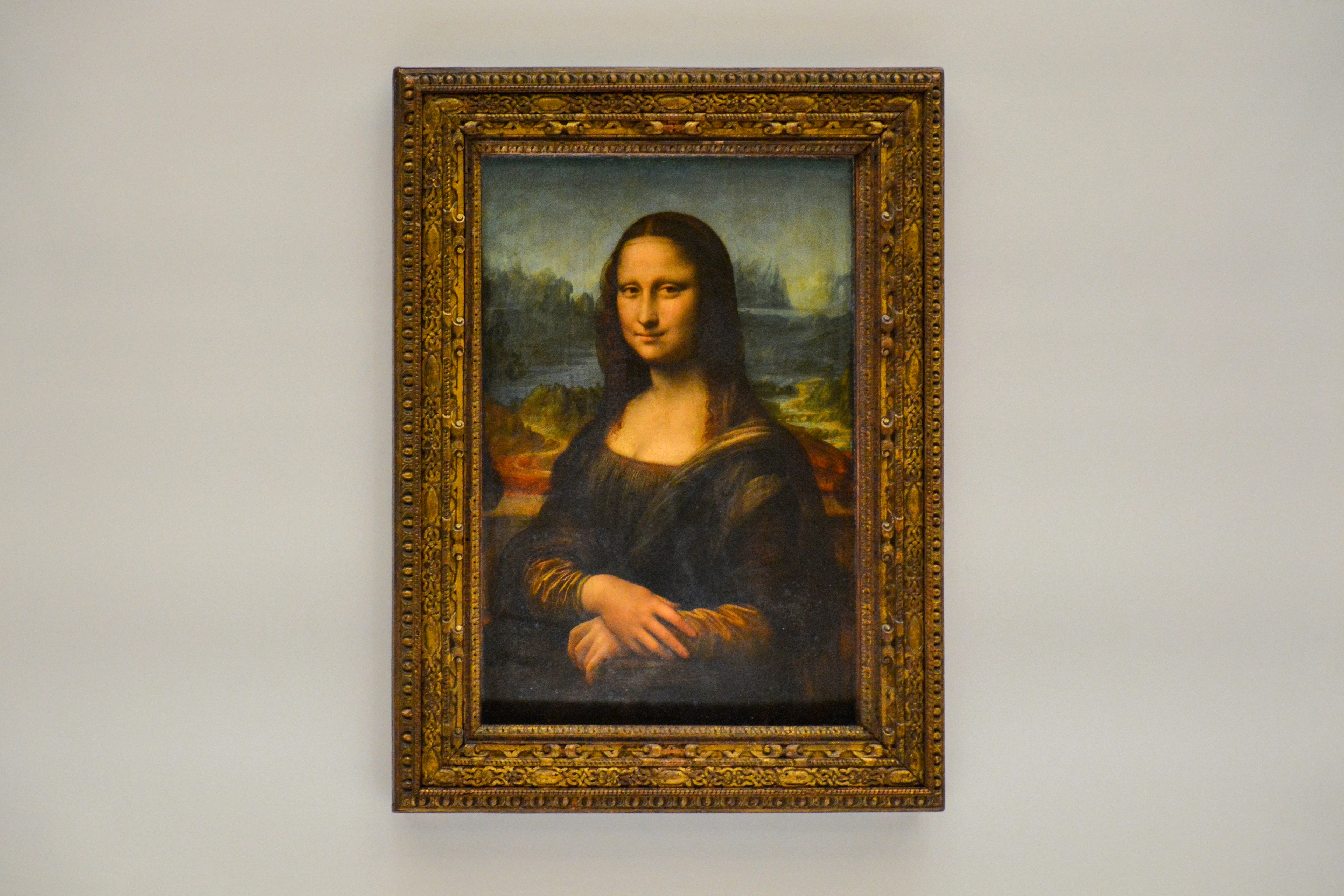
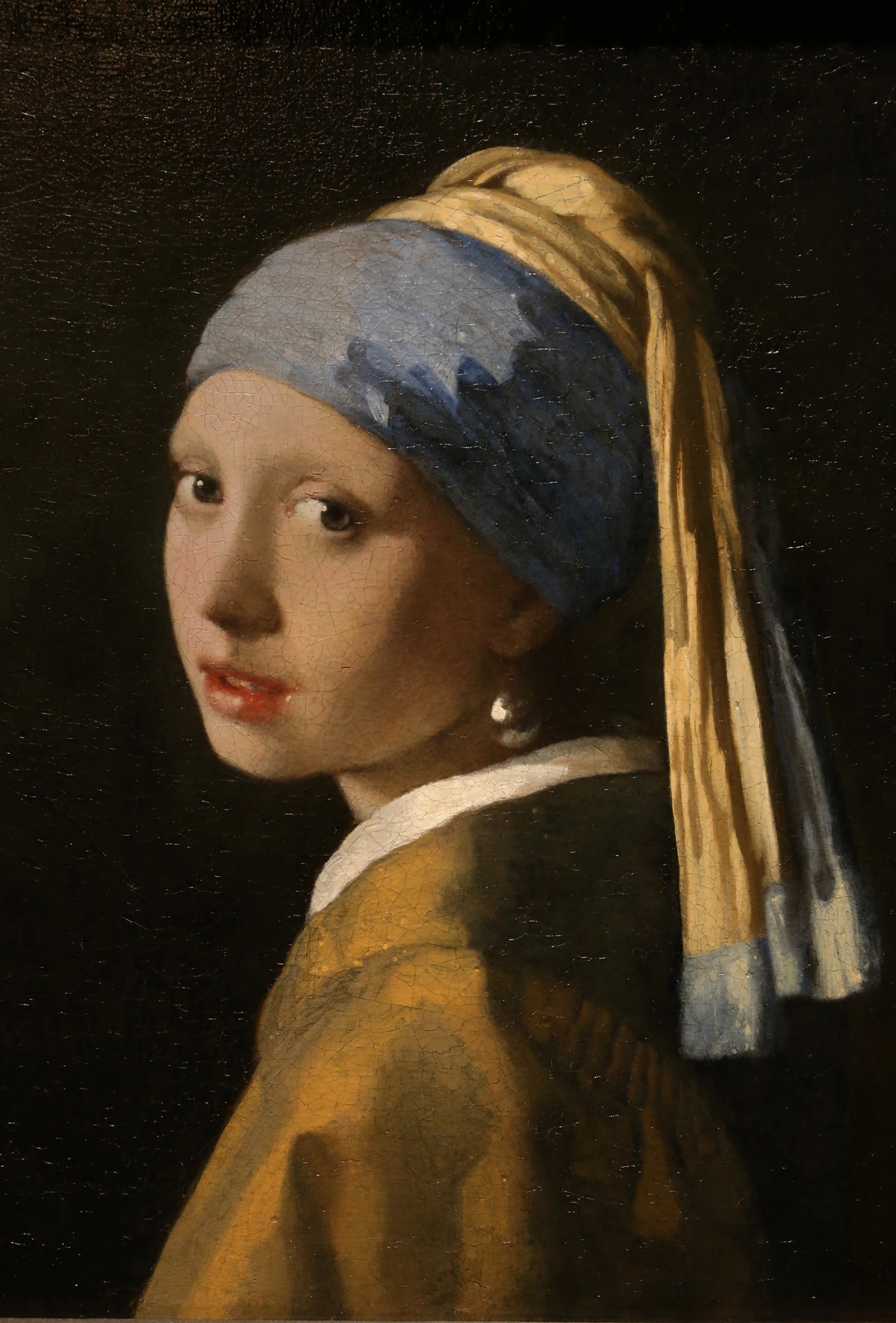
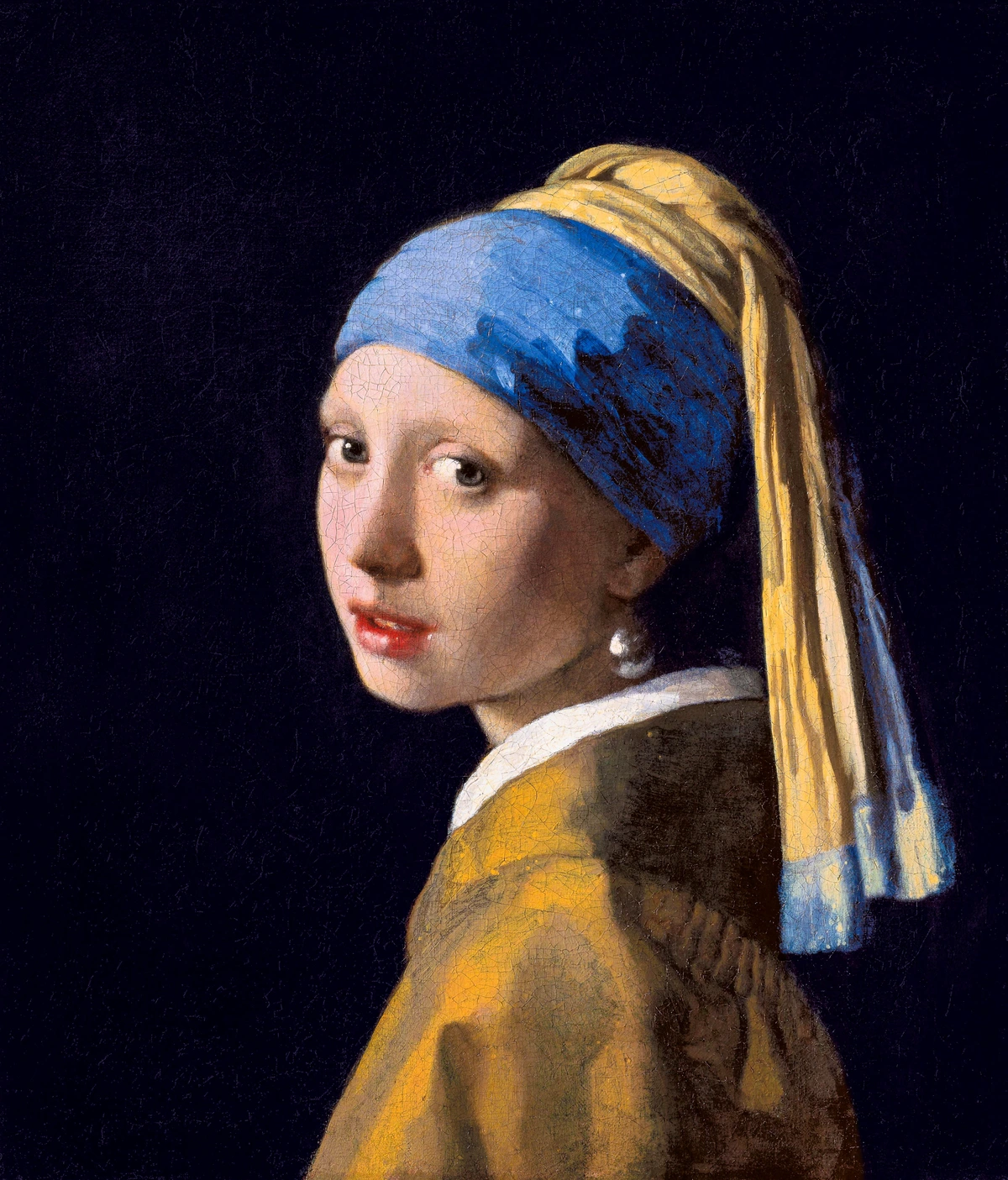
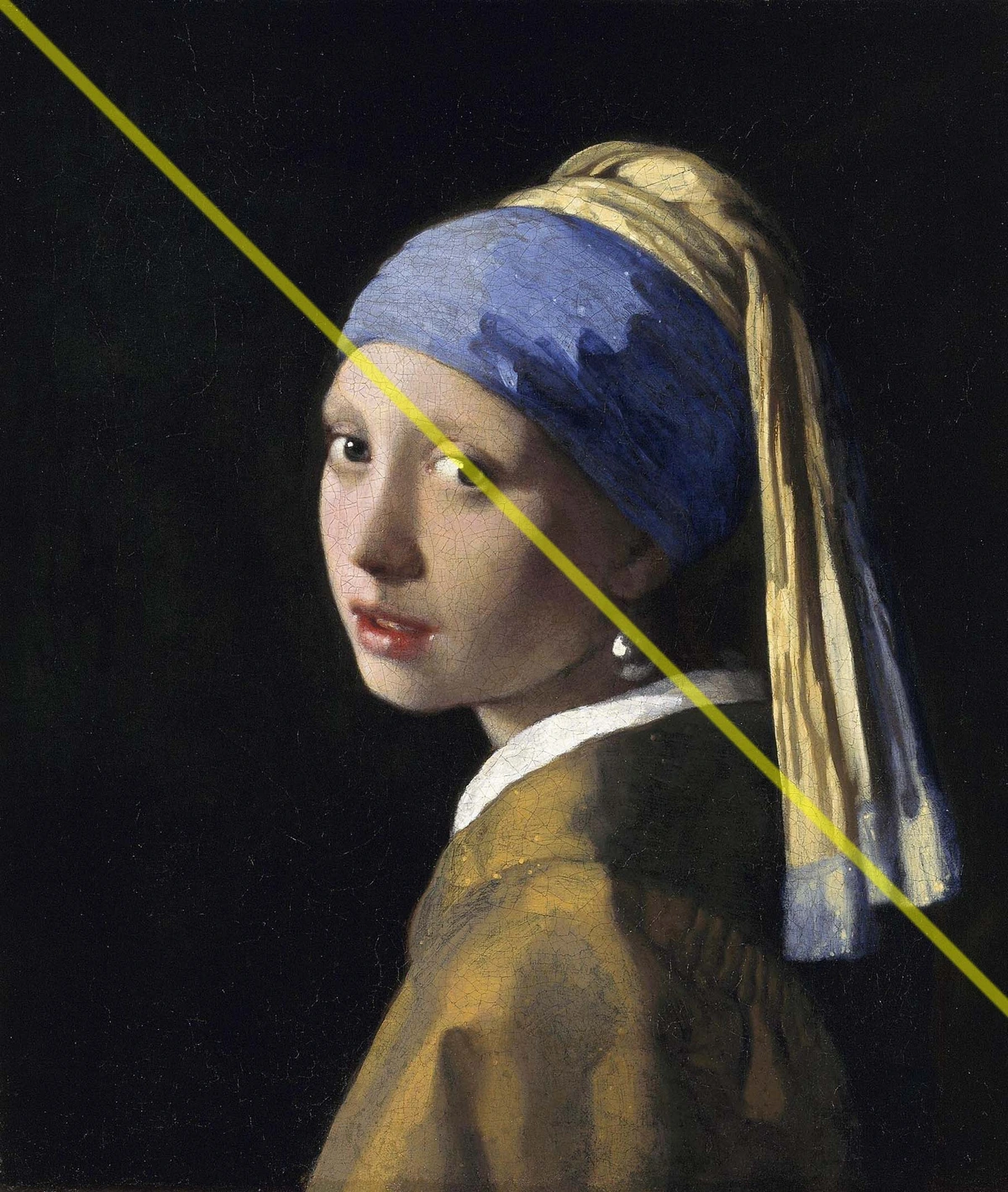
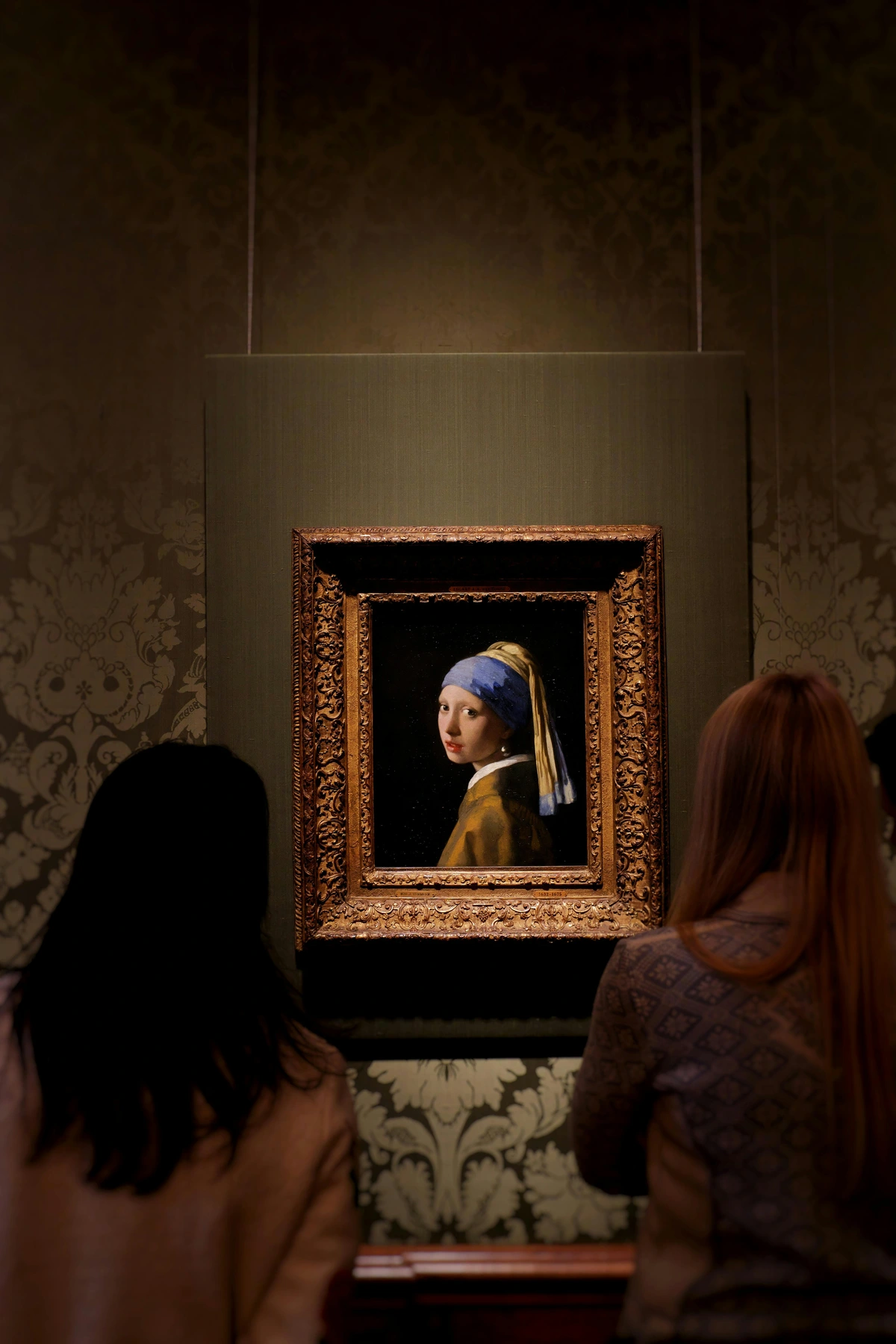
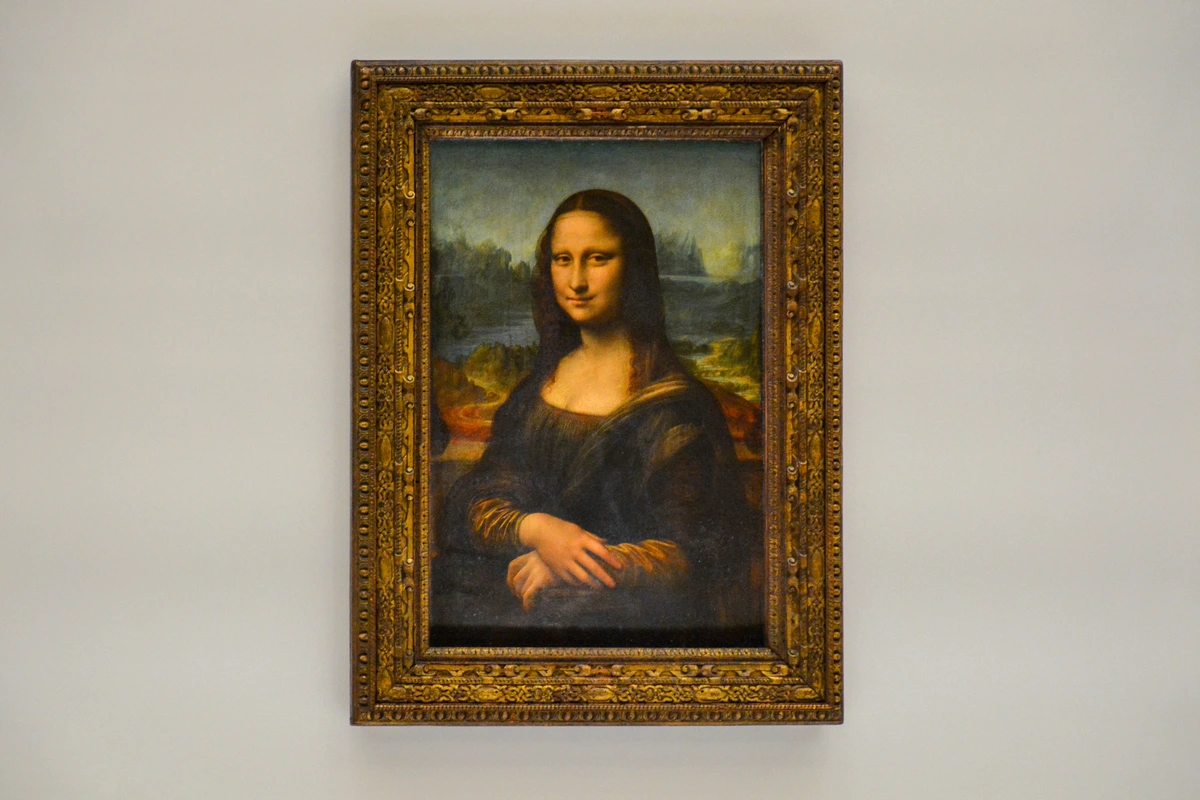
This isn't strictly a portrait in the traditional sense; rather, it’s a tronie—a type of head study popular in the Dutch Golden Age, focused on capturing a distinctive character, expression, or costume, often for a hypothetical figure. And what an expression it is! The young girl, with her impossibly luminous pearl earring (actually a polished tin drop in all likelihood, but that’s a debate for another day, and one that doesn't diminish its visual impact!), turns to us over her shoulder, her lips slightly parted as if she’s about to utter a word or draw a breath. The intensely dark, almost velvety background pushes her forward, making the connection between her and the viewer feel incredibly direct, intimate, and utterly personal, almost as if she's just been startled. Her enigmatic gaze and the subtle play of light on her skin and the folds of her turban create an unforgettable image. It's often compared to Why is the Mona Lisa so famous? for its enigmatic quality, but for me, it possesses an even deeper, more accessible intimacy. It’s a captivating illusion, a moment frozen in time that feels utterly alive.
The profound mystery surrounding her is, for me, a huge part of her enduring appeal. We know absolutely nothing about her identity. Was she a model? A servant? One of Vermeer's daughters? What is she thinking in that fleeting moment? This tantalizing lack of information has fueled endless speculation and has, quite rightly, earned her the moniker of the 'Mona Lisa of the North'. Her enigmatic gaze and the sheer mastery of light on her face and the folds of her turban have captivated and puzzled viewers for centuries, making her one of the most iconic images in all of Western art history. The way her eyes meet ours, even as her body turns away, creates an electrifying sense of direct engagement, almost as if she is responding to a spoken word. Its modern resurgence in popular culture, including Tracy Chevalier's bestselling novel and the subsequent film adaptation, has only cemented its place in the global imagination. For a deeper dive into this specific work, a painting that consistently makes my heart skip a beat, I'd highly recommend reading our guide: What is The Girl with a Pearl Earring. What truly makes this painting a masterpiece, beyond its technical brilliance, is its ability to invite such personal, open-ended interpretation; she is a mirror for our own questions and desires, and that, I think, is a powerful trick for any artist to achieve.

The Milkmaid (c. 1658-1660): A Monument to Domesticity
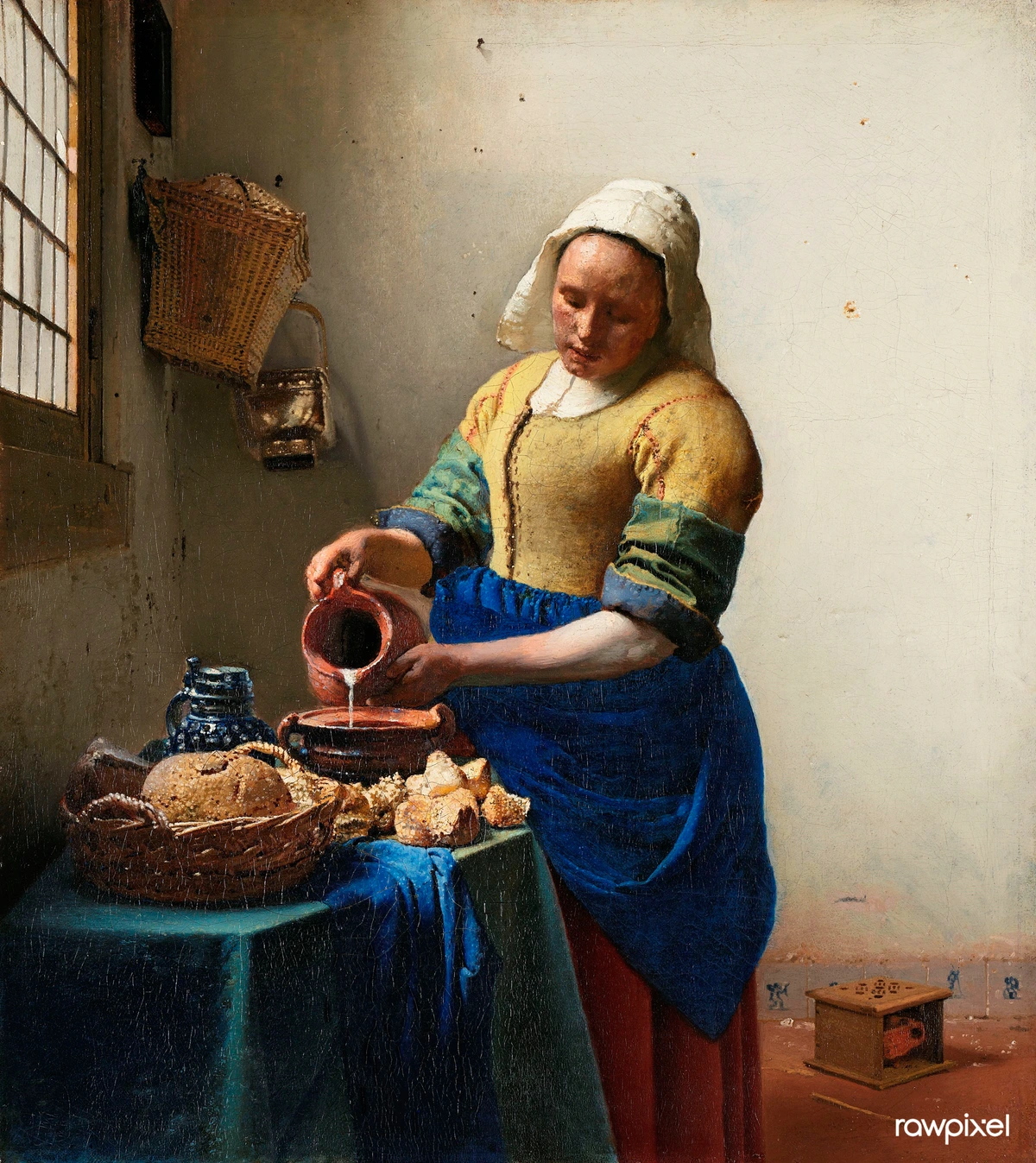
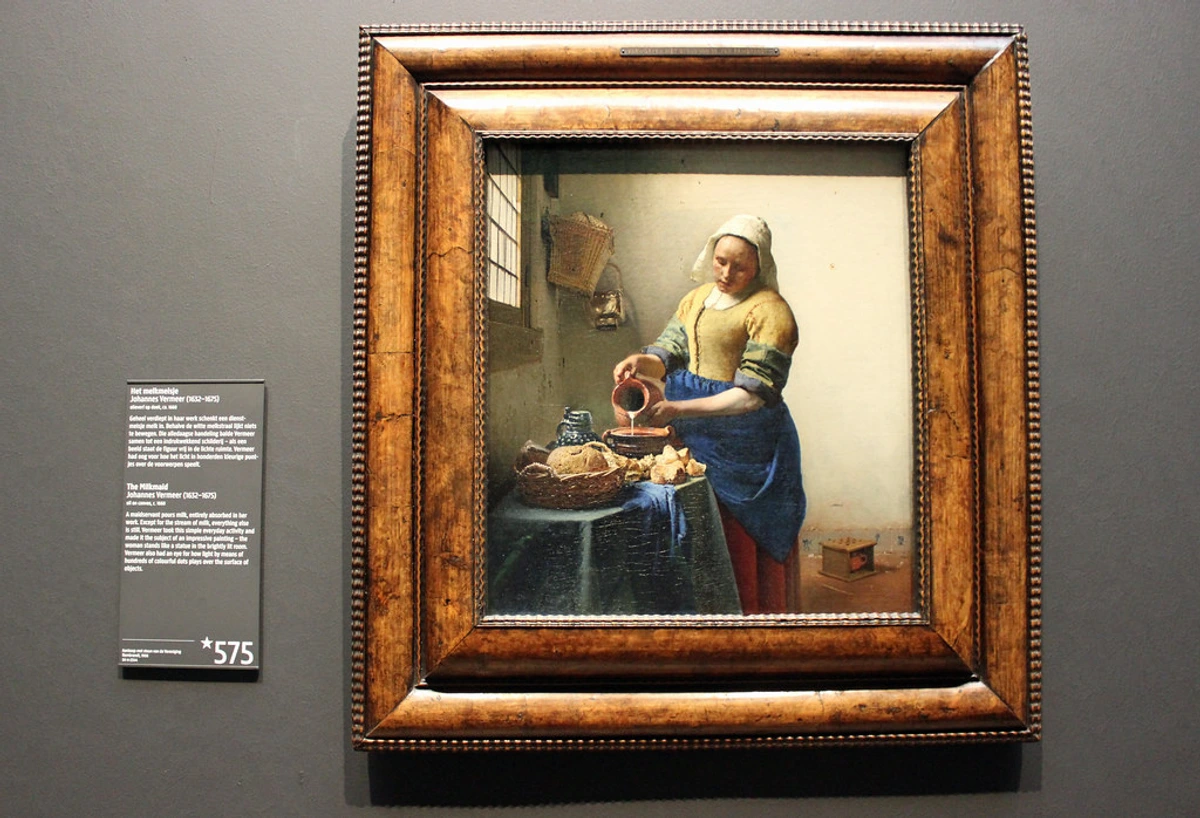
This painting, often seen as a quiet marvel, is a profound celebration of the dignity inherent in honest labor and simple domesticity. It’s rendered with such incredible realism and tactile detail that I can almost feel the cool morning chill in that humble kitchen and practically hear the gentle, rhythmic trickle of milk from the earthenware jug. Just look at the astonishing detail on the bread, its crusty texture almost palpable, meticulously created by Vermeer's signature pointillé technique. He doesn’t just depict a kitchen maid; he elevates a simple domestic chore into a monumental act of concentration, quiet virtue, and enduring grace. Every object—the still life on the table with its delicate interplay of light and shadow, the humble foot warmer, the woven basket, the chipped paint on the wall—contributes to this narrative of focused work and humble abundance, creating a sense of lived-in authenticity that I find deeply compelling. It's truly one of the star attractions at the magnificent Rijksmuseum in Amsterdam, and a painting that commands silent admiration, reminding us to appreciate the beauty in everyday tasks. It’s a masterclass in rendering texture, from the rough plaster of the wall to the smooth ceramic of the jug, each surface responding uniquely to Vermeer’s masterful light. This painting exemplifies his ability to transform the mundane into the monumental, revealing the profound beauty in ordinary domestic life.
View of Delft (c. 1660-1661): A City's Soul in Canvas
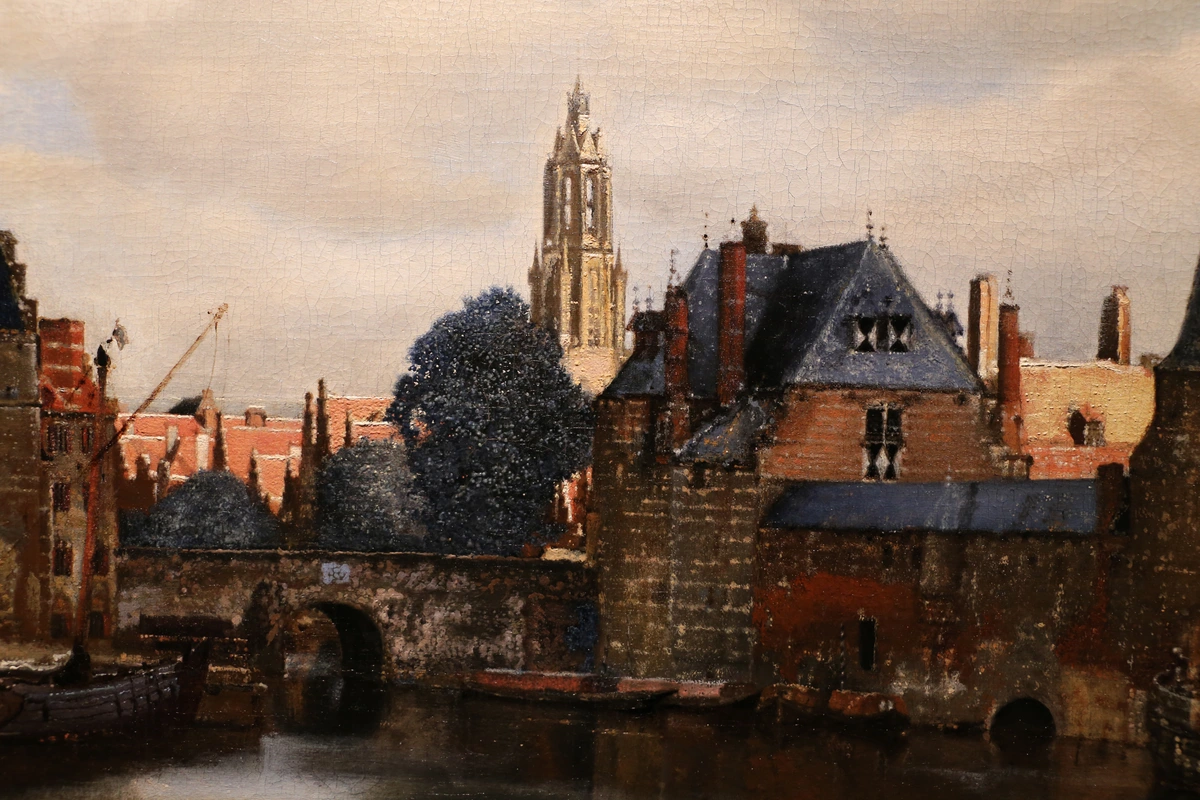
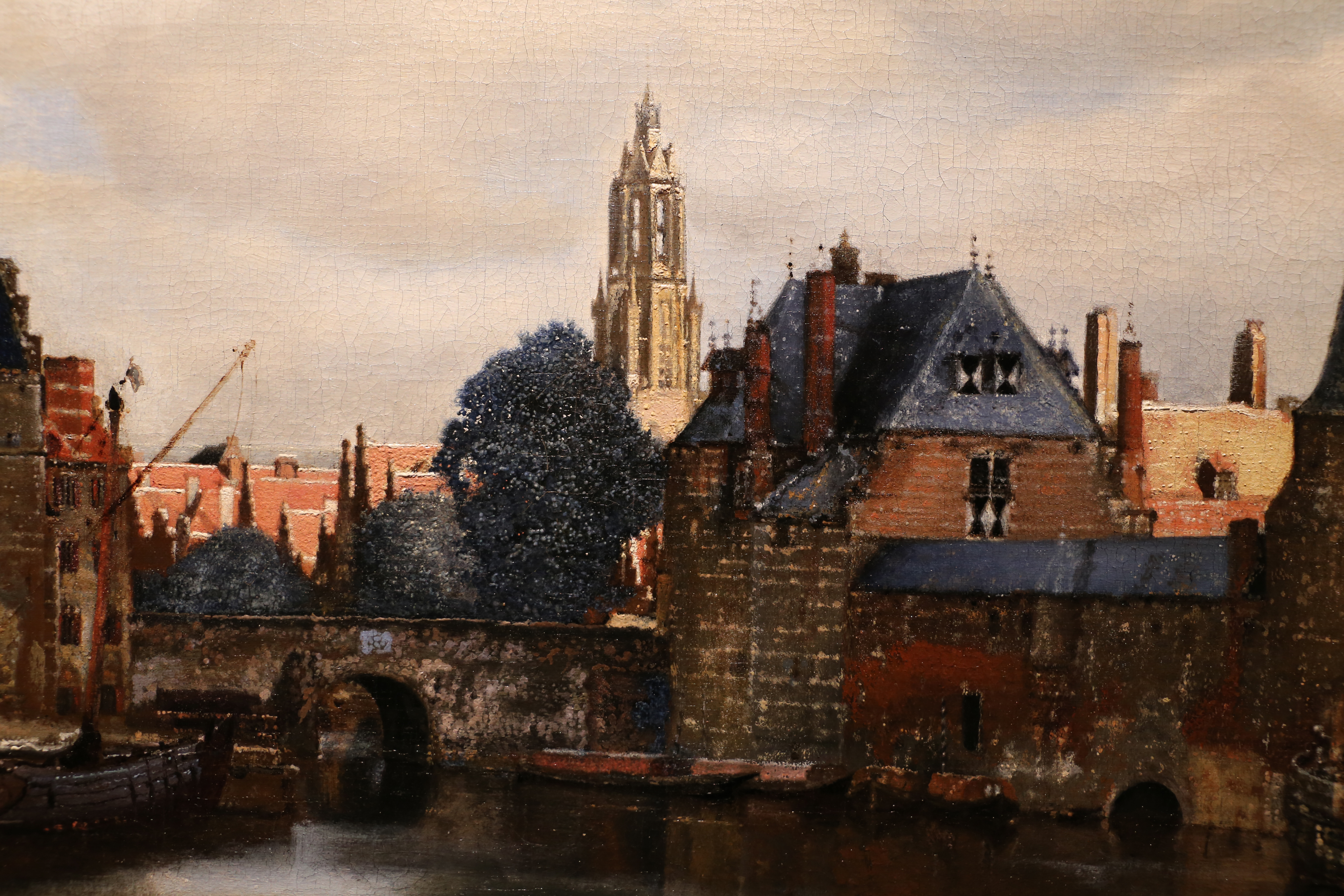
One of Vermeer's incredibly rare outdoor scenes – indeed, one of only two confirmed townscapes (the other being The Little Street, which we'll discuss in a moment!) – 'View of Delft' is arguably the most famous and beloved cityscape in the entire canon of art history. It's not just a topographical record of his hometown; it's a deeply personal, almost reverent portrait of Delft itself, a tender homage to the city where he lived and worked his entire life. The way the morning sunlight breaks through the clouds, dappling the city in patches of light and shadow, illuminating specific buildings like the Nieuwe Kerk (New Church) and reflecting off the tranquil water of the Schie canal, creates an overwhelming feeling of immense peace, quiet civic pride, and timeless serenity. For me, it feels both perfectly real, grounded in careful observation, and yet profoundly dreamlike at the same time, capturing the very soul of the city and its vibrant atmosphere. The renowned French writer Marcel Proust famously declared it "the most beautiful painting in the world," and I must admit, some days, standing before its luminous tranquility, I find myself wholeheartedly agreeing with him. It's a masterpiece that reminds me of the power of place in art, and how an artist's deep connection to their surroundings can elevate a landscape into something truly profound. This painting is a testament to his ability to imbue even a city view with intimate emotion, almost anticipating the visual language of later landscape photography. It showcases his remarkable ability to capture both the grandeur and the intimate details of urban life, making it a timeless representation of Dutch Golden Age prosperity. It's a painting that speaks not just of a city, but of a feeling, a deep connection to home and history. Its unique ability to combine meticulous detail with an overarching sense of atmospheric grandeur sets it apart from other contemporary cityscapes, which often prioritized topographical accuracy over emotional resonance.
Masterpiece | Subject | What Makes It Special |
|---|---|---|
| Girl with a Pearl Earring | An anonymous girl (a tronie) | The direct, enigmatic gaze and masterful use of light on the pearl, making her the 'Mona Lisa of the North'. |
| The Milkmaid | A kitchen maid pouring milk | The elevation of a mundane task and incredible textural realism, celebrated for its quiet dignity. |
| View of Delft | The cityscape of Vermeer's hometown | The atmospheric light and perfect balance between realism and poetry, a deeply personal homage to his city. |
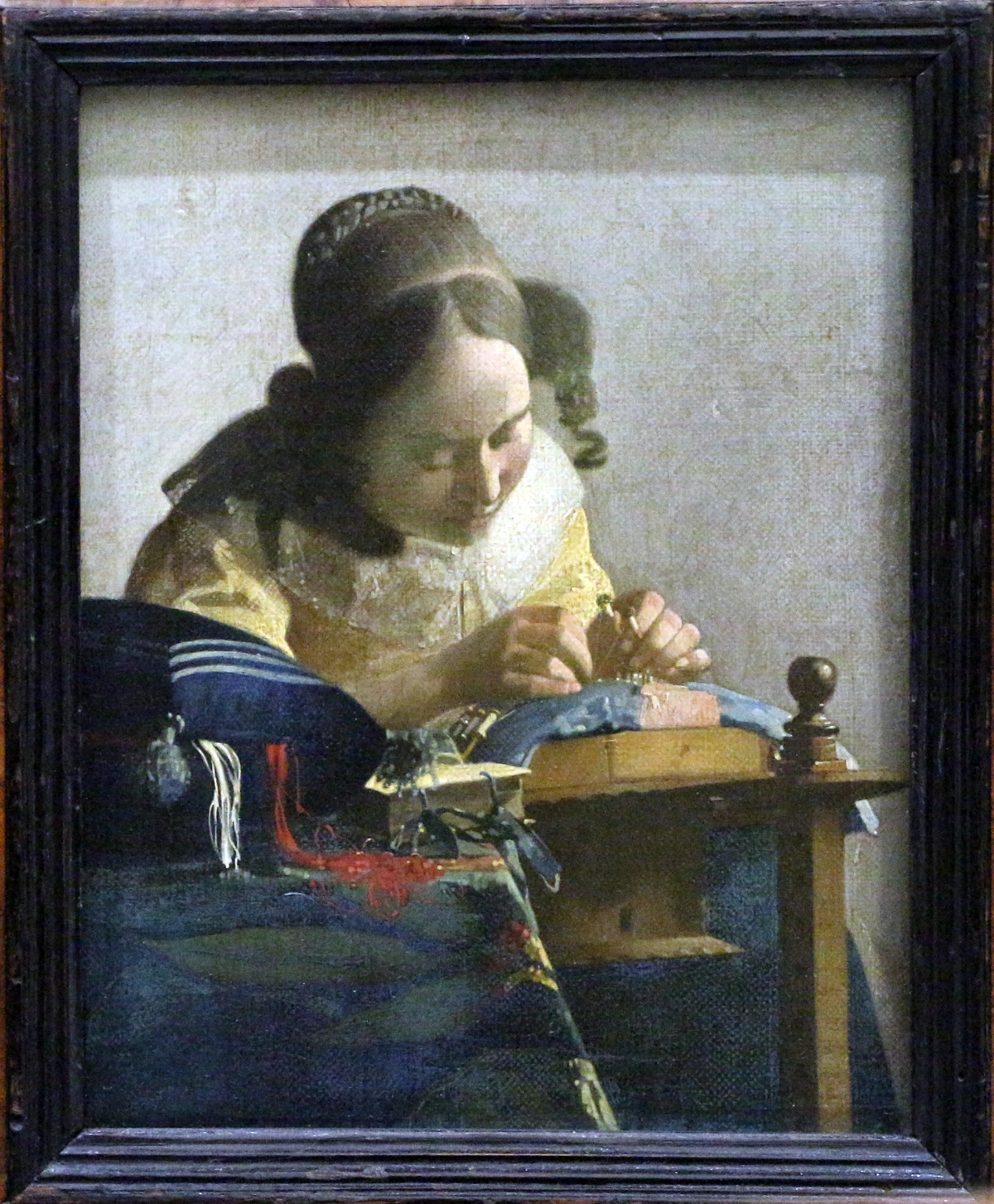
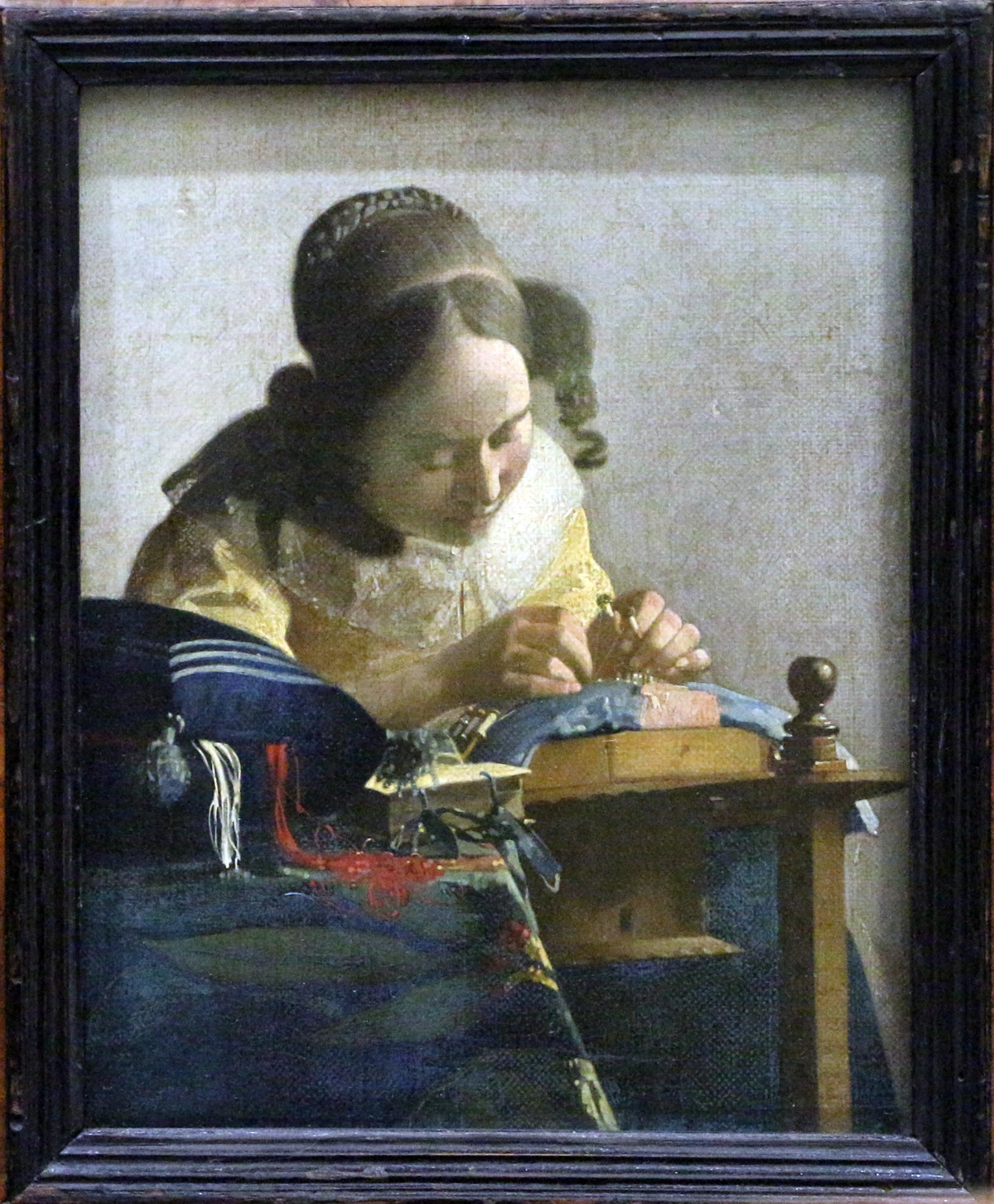
| The Lacemaker | A woman focused on making lace | An intensely intimate and focused composition, drawing you into her world of concentration, showcasing optical precision and Vermeer's command of 'bokeh' effects. |
| The Art of Painting (or The Allegory of Painting) | An artist in his studio with a model | A complex allegory on art, history, and fame; considered a self-portrait, rich in symbolism. |
| Woman Holding a Balance | A woman weighing pearls before a painting of the Last Judgment | A profound meditation on life, death, and judgment, emphasizing prudence, inner balance, and domestic virtue, all rendered with a chilling quietude. |
| The Music Lesson (or Lady at the Virginals with a Gentleman) | A young woman receiving a music lesson from a gentleman | A masterful exploration of perspective, light, and the subtle dynamics of courtship, full of implied narrative and psychological tension. |
| The Geographer | A scholar engrossed in studying maps and globes | A celebration of 17th-century Dutch scientific inquiry and exploration, with a keen focus on intellectual pursuit and worldly curiosity, embodying the era's spirit of discovery. |
| The Love Letter | A maidservant handing a letter to her mistress, observed through a doorway | An intimate genre scene hinting at clandestine romance and domestic intrigue, masterfully using framing, creating a sense of voyeurism, and highlighting the power of hidden narratives. |
| The Little Street | A tranquil street scene in Delft | One of only two known townscapes, remarkable for its atmospheric realism and warm light, a slice of urban life. |
| A Lady Writing | A woman writing a letter | A subtle depiction of introspection and communication, with brilliant light effects on her yellow jacket, capturing a moment of profound internal reflection. |
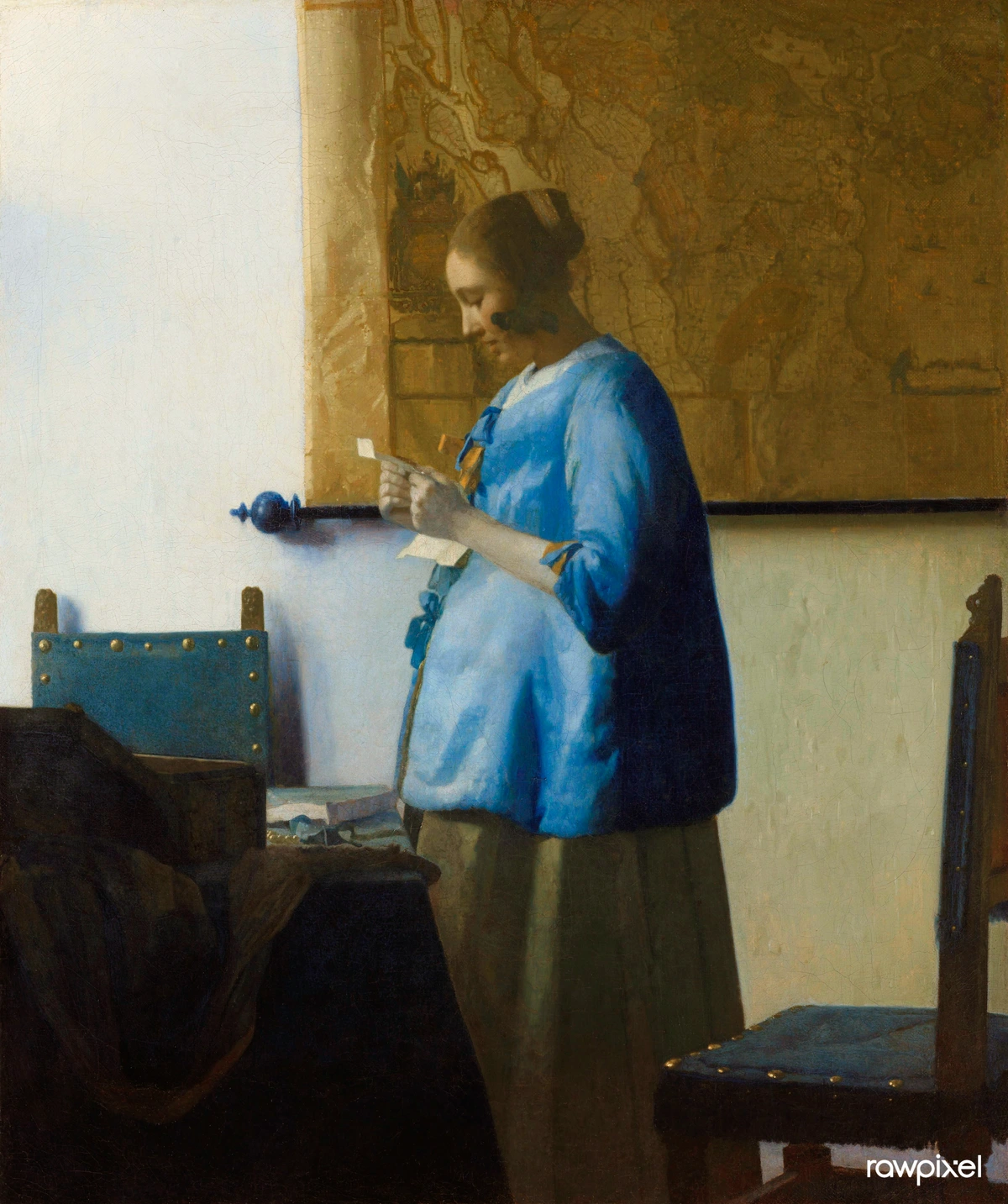
| Woman in Blue Reading a Letter | A woman engrossed in reading a letter | Emphasizes the power of communication and the inner world of women, with a striking ultramarine blue that enhances the sense of quiet absorption. |
| The Concert | A trio of musicians | A rare group portrait, tragically stolen in 1990 and still missing, showcasing musical harmony and social interaction within a lavish setting, a profound loss to art history. |
| A Young Woman Seated at a Virginal | A woman playing a musical instrument | Captures a moment of musical contemplation, often seen as a metaphor for love or vanity, rendered with exquisite detail and a contemplative atmosphere. |
The Lacemaker (c. 1669-1670): Precision in Miniature
This is a truly small painting, but don't let its diminutive size fool you; it's an absolute powerhouse of concentrated intimacy and meticulous detail. 'The Lacemaker' depicts a young woman, likely a middle-class gentlewoman rather than a servant, entirely absorbed in her delicate work. Vermeer draws us in with an incredible focus on her hands and the intricate threads she manipulates. The vibrant red and white threads spilling from her sewing cushion, rendered with a beautiful blurred quality (those circles of confusion again!), are a testament to his understanding of selective focus—a visual effect strikingly similar to what a camera obscura would produce, and one that gives the painting an almost hyper-real quality. It’s a moment of profound concentration, a celebration of quiet craft, and a testament to Vermeer's ability to make the most unassuming subject deeply compelling, elevating a simple act of domestic industry into a profound meditation on focus and skill. It makes me reflect on the beauty in quiet, dedicated work. The almost tactile rendering of the threads and cushion is a masterclass in detail and observation. It's a miniature marvel, demanding close inspection and rewarding it with incredible depth. It's a perfect encapsulation of his dedication to finding grandeur in the granular.
The Little Street (c. 1657-1661): A Glimpse of Domestic Delft
As promised, let's talk about the other confirmed townscape! 'The Little Street' is another rare outdoor painting by Vermeer, offering a glimpse into everyday life in 17th-century Delft. Unlike the grand panorama of the 'View of Delft', this painting presents a humble, intimate street scene, likely a specific location in his hometown (though its exact whereabouts are still debated by scholars, with theories ranging from Voldersgracht to Nieuwe Langendijk). It captures the quiet dignity of ordinary urban life, with women engaged in domestic chores, children playing, and houses bathed in warm, diffused light. The textured brickwork and the subtle play of light and shadow on the facades are rendered with Vermeer's characteristic attention to detail, transforming a simple architectural view into a poignant reflection on community and domesticity. It's a masterpiece of subtle observation, demonstrating his ability to find beauty in even the most unassuming corners of his world. This painting feels like a personal invitation into the lived experience of his city. I sometimes imagine walking down that very street, feeling the same light he captured so masterfully, a testament to his keen eye for everyday beauty. It's an ode to the quiet charm of his hometown, a universal feeling captured with exquisite precision.
The Music Lesson (c. 1662-1665): Harmony and Hidden Meanings
Often known as Lady at the Virginals with a Gentleman, this painting is a quintessential example of Vermeer's mastery of perspective and light within an elaborate interior. We, the viewers, are positioned at a distance, looking into a sunlit room where a young woman plays a virginal, her back to us, while a gentleman stands by, seemingly offering instruction. The floor tiles, rendered with impeccable linear perspective, draw our eye deep into the space, and the large Turkish carpet on the table adds a luxurious touch, indicating the wealth of the household. What I find fascinating here is the subtle tension and implied narrative between the two figures, a common theme in Dutch genre painting, but elevated by Vermeer's quiet dignity. The light streams in from the left, illuminating the scene with that characteristic Vermeer glow, making every object—the musical instruments, the jug, the painting on the wall—feel utterly present and real. It's a snapshot of a moment both intimate and formal, inviting us to speculate on the nature of their relationship and the meaning of their silent exchange, perhaps a burgeoning romance or a lesson in decorum. The presence of musical instruments in many of Vermeer's works often alludes to themes of love, courtship, and harmony, adding another layer of symbolic richness to this captivating scene. It's a prime example of his psychological depth, conveying so much through subtle gesture and atmosphere, allowing the viewer to construct the unspoken narrative.
A Lady Writing (c. 1665): A Private Act of Communication
This painting is a superb example of Vermeer's ability to capture intimate, introspective moments. A young woman, adorned in a luminous yellow jacket trimmed with ermine, is seated at a table, caught in the act of writing a letter. Her gaze, directed subtly towards the viewer, adds a layer of psychological depth and engagement, almost inviting us into her private thoughts or perhaps seeking a moment of shared understanding. The soft light, emanating from an unseen window to the left, illuminates her face and the crisp white paper, highlighting the delicate act of composition and the texture of her skin. The carefully arranged objects on the table—the writing implements, a string of pearls, and a large box—all contribute to the sense of a private world unfolding. For me, it speaks to the power of written communication and the quiet concentration it demands, a feeling I know well when I'm in my own studio working on a new piece. The act of writing a letter was a significant social ritual in the 17th century, often conveying deeply personal messages, whether of love, business, or family. The way the light catches the ermine and the pearls is pure Vermeer, elevating the mundane to something truly exquisite and revealing the inner life of his subject. It’s a testament to the quiet power of personal reflection.
The Art of Painting (or The Allegory of Painting, c. 1666-1668): A Master's Manifesto
Often considered one of Vermeer's most significant and complex works, 'The Art of Painting' is a masterclass in symbolism and self-reflection. It's also widely believed to be a kind of self-portrait, or at least an allegory about the art of painting itself, depicting an artist (whose back is to us, conveniently hiding his identity, though his attire and the specific tools suggest Vermeer himself) at work in his studio. He's painting a model dressed as Clio, the Muse of History, identifiable by her laurel wreath, book, and trumpet—symbols of fame and historical narrative. The elaborate map on the wall, showing the Seventeen Provinces of the Netherlands, is not just decoration; it's a highly detailed map of the Netherlands, symbolizing geography, knowledge, and the Dutch Republic's global reach, all crucial elements of the Golden Age. This painting is a profound statement on the value and meaning of art, history, and fame, and its intricate details reward endless study. It’s an intellectual puzzle wrapped in Vermeer's signature luminous atmosphere, a work that, for me, feels like a private conversation about the very act of creation, a kind of manifesto for his artistic philosophy, and perhaps even a subtle assertion of his own importance within the annals of history. It's his most ambitious and perhaps most personal statement about the nature of art, a truly monumental work of self-reflection. It's a painting about painting, a profound self-awareness conveyed with characteristic grace.
The Concert (c. 1664): A Tragic Loss to Art History
'The Concert' is a particularly poignant work in Vermeer's oeuvre, not only for its exquisite beauty but for its tragic fate. This painting depicts a trio of musicians—two women and a man—making music in a richly decorated interior, a classic Vermeer scene of domestic harmony and refined leisure. It showcases his masterful rendering of musical instruments and luxurious textiles. However, it gained infamous notoriety when it was among 13 works stolen in the devastating 1990 Isabella Stewart Gardner Museum theft in Boston, remaining unrecovered to this day. Its absence leaves a significant void in our understanding of Vermeer's range and his depictions of social interaction and musical themes. It's heartbreaking to think of such a masterpiece being lost to the public, a true loss for art history.
Woman in Blue Reading a Letter (c. 1663-1664): An Intimate Narrative
This is another exquisite example of Vermeer's focus on intimate domestic scenes, and it consistently draws me in with its tranquility. A woman, dressed in a vibrant ultramarine blue jacket, stands by a window, engrossed in reading a letter. The rich blue of her attire is not just beautiful; it's a powerful compositional element, drawing the eye and signifying her inner world and emotional state, perhaps reflecting fidelity or a deeply personal sentiment. The light, as always with Vermeer, plays a crucial role, softly illuminating her face and the letter in her hands. The quiet intensity of her concentration, combined with the subtle play of light and shadow, creates a moment of profound introspection. The sealed letter itself hints at a personal narrative, leaving the viewer to wonder about its contents and the emotions it evokes. It’s a powerful testament to Vermeer's ability to transform a simple act into a universal human experience, highlighting the universal themes of communication and personal connection, and the quiet dignity of a woman absorbed in her own thoughts. It’s a silent narrative, unfolding before our eyes, compelling us to lean in and listen to the unspoken words.

The Great Disappearance and Rediscovery: The Sphinx of Delft
Here’s a wild and, frankly, rather astonishing fact that still blows my mind every time I think about it: after his untimely death in 1675, Johannes Vermeer, this quiet genius, was largely forgotten for nearly two centuries. Can you imagine such a thing? His precious few paintings were often either overlooked, misattributed to more famous, prolific artists of the time, or simply fell into obscurity in private collections. His famously slow and meticulous artistic process meant he simply didn't produce a large enough body of work to firmly embed himself in the collective public consciousness of subsequent generations. But it wasn't just his low output; the profound economic devastation of the Rampjaar (Disaster Year) of 1672 led to the dispersal of his estate and paintings in distress sales, and as artistic tastes shifted towards more dramatic Baroque styles, his intimate, quiet approach fell out of favor. For a long, long time, he was truly 'The Sphinx of Delft,' a riddle waiting to be solved, his genius lying dormant, patiently waiting for discovery by a world ready to appreciate his subtle power. It's a stark reminder that even the most profound talents can be temporarily overshadowed by the tides of history and taste. The art market's fickle nature and the shifting preferences of patrons played a significant role in his initial obscurity. It's almost poetic, isn't it, how a master of stillness could fade into such profound silence only to re-emerge centuries later?
It wasn't until the mid-19th century that his star began its spectacular re-ascension, largely thanks to the tireless dedication of a French art critic and connoisseur named Théophile Thoré-Bürger. He became utterly obsessed with Vermeer's distinctive style, recognizing something profoundly modern and unique in his work, especially in an era that was starting to value realism and subtle emotion over grand narratives, a shift that perfectly aligned with Vermeer's aesthetic, prefiguring the concerns of Impressionism and even early photography. Thoré-Bürger embarked on a monumental quest across Europe to track down, identify, and attribute paintings to the forgotten master. His passionate writings and groundbreaking scholarship, beginning in the 1860s, systematically brought Vermeer’s extraordinary genius back into the light, introducing him to a captivated modern world. He didn't just write about Vermeer; he embarked on a painstaking, years-long journey across Europe, meticulously examining paintings, sifting through archives, and connecting fragmented pieces of evidence—a true art historical detective whose work was foundational. His critical catalogues and essays in prominent art journals, published under the pseudonym W. Bürger, were instrumental in establishing Vermeer’s oeuvre and asserting his rightful place in art history. It is, without exaggeration, primarily thanks to his relentless detective work and profound critical insight that we can appreciate the exquisite beauty of Vermeer's oeuvre today, a testament to the power of dedicated scholarship. It really makes you appreciate the art historians who dedicate their lives to uncovering these lost voices, bringing hidden treasures to light. I often think about how many other 'lost masters' might still be waiting for their Thoré-Bürger. Thoré-Bürger's work is a powerful reminder that history is often written, and rewritten, by those with the dedication to look closer. His re-discovery coincided with a growing appreciation for quiet realism and psychological depth in art, making Vermeer's serene domestic worlds resonate deeply with a new generation of viewers.
Legacy and Influence
Vermeer's rediscovery in the 19th century wasn't just a historical correction; it sparked a profound re-evaluation of his place in art history and ignited an enduring fascination that continues to this day, making him one of the most beloved and studied artists in Western art. His distinctive approach to light, color, and intimate domestic scenes proved to be remarkably prescient, influencing a wide array of later artists and movements. For example, artists like the Impressionists of the late 19th century, with their focus on capturing fleeting moments and the effects of light, found a spiritual predecessor in Vermeer, even if their techniques differed greatly. Later, 20th-century American realists, notably Edward Hopper, echoed Vermeer's sense of quiet contemplation and psychological isolation, albeit in distinctly modern settings. Even contemporary photographers and filmmakers draw inspiration from his masterful compositions and use of natural light.

Vermeer in Popular Culture: A Resonating Legacy
Beyond art history, Vermeer has captured the popular imagination in remarkable ways. Girl with a Pearl Earring, in particular, became a global phenomenon following Tracy Chevalier's 1999 historical novel and the subsequent 2003 film adaptation starring Scarlett Johansson and Colin Firth. This renewed interest introduced Vermeer's work to millions outside the art world, sparking a fresh wave of appreciation for his enigmatic subject. His art has also subtly permeated film, literature, and even fashion, with directors and designers often citing his unique light and compositions as inspiration. It’s a testament to the enduring power of his images that they continue to inspire new narratives and interpretations centuries after their creation.

Frequently Asked Questions about Johannes Vermeer
Here are some of the most common questions people ask about Johannes Vermeer, a testament to his enduring intrigue:
Q: What is Vermeer's most famous painting?
A: Without a doubt, Vermeer's most famous painting is the iconic 'Girl with a Pearl Earring' (c. 1665). Its enigmatic gaze, masterful use of light, and the enduring mystery surrounding the sitter's identity have earned it the moniker "the Mona Lisa of the North" and cemented its place in popular culture. Other incredibly well-known works include The Milkmaid and View of Delft.
Q: What is a 'tronie'?
A: A tronie is a type of painting popular in the Dutch Golden Age that focuses on capturing a distinctive head study, character, or expression, often of a hypothetical or idealized figure, rather than a specific portrait of a known individual. Vermeer's 'Girl with a Pearl Earring' is the most famous example, making you wonder about the person behind the gaze. It wasn't about identifying the sitter, but about exploring human character and emotion, a kind of psychological study without a specific name attached. It's a brilliant way to invite universal identification.
Q: How many paintings did Vermeer paint?
A: There are only 36 paintings that are confidently attributed to him today. A few others are debated among scholars, but his surviving body of work is exceptionally small, especially when compared to prolific contemporaries like Rembrandt, who produced hundreds of works. It's remarkable to think such a small output could create such a massive legacy, truly a case of quality over quantity. This scarcity, in itself, adds to the mystique and value of each surviving work, making each viewing a precious encounter.
Q: Were Vermeer's paintings popular during his lifetime?
A: While he was respected within his local artistic community in Delft and had a few devoted patrons, Vermeer was not widely famous during his lifetime. His slow, meticulous process meant low output, and his intimate genre scenes were not as overtly dramatic or grand as some contemporary tastes. His widespread fame came much later, in the 19th century, after his rediscovery by art critics. It's a fascinating example of how artistic reputations can change over time. It makes you wonder how many other quiet geniuses might still be waiting for their moment in the spotlight.
Q: What was Vermeer's primary painting technique?
A: Vermeer primarily worked in oil on canvas, employing a highly meticulous and layered technique. He often started with a monochrome underpainting, then built up glazes of translucent color, and finished with his signature pointillé—small, distinct dots of pure paint, especially for highlights, to create an unparalleled sense of light and texture. His slow drying time of oils also suited his methodical, precise approach.
Q: Where did Vermeer get his expensive pigments like ultramarine?
A: Vermeer likely sourced his pigments from local apothecaries or specialized paint dealers in Delft. The rare and costly ultramarine, derived from lapis lazuli imported from Afghanistan, would have been a significant expense. It's believed he either received financial backing from patrons, or Maria Thins, his mother-in-law, helped finance his purchases, allowing him to use such luxurious materials liberally. This commitment to quality, regardless of cost, really speaks to his artistic integrity. He wasn't afraid to invest in the best to achieve his unique luminous effects. It’s an inspiring level of dedication to craft, don’t you think?
Q: Why is Vermeer so famous if he made so few paintings?
A: It's a quintessential case of quality over quantity. Each of his 36 attributed paintings is a perfectly composed masterpiece of light, color, and mood, representing the pinnacle of Dutch Golden Age art. His work feels incredibly modern and intimate, speaking to universal human experiences of contemplation and domestic life, and his mysterious life story adds a captivating layer to the fascination. He truly perfected the art of finding the extraordinary in the everyday. His meticulous technique, profound psychological insight, and unparalleled ability to capture light make each work a rich and enduring experience, even today. He invites you into his world, and once you're there, you're captivated by the depth and quietude.

Q: What was the Dutch Golden Age?
A: The Dutch Golden Age (roughly 1588-1672) was a period in Dutch history when the Dutch Republic achieved unparalleled economic prosperity, scientific advancement, and cultural flourishing, especially in painting. It was a time of immense wealth generated by global trade, leading to a vibrant art market and distinctive artistic styles, including the genre scenes, portraits, and landscapes that define the era.
Q: What was Vermeer's full name?
A: His full name was Johannes Reynierszoon Vermeer. The 'Reynierszoon' indicates he was the son of Reynier, following Dutch naming conventions of the time. It’s a small detail, but it ties him directly to his family lineage and the traditions of his era.
Q: Who was Antonie van Leeuwenhoek?
A: Antonie van Leeuwenhoek (1632-1723) was a pioneering Dutch scientist and tradesman, also from Delft, contemporary with Vermeer. He is widely regarded as "the Father of Microbiology" for his groundbreaking work in microscope development and his observations of microscopic life. Intriguingly, he was also the executor of Vermeer's estate after the painter's death, highlighting the intertwined intellectual and social circles in 17th-century Delft.
Q: What was the "Rampjaar" (Disaster Year) of 1672?
A: The "Rampjaar" was a catastrophic year for the Dutch Republic, marked by simultaneous invasions by France, England, and two German states. This led to widespread economic collapse, severely impacting the art market and, consequently, Vermeer's ability to sell his paintings, ultimately contributing to his financial ruin and premature death. It was a national tragedy that sadly impacted him profoundly, highlighting how external events can dramatically alter an artist's fate. It's a sobering reminder of the fragility of even artistic genius in the face of geopolitical upheaval.
Q: Where can I see Vermeer's paintings?
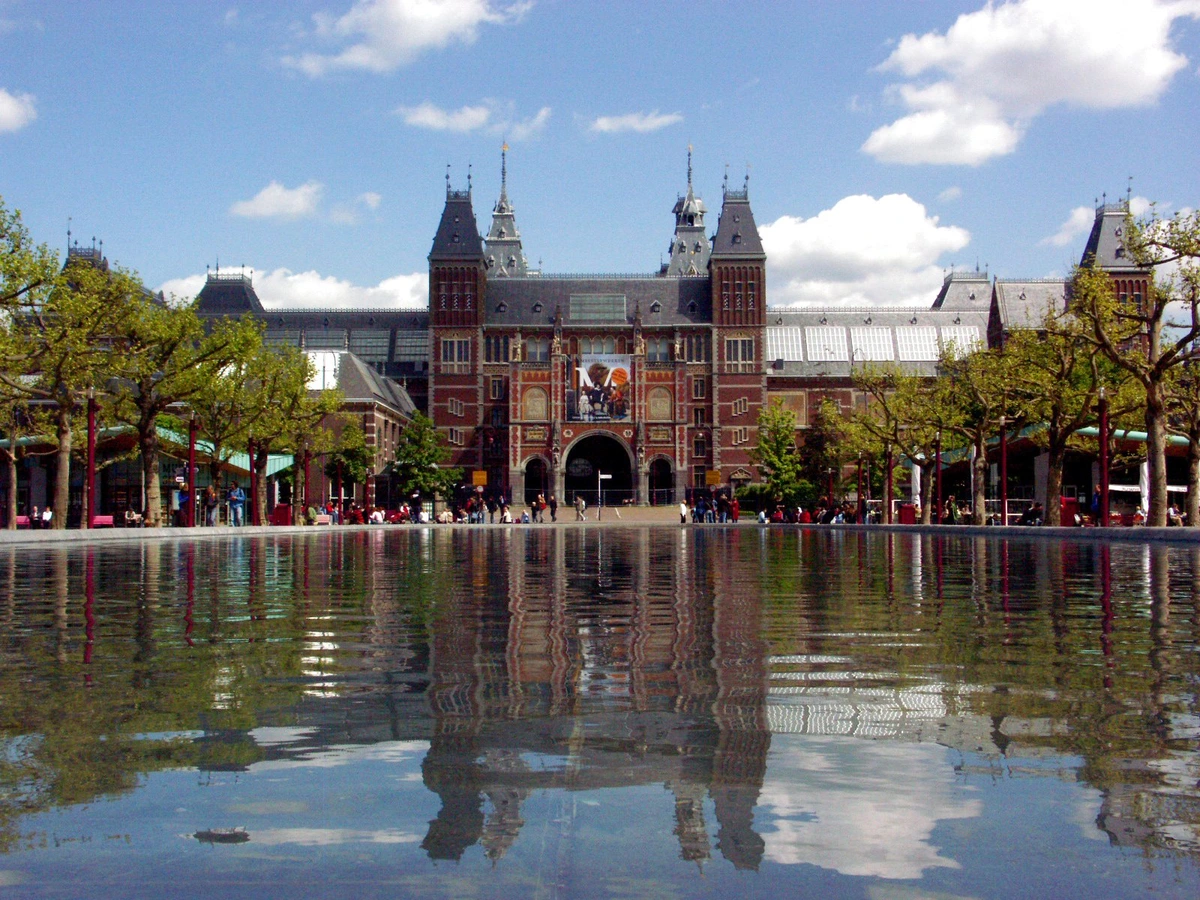
A: They are spread across the world's best museums. The largest single collection is at the Rijksmuseum in Amsterdam. The Mauritshuis in The Hague is home to the Girl with a Pearl Earring. Other works are in the Louvre (Paris), the National Gallery (London), and the Metropolitan Museum of Art (New York), among others. It’s quite a journey to see them all, but always worth it, especially if you're keen to experience his unique light in person. Each visit feels like a pilgrimage to a world of quiet contemplation.
Q: Did Vermeer have patrons?
A: Yes, it's believed Vermeer relied heavily on a small circle of dedicated patrons, rather than selling his works on the volatile open market, which was a common practice for artists with slow production rates. His most significant patron was likely Pieter van Ruijven, a wealthy Delft citizen, who acquired a substantial number of his paintings, perhaps as many as half of Vermeer's known oeuvre. After Van Ruijven's death, his daughter Magdalena van Ruijven and her husband Jacob Dissius inherited this collection, which was later auctioned off in 1696, further cementing the family's importance in Vermeer's artistic survival. His mother-in-law, Maria Thins, also seems to have been a significant supporter, potentially accepting paintings as collateral for debts, or even purchasing them outright. These intimate patron relationships were crucial for an artist with such a slow output, providing the financial stability (however precarious) needed for his meticulous process. It speaks to the personal connections that often underpinned artistic careers in that era, far removed from today's mass markets.
Q: What is Delftware?
A: Delftware refers to the highly distinctive blue and white pottery and ceramics produced in Delft, Netherlands, during the Dutch Golden Age. It was immensely popular, mimicking the prized Chinese porcelain imported by the Dutch East India Company, but developed with a unique Dutch aesthetic. Vermeer subtly included Delftware objects in several of his paintings, such as the earthenware jug in The Milkmaid, further rooting his scenes in the material culture of his hometown.
Q: Did Vermeer use a camera obscura?
A: While there's no written proof, the visual evidence in his paintings—like the unique perspective, depth of field, and light effects—is very strong. Most art historians now believe he used it as a tool to help his composition and study of light. It would have been a cutting-edge piece of technology in his time, a testament to his innovative approach to art. It doesn't diminish his genius; rather, it highlights his ingenuity in utilizing available tools to achieve his vision. It's a testament to the idea that true creativity often involves leveraging the best available tools, no matter how humble they may seem.

Q: What was Vermeer's preferred medium?
A: Johannes Vermeer almost exclusively worked in oil on canvas. This medium allowed him to achieve the rich, luminous colors and subtle gradations of light and shadow that are so characteristic of his style. The slow drying time of oils also suited his meticulous, layered approach, allowing for those exquisite translucent glazes.
Q: What is the significance of music in Vermeer's paintings?
A: Music is a recurring theme in many of Vermeer's genre scenes, often symbolizing harmony, love, or the fleeting pleasures of earthly life. Instruments like lutes, virginals, and guitars frequently appear, and they can also allude to courtship and social interaction within the domestic sphere. For me, it speaks to the hidden narratives and emotional undercurrents he so masterfully captured. It adds another layer of sensory experience to his visually rich canvases. It's a quiet melody underpinning his visual symphony.
Q: What materials did Vermeer use besides paint?
A: Beyond his exquisite oil paints, Vermeer meticulously rendered various materials in his paintings, including textiles (like Turkish carpets and satin fabrics), glass, ceramics (Delftware), metals (silver jugs, brass lanterns), and maps. His ability to capture the unique sheen, texture, and light reflection of each material is a hallmark of his realism and attention to detail. He truly was a master of rendering the material world, making everyday objects feel tangible and alive. It's almost like he was cataloging the beauty of his immediate surroundings, one texture at a time.
Q: How did Vermeer sign his paintings?
A: Vermeer's signatures were often subtle and varied, sometimes using his initials "IVM" (I.V.Meer) or his full name "I. Ver-Meer" or "I. Vermeer". He didn't always sign every work, and when he did, it was usually in a discreet location, often integrated into the painting's composition, like on a wall or a piece of furniture. It's another small detail that reflects his understated approach to his craft.






A Final Thought on Stillness: Why Vermeer Still Speaks to Us Across Centuries
It’s a challenge to seek out the subtle, the profound, and the beautifully quiet in our own loud lives, and a gift I try to share through my own abstract art, inviting viewers to find their own moments of stillness and connection.
In a world that feels like it’s constantly screaming for our attention, demanding instant gratification and flashy spectacle, Vermeer’s art is a profound antidote. It teaches us to look closely, to appreciate the quiet moments, and to find transcendent beauty in the everyday. He was a man who painted not grand events or tumultuous dramas, but the serene spaces in between, the hushed interiors, and the intimate gestures. He painted stillness itself, capturing the profound weight and luminous beauty of a single, undisturbed moment. And that, I think, is precisely why we still need him so desperately. His work is a powerful, timeless reminder to slow down, to look out the window, to truly see the world around us, and to just appreciate the light – to find the extraordinary in the seemingly ordinary. It's a lesson you can see reflected in my own artistic timeline and my attempts to capture similar moments of quiet beauty in Den Bosch, which you can see at the Den Bosch Museum. Perhaps we all, in our own way, can strive to find our inner Vermeer, and in doing so, discover a deeper appreciation for the quiet masterpieces of our own lives. His legacy, for me, isn't just about art history; it's about a way of seeing and being in the world. It's about finding the universal in the particular, the eternal in the fleeting moment. It's about a quiet revolution in perception, one that continues to unfold with every viewer who stands before his luminous canvases. And perhaps, that's the greatest gift an artist can leave behind: a new way for us all to see. And that, I think, is truly a gift.