What is Post-Impressionism? A Guide For Curious Minds
Tired of blurry definitions? Dive into what Post-Impressionism really is—a vibrant rebellion against Impressionism, led by icons like Van Gogh and Cézanne.

Post-Impressionism: The Definitive Guide to a Revolutionary Art Movement – Unlocking the Soul of Modern Art
I’ll be honest with you. For a long time, I thought Post-Impressionism was just... Impressionism 2.0. You know, the sequel. A bit more intense, maybe, but basically the same family. It’s a common mistake, and if you’re in that boat, welcome. Let’s get it sorted, because honestly, it's so much more than a mere follow-up. This isn't just another art history chapter; it's the very crucible where the foundations of modern art were forged, a period brimming with audacious individual visions that dared to challenge the status quo. It's the moment art decided to get deeply personal, deeply structural, and utterly wild—a pivotal bridge from mere observation to pure, unadulterated artistic vision. It's a period that didn't just tweak the rules; it rewrote the entire playbook, setting the stage for virtually all modern art that followed. If you've ever felt that art should be more than just a pretty picture, that it should delve into the soul, the mind, or the very structure of reality, then Post-Impressionism is where that journey truly begins. This isn't just an art history lesson; it's an invitation to understand the very roots of subjective expression and intellectual inquiry in visual art, and to see how profoundly artists wrestled with their inner worlds to forge a new visual language. Prepare to have your perceptions challenged, because this movement, or rather, constellation of individual geniuses, truly changed everything, opening up a universe of possibilities for artistic expression and forever altering the dialogue between artist, canvas, and viewer.
The name itself is a bit lazy, isn’t it? “Post-Impressionism” just means “after Impressionism.” It was coined by the insightful (and perhaps a touch uninspired, if we’re being honest) art critic, Roger Fry, for an exhibition in London in 1910. He probably just needed a catchy title, right? But here’s the kicker: this was, crucially, long after the key players were doing their thing, giving it more of a retrospective label than a self-proclaimed manifesto. Fry himself, when curating the exhibition 'Manet and the Post-Impressionists', initially struggled to find a fitting descriptor for such a diverse group, settling on "Post-Impressionism" as a temporal rather than stylistic classification, a convenient but perhaps somewhat reductive label for such a complex period. It was, in essence, a recognition of a profound shift, even if the label felt like a temporary placeholder. It’s less of a unified art movement and more of a convenient umbrella term slapped onto a group of brilliant, rebellious artists who saw Impressionism, appreciated its innovations in light and color, but then often smashed the rest to pieces—or at least carefully deconstructed it—to build something profoundly new. For me, this period always feels like artists collectively taking a deep breath and saying, 'Okay, that was fun, but what now? We need something more… substantial.' This wasn't just a stylistic evolution; it was a profound intellectual and emotional reckoning with the very purpose of art, occurring amidst rapid industrialization, scientific discovery, and social upheaval that demanded new forms of expression. It was a fin-de-siècle explosion of individual vision, where artists wrestled with the complexities of a rapidly changing world, seeking profound personal and universal truths. It’s worth noting that the artists themselves never gathered under this banner; they were fiercely independent, often working in isolation, driven by their own unique visions—a testament to the intensely personal nature of this artistic revolution. They were a diverse chorus, each singing their own defiant tune, yet all contributing to a new symphony of art.
It’s like art history having a lively conversation with itself. Impressionism asked, "What do I see right now?" And Post-Impressionism replied, "Okay, but what do I feel about it, what do I know about it, and how can I express its essence?" This subtle but seismic shift is what makes the period so endlessly fascinating, laying down the core tenets for the artistic revolutions of the next century. It's the moment the artist's inner world truly began to assert its dominance over external observation, transforming art from a window onto the world into a mirror reflecting the soul.
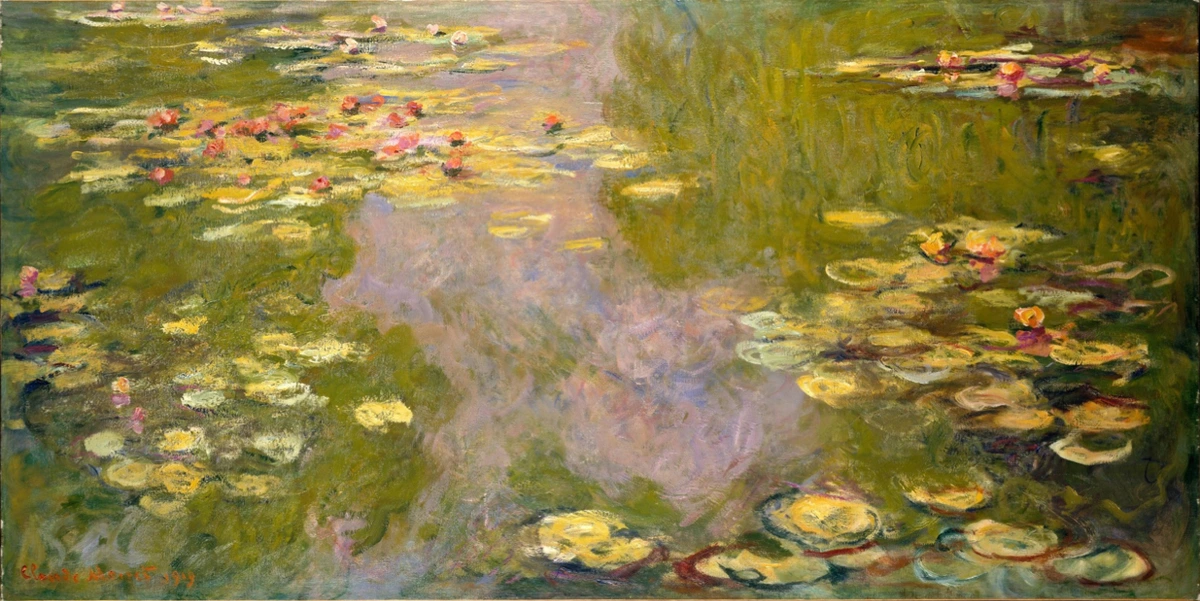
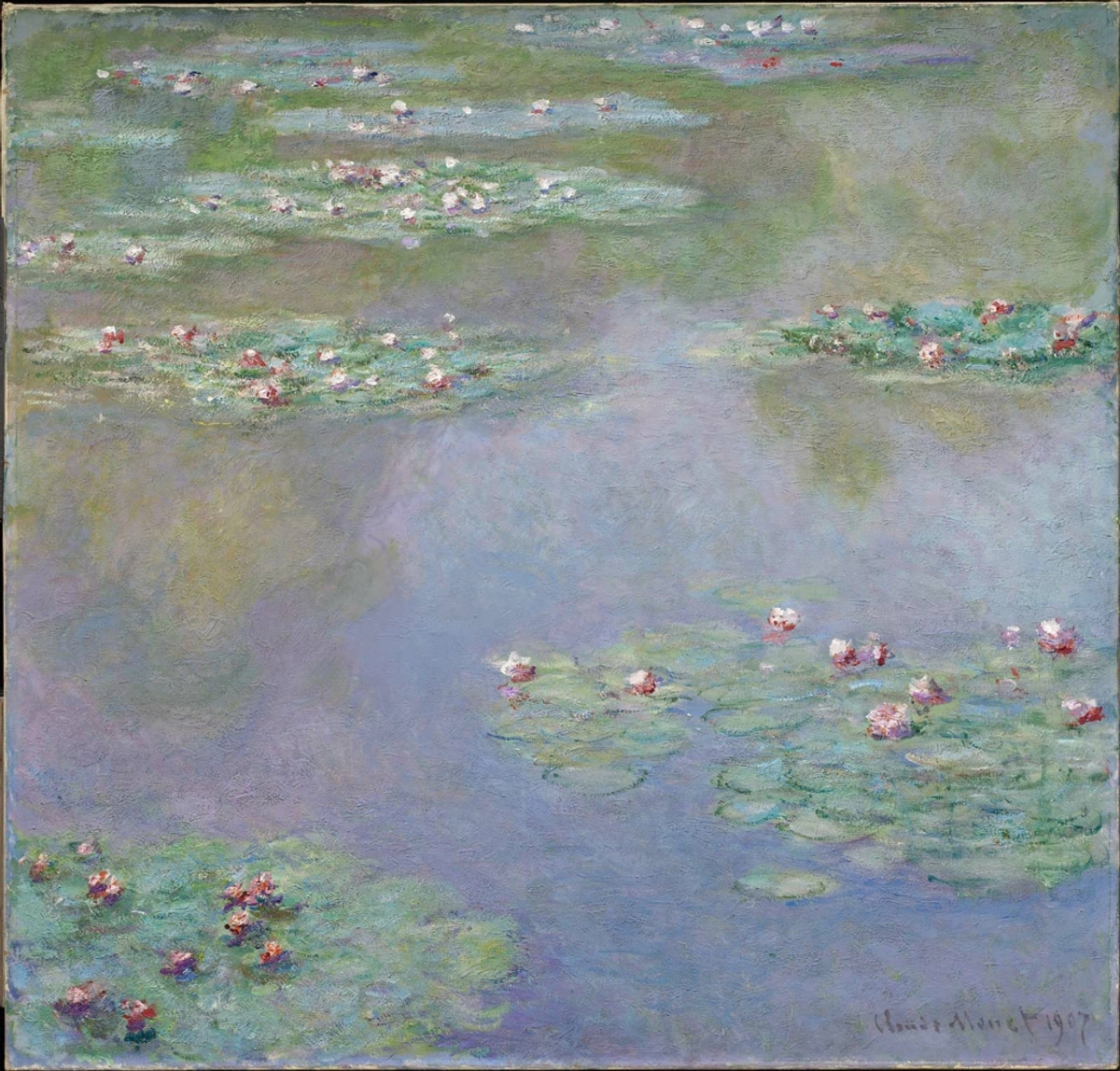
Imagine Impressionism as a stunning, sun-drenched photograph of a fleeting moment—the dappled light on a lily pond, the blurred rush of a city street, or the transient sparkle of a Parisian afternoon. It's all about capturing the ephemeral, the momentary perception. The Post-Impressionists, however, looked at that beautiful photo and collectively (though never in the same room) said, “That’s nice, really lovely, but what about how the lake feels? What about the solid, unchanging, almost eternal structure of those trees? What if the colors reflected the deepest stirrings of my soul, or my intellectual understanding of the world, instead of just the literal appearance of the sky?” It was a profound shift, almost a rebellion against superficiality, a yearning to move beyond mere optics. They weren't just seeking to record the world; they aimed to interpret and transform it, revealing deeper truths about human experience and the very nature of perception. This internal drive led to an explosion of individual styles, each seeking a different kind of truth and forging a new path for art.
It’s like they were saying, 'The camera can give us the surface, but art must give us the soul.' This distinction is crucial to understanding their revolutionary spirit.
This Impressionist scene, with its focus on fleeting light and outdoor observation, perfectly illustrates the starting point for the Post-Impressionist dialogue. It’s what they built upon, and often, what they pushed back against. They understood Impressionism's mastery of light and color, but yearned for something beyond the transient, a way to imbue art with lasting meaning, a soul, a deeper resonance that reflected the profound changes sweeping their world. This intellectual and emotional pushback was the engine of their innovation, driving them to find new artistic languages to express a deeper reality.
That’s the essential jump, the moment when artists started asking, 'What if art could be more than just a pretty picture?' They weren't just content painting what they saw; they were painting what they felt, what they thought, what they knew, and what they dreamed. It was a conscious push towards expressing a deeper, more personal reality, often imbued with potent symbolism and intense emotional resonance. It's a journey from the eye to the mind and heart – a fascinating exploration of inner landscapes as much as outer ones. To me, it feels like the birth of artistic introspection on a grand scale, a radical departure that allowed art to tackle the complexities of the human condition with unprecedented depth, foreshadowing the psychological intensity of the 20th century. This profound shift is what truly transformed art from mere representation to a powerful tool for self-discovery and universal inquiry.
The Seedbed of Change: Precursors & Immediate Context
Before we dive into the broader historical currents, it's worth considering the immediate artistic environment that bred Post-Impressionism. While Impressionism had revolutionized how artists saw and rendered light and color, by the 1880s, many felt it had run its course. It was perceived by some as lacking intellectual depth, emotional resonance, or a sense of enduring form. There was a sense that the fleeting, momentary capture of light, while beautiful, sometimes lacked the weight and meaning necessary to grapple with the profound changes of the era. Artists like Gustave Moreau, a Symbolist painter, and even certain aspects of Academic art (despite the rebellion against it) indirectly influenced the Post-Impressionists by reminding them of the power of narrative, symbolism, and a more structured approach to composition. The growing interest in non-Western art, particularly the flattened perspectives and bold outlines of Japanese Ukiyo-e prints, also served as a critical counterpoint to Western illusionism, offering new visual languages to explore. The stage was set for a reaction, a yearning for something more substantial and profoundly personal.
The Broader Canvas: Historical & Cultural Context
To truly appreciate the seismic shift Post-Impressionism represented, we need to zoom out a bit and look at the world around these artists. The late 19th century was a period of immense upheaval and rapid change, often referred to as the fin-de-siècle (end of the century). The Industrial Revolution was in full swing, leading to burgeoning cities, new technologies, and profound social restructuring. Darwin's theories had challenged traditional religious beliefs, psychology was emerging as a new field of study (think Freud's burgeoning ideas on the subconscious), and philosophers like Nietzsche were questioning established moral frameworks, speaking of the "death of God" and the will to power. It was a time of intense questioning, of seeking deeper meaning beyond the surface—a feeling of existential searching that permeated intellectual and artistic circles, giving rise to movements like Symbolist literature and philosophy. Authors like Stéphane Mallarmé and Charles Baudelaire used evocative language to suggest rather than state, mirroring the artists' quest for deeper meanings. Even the burgeoning medium of photography, with its uncanny ability to objectively capture reality, forced painters to reconsider their unique role, pushing them towards areas photography couldn't reach – the internal, the imagined, the symbolic. For a fascinating dive into how art delves into these deeper meanings, explore Symbolism in mystical, poetic art.
This backdrop of societal flux directly informed the artistic discontent. Impressionism, for all its revolutionary light and color, was seen by many of these younger artists as too focused on the transient, the superficial, and the purely visual. They craved something more enduring, more emotionally resonant, and more intellectually challenging to grapple with the complexities of modern existence. They looked to the past for timeless forms, to non-Western art (especially Japanese woodblock prints and African sculpture) for spiritual authenticity, and within themselves for subjective truths. The influx of Japanese woodblock prints, for instance, with their flattened planes, strong outlines, and decorative patterns, profoundly influenced artists like Gauguin and Toulouse-Lautrec, offering a visual vocabulary distinct from Western illusionism. You can learn more about this profound influence in the enduring legacy of Ukiyo-e. Beyond this, new scientific understandings of light and color, particularly those by Hermann von Helmholtz and James Clerk Maxwell, pushed artists like Seurat to approach color mixing with unprecedented rigor and analysis, seeking not just optical truth but scientific precision. This fertile ground of intellectual and cultural cross-pollination also fostered the rise of Art Nouveau, a movement focused on decorative arts and organic forms that, like Post-Impressionism, sought a new aesthetic for a new century, often drawing on similar influences. This period wasn't just about painting; it was about defining what it meant to be human and an artist in a rapidly modernizing world, pushing the boundaries of what art could express, leading directly to movements like ultimate guide to Art Nouveau movement.
To understand this transition more deeply, consider the quintessential Impressionist, Claude Monet, shown here in a portrait. His quest for capturing light was almost scientific, a relentless pursuit to record the fleeting sensations of color and atmosphere as they appeared to the eye. He was a master of optical reality. For a broader perspective on this foundational movement, you might find a general overview of Impressionism illuminating. (I'm still putting together my definitive guide on Impressionism, but it's coming! In the meantime, you can explore the ultimate guide to Claude Monet to appreciate his singular vision). Monet's meticulous observation of light and its effects was a crucial stepping stone, but the Post-Impressionists yearned for something beyond that purely visual truth.

This transition, from the objective observation of a Monet to the subjective interpretations of Post-Impressionists, marks a critical pivot in art history. It's where the external gaze meets the internal landscape. It’s also a perfect segue into understanding the very heart of Post-Impressionism: its core tenets.
Core Tenets: Key Characteristics and Underlying Philosophies
So, if Post-Impressionism isn’t one unified style—and believe me, it absolutely isn't, which is part of its endless fascination—what are the common threads that bind these wildly divergent artists? It’s really about a shared, profound desire to move beyond what they perceived as the limitations and perhaps even the superficiality of Impressionism. They wanted art to be more substantial, more enduring, more expressive, and more intellectually rigorous. They were seeking something more, something that resonated with the emotional and intellectual complexities of the burgeoning modern world, a true quest for authenticity in a rapidly changing landscape. This quest was often fueled by a desire to explore the deeper psychological and symbolic dimensions of human experience, moving art closer to philosophy and introspection. These artists, despite their varied approaches, were united by a collective dissatisfaction with purely optical realism and a yearning to imbue their work with deeper meaning, whether through emotion, intellect, or spiritual inquiry.
Here’s a breakdown of the core ideas that set them apart:
Characteristic  | Impressionist Approach | Post-Impressionist Approach |
|---|---|---|
| Characteristic | Impressionist Approach | Post-Impressionist Approach |
| --- | --- | --- |
| Emotion & Expression | Objective observation of the external world; focused on fleeting sensory impressions, often joyful or serene, emphasizing the transient beauty of a moment. | Deeply subjective, personal, and emotional expression; reflection of inner states, psychological truths, and symbolic meanings, often intense, melancholic, or spiritually charged. Artists sought to convey their inner vision, moving beyond mere visual depiction to infuse their works with profound emotional and psychological depth. |
| Color Usage | Used naturalistically to depict the effects of light, shadow, and atmosphere as perceived by the eye; aimed for optical truth. | Used arbitrarily, symbolically, and expressively to convey mood, meaning, or structural principles, rather than strict realism. Color could be heightened, flattened, clashing, or used to build form and evoke specific feelings, often acting as a direct conduit for emotion. Learn more about this in the psychology of color in abstract art or explore how artists use color. |
| Form & Structure | Often dissolved forms and outlines in favor of capturing light and atmospheric effects; soft edges and blurred contours, emphasizing the ephemeral nature of perception. | Emphasized clear, solid forms, strong contours, and robust, often geometric, compositions; sought underlying order, permanence, and volume, moving towards a more tactile and constructed reality, challenging the transient nature of Impressionist forms. |
| Subject Matter | Scenes of modern, everyday life; urban landscapes, leisure activities, portraits; focused on the 'here and now' and the fleeting beauty of the contemporary world. | Often imbued with symbolism, memories, dreams, deeper philosophical meaning, and a search for the 'primitive' or essential; moved beyond mere depiction to psychological narrative, spiritual inquiry, or social commentary, transforming the mundane into the profound. |
| Brushwork | Loose, spontaneous, broken brushstrokes to capture fleeting light and movement, creating a vibrant, immediate surface. | Varied widely, from Van Gogh's thick, agitated impasto to Seurat's precise dots (Divisionism), or Gauguin's broad, flat strokes, but always deliberate and integral to the meaning and structure of the artwork, acting as an expressive tool to build form or convey emotion. |
| Space & Perspective | Traditional, though sometimes softened, perspective, aiming for optical realism and a sense of immediate depth. | Experimentation with multiple viewpoints (Cézanne), flattened planes (Gauguin), or structured depth (Seurat), challenging traditional illusionism and deliberately embracing the two-dimensionality of the canvas, pushing towards a new spatial language and a subjective interpretation of reality. For more, see definitive guide to perspective in art. |
| Role of Line | Often dissolved or implied through color and light; less emphasis on defined contours, allowing forms to merge. | Strong, deliberate outlines often used to define forms, separate color areas, and add expressive power (especially in Gauguin and Toulouse-Lautrec), creating a sense of clarity and symbolic weight, often acting as a barrier to illusionistic depth. |
They basically took the Impressionists' bright palette, their liberation of color, and their visible, dynamic brushstrokes, but then—and this is the crucial part—applied them to a whole new, often antithetical, set of rules. It was less about objective observation and more about subjective interpretation. They were synthesizing, building upon, and radically departing all at once. It was a moment of profound artistic evolution, where the familiar tools were wielded with entirely new intentions, giving birth to what we now recognize as the foundational elements of modern art. It was a deliberate move away from the purely optical toward a more conceptual and emotionally charged art, laying the groundwork for the radical shifts of the 20th century. I often think of it as artists embracing their inner philosopher, asking not just "what do I see?" but "what does this mean?" – a question that continues to echo through contemporary art studios, including my own. These profound shifts collectively represent a decisive break from artistic traditions, paving the way for the myriad stylistic and conceptual explorations of the 20th century.
## The Four Pillars of Post-Impressionism: Divergent Paths to Modernity
Okay, perhaps 'The Four Musketeers of the Apocalypse (of Impressionism)' is a bit dramatic, but it captures the revolutionary spirit, don't you think? Nevertheless, there are indeed four truly colossal figures who are universally considered the undisputed pillars of Post-Impressionism. What's truly remarkable is that they all went in wildly, almost diametrically opposed, directions from their Impressionist predecessors and from each other, yet all contributed to the explosion of modern art. Thinking about each of these artistic giants separately, understanding their unique motivations and breakthroughs, is absolutely the key to truly grasping the kaleidoscopic phenomenon that is Post-Impressionism. It's like watching four different scientists invent four different elements that together make up a brand new universe of artistic possibilities—each with their own fervent beliefs and distinct methodologies, forever reshaping the artistic landscape. To fully appreciate this groundbreaking period, we must get to know these individual titans and their radical visions.

1. Vincent van Gogh: The Maverick of Emotion
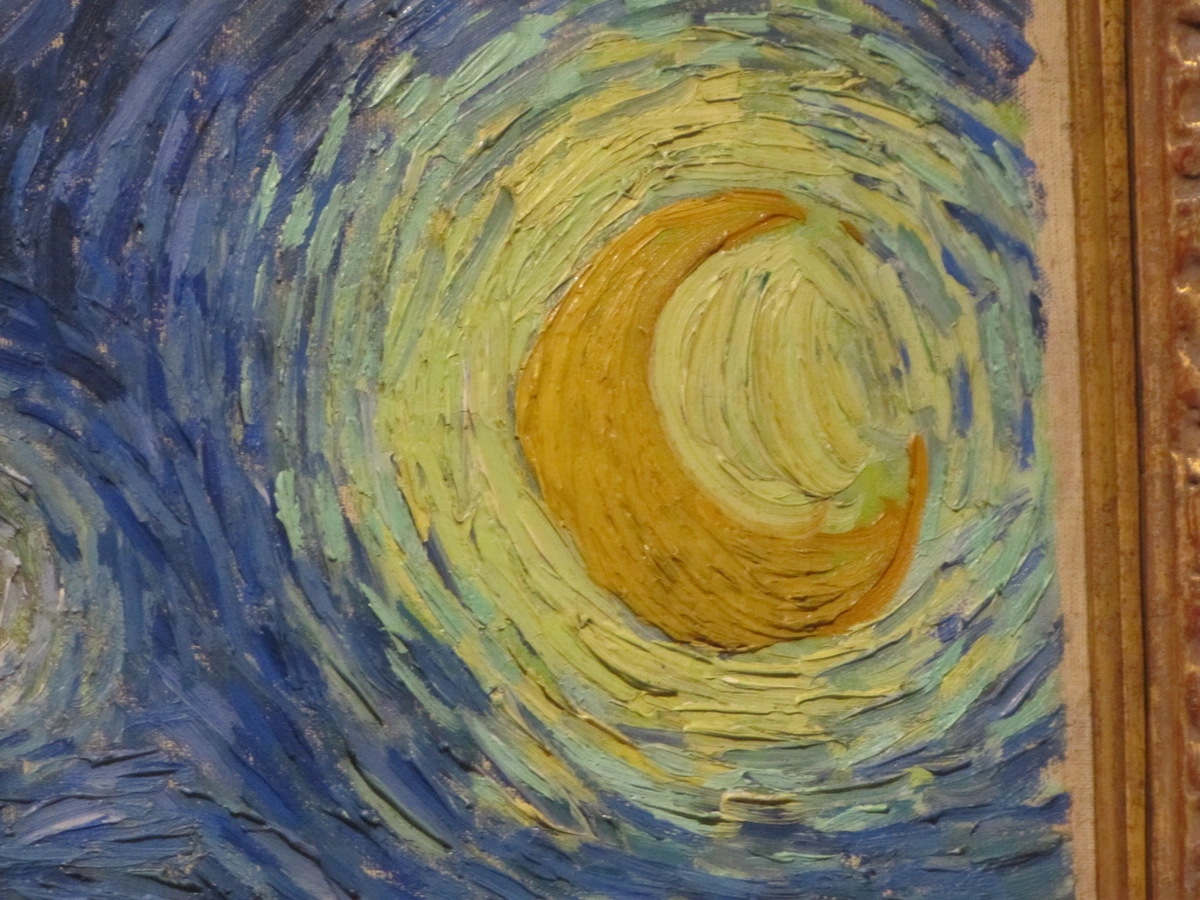
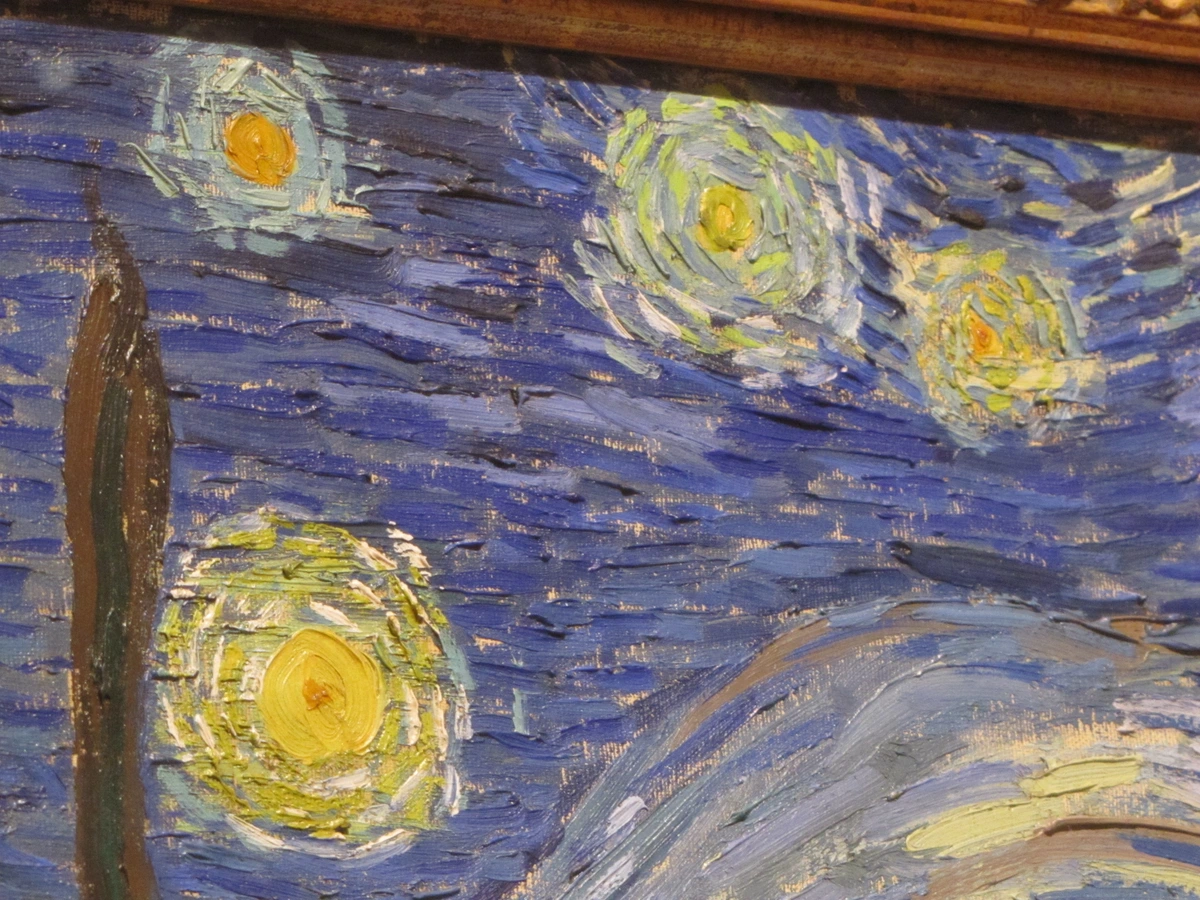
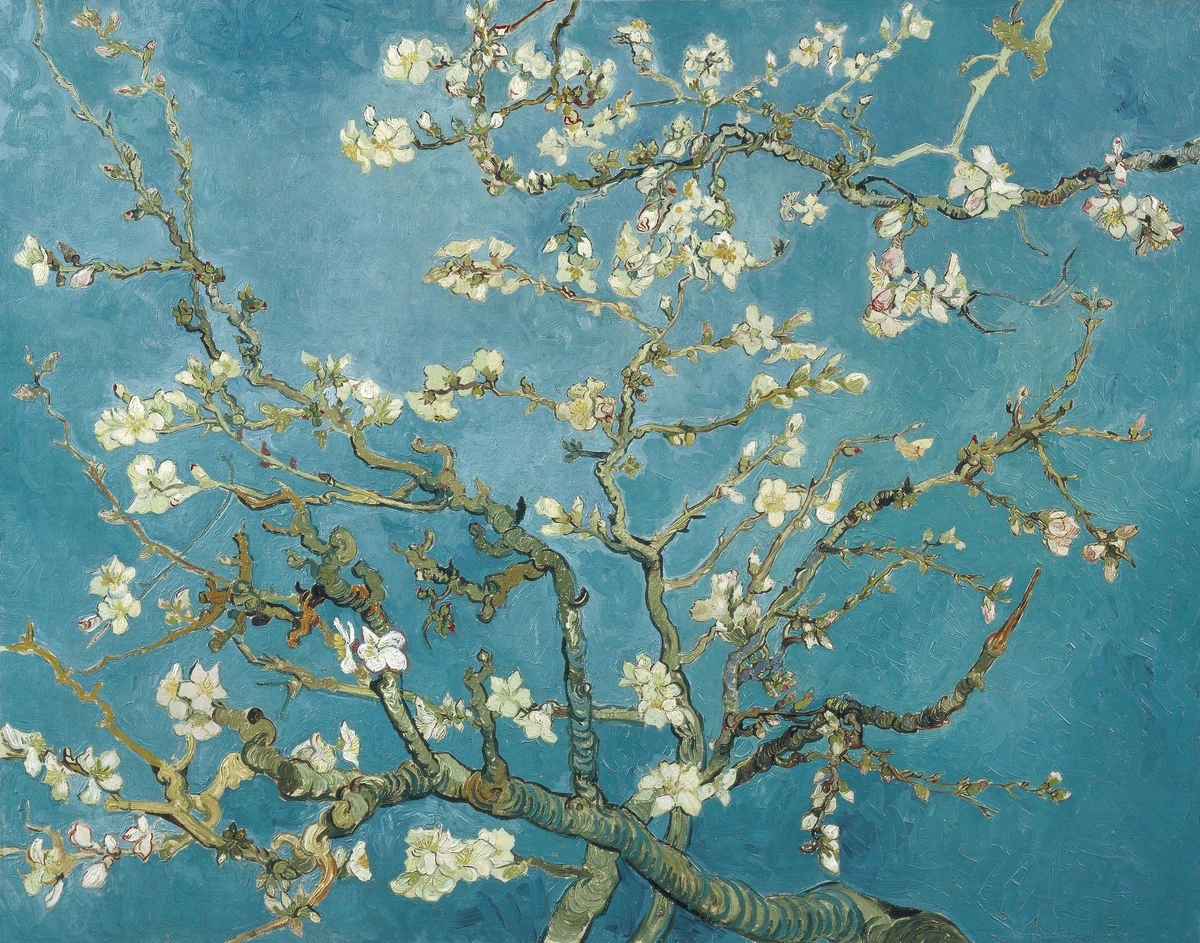
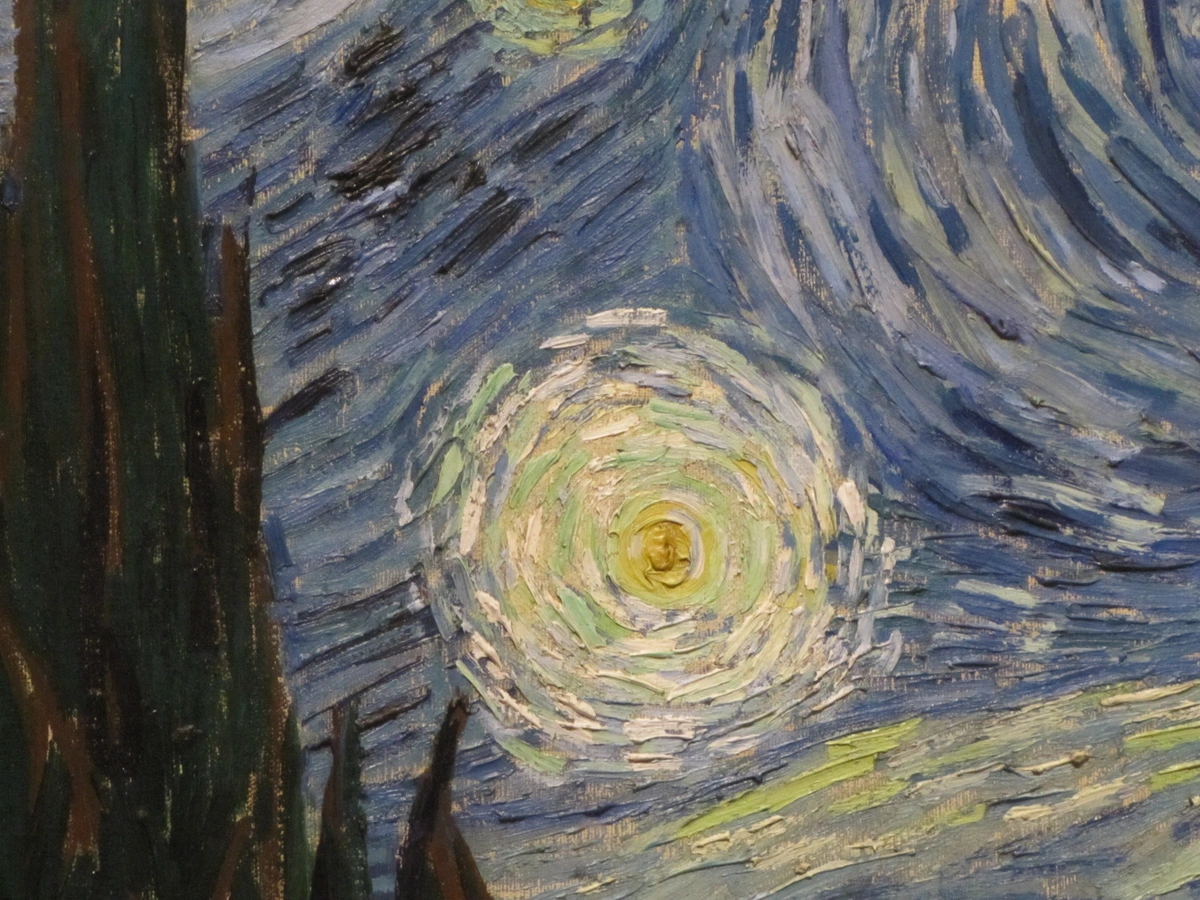
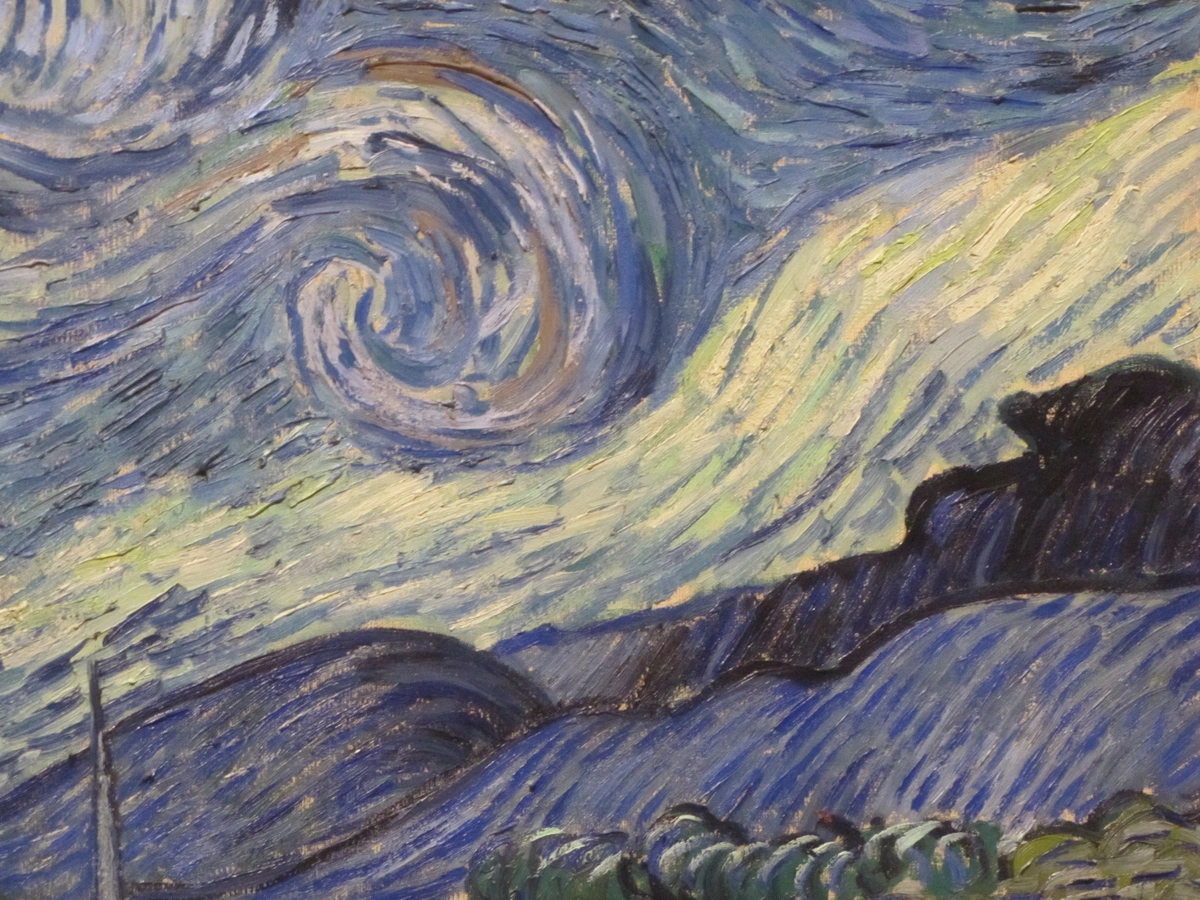
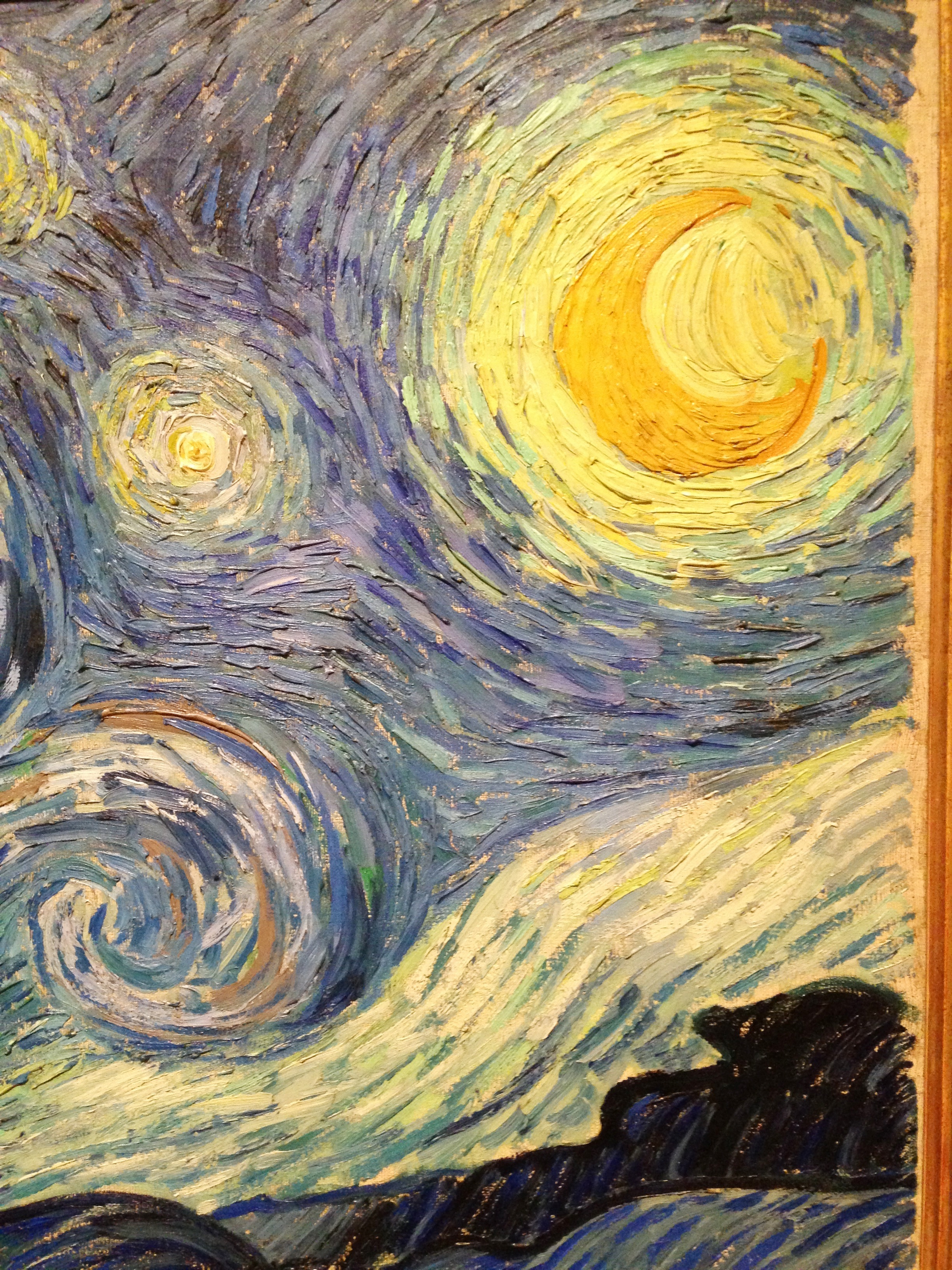
When you think of raw, untamed, almost volcanic emotion channeled through thick, swirling paint, you inevitably think of Van Gogh. I mean, who doesn't? For him, color wasn’t merely for realism or observational accuracy; it was a direct conduit for feeling, a language for the soul. The sky in The Starry Night isn’t blue and yellow because that’s what the night sky literally looked like over Saint-Rémy. No, it’s a swirling vortex of cosmic energy, a vibrant, living force, because that's precisely what he felt inside—a reflection of his tormented yet profoundly spiritual inner world. He famously used impasto—applying thick, bold layers of paint that stand out from the canvas, clearly showing the artist's vigorous brushstrokes—to give his work a tangible, almost sculptural energy, making the canvas itself pulsate with life. His canvases are a testament to how paint itself can become a visceral expression of inner turmoil and spiritual longing. If you haven't delved into the intricacies of his most famous work, check out my thoughts on what is the meaning of The Starry Night or the ultimate guide to Van Gogh.
Van Gogh's tumultuous life, particularly his intense period in Arles and Saint-Rémy-de-Provence, is inextricably linked to his explosive output. He was a deeply empathetic soul, drawn to the lives of common people, as seen in his earlier, darker work like The Potato Eaters (1885), which profoundly conveys the harsh realities of peasant life with a somber palette. But it was in the south of France that his palette erupted into dazzling, often clashing, colors to express psychological intensity rather than mere visual description. For Van Gogh, light was often a spiritual presence, an embodiment of hope or divine energy, particularly evident in his night scenes. Works like Sunflowers, Café Terrace at Night, and Self-Portrait with Bandaged Ear showcase his relentless experimentation and his unwavering belief in art as a profound personal confession. His letters to his brother Theo, a rich archive of his thoughts, reveal an artist constantly wrestling with his craft, his faith, and his mental health, often finding solace and expression in the raw power of nature and the working class. This intensity is precisely what makes his work resonate so deeply with people, even today.
His commitment to expressive color and texture was a radical departure, a bold declaration that inner vision could trump optical reality. His influence on later movements, especially Expressionism and even Neo-Expressionism, is impossible to overstate. He showed artists that the canvas could be a mirror not of the world, but of the soul, directly inspiring artists to explore their own emotional landscapes. To me, his work is a powerful reminder that true art often comes from a place of deep personal struggle and profound feeling. He took the Impressionists' liberated color and visible brushstrokes and transformed them into a vehicle for profound psychological drama, a language of pure, unadulterated emotion.
2. Paul Cézanne: The Architect of Enduring Form
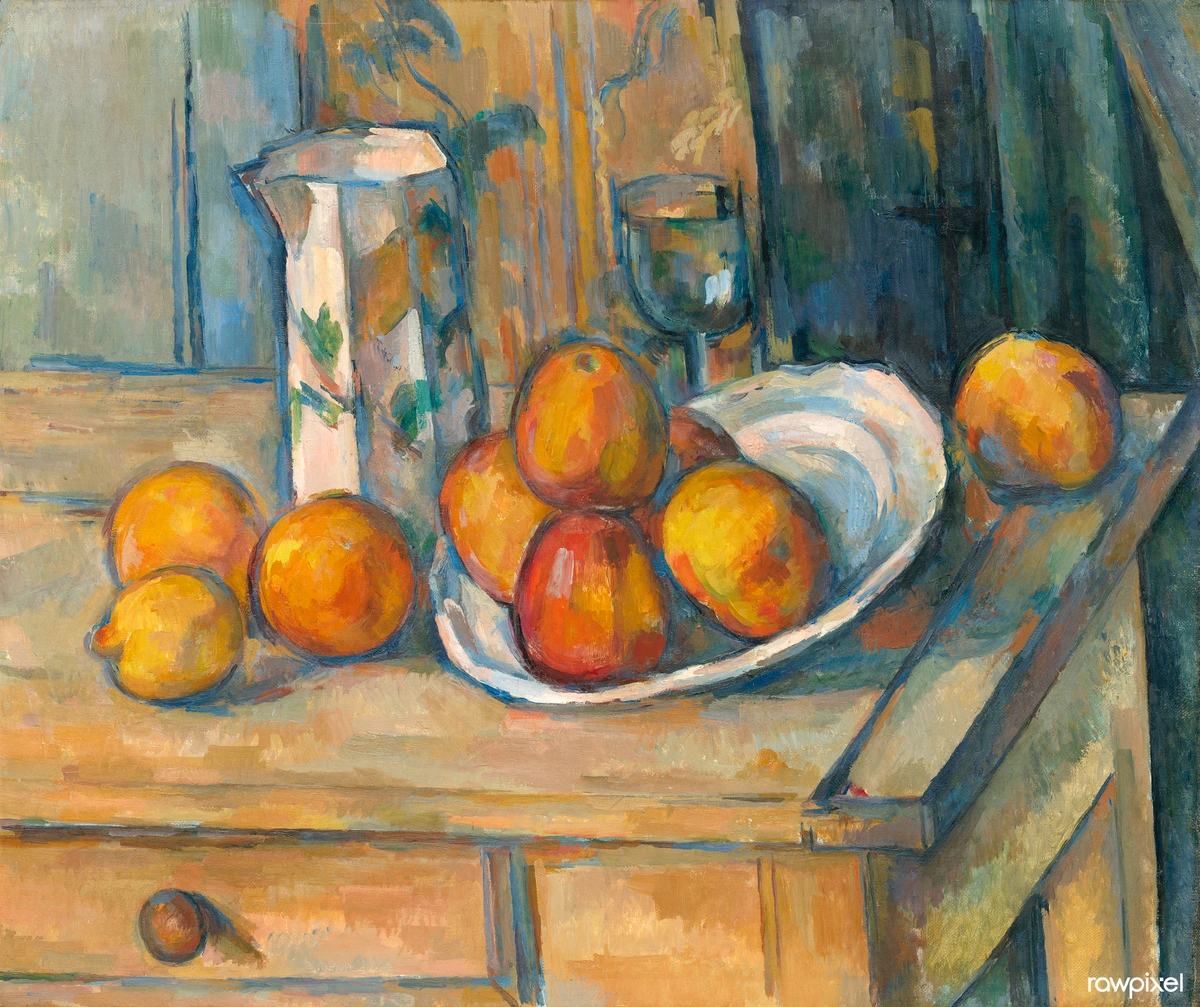
If Van Gogh was the passionate heart of Post-Impressionism, Cézanne was undoubtedly its rigorous, analytical brain. I often wonder if he ever just relaxed and painted, or if every stroke was a philosophical inquiry! He was utterly obsessed with the underlying structure of things, not just their superficial appearance. He famously declared his ambition to “treat nature by the cylinder, the sphere, the cone”—a revolutionary idea that suggested that all natural forms could be distilled into basic geometric components. This wasn't about simplifying, but about revealing an eternal, solid essence beneath the fleeting surface. He broke down objects and landscapes, not to destroy them, but to rebuild them on canvas, emphasizing volume and spatial relationships. He didn't care about capturing a fleeting moment of light; he wanted to capture the eternal, solid essence of a monumental mountain or a humble bowl of fruit.
His innovative use of multiple viewpoints within a single painting, often presenting an apple or a mountain from slightly different angles simultaneously, directly challenged traditional linear perspective. This, coupled with his development of the 'passage' technique (where edges are left open, allowing forms to bleed into each other), created a dynamic sense of depth and form that felt revolutionary. His methodical approach to seeing and reconstructing reality became the single biggest influence on the development of Cubism, literally paving the way for Picasso and Braque to shatter and reassemble the pictorial plane. His work teaches so much about understanding balance in art composition, showing how even the most radical vision needs a solid foundation. Cézanne's influence isn't just about geometry; it's about seeing the enduring truth beneath transient appearance, a quest for the permanent amidst the ephemeral. He was seeking to capture the 'bones' of reality, the essential underlying forms, rather than its superficial 'skin'—a profound shift that would echo through the entire 20th century.
His still lifes, in particular, are laboratories of form and color, where everyday objects are rendered with monumental weight and spatial ambiguity, forcing the viewer to reconsider the very act of perception. These aren't just apples and bowls; they are meditations on existence, permanence, and the act of seeing. He famously urged, "I want to astonish Paris with an apple," encapsulating his revolutionary ambition to imbue the humble still life with monumental significance and enduring form, challenging superficial appearances to reveal deeper truths about reality itself. His painstaking construction of pictorial space, often involving subtle shifts in perspective, laid the groundwork for a new understanding of how objects occupy space on a two-dimensional canvas, anticipating the radical flattening and reordering of space that would define Cubism.
3. Paul Gauguin: The Symbolist Dreamer and Escapist
Gauguin was looking for a profound escape—from the perceived spiritual emptiness of the modern world, from the stifling conventions of European society, and ultimately, from optical reality itself. I can relate to that feeling of needing to just get away and find a new truth. His quest led him far from Paris, first to Brittany (where he formed the Pont-Aven School with artists like Émile Bernard) and eventually to the vibrant, spiritual world of Tahiti. He developed a distinctive style characterized by flat planes of bold, often unrealistic color, strong outlines, and a deliberate move away from illusionistic depth. This approach, often termed Synthetism (or Cloisonnism due to the heavy outlines reminiscent of enamel work), aimed to synthesize the artist's emotional response to the subject with its formal characteristics, often simplifying forms and colors to achieve a more powerful, symbolic impact. This wasn't merely a stylistic choice; it was a philosophical statement, an assertion that the artist's inner world held as much, if not more, truth than external appearances. His paintings of Tahiti aren't merely landscapes or ethnographic studies; they are deeply spiritual, intensely symbolic, and often mysterious dreamscapes that invite contemplation, drawing on local myths and personal visions. He was far less interested in painting what was physically there and profoundly more interested in the ideas, myths, spiritual truths, and primal emotions the scene could represent. His radical departure for Tahiti, motivated by a rejection of Western materialism and a yearning for an 'authentic' life, profoundly shaped his aesthetic. His paintings of Tahiti aren't merely landscapes or ethnographic studies; they are deeply spiritual, intensely symbolic, and often mysterious dreamscapes that invite contemplation, drawing on local myths and personal visions. Works like Where Do We Come From? What Are We? Where Are We Going?, Nave Nave Mahana (Delightful Days), and The Yellow Christ powerfully encapsulate his search for primal truths and spiritual depth. He sought to tap into a more 'primitive' and authentic human experience, believing it held truths lost in the industrial West. His deliberate use of non-naturalistic color and simplified forms was a direct precursor to the explosive colors of Fauvism.
4. Georges Seurat: The Scientist of Optical Color
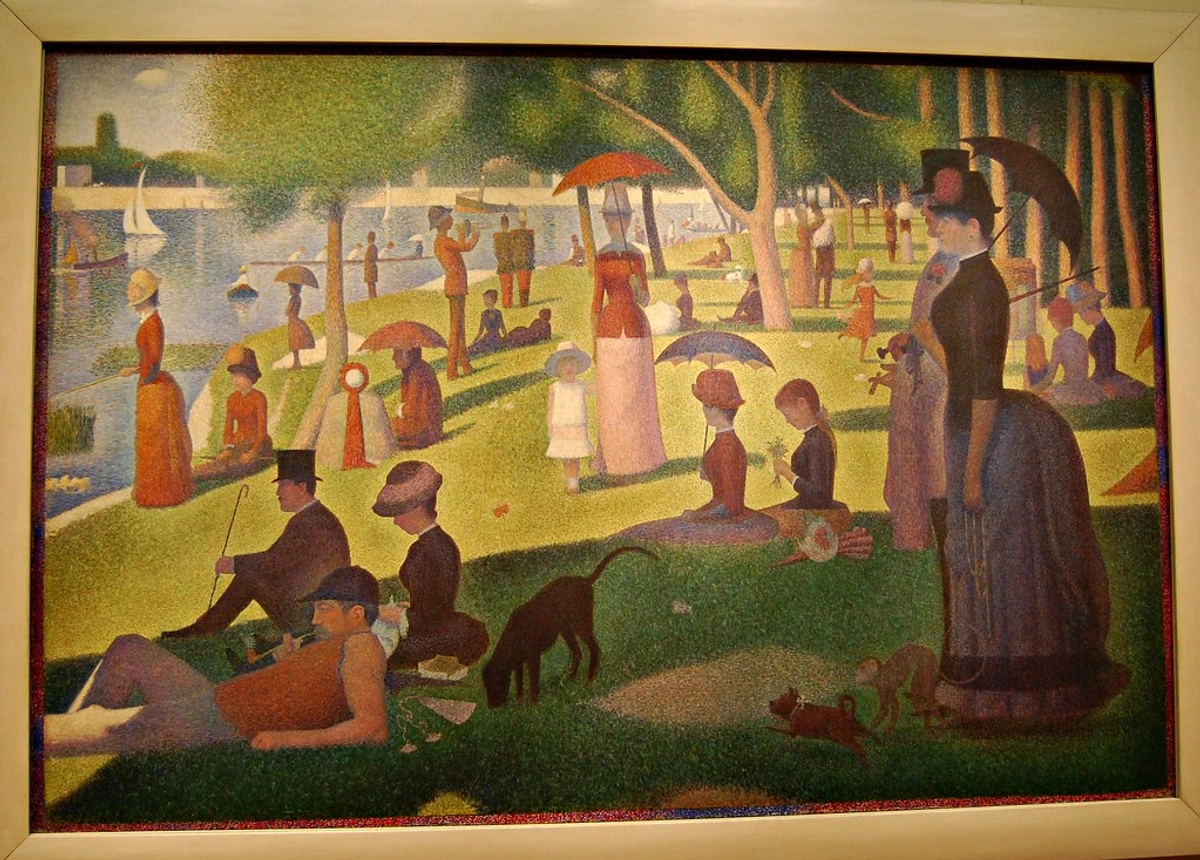
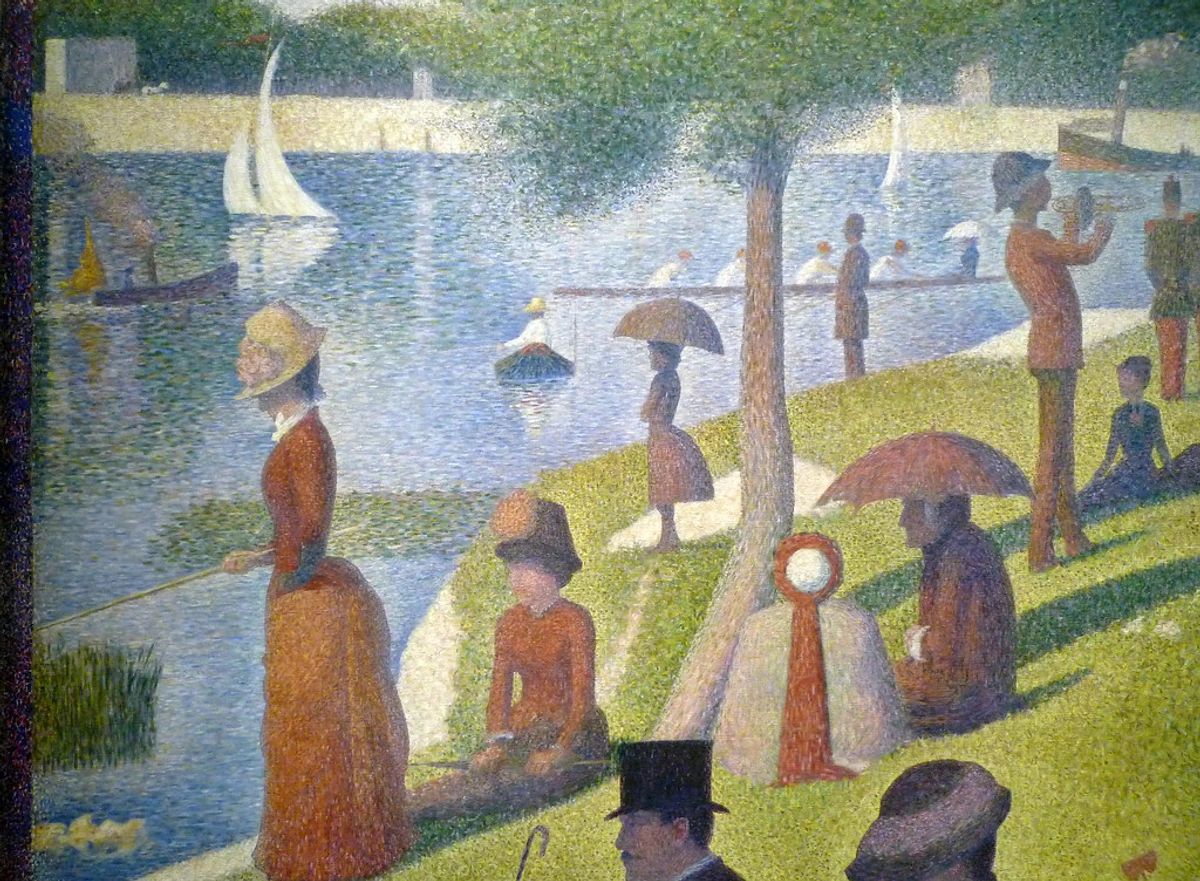
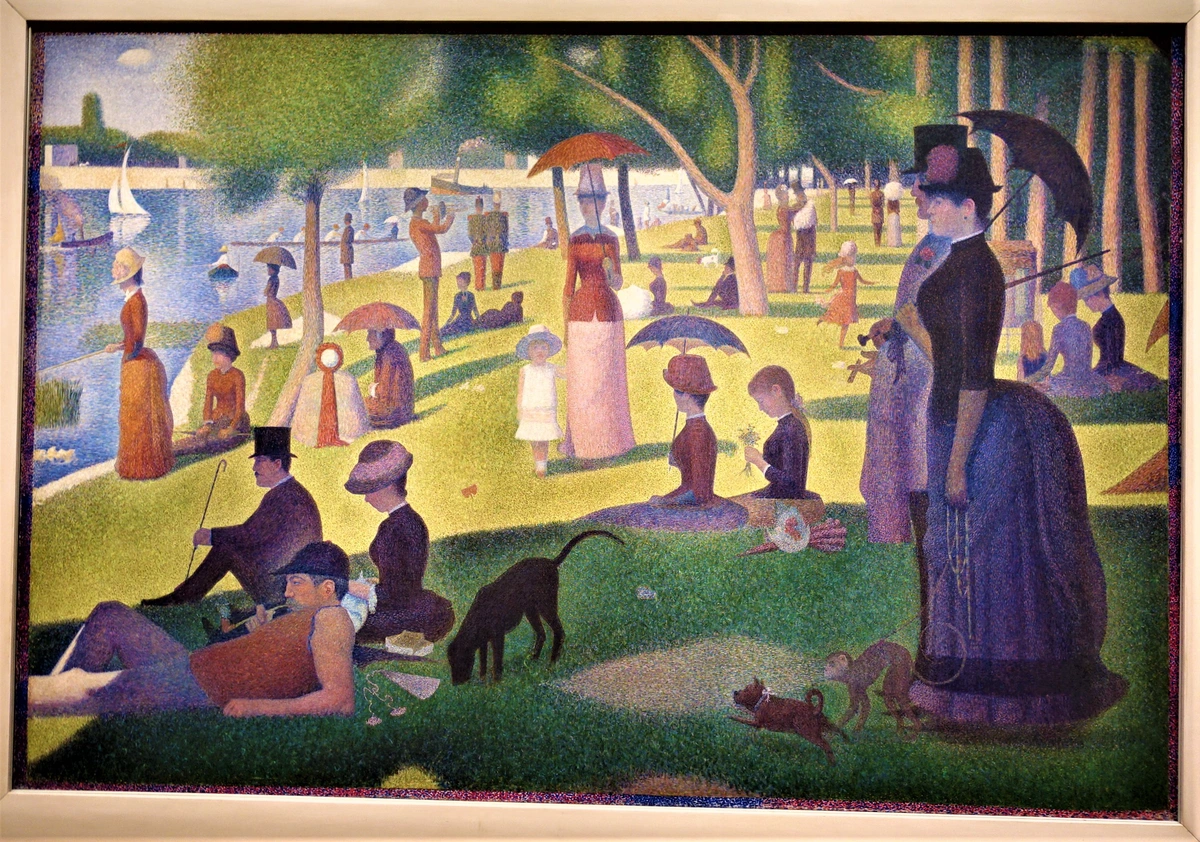
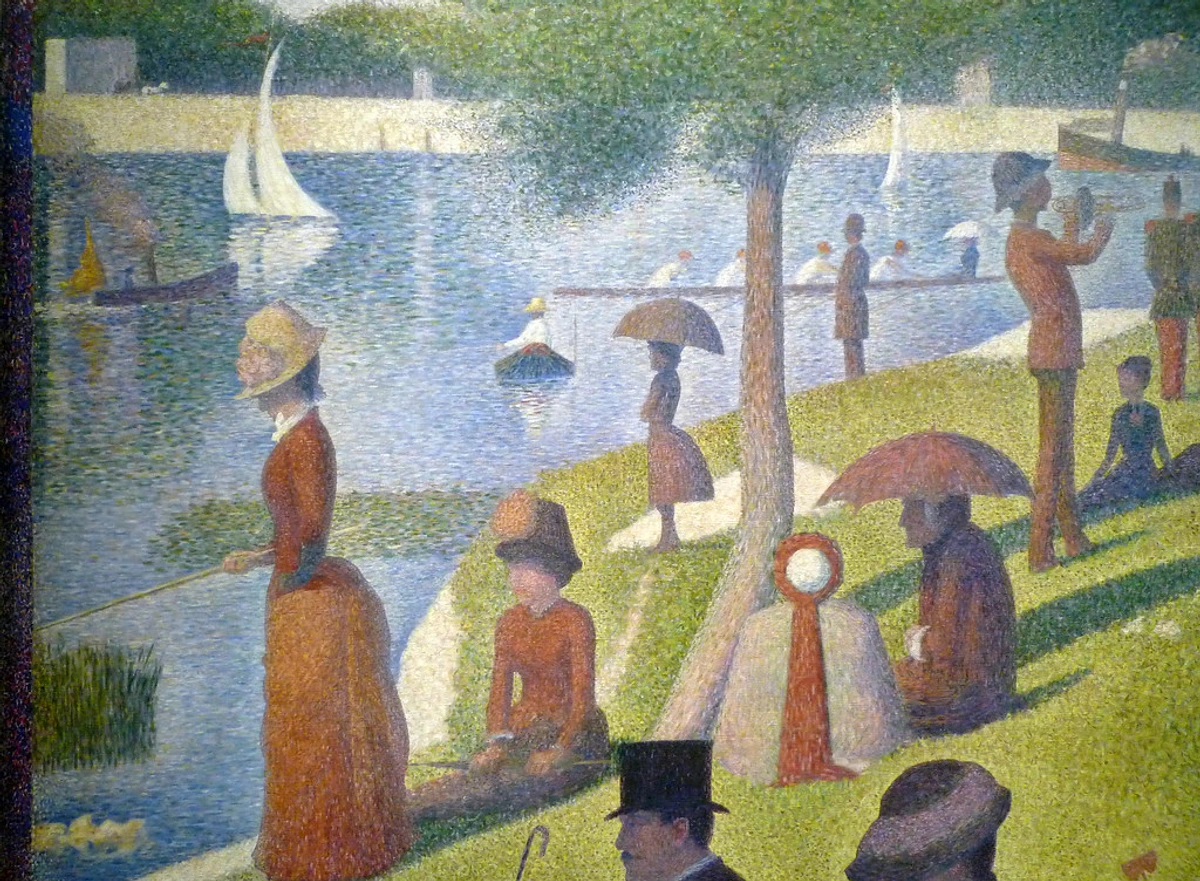
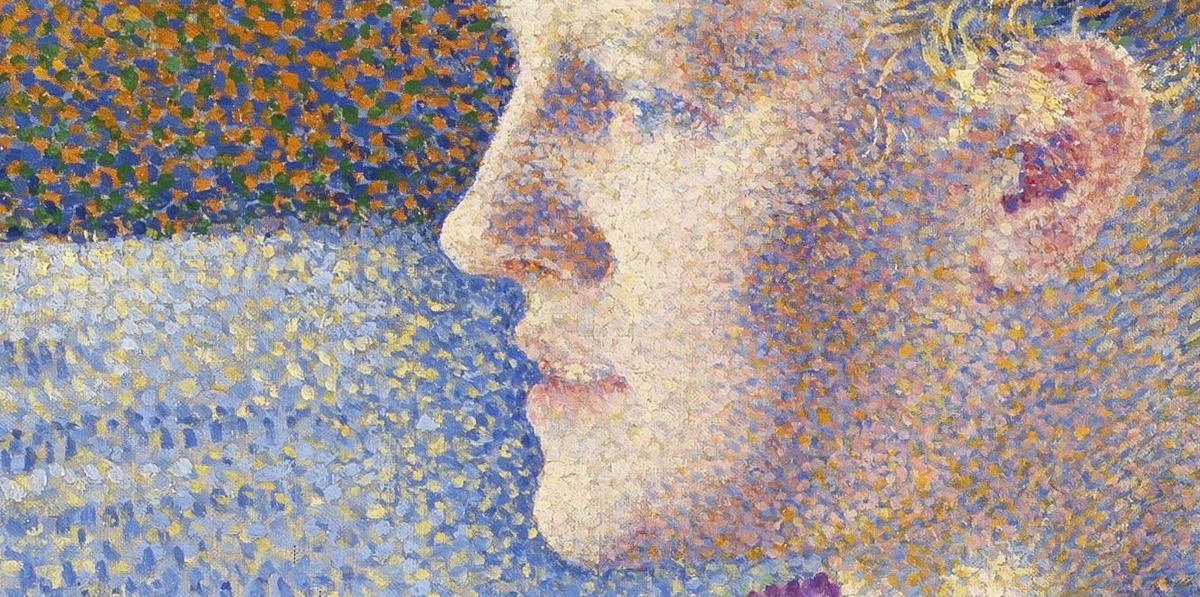
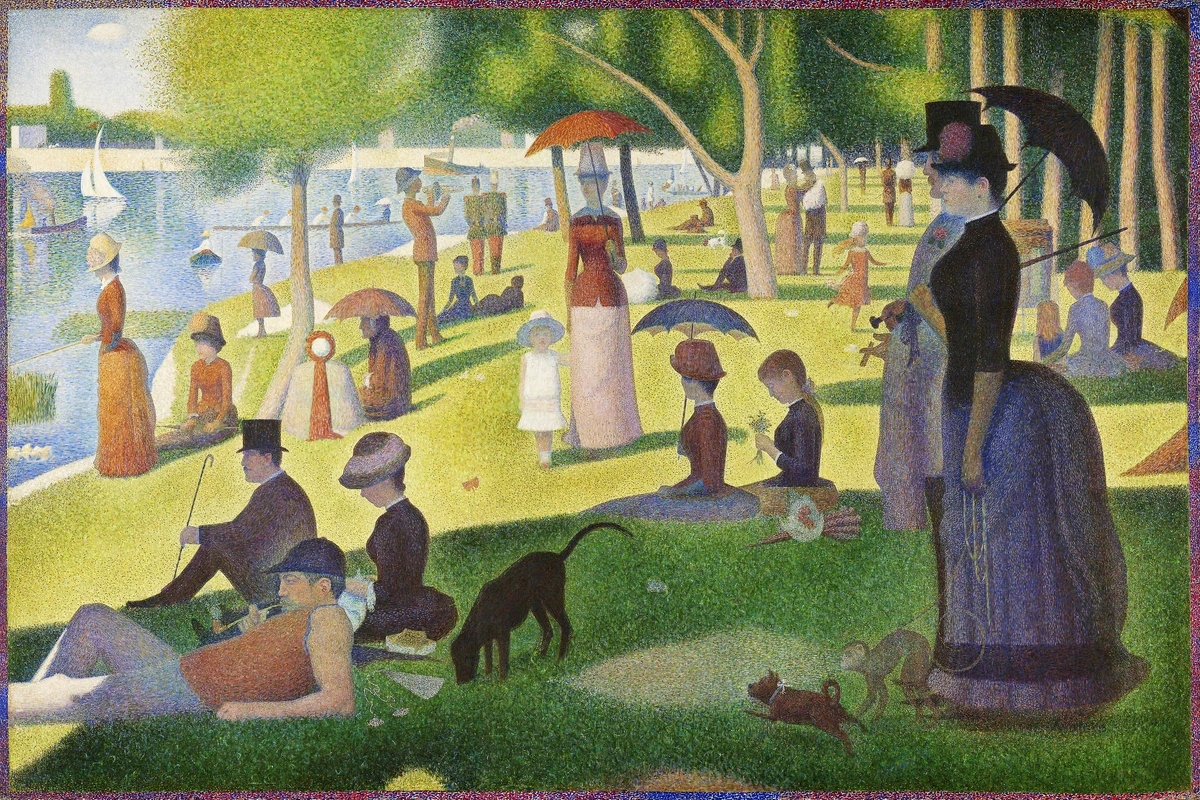
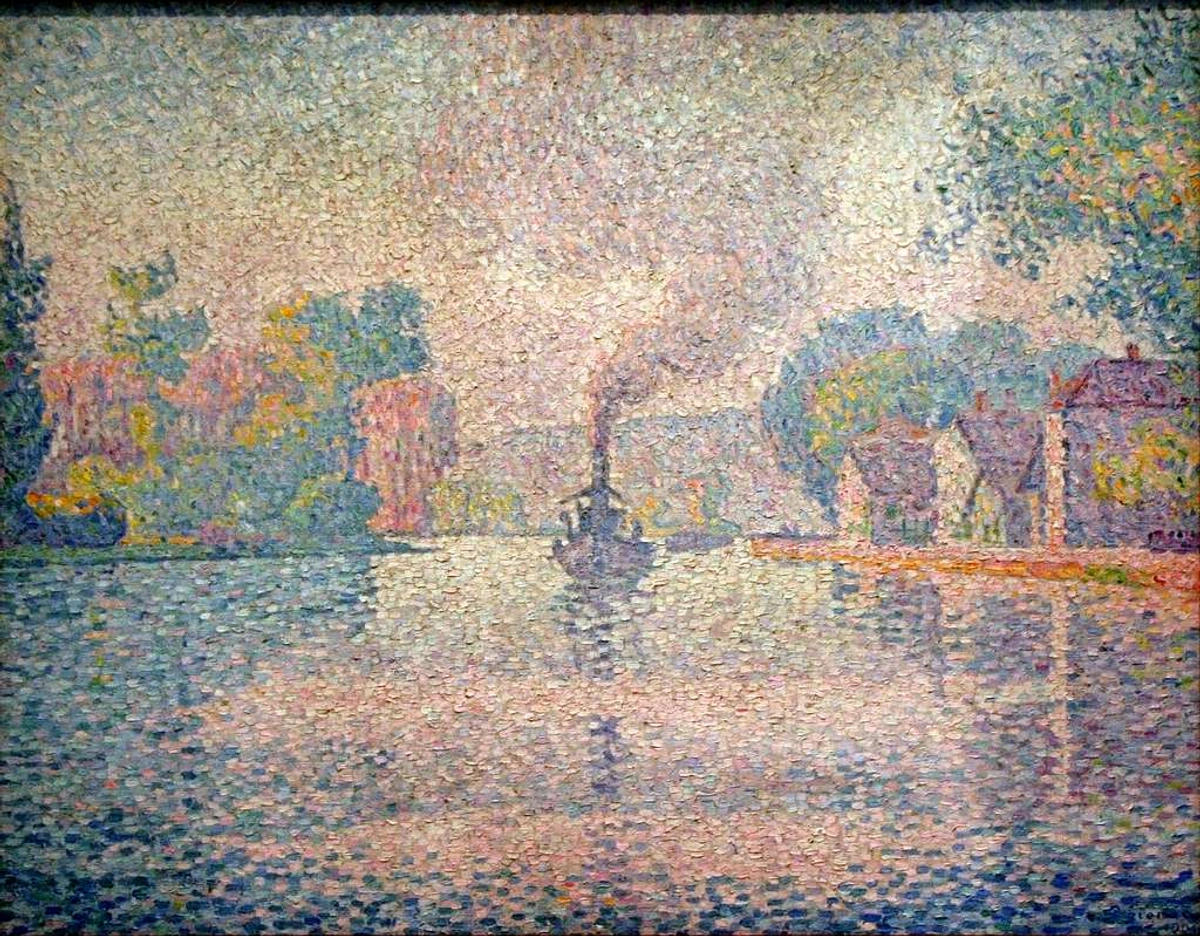
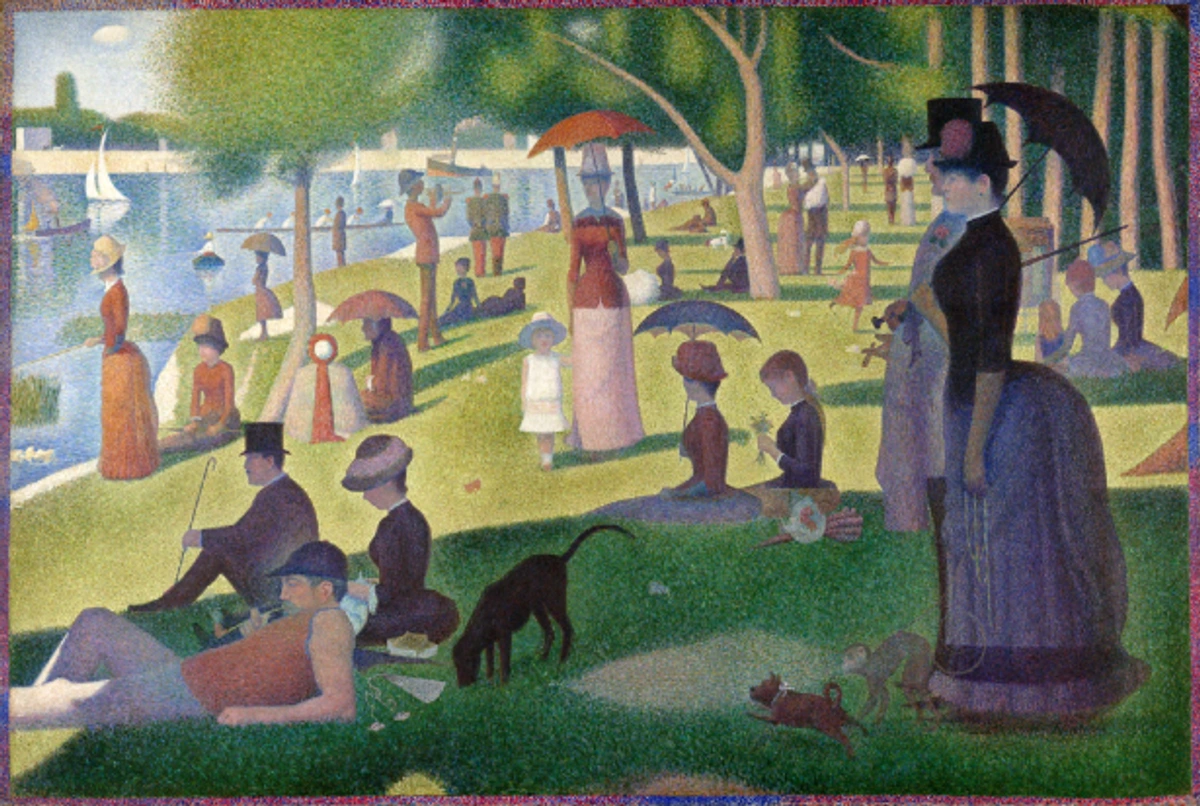
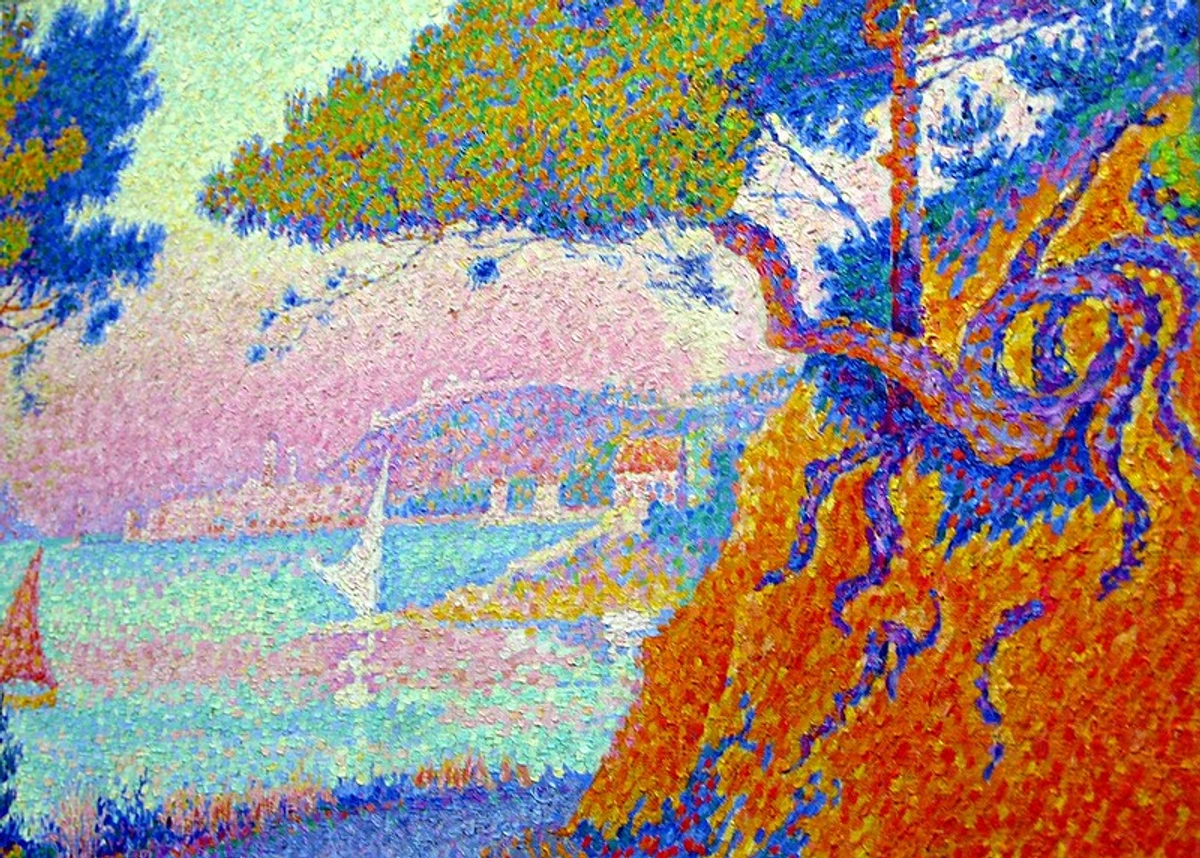
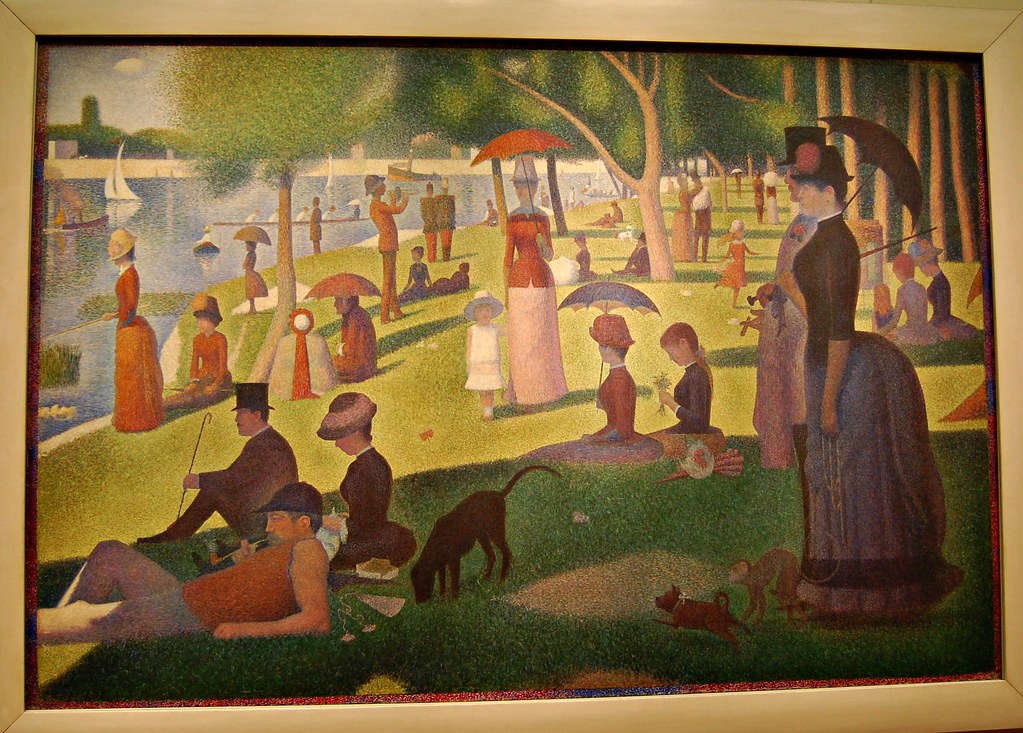
And then there’s Seurat, who, with an almost monastic dedication, looked at the Impressionists’ spontaneous dabs of color and thought, “I can make this a science.” I have to admire that level of dedication, truly. He wasn't content with intuition; he sought a systematic, almost mathematical approach to light and color. He developed Pointillism (more accurately called Divisionism), a painstaking, labor-intensive technique of applying tiny, distinct dots of pure, unmixed color to the canvas. The revolutionary idea behind this was that the viewer's eye, at a certain distance, would optically mix these individual dots, creating a more luminous, vibrant, and stable image than could be achieved by mixing pigments on a palette. This scientific principle, known as optical mixing, was at the heart of his technique, drawing heavily on the color theories of Michel Eugène Chevreul, who studied the simultaneous contrast of colors, and Ogden Rood, whose Modern Chromatics was a key text. This was a profoundly methodical, almost rigid reaction to the fleeting spontaneity and subjective brushwork of Impressionism, attempting to bring scientific rigor to artistic creation. His masterpiece, A Sunday on La Grande Jatte, is a testament to this incredible discipline and vision, meticulously constructed dot by painstaking dot, capturing scenes of Parisian leisure with a monumental, almost timeless quality, as seen also in Bathers at Asnières. To delve deeper into this meticulous master, check out who is Georges Seurat.
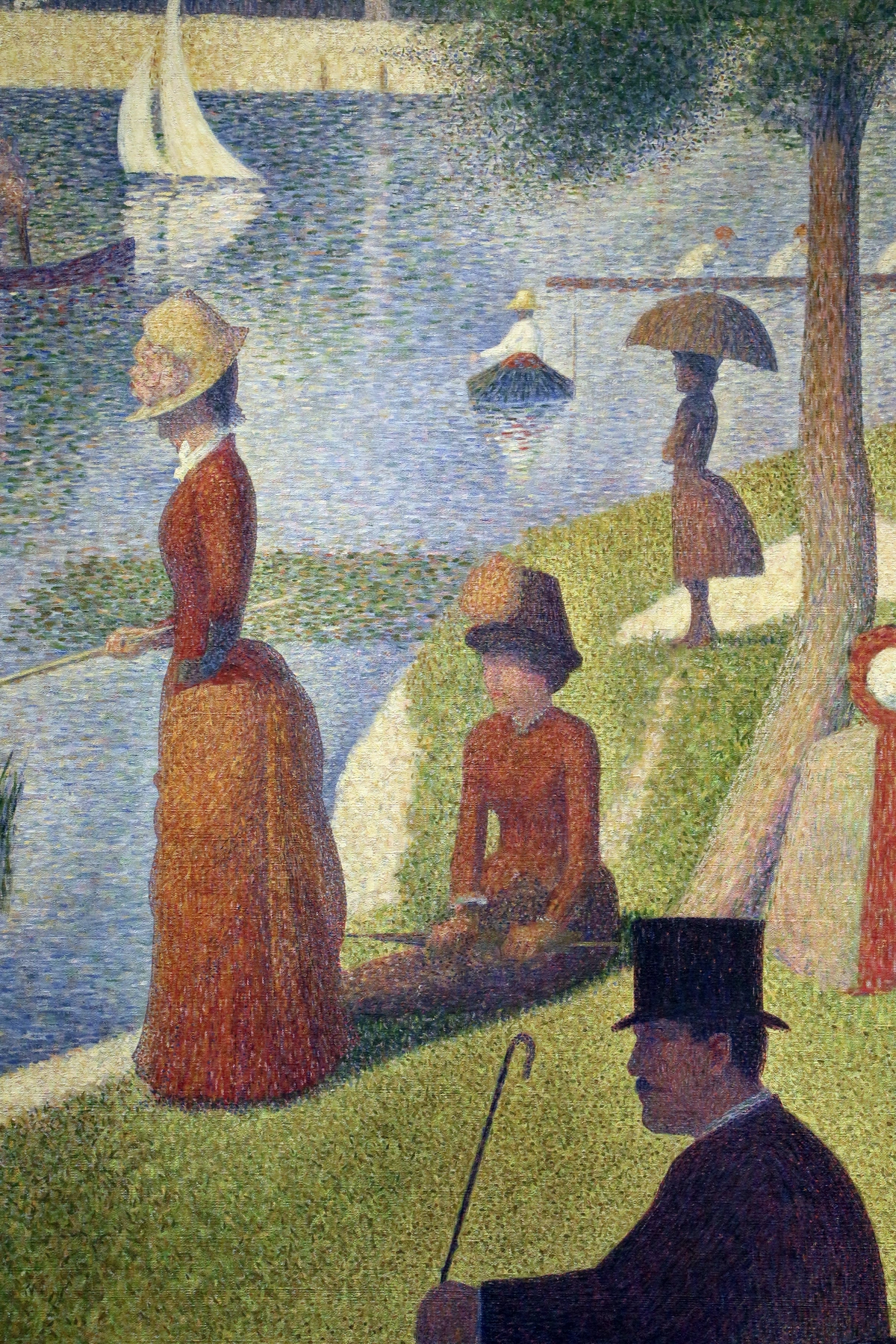
Seurat's disciplined approach didn't just influence other Neo-Impressionists like Paul Signac (who carried the torch of Divisionism) and Henri-Edmond Cross, as well as Camille Pissarro (who briefly experimented with the style); it also laid foundational ideas about how color and light could be manipulated analytically, affecting everything from scientific illustration to later abstract color field painting. His commitment to system rather than spontaneity offered a different path forward for artists seeking to move beyond mere representation, towards a more intellectual and planned art. Seurat proved that meticulous planning and scientific principles could lead to art of profound luminosity and emotional resonance, a stark contrast to the intuitive approaches of many of his contemporaries.

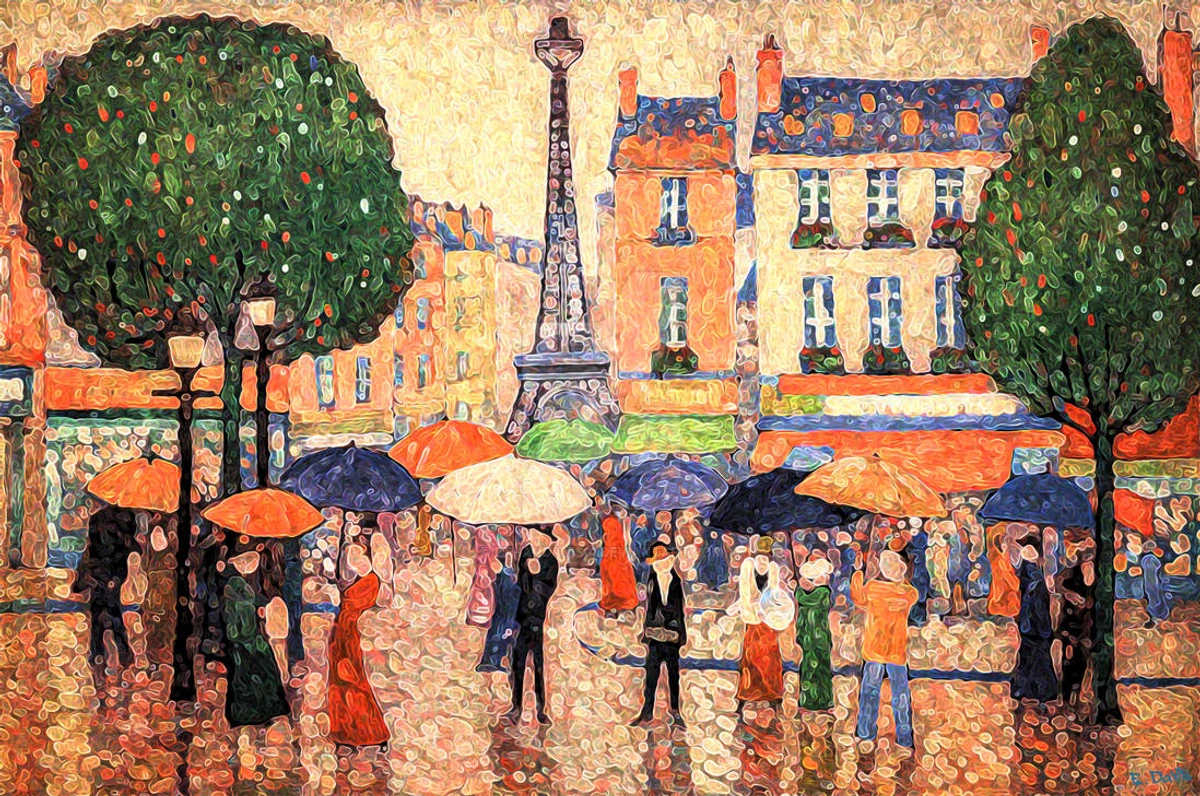
Other Important Post-Impressionist Artists
While the "Big Four" undeniably cast giant shadows, the Post-Impressionist landscape was bustling with other incredible talents who contributed significantly to its revolutionary spirit. It's like a vibrant ecosystem where distinct species, though sharing a common environment, evolved in truly unique and fascinating ways. They each carved out their own unique paths, further diversifying the movement and sowing more seeds for 20th-century art.
Henri de Toulouse-Lautrec: Chronicler of Parisian Nightlife
If you wanted a glimpse into the vibrant, often decadent, world of fin-de-siècle Paris, particularly its cabarets, dance halls, and brothels, Toulouse-Lautrec was your man. A keen observer, he captured the energy and pathos of performers and patrons with a unique empathy. His own physical condition, a result of childhood accidents, likely contributed to his outsider perspective and profound empathy for society's marginalized figures and entertainers, allowing him an unparalleled view into the nocturnal world he so vividly depicted. His distinctive style, characterized by strong outlines, bold colors, and a graphic sensibility (profoundly influenced by Japanese woodblock prints like Ukiyo-e), was revolutionary for its time, blurring the lines between fine art and commercial illustration. His posters for the Moulin Rouge, such as Moulin Rouge: La Goulue and Ambassadeurs: Aristide Bruant, are iconic, demonstrating how art could engage directly with popular culture and reflect modern urban life with unflinching honesty and a striking sense of immediacy. His innovative lithographic techniques, characterized by bold lines, flat areas of color, and dynamic compositions, revolutionized poster art and graphic design, influencing generations of commercial artists. You can learn more about the impact of these prints in the enduring legacy of Ukiyo-e. His work provides an unparalleled visual diary of Parisian bohemia and nightlife, offering us a window into a bygone era of dazzling spectacle and hidden sorrows. It's a world I find myself drawn to, the raw humanity beneath the glitter, the vibrant pulse of a city on the cusp of a new century.
Henri Rousseau (Le Douanier): The Naive Dreamer
Known as "Le Douanier" (the customs officer), Henri Rousseau was a self-taught artist whose fantastical jungle scenes, portraits, and dreamlike landscapes captivated and influenced many avant-garde artists. He was, in many ways, the quintessential outsider, a figure who defied academic training and formal artistic conventions, yet whose unique vision resonated deeply with those seeking new forms of expression. Despite never leaving France (and allegedly getting his jungle inspiration from botanical gardens and illustrated books, or even the taxidermy lions in Parisian museums!), his meticulously rendered, often flattened, and vibrant canvases transport viewers to exotic, otherworldly realms. His "naïve" or "primitive" style, though not fitting neatly into academic categories, resonated with the Post-Impressionist desire to explore subjective realities and move away from traditional realism, making him a fascinating outlier and a significant precursor to Surrealism. Works like The Sleeping Gypsy, The Dream, and The Hungry Lion Throws Itself on the Antelope are prime examples of his unique vision, blending meticulous detail with dreamlike irrationality. He showed that profound art could emerge from self-taught intuition, challenging academic norms and opening doors for artists to embrace their own idiosyncratic visions. His work is a testament to the power of imagination over direct observation, a truly Post-Impressionist ideal.
The Pont-Aven School: Synthesizing Form and Feeling
Before his Tahitian adventures, Gauguin spent significant time in Brittany, France, forming the Pont-Aven School with artists like Émile Bernard, Paul Sérusier, and other like-minded painters drawn to the region's perceived 'primitive' authenticity. Here, they developed the theories of Synthetism and Cloisonnism—a technique characterized by bold, flat areas of color separated by dark outlines, much like cloisonné enamel work—emphasizing the importance of simplified forms, strong outlines, and non-naturalistic color to express ideas and emotions rather than merely depicting nature. Sérusier's The Talisman (under Gauguin's guidance) is a powerful example of this radical departure, a small, vibrant painting that looks almost abstract in its simplification of forms and bold color choices. This collective exploration of symbolic and expressive art profoundly influenced later movements, advocating for art that was a direct expression of the artist's subjective experience and inner vision, moving away from academic conventions and towards a more emotionally charged aesthetic. They sought to imbue their canvases with spiritual and emotional depth, creating works that were often mysterious and highly personal, pushing the boundaries of what art could represent. Their focus on the spiritual and decorative paved the way for groups like Les Nabis.
Les Nabis: Prophets of Decorative Art
Emerging from the Pont-Aven School's influence, Les Nabis (meaning "the prophets" in Hebrew) were a Parisian avant-garde group active in the 1890s, including artists like Pierre Bonnard, Édouard Vuillard, Maurice Denis, Paul Ranson, and Félix Vallotton. They embraced a decorative, symbolic, and often flattened style, believing that a painting was "essentially a flat surface covered with colors assembled in a certain order" (Maurice Denis)—a radical concept at the time. Their work extended beyond canvas to posters, prints, stage designs, book illustrations, and stained glass, seeking to integrate art into everyday life and blur the lines between fine art and applied arts. This holistic approach to art-making, viewing everyday objects as worthy canvases for aesthetic expression, marked a significant departure from the hierarchical distinctions of traditional art. Their intimate scenes, vibrant colors, and emphasis on pattern and subjective experience offered another crucial pathway from Post-Impressionism to the decorative arts and modern design, profoundly foreshadowing movements like Art Nouveau and later aspects of modern interior design. They believed art should be integrated into all aspects of life, not confined to galleries, impacting how we think about design even today. Their commitment to pattern and decorative effect was a conscious rejection of academic illusionism, emphasizing the two-dimensional nature of the canvas and celebrating the inherent beauty of line and color.
The Legacy: How a Non-Movement Became the Launchpad for Modern Art
Post-Impressionism’s real, enduring importance is that it wasn't a destination; it was a launchpad. It didn't provide a single answer to the question 'what next for art?', but rather offered a multitude of revolutionary paths forward, blowing the doors wide open for 20th-century art. Without these artists, the very DNA of what we call modern art would look completely, utterly different. If you want to understand where abstract art truly began, you have to start here, with this explosion of individual vision, a moment that forever changed how we perceive and create art. It was a pivotal moment of artistic liberation, proving that the canvas could be a site for profound personal expression, intellectual inquiry, and radical formal experimentation. It was, in essence, a grand laboratory where the future of art was being forged.
- Van Gogh’s raw, emotional, and symbolic use of color, coupled with his vigorous brushwork, directly led to the intense subjectivity of Expressionism. Just look at the tormented figures and vibrant, unsettling palettes in the work of Edvard Munch (whose The Scream is an iconic example of existential angst), Ernst Ludwig Kirchner, Emil Nolde, or Franz Marc, and you’ll see Van Gogh's spirit vividly alive. This was art as an outpouring of the inner self, a direct confrontation with psychological states and the anxieties of modern life, where distortion and heightened color served to convey intense inner turmoil and raw feeling. The Expressionists took his vibrant intensity and amplified it, creating a visual language of profound psychological depth. For a deeper dive into this impactful movement, explore my ultimate guide to Expressionism. His influence also extended to Neo-Expressionism, demonstrating a continued resonance in later centuries.
- Cézanne’s rigorous geometric explorations—his desire to depict the underlying structure of reality rather than its surface appearance—were the single biggest, undeniable influence on Pablo Picasso and Georges Braque, who famously went on to invent Cubism. Cézanne taught them how to see objects from multiple viewpoints simultaneously, a revolutionary concept that dismantled traditional perspective and forever altered the course of Western art, giving rise to both Analytical and Synthetic Cubism. His insistence on the inherent geometry of forms provided the conceptual blueprint for Cubist deconstruction and reassembly, challenging the illusion of depth and embracing the flatness of the canvas. Picasso himself declared Cézanne "the father of us all," a truly monumental acknowledgment. The Cubists took his method and pushed it to its logical extreme, splintering forms and reassembling them to show multiple facets at once, forever changing how we perceive form and space. To understand just how profound this influence was, check out the ultimate guide to Cubism. It's fascinating to see how a singular vision can so profoundly reshape the artistic dialogue for generations to come.
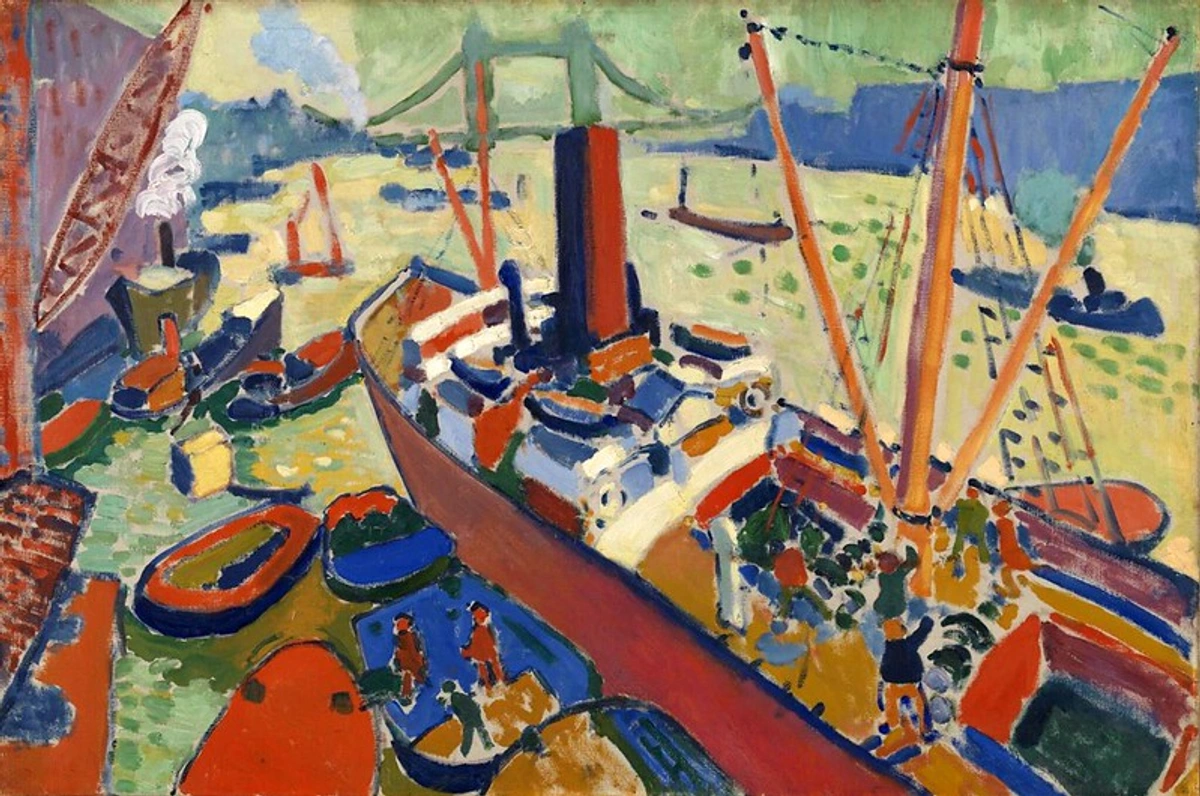
- Gauguin’s bold, symbolic use of non-naturalistic color, his flattened forms, and his emphasis on decorative pattern directly inspired the early 20th-century Fauvists. Artists like Henri Matisse and André Derain took Gauguin's vibrant palette and pushed it to an even wilder, more expressive level, unleashing color from its descriptive function to become a force in itself – a pure, unadulterated sensation of vibrant, often clashing, hues. This radical liberation of color, using it for emotional and decorative effect rather than simply descriptive realism, profoundly shaped early 20th-century modernism. The Fauves, or "wild beasts," truly embraced this freedom, allowing color to sing with an intensity previously unseen, creating harmonious discord that thrills me every time I see it. My own journey into abstract color, as seen in many pieces on my /buy page, clearly traces some of its roots back to this liberation of color, this audacious embrace of emotional truth over optical accuracy. They showed the world that color could be an emotional weapon, a direct conduit to the soul, not merely a descriptive tool. To explore this further, delve into the ultimate guide to Fauvism.
- Seurat’s meticulous, analytical approach, his scientific understanding of color, and his systematic construction of images influenced many later abstract and conceptual artists who sought order and theory in their practice. His work proved that art could be both deeply felt and rigorously thought-out, laying groundwork for movements that prioritized intellectual rigor alongside aesthetic impact. Think of the structured approach of artists in Op Art, or even aspects of Minimalism and Conceptual Art, where the idea of a predetermined system can generate profound aesthetic experiences. The precise control and intellectual rigor he brought to the canvas offered a counterpoint to pure spontaneity, showing a different path to artistic innovation. My own work, in its exploration of structured abstraction, definitely feels the echoes of Seurat's methodical brilliance, albeit through a very different lens, aiming to combine precision with intuitive flow, seeing the beauty in both order and chaos. For more on how artists approach systematic color, you might find what is a color study in art an interesting read.
It was a critical, transformative bridge from the 19th-century focus on objective observation and fleeting moments to the 20th-century obsession with inner vision, psychological depth, and radical formal experimentation. This period truly laid the philosophical and practical groundwork for everything from Expressionism and Cubism to Fauvism and even aspects of early abstraction. The emphasis on Symbolism within Post-Impressionism also served as a crucial bridge to later artistic and literary movements, inspiring artists to delve deeper into the subconscious, mythology, and the metaphorical power of imagery, moving beyond literal representation. This symbolic impulse paved the way for Surrealism and other movements that explored the inner landscape. Many of the ideas I explore in my own work, which you can see on my /buy page, with its emphasis on emotion, structure, and symbolic color, trace their roots directly back to this explosive period of questioning, rebellion, and profound artistic innovation – a true golden age of artistic reinvention. It’s almost as if they handed the keys to future generations, saying, "Go further, be bolder, express yourselves utterly."

This Fauvist cityscape, reminiscent of André Derain's vibrant works, beautifully illustrates how color became an independent expressive force, liberated from its purely descriptive role—a direct consequence of Gauguin's daring experiments and the broader Post-Impressionist push for expressive color.
Frequently Asked Questions (FAQ)
I get a lot of questions about this period, and honestly, they're great questions. It's a complex, multifaceted movement, a real Gordian knot of artistic ideas, so let's try to clear up some of the common points of confusion you might have. Think of this as our little art therapy session, where no question is too basic, and every inquiry leads to a deeper appreciation! I've found that grappling with these questions only deepens one's appreciation for this truly revolutionary era, revealing new layers of meaning and connection.
Q: What is the main difference between Impressionism and Post-Impressionism?
A: The shortest, most impactful answer? Impressionism focuses on capturing a fleeting, objective reality—the transient effects of light, atmosphere, and a moment in time. Think of it as painting what the eye sees, a sort of artistic snapshot of a sun-drenched landscape or a bustling Parisian street. Post-Impressionism, in contrast, delves into expressing a subjective, internal reality—the artist's emotions, intellectual ideas, and a desire to reveal the underlying structure of the world. It’s about painting what the mind and heart feel and know, pushing beyond mere optical perception into the realms of emotion and intellect. It's like the difference between seeing a beautiful sunset and feeling the profound awe it inspires within you, then translating that internal sensation into vivid, non-naturalistic colors and forms that speak directly to the soul. While Impressionists aimed for surface accuracy, Post-Impressionists sought a deeper, more enduring truth, a kind of psychological and structural realism.
Q: Who are the most famous Post-Impressionist artists?
A: The “big four”, without a doubt, are Vincent van Gogh, Paul Cézanne, Paul Gauguin, and Georges Seurat. Their individual breakthroughs fundamentally redefined art, truly changing the game by pushing beyond Impressionism's optical focus. However, the movement is broader, and other incredibly important artists associated with the period include Henri de Toulouse-Lautrec, known for his vibrant depictions of Parisian nightlife and theatrical scenes with his distinctive graphic style; Henri Rousseau (Le Douanier Rousseau), the self-taught master of dreamlike jungle scenes and exotic landscapes, whose 'naïve' style captivated avant-garde artists; and Edvard Munch, whose intense psychological works like The Scream laid the groundwork for Expressionism by focusing on inner turmoil. We can also include members of the Pont-Aven School like Émile Bernard and the Nabis (prophets) like Pierre Bonnard, Édouard Vuillard, and Maurice Denis, who pushed towards symbolic and decorative art, integrating art into daily life and foreshadowing movements like Art Nouveau. It's a rich tapestry of individual genius, proving that artistic revolution often comes from many diverse voices, all seeking to create something more emotionally and intellectually resonant.
Q: Is Post-Impressionism considered modern art?
A: Absolutely, unequivocally. It’s not just considered modern art; it’s widely regarded as the crucial, foundational bridge, the very beginning of modern art as we understand it today. This is the pivotal moment artists consciously stopped feeling obligated to just represent the world as it appeared to the eye, and instead started using art to explore inner realities, formal structures, and to create entirely new visual worlds. Without Post-Impressionism, the explosion of 20th-century modernism—from Cubism to Surrealism and beyond—would simply not have happened. It's the intellectual and spiritual starting gun, firing off a century of unprecedented artistic innovation, as artists broke free from academic constraints and embraced subjective expression. You can trace its impact through a broader timeline of art movements. For a deeper understanding of this profound shift, exploring what is modern art might offer further insights. It’s the period when art truly found its subjective voice, a voice that would echo for decades. I often think of it as the moment art decided it no longer needed to merely document the world, but could actively create new worlds.
Q: How long did the Post-Impressionist period last?
A: It’s a relatively condensed but incredibly potent period, roughly spanning from the mid-1880s (following the last Impressionist exhibition) to around 1910. It’s pretty short in terms of strict chronology, but in terms of innovation and impact, it’s incredibly dense, like a super-compressed star of creativity. It didn't so much 'fizzle out' as it metamorphosed; its radical ideas didn't die, they ripened and exploded, giving direct birth to the full-blown, distinct movements like Fauvism, Cubism, and Expressionism. It was a period of intense artistic gestation, laying seeds that would blossom into the diverse landscape of 20th-century art, marking a definitive break with traditional approaches. Think of it as a creative supernova, brief but incredibly bright and transformative, whose light continues to reach us today.
Q: What were the key influences on Post-Impressionism?
A: Beyond Impressionism itself, several key factors nourished the Post-Impressionist spirit. The influx of Japanese woodblock prints (Ukiyo-e) into Europe in the mid-19th century profoundly influenced artists with their flattened planes, strong outlines, and decorative patterns—elements we see strongly in Gauguin and Toulouse-Lautrec. This exposure offered a stark contrast to Western illusionism and opened new compositional possibilities. For more, see the enduring legacy of Ukiyo-e. The rise of Symbolist literature and philosophy also played a role, encouraging artists to delve into themes of dreams, mythology, and subjective experience rather than just outward reality, seeking deeper, hidden meanings. Read more in Symbolism in mystical, poetic art. Even the scientific advancements in color theory, like those explored by Michel Eugène Chevreul and Ogden Rood, directly informed Seurat's Divisionism, bringing a systematic approach to optical mixing. This was a rich stew of ideas that these artists absorbed and reinterpreted, reflecting a broader cultural shift towards introspection and a search for universal truths beyond mere appearances, a quest for profound authenticity in a rapidly changing world.
Q: What were the common themes or subject matters?
A: While the stylistic approaches varied wildly, certain thematic threads connect Post-Impressionist artists. You'll find a strong emphasis on subjective experience, often expressed through dreamlike visions (Gauguin, Odilon Redon, Rousseau) or intense emotional landscapes (Van Gogh, Edvard Munch). Many artists sought to portray the underlying structure and permanence of nature (Cézanne's monumental mountains and robust still lifes), rather than just fleeting impressions. Symbolism permeated much of the work, with objects, figures, and colors imbued with deeper, often spiritual or psychological meaning, creating layers of interpretation for the viewer. Scenes of modern life, particularly urban leisure and nightlife (Toulouse-Lautrec's cabarets, Seurat's parks), were also common, but presented with a more analytical or expressive lens than the Impressionists. There was also a notable interest in the "primitive" or non-Western cultures, especially for Gauguin, as a means to escape perceived Western decadence and find authentic spiritual truths, a search for an unspoiled humanity.
Q: How did photography influence Post-Impressionism?
A: Photography's rise in the 19th century freed painters from the necessity of mere objective representation, profoundly influencing Post-Impressionists. If a camera could capture a moment with perfect accuracy, what was painting's unique role? This question spurred artists to explore subjective experience, emotional truth, and structural analysis—areas photography couldn't easily replicate. Some artists, like Degas (often seen as a bridge figure), were fascinated by photography's ability to capture candid moments and unusual angles, incorporating these into their compositions. Others, like Cézanne, moved in the opposite direction, seeking permanence and geometric solidity that transcended photographic realism. It pushed artists to define art beyond imitation, allowing them to focus on interpretation and expression, forever altering the trajectory of fine art. For a deeper look at this, explore the history of photography as fine art.
Q: What distinguishes Symbolism within Post-Impressionism?
Q: What are some lesser-known Post-Impressionist artists?
A: Beyond the well-trodden paths of the "Big Four" and figures like Toulouse-Lautrec and Rousseau, there's a rich constellation of lesser-known artists whose contributions further illuminate the Post-Impressionist era. Consider Odilon Redon, a Symbolist painter renowned for his fantastical, often melancholic, dreamlike visions and use of rich, deep colors to evoke psychological states. His works transport you to a realm of poetic mystery. Then there's Émile Bernard, a key figure in the Pont-Aven School who, alongside Gauguin, developed Cloisonnism. His early work was hugely influential in the move towards flattened forms and bold outlines. We also see artists like Georges Lacombe, a Nabis sculptor who translated the group's decorative principles into three dimensions, creating symbolic and often mystical wooden sculptures. Even within the Neo-Impressionist camp, beyond Seurat and Signac, artists like Théo van Rysselberghe meticulously applied Divisionist principles to portraits and landscapes with stunning luminosity. Exploring these artists unveils the true breadth and experimental spirit of the period, proving that artistic innovation was blossoming in many corners, challenging and expanding the definitions of what art could be. They remind us that the canon is ever-evolving, and there's always more to discover if you just keep looking.
Q: How did Post-Impressionism change the role of the artist?
A: Post-Impressionism fundamentally redefined the role of the artist, shifting it from a mere observer and recorder of external reality to an interpreter and creator of subjective worlds. Artists became philosophers and psychologists of the canvas, delving into their inner experiences, emotions, and intellect to inform their work. This period championed individual vision and expression over academic conformity or objective representation. The artist was no longer just a craftsman but a profound truth-seeker, a social commentator, a spiritual guide, or an emotional conduit, using art as a powerful tool for self-discovery and universal inquiry. This emphasis on individual artistic freedom and the artist's unique voice laid the groundwork for the modern artist as an autonomous, expressive force.
Q: What impact did the Salon system have on Post-Impressionism?
A: The rigid and conservative Salon system of academic art, which dictated official artistic taste and provided the primary venue for artists to exhibit and sell their work, had a profound negative impact that paradoxically spurred the Post-Impressionists' innovations. By largely rejecting Impressionist (and subsequently Post-Impressionist) works for their unconventional styles, unconventional subject matter, and disregard for traditional techniques, the Salon system effectively forced these artists to seek alternative exhibition spaces and patronage. This marginalization, while challenging, fostered a sense of artistic independence and camaraderie, leading to the formation of independent exhibitions and smaller groups (like the Pont-Aven School or Les Nabis). It solidified their resolve to pursue personal visions outside the institutional mainstream, thereby accelerating the break from academic traditions and the embrace of modern art's diverse forms. In essence, the Salon's rejection became a catalyst for revolution.
Q: Where can I see Post-Impressionist art today?
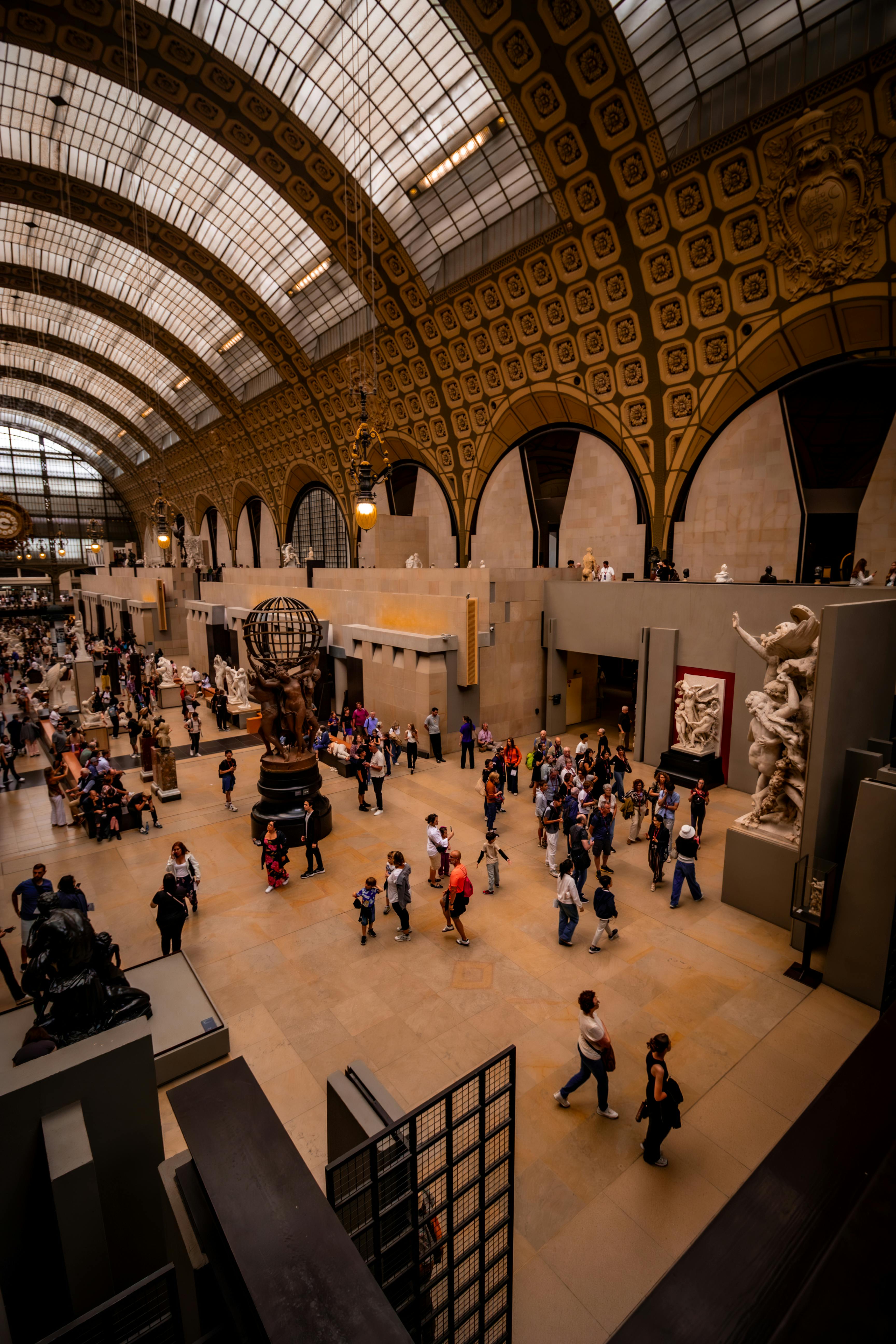
A: You're in luck, because Post-Impressionist masterpieces are held in some of the world's most prestigious museums! Major collections can be found at the Musée d'Orsay in Paris (a fantastic place to see Van Gogh, Cézanne, Gauguin, and Seurat, among others), the Museum of Modern Art (MoMA) and the Metropolitan Museum of Art in New York City, the Art Institute of Chicago (home to Seurat's A Sunday on La Grande Jatte), the National Gallery in London, and the Hermitage Museum in St. Petersburg. Many other significant works are spread across museums globally. A visit to any of these institutions offers an unparalleled opportunity to immerse yourself in the revolutionary spirit and breathtaking beauty of this pivotal art movement.

credit, licence
A: Symbolism within Post-Impressionism is characterized by its departure from objective reality to depict inner worlds, emotions, and philosophical ideas through evocative imagery. Unlike Impressionism's focus on optical reality, Symbolists used color, form, and composition to suggest meanings rather than explicitly state them. Figures, objects, and landscapes often served as metaphors or allegories for abstract concepts, spiritual truths, or psychological states. Think of Gauguin's vibrant, flattened forms conveying a sense of spiritual mystery, or Odilon Redon's ethereal visions emerging from the subconscious. It was a conscious rejection of materialism and an embrace of the mystical and poetic, aiming to connect with universal human experiences through highly personal artistic language. For more on this, check out my thoughts on Symbolism in mystical, poetic art.
Q: How did Post-Impressionism influence modern design?
A: The ripple effects of Post-Impressionism on modern design are profound and multifaceted. The movement's rejection of purely naturalistic representation and its emphasis on subjective expression, symbolic meaning, and decorative aesthetics laid crucial groundwork. The Pont-Aven School and Les Nabis, in particular, with their focus on simplified forms, strong outlines, and bold, non-naturalistic color, directly informed the burgeoning Art Nouveau movement. Art Nouveau embraced organic lines, decorative patterns, and a holistic approach to design, integrating fine art with architecture, furniture, jewelry, and graphic design—a direct continuation of the Nabis' ambition to infuse art into daily life. Even the structural analysis of Cézanne, though primarily influencing Cubism, encouraged designers to consider the underlying geometric forms of objects. Post-Impressionist liberation of color and form gave designers permission to move beyond historical pastiche, opening the door for the functionalist aesthetics of the Bauhaus, the graphic boldness of Art Deco, and indeed, countless contemporary design movements. It was a pivotal moment when art truly began to shape the aesthetic contours of the modern world. You can see this clearly in discussions around ultimate guide to Art Nouveau jewelry.
Q: What impact did women artists have on Post-Impressionism?
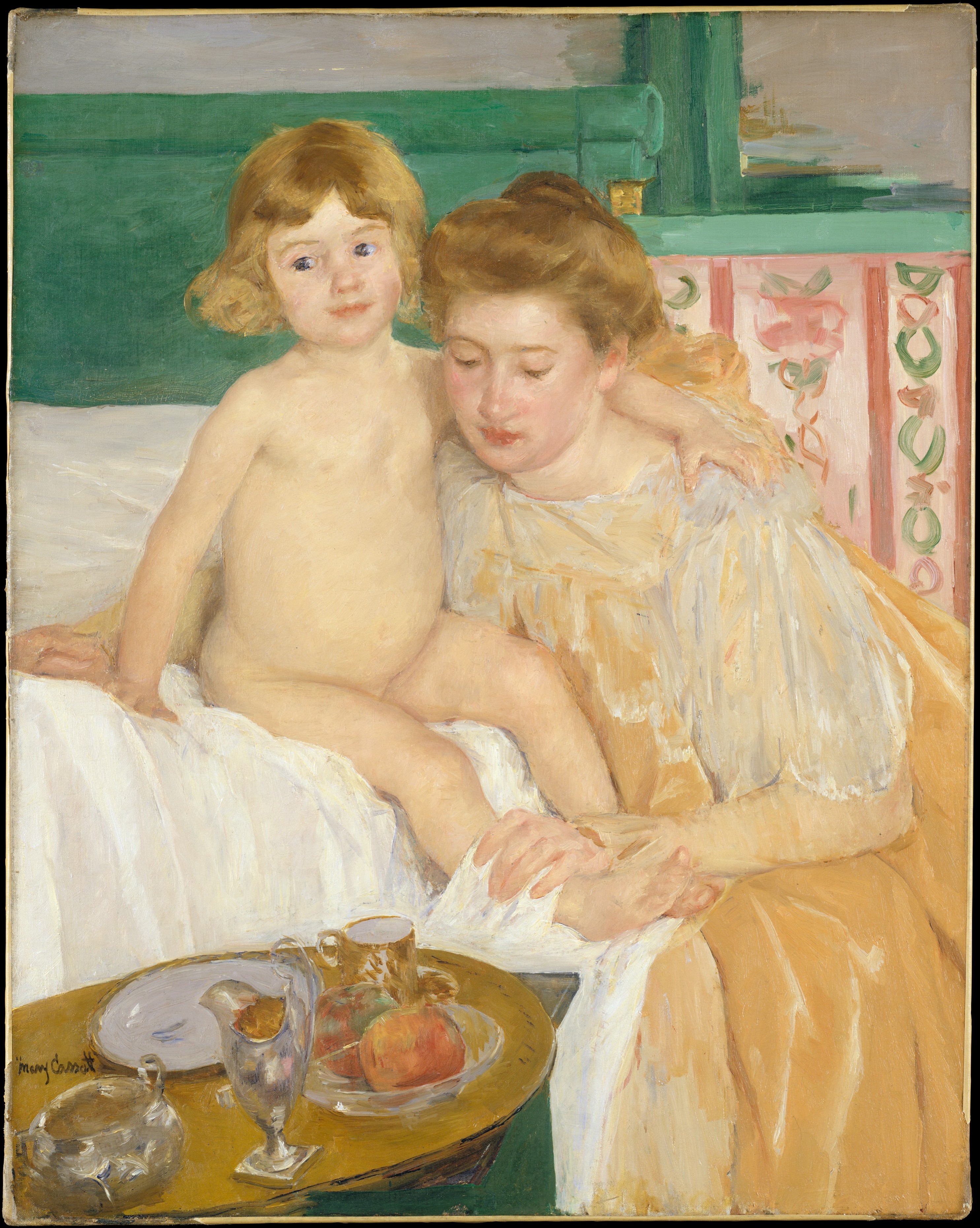
A: While often overshadowed by their male counterparts in historical narratives, women artists were indeed active and influential within the broader Post-Impressionist milieu, even if not always explicitly categorized under the "big four" movements. Artists like Suzanne Valadon, initially a model for Degas and Renoir, developed a bold, distinctive style with strong outlines and often stark portraits and nudes, showing a raw authenticity that echoed Post-Impressionist concerns. Though primarily an Impressionist, Mary Cassatt's later work sometimes exhibited a more defined sense of form and a focus on intimate, subjective domestic scenes that aligned with Post-Impressionist interests in psychological depth and emotional resonance. In the Nabis group, women like Gabrielle Vallotton (Félix Vallotton's sister-in-law) and Marie Roussel (Ker-Xavier Roussel's wife) contributed to the decorative arts and collaborated with their husbands. Their contributions, though sometimes marginalized, were vital in diversifying themes and pushing stylistic boundaries, and recent scholarship is increasingly bringing their significant roles to light. It reminds me that art history, like all history, is constantly being rewritten and expanded to include previously unheard voices, offering a richer, more nuanced understanding of these pivotal periods, and allowing us to celebrate a fuller spectrum of artistic genius.
Q: Were there Post-Impressionist sculptors?
A: While painting undoubtedly dominated the Post-Impressionist landscape, the movement's radical ideas certainly found expression in sculpture, albeit in fewer, more fragmented instances. The core principles of subjective expression, a move away from strict naturalism, and an emphasis on form and symbolism resonated with certain sculptors. For example, Aristide Maillol, though often categorized as a Modernist, initially engaged with Nabis aesthetics, simplifying forms and focusing on monumental, classical female nudes that conveyed a sense of timelessness and solidity, echoing Cézanne's quest for enduring form. As mentioned previously, Georges Lacombe, a Nabis artist, created highly symbolic wooden sculptures, translating the decorative and expressive qualities of the Pont-Aven and Nabis painters into three-dimensional forms. Even some early works by Antoine Bourdelle, a student of Rodin, show a simplified monumentality and emotional depth that can be seen as paralleling Post-Impressionist concerns, moving towards a more structural and expressive figuration. While not a cohesive "sculptural movement" in the same way as painting, these artists demonstrate that the Post-Impressionist spirit of innovation and profound questioning permeated beyond the canvas, pushing the boundaries of sculptural expression and foreshadowing the abstract and symbolic forms of 20th-century sculpture.





Post-Impressionism Today: Enduring Relevance
For me, the spirit of Post-Impressionism is very much alive in the contemporary art world. That audacious desire to look beyond surface reality, to infuse work with personal emotion, intellectual rigor, or symbolic meaning? That's the heartbeat of so much of what I create. Whether it's the structural deconstruction I might apply to a landscape, the purely expressive use of color to evoke a mood in one of my abstract pieces, or the quest for underlying forms in my more structured pieces, the echoes of Van Gogh's soul-baring brushstrokes, Cézanne's architectural precision, Gauguin's symbolic narratives, or Seurat's methodical brilliance are always there, guiding my hand in often unexpected ways. We see its principles reinterpreted in contemporary abstract art, in neo-expressionist tendencies, and in works that challenge traditional representation, proving its enduring influence on how artists grapple with inner and outer worlds, pushing the boundaries of what art can be.
It’s not about copying, of course, but about understanding that fundamental shift they instigated: that art can be a mirror not just of the world, but of the internal universe of the artist and the viewer. This is why I believe Post-Impressionism isn’t just a historical movement; it’s a foundational philosophy for art that truly seeks to connect, to challenge, and to inspire. It’s a constant reminder that the most revolutionary art often begins with a deeply personal vision.
So, What Is Post-Impressionism? A Personal Reflection
Ultimately, Post-Impressionism isn’t a neat and tidy box that you can easily label and store away. It's a messy, brilliant, and deeply personal revolution sparked by a handful of fiercely independent individuals. They weren't a cohesive 'movement' in the traditional sense; they didn't work together, they certainly didn't share a single manifesto, and their styles diverged wildly. What they did share, however, was a profound dissatisfaction with the artistic status quo of Impressionism and a burning, almost desperate desire to make art that was more real than mere optical reality itself—art that spoke to emotion, intellect, and timeless form. And in doing so, in their intensely individual quests, they collectively gave us the foundational language for almost everything that came after in modern art, proving that art's greatest leaps often come from courageous, individual challenges to the norm.
For me, this period is a powerful reminder that true artistic progress often comes not from collective agreement, but from audacious, deeply personal questioning and reinvention. It's a legacy that continues to inspire my own work, pushing me to find new ways to connect with and express the unseen structures and emotions of the world. This is the real power of Post-Impressionism, and why it remains endlessly fascinating. I truly hope this guide has illuminated some of its magic for you. If you're looking for more comprehensive guides on other pivotal moments in art, consider delving into my exploration of famous Renaissance artists to see how deep the roots of art history run, and perhaps even my musings on the definitive guide to understanding abstraction in contemporary art to see where these roots blossom today. Perhaps, like me, you'll find yourself seeing echoes of these revolutionary ideas in the art around you, or even in your own creative impulses. For a broader perspective on the evolution of art, consider exploring my timeline of art movements.