Paul Cézanne: The Grumpy Genius Who Taught Us to See
A deep dive into the life and art of Paul Cézanne. Discover the story of the 'Father of Modern Art,' his famous paintings, and why he's more than just still lifes.

Paul Cézanne: The Grumpy Genius Who Taught Us How to See Modern Art
It’s funny, isn't it? We have this image of great artists as these flamboyant, larger-than-life characters. We expect them to be the life of the party, constantly inspiring. But then you get to Paul Cézanne, the French Post-Impressionist painter, and that stereotype just shatters into a thousand pieces (much like reality in a Cubist painting, and yes, we will definitely get to that). Here was a man who was famously reclusive, often grumpy, intensely private, and plagued by self-doubt his whole life. He was the quintessential outsider. And yet, this is the guy Pablo Picasso, the titan of 20th-century art, called "the father of us all." How does that even happen? How does a man who actively avoided the spotlight, dedicating himself to solitary artistic struggle, fundamentally alter the course of art history and become the indispensable bridge to modern art?
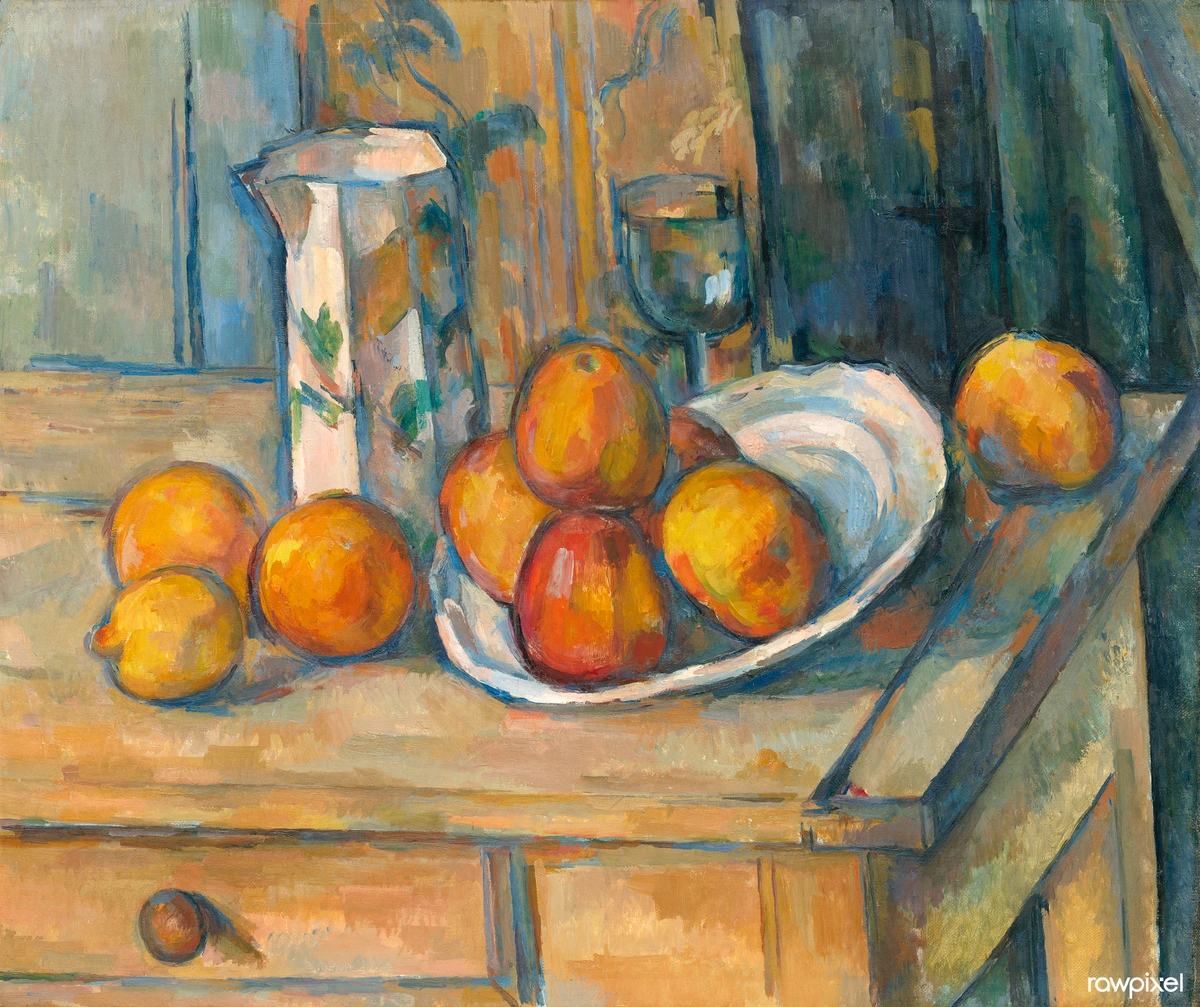
I remember walking through museums myself, seeing his still lifes of apples and thinking, "Okay, nice apples. Very... still." It took me a long time, and a lot of looking, to truly understand that Cézanne wasn't just painting apples. He was painting how it feels to see an apple, how light hits its surface, how its form occupies space, how it relates to everything around it. He was meticulously breaking down reality into its component parts—color, light, and form—and then painstakingly rebuilding it on the canvas. It wasn't about capturing a fleeting moment like the Impressionists; it was about finding something solid, something eternal. It was a quiet revolution that started in the sun-drenched, often solitary, quiet of his studio in Aix-en-Provence.
This wasn't just a new style; it was a completely new way of thinking about painting itself, an intellectual and emotional journey into the very act of perception. So, let’s peel back the layers on this complex, brilliant, and often misunderstood man. Forget the dusty art history lecture; let's try to get inside his head a little and explore how he became the indispensable bridge to modern art.
The Banker's Son Who Dared to See Differently (and the Friendship that Fueled Him)
Paul Cézanne entered the world in 1839 in Aix-en-Provence, a picturesque town in the south of France, famed for its clear light and serene landscapes—a rather stark contrast, wouldn't you say, to the tumultuous inner world of the artist it would ultimately produce. His father, Louis-Auguste Cézanne, was a self-made man: a shrewd and remarkably successful banker who even co-founded a bank that still thrives today. He was a figure of formidable authority and ambition, a man of stern practicality and conventional tastes, and often described as domineering. As you might expect, such a pragmatic acumen harbored rather rigid, and frankly, quite grand, plans for his only son: a respectable, financially secure career in law. So, law school was the dictated trajectory, a path Cézanne dutifully, if unhappily, pursued for a time, even studying at the local drawing academy in Aix against his father's wishes. This early familial tension, this clash between the pragmatic world of finance and the expressive world of art, would profoundly shape Cézanne’s personality and artistic resolve, contributing to his lifelong struggle with self-doubt and his fierce independence. The weight of his father's expectations was immense, yet the pull of the canvas was stronger. But, if you’ve ever felt an insistent, almost gravitational pull towards something far, far from the expected path, you can likely guess how well that went for a soul already passionately, almost desperately, yearning for the vibrant, expressive world of art.
Cézanne, predictably, found the dry texts of jurisprudence utterly miserable, a torture of the mind, a stifling confinement for his burgeoning artistic spirit. His true calling lay, unequivocally, in painting—a passion nurtured and, crucially, encouraged by his intensely close, lifelong friendship with the writer Émile Zola. They were the quintessential pair of ambitious young dreamers, often wandering through the sun-drenched Provençal countryside, their minds ablaze with shared artistic and literary aspirations. They wrote poems to each other, debated the future of art, and fueled each other’s creative fires, imagining a new, modern artistic era. Zola, ever the more outwardly ambitious, socially adept, and frankly, a bit of a showman, would go on to achieve immense literary fame and recognition (often quite controversially, I might add, pushing scandalous boundaries in his naturalist novels). However, a tragic rift would eventually form between them, largely due to Zola's 1886 novel L'Œuvre (The Masterpiece), which unflatteringly portrayed a failed, misunderstood artist named Claude Lantier, a character widely believed to be a thinly veiled, and rather cruel, depiction of Cézanne himself. Zola's portrayal highlighted the artist's perceived clumsiness, lack of social grace, and inability to complete his grand artistic vision, deeply wounding Cézanne and leading to the end of their profound friendship, a wound that never truly healed. Cézanne’s artistic journey, however, would prove significantly bumpier, a protracted uphill battle marked by profound struggles, relentless self-doubt, and often, outright public scorn. It serves as a potent reminder, I think, that groundbreaking genius frequently goes unrecognized, even actively rejected, in its own time, especially when it challenges deeply ingrained conventions.`
The Gauntlet of the Salon: Early Rejection and the Struggle for Acceptance
His early years in Paris were, to put it mildly, a brutal gauntlet. He faced constant, soul- crushing rejection: failing the rigorous entrance exam for the prestigious École des Beaux-Arts in Paris (a gatekeeper that often rewarded conformity over innovation, favoring classical realism and historical subjects) and, even more painfully, having his work summarily rejected by the official Paris Salon, the seemingly omnipotent arbiter of artistic legitimacy, year after agonizing year. The Salon system, in the 19th century, was everything; it wasn't just about showing your art, it determined an artist's career, reputation, livelihood, and even their social standing. Works deemed too radical, too "ugly," or simply not adhering to prescribed academic standards were ruthlessly discarded and often met with public ridicule. Cézanne even famously participated in the Salon des Refusés in 1863, an exhibition created for works rejected by the official Salon, a protest space for artists like Manet and himself whose visions didn't fit the mold. To be repeatedly cast aside by it, to have your most deeply felt expressions deemed unworthy, must have been utterly devastating for a sensitive and self-doubting individual like Cézanne, who once famously wrote, "The world does not understand me, and I do not understand the world." It’s a story we can all relate to, right? That stinging feeling of rejection, the sense that you’re shouting your deepest convictions into an indifferent, often sneering, void. It speaks volumes about his tenacious spirit that he never truly gave up, even when the world seemed to tell him he was wrong.
For a while, in the 1860s and 70s, he associated with the nascent Impressionist movement, exhibiting with them in their groundbreaking early shows, most notably the first Impressionist exhibition in 1874. You can see why he was drawn to them – their focus on light, color, and painting en plein air (outdoors) was revolutionary, a direct challenge to academic conventions. Figures like Camille Pissarro, a leading and influential Impressionist, even mentored Cézanne, and their shared time painting together in Auvers-sur-Oise was formative for Cézanne's palette. However, Cézanne never truly fit in. The Impressionists, like Claude Monet or Pierre-Auguste Renoir, were interested in capturing a fleeting, momentary impression of light and atmospheric effects, using broken brushstrokes to convey the transience of the visual world. Think of a quick sketch, a transient feeling, a shimmering surface. Cézanne, on the other hand, craved something more enduring, something with the weight and permanence of classical art, a deeper structural truth. His brushstrokes, though vibrant, were more deliberate, more constructive, building rather than merely describing. He famously articulated this ambition, stating he wanted to "make of Impressionism something solid and durable, like the art of the museums." He found their emphasis on fleeting sensation too ephemeral, too lacking in underlying structure, too much about the surface and not enough about the bones of reality, the very essence of existence.
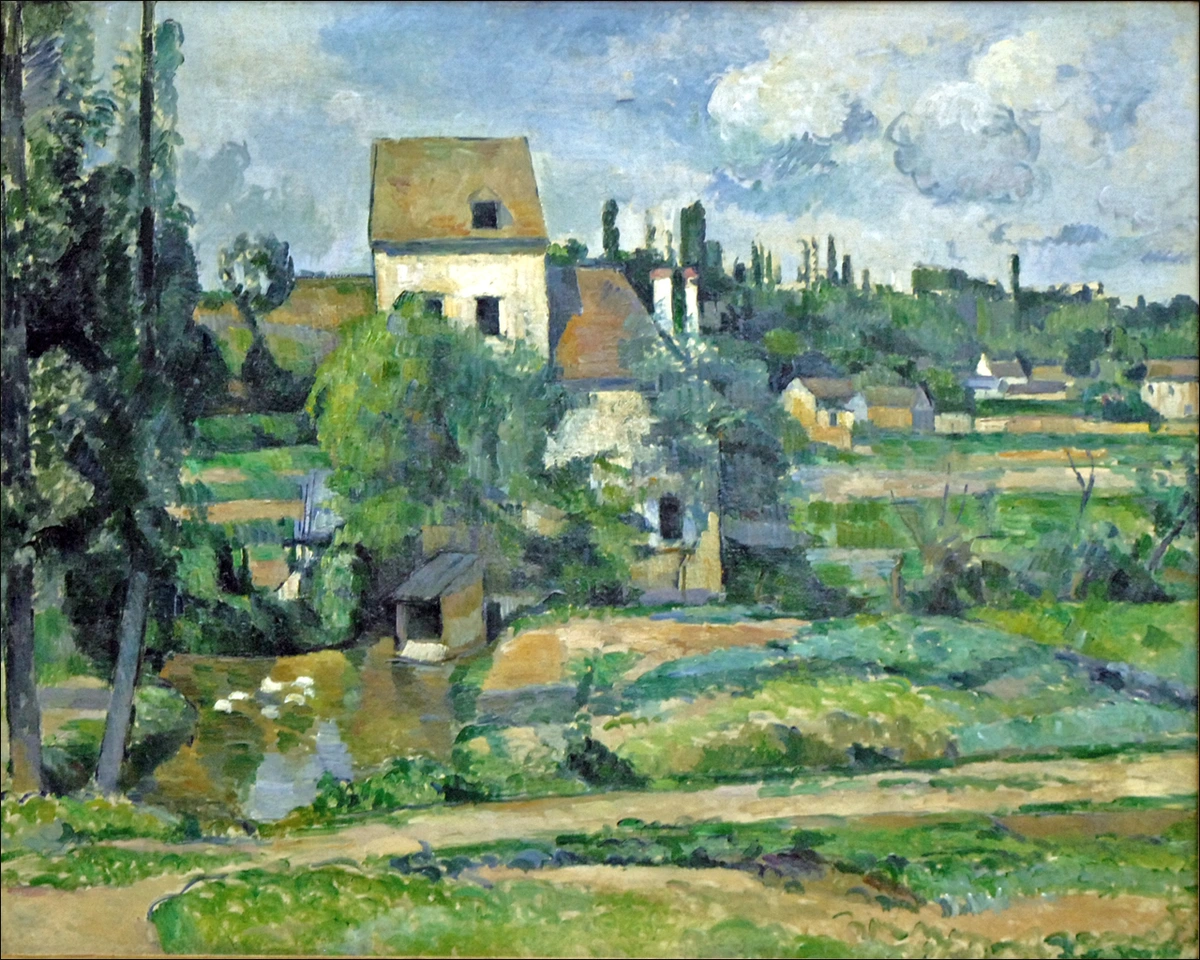
This fundamental divergence, this deep-seated need for more structural integrity, eventually compelled him to retreat from the chaotic and often brutal Paris art scene. He returned to the relative quiet and profound solitude of his native Aix. And that, in a beautiful paradox, is precisely where his real magic happened. Away from the sneering critics, the fleeting trends, and the suffocating pressures of fitting in, he found the freedom to painstakingly develop his profoundly unique vision—a vision that would, in time, utterly shake the foundations of Western art. This solitude wasn't a form of isolation but a necessary crucible for his artistic evolution, a space where he could wrestle with his perception and rebuild it on canvas, uninterrupted.`

The Construction of Reality: Seeing the World in Cylinders, Spheres, and Cones
So, what was this revolutionary idea that earned Cézanne such profound reverence? It was nothing less than a complete re-evaluation of how we perceive and, consequently, how we represent reality in paint. His core ambition was to depict nature not by its superficial, outward appearance, not by a fleeting, photographic likeness, but by its fundamental, underlying geometric structure. This philosophy is the genesis of his famously concise, oft-quoted advice, delivered in a letter to Émile Bernard: to treat nature "by the cylinder, the sphere, and the cone." It sounds almost like an architectural directive, doesn't it? But it's a beautifully profound, almost spiritual, idea. He wasn't advocating for painting literal abstract shapes, no, not at all; rather, he urged artists to understand and abstract the essential, elemental forms that constitute everything we see, from the monumental solidity of a mountain to the subtle curve of an apple, from the human head to a drapery fold. It was about seeing through the superficiality of immediate appearances to grasp the eternal, structural truths beneath. Imagine, if you will, looking at a landscape and mentally breaking down the distant mountains into a series of monumental cones, or a tree into a stack of cylinders, not as literal shapes to be painted, but as a conceptual framework for understanding their inherent solidity and spatial relationships. This geometric approach wasn't about imposing artificial forms onto nature, but rather about revealing the underlying architectural logic that gives all objects their presence and weight in space. It was a way of getting to the structural truth of things, a profound intellectual leap that forever changed the way artists would perceive and represent the visible world. This concept would become a cornerstone for future movements, most notably Cubism, and fundamentally shifted how artists approached form and volume in art.`
Challenging Perspective: The Multi-Viewpoint Revolution
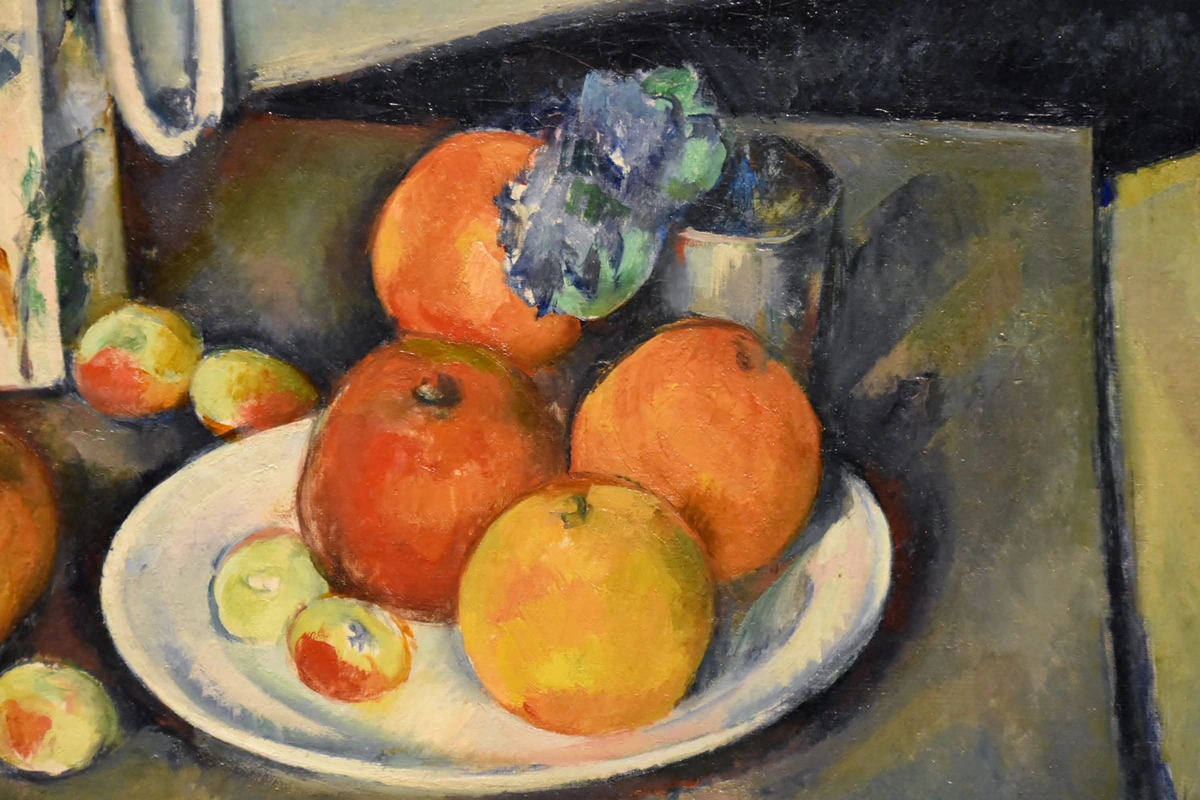
It was a revolutionary idea, one that directly countered the established artistic norms of his time: Cézanne radically challenged the centuries-old, seemingly sacrosanct conventions of perspective in art. Traditional linear perspective, perfected in the Renaissance, sought to create the illusion of three-dimensional space from a single, static viewpoint—much like a photograph freezes a single moment. Cézanne found this limiting, a distortion of true human vision, which is inherently dynamic and multi-faceted. When do we ever perceive a scene from just one static point? Our eyes constantly shift, our heads move, and our minds synthesize these fleeting impressions into a holistic understanding. Instead, his paintings often compel you to feel as though you're experiencing an object or scene from multiple angles simultaneously, integrating successive glances over time, much as your eye and mind would naturally process a scene. Imagine, for a moment, walking slowly around a still life, observing it from the front, then from slightly above, then from the side, taking in all those shifting perceptions, and then attempting to integrate that holistic, dynamic experience onto a single, flat canvas. That, in essence, is what Cézanne was achieving. A tabletop might subtly tilt forward in a way that seems physically impossible, or a wine bottle might appear slightly distorted, its silhouette subtly shifted. These were not mistakes, nor were they clumsy draughtsmanship; they were deliberate, revolutionary choices designed to convey a more comprehensive, tactile, and intellectually engaged sense of reality. He wasn't just showing you what he saw, but rather how he saw it, meticulously breaking down the moment of perception into its constituent, shifting parts. This challenged the viewer's ingrained certainty, forcing an active engagement with the canvas, acknowledging that our own vision is never truly static. This radical approach laid crucial groundwork for the spatial innovations of Cubism.
The Art of 'Passage': Blurring Boundaries
In his quest for a unified, holistic vision, Cézanne developed a subtle yet powerful technique known as passage, a French term meaning 'to pass through' or 'to cross over'.
This multi-faceted vision often involved a technique known as passage, a French term meaning 'to pass through' or 'to cross over'. Unlike traditional painting where objects are crisply delineated with hard outlines, Cézanne frequently allowed adjacent forms or colors to bleed into each other without distinct boundaries. This created a fluid, interconnected visual field, blurring the lines between foreground and background, object and space, making everything feel part of a unified, breathable whole. It’s like watching a dissolve in cinema rather than a sharp cut, or observing the subtle atmospheric transitions in nature where a distant mountain merges with the sky. This technique further emphasizes the multi-faceted, continuous experience of viewing, forcing the eye to complete forms and actively participate in the construction of the image, rather than passively receiving a predetermined scene. Consider his landscapes, where the edges of a tree might subtly merge with the sky, or a distant hill blend into the clouds, creating a palpable sense of continuous space and atmospheric unity. This seamless transition prevents individual objects from being isolated; instead, everything feels intrinsically connected, breathing as a single, interdependent entity, much like our holistic experience of the natural world.`
Color as Construction: The Power of the Brushstroke
Beyond form and perspective, Cézanne also used color in an entirely unprecedented way, elevating it from a mere descriptive element to a fundamental building block of form, volume, and space itself. For him, color wasn't merely a descriptive element, used to fill in outlines or capture atmospheric light; it was a fundamental building block of form, volume, and space itself. He applied paint in distinct, deliberate patches—what art historians later termed constructive brushstrokes. These weren't blended seamlessly into a smooth illusion, as was typical in academic painting, nor were they the rapid, broken dabs of the Impressionists aiming for fleeting light. Instead, Cézanne's brushstrokes were carefully placed, methodical dabs and parallel hatchings of pigment, building up form and volume stroke by painstaking stroke. Look closely at one of his paintings, and you'll often see a vibrant, almost mosaic-like tapestry of these brushstrokes, each contributing to a sense of incredible solidity, depth, and three-dimensionality. It's like seeing the world through a prism, or perhaps building a wall with carefully chosen bricks of varying hues, where each carefully chosen and placed facet of color contributes to the overall structure, making the forms advance or recede, defining their weight and presence on the canvas. He literally built with color. This was a tectonic approach, where each precise dab of paint was like a carefully placed brick in a monumental structure, contributing to the overall integrity and perceived weight of the forms. It imbued his paintings with a unique vibrancy and a profound sense of rootedness.
Artistic Themes and Obsessions: A Limited World, Limitless Vision
Cézanne, a man of profound habit and intense focus, gravitated towards a relatively limited number of subjects, which he revisited obsessively throughout his career. This wasn't a sign of creative limitation, but rather a deliberate strategy: these familiar themes became controlled laboratories for his tireless formal investigations into the nature of vision and representation. His dedication to these select motifs allowed him to push his formal inquiries to their absolute limits, akin to a scientist conducting repeated experiments on a controlled variable. His primary genres were:
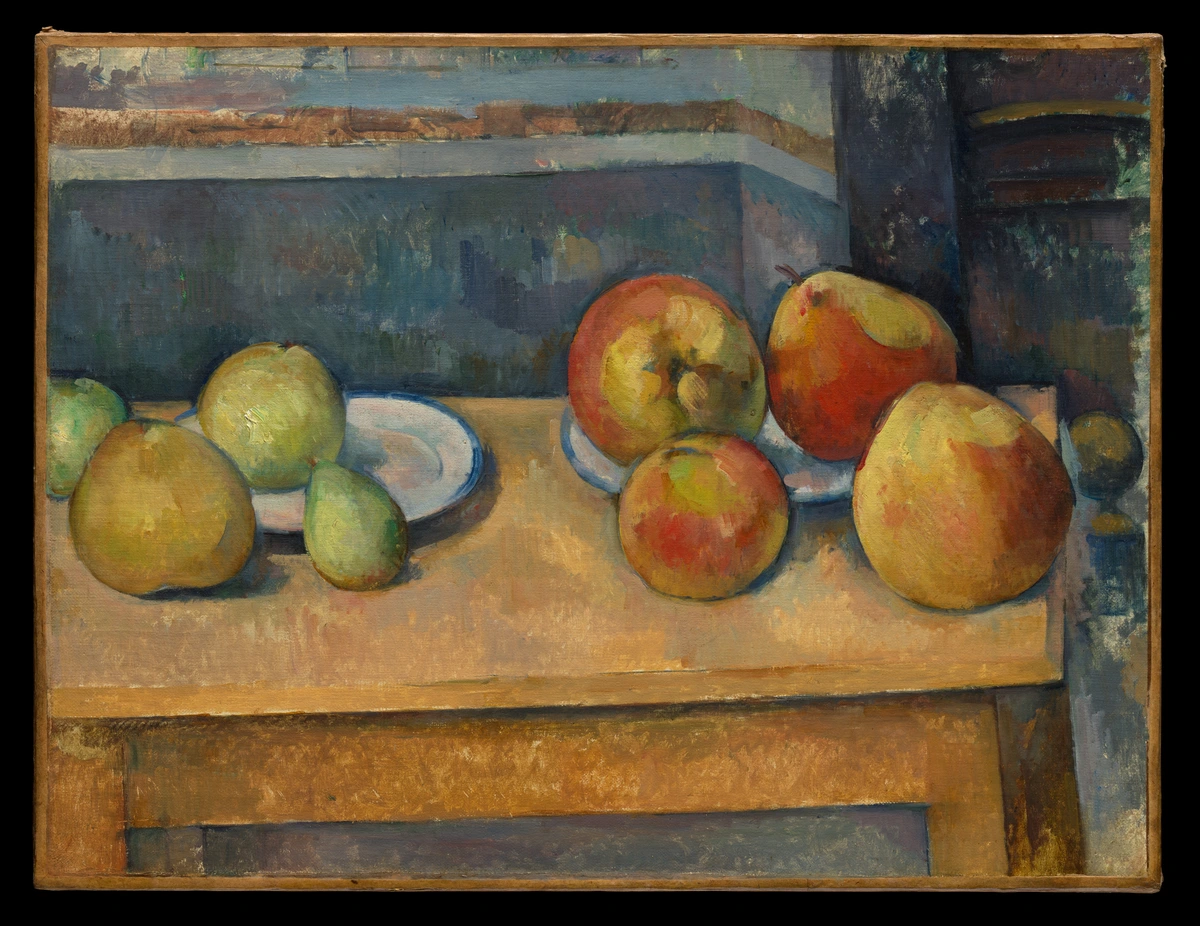
- Still Lifes: Perhaps his most iconic works, these weren't merely charming arrangements of fruit and domestic objects; for Cézanne, a still life was a controlled laboratory to explore the most fundamental questions of form, volume, multiple perspectives, and the dynamic relationship between objects in space. Apples, pears, and pitchers became monumental forms, their presence almost architectural, imbued with a quiet, weighty dignity. He could arrange and rearrange them endlessly, observing the subtle shifts in light and shadow, and painstakingly construct their presence on the canvas. He famously said, "With an apple I will astonish Paris." It's an ambition that, I believe, he truly achieved, turning everyday objects into profound studies of perception and indeed, timeless masterpieces.
- Landscapes: His beloved Provence, especially the majestic Mont Sainte-Victoire, became a recurring motif, a spiritual and artistic touchstone that he painted over 60 times. Through these landscapes, Cézanne sought to reveal the underlying geometric structure of nature, demonstrating how light, color, and interlocking planes coalesce to form mountains, trees, and skies. Each brushstroke contributed to the solidity and enduring presence of the scene, transforming fleeting natural phenomena into timeless, constructed monuments. He returned to the same views again and again, like a scientist conducting repeated experiments, searching for the ultimate "realization" of the landscape, and providing us with an unparalleled insight into his evolving vision. These aren't just pretty scenes; they are profound meditations on how we perceive the world, urging us to look beyond the surface to the fundamental truths beneath.
- Portraits: While fewer in number than his other genres, Cézanne's portraits—often of his long-suffering wife, Hortense Fiquet, or local peasants, his gardener, or even himself—are characterized by their intense psychological depth and the sculptural weight he gave to the human form. He was less interested in capturing a fleeting likeness or a sentimental expression and more in rendering the enduring structure and inner essence of his sitters, treating them with the same rigorous formal inquiry he applied to a still life or a landscape. They are often profoundly still, almost monumental in their presence, inviting a deeper contemplation of human form and psychology, revealing a quiet dignity in even the most humble sitter.
- Self-Portraits: His numerous self-portraits, painted throughout his career, offer an unparalleled glimpse into his intense self-scrutiny and lifelong struggle. These are not vanity projects, but rather rigorous, almost brutal, examinations of his own form, treated with the same detached, analytical eye he applied to his still lifes or landscapes. They reflect his isolation, his doubts, and his unyielding commitment to his artistic vision, depicting a man wrestling with both paint and his own identity, making them some of the most honest and revealing self-examinations in art history. Looking at them, I often feel I'm peering into the soul of a man consumed by his artistic quest.
- Bathers: His ambitious series depicting nude figures, usually in outdoor settings, represented his lifelong struggle to integrate the human figure into his structural vision of landscape. These works, particularly the monumental Les Grandes Baigneuses, are considered a crucial bridge between classical figure painting and early Cubist innovations, demonstrating his radical approach to the human form as an arrangement of geometric volumes. He stripped away conventional anatomical grace, instead presenting the figures as weighty, almost architectural elements, often echoing the poses of classical antiquity but with a distinctly modernist, structural vocabulary. These bathers, often depicted with a timeless anonymity, became a proving ground for his revolutionary approach to the human figure as a fundamental structural element, shaping the very future of how the human form would be rendered in modern art.
Famous Artworks: More Than Just Fruit Bowls (But Oh, What Fruit Bowls!)
While Cézanne didn't leave behind a massive, easily consumable body of work like some artists (he was famously slow, meticulous, and painstaking in his process, often destroying works he deemed unfinished), the pieces he did create were nothing short of earth-shattering in their impact. They are the quiet manifestos of a new artistic era, laboratories of perception that fundamentally altered the course of art history. For me, they represent moments of profound insight, distilled onto canvas through relentless effort. Since words can only do so much to describe the visual revolution he initiated, here's a more extensive table of some of his most important pieces and why they fundamentally changed how we look at art. These are the works that, I believe, truly force us to see differently, to question our assumptions about reality and representation.
Artwork Title  | Year (Approx.) | Significance & Why It's a Game-Changer |
|---|---|---|
| A Modern Olympia | c. 1873–1874 | Cézanne's raw, provocative, and highly personal response to Édouard Manet's infamous Olympia. Manet's painting had already scandalized the Salon with its unidealized, direct gaze of a nude prostitute; Cézanne amplified this provocation with a fantastical, almost feverish vision. This painting, a sensation (and scandalous provocation) at the very first Impressionist exhibition, loudly declared his departure from the polite conventions of academic norms. It showcased his bold, expressive early style—often termed his "Romantic-Baroque" period—and pushed the boundaries of taste and conventional subject matter with its stark modernity, unapologetic brushwork, and direct challenge to the art establishment. This painting, with its almost violent energy and deliberately unpolished aesthetic, was met with scandal and derision by critics and the public alike, a testament to its radical departure from accepted artistic norms. It's a powerful statement of his independent artistic voice right from the outset. |
| The House of the Hanged Man | c. 1873 | Also a key work from the very first Impressionist exhibition, this landscape reveals Cézanne's early, yet clear, divergence from his peers. While painted in Auvers-sur-Oise, often alongside Camille Pissarro (a leading and influential Impressionist who mentored Cézanne and whose palette Cézanne often adopted), it already exhibits his burgeoning interest in constructing solid forms, creating deep spatial recession, and prioritizing the underlying, enduring structure of the landscape over mere atmospheric effects or fleeting light. It's an Impressionist palette applied with a wholly un-Impressionist sensibility, hinting at the monumental landscapes to come. Exhibited at the very first Impressionist show, it baffled many critics who were expecting the lighter, more ephemeral works of Monet or Renoir. Its structural weight and introspective quality marked it as distinct. The sense of quietude and solidity is palpable, a structural weight that sets it apart from his peers. |
| The Basket of Apples | c. 1893 | A seminal masterpiece and perhaps the most famous example of Cézanne's 'impossible' still life. Here, the tabletop defiantly rejects rigid single-point perspective, tilting forward as if about to spill its contents, while the apples appear on the verge of rolling off. The basket itself is seen from multiple angles simultaneously, and the bottles might have subtly shifted contours. Yet, paradoxically, the overall composition feels monumentally solid, perfectly balanced, and strangely harmonious despite its formal contradictions. It's a profound challenge to the viewer's ingrained perception of space, gravity, and conventional representation, inviting a more active, intellectually engaged, and multi-faceted way of seeing—a visual puzzle that still captivates and frustrates art historians today. It demands that you, the viewer, mentally reconstruct the scene, acknowledging the inherent subjectivity and dynamism of human vision. It's not just a painting of apples; it's a painting about the act of seeing apples. |
| Mont Sainte-Victoire Series | 1882–1906 | This iconic mountain, a constant, almost spiritual presence outside his studio in Aix-en-Provence, became an almost obsessive subject for Cézanne, painted over 60 times throughout his career. Each iteration is a rigorous, almost scientific and spiritual, study in how light, color, and interlocking geometric planes coalesce to constitute natural forms. Far from mere repetition, these paintings represent an ongoing, monumental deconstruction and reconstruction of landscape, revealing its underlying, eternal structure rather than its transient, atmospheric appearance. They are deep meditations on form, light, volume, and the very essence of place, demonstrating his lifelong quest for "realization"—the ultimate fusion of perception and representation, where the canvas becomes a living, breathing structural equivalent of nature itself. This series is arguably his most sustained artistic experiment. |
| The Card Players Series | 1890–1895 | A series of five quiet, profoundly monumental paintings depicting Provençal peasants deeply absorbed in a game of cards at a local café or farmhouse. Far from sentimental genre scenes or mere anecdotal portrayals, Cézanne imbues these everyday figures with an incredible sense of timeless dignity, sculptural weight, and an almost introspective psychological depth. They are masterclasses in focused human presence and profound stillness, each figure rendered with a monumental solidity and simple grandeur that elevates the mundane to the eternal, inviting us to contemplate the quiet intensity of human interaction and interiority. The compositions are carefully balanced, almost architecturally conceived, with a palpable sense of internal concentration. |
| Still Life with Curtain | c. 1895 | An exceptionally complex and dynamically composed still life that pushes the boundaries of the genre and is considered one of his most ambitious. It masterfully explores multi-point perspective, the interplay of disparate objects (often seen from subtly different vantage points), the rich, weighty folds of fabric (the "curtain" often treated not as soft drapery but as another solid, architectural form), and the intricate occupation of space. The drapery, fruits, and pottery create a vibrant tension and formal richness, demonstrating his advanced, almost Cubist-like, theories of vision and composition, where forms are both solid and fluid. The entire arrangement seems to breathe with internal energy and spatial ambiguity. |
| The Bathers (Les Grandes Baigneuses) | 1898–1905 | His final, and arguably most ambitious, monumental series of paintings. These large-scale works, spanning years of intense labor, feature female nudes structured almost like architectural elements, integrated into vast, idealized landscapes, often with a triangular composition. They represent his grand, lifelong attempt to reconcile the human figure with nature and classical tradition (evoking earlier masters like Titian or Poussin), while simultaneously forging a revolutionary modernist vision. These works, in particular, would profoundly influence the emerging Cubist movement in their rendering of the human form as an arrangement of geometric volumes, breaking away from conventional anatomy to emphasize structural solidity and spatial integration. |
| The Boy in the Red Vest | 1888–1890 | One of several powerful portraits of a young Italian model, Michelangelo di Rosa, this work is a quintessential example of Cézanne's mature portraiture. The boy is depicted in four different poses across the series, but this particular version is celebrated for its dynamic composition, the sculptural weight of the figure, and the vibrant use of color, especially the striking red of the vest. The subtle distortions in the boy's posture and the tilted background elements are deliberate, defying conventional perspective to create a sense of profound psychological depth and structural solidity, making the sitter feel monumental and eternal. |
| Château Noir Series | c. 1900–1906 | A series of landscapes depicting the mysterious, crumbling, and often foreboding estate near Aix-en-Provence, which Cézanne owned and frequently visited. These late works push further into abstraction, with the architecture and surrounding nature—trees, rocks, the building itself—dissolving into vibrant, interlocking planes of color and form. They are intense, almost feverish, meditations on his evolving structural approach, with the subject matter becoming secondary to the formal investigation, a pure exploration of form and color. These works, more than almost any other, are almost proto-Cubist in their execution, showing a radical fragmentation and reassembly of visual information, where reality is less depicted and more constructed through color and plane. |
These works, often dismissed or ridiculed during his lifetime, were, in fact, laying the foundational groundwork for entirely new ways of seeing and creating art. They weren't just pretty pictures; they were demanding propositions that challenged viewers to engage not merely with the subject matter, but with the very act of painting itself, and indeed, with their own act of perception. For me, they represent a profound challenge to artistic complacency, a call to dig deeper than surface appearances.
What an incredible legacy, right? To look at a simple bowl of apples and see the future of art.`

The Indispensable Bridge to the 20th Century: Architect of Modernism
The Road to Recognition: From Obscurity to Avant-Garde Acclaim
For much of his career, Cézanne labored in profound, almost self-imposed, obscurity. He wasn't chasing fame; his singular pursuit was the internal truth of his artistic vision, the elusive "realization" on canvas. Yet, even as the official art world scoffed, dismissing his work as clumsy or unfinished, a small but increasingly significant circle of discerning younger artists and forward-thinking collectors were paying very close attention. They sensed something profoundly new and powerful in his work, a genuine radicalism that transcended the fleeting trends of the day. The tide began to turn, slowly but surely. By the time he had his first significant solo show in 1895, meticulously orchestrated by the astute Parisian dealer Ambroise Vollard, at the relatively late age of 56, a new, hungry generation of artists was finally ready for what he had to offer. This exhibition, a brave move by Vollard, marked the true genesis of his reputation, beginning to solidify within the avant-garde circles, a quiet ripple before the tsunami that would redefine art history. Vollard, initially skeptical but quickly won over by the profound originality he saw, took a significant risk by showcasing a relatively unknown and unconventional artist. He became Cézanne's primary dealer, tirelessly championing his work. Vollard, alongside other early champions like Gustave Geffroy and Roger Fry, played a critical role in bringing Cézanne's work to wider, albeit still niche, public attention, patiently building his reputation among a select group of artists, critics, and collectors who possessed the foresight to recognize his groundbreaking genius. It's a powerful reminder that true genius often takes time to be seen, let alone appreciated.`
The 1907 Retrospective: The Genesis of Modernism
The true earthquake, however, struck posthumously. When Cézanne died in 1906, a major retrospective of his work was held in Paris the very next year at the Salon d'Automne of 1907. This wasn't just an exhibition; it was nothing short of a conceptual bomb detonating in the art world. For many, it was the first time they saw the full scope of his relentless experimentation, his decades of isolated, intense inquiry laid bare. Artists who experienced it—and many did, including the future titans of modernism like Henri Matisse, Pablo Picasso, and Georges Braque—had a collective, paradigm-shifting revelation. It unveiled a radical new path forward, a profound liberation from the centuries-old constraints of traditional representation, a blueprint for a completely new visual language, leading directly to the revolutionary Cubism movement. I can only imagine what it must have felt like to witness that moment of revelation, where the past suddenly dissolved, and the future of art materialized before their eyes.
The true earthquake, however, struck posthumously. When Cézanne died in 1906, a major retrospective of his work was held in Paris the very next year at the Salon d'Automne of 1907. This wasn't just an exhibition; it was nothing short of a conceptual bomb detonating in the art world. For many, it was the first time they saw the full scope of his relentless experimentation, his decades of isolated, intense inquiry laid bare. Artists who experienced it—and many did, including the future titans of modernism like Henri Matisse, Pablo Picasso, and Georges Braque—had a collective, paradigm-shifting revelation. I can only imagine the intellectual explosion in the minds of those young artists. It unveiled a radical new path forward, a profound liberation from the centuries-old constraints of traditional representation, a blueprint for a completely new visual language, leading directly to the revolutionary Cubism movement.

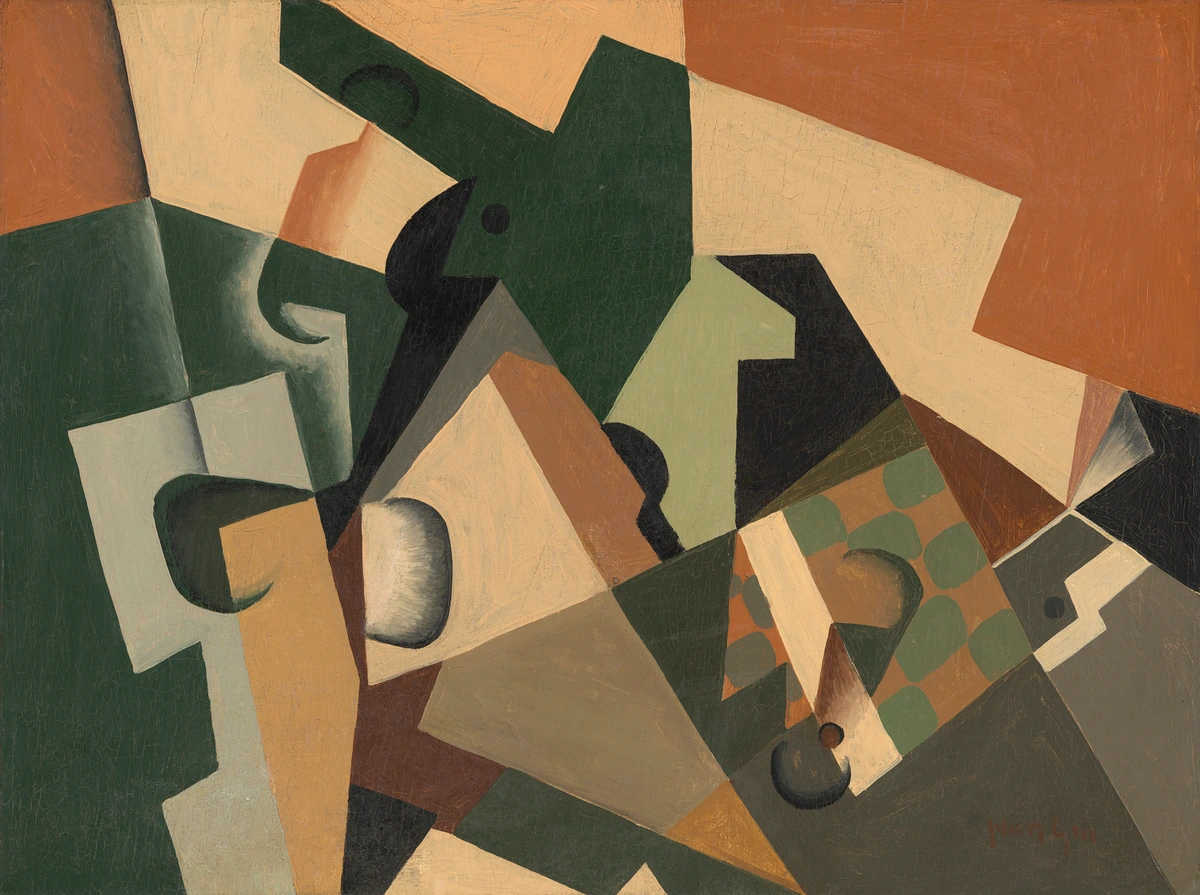
Among those who encountered Cézanne’s work at this pivotal retrospective were young, ambitious artists like Pablo Picasso and Georges Braque, then on the cusp of their own groundbreaking discoveries. They experienced nothing less than an epiphany, a fundamental recalibration of what art could be. They realized that a painting didn’t have to be a mere window onto the world, faithfully reproducing what the eye sees; it could, and indeed should, be an object in its own right—a self-contained, autonomous construction of form, color, and multiple perspectives, a physical entity on the wall. They seized upon Cézanne's embryonic idea of showing multiple viewpoints simultaneously, his geometric reduction of forms, and his emphasis on structural integrity. With exhilarating intellectual rigor, they pushed these concepts to their logical, radical extreme, fragmenting forms and reassembling them on the canvas into a new kind of visual reality. Picasso’s revolutionary Les Demoiselles d'Avignon (1907), often cited as the precursor to Cubism, visibly carries the structural echoes of Cézanne’s late Bathers and landscapes, particularly in the faceted, geometric rendering of the figures and the way space is treated as a series of interlocking planes, almost as if chiseled into existence. The faces of the women, particularly on the right, show a direct engagement with Cézanne's reduction of the human head to essential, sculptural volumes. This encounter was, without hyperbole, the birth of something entirely new.
The electrifying result? Cubism, the most radical and influential art movement of the early 20th century. It was a movement that completely shattered traditional notions of representation, form, and space, reducing subjects to geometric facets and reassembling them into a new kind of reality on canvas. It is quite simply impossible to imagine Cubism, or indeed most of abstract art that followed, without the foundational ideas laid down by Cézanne. If you want to dive deeper into this fascinating lineage, we have an ultimate guide to Cubism that picks up precisely where Cézanne left off, exploring how his vision unfolded into the revolutionary art of Picasso and Braque.
Beyond Cubism: A Broad and Enduring Influence on Modern Art
His influence, however, was by no means limited to Cubism. Artists like Henri Matisse and André Derain, the bold pioneers of Fauvism (a movement known for its wild, expressive, and non-naturalistic color), also studied Cézanne's work deeply. They appreciated his revolutionary use of color not merely for description, but to build structure, create emotional impact, and define space. While Cézanne used color to construct volume, the Fauves pushed this further, liberating color from its descriptive role entirely, allowing it to become an autonomous expressive force, even if their own palettes were often more vibrant, audacious, and less concerned with rigid geometry than Cézanne's. Moreover, his solitary pursuit of a deeply personal vision and the profound emphasis on structure profoundly impacted other Post-Impressionists like Vincent van Gogh and Paul Gauguin, who, though not directly copying his style, shared his ambition to move beyond Impressionism's fleeting moments towards something more emotionally potent, symbolically rich, and structurally sound. Van Gogh, with his expressive, almost sculptural brushstrokes, and Gauguin, with his emphasis on flattened forms and symbolic color, both found in Cézanne's work a validation for moving beyond mere optical realism towards a more subjective and constructed reality. Later figures, including Piet Mondrian and Kazimir Malevich, though leading to pure abstraction, can trace their lineage back to Cézanne's geometric reduction and structural concerns. Cézanne truly became the pivotal figure, the indispensable link, between the Impressionistic explorations of the 19th century and the dizzying explosion of avant-garde movements that defined the 20th. He opened a door, and a generation of artists walked through it, fundamentally reshaping art, leading to movements like Expressionism and indeed, all of modern art.
The Man Behind the Brush: Personality, Process, and Paradox
To fully appreciate Cézanne’s revolutionary artistic output, it’s worth taking a moment to consider the man himself. He was, by all accounts, a profoundly complex, often difficult, and deeply paradoxical individual. His introverted nature meant he often preferred the company of his apples to people, famously stating, "The most essential thing in a picture is to arrange the forms well." He harbored a deep distrust of critics and the public alike, often shying away from exhibitions and preferring the solitude of his studio. His intensely critical self-assessment frequently led to frustration, bouts of intense anger, and even physically destroying his own works if they didn't meet his impossibly high standards. Stories abound of his fierce temper and his obsessive working methods. He would demand that models—including his long-suffering wife, Hortense Fiquet, and his son Paul—sit for hundreds of sittings, sometimes for just a single portrait, and yet still declare the work unfinished, stating "I progress very slowly, for nature reveals herself to me only through prolonged study." The notion of a painting being "finished" was almost anathema to him; it was a continuous process of discovery, an unending dialogue with nature and the canvas. His relentless pursuit of "realization"—that elusive, almost mystical moment when he felt he had truly captured the essence of what he saw, not just its appearance—was a constant, agonizing battle. This demanding personality, this unyielding commitment to his solitary vision, was as integral to his art as his constructive brushstrokes or multi-faceted perspective. It wasn’t an easy path, either for him or for those around him, but perhaps it was the only path for a genius so far ahead of his time, a man whose internal world was as rich and complex as the canvases he created.

It’s natural to have questions about an artist whose work seems to defy easy categorization, who existed in a category of one for so long. Here are some of the most common inquiries about Paul Cézanne and his enduring legacy, delving into the nuances of his life and art:
What did Cézanne say about art?
Cézanne, ever the laconic and deeply focused artist, left behind a collection of profound, if sometimes cryptic, statements that offer invaluable insight into his artistic philosophy. Perhaps his most famous quote, delivered in a letter to Émile Bernard, was to treat nature "by the cylinder, the sphere, and the cone" – a directive not for literal abstraction, but for understanding the fundamental geometric forms underlying all visible reality. He also famously declared his ambition to "make of Impressionism something solid and durable, like the art of the museums," clearly articulating his desire for structural permanence over fleeting impressions. When it came to his process, he famously stated, "I progress very slowly, for nature reveals herself to me only through prolonged study," highlighting his meticulous, almost scientific approach. And, in a moment of confident defiance, he once remarked, "With an apple I will astonish Paris." For me, these quotes aren't just words; they're the distilled essence of a revolutionary mind, guiding us to look deeper and see the world anew.
What was Paul Cézanne's full name?
Paul Cézanne's full name was Paul Cézanne. He was born Paul Cézanne and maintained this name throughout his life. This might seem a simple answer, but it's important to note that unlike some artists who adopted pseudonyms or slightly altered their names for artistic purposes, Cézanne remained steadfastly himself, much like his art, which sought an unvarnished truth.
Why is Paul Cézanne so important?
Cézanne is quite simply considered the crucial, indispensable link, the very fulcrum, between the Impressionism of the 19th century and the radical avant-garde art movements of the 20th century. His most direct and profound impact was undoubtedly on the genesis of Cubism, and by extension, much of modern abstract art. He fundamentally shifted the artistic paradigm from merely depicting nature's superficial, fleeting appearance to constructing its underlying, enduring reality on the canvas. He taught artists a revolutionary new way to think about structure, form, multiple perspectives, and the very act of perception itself. He didn't just paint what he saw; he painted how he understood it—intellectually, emotionally, and structurally—thus opening up a universe of possibilities for future generations, inspiring a move towards non-representational art and a deeper engagement with the inherent qualities of paint and canvas. Without Cézanne's profound insights, the very language of modern art would be fundamentally different, making him truly indispensable. For me, his importance lies in this profound permission he granted artists: permission to interpret, to rebuild, to create a new reality on the canvas rather than merely copy it.
What was Cézanne's temperament like?
Cézanne's temperament was, to put it mildly, complex and often difficult. He was famously introverted, intensely private, and prone to bouts of moodiness and frustration, especially when his artistic process wasn't yielding the "realization" he sought. He harbored a deep suspicion of critics and the public, preferring the solitude of his studio to social gatherings. Anecdotes about his fiery temper are abundant; he could be demanding with his models, lash out if he felt misunderstood, and even destroy his own works if they failed to meet his impossibly high standards. Yet, beneath this gruff exterior lay a profound sensitivity and an unwavering dedication to his artistic vision. It wasn't about being intentionally difficult, I believe, but about an uncompromising pursuit of truth in his art that left little room for social niceties or external validation.
Did Cézanne have a family?
Yes, Paul Cézanne came from a prominent family in Aix-en-Provence. His father, Louis-Auguste Cézanne, was a successful banker. He had two younger sisters, Marie and Rose. In 1869, he met Hortense Fiquet, who became his mistress, then his wife in 1886. Together, they had a son, Paul Cézanne Jr., born in 1872. Despite his reclusive nature, family life, though sometimes tumultuous, was a constant backdrop to his artistic pursuits, with Hortense and Paul Jr. frequently serving as his models.
What is Paul Cézanne's style called?
His unique, intensely personal, and continuously evolving style is most accurately categorized as Post-Impressionism. This umbrella term encompasses a diverse group of artists who, while influenced by Impressionism's focus on light and color, sought to move beyond its transient, fleeting effects towards something more substantial, more expressive, or more structured. Cézanne, a pivotal figure within this movement, aimed to infuse his paintings with a greater sense of permanence, weight, and structural integrity, famously articulating his ambition to "make of Impressionism something solid and durable, like the art of the museums." His deliberate, analytical approach, which emphasized volume, form, and a structured composition over fleeting atmospheric effects, profoundly influenced later movements like Expressionism and ultimately, all of modern art. Indeed, his late works often exhibit a fragmented, geometric quality that has led many to describe them as "Proto-Cubist," foreshadowing the radical developments just around the corner. It's a style that defies easy labels, a bridge built with careful deliberation and revolutionary vision, a style that for me, feels like looking at the world through a deeply thoughtful, almost architectural lens.
What are some lesser-known facts about Cézanne?
Beyond his iconic grumpy genius persona, a few lesser-known facts often add color to Cézanne's story. For instance, he had a lifelong passion for classical music, particularly the operas of Richard Wagner, which offered a dramatic counterpoint to his quiet, solitary painting life. He was also an avid reader, especially of French poetry and classical literature, constantly engaging his intellect beyond the canvas. And despite his often-strained relationships, he maintained a deep affection for his childhood home and the Provençal landscape, finding solace and endless inspiration in its enduring beauty. These details remind me that even the most revolutionary artists are complex individuals with a rich inner world that often goes unseen.
What was Cézanne's daily routine?
Cézanne's daily routine was largely dictated by his rigorous artistic practice and his reclusive nature. He was an early riser, often beginning work in his studio or out in the Provençal landscape at dawn. He worked in intense, sustained bursts, often oblivious to time and his own physical needs. His process was painstaking and slow; a single still life might require over a hundred sittings. He would frequently travel between his studio in Aix, his family home, and various outdoor painting spots, particularly the motif of Mont Sainte-Victoire. Evenings were often spent in quiet reflection or reading, though he did maintain a few close friendships in his later years. This focused, almost monastic routine allowed him to immerse himself fully in his artistic investigations, away from the distractions and social conventions he largely disdained.
What health issues did Cézanne face?
In his later years, Cézanne suffered significantly from diabetes, which had a profound impact on his health and potentially, some art historians speculate, on his artistic output. Some theories suggest that the disease might have affected his eyesight, contributing to the distinctive, almost vibrating quality of his later works, though this remains a subject of ongoing debate and fascination for me. The illness certainly contributed to his already reclusive nature, exacerbating his physical discomfort and sense of isolation, and ultimately led to his death in 1906, after he was caught in a severe thunderstorm while painting outdoors—a truly poetic, if tragic, end for a man so dedicated to nature.
What were Cézanne's key artistic innovations?
His groundbreaking innovations fundamentally reshaped the course of art, offering a new grammar for visual representation. They include:
- Geometric Reduction: The revolutionary idea of seeing and representing nature not by its superficial appearance, but by its underlying, essential geometric forms (cylinders, spheres, cones) to expose its enduring structure. This wasn't about literal abstraction, but about understanding the elemental building blocks of all visible things, an intellectual process that transformed how artists approached visual information. For me, it was a fundamental shift from merely optical representation to an intellectual and structural interpretation of reality.
- Multiple Perspectives (or Multi-Viewpoint Perspective): A radical departure from traditional single-point perspective. Cézanne often presented objects from several viewpoints simultaneously within a single canvas, integrating successive glances to convey a more comprehensive, tangible sense of their existence in three-dimensional space and the active, temporal process of human perception. This challenged the notion of a single, objective truth in painting, mirroring how our eyes and minds actually work, and forcing a more dynamic engagement from the viewer.
- Constructive Brushstrokes: The meticulous use of distinct, often parallel or cross-hatched, patches of color to systematically build up form, volume, and depth, rather than blending colors smoothly. This technique made color itself a structural element, where each mark contributed to the overall architectural integrity of the composition, making forms advance or recede based on their hue and saturation, not just outline or traditional chiaroscuro. It was, in essence, building with paint, brick by colorful brick, a tactile and monumental approach.
- "Passage": A subtle yet revolutionary technique where forms are not rigidly outlined but rather blend and bleed into adjacent forms, creating a fluid, interconnected visual field. This defiance of traditional separation enhances the sense of unified composition and forces the viewer's eye to actively participate in defining forms, creating a dynamic interplay between object and space, making the painting a breathing whole. It’s like the visual equivalent of a gentle dissolve, rather than a harsh cut, in cinematic terms, inviting me to connect the visual dots myself.
- Emphasis on Form and Volume: A powerful reassertion of the importance of three-dimensional form, weight, and solidity, which had been somewhat dissolved by Impressionism's focus on atmospheric effects and fleeting light. Cézanne brought a monumental gravity back to painting, reminding us that the physical presence of objects is as vital as their fleeting appearance. It was a quest to give the painted world a tangible, almost sculptural presence.
How did Cézanne define his artistic mission?
Cézanne's artistic mission was singular, relentless, and deeply personal. He famously declared his desire to "make of Impressionism something solid and durable, like the art of the museums," expressing a profound longing for structure and permanence in art that he felt was lacking in the fleeting impressions of his contemporaries. His ultimate goal was the elusive "realization" on canvas – a term I find endlessly fascinating. For him, it wasn't just about depicting what he saw, but about grasping and conveying the essence, the underlying truth, and the structural integrity of the motif. It was a lifelong quest to achieve a profound fusion of perception and representation, where the artistic means (color, form, brushstroke) perfectly aligned with his internal vision to create a complete, solid, and durable image that resonated with his deepest understanding of nature's immutable laws. It was, I believe, a philosophical as much as an artistic undertaking.
Where was Cézanne's studio?
Cézanne's primary studio during his most productive later years was located on the Chemin des Lauves, just outside Aix-en-Provence. This studio, now preserved as the Atelier Cézanne, was a sanctuary where he could work in profound solitude, surrounded by his still life props, canvases, and the ever-present view of Mont Sainte-Victoire. It was here that many of his most revolutionary works were conceived and executed, a private laboratory for his tireless exploration of perception and form. The studio itself is a pilgrimage site for art lovers, offering a tangible connection to the artist's solitary world.
How did Cézanne view the art market?
Cézanne held a deeply ambivalent, and often contemptuous, view of the official art market and its fickle trends. He was not interested in conforming to popular taste or chasing sales. His primary motivation was the relentless pursuit of his artistic vision, his "realization" on canvas, not financial gain or public acclaim. He often felt misunderstood and rejected by the Salon system and the Parisian critics. While he did eventually achieve some financial stability late in life, largely through the efforts of dealers like Ambroise Vollard, he remained largely detached from the commercial aspects of art. For him, the integrity of his artistic search far outweighed any market valuation. It’s a good reminder that genuine artistic breakthroughs often happen outside the immediate gaze, or even approval, of the market.

What is Cézanne's most famous painting?
It's truly challenging, and perhaps even misses the point, to pick just one, as his immense fame and influence derive from his entire revolutionary approach rather than a single, universally iconic image like, say, the Mona Lisa. However, if pressed, the Mont Sainte-Victoire series (his obsessive, decades-long studies of the mountain near his home, which became a laboratory for landscape construction, exploring the very essence of form), The Card Players series (monumental, introspective portrayals of Provençal peasant life, imbued with a timeless dignity), and The Basket of Apples (a masterclass in challenging perspective and gravity in still life, inviting an active engagement from the viewer) are all exceptionally strong contenders for his most renowned and influential works. Each piece powerfully showcases a different, yet equally crucial, facet of his revolutionary approach to art. For me, it's less about a single painting and more about the collective impact of his unrelenting vision that truly defines his legacy.
What materials did Cézanne use?
Cézanne primarily worked with oil paint on canvas, the traditional medium of his time, but he used it in an anything-but-traditional way. He favored a relatively limited palette of colors, focusing on the careful modulation of hues and tones to build form and volume, rather than relying on a vast array of pigments. His canvases were often prepared with a light ground, allowing the texture and color of the raw canvas to interact with the paint, contributing to the overall luminosity and structure. He applied paint with robust, deliberate brushstrokes, often visible and unblended, creating a dense, textured surface that almost feels sculpted. His meticulous process meant he frequently took years to complete a single painting, layering pigment and constantly reworking areas in his relentless pursuit of "realization." It was a slow, painstaking dialogue between the artist, his materials, and the motif, a true labor of love and intellectual rigor.
Did Cézanne ever become successful in his lifetime?
Success came agonizingly late for Paul Cézanne. For the vast majority of his career, he was largely ignored, profoundly misunderstood, and often outright ridiculed by the conservative art establishment and the general public. He exhibited rarely, and when he did, his works were often met with scorn and bewilderment. It was only in the last decade or so of his life, particularly after his pivotal first solo exhibition orchestrated by the astute dealer Ambroise Vollard in Paris in 1895, that he began to gain significant, albeit still niche, recognition and some measure of financial success. This acclaim came primarily from a small, but increasingly influential, circle of fellow avant-garde artists (who recognized his genius long before official critics) and a handful of discerning, forward-thinking collectors. Tragically, his widespread influence and truly monumental fame only exploded and became undeniable after his death, when his full impact could finally be grasped and truly appreciated by the broader art world. It's a stark reminder that true innovation often has a long incubation period.
What influence did photography have on Cézanne's work?
While Cézanne was contemporary with the rise of photography, its influence on his work was more in opposition than emulation. He fundamentally rejected the single, static viewpoint and fleeting impression that photography offered. Indeed, his multi-viewpoint perspective and search for enduring form can be seen as a direct counter-statement to the photographic lens. Rather than capturing a "snapshot" of reality, Cézanne aimed to capture a more comprehensive, intellectual, and temporal experience of seeing, integrating the successive glances of the human eye—something a photograph simply cannot do. However, like many artists of his time, he may have used photographs as studies for compositions, but always with the intention of transcending their limitations and imbuing his paintings with a deeper, more constructed reality. It was a challenge to the perceived objectivity of the camera, asserting the artist's subjective interpretation as a higher truth.
What was Cézanne's relationship with his models and sitters?
Cézanne's relationship with his models, particularly his long-suffering wife Hortense Fiquet, was notoriously demanding. He wasn't interested in polite conversation or capturing a flattering likeness; he was interested in their underlying form, their sculptural presence, their "bones" if you will. He would often demand hundreds of sittings for a single portrait, sometimes requiring models to hold poses for hours, even days, without moving. There's a famous anecdote of him chastising a model for moving, exclaiming, "Are you going to disturb my studies? You must be solid like a mountain!" His focus was so intense that he often treated them as another element in his still lifes, an object to be meticulously studied and constructed. While this could undoubtedly be frustrating, and at times, perhaps even demeaning for his sitters, it allowed him to achieve an extraordinary depth of character and structural integrity in his portraits, revealing the inner essence rather than just the outward appearance. It was a testament to his singular vision, even at the expense of social graces.
What are some common misconceptions about Cézanne?
One common misconception is that Cézanne was a "primitive" or "clumsy" painter due to his often-distorted perspectives and visible brushstrokes. In fact, these were deliberate, highly intellectual choices, part of his revolutionary quest to depict a deeper reality than superficial appearances, a choice that I personally find incredibly brave. Another misconception is that he was a complete hermit; while he valued solitude for his work, he maintained a few important friendships and connections throughout his life, though on his own terms. Lastly, some might view his repeated rendering of subjects like Mont Sainte-Victoire as a lack of imagination, when in fact, it was a profound, almost scientific, dedication to exploring the same motif from endless angles and perceptions, always searching for the ultimate "realization." It was a masterclass in focused, iterative creation, rather than a deficiency of ideas.
Did Cézanne influence only painting, or other arts too?
While his most direct and celebrated influence was on painting, particularly Cubism, Cézanne's radical ideas about structure, multiple perspectives, and the construction of reality extended far beyond the canvas. His approach subtly impacted thinkers in other fields, inspiring architects to consider forms in a more volumetric way, and even influencing literary figures to experiment with fragmented narratives and subjective viewpoints, reflecting his multi-faceted vision of reality. For me, this cross-disciplinary ripple effect is one of the most compelling aspects of his legacy – a foundational shift in perception that truly changed how many artists across disciplines approached the challenge of representing the world. It showed that seeing differently could resonate in countless ways.
What is the current market value of Cézanne's paintings?
Paul Cézanne's paintings are among the most highly valued and sought-after artworks in the global art market. When they come up for sale, they command extraordinary prices, often tens or even hundreds of millions of dollars, reflecting his pivotal importance in art history and the rarity of his works. For example, one version of The Card Players famously sold for an estimated $250 million in 2011 (though private sales figures are often unconfirmed), making it one of the most expensive artworks ever sold. However, the exact market value of any specific work fluctuates based on provenance, condition, subject matter, and current market demand. While it's certainly fascinating to consider the financial aspect, for me, the true, inestimable value of a Cézanne lies in its profound aesthetic and intellectual contribution to how we see the world, rather than its monetary tag. It's a testament to his lasting impact that his works continue to set records and inspire awe, proving that some artistic ideas are truly priceless.
Where can I see Cézanne's work in museums?
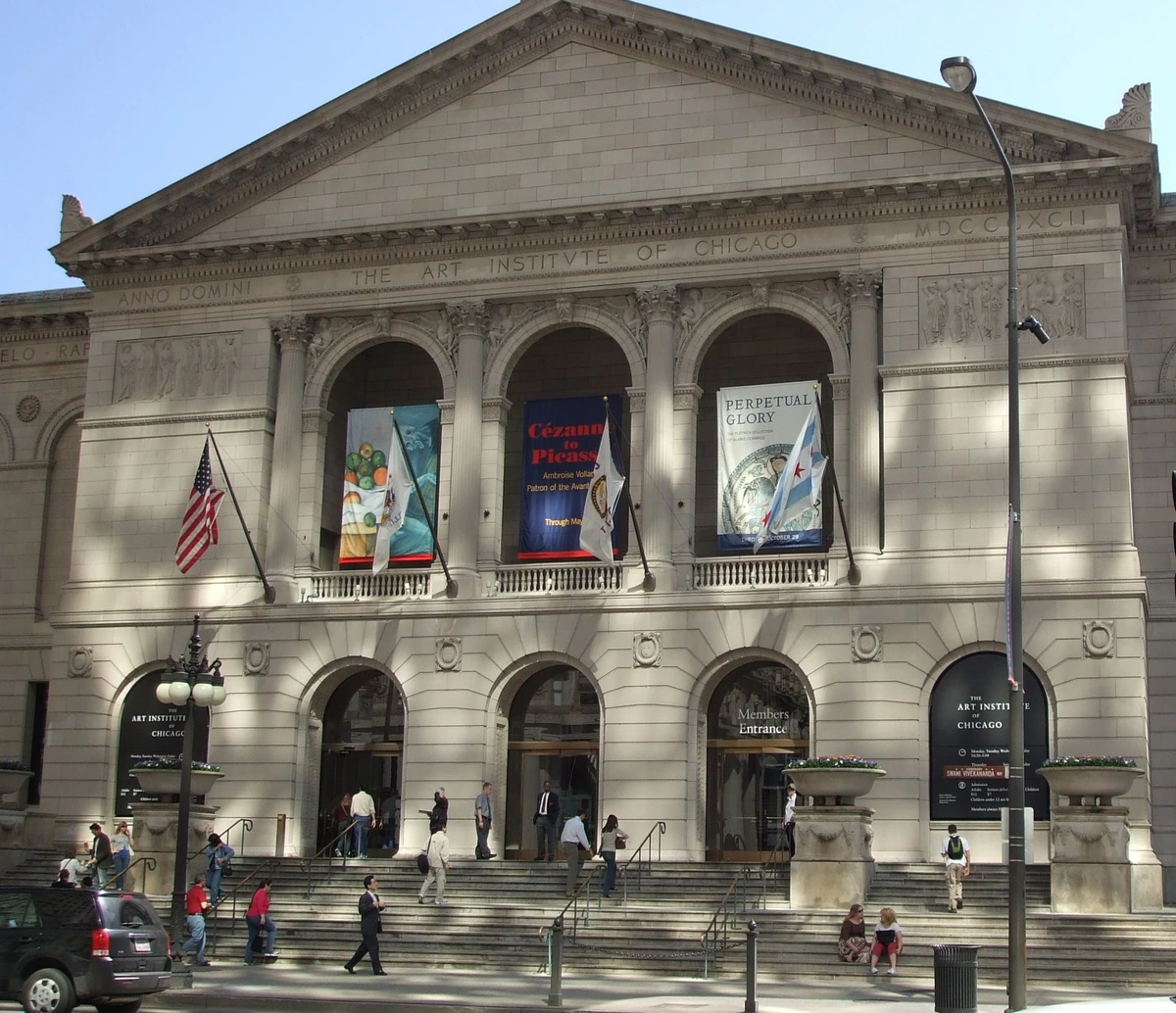
Cézanne's works are highly sought after and can be found in major art museums around the world. Some of the most significant and comprehensive collections are housed in institutions such as the Musée d'Orsay in Paris, the Metropolitan Museum of Art in New York, the Museum of Modern Art (MoMA) in New York, the Barnes Foundation in Philadelphia, the Art Institute of Chicago, and the Hermitage Museum in St. Petersburg. You can also find important works at the National Gallery in London, the Pushkin Museum in Moscow, and the National Gallery of Art in Washington D.C. Many other prestigious galleries and private collections also boast his masterpieces, making him a central figure in any comprehensive survey of modern art. If you ever get the chance, seeing his work in person is an entirely different experience, allowing you to truly appreciate the texture of his brushstrokes and the subtle shifts in perspective that get lost in reproductions. It's a powerful reminder that art is meant to be experienced, not just observed or scrolled past on a screen, and I highly recommend seeking out a Cézanne in the flesh.
What is "realization" in Cézanne's context?
For Cézanne, "realization" was an almost spiritual term that described the elusive moment when an artist achieved a profound fusion of perception and representation on the canvas. It wasn't merely about depicting what he saw, but about grasping and conveying the essence, the underlying truth, and the structural integrity of the motif – a process of visual and intellectual understanding that went far beyond mere imitation. It was the moment when the artistic means (color, form, brushstroke) perfectly aligned with his internal vision to create a complete, solid, and durable image that resonated with his deepest understanding of nature's immutable laws. This quest for "realization" fueled his obsessive working methods and his constant dissatisfaction, as he felt it was a goal that was always just beyond reach, a painter's perpetual striving for an ultimate, unattainable truth. It's a concept that resonates deeply with my own artistic journey, this endless pursuit of capturing an essence that feels both seen and understood.
What was the critical reception of Cézanne's work during his lifetime?
For the vast majority of his life, Cézanne's work was met with bewilderment, ridicule, and outright hostility from the official art establishment and the general public. Critics often deemed his paintings clumsy, unfinished, or even grotesque, sometimes even calling them the work of a madman. His unconventional approach to perspective, color, and form was seen as a sign of amateurism or madness, a complete departure from the academic norms of the time. He was largely isolated, living in relative obscurity in Aix-en-Provence, often shunning the very critics who derided him. It was only in the final decade of his life, primarily through the efforts of forward-thinking dealers like Ambroise Vollard and a small, but growing, circle of avant-garde artists and collectors, that his genius began to be recognized. However, widespread critical and public acclaim, and indeed his monumental status, came only after his death, most dramatically following the retrospective at the Salon d'Automne in 1907. It's a classic story of an artist ahead of his time, proving that genuine vision sometimes takes a generation or two to catch up.
The Quiet Revolutionary: A Lasting Legacy
When I cast my gaze across my own artistic journey, which, if you're curious, you can explore on my timeline or see manifested in my works available to buy, I frequently find myself returning to the quiet, steadfast, and profoundly independent example of Cézanne. I reflect on those decades of solitary, often unrecognized, labor; the relentless, almost obsessive pursuit of a deeply personal visual truth, even when the mainstream art world (and sometimes, even his closest confidantes) simply didn’t seem to grasp it. He was no showman, no self-promoter. Instead, he was, first and foremost, a worker—a tireless, methodical explorer of visual reality, a philosopher with a paintbrush, a man deeply committed to seeing and understanding the world on his own terms. He wasn't interested in fleeting impressions or transient popular appeal; his sole, unwavering aim was to understand and capture the very essence of what he saw, to make it 'solid and durable,' a statement for the ages. It's a profound lesson in artistic integrity and the courage to pursue a singular vision, regardless of external validation.`













His legacy, then, isn't merely in the groundbreaking paintings he left behind, which are monumental enough. It's in the profound permission he gave to artists to break free from prescriptive rules and to see the world through their own unique eyes, to question conventional representation, and to delve into the very structure of perception. He showed us that a simple bowl of apples, a rugged mountain, or a few peasants playing cards could contain an entire universe of formal and conceptual possibilities, as long as you were willing to look hard enough, think deeply enough, and dare to rebuild what you saw. This quiet revolution, born in the solitude of Provence, continues to resonate, reminding us that true innovation often comes from those who dare to look beyond the obvious, and to forge their own path, regardless of external validation. And that, for me, is the undeniable, transformative mark of a true, quiet genius. His work invites us not just to look at a painting, but to engage with the act of seeing itself, to peel back the layers of superficiality and grasp the deeper, more enduring structures of the world around us. It's an invitation to a deeper, more thoughtful way of experiencing reality, a legacy that continues to resonate and inspire generations of artists and thinkers alike. It’s why, when I’m wrestling with a piece in my own studio, I often find myself asking, "What would Cézanne see?" Perhaps it's not about finding a single answer, but embracing the endless questions his art continues to pose about perception, reality, and the very purpose of creation.