Paul Gauguin: A Life in Art
Dive into Gauguin's revolutionary journey from banker to painter. Discover his vibrant colors, controversial life in Tahiti, and enduring artistic legacy – the ultimate guide to understanding Post-Impressionism's pioneer.

Paul Gauguin: A Life in Art
I remember the first time I saw ‘Where Do We Come From? What Are We? Where Are We Going?’ in person. A mural-sized tidal wave of symbolic figures and impossible colors. It hit me like a physical force. That’s Paul Gauguin for you – an artist who refuses to be contained, who makes you question everything you think you know about art, society, and even your own place in the cosmos. He was a rebel, a dreamer, and fundamentally, a man searching for something more truthfully expressed through paint than through any conventional life.
The Parisian Banker Who Saw Color
Gauguin’s story starts not in tropical idylls but behind a desk. Mid-1870s Paris: ambitious young stockbroker, married, kids on the way. Picture the scene: suits ledgers, and then… paintings by Pissarro, Cézanne, Monet. It’s like discovering gravity doesn’t apply halfway through your commute. This wasn’t just art appreciation; it was a seismic shift. He began collecting, then dabbling in his own spare time, weekends becoming paint-splattered escapes.
Here’s where it gets interesting, though – and honestly, where I connect with his struggle. Gauguin was a natural. His early works show a raw kinetic energy, a hunger to capture what he saw, not just how it should look. But here’s the twist: he couldn’t just quit his job and paint full-time. Not yet. That tension between the responsible adult and the burning artistic need? That’s a familiar human battle. His first attempts were almost accidental, yet they contained the seeds of revolution. His work The Piaf (1898), a portrait of his daughter, shows this transitional phase beautifully – hints of the Symbolist style to come emerging from a more traditional base.
Breaking Point: Leaving Everything Behind
There comes a point for many creators where the inner voice becomes too loud to ignore. For Gauguin, it was 1883. The financial crash of 1882 wiped him out. Suddenly, the banker path evaporated. But freed from material security, the painter could finally step forward. It wasn’t an easy decision. He left his wife and children, pursuing a life where his art was the sole master. This wasn’t a whimsical escape; it was a desperate necessity to live authentically.
His journey through Pont-Aven and Brittany was crucial. He wasn’t alone. Artists like Émile Bernard were experimenting with Synthetism – think less about realistic color (what green actually is on a tree) and more about the emotional color (the green the feeling creates). Gauguin dove in. This was the precursor to his iconic simplified forms, bold outlines, and non-naturalistic palettes. He discovered that art didn’t have to mimic reality; it had to evoke a feeling. Think of it like music – the notes don’t have to literally sound like a storm to convey its power. They have to resonate. That’s Synthetism in a nutshell.
The Search for Primitivity: Bretton to Tahiti
Gauguin, feeling constrained by even Brittany, developed this compelling idea: that true artistic authenticity lay in what he termed the “primitive.” He believed European civilization had corrupted the soul. He yearned for cultures untouched by industrialization, where life was more direct, immediate, and spiritually connected. His move to Tahiti in 1891 wasn’t just a change of scenery; it was a pilgrimage to a source he believed would unlock his art’s ultimate power.
Reality, as it often does, was messier than the dream. French colonialism was well-established. Tahiti wasn’t the untouched paradise he’d imagined. Yet, even amidst this complex reality, Gauguin found inspiration. He embraced the lushness – the vibrant reds of the earth, the deep blues of the lagoons, the brilliant yellows of the tropical sun. He portrayed Polynesian life not as an anthropologist, but as a romantic interpreter. His figures became archetypes: mysterious women, spiritual symbols, figures existing in a space that feels both real and mythical.
The Iconic Works: Colors, Symbolism & Spirituality
This is where Gauguin truly becomes Gauguin. His Tahitian period produced some of the most powerful images in Western art. It’s not just the stunning use of color – those oranges clashing with deep violets, jade greens against fiery reds. It’s the meaning he pours into every element. His paintings are dense with symbolism, fusing Christian imagery, Polynesian mythology, and his own personal, often dark, philosophy.
Consider his most [famous work](/finder/page/famous abstract art), Where Do We Come From? What Are We? Where Are We Going? (1897-98). He called it his “masterpiece and farewell.” It’s a colossal mural that feels like a visual poem addressing the fundamental questions of existence. Each figure represents a stage of life, a myth, or a spiritual idea. It’s not meant to be understood intellectually in one go. It’s meant to be felt, contemplated. The colors here aren’t just pretty; they’re emotional statements – the deep blues of birth and mystery, the sickly yellows of doubt and decay, the pure whites and hopeful greens of rebirth and connection to nature.
Another key concept he explored was Noa Noa (perfume/scent), seen in works like Tahitian Women on the Beach (1891). This wasn’t just about the physical landscape; it was about the spiritual and sensory immersion he sought. His style evolved into a language of its own: flat areas of color, strong contour lines to define shapes, and compositions that often ignore traditional perspective, creating dreamlike, layered spaces.
The Ear – Fact, Fiction, and the Myth of Gauguin
You can’t discuss Gauguin without the story of the ear. It’s the infamous, sensationalist detail that sticks to him. December 1888: Arles. Gauguin and Van Gogh are living and painting together. Tensions run high. Arguments erupt. The story goes that Gauguin, walking into the night, heard a voice telling him Van Gogh was threatening him. He turned back to find Van Gogh brandishing a razor. Gauguin fled. He returned later the next morning to find Van Gogh missing. Van Gogh, in an act of despair or self-harm, had severed part of his own left earlobe.
So, what went wrong? Gauguin wasn't the villain history often paints him as. He wasn't there when Van Gogh cut himself. But he left Arles immediately after the incident, effectively ending their friendship and leaving Van Gogh in a vulnerable state. Gauguin never spoke about the incident in detail, deepening the mystery. It highlights the intense, often volatile mix of creative genius and human fragility. It reminds us that behind the iconic image of the misunderstood artist were real people, capable of causing and experiencing real hurt. It’s a stark counterpoint to his idealized quest for paradise.
Later Years, Controversy & Enduring Legacy
His time in Tahiti wasn’t without difficulties. Illness, financial problems, and a deep sense of isolation persisted. He eventually moved to the Marquesas Islands, seeking even greater remoteness. Tragically, his health deteriorated rapidly, and he died there in 1903, at just 54, largely still a commercially unsuccessful and isolated figure.
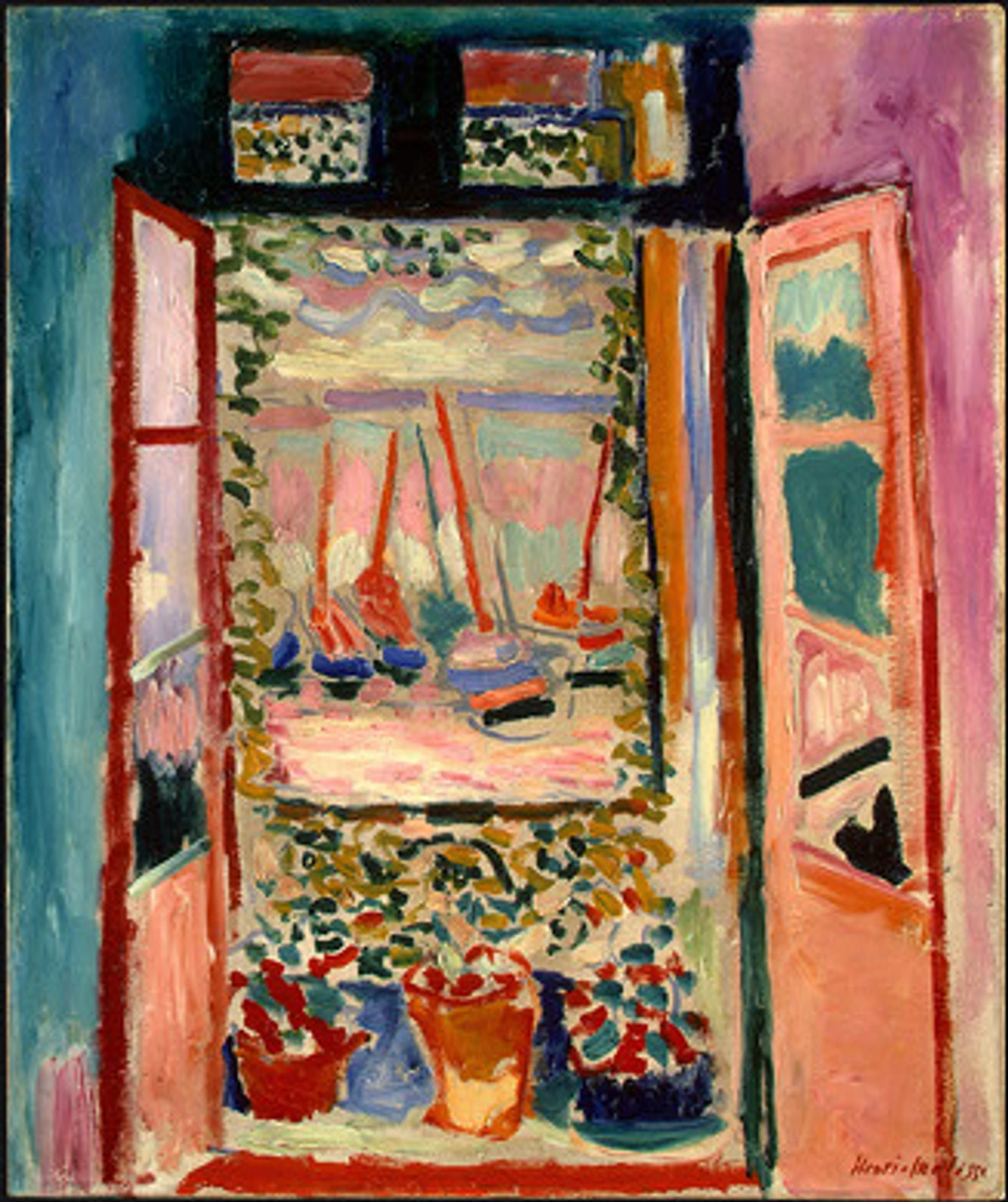
So why does he matter so deeply today? Because Gauguin fundamentally challenged the purpose of art. He stood decisively against the Impressionist focus on momentary light and fleeting sensation. He championed art as a vessel for deep, personal symbolism, spirituality, and emotional truth. He broke the rules of representation, paving the way for Fauvism (Matisse, Derain) and Expressionism (Kirchner, Nolde), who would push color and form even further into emotional territories.
His influence isn't always positive, though. His romanticized, often prurient view of Polynesian women and cultures understandably raises critical eyebrows today. We must acknowledge the colonialist lens through which he viewed the “primitive” – the very thing he thought would save him was, in reality, a product of colonialism. It’s a painful but important reminder that even visionary artists operate within, and are shaped by, the problematic contexts of their time. It doesn’t negate the power of the art, but it requires us to view it with a critical eye.
Gauguin Compared: Key Artistic Principles
Here’s a quick look at what set Gauguin apart from his peers:
Principle/Feature  | Paul Gaugin | Typical Impressionist (e.g., Monet) | Symbolist (e.g., Munch) |
|---|---|---|---|
| Primary Focus | Symbolic meaning, spirituality | Capturing light & atmosphere | Inner psychological state |
| Color Use | Arbitrary, emotionally expressive | Based on light reflection | Often symbolic, expressive |
| Form & Line | Simplified, outlined, non-naturalistic | Often loose, visible brushstrokes | Distorted for emotional impact |
| Subject Matter | Myth, spirituality, "primitive" life | Modern life, landscapes | Symbolic, dream-like figures |
| Goal of Art | To express profound truths about existence | To record a visual experience | To represent inner states |
FAQ: Your Burning Questions Answered
Q1: Was Paul Gauguin actually self-taught?
A: No, not entirely. He had some early instruction, but he was largely "self-taught" in the sense that he rejected formal academic training very early. His education came from his voracious collecting (with Pissarro’s guidance), intense observation of fellow artists (like Cézanne and Van Gogh), and relentless experimentation on his own. He learned by doing, not by following rules.
Q2: What happened to Gauguin’s family?
A: This is the heartbreaking part of his story. His wife, Mette-Sophie Gad, and their five children were left behind in Copenhagen when he pursued his art full-time. The financial strain of his artistic career (he was never commercially successful during his main lifetime) put immense pressure on them. They eventually separated, and Gauguin had very little contact with his children in his later years. He was an artist wholly consumed by his work, and that came at a deep personal cost.
Q3: Are Gauguin's paintings expensive?
A: Absolutely. His works are among the most valuable ever sold at auction. When Will You Marry? (1892) sold for around $300 million in 2015, though the actual price isn't confirmed due to a confidentiality agreement. His lesser-known paintings and prints fetch sums in the multi-millions. If you're looking to add one to your collection, you'd need to be very, very wealthy!
Q4: What’s the deal with his use of non-naturalistic colors?
A: It’s core to his artistic revolution! Gauguin didn’t care about accurately depicting color as the eye sees it under specific light (like the Impressionists). Instead, he used color symbolically or emotionally. A woman’s skin might be purple to suggest mystery or royalty. The sky could be yellow to evoke anxiety or hope. Grass might be red. He believed color had its own inherent language to convey feeling and meaning, independent of reality. This freed him (and later artists) to use color as a powerful expressive tool.
Q5: Why do people say Gauguin was problematic?
A: Modern criticism rightly highlights several issues:
- Colonialism: His concept of the "primitive" was based on a romanticized and racist view of non-European cultures as "uncorrupted," ignoring the reality of colonialism and the complex, rich societies he encountered.
- Sexualization: Many of his Tahitian paintings depict young women in passive, often sensualized poses, reflecting the colonial male gaze rather than portraying them as complex individuals.
- Misrepresentation: His art presented an idealized fantasy of Tahiti rather than an authentic representation of Polynesian life and spirituality. Acknowledging this doesn’t diminish the aesthetic power of his art, but it reminds us to engage critically with any artwork, especially historical ones depicting other cultures.
The Artist Within Us All
Ultimately, Gauguin’s life and art are a testament to one powerful, often reckless, human drive: the need to create something authentic, something that feels true to the core of your being. He sacrificed comfort, stability, and even loving relationships in the pursuit of an art that spoke to his soul, however flawed. He wasn’t a perfect man, and he wasn’t a perfect artist in any traditional sense. But he was a visionary. He proved that art could be a profound spiritual quest, a rebellion against the mundane, and a vibrant, personal language.
His legacy lives on every time an artist dares to use color in a way that feels right, not just how it looks accurate. Every time someone creates their own symbol, their own myth. His story is a cautionary tale about obsession and a triumphant one about seeking a deeper truth through creation. And that, as they say, is the real masterpiece.

Explore how contemporary artists like those on our timeline use bold color to express emotion – sometimes with a journey of their own. Or, if Gauguin's vibrant palette speaks to you, discover original artworks you can buy that capture that same fearless spirit.
Travel Guide: Following Gauguin's Footsteps
For the truly dedicated Gauguin enthusiast, visiting the places that shaped his life can be a profound experience. Here's a guide to key locations:





Paris, France
- Musée d'Orsay: Home to Gauguin's "The Yellow Christ" and many other important works
- Louvre: Where Gauguin studied and copied old masters early in his career
- Montmartre: The bohemian neighborhood where he lived and worked in the 1880s
- Galerie Durand-Ruel: The legendary dealer who first showed Impressionist and Post-Impressionist work
Pont-Aven and Brittany, France
- Pont-Aven: The picturesque town where Gauguin developed his Synthetist style
- Musée de Pont-Aven: Dedicated to the Pont-Aven School and Gauguin's time there
- Pouldu: The nearby village where Gauguin and his followers lived and painted
- Chapelle du Pouldu: The small chapel decorated by Gauguin and his colleagues
Arles, France
- Espace Van Gogh: The former hospital where Van Gogh stayed, with a recreated garden
- The Yellow House: Where Gauguin and Van Gogh lived together (now partially restored)
- Arles Roman Amphitheater: Historic site that inspired both artists
Tahiti, French Polynesia
- Papeete: The capital city where Gauguin first arrived
- Musée de Tahiti et des Îles: Houses important artifacts and artworks related to Gauguin's time
- Pointe Venus: The lighthouse area that inspired several paintings
- Gauguin's House: Replica of the house where he lived in Papeete
Hiva Oa, Marquesas Islands
- Atuona: The main town where Gauguin spent his final years
- Gauguin's Grave: Located in the Catholic cemetery with a simple cross
- Paul Gauguin Cultural Center: Dedicated to preserving his legacy in the Marquesas
- Calvary Cemetery: Where many of his final works were inspired
Collector's Guide: Understanding Gauguin's Market
For those interested in collecting Gauguin's work (or art inspired by him), understanding the market is crucial:
Authenticity and Provenance
Gauguin's works are among the most forged in art history. Key things to look for:
- Documented provenance: Clear chain of ownership from the artist to present
- Expert authentication: Verification by recognized experts or institutions
- Material analysis: Scientific examination of pigments, canvas, and other materials
- Historical context: Works created during specific periods have characteristic styles
Price Ranges
- Major paintings: $50 million to $300+ million (like "When Will You Marry?")
- Important works: $10-50 million
- Small paintings and studies: $1-10 million
- Prints and drawings: $50,000 to $500,000
- Ceramics and sculpture: $100,000 to $2 million
Investment Considerations
Gauguin's works have consistently appreciated in value, but several factors affect investment potential:
- Condition: Works in excellent condition command higher prices
- Rarity: Unique works or those from key periods are more valuable
- Market demand: Interest from major museums and collectors drives prices up
- Economic factors: Art values tend to follow broader economic trends
- Cultural significance: Works that represent breakthrough moments in his career are most valuable
Tips for Aspiring Collectors
- Start with prints and drawings: These are more accessible entry points
- Focus on specific periods: Brittany or Tahitian works have distinct characteristics
- Build relationships with dealers: Established specialists can help navigate the market
- Learn to spot fakes: Study authentic works extensively
- Consider condition reports: Understand any restoration or damage
- Buy what you love: Authentic passion for the art should guide collecting decisions
Conclusion: Gauguin's Enduring Legacy
As we reflect on Paul Gauguin's extraordinary life and revolutionary art, what emerges is a portrait of an artist who refused to be constrained by convention, who sacrificed comfort for conviction, and who transformed the very language of painting. His journey from stockbroker to visionary artist remains one of the most compelling stories in art history.
Gauguin taught us that art doesn't have to be perfect to be powerful. It doesn't have to please everyone to be meaningful. What matters most is authenticity – the courage to create from a place of genuine truth and personal vision. In that sense, every artist who dares to be authentic is following in Gauguin's footsteps.
The controversies surrounding his work – the colonial perspective, the personal sacrifices, the questionable behavior – remind us that art is created by complex, flawed human beings. These complexities don't diminish the power of his art; they deepen our understanding of it and challenge us to engage with history critically and thoughtfully.
Today, as we look at Gauguin's vibrant colors, simplified forms, and symbolic imagery, we see not just the work of a 19th-century painter, but a timeless vision of art as a profound human expression. His insistence that art could address fundamental questions about existence, could fuse different cultural traditions, and could express emotional truths beyond the limits of language continues to resonate with artists and audiences alike.
In the end, Gauguin's greatest masterpiece wasn't any single painting, but his life itself – a testament to the transformative power of art and the indomitable human spirit that drives us to create. That, perhaps more than any canvas or pigment, is his true legacy to the world.