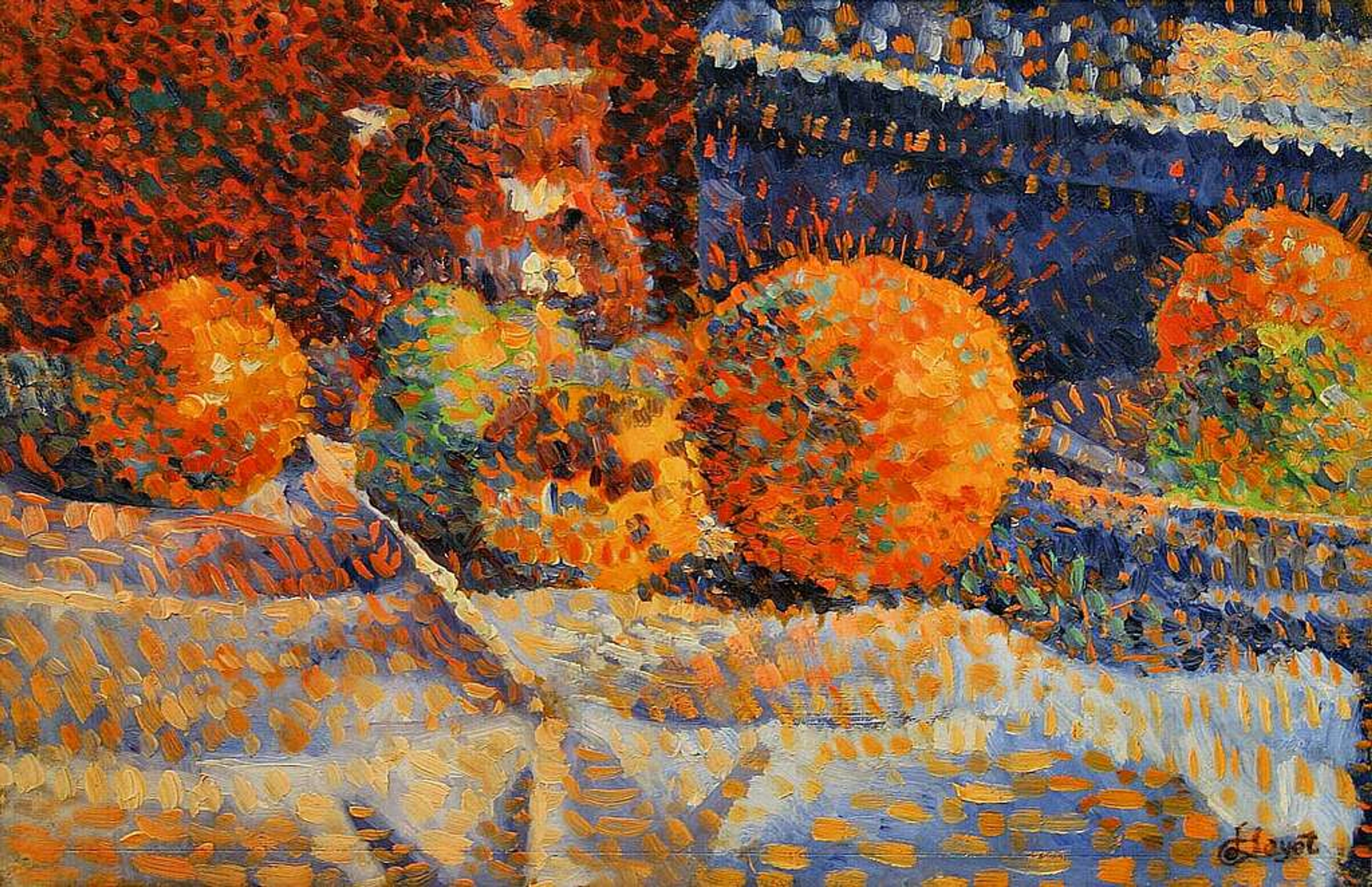
Paul Signac & Pointillism: A Color Revolution
Dive deep into Paul Signac's revolutionary Pointillist technique. Explore how dots ignited Neo-Impressionism and transformed modern art forever.

Paul Signac & Pointillism: A Color Revolution
Remember that first moment you saw Pointillism? Those brilliant little dots dancing across the canvas? I remember feeling both baffled and captivated. How could something that looked like a technical drawing from a microscope create such emotional fireworks? That's the magic of Paul Signac, a painter who turned scientific obsession into pure visual poetry.
He wasn't just a painter; he was a methodical mad scientist of color, a sailor who saw the Mediterranean through prisms of pure pigment. Whether you're here because you saw a Signac print and felt something electric, or you're just scratching your head at this "dot business," you've landed in the right place. This is your deep dive into the man, the method, and the mesmerizing world of Pointillism.
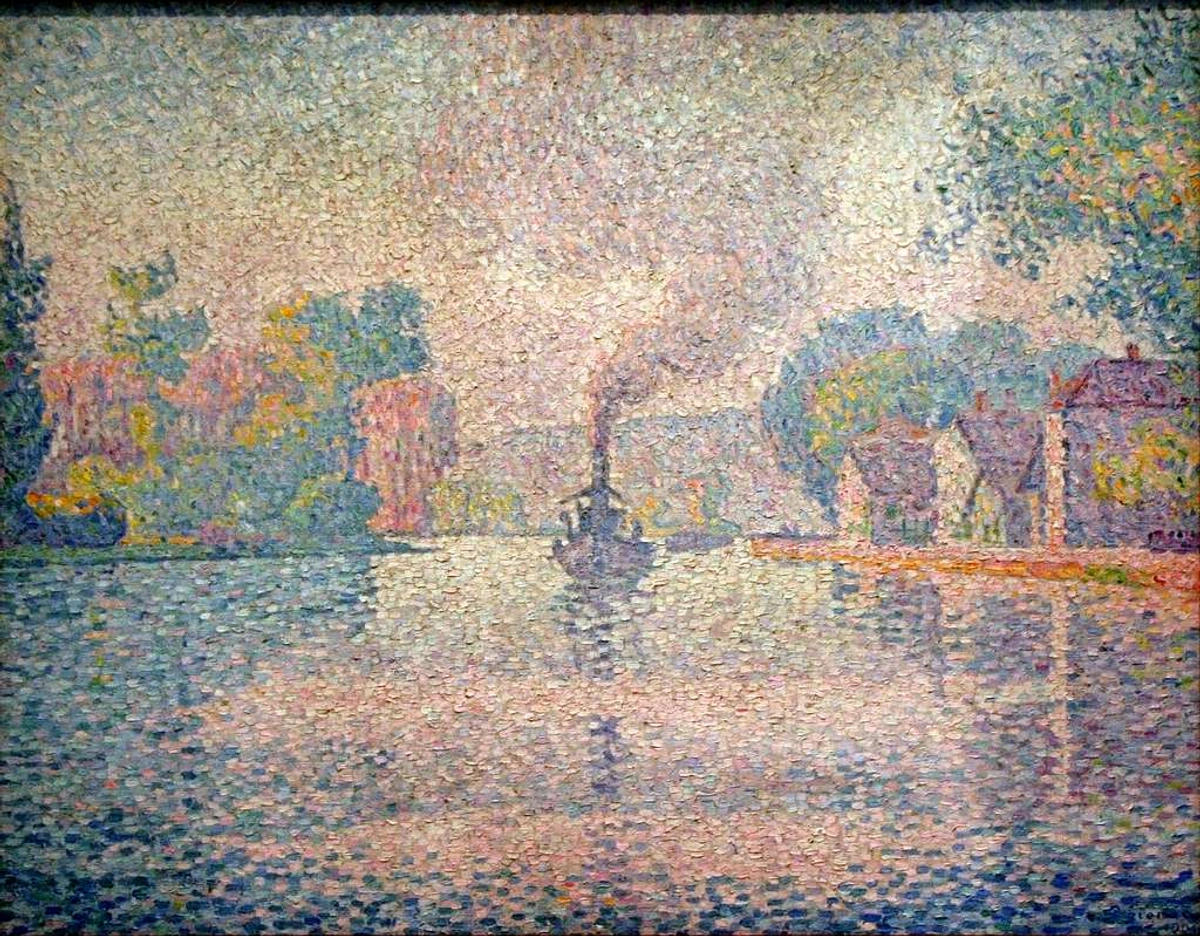
But let's be honest - when I first encountered Pointillism, I thought it was some kind of elaborate joke. "You want me to paint what? Thousands of tiny dots?" In an age of instant everything, where we swipe left on photos that don't grab us in three seconds, the sheer patience required for this technique feels almost radical. And yet, that's exactly what makes Signac so fascinating. He wasn't just creating art; he was conducting a grand experiment in perception, one dot at a time.
Who Was Paul Signac? The Sailor with a Paintbrush
Before we get to dots, let's talk about the man. Paul Signac (1863–1935) didn't just paint; he lived vibrancy. Born into a bourgeois Parisian family, he was destined for a comfortable life until he discovered painting at 18 and promptly dropped out of architecture school. A true rebel with a cause. But what truly set him apart was his other passion: sailing.
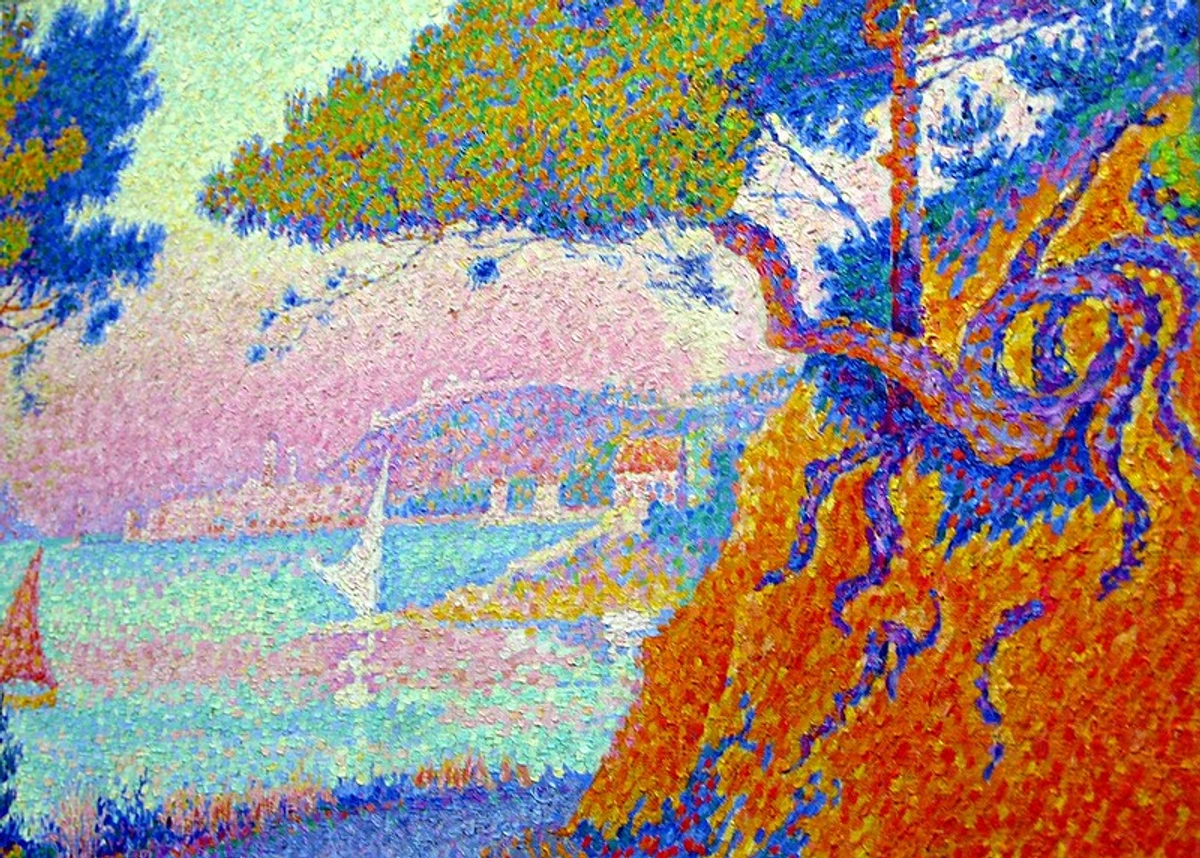
Signac's journey reads like something from a novel - the privileged young man who rejected his comfortable destiny for a life of color and waves. While his contemporaries were busy exploring the psychological depths of the human condition, Signac was busy exploring the physical properties of light itself. He had this incredible knack for finding beauty in the scientific - for him, the mathematical precision of dots was just as poetic as the emotional chaos of a sunset.
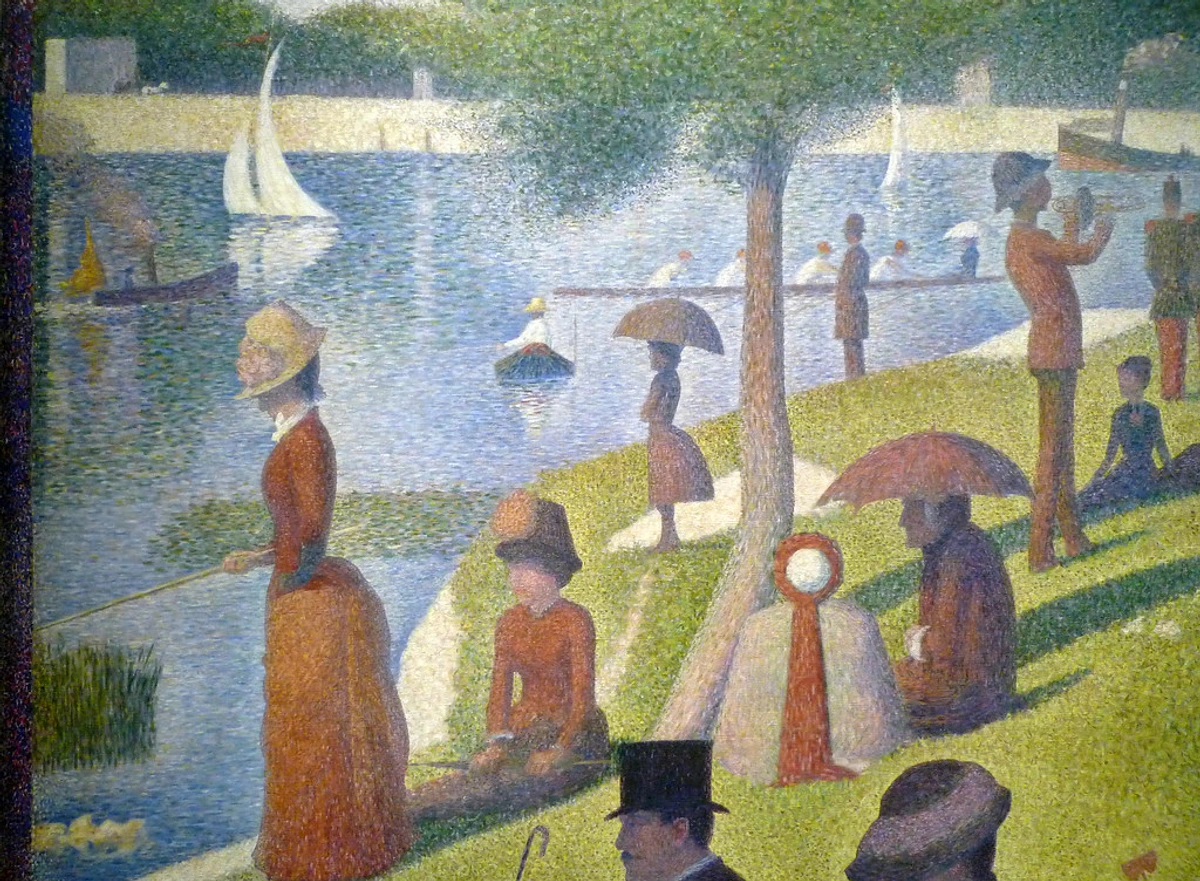
National Gallery of Art, Public Domain
Think about it: a painter who spent months at sea, sketching coastal villages, light shimmering on water. This wasn't just a hobby; it was his laboratory. He didn't just observe color; he lived it. The way light fractured on water, the intensity of a sunset over the Mediterranean – these weren't subjects. They were data points in a grand experiment. This sailor's eye gave his Pointillism an unparalleled sense of light and atmosphere. It’s why his landscapes feel like you can breathe the salty air.
Demystifying Pointillism: More Than Just Dots
Okay, let's tackle the big question: What is Pointillism, really? We've all heard "painting with dots." And yes, that's the core mechanic, but calling it just "dots" is like calling a symphony "just notes." It misses the entire point (pun absolutely intended).
Let me tell you about the moment it clicked for me. I was staring at a Signac reproduction in a museum, trying to figure out what made it so... alive. The colors seemed to vibrate with this energy that just wasn't there in traditional paintings. Then I got close - really close - and realized it wasn't just dots. It was this incredible system. Each dot was placed with the precision of a surgeon, but the overall effect was pure magic. It's like Signac discovered the secret recipe for making light itself dance on canvas.
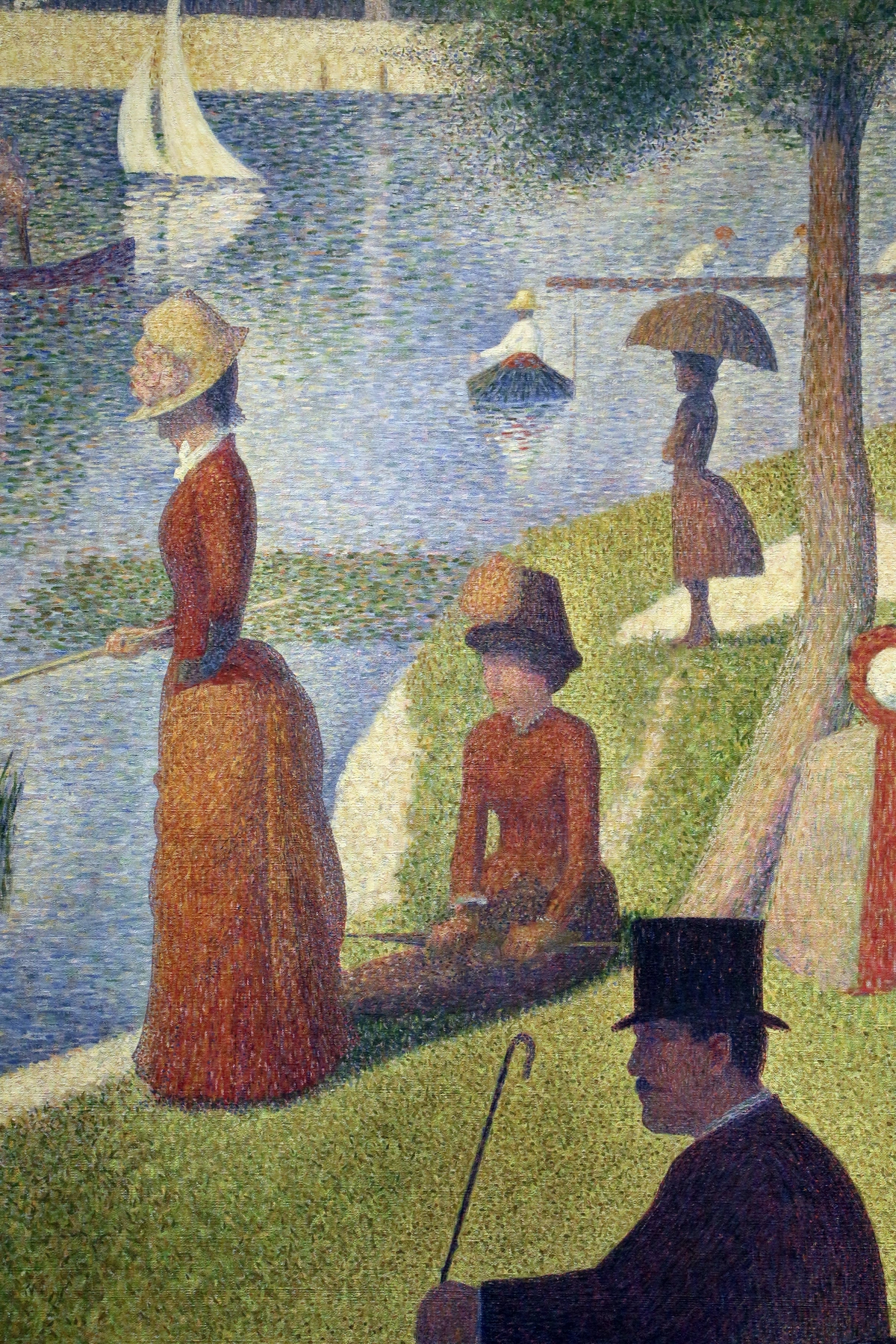
Pointillism (or, more accurately, Divisionism when referring to the color theory behind it) is a scientific approach to painting championed by Signac and Georges Seurat. Here's the breakdown:
- Pure, Unblended Pigment: Instead of mixing green on a palette, a Pointillist would apply a tiny dot of pure blue next to a tiny dot of pure yellow.
- Optical Mixing: From a distance, your eye and brain do the mixing! They fuse the separate dots into a vibrant, shimmering green that feels far more alive than any premixed pigment could. It’s like a visual secret handshake between the artwork and your brain.
- Color Theory on Overdrive: Signac and Seurat were obsessed with the science of color perception. They meticulously researched how different colors and their combinations affect the human eye. Every dot was a calculated decision to maximum "luminosity" – that radiant, almost humming brightness.
Pointillism vs. Traditional Painting: The Showdown
Feature  | Pointillism (Divisionism) | |
|---|---|---|
| Color Application | Pigments mixed on palette or canvas | Pure, unmixed pigments applied as distinct dots |
| Color Mixing | Physical mixing | Optical mixing (eye blends the colors) |
| Brushwork | Visible strokes, blended edges | Thousands of tiny, separate points |
| Scientific Basis | Often based on tradition or observation | Rooted in optics and contemporary color theory |
| Visual Effect | Smooth, blended surfaces | Luminous, vibrating, shimmering surfaces |
| Key Goal | Representation of form, light, shadow | Maximum brightness and pure optical effect |
| Time Investment | Hours to days per painting | Weeks to months per painting |
| Physical Demand | Moderate physical effort | Extreme physical strain and precision |
| Philosophical Approach | Emotion and intuition dominate | Science and calculation take precedence |
Signac & Seurat: The Odd Couple Who Built a Technique
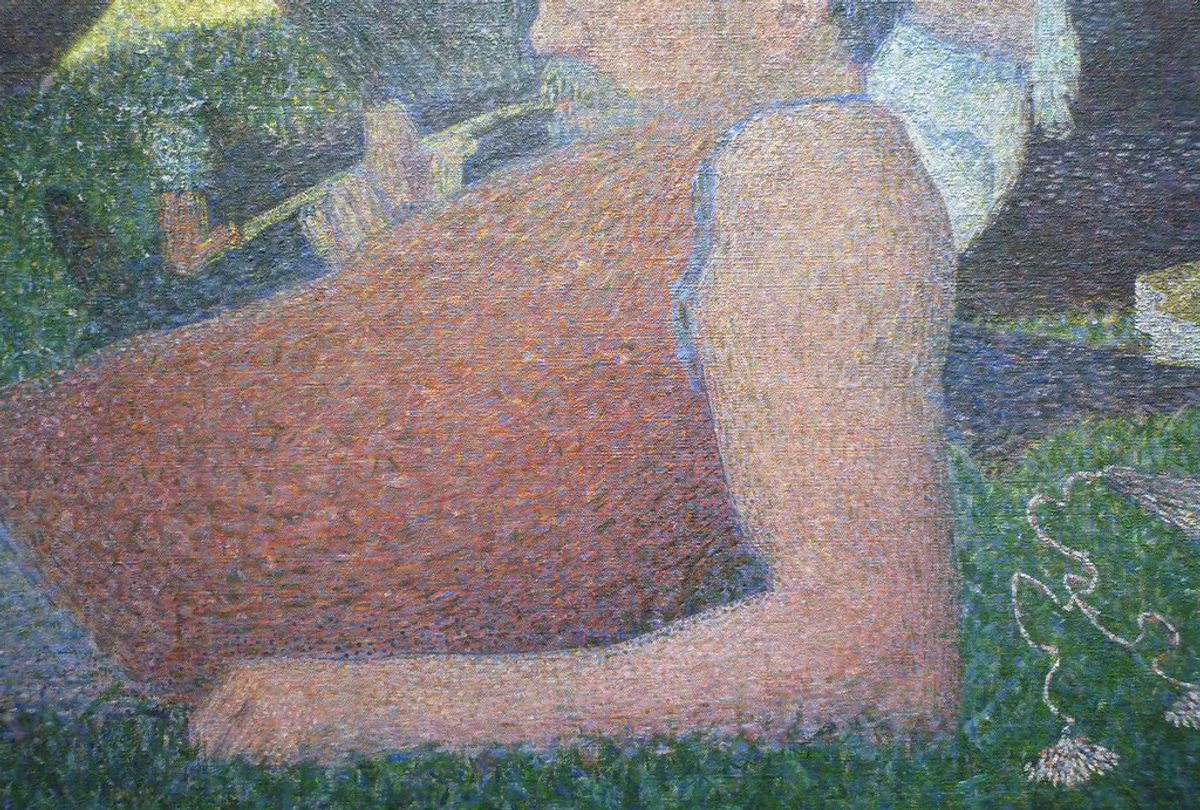
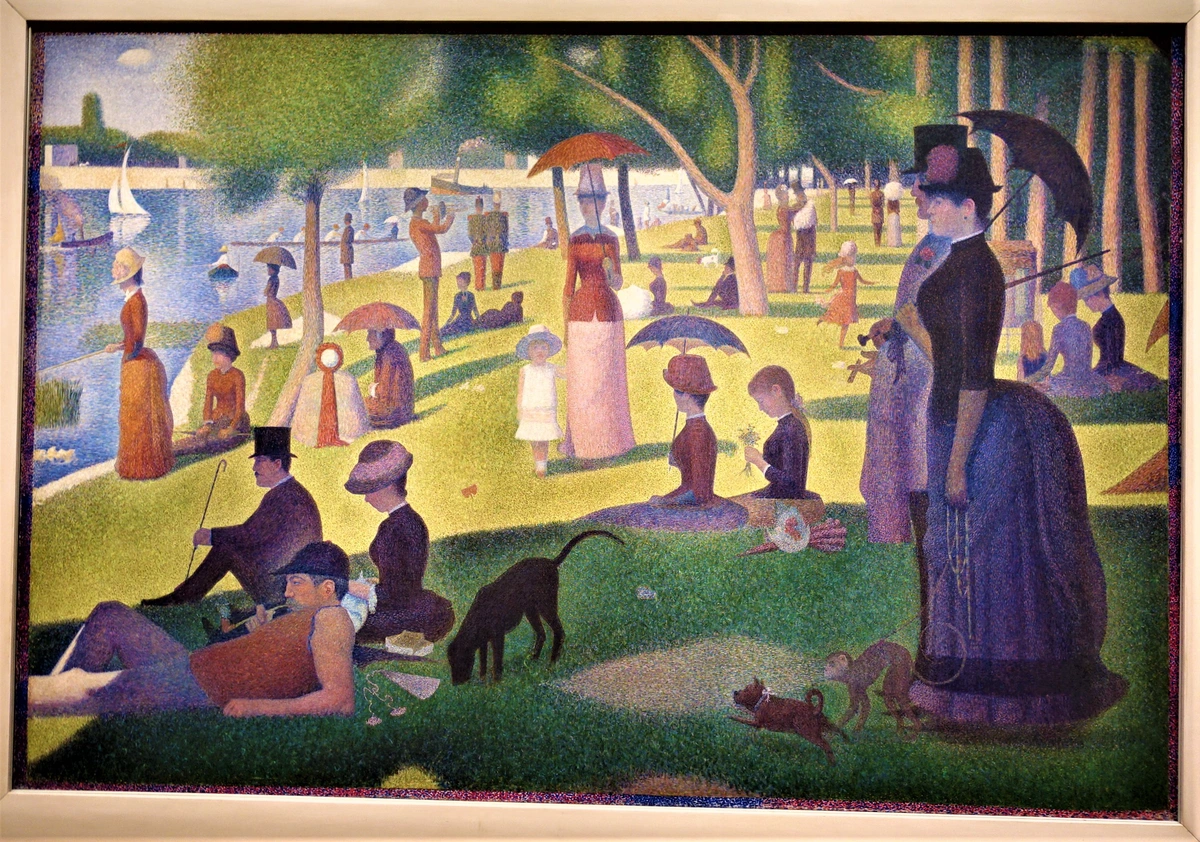
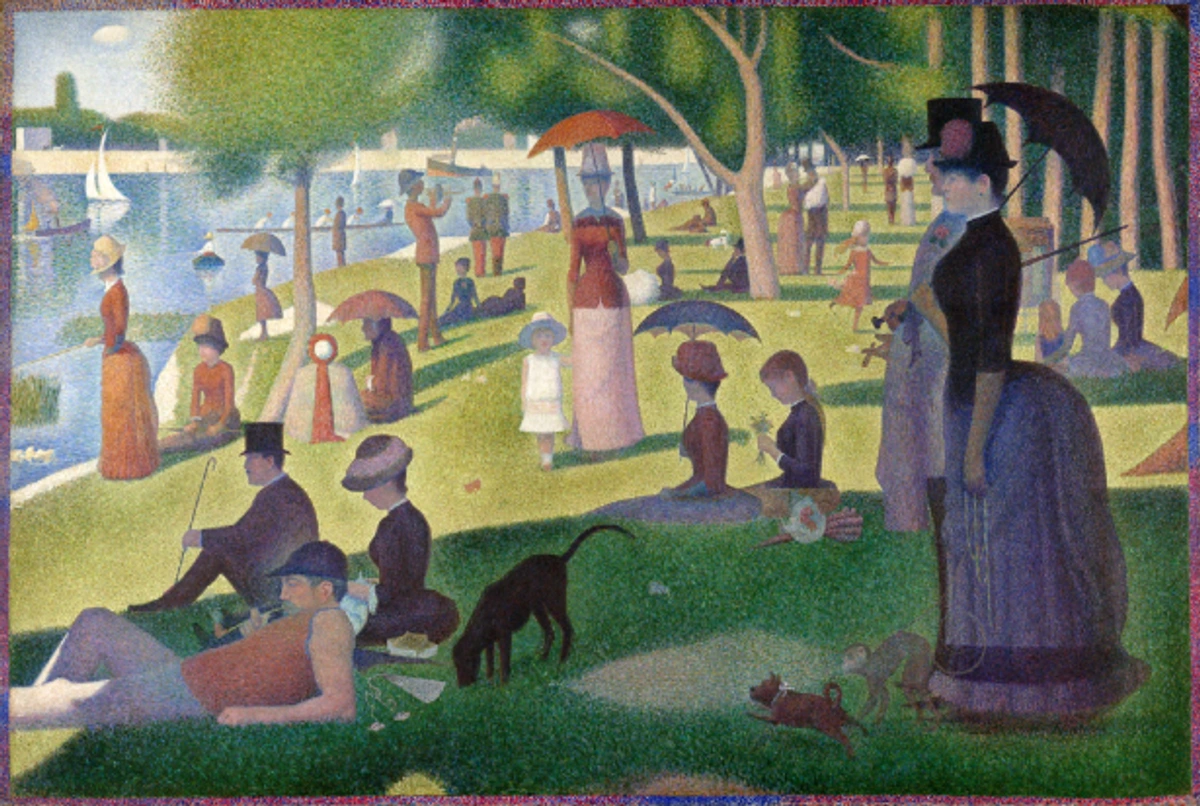
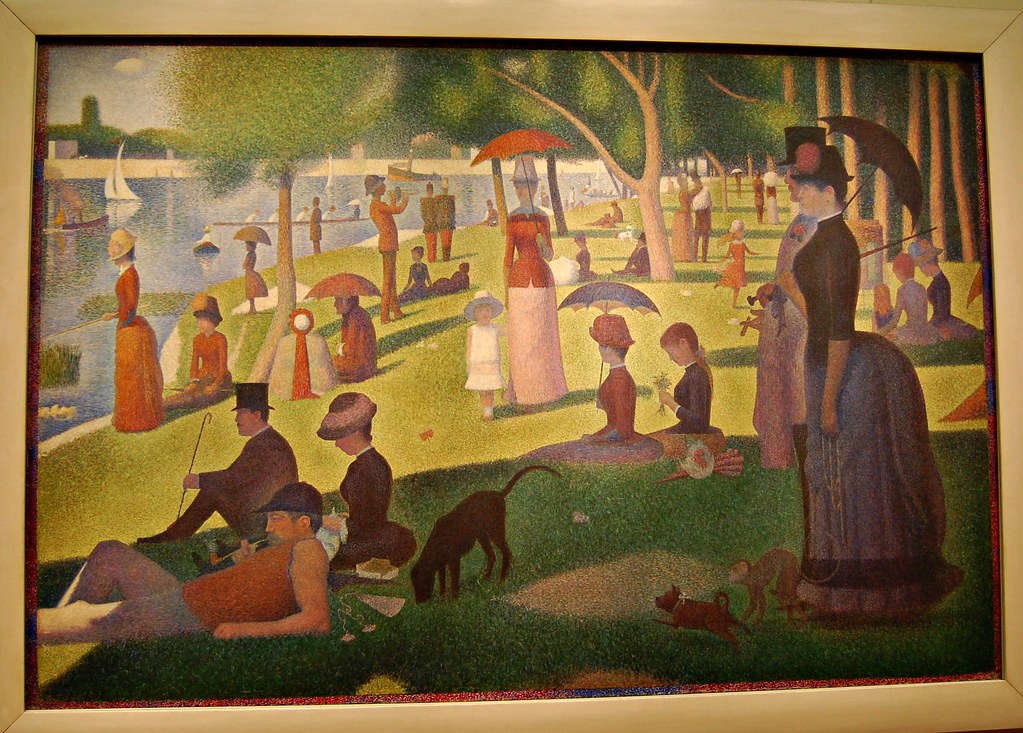
You can't talk about Signac without Georges Seurat. They were like the Lennon and McCartney of Post-Impressionism – a revolutionary partnership with a dramatic falling out. Seurat developed the core principles of Pointillism in his masterpiece, A Sunday Afternoon on the Island of La Grande Jatte (1884-86). Signac saw it and was instantly hooked. Like a scientist finding a kindred spirit.
Seurat was the methodical theorist; Signac was the vibrant evangelist. Signac became the movement's greatest promoter and practitioner, refining Seurat's ideas and applying them with his own unique, dynamic flair. He saw the technique not as a limitation, but as a key to unlocking a whole new level of color expression.
But their partnership famously fractured. Why? They were both too passionate and stubborn for their own good. A clash of egos over artistic direction led Signac to sail away, literally. He took his boat, L'Oiseau Bleu (The Blue Bird), and his pointillist brushes, and explored the coasts of France and Italy, developing his signature style of Divisionism – the more analytical side of Pointillism focusing on color theory – and landscapes filled with rhythmic energy.
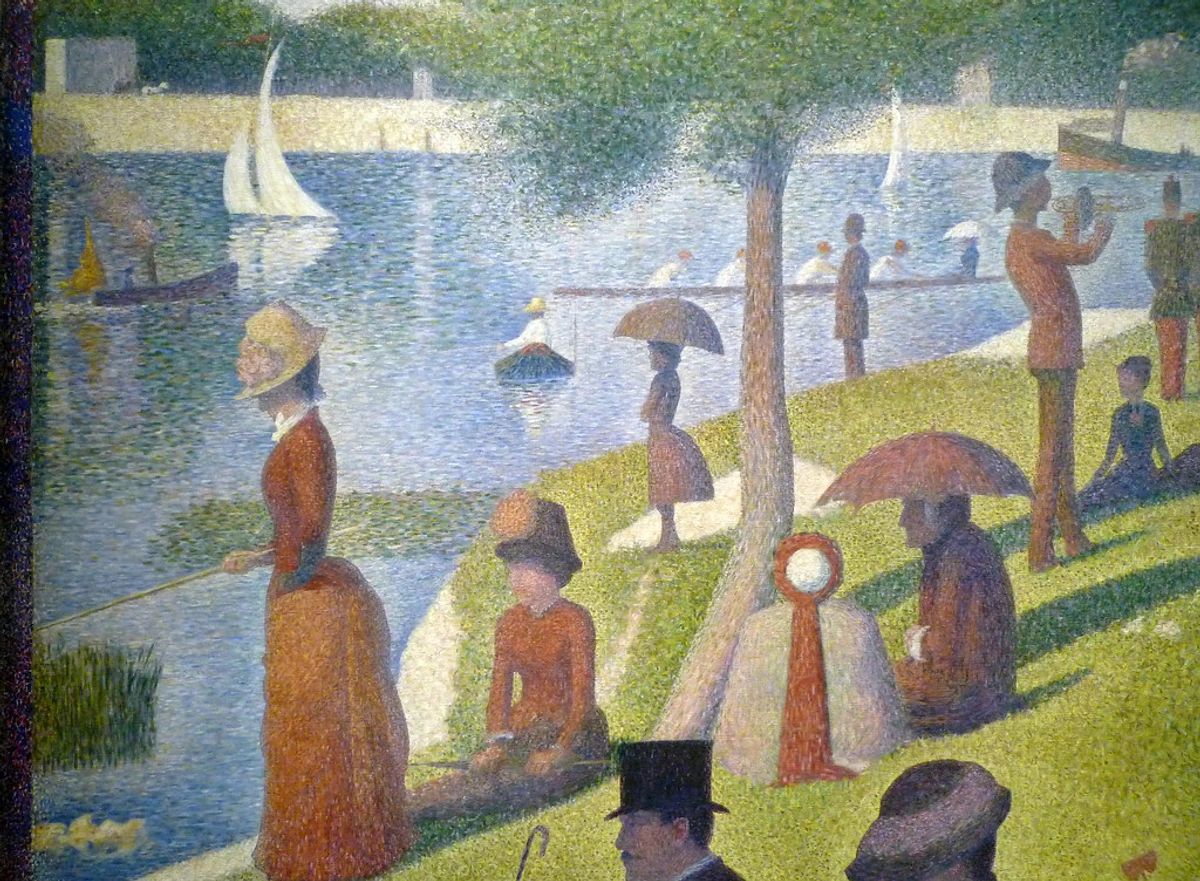
I find their relationship fascinating. Seurat was this quiet, almost reclusive genius who spent years perfecting his technique. Signac was the social butterfly, the charismatic promoter who could talk for hours about the wonders of optical mixing. They needed each other - Seurat needed Signac's passion and energy to spread his ideas, while Signac needed Seurat's scientific rigor to ground his enthusiasm. When they split, it wasn't just a personal falling out; it was like splitting the very DNA of Pointillism into two separate strands.
Signac's Signature Style: More Than Meets the Dot
While Seurat's work feels monumental and serene, Signac's bristles with energy. He didn't just use dots; he used them like musical notes. Look closely at his seascapes, like The Port of Saint-Tropez (1892), and you'll see dots arranged in rhythmic patterns, suggesting movement, wind, and water. His brushstrokes weren't just tiny; they were directional.
What's truly remarkable about Signac's evolution is how his technique adapted to his subject matter. When painting still life or portraits, his dots are more uniform and precise. But when capturing the chaos of the sea or the energy of a bustling harbor, they become wilder, more varied, almost dance-like. It's like he's letting the subject dictate the rhythm of his brush. There's a gorgeous painting of his called The Red Buoy where the dots swirl around the central object like currents in water - you can almost feel the motion just by looking at it.
Google Arts & Culture, Free to use
His color palette became famously brighter and more expressive over time. He moved away from the meticulous pointillism of his early works into a more fluid Divisionism, where larger, looser patches of pure color still relied on optical mixing. This evolution shows a mind constantly pushing boundaries – a true innovator who never stopped searching.
Why Pointillism Mattered: The Spark of Modernity
So why should we care about dots painted 140 years ago? Because Signac and Pointillism weren't just making pretty pictures; they were fundamentally changing the rules of the game. They were the proto-modernists.
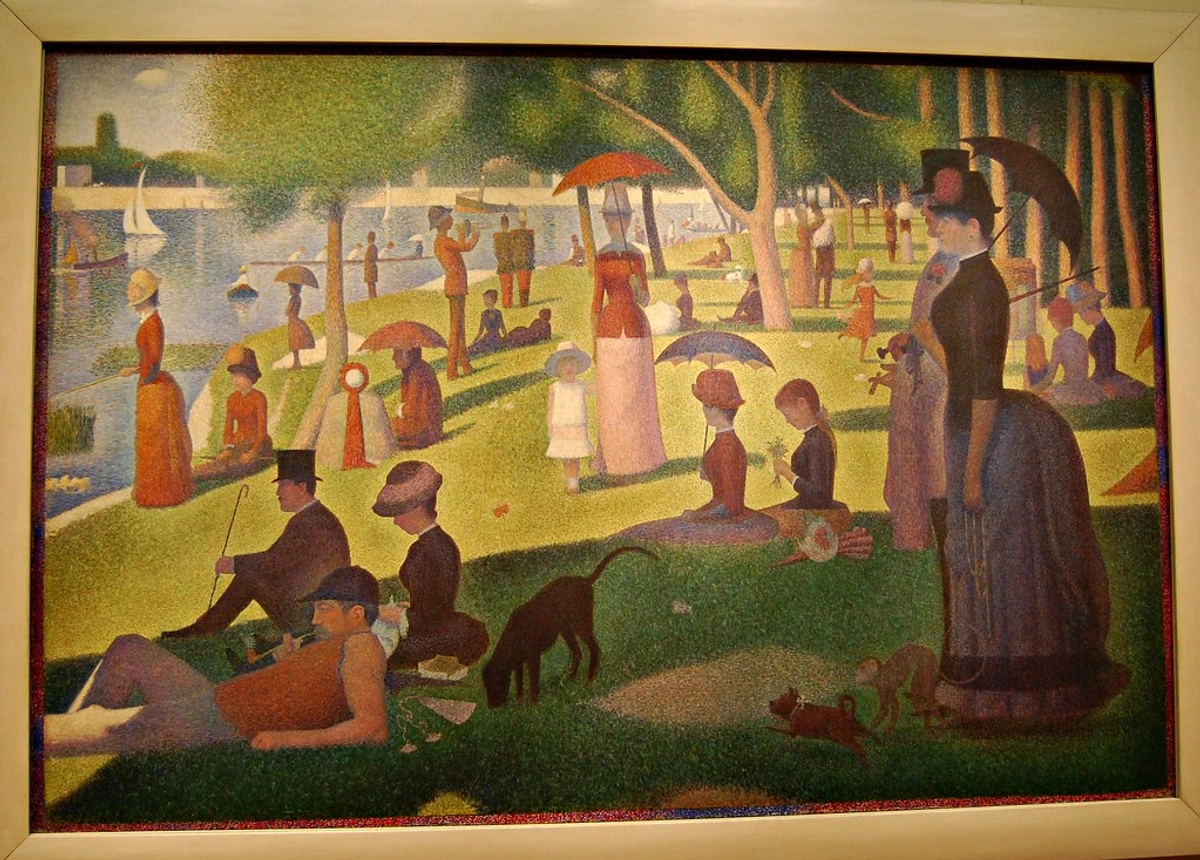
- Demystifying the Artistic Process: Pointillism made the act of seeing and perceiving color a central part of the art. The viewer wasn't a passive observer; they were an active participant whose brain completed the picture. This idea, that the audience completes the artwork, became a cornerstone of so much 20th-century art, from Cubism to Abstract Expressionism.
- Bridging Science and Art: They treated color not as an emotional whim, but as a physical phenomenon to be studied and understood. This analytical approach paved the way for artists who embraced new technologies and ideas.
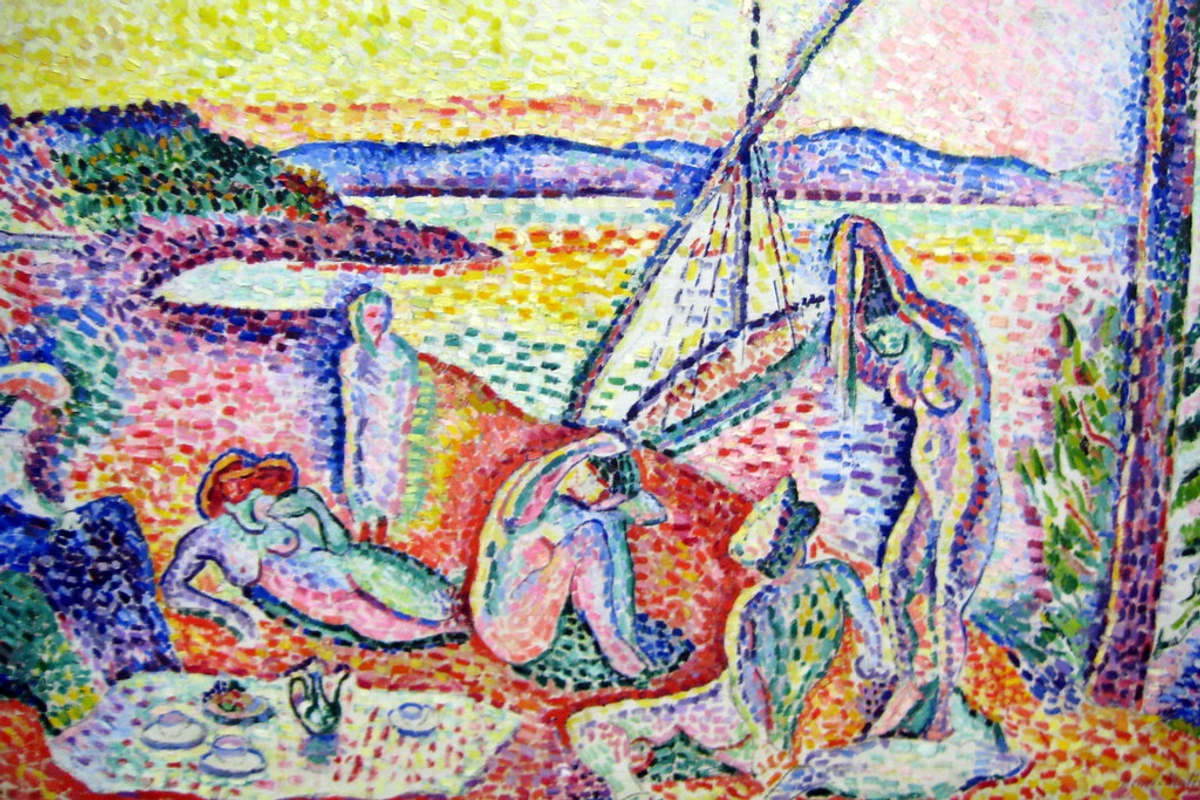
- Influencing Giants: Can you see ripples of Pointillism in Van Gogh's swirling patterns? What about Kandinsky's early explorations of pure color? Absolutely. Signac's systematic exploration of color's power directly influenced Fauvism (think Matisse's wild, pure colors) and even movements exploring abstraction. He was a crucial link between the Impressionists who captured light and the Modernists who deconstructed it.
- A New Vision of Nature: Signac’s seascapes and harbors transformed the landscape. Water wasn't just blue anymore; it was a symphony of blues, greens, violets, and oranges, each dot catching the light differently. He captured the sensation of a sailboat tacking or sun shimmering on waves in a way no one had before.
Seeing Signac: How to Appreciate the Magic
Next time you see a Pointillist work, don't just stand back. Get closer. Much closer. Like, nose-to-the-canvas close. Here’s what to look for:
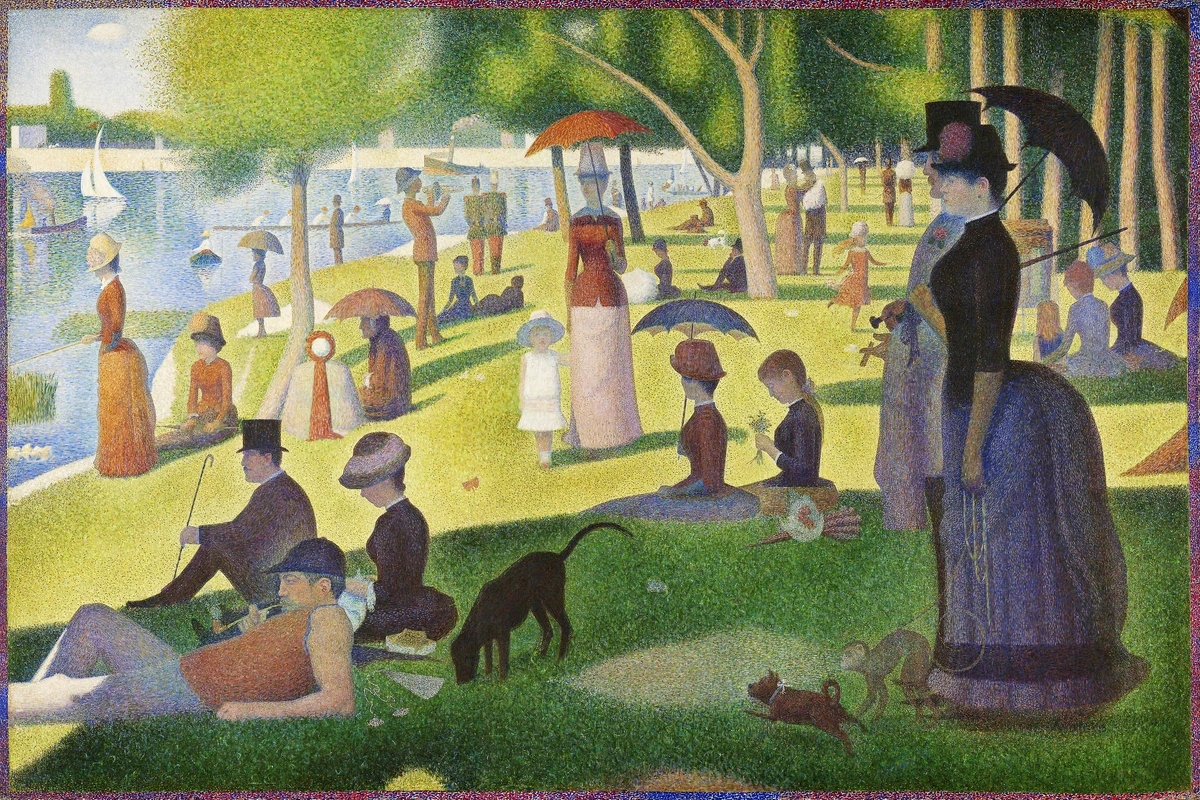
- The Dot Anatomy: Notice the size and shape of the dots. Are they uniform like tiny grains? Or more varied, like confetti? Signac often used slightly brushier, more varied dots compared to Seurat's machine-like precision. This adds to his sense of movement.
- The Color Symphony: Pick a single spot. How many colors make it up? A tree might have dozens of greens, blues, and yellows adjacent to each other. Appreciate how they vibrate on their own but fuse to create a cohesive image. This is optical mixing in action.
- The Dance of Direction: Look beyond the dots. See how they are arranged. Do they flow in the direction of wind? Create ripples in water? Build the texture of a stone wall? This is where Signac’s sailor’s eye comes in – the dots orchestrate movement and texture.
- Step Back and Feel: Now, take the recommended distance. Let your eyes relax. Watch the dots dissolve and the image snap into focus with that signature luminosity. That moment of magic? That’s the Pointillist payoff. That’s why it’s so captivating.
FAQ: Your Pointillist Questions, Answered
Q1: Are Pointillism and Divisionism the same thing?
Great question! They're incredibly closely related, and often used interchangeably. Think of it like this: Pointillism primarily refers to the technique of painting with dots. Divisionism refers more specifically to the underlying color theory – the idea that colors should be separated and applied in specific patterns to maximize optical mixing and luminosity. Signac himself preferred "Divisionism" as it sounded more scientific. But for most people, they describe the same revolutionary movement.
To put it another way, if Pointillism is the "what" (painting with dots), Divisionism is the "why" (understanding how color perception works). It's like the difference between playing music and understanding music theory. You can do one without the other, but when you combine them... magic happens.
Q2: Signac vs. Seurat: What's the real difference?
Seurat was the quiet revolutionary, the meticulous theorist who laid the groundwork with La Grande Jatte. His work feels monumental, almost architectural. Signac was the passionate disciple who became the movement's master practitioner and its greatest advocate. Signac’s work is generally more dynamic, colorful, and expressive. Imagine Seurat as the brilliant engineer designing the engine, and Signac as the fearless test pilot pushing it to its limits and beyond. Seurat tragically died young; Signac had a long, prolific career evolving the style.

Q3: Was this really a practical way to paint? Seems incredibly time-consuming!
It absolutely was! And that's part of why it was a short-lived movement as a dominant technique. Can you imagine spending months, sometimes years, on a single painting? Signac was known for his incredible work ethic, but even he adapted, moving towards looser Divisionism later in life. It wasn't just the time; it was the sheer physical demand. But for Signac, that intensity was part of the point. It was an act of devotion to color and light.
I've read accounts of Signac working 12-14 hour days, barely stopping for meals, just completely absorbed in his dot-making process. There's this famous quote where he said something like, "Each dot must be perfect, because if even one is wrong, the whole harmony is broken." That's the kind of dedication that borders on obsessive, but it's also what made his work so special. In today's world of instant gratification, where we can create "art" with a few clicks of a mouse, Signac's approach feels almost like a protest against our digital age.

Q4: Can I see Pointillism in contemporary art?
Absolutely! The spirit of optical mixing and exploring pure color lives on. Look at the vibrant, mosaic-like digital art, or even the way some street artists use stencils to create color separation from a distance. The idea that perception is key, and that the viewer completes the work, is more relevant than ever in our image-saturated world. Even modern printing techniques, like some high-end art prints, use variations of tiny dots (CMYK) to create images – a direct digital descendant of Signac's dots!
What's really interesting is how Signac's ideas have evolved in the digital age. Now we have artists creating entire worlds using pixels - essentially digital dots - and the principles of optical mixing work exactly the same way. You might be looking at a digital painting that looks like smooth gradients, but up close it's millions of individual colored pixels creating the illusion of continuous tone. It's the same fundamental principle, just with different technology.
Q5: Is Pointillism considered "real" art? It seems so technical.
That's the skepticism Signac and Seurat faced! But here's the thing: the technique was a means, not the end. It was the tool they developed to achieve a specific effect – unparalleled luminosity and a new way of seeing. The art is in the result – the emotional power, the captured atmosphere, the groundbreaking vision. It's no more "just technical" than a master violinist's intricate fingering is "just technical." The method serves the magic. Signac’s landscapes are not scientific diagrams; they are evocations of light, sea, and sky that feel profoundly alive.
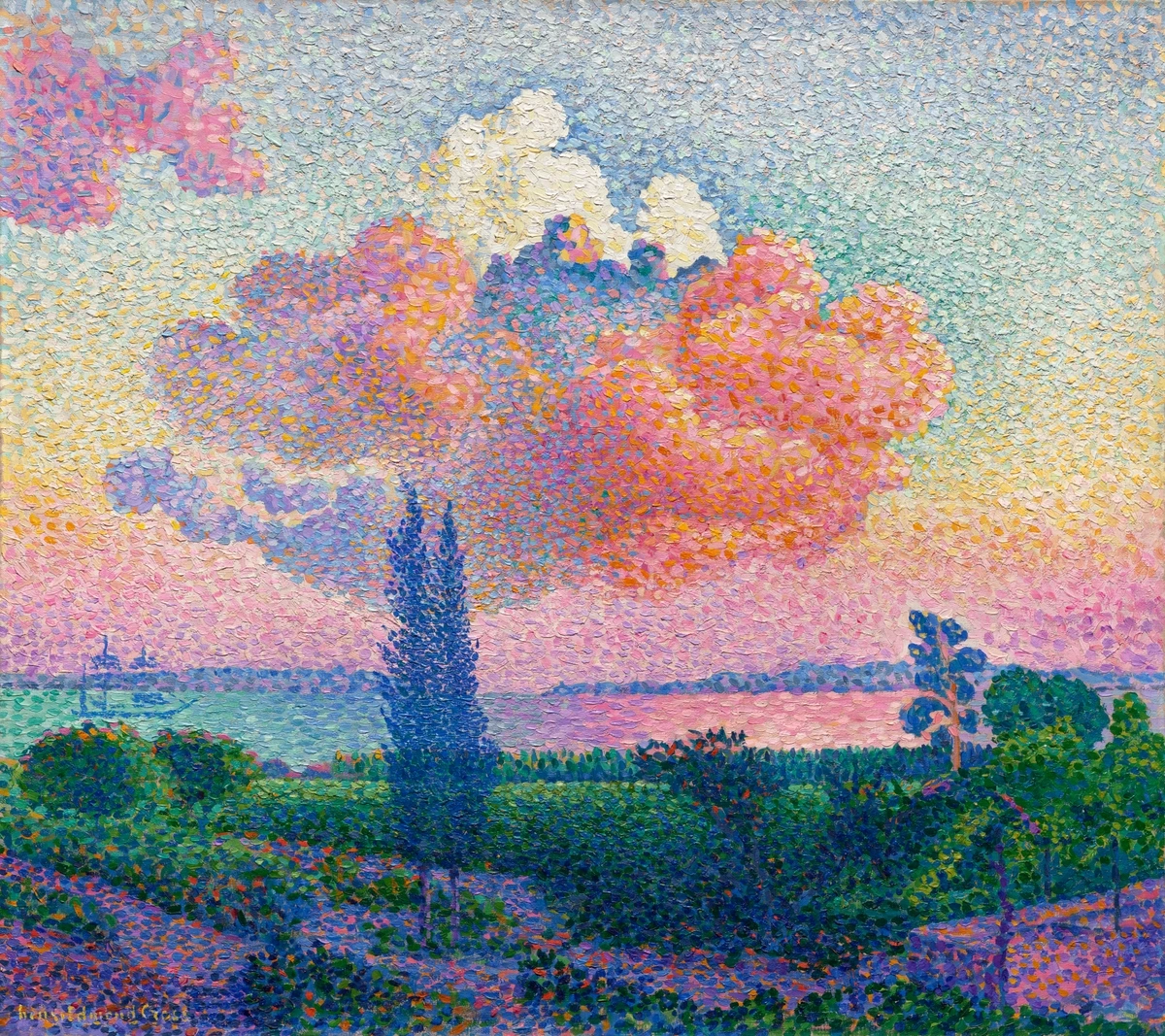
The Enduring Pulse of the Dot
Paul Signac wasn't just a painter of dots; he was a painter of possibilities. He stared at the shimmering Mediterranean, saw a universe of color trapped within the light, and developed a system to unlock it. He was the sailor who sailed with paints, the scientist who felt with his heart.
His work reminds us that art isn't always about wild abstraction or hyper-realism. Sometimes, the greatest revolutions come from the quietest observation and the boldest experiment. Next time you see a Pointillist masterpiece, don't just see the picture. Feel the vibration of the dots, the scientific passion behind them, and the sheer love of light that drove Signac to paint. Look closer. That's where the real magic happens.
Signac's Technical Process: Behind the Dots
What many people don't realize is how incredibly methodical Signac's process was. He didn't just start dotting away randomly. He had a systematic approach:
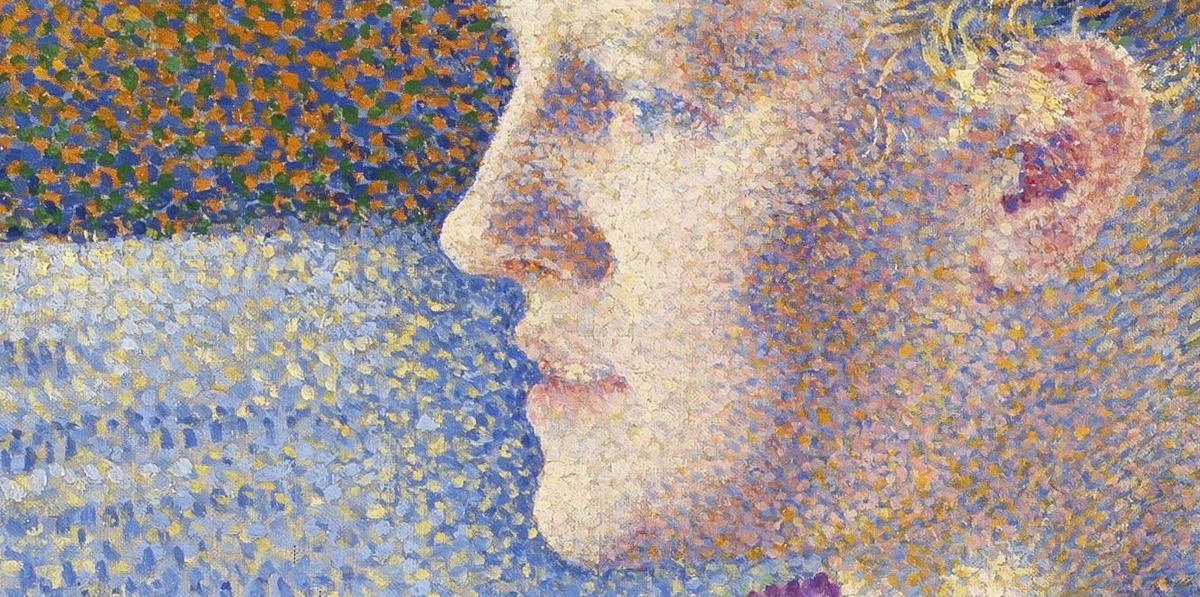
- Color Studies: He would often create small color studies first, testing different color combinations to achieve the exact effect he wanted.
- Underpainting: Sometimes he would apply a thin underpainting to establish the basic composition and tonal values.
- Dot Application: This was where the magic happened. He would work systematically, often from top to bottom or left to right, applying dots of pure color with incredible precision.
- Constant Evaluation: He would step back frequently to see how the colors were mixing optically and make adjustments as needed.
What's fascinating is how this process mirrors the scientific method. He would hypothesize ("If I place these colors together, they should mix to create this effect"), experiment (apply the dots), observe (step back and see), and then refine or adjust. It's art as science, and science as art.
The Later Years: Signac's Evolution
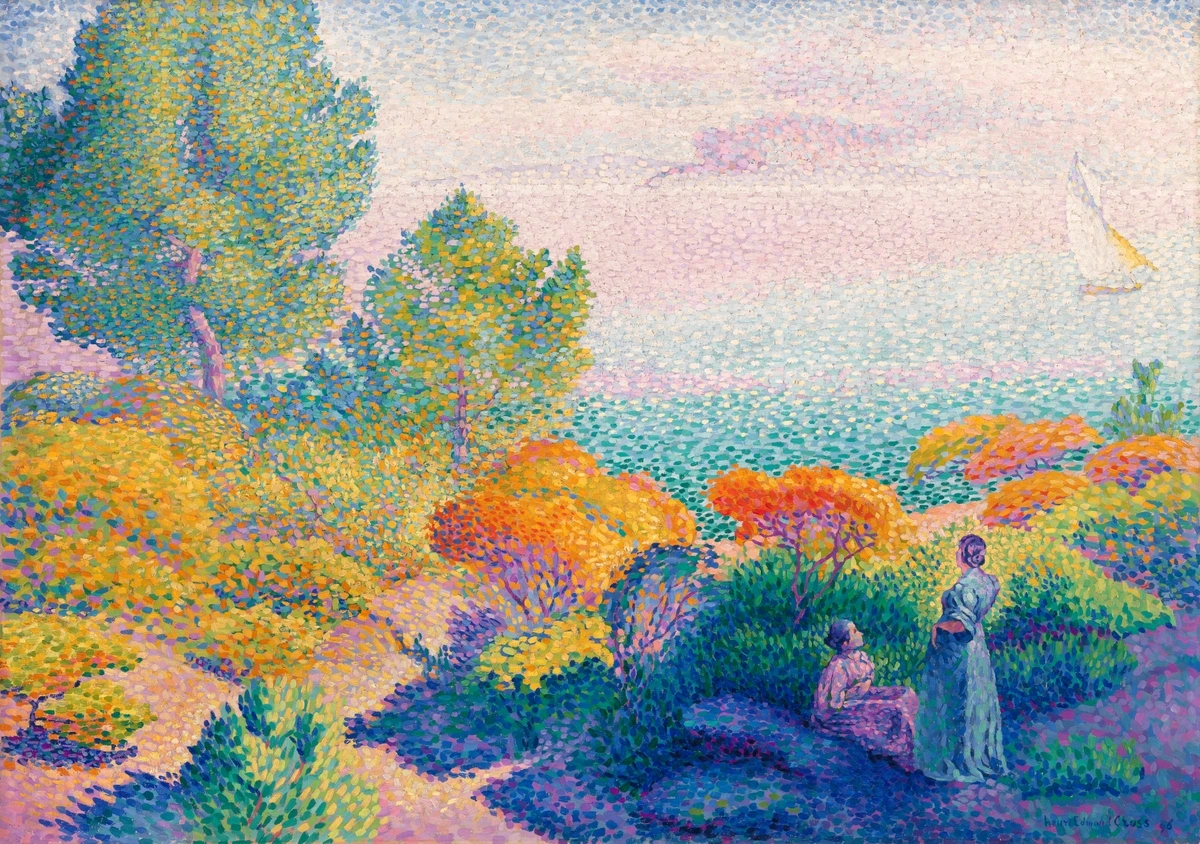
As Signac aged, his style evolved dramatically. While he never abandoned his love for color theory, his technique became looser, more expressive. The dots became larger, more varied, and sometimes he would apply small patches of color rather than individual dots. This evolution shows an artist who was never satisfied, always pushing himself to find new ways to express his vision.
His later works from the 1910s and 1920s have a wonderful freshness and energy. You can see the influence of Fauvism and other modern movements, but always filtered through Signac's unique perspective. He never stopped being a sailor - even in his most abstract-seeming works, there's a sense of movement and rhythm that speaks to his life on the water.
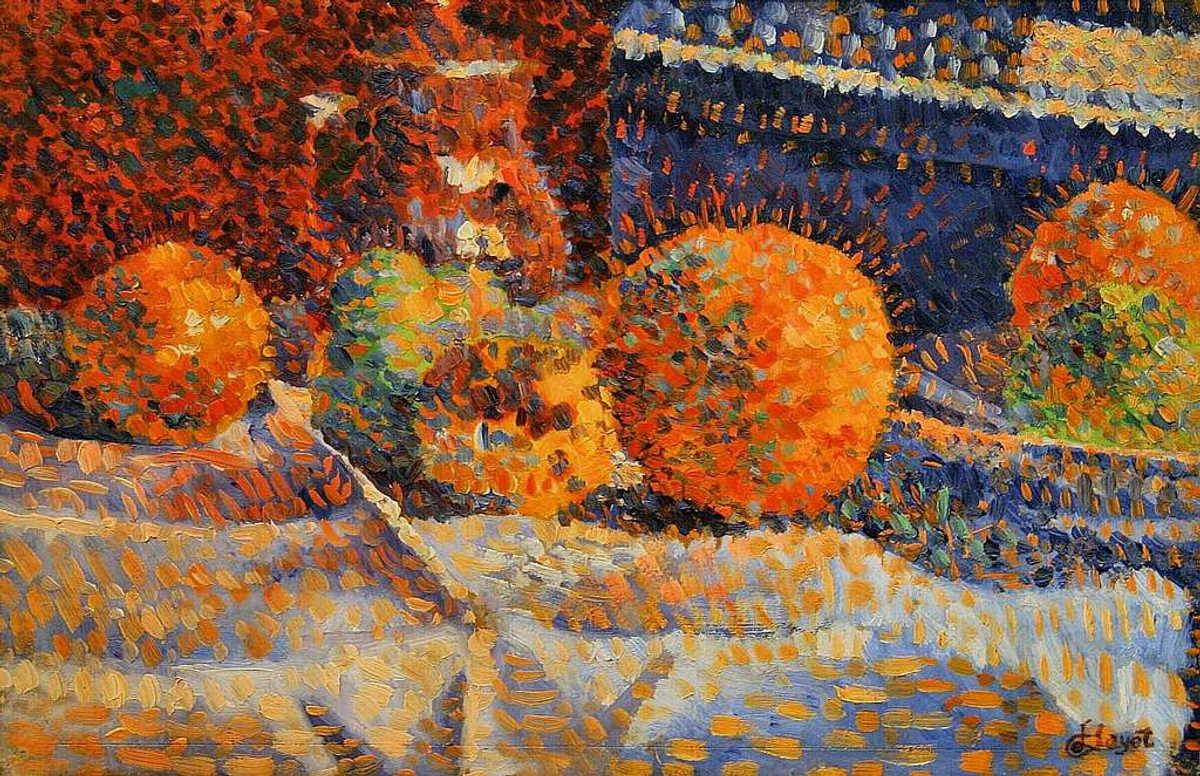
Signac's Legacy: The Unseen Influence
While Seurat gets more attention in art history textbooks, Signac's influence on subsequent art movements might actually be more profound. He lived longer, worked more prolifically, and maintained his artistic vision while adapting to changing times. Artists like Henri Matisse and André Derain directly studied with Signac, and you can see the influence of his color theories in their work.
What's particularly interesting is how Signac bridged different artistic generations. He was a contemporary of the Impressionists, influenced by their interest in light, but he also mentored the Fauves and interacted with the early modernists. He was a living bridge between the 19th and 20th centuries, carrying the torch from one generation to the next.
Collecting Signac: What to Look For
For those interested in collecting Signac's work, there are a few key things to look for:
- Period: His early works (1880s-1890s) are typically the most detailed and pure in their pointillist technique. Later works (1900s-1930s) show the evolution toward looser Divisionism.
- Subject Matter: His harbor scenes and coastal landscapes are his most sought-after works, capturing his unique vision of light on water.
- Color Palette: Signac's use of vibrant, pure colors is a hallmark. Look for works where the optical mixing creates that characteristic luminosity.
- Provenance: Works with good documentation and exhibition history are more valuable.
Where to See Signac's Masterpieces
If you want to experience Signac's work in person, here are some of the best places to look:




- Musée d'Orsay, Paris - Has an excellent collection of Signac's works, including some of his most famous pointillist pieces.
- National Gallery of Art, Washington D.C. - Features several important Signac paintings.
- Tate Modern, London - Houses significant works from the Neo-Impressionist period.
- Museum of Modern Art, New York - Has notable Signac pieces in their collection.
- Private collections - Many of his greatest works remain in private hands, occasionally appearing at major auction houses.
The experience of seeing a Signac painting in person is something special. The way the colors vibrate and glow doesn't always come through in reproductions. There's a physical presence to his work - the texture of the paint, the way light plays off the surface - that makes seeing the original an unforgettable experience.