Paul Gauguin's Artistic Journey: From Stockbroker to Post-Impressionist Pioneer
Explore the dramatic life, radical techniques, and revolutionary impact of Paul Gauguin – the artist who rejected convention for a search for truth in color and myth.

Paul Gauguin's Artistic Journey: From Stockbroker to Post-Impressionist Pioneer
I’ve always been fascinated by artists who completely upend their lives for their craft. Think about it—most of us struggle with balance, career changes, or whether to quit the stable job. Paul Gauguin took that to the extreme. He walked away from a successful life as a stockbroker, left his family, and subjected himself to poverty, disease, and isolation in remote islands—all for art. His journey wasn’t just a career change; it was a fundamental rejection of everything society said art should be. His bold choices still echo in how we think about color, symbolism, and the role of the artist today. Let's unpack Gauguin's wild, often troubled, yet utterly revolutionary path.
The Banker with a Paintbrush: Early Life and Awakening
Born in 1848 in Paris, Gauguin’s early years were anything but destined for bohemia. His family fled Peru during political turmoil, and he grew up in Lima. Later, he joined the French Navy at 17, traveled the world, and eventually settled into a comfortable life as a successful stockbroker in Paris. By all accounts, he was a respectable family man with five children. So, what happened?
His relationship with Camille Pissarro became transformative. In 1873, Gauguin met the established Impressionist, who became his artistic mentor. Pissarro wasn't just teaching technique—he was opening Gauguin's eyes to a whole new way of seeing the world. Suddenly, those weekend painting sessions felt less like escape and more like calling. Pissarro encouraged him to paint en plein air, to capture the fleeting effects of light, and to develop his own voice within the emerging Impressionist movement. This mentorship lasted several years, and during this period, Gauguin experimented with the techniques that would later define his work, though he was already starting to move beyond strict Impressionism toward something more personal and symbolic.
What few people realize is just how profound Pissarro's influence truly was. During this period, Gauguin didn't just learn Impressionist techniques—he absorbed an entire philosophical approach to art. Pissarro taught him to see the world not as a collection of objects, but as an interplay of light, color, and atmosphere. This was revolutionary in itself, but Gauguin's restless mind soon began to question whether capturing fleeting moments was enough. He started to experiment with bolder colors, more simplified forms, and works that seemed to express something deeper than just visual reality. His early works from this period, like The Seine at Pont de l'Europe (1875), show the influence of Monet and Renoir but already contain hints of the more symbolic approach that would later define his career.
Copenhagen: Failure Fuels Radical Change
His first attempt at a full-time artist’s life? Absolute disaster. In 1885, Gauguin moved to Copenhagen to work as a salesman for his late wife’s relatives. He was miserable, culturally isolated, and his work was dismissed as amateurish. He barely scraped by. His time there is a powerful reminder, I think, that sometimes you have to hit absolute rock bottom to truly find your voice. This rejection wasn't just personal; it convinced him that academic training and conventional tastes were the enemy of true expression.
"To paint is to grasp the innermost essence of a being."
He returned to Paris in 1886, broke but newly determined. This period marks his real artistic departure. He moved away from naturalism and Impressionism, embracing simplified forms and unnatural colors. Imagine those early Paris scenes—not just depicting light, but distorting it to express emotion. This wasn't just art anymore; it was rebellion. During this time, he developed what he called "synthetic" methods, combining observation with personal interpretation. He began experimenting with bold color contrasts and flat, decorative patterns that would become hallmarks of his style. His works from this period, such as The Yellow Christ (1889) and The Green Christ (1889), show his growing interest in spiritual themes and his willingness to break with traditional representation to achieve emotional impact.

This was also a period of intense intellectual development for Gauguin. He began reading voraciously, particularly Symbolist poetry and the works of philosophers like Schopenhauer and Nietzsche. These thinkers reinforced his belief that art should express deeper truths beyond mere appearance. Gauguin's studio in Paris became a gathering place for like-minded artists and writers, including Émile Bernard, whom he would later work with in Brittany. During this time, he also became fascinated with non-Western art, particularly Japanese prints and medieval religious art, influences that would become increasingly important in his work. His paintings from this Paris period show a deliberate rejection of the slick, commercial art favored by the bourgeoisie, instead embracing what he saw as a more authentic, primal approach to artistic creation.
Arles: When Genius Collides
If you’ve ever worked with someone brilliant but volatile, you’ll appreciate what happened next. In 1888, Gauguin spent nine intense, fateful weeks in Arles with Vincent van Gogh. Their time together was a crucible of creativity and conflict. They painted side-by-side, exchanging ideas, pushing each other. Van Gogh admired Gauguin’s boldness; Gauguin saw Van Gogh as technically adept but mentally unstable. The arguments were legendary—about art, life, everything.
Then came the infamous incident. Van Gogh, in a moment of crisis, famously mutilated his own ear. While the exact role Gauguin played remains debated (both men gave conflicting accounts), it’s clear the relationship reached a breaking point. Gauguin fled, leaving a devastated Van Gogh behind. This wasn’t just a fight; it symbolized a fundamental divergence in their artistic paths. Van Gogh’s tragic end often overshadows this moment, but it’s crucial: Gauguin fled back to Paris, profoundly shaken and now completely disillusioned with collaborative life. He needed isolation to forge his unique vision.
Brittany: The Birth of Pont-Aven and Synthetism
After Arles, Gauguin sought refuge—and artistic kineticism—in the rural, mystical region of Brittany. The rugged landscapes, devout Catholic traditions, and "primitive" way of life felt like the antidote to Parisian art world pretensions. It was in Pont-Aven that he found his artistic tribe, including painters like Émile Bernard, Charles Laval, and Meyer de Haan. This collective became known as the Pont-Aven School, and together they developed revolutionary artistic ideas. The Breton peasants with their simple faith, the dramatic coastal scenery, and the local folk art traditions provided Gauguin with the "primitive" authenticity he craved—untainted by the sophistication and commercialism he associated with Parisian art circles. He was particularly drawn to the religious fervor he witnessed in Brittany, which reminded him of the spiritual intensity he sought to capture in his art.
Brittany was a revelation for Gauguin on multiple levels. The region's Celtic heritage, with its own language and customs that predated French influence, appealed to his fascination with cultures that existed outside mainstream European society. The local folk art, particularly the painted religious panels and intricate embroidery, showed him that powerful artistic expression could come from non-academic traditions. The dramatic coastline, with its wild weather and stark beauty, provided the perfect backdrop for the emotional intensity he wanted to capture in his work. Gauguin's time in Brittany also coincided with a period of intense personal and spiritual exploration. He began to see himself not just as an artist, but as a kind of shaman or priest, using art to convey deeper truths about the human condition. This sense of spiritual mission would become increasingly important in his work, culminating in his later masterpiece Where Do We Come From? What Are We? Where Are We Going?
Here, they collectively developed Synthetism.
Wait, what is that, exactly? Let’s break it down simply:
Feature  | Description | Example |
|---|---|---|
| Color | Non-naturalistic, bold, flat planes used emotionally, not representatively. | Red sky instead of blue; green faces. |
| Form | Simplified, almost geometric shapes that emphasize pattern over realism. | Stylized trees and figures. |
| Subject | Focuses on mood, symbolism, and spiritual themes, not literal scenes. | Biblical scenes depicted symbolically. |
| Technique | Large, visible brushstrokes ("cloisonnism") outlining areas with dark bands. | Stained-glass like effects. |
| Influence | Drawn from folk art, Japanese prints, medieval religious art, and non-Western traditions. | Use of strong outlines and flat areas of color. |
| Philosophy | Art should express the artist's inner world rather than external reality. | Emotional truth over visual accuracy. |
Think of Synthetism as the opposite of Impressionism. Where Monet chased fleeting light, Gauguin chased fixed essence. He wasn’t painting what he saw, he was painting what he felt. It was radical. And it found its voice in works like "The Vision After the Sermon (Jacob Wrestling with the Angel)" (1888). Notice the red ground plane? It doesn’t exist in reality—it’s pure emotion, creating a symbolic barrier between the praying peasants and the wrestling angel. This was Gauguin’s genius: he used color and form to express interior, spiritual truths.

Tahiti: The Search for a "Savage" Eden
Gauguin was restless. Brittany was intense, but it wasn't enough. He craved a place even further from European corruption—a "savage" paradise. In 1891, at 43, with barely enough money for a one-way ticket, he sailed to Tahiti. He expected untouched authenticity. What he found was a French colony. Disillusionment set in again. But—and this is important—he didn't quit. He adapted. The reality of colonial Tahiti was complex—a mix of indigenous culture and French influence—but Gauguin immersed himself in what remained of traditional Tahitian life. He learned the language, studied local customs, and sought out authentic cultural experiences despite the colonial context. His first Tahitian period (1891-1893) was remarkably productive, as he found the exotic beauty and spiritual resonance he had been searching for. Tahiti offered him the perfect environment to develop his mature style, with its vibrant colors, lush vegetation, and rich mythology.
The journey to Tahiti was itself a testament to Gauguin's determination. He arrived in Papeete with almost nothing but his paints and his fierce artistic vision. Tahiti had been under French colonial rule since 1842, and European influence was pervasive. Yet Gauguin managed to find pockets of authentic Polynesian culture that still retained their traditional practices and spiritual beliefs. He settled in Mataiea, a rural area away from the main European settlements, where he lived among local people and absorbed their way of life.
This period represents the peak of Gauguin's artistic achievement. Freed from the constraints and expectations of European society, he developed a fully mature style that combined his Synthetist principles with the vibrant colors and symbolic richness of Polynesian culture. His Tahitian paintings are remarkable for their emotional intensity, their bold use of color, and their complex symbolism. They represent not just a geographical shift but a profound artistic and spiritual transformation.
He immersed himself in Tahitian culture, learning the language, marrying a young Tahitian woman, Teha'amana, and painting relentlessly. His work from this period explodes with color and symbolism. Paintings like Manao Tupapau (The Spirit of the Dead Keeps Watch) (1892) depict Tahitian life framed by Polynesian mythology and his own haunting visions. The bold use of Primitivism here wasn't just aesthetic; it was a philosophical statement. He believed European civilization had stifled true art and truth. By embracing what he saw as "primitive" culture, he sought to rediscover a pure, untainted source of creativity and spirituality.
Gauguin's Tahitian period can be divided into distinct phases, each with its own artistic focus:
Period | Duration | Key Characteristics | Major Works |
|---|---|---|---|
| First Tahitian Period | 1891-1893 | Vibrant colors, mythological themes, exploration of "primitive" authenticity | Manao Tupapau, Tahitian Women, Nave Nave Fenua |
| Return to Paris | 1893-1895 | Exhibition of Tahitian works, financial struggles, refined symbolic approach | Fatata te Miti, Nevermore |
| Second Tahitian Period | 1895-1901 | Mature style, complex symbolism, personal introspection | Where Do We Come From...?, Two Tahitian Women |
Each of these phases represents a distinct artistic evolution. The first period (1891-1893) was characterized by wonder and discovery. Arriving in Tahiti, Gauguin was captivated by the vibrant colors, lush vegetation, and the apparent simplicity of Polynesian life. His paintings from this time often depict idyllic scenes of Tahitian women, lush landscapes, and mythological subjects. The colors are extraordinarily bold—deep blues, vibrant reds, rich greens—used not just representationally but emotionally to convey the spiritual intensity he associated with Tahitian culture.
His return to Paris (1893-1895) was a difficult period. While he managed to organize an exhibition of his Tahitian works, it received mixed reviews and sold poorly. Financial struggles continued, and he struggled to adapt to European society after his time in the Pacific. Yet this period allowed him to reflect on his experiences and refine his artistic approach. The works he painted during this time show a more sophisticated symbolic language, with greater complexity in both composition and meaning.
His second Tahitian period (1895-1901) represents the culmination of his artistic journey. Freed from the need to prove himself to European audiences, he produced his most ambitious and profound works. The paintings from this period are larger, more complex, and deeply philosophical. Where Do We Come From? What Are We? Where Are We Going? (1897-98), painted on a massive 139 × 377 cm canvas, is perhaps the ultimate expression of his artistic and philosophical concerns—a complex meditation on the human condition that combines Tahitian imagery with universal spiritual questions.
During his first Tahitian period, Gauguin produced some of his most iconic works, including Tahitian Women on the Beach (1891), The Spirit of the Dead Watching (1892), and Nave Nave Fenua (Delightful Land) (1894). These paintings feature his signature vibrant colors, simplified forms, and symbolic content. He also began incorporating Tahitian mythology and spiritual beliefs into his work, creating a fusion of European artistic techniques with Polynesian subject matter that was revolutionary for its time. His Tahitian paintings often deal with themes of paradise, loss, and the conflict between European and indigenous worldviews.
The personal life during this period was complex. Gauguin's relationship with Teha'amana was intense but ultimately ended when he returned to Paris in 1893. Back in Europe, he struggled to sell his Tahitian paintings but organized an exhibition that brought him critical attention if not financial success. His return to Tahiti in 1895 marked the beginning of his mature period, where his art became increasingly introspective and philosophical, exploring themes of existence, time, and the human condition with unprecedented depth.
Beyond Paint: Gauguin's Multimedia Artistic Practice
While Gauguin is primarily known as a painter, his artistic practice extended far beyond canvas and oil. His work in other mediums reveals the full scope of his creative vision and technical versatility.
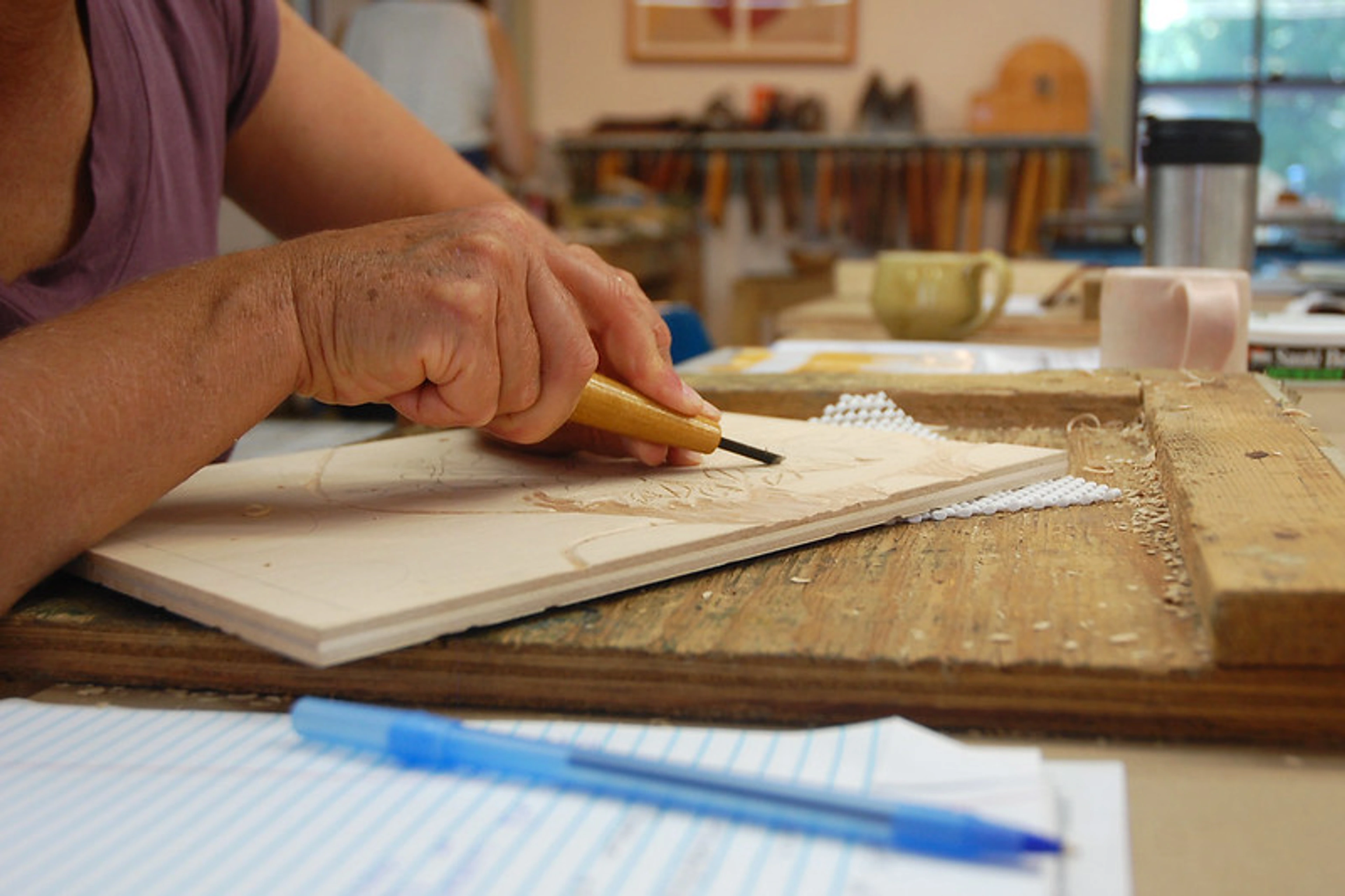
Woodcuts and Printmaking: Gauguin was a skilled printmaker who produced some of the most innovative woodcuts of the late 19th century. His Noa Noa series, created to illustrate his memoir of the same name, demonstrates his mastery of the medium. These woodcuts feature bold outlines, simplified forms, and expressive use of line and space. Gauguin often printed his woodcuts in multiple colors, a technically challenging approach that resulted in vibrant, sophisticated images. His printmaking work shows the continued influence of Japanese art while developing a distinctly personal style.
Sculpture: In Tahiti and the Marquesas, Gauguin turned to sculpture as another means of expression. His wood carvings often depict Tahitian deities, mythological figures, and everyday scenes. These sculptures share the simplified forms and symbolic content of his paintings, translating his visual language into three dimensions. Working with local materials and techniques, Gauguin created sculptures that reflect both his European training and his engagement with Polynesian artistic traditions.
Ceramics and Decorative Arts: Gauguin experimented extensively with ceramics during his later years. He created decorative plates, vases, and other objects that combine European ceramic techniques with Tahitian motifs and imagery. These works often feature bold patterns, symbolic figures, and vibrant glazes, demonstrating his ability to apply his artistic principles to functional objects. His ceramic work shows his interest in the decorative arts and his belief that beauty could be found in everyday objects.
Writing and Literary Work: Gauguin was also a writer who produced several important texts about art and his experiences. His memoir Noa Noa offers insights into his time in Tahiti and his artistic philosophy. He also wrote numerous letters to fellow artists, dealers, and friends that provide valuable documentation of his thinking and creative process. These writings reveal Gauguin as a thoughtful theorist who carefully considered the relationship between art, life, and society.
Through this diverse body of work, Gauguin demonstrated that true artistic creativity knows no medium boundaries. Each form allowed him to explore different aspects of his vision, from the intimate details of woodcuts to the monumental scale of his paintings, from the practical functionality of ceramics to the theoretical depth of his writings.
"Life being what it is, one dreams of revenge."
The Marquesas: The Final Years and Death
Gauguin never returned to Europe. After clashes with colonial authorities in Tahiti, he moved to the even more remote Marquesas Islands in 1901. He lived in isolation in Hiva Oa, battling illness (syphilis) and financial hardship. Yet, his work remained astonishingly prolific and innovative. His last great paintings, like Where Do We Come From? What Are We? Where Are We Going? (1897-98), are complex philosophical tapestries, questioning the meaning of existence itself. During his final years, Gauguin's health deteriorated significantly, but his creative output remained remarkable. He continued to paint, write, and carve wood sculptures, producing works of increasing complexity and depth. His Marquesas paintings often feature darker, more somber tones compared to his earlier Tahitian work, reflecting his deteriorating health and growing introspection. Despite his physical suffering, Gauguin maintained his artistic vision, creating works that blend personal spiritual inquiry with observations of island life.
The Marquesas represented the final stage of Gauguin's search for authenticity. More remote and less Europeanized than Tahiti, the islands offered him the isolation he craved and what he hoped would be a more "untainted" Polynesian experience. He settled in Atuona, the administrative center of Hiva Oa, where he built a house he called "Maison du Jouir" (House of Pleasure). Despite the name, his life there was anything but pleasurable—he was frequently ill, financially desperate, and increasingly isolated from both European and indigenous communities.
Yet it was in this environment of extreme hardship that Gauguin produced some of his most profound work. His paintings from the Marquesas show a darkening palette and more complex compositions, reflecting both his deteriorating health and his deepening philosophical concerns. He continued to explore Tahitian themes but with a more somber, introspective tone. In addition to his painting, he produced numerous woodcuts and sculptures, often working in small, intimate formats due to his limited physical strength. His final works represent the culmination of his artistic journey—complex, deeply personal meditations on life, death, and the human condition that transcend both his personal circumstances and the cultural contexts in which they were created.
The move to the Marquesas was driven by multiple factors. Gauguin had grown disillusioned with the increasing Europeanization of Tahiti and had several run-ins with colonial authorities over his relationships with local women and his critical writings. The Marquesas offered even greater isolation and what he hoped would be a more "authentic" Polynesian experience. He settled in Atuona, the administrative center of Hiva Oa, where he built a house he called "Maison du Jouir" (House of Pleasure).
His final years were marked by both artistic triumph and personal tragedy. Despite his worsening health—his syphilis had progressed to the point where he was often unable to paint—he produced some of his most ambitious works. Where Do We Come From? What Are We? Where Are We Going? (1897-98), painted on a 139 × 377 cm canvas, represents the culmination of his artistic and philosophical journey. This monumental work combines Tahitian figures with symbolic elements to create a complex meditation on the human condition, from birth to death to renewal.
Gauguin's health problems were severe and multifaceted. Beyond syphilis, he suffered from severe arthritis that made it difficult to hold a brush, heart problems, and what may have been complications from his earlier naval service. These physical limitations didn't stop him from working, but they did influence the nature of his late work. He turned to smaller formats, woodcuts, and sculpture when painting became too difficult. Even in his final months, when he was confined to bed, he continued to draw and write, maintaining his creative output until the very end.
The social and political context of his final years was also challenging. The Marquesas were under French colonial rule, and Gauguin's status as a European outsider with controversial views made him a target for both colonial authorities and local resentment. He had several public disputes with the French administrator and was even briefly imprisoned. These conflicts only deepened his sense of isolation but also reinforced his identity as an outsider who existed beyond conventional social norms—both French and Polynesian.
Gauguin also expanded his artistic practice during this period, creating numerous woodcuts, sculptures, and ceramic works. His Noa Noa woodcuts, intended to illustrate his memoir of the same name, showcase his mastery of printmaking and his continued exploration of Tahitian themes. He also experimented with ceramics, creating decorative pieces that blend European and Polynesian aesthetics.
He died in 1903, alone, without recognition from the mainstream art world. We now know his name is synonymous with modern art. His journey reminds me that the path of true creation is often lonely, misunderstood, and paved with sacrifice. The reward isn't fame—it's the work itself. Gauguin died of syphilis at the age of 54, his body ravaged by the disease but his artistic legacy intact. In his final years, he wrote extensively about his artistic philosophy and experiences, leaving behind a rich body of correspondence that provides insight into his thinking and creative process. His final works, though created in physical pain, represent some of his most profound artistic achievements, combining technical mastery with deep philosophical inquiry.
Gauguin's Enduring Legacy: Why He Still Matters
So, why does this complicated, troubled artist matter today? Look around:
- Color as Emotion: Artists from Henri Matisse (Fauvism) to contemporary abstract painters owe a debt to Gauguin’s liberation of color from strict representation. His bold, non-naturalistic palettes fundamentally changed what we accept as "valid" color in art.
- Symbolism & Inner Vision: He paved the way for Symbolism and Expressionism, movements prioritizing the artist's inner world over external reality. Abstract Expressionism, especially, traces its roots back to his search for essence.
- The Myth of the Artist: Gauguin crafted his own legend—the suffering visionary rejecting society. This romantic figure of the artist sacrificing everything for their art still shapes how we perceive creativity.
- Controversy and Re-evaluation: His later work, particularly depictions of young Tahitian girls, faces intense scrutiny today. We can't ignore the colonial lens through which he viewed "primitivism" or the power dynamics underlying those relationships. This re-evaluation is crucial—it reminds us that art is made within complex historical contexts, and meaning evolves.
Looking at a bold, colorful abstract painting today, even like some of those created by artists selling contemporary work now, you're seeing a ripple effect from Gauguin's fundamental question: "What if color doesn't have to copy nature? What if it is the feeling?" His influence extends beyond fine art into commercial design, advertising, and popular culture, where bold color combinations and symbolic imagery trace their lineage back to his revolutionary approach. The very idea that art can prioritize emotional truth over visual accuracy—that an artist's personal vision can be more important than technical skill or public taste—finds its roots in Gauguin's daring experiments.
In a world saturated with digital imagery and mass-produced content, Gauguin's emphasis on authentic, personal expression feels more relevant than ever. We live in an age of filters and algorithms, of curated perfection and standardized beauty. Gauguin's work reminds us that true artistic value comes from individual vision, not from technical perfection or market appeal. His insistence on following his own path, regardless of criticism or commercial failure, offers a powerful counter-narrative to our culture of instant gratification and external validation.
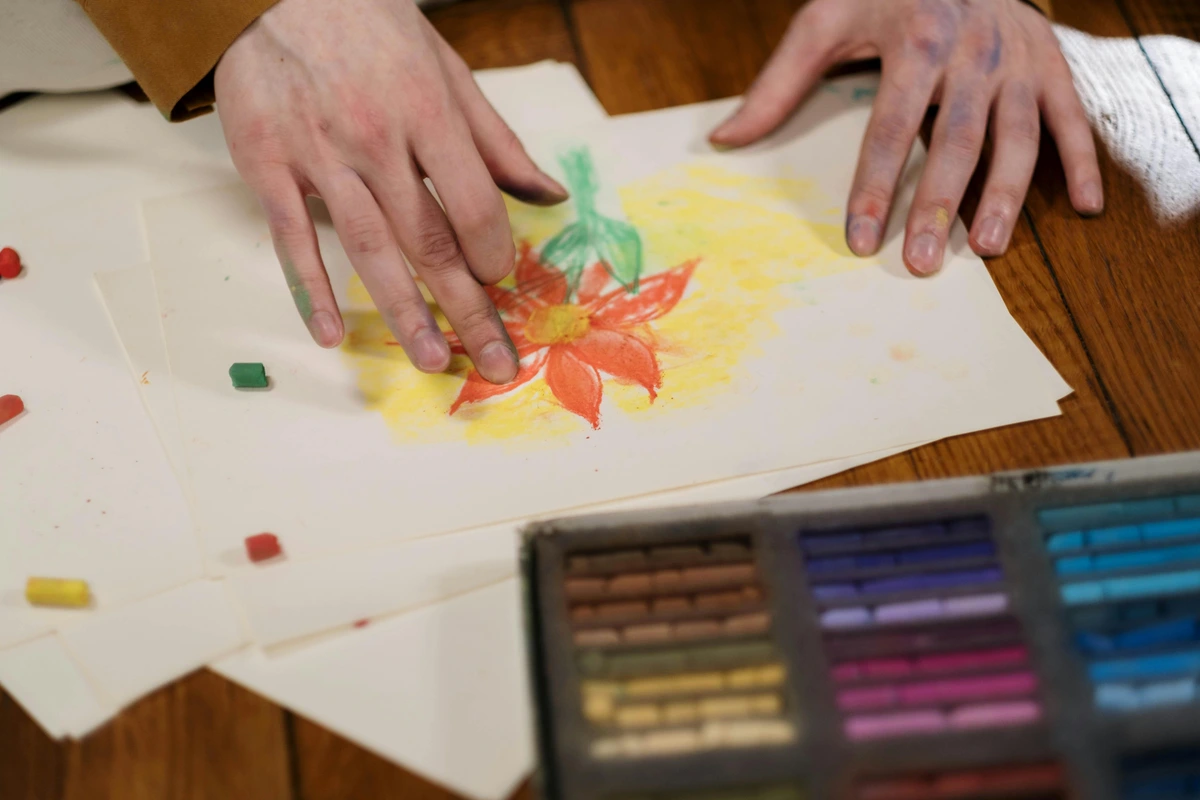
The digital age has actually made Gauguin's ideas more accessible than ever. Social media platforms allow artists to share their work directly with audiences, bypassing traditional gatekeepers. This democratization of art distribution echoes Gauguin's rebellion against the established art world. While the tools have changed, the fundamental challenge remains the same: creating work that is authentic, personal, and true to one's vision, even when it doesn't conform to expectations.
Frequently Asked Questions
1. Why did Gauguin leave his family and comfortable life?
Gauguin’s departure was driven by a profound artistic calling, amplified by external circumstances. The 1882 stock market crash gave him the practical push to abandon his career. However, his core motivation was a deep dissatisfaction with bourgeois life and a belief that true art required complete dedication and rejection of conventional values. He saw his family ties as chains inhibiting his creative freedom. A dramatic break, however painful, was necessary for his transformation.
2. How did Gauguin's art style evolve over his career?
His journey shows a clear progression towards increasingly radical forms:
Phase | Style Characteristics | Key Works |
|---|---|---|
| Early Impressionism | Loose brushwork, plein air scenes, influenced by Pissarro. | Landscape near Pontoise (1875) |
| Synthetism | Bold non-representational color, simplified forms, symbolic themes, cloisonnism. | The Vision After the Sermon (1888) |
| Tahitian Primitivism | Vibrant tropic palette, fusion of European myth with Polynesian subject matter. | Manao Tupapau (1892), *Spirit of the Dead Ke... |
| Final Phase | Intense personal symbolism, complex compositions exploring human existence. | Where Do We Come From...? (1897-98) |
Key Artistic Influences on Gauguin's Development
No artist creates in a vacuum, and Gauguin was profoundly shaped by the artists, cultures, and movements he encountered throughout his life. Understanding these influences helps contextualize his revolutionary approach.

Impressionism: Gauguin's early training was firmly rooted in Impressionism. His relationship with Camille Pissarro was crucial during this formative period. Pissarro taught him technical skills and introduced him to the Impressionist focus on light and atmosphere. However, Gauguin quickly moved beyond Impressionism's focus on capturing fleeting moments to explore more permanent, essential qualities. His early works show the influence of Monet's loose brushwork and interest in outdoor painting, but he soon developed his own distinctive approach.
Japanese Prints: During his Paris years, Gauguin became fascinated with Japanese ukiyo-e prints. The strong outlines, flat areas of color, and asymmetric compositions of these works resonated deeply with his emerging artistic sensibilities. Japanese art taught him the power of simplification and the expressive potential of line and pattern. This influence is particularly evident in his cloisonnist works, where dark outlines separate areas of flat color, creating effects similar to stained glass or Japanese woodblock prints.
Folk Art and Medieval Art: Gauguin was drawn to what he saw as the "primitive" authenticity of folk art and medieval religious painting. He admired the bold simplicity, symbolic content, and emotional directness of these traditions. In Brittany, he studied local folk art and religious imagery, incorporating their stylized forms and spiritual intensity into his work. This interest in non-academic art traditions helped shape his belief that true artistic expression could come from outside the established art world.
Non-Western Art: While problematic by today's standards, Gauguin's engagement with non-Western art was groundbreaking for its time. His exposure to Polynesian sculpture, textiles, and religious imagery expanded his understanding of what art could be and how it functioned. Tahitian art, with its emphasis on spiritual meaning and symbolic representation, reinforced his rejection of purely representational approaches and his belief in art's capacity to express deeper truths.
Literary and Philosophical Influences: Gauguin was well-read and engaged with contemporary philosophical and literary ideas. His work shows the influence of Symbolist poetry and philosophy, which emphasized the idea that art should express inner states rather than external reality. He was also influenced by thinkers like Arthur Schopenhauer and Friedrich Nietzsche, whose ideas about the will, the irrational, and the overcoming of conventional morality resonated with his own artistic philosophy.
3. What is Synthetism in simple terms?
Synthetism (or Cloisonnism) was Gauguin and Pont-Aven School’s revolutionary method. Instead of painting exactly what you see like the Impressionists, you "synthesize" your artwork by:
- Using color for mood and feeling, not realism (e.g., red skies, green skin).
- Simplifying shapes into bold, decorative patterns.
- Emphasizing flatness and line, often like stained glass ("cloisonné" borders).
- Focusing on symbolic meaning and spiritual themes.
It’s about distilling a scene down to its essential emotional and symbolic core.
4. What was Gauguin's relationship with Van Gogh like?
Complex and volatile. Gauguin and Van Gogh admired each other's talents but were fundamentally different. Van Gogh craved Gauguin's approval; Gauguin saw Van Gogh as mentally unstable. Their nine-week collaboration in Arles was incredibly fertile creatively but marked by intense arguments and clashing personalities. Van Gogh's ear incident (whether Gauguin provoked it or not) led to Gauguin's abrupt departure. Their interaction remains one of art history's most dramatic and debated encounters.
The psychological dynamics between these two artists were incredibly complex and revealing. Van Gogh saw Gauguin as the mentor he never had—someone who had successfully made the leap from bourgeois life to artistic freedom. He desperately sought Gauguin's approval and guidance, often to the point of dependency. Gauguin, meanwhile, was both fascinated and repelled by Van Gogh's emotional intensity and instability. He saw Van Gogh as technically brilliant but psychologically vulnerable.
Their artistic exchange was genuine and transformative. Van Gogh learned from Gauguin's bold use of color and symbolic approach, while Gauguin was inspired by Van Gogh's emotional depth and technical skill. They painted side-by-side, exchanging ideas and techniques. This creative dialogue produced some of the most innovative art of the Post-Impressionist period, with each artist pushing the other to new heights.
Yet their differences proved insurmountable. Van Gogh's need for approval clashed with Gauguin's desire for independence. Van Gogh's emotional volatility was incompatible with Gauguin's need for calm and order. Their arguments weren't just about art—they touched on fundamental differences in temperament, lifestyle, and philosophy. The ear incident, whatever its exact circumstances, was the inevitable result of this incompatible relationship.
What's often lost in this dramatic story is how much Gauguin admired Van Gogh's work despite their personal conflicts. After leaving Arles, he continued to follow Van Gogh's career with interest, and the two maintained correspondence, with Gauguin expressing genuine concern for Van Gogh's mental health while defending his own decision to leave. Their brief collaboration, though ending in tragedy, produced some of the most innovative art of the Post-Impressionist period, with each artist pushing the other to new creative heights.
Gauguin's Influence on Modern and Contemporary Art
Gauguin's impact extends far beyond the Post-Impressionist movement; his ideas and techniques continue to influence artists working today across diverse mediums and styles.
Early 20th Century Modernism: Gauguin's influence on the development of modern art cannot be overstated. His bold use of color and rejection of naturalistic representation directly inspired the Fauvist movement, led by Henri Matisse and André Derain. The Fauves took Gauguin's color liberation even further, using intensely vibrant hues without any attempt at naturalism. Pablo Picasso and Georges Braque were also deeply influenced by Gauguin's formal innovations, particularly his flattening of space and use of strong outlines, which contributed to the development of Cubism.
German Expressionism: The German Expressionist movement, particularly artists like Ernst Ludwig Kirchner and Karl Schmidt-Rottluff, drew inspiration from Gauguin's emotional intensity and symbolic approach. They shared his belief that art should express inner states rather than external reality, and they adopted his bold use of color and simplified forms. The Brücke (Bridge) group in Dresden specifically acknowledged Gauguin as a major influence on their development of Expressionism.
Surrealism: Gauguin's interest in dreams, the unconscious, and symbolic imagery anticipated many of the concerns of the Surrealist movement. Artists like André Masson and Max Ernst were drawn to Gauguin's ability to access deeper psychological and spiritual realms through art. His work suggested that painting could be a gateway to understanding the mysteries of the human mind and the hidden aspects of reality.
The Surrealists were particularly fascinated by Gauguin's Tahitian paintings, with their dreamlike quality and symbolic content. Works like Manao Tupapau (The Spirit of the Dead Keeps Watch) seemed to tap into the unconscious mind in ways that presaged Surrealist interest in automatic drawing and dream analysis. Gauguin's willingness to explore psychological and spiritual themes rather than just visual reality made him an important precursor to the Surrealist movement's exploration of the irrational and the unconscious.
Abstract Expressionism: The American Abstract Expressionist movement, particularly the work of artists like Jackson Pollock and Mark Rothko, shows clear debts to Gauguin's philosophy. Pollock's action painting, with its emphasis on process and emotional expression rather than representation, continues Gauguin's rejection of traditional artistic goals. Rothko's color field paintings, with their focus on the emotional power of color alone, extend Gauguin's color theory into purely abstract territory.
Gauguin's influence on Abstract Expressionism was both direct and profound. Artists like Pollock admired his rejection of traditional composition and his embrace of the painting as a record of the artist's emotional and psychological state. Rothko shared Gauguin's belief in the emotional power of color, though Rothko took this to an even more extreme, purely abstract conclusion. Both movements represented the culmination of Gauguin's revolutionary idea—that art should be about expressing the artist's inner world rather than representing external reality.
Contemporary Art: Today, Gauguin's influence can be seen in artists who continue to explore the relationship between color, emotion, and meaning. Contemporary painters who work with bold color palettes and symbolic content often trace their inspiration back to Gauguin. His example also continues to inspire artists who challenge traditional boundaries between high art and popular culture, between representation and abstraction, and between different cultural traditions.
Contemporary artists like Peter Doig and Chris Ofili show clear influences from Gauguin's approach to color and symbolic content. Doig's atmospheric landscapes and Ofili's use of decorative patterns and symbolic imagery both reflect Gauguin's influence. Many contemporary artists also share Gauguin's interest in exploring cultural identity and the relationship between different artistic traditions—an interest that has only grown more relevant in our increasingly globalized world.
Digital and New Media Artists: Even in the digital age, Gauguin's ideas remain relevant. Digital artists working with color, form, and symbolic imagery continue to explore the same fundamental questions he asked about the relationship between art, emotion, and meaning. His belief in the power of individual vision and authentic expression provides a counterpoint to the often formulaic nature of much digital content creation.
The rise of digital art has actually made Gauguin's ideas more accessible than ever. Digital tools allow artists to experiment with color and form in ways that would have been impossible in Gauguin's time, but the fundamental questions he asked about the relationship between art and emotion remain the same. Many digital artists working with abstract and symbolic forms are directly continuing Gauguin's exploration of how visual elements can express deeper meanings and emotional states.

Gauguin's Influence on Joan Miró: The Spanish artist Joan Miró was deeply influenced by Gauguin's approach to color and symbolic imagery. Miró's dreamlike, biomorphic forms and bold use of color show clear debts to Gauguin's revolutionary approach. Both artists rejected strict representation in favor of creating works that expressed deeper emotional and psychological truths. Miró admired Gauguin's courage in breaking with artistic convention and using art as a means of exploring the unconscious mind.
7. How did colonialism affect Gauguin's work in Tahiti?
This is a complex and important question. Gauguin arrived in Tahiti expecting to find an "untouched" paradise free from European influence, but instead found a French colony. This colonial context fundamentally shaped his artistic output and remains a subject of intense scholarly debate.
The Reality of Colonial Tahiti: By the time Gauguin arrived in 1891, Tahiti had been under French colonial rule for nearly 50 years. European missionaries had converted many Tahitians to Christianity, and French cultural and political influence was pervasive. Traditional Tahitian culture had been significantly disrupted, though elements remained.
Gauguin's Colonial Perspective: Gauguin's view of Tahitian culture was filtered through his European lens. He romanticized traditional Polynesian life, often portraying it as more "authentic" or "primitive" than it actually was. His paintings frequently depict Tahitian women in ways that reflect European fantasies about the "exotic other" rather than their actual lived experiences.
Artistic Impact: Despite these problematic aspects, Gauguin's engagement with Tahitian culture was groundbreaking. He was one of the first major European artists to take non-Western cultural traditions seriously as sources of artistic inspiration. His fusion of European techniques with Tahitian subject matter helped expand the possibilities of what art could be and influenced generations of artists to look beyond Western traditions.
Modern Re-evaluation: Today, scholars and critics increasingly examine Gauguin's work through a postcolonial lens. They acknowledge both his artistic innovations and the problematic power dynamics inherent in his representation of Tahitian culture. This critical perspective reminds us that art is always created within specific historical and cultural contexts, and that meaning evolves as our understanding of those contexts changes.
The Vision After the Sermon (Jacob Wrestling with the Angel) (1888) is perhaps Gauguin's most revolutionary work. Painted during his time in Brittany, this piece marks a complete break from both Impressionism and academic painting. The painting features a bold red ground plane that doesn't exist in reality—it's pure emotion, creating a symbolic barrier between the praying peasants and the wrestling angel. This use of non-naturalistic color for emotional effect was unprecedented and would influence generations of artists to come.
Yellow Christ (1889) is another key work from Gauguin's Brittany period. The painting depicts Christ on the cross, rendered in an unnatural yellow against a dark background. This bold use of color wasn't meant to be realistic—it was meant to convey the spiritual and emotional intensity of the scene. The simplified forms and flat areas of color show Gauguin's developing Synthetist style and his interest in expressing spiritual rather than visual truth.
Manao Tupapau (The Spirit of the Dead Keeps Watch) (1892) represents Gauguin's mature style at its best. Painted during his first Tahitian period, the work depicts a young Tahitian woman lying on her bed while an old woman watches over her, representing the spirit of the dead. The painting uses bold contrasting colors and simplified forms to create a haunting, dreamlike atmosphere that combines Tahitian mythology with European artistic techniques.
Where Do We Come From? What Are We? Where Are We Going? (1897-98) is Gauguin's masterpiece and one of the great works of Post-Impressionist art. Painted on a massive 139 × 377 cm canvas, this work is a complex meditation on the human condition, depicting figures from birth to death to renewal. The painting combines Tahitian imagery with universal philosophical concerns, representing the culmination of Gauguin's artistic and intellectual journey.
These works represent different phases of Gauguin's artistic development and showcase his revolutionary approach to color, form, and symbolic content.
Gauguin's Influence on Peter Doig: Contemporary painter Peter Doig has acknowledged Gauguin's influence on his work. Doig's atmospheric landscapes and dreamlike scenes show Gauguin's impact in their use of color, symbolic content, and exploration of psychological depth. Both artists create works that exist between reality and imagination, using visual elements to express emotional states rather than just depict the external world. Doig's use of vibrant color and simplified forms continues Gauguin's revolutionary approach to painting.
Conclusion: The Forever Unfinished Journey
Gauguin's life was a series of dramatic rejections—of comfort, convention, and European norms. He chased an idealized authenticity, running from Paris to Brittany to the South Pacific. His art was the diary of that relentless, often painful, search. He wasn't a perfect person by any measure; he was selfish, troubled, and often blind to his own colonial biases. Yet, his audacity remains awe-inspiring.
He proved that art doesn't have to look like a photograph. It can be a language of pure color, symbol, and feeling. He asked big, risky questions about existence and truth and answered them through vibrant, revolutionary paint. His legacy is the perpetual reminder that sometimes, to find your voice, you have to leave everything else behind. It’s a messy, difficult, but ultimately inspiring path—one that continues to resonate in studios and galleries worldwide, long after his last brushstroke.
credit
Gauguin's Writings and Literary Contributions
Beyond his visual art, Gauguin was an important writer whose literary work offers valuable insights into his artistic philosophy and creative process. His writings provide a window into the mind of one of modern art's most revolutionary figures.
Noa Noa: Tahiti Journal: Gauguin's most famous literary work is Noa Noa, his memoir of his time in Tahiti. Originally conceived as a companion to his woodcut series of the same name, the book offers a personal account of his experiences, observations, and reflections on Tahitian culture. The work is notable for its evocative descriptions of the landscape, people, and customs he encountered, as well as its philosophical meditations on art and creativity.
Noa Noa is particularly valuable because it shows Gauguin grappling with the same themes that appear in his visual art—the search for authenticity, the relationship between European and indigenous cultures, and the spiritual dimensions of artistic creation. The book's sometimes romanticized and idealized view of Tahitian life reflects both his genuine fascination with the culture and his European perspective.
Letters and Correspondence: Gauguin was an extensive letter writer, corresponding with fellow artists, dealers, friends, and family throughout his life. These letters provide an intimate look at his daily struggles, artistic concerns, and evolving philosophical ideas. His correspondence with Émile Bernard, Vincent van Gogh, and art dealer Ambroise Vollard is particularly valuable for understanding the development of his artistic ideas and his relationships within the art world.
Artistic and Philosophical Essays: Gauguin also wrote several important essays about art and creativity. In these pieces, he articulated his theories about the purpose of art, the relationship between the artist and society, and the importance of authenticity in artistic expression. His essay "Notes Synthétiques" (Synthetic Notes) outlines his approach to Synthetism and provides theoretical justification for his radical visual innovations.
Poetry and Creative Writing: In addition to his more formal writings, Gauguin experimented with poetry and other creative forms. His poetry often reflects the same symbolic, mythological concerns as his visual art, using language to explore similar themes of transformation, spirituality, and the search for meaning. These creative experiments show Gauguin's belief that different artistic forms could complement and enrich each other.
Self-Mythologizing and Narrative Construction: One interesting aspect of Gauguin's literary work is how it contributes to the construction of his own myth. His writings helped shape the public perception of him as a rebellious, suffering genius who rejected conventional society for the sake of his art. This self-mythologizing was itself an artistic act, demonstrating Gauguin's understanding of the power of narrative in shaping artistic identity and reception.
Gauguin's literary contributions are significant not just for what they reveal about his own thinking, but for how they expand our understanding of the relationship between different artistic forms. His work shows that visual artists can also be important writers and thinkers, and that artistic creativity can express itself through multiple media. Today, his writings continue to be studied by scholars and artists who seek to understand the philosophical foundations of his revolutionary approach to art.
Gauguin's Market Reception and Legacy Today: During his lifetime, Gauguin struggled to find commercial success for his work. His paintings were often rejected by dealers and collectors for being too radical and unconventional. Ironically, today his works command some of the highest prices at auction. In 2021, his painting Nafea Faa Ipoipo (When Will You Marry)? sold for over $300 million, making it one of the most expensive paintings ever sold. This dramatic shift in market appreciation reflects how Gauguin's once-revolutionary art has become foundational to our understanding of modern art.
credit
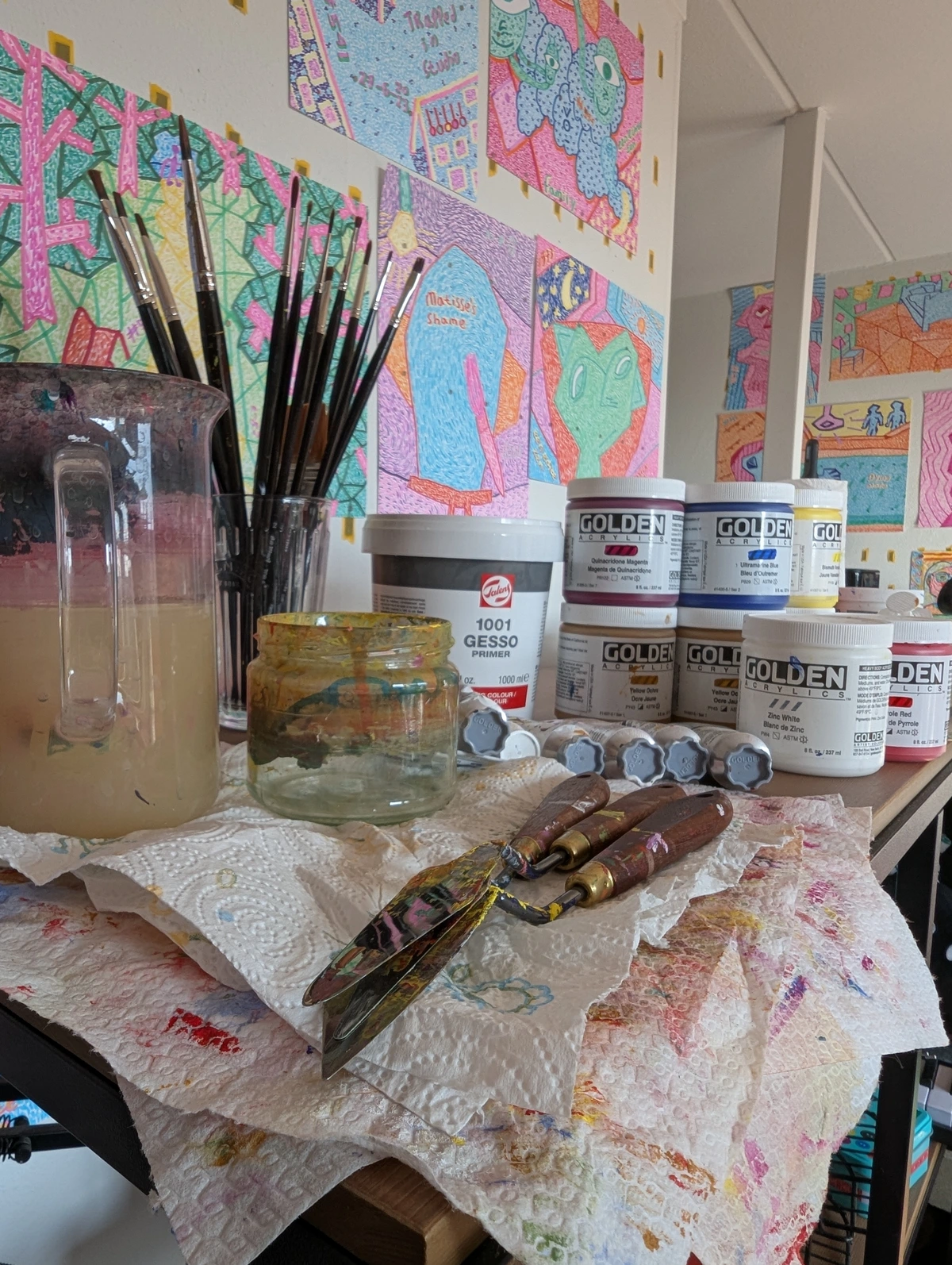
Gauguin's Materials and Techniques: Gauguin was particular about his materials and developed specific techniques that became hallmarks of his style. He often used coarse canvases with prominent texture, which added to the expressive quality of his work. His brushwork was distinctive—bold, visible strokes that emphasized the physicality of paint. He also experimented with different media, including tempera, watercolor, and pastel, often combining them in innovative ways. These material choices were not just technical decisions—they were integral to his artistic vision and helped create the distinctive visual language that made his work so revolutionary.
credit
Explore Related Artistic Journeys
Discover more transformative stories:














- The Mysterious World of Hieronymus Bosch at our collection
- Van Gogh: The Tormented Genius Who Changed Art Forever
- Picasso's Blue Period: Art, Poverty, and Emotional Turmoil
- The Rise of Abstract Expressionism: Jackson Pollock and Beyond
- The Symbolist Movement: Art as the Language of the Soul
- Post-Impressionism: Breaking the Rules of Representation
- Colonialism in Art: Examining Power and Representation
- The Artist's Journey: Sacrifice and Creative Transformation
- Modern Masters Who Redefined Color in Art
- The Art of Rebellion: 10 Artists Who Challenged the System - Explore how artists throughout history have defied conventions and created revolutionary work
- Color Theory Revolution: From Impressionism to Digital Art - Discover how artists changed our understanding of color and its emotional power
- Myth and Symbolism in Modern Art - Learn how ancient myths and symbols continue to inspire contemporary artists
- The Artist's Studio: Creative Spaces That Changed Art History - Step inside the studios of legendary artists and see how their environments influenced their work
- Women in Post-Impressionism: Hidden Figures Who Shaped Modern Art - Discover the overlooked female artists who contributed to this pivotal movement