
Art with Words: Ultimate Guide to Text in Art
Explore the powerful world of art with words. Discover artists, history, techniques & why text in art is more than just letters. Your ultimate engaging guide.

Art With Words: When Language Becomes the Canvas
Let's be honest, we usually keep words and pictures in separate boxes. Words tell, pictures show. It's a simple division of labor we learn as kids. But what happens when an artist deliberately smashes those boxes together, when the sentence itself becomes the landscape, when language isn't a label but the very material of the art? Welcome to the fascinating, sometimes confusing, and undeniably provocative world of art with words.
Imagine, for a moment, a canvas that doesn't just hang on your wall, but actually speaks to you. Not literally, of course—there are no hidden speakers (usually)—but in a way that's even more direct. It uses the raw material of our thoughts, the very stuff we use to construct our realities: language. It's art that bypasses the awkward translation of feeling into form and just hands you the feeling, wrapped in a sentence.
Think of it like this: a painter uses pigment to evoke a feeling. A sculptor uses clay to capture a form. But what material do you use when the thing you want to capture is an idea, a political jab, a private confession, or the hidden rhythm of a city street? For a growing number of artists over the last century, the answer has been the very stuff of our thoughts: language itself. It's an art form that operates on a unique double register—you have to read it and see it at the same time.
It challenges you to process information in two different, often contradictory, ways. Your brain has to flip back and forth, like a switch, between decoding meaning from symbols and sensing form from shape. A word like 'LOVE' can be a powerful expression, but when it's painted in a jagged, violent script, your brain gets stuck. Is this love, or is it about the pain of love? That moment of cognitive friction, that's where the real art happens.
And let's get one thing straight from the start: this isn't some dusty, academic corner of the art world reserved for PhDs. It's arguably the most democratic art form there is. You use words. I use words. We all swim through a relentless, churning sea of them every single day—on billboards, in texts, on screens, echoing in our own heads. Art with words simply holds up a mirror to that experience, asking us to see the familiar in a profoundly unfamiliar way. It's an art form that is accessible because its medium is the common property of everyone.
This accessibility can be a little misleading, though. Because we all use words, it's tempting to think, "I could do that." I've heard people say that in galleries more times than I can count. And the funny thing is, in a sense, they're right. The barrier to entry is incredibly low. But that's precisely what makes the greats so brilliant. They take this utterly common, everyday material and transform it into something that stops you dead in your tracks. They reveal the poetry hidden in plain sight.
It sounds simple, maybe even a bit... basic? Just words on a canvas or a wall? I understand the skepticism completely. It can feel less like "high art" and more like a statement someone just typed out. I'll be the first to admit, my initial encounter with a Lawrence Weiner piece—just a few words in a clean font on a vast white wall—left me standing there, honestly a little baffled. "Wait, is this it? Is this really it?" The apparent simplicity can feel like a trick, or a test you're not sure you're passing.
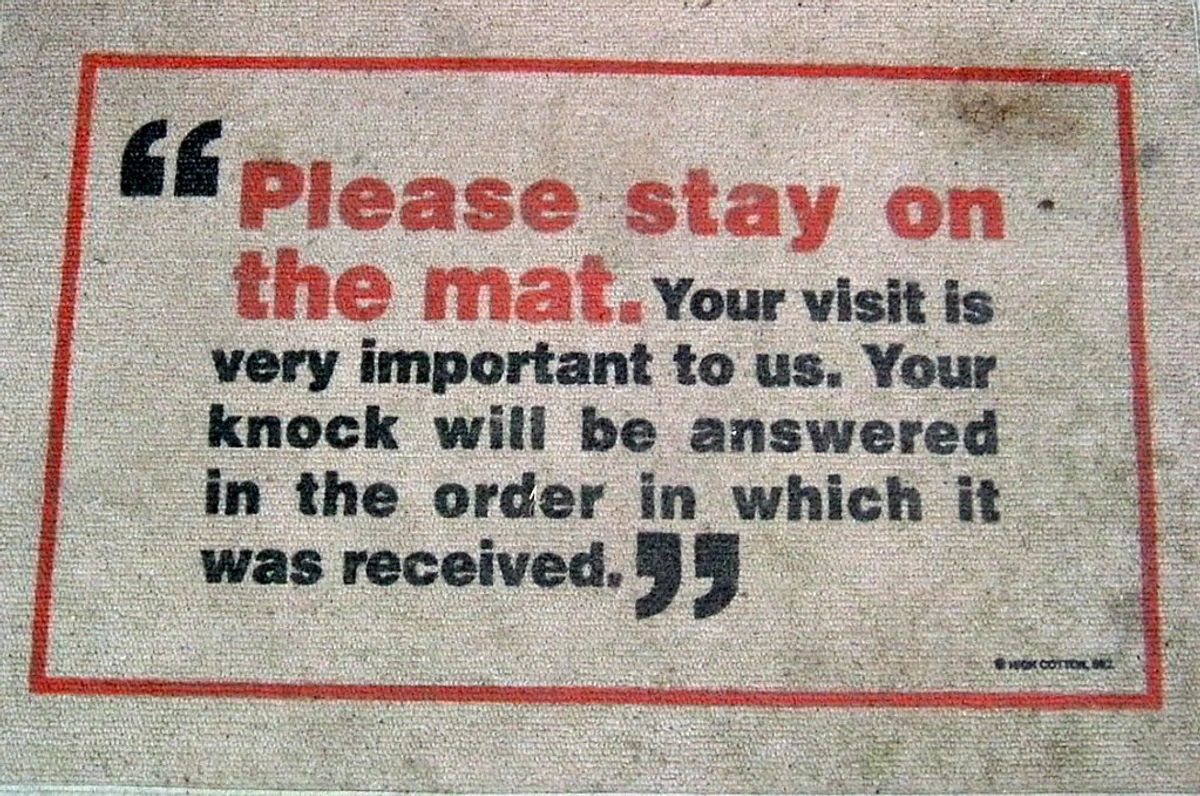

But stick with me here. There's a depth and history to text in art that's surprisingly rich. It can be direct, ambiguous, funny, heartbreaking, political, or just visually stunning. It forces us to read and see simultaneously, engaging our brains in a different way than a silent landscape or a purely abstract piece might.
It teaches you how to look, and how to read, in a completely new way. In a world saturated with text, text-based art asks us to slow down, to actually see the words we're swimming in, and to question the messages they carry.

But here's the thing: it's not just about pretty typography, although the aesthetics of a word can be a huge part of its power. It's about harnessing the power language holds over us—its ability to define, question, persuade, and evoke a feeling you can't quite name. The artist takes that power and places it squarely within a visual art context, forcing a confrontation. It's art that speaks. Literally. Sometimes it whispers a secret, sometimes it screams a protest, and sometimes, like that joke I saw, it just waits patiently for you to get the punchline.
A Quick History: How Words Crashed the Art Party
To pretend words and art were ever truly separate is a kind of historical amnesia. In ancient Rome, wall inscriptions often served as both public announcements and decorative elements, with elaborate letterforms demanding to be seen as much as read. Think of the painstakingly beautiful illuminated manuscripts of the Middle Ages, where text and image were inseparable partners, two voices singing the same hymn. Scribes like those in the Book of Kells didn't just transcribe; they performed a visual alchemy, turning letters into intricate labyrinths of color and form. The word became a sacred object, its visual beauty as important as its divine message. Or consider the monumental stories told by Egyptian hieroglyphs, where a picture of a bird could also be a sound and a sacred symbol all at once. Language and image have danced together for centuries. We, with our neat little categories, are the historical oddities.
It’s not that artists suddenly discovered text; it's that they rediscovered its power to challenge the status quo. Artists have long scribbled notes in their sketch margins, but movements like the Pre-Raphaelites, with their meticulous attention to symbolic detail, or the mysterious, poetic canvases of certain Symbolists, were already flirting with giving text a more central, narrative role. But the real explosion—the moment language decided to hijack the entire canvas and become the main event—happened when the very idea of "art" was put under a microscope.
That fundamental shift came roaring in with the early 20th century, a radical break from tradition. A generation of artists, shell-shocked by the industrial brutality of modern life, grew weary of just painting what they saw. They craved something more direct, more immediate, a piercing scream that could bypass the sentimental filters of representation. They wanted to engage the mind directly, to argue, to provoke, not just to please the eye. This is the moment text stepped out from being a sidekick and grabbed the microphone. It became a deliberate tool to shake up the art world and question everything we thought we knew about art itself.
- Dada & Surrealism: Think of the Dadaists as the original punk rockers of the art world. Watching the horrors of World War I unfold, they concluded that if this was where logic and reason had led humanity, they wanted no part of it. They rebelled by embracing chaos, and text was one of their primary weapons. Hugo Ball would recite "sound poems" in a nonsensical language, wearing a costume that looked like a walking cardboard cathedral, turning his own body into a typographic sculpture. In their hands, words became nonsensical sounds in raucous sound poems, random fragments cut from newspapers and reassembled into nonsensical collages, or tools for creating bizarre, dreamlike juxtapositions.
- Pop Art: Artists lifted text and slogans from consumer culture—comics, ads, signs—blurring the lines between high art and the commercial world. Ed Ruscha’s paintings of words like "OOF" or "ANXIETY" turned mundane language into enigmatic objects.
- Conceptual Art: This is where the idea is the art; text is the primary medium. Lawrence Weiner's statements like "A RECTANGLE REMOVED FROM A RECTANGLE OF THE SAME SIZE" could be the artwork itself, democratizing art by removing the need for technical skill.
Forms it Takes: More Than Just Letters on a Page
Art with words isn't a single, monolithic style. It's more like a spectrum, a vast toolkit that artists draw from to achieve wildly different effects.
- Typography as Art: This is where words get dressed up for a party. It's not about what they mean, but how they look: the swagger of a bold sans-serif, the elegance of a script. The word itself fades, and the pure form takes over. Think of it like this: appreciating a beautiful vase is about its shape, not its function. Here, the word is the vase.
- Text as Image: This is where reading becomes seeing. It's often called concrete poetry. The words form a picture: a poem about a falling leaf where the text itself drifts down the page, or a political statement shaped like a missile. It’s a direct challenge to the idea that language and image are separate things.
- Conceptual Text: Here, the idea is king, and the physical object is just its messenger. A simple line of text on a wall can contain a universe of meaning, and the concept itself holds the aesthetic value. The idea is the art, and the execution is secondary.
- Word Paintings: Imagine a canvas where words aren't labels but active participants in the visual drama. They bump up against figures, are scratched out, underlined, and painted over. They add a layer of meaning and noise, turning the painting into a page torn from a frantic diary.
- Appropriation Art: This is the art of creative borrowing, often as a form of cultural critique. Artists pluck text from a movie, an ad, or a magazine and drop it into the white cube of a gallery. The meaning shifts entirely, forcing us to see the hidden assumptions in the language we consume every day.
- Street Art / Graffiti: This is the raw, unfiltered voice of the street. It ranges from the simple, territorial "tag" to the elaborate, stylized lettering of a "piece," using text as identity, protest, and decoration on the walls of the city itself.
The Deeper Why: Why Artists Turn to Language
So, why do artists turn to text? I think it's because words are the material of our thoughts. When an artist uses steel, they are engaging with industry and strength. When they use paint, they are engaging with light and history. But when they use words, they are engaging directly with the architecture of our consciousness.
- Hitting You Directly: Words can be blunt instruments. Sometimes an artist wants to make a clear, unambiguous statement, and text is the most direct way to do it. This directness cuts through the ambiguity of visual abstraction and delivers a message with the force of a headline.
- Playing with Meaning: Language is wonderfully slippery. Artists use text to create ambiguity, puns, double meanings, and layers of irony. A simple word like "END" painted on a looping video screen suddenly becomes a philosophical question about finality and repetition.
- Social and Political Punch: Text is a powerful tool for commentary. It's the language of protest signs, manifestos, and slogans. It turns the gallery into a public square.
- It Just Looks Cool: Let's not forget aesthetics. Sometimes the visual rhythm, the shape of the letters, the choice of font – it's simply visually compelling. Text has texture and form, just like paint.
- Breaking the Rules: Using text is inherently transgressive. It challenges every traditional notion of what art should look like or be made of. It questions the need for complex technique or traditional beauty, asking instead: is the idea enough?
Deeper Dives: Subgenres and Technical Considerations
- Concrete Poetry: Where the Word's Shape is its Meaning: Concrete poetry is the purest fusion of reading and seeing. Here, the typography and layout of the letters are just as important as the words themselves. The text is arranged to form a specific shape, often the object it describes.
- Asemic Writing: The Beauty of Unreadable Script: Asemic writing is text that has no semantic content—no words, no grammar. It looks like handwriting from a foreign or ancient language you've never seen, but it's completely invented. The beauty lies not in meaning, but in the visual rhythm and the profound mystery it evokes.
- Typographical Art: The Aesthetics of Letterforms: This treats individual letters and words as pure visual elements—their shape, weight, and spacing creating the primary aesthetic experience. It's not about what the word says, but how it looks.
The Creative Process: How Ideas Become Form
Wondering how these artists actually make their work? It's a fascinating blend of poetic instinct and graphic design precision. But I want to be honest here—there's a big difference between the initial idea and the final object. That simple, perfect phrase that ends up on the wall might be the 48th version of something the artist has been wrestling with for weeks.
- Iteration is Key: Most text-based ideas don't spring forth fully formed. They begin with a sentence, a question, a word pair that just feels right. The artist will then physically write, type, or mock up dozens, if not hundreds, of variations. It's a process of searching for the exact constellation of text and form that embodies the initial spark.
- Media Manipulation: The choice of medium often is the message. Stencils feel urgent. Meticulous hand-painting feels personal. An LED sign feels like a public broadcast. The choice here is as crucial as a painter's choice between oil and acrylic.
- Found vs. Forged: Some artists are inventors, crafting their own phrases from scratch. Others are masterful curators of found language, re-contextualizing snippets from newspapers or overheard conversations to create new meanings.
Frequently Asked Questions (FAQ)
Q: What's the difference between text art and graphic design?
A: The main difference, I'd argue, is intent and context. Graphic design typically has a commercial or communicative purpose—it wants to sell you a product or make a website easy to read. Its goal is persuasion and information. Text-based art, on the other hand, uses text to explore ideas and concepts within the context of fine art. Its goal is often to challenge you, make you think, or evoke a specific feeling.
Q: Is art with words "real" art?
A: Yes, without a doubt. But art history is really just the story of artists challenging existing definitions. From Dadaists mocking the establishment to Conceptual artists who declared the idea itself could be the art, using text is a well-established and critical practice. Its value lies not in technical skill, but in its ideas and cultural impact.
Q: Who are some of the most important artists in this field?
A: The list is long and wonderfully diverse. Some titans to start with include Barbara Kruger, the master of the accusatory slogan; Jenny Holzer, famous for her public LED installations; Ed Ruscha, who finds poetry in mundane words; Christopher Wool, known for his anxious, fractured phrases; Lawrence Weiner, a godfather of Conceptual Art; and Jean-Michel Basquiat, who integrated scribbled words into his paintings.
Q: How do you "get" art with words? Is there a secret code or a right answer?
A: The good news is there's no secret code to crack! The real key is to resist the urge to find the one solution and instead, just enjoy the puzzle. When you stand in front of a text-based piece, don't just ask, "What does it mean?" Ask yourself: "What does this wording make me feel?" "Why did the artist choose this font?" Your interpretation is a vital part of the piece itself.
Q: Can I make my own art with words?
A: Absolutely! In fact, you probably already have. Why not take it further? Try the "Daily Dredge," where you jot down interesting snippets of conversation and paint them later. Or try making a single word look like what it means. Write "ANXIOUS" in a frantic, scribbled font with charcoal. You're not just writing anymore; you're translating feeling into form.
The Last Word (For Now)
Art with words is a powerful reminder that creativity isn't confined to traditional materials or techniques. It proves that sometimes, the most profound statements can be made with the simplest tools, even just the letters of the alphabet. So next time you see art that speaks, take a moment to listen, and to look. You might be surprised by what it has to say.