Shattering the Single View: A Deep Dive into Multiple Viewpoint Perspective
Ever looked at a Cubist painting and wondered why it looks so fractured? This guide breaks down multiple viewpoint perspective, explaining how artists like Picasso show us more than one angle at once to capture time, memory, and the true essence of a subject.

Shattering the Single View: A Definitive Guide to Multiple Viewpoint Perspective in Art
Have you ever tried to describe something truly complex, like a vivid dream or the feeling of an entire city, in just one sentence? It feels impossible, right? You struggle to compress the richness, the multiple angles, the subtle shifts of emotion or light into a single, static declaration. I remember as a kid trying to draw our family dog. I wanted to show his wagging tail, his floppy ears, and the happy look on his face all at the same time. The result was a weird, twisted creature that looked more like a monster from a storybook. I was frustrated because my drawing couldn't capture the entirety of him, the way I experienced him running around me. What I didn't know then was that I was bumping up against one of the fundamental questions in art: how do you represent a three-dimensional world, full of movement and memory, on a flat, two-dimensional surface? It’s a challenge I’ve grappled with in my own abstract art, trying to convey a fuller truth than a single glance allows.
This isn't just a quaint childhood memory; it’s a profound echo of art history's persistent pursuit: how to make a static image breathe with the dynamism of lived experience. We're talking about nothing less than the very essence of how we understand and depict reality.
This is where the fascinating concept of multiple viewpoint perspective comes in. But what is it, really? At its heart, it’s a deliberate rejection of the idea that a painting must be a perfect, single snapshot in time, like a photograph. Instead, it’s an attempt to show an object or person from several angles simultaneously, to give you a richer, more complete understanding of the subject. It’s about painting what you know, not just what you see from one fixed spot. It’s a concept that truly shatters our conditioned way of seeing, forcing us to engage with art on a much deeper, more intellectual level. For anyone new to art, or even seasoned enthusiasts, understanding this can unlock entirely new dimensions of appreciation. It's a journey from passive observation to active participation, transforming how we interact with the visual world around us. In this guide, we're going to dive deep into how artists across history and movements have tackled this challenge, proving that there's always more than one way to see the truth.
This is where the fascinating concept of multiple viewpoint perspective comes in. But what is it, really? At its heart, it’s a deliberate rejection of the idea that a painting must be a perfect, single snapshot in time, like a photograph. Instead, it’s an attempt to show an object or person from several angles simultaneously, to give you a richer, more complete understanding of the subject. It’s about painting what you know, not just what you see from one fixed spot. It’s a concept that truly shatters our conditioned way of seeing, forcing us to engage with art on a much deeper, more intellectual level. For anyone new to art, or even seasoned enthusiasts, understanding this can unlock entirely new dimensions of appreciation.
What is Multiple Viewpoint Perspective?
Simply put, multiple viewpoint perspective is an artistic technique where a single subject or scene is depicted from more than one physical or conceptual vantage point within the same artwork. It defies the singular, fixed gaze, inviting the viewer to engage with a multifaceted representation that mirrors how our minds often process reality—as a synthesis of various perceptions and moments rather than a static, singular observation. It's a way for artists to convey a deeper, more comprehensive 'truth' about their subject. Think of it like this: when you describe a friend, you don't just give a single detail. You talk about their laugh, their quirky habits, the way they look when they're happy, and how they carry themselves. That's a multiple viewpoint description, and art can do the same.
Key Characteristics of Multiple Viewpoint Perspective
So, what are the hallmarks of this captivating artistic approach? When I look at a piece employing multiple viewpoints, I'm often looking for these tell-tale signs:
- Simultaneity: The most obvious trait is the presentation of several angles or moments at the same time within a single frame. It's like seeing all sides of a dice without actually turning it.
- Conceptual Depth: It prioritizes what the artist (or culture) knows about the subject over what can be observed from one fixed optical position. This often means conveying symbolic, emotional, or historical "truths."
- Rejection of Single-Point Perspective: It fundamentally moves away from the illusion of a singular, photograph-like reality, challenging the Renaissance ideal of a "window onto the world."
- Dynamic Engagement: It demands active participation from the viewer, who must mentally synthesize the fragmented or layered information to construct a complete understanding. It's a visual puzzle, inviting you to be part of the solution.
- Narrative or Emotional Richness: By compressing time or space, it can convey complex stories, sequences of events, or profound emotional states that a single, static image might miss. It's about more than just form; it's about feeling and context.
Ultimately, for me, it's about art that acknowledges the full, messy, glorious complexity of existence.
Moving Beyond the Eye: The Core Idea
It’s less about mimicking the mechanics of sight, and more about capturing the essence of the subject—its volume, its movement, its history, its emotional weight, and even its spiritual significance—all within a singular visual experience. This approach acknowledges that our understanding of reality is rarely confined to a single glance. Instead, it’s a rich tapestry woven from countless perceptions over time, informed by memory, emotion, and knowledge. Think about how your brain works: it's constantly stitching together sensory input from your eyes, ears, touch, and even past experiences to create a coherent picture of the world. Multiple viewpoint perspective in art is, in a way, mimicking that incredible, subconscious cognitive process. When an artist employs multiple viewpoints, they are essentially asking you to perform this mental synthesis yourself, offering you all the raw data of their perception and knowledge at once, rather than spoon-feeding you a single, static image. It's like seeing a complex machine with its outer casing removed, revealing its intricate inner workings—you get a much fuller understanding of its purpose and function, moving beyond mere surface aesthetics to grasp the true nature of the thing depicted.
It’s less about mimicking the mechanics of sight, and more about capturing the essence of the subject—its volume, its movement, its history, its emotional weight, and even its spiritual significance—all within a singular visual experience. This approach acknowledges that our understanding of reality is rarely confined to a single glance. Instead, it’s a rich tapestry woven from countless perceptions over time, informed by memory, emotion, and knowledge.
credit, licence
The Philosophical Underpinnings: Challenging Ocularcentrism
For centuries, especially since the Renaissance, Western art was utterly captivated by single-point perspective. I mean, think of the mastery of a painting like Leonardo da Vinci's 'The Last Supper' or Raphael's 'School of Athens' – roads, buildings, and figures meticulously arranged to converge at a single, perfect vanishing point on the horizon. This system, developed through intense study of optics and mathematics, created an incredibly convincing illusion of three-dimensional depth and photographic reality on a two-dimensional surface. It offered a window, a portal, onto another seemingly real world. And for a long time, it was the gold standard, the benchmark for "good" or "realistic" art. The rigidity of this system, while brilliant for its time, often meant sacrificing emotional or conceptual depth for optical accuracy. It presented a world as if viewed through a camera lens, a snapshot, rather than the fluid, memory-rich way we actually experience it. This singular, fixed perspective also inadvertently reinforced a hierarchical view of the world, positioning the viewer as a detached, objective observer, rather than an active participant in meaning-making. It was a powerful tool for realism, but it also locked art into a specific mode of truth-telling, one that many artists eventually found insufficient for the complexities of modern experience. This philosophical shift from a singular, objective truth to a multifaceted, subjective reality is what multiple viewpoint perspective truly champions. It challenges the very notion that there's one correct way to see or understand, opening up a dialogue about perception itself.
The Tyranny of the Fixed Gaze
But I've always felt that "reality" in art is a much broader concept, something more akin to what we know than just what we see. Multiple viewpoint perspective, in its essence, takes that meticulously constructed window and, metaphorically speaking, shatters it into a thousand pieces, then thoughtfully reassembles those shards into a new, more comprehensive vision. It's the artist asking, "Why should my representation be confined to a single, static point in space and time? I've experienced this subject; I've walked around this person, seen their front, their profile, the back of their head, even sensed their inner turmoil. Why can't I show all of that, simultaneously, in one powerful image?" It's a defiant stand against the tyranny of the singular, fixed gaze—a challenge to the notion of ocularcentrism, the idea that sight is the primary or most reliable sense for understanding the world. It's a recognition that truth isn't always found in a single, perfectly framed view, but often in the messy, multifaceted sum of all our perceptions. This approach invites the viewer to engage more actively, to piece together the narrative, to create their own holistic understanding of the subject, much like solving a visual puzzle. It speaks to a deeper, more subjective reality, hinting at the complex way our brains synthesize information, much like how a modern scientist might view the universe as a collection of probabilities rather than a single fixed point. It’s a deliberate move from purely descriptive art to a more analytical and interpretive form, asking the viewer to bring their own understanding and intuition to complete the artistic statement. It reminds me of the moment I realized that describing a forest isn't just about showing one tree, but about conveying the interwoven ecosystem, the light filtering through the canopy, the rustling leaves, and the scent of damp earth—all at once, if possible.
To dive deeper into the historical evolution and theoretical framework, you might find our definitive guide to perspective in art an invaluable resource.
Techniques for Achieving Multiple Viewpoint Perspective
So, if it’s not just a single snapshot, how do artists actually do it? How do they fuse these different experiences into one coherent (or intentionally incoherent) image? I find it fascinating because it’s not about magic; it's about a deliberate breaking and re-making of visual rules. It’s like a visual language that expands its vocabulary beyond simple observation. Here are some of the key techniques I see at play, each offering a unique way to bend and redefine what a single image can communicate:
- Simultaneous Angles: This is the most straightforward, though profoundly impactful, technique. Think of showing a face from the front while simultaneously depicting its profile, or a still life with objects rendered as if viewed from above, below, and eye-level all at once. It's about compressing multiple spatial moments into a single plane, creating a kind of composite portrait that reveals more than any single glance could. It's like having x-ray vision and seeing through the object to its far side, or having eyes all around your head, truly capturing the object's full volumetric presence. We see this in some of my own abstract art, where I attempt to convey a sense of a form existing in multiple states or from various angles at once, giving the viewer a sense of almost tangible depth even on a flat surface. This isn't just about depicting; it's about revealing the full spatial dimension of a subject, making the viewer feel as though they are moving around it. It forces a more active engagement, compelling the eye to move across the canvas, piecing together a comprehensive mental image of the object's physical presence in space. You're not just looking at it; you're mentally walking around it, constructing a full, three-dimensional understanding in your mind.
- Fragmentation and Juxtaposition: This goes hand-in-hand with simultaneous views and is perhaps the most iconic element associated with Cubism. Artists break down the subject into geometric or abstract fragments, then reassemble them in a way that emphasizes multiple facets and perspectives. This isn't just random destruction; it's a careful, almost surgical, deconstruction to reveal more, to expose the inner workings or the various dimensions of an object. I often feel like I'm looking at a shattered mirror reflecting different aspects of the same reality, but instead of chaos, there's a profound, underlying order. Think of it like taking a photograph, tearing it into pieces, and then rearranging those pieces to show aspects that wouldn't normally be visible in a single, fixed shot. This technique truly challenges our perception of a unified whole, forcing us to piece together meaning from disparate visual information. It's the visual equivalent of a complex narrative, where different chapters are presented out of linear order, and the reader must construct the full story from the fragments, demanding intellectual effort from the viewer.
- Conceptual Representation: Sometimes, it’s less about optical views and more about what the artist knows about the object or person. Ancient Egyptian art, which we'll discuss, is a perfect example. They weren't trying for realism in the Western sense; they were creating a comprehensive conceptual blueprint, a visual encyclopedia of the subject's essential qualities. It’s like saying, "I know a human has two eyes, a nose, a mouth, and a body facing forward," and depicting all those most characteristic angles to ensure every vital aspect is preserved. This isn't about how something looks from one spot, but about conveying its fundamental 'truth' or 'identity', often for ritualistic or symbolic purposes. This approach highlights how culture and belief systems can profoundly shape artistic representation. It’s a powerful reminder that "realism" is not a universal constant, but a culturally defined concept.* Temporal Compression: This is where it gets really interesting for me. Instead of just different spatial views, multiple viewpoint perspective can also collapse different moments in time into one image. Imagine showing a figure walking across a room, with traces of their movement from start to finish visible in a single frame, or depicting the evolution of an object from creation to decay. It hints at the fourth dimension (time) within a two-dimensional space, blurring the lines between painting and narrative. Think of early stop-motion animation or a long-exposure photograph where movement leaves a blurred trail; this technique captures that essence in a static image, often creating a sense of dynamic narrative and implying movement or duration. It's a way to transcend the limitations of a single, frozen instant, offering a more complete "biography" of the subject. This isn't just a clever trick; it speaks to how our memory operates, piecing together a continuous experience from discrete moments. It’s why you can recall a person's entire laugh, not just a single frame of their mouth moving, and why an artist might choose to show that cumulative experience.
- Layering and Transparency: Some artists achieve multiple viewpoints by layering translucent forms or using techniques that allow different elements to be seen 'through' each other. This creates a spatial ambiguity, where foreground and background might merge, or different facets of an object are visible simultaneously, much like looking at a complex structure through x-ray vision, revealing hidden dimensions and interconnections without physically opening it up. I often find this technique particularly profound because it acknowledges the inherent complexity of anything we observe, that there are always unseen depths and interconnected layers beneath the surface. It challenges the very notion of a clear boundary between 'inside' and 'outside' or 'now' and 'then', inviting a more contemplative and analytical gaze from the viewer.
It's a bit like how our memory works, actually. When you remember a person's face, you don't just see a static photo. You recall a collection of expressions, angles, and moments, a mental collage. Multiple viewpoint perspective is the artistic equivalent of that deeply human mental process.
In a way, it's about pushing the boundaries of what a single image can convey. If I'm thinking about representing an object, say, a simple vase, and I want to show its volume, its form, and how light hits it from different directions, I might end up with something that looks fragmented, almost like a collage of ideas rather than a faithful rendering. It's about recognizing that a truly comprehensive portrayal often necessitates moving beyond a singular, fleeting optical impression to embrace the cumulative wealth of knowledge and experience we have of a subject.
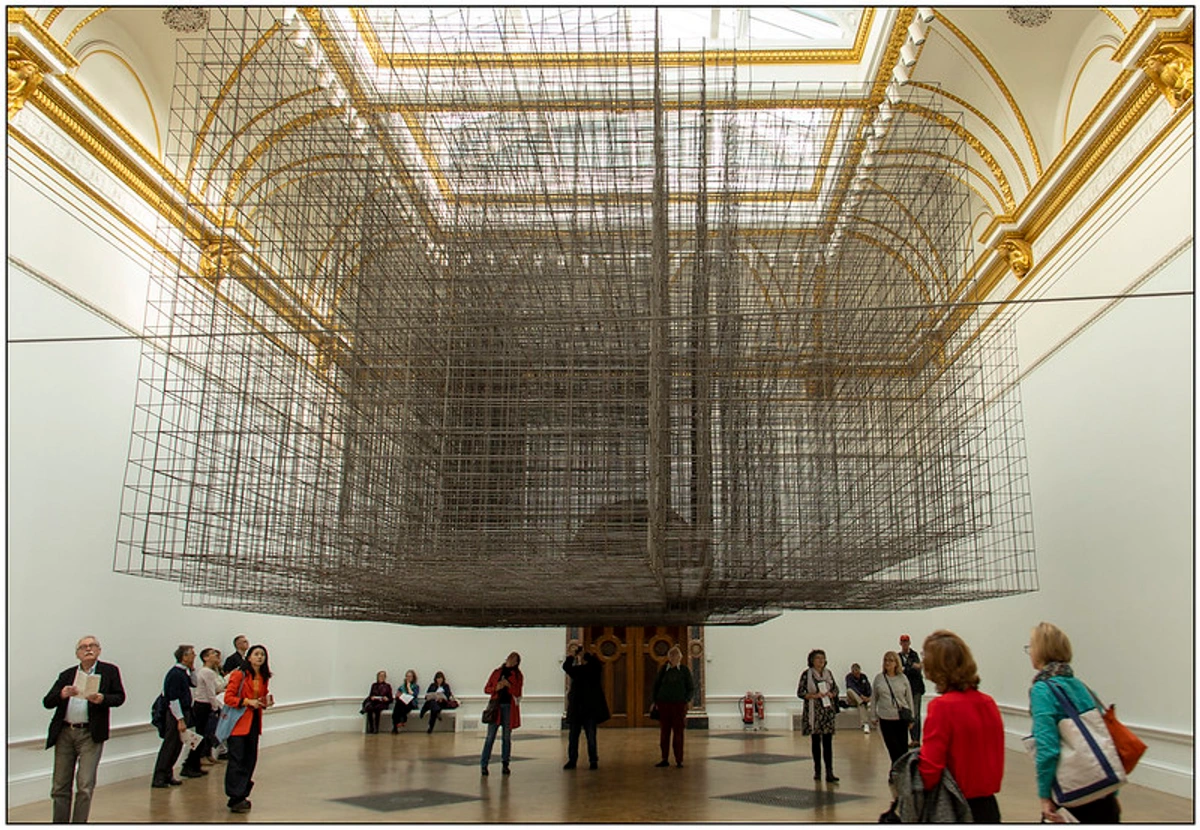
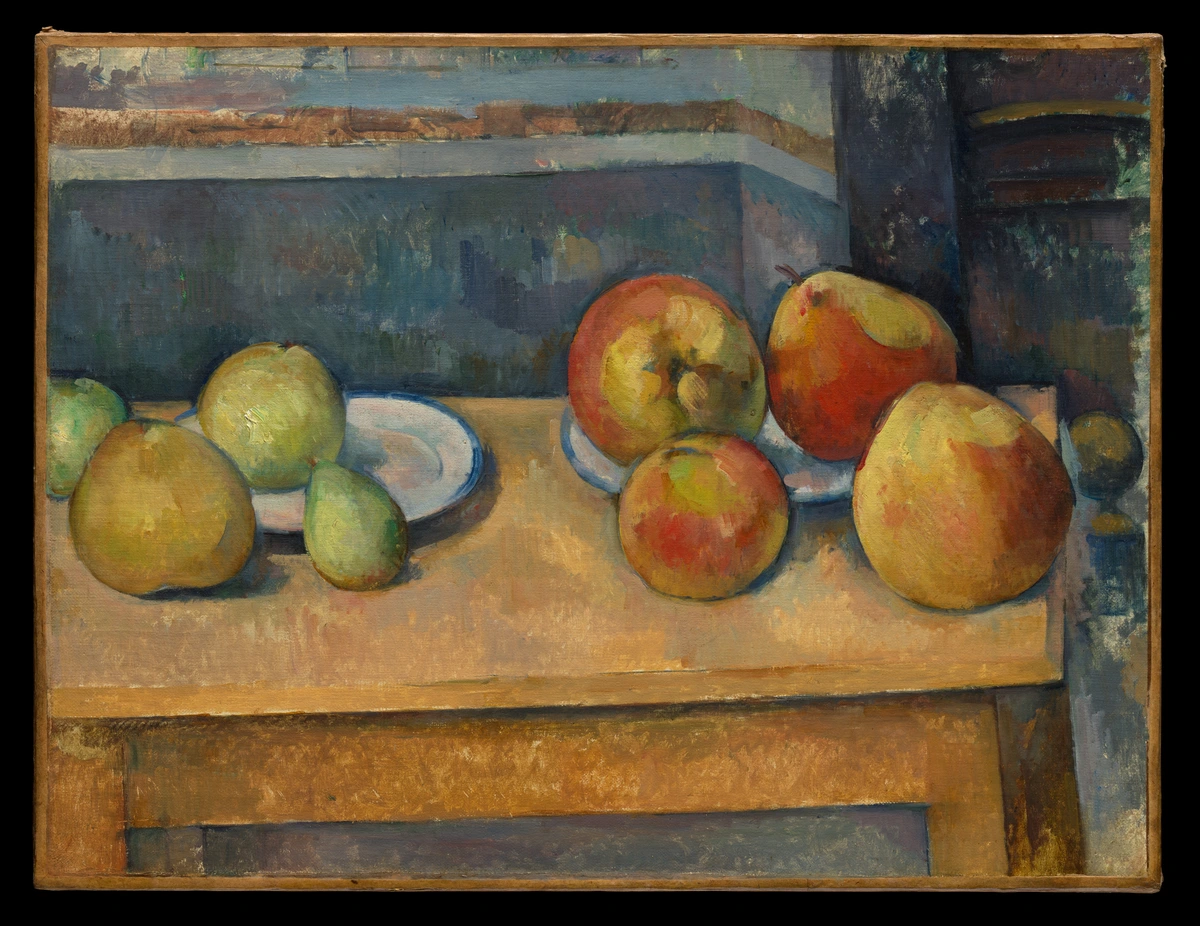
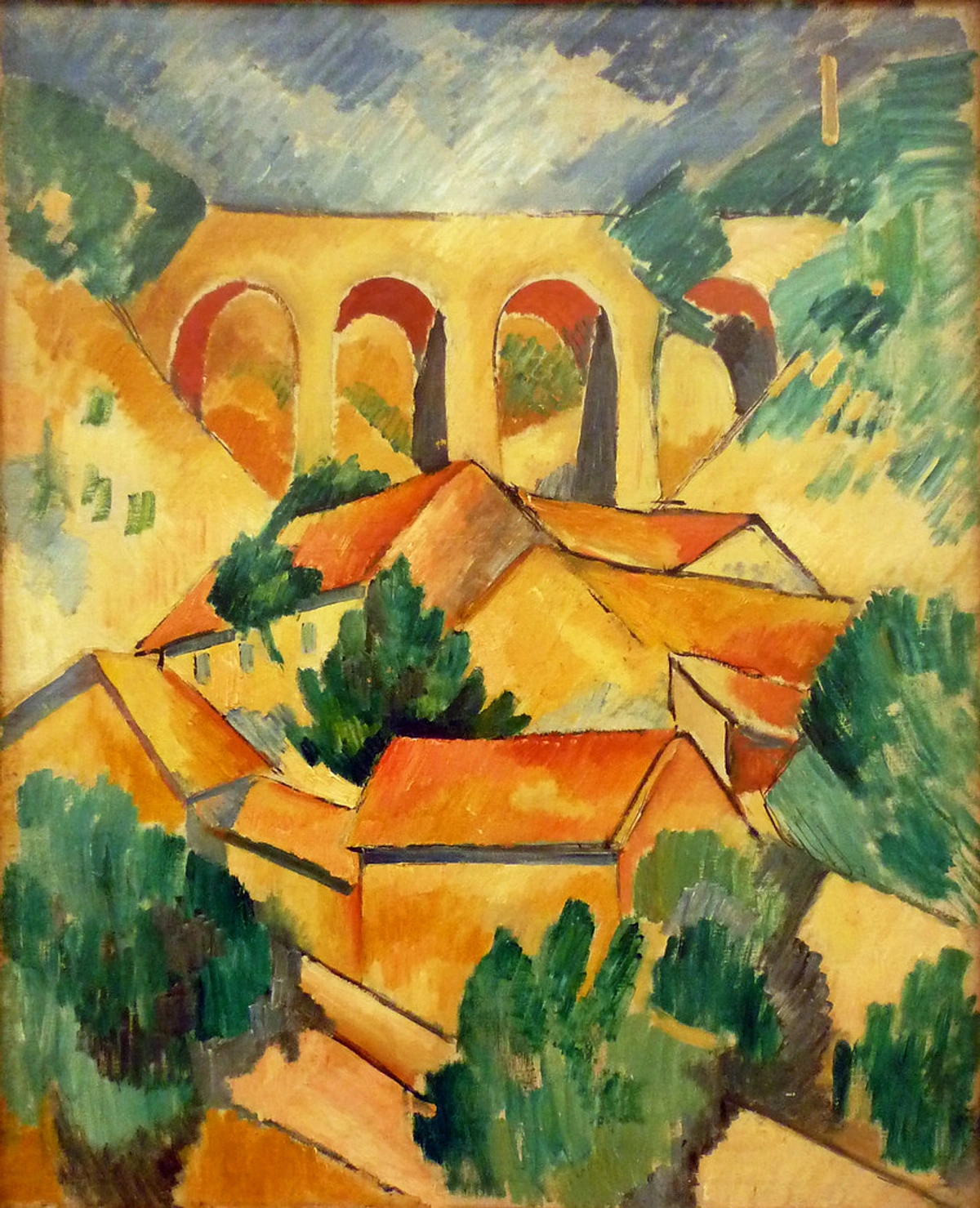
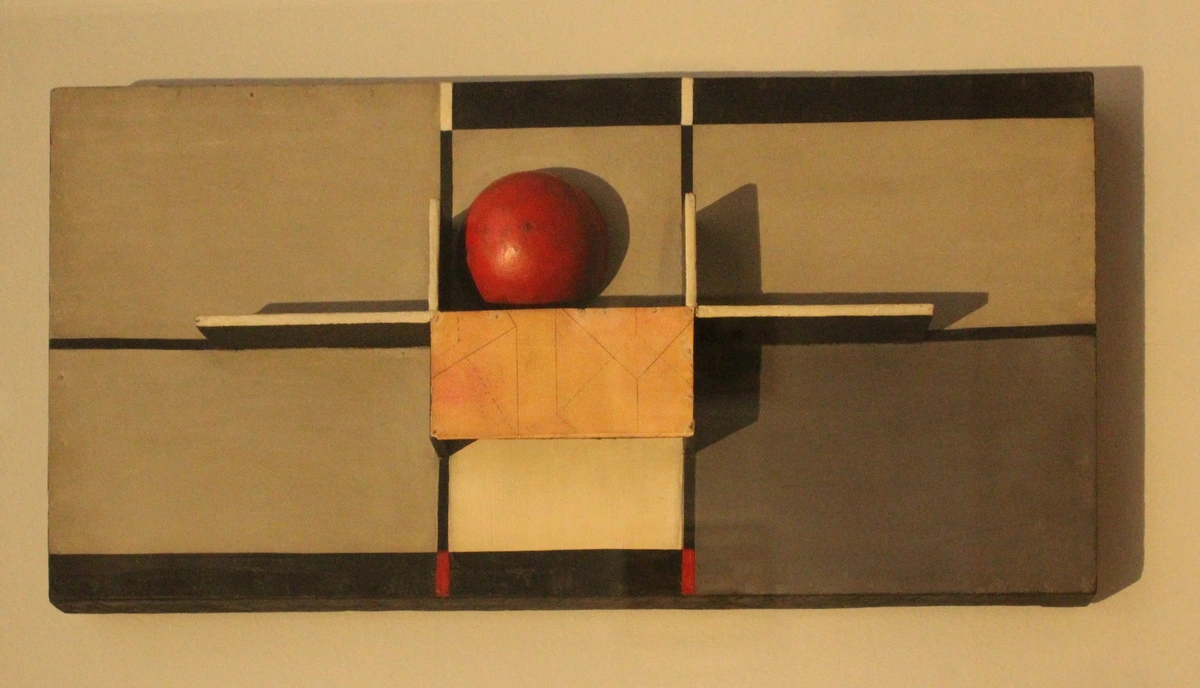
Here’s an example of how a still life can transcend a single viewpoint, playing with form and color:
A Comparative Look at Perspective Techniques
To make things crystal clear, here’s a quick breakdown of the difference between the traditional single-point approach and the expansive world of multiple viewpoint perspective:
Feature  | Single-Point Perspective | Multiple Viewpoint Perspective |
|---|---|---|
| Goal | To create a realistic illusion of depth from one position. | To represent the subject from multiple angles at once, conveying a more complete truth. |
| Viewer's Position | Fixed, as if looking through a window. | Dynamic, as if moving around the subject, or synthesizing multiple views mentally. |
| Treatment of Time | A single, frozen moment. | Multiple moments or the passage of time compressed, implying movement or memory. |
| Underlying Principle | Optical realism, mimicking natural vision. | Conceptual realism, depicting what is known rather than strictly seen. |
| Philosophical Stance | Objectivity, singular truth. | Subjectivity, multifaceted truth, pluralism. |
| Emotional Impact | Calm, harmonious, familiar. | Intellectual stimulation, sometimes disorienting, intense. |
| Famous Example | Leonardo da Vinci's 'The Last Supper' | Pablo Picasso's 'Weeping Woman' |
| Feeling | Orderly, stable, realistic. | Complex, dynamic, sometimes disorienting. |
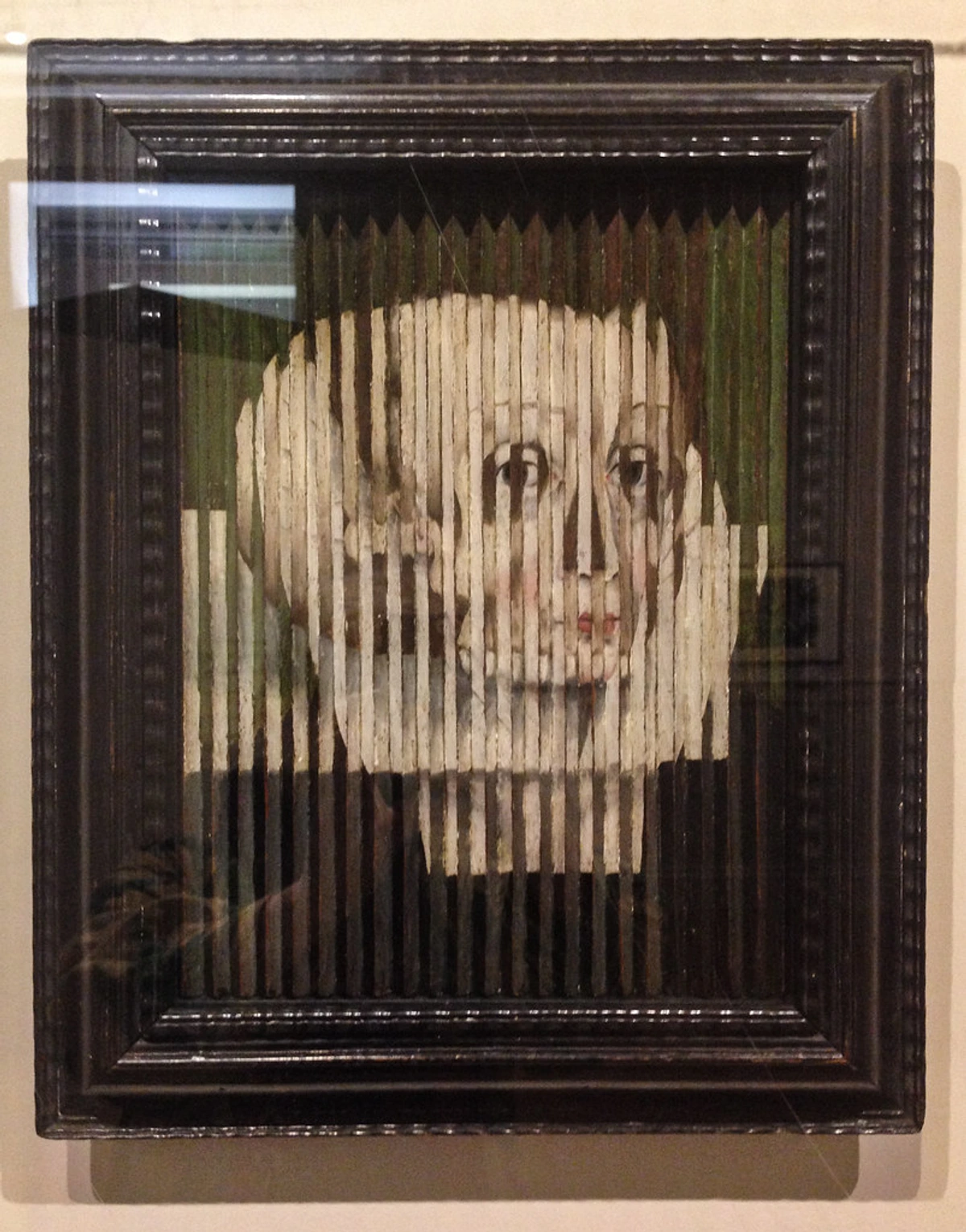
The Elephant in the Room: Cubism
Okay, let's just get to the big one. You simply cannot discuss multiple viewpoint perspective, especially in a modern context, without a deep dive into Cubism. It was around the early 20th century, a time of immense scientific, technological, and social upheaval. Think about the advent of cinema, the theory of relativity (which was literally shattering our understanding of space and time), and rapid industrialization—and even the burgeoning fields of psychology and anthropology. Traditional ways of seeing and understanding the world were being challenged, and art was no exception. Artists like Pablo Picasso and Georges Braque didn't just bend the rules of traditional art; they essentially detonated them. They weren't satisfied with merely depicting the surface appearances of things. Their ambition was to dissect, analyze, and reassemble the very structure, form, and essence of objects and figures, often showing them from all angles simultaneously. It was a radical intellectual and visual revolution, a direct response to the limitations they perceived in Renaissance perspective, seeking a more profound way to represent reality beyond mere photographic reproduction. This period of intense questioning and innovation in all fields fueled the artists' desire to create an art that was intellectual, analytical, and representative of a fragmented, relativistic understanding of the universe—a far cry from the serene, unified space of the Renaissance. It was a conscious effort to move beyond mere imitation and towards a deeper, more conceptual understanding of form, much like a scientist would analyze a specimen from every possible angle.
We often talk about two main phases of Cubism, and understanding them helps unravel the genius of multiple viewpoint perspective:
Analytical Cubism (c. 1907-1912)
This was the initial, highly experimental phase, primarily driven by Picasso and Braque, but also explored by artists like Juan Gris (before his more 'Synthetic' period) and Fernand Léger. Imagine them in their studios, almost like scientific researchers, taking an object – a guitar, a face, a bottle – and breaking it down into its constituent geometric planes and facets. The palette became incredibly subdued, often restricted to browns, greys, and blacks, a conscious decision to strip away the distraction of color and focus intensely on form and structure. The object was analyzed, fragmented, and then depicted from multiple viewpoints at once, often making it difficult to discern the original subject amidst the intricate, overlapping planes. The idea was to represent the object's total form, as known by the mind, rather than seen by the eye from one spot. It can look abstract, but it's fundamentally rooted in representing perceived reality, just a much more comprehensive, fractured version of it. It’s like experiencing a three-dimensional object by mentally walking around it and recording every angle onto a single canvas. This phase was less about immediate visual appeal and more about a profound intellectual inquiry into the nature of perception and representation. Picasso's 'Portrait of Ambroise Vollard' (1910) or Braque's 'Violin and Candlestick' (1910) are quintessential examples, where the subjects are barely recognizable, reduced to a complex interplay of geometric shards. It was as if they were performing an artistic autopsy, revealing the underlying skeleton and musculature of visual reality rather than just its skin.
This intellectual rigor and visual deconstruction paved the way for subsequent developments in abstract art and how we understand form in abstract art.
Synthetic Cubism (c. 1912-1919)
As Analytical Cubism risked becoming too opaque and intellectually challenging, the artists began to "synthesize" or build up forms again, rather than just breaking them down. This phase introduced new elements like collage – pasting bits of newspaper, sheet music, or other materials directly onto the canvas. This was groundbreaking! It brought real-world textures and messages into the art, often making the subjects more recognizable while still employing multiple viewpoints. Color also began to return, though still often secondary to form. Artists like Juan Gris, who was meticulous and systematic, joined Picasso and Braque in this phase, often using more vibrant colors and clearer, flatter shapes while maintaining the multi-faceted perspective. It's a testament to the fact that even radical ideas evolve. This shift made Cubism more accessible and playful, opening doors for even wider artistic experimentation. Pieces like Picasso's 'Still Life with Chair Caning' (1912), often considered the first collage, exemplify this audacious integration of everyday reality into the artwork itself, blurring the lines between art and life. They weren't just showing reality; they were literally incorporating it. You can learn more about this in our ultimate guide to Cubism and even delve into Juan Gris vs Picasso Cubism.
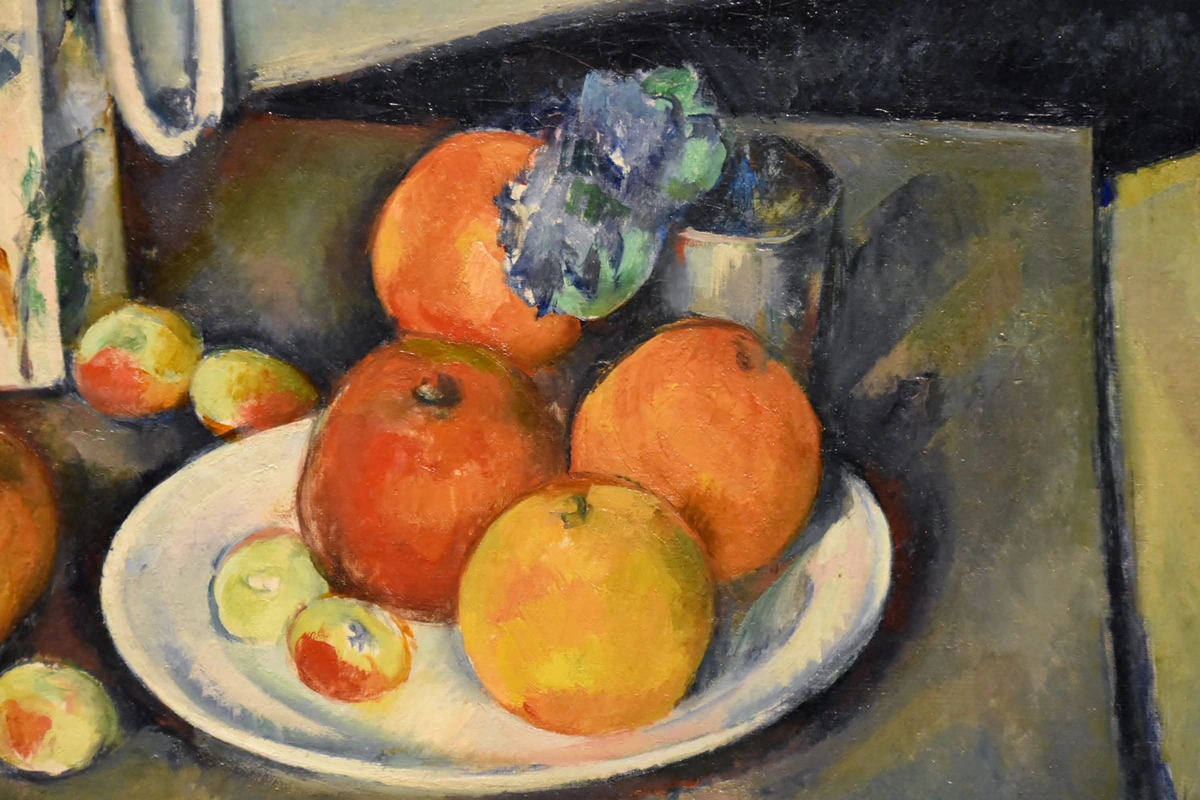
Look at a painting like Picasso's 'Weeping Woman'. Her face is a mess of angles. You see her eye from the front, but her nose is in profile. One part of her face seems to be looking at you, while another is turned away. It's not 'realistic,' but it’s incredibly powerful. Picasso isn’t just showing a sad woman; he's showing you the shattering, all-encompassing nature of her grief from every possible angle, capturing a psychological state that a single, fixed view simply couldn't convey. It's an emotional and psychological portrait, not just a physical one, revealing the depth of human experience in a way that conventional portraiture often struggles to achieve. For a deeper dive into the specific roles played by the pioneers, consider our article on the history of Cubism from Picasso to Braque.
I often find that even less overtly "shattered" Cubist works still carry the essence of multiple viewpoints. Take, for instance, a quieter Picasso piece. It’s not always a violent fragmentation; sometimes it’s a subtle shifting, a gentle dislocation of elements that still achieves that multi-faceted understanding.
Why Cubism Mattered: A New Form of Realism
Despite its challenging appearance, Cubism was ultimately an act of profound realism—an attempt to depict a more complete, rather than less complete, reality. It wasn't about abstraction for its own sake, but about devising a new visual language capable of conveying the complexity of objects as they exist in space and as they are known by the mind, rather than just as they appear from a single, fleeting glance. It invited a more intellectual, less passive engagement with the artwork, a legacy that continues to resonate. It taught us that true realism isn't just about optical accuracy; it's about conceptual completeness and the depth of human understanding. For me, that’s a revelation that continues to shape how I think about art today. It's a reminder that sometimes you have to break things apart to truly see how they work, and to represent them more authentically.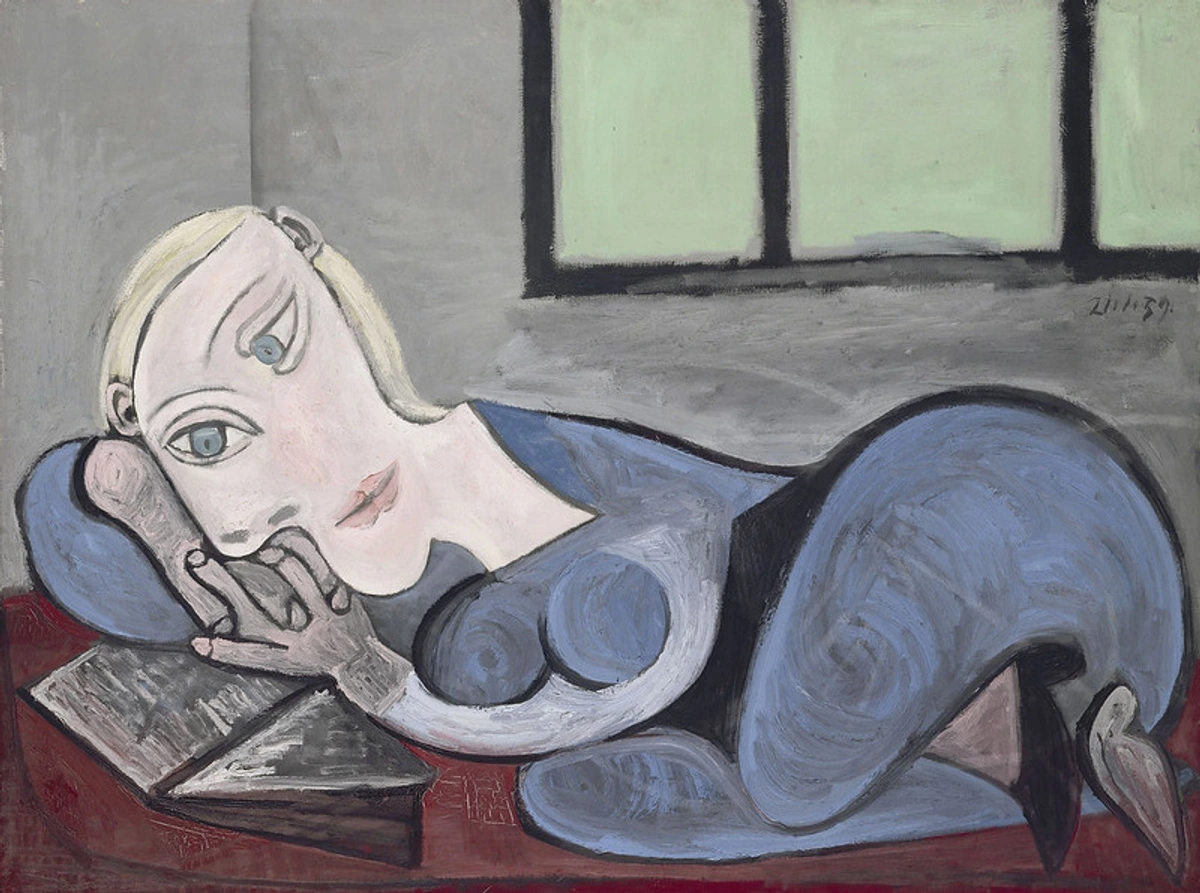
But Wait, It’s Older Than You Think: A Universal Artistic Impulse
I find it incredibly reassuring, almost comforting, to realize that very few truly groundbreaking artistic ideas spring up from nowhere. It's a bit like discovering that the 'new' diet everyone's raving about has been a traditional staple for centuries – the core wisdom was always there. While Cubism is undeniably the most famous and systematic exploration of multiple viewpoint perspective, the underlying idea of combining views to convey a more complete truth is ancient. It's a thread woven through the tapestry of human artistic endeavor across millennia and cultures, a testament to a universal human impulse to transcend simple optical reality. This isn't a new trick; it's an age-old pursuit, refined and re-contextualized by each era. It's a powerful reminder that fundamental human ways of seeing and understanding are expressed across vastly different times and places, long before any formal 'isms' were coined.
I find it incredibly reassuring, almost comforting, to realize that very few truly groundbreaking artistic ideas spring up from nowhere. It's a bit like discovering that the 'new' diet everyone's raving about has been a traditional staple for centuries – the core wisdom was always there. While Cubism is undeniably the most famous and systematic exploration of multiple viewpoint perspective, the underlying idea of combining views to convey a more complete truth is ancient. It's a thread woven through the tapestry of human artistic endeavor across millennia and cultures, a testament to a universal human impulse to transcend simple optical reality. This isn't a new trick; it's an age-old pursuit, refined and re-contextualized by each era.
Think about ancient Egyptian art, for instance. If you've ever seen a hieroglyph or a tomb painting, you'll notice a distinct way people are depicted: a head in profile, an eye from the front (almost almond-shaped and wide open), a torso facing forward, and legs and feet turned to the side. Was it because they "couldn't draw properly" or hadn't figured out single-point perspective? Absolutely not. That's a distinctly modern, Western-centric judgment. Instead, it was a profound, conscious choice rooted in their worldview. They were showing each part of the body from its most recognizable and characteristic angle. They weren't aiming for a fleeting, optical snapshot; they were creating a conceptual, multi-view blueprint, an eternal and comprehensive representation of a person for the afterlife. It was about depicting what they knew to be true about the human form, not just what they saw from a single vantage point. This composite view, seen in works like the Narmer Palette or various tomb reliefs, ensured that all essential elements of a person or object were present, securing their complete existence in the spiritual realm and conveying their status and identity. For them, depicting the 'whole truth' of a person or a god meant showing every vital aspect, a practice deeply intertwined with their religious and cosmological beliefs. This wasn't merely a stylistic choice; it was a deeply functional one, ensuring the 'completeness' of the depicted entity for its eternal journey. It's a testament to how different cultures prioritized different forms of 'truth' in their art.

Beyond Egypt, similar approaches can be found in various traditions:
- Medieval European Art: Before the Renaissance fully cemented single-point perspective, many medieval illuminated manuscripts and religious paintings also employed forms of multiple viewpoints. Figures might be disproportionate, and objects might be tilted or skewed to fit into a composition or to emphasize symbolic importance rather than optical accuracy. Castles might be shown with multiple walls visible, seemingly impossible from a single viewpoint, simply to convey the entirety of the structure and its strategic importance. Think of the Bayeux Tapestry, where scenes unfold sequentially, presenting a narrative across time and implicitly shifting perspectives, or the way early Gothic cathedrals often depict saints from multiple symbolic angles within a single sculptural program, ensuring their divine presence is fully conveyed. For example, in many early Christian mosaics, figures often appear flattened or rendered with an intentional lack of realistic depth, emphasizing their spiritual rather than earthly presence. This era prioritized conveying spiritual truths and narrative clarity over strict optical illusion, often employing hierarchical scaling (larger figures for more important subjects) alongside composite views. The objective was not to fool the eye, but to instruct the soul and narrate sacred stories in the most comprehensive and symbolic way possible. You can see how this differs from traditional composition in art explained. If you're curious about how art elements came together in this period, explore our guide on understanding unity and variety in art composition. It's a fascinating glimpse into how art was used not to reflect physical reality, but to construct a spiritual one, where every detail served a higher purpose. Consider the layered storytelling and emphasis on symbolic form in works like the Bayeux Tapestry or the multi-faceted nature of sculptural programs on Gothic cathedrals.
- Asian Art Traditions: In certain Chinese and Japanese scroll paintings, for example, the viewer's perspective often shifts as they "read" the scroll. There isn't one fixed horizon line; instead, the viewpoint moves up and down, implying a journey through the landscape or narrative, known as 'shifting perspective' or 'moving perspective.' This allows for a much broader scope of information and a sense of unfolding time and space that a single viewpoint could never capture, inviting the viewer into a continuous visual narrative. It’s an immersive, dynamic way of seeing, almost like experiencing a journey through the artwork itself. You literally move through the landscape, mentally inhabiting different vantage points as the narrative or scene unfolds, a truly active way of engaging with the art. Think of a long handscroll like 'Along the River During the Qingming Festival,' where the viewer unrolls the scene segment by segment, experiencing a continuous narrative and changing viewpoints over time. Japanese Ukiyo-e prints, while distinct, also frequently employed flattened perspectives and bold outlines to emphasize essential forms rather than optical depth, sometimes implying multiple views simultaneously to convey more information about a subject or scene, or to create a decorative effect. They prioritized graphic impact over strict optical realism, much like the conceptual approach seen in other cultures, demonstrating a nuanced understanding of how to communicate complex realities without adhering to Western perspectival rules. It's a brilliant narrative device, allowing the artist to guide your experience of a place or story in a way that's utterly impossible with a fixed single glance, creating a rich, unfolding world within a two-dimensional format.
- Indigenous Australian Art: Many traditional Indigenous Australian art forms, particularly X-ray paintings from Arnhem Land, also demonstrate a profound conceptual form of multiple viewpoint perspective. These artworks depict not just the exterior of an animal or figure, but also its internal organs, skeleton, or even spiritual essence simultaneously. It's a powerful way of showing the totality of a being, encompassing both its physical and spiritual dimensions, and what is known about it, rather than just what is seen from a single glance. It's a deep dive into the very being of the subject, revealed all at once, often connected to ancestral knowledge, creation stories, and sacred Dreaming narratives. These works are not merely aesthetic; they are profound expressions of interconnectedness, lineage, and the cyclical nature of existence, revealing a holistic truth that transcends mere surface appearance and offers a deep connection to country and culture. It's a beautiful example of how art can convey layers of meaning—physical, spiritual, and ancestral—all within a single visual field, demonstrating a rich and ancient artistic tradition.
These examples highlight a recurring human impulse to transcend the limitations of a singular view, to tell a richer, more encompassing story, proving that this isn't just a modern invention but a timeless approach.
Challenges and Criticisms: Why Don't We See It Everywhere?
While I find multiple viewpoint perspective incredibly liberating, it's also worth acknowledging that it comes with its own set of challenges and has faced criticism throughout history. It's not always the easiest path, for either the artist or the viewer!
- Learning Curve for Viewers: Unlike single-point perspective, which aims for immediate optical recognition, multi-viewpoint art often requires a more active, intellectual engagement. This can be disorienting or even frustrating for viewers accustomed to a "straightforward" depiction of reality. It's like being given a jigsaw puzzle without the picture on the box.
- Loss of Immediate Realism: By intentionally distorting or fragmenting objects, the artwork sacrifices a certain degree of conventional visual realism. For those who value art purely for its mimetic qualities, this can be seen as a flaw rather than a feature.
- Risk of Visual Chaos: If not handled skillfully, the juxtaposition of multiple viewpoints can descend into mere visual chaos, making it difficult for the viewer to synthesize meaning. The artist needs a strong underlying concept to guide the fragmentation.
- Subjectivity of Interpretation: While a strength, the open-ended nature of interpretation can also be a challenge. Different viewers might construct radically different meanings, which can sometimes diverge from the artist's original intent.
- Technical Difficulty for Artists: It requires a profound understanding of form, structure, and composition to intentionally break and reassemble reality in a meaningful way. It's not simply "bad drawing"; it's a deliberate and complex artistic strategy.
Despite these hurdles, the persistent reappearance of multiple viewpoint approaches across cultures and centuries demonstrates its undeniable power and relevance. The rewards of a deeper, more comprehensive understanding often outweigh the initial discomfort.
Pre-Columbian Art: Narrative Through Composite Views
Moving to the Americas, we find similar principles at play in various Pre-Columbian art forms. For instance, in Mayan codices or Aztec sculptures, figures and objects are frequently rendered with a combination of profile and frontal views, much like the Egyptians. This wasn't about capturing a momentary visual, but about conveying the most complete and characteristic information necessary for mythological narratives, historical accounts, or ritualistic depictions. The composite views ensured that all symbolically important features were visible, communicating complex ideas within a concise visual language, essential for transmitting cultural knowledge and spiritual beliefs. In textiles from the ancient Andes, such as those by the Paracas or Nazca cultures, intricate patterns often depict figures or animals whose features are visible from multiple angles simultaneously, or whose forms suggest movement through time, serving both narrative and ritualistic functions. These highly complex and symbolic artworks are powerful testaments to a conceptual approach to reality. It truly underscores how ancient artists across the globe shared an intuitive understanding that reality is more than what meets the eye from one fixed point, and that art could be a powerful tool for conveying layered meanings.
Post-Impressionist Precursors: Cézanne's Gentle Subversion
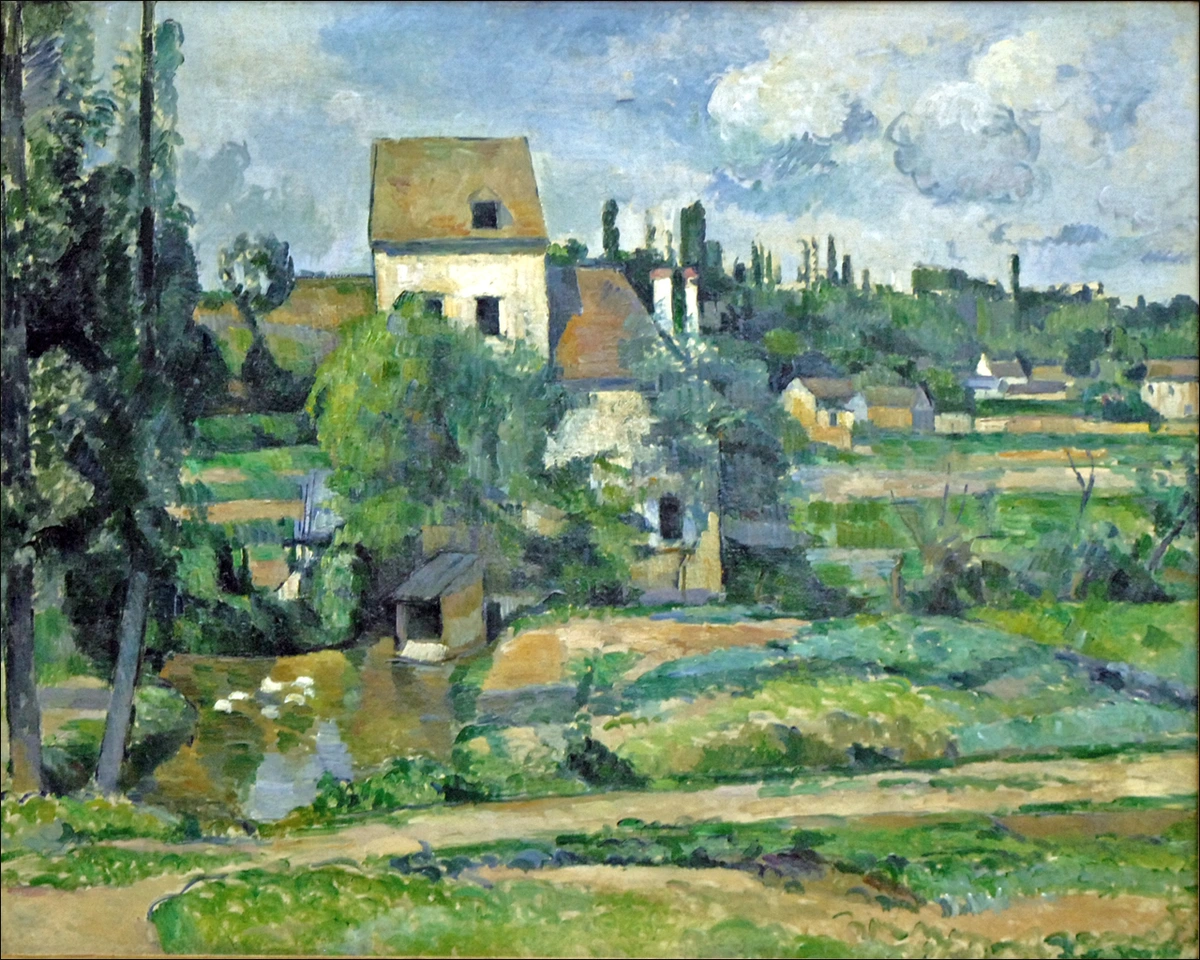
Even artists like Paul Cézanne, often considered a bridge between Impressionism and Cubism, were gently prying open that window that the Cubists would later smash to pieces. I find Cézanne's approach utterly fascinating because he wasn't trying to be radical in the same way Picasso was; he was quietly, methodically questioning perception. When he painted a still life of apples on a table, you might notice that the edge of the table wouldn't quite line up, or the perspective of a bowl would seem subtly 'off.' He wasn't making mistakes; he was experimenting with showing objects from slightly different viewpoints simultaneously, capturing the way our eye shifts and re-focuses as we look at something. He was hinting, perhaps instinctively, that our experience of the world isn't a single, fixed optical event, but a series of overlapping glances and mental constructions. He was pushing beyond superficial appearance to grasp the underlying geometric structure and volume of things, paving the way for the Cubists to take his ideas to their logical, revolutionary extreme, influencing artists for generations to come. His goal was to capture the 'fullness' of objects, not just their fleeting appearance, leading him to render forms from multiple slight shifts in perspective, anticipating the Cubist revolution in breaking down form. This deliberate exploration of how we truly see and perceive objects, synthesizing various views over time, makes his work a quiet but profound precursor to more overt multi-viewpoint techniques. His technique of 'passage,' where planes intersect and merge rather than meeting crisply, created a dynamic interplay of forms that directly challenged the integrity of single-point perspective, subtly hinting at the multi-faceted nature of reality.
The iconic 'Open Window, Collioure' by Henri Matisse, though not strictly Cubist, shares a certain freedom with perspective, hinting at the different ways an interior and exterior can be perceived simultaneously. This fluidity in depicting space became a critical precursor for artists looking to break free from rigid academic constraints. It's a subtle nod to the idea that a single, fixed view can't capture the entire experience of a moment or a space. Matisse, with his bold use of color and simplified forms, often flattened pictorial space, forcing the viewer to confront the canvas as a two-dimensional surface rather than a window into an illusionistic world. This emphasis on the picture plane and the decorative qualities of line and color, while different from Cubism's analytical approach, contributed to the overall loosening of traditional perspectival rules. For me, it shows how the spirit of challenging single viewpoints can manifest in diverse ways, even in a painting that appears outwardly serene and decorative.
Other Post-Impressionist Explorations
Beyond Cézanne, other Post-Impressionists also contributed to the breakdown of singular perspective, albeit in different ways. Artists like Vincent van Gogh, with his swirling brushstrokes and heightened emotional landscapes, often distorted space to convey inner feeling rather than outer appearance. While not explicitly employing multiple viewpoints in the Cubist sense, his work challenged the objective reality that single-point perspective championed, opening the door for more subjective and expressive interpretations of space and form. His emotional intensity often created a dynamic, almost vibrating sense of reality that broke free from static representation. Similarly, Paul Gauguin's move towards flattened forms, bold outlines, and symbolic color in his Tahitian paintings also represented a rejection of optical realism. He sought to convey spiritual and emotional truths rather than simply what was seen, often compressing space and forms in a way that defied conventional perspective, forcing the viewer to engage with a more conceptual reality. This broader shift towards individual perception became fertile ground for the later, more systematic explorations of multiple viewpoints. It revealed a growing dissatisfaction with merely reproducing optical reality, and a burgeoning desire to express internal states, symbolic meanings, and the dynamic experience of the modern world, paving the way for a more complex engagement with visual representation. It reminds me that artistic progress often starts with subtle rebellions, with artists simply asking: 'What if?' and daring to explore new visual languages.
Beyond Cubism: The Enduring Legacy of Multiple Viewpoint Perspective
I often think that truly powerful ideas in art don't just stop with one movement; they reverberate, influence, and transform other ways of thinking and creating. It’s like a good meme, really; it mutates and spreads, taking on new forms in different contexts. Multiple viewpoint perspective, while famously codified by Cubism, certainly didn't end there. Its principles, of challenging singular reality and embracing fragmented or composite views, became a foundational concept for much of 20th-century and contemporary art, continuing to inspire and evolve even today. It's a testament to the fact that once you open the door to seeing the world differently, it's very hard to close it again.
I often think that truly powerful ideas in art don't just stop with one movement; they reverberate, influence, and transform other ways of thinking and creating. It’s like a good meme, really; it mutates and spreads, taking on new forms in different contexts. Multiple viewpoint perspective, while famously codified by Cubism, certainly didn't end there. Its principles, of challenging singular reality and embracing fragmented or composite views, became a foundational concept for much of 20th-century and contemporary art, continuing to inspire and evolve even today.
Influence on Other Art Movements
- Futurism: This Italian movement, emerging shortly after Cubism, was obsessed with speed, technology, and the dynamism of modern life. They took Cubist fragmentation and infused it with a sense of motion and temporal sequence. Instead of showing multiple static views, Futurists like Umberto Boccioni ('Unique Forms of Continuity in Space') and Giacomo Balla ('Dynamism of a Dog on a Leash') tried to depict objects in motion, showing lines of force and the blur of movement by essentially stacking multiple moments in time within a single image. It's an exhilarating extension of the multi-view concept, capturing the essence of a world in constant flux, often described as attempting to represent the 'fourth dimension' of time within a two-dimensional artwork. Think of how a car looks when it's speeding by – a single image can't capture that, but a Futurist painting aims to. Their manifestos explicitly called for the destruction of academic traditions and an embrace of the new, dynamic reality of the machine age, perfectly aligning with and amplifying the multi-viewpoint impulse. They didn't just break apart objects; they dissolved them into pure energy and movement, showing the continuous flow of existence, a true visual symphony of acceleration.
- Orphism: French artists like Robert and Sonia Delaunay, and later František Kupka, blended Cubist principles with vibrant, pure color. They used fragmented forms to create compositions that evoked rhythm, light, and movement, often abstractly, but still with a sense of multiple planes and shifting perspectives. It's Cubism with a richer, more expressive palette, often focusing on the interplay of color and light to create a sense of dynamic depth and simultaneous contrasts. Robert Delaunay's 'Simultaneous Contrasts: Sun and Moon' is a brilliant example, where overlapping, colorful geometric shapes create a pulsating visual rhythm, embodying the simultaneous perception of light and movement, a truly dynamic form of multi-viewpoint experience. They proved that even in the realm of pure abstraction, the idea of presenting multiple visual experiences at once could create profound emotional and sensory impact.
- Abstract Art: While not a direct descendant in every case, the underlying philosophy of multiple viewpoint perspective – that art can represent more than literal optical reality – became crucial for the development of abstract art. If you can break down a figure into multiple views, why not break it down until it's no longer recognizable, exploring pure form, color, and line? It opened the door to endless possibilities, influencing movements from Constructivism to the dynamic compositions you see in abstract art on wood panels. The freedom to distort and deconstruct reality, championed by multiple viewpoint perspective, gave abstract artists the license to invent entirely new visual languages, allowing them to focus on the inherent qualities of shape, color, and texture rather than mimetic representation. In a sense, abstract art often embodies a kind of 'ultimate' multiple viewpoint, where the subject is not a singular object, but a multifaceted exploration of pure visual elements and their inherent relationships, inviting a purely sensory or intellectual engagement. It's like seeing the fundamental building blocks of vision divorced from any specific subject, yet still conveying a rich, multi-layered experience that challenges traditional notions of representation. For more on this, our ultimate guide to abstract art movements delves deeper into this fascinating evolution.
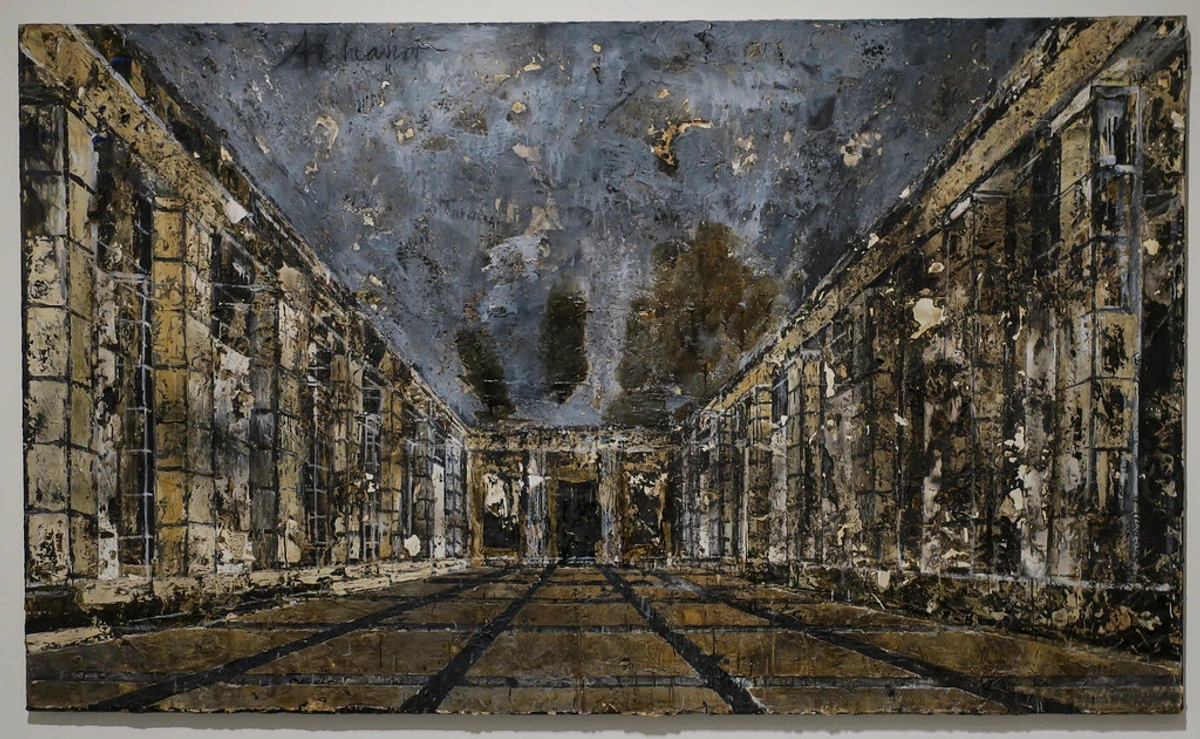
Dada and Surrealism: The Subconscious Viewpoint
While Cubism fragmented the external world, the Dada movement, a radical artistic and literary movement emerging during WWI, already began to challenge rational thought and traditional aesthetics through absurdity and collage, implicitly offering fragmented perspectives. Building on this, Surrealism, emerging slightly later, explored a different kind of multiple viewpoint: the internal, subconscious reality. Artists like René Magritte and Salvador Dalí didn't necessarily depict objects from different physical angles, but rather juxtaposed illogical elements, dreamscapes, and symbolic imagery to present a multifaceted psychological reality. They showed us the world not as it objectively appears, but as it's filtered through the distortions of dreams, desires, and the unconscious mind, offering a 'viewpoint' from within. This can be seen as a conceptual extension of breaking free from a singular, rational perspective, delving into the realms explored by psychoanalysts like Freud and Jung to reveal a deeper, often unsettling, layer of truth about the human condition. It's a reminder that our internal landscapes are just as complex and multi-perspectival as the external world, perhaps even more so, and that art can be a powerful lens into these hidden dimensions.
Relevance Beyond Painting: A Broader Impact
The impact of multiple viewpoint perspective extends far beyond the canvas. I see its echoes everywhere:
- Sculpture: Modern sculptors, rejecting the idea of a single "best" view, often create works that demand the viewer walk around them, experiencing a shifting interplay of forms and unexpected visual discoveries. Some even create fragmented or composite sculptures that embody multiple perspectives from their very construction, much like a three-dimensional Cubist painting. Ancient and contemporary sculptors alike have used multiple vantage points to create dynamic narratives or reveal the full volume of a subject, ensuring the artwork is experienced from all angles. Think of Constantin Brâncuși's polished forms that reflect their surroundings, or even monumental public art installations that change dramatically as you approach and circle them, offering a new experience with every step. These works inherently acknowledge that the 'truth' of the sculpture isn't found in one static view, but in the composite experience of moving around it. Henry Moore's reclining figures, for example, are designed to be explored from all sides, their organic forms revealing new contours and depths with every shift in the viewer's position. You can explore how artists approach form in abstract art, or delve into the very essence of elements of art line and how they can imply multiple dimensions. It’s the ultimate multi-viewpoint art form, literally forcing you to move and engage with the object in real space, transforming it from a static object into a dynamic, unfolding experience.
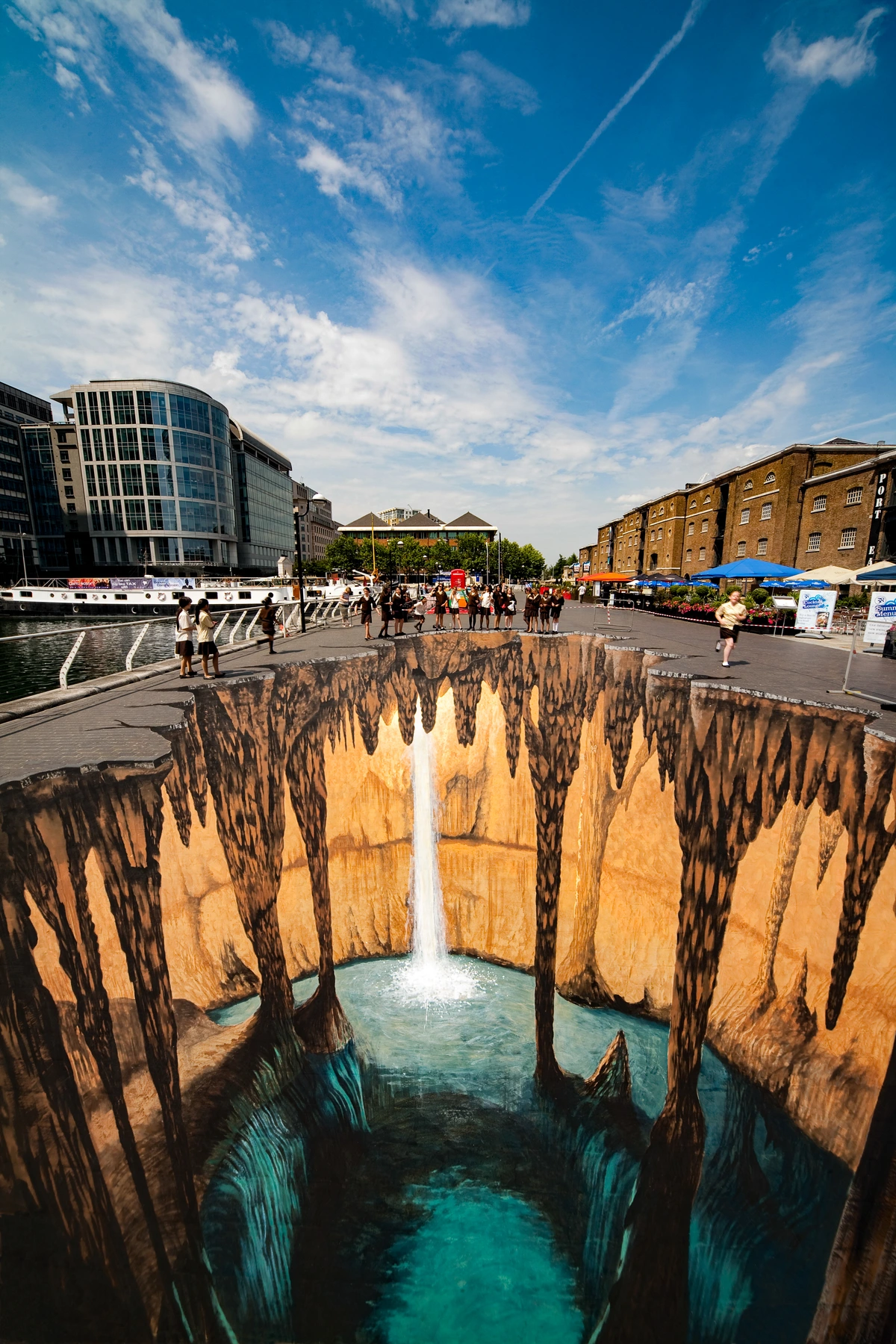
- Photography and Film: While a single photograph captures a fixed moment, experimental photography and montage techniques in film can consciously manipulate perspective, juxtaposing different angles or moments to create a composite reality, much like a visual collage. Think of jump cuts, split screens, or even the dynamic camera work in a modern action sequence – they're essentially giving you multiple viewpoints simultaneously, compressing space and time to enhance narrative or emotional impact, pulling you deeper into the story. Early avant-garde filmmakers like Sergei Eisenstein, with his theory of intellectual montage, actively sought to create new meaning by clashing disparate images and perspectives, turning cinema into a powerful intellectual tool. Even a simple pan across a landscape or a slow zoom into a character's face provides a 'moving' viewpoint, accumulating information over time, which a static image cannot. Contemporary documentary filmmaking also employs multiple perspectives, weaving together interviews, archival footage, and present-day observations to construct a more complete, if sometimes contradictory, understanding of a subject. This dynamic approach ensures that the narrative itself is multi-faceted, reflecting the complexity of real-world events and human perceptions, mirroring the multi-layered experience of life itself.
- Literature and Narrative: Even in storytelling, we see this principle at work. Authors might present events from the perspectives of multiple characters (think William Faulkner's 'As I Lay Dying' or Virginia Woolf's 'To the Lighthouse'), or a non-linear narrative structure that jumps through time and space (like in many modernist novels or even contemporary thrillers), mirroring the fragmented and reassembled logic of multiple viewpoint art. It enriches our understanding, forcing us to synthesize disparate pieces of information to form a complete picture, much like a literary collage. This isn't just a stylistic choice; it's a profound way to convey the subjective nature of truth and the complexity of human experience, mirroring how our minds construct reality. Consider Akira Kurosawa's seminal film 'Rashomon,' which famously tells the same story from four conflicting perspectives, leaving the audience to grapple with the elusive nature of truth—a narrative equivalent of multiple viewpoint art. It’s like a literary Cubism, where the 'object' of the story is revealed through overlapping and sometimes contradictory voices, demanding a more active and interpretive reader who must piece together the nuanced reality.
Digital Art and Virtual Reality: The Ultimate Multi-Viewpoint Experience
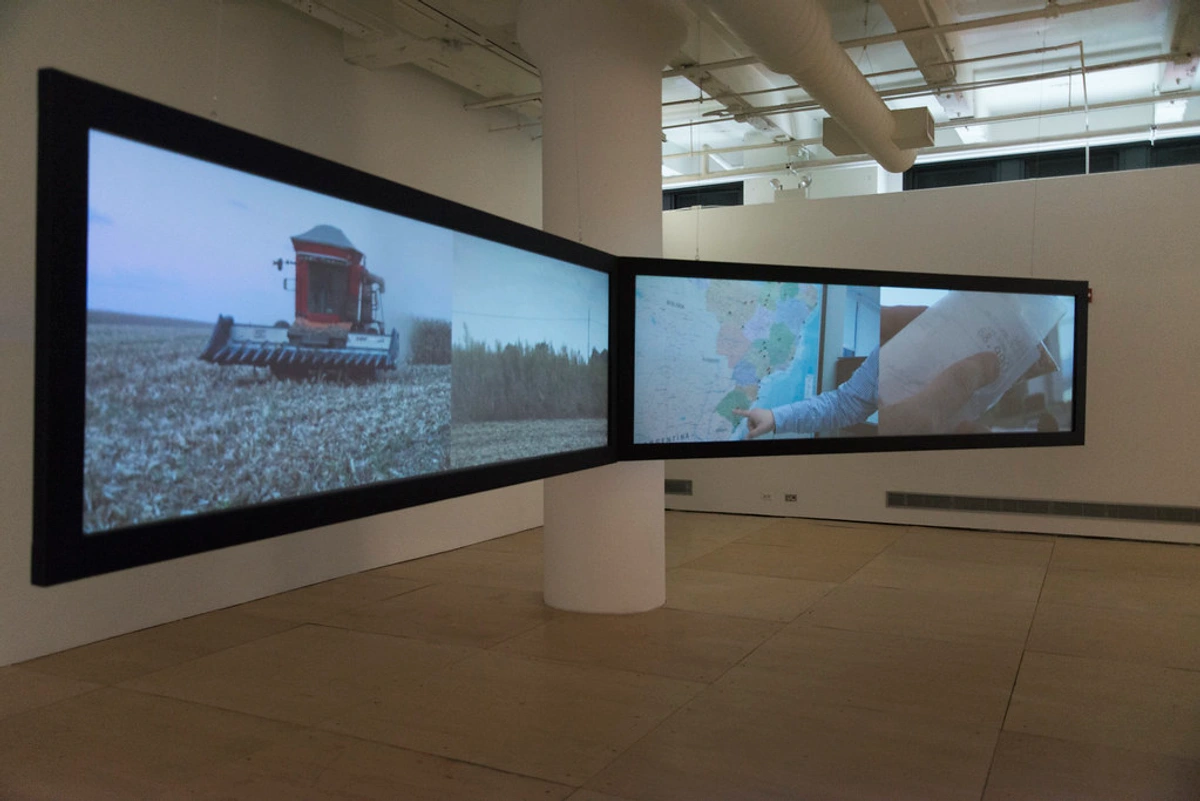
In the realm of digital art and virtual reality (VR), the concept of multiple viewpoint perspective takes on entirely new dimensions. Digital artists can create interactive installations where the viewer's perspective constantly shifts based on their movement or input. VR environments, by their very nature, immerse us in a space where we can freely move and perceive from any angle, truly embodying the dynamic viewer's position that Cubism only hinted at on a flat canvas. This technology allows for an almost literal realization of the multi-faceted experience, making us question the boundaries between physical and virtual realities. Augmented reality (AR) also plays a role, layering digital information onto our real-world view, creating a composite visual experience that is inherently multi-viewpoint. It's an exciting frontier for extending the legacy of this artistic principle, pushing the boundaries of what 'seeing' and 'knowing' truly mean in an artistic context.
While I remain skeptical about the long-term artistic value of every new digital trend, especially those promising revolutionary ownership via blockchain and NFTs (a topic I'm still figuring out, honestly, as I believe true artistic value transcends mere digital certificates and immutable ledgers), the potential of these immersive and interactive technologies to foster a genuinely multi-perspectival experience is undeniable. They move beyond the static canvas to offer a truly embodied encounter, where the artwork literally changes with our movement and interaction, pushing the boundaries of what art can be and offering unprecedented levels of personal engagement.
It’s a testament to the enduring power of challenging conventional ways of seeing. It's about opening up new avenues for expression and for understanding the intricate nature of reality itself. And honestly, it makes me think about my own artistic journey and how I want to convey my personal experiences and understanding of the world, whether through vibrant abstract art or more conceptual pieces. It encourages an expansive view of what art can truly accomplish. Ultimately, multiple viewpoint perspective is about refusing to settle for easy answers; it’s about delving deeper into perception, knowledge, and the very act of seeing and understanding. It's a journey into the philosophical questions of how we construct meaning, both individually and collectively.
FAQ: Answering Your Burning Questions
I know when I first encountered these ideas, my head was spinning with questions. So, let’s tackle some of the most common ones that crop up when we talk about multiple viewpoint perspective. For more in-depth answers, our article on how to use multiple viewpoints in your artwork is a great next step. I also find it helpful to remember that there are no 'stupid' questions when it comes to art; only pathways to deeper understanding, and this concept certainly invites a lot of intriguing queries.
Can any subject be depicted with multiple viewpoint perspective?
Absolutely! While Cubism famously applied it to portraits and still lifes, the conceptual flexibility of multiple viewpoint perspective means it can be used for virtually any subject. Landscapes can be shown from an aerial view and ground level simultaneously, conveying both scale and intimate detail. Abstract compositions can layer different geometric planes to create a sense of dynamic depth. Even architectural renderings can benefit, showing internal and external structures at once. It’s less about what you depict, and more about how you choose to reveal its comprehensive truth.
How can I start experimenting with multiple viewpoint perspective in my own artwork?
That's a fantastic question, and one I often ask myself as an artist! I think the best way to start is not with grand, complicated theories, but with playful observation. Try these ideas:
- Sketch from Memory: Draw a familiar object (a coffee cup, a friend's face) entirely from memory, trying to incorporate everything you know about it, not just what you remember from one angle. You might instinctively combine front and side views.
- Collage a Single Object: Take photos of a single object from five different angles. Print them out, cut them up, and then reassemble them onto a new surface, trying to show all five angles at once. See what interesting distortions emerge.
- Draw an Object Moving: Pick a simple action, like a ball bouncing or a hand waving. Draw the starting position, then the middle, then the end, all on the same piece of paper, letting the forms overlap. This is a simple way to explore temporal compression.
- Layer Translucent Materials: Experiment with tracing paper or transparent films. Draw one view on the bottom layer, then another on the next, seeing how the combined images create new forms and ambiguities.
The key is to give yourself permission to break "rules" and trust your intuition about what feels more "true" or comprehensive to your personal experience. Don't worry about making it look "right" in a traditional sense; aim for expressive completeness. And remember, the journey is the art itself. For even more hands-on advice, check out our guide on how to use multiple viewpoints in your artwork.
What are some common misconceptions about multiple viewpoint perspective?
One of the biggest misconceptions is that it's simply




What is the main purpose of multiple viewpoint perspective? For me, the main purpose is to create a more comprehensive, conceptual, and often psychological representation of a subject by showing it from several angles simultaneously. It's about moving beyond a mere optical rendering to capture the essence, memory, movement, and complexity of an object or figure, portraying what the artist knows rather than just what they see from a single, fixed point. It engages the viewer in a much more active way, demanding their participation in constructing meaning, and ultimately, revealing a deeper 'truth' about the subject.
Is multiple viewpoint perspective the same as Cubism? Not exactly. Think of Cubism as the most famous and systematic application of multiple viewpoint perspective. It's the art movement that pushed the concept to its most radical extremes in the early 20th century, transforming it into a conscious theory and practice. However, the fundamental idea of combining different views to represent a subject more fully has appeared in various forms throughout history and across cultures, notably in ancient Egyptian art and even subtly in some Post-Impressionist works by artists like Cézanne. Cubism refined and revolutionized it, but didn't invent the underlying principle out of thin air; it amplified and theorized it into a distinct artistic language. You can explore this further in our ultimate guide to Cubism. It's crucial to understand this distinction; Cubism is a specific, profound chapter in a much larger, ongoing story of how artists depict reality.
Who invented multiple viewpoint perspective? This isn't really a case of a single inventor. As I mentioned, ancient Egyptians utilized a form of it to create comprehensive conceptual depictions, serving symbolic and spiritual purposes. Paul Cézanne, in the late 19th century, experimented with subtle shifts in perspective in his still lifes, foreshadowing the later developments through his exploration of volume and form. However, Pablo Picasso and Georges Braque are widely credited with developing multiple viewpoint perspective into the systematic, theoretical, and truly revolutionary technique that defined Cubism in the early 20th century. They truly formalized and amplified its potential, transforming it into a conscious artistic movement and influencing generations of artists. It’s more of an evolution of an idea than a singular invention. It’s a testament to the fact that great ideas often simmer across cultures and centuries before a pivotal moment of formalization and widespread impact.
Why does multiple viewpoint art often look 'weird' or 'unrealistic'? It looks "weird" or "unrealistic" because our eyes, and centuries of Western art tradition, are conditioned to interpret images through the lens of single-point perspective, which mimics how a camera or a single eye perceives the world. Multiple viewpoint art isn't trying to achieve that kind of optical realism. Instead, it aims for a different, often deeper, kind of reality—a conceptual, psychological, or even temporal one. It's about capturing knowledge, emotion, and the passage of time within a static image, which naturally leads to forms that don't conform to our everyday visual expectations. It's challenging how we define "realism" in art, suggesting that a single snapshot is, in fact, often the least "real" representation of our complex, lived experience. It's a deliberate artistic choice to move beyond mere imitation, inviting you to engage with the subject on a more intellectual and emotional level, rather than just visually. It's a bit like trying to read a poem and expecting a factual news report—you're looking for a different kind of truth.
What are the philosophical implications of multiple viewpoint perspective? For me, the philosophical implications are profound. It challenges the very idea of a single, objective truth or a fixed reality. By presenting multiple perspectives simultaneously, it suggests that truth is often composite, subjective, and dependent on one's position and knowledge. It encourages us to question authority, to embrace ambiguity, and to understand that a complete understanding often requires synthesizing diverse fragments of information. It's a visual metaphor for pluralism and the richness of varied experiences, reminding us that no one view holds all the answers. In an increasingly complex and interconnected world, this ability to synthesize disparate viewpoints feels more relevant than ever. It's a powerful artistic argument for intellectual humility and the embrace of complexity.
How does it differ from collage or montage? While there are overlaps, especially in Synthetic Cubism, the key difference lies in intent. Collage primarily involves combining different materials and images onto a single surface, often for decorative or symbolic effect, and while it can imply multiple viewpoints, it's not its defining characteristic. Montage (especially in film) is about juxtaposing a sequence of distinct images or sounds to create a new, unified meaning or narrative over time. Multiple viewpoint perspective, in its purest form, often attempts to fuse those disparate views within a single, unified image to represent a singular subject more completely, rather than merely placing separate elements side-by-side or in sequence. It's a simultaneous integration, an attempt to show the 'whole' from fragmented parts, not just an assembly or sequence of separate elements. Think of it as painting a shattered mirror, where all the reflections are still part of the same original object. It's about the internal coherence of the subject, even when presented in a fragmented way, rather than merely an accumulation of separate items.
Can this technique be used in abstract art? Absolutely, and it's a critical bridge! While multiple viewpoint perspective originated with representing recognizable objects (like figures, still lifes, and landscapes), its principles of fracturing forms, exploring multiple planes, and showing different sides were instrumental in opening the door to full abstraction. Once you start breaking down forms and reassembling them based on conceptual understanding rather than optical appearance, it's a short leap to creating artworks where the recognizable subject disappears entirely, leaving only the interplay of shapes, lines, colors, and planes. It's one of the core ideas that pushed art away from pure representation. For more on this, check out the definitive guide to perspective in art which touches on its evolution into modern abstraction. In my own abstract art, I find myself continually drawing on these principles, even if subconsciously, to create works that convey a multi-faceted emotional or conceptual experience.
What role does the viewer play in interpreting multiple viewpoint art? I think the viewer's role is absolutely crucial – perhaps even more so than with traditional single-point perspective. Multiple viewpoint art often demands an active, participatory interpretation. It doesn't hand you a ready-made reality; instead, it presents you with fragments, clues, and shifting perspectives. You, the viewer, are invited to mentally reassemble these pieces, to synthesize the different angles, and to construct your own understanding of the subject. It's a collaborative process between artist and viewer, transforming passive observation into an engaged intellectual and emotional journey. It fosters critical thinking and a deeper engagement with the artwork's meaning, making you a co-creator of the reality being presented. It's a challenging but ultimately rewarding experience, much like solving a puzzle where every piece contributes to a richer, more nuanced final image.
How does multiple viewpoint perspective relate to memory? I think this is one of its most profound connections. Our memories aren't static photographs; they are fluid, dynamic collections of sensations, images, and knowledge gleaned from various moments and angles. When you remember a person, you recall their front, their side, their gestures, their voice, their expressions – a composite, multi-faceted internal image. Multiple viewpoint perspective mirrors this process by presenting the viewer with a similar artistic "collage" of information, inviting them to construct a richer, more complete understanding of the subject, just as our minds do with memory. It's art imitating the mind, rather than just the eye, and it creates a more intimate and relatable experience for the viewer, bridging the gap between artistic representation and internal human experience. It's why I find this approach so resonant—it taps into something fundamentally human about how we experience and reconstruct the world.
Does technology play a role in evolving multiple viewpoint perspective today? Absolutely! I'd argue that digital tools and immersive technologies are opening up incredible new avenues for this concept. Think about virtual reality (VR), where you can literally walk around an artwork and experience it from infinite angles, or augmented reality (AR), which layers digital information onto our physical world, creating a composite view of reality. Even advanced animation and 3D modeling allow artists to render subjects from dynamic, simultaneous perspectives that would be impossible with traditional media. While I'm still figuring out the long-term implications of some trends like NFTs (I mean, does digital ownership truly matter if the art itself isn't compelling?), the technical potential for multi-perspectival art in the digital realm is genuinely thrilling. It's like the Cubists dreamed of a four-dimensional canvas, and now we're starting to build it.
Are there contemporary artists still using this approach? While perhaps not as overtly or dogmatically as the Cubists, many contemporary artists continue to explore principles derived from multiple viewpoint perspective. I see it in artists who create fragmented figures, use collage and assemblage to combine disparate views, or or even in digital art that layers different perspectives. The idea of breaking down and reassembling reality to convey a deeper truth remains a powerful tool for artists looking to challenge perception and invite new interpretations. I sometimes wonder if it's less about a conscious artistic choice and more about an ingrained way of seeing in our fragmented, multi-screen world.
How does multiple viewpoint perspective influence contemporary artistic practice beyond specific movements? I've noticed that even artists not explicitly identifying with Cubism or Futurism still draw from its core principles. Many contemporary artists use mixed media, digital manipulation, or installation art to create layered, composite, or interactive experiences that implicitly challenge a singular viewpoint. The freedom to combine disparate elements, to distort perception for expressive effect, and to invite active viewer participation are all direct descendants of this approach. It’s less about a strict technique and more about a flexible philosophy of how to represent a complex world. It allows for a richness and depth of expression that continues to evolve with new technologies and cultural shifts. It's become less of a rigid dogma and more of a versatile lens through which artists can explore the complexities of modern existence, often without even consciously realizing its historical lineage.
Conclusion: A Vision for a More Comprehensive Reality
The journey through multiple viewpoint perspective reveals a profound and enduring human desire: to capture the totality of our experience, not just fleeting glimpses. From ancient Egyptian conceptual blueprints to the revolutionary fragmentation of Cubism and its echoes in contemporary digital art, artists have continually sought ways to transcend the limitations of a single, fixed view. They understood, long before our modern philosophical inquiries, that reality is multifaceted, complex, and often best understood through a synthesis of diverse perspectives.
This isn't just an art historical curiosity; it's a fundamental challenge to how we perceive the world. It asks us to open our eyes (and our minds) to the many angles, moments, and interpretations that make up any given truth. It encourages us to embrace the dynamic, fragmented, and sometimes disorienting nature of experience, ultimately leading to a richer, more comprehensive understanding of everything around us.
So, the next time you encounter an artwork that challenges your sense of a single reality, don't shy away. Lean into the complexity, let your mind synthesize the disparate views, and discover the deeper truths that emerge when you dare to shatter the single view. It's a truly liberating way to engage with art and, indeed, with life itself. And who knows, it might even inspire your own creative interpretations of the world, whether through vibrant abstract art or more conceptual pieces. The legacy is very much alive, often integrated into broader contemporary art practices. In fact, in an increasingly complex and interconnected world, the ability to synthesize multiple perspectives feels more relevant than ever. It's an enduring testament to the human spirit's capacity for complex thought and imaginative expression, reminding us that there's always more to see, and more to know. It’s a philosophy that informs much of what I try to achieve in my own abstract art, attempting to capture the multifaceted nature of emotions and perceptions on canvas, transcending the singular and embracing the composite. Ultimately, it’s about acknowledging that the richness of reality lies not in a single, static image, but in the dynamic, ever-shifting interplay of all its facets. And that, to me, is a truly beautiful and profound truth.