Mastering Multi-Viewpoint Art: Shatter Reality & Create Dynamic Visuals
Dive into multi-viewpoint art: master techniques, explore historical examples, and unleash dynamic compositions to express deeper truths and engage viewers in your artwork.

Mastering Multi-Viewpoint Art: Shatter Reality, Create Depth & Dynamic Visuals
I remember the first time I tried to draw a coffee mug. Not just a coffee mug, but the entirety of it, all at once. I wanted to show the round lip you drink from, the sturdy handle I was holding, and the flat bottom sitting on the table, all in one image. My brain knew what a mug was, but my hand, trained in the polite fiction of single-point perspective, just couldn't translate it. It felt like a fundamental omission, limiting my ability to convey the full, lived experience of the object. Honestly, it was a bit humiliating. It looked like the mug had been run over by a truck and then reassembled by a frantic committee, a truly accidental abstraction. It drove me nuts, this sense that the rules of drawing were somehow lying to me, or at least, omitting a crucial truth.
We all experience the world from multiple viewpoints, don't we? We walk around things, we pick them up, we remember them from different angles. So why do we often feel chained to showing only one side at a time in our art? This guide is about breaking those chains. It’s a hands-on, practical look at how you can start incorporating multiple viewpoints to make your artwork more dynamic, more honest, and frankly, a lot more interesting. And don't worry, we're going to get our hands dirty with some practical exercises to truly shatter reality on canvas (or paper, or screen) – not just for destruction, but to reveal a deeper, more personal truth, an artistic logic that is uniquely yours.

The Power of Multi-Viewpoint Art: Why Break Single Perspective?
Before we get our hands dirty, let's just ask ourselves: why do this? Sticking to one viewpoint is easier, it’s what people expect to see. Traditional single-point perspective offers a neat, ordered view, a snapshot from a single moment in time and space. It's great for illusionistic depth, but it's fundamentally a lie of omission, failing to capture the dynamic, remembered, and emotional truth of our perception. The real magic happens when you push past that single, static view. It's about breaking perspective to reveal a deeper truth, a truth born of experience and memory, not just optics.
Using multi-viewpoint art allows you to:
- Show More Than One Moment: Imagine capturing the passage of time – a mini-movie in a single frame. The subtle shift in light over an hour, the way a flower opens, or even the slight change in expression on a face over a brief period. This isn't confined to painting; think of sculpture that changes its narrative with every step you take around it, or animation cels layering different perspectives to suggest depth and movement. Artists like the Futurists, obsessed with speed and dynamism, frequently used simultaneous views to depict figures or objects in motion, blurring lines to suggest a continuum of movement. Umberto Boccioni's iconic Unique Forms of Continuity in Space is a prime example of this sculptural dynamism, while painters like Giacomo Balla used fragmented forms and repetitive lines to convey the same sense of velocity in works like Dynamism of a Dog on a Leash.
- Convey a Deeper Truth: A single photo of a person is a lie of omission. It doesn't show their profile, the back of their head, the way they hold their hands. Combining views gets you closer to the whole person, capturing a more complete psychological reality. It's about revealing a subjective truth – your emotional connection, your unique interpretation – not just a literal one. This approach can powerfully reveal inner turmoil or a character's multifaceted personality, allowing you to show, for example, a face contorted in pain from one angle and stoic resignation from another, all within a single image. Expressionist artists, like Edvard Munch, often used distortions and unconventional perspectives to communicate profound emotional states, even if not strictly multi-viewpoint in the Cubist sense. Their work shares the intent of conveying an internal reality over objective observation. Think of his iconic The Scream, which distorts the landscape and figure to externalize an internal cry of anguish.

- Create Dynamic Energy: Flattening space and showing multiple sides at once creates a visual vibration. This isn't just a fancy term; it's that slight, delicious tension, a cognitive dissonance – that uncomfortable feeling of holding contradictory ideas simultaneously – that forces the viewer’s eye to move, to piece together the image, creating a dynamic, almost flickering energy. It's the visual equivalent of a complex chord, where conflicting lines, jarring color juxtapositions, or perceived spatial conflicts keep the eye actively engaged. I remember feeling this exact sensation the first time I saw a truly fragmented piece; my brain was working overtime, and that active interpretation made the experience far more memorable. This is a core part of great composition in art.
- Express an Internal State: Sometimes an object or scene feels different from how it looks. Using distorted or fragmented perspective can be a powerful way to show an emotional reality rather than a purely physical one. This expressive drawing technique allows distorted angles to visually represent anxiety, excitement, confusion, or even a sense of being overwhelmed. Imagine a warped perspective where lines bend and proportions shift, mimicking the disorienting feeling of panic, or a fragmented view that visually represents the broken pieces of a memory. Or perhaps an interior scene where the walls seem to lean inward, or a portrait where the eyes are disproportionately large, reflecting an inner turmoil or a heightened sense of perception. It speaks volumes about what's going on inside.
It’s not about photo-realism; it’s about a deeper, more complete kind of reality – one that acknowledges how we truly perceive and remember things. It's about capturing a subjective truth.
When to Embrace Multiple Viewpoints
So, with all this talk of shattering reality, when exactly should you reach for this technique? I've found it's particularly effective in these scenarios:
- To Depict Movement or Transformation: When your subject is inherently dynamic or you wish to convey a sense of change over time – think of a dancer mid-pirouette, a tree through changing seasons, the flow of water, or a bustling urban scene. This allows you to encapsulate a narrative within a single image.
- To Convey Complex Emotions or Fragmented Memories: If a single, static view feels insufficient to capture the emotional weight or the non-linear nature of a memory. Traditional portraiture often seeks an enduring emotional state, but multi-viewpoint allows for the layering of emotional truths, reflecting a complex internal landscape.
- To Break from Pure Realism: When photo-realism feels too restrictive, or if your artistic intent is to express the essence or subjective experience of your subject rather than merely reproducing its optical appearance. This liberation from strict optical fidelity opens up new expressive possibilities.
- To Represent Subjective Experience: When your primary aim is to share your unique perception, your inner world, or an imaginative reality that goes beyond objective representation, inviting viewers into your personal truth and interpretation.
- To Engage and Challenge the Viewer: By creating a puzzle-like composition, you invite viewers to actively participate in piecing together the image, fostering a more memorable and thought-provoking experience than passive observation.
- To Capture Architectural or Urban Complexity: This technique is ideal for representing the sprawling, layered nature of a city, showing different facades, interiors, and street views simultaneously, or to reflect the historical strata of an ancient building with modern additions, revealing a city's complex narrative.
Getting Started: Your First Steps into Multiple Perspectives
Ready to break free from the single viewpoint trap? Excellent. Let's make some art.
Step 1: Choose a Simple Subject
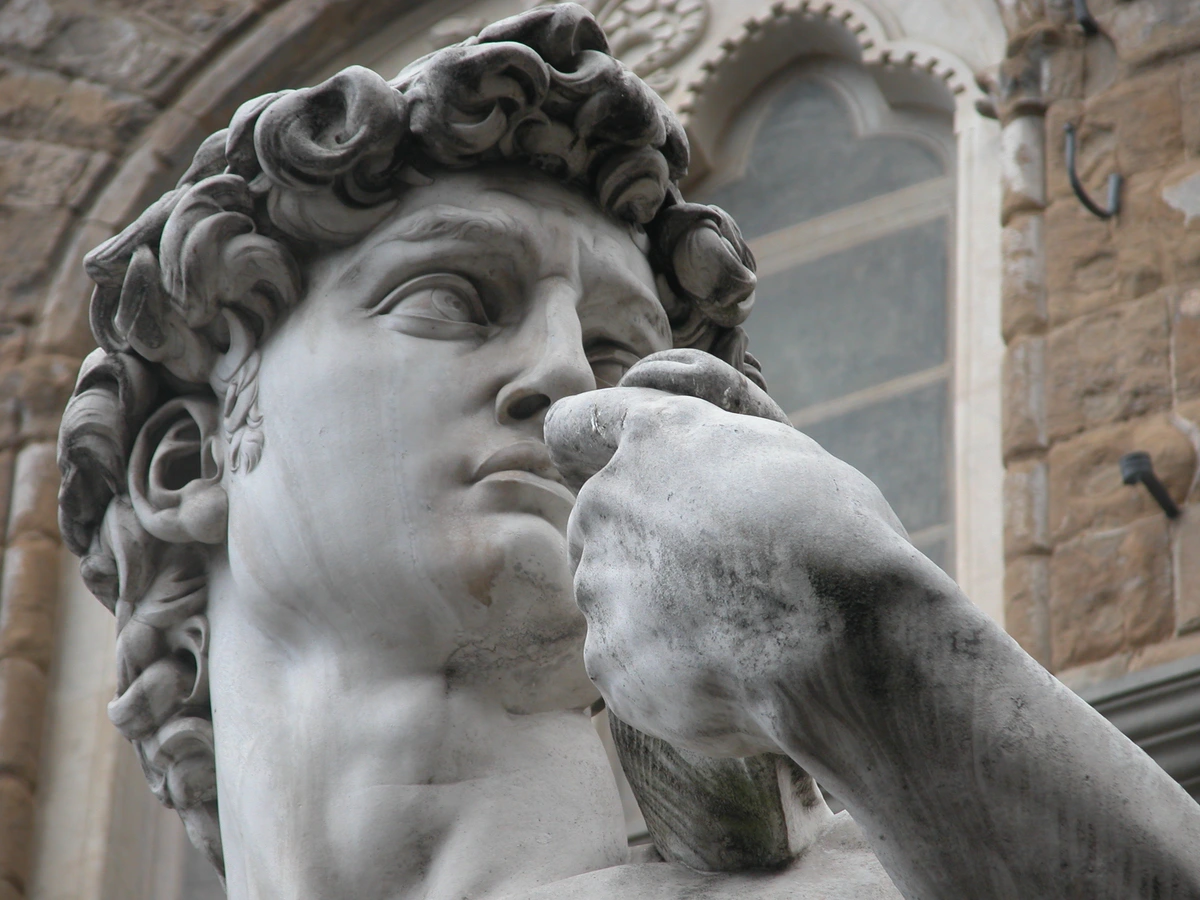
Seriously, don't start with a cathedral. Grab something simple and familiar that you can hold and turn over. A coffee mug (my old nemesis), a piece of fruit, a book, your favorite pen, or even organic forms with interesting textures like a gnarled piece of wood, or complex mechanisms like an old clock. Something with a few distinct sides. The simpler, the better for your first foray into simultaneous viewpoints. The goal here is to learn to see differently, not to conquer Everest on day one.
Step 2: The Sketching Blitz
Get a few sheets of paper or open a few digital layers. Now, spend 10-15 minutes making very fast, simple contour drawings of your object from at least 4-5 completely different angles:
- Directly from the front
- Directly from the side
- Directly from the top (looking down)
- From a three-quarter angle
- A close-up of one interesting detail (like the handle of the mug or the stem of the apple)
Don't worry about shading or perfection. Just get the lines down. You're gathering data. Maybe even use a different medium for each – a soft pencil for one, a charcoal stick for another, a bold ink pen for a third. This adds another layer of sensory data to your source material, and the inherent qualities of each medium (e.g., the sharpness of ink vs. the softness of charcoal) can subtly suggest different facets or moods of the object from varying perspectives. For instance, a soft charcoal might emphasize softness and volume, while a sharp ink pen might highlight crisp edges and structural elements.
Step 3: The Creative Synthesis – Merging Your Perspectives
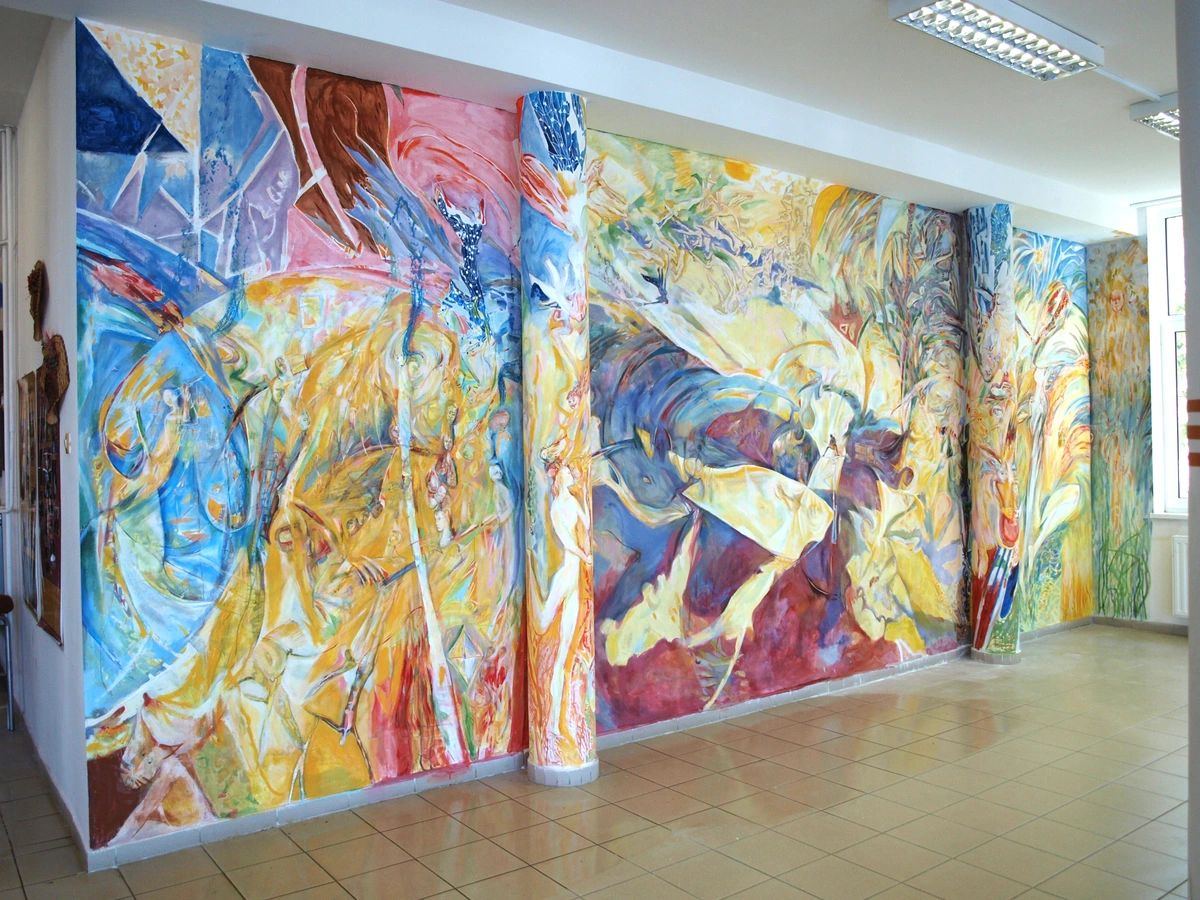
This is where the fun begins, and yes, it might feel a little like you're playing Dr. Frankenstein with your sketches. Your goal is to combine elements from your different sketches into one, unified drawing. Think about why you're combining them. What truth are you trying to convey? Perhaps that close-up of the mug's handle highlights its tactility, while the top-down view defines its form. You're creating a visual hierarchy, deciding what to emphasize and how different elements relate through juxtaposition. This hierarchy might be achieved through scale (making one view larger), detail (rendering one area more intricately), placement (positioning elements to guide the eye), or contrast (using darker lines or bolder colors for emphasis). For instance, combine the wide opening of the mug (from above) with a tight shot of the handle (from the side) and its chipped base (from below) to convey both its emptiness, the comfort of holding it, and its fragility and wear over time. Or, let's take a simple chair. You might combine the elegant curve of its backrest (from a side view) with the solidity of its seat (from above), and the intricate joinery of its legs (from a low-angle perspective). This isn't just about showing what the chair looks like from all sides, but about creating a new, compelling visual statement about its form, function, and perhaps even its 'personality'.
Common Pitfall: Accidental vs. Intentional Distortion
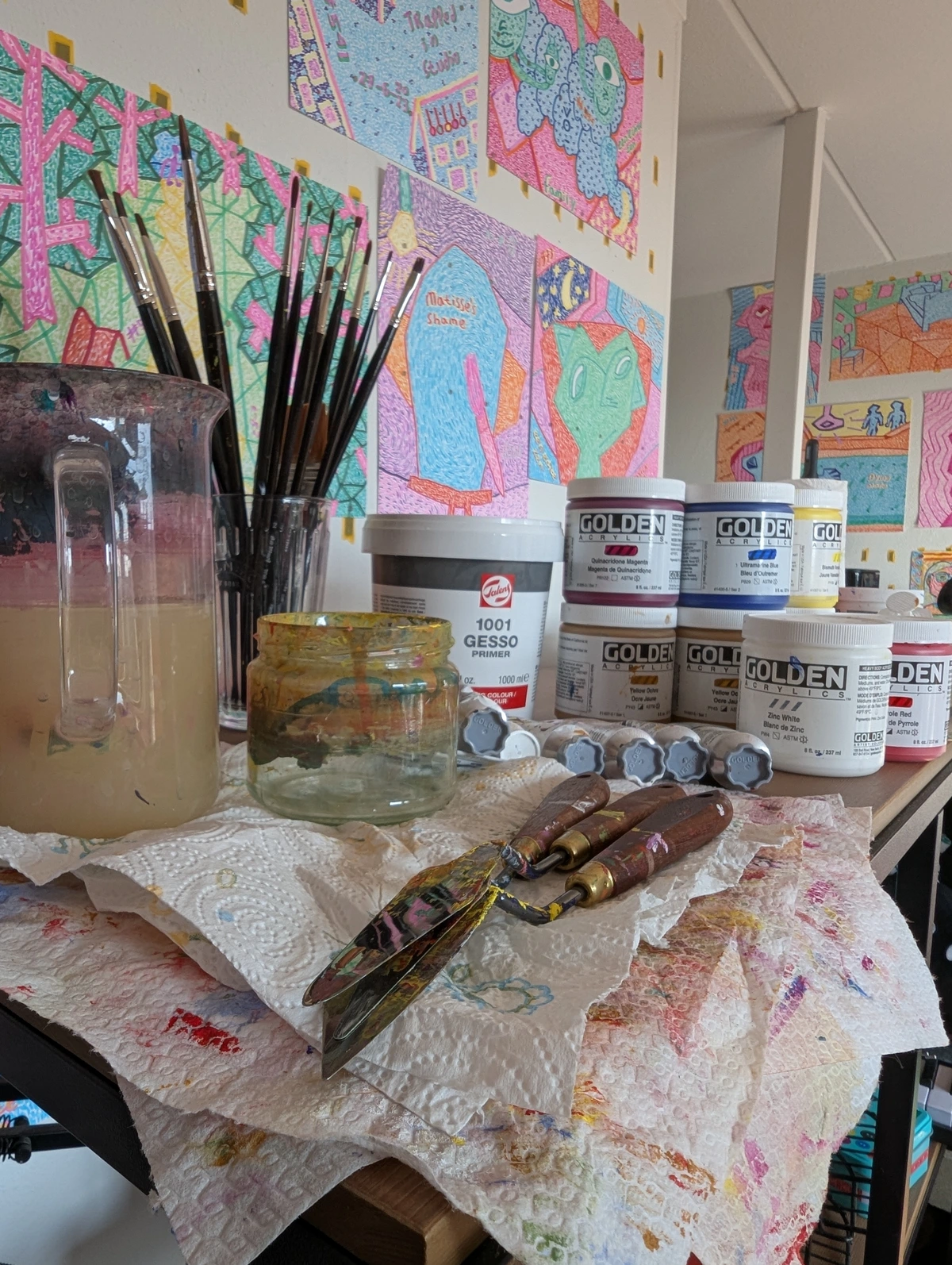
One thing I quickly learned, usually through a fair amount of frustrated crumpling of paper, is the difference between an accidental mess and an intentional artistic statement. If your combination just looks 'wrong' or unrecognizable, pause. Ask yourself: am I making a deliberate choice about how I'm distorting this, or am I just slapping things together? The intent is what elevates it from a jumble to artistic distortion. To diagnose if a distortion is accidental versus intentional, consider if the viewer can still grasp the subject's essence despite its fragmentation, or if it has become merely unreadable. For example, an accidental distortion might render a mug's handle as a disconnected squiggle, while an intentional one might show it clearly but at an impossible angle, making a statement about its grip. An accidental mess is like tripping and falling; intentional distortion is a choreographed dance with gravity, where every bend and twist communicates a deliberate message or feeling.
How you do this depends on your tools, and neither is better than the other.
Method  | Process | Pros | Cons | Best For |
|---|---|---|---|---|
| Analog (Scissors & Glue) | Physically cut out parts of your sketches and arrange them on a new sheet of paper. Trace over them to create a new, composite drawing. | Very tactile, forces decisive choices, happy accidents are common. | Can be messy, harder to undo mistakes. | Tactile learners, quick experimentation, embracing unpredictability. |
| Digital (Layers) | Place each sketch on a separate layer in your software. Adjust the opacity and erase parts of layers to let others show through. | Infinitely editable, allows for subtle blending and transitions. | Can lead to over-thinking, might feel less spontaneous. | Precision, endless iteration, complex layering, fine control. |
If you're going digital, software like Photoshop or Procreate offers incredible flexibility. Experiment with blend modes (multiply, overlay, screen) to see how different views interact, use layer masks to selectively reveal or hide parts of your sketches without permanently erasing them, and don't shy away from transformation tools to subtly scale, rotate, or warp elements to fit your developing 'artistic logic.'
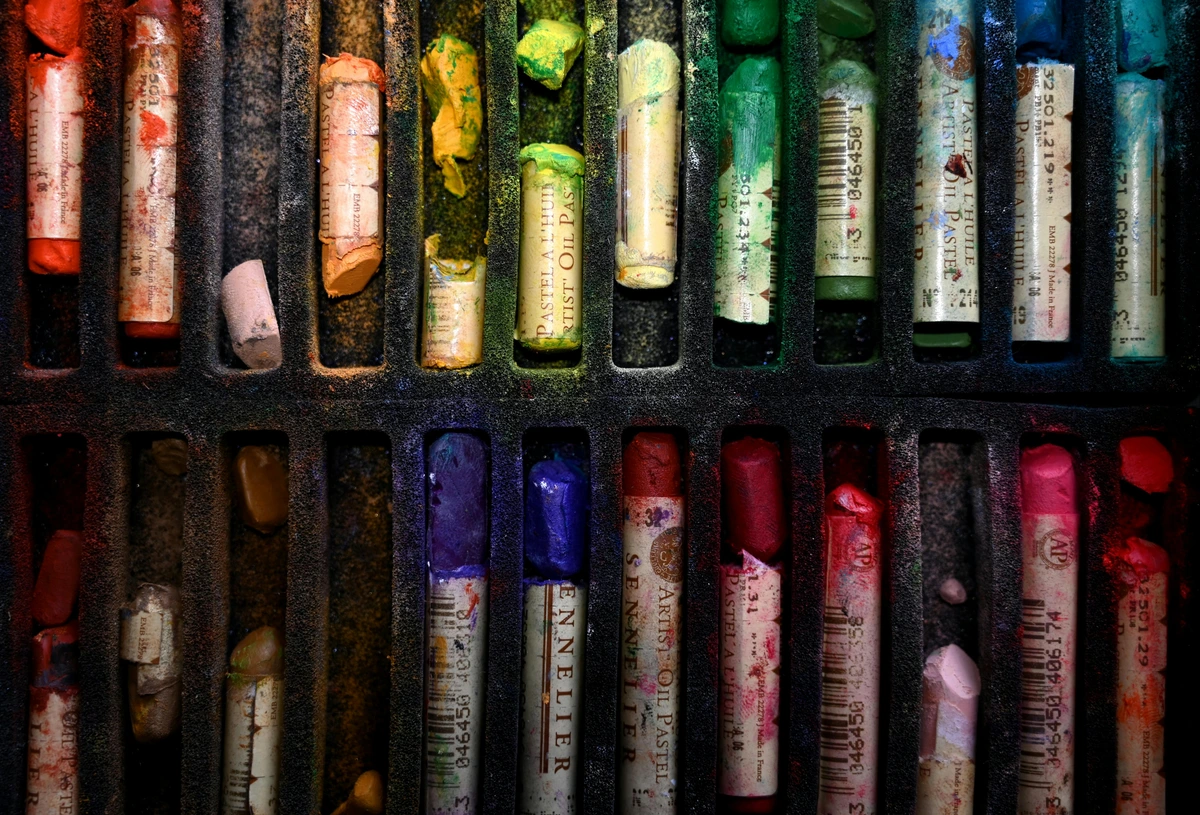
Try to merge the top-down view of the mug's opening with the side view of its body. Show the front of the book's cover and the side view of its pages at the same time. Let the images overlap and intersect. It’s going to feel weird. That’s good. You're rewiring your brain. This is artistic distortion with intent.
Step 4: Finding Harmony (or Embracing Chaos)
Now you have this strange, composite creature. It might look fragmented. My first few attempts definitely looked less like art and more like a particularly unfortunate collage accident. The final step is to unify it. I've definitely had pieces that looked like my cat walked across the wet canvas, so trust me when I say unity is often an act of sheer will (and a bit of clever artistic trickery).
You can do this by:

- Line: Go over the whole drawing with a single, confident line weight to tie all the parts together – imagine a strong charcoal line making sense of a pencil sketch and an ink drawing. Consider how varying line thickness can guide the eye, create depth, and define shapes within your composite image, allowing some elements to recede and others to come forward.
- Color/Value: Use a limited color palette (say, only blues and burnt sienna) or a consistent shading style across the different views to make them feel like they belong to the same object, like an old, faded photograph. A unified color scheme can bridge seemingly disparate elements, creating a cohesive mood or atmosphere. You could even use color temperature, with warmer hues for foreground elements and cooler tones for background, to create a sense of depth and atmospheric perspective within your fragmented forms.
- Texture: Add a consistent texture (like cross-hatching, stippling, or even scumbling) over the entire piece to create a unified surface, making all those disparate parts sing the same tune. This physical consistency tricks the eye into seeing a cohesive whole, even if the forms are fractured. You might apply a uniform pattern or surface quality that subtly connects all the fragmented planes, giving them a shared tactile presence.
Your goal isn't to hide the fact that there are multiple views, but to make them dance together in a single, compelling composition. You've just taken your first step into a multi-perspectival world. It feels strange, doesn't it? Good. That means your brain is learning something new, learning to embrace a new artistic logic driven by your unique perception, ready to be explored further in abstract art. Now, having grappled with unifying your own fragmented vision, let's turn to the masters who have forged paths in this multi-perspectival landscape.
Techniques to Steal from the Greats: A Historical Perspective
Having wrestled with your own coffee mug (or apple, or pen), you've probably already tapped into some of the core challenges and thrills of using multiple viewpoints. Now, let's look at how the masters have tackled this, because you certainly don't have to reinvent the wheel. Understanding how these influential artists approached multi-viewpoint techniques can profoundly inform your own creative practice.
Cubist Innovations: Shattering Reality for Deeper Truths
Artists have been wrestling with this for over a century. The most famous, of course, are the Cubists. Pablo Picasso and Georges Braque basically blew up traditional perspective. They wanted to show the 'truth' of an object by depicting it from multiple angles simultaneously, reassembling it according to a new, artistic logic. They employed geometric fragmentation, breaking objects into interlocking planes as if seen from various positions in space and time, such as in Picasso's Les Demoiselles d'Avignon (though an early precursor to Cubism) or Braque's Violin and Candlestick. Looking at their work is like a masterclass. If you're curious, I highly recommend diving into the history in this ultimate guide to Cubism.

Capturing Time and Motion: Beyond Cubism
But it's not just Cubism. Think of David Hockney's photo collages, where he takes dozens of photos of a scene or person from slightly different viewpoints and assembles them into a grid. This technique brilliantly captures the passage of time and the act of looking itself, offering a mosaic of perception. The genius lies not just in the assembly, but in how the viewer's eye is forced to actively scan, piece together, and re-experience the subject, mimicking our actual, fragmented memory and observation of reality over time. Each shift in perspective within the collage represents a tiny moment, collectively building a larger, more dynamic truth.
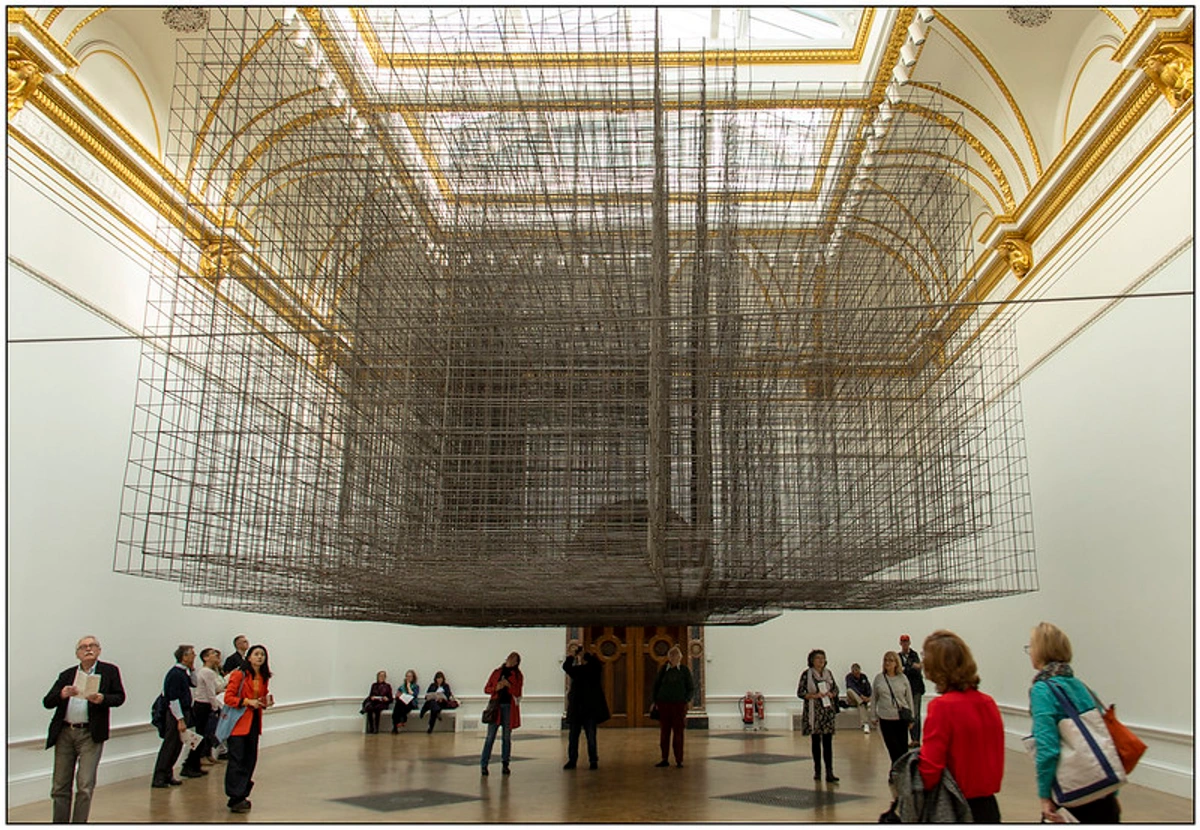
Beyond Cubism and Hockney, you can find glimpses of multi-perspectival thinking throughout art history, demonstrating a persistent human desire to convey more than a single, static observation:
- Ancient Egyptian Art: Often depicted figures with a frontal torso, profile head, and legs. This wasn't about shattering reality for expression, but about showing the most 'complete' or characteristic view of each body part, creating a composite, almost canonical, representation. It served a symbolic and religious purpose, ensuring the deceased or divine figures were fully present and recognizable in the afterlife, ensuring their eternal form was unambiguously represented and able to perform necessary actions.
- Medieval Altarpieces: Many works would present multiple scenes from a narrative simultaneously or show a figure from slightly different angles across different panels. For example, a single altarpiece might depict Christ's birth, crucifixion, and resurrection across three panels, or even within a single, complex composition. This offered varied viewpoints on a continuous story or a multifaceted spiritual truth, allowing the viewer to 'read' the narrative across time and space, especially for a largely illiterate populace.
- Mannerism: Artists like El Greco played with elongated figures and distorted spaces, pushing against Renaissance ideals of harmony. While not strictly showing multiple viewpoints of an object in the Cubist sense, they certainly fractured conventional perspective to create expressive, often unsettling, emotional realities. For example, El Greco's View of Toledo uses dramatic, non-realistic light and distorted architectural forms to convey a subjective, almost apocalyptic, feeling rather than a topographical likeness, reflecting an internal spiritual vision.
- Proto-Cubism (Paul Cézanne): Often considered the bridge to Cubism, Cézanne meticulously studied objects from slightly varied angles, particularly in his still lifes and landscapes. He sought to render the essence of form and structure, not just a fleeting impression, by subtly shifting perspectives and flattening space within a single canvas. His aim to depict objects as combinations of 'cylinders, spheres, and cones' from multiple angles, along with his emphasis on formal structure over illusionistic depth, laid the groundwork for Picasso and Braque's more radical fragmentation, attempting to capture a more complete, enduring truth of the object.
- Fauvism: While renowned for its radical use of non-naturalistic, vibrant colors (think Matisse and Derain), Fauvism also often simplified and distorted forms, breaking from strict representational realism. This wasn't always about multiple literal viewpoints, but the freedom from objective optical reproduction to convey an emotional or sensory experience aligns with the spirit of multi-viewpoint art: seeking a deeper truth beyond pure optics, freeing color and form from their descriptive roles.
- Surrealism: Think of artists like Salvador Dalí or René Magritte. They used dream logic to juxtapose seemingly unrelated objects or perspectives, creating new, often unsettling, realities. While not always about showing an object from multiple literal angles, their work profoundly explores fragmented perception and subjective truth, questioning the very nature of reality, as seen in Dalí's melting clocks or Magritte's impossible scenes where scale and context are dramatically altered.
- Futurism: This early 20th-century Italian movement, including artists like Umberto Boccioni and Giacomo Balla, was obsessed with speed, technology, and the dynamism of modern life. They frequently used techniques to show objects or figures in successive phases of movement, effectively incorporating multiple moments and fragmented perspectives into a single image to convey velocity and energy, like Balla's Dynamism of a Dog on a Leash or Boccioni's aforementioned sculpture.
- Orphism: Developed by Robert Delaunay and his wife Sonia, Orphism was a branch of Cubism that emphasized pure abstraction and vibrant colors, often drawing from fragmented observations of objects and then translating them into interlocking geometric shapes and dynamic color planes. Their work, like Robert Delaunay's Simultaneous Windows, suggests multiple viewpoints by breaking down forms into abstract, prismatic components, creating a sense of simultaneous vision and light, echoing the experience of seeing a cityscape through shifting reflections.
- Fernand Léger: A key figure in Cubism, Léger took a more mechanistic approach, often depicting subjects (especially figures) with cylindrical and conical forms. His work often breaks down and reassembles forms in a way that suggests multiple vantage points, celebrating the dynamism of modern life through fragmented, machine-like precision, as if an object is seen through a kaleidoscope of its constituent parts. His series The City exemplifies this approach, showing urban elements from various angles merged into a vibrant, dynamic whole.
- Kinetic Art: While often involving actual movement, early kinetic artists, and even some contemporary ones, play with the viewer's changing perspective as they move around a piece. This creates a dynamic, multi-viewpoint experience that changes over time, much like a fragmented painting aims to do in a static form. It's about perception in motion, both of the art and the viewer, making the act of viewing an active, temporal engagement.
- African Tribal Masks: Many African tribal masks demonstrate multi-viewpoint principles by combining features from different animals or human expressions, or by showing elements from distinct perspectives (e.g., frontal and profile simultaneously) to represent complex spiritual beings or symbolic truths. This isn't about optical realism, but about conveying a deeper, spiritual reality that transcends a single fixed view, ensuring the complete essence of a deity or ancestor is captured.
- Indigenous Art (Australian Aboriginal Art): Indigenous art, particularly certain forms of Australian Aboriginal art, often employs 'x-ray vision' or 'internal-external' perspectives. This involves depicting both the external form of an animal or person alongside its internal organs or skeletal structure, offering a holistic, multi-layered view that speaks to the interconnectedness of life and spirit, not just its superficial appearance. The purpose is to convey a complete understanding of the subject, including its spiritual and physical components, and its place in the Dreaming.
- Japanese Woodblock Prints (Ukiyo-e): While often utilizing single-point perspective, some Japanese woodblock prints (Ukiyo-e), particularly those depicting urban scenes or crowded compositions, feature dynamic compositions, flattened spaces, and unconventional viewpoints. Artists like Hokusai or Hiroshige sometimes employed 'worm's-eye' or 'bird's-eye' views, or fractured compositions that, while not strictly Cubist, broke from conventional European perspective to capture the bustling energy and varied observations of daily life. Hokusai's The Great Wave off Kanagawa, for instance, uses an unusual high-horizon line and a dynamic, almost flattened composition that pushes the wave into the foreground, offering a dramatic, unconventional perspective of Mount Fuji in the distance.
These examples show that the desire to go beyond a single, static view is deeply ingrained in artistic expression, evolving through different eras and intentions, always pushing the boundaries of how we perceive and represent the world.
Limitations & Challenges of Multi-Viewpoint Art
While incredibly liberating and powerful, multi-viewpoint art isn't without its hurdles. It's a dance between clarity and chaos, and sometimes, you might stumble:
- Potential for Visual Confusion: If not handled with intent, combining too many perspectives or distorting forms without an underlying artistic logic can result in an image that is simply difficult to read or interpret. The viewer might feel lost rather than engaged, struggling to find a focal point or understand the subject.
- Difficulty in Achieving Recognizable Forms: Breaking down and reassembling objects can sometimes render them unrecognizable. The challenge is to maintain enough visual cues for the viewer to grasp the subject, even as it's fragmented, unless complete abstraction is your explicit goal. To mitigate this, consider anchoring your composition with one recognizable element, using a consistent color palette, or allowing key structural lines to remain visible across fragmented planes.
- Intense Planning vs. Spontaneity: While some artists embrace spontaneous fragmentation, a truly cohesive multi-viewpoint piece often requires significant conceptual planning and compositional thought. This ensures the various perspectives coalesce into a meaningful whole, rather than appearing as a random collection of disparate views.
Beyond the Canvas: Multi-Viewpoint Principles in Other Fields
The principles of multi-viewpoint thinking extend far beyond traditional painting and sculpture:
- Graphic Design & Branding: Designers frequently employ fragmented imagery, layered perspectives, or dynamic compositions to convey movement, complexity, or a brand's multifaceted identity. Think of a logo that subtly shifts forms when animated, advertising campaigns that present a product from various angles simultaneously to highlight its features, or digital interfaces that use parallax scrolling to create a sense of depth and multiple planes, actively guiding the viewer's eye through a sequence of perspectives.
- Digital Art & VR/AR: With 3D modeling, artists can easily render objects from infinite perspectives. Virtual Reality (VR) and Augmented Reality (AR) experiences inherently immerse the viewer in a multi-perspectival environment, allowing them to literally walk around and interact with art from any angle. This pushes the concept of multi-viewpoint art to its most literal and interactive extreme, dissolving the boundaries between viewer and artwork, and offering truly personalized, evolving artistic encounters.
- Cinematography & Film: Consider cinematography and film. Montage sequences, split screens, or even rapid cuts between different camera angles of the same scene are cinematic techniques that embody multi-viewpoint principles. Montage, for example, conveys the passage of time or a sequence of ideas through fragmented, juxtaposed shots, while split screens can depict simultaneous events or contrasting perspectives, building tension, conveying emotional states, or offering a more comprehensive narrative understanding than a single, static shot ever could.
- Architecture & Urban Planning: Architecture and urban planning inherently deal with multiple viewpoints. Architects design buildings to be experienced from the street, from above, from within, and how they interact with their surroundings from various angles. Urban planners consider the flow of people and traffic, how different structures relate to each other, and how a city 'reads' from multiple vantage points, both macro (skyline) and micro (street-level experience).
- Literature & Narrative: Even literature employs multi-viewpoint principles. Novels often use multiple narrators, shifting perspectives (first-person to third-person), or non-linear timelines to present a more complete, subjective, or fragmented understanding of events or characters. Think of stream-of-consciousness writing, which attempts to capture the jumbled, multi-layered nature of thought itself, or authors who tell the same story from different characters' viewpoints to reveal complex truths.
Frequently Asked Questions (FAQ) About Multi-Viewpoint Art
What is multi-viewpoint art?
Multi-viewpoint art is an artistic approach that depicts a subject from several different perspectives or angles simultaneously within a single artwork. Instead of presenting a static, single view (like traditional perspective), it combines multiple observations or memories to create a more dynamic, comprehensive, or emotionally resonant representation of reality. It's about capturing a subjective truth rather than a purely optical one.








How does multi-viewpoint art differ from traditional perspective?
Traditional perspective (like single-point, two-point, or three-point) aims to create an illusion of depth and reality from one fixed observer's position at a specific moment in time. Multi-viewpoint art, conversely, intentionally breaks or manipulates this single perspective to show a subject as if observed from various angles, across different moments, or through a subjective emotional lens, offering a more complete and dynamic 'truth' beyond mere optical representation. It embraces fragmentation to reveal deeper layers of meaning.
What are some famous examples of multi-viewpoint art?
The most well-known examples come from Cubism, particularly the works of Pablo Picasso and Georges Braque, who fragmented objects into geometric planes seen from multiple angles. Other key artists include David Hockney with his photo collages, and historical examples like Ancient Egyptian art (combining frontal and profile views for symbolic completeness) or Medieval altarpieces (depicting narrative progression across panels or within complex compositions).
Is multi-viewpoint art only for abstract styles?
Not necessarily. While multi-viewpoint art often leads to abstract or semi-abstract forms (especially in Cubism), its core principle is about how a subject is perceived and represented, not solely about abstraction. It can be used to convey complex emotional states in figurative art, or to capture dynamism in realistic subjects. The degree of abstraction depends entirely on the artist's intent and how far they choose to push the fragmentation or distortion.
How can a beginner start practicing multi-viewpoint art?
Start with simple, everyday objects you can hold and turn. Sketch the object quickly from 4-5 different angles. Then, try to combine elements from these individual sketches into one composite drawing, experimenting with overlapping lines, shared colors, or consistent textures to unify the disparate views. The key is to experiment, embrace the initial strangeness as your brain learns to 'see' differently, and prioritize your artistic intent over strict realism.

What are the benefits of using multiple viewpoints in art?
Using multiple viewpoints offers several powerful benefits: it allows you to convey the passage of time or movement within a single frame; it helps express deeper psychological truths or complex emotions beyond a superficial appearance; it creates dynamic visual energy that actively engages the viewer; and it offers a potent way to represent subjective experience and break away from the limitations of pure optical realism.
Conclusion: Embrace the Multifaceted World
Exploring multi-viewpoint art is more than just learning a new technique; it's about fundamentally shifting how you perceive the world and how you choose to represent it. It's an invitation to challenge the polite fictions of single perspective, to acknowledge the rich, fragmented, and emotionally charged way we truly experience reality. By embracing simultaneous viewpoints, you're not just drawing an object; you're drawing your experience of it, your memories, your feelings, and the passage of time. You're creating a more profound, more honest, and ultimately, a more engaging form of artistic expression. So, grab your medium of choice, pick an everyday object, and start seeing it anew. Your art (and your brain) will thank you for it. Perhaps you'll even discover a new appreciation for the multifaceted visions found in abstract art and the unique perspectives waiting to be explored at the Zen Dageraad Visser gallery or through his latest collections.