Unveiling The Great Wave: Hokusai's Masterpiece Decoded from an Artist's Perspective
Dive deep into Hokusai's iconic Great Wave. Discover its hidden symbolism, revolutionary techniques (like Prussian Blue), and global impact, explored through an artist's eyes. The ultimate guide to this timeless masterpiece.

Unveiling The Great Wave: Cracking the Code of a Masterpiece
I bet you’ve seen it a thousand times. On a coffee mug, a T-shirt, a dorm room poster, maybe even as a giant mural on the side of a building. Hokusai’s The Great Wave off Kanagawa is everywhere. It’s so common, so ubiquitous, that it’s easy to just… see it, and not look at it. We glance past it, acknowledging it as 'that famous Japanese wave picture,' and move on. It’s a familiar image, yes, but what if I told you that beneath that familiar appearance lies a universe of meaning, waiting to be excavated? A hidden narrative of human resilience, natural power, and artistic genius, all captured in a single, mesmerizing moment. I’ve poured over this image countless times, finding new layers with each viewing.
For years, I was visually lazy myself, taking it for granted. Then one day, I really stopped and looked. I saw the tiny fishermen in their boats, about to be devoured by a truly monstrous curl of water. I saw the calm, almost indifferent, peak of Mount Fuji in the distance. And I thought, wait a minute, what is actually going on here? My own artistic practice often involves searching for that hidden tension, that subtle interaction between elements, and in The Great Wave, it was screaming at me.
So, let's unpack it together. Let's go beyond the cliché and figure out why this single image, created by an old man in 1830s Japan, has such a powerful grip on our imagination. It’s a detective story, an archaeological dig into an image you thought you knew. We're going to dive into the man behind the masterpiece, the technical marvel of its creation, the drama of its immediate impact, and the philosophy it subtly communicates. Get ready to truly see it.
The Artist: An Old Man Mad About Painting
To truly understand this masterpiece, we must first delve into the mind of the man who created it. Katsushika Hokusai was, to put it mildly, a character. Born in 1760, he began his artistic journey at a young age, starting as an apprentice in a woodblock carving studio before entering the ukiyo-e school of Katsukawa Shunsho. This early training gave him a solid foundation in the commercial art world of Edo, specifically focusing on yakusha-e (actor portraits) and bijinga (beautiful women prints). But it was just the beginning of a relentless, lifelong quest for artistic evolution that would lead him far beyond these traditional subjects. He famously called himself Gakyō Rōjin Manji, which translates to 'The Old Man Mad About Painting.' And he wasn't kidding.
Imagine being so obsessed with your craft that you declared all your work before the age of 70 to be worthless – a mere warm-up act. That's the kind of dedication we're talking about here. He produced an estimated 30,000 works over his lifetime, from book illustrations to individual prints, constantly experimenting and refining. Honestly, I sometimes feel that way about my own early work, though I'm probably not as brave to say it out loud! That gnawing feeling that you’re always chasing a better version of yourself, always pushing the boundaries of what you thought possible – it’s a sentiment I understand on a visceral level as an artist myself.
The Great Wave was part of his magnum opus, a series called Thirty-six Views of Mount Fuji. He was in his seventies when he started it. Think about that. At an age when most people are winding down, he was just getting started on the work that would make him immortal, producing some of his most dynamic and influential pieces. This tireless pursuit, this 'madness,' defined his later years. This iconic series initially comprised 36 prints, but its overwhelming popularity led Hokusai to add 10 more, demonstrating the insatiable public appetite for his unique vision of Japan's sacred mountain.
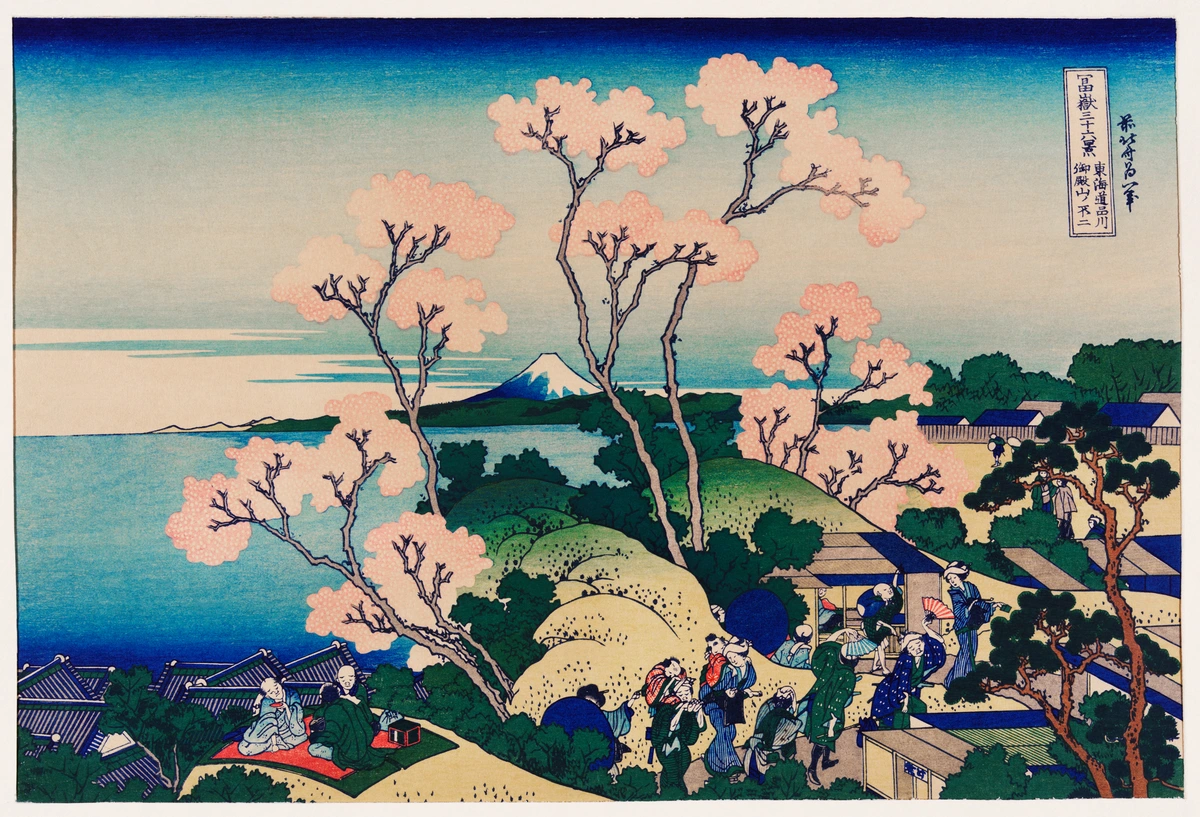
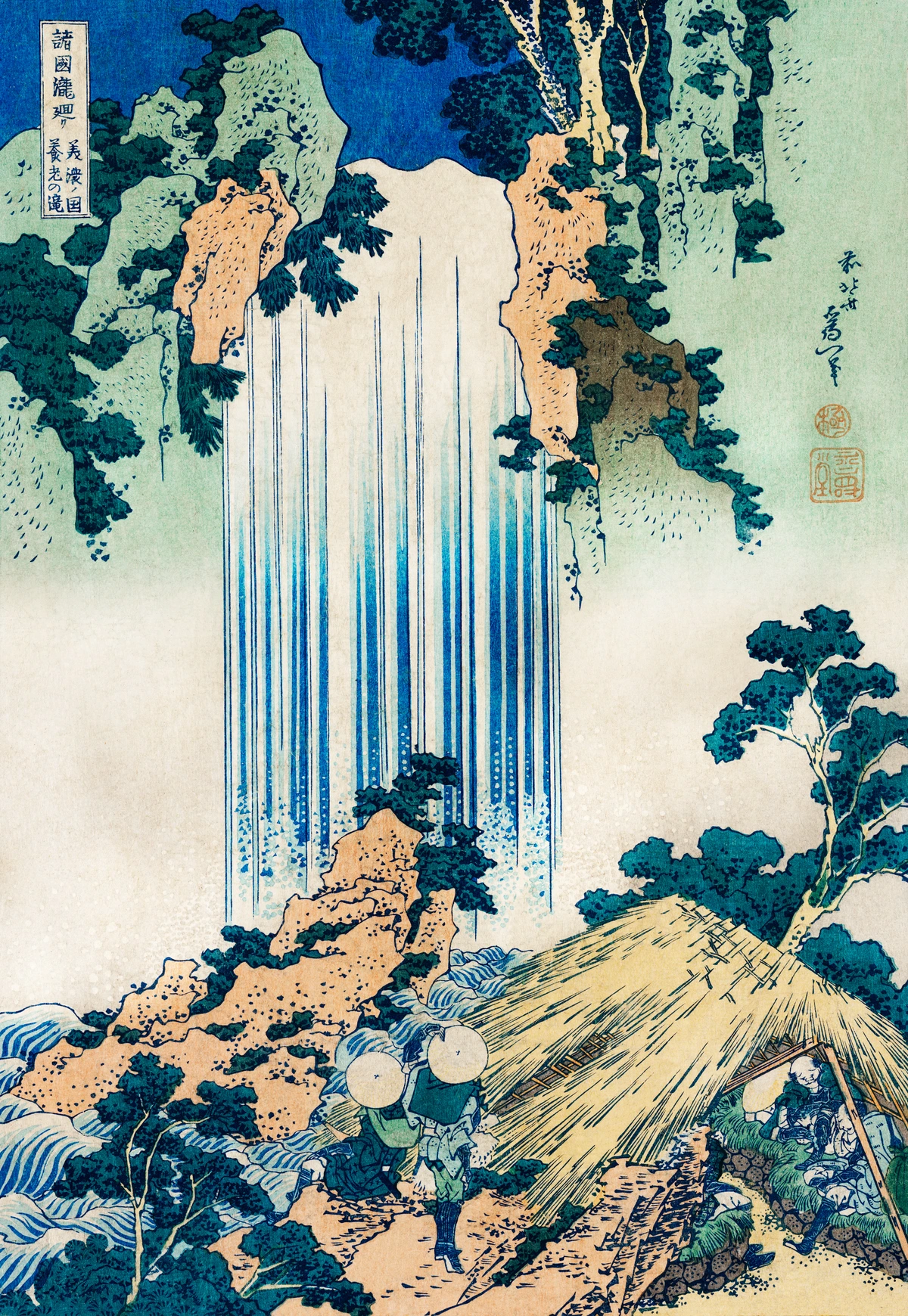
Before this iconic series, Hokusai’s career was a whirlwind of prolific output, including numerous book illustrations, other landscape series like A Tour of the Waterfalls of the Provinces, and countless studies of flora and fauna, all demonstrating a restless experimentation with form and subject. He explored everything from detailed bird-and-flower prints (like in his Large Flowers series) to historical warrior narratives, always seeking new ways to capture the world around him.
Hokusai was a master of ukiyo-e, the Japanese art of woodblock printing. This wasn't some lofty, isolated genius creating expensive paintings for the elite. He was a commercial artist, much like a graphic designer today, creating prints for the general public. These weren't unique paintings; they were the posters, postcards, and magazines of their day – mass-produced, accessible, and highly influential. The democratic nature of ukiyo-e allowed art to permeate everyday life, often created through a collaborative process involving the artist, block carvers, and printers, making it a truly 'pop art' phenomenon of its time. The artist (genga-shi) would draw the design, expert carvers (horishi) would meticulously translate it into woodblocks, and skilled printers (surishi) would apply the ink and press the paper, often layering multiple blocks for different colors. Ukiyo-e depicted a wide range of subjects beyond landscapes, including kabuki actors (yakusha-e), beautiful women (bijinga), sumo wrestlers, and historical scenes, catering to the diverse tastes of the burgeoning merchant class. The Great Wave was the ultimate blockbuster of its time, pushing the boundaries of the genre toward more dramatic, dynamic landscapes. You can explore my ultimate guide to Katsushika Hokusai, and delve deeper into the enduring legacy of ukiyo-e.
Hokusai's Relentless Artistic Evolution
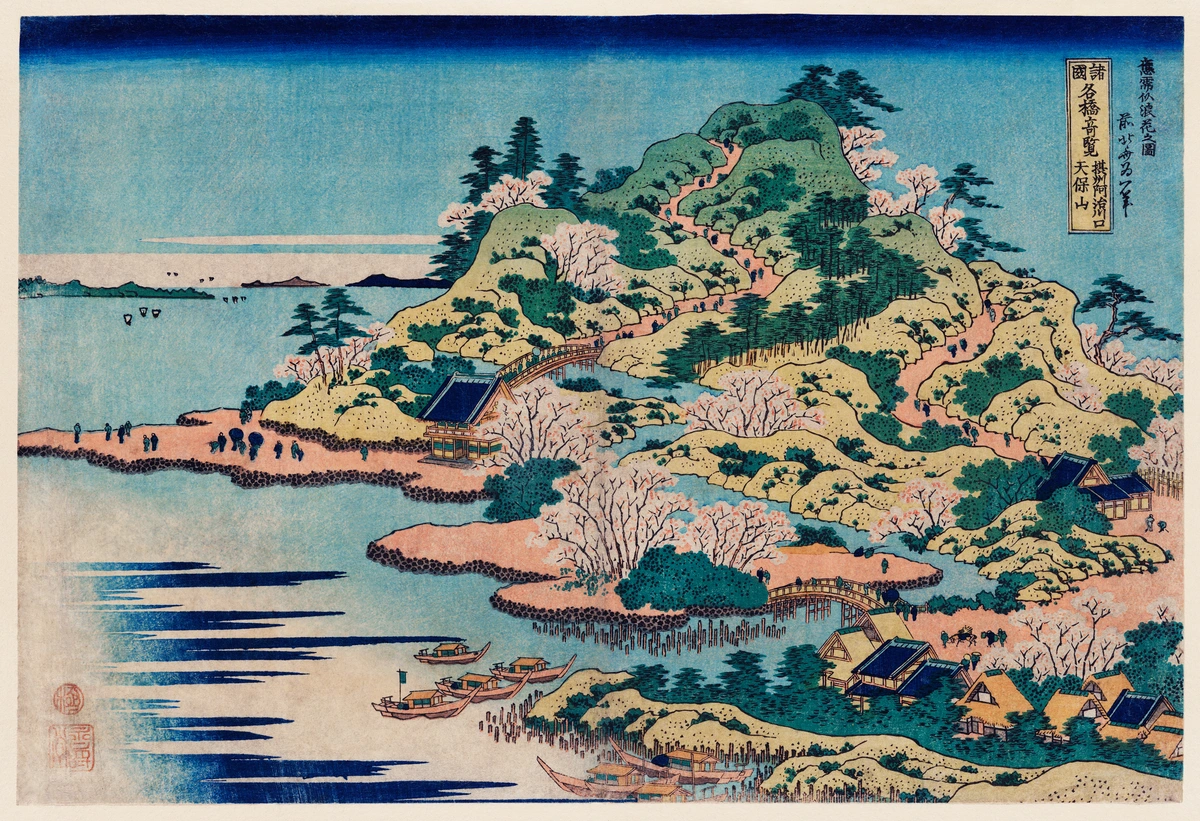
Hokusai's genius wasn't an overnight phenomenon. His career was a tapestry of constant reinvention, marked by over 30 name changes and shifts in artistic schools. This practice of changing artist names was quite common in Edo-period Japan, often marking transitions in style, teachers, or even simply new stages of life, signifying a renewed artistic phase. He experimented relentlessly with different styles, from the traditional ukiyo-e forms he inherited (like the Katsukawa school, which initially focused on actor portraits) to incorporating elements of Western perspective and shading. He drew inspiration from Dutch copperplate engravings, which, unlike traditional Japanese art, employed linear perspective (creating the illusion of depth with vanishing points) and chiaroscuro (the use of strong contrasts between light and dark, usually bold contrasts affecting a whole composition). Hokusai adapted these techniques, creating a sense of depth and realism previously unseen in Japanese landscape prints, making his compositions feel vast and dynamic. For example, his early Views of Bridges series already showed an interest in unique compositional angles and receding perspectives. He even briefly worked under the name Tawaraya Sōri, focusing on intricate bird and flower prints, demonstrating his versatility. This continuous exploration set him apart from contemporaries like Utagawa Hiroshige, whose landscape series, while beautiful, often maintained a more traditional, panoramic sensibility. Hokusai’s unique blend of tradition and innovation made his work exceptionally groundbreaking. The Great Wave represents the culmination of this lifelong exploration, synthesizing his deep understanding of Japanese artistic traditions with innovative techniques, honed over decades of diligent practice. It's truly a testament to persistent artistic development.
The Genius of the Technique: Crafting the "Blockbuster"
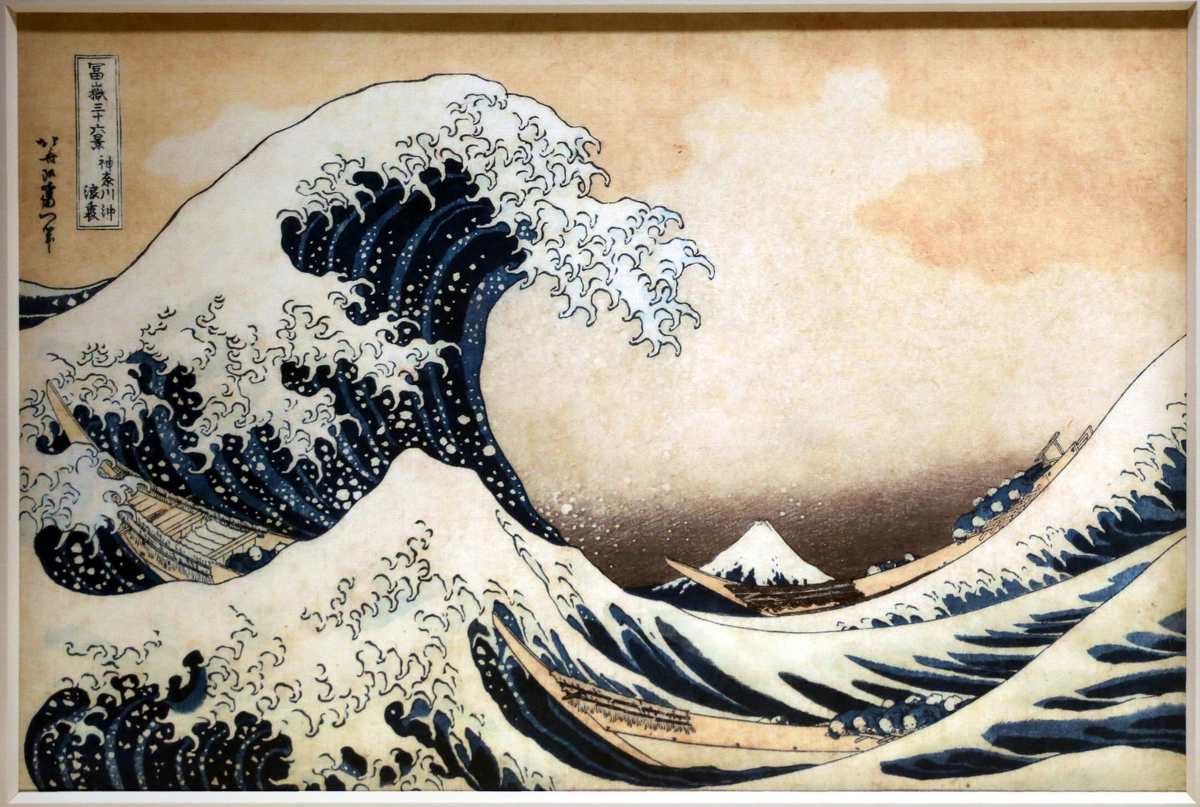
It’s not just what Hokusai depicted, but how he did it. This is a woodblock print, meaning it was meticulously carved from wood and printed in layers. And the color—oh, the color. The vibrancy is still striking almost two centuries later. I often marvel at the craftsmanship involved; it reminds me of the tactile pleasure of shaping clay or working with a printing press in my own studio. The patience, the precision, the understanding of how each layer interacts – it’s a demanding process that reveals true mastery. The collaboration between the artist, carver, and printer was essential, with each playing a vital, skilled role in translating Hokusai's vision into a reproducible masterpiece.
The Revolutionary Blues: Prussian Blue and Beyond
Hokusai was a pioneer in making extensive use of a synthetic pigment that had just been imported from Europe: Prussian Blue. This new color was revolutionary – vibrant, resistant to fading, and more consistent than traditional indigo dyes. Its affordability also made it an appealing choice for mass-produced ukiyo-e prints, allowing Hokusai to create those incredible, deep, inky blues that make the wave so mesmerizing and powerful. It’s a perfect example of how artists use color not just for decoration, but for profound emotional and visual impact. While traditional Japanese pigments like indigo were beautiful, Prussian Blue offered an intensity and stability that transformed Hokusai's palette, giving his sea its unmistakable depth and menace. The wave is a fusion of Japanese traditional artistry and cutting-edge Western technology, which is part of what made it feel so groundbreaking and modern at the time.
Other notable pigments used in ukiyo-e included bengara (red iron oxide), taisha (a reddish-brown), shira-ita (white lead), shu (cinnabar/red), and various yellows derived from arsenic sulfides or gamboge, along with mineral greens (iwa-enogu). The careful selection and application of these colors, in concert with Prussian Blue, created the rich and varied palette we still admire today.
Hokusai's Masterful Printing Innovations
While Prussian Blue gets a lot of attention, Hokusai’s technical innovations didn't stop there. He was a master of gradation in printing, known as bokashi, where colors fade seamlessly from dark to light. This technique is evident in the subtle shift from dark to lighter blue in the wave’s trough, or the delicate shading of the sky, adding immense depth and realism that was unusual for ukiyo-e. To achieve this, printers would often apply varying amounts of ink to a moistened block, or use multiple blocks, for each color area, requiring incredible precision. Imagine painting a sunset where the hues blend perfectly without a single harsh line – that's bokashi in action. I've spent countless hours in my studio trying to achieve such seamless transitions on my own canvases, and seeing it here in woodblock printing is truly remarkable.
He also embraced novel compositions, often featuring a low horizon line or unusual aerial perspectives, techniques that profoundly influenced Western artists much later. His meticulous carving instructions, often involving multiple blocks for different colors and details, pushed the boundaries of what was possible in woodblock printing, allowing for unprecedented complexity and richness. He also experimented with karazuri (blind embossing), using uninked blocks to create subtle textural effects, such as the delicate white lines within the foam of the wave, the subtle contours of the boats, or even patterns on garments. This un-inked relief creates a raised surface you can almost feel, giving the foam a shimmering, frothy quality. Furthermore, Hokusai's deft manipulation of line weight and density allowed him to create an illusion of depth and movement, using thicker, bolder lines for the powerful wave in the foreground and finer, softer lines for the distant, serene Fuji.
credit, licence
Decoding the Image: What Are We Really Looking At?
At its core, the image is a masterclass in composition in art. Hokusai plays a brilliant, almost brutal, game of contrasts and optical illusions. The chaotic, fleeting power of the sea versus the serene, eternal stillness of the mountain. The fragility of human life caught in nature's grip versus the sheer, overwhelming might of the natural world.
He uses negative space with astounding dexterity, allowing the eye to fill in the gaps and emphasize the drama. The way the wave seems to frame and almost swallow Mount Fuji is a key example of this masterful use of emptiness to heighten presence. He also cleverly employs foreshortening in the way the fishing boats appear compressed and thrust forward by the wave, emphasizing their precarious position and adding to the dramatic illusion of depth and movement. Furthermore, the wave itself can be analyzed using principles of the golden spiral or Fibonacci sequence, creating a natural, dynamic curve that leads the eye directly to the turbulent center, then across to the distant Fuji. It's truly a testament to intelligent design in art, where every element serves to amplify the narrative.
Let’s break down the key symbolic elements:
The Wave Itself: A Monster of Nature's Making
This isn't just any wave; it's a massive rogue wave, an okinami, towering over everything. Listen closely, can you almost hear the deafening roar as it begins to break? Feel the chill of the spray. Look at the claw-like tendrils of foam reaching out, almost like a monstrous hand or a sea dragon rising from the depths, poised to crush the small boats below. The sharpness of the breaking crests, rendered with such precision using powerful, dynamic, almost violently curving and jagged lines, almost makes you feel the impact. It represents the overwhelming, unstoppable power of nature – terrifying in its raw energy, yet undeniably beautiful in its execution. The deep, rich blues, made possible by Prussian Blue, emphasize its cold, profound depth and formidable might. Hokusai has elevated a natural phenomenon into a living, breathing entity.
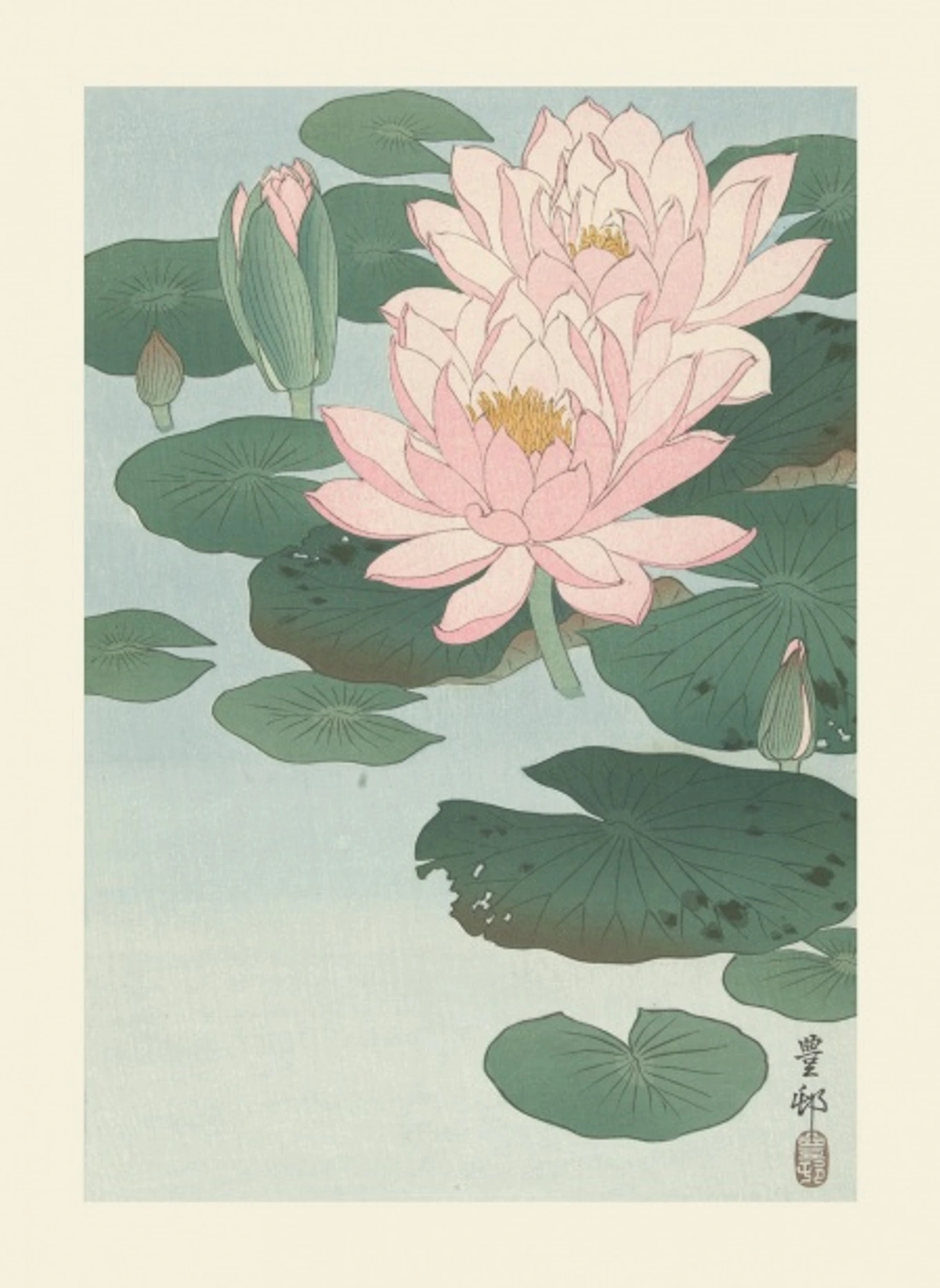
For Japanese culture, deeply steeped in Shinto and Buddhist beliefs, nature was and remains a powerful, divine force to be respected and feared. Shintoism emphasizes the sacredness of nature, where kami (deities or spirits) reside in natural elements like mountains, rivers, and even the sea. These kami aren't just benevolent gods; they can be wild, unpredictable forces, embodying both creation and destruction. This wave is the ultimate, magnificent, and terrifying expression of that idea – a divine entity demanding reverence and demonstrating humanity's fragile place within the natural order. The concept of impermanence, a core Buddhist teaching, is also powerfully embodied by the fleeting, destructive beauty of the wave. The color blue itself, particularly the deep indigo and ultramarine tones, has long been associated with water and the divine in Japanese aesthetics, evoking both serenity and profound depth. It reminds me a bit of the lotus flower's symbolism – emerging pure from chaos; you can explore more in Symbolism of Lotus Flower in Art.

credit, licence
Mount Fuji: The Quiet Center
Then, nestled in the trough of the wave, seemingly distant and unaffected, you see Mount Fuji. It’s small, serene, and capped with snow. It’s the symbolic opposite of the wave. Where the wave is a cacophony of movement and a fleeting moment of terror, Fuji is stillness, permanence, eternity. As Japan's highest and most revered mountain, Fuji is a dormant volcano with a majestic, near-perfect conical shape, a sacred heart of Japan, a symbol of national identity, spiritual stability, and enduring beauty. For centuries, it has been a pilgrimage site for both Shinto and Buddhist practitioners, considered a dwelling place for kami and a source of immortality. Long before Hokusai, Mount Fuji was enshrined in poetry, literature, and art as a divine being and a source of immortality, a cultural touchstone already imbued with deep spiritual significance. Hokusai was far from the first to depict it, but he certainly made it his own, presenting it with a quiet, almost detached, dignity.
By making it so small, framed by the monstrous wave, Hokusai creates a mind-bending trick of perspective. It makes the temporary, immediate wave seem more monumental than the eternal, distant mountain, forcing us to confront the immediate threat over the enduring truth. This clever manipulation of scale plays with our sense of significance, perhaps reminding us that even the most enduring symbols can be momentarily overshadowed by immediate crises, and that true indifference (or rather, steadfastness) lies in maintaining one's serene nature amidst external chaos. It's a reminder to find our inner calm, our own personal Fuji, when the world around us feels like a raging storm.
The Fishermen: Us, Enduring the Storm
And then there are the boats, almost impossibly small, being tossed about like leaves. Look closely at the crews of fishermen, hunched down, clinging on for dear life in their oshiokuri-bune (fast boats used to transport fresh fish to Edo). These specialized vessels, known for their sleek design and speed, were essential for bringing valuable, perishable catches to market quickly, highlighting the high stakes of their profession and the constant peril they faced. Their robust posture, despite the overwhelming force, suggests not a desperate struggle against nature but a deep, practiced understanding of how to move with it. Their oars are angled in a dance of survival, a testament to their skill and resilience. The lives of Edo-period fishermen were inherently perilous, marked by constant exposure to unpredictable seas and the relentless demands of their livelihood. They aren't heroes fighting the wave; they are simply enduring it, their very livelihood dependent on navigating these formidable forces. They are us. They represent all of humanity, caught in the struggles and challenges of life, facing forces far beyond our control. But here’s the crucial part: they aren't panicking. They embody resilience, acceptance, and the sheer tenacity of human spirit in the face of overwhelming odds. It's a quiet testament to enduring the storm, rather than conquering it, a powerful example of visual storytelling techniques in narrative art. Honestly, I've certainly felt like those fishermen myself, clinging to the oars during moments of intense personal or professional upheaval, wondering if I'd be swept away, but finding that inner resolve to keep going.
Symbol  | Meaning | Relationship / Tension |
|---|---|---|
| The Wave | Immense, chaotic, temporary power of nature, divine force (kami), unpredictable challenges | Confrontation vs. Stillness |
| Mount Fuji | Stillness, permanence, eternity, national spirit, sacredness, enduring beauty, spiritual grounding, steadfastness | Resilience vs. Overwhelm |
| Fishermen | Humanity's fragility, struggle, and resilience, tenacity in the face of overwhelming odds, dependence on nature, quiet determination | Fleeting vs. Enduring |
Why is The Great Wave So Famous? The Alchemy of an Icon
But the brilliance isn't just in its execution; it's in the potent alchemy of factors that made The Great Wave an enduring icon. So why did this particular image resonate so profoundly across the globe? For me, it comes down to five crucial things that speak to us on multiple levels:
- A Perfect Design, Almost a Logo: The composition is flawless, a masterclass in dynamic balance and understanding balance in art composition. The powerful, spiraling structure of the wave (often analyzed in terms of the golden spiral or Fibonacci sequence), the clever use of negative space, the tension between foreground and background—it’s graphically potent. What makes a good design? It's simple, memorable, and impactful. The Great Wave achieves this effortlessly. Its sweeping diagonal lines create immense energy, yet the triangular form of Mount Fuji provides stability. It’s complex in its layered meaning but visually simple to grasp, which, let's be honest, is the holy grail of design in art. The influence of Chinese landscape painting, with its emphasis on cosmic grandeur and balanced compositions, is also subtly present in Hokusai’s approach to depicting natural forces on such a monumental scale.
- A Domestic Sensation First: While its global fame came later, The Great Wave and the Thirty-six Views of Mount Fuji series were immediate sensations in Edo-period Japan. They catered to a booming domestic tourism industry, offering a kind of 'visual souvenir' of iconic Japanese landscapes. For a population often restricted in foreign travel due to sakoku (Japan's national isolation policy), these prints offered an accessible way to 'see' their own country's natural wonders. This widespread popularity among the burgeoning chonin (merchant class), who had disposable income and a growing appetite for popular culture, established its status long before it ever left Japanese shores, cementing its place in the national psyche.
- The Japonisme Craze: In the mid-19th century, Japan, having been largely closed off, opened up to the West. Europe went absolutely wild for Japanese art, especially ukiyo-e prints. This phenomenon, dubbed Japonisme, saw artists like Claude Monet, Edgar Degas, Vincent Van Gogh, and even Art Nouveau designers blown away by the bold compositions, flat planes of color, unusual viewpoints, and strong outlines of these prints. The Great Wave became a poster child for this new, exciting visual language, offering a fresh aesthetic that challenged established Western artistic conventions and sparked a revolution in European art. Van Gogh, for example, admired how Japanese artists used strong outlines and vibrant colors, influencing his own expressive brushwork, while Monet was profoundly inspired by the serial approach to landscape, evident in his own series like the Haystacks and Water Lilies, directly echoing Hokusai's Thirty-six Views.
- It’s Infinitely Relatable: For me, this is perhaps the most powerful reason for its enduring fame. You don’t need a degree in art history to feel the power of this image. We have all faced our own 'great waves'—moments of crisis, challenge, or existential dread that feel overwhelming and beyond our control. It’s that universal human experience of being small in the face of a vast, powerful, and often indifferent world. The print captures the struggle, yes, but also the quiet resilience and acceptance of our place within it. I know I’ve certainly felt like those fishermen many times, just trying to hold on. This universal narrative of facing monumental challenges and finding inner resolve makes it a potent source of inspiration and a mirror to our own lives.
- A Timeless Message for Modern Times: This point extends beyond personal relatability to a broader societal relevance. The print's themes of human vulnerability, the power of nature, and the search for spiritual grounding resonate as much today as they did in 1830s Japan. In an era of climate change, global pandemics, economic instability, and widespread societal upheaval, the image serves as a potent reminder of our shared human experience when confronted by forces greater than ourselves. It encourages us to find our inner Mount Fuji amidst the chaos, to cultivate resilience and find a sense of inner stability when external forces threaten to overwhelm. Its iconic silhouette and easily recognizable elements have made it incredibly adaptable in the digital age, appearing in everything from digital art to popular memes, ensuring its visual impact continues to ripple across new media. It tells a story of imminent danger, struggle, and hope, which inherently draws viewers in.
FAQ: Your Great Wave Questions Answered
What does The Great Wave symbolize?
It symbolizes the awesome and often terrifying power of nature, the fragility and resilience of human existence, and the profound contrast between the temporary and the eternal. These elements interact to create a visual meditation on life's struggles and our ability to endure them, finding peace or stability (like Mount Fuji) amidst the chaos. It speaks to our deep connection to, and vulnerability within, the natural world, a core theme in traditional Japanese philosophy and Shinto beliefs where kami reside in natural phenomena. Furthermore, it subtly conveys the cyclical nature of life, with the towering wave representing moments of destruction and chaos, from which new beginnings or enduring stability (Fuji) can emerge.
Is The Great Wave a woodblock print or a painting?
The Great Wave off Kanagawa is a woodblock print, not a unique painting. This means it was created by carving a design into several wooden blocks, which were then inked and pressed onto paper multiple times to produce many impressions. Unlike a single, unique painting, numerous 'original' prints were produced from Hokusai's blocks, each considered an authentic work, though their quality can vary depending on when they were printed (earlier impressions often being sharper and more vibrant before the blocks showed wear).
Is The Great Wave a tsunami?
No, art historians generally agree it's not a tsunami. It depicts a large rogue wave, or okinami. Tsunamis are typically characterized by an initial recession of water followed by a series of long, low waves that build in height only as they approach shallow coasts. The wave Hokusai depicts is a dramatic, steep, breaking wave typical of large ocean swells, not the broad, devastating wall of water of a tsunami, which isn't generally visible in the open ocean in the way Hokusai illustrates. There is no historical record of a specific tsunami or major meteorological event in the 1830s that this print directly illustrates; it is more likely an artistic interpretation of the common dangers faced by fishermen in the deep waters off Kanagawa, elevated to a monumental scale. It's a localized, intense natural event, distinct from the geological phenomenon of a tsunami. Hokusai was an artist, not a photojournalist, so his primary goal was dramatic impact rather than scientific accuracy.
Where is the original Great Wave kept?
Because it's a woodblock print, there isn't just one single 'original' in the sense of a unique painting. Many impressions were made from the original carved woodblocks before they eventually wore out. These early, well-preserved prints are considered originals. Today, you can find original prints from the 1830s in major museum collections around the world, including the Metropolitan Museum of Art in New York, the British Museum in London, the Art Institute of Chicago, the Musée Guimet in Paris, the Musée du Louvre, and the Museum of Fine Arts, Boston. Significant impressions are also held in prestigious private collections, occasionally surfacing in major exhibitions like those at the Kroller-Muller Museum. These institutions play a crucial role in preserving these delicate works of art for future generations.

How much is an original print worth?
Prices vary wildly depending on the condition, clarity, and provenance of the impression. Early, well-preserved prints with vibrant colors and sharp details, particularly those from the initial print runs before the woodblocks began to show wear, are exceedingly rare and highly sought after. In recent years, exceptional impressions have sold at auction for over $2 million, but less pristine versions might fetch significantly less. Factors like ink quality (especially the richness of Prussian Blue), paper condition, and the overall impression quality heavily influence the value. Their rarity, combined with the increasing demand from global collectors and institutions, ensures their continued high market value. Like any collectible, the slightest imperfection or sign of damage can drastically alter its worth. For me, the true value lies in the story it tells, not just its market price.
What do the characters on the print say?
The text in the upper left corner includes the title of the series and the specific print: "Fugaku Sanjūrokkei / Kanagawa-oki Nami Ura" (Thirty-six Views of Mount Fuji / Off Kanagawa / Beneath the Wave). Next to it is Hokusai's signature: "Hokusai aratame Iitsu hitsu" (From the brush of Hokusai, who changed his name to Iitsu). As noted earlier, Hokusai changed his name frequently throughout his career, often signifying a new artistic phase or philosophical approach, in this case, a period of renewed focus and innovation. This practice of changing artist names was quite common in Edo-period Japan, often marking transitions in style, teachers, or even simply new stages of life.
What was the historical context of the Edo period when The Great Wave was created?
The Great Wave was created during Japan's Edo period (1603-1868), a time of relative peace and prosperity under the Tokugawa shogunate. Japan maintained a strict policy of national isolation (sakoku), severely limiting foreign contact. Despite this, there was a flourishing urban culture in cities like Edo (modern-day Tokyo), Kyoto, and Osaka, where a vibrant merchant class (chonin) emerged as patrons of the arts. Ukiyo-e prints, including Hokusai's work, catered to this growing middle class, reflecting their interests in entertainment, travel, and popular landscapes. The series Thirty-six Views of Mount Fuji itself tapped into a burgeoning domestic tourism trend, offering 'souvenirs' of famous scenic spots, which was especially appealing given the travel restrictions of sakoku. It was a period of both stability and subtle cultural shifts, setting the stage for the dramatic opening to the West that would follow, making Hokusai's subtle integration of Western techniques all the more remarkable given the official isolation policy.
Was Hokusai the only artist to depict such dramatic waves or Mount Fuji, and how was his approach revolutionary?
While Mount Fuji was a popular subject for many Japanese artists, and waves frequently appeared in Japanese art and decorative motifs (often as stylized patterns), Hokusai's The Great Wave was truly revolutionary. Other prominent ukiyo-e artists, such as Utagawa Hiroshige, also depicted Fuji in their series like Fifty-three Stations of the Tōkaidō, but Hokusai's rendition of the wave itself was unprecedented in its dramatic scale and dynamic energy. He combined traditional Japanese landscape elements with a bold, almost Western, sense of perspective and motion, creating a composition that was both deeply rooted in Japanese aesthetics and strikingly modern. His pioneering use of Prussian Blue, as discussed, also set his work apart, allowing for a richness of color previously unattainable. He moved beyond merely illustrating a scene to conveying a powerful, almost existential confrontation with nature, making his Wave a unique and universally impactful artistic statement that transcended its genre. His ability to fuse the ephemeral with the eternal, and the local with the universal, remains unparalleled.
The Enduring Ripple: Conservation, Legacy, and the Modern Echo
From fine art museums to emoji 🌊, Hokusai's wave continues to wash over our visual culture, influencing everything from contemporary design to advertising. It's a testament to the power of a single, perfectly executed idea that transcends time and culture. For me, as an artist, seeing this image's continuous relevance is a potent reminder that true impact comes from universal truths, not fleeting trends.
However, the very nature of woodblock prints means they are fragile. Light exposure can fade their vibrant colors, especially the organic dyes sometimes used alongside Prussian Blue, and improper handling can damage the delicate paper. UV radiation, in particular, can rapidly degrade both pigments and paper fibers, leading to irreversible damage. This makes the work of art conservators invaluable, preserving these masterpieces for future generations. Specialized conservation techniques for ukiyo-e include maintaining strict climate control (humidity and temperature), minimizing light exposure during exhibition, using acid-free storage materials, and employing traditional Japanese paper repair methods for tears or insect damage. Hokusai’s legacy isn’t just in this one iconic image, but in his relentless pursuit of artistic perfection and his profound influence on both Japanese and Western art. He truly reshaped how artists perceive and depict the world, and his spirit of constant evolution is something I deeply admire and strive for in my own work – that endless quest for mastery.






Conclusion: Don't Just See It, Feel It
The next time you encounter The Great Wave, don't just glance. Stop and really look. Allow yourself to be pulled into its drama. See the intricate balance between chaos and calm, the terrifying dance between nature's power and human resilience, between terror and beauty. See the old man who, in his 70s, gave the world an image that would never fade away, an image that still asks us: what's your great wave, and how will you ride it out? It’s a snapshot of a moment, but it tells a story that is truly timeless. To truly experience art, sometimes we have to let it wash over us, just like a wave. It might just reveal a part of yourself you hadn’t fully seen yet.
If Hokusai's spirit of relentless creation and profound connection to the world has inspired you, I invite you to explore my own artistic journey on my timeline, discover inspiring exhibitions at my Den Bosch museum, or perhaps even bring that inspiration into your own space by buying some of my contemporary art.