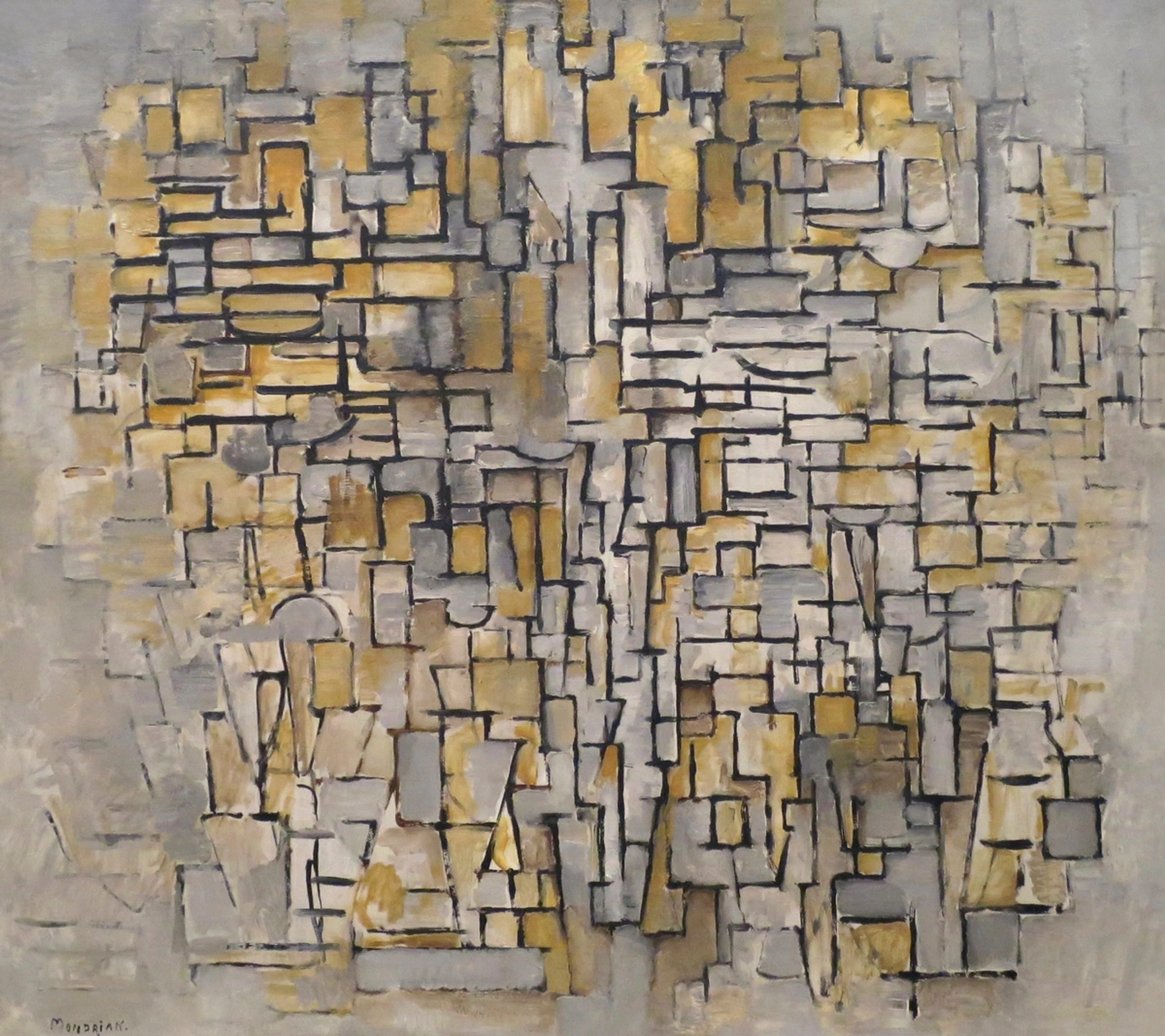
Breaking the Mirror: How Cubism's Multiple Viewpoints Changed Everything
A deep, personal dive into how Cubism, with its revolutionary use of multiple viewpoints, shattered traditional art and taught us to see the world in a completely new way.

Cubism: Shattering Reality – The Ultimate Guide to Multiple Viewpoints
If you're truly ready to go beyond the surface, this is your ultimate guide to Cubism. This isn't just about art history; it's about fundamentally reshaping how we perceive and interact with the world around us. For me, Cubism isn't just a historical art movement; it's a profound lens through which to view the very nature of perception, challenging the fixed, singular perspective we often take for granted in both art and life. It's an invitation to see more, feel more, and understand more.
I remember getting so frustrated in art class as a kid. We were told to draw a bowl of fruit, and the teacher kept talking about 'perspective.' It felt like a trap, frankly. If I moved my head even an inch, the whole scene changed, the contours shifted, the light played differently. My drawing was supposed to capture this one, perfect, frozen moment from a single, static spot. It felt like a lie, a betrayal of how I actually experienced that fruit bowl. The real, lived experience was walking up to it, seeing the light hit it from different angles, perhaps even picking up an apple to feel its weight, feeling its cool skin and slight heft. The single viewpoint felt, to put it mildly, profoundly incomplete. It's precisely that very human, dynamic, and multi-sensory experience of seeing that Cubism, in its radical way, attempts to capture, to reflect the richness of our interaction with the world. It’s about acknowledging that our perception is a mosaic, not a snapshot.
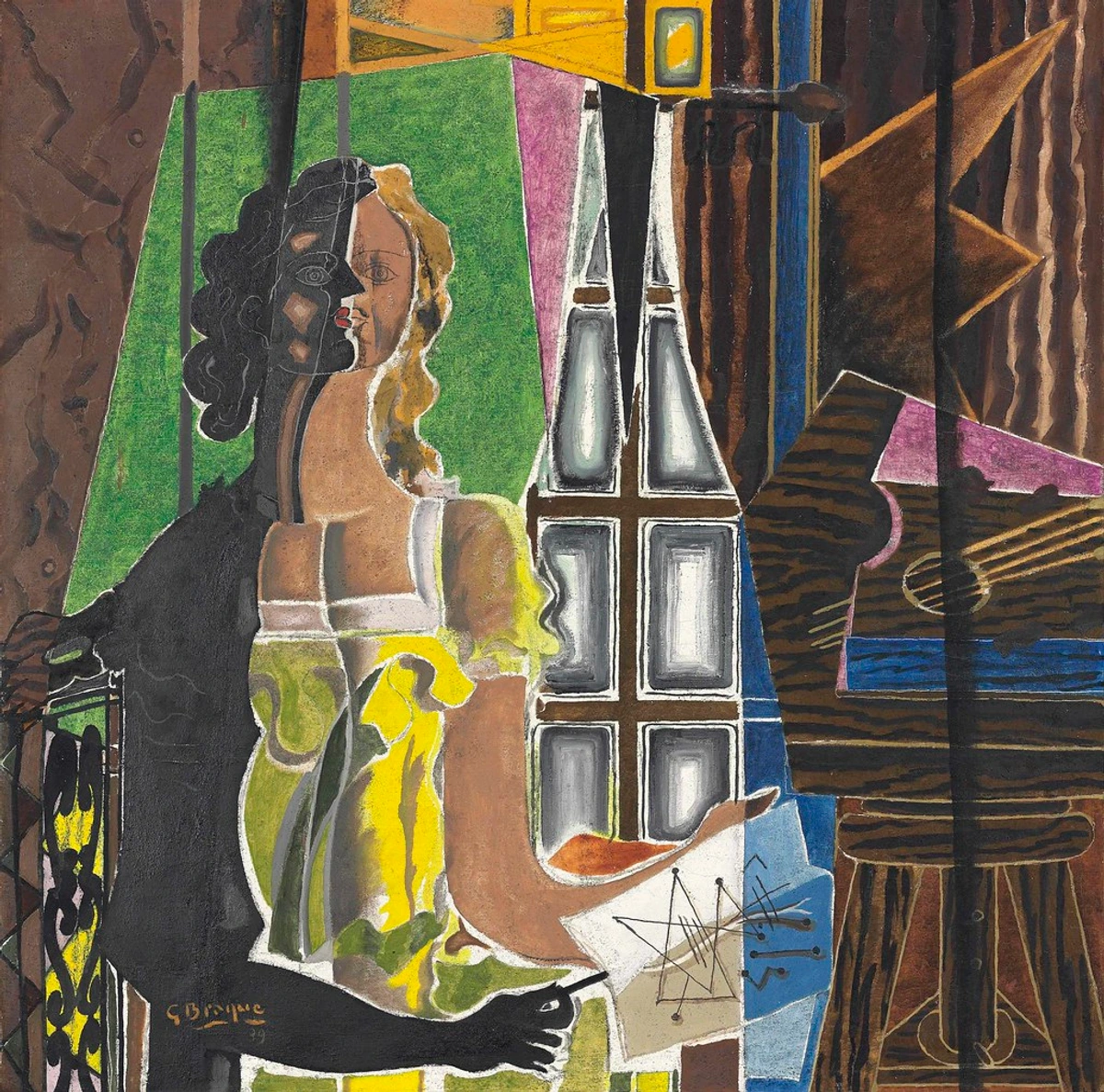
It turns out, a couple of guys in Paris around the turn of the 20th century felt the same way, and their frustration led to a revolutionary rupture. The world itself was undergoing massive shifts: new scientific discoveries were dismantling old certainties, technology was accelerating, and a sense of profound modernity was bubbling up in every facet of life. Against this backdrop, artists like Pablo Picasso and Georges Braque, operating in the fertile intellectual melting pot of Montmartre, Paris, decided their solution wasn't to get better at the old rules; it was to smash the rulebook entirely. I mean, truly shatter it, throwing centuries of artistic convention out the window. This is the story of Cubism and its radical idea of showing multiple viewpoints at once – a journey that didn't just change painting, but fundamentally altered how we think about seeing itself and experiencing reality. It was a seismic shift that sent ripples through every creative discipline imaginable. For a deep dive into the foundational moments of this movement, including the proto-Cubist works that signaled its arrival, check out the history of Cubism from Picasso to Braque.
The Birthplace: Bohemian Paris
To fully grasp Cubism's genesis, we have to imagine Paris at the turn of the 20th century. It wasn't just a city; it was the undisputed capital of the avant-garde, a magnet for artists, writers, and thinkers from across the globe. Montmartre, with its cheap rents and vibrant intellectual cafes, served as the epicenter. Here, ideas were freely exchanged, conventions were challenged, and a spirit of radical experimentation permeated the air. Picasso and Braque, alongside poets like Guillaume Apollinaire and art dealers like Daniel-Henry Kahnweiler, formed a tight-knit circle, feeding off each other's insights and critiques. This intense, collaborative environment was crucial; Cubism wasn't a solitary invention but a dialogue, a shared quest to redefine pictorial space and representation. It was in this fertile soil that the seeds of a new visual language were planted.
First, What's the Old Rule We're Breaking?
Before we dive into the beautiful, fragmented chaos of Cubism, let's talk about the 'normal' way of seeing in art that it so vehemently rejected. For centuries, since the Renaissance, the gold standard was linear perspective. It’s a brilliant, almost magical system for creating the illusion of three-dimensional space on a two-dimensional surface—a flat canvas. Think of it as looking at the world through a single, unblinking eye, fixed to one spot, like a camera lens. Everything recedes to a single vanishing point, objects dutifully get smaller in the distance, and it all looks very orderly and 'real.' It's a precise, mathematical convention that dominated Western art for over 500 years, defining what 'realistic' even meant. This wasn't just a technical innovation; it was a philosophical statement, embodying a worldview of order, rationality, and a fixed observer – a worldview Cubism was about to dismantle.
However, as revolutionary as it was, linear perspective presented a fundamental limitation: it offered only one, static view. This constraint became a cage for artists seeking to express a more dynamic, multi-faceted reality. It was as if art was forced to whisper the truth of the world, rather than shout its full, glorious complexity. Cubism, in its audacious response, sought to break free from this cage and present a more honest, more felt reality.
Feature  | Linear Perspective (Pre-Cubist) | Cubism (Post-Linear Perspective) |
|---|---|---|
| Viewpoint | Single, fixed, static eye | Multiple, simultaneous, dynamic viewpoints |
| Representation | Illusion of deep 3D space on a 2D surface, 'snapshot' of reality | Reconstruction of objects from various angles, 'cumulative experience' |
| Dimension | Primarily 3D illusion on 2D | Attempts to represent a 'fourth dimension' (time/movement) on 2D |
| Philosophical Basis | Fixed, rational, singular observation of reality | Subjective, dynamic, cumulative experience of reality |
| Visual Effect | Orderly, realistic, receding to a vanishing point | Fragmented, geometric, flattened, sometimes distorted |
| Artistic Goal | Replicate visible reality as accurately as possible | Express a deeper, more conceptual truth about an object's totality |
It’s a clever trick, but it's just that: a trick. It’s not how we actually experience the world. We're constantly moving, our eyes darting around, piecing together information. We remember the front, side, and back of a person's head all at once, compiling a rich, internal model of that person or object. The Cubists just decided to put that honest, messy, and infinitely more real experience onto the canvas. This was less about optical illusion and more about conceptual truth – what we know about an object, not just what we see from one spot.
Before the official 'birth' of Cubism, there was a seismic tremor, a thunderclap in the art world. Pablo Picasso's monumental 1907 painting, Les Demoiselles d'Avignon, is widely considered the groundbreaking proto-Cubist work. It shattered conventional notions of beauty and representation, depicting five nude female figures with fractured, mask-like faces and angular bodies, seen from multiple viewpoints simultaneously. The figures, with their flattened forms and sharp, almost brutal planes, confronted the viewer with an unsettling, yet undeniable, power. It was shocking, controversial, and laid the radical groundwork for everything that followed, causing a stir even among Picasso's close circle of friends and artists.
Les Demoiselles d'Avignon: A Genesis Moment
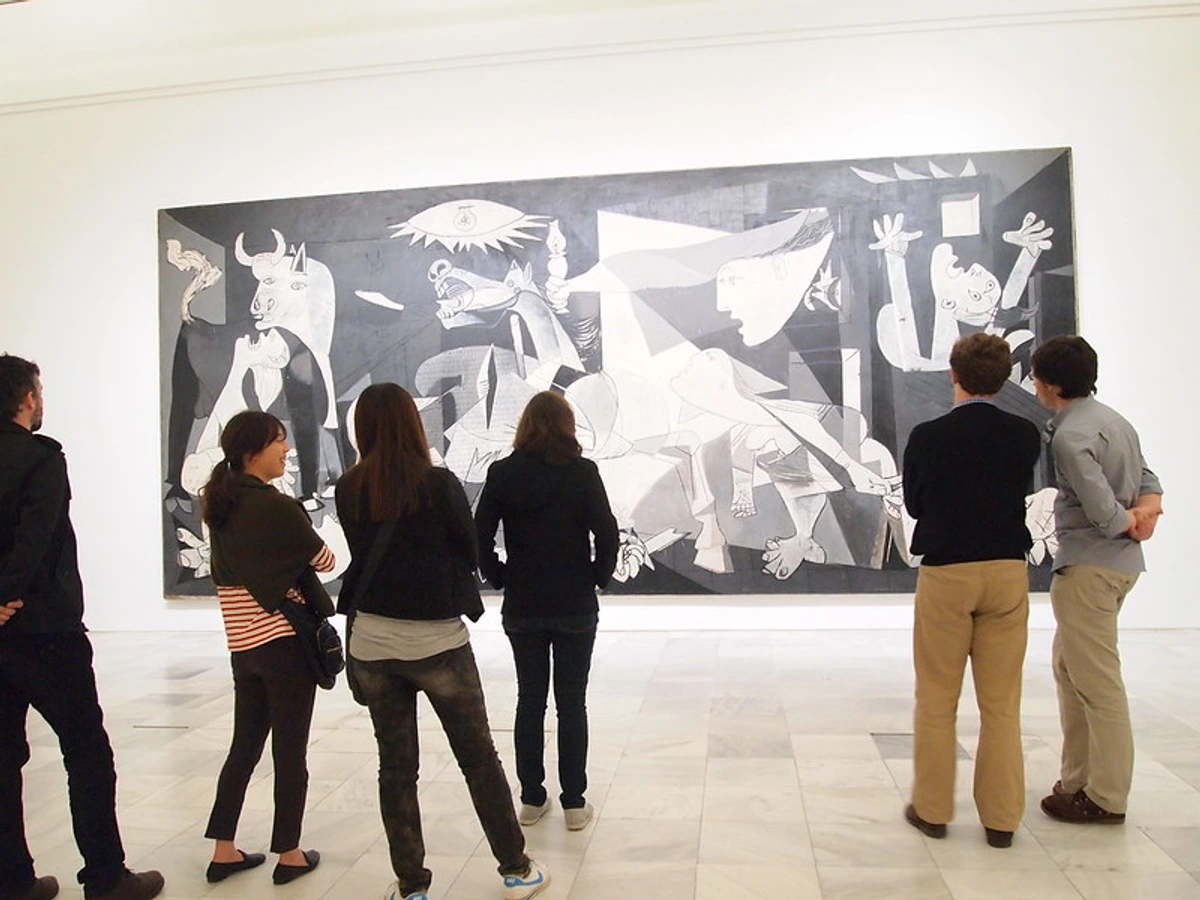
Les Demoiselles d'Avignon wasn't just a painting; it was an artistic declaration of war on tradition. Picasso deliberately subverted anatomical realism and idealised beauty. The faces of the figures, particularly the two on the right, are influenced by Iberian sculpture and African masks, dissolving individual features into stark, geometric planes. This wasn't merely stylistic; it was a rejection of Western aesthetic conventions and an embrace of a more primal, expressive power. The fractured forms, the multiple viewpoints within a single figure, and the challenging gaze of the 'demoiselles' forced viewers to reconsider what art could be. It was a violent, beautiful rupture that signaled a new era in painting, a raw and uncompromising vision that dared to show the world as fragmented and multi-faceted.

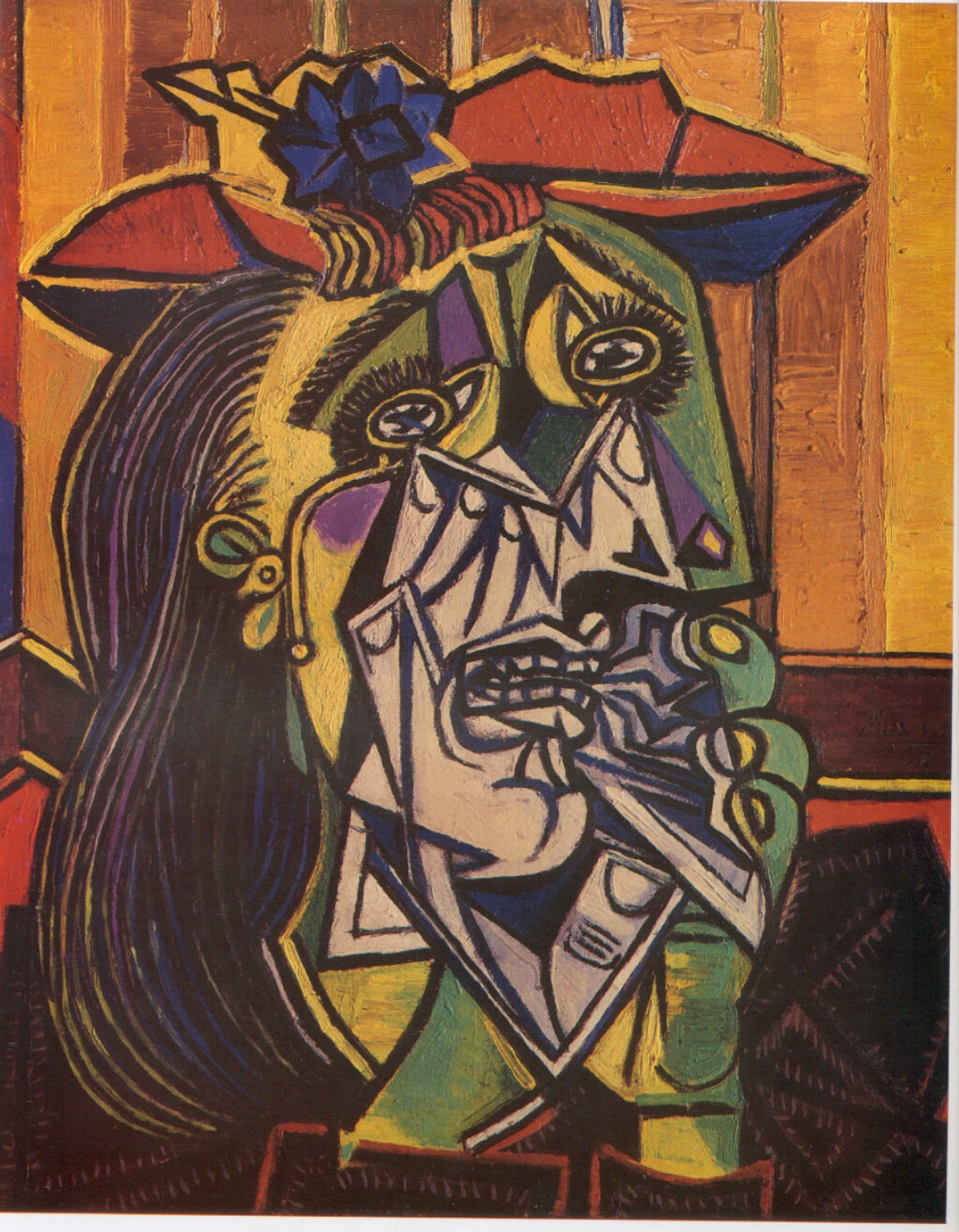
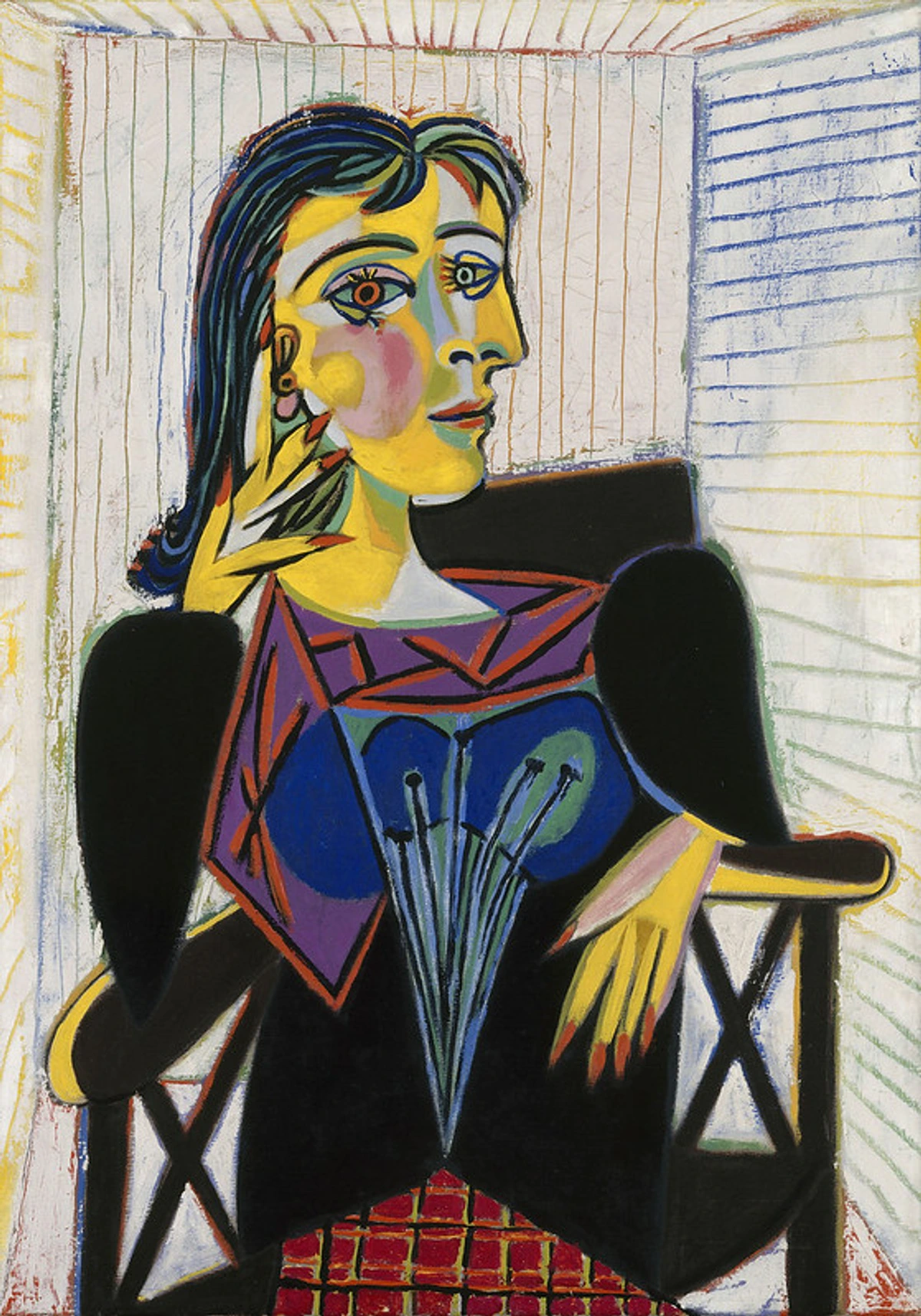
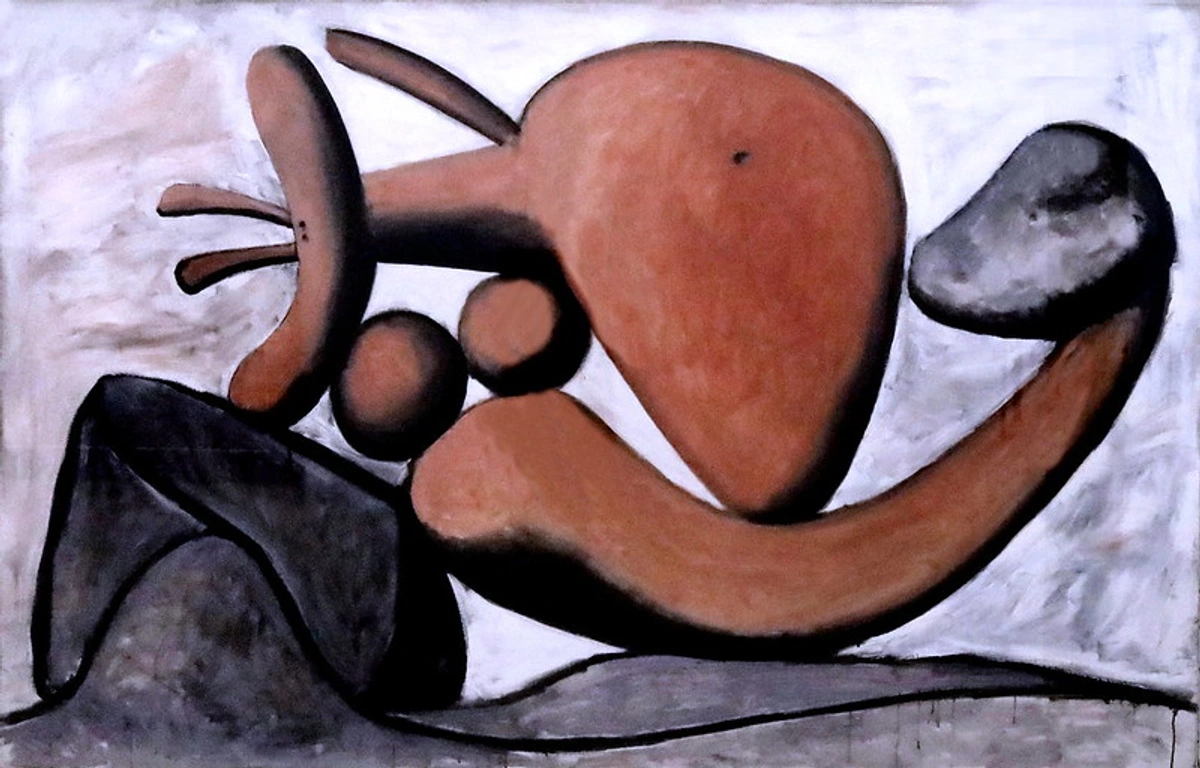
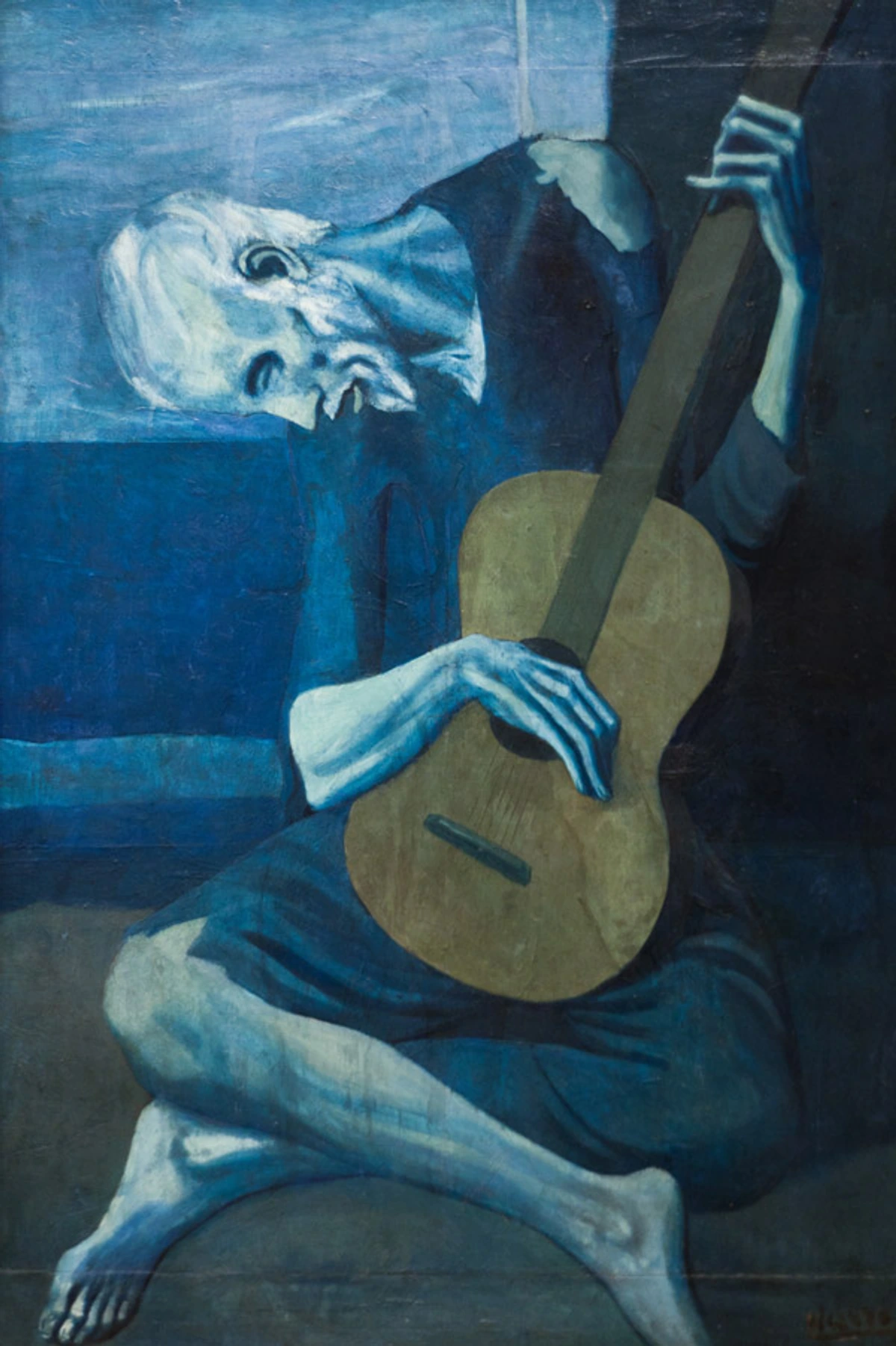
It's this kind of radical questioning that defines the spirit of Cubism. Picasso, even in later works like the one above, continued to explore the limits of representation, constantly challenging the viewer to see beyond the surface and engage with a deeper, more conceptual reality.
The Precursors: Influences on Cubism
No art movement truly appears in a vacuum, and Cubism, for all its revolutionary zeal, drew from a rich tapestry of influences that were already challenging the conventions of academic art. For me, understanding these precursors isn't just about tracing a lineage; it's about seeing how great minds build upon, twist, and sometimes outright destroy what came before to forge something entirely new. Understanding these influences helps us appreciate just how radical, yet rooted, Cubism truly was.
The Intellectual Current of Modernism
Beyond specific artistic influences, Cubism emerged from a broader intellectual current of modernism that questioned objective reality, embraced scientific inquiry, and explored the fragmented nature of modern experience. Philosophers like Henri Bergson were delving into the subjective experience of time, while physicists like Albert Einstein were redefining space and time with his theory of relativity. Artists, too, felt this seismic shift, leading them to seek new ways of representing a world that was becoming increasingly complex and less amenable to singular, fixed viewpoints.
Paul Cézanne and the Multiple Viewpoint Seed
Perhaps the most significant precursor was the Post-Impressionist master Paul Cézanne. Cézanne's late work, particularly his landscapes and still lifes, showed a profound departure from traditional perspective. He flattened pictorial space, reduced objects to their underlying geometric forms (cylinders, spheres, cones), and often presented objects from slightly different viewpoints within the same painting. He was trying to capture the solidity of objects and the process of seeing, rather than just a fleeting impression—a crucial shift from Impressionism's fleeting moments. Picasso and Braque famously studied Cézanne's work with almost religious fervor, especially his posthumous retrospective at the Salon d'Automne in 1907 and his regular presence at Ambroise Vollard's gallery, which deeply informed their initial explorations. His famous advice to "treat nature by the cylinder, the sphere, the cone" became a foundational mantra for the Cubists, providing a tangible starting point for their deconstruction of form. They didn't just borrow his forms; they radicalized his approach, pushing his conceptual understanding of vision to its geometric extreme.
African and Iberian Tribal Art
Another crucial influence, particularly for Picasso, came from African and Iberian tribal art. When Picasso encountered African masks and sculptures in Parisian museums (like the Trocadéro Museum) around 1907, he was struck by their raw power, simplified forms, and unconventional approach to representing the human face and body. These artifacts, often created for ritualistic or spiritual purposes, offered a liberating alternative to Western naturalism, providing a template for depicting multiple perspectives simultaneously and for abstracting the human form into powerful, symbolic shapes. The mask-like faces in Les Demoiselles d'Avignon are a direct testament to this influence, freeing Picasso from the constraints of traditional European portraiture and pushing him towards a more primal, expressive mode of representation. It wasn't about crude imitation, but about learning a new visual syntax, a way to imbue forms with emotional and conceptual weight beyond mere illusion. It's a complex influence, often debated, but undeniable in its impact on the Cubist revolution.
Other Post-Impressionist Experiments
While Cézanne was paramount, other Post-Impressionist movements also chipped away at academic traditions. The bold, non-naturalistic colors of Fauvism (which both Picasso and Braque briefly explored before their Cubist turn) showed a willingness to break with descriptive color, asserting the emotional and expressive power of color over its mimetic function. Similarly, the structured compositions and analytical approach to light in Georges Seurat's Pointillism demonstrated new ways of manipulating form and color through a systematic division of tones, even if their goals differed from Cubism's emphasis on three-dimensional volume. Even the expressive distortions of Symbolism and early Expressionism, though stylistically distinct, contributed to an atmosphere where subjective reality was gaining ground over objective representation.
These diverse influences converged in the fertile artistic environment of early 20th-century Paris, providing Picasso and Braque with the tools and inspiration to "smash the rulebook" and create something entirely new.
Enter Cubism: Seeing It All, All at Once
So what does it really mean to show multiple viewpoints? Imagine you're trying to describe a coffee mug to someone who has never seen one. You wouldn't just show them a single, static photo of it from the side. You'd instinctively verbalize its totality: 'It's round on top, it has a handle on the side, and a flat bottom.' You're compiling an internal, multi-perspective mental image. Cubism does this visually, but with paint, not words. The artists, primarily Pablo Picasso and Georges Braque, would mentally deconstruct an object—a guitar, a person, that bowl of fruit—into its various surfaces and planes. Then, they’d reassemble those pieces on the canvas, showing you the top, the side, and the front simultaneously. This isn't just arbitrary fragmentation; it's a deliberate attempt to capture a more complete, 'felt' reality of an object existing in space and time. This is why Cubist paintings can look so fragmented and geometric to the untrained eye. It’s not because the artists couldn't draw; it's because they were trying to show you a deeper, more complete truth about the object's form and existence. This radical approach split into two main phases: Analytical Cubism, where objects were intensely deconstructed, and Synthetic Cubism, which focused on building new realities through simpler forms and collage. It's a journey from analysis to synthesis, both equally revolutionary.
Key Techniques of Cubism
Cubist artists achieved their groundbreaking vision through a deliberate set of innovative techniques that shattered traditional representation. These weren't random acts of artistic rebellion, but carefully considered methods to translate a dynamic, multi-perspectival understanding of reality onto a flat canvas. It's like they developed a new kind of visual grammar, allowing them to speak about the world in a way no one had before. These techniques became the bedrock of their revolutionary style.
The Geometry of Perception
At its heart, Cubism is about the geometric reduction of forms. Artists weren't just showing different angles; they were often simplifying objects into their most basic geometric components – cylinders, spheres, cones, and cubes. This wasn't to make them look abstract for abstraction's sake, but to reveal the underlying structure of reality, to strip away superficial appearances and get to the essence of form. It's a fascinating blend of intellectual analysis and visual reconstruction.
credit, licence
Here's how they did it:
- Faceting: Breaking down objects and figures into multiple, sharp, angular planes or 'facets,' as if seen through a prism or broken glass. This creates a sense of shimmering, shifting surfaces and allows for the representation of an object from numerous angles simultaneously.
- Simultaneity: Presenting different views of the same object at the same moment on the canvas, often overlapping or juxtaposed. This is the core 'multiple viewpoint' idea, conveying the experience of moving around an object and perceiving it from various angles over time.
- Passage: A technique, particularly prevalent in Analytical Cubism, where the edges of planes or forms are left open, allowing them to bleed into one another. This denies a clear separation between foreground and background, creating a continuous, shallow space and emphasizing the flatness of the canvas.
- Multiple Perspective: Not just one viewpoint, but a collection, denying the singularity of vision that linear perspective enforced. This allowed artists to construct a more 'complete' truth of an object, rather than a mere optical illusion.
For a full dive into the movement's origins and how these techniques developed, check out the history of Cubism from Picasso to Braque.
This radical approach split into two main phases, which, I promise, sound way more complicated than they are. Think of them as two different but complementary strategies for dismantling and reassembling reality.
Principle | Description | Impact |
|---|---|---|
| Multiple Viewpoints | Objects are depicted from several angles simultaneously, rather than a single, fixed perspective. | Shattered traditional realism, introduced dynamism and a sense of 'all-at-once' perception. |
| Faceting | Forms are broken down into small, geometric, overlapping planes or 'facets.' | Created a shimmering, fractured surface, emphasizing the object's structure and denying smooth illusionistic transitions. |
| Passage | Open contours and merging planes allow forms to bleed into the background, dissolving boundaries. | Denied deep illusionistic space, asserted the flatness of the canvas, created a unified shallow space. |
| Simultaneity | The presentation of different moments or views of an object within a single image. | Incorporated the element of time and movement into a static art form, reflecting a more complex, felt reality. |
| Shallow Space | Depth is compressed, and objects often appear pressed close to the picture plane. | Rejected traditional deep illusionistic space, affirming the canvas as a flat surface. |
| Monochromatic Palette | Especially in Analytical Cubism, a limited range of browns, grays, and blacks was used. | Minimized emotional distraction of color, forced focus on form, structure, and the interplay of light and shadow. |
| Collage & Papier Collé | Incorporation of real-world materials (newspaper, wallpaper) directly onto the canvas (Synthetic). | Blurred lines between art and life, asserted the canvas as a surface, added new textures and ironic commentary. |
| Reduced Narrative | Focus shifted from storytelling or emotional expression to the formal properties of objects and space. | Challenged the traditional purpose of painting, emphasizing intellectual engagement over anecdotal content. |
Analytical Cubism: Taking Reality Apart (1908-1912)
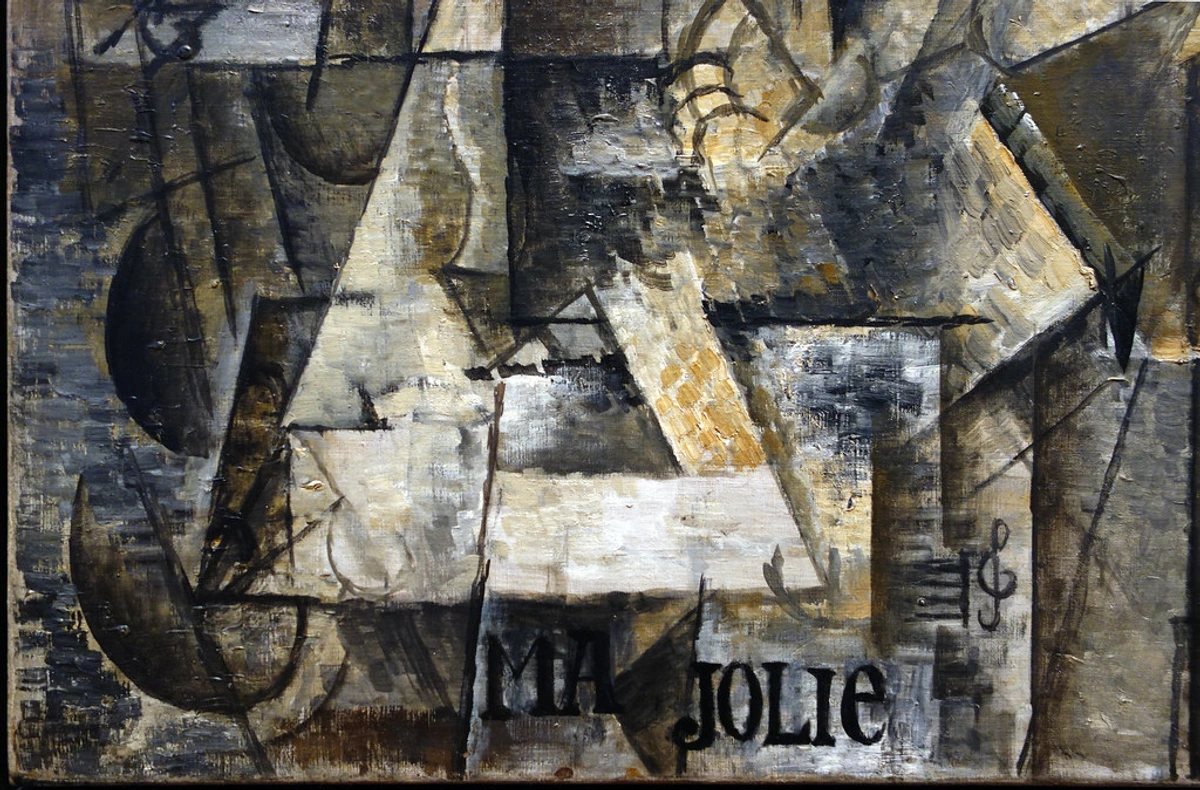
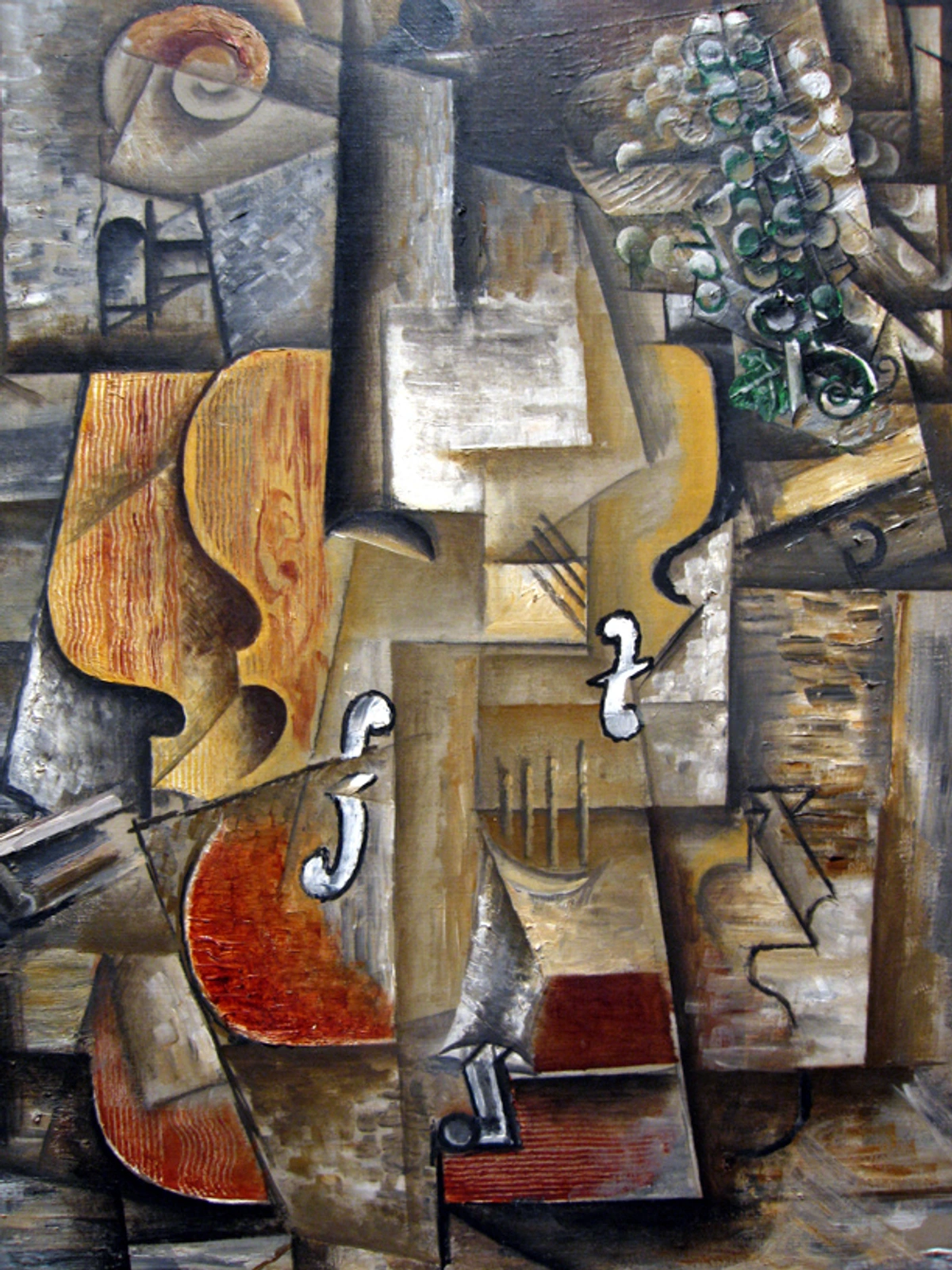
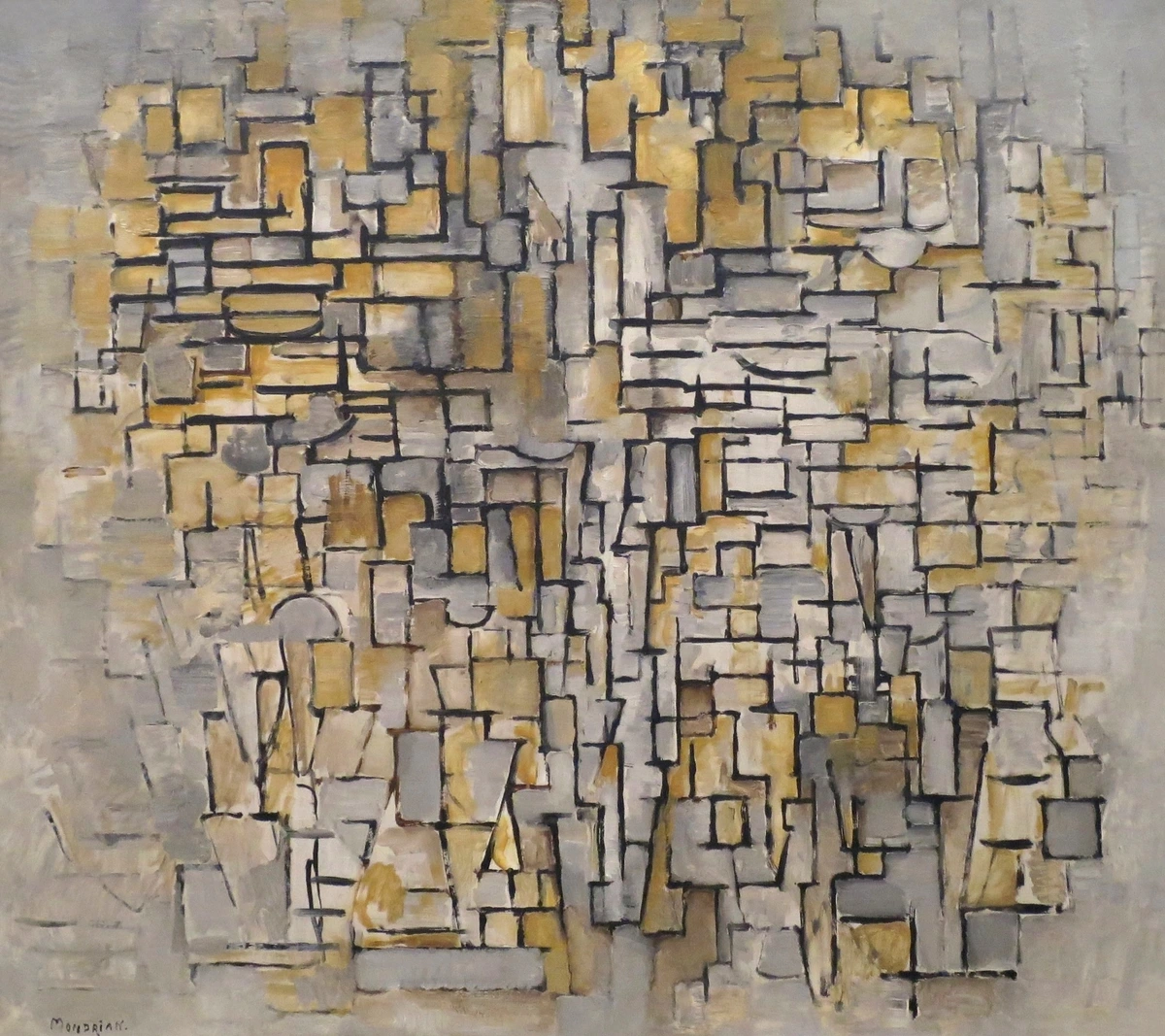
This was the first phase, spanning roughly 1908-1912. Think of it as the 'analysis' phase. Picasso and Braque were like scientists dissecting reality. They would take a subject—often a still life or a portrait—and break it down into countless little geometric shapes and planes, often blending the object with the surrounding space. The color palette was often very muted—mostly browns, grays, and blacks, along with ochres and dull greens. Why? Because color was a distraction. They were obsessed with form, volume, and showing how an object exists in space from multiple angles at once, and vibrant hues would have distracted from this rigorous intellectual inquiry. The limited palette forced the viewer to focus on structure and the complex interplay of light and shadow, rather than emotional or decorative qualities. The fragmentation could be so extreme that objects became almost indistinguishable, requiring the viewer's active intellectual participation to mentally reconstruct the subject.
Looking at an Analytical Cubist painting is like looking at a fractured mirror where every shard reflects a different angle. It’s dense, complex, and asks a lot of you, the viewer, to piece it all together, to reconstruct the object in your mind. This is where the term 'intellectual art' truly comes into play.
Synthetic Cubism: Building a New Reality (1912-1914)
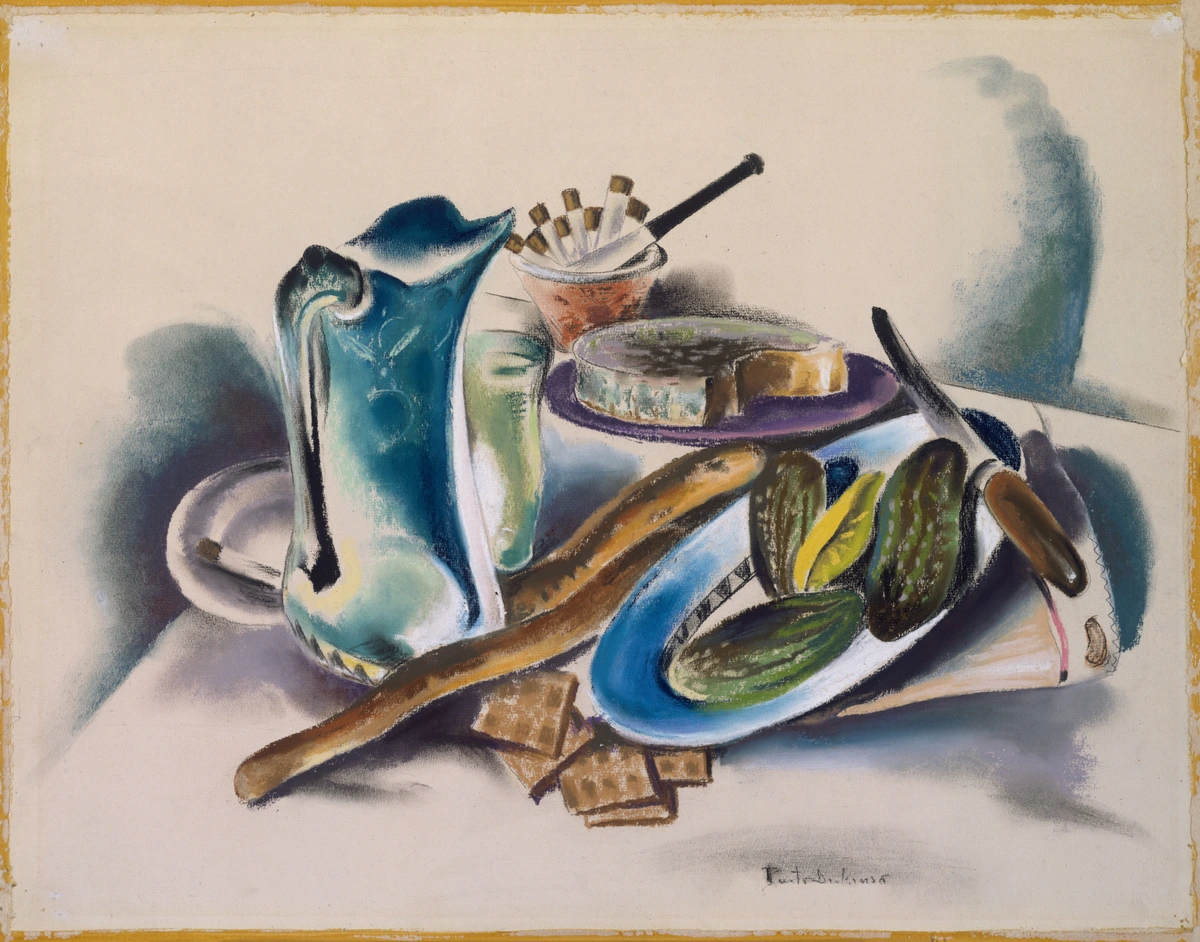
After a few intense years of taking things apart (Analytical Cubism), the artists started putting them back together in strikingly new ways. This phase, known as Synthetic Cubism, emerged around 1912 and lasted until about 1914. It’s generally brighter, flatter, and often more playful than its predecessor. Instead of purely dissecting, they began to synthesize new compositions, often using flatter, broader planes of color and more identifiable forms. It felt like a re-engagement with the vibrancy of the world after the rigorous, almost austere, intellectualism of Analytical Cubism.
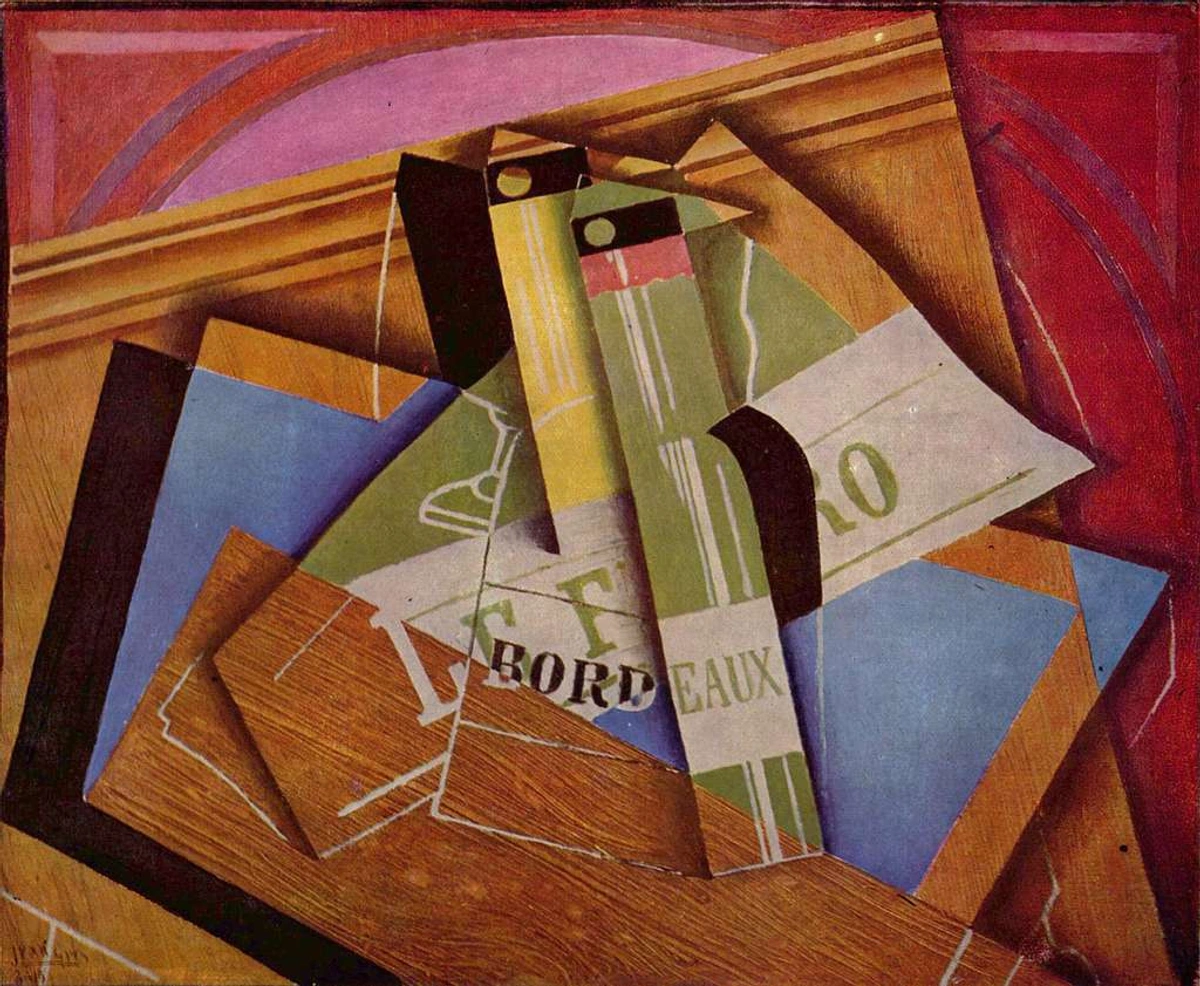
The most defining characteristic of Synthetic Cubism was the introduction of collage (from the French word coller, meaning 'to glue'). Artists began to incorporate real-world materials directly onto the canvas – newspaper clippings (papier collé), wallpaper, fabric, labels, and sheet music. This wasn't just decorative; it was a radical assertion of the canvas as a flat surface and a playful blurring of the line between art and everyday life. These elements added new textures, literal fragments of reality, and often witty allusions or political commentary. It challenged the traditional hierarchy of artistic materials and skill, asserting that a piece of newspaper could be as potent as a brushstroke, and fundamentally questioned the very definition of 'art.' It blurred the lines between high art and everyday life, injecting ironic commentary and tangible reality directly into the artistic creation. It's a technique that I personally find fascinating for its ability to weave disparate elements into a new narrative, a skill that feels incredibly relevant in our modern, information-saturated world. For a practical look at this groundbreaking technique, check out a beginners guide to creating collage art.
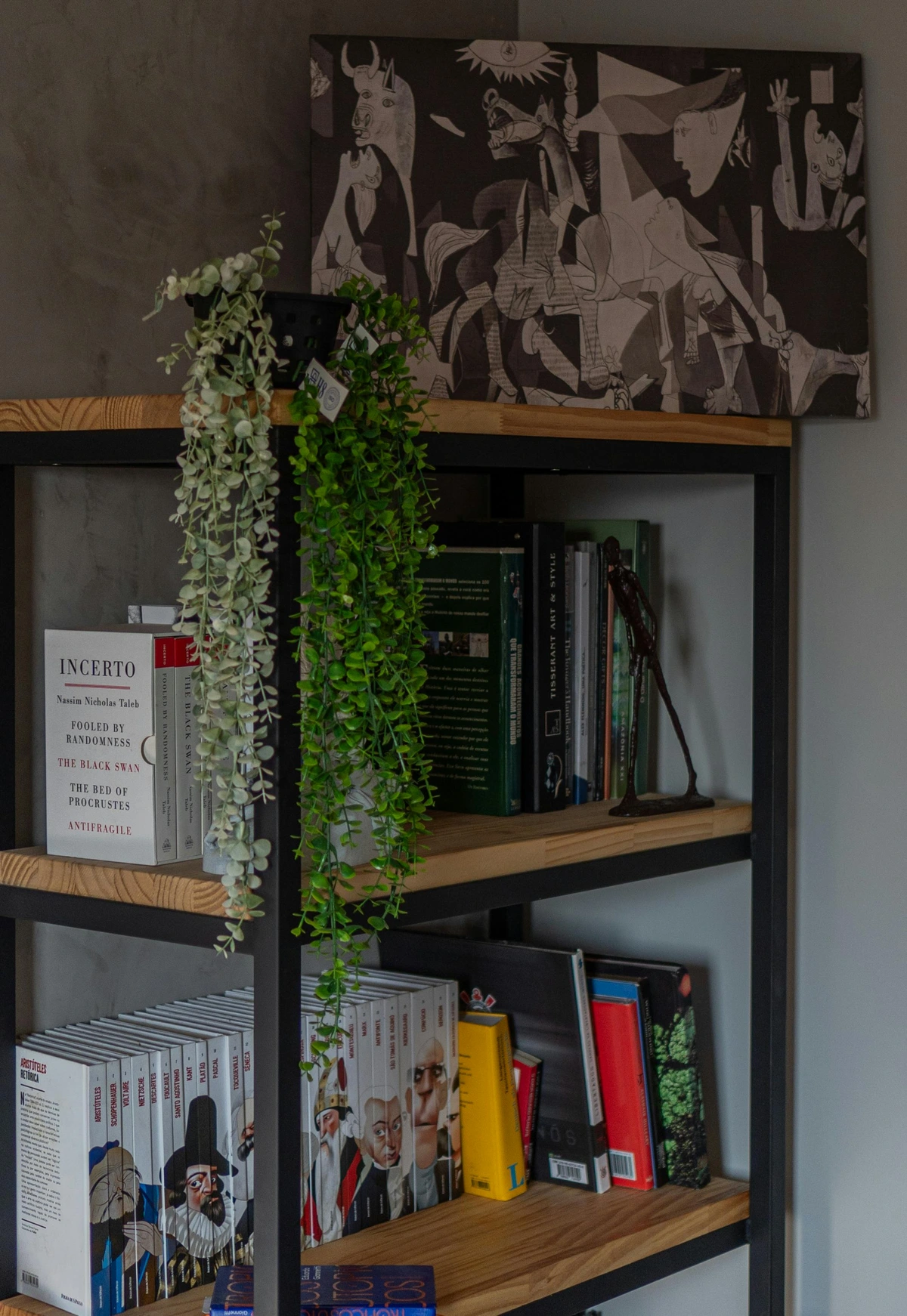
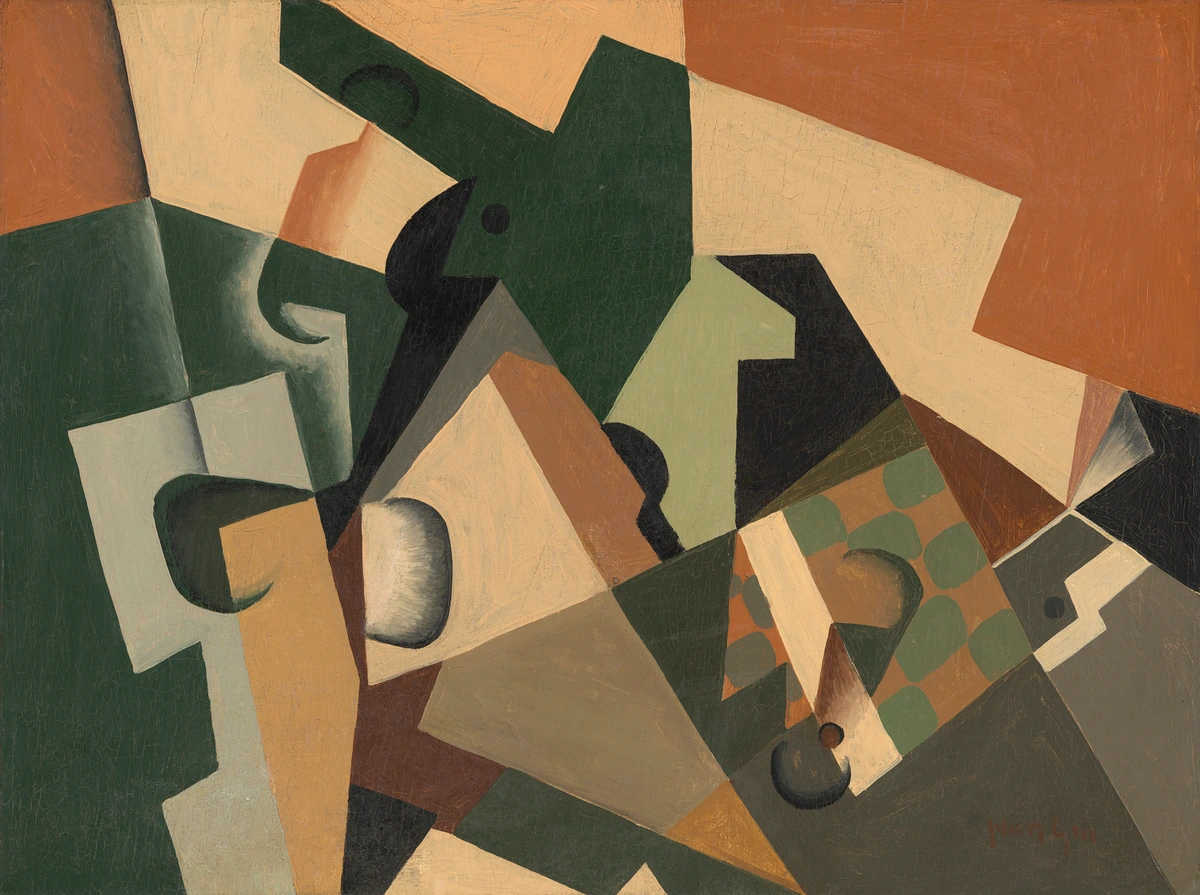
Instead of dissecting a real object into fragmented views, Synthetic Cubists would build up the essence of an object from simplified, often overlapping shapes and planes. They weren't just showing you a guitar from all angles; they were giving you the idea of a guitar, constructed from flat, colorful shapes and textures, often identifiable with less effort than Analytical works. It was less about exhaustive analysis and more about invention, or synthesis, of a new reality. It's in this phase that artists like Juan Gris really came into their own, bringing his characteristic clarity and vibrant color to the movement. Gris, often seen as the rationalist of Cubism, brought a more systematic and architectural approach to these new forms, creating compositions that, while fragmented, maintained a strong sense of underlying order.
At a Glance: Analytical vs. Synthetic
Feature | Analytical Cubism (c. 1908-1912) | Synthetic Cubism (c. 1912-1914) |
|---|---|---|
| Goal | To analyze and deconstruct form, focus on structure | To synthesize and build new forms, focus on essence and texture |
| Appearance | Complex, fragmented, dense, often indistinguishable objects | Simpler, flatter, clearer shapes, more identifiable objects |
| Color Palette | Monochromatic (browns, grays, blacks, ochres) | Colorful and vibrant, wider range of hues |
| Technique | Painting, breaking down objects into facets and planes | Painting and Collage (papier collé), building up objects from simplified forms |
| Key Innovation | Showing multiple perspectives of one object simultaneously | Introducing real-world materials (collage) and bolder patterns |
| Materials | Primarily oil on canvas | Oil on canvas, but also paper, newspaper, fabric (collage) |
| Emphasis | Form, volume, intellectual rigor, spatial ambiguity | Texture, surface, color, decorative qualities, clarity of subject |
| Analogy | Dissecting a watch to understand its inner workings | Building a new watch using simplified, symbolic components |
So Why Does This Matter?
Okay, so they chopped up reality. Big deal, right? Well, if you're asking me, it was a massive deal, a truly epoch-making shift that changed everything about how we look at art and reality. The use of multiple viewpoints, the flattening of space, and the engagement of the viewer collectively did a few utterly revolutionary things that continue to resonate today. If you're looking for the complete picture, this is your ultimate guide to Cubism.
The Profound Legacy: A New Way of Seeing
Beyond the art historical labels, Cubism offered a new philosophy of seeing. It's a testament to the idea that reality isn't a singular, fixed entity but a dynamic, multifaceted experience. This fundamental reorientation of perception is, for me, its most enduring and impactful contribution. It teaches us to look deeper, to question what we think we know, and to embrace the beautiful complexity of the world around us. Let's break down some of its most profound impacts.
- It Introduced Time: A traditional painting, rooted in linear perspective, is fundamentally a snapshot—a frozen, single moment in time, seen from one static vantage point. It denies the temporal experience of perception, that subjective, flowing sense of 'duration' that thinkers like Henri Bergson explored. Cubism, by contrast, shatters this illusion. By showing multiple angles of an object or figure simultaneously, it powerfully incorporates the element of time. It's not just about seeing the front and back; it's about conveying the experience of moving around an object, observing it over a duration, and compiling all those sensory inputs into a single, cohesive (yet fragmented) image. This was a radical break, bringing painting closer to how our consciousness actually processes the world, rather than how a camera sees it. It was a visual parallel to the philosophical work of Henri Bergson, who explored the subjective nature of 'duration' (lived time) over linear, measurable time, deeply anticipating later scientific and philosophical inquiries into time and space and even the fragmented narratives of modern literature. In a way, Cubism visually represented the philosophical shift from objective, external time to subjective, internal duration, reflecting the accelerating pace and fragmented experience of early 20th-century life.
- It Made the Viewer a Participant: Forget passive observation. You can't just idly glance at a Cubist painting and expect its meaning to unfold effortlessly. Your brain is compelled to work, to actively engage, to piece together the fragmented forms and reconstruct the object in your mind. This makes you, the viewer, an indispensable and active participant in the process of aesthetic creation. It's a powerful shift from the artist as sole creator to a collaboration between artist and observer, demanding intellectual and imaginative effort. It’s an interactive experience, long before the internet even dreamed of such things. You, the viewer, are asked to be a co-creator, mentally reconstructing the image, making sense of the fractured information. This active engagement was a powerful shift, paving the way for conceptual art, performance art, and installation art, where the audience's participation and interpretation are not just welcomed, but often indispensable.
- It Flattened the Canvas: For five centuries, Western artists, masters of illusion, meticulously crafted paintings that aimed to be windows into another world, creating the deepest possible illusion of three-dimensional space on a flat, two-dimensional surface. Cubism, with its simultaneous viewpoints and shallow, fractured planes, utterly destroyed this illusion. By showing the back, front, and side of an object at the same time, it collapsed space and depth, forcing everyone—artists and viewers alike—to confront the undeniable truth: a painting is, first and foremost, a flat object, a canvas or panel covered with paint. This radical embrace of flatness was a monumental conceptual leap, directly paving the way for nearly all forms of abstract art that followed. It freed art from the centuries-old obligation to merely represent external reality, emphasizing the painting as an object in itself—a surface of pigment and texture—rather than a mere window into another world. This liberation opened up vast new territories for artistic exploration, allowing art to be about color, form, and line for their own sake, rather than solely as tools for mimesis.
If you're an artist, I strongly encourage you to learn how to use multiple viewpoints in your artwork. It’s a mind-bending exercise that can free you from the tyranny of realism. It certainly freed me when I was struggling with capturing the 'truth' of a scene, realizing that truth can be built, not just copied.

The Key Players You Should Know
While tons of artists were swept up in the movement, there's a core quartet (at least!) you absolutely need to know if you want to understand the heartbeat of Cubism. These are some of the most famous cubist artists out there, the ones who truly shaped its trajectory and pushed its boundaries. For me, it's like a jazz ensemble, where each player brings their unique voice to a shared, revolutionary composition.
- Pablo Picasso (1881-1973): The restless innovator, the artistic tornado. Picasso was the driving force, a dynamo of experimentation who constantly pushed the boundaries of what Cubism could be. His work is a perfect example of how the style could be used to convey intense emotion and psychological depth, not just intellectual ideas about form. From the proto-Cubist Les Demoiselles d'Avignon to the later Synthetic works, his sheer output and fearless artistic evolution make him central to the movement. He was the provocateur, constantly challenging, constantly reinventing, never settling into a single style for too long.
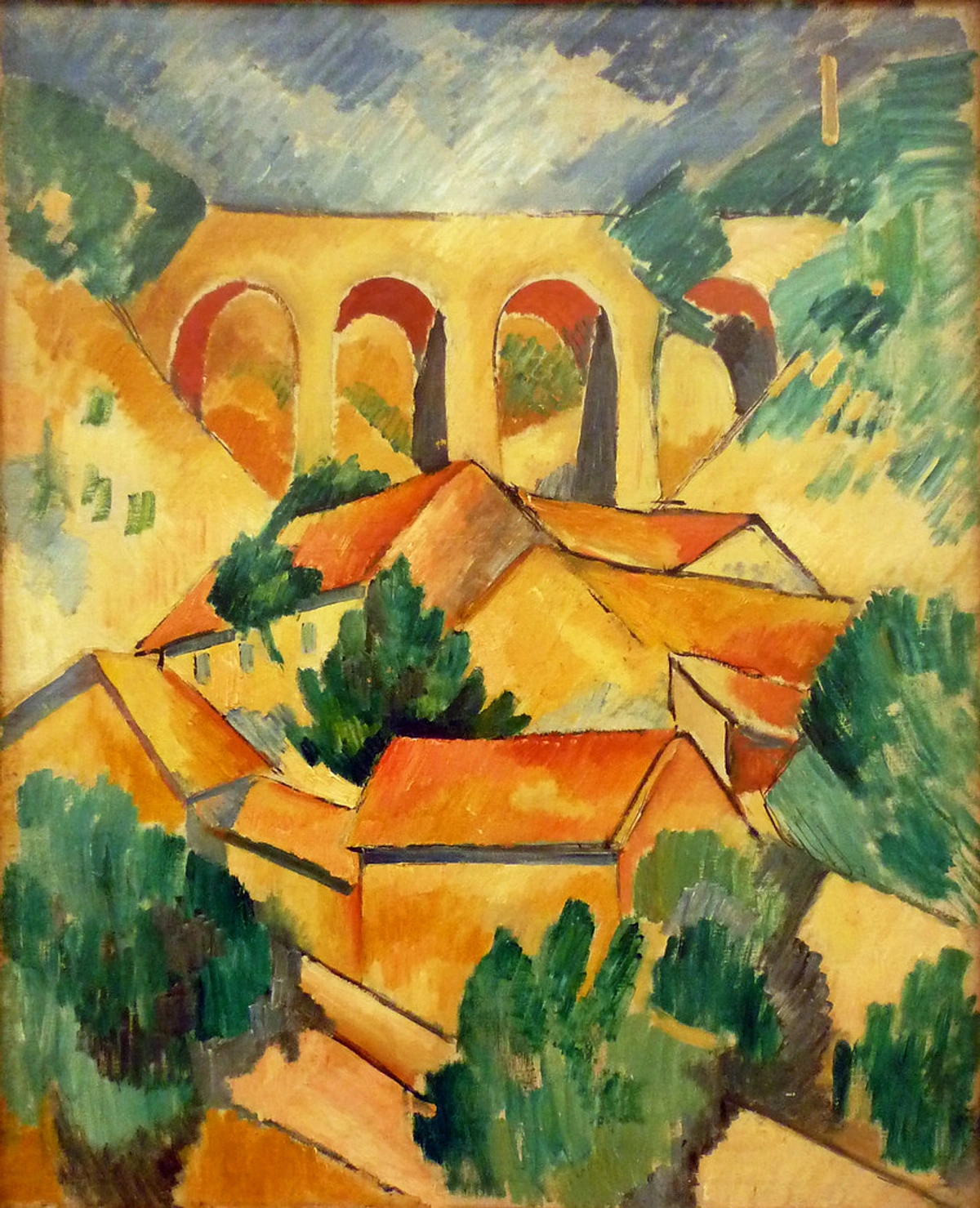
- Georges Braque (1882-1963): The steady, methodical partner, the quiet revolutionary. If Picasso was the fire, Braque was the brilliant architect, often bringing a more subtle, tactile approach. They worked so closely during the Analytical phase that it can be hard to tell their work apart; they famously called themselves "roped together like mountaineers." He was more focused on still lifes and landscapes, meticulously exploring textures and the interplay of light and shadow, bringing a subtle, poetic touch to the style. Braque, often seen as the more understated of the two, consistently refined the Cubist vocabulary, emphasizing the materiality of paint and the texture of the canvas.
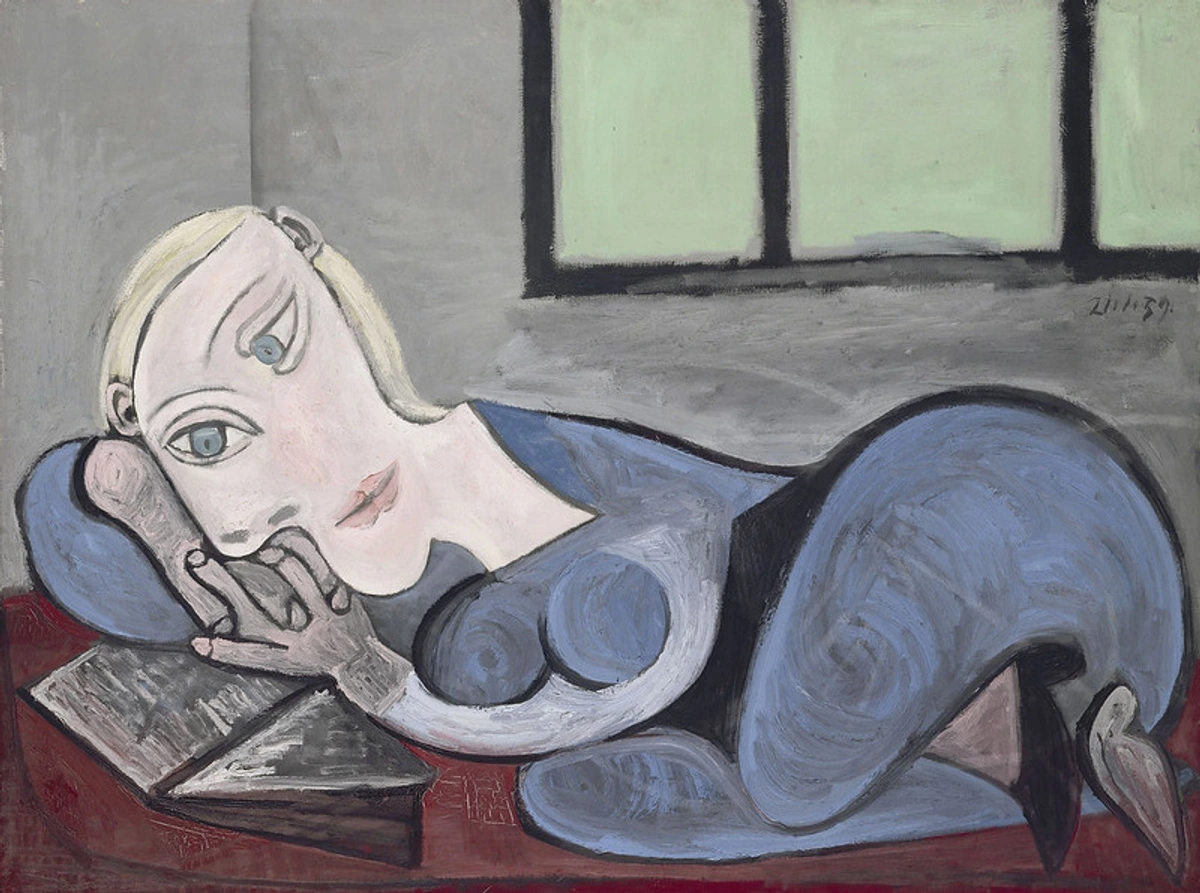
- Fernand Léger (1881-1955): The 'Tubist' of Cubism. Léger brought a distinctive, robust, and often monumental quality to Cubism. While engaging with the fragmentation of form, he was particularly drawn to the industrial aesthetic and the machine age, frequently depicting figures and objects with a powerful, cylindrical, and conical geometry that earned his style the moniker 'Tubism.' His work often feels more solid and less ephemeral than that of Picasso or Braque, embracing the dynamism of modern life with a muscular, simplified elegance. Léger's Cubism was less about intellectual deconstruction and more about celebrating the mechanical precision and formal power of the modern world. His figures often feel like strong, interlocking machine parts, full of vital energy.
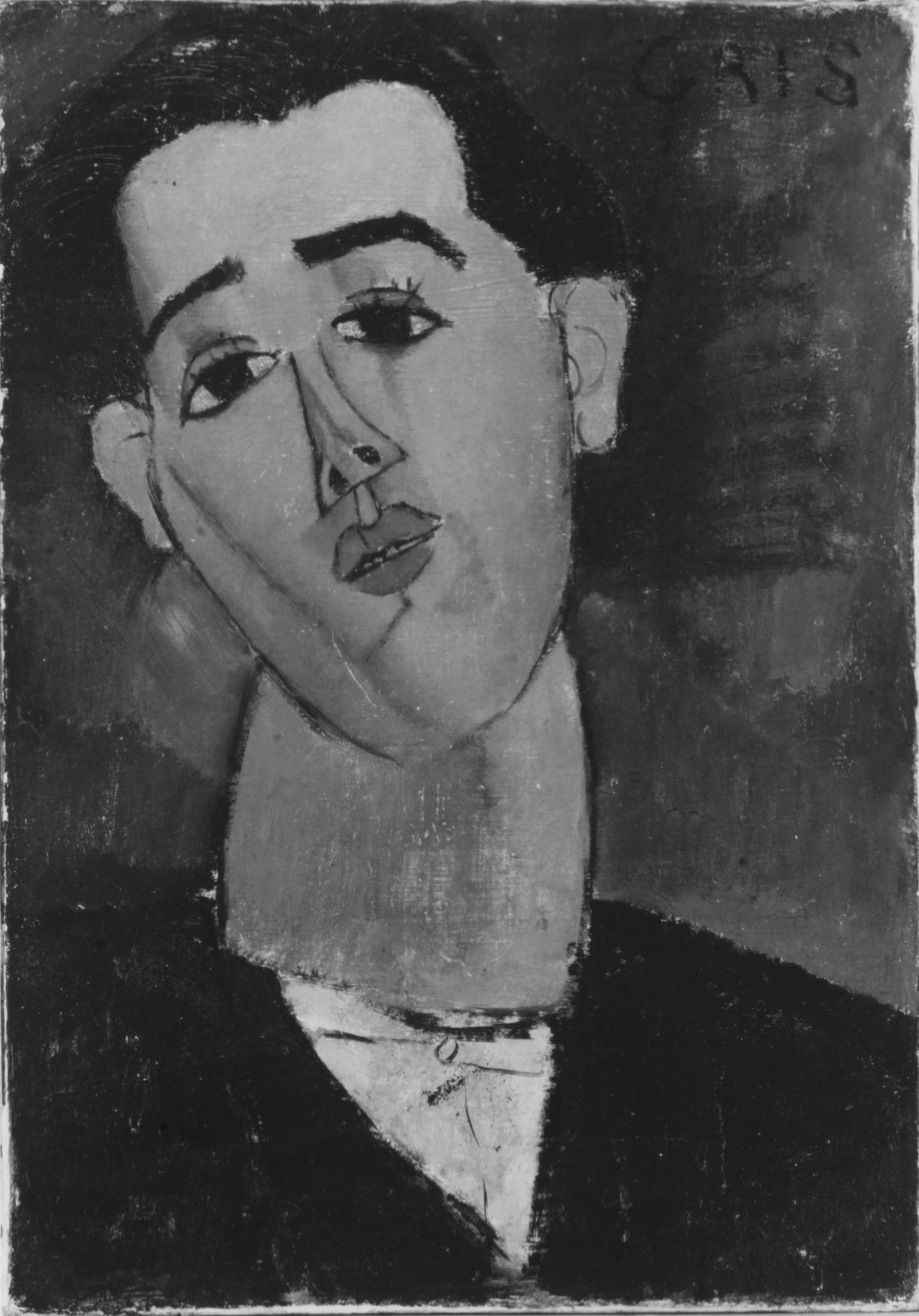
- Juan Gris (1887-1927): The 'Third Musketeer', the classicist of Cubism. Gris arrived a bit later but brought a mathematical clarity and brilliant color to Cubism, particularly during the Synthetic phase. He systematized the style, making it less chaotic and more composed, almost like a precise architectural construction. His works often feature recognizable objects, yet reassembled with an elegant, almost classical, geometry. Learning how to understand Cubist paintings by Juan Gris is a great entry point to the movement as a whole due to his clear, deliberate approach. Gris was often concerned with the inherent order within fragmentation, bringing a sense of calm logic to the Cubist revolution. For a fascinating comparison between these two giants, you might want to explore Juan Gris vs. Picasso: Cubism.
Cubism's Critics and Reception
It's easy, looking back, to see Cubism as a pivotal, inevitable force in art history. But at the time of its emergence, it was met with considerable bewilderment, ridicule, and outright hostility by a significant portion of the public and critics alike. People were used to art that imitated reality, that told a clear story, and Cubism offered none of that. It felt, to many, like a deliberate affront to everything beautiful and comprehensible in art.
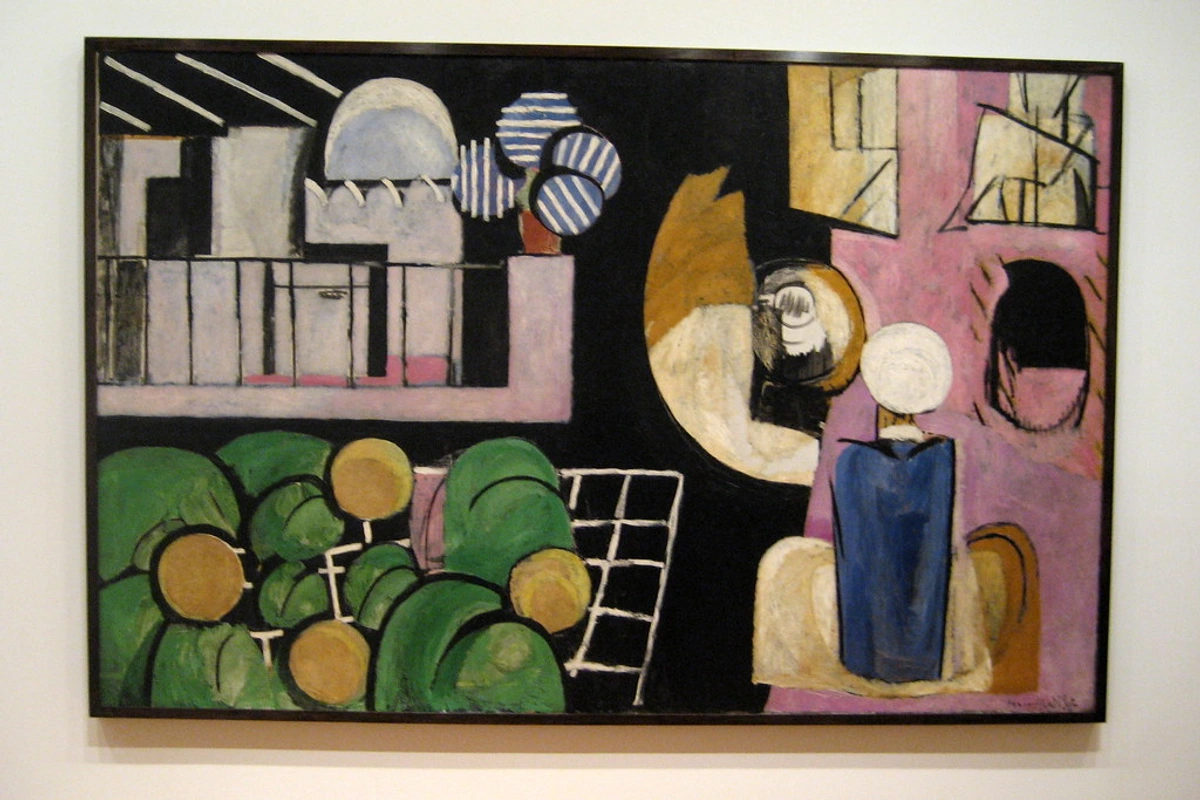
Critics often described the works as "cubes," "geometric exercises," or "piles of little cubes" – indeed, the very term "Cubism" was initially a derogatory one, coined by Louis Vauxcelles in 1908. Even Henri Matisse, seeing early Braque landscapes, reportedly dismissed them as mere "little cubes." This derisive label, intended as an insult, ironically stuck, and the artists eventually adopted it, stripping it of its initial negative connotation. The early press, frankly, had a field day, mocking the apparent incomprehensibility and 'ugliness' of the new style, often viewing it as a deliberate affront to artistic tradition. They called it ugly, nonsensical, and a betrayal of artistic tradition. Audiences, accustomed to the illusion of reality, were confused and even outraged, expecting a narrative or a beautiful representation, and instead found fragmented forms that challenged their very understanding of what art could be. The early exhibitions, especially at the Salon des Indépendants, were often sites of controversy and laughter, marking Cubism as a radical, almost scandalous, departure.
However, a smaller, more forward-thinking group of critics, poets, and collectors quickly recognized the profound intellectual and artistic ambition behind the movement. They understood that Picasso and Braque were not simply being provocative; they were forging a new language of representation that captured the complexities of modern experience. The early exhibitions, though often poorly attended by the general public, became gathering points for avant-garde artists and intellectuals, solidifying Cubism's position at the forefront of the burgeoning modern art scene. This early, polarized reception is a classic tale of artistic innovation clashing with conservative expectations.
Beyond the Canvas: Cubism's Enduring Influence
Cubism, despite its relatively short lifespan as a distinct movement (roughly 1907-1914), cast a colossal shadow that extended far beyond the realm of painting. Its revolutionary principles—fragmentation, simultaneity, and the rejection of single-point perspective—infiltrated and transformed almost every creative discipline. For me, this is where the true genius of Cubism lies: not just in its paintings, but in its ability to fundamentally alter how artists across mediums thought about representation, form, and perception itself. It wasn't just a style; it was a way of thinking that permeated the cultural fabric of the 20th century and continues to resonate today.
Literature and Poetry
Cubism's influence wasn't confined to the visual arts. Writers and poets, particularly those of the avant-garde, were inspired by its fragmented approach to narrative and its multiple perspectives. Guillaume Apollinaire, a close friend and early champion of the Cubists, developed what he called 'Calligrammes' – poems where the typography and layout on the page formed a visual image, reflecting Cubist ideas of simultaneous perception and deconstructed form. Figures like Gertrude Stein, who was a patron and friend to many Cubist artists, experimented with language in ways that echoed Cubist principles, creating repetitive, cumulative prose that sought to capture a multi-faceted reality in words. Others experimented with fractured syntax and collage-like techniques in their prose, attempting to capture the multi-faceted experience of modernity in words, embracing non-linear narratives and shifting viewpoints that mirrored the Cubist canvas.
Music
Even in music, echoes of Cubism can be heard. While less direct than in other arts, composers like Igor Stravinsky (whose revolutionary Rite of Spring premiered in Cubism's heyday, 1913) and the composers of the Les Six group in France, experimented with dissonance, jarring juxtapositions, and the fragmentation and reassembly of musical themes. This wasn't about literal cubist planes, of course, but about breaking down traditional harmonic and rhythmic structures, presenting multiple 'views' of a musical idea simultaneously, and challenging the linear flow of conventional composition. Composers like Arnold Schoenberg, too, pushed the boundaries of tonality, creating a musical language that felt fragmented and multi-layered, much like a Cubist painting. It was an intellectual kinship, a shared spirit of radical experimentation that sought to reflect the disjunctive realities of the modern era.
Film
Early experimental filmmakers, fascinated by the potentials of the new medium, also found inspiration in Cubist principles. The use of montage, pioneered by figures like Sergei Eisenstein and Dziga Vertov, employed jump cuts and the juxtaposition of disparate images to create a sense of fragmented reality or multiple perspectives in time. This can be seen as a cinematic parallel to Cubist painting, where meaning is constructed through the collision of different visual fragments. While not a direct, named movement, the underlying intellectual currents of Cubism undoubtedly informed the breaking of linear narrative and the exploration of visual simultaneity in avant-garde cinema, pushing film beyond simple storytelling into more complex, perceptual experiences. It taught filmmakers how to show, rather than tell, the multifaceted nature of an event or emotion.
Sculpture
Cubist sculptors, like Alexander Archipenko and Jacques Lipchitz, translated the two-dimensional planar shifts of painting into three-dimensional forms. They carved and constructed figures that were fragmented and reassembled, creating dynamic, open structures that invited viewers to walk around them and experience their multiple viewpoints physically, much like the paintings. This was a natural evolution, pushing the boundaries of what sculpture could represent in space, moving away from the solid, monolithic tradition and exploring voids and negative space as integral parts of the form. Archipenko, for example, often used concave forms to suggest convexity, creating a push and pull between presence and absence that was profoundly Cubist. It was about creating a sculpture that couldn't be fully grasped from a single angle, demanding movement and engagement from the viewer.
Architecture
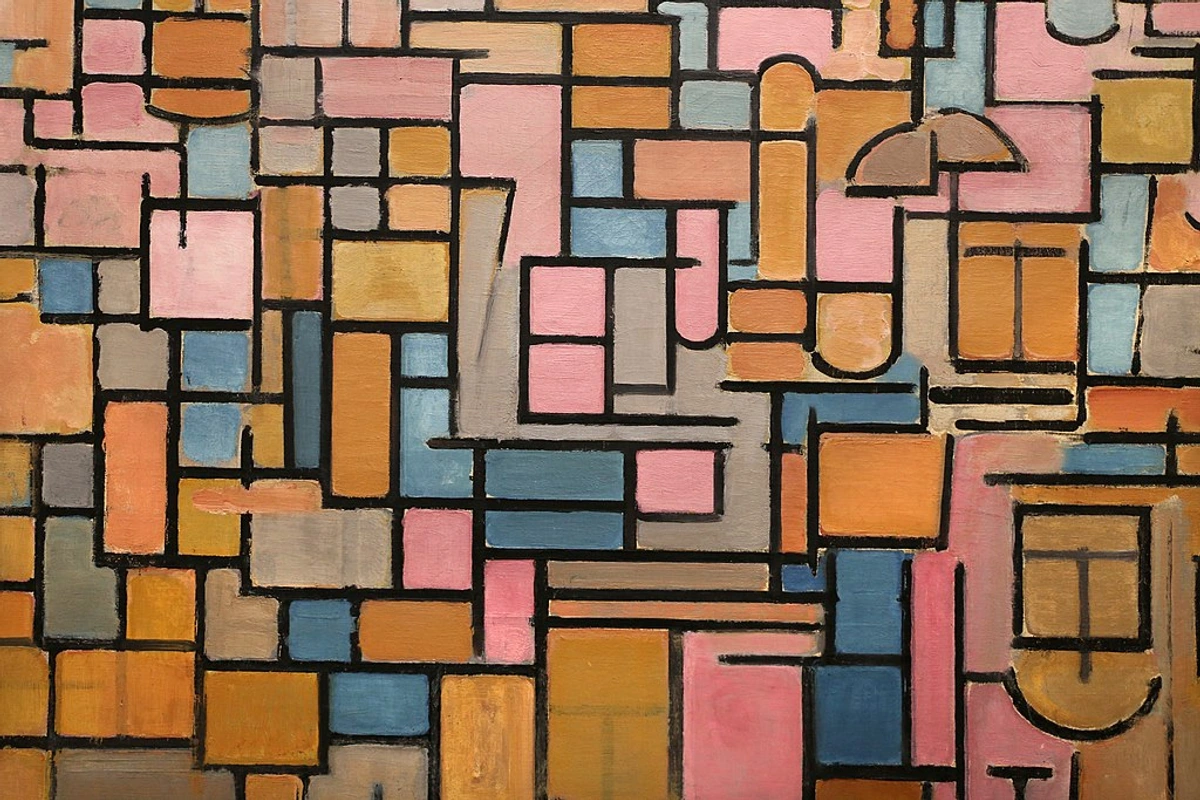
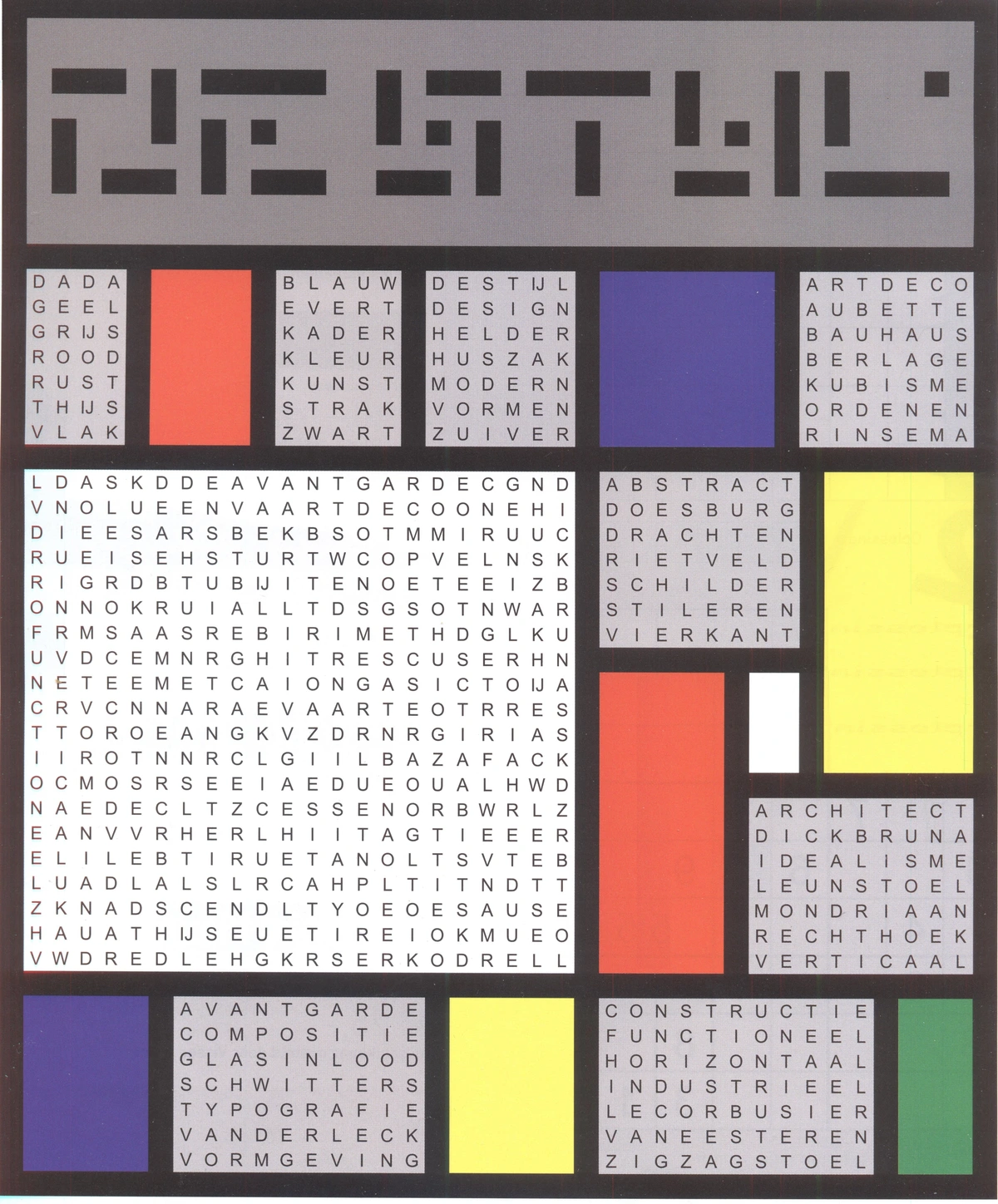
While Cubist architecture in its purest form never truly materialized, the movement profoundly influenced architects like Le Corbusier and the Bauhaus school. The emphasis on geometric forms, the breakdown of volumes, and the idea of seeing a building from multiple angles at once informed modernist design. Think of buildings composed of interlocking, abstract forms, prioritizing function and clean lines, often with cantilevered sections that seem to defy gravity, or facades that appear to shift as you move around them. The Dutch art movement De Stijl, particularly artists like Gerrit Rietveld, also showed a clear Cubist lineage in their highly geometric, planar designs for both architecture and furniture, emphasizing primary colors and modularity.
Design and Fashion
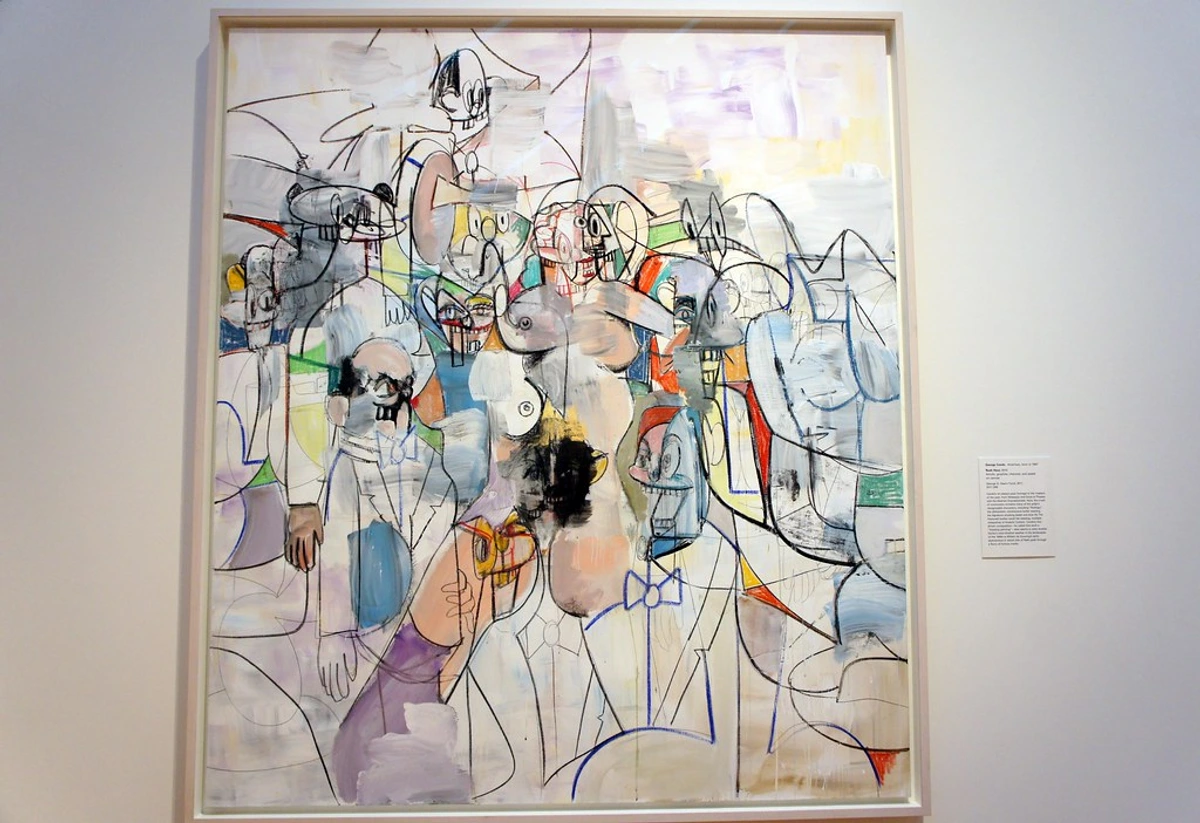
The aesthetic of Cubism, with its sharp angles, fragmented patterns, and bold geometric forms, found its way into graphic design, stage sets, and even fashion. Think of the dazzling, rectilinear designs of Art Deco, which clearly bear the stamp of Cubist abstraction, or the revolutionary poster designs that utilized fragmented text and images. Costumes for the Ballets Russes, for instance, sometimes featured geometric designs that evoked the Cubist spirit, playing with how the human body could be perceived in motion and from different perspectives, transforming dancers into moving sculptures. Even contemporary fashion designers sometimes draw on Cubist principles, creating garments with unexpected cuts, layers, and juxtapositions of patterns that challenge the traditional silhouette.
Philosophy and Culture
More broadly, Cubism reflected and shaped the intellectual climate of the early 20th century. It challenged the very idea of objective reality, suggesting that truth is a synthesis of subjective experiences rather than a singular, fixed viewpoint. This resonated profoundly with new scientific theories, particularly Albert Einstein's theory of relativity, which shattered Newtonian concepts of absolute space and time, demonstrating that observation is relative to the observer's motion. This was a direct parallel to Cubism's rejection of a single, fixed viewpoint. Similarly, Henri Bergson's philosophical inquiries into the subjective nature of 'duration' (lived time) over linear, measurable time found an artistic parallel in Cubism's simultaneity. Cubism can be seen as an artistic manifestation of these broader cultural shifts, exploring a 'fourth dimension' (time and movement) and recognizing that reality is far more complex than a single, static observation suggests. It set the stage for much of the experimental art that followed, truly breaking the mirror of traditional representation and opening the door to a more nuanced understanding of existence.
Frequently Asked Questions (FAQ)




Why does Cubist art look so weird and distorted? It looks 'weird' because it's not trying to capture a single, photographic moment. It’s showing you an object from multiple angles and moments in time, all at once, on a flat surface. The 'distortion' is the result of reassembling all those different views.
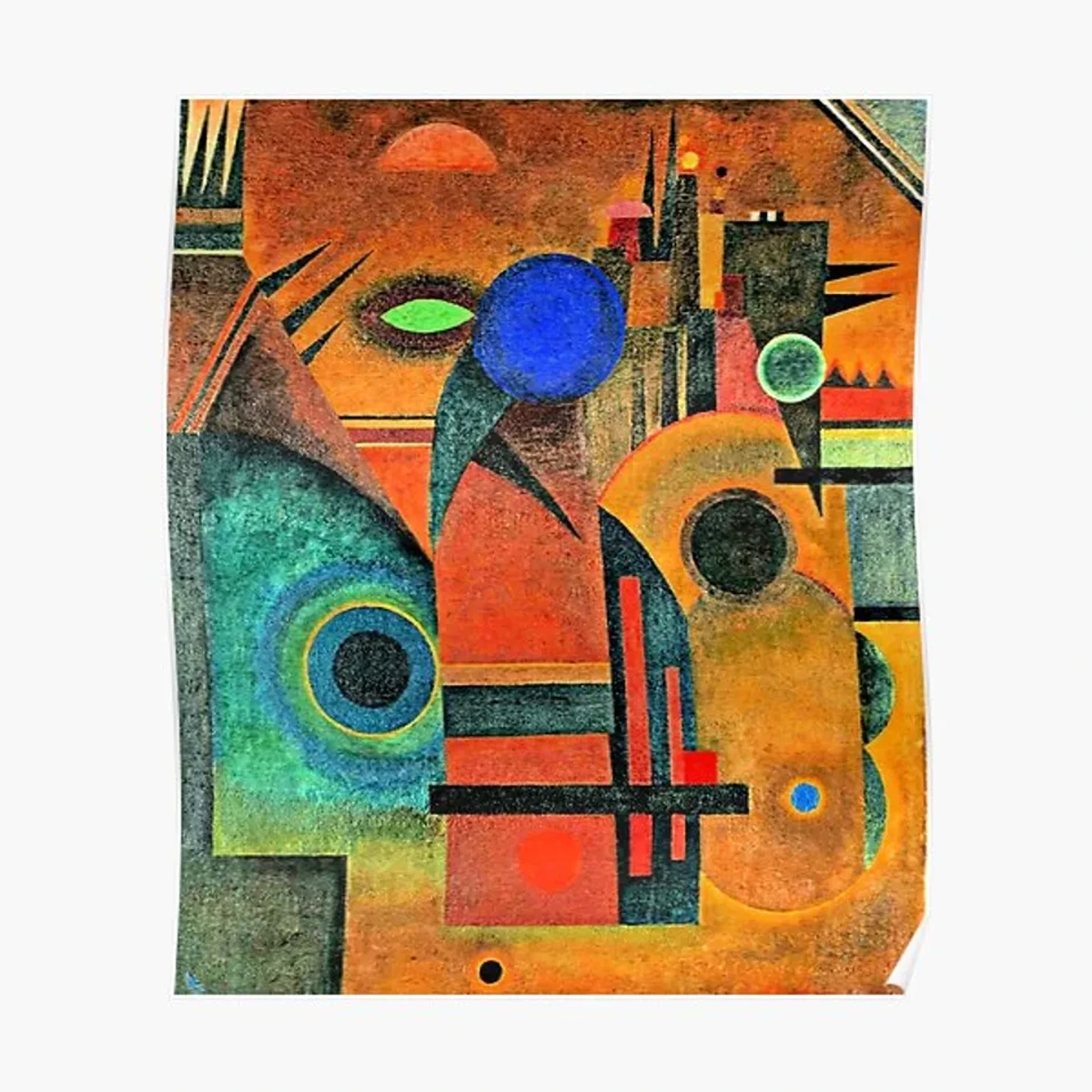
What's the difference between Cubism and abstract art? This is a great question. Cubism is a form of abstraction, but it always starts with a real-world subject (a person, a guitar, a landscape). It abstracts from something. Much of the abstract art that came later, like the work of Kandinsky or Mondrian, was completely non-representational; it didn't have a subject from the real world. You could say Cubism opened the door for pure abstraction. It was a bridge, with styles like Orphism crossing it.
What was the Section d'Or group?
The Section d'Or (Golden Section) was a collective of Cubist artists formed in 1912, including figures like Albert Gleizes, Jean Metzinger, Fernand Léger, and Robert Delaunay, among others. While Picasso and Braque worked largely in isolation, this group sought to expand Cubism's theories, publishing texts and holding exhibitions that aimed to make Cubist principles more accessible and systematic. Their name referenced mathematical harmony, reflecting their interest in applying classical principles of composition to modern abstraction, often leading to more colorful and decorative forms of Cubism than the monochromatic works of Picasso and Braque.
Were there other important Cubist artists besides Picasso, Braque, and Gris? Absolutely! While Picasso and Braque were the initiators and main drivers, and Juan Gris brought a systematized clarity, many other artists explored Cubist ideas. Fernand Léger, for example, developed a style sometimes called 'Tubism' due to his focus on cylindrical and conical forms. Robert Delaunay and Sonia Delaunay moved towards Orphism, focusing on pure color and light to create fractured compositions. Others like Roger de La Fresnaye, Albert Gleizes, and Jean Metzinger were also significant, not only for their artistic contributions but also for their theoretical writings and efforts to disseminate Cubist ideas beyond the immediate circle of its founders. It was a widespread and influential movement, attracting many innovative minds eager to break free from traditional representation.
Who actually started Cubism? It was a truly collaborative invention by Pablo Picasso and Georges Braque between about 1907 and 1908 in Paris. Their intense, almost symbiotic collaboration during the Analytical Cubism phase makes it difficult to attribute the 'start' to a single individual. However, Picasso's 1907 painting Les Demoiselles d'Avignon is often cited as the groundbreaking proto-Cubist work that fundamentally challenged artistic norms and paved the way for the movement's official emergence.
Did Cubism have any connection to contemporary science or philosophy? This is a fascinating point, and for me, one of the most compelling aspects of Cubism. While artists like Picasso and Braque might not have been directly studying Einstein's theory of relativity or Henri Bergson's philosophy, the intellectual climate of the early 20th century was ripe with new ideas about space, time, and perception. The move away from a fixed, singular viewpoint in art resonated deeply with scientific advancements that challenged Newtonian physics and philosophical inquiries into the subjective nature of reality. Cubism can be seen as an artistic manifestation of these broader cultural shifts, exploring a 'fourth dimension' (time and movement) and recognizing that reality is far more complex than a single, static observation suggests. It was a period of profound questioning across disciplines, and Cubism offered a visual language for these new ways of understanding the universe.
Is Cubism still relevant today? Absolutely. Its influence is everywhere, from graphic design and architecture to the way we understand fragmented media in the digital age. More importantly, its core idea—that there is no single, objective truth, only a collection of subjective viewpoints—is more relevant than ever.
What was the Salon des Indépendants and its role in Cubism? The Salon des Indépendants was a crucial venue for avant-garde artists in Paris, founded in 1884 without a jury or awards, allowing artists to exhibit their work freely. For Cubism, it was one of the first major public platforms. While Picasso and Braque largely exhibited in private galleries, other Cubists and artists influenced by the movement, such as Albert Gleizes and Jean Metzinger, showcased their works here from 1911 onwards. These exhibitions, though often met with ridicule and incomprehension by the general public, were vital in bringing Cubism into the public discourse and solidifying its presence as a formidable new art movement. It was where the public first truly grappled with the 'cubes' and where the seeds of the movement's wider influence were sown.
What is Cubo-Futurism?
Cubo-Futurism was an early 20th-century art movement, primarily in Russia, that fused the formal innovations of French Cubism (like fragmented forms and multiple viewpoints) with the Italian Futurists' passion for dynamism, speed, and the machine. Artists like Kazimir Malevich and Natalia Goncharova explored how Cubist deconstruction could be used to represent movement and energy, creating paintings that felt even more fractured and energetic than their Western European counterparts, embodying the rapid pace of the modern world. It's a fantastic example of artistic cross-pollination, where ideas travel and adapt to new cultural contexts, resulting in something uniquely powerful.
How did Cubism influence Futurism?
How did Cubism influence Russian Avant-Garde?
Cubism was a colossal influence on the Russian Avant-Garde, especially on movements like Suprematism (led by Kazimir Malevich) and Constructivism (led by Vladimir Tatlin and Alexander Rodchenko). Russian artists adopted Cubist fragmentation and geometric abstraction but often imbued it with a spiritual, philosophical, or utilitarian purpose distinct from Western Cubism. They saw Cubism as a springboard for creating entirely new, non-objective art forms that reflected a new social and political order, pushing further into pure abstraction and the functionality of art within society. The Italian Futurists, led by Filippo Tommaso Marinetti, were deeply influenced by Cubism's breakdown of form and multiple viewpoints, using these techniques to convey speed, dynamism, and the frantic pace of modern life. They took Cubism's static multiplicity of viewpoints and injected it with explicit movement and energy, creating works that visually represented the passage of time and motion, something Cubism implied. Artists like Umberto Boccioni and Giacomo Balla are prime examples of this borrowing and adaptation, pushing Cubism's formal innovations towards their own celebration of technology and industrialization.
What is Orphism and its connection to Cubism? Orphism was an art movement that emerged from Cubism, primarily associated with Robert and Sonia Delaunay. While drawing on Cubist fragmentation of form, Orphism emphasized pure color and light to create abstract compositions, often without a recognizable subject. It moved further into abstraction, using interlocking planes of vibrant, contrasting colors to create a sense of rhythm and musicality, hence its name, referencing Orpheus. It was a bridge from the analytical rigor of Cubism towards a more lyrical and emotional form of abstraction. It's a beautiful demonstration of how one revolutionary idea can blossom into diverse artistic expressions.
How did Cubism get its name? The term "Cubism" was initially a derogatory label. The French art critic Louis Vauxcelles, reviewing an exhibition of Georges Braque's landscapes in 1908, famously described them as reducing everything to "geometric schemas, to cubes." The term was then picked up by others, including Henri Matisse, and eventually, the artists themselves adopted it, stripping it of its initial negative connotations and embracing it as the name of their revolutionary movement. It's a classic example of a pejorative term becoming an identifier, much like the Impressionists or the Fauves who also adopted labels initially intended as insults.
What are some iconic Cubist artworks? Beyond Les Demoiselles d'Avignon, some highly influential Cubist works include:
- Pablo Picasso's Girl with a Mandolin (1910), Portrait of Ambroise Vollard (1910), and Ma Jolie (1911-12).
- Georges Braque's Violin and Candlestick (1910) and Man with a Guitar (1911-12).
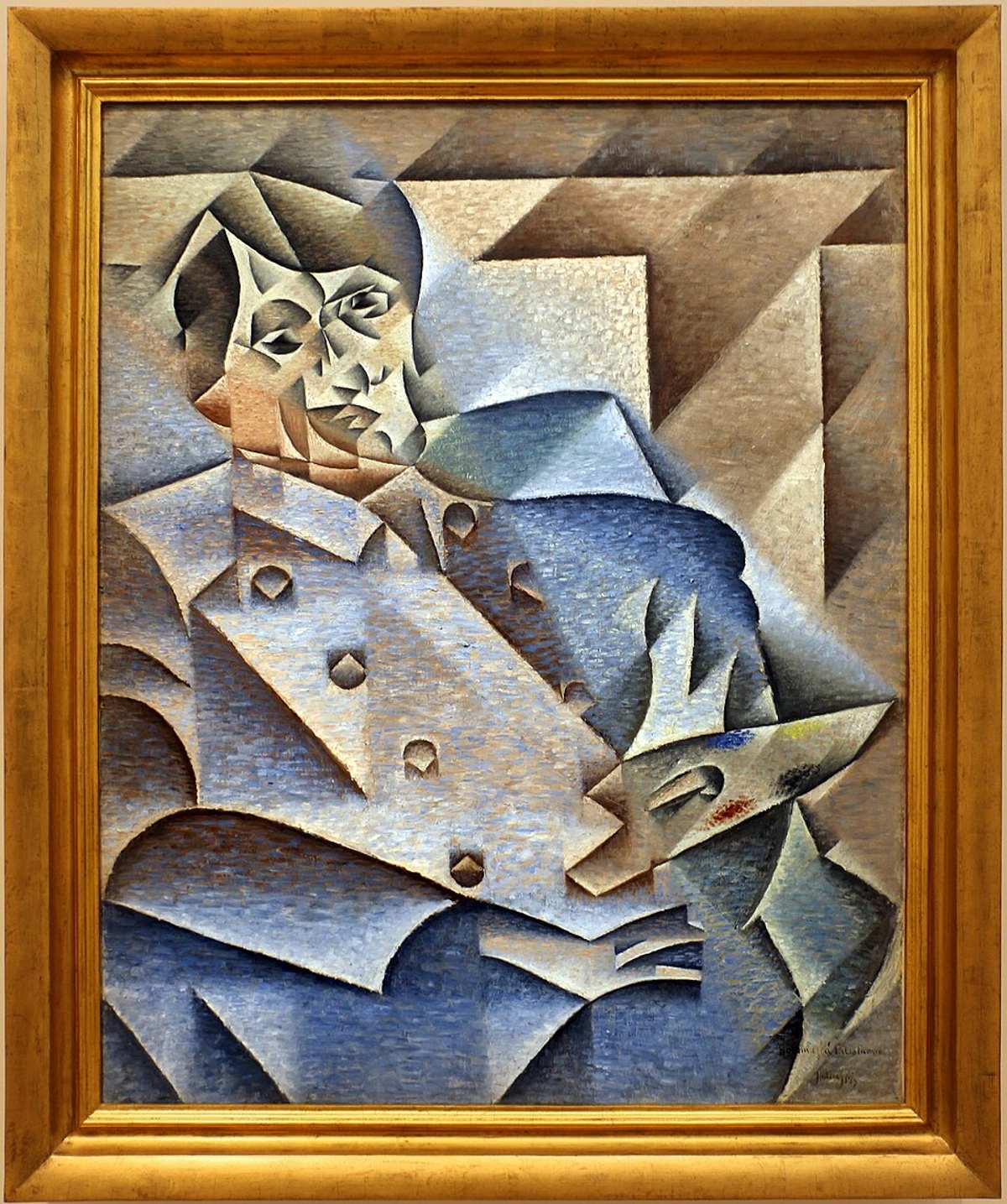
- Juan Gris's Portrait of Pablo Picasso (1912) and Still Life with Checked Tablecloth (1915).
- Fernand Léger's Nudes in the Forest (1910) and The City (1919). These works showcase the stylistic evolution of the movement from its analytical deconstruction to its synthetic reassembly, each artist adding their unique voice to the Cubist chorus.
Who were the major patrons or dealers of Cubist art? The early support of key dealers and patrons was crucial for Cubism's survival and recognition. Daniel-Henry Kahnweiler was arguably the most significant, signing exclusive contracts with Picasso, Braque, and Gris, providing them with financial stability and promoting their work. He understood the revolutionary nature of Cubism when many others dismissed it, becoming a passionate advocate and chronicler of the movement. Other important figures included Ambroise Vollard, who initially championed Cézanne and later Picasso, and visionary collectors like Sergei Shchukin and Ivan Morozov, who acquired numerous Cubist works and helped establish its importance internationally, forming what would become foundational collections of modern art. Without these individuals, Cubism's trajectory might have been very different.
How did World War I affect Cubism? World War I brought a significant disruption to the Cubist movement. Many artists, including Georges Braque, were conscripted into military service, while others, like Kahnweiler, were exiled or faced financial hardship due to the war. This dispersal of the artists and the somber realities of war led to a decline in the intense collaboration that defined early Cubism. After the war, many artists moved in different directions, some embracing a return to more classical forms (Picasso's Neoclassical period, for example), while others continued to develop Cubist principles in new ways, but the cohesive, intense phase of the movement essentially ended with the conflict. The optimism and radical experimentation of the pre-war years gave way to a more introspective or even traditional artistic sensibility.
What happened to Picasso and Braque after Cubism? After the intense collaborative period of Cubism, both Picasso and Braque continued to evolve their styles significantly, demonstrating that even foundational movements are just stepping stones for truly great artists. Picasso went through several stylistic shifts, often referred to as his "periods," including a return to Neoclassicism, Surrealism, and continued experimentation with abstraction and figuration, always driven by an insatiable curiosity. Braque, after recovering from a war injury, adopted a somewhat more decorative and sensual form of Cubism, incorporating richer colors and textures while maintaining his focus on still life, finding a quieter, more personal evolution of the Cubist idiom. While their paths diverged, the fundamental lessons and innovations of Cubism remained foundational to their subsequent artistic careers, forever changing their approach to form, space, and representation.
Is Cubism difficult to understand? At first glance, yes, it can be. Cubism challenges our ingrained way of seeing and representing the world. We're accustomed to art that offers a single, clear viewpoint, like a photograph. Cubism asks us to engage more deeply, to mentally reassemble the fragmented forms, and to appreciate the artist's attempt to convey a more comprehensive, multi-dimensional truth about an object. It's less about easy recognition and more about intellectual engagement and experiencing the "totality" of an object. Once you grasp this fundamental shift in perspective, it becomes less "weird" and more profoundly insightful. It's like learning a new language – initially challenging, but ultimately opening up a whole new way of communicating and understanding the world.
Where can I see Cubist art today? Cubist masterpieces are housed in major museums worldwide. Some of the best collections can be found at:
- The Museum of Modern Art (MoMA) in New York City.
- The Centre Pompidou in Paris, France.
- The State Hermitage Museum in St. Petersburg, Russia.
- The Kunstmuseum Basel in Switzerland.
- The Museo Reina Sofía in Madrid, Spain (with excellent Picasso holdings). Smaller, specialized galleries and private collections also frequently feature Cubist works, offering opportunities to see these revolutionary pieces firsthand.
How does Cubism relate to photography? Cubism emerged partly as a reaction to photography. Before photography, painting was the primary means of recording visual reality. Photography's ability to capture a single, instantaneous "snapshot" freed painting from this mimetic obligation. Cubism, by rejecting the single viewpoint and embracing multiple perspectives and the passage of time, pushed painting beyond what a camera could achieve. In a fascinating twist, some Cubists, particularly Man Ray and László Moholy-Nagy later explored Cubist ideas within photography, experimenting with multiple exposures and fragmented compositions, proving the adaptability of Cubist principles. However, the initial impetus was for painting to stake out its own unique territory distinct from the new medium of photography, asserting its intellectual and conceptual superiority to mere optical recording.
A Final Thought: It's More Than Just Squares
It’s easy to dismiss Cubism as just a bunch of geometric shapes, as an intellectual exercise. But for me, and I suspect for many who truly engage with it, it’s deeply human. It acknowledges that the world is complex and that our experience of it is never simple or one-sided, a truth that feels even more relevant in our fragmented, multi-screen world. It’s a testament to the power of art to not just reflect reality, but to shape our understanding of it. And for a contemporary artist like myself, it's a constant reminder that the most profound insights often come from daring to break the rules.
It’s a validation of that feeling I had as a kid in art class: that one viewpoint is never enough to tell the whole story. Cubism gives us permission to embrace the fragmentation, to see the front and the back at the same time, and to find a deeper kind of truth in the beautiful, reconstructed mess. It's a way of seeing, a way of understanding reality, that continues to inspire artists today, including myself, in the pieces you can find available to buy on this site. This revolutionary rupture didn't just break the mirror; it showed us a thousand new ways to look at what was reflected. And perhaps, that's the greatest gift any art movement can give: the gift of seeing the world anew, in all its fractured, glorious complexity.