Who Was Juan Gris? The Unsung Master of Cubism
Forget Picasso for a second. Let's talk about Juan Gris, the quiet genius who perfected Cubism. Discover his unique style, key works, and why he's so important.

Juan Gris: The Architect of Cubism's Soul
When you delve into the seismic shifts of 20th-century art, particularly Cubism, it’s almost inevitable that the names Pablo Picasso and Georges Braque will immediately spring to mind. And rightly so; these were, without a doubt, the titans who shattered centuries of artistic tradition, fundamentally reshaping how we perceive reality and representation on canvas. But then there’s Juan Gris – a name that, for far too long, has lingered in the background, sometimes even dismissed as merely the "third Cubist." To me, this assessment is a profound disservice, an unfair simplification that overlooks his unique and indispensable genius. While Picasso and Braque were the daring, even chaotic, pioneers, Gris was the meticulous architect, the thoughtful systematizer who infused the revolutionary movement with an unparalleled sense of order, vibrant color, and an almost poetic logic. He didn't just break reality apart; he rebuilt the fragments, turning apparent chaos into a harmonious, intellectually rigorous language. So, let’s peel back the layers and truly discover why Juan Gris deserves to stand as a central, indispensable pillar of modern art and a master of what I like to call 'classical Cubism.' For anyone looking for a broader understanding of this revolutionary movement, I always recommend our ultimate guide to Cubism.
The Early Blueprint: A Life of Precision and Parisian Awakening
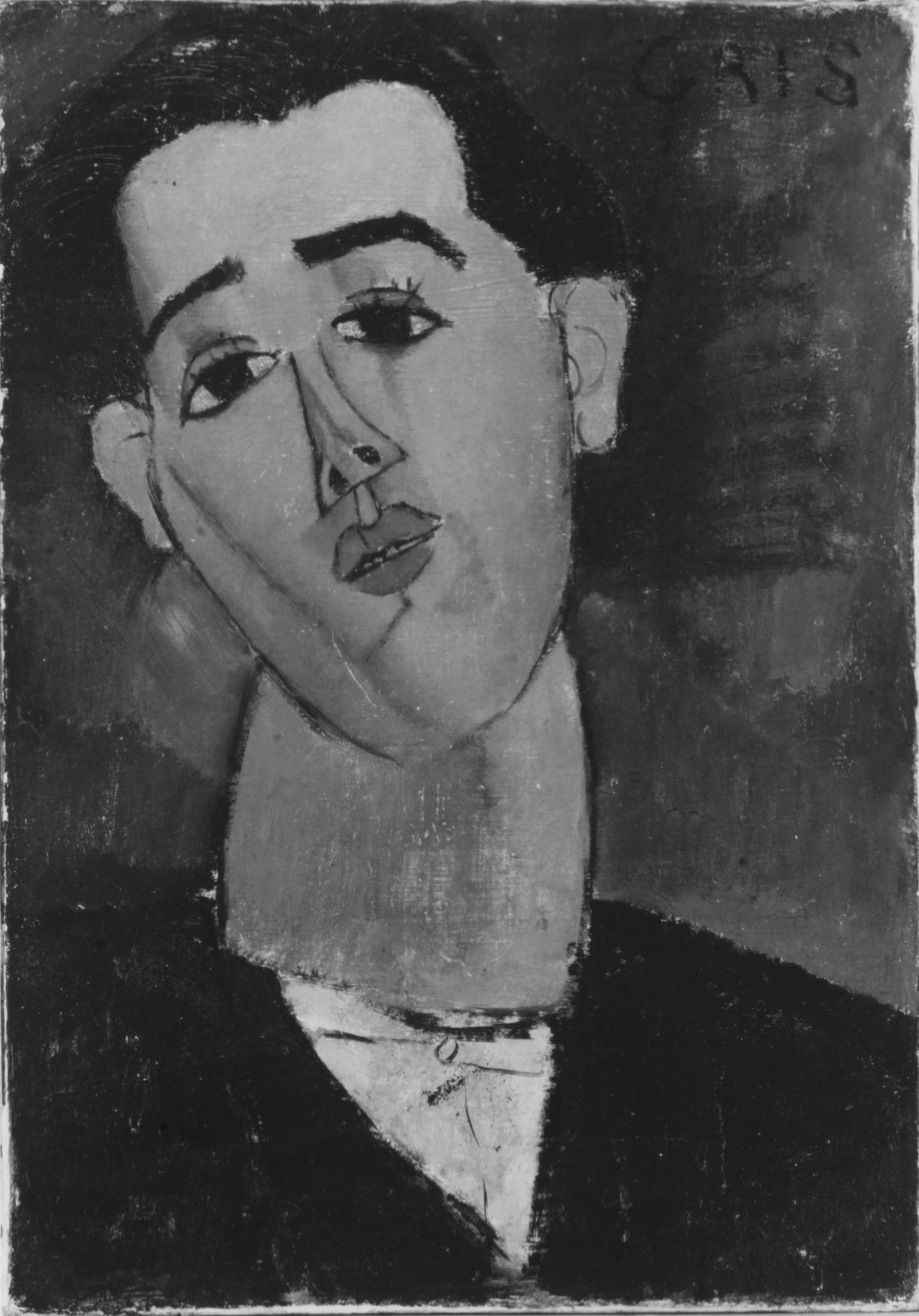
Before the world knew him as Juan Gris, he began life as José Victoriano Carmelo Carlos González-Pérez in Madrid, 1887. It's quite a grand name, isn't it? One can almost hear the formality of a bygone era in it. He chose to adopt the pseudonym "Juan Gris" later in his life, a moniker that – quite ironically – translates to "John Gray." While it might seem too somber for the vibrant colorist he would become, I find it fascinating that "gray" also hints at the bedrock of his art: the underlying structure, the intellectual rigor, and the precise, almost scientific foundation that defined his entire approach. Born José Victoriano Carmelo Carlos González-Pérez in Madrid in 1887 – quite a grand name, isn't it? One can almost hear the formality of a bygone era in it – Gris chose to adopt the more concise pseudonym "Juan Gris" later, a moniker that ironically translates to "John Gray." While it might seem too somber for the vibrant colorist he would become, I find it fascinating that "gray" also hints at the bedrock of his art: the underlying structure, the intellectual rigor, and the precise, almost scientific foundation that defined his entire approach. His upbringing, within a comfortably prosperous, middle-class family (his father a successful merchant, his mother from a well-to-do background), was never overtly artistic. Yet, it subtly but powerfully fostered a deeply disciplined mind. This wasn't the romanticized bohemian backstory we often associate with avant-garde artists. Instead, it was an environment that instilled a profound appreciation for order, technical skill, and intellectual pursuits. It's almost as if his family provided the quiet scaffolding for the architectural mind he would later become. While many of his contemporaries gravitated towards the expressive, Romantic traditions of art, Gris's inclinations were always towards precision, logic, and an almost architectural understanding of form. It's as if he was destined to bring a different kind of fire to the art world – a cool, controlled burn of intellect, a meticulous construction rather than an emotional outpouring. This background, I firmly believe, was absolutely instrumental in shaping his unique Cubist vision, setting him on a path distinct from the more spontaneous, emotionally driven revolutionaries of his era. It allowed him to approach the fragmented world of Cubism with an inherent desire for resolution and harmony, a drive for making sense of the chaos that truly sets him apart. His foundational training in mechanical drawing and industrial design, which he pursued at the Escuela de Artes y Manufacturas in Madrid from 1902 to 1904, is, for me, a crucial clue to understanding his entire artistic philosophy. This wasn't the typical art school path of life drawing and Romantic ideals, where emotional expression often took precedence. No, this was a discipline of rigorous precision, of understanding how components fit together with mathematical certainty, how forms occupy and define space. I can almost picture him as a young man, meticulously drafting gears and levers, unknowingly sketching the foundational principles for his future Cubist masterpieces. This early wiring for structure and order profoundly influenced his entire approach, distinguishing him from the more intuitive, spontaneous explorations of his peers. It instilled in him an almost innate understanding of planar relationships, intersections, and the illusion of volume on a two-dimensional surface – skills that would become the very scaffolding of his Cubist vision, allowing him to impose a unique clarity upon the fragmented world of Cubism. This meticulous attention to detail and structural integrity would remain a hallmark of his artistic output, proving that a solid technical foundation can be the springboard for radical artistic innovation. It's like learning to build a solid house from the ground up before you start experimenting with the roofline – a pragmatic, enduring approach that truly resonated with Gris. It's a testament to how the practical application of skill can inform and elevate groundbreaking artistic theory. By 1906, at the tender age of 19, like so many ambitious young artists, Gris was irresistibly drawn to Paris. It was, without question, the pulsating heart of the modern art world – a city crackling with intellectual ferment and artistic rebellion, a stark contrast to his more traditional Spanish upbringing. The challenges of a new city, an unfamiliar language, and the constant hustle for survival are something I can only imagine, but they undoubtedly sharpened his resolve and forced him to adapt with a keen eye for survival. He found his way to the fabled Bateau-Lavoir ("The Laundry Boat"), that slightly ramshackle, yet profoundly fertile, bohemian hive of artists' studios nestled in Montmartre. This wasn't just a building; it was an incubator, a crucible where modern art was forged, a place that felt alive with radical ideas and intense debate. Here, amidst the creative chaos and vibrant discussions, he not only befriended his legendary neighbor, Pablo Picasso, but also crossed paths with a constellation of avant-garde luminaries. Think Georges Braque, of course, but also the poets Max Jacob and Guillaume Apollinaire, who would become key intellectual voices of Cubism, and the influential American art collectors, Gertrude and Leo Stein. Can you even begin to imagine the intellectual fireworks of those early days? The sheer energy of competing ideas, of artists pushing boundaries, all unfolding in that slightly precarious wooden building, shaping the very trajectory of 20th-century art. It's a setting that captures the essence of artistic community and collaborative genius, a true melting pot where the seeds of Cubism were truly sown and nurtured, and where Gris would absorb, then rigorously refine, the revolutionary spirit brewing around him. This early exposure to the very epicenter of modernism, while still maintaining his distinct intellectual distance, proved formative for his unique contribution to Cubism. It’s a testament to the fact that even the most meticulous minds benefit from being in the thick of things, engaging with diverse perspectives that challenge and hone their own. To sustain himself during these pivotal formative years, Gris didn't immediately turn to oil painting. Instead, he meticulously honed his skills as a graphic artist and illustrator, creating witty, incisive illustrations for renowned satirical magazines such as L'Assiette au Beurre, Le Témoin, Le Charivari, and Le Cri de Paris. This wasn't a diversion; it was a crucial apprenticeship, allowing him to explore narrative through image and to develop a concise, impactful visual language. His illustrations, often characterized by sharp lines and economical forms, showcased an already masterful command of line, form, and composition, a precise hand and a keen eye for visual storytelling. Imagine the discipline required to convey complex ideas with such economy! He was already a master of arrangement, of conveying complex ideas through simplified, bold imagery, long before he fully embraced the paintbrush to forge his Cubist path. This often-overlooked period was absolutely fundamental in developing the foundational discipline and a deep understanding of visual rhetoric that would define his groundbreaking, systematic approach to Cubism. It’s a testament to how essential preliminary skills are, no matter how wild the revolution promises to be, and how the distinction between illustration and fine art can often blur, as you can read in our article on illustration vs. fine art. For a broader look at the dynamic art historical currents of this era, you might find our art timeline quite interesting. It’s fascinating how these early commercial endeavors instilled in him a deep appreciation for clear communication through visual means, a skill he would masterfully adapt to the complex world of Cubism, much like understanding the elements of art to build any compelling image.
The Rise of Satire: Gris and Parisian Periodicals
Gris's work for satirical magazines like L'Assiette au Beurre (meaning 'The Butter Plate', a rather droll title, wouldn't you say?) wasn't just about making a living; it was an immersion in the visual language of contemporary social commentary and caricature. These publications were vibrant platforms for intellectual and political discourse, often employing sharp wit and bold graphics to critique society. This exposure to conveying complex messages through simplified, striking visuals directly informed his Cubist exploration, where he sought to distil reality to its core geometric truths. It honed his ability to make a strong visual statement with minimal fuss, a skill that would later underpin his highly structured compositions.
The Wider Cubist Landscape: Before Gris's Deep Dive
Before Juan Gris fully committed to painting, the Cubist movement had already begun to ripple outwards from the intimate studios of Picasso and Braque. A wider group of artists, often referred to as the Salon Cubists (because they exhibited their works in public salons, unlike Picasso and Braque who largely showed through private dealers like Kahnweiler), began to explore the fragmented aesthetic. Figures like Jean Metzinger, Albert Gleizes, Fernand Léger, and Robert Delaunay, while deeply influenced by the early Cubist experiments, often approached the style with their own distinct interpretations. They brought Cubism to a broader audience, frequently incorporating a more vibrant palette and exploring themes of modern life, speed, and simultaneity, sometimes pushing it towards Orphism (with its focus on pure color and light) or Futurism (celebrating technology and motion). For me, understanding this wider context is crucial; it shows that Cubism wasn't a monolithic entity but a dynamic, evolving language, a complex conversation rather than a singular statement. It’s a testament to the fact that groundbreaking ideas rarely stay contained to their originators. It's into this already bustling and intellectually charged environment that Gris, ever the astute observer, stepped with his own unique clarity and purpose, ready to bring his particular brand of order, a systemization of the revolution that was unlike any other. This proliferation of Cubist ideas beyond its initial creators highlights the profound intellectual potency of the movement and its capacity to inspire diverse interpretations, from the spiritual abstractions of Wassily Kandinsky to the mechanical precision of Léger. The Salon Cubists, in particular, often aimed for a more public and accessible form of Cubism, consciously seeking to bridge the gap between radical innovation and broader acceptance, a nuanced distinction that sets them apart from the more insular early investigations of Picasso and Braque.
The Distinctive Flavor of Salon Cubism
While Picasso and Braque deliberately chose a muted palette in their Analytic phase to emphasize form, the Salon Cubists often embraced color with more gusto. Think of Fernand Léger's robust, almost machine-like figures and compositions, or Robert Delaunay's vibrant, circular forms in his Orphism – a term coined by Guillaume Apollinaire to describe a branch of Cubism that moved towards pure abstraction through color and light, often seen in his "Simultaneous Windows" series. These artists were asking different questions, exploring how Cubism could engage with the dynamism of modern life, rather than solely focusing on the deconstruction of objects. It was a fascinating divergence, showcasing the immense versatility of the Cubist vocabulary, and setting a richer stage for Gris's eventual entrance with his own unique synthesis of form and color. It's almost as if the Salon Cubists were demonstrating the expressive potential of fragmentation, while Picasso and Braque were still grappling with its fundamental grammar.
Finding His Voice in a World of Cubes: Navigating the Cubist Revolution
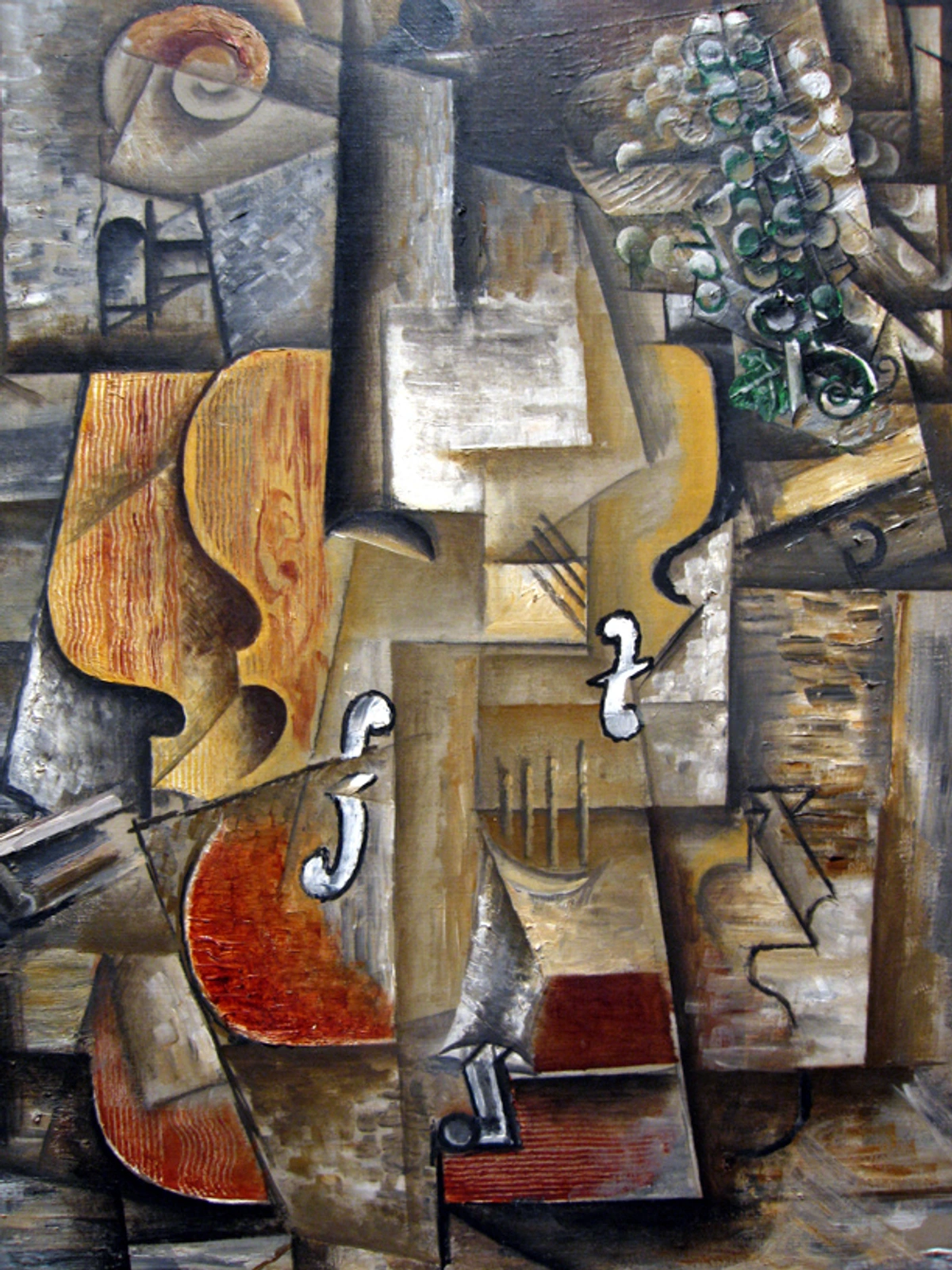
By the time Juan Gris fully committed to painting around 1911, the art world was still reeling from the seismic shock of Analytic Cubism, a phase aggressively pioneered by his friends, Pablo Picasso and Georges Braque. This wasn't merely a stylistic choice; it was a profound intellectual experiment, an attempt to liberate objects from the tyranny of single-point perspective and challenge the very notion of visual representation itself. Artists would meticulously dissect objects—a guitar, a portrait, a still life—from multiple viewpoints simultaneously, then reassemble them into fractured, overlapping planes on the canvas. The palette was deliberately restricted, almost ascetic, to muted browns, grays, and ochres. Why? To force the viewer to focus entirely on form and structure rather than the perceived "distraction" of color. It was an incredibly radical, intellectually stimulating, and, let’s be honest, often visually dense and challenging form of painting, a true re-evaluation of how reality could be rendered. The initial reception was often one of bewilderment or outrage, as critics and the public grappled with this unprecedented assault on traditional representation, marking a significant step in the history of abstract art. I always find myself marveling at the sheer bravery of this initial break from millennia of artistic tradition, even if the resulting works weren't always the "easiest" on the eyes; they were, however, undeniably groundbreaking, shattering conventions to force a new way of seeing. Picasso's "Woman Reading" (1910) is a prime example of this intense, monochromatic fragmentation, pushing the boundaries of representation, forcing viewers to engage with a new kind of visual logic. It's truly a testament to the audacity of early modernism. This period was about deconstruction, about showing the raw bones of perception, and it required immense intellectual effort from both artist and viewer. It's a far cry from, say, the more immediately engaging works of Impressionism, which focused on capturing fleeting moments of light and color. It was a rigorous, almost scientific inquiry into the very fabric of visual experience.
Gris, ever the astute observer and analytical mind, didn't just passively absorb this revolutionary energy. He processed it, filtered it through his unique, structured lens. His background in mechanical drawing, that innate understanding of how forms are constructed, gave him an unparalleled advantage. He could perceive and articulate the underlying geometric structures of objects with a remarkable clarity that often eluded others. Where early Analytic Cubism could sometimes veer into a kind of chaotic fragmentation, Gris’s work, even in its most rigorously analytical moments, always retained an underlying geometric coherence, an almost architectural precision. He was a natural organizer, a visual grammarian, bringing a much-needed sense of order to the Cubist fragmentation, making the "pieces" feel like they belonged to a grander, more intentional design. It was like he could see the blueprints beneath the fractured surface, always ensuring that the resulting composition, no matter how complex, maintained a foundational logic. This emphasis on underlying structure is, I believe, what truly sets his interpretation of Analytic Cubism apart – a disciplined intellect at play, even in the midst of revolution. He approached the canvas like an engineer approaching a complex problem: how do you break something down, yet retain its fundamental integrity? Gris had the answer. His contributions ensured that even in its most radical phase, Cubism possessed a discernible intellectual framework, a system of visual syntax that could be understood and built upon. Here’s an example of Picasso's work from this period. Notice the monochromatic palette and the deep fragmentation:
credit, licence It was in the subsequent phase, Synthetic Cubism, beginning around 1912-1913, where Juan Gris truly found his stride and, arguably, became its most systematic and influential exponent. This marked a pivotal theoretical and visual shift: instead of deconstructing objects, artists began constructing images from distinct, simpler shapes, reintroducing bold colors, and incorporating varied textures, often through the groundbreaking technique of papier collé (collage). It was less about analyzing a pre-existing reality and more about synthesizing a new one directly onto the canvas, building a new pictorial order. Gris's use of papier collé, for example, wasn't just about adding texture; it was about introducing fragments of 'reality' (like newspaper text or wallpaper patterns) into the constructed pictorial space, blurring the lines between art and life in a wonderfully intellectual game. This wasn't a superficial trick; it was a profound commentary on the nature of representation itself, paving the way for later explorations in mixed media and assemblage. And in this constructive, compositional approach, nobody, in my opinion, did it with more clarity, elegance, and intellectual rigor than Gris. His methodical process and his strategic reintroduction of vibrant, often jewel-like color infused Synthetic Cubism with a fresh dynamism and an accessible beauty that had been somewhat overshadowed in its earlier incarnation. He wasn't just building; he was building with profound intention, a sophisticated eye for aesthetic harmony, and a clear understanding of design, making Synthetic Cubism both intellectually stimulating and visually captivating. His precise control over color and form allowed him to create compositions that were not only revolutionary but also deeply satisfying on an aesthetic level, a true marriage of intellect and visual pleasure. He showed that Cubism could construct, not just deconstruct, a world that was both visually engaging and deeply thoughtful.
The Conceptual Genius of Papier Collé
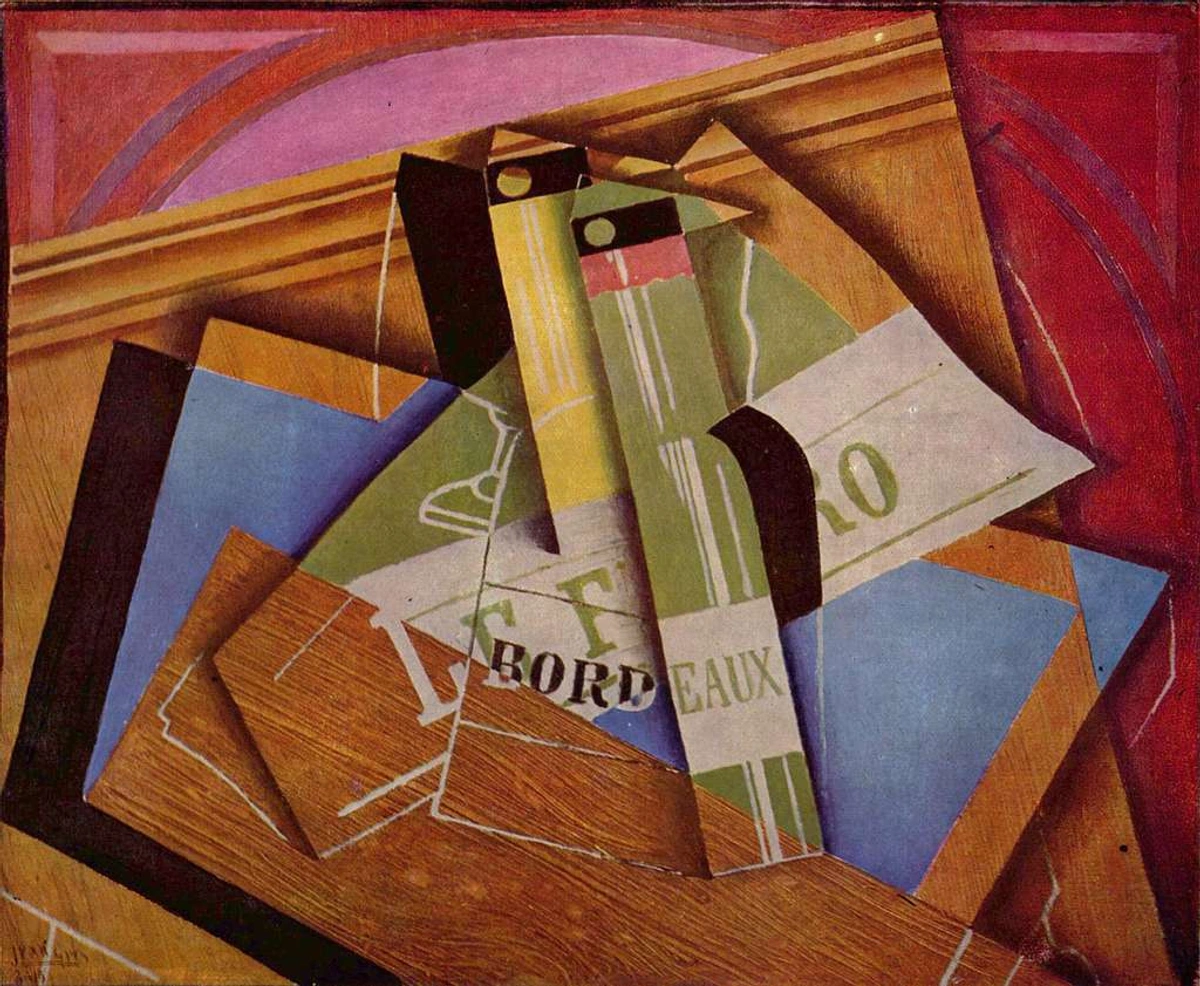
For Gris, papier collé wasn't just about gluing paper onto a canvas; it was a philosophical statement. By introducing actual fragments of newspaper or wallpaper, he was playing a brilliant intellectual game with the viewer, blurring the boundaries between artistic illusion and objective reality. A painted bottle alongside a real newspaper clipping forced the viewer to confront the nature of representation itself: which is more "real"—the meticulously rendered illusion or the literal fragment of the everyday world? This intellectual engagement is what truly elevates his use of collage beyond mere decoration, turning it into a profound dialogue about the very fabric of perception and artistic truth. It’s an early form of interactive art, demanding that the viewer actively participate in constructing meaning.| Feature | Analytic Cubism (Picasso/Braque, 1907-1912) | Synthetic Cubism (Perfected by Gris, 1912-1919) | | :--- | :--- | :--- | | Primary Goal | Deconstruct a perceived object into its geometric components; analyze reality. | Construct a new pictorial reality; synthesize an image from abstract forms. | | Visual Approach | Objects fractured, multifaceted, overlapping planes; often nearly indistinguishable. | Simpler, flatter planes; less fragmentation, more emphasis on distinct, interlocking shapes. | | Color Palette | Severely restricted: muted browns, grays, ochres, blacks – intended to emphasize form. | Reintroduction of vibrant, bold, and often harmonious colors; used compositionally. | | Key Technique | Faceting, simultaneous viewpoints, 'passage' (open contours). | Papier collé (collage), stenciled letters/numbers, trompe l'oeil elements, flat patterns, and sometimes sand or other materials. | | Starting Point | A recognizable real-world object (e.g., a violin, a portrait). | An abstract idea or geometric composition that executes into a recognizable object, often starting with the canvas itself as a flat plane. | | Overall Effect | Intensely intellectual and often visually demanding, it fractured objects to explore how perception functions across time and space, deliberately challenging traditional notions of seeing, often making the subject almost illegible. | While more visually harmonious and colorful, it remained conceptually profound, systematically constructing a new pictorial reality that was simultaneously legible and deeply thoughtful, emphasizing Gris's elegant resolution and aesthetic harmony. | Analytic Cubism, with its fractured forms and deliberately muted palette, was a challenging, deeply intellectual pursuit. It essentially deconstructed the object, almost to the point of abstraction, focusing on how things are seen and represented across time and space. But for Juan Gris, the "how" was always in service of a coherent, resolved "what." His enduring contribution was to infuse this intellectual rigor with a profound sense of design and aesthetic purpose. He ensured that the fragmented pieces always resolved into a powerful, harmonious, and intellectually satisfying whole. He demonstrated that Cubism could be both revolutionary and classically beautiful, a true synthesis of modern innovation and timeless principles. This systematic and intentional construction is, for me, where Gris truly shines. He proved that Cubism could be both analytical and lyrical, a profound intellectual challenge that also delivered undeniable aesthetic pleasure. It's a balance I constantly strive for in my own abstract works, finding joy in the interplay of logic and intuition. real
The Cubist Process: From Vision to Canvas
Before we delve further into Gris's unique methodological brilliance, it's worth pausing to consider the fundamental shift Cubism represented in artistic process. Historically, artists generally followed an inductive approach: they observed the concrete world, then abstracted or interpreted it onto the canvas. Think of a landscape painter translating mountains and trees into brushstrokes, or a portrait artist capturing a likeness, working from the specific to the general. Early Cubism, especially Analytic Cubism, pushed this inductive process to its extreme, meticulously deconstructing observed reality, breaking it down into its constituent parts. But Gris, as we'll explore, did something profoundly different, something that truly set him apart. He reversed the flow, working in a deductive manner, building up reality from abstract principles. It's a subtle but crucial distinction that fundamentally shaped his oeuvre and solidified his intellectual standing, moving from the general, conceptual idea to the specific, tangible image. It's a bit like starting with a mathematical formula and then deriving a specific shape, rather than starting with the shape and trying to deduce its formula. This intellectual reversal is, for me, one of the most compelling aspects of his genius. It highlights his deep philosophical engagement with the nature of representation and creation itself, a dialogue with reality that was as much about invention as it was about observation. It’s like the difference between reverse-engineering a car (inductive) versus designing one from scratch (deductive) – both valid, but Gris chose the latter, more foundational approach. This intellectual reorientation marked a profound evolution in how artists could conceive of and create their work, moving from mere interpretation to active invention.
Beyond Fragmentation: Cubism's Place in the Avant-Garde
It's easy to look at the fragmented forms of Cubism and lump it in with other early 20th-century movements that also broke from traditional representation. But Cubism, especially as refined by Gris, stood apart. While movements like Italian Futurism embraced dynamism and speed, and Orphism explored pure color, Cubism maintained a rigorous, almost scientific inquiry into the nature of perception and representation. It wasn't about speed or emotional expression in the same way. Gris's meticulous planning and constructive method further solidified Cubism's unique position as an intellectual cornerstone, a profound questioning of how reality can be rendered, rather than simply an emotional outburst or a celebration of modernity. His systematic approach provided a counterpoint to the more impulsive explorations happening elsewhere in the avant-garde, such as the nihilistic tendencies of Dadaism or the dreamlike explorations of Surrealism. I often think of it as the difference between a spontaneous jam session and a meticulously composed symphony – both have their brilliance, but Gris was definitively on the side of the latter. For a deeper dive into the vast world of abstract art and its diverse movements, our ultimate guide to abstract art movements is an excellent resource, though I'll warn you, it's quite a journey!
Cubism's Intellectual Edge: A Contrast to Emotional Outbursts
Compared to movements like German Expressionism, which prioritized raw emotion and subjective experience (think of an Edvard Munch painting like "Despair"), Cubism, especially Gris's iteration, was a cooler, more cerebral pursuit. It asked profound questions about the nature of seeing, representation, and how we construct meaning from fragments. While Expressionism sought to convey inner turmoil, Cubism sought to understand outer form in new, revolutionary ways. It was about visual grammar, not emotional catharsis, delving into the mechanics of perception rather than the depths of subjective feeling. This distinction highlights Gris’s dedication to a structured, reasoned art form.
The Gris Method: From Abstract Idea to Concrete Masterpiece
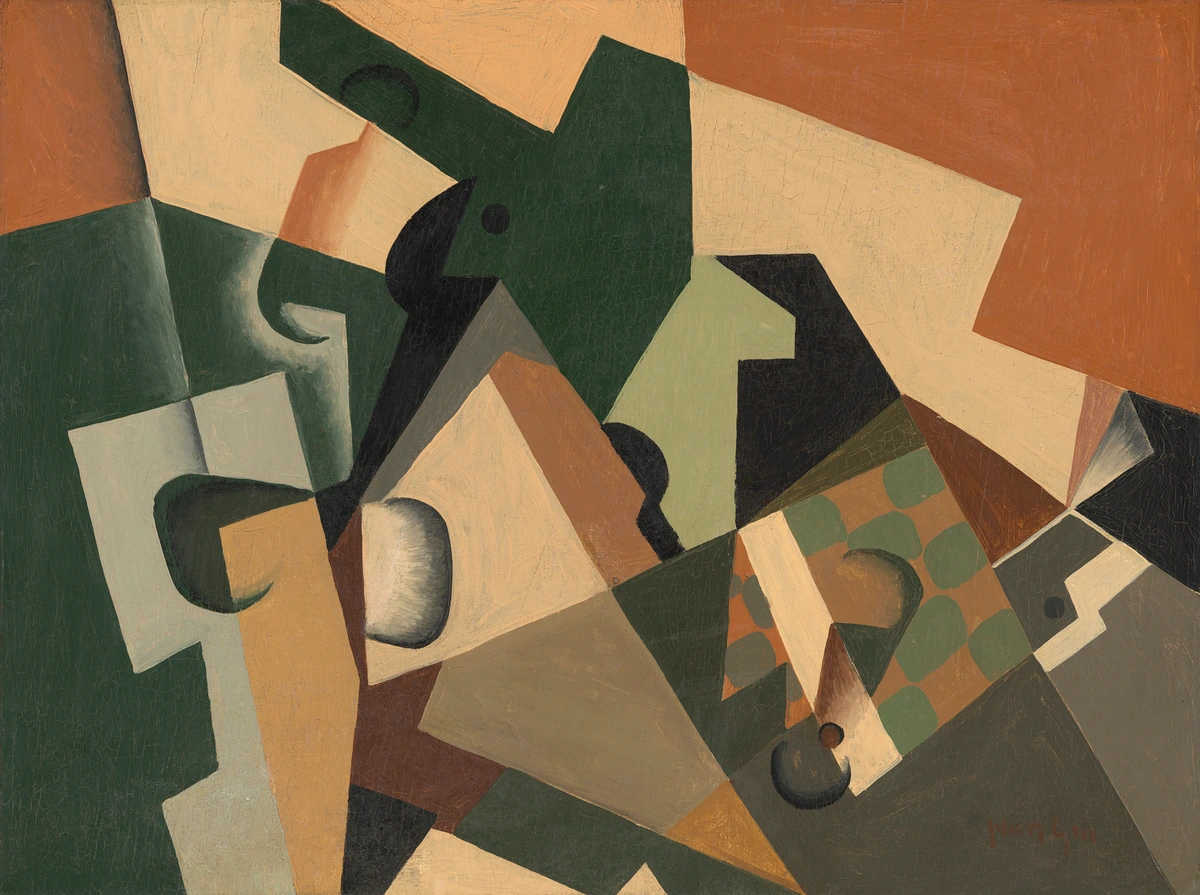
Here’s what I think is the most singularly brilliant and revolutionary aspect of Juan Gris's approach: he completely flipped the Cubist process on its head. While Picasso and Braque typically began with a real-world object—a guitar, a bottle, a human figure—and then painstakingly analyzed and deconstructed it into fragmented planes, Gris started from the opposite pole. He once famously declared, "I try to make concrete that which is abstract." Imagine it like this: instead of starting with a finished puzzle and trying to figure out how its pieces were broken apart, Gris would start with a collection of beautifully designed, abstract puzzle pieces and then meticulously assemble them, almost like an an architect constructing a building from a blueprint, to form a recognizable image. This isn't just a subtle difference; it's a fundamental philosophical shift in how one approaches artistic creation, making him a true theorist of the movement. He wasn't just observing reality; he was actively inventing it on the canvas, demonstrating a profound intellectual control over his medium. It’s a bit like a chef who invents a dish from conceptual flavors rather than starting with a traditional recipe. This meant his process was deductive. He would begin not with a tangible still life arrangement of a bottle and a newspaper on a table, but with an abstract, purely pictorial idea. Imagine him starting with an abstract arrangement of shapes and colors on his canvas – perhaps a cool blue cylinder intersecting a warm white trapezoid, or a series of interlocking geometric forms. He would then meticulously work on this abstract composition, adjusting and refining, until it resolved and became the recognizable object: the bottle, the newspaper, the fruit bowl. It’s like building a house by starting with a perfect, elegant floor plan and then constructing the building around that ideal, rather than trying to reverse-engineer a blueprint from a house that's already standing. This intellectual rigor, this architectural mindset, brought an incredible sense of order, serenity, and pre-meditated harmony to his work that was utterly distinctive. It's a method that truly sets him apart, showcasing his unique blend of logic and aesthetic sensitivity, proving that a canvas could be both a vibrant world and a meticulously reasoned argument. This approach, I've found, is incredibly satisfying to the eye, offering both intellectual challenge and visual pleasure, a hallmark of truly great art. It's a fascinating testament to how an artist can create reality rather than simply reflecting it. For me, it brings a certain calm to the often-chaotic world of art – a sense that underlying all the expressive brushstrokes, there’s a deliberate, thoughtful construction happening. And the color! Oh, the color. This deductive method also allowed him to reintroduce and truly master color in Cubism. He wasn't just coloring in shapes; he was building with color as a fundamental structural element. He brought back jewel-like blues, rich greens, warm ochres, and vibrant reds, creating compositions that are not only intellectually rigorous but also emotionally resonant and visually sumptuous. He understood how artists use color to build entire worlds. For Gris, color wasn't an afterthought or a mere decorative element; it was as crucial to the structure as line and plane, each hue playing a specific role in the overall architectural composition. He might use a cool blue to suggest depth or a warm red to pull a plane forward, meticulously orchestrating a visual harmony that feels both intellectually satisfying and profoundly beautiful. It was a symphony of hues, each note carefully chosen to contribute to the grand design, rather than a mere splash of paint. This strategic deployment of color became another tool in his architect’s kit, enhancing the structural integrity and emotional resonance of his constructed realities.
credit, licence
Key Works: Unpacking the Masterpieces of Juan Gris
To truly grasp the genius and evolution of Juan Gris, we must dive into the actual artworks. For me, each piece is not just a painting; it's a carefully constructed argument, a visual manifestation of his unique artistic philosophy and an invitation into his profound way of seeing. These are the works that don't just tell his story but illuminate the very essence of Cubism as he understood and perfected it – disciplined, vibrant, and intellectually profound. So, are you ready to explore some of the visual evidence? Let's look at a few seminal pieces that define his extraordinary career, each a testament to his unique Cubist vision. I find it endlessly fascinating how he transformed everyday objects into profound intellectual investigations.
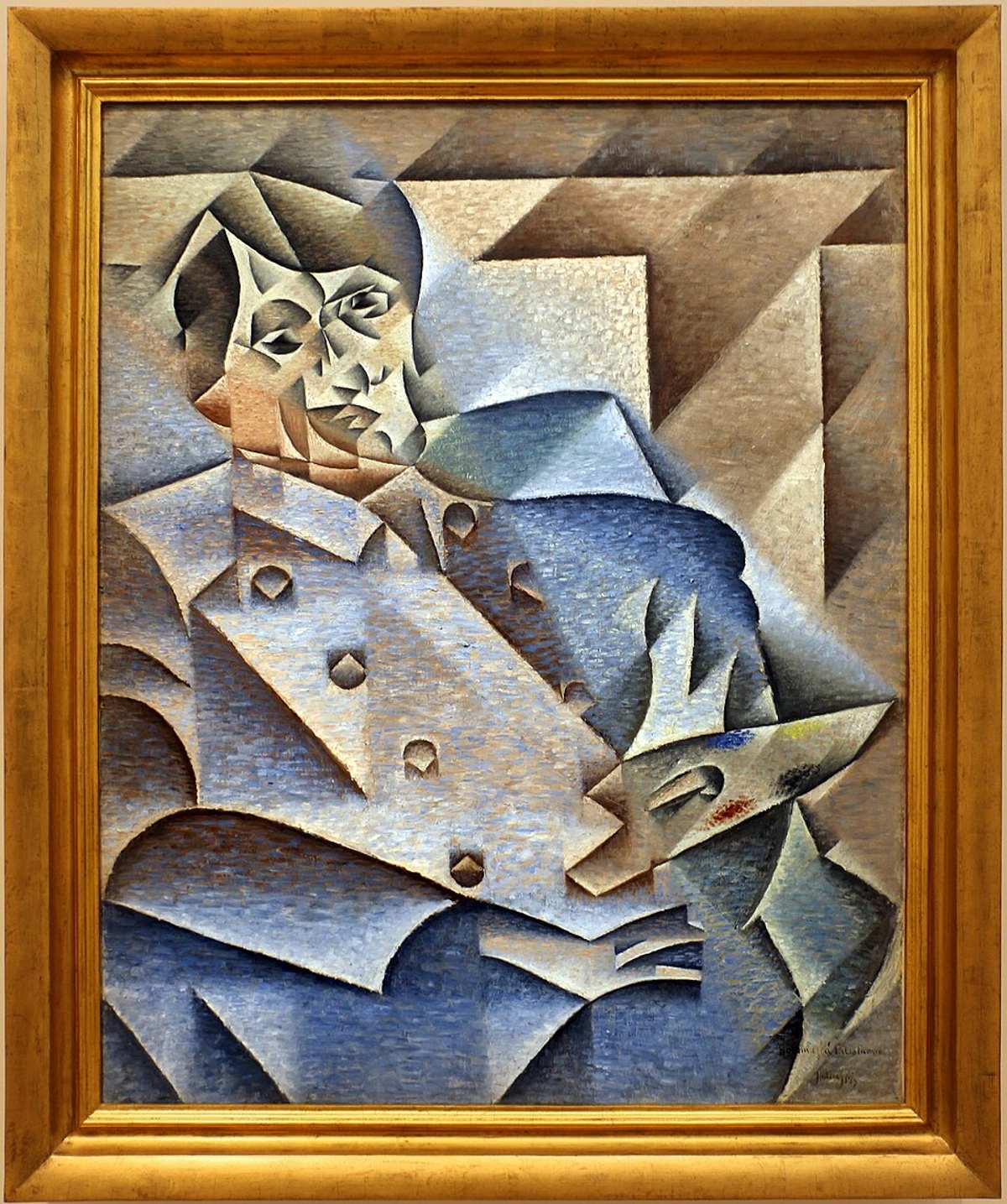
- Portrait of Picasso (1912): This isn't just one of Juan Gris's first major forays into Cubism; it's a bold, confident declaration of his unique artistic voice and his intellectual kinship with, yet distinct separation from, his friend and mentor, Picasso. Far from being a mere follower, Gris here presents a vision of Picasso that is both homage and a subtle critique, a brilliant reimagining of the Cubist project. The composition is famously structured around a rigid, almost architectural grid of diagonals and verticals, a geometric rigor far more resolved and less chaotic than many of Picasso's own Analytic Cubist works from the same period. Gris captures Picasso not just as a man, but as a dynamic force of creative energy, almost a "diagram" of a person's formidable presence in space, a study in fragmented geometry and psychological depth. Notice how Picasso's angular features are rendered with an almost blueprint-like precision, underscoring Gris's architectural mindset. For me, it reads as a deliberate statement: "I respect what you've pioneered, but I will bring order and logic to it," marking his intention to systematize the revolution. It's a true masterpiece that demonstrates Gris's early mastery of form, line, and the subtle interplay of the elements of art. This portrait also offers a fascinating glimpse into the artistic dialogue between two giants, with Gris subtly asserting his intellectual and stylistic independence even while honoring their shared artistic ground. It's a complex, multi-layered work that rewards deep contemplation, inviting you to decipher the layers of influence and innovation and appreciate how Gris immediately sought to impose his own clear methodology on the nascent movement.
- Still Life with a Checked Tablecloth (1915): If you want to experience quintessential Synthetic Cubism, this is it. This work is a perfect, luminous example of Gris's genius in this phase. Here, you witness his masterful employment of papier collé—not merely as a decorative texture, but as an integral, structural component of the composition. The way genuine wallpaper and newspaper clippings are meticulously integrated and play against the painted forms of a wine bottle, a fruit bowl, a glass, and a pipe isn't just clever; it’s a profound, playful exploration of illusion versus reality. The newspaper fragments, for instance, don't just add a real-world touch; their printed text becomes another layer of visual information, often disrupting or reinforcing the painted forms around them, inviting the viewer into a fascinating dialogue between the real and the represented. It challenges the viewer to question what’s "real" on the canvas and what’s merely depicted, engaging in a deeply intellectual game that defines the Synthetic Cubist aesthetic. For me, this work absolutely exemplifies the elegance, conceptual depth, and formal ingenuity Juan Gris brought to the Cubist revolution. It’s a testament to his methodical yet playful spirit, turning everyday objects into a complex and beautiful intellectual puzzle. The checked tablecloth itself becomes a geometric grid, further emphasizing the underlying structure and order that defines his work, a quiet testament to his architectural mindset. It showcases his ability to merge the mundane with the profound, creating a visual symphony from ordinary elements.
- Fruit Bowl and Newspaper (1916): This stunning example further showcases Gris’s unparalleled ability to fuse vibrant color with rigorous structure during his Synthetic Cubist period. What I love about this piece is the way he builds a new reality on the canvas, rather than just representing an existing one. The forms of the fruit bowl, the fruit, and the newspaper are rendered with bold, flat planes of color, often outlined, and meticulously arranged. The newspaper text, a common motif in Cubism, isn't just a detail; it's a planar element that contributes to the overall architectural stability of the composition, a subtle nod to the tangible world within the constructed one. The interplay of warm and cool tones, the precise arrangement of diagonals and verticals, all contribute to a sense of controlled dynamism and a sophisticated spatial logic. It’s a testament to his "deductive method" – an abstract construction that resolves into a beautifully balanced, recognizable still life, a powerful visual argument for Cubism's enduring intellectual and aesthetic appeal, and a profound example of how he could transform the everyday into something monumental and deeply thoughtful. It truly embodies his philosophy of making the abstract concrete, inviting the viewer to appreciate the complex visual symphony he orchestrates. This painting perfectly exemplifies his unique ability to create a sense of three-dimensionality and spatial depth through the careful arrangement of two-dimensional planes, a true masterclass in pictorial construction. It feels less like a depiction of a fruit bowl and more like a carefully engineered experience of one. The way the newspaper's grid intersects with the organic curves of the fruit is a masterful demonstration of his ability to harmonize disparate visual information.
Embracing Poetic Realism: The Later Works (1920s)
In his later work, particularly during the 1920s, Juan Gris's style underwent a subtle but significant and beautiful evolution. While never abandoning his Cubist principles, the sharp edges and dramatic fragmentation of his earlier work began to soften, yielding to more fluid forms, a richer atmospheric quality, and a deeper engagement with classical ideas of harmony, balance, and visual poetry. This period represents a culmination, a serene distillation of his profound intellectual journey within Cubism, often seen as his "return to order" or a "classical Cubism." This wasn't a retreat from modernism, but rather a mature integration, a demonstration of how a revolutionary language could achieve timeless elegance. It’s a powerful demonstration of how an artist can evolve without betraying their core artistic philosophy, but rather enriching it, much like a seasoned composer refining their themes.
- The Open Window (1921): This painting is a truly beautiful exemplar of that shift. Here, shapes from the interior still life (often his beloved musical instruments, fruit, or books) are subtly echoed and "rhyme" with the exterior landscape, often a serene Mediterranean vista, seen through the window. This motif of the open window, a classic in art history (think Matisse's famous windows, for example!), takes on a uniquely Cubist elegance in Gris's hands. It’s lyrical, almost symphonic, and demonstrates a new level of maturity in his work—a move towards what many critics, and I myself, perceive as a "classical Cubism." He’s no longer just exploring formal problems; he’s composing a visual symphony, a testament to how an artist can profoundly evolve their expression while remaining deeply true to their core principles of structure and order. This particular work resonates with me deeply because it explores the universal human desire to connect interior thoughts and emotions with the vast, inviting exterior world, a theme I often find myself exploring in my own abstract works. It’s a moment of profound artistic peace, a vision of Cubism in dialogue with enduring traditions, showing that even the most revolutionary art can find harmony with historical precedents. The interior elements, perhaps a guitar or a bowl of fruit, don't just sit in the foreground; they seem to visually converse with the distant sails or the gentle ripples on the water, creating a seamless, poetic flow. It's a quiet masterclass in how Cubism could evoke narrative and emotion without sacrificing formal integrity.
- The Guitar and the Music Score (1926): As Gris approached the end of his tragically short life, his work, while still rooted in Cubism, achieved an almost ethereal quality. This piece, a sublime example from his last years, demonstrates a profound distillation of his earlier ideas, a final, poignant exploration of his chosen visual language. The familiar motifs of the guitar and musical notation are rendered with a simplified elegance, often employing curvilinear forms alongside the geometric structures, creating a dance between rigidity and fluidity. The colors remain rich but are applied with a delicate translucency, allowing for a subtle interplay of light and shadow. It speaks to a profound interiority, a meditative quality that transcends mere representation, transforming everyday objects into symbols of artistic meditation. Given his ongoing struggles with health during these later years, it’s easy to read into these works a sense of quiet contemplation and an artist finding ultimate serenity and wisdom in his chosen language, a beautiful crescendo to his systematic exploration of form and color. This work, for me, feels like a serene echo of his entire career, a quiet yet powerful statement of his enduring vision, even in the face of his failing health. It's truly a profound and moving piece, a final, elegant articulation of his unique Cubist vision. It's as if the physical struggles brought a new clarity and depth to his spiritual and artistic expression, imbuing these late works with a sense of quiet triumph. The evolution of Gris’s work demonstrates how deep thought and systematic practice can lead to profound artistic growth and a unique, lasting contribution to art history. It’s not about abandoning principles, but about refining them.
His Enduring Legacy: The Architect of Cubism's Soul
Tragically, Juan Gris's brilliant career was cut short when he died in Paris in 1927, at the incredibly young age of just 40. His premature death was an immeasurable loss to the art world, denying us decades more of his singular vision and potential for even further innovations. Due to his shorter life and a more reserved, less flamboyant personality compared to the larger-than-life figures of Picasso, he has, for too long, often been relegated to the role of the "third musketeer" or a secondary figure in the Cubist narrative. But I believe this does him, and the history of modern art, a profound disservice, understating the foundational impact of his intellectual rigor and the distinct path he forged. It's time to recognize him not as a secondary figure, but as an indispensable pillar of modernism.
Juan Gris was anything but a follower; he was an absolutely essential innovator, a true visionary who understood the latent potential within Cubism. While Picasso and Braque were the daring pioneers who exploded traditional representation, Gris was the meticulous architect who rebuilt the fragments, giving them enduring structure, vibrant color, and an almost poetic logic. He didn't just understand Cubism; he articulated its grammar, demonstrating with profound clarity that this radical new way of seeing and representing reality could be channeled to create art of classical harmony, balance, and intellectual rigor. He showed that the avant-garde didn't have to be just about rupture, but could also be about building something new and enduringly beautiful. This legacy is crucial for understanding the full scope of Cubism's influence, particularly how it evolved from a destructive force to a constructive, harmonious language. It's a reminder that true revolution can sometimes come not from destruction, but from a more refined, systematic approach to creation. He was the unsung hero who taught the revolution how to sing in tune. The influence of his highly systematic, constructive approach resonated deeply through subsequent artistic developments. His clarity and emphasis on bold, flat planes of color, for instance, were direct precursors to movements like Purism, championed by artists such as Amédée Ozenfant and Le Corbusier, who sought a return to classicism and order after the perceived excesses of early Cubism. Purism, with its clean lines, simplified forms, and industrial aesthetic, felt almost like a direct descendant of Gris's structured Cubism, embracing his commitment to rational construction and a 'purified' aesthetic. Think of Ozenfant's precisely rendered still lifes, almost devoid of personal brushwork, and you see Gris's legacy of controlled form and clean lines. Furthermore, his elegant compositions, refined geometry, and sophisticated use of color undoubtedly played a significant role in shaping the aesthetic of the Art Deco movement, which flourished in the 1920s and 30s across design, architecture, and fine art. The crisp geometric patterns, streamlined forms, and luxurious, yet ordered, decorative style of Art Deco owe much to the visual language Gris helped to articulate, reflecting his ability to fuse modernism with a timeless elegance and a sense of sophisticated design. You can almost trace the linear elegance and faceted surfaces of Art Deco design directly back to Gris’s Cubist canvases. Gris's work served as a crucial bridge, proving that avant-garde experimentation could lead to enduring beauty and a coherent, rational vision of the world. His legacy is not just one of refinement but of establishing Cubism as a versatile, logical, and deeply intellectual artistic language, influencing not just painting but the broader visual culture of the 20th century. It’s a powerful testament to how one individual's focused vision can shape an entire era's aesthetic, a silent but undeniable force in the evolution of modern design. Think of the sleek lines and geometric precision you see in Art Deco furniture or architecture – a direct echo of Gris’s controlled dynamism.
Patrons, Dealers, and Fellow Travelers: The Fabric of Gris's World
It's a foundational truth in art history: no artist truly exists in a vacuum. Juan Gris, despite his often-reserved demeanor, was no exception; his remarkable journey through the Cubist landscape was profoundly supported and shaped by an extraordinary circle of influential figures within the vibrant Parisian avant-garde.
Chief among these indispensable figures was the visionary art dealer Daniel-Henry Kahnweiler. Kahnweiler was far more than a mere merchant; he was a profound intellectual, a true champion and tireless advocate for Cubism, and he possessed an almost prescient ability to recognize Gris's unique talent very early on. His recognition was more than just aesthetic appreciation; he famously signed Gris to an exclusive contract in 1912, a bold move considering the radical nature of Cubism at the time. This wasn't just a business deal; it provided Gris with critical financial stability, a rare luxury that allowed him to dedicate himself fully and uncompromisingly to his art – an artist's dream, frankly. Kahnweiler's philosophical writings, particularly his seminal work Juan Gris: His Life and Work, published in 1929, not only documented Gris's process but also eloquently championed his unique, systematic approach, further solidifying his intellectual standing within the movement and cementing his place as Cubism's true classicist. Kahnweiler's unwavering belief, his intellectual advocacy through his writings on Cubism, and his strategic promotion were absolutely crucial for Gris, especially given the artist's inherently reserved personality. It truly illustrates the power of a committed patron, not just to buy art, but to truly understand and nurture an artist's vision, allowing them the freedom to create and flourish. I've always found it inspiring how much a dedicated patron can shape an artist's destiny. It’s a testament to the fact that even the most revolutionary art needs someone with vision to champion it, and Kahnweiler provided that vital institutional support and intellectual framework.
Beyond his instrumental dealer, Gris maintained close and intellectually stimulating relationships with a diverse array of artists, writers, and intellectuals. His proximity to Pablo Picasso at the Bateau-Lavoir fostered a complex, lifelong friendship and an ongoing artistic dialogue – a mutual pushing and pulling of ideas that undoubtedly sharpened both their visions. He also engaged deeply with figures like the poet Max Jacob, and crucially, with the profoundly influential American art collectors, Gertrude Stein and her brother Leo. Stein, whose legendary salon at 27 rue de Fleurus became a pivotal meeting point for the Parisian modern art scene – attracting a who's who of artists, writers, and thinkers, from Hemingway to Matisse – was an early and enthusiastic collector of Gris's work. Her critical essays and patronage, recognizing Gris's unique contribution to Cubism, provided not only vital financial assistance but also crucial validation within the nascent avant-garde, helping to secure his reputation. Her sharp intellect and discerning eye meant her endorsement carried significant weight, particularly in a period where avant-garde art was often met with skepticism. These interconnected relationships highlight the extraordinarily vibrant, almost familial world of early 20th-century modernism, where ideas were constantly exchanged, rigorously challenged, and collaboratively refined through endless conversations and creative interactions. It's truly fascinating to contemplate how these personal connections subtly yet profoundly shaped the trajectory of an entire art movement, proving that art is always, in some way, a collective endeavor, a grand conversation across disciplines. It's a reminder that even solitary creative acts are often nurtured by a rich ecosystem of minds. It always makes me think of those old stories of Renaissance ateliers, but with a thoroughly modern twist!
Gris's Artistic Process and Techniques: A Deeper Dive
While we've touched upon Gris's distinctive deductive method, it's worth consolidating a view of his overall artistic process and the techniques he masterfully employed. Unlike many artists who might sketch and then paint, Gris often worked from a meticulously planned compositional structure, almost like an engineer designing a building. He would lay out his geometric forms, establish his color harmonies, and then, and only then, would he begin to make those abstract ideas resolve into recognizable objects. This wasn't about spontaneity; it was about precision and control, ensuring that every element played a structural role, much like the precision he cultivated during his early training in mechanical drawing. His studio would have been a place of quiet contemplation and rigorous execution, each decision a deliberate step towards a predetermined visual harmony, much like a mathematician solving an elegant proof.
Beyond this conceptual approach, Gris was a consummate craftsman. He employed oil on canvas, of course, but his groundbreaking use of papier collé elevated collage from a mere embellishment to a fundamental structural and conceptual component. He would meticulously select and integrate fragments of newspaper, sheet music, or wallpaper, not just for their texture, but for the way their inherent 'reality' would play against the painted, constructed forms. This created a fascinating dialogue between illusion and actual material, a visual game that deepened the viewer's engagement and challenged perceptions of what constitutes 'art.' It was a deliberate act of subverting traditional painting, questioning the very boundary between art and everyday life. His precise application of paint, often with clearly delineated planes and outlines, further emphasized the architectural quality of his work, turning each canvas into a testament to order and elegant construction. He was, in essence, a visual architect, building a new reality, brick by colorful brick. His meticulous approach wasn't about hiding the artistic hand, but rather about showcasing the deliberate intellect behind the creation.
Major Exhibitions and Where to Experience Gris's Vision
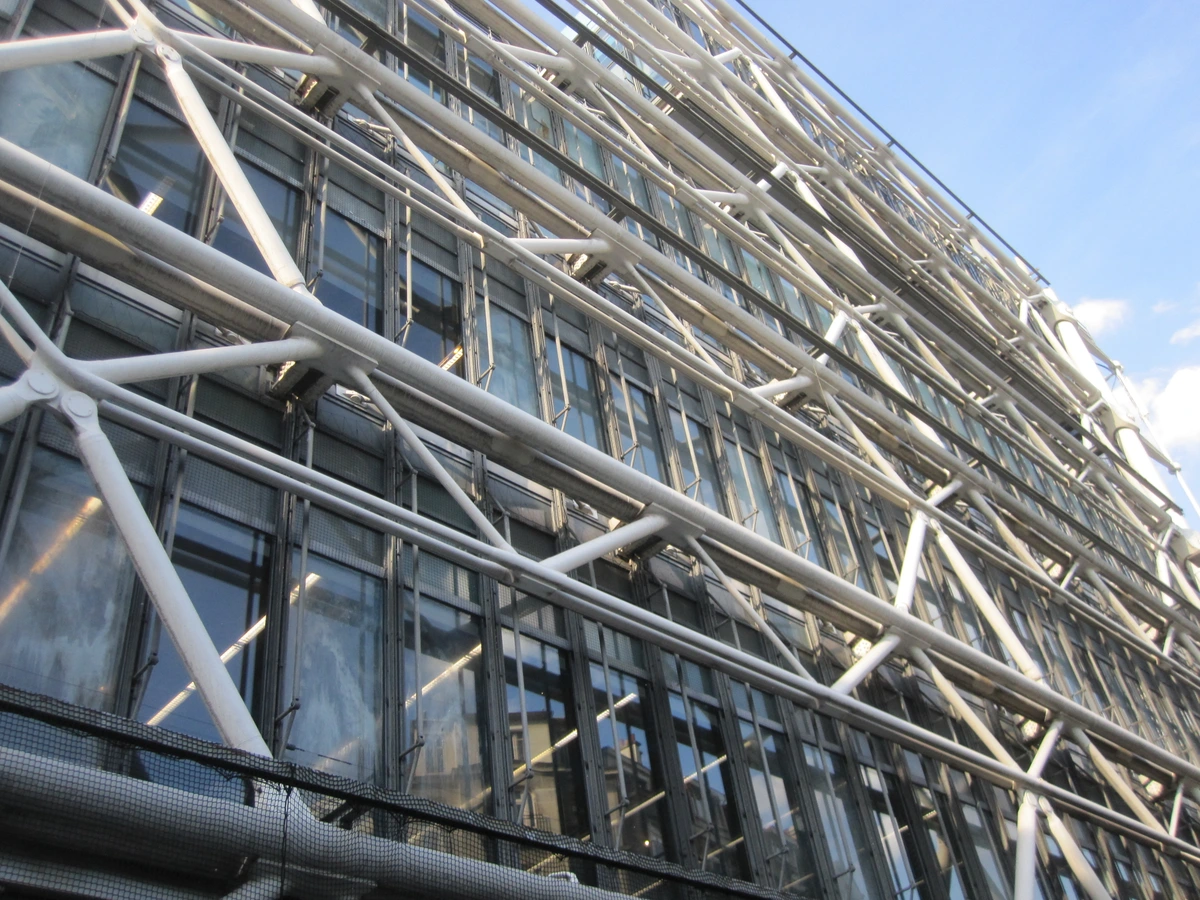
While Juan Gris, due to his shorter life and more introspective nature, may not have achieved the widespread household fame of some of his more boisterous contemporaries during his lifetime, his work has, thankfully, been the subject of intense critical attention and numerous major exhibitions posthumously. This is where the quiet genius truly gets his magnificent, well-deserved due. It's a reminder that true artistic impact isn't always measured by immediate celebrity, but by enduring influence and intellectual depth. It's fascinating to see how his carefully constructed worlds continue to captivate audiences and scholars alike, decades after his passing. I often think about how many artists only achieve their full recognition after they're gone – a bittersweet truth, wouldn't you agree? It’s a bit like a brilliant scientist whose theories aren't fully appreciated until later generations build upon them. His works are not merely paintings; they are cornerstones, vital pieces in the collections of some of the world's most prestigious museums. Beyond the collections often cited in general overviews, you will find extensive and significant holdings at the Museo Nacional Centro de Arte Reina Sofía in Madrid (a truly fitting home for the Spanish master!), the Centre Pompidou in Paris, and the Museum of Modern Art (MoMA) in New York, where his contributions to Cubism are prominently displayed, illustrating his foundational role. Other notable institutions that proudly house his masterpieces include the Solomon R. Guggenheim Museum in New York, the Art Institute of Chicago, the Philadelphia Museum of Art, the Kröller-Müller Museum in the Netherlands, and the Tate Modern in London, among many others scattered across Europe and North America, a testament to his global artistic reach and enduring importance. When you see a Gris in person, it's not just a viewing; it's an encounter with a carefully constructed universe. It's a chance to witness the meticulous detail and vibrant harmonies he created up close, an experience I highly recommend. I remember seeing a Gris at the Reina Sofía once, and it truly felt like I was looking into the mind of an architect designing a new kind of visual reality. Major retrospectives have been absolutely crucial in solidifying his position as a central, indispensable figure in Cubism and 20th-century art. A particularly significant one, "Juan Gris" at the National Gallery of Art in Washington D.C. in 1999-2000 (which then traveled to the Metropolitan Museum of Art in New York and the Estorick Collection of Modern Italian Art in London), provided an unparalleled opportunity to survey the breadth and depth of his career. More recently, institutions like the Kröller-Müller Museum have also hosted focused exhibitions, further cementing his legacy. These meticulously curated exhibitions have allowed generations of art lovers, scholars, and aspiring artists to deeply appreciate the intellectual rigor, the aesthetic beauty, and the profound formal innovation of his compositions. They often reveal new insights into his methodical yet deeply poetic approach. If you ever, ever get a chance to see his work in person, seize it without hesitation! There’s an undeniable magic, a certain tactile quality to his papier collé and the vibrant, almost jewel-like depth of his colors, that no reproduction, however excellent, can truly capture. It's an experience of structural harmony in person that truly elevates the understanding, revealing the subtle brilliance of his constructed worlds, a quiet power that is both intellectual and deeply moving. It reminds me of how much is lost in a flat image versus standing before the real thing, feeling the artist's presence in every carefully placed element.
Juan Gris's Enduring Motifs: A Symphony of Everyday Objects and Structural Prowess
One of the fascinating aspects of Gris’s consistent vision is his frequent return to a specific lexicon of objects. These weren’t chosen for their grand narrative potential or overt symbolism, but rather for their formal qualities – their shapes, their textures, their ability to be fragmented and reassembled in visually compelling and intellectually rigorous ways. It’s like a musician who keeps returning to the same notes, but creates an entirely new melody each time, each variation revealing new depths and complex harmonies. This deliberate constraint allowed him to endlessly explore the possibilities of Cubist representation, proving that profound artistic statements could be made from the seemingly mundane, transforming the ordinary into the monumental. He found an entire universe of formal exploration within the confines of a few chosen objects, a remarkable feat of artistic dedication and insight. It’s a testament to his unwavering commitment to his artistic vision and his belief in the power of formal invention.
Motif  | Significance in Gris's Work | Artistic Implication | Key Examples |
|---|---|---|---|
| Musical Instruments (Guitars, Mandolins, Violins) | Symbolize harmony, sound, and abstract structures. Their complex, yet recognizable, forms offered endless possibilities for geometric deconstruction and reassembly, serving as a perfect metaphor for the constructive nature of his Cubism. He often imbued them with a human-like presence. | Allows for rich exploration of curvilinear forms against geometric planes, creating a dynamic interplay. Evokes a sense of crafted beauty and inner life, suggesting a silent symphony within the composition, and hinting at the artist's own appreciation for order and rhythm. They become a stage for the drama of form, a silent narrative unfolding. | Guitar and Mandolin (1919), Guitar and Fruit Bowl on a Table (1917) |
| Bottles, Glasses, Fruit Bowls | Universally recognizable domestic objects, ripe for formal experimentation. They were perfect for exploring volume, transparency, and solidity without relying on traditional illusionism, becoming ideal vehicles for his abstract-to-concrete method. Their familiarity grounded his revolutionary forms. | Ideal for dissecting and reconstructing volumes, playing with transparency and reflection, and exploring the illusion of depth without traditional perspective in art. They allowed him to create a new kind of spatial logic, demonstrating Cubism's ability to transcend single viewpoints and offer a multifaceted reality. They are transformed from mundane items into profound studies of perception. | Bottle and Glass (1911), The Fruit Bowl (1917) |
| Newspapers & Books | Incorporates textual elements, real-world fragments (papier collé), and a sense of intellectual engagement and contemporary life. These fragments anchor the abstract composition to everyday reality while simultaneously questioning the nature of representation itself. | Blurs the line between reality and representation, inviting the viewer into a sophisticated intellectual game. Adds textural variety and a contemporary note to the compositions, prompting reflection on the nature of truth and artifice in art, and the role of information in modern life. | Still Life with a Checked Tablecloth (1915), Fruit Bowl and Newspaper (1916) |
| Playing Cards & Pipes | Small, intimate, personal objects that suggest presence, leisure, and quiet contemplation. They added a touch of everyday humanity to his rigorous compositions, often serving as subtle self-portraits or reflections of his quiet intellectual life within the Bohemian artistic community. | Offers compact, distinct geometric shapes that are easily integrated into his structured forms. Allows for subtle allegorical or symbolic undertones without overt narrative, hinting at the artist's personal world and the quiet moments of creation in his studio, inviting a more intimate connection with the viewer, a glimpse into his private universe. | The Pipe (1917), Playing Cards (1914) |
| Fruit (Apples, Grapes) | Organic forms that offer a delightful contrast with geometric elements; a reimagining of the classical still life tradition through a Cubist lens. Their natural curves provided a foil to his rectilinear structures, demonstrating Cubism's versatility. | Introduces lush, vibrant color and soft contours, demonstrating his ability to integrate varied forms into a coherent Cubist whole, softening the geometric edges with natural beauty and proving the immense versatility of the Cubist vocabulary. They are miniature worlds of color and form, perfectly suited for his synthetic approach, reminding us that beauty can be found in the simplest things. | Pears and Grapes on a Table (1913), Fruit Dish and Bottle (1914) |

These recurring motifs speak volumes about Gris’s disciplined yet deeply poetic approach. He found endless inspiration in the ordinary, transforming the mundane into the monumental through the lens of Cubism. This consistent engagement with a defined set of subjects demonstrates a profound artistic focus, allowing him to endlessly refine his visual language and push the boundaries of pictorial representation.
Frequently Asked Questions (FAQ) about Juan Gris
What was Gris's relationship with music?
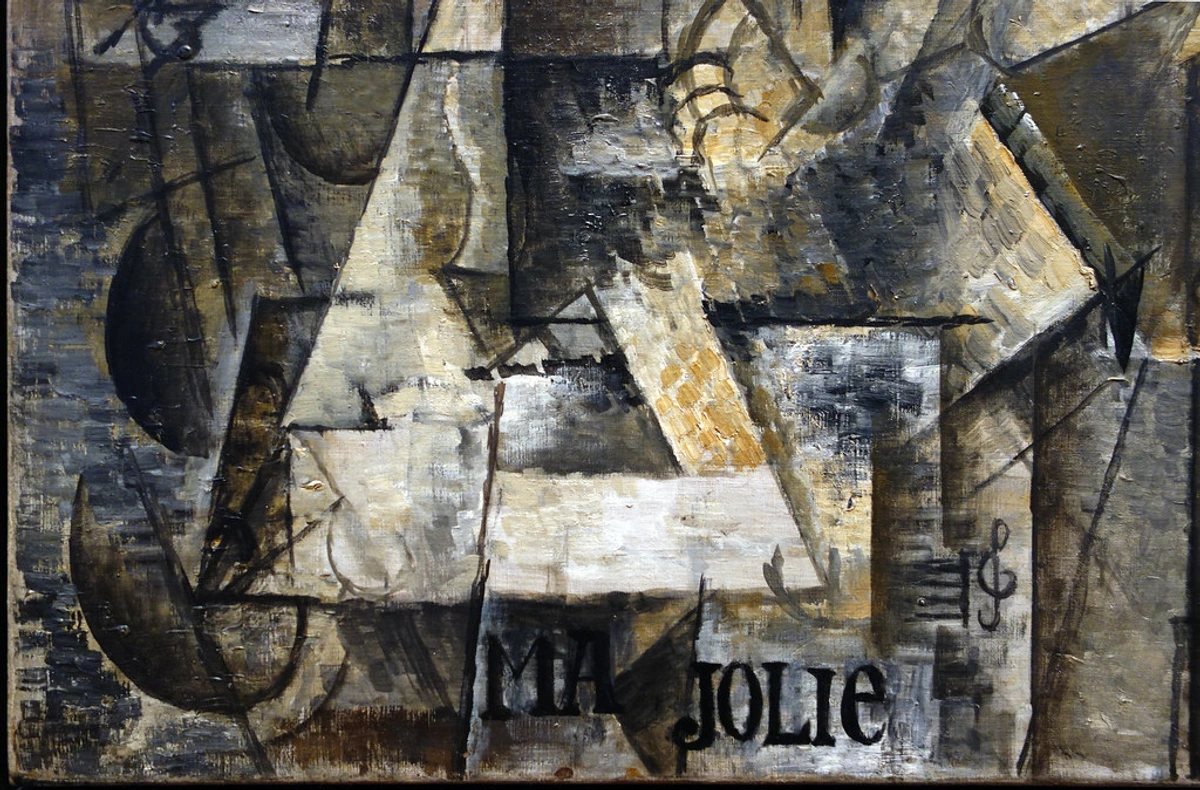
Music held a profound significance for Juan Gris, both personally and artistically, which is why musical instruments feature so prominently in his still lifes. He was not just depicting objects; he was, in a sense, composing with them. The structured yet harmonious nature of music, with its complex interplay of rhythm, melody, and harmony, perfectly mirrored his own Cubist philosophy. He saw parallels between breaking down musical notes and reassembling them into a symphony, and his own process of deconstructing and reconstructing visual reality. The forms of guitars, mandolins, and violins offered intricate curves and resonant shapes that were ideal for Cubist fragmentation and reassembly, allowing him to explore both volume and flatness. For Gris, music was a language of abstract order and beauty, much like his Cubism, making it a natural and recurring motif in his work and a constant source of inspiration for his aesthetic principles. It's almost as if each painting is a silent piece of music, waiting for the viewer to perceive its underlying rhythm and harmony.
What inspired Juan Gris?
Gris drew inspiration from a diverse and rich tapestry of sources, but primarily his profoundly analytical mind and his desire for visual order. His early training in mechanical drawing instilled in him a deep love for precision, structure, and the inherent geometry of forms – a foundational skill that gave him an almost unfair advantage in understanding how things fit together. Philosophically, he was deeply influenced by the ideas of the French philosopher Henri Bergson, particularly Bergson's concepts of intuition, duration, and the nature of reality, which likely resonated deeply with Gris's "deductive method" of building compositions from abstract ideas, of making the abstract concrete—a way of creating a new reality rather than merely depicting an existing one. Bergson's emphasis on subjective experience and the fluidity of time may have provided a theoretical framework for Cubism's multi-perspectival views. This intellectual foundation underpinned his systematic approach. Visually, he was, of course, profoundly inspired by the groundbreaking Cubist innovations of Picasso and Braque, absorbing their revolutionary spirit. But rather than merely imitating, he transformed their language through his unique, systematic lens, always aiming to add a classical sense of order, vibrant color, and formal resolution. His frequent subjects were everyday objects—musical instruments (especially guitars and mandolins), newspapers, bottles, fruit bowls, and playing cards—allowing him to focus entirely on the formal problems of Cubism without the distraction of narrative or overt emotional content. He found profound inspiration in the ordinary, seeing the potential for extraordinary formal exploration in the most humble of subjects. It was this unique intellectual framework that allowed him to see the profound in the mundane, turning simple still lifes into profound philosophical statements, a true testament to the power of artistic introspection and systematic inquiry. It was a fusion of practical skill, philosophical inquiry, and visual innovation.
How did Gris use light and shadow?
Juan Gris’s use of light and shadow was distinct from traditional chiaroscuro, which aimed to create a realistic illusion of three-dimensional form. Instead, in his Cubist works, light and shadow were often treated as independent planar elements, almost as if they were solid shapes themselves. He would apply areas of dark and light strategically across fragmented surfaces to define forms and create a sense of structure, but not necessarily to mimic a single, consistent light source. This approach contributed to the flattened yet structured quality of his compositions, emphasizing the two-dimensionality of the canvas while still conveying a sense of volume and spatial interplay. It was another way he broke from traditional representation, using these elements as tools for construction rather than illusion, making them active participants in his visual grammar. He wasn't trying to trick the eye; he was engaging the mind.
What kind of objects did Juan Gris paint?
Juan Gris's subject matter predominantly consisted of still life compositions and, to a lesser extent, portraits. You'll almost invariably encounter familiar, domestic objects in his works: musical instruments like guitars and mandolins, various bottles, glasses, fruit bowls laden with apples or grapes, playing cards, pipes, and fragments of newspapers or books. He deliberately favored these everyday, unheroic objects because they provided him with the perfect vehicle to explore the purely formal problems of Cubism—the intricate arrangement of shapes, colors, and textures—without getting bogged down in narrative or deep emotional content. They were, in a way, his formal vocabulary, allowing him to endlessly rearrange and re-contextualize visual information, turning the commonplace into profound artistic statements, a testament to his belief that even the most humble objects could yield complex intellectual investigations. For Gris, these objects were not just things to be depicted, but elements to be integrated into a larger, coherent, and rigorously designed pictorial structure. His portraits, while less numerous than his still lifes, are equally striking and showcase his unique ability to depict friends and colleagues within his signature structured Cubist framework, capturing their essence through a geometric lens, often with a profound sense of introspection. It's a fascinating example of how artistic genius can find endless variations within a seemingly limited range of subjects. It's like a master chef finding a thousand ways to prepare a single ingredient – the possibilities are endless for a truly creative mind, especially one so committed to formal exploration.
What was Gris's relationship with realism?
This is a nuanced question, and one that gets right to the heart of Cubism! While Cubism dramatically departed from traditional illusionistic realism, Juan Gris's art, in its own unique way, maintained a strong, albeit re-imagined, connection to realism. He wasn't seeking to abandon reality, but rather to reconstruct it in a more conceptually truthful and comprehensive manner. His "deductive method" meant starting with abstract forms and then working them towards a recognizable object, ensuring that the final composition, no matter how fragmented or multi-faceted, always resolved into something legible. He aimed for a kind of "poetic realism," where the essence of the object was conveyed through its underlying structure and form, rather than its superficial appearance. For Gris, the fragmented planes and multiple viewpoints weren't about distorting reality; they were about revealing a deeper, more profound truth about an object's existence in space and time. It’s a realism of the mind, I think, not just of the eye, offering a more complete understanding of the subject than a single, fixed viewpoint ever could.
What was Juan Gris's style?
Juan Gris's artistic style is best described as Analytical and, most notably, Synthetic Cubism, but always with a distinctive emphasis on order, clarity, and a rich, vibrant color palette. Unlike the often monochromatic and highly fragmented works of early Analytic Cubism by Picasso and Braque, Gris injected a foundational architectural rigor into his compositions. He adopted a unique "deductive" method, starting from abstract geometric principles and then building towards recognizable forms, rather than deconstructing existing objects. His work is characterized by flat, interlocking planes, precise outlines, and a sophisticated reintroduction of color, used not just decoratively but as a structural element. He also masterfully integrated papier collé (collage) elements, blurring the lines between art and reality and adding rich textural variety. In his later years, his style evolved into what is often called "classical Cubism" or "poetic realism," showcasing softer forms, richer atmospheric qualities, and a deeper sense of harmony, a testament to his continuous refinement of the Cubist language. He was the Cubist who brought a sense of serene, intellectual beauty to the revolution, a true master of design in art. His unwavering commitment to a systematic yet aesthetically pleasing approach truly set him apart. Think of him as the Renaissance master of Cubism, infusing new forms with timeless principles. It’s a style that speaks to both the intellect and the eye, achieving a rare balance of rigor and aesthetic pleasure.
What is Juan Gris best known for?
Juan Gris is widely celebrated as one of the three foundational figures of Cubism, standing shoulder-to-shoulder with the titans Pablo Picasso and Georges Braque. He is particularly revered and best known for his pivotal and leading role in the development and refinement of Synthetic Cubism. It was in this phase that he truly flourished, distinguishing himself by reintroducing vibrant, harmonious colors and systematically employing his unique "deductive method" to construct his compositions, rather than deconstructing them. His work brought an unparalleled sense of order, logic, and aesthetic beauty to the revolutionary Cubist idiom, demonstrating its potential for elegant resolution and setting a precedent for later abstract and geometric art movements, solidifying Cubism's place as a cornerstone of 20th-century abstract art. His contributions ensured that Cubism was not just about breaking apart, but also about building anew with profound intellectual and aesthetic intention. When people think of a 'well-made' Cubist painting, often what they're seeing is the influence of Gris's meticulous hand. He was not only a painter but also a profound theorist, articulating the principles that underpinned his revolutionary vision.
What was Gris's artistic philosophy?
Juan Gris's artistic philosophy was profoundly intellectual, systematic, and deeply reflective. He championed a deductive approach, believing in starting from an abstract idea or a predetermined arrangement of forms and colors, and then working meticulously to make that abstraction "concrete" and recognizable as an object. This was a radical reversal of the traditional artistic process, which typically moves from the concrete observation of reality to its abstract representation. He relentlessly sought to bring order, clarity, and a classical sense of harmony to the fragmentation that characterized early Cubism. His ultimate aim was a "classical Cubism" that masterfully combined modern formal innovation with timeless principles of balance and aesthetic coherence, a true synthesis of intellect and aesthetics. Moreover, his work was a profound, ongoing exploration of the intricate relationship between artistic representation and objective reality, constantly challenging viewers to question the very nature of what they see and how they perceive it. He was, in essence, a visual philosopher, transforming paint and paper into rigorous intellectual arguments, making each artwork a carefully constructed inquiry into perception, a quiet but powerful challenge to conventional ways of seeing. For Gris, the canvas was less a window to the world, and more a meticulously planned stage where a new, more truthful reality could be constructed. This dedication to a new form of truth, built on logical principles, set him apart as a foundational theorist of modern art.
What are Juan Gris's most famous paintings?
While Juan Gris's oeuvre is extensive and consistently high in quality, a few works stand out as particularly iconic and representative of his revolutionary contributions to Cubism. These are the pieces that often define his legacy, offering crucial insights into the evolution of his unique style and philosophical approach:
- Portrait of Picasso (1912): A powerful early work that demonstrates his unique, structured approach to Analytic Cubism, offering a rigorous, almost architectural interpretation of his friend and mentor, even while subtly asserting his own distinctive style. Its geometric precision and psychological depth make it a standout. It's like seeing the blueprint of Picasso's artistic force.
- Still Life with a Checked Tablecloth (1915): A quintessential example of Synthetic Cubism, showcasing his masterful integration of papier collé and his ability to create vibrant, complex compositions from everyday objects. The playful interplay between illusion and reality within the painting is truly captivating, constantly asking: what's real, and what's rendered?
- Fruit Bowl and Newspaper (1916): Another superb Synthetic Cubist work that exemplifies his "deductive method," fusing bold color with precise structure to create a new pictorial reality. It’s a powerful visual argument for Cubism’s enduring intellectual and aesthetic appeal, transforming the mundane into the monumental. This piece is a masterclass in making the abstract concrete.
- The Open Window (1921): A beautiful representation of his later "classical Cubism," where the sharp fragmentation softens into more fluid forms, and interior still life merges poetically with an exterior landscape. This work is a lyrical testament to his evolving maturity and deeper engagement with classical themes, a tranquil conversation between inside and out.
- The Guitar and the Music Score (1926): A profound late work, demonstrating a distillation of his ideas into an ethereal elegance, often employing curvilinear forms and delicate translucency, a meditative crescendo to his career. It feels like a serene echo of his entire artistic journey, full of quiet power, a final, poignant statement.
These masterpieces are vital for understanding the depth and evolution of his artistic genius, each a carefully constructed argument for his unique vision of Cubism. They are the cornerstones of his quiet revolution.
How is Juan Gris different from Picasso?
While both Juan Gris and Pablo Picasso were indisputable pioneers and titans of Cubism, their fundamental approaches and temperaments differed significantly. Picasso was often more intuitive, impulsive, and explosive in his creative process, frequently beginning with a real object and aggressively deconstructing it, almost in a feverish act of artistic demolition and reassembly. He was, if I'm being honest, a bit of a creative force of nature, driven by instinct and a restless desire to constantly innovate. Gris, by contrast, was consistently more systematic, intellectual, and contemplative. He started with an abstract structural idea of shapes and colors and meticulously worked towards a recognizable object – his famous "deductive method." It was like Picasso was a whirlwind, constantly tearing down and reconstructing, driven by raw instinct, while Gris was the master builder, meticulously laying brick by brick with a clear blueprint in mind. Another key differentiator is color: Gris was instrumental in reintroducing rich, harmonious, and vibrant color into Cubism, making it an integral structural element, whereas early Analytic Cubist Picasso largely favored a more monochromatic, austere palette. While Picasso sought to break and explore, pushing the boundaries of what art could be, Gris sought to build and refine, bringing a profound sense of resolution and aesthetic purpose to the Cubist project. Their differences are what made the movement so rich and multifaceted, offering two complementary paths to revolutionizing art. It's truly a study in contrasts: raw genius versus refined intellect, both essential to the Cubist revolution. I think of it as the difference between a spontaneous jazz improvisation (Picasso) and a perfectly structured classical symphony (Gris) – both brilliant, but in fundamentally different ways.
How did Juan Gris influence other artists?
Juan Gris's systematic and intellectually rigorous approach to Cubism, particularly his development of Synthetic Cubism, had a profound and lasting influence on subsequent generations of artists and art movements. His emphasis on clear, constructive forms, rather than purely deconstructive analysis, provided a crucial bridge between the radicalism of early Cubism and later efforts to restore order and classical principles to modern art. This "bridge" function is, I think, one of his most underrated contributions, allowing modernism to evolve without sacrificing its intellectual core.
Key areas of influence include:
- Purism: His clean lines, geometric precision, and structured compositions were direct precursors to Purism, a movement championed by Amédée Ozenfant and Le Corbusier, who sought a purified, rational aesthetic after Cubism. They explicitly admired Gris's sense of order. Purism, I think, saw in Gris's work a model for how modern art could retain its intellectual rigor without succumbing to visual chaos.
- Art Deco: The elegant geometry, bold forms, and sophisticated use of color in Gris's Synthetic Cubist works significantly shaped the aesthetic of the Art Deco movement, which flourished in the 1920s and 30s across design, architecture, and fine art. This connection highlights how fine art movements can deeply inform broader cultural aesthetics. You can almost see his hand in the streamlined forms of Art Deco skyscrapers or furniture designs.
- Later Abstract Art: His "deductive method" of building compositions from abstract principles rather than analyzing pre-existing objects influenced many abstract artists who explored geometric abstraction and formal purity. He demonstrated how abstraction could be a starting point, not just an end result of breaking down reality. This was a hugely important conceptual leap for abstract art.
- Collage and Mixed Media: His pioneering and sophisticated use of papier collé expanded the possibilities of incorporating real-world elements into painting, directly impacting subsequent developments in collage and mixed media art throughout the 20th century. It opened up a whole new world of material possibilities for artists.
Gris proved that Cubism could be both revolutionary and classically harmonious, laying a foundational grammar for modern art that resonated far beyond his tragically short life. His influence is a testament to the power of thoughtful innovation.
What was Juan Gris's full name?
Juan Gris's birth name was José Victoriano Carmelo Carlos González-Pérez – quite a mouthful, I know! It’s a name that evokes a different era and perhaps a more traditional path than the one he ultimately forged. He adopted the more concise and perhaps more art-world friendly pseudonym "Juan Gris" later in his life, upon his arrival in Paris in 1906. "Juan" is a common Spanish name equivalent to "John," and "Gris" means "gray" in Spanish, a choice that, as I mentioned earlier, might seem ironic for such a brilliant colorist, but it truly hints at the underlying structural and intellectual rigor that was the bedrock of his art. It's a name that, to me, perfectly encapsulates his duality: the warmth of his Spanish heritage and the cool, rational elegance of his artistic vision, a perfect blend of passion and precision, a unique identity forged at the crossroads of tradition and innovation. It feels like he chose a name that was both a nod to his origins and a subtle statement about his artistic philosophy.
Was Juan Gris a Cubist?
Yes, absolutely, unequivocally! Juan Gris is not just considered a Cubist; he is universally acknowledged as one of the most important and influential artists of the entire Cubist movement. While he joined the movement slightly after Picasso and Braque had already initiated its first phase, he quickly became a leading, defining figure, particularly as the foremost painter and theoretician of Synthetic Cubism. His contributions were not merely derivative; they were foundational in shaping the direction and aesthetic of one of the 20th century's most revolutionary art movements, infusing it with his signature precision and chromatic brilliance. His work cemented Cubism's place as a language capable of both rigorous analysis and profound aesthetic harmony. To deny him the title of Cubist would be like denying a master architect built a skyscraper because someone else invented the elevator.
What techniques did Juan Gris use?
Juan Gris employed a range of classic Cubist techniques, such as rendering objects from multiple, simultaneous viewpoints (though often more harmoniously integrated than in early Analytic Cubism) and flattening pictorial perspective to emphasize the two-dimensionality of the canvas. However, he was an unparalleled master of papier collé (a type of collage using pasted paper elements), seamlessly integrating materials like newspaper clippings, sheet music, and wallpaper fragments directly into his paintings. These weren't mere decorative additions; they were crucial structural and textural components that challenged the viewer's perception of reality and enriched the surface of the canvas, pushing the boundaries of traditional painting by blurring the real with the represented. His most distinctive and intellectually profound technique, as we've discussed, was his conceptual, "deductive" approach to composition, building forms from abstract ideas rather than dissecting existing objects. This allowed him to maintain a unique sense of geometric order and a vibrant, intentional use of color, making his compositions both rigorous and visually captivating and solidifying his position as a true innovator in the Cubist lexicon. Additionally, his precise use of line and clearly defined planes contributed to the architectural feel of his works, transforming each canvas into a meticulously constructed visual argument. It's like he was conducting a visual orchestra, where every element played its part in the overall harmony, creating a complex and satisfying visual experience.
Where can I see Juan Gris's art?
His extraordinary work is proudly held in major art museums around the globe. As mentioned earlier, key collections with significant holdings can be found at the Museo Nacional Centro de Arte Reina Sofía in Madrid (a truly fitting home for the Spanish master!), the Centre Pompidou in Paris, and the Museum of Modern Art (MoMA) in New York. Additionally, you'll discover his pieces in other prestigious institutions such as the Solomon R. Guggenheim Museum, the Art Institute of Chicago, the Philadelphia Museum of Art, the Tate Modern in London, and the Kröller-Müller Museum in the Netherlands, among many others across both Europe and North America. A quick check of these museums' online collections is often a great way to explore his work from home, but nothing beats seeing them in person to appreciate the subtle textures, the carefully constructed layers, and the vibrant, almost jewel-like depth of his colors. It’s an experience that truly elevates the understanding of his genius, revealing the quiet power and meticulous craftsmanship that define his art. Trust me, the difference between seeing a reproduction and the actual canvas is immense – it's where the magic truly lives.
What were Juan Gris's artistic periods?
Juan Gris's artistic journey, though tragically brief, was incredibly intense and can generally be understood in a few key phases:
- Early Years / Graphic Art (pre-1911): His formative period in Madrid and early years in Paris, where he honed his skills in mechanical drawing and as a graphic artist for satirical magazines, laying the groundwork for his precise compositions and developing a keen eye for visual storytelling. This was his apprenticeship in visual rhetoric, shaping his later clarity.
- Analytic Cubism (1911-1912): His initial engagement with Cubism, characterized by a rigorous, geometric approach to dissecting objects, often with a muted palette, but always with his signature clarity and an almost architectural sense of structure. He quickly brought his unique order to this revolutionary phase, imposing logic on fragmentation.
- Synthetic Cubism (1912-1919): His most influential period, where he pioneered the constructive approach, reintroducing vibrant color and extensive use of papier collé, moving from deconstruction to synthesis, and creating visually rich and intellectually engaging works. This is arguably where he truly defined his legacy within the movement, turning chaos into cosmos.
- Poetic Realism / Later Works (1920-1927): A mature phase marked by softer forms, richer atmospheric qualities, and a deeper engagement with classical ideas of harmony and balance, leading to what is often called 'classical Cubism' or 'poetic realism.' This period shows a refinement of his earlier ideas, imbued with a quiet contemplation and an ethereal elegance, a serene distillation of his profound intellectual journey.
Each period showcases his consistent intellectual rigor and evolving mastery of the Cubist language, always pushing it towards greater harmony and formal resolution, solidifying his place as a visionary. His trajectory is a compelling study in artistic evolution, a journey from initial engagement to profound, personal synthesis.
What impact did Juan Gris have on modern art?
Juan Gris's impact on modern art is profound and multifaceted. He was instrumental in evolving Cubism from its early analytical phase to the more structured and colorful Synthetic Cubism. His "deductive method," starting from abstract ideas to construct recognizable forms, provided a critical theoretical framework for abstract art that followed. He significantly influenced movements like Purism and Art Deco with his emphasis on clarity, order, and geometric precision. Beyond specific movements, his work demonstrated that avant-garde art could possess both intellectual rigor and classical harmony, offering a systematic approach to artistic creation that inspired countless artists to explore composition, color, and form in new, coherent ways. His legacy is one of bringing logic and beauty to revolution, shaping the visual language of the 20th century. It’s a testament to the enduring power of a vision that sought not just to break, but to meticulously rebuild and refine. He taught us that even in revolution, there can be a profound, underlying order and beauty, making his influence truly pervasive across the entire trajectory of modernism.
What were Juan Gris's health struggles?
Juan Gris's life was tragically cut short, as he died in Paris in 1927 at the young age of 40. His death was primarily attributed to kidney failure and complications from uremia, a severe condition related to kidney malfunction. His health had been deteriorating for some time, marked by struggles with chronic asthma and pleurisy, which likely exacerbated his underlying conditions. Despite seeking extensive medical treatment and even periods of rest away from Paris, he ultimately succumbed to his illness, bringing an untimely end to a career that was still in its creative prime and promised even greater innovations. His early demise remains one of the great "what ifs" of 20th-century art history, leaving us to wonder what more masterpieces he might have created. It's a poignant reminder of the fragility of even the most brilliant lives. These health struggles are often hinted at in the quiet, contemplative nature of some of his later works, imbuing them with a deeper sense of introspection and perhaps a sense of urgent, concentrated creativity. It's truly heartbreaking to consider the art lost to time due to his untimely passing. One can only imagine the further artistic revelations he might have gifted us had he lived a full life.
Conclusion: The Quiet Architect's Enduring Symphony
Juan Gris's tragically short life belies the immense and profound impact he had on modern art. Far from being merely a follower of Picasso and Braque, he was a crucial architect of Cubism's enduring legacy, a meticulous logician who infused the revolutionary language with an unparalleled sense of order, vibrant color, and poetic logic. His unique "deductive method" didn't just transform how art was made; it transformed how we understand the relationship between abstraction and reality, paving the way for countless future movements. He showed us that the avant-garde could be both intellectually rigorous and classically beautiful.
His canvases are not just paintings; they are meticulously constructed arguments for a Cubism that is both intellectually rigorous and aesthetically harmonious. They invite us to look deeper, to understand the underlying structure, and to appreciate the profound beauty that emerges when fragmentation is resolved into a coherent, thoughtful whole. Gris proved that innovation doesn't always have to be loud; sometimes, the most revolutionary impact comes from the quietest, most systematic genius. So, the next time you step into a museum, seek out a Juan Gris. You might just discover a new favorite, an artist who brought a beautiful, lasting symphony to the revolutionary rhythm of Cubism, and whose influence continues to resonate through the corridors of art history. His work is a powerful reminder that profound impact can come from a mind that dares to build beauty from abstraction, a lesson I often reflect on in my own abstract works, constantly seeking that same rigorous harmony and intellectual depth. It's a reminder that art isn't just about what you see, but how you choose to see, and how you choose to build.
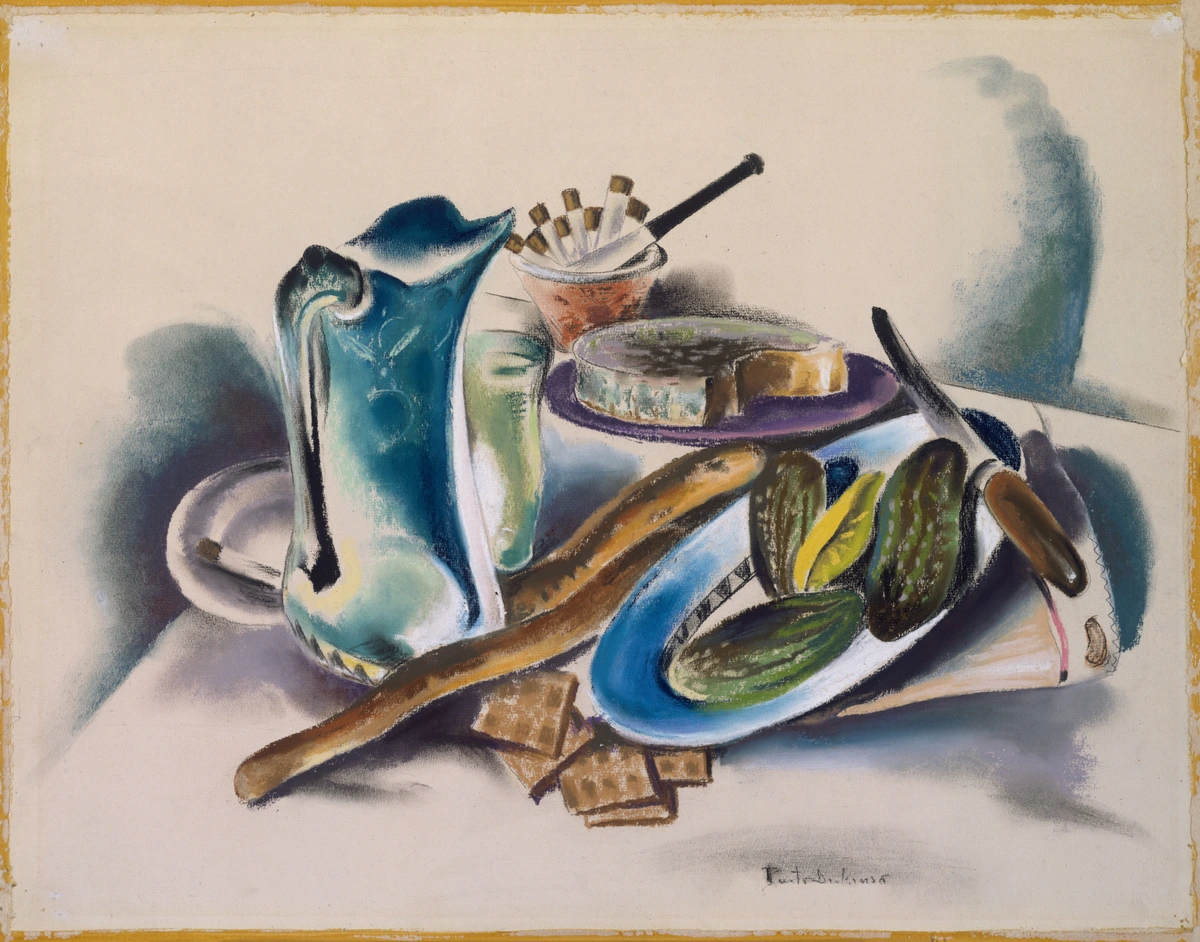




credit, licence