Robert Delaunay: Orphism's Dazzling Visionary & Abstract Art's Colorful Birth
Explore Robert Delaunay's revolutionary Orphism! Discover how he transformed Cubism into a vibrant symphony of pure color & rhythm, pioneering modern abstract art with dazzling optical effects and a unique personal touch.

Robert Delaunay: Orphism's Dazzling Visionary of Pure Color and Rhythm
I often think about Robert Delaunay, this visionary who looked at a sunset and didn't just see orange vibrating against purple, but truly felt it as a 'silent, powerful chord.' That's the kind of revelation that sets an artist on a new path, and for Delaunay, it became a lifelong obsession: the pursuit of color's intrinsic music, its ability to create form and movement all by itself. This journey into his vibrant world is, frankly, one of the most exciting explorations you can make in modern art. It’s an invitation to rediscover how we feel color.
Born in Paris in 1885, Delaunay’s early path wasn't typical. His mother, a countess, afforded him a certain independence, allowing him to skip formal art school. Instead, he chose an apprenticeship with a stage and set design company. This unconventional route, I believe, proved to be a stroke of genius. Imagine learning firsthand about the dramatic impact of light, shadow, and color on a grand, theatrical scale every single day! This immersion didn't just teach him about visual appeal; it was a practical education in how color could manipulate perception, create the illusion of depth on a flat surface, and even guide an audience's focus—laying the groundwork for his later understanding of color as a structural force.
He wasn't content with merely depicting the world; he wanted to capture its rhythm and energy through the dynamic interplay of hues. While his contemporaries like Picasso and Braque were deconstructing forms into fragmented, often monochromatic planes in their groundbreaking explorations of Cubism—think of the earthy tones and stark geometries in early Cubist works like Picasso's Les Demoiselles d'Avignon or Braque's still lifes with their muted greens and browns, an almost academic dissection of form that felt like looking at the world through a shattered mirror—Delaunay found himself craving something more vibrant. I can almost hear him thinking, "It's brilliant, yes, but where's the life? Where's the color? The soul?" He wanted a revolution, not just of form, but of pure, unadulterated color, a direct ancestor to all abstract art that followed.
From Chevreul's Science to Orphism's Sensation: Delaunay's Colorful Rebellion
Delaunay's journey began with experiments in Impressionism and Post-Impressionism, absorbing lessons of light and atmosphere from artists like Seurat and Signac. He was particularly fascinated by their scientific approach to color, known as Pointillism or Divisionism, which involved applying small dots of pure color that would optically blend in the viewer's eye. Think of it like a newspaper photograph, where tiny dots of ink create a full image when viewed from a distance. This rigorous understanding of color theory, largely derived from the chemist Eugène Chevreul's seminal work, Principles of Harmony and Contrast of Colours (1839)—which meticulously explored how adjacent colors influence each other—profoundly influenced Delaunay. He appreciated the systematic breakup of light and color, and how early photographic reproduction and color lithography hinted at color's inherent qualities, yet he was restless, always pushing further. Unlike Impressionism's aim to capture fleeting atmospheric light, Delaunay saw the potential for breaking down traditional perspective in Cubism, but felt it lacked emotional punch and, crucially, a vibrant chromatic core. He wanted to use color not just as a descriptive element, but as the very structure and subject of a painting, creating an internal, vibrant light within the painting itself, a light born from color's inherent energy. It was a truly radical notion at the time, leading him to explore the optical properties of color in a way few others dared. His explorations laid the groundwork for entirely new ways artists would use color.
Unveiling Orphism: Painting with Pure Sensation and Cosmic Harmony
This relentless push towards color's autonomy culminated in a groundbreaking theoretical essay he published in 1912, titled "Light." In it, he argued for a painting that would liberate color from its descriptive function, moving beyond mere representation to create form and light through pure chromatic interaction. So, what did this mean for the canvas? For me, it boils down to a few key ideas, practically a manifesto for pure color, anticipating much of abstract art movements to come:
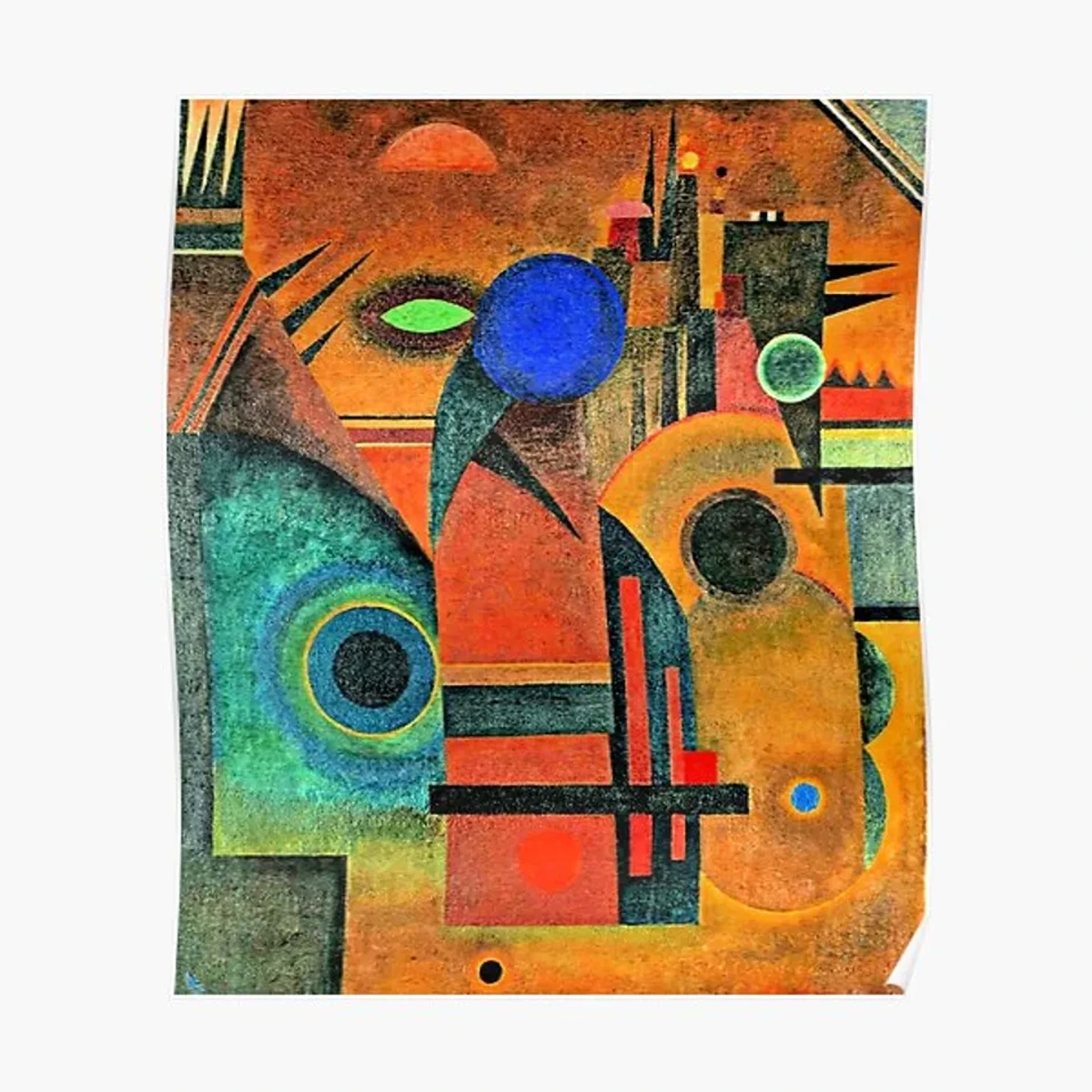
It was around this time, as Delaunay's vibrant, new direction solidified, that the famed poet and art critic Guillaume Apollinaire coined a term for it: Orphism. He drew inspiration from the mythical Greek poet Orpheus, whose music could charm all living things, seeing Delaunay's paintings as a visual symphony, pure and lyrical, where color itself became the expressive force. Orpheus was said to create harmony and beauty, even order from chaos, through his art—a perfect metaphor for Delaunay's aim to build new realities through color. Apollinaire also sometimes called it "Orphic Cubism" to acknowledge its foundational debt to Cubism's structural innovations while emphasizing its definitive divergence into color's expressive, non-representational power. It was a bridge from the analytical deconstruction of form to the lyrical construction of form through color alone, a powerful synthesis that transcended both, retaining Cubism's fragmented planes but infusing them with an explosion of chromatic energy.
The Core Principles of Orphism
- Simultaneous Contrasts (Simultanism): This was the foundational theory developed by both Robert and his equally brilliant wife, the artist Sonia Delaunay. They didn't just observe how colors affected each other; they built an entire artistic philosophy around it. Building on the rigorous color theories of the chemist Eugène Chevreul—whose Principles of Harmony and Contrast of Colours (1839) explained how adjacent colors optically affect each other—the Delaunays believed that placing certain colors next to each other creates an optical vibration, a sense of movement, depth, and rhythm within the eye of the viewer. Imagine the electric buzz created by placing a vibrant orange directly against a deep indigo – it's not just seeing two colors, but feeling their energetic collision, their "simultaneous contrast." Think of the dazzling effect of neon signs flickering against a dark sky, or the intense shimmer you see when looking at finely woven silk with different colored threads. It's not about painting a still life; it's about painting the sensation of light, the energy of seeing. An easy way to experience this yourself is to look at a bright red square on a green background, then look away quickly at a white wall – you'll often see the complementary colors briefly 'vibrate' or appear as afterimages. This wasn't just an optical exercise; it was a pursuit of emotional resonance, believing that pure color could evoke feelings as directly as music.
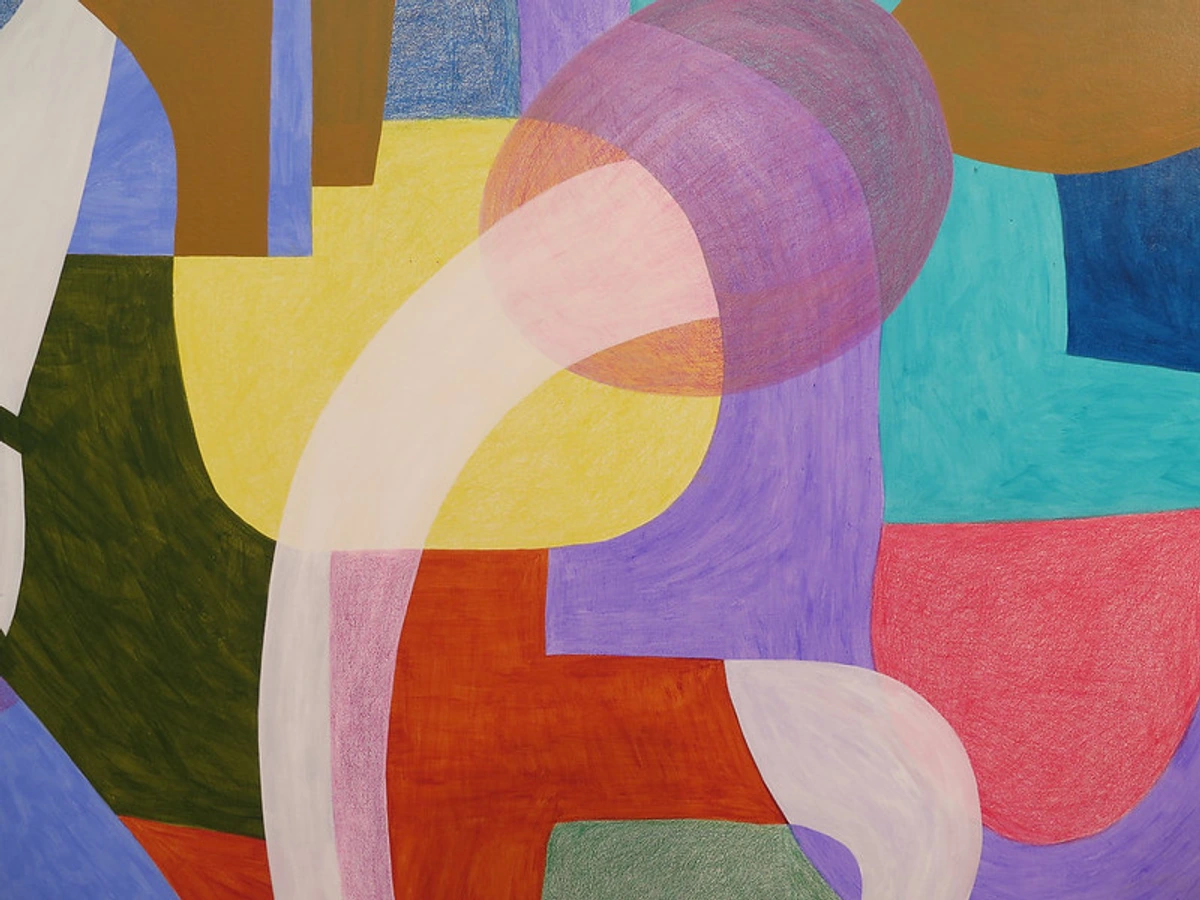
- Color as Form and Light: In an Orphist painting, a circle of pure red isn't just a red circle. It is a focal point, a burst of energy, a 'note' in the composition. The entire structure of the painting is built from these dynamic color relationships, often without the need for traditional lines or outlines. Color creates form, and color is light. Delaunay often achieved this by applying paint in distinct, juxtaposed patches, creating a mosaic-like surface that enhanced the chromatic vibration, allowing the painting to 'sing' with visual music, making it a pure exploration of the elements of art.
- Rejection of the Object and Pure Abstraction: While early Orphist works might still feature recognizable subjects, the ultimate goal was pure abstraction. This meant that the content became the form itself. The painting's meaning and impact would come solely from the arrangement and interaction of pure colors, light, and shapes. Before The First Disc, even abstract explorations often retained echoes of recognizable forms or compositional structures. Delaunay’s work, however, was a bold declaration that color and form could exist as an entirely self-sufficient, abstract reality, much like listening to a symphony by Bach or a piece by Debussy – you don't need a story or lyrics to feel profound emotion, only the intricate interplay of tones and rhythms. This was a radical shift, declaring that art could exist for its own sake, much like music. Think of his iconic Circular Forms series, particularly The First Disc (1913), where interlocking discs of pure, contrasting primary and secondary colors create a dizzying, cosmic dance, utterly devoid of external narrative, focusing solely on the psychology of color. The First Disc, a monumental work measuring over a meter in diameter, epitomized this vision, becoming one of the first truly non-representational paintings in modern art, a visual declaration of color's autonomy and a bold statement that painting could be its own universe.
Think of it this way: if Cubism was about analytically breaking the world into pieces to look at it from all angles, Orphism was about dissolving the world into pure light and color to feel its inherent energy and rhythm, an almost spiritual experience, paving the way for abstract art as we know it.
The Eiffel Tower: A Modernist Muse for Chromatic Exploration
Delaunay was utterly captivated by the modern world, and nothing symbolized the thrilling chaos and dynamic energy of early 20th-century Paris more than the Eiffel Tower. This bold testament to modern engineering and a symbol of burgeoning urban dynamism provided Delaunay with a subject that mirrored his artistic ambitions: a structure that was both iconic and constantly reinterpreted by the play of light and atmosphere. He painted it over and over again, from countless angles, at different times of day. But these weren't mere architectural studies; they were profound investigations into his theories of perspective, light, and color. While other artists like Georges Seurat and Paul Signac had depicted the tower (often focusing on its atmospheric presence), or even Cubists used it for structural analysis, Delaunay's approach was distinct. He would deconstruct the tower's form, much like a Cubist, but then flood it with non-naturalistic, radiant colors—yellows for morning sun, deep blues for twilight, vibrant reds for emotional intensity—making the solid steel structure appear to vibrate, dissolve, and reintegrate with the sky. These weren't just paintings of the Eiffel Tower; they were paintings about the dynamic energy of light and color on the Eiffel Tower, capturing the pulsing heartbeat of urban life and demonstrating Orphism's power even with recognizable motifs.
Wartime Journeys and Continued Abstraction
The outbreak of World War I in 1914 found Robert and Sonia Delaunay in Portugal and Spain. Unable to return to France, they spent several years in these vibrant countries. This period, far from the Parisian avant-garde, further solidified Delaunay's commitment to pure abstraction. His experiences with intense Mediterranean light, coupled with the bold geometric patterns found in Spanish tilework and the vibrant hues of traditional textiles, offered him tangible examples of color and pattern creating dynamic, rhythmic compositions, reinforcing his own artistic direction in a new cultural context. It was a time of introspection and intense experimentation, proving that his artistic vision transcended geographical boundaries and could find inspiration in unexpected places.
Robert and Sonia: An Indispensable Partnership in Color and Design
You absolutely cannot talk about Robert Delaunay without talking about Sonia Delaunay. She was a powerhouse artist in her own right, a brilliant mind, and Robert's crucial intellectual and creative partner. They didn't just live together; they were intellectual sparring partners, co-developing their encompassing theory of Simultanism (their term for the principles of Simultaneous Contrasts) and constantly pushing each other creatively. While Robert often focused on monumental canvases and theoretical pronouncements, Sonia took their theories of color and rhythm and applied them to textiles, fashion, bookbinding, set design, and even automotive design, truly bringing Orphism into everyday life. Imagine her iconic 'simultaneous dresses,' where blocks of contrasting, vibrant colors were meticulously pieced together to create optical movement as the wearer moved. Or her bold, geometric patterns on scarves and tapestries, embodying the same chromatic vibration found in Robert's paintings but for a functional purpose. Her independent work, characterized by these bold geometric patterns and vibrant color combinations, directly influenced the Art Deco movement, Color Field painting, and modernist design across disciplines. These weren't just decorative; they were applied Orphism, proving that abstract art could be both profound and profoundly practical, bridging the gap between fine art and daily existence. Their shared pursuit of 'simultaneous' experience transformed art, fashion, and design, proving that abstract principles could resonate deeply within the fabric of everyday life. Their partnership was one of the most dynamic and influential creative collaborations of the 20th century, a true fusion of art and life, each inspiring and elevating the other's vision. Honestly, it makes me wonder how many great ideas are truly born in isolation versus through such intense, shared passion.
Key Works by Robert Delaunay: A Visual Journey Through Orphism
To really grasp Delaunay's journey, you need to see the evolution in his canvases. Here’s a quick rundown of some essential works, demonstrating his progression from fragmented forms to pure color and rhythm.
Artwork Title (Approx.)  | Year | Visual Characteristics & Importance |
|---|---|---|
| Saint-Séverin series | 1909-1910 | Early engagement with Cubism, depicting the Gothic church's architecture fragmented into planes. Importantly, hints of vibrant, non-naturalistic color (like glowing reds and blues) begin to emerge, particularly in the light filtering through windows, actively challenging the naturalistic representation of light and foreshadowing his desire to imbue structure with chromatic life and movement. |
| Eiffel Tower series | 1909-1912 | His famous obsession. The tower is deconstructed into dynamic planes, but crucially, imbued with non-naturalistic, vibrating colors (often shifting from cool blues and greens to warm yellows and reds) that make the solid steel structure appear to dissolve and reform. These works are a masterclass in applying simultaneous contrast to a recognizable motif, capturing the pulsing energy of modern urban life, and were crucial in demonstrating that Orphism could engage with the modern world while still prioritizing pure color and sensation. |
| Simultaneous Windows series | 1912 | A major leap into pure abstraction. The view from a window is dissolved into a grid of translucent, overlapping color planes (often circles and rectangles in bright primaries and secondaries) that create an illusion of depth and light not through traditional chiaroscuro, but through the inherent luminosity of juxtaposed colors. This series represents a bold step towards the autonomy of color and foreshadows later abstract art movements. |
| The First Disc | 1913 | Considered one of the first truly non-representational paintings in modern art, measuring over a meter in diameter. A simple, monumental circle composed of concentric rings of pure, highly contrasting complementary and analogous colors (like red/green, yellow/purple), designed to create dynamic optical movement and a sense of pulsating, cosmic energy. Before The First Disc, even abstract explorations often retained echoes of recognizable forms. Delaunay’s work was a bold declaration that color and form could exist as an entirely self-sufficient, abstract reality, making it a pivotal work and a pure, powerful expression of mature Orphist principles. |
| Rhythm, Joy of Life | 1930 | A later monumental work showing his continued exploration of large, rhythmic, circular forms. The canvas bursts with interlocking circles and arcs in a joyful, celebratory explosion of pure color (often dominated by bright reds, blues, and yellows) and dynamic motion, often associated with a sense of cosmic energy and musical harmony. It reflects a mature confidence in abstract expression and his unwavering belief in color's power, conveying a feeling of exuberance on a grand scale. |
Frequently Asked Questions (FAQ)
Was Robert Delaunay a Cubist?
This is a great question often asked when discussing Robert Delaunay. He certainly started out influenced by Cubism and was part of its early circle, appreciating its structural innovations. However, he quickly forged his own path, finding Cubism's focus on geometric deconstruction and often monochromatic palette too restrictive. Think of it like a chef who learns classic French techniques but then decides to invent an entirely new cuisine that prioritizes spice and vibrant flavors. Delaunay pioneered Orphism (sometimes called Orphic Cubism) as a more lyrical, color-centric alternative, where color itself generated form, light, and movement. While undeniably indebted to Cubism structurally, Delaunay's Orphism definitively prioritized chromatic vibrancy and sensation over the geometric deconstruction of objects, creating a crucial bridge to pure abstract art. So, to clarify Robert Delaunay's Cubism relationship: he was profoundly influenced by it, but he was certainly not just a Cubist; he was a revolutionary who pushed beyond its confines, leading to the development of Orphism vs. Cubism as distinct artistic expressions.
What is Simultanism?
Simultanism refers to the artistic movement and theory, championed by Robert and Sonia Delaunay, which centers on the principle of Simultaneous Contrasts. This Simultanism definition describes the optical effect where two juxtaposed colors appear more intense, vibrant, and energetic when placed next to each other, creating an illusion of depth, movement, and vibration within the viewer's eye. An easy way to experience this yourself is to look at a bright red square on a green background, then look away quickly at a white wall – you'll often see the complementary colors briefly 'vibrate' or appear as afterimages. This principle, rigorously studied and derived from Eugène Chevreul's scientific color theories (understanding Chevreul and Delaunay is key to the movement), was central to their belief that color alone could be the subject, structure, and emotional driver of a painting, creating a dynamic, rhythmic visual experience. Simultanism explained a revolutionary way to understand and utilize color.
What is Robert Delaunay best known for?
Robert Delaunay is best known as a pioneer of abstract art, particularly as the founder of Orphism, which brilliantly bridged Cubism and pure non-representational painting. His iconic series of Eiffel Tower paintings, which explored light and color's dynamic effects on structure, and his later purely abstract Disc paintings (especially The First Disc, considered one of the first truly non-representational paintings), are among Robert Delaunay's famous works. He fundamentally shifted how artists and viewers understood the power and role of color in painting, demonstrating its ability to create form, light, and emotion independently, thus laying crucial groundwork for subsequent abstract art movements. He is truly an abstract art pioneer and the Orphism founder.
How did Robert Delaunay die?
Robert Delaunay died of cancer in 1941 in Montpellier, France, at the age of 56. His passing during the tumultuous years of World War II, amidst the Nazi occupation of France, meant that the full contemporary recognition of his innovative contributions was perhaps overshadowed, only to be fully appreciated in the decades that followed.
What was his influence on other artists?
Robert Delaunay's color theory impact and his work had a massive influence, especially on artists captivated by color theory and abstraction. Key figures include members of the German Blue Rider group (like Wassily Kandinsky and Franz Marc), who were inspired by his liberation of color from form and his spiritual approach to abstraction. American painters Stanton Macdonald-Wright and Morgan Russell founded their own color-based movement, Synchromism, directly citing Delaunay's theories of simultaneous contrast as a major inspiration for their vibrant, rhythmic compositions. Delaunay's ideas resonated widely, impacting various modernist movements and inspiring new approaches to painting techniques that prioritized chromatic dynamism. His theories helped pave the way for artists to think of color as a living, breathing, structural element rather than mere decoration—a profound shift that echoes into contemporary design and art theory. His influence, seen in figures like Delaunay influence Kandinsky, Delaunay influence Blue Rider, and Delaunay influence Synchromism, remains pivotal.



Delaunay's Enduring Legacy: A World in Color and Rhythm
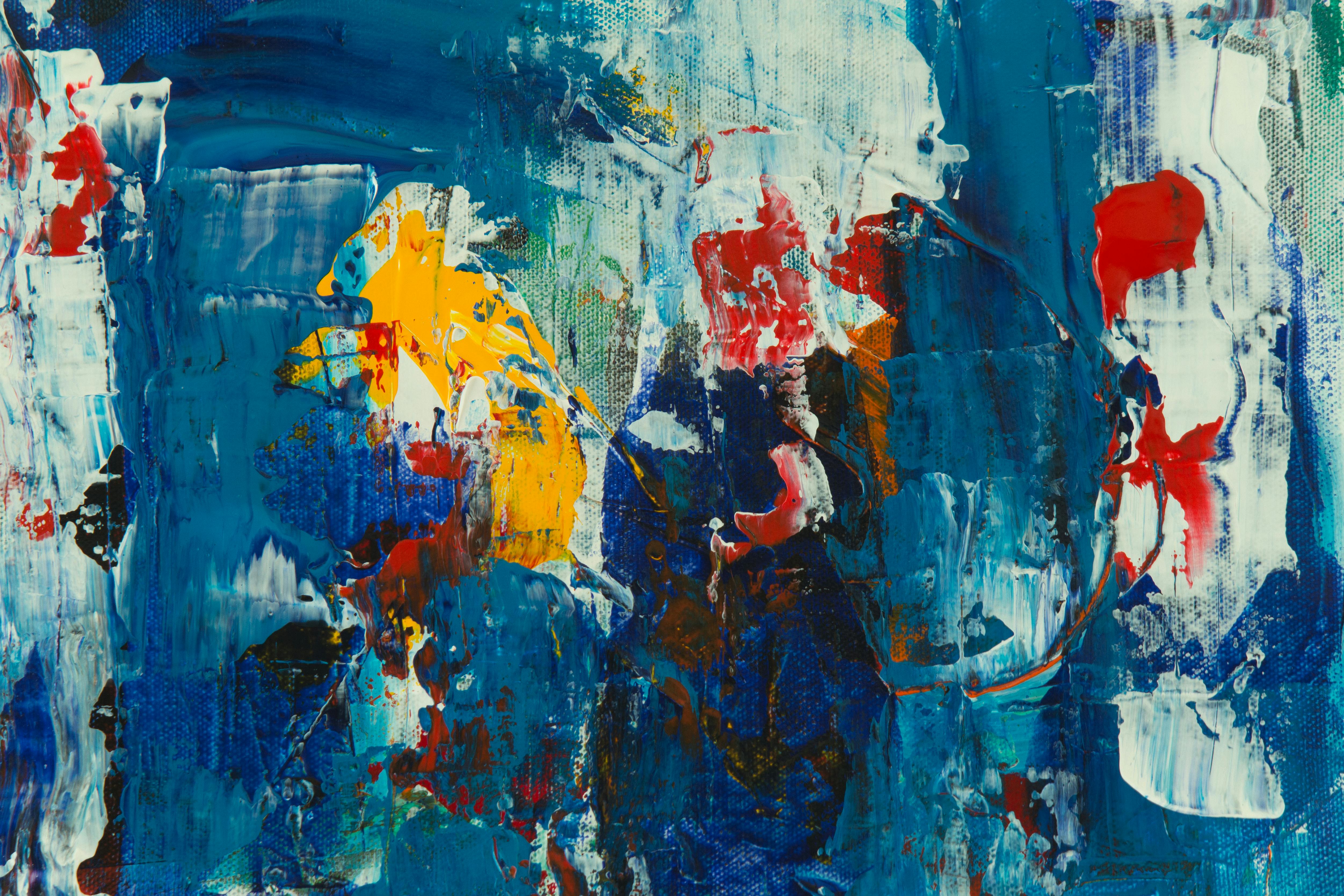
So why does Robert Delaunay still matter so profoundly today? Because he helped us understand that color isn't just a surface dressing; it's a fundamental force. It has weight, rhythm, emotion, and structure. He dared to believe that a painting could be profoundly powerful without depicting a single recognizable object, that it could communicate a feeling, a sensation, or a cosmic harmony as directly and profoundly as a piece of music. He taught us to listen to color, to feel its vibrations. Every time you see a piece of abstract art that sings with vibrant, interacting colors, or a dynamic composition built purely on chromatic relationships—from a graphic design poster to a bold fashion textile—you're experiencing a direct lineage from Delaunay's vision. He opened a door for artists to explore a world made not just of lines and shapes, but of pure, unadulterated light and sensation. And for me, that's still as exciting and breathtaking as that very first, impossibly vibrant sunset. I find myself, even now, looking at the world with a Delaunay-esque eye, trying to discern the hidden rhythms in color, the way light creates its own forms. His legacy is a constant invitation to look beyond mere representation and to discover the profound, inherent power of color—a principle that resonates deeply when we consider the art we choose to live with. This idea of color and rhythm certainly influences my own artistic timeline, and even how we approach acquiring or experiencing art in a museum like the Kröller-Müller Museum, or when we decide to buy a new piece. Next time you encounter a vibrant piece of art or even just a particularly striking sunset, pause and try to listen to the colors – you might just hear the symphony Delaunay spent his life composing.