Franz Marc's Color Theory: The Meaning Behind the Blue Horses
A personal dive into Franz Marc's symbolic color theory. Discover why his horses are blue, what red meant, and how he used color to paint the soul of nature.

Franz Marc's Revolutionary Color Theory: A Comprehensive Guide to Expressionism, Spiritualism, and the Soul of Color
You know, there are some artists who just… rewire your brain. For me, Franz Marc is absolutely one of them. When I first encountered his work – perhaps a painting of a bright blue horse – my logical mind screamed "impossible!" but my soul? My soul just got it. It's this utterly right, profound emotional resonance that bypasses all rationality and speaks directly to something deeper, something spiritual. That's the potent magic Marc gifted us, a direct line from pigment to soul, a pioneering step in what would become Expressionism and eventually pave the way for pure abstract art. This article isn't just a surface-level overview; it's a deep dive into the very fabric of his vision, exploring his groundbreaking color theory, its philosophical underpinnings, and his profound impact on the trajectory of modern art. I remember standing in front of one of his vibrant animal pieces, feeling a wave of pure, impossible color wash over me. It wasn't about art history or theory in that moment; it was a raw, undeniable feeling. It’s a feeling I strive for every single day in my own studio, wrestling with a canvas until a vibrant blue, or an incandescent yellow, just clicks. It’s not about representing reality, but about communicating a pure, raw emotion, a spiritual truth that traditional realism simply couldn't touch. We'll explore why his approach was so radical, the meanings he imbued in every hue, and how his short but impactful career forever changed the way artists think about color, form, and spiritual expression.
Marc was a visionary, a painter who dared to abandon the visible world in search of an inner truth, a hidden reality that lay beneath the surface of appearances. He believed color wasn't just a descriptive tool; it was a language, a spiritual grammar that could articulate the unseen forces of the universe, a concept that would profoundly influence the trajectory of modern art and change how we understand the very purpose of painting. This radical idea, born from the fervent intellectual atmosphere of early 20th-century Germany – a crucible of philosophical and artistic ferment, where traditional values were being questioned, scientific breakthroughs like Einstein's relativity theory were shattering old certainties, and new spiritual ideas like Theosophy and anthroposophy flourished – laid much of the groundwork for what we now understand as truly abstract art. He wasn't just painting pretty pictures; he was painting feelings, principles, and the very essence of being, a profound shift that resonated deeply with the burgeoning Expressionist movement's desire to express inner experience over outward appearance, setting the stage for a new visual vocabulary that spoke directly to the soul, bypassing intellect and going straight for the gut.
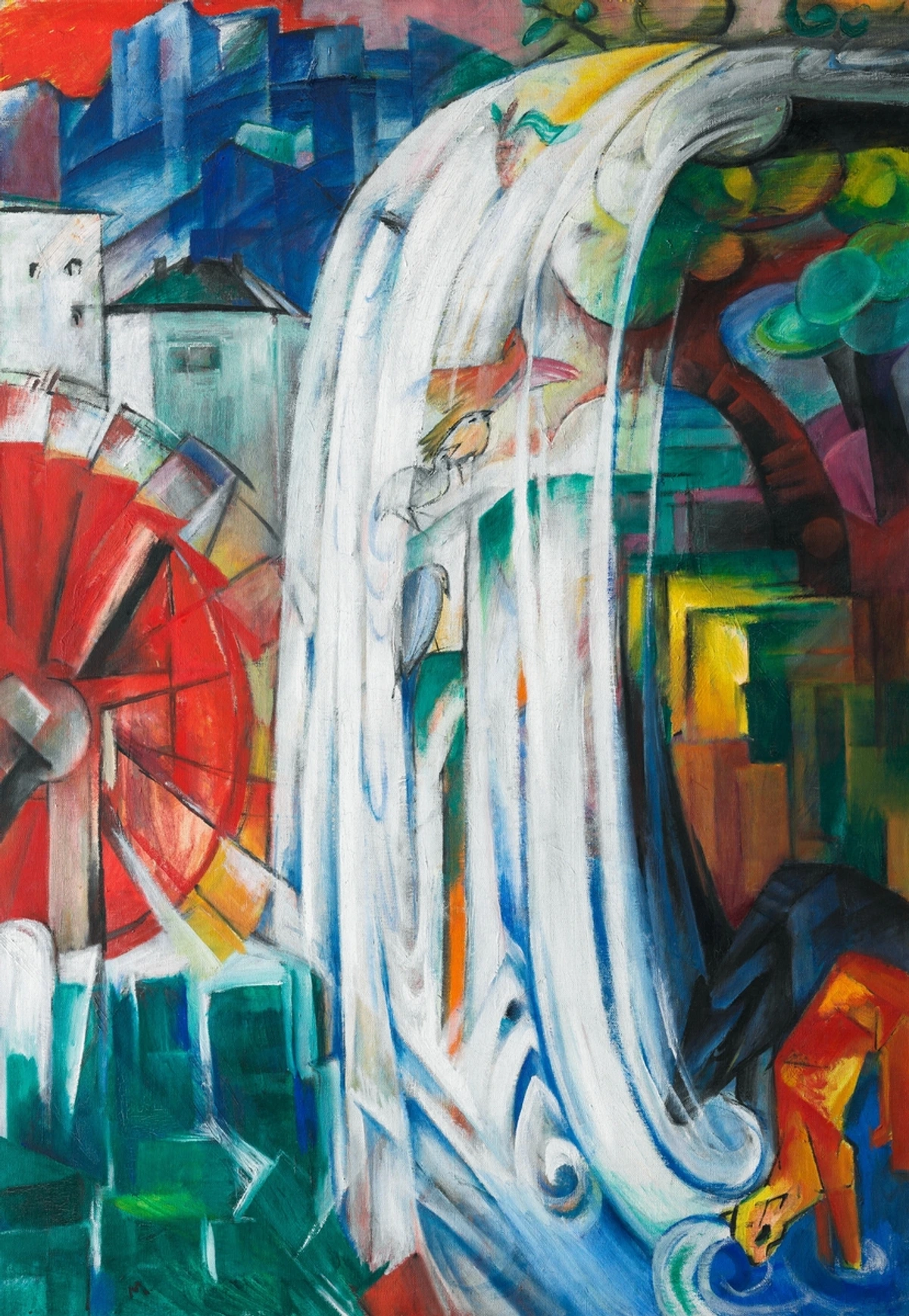
Marc was a founding member, alongside the equally influential Wassily Kandinsky, of the Der Blaue Reiter (The Blue Rider) group, a true cornerstone of German Expressionism. This wasn't just an art movement; it was a philosophical declaration, a rallying cry for a new spiritual era in art, a direct rebellion against the perceived spiritual emptiness of modern industrial society. They believed art had become too materialistic, too focused on external appearances, and sought to express inner experiences and emotions through bold colors and distorted forms. These weren't artists interested in painting the world as they saw it—oh no, that felt far too superficial, too material. They wanted to paint how it felt, how it resonated within the deepest chambers of the soul, almost like a visual psalm, a direct line to universal consciousness. They were searching for a deeper, spiritual truth hidden beneath the surface of reality, a truth that realism simply couldn't touch, and in doing so, they paved the way for radically new forms of abstraction. And for Marc, the key—the secret language to express this profound, inner truth—was color. It was his Rosetta Stone for unlocking the universe's hidden meanings, a conceptual breakthrough that challenged centuries of artistic convention, and a critical step on the path towards the definitive guide to the history of abstract art: key movements, artists, and evolution.
The Blue Rider's Vision: Beyond Mere Aesthetics
What truly set Der Blaue Reiter apart wasn't just their artistic style, but their shared, almost mystical, philosophy. They believed that art had a moral imperative, a duty to elevate humanity and reconnect it with its spiritual roots. This wasn't about creating pretty pictures; it was about forging a new visual language for a new spiritual age. For them, the act of painting was akin to a spiritual ritual, a process of channeling inner visions and universal truths onto the canvas. This collective conviction, fiercely articulated by Marc and Kandinsky, provided a potent counter-narrative to the prevailing materialism of their time, offering a sanctuary for artists who sought meaning beyond the visible, an artistic brotherhood dedicated to the soul of art.
The Philosophy of Der Blaue Reiter: A Spiritual Awakening and its Manifesto
The name Der Blaue Reiter itself (The Blue Rider) is wonderfully evocative, isn't it? It apparently came from Kandinsky's love of riders and Marc's affinity for blue – a rather charming, almost whimsical origin for such a revolutionary group. But it symbolized so much more than just their personal preferences. It represented a radical departure from the suffocating traditions of academic art, a quest for spiritual purity and an almost mystical connection to nature, an almost pantheistic reverence for the natural world. They weren't just forming an art club; they were seeking a profound, almost cosmic, renewal, a spiritual revolution within the arts, a way to re-enchant a world they felt was becoming increasingly desacralized. This manifested vividly in their Der Blaue Reiter Almanac, a veritable artistic bible first published in 1912. This groundbreaking manifesto, co-edited by Marc and Kandinsky, was filled with seminal essays (like Kandinsky's 'On the Spiritual in Art' and Marc's 'Spiritual Treasures'), theoretical treatises, detailed analyses of artistic concepts, reproductions of their own work, and an eclectic array of primitive art, folk art, children's drawings, and even non-Western art forms. This diverse inclusion was revolutionary, shattering conventional notions of what constituted 'art' and fostering a more inclusive, global understanding of creative expression, championing the inherent spiritual power in all human-made forms. It presented a radical vision for art, emphasizing spiritual values, the innate power of color and form, and the profound connection between all forms of creative expression across cultures and time periods, tearing down the artificial hierarchies of 'high' and 'low' art. The group, which included artists like August Macke, Gabriele Münter, and Alexej von Jawlensky, was united by this core belief: art should serve a higher, spiritual purpose, communicating directly to the soul. Their aim was not to establish a new, rigid style, but to foster an inner spiritual truth in art, encouraging individual artistic freedom to explore this shared vision, providing a crucial intellectual backbone for the entire Expressionist movement and the burgeoning abstract art that followed, a powerful legacy that continues to resonate today.
Exhibitions and Impact: Spreading the Blue Rider's Message
The Der Blaue Reiter group was not just about theoretical declarations; they were also about active exhibition. Between 1911 and 1912, they organized two major exhibitions, showcasing their radical new vision to a public largely unaccustomed to such a profound break from tradition. The first exhibition, held at the Thannhauser Gallery in Munich, featured works by Kandinsky, Marc, August Macke, Gabriele Münter, and Henri Rousseau, among others, demonstrating their inclusive approach. The second exhibition, focusing on graphic works, traveled across Germany, reaching a wider audience and further disseminating their ideas. These exhibitions were crucial in establishing German Expressionism as a significant force, challenging established artistic norms, and paving the way for future avant-garde movements. They acted as a vital platform for artists to present a united front against academic conservatism, solidifying their reputation as pioneers of modern art.
credit, licence
The Spiritual Grammar of Color
I think of Marc's color theory not as a rigid set of rules, but as a kind of spiritual grammar, a profound language he invented to articulate the inexpressible. Drawing on contemporary philosophical currents (like those of Goethe's Theory of Colours and Rudolf Steiner's Anthroposophy), Eastern spiritual thought (particularly Theosophy, with its elaborate systems of correspondences between colors, planets, and emotions), and a deep introspection, he assigned specific principles and emotions to colors, creating a complex yet intuitive system he could use to build his compositions, almost like composing a symphony with hues. It wasn't about what a horse looked like in the pasture, or the exact shade of green in a field; it was about what the spirit of a horse felt like deep within, or the intrinsic energy of the landscape, the very soul of the natural world. He believed that to get to that truth, to really tap into the soul of things, you had to leave behind the drab, realistic colors of the material world – the greens and browns that merely describe, rather than emote and communicate directly. It was a deliberate, almost defiant, act of transcendence, an attempt to bypass the mundane and access the mystical, the hidden forces that truly govern existence. He wasn't just observing; he was interpreting the universe through a chromatic lens, creating a visual philosophy, a deeply personal lexicon of the cosmos, making color itself the primary vehicle for meaning, a direct conduit for spiritual insight.
Influences on Marc's Color Theory
Marc's distinctive approach to color didn't emerge in a vacuum; it was a rich tapestry woven from diverse intellectual and artistic influences. He was deeply engaged with the Symbolist movement, which emphasized subjective experience and the use of symbols to convey spiritual truths, a clear precursor to his own symbolic color assignments. The emerging fields of psychology and spirituality, particularly Theosophy (a mystical movement seeking universal truths), also played a crucial role, offering frameworks for understanding the unseen forces he sought to express. Theosophy, in particular, provided a structured system for understanding the spiritual vibrations of colors and forms, resonating deeply with Marc's quest for an inner truth. Furthermore, his fascination with primitive art, folk art, and children's drawings, championed by the Der Blaue Reiter group, led him to see an uncorrupted, direct spiritual power in these forms, influencing his bold, simplified shapes and intuitive use of color. He absorbed these diverse threads, synthesizing them into a coherent, revolutionary theory that was uniquely his own, pushing artistic expression far beyond mere mimesis.
Goethe's Theory of Colours and Rudolf Steiner's Anthroposophy
Among the philosophical currents that deeply influenced Marc, Johann Wolfgang von Goethe's Theory of Colours stood out. While Goethe's scientific approach differed from Newton's, his emphasis on the subjective experience of color and its psychological impact resonated profoundly with Marc's spiritual quest. Goethe saw colors not just as physical phenomena but as active forces affecting the human soul, a concept that provided a foundational intellectual framework for Marc's own symbolic assignments. Complementing this was the influence of Rudolf Steiner's Anthroposophy, a spiritual philosophy that expanded upon Theosophical ideas, often delving into the spiritual significance of colors, forms, and the interconnectedness of the cosmos. Steiner's detailed correspondences between spiritual realms and artistic expression offered Marc a profound validation for his intuitive belief in color as a direct pathway to cosmic understanding. It was this rich blend of scientific, philosophical, and spiritual inquiry that enabled Marc to construct such a robust and deeply personal chromatic language.
He primarily focused on the three primary colors, creating a fascinating, almost alchemical, triangle of meaning that would define his most iconic works.
The Triadic Foundation: Primary Colors
Marc's journey into the spiritual meaning of color began with a profound focus on the three primary hues: blue, yellow, and red. For him, these weren't merely fundamental colors on the spectrum; they were the elemental forces of the universe, each imbued with distinct philosophical principles and emotional weight. He saw them as the foundational building blocks of all expression, the raw materials from which the cosmos itself was painted, and through their interaction, he believed, the full drama of existence could be unfolded on canvas. It’s a beautifully simple, yet profoundly complex, framework for understanding the universe itself, a true testament to the depth of his conceptual thought.
The Big Three: Blue, Yellow, and Red – A Cosmic Dance
Marc laid out his foundational ideas in a now-famous letter to fellow artist August Macke in 1910, a document that serves as a cornerstone of his theoretical contributions. Reading it, you get a direct, unfiltered peek into his vibrant, restless creative mind, brimming with an almost proto-abstract vision that was light-years ahead of its time. In this pivotal letter, he didn't just list colors; he articulated a profound philosophy, seeing them not as static pigments, but as dynamic, living forces, imbued with their own inherent spiritual and emotional valences. He envisioned a constant battle, an almost theatrical interplay between these core colors, each embodying a fundamental cosmic principle – the masculine, the feminine, the material. This wasn't just about mixing paint; it was about orchestrating a drama of universal forces on canvas, a cosmic dance of creation and destruction that reflected the hidden rhythms of the universe. It’s a beautifully simple, yet profoundly complex, framework for understanding the universe itself, a true testament to the depth of his conceptual thought.
Blue: The Masculine Principle, Stern and Spiritual
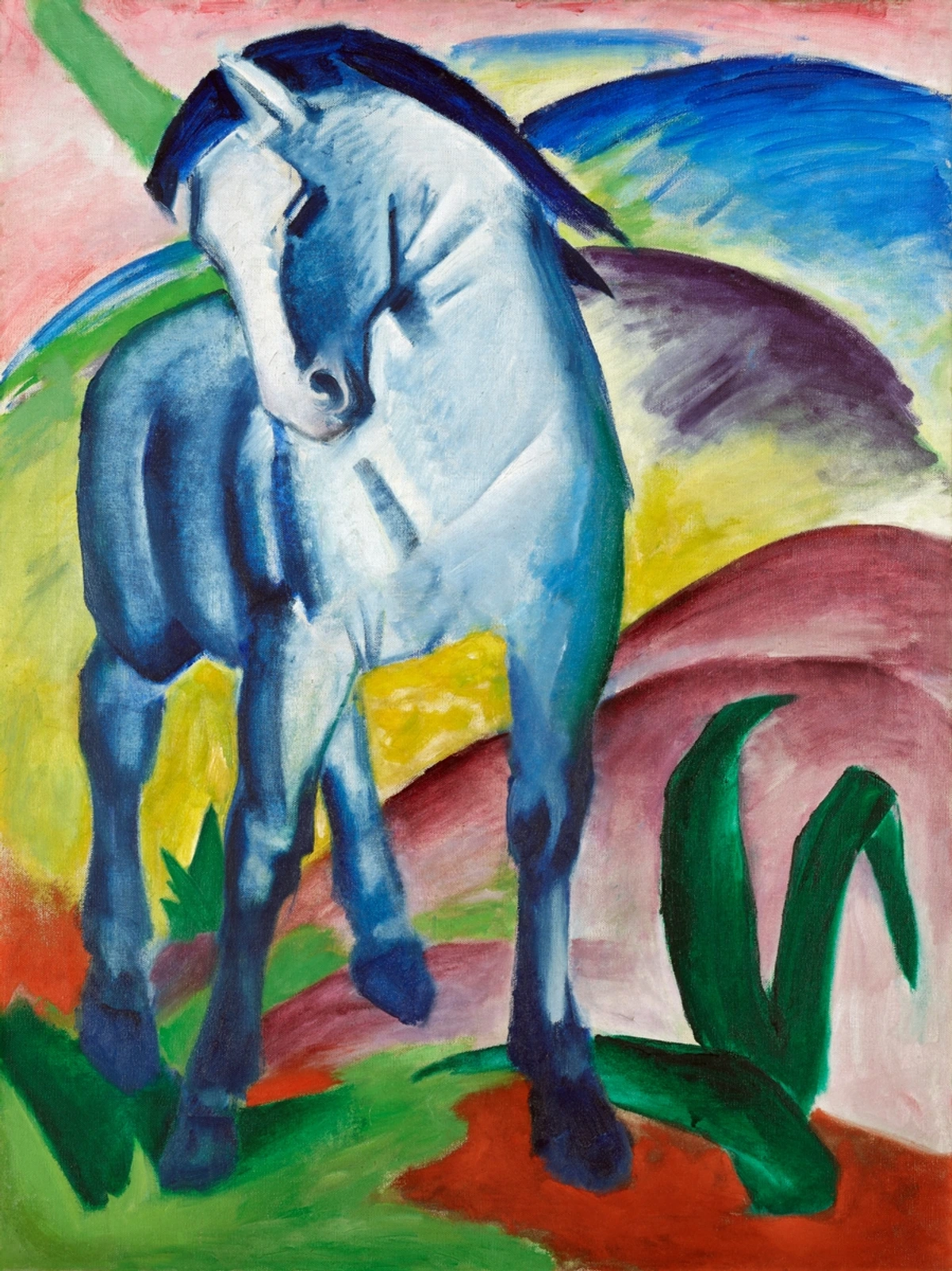
For Marc, blue was the embodiment of the masculine principle – stern, spiritual, and noble. It represented profound contemplation, purity, and the intellectual realm, a connection to the infinite and the transcendent. When I see Marc's blue, it’s not just a color; it’s a feeling of vastness, of quiet strength, of something deeply untroubled and eternal. It's the color of the sky, the distant mountains, the depths of consciousness – a hue that pulls you inward, inviting introspection. In his iconic blue horses, this color elevates them beyond mere animals, transforming them into conduits of cosmic spirit, symbols of a pure, uncorrupted existence. It is the color of the soul's yearning for the sublime, a silent, powerful force that seeks to overcome the material world.
Yellow: The Feminine Principle, Gentle and Sensual
In stark contrast to blue, yellow represented the feminine principle – gentle, happy, sensual, and earthy. It symbolized joy, warmth, life-giving sustenance, intuition, and a gentle, welcoming physicality. I think of sunshine, ripened fields, the soft glow of a home – it's a color that radiates comfort and quiet optimism. For Marc, it was the essence of vitality and the delicate, nurturing aspects of nature. His Yellow Cow isn't just a cow; it's an embodiment of maternal strength, a grounded, benevolent presence deeply connected to the earth's fertility and abundance. Yellow, in Marc's lexicon, speaks to the vibrant, life-affirming energy of the world, a direct expression of earthly delight and innocent charm, representing the joy of being.
Red: The Brutal Matter, Conflict and Destruction
Finally, red stood for brutal matter, conflict, violence, and the earthly realm. It was the color to be overcome, representing raw existence, struggle, and destruction. When Marc used red, it wasn't a celebratory hue; it was a warning, a depiction of primal force and the darker, more challenging aspects of the material world. It’s the color of passion, yes, but for Marc, it was often passion unleashed destructively – the blood of war, the raw power of untamed instinct, the chaos that threatens to engulf spiritual purity. In paintings like The Fate of the Animals, red dominates, screaming a visceral premonition of destruction, embodying the very forces that tear apart harmony. It is a heavy, inescapable color, a symbol of suffering and the constant battle against the crushing weight of materialism.
Beyond the Primal: Marc's Forays into Secondary Colors
While Marc is most famous for his "Big Three," it's crucial to understand that his color philosophy extended into the secondary colors as well, particularly how they emerged from the cosmic interplay of the primaries. He wasn't just about the pure, raw energy of blue, yellow, and red; he was fascinated by the transformation that occurred when these forces met, much like an alchemist observing a profound chemical reaction. For him, green, orange, and violet weren't just mixed paints; they were the result of spiritual and material principles interacting, revealing new facets of the universe's inherent drama, often representing complex emotional or philosophical states that couldn't be captured by the pure primaries alone. These secondary hues became expressions of the blending of principles – a meeting of masculine and feminine, spirit and matter, resulting in a richer, more complex emotional and symbolic vocabulary. I find this especially compelling – it's like watching a chemical reaction, but on a spiritual plane. When I’m mixing colors for my own abstract pieces, I often think of Marc's approach to these secondary hues, how they aren't just an arbitrary combination but a new statement in themselves, carrying their own unique emotional weight and narrative, a true testament to the interconnectedness of his chromatic universe. These secondary colors become even more nuanced, reflecting the intricate blend of the primary forces at play, often embodying the joys and sorrows of the earthly realm.
Color  | Marc's Symbolic Meaning | Key Works & Associated Emotions |
|---|---|---|
| Blue | The masculine principle, stern, spiritual, nobility. | Blue Horse I, The Large Blue Horses, Blue Fox. Conveys transcendence, purity, contemplative strength, and connection to the infinite. |
| Yellow | The feminine principle, gentle, happy, sensual, earthy. | Yellow Cow, Deer in the Forest II. Represents joy, warmth, life-giving sustenance, intuition, and a gentle, welcoming physicality. |
| Red | Matter, brutal, heavy, conflict, violence, the color to be overcome. | The Fate of the Animals, Tiger. Embodies primal force, raw existence, struggle, and destruction. Often used to depict the material world's darker, more challenging aspects. |
He believed the real magic, the true expression of life's complexities, happened when these colors interacted. This wasn't just about basic color mixing; it was about symbolic alchemy. Let's delve into these secondary manifestations:
Green: Harmony and Balance (Blue + Yellow)
When the masculine spiritual principle (blue) met the feminine sensual principle (yellow), they created green – a neutralizing force, bringing harmony and balance between the spiritual and the sensual. It's the color of nature, of growth, and of peace, a tranquil point where spirit and earth find accord, often seen in his pastoral scenes and abstract landscapes. For me, it represents the potential for flourishing when inner truth and outward vibrancy are in sync.
Orange: Earthy Vibrancy and Untamed Passion (Red + Yellow)
While not explicitly detailed as much as green and violet, orange would logically carry the weight of matter (red) imbued with feminine sensuality (yellow). It suggests a more earthy, vibrant, and potentially intense physicality, embodying a lively, even aggressive, form of the material world. Marc sometimes used it to convey an untamed, fiery energy, a burst of material joy that can sometimes verge on chaos or dynamic action. It's the color of tangible vitality, the warmth of the earth, or the raw, unbridled energy of life. I often see it as the fiery passion of earthly existence, a powerful and expressive hue, a vivid representation of life's tangible, energetic moments, perhaps even a sense of untamed instinct. It's a color that speaks of immediate, often intense, experience, embodying the vibrant pulse of life at its most visceral. Think of a vivid sunset, or the fiery coat of a powerful predator – orange captures that untamed, energetic quality.
Violet: Unbearable Sadness and Spiritual Corruption (Red + Blue)
This combination Marc found particularly potent and often tragic. Mixing the brutal matter (red) with the stern spiritual (blue) resulted in violet, a color he often associated with unbearable sadness, morbidity, and even disease. It speaks to a deep, profound sorrow when the spiritual is overwhelmed or corrupted by the material world, a truly melancholic fusion, a descent into a heavier, more complex emotional state, echoing the somber tones of works like The Fate of the Animals. It's a color of profound introspection, often signaling a loss of innocence or the corruption of the ideal, a deep spiritual wound.
Brown: Grounding and Earthiness (Red + Green)
Though less explicitly stated, Marc's philosophy would suggest brown, born from the material red and the balanced green, would represent the grounding, perhaps even dulling, aspects of pure earthiness, devoid of spiritual transcendence. It's the color of pure, unadorned earth, weighty and fundamental, but lacking the higher aspirations of blue or the joyful sensuality of yellow. It speaks to a raw, unrefined existence, sometimes comforting in its solidity, sometimes stifling in its lack of transcendence, a color tied firmly to the physical realm, representing the mundane and the un-spiritualized aspect of nature. It's the quiet hum of the forest floor, the deep roots of a tree – essential, but not overtly spiritual or vibrant. This color grounds the chromatic spectrum, reminding us of the basic, undeniable elements of physical existence, a necessary anchor in his cosmic drama.
The Spectrum of Emotion: Beyond Basic Hues
While Marc's primary and secondary colors formed the bedrock of his spiritual grammar, it's worth noting that his palette often included a wider spectrum of hues, albeit always in service of his symbolic intent. Shades of gray, for instance, could convey neutrality, ambiguity, or the absence of strong spiritual or material forces, acting as quiet interludes in his vibrant compositions. Blacks might emphasize emptiness or profound shadow, while whites could signify purity, void, or spiritual illumination. Even when using a broader array of colors, Marc's approach remained consistent: every hue was a deliberate choice, loaded with symbolic meaning, contributing to the overall emotional and philosophical narrative of the work. His genius lay in making every splash of paint speak, transforming mere pigment into a profound conduit for universal truths and deeply felt emotions. This expanded understanding of his palette underscores the intricate depth of his chromatic universe, where every color played a vital role in the grand cosmic dance he depicted.
Color Interaction | Resulting Color | Marc's Symbolic Meaning |
|---|---|---|
| Blue + Yellow | Green | Harmony, balance, nature, peace, flourishing. |
| Red + Yellow | Orange | Earthy vibrancy, untamed passion, material joy, dynamic action. |
| Red + Blue | Violet | Unbearable sadness, morbidity, spiritual corruption, sorrow. |
| Red + Green | Brown | Grounding, dullness, pure earthiness, lack of transcendence. |
Color Contrast and Harmony
It was a constant push and pull, a drama playing out on the canvas. Marc understood that the impact of a color wasn't just in its individual meaning, but in its relationship to the hues around it. The dynamic tension created by contrasting colors – such as the vibrant reds against the serene blues in many of his animal works (think of the explosive background in Blue Horse I against the creature's calm essence) – or the serene balance achieved through harmonious combinations, was a profound expression of the psychology of color in abstract art. He wasn't just arranging hues; he was orchestrating cosmic battles and spiritual harmonies, using visual discord and accord to heighten emotional impact and philosophical depth, creating a truly immersive experience for the viewer. This depth of understanding, this belief in the inherent meaning of each shade, is what makes his work so timeless and universally resonant. It's a testament to the definitive reference guide to color theory in abstract art: principles, psychology, and practical application and how much an artist can truly achieve with color. For me, it's a constant reminder that my palette isn't just a collection of tubes, but a universe waiting to be explored, a place where colors can sing, clash, or harmonize to tell a story.
Why Animals? The Search for Purity and the Soulful Gaze
So, a blue horse? A yellow cow? Why paint all these colorful animals, rather than people or landscapes in their "natural" hues? For Marc, it was a profound statement, an act of seeking solace and truth away from the perceived corruption of humankind. He felt that humanity had become corrupted by materialism, industrialization, and a profound spiritual decay, losing their connection to the natural world and their own inner purity. He saw modern man as disconnected, lost in the superficiality of urban life and the relentless pursuit of material gain, a stark contrast to the harmonious existence he craved. He contrasted this with animals, which he saw as embodying innocence, spiritual harmony, and an untainted connection to cosmic forces – pure conduits of universal spirit. It was a harsh indictment of modernity, a feeling I sometimes share when I look at the chaos of the world today, longing for a simpler, purer truth – a longing for that untainted connection to the natural and spiritual world that seems increasingly elusive. He saw animals as embodying this lost purity, a direct link to the cosmos that humanity had seemingly severed through its own hubris.
credit, licence
He saw animals, on the other hand, as pure beings, living in perfect harmony with nature and the spirit of the world. They were untainted, innocent, and possessed an inherent spiritual wisdom that humans seemed to have lost. By painting a deer, a fox, or a horse, he wasn't just depicting a creature; he was trying to capture that pure, untainted essence, their primal connection to a cosmic order and the universal soul. Painting a blue horse wasn't just a stylistic choice, nor was it a childish whim; it was a deeply philosophical attempt to show the animal's noble, spiritual soul, to render its inner truth visible through the expressive power of color. It was an act of profound empathy, a longing for a lost paradise where spirit and nature were one, a vivid counterpoint to the ugliness he perceived in the human condition, a search for a more authentic and spiritually aligned existence.
Here’s a glimpse into some of Marc’s specific animal-color associations:
Animal | Marc's Symbolic Color | Underlying Meaning |
|---|---|---|
| Horse | Blue | Representing spirituality, nobility, masculine power, and often a tranquil, contemplative nature. Horses were paramount for Marc, embodying grace and an untouched spiritual essence, a living conduit to the cosmic spirit, free from human corruption. |
| Deer | Blue, occasionally Yellow or Green | Often associated with grace, innocence, and vulnerability, but also the deep spiritual connection of the forest. The blue deer often symbolizes a heightened spiritual state or suffering, a delicate soul in a harsh world, susceptible to external forces. |
| Fox | Yellow | Symbolizing femininity, cunning, and a more earth-bound, sensual energy. The fox, for Marc, was often depicted as vibrant and alive, deeply connected to the natural world’s more cheerful aspects, a flash of joyful intuition and primal intelligence. |
| Dog | Blue, Yellow | Loyalty, protection, and a blend of the spiritual (blue) and the gentle/sensual (yellow), depending on the specific portrayal and context. They represent a bridge between the wild and the domesticated, embodying devotion and a sense of guardianship. |
| Cow | Yellow | Emblematic of the earth, nourishment, and a peaceful, maternal femininity. The yellow cow is often seen as a symbol of gentle, life-giving force, a benevolent presence connected to the land, representing abundance and calm. |
| Tiger | Red, often contrasting with Blue/Yellow | Represents a more brutal, primal, and dangerous aspect of nature, embodying the raw power and untamed force of the material world. Its intensity often acts as a counterpoint to Marc's softer, spiritual animals, a potent symbol of untamed instinct and the perilous beauty of raw existence. |
| Birds | Various (often Blue or Green) | Symbolizing freedom, transcendence, and connection between the earthly and the spiritual realms. Often depicted in flight or in natural settings, they embody a fleeting grace, aspiration, and the lightness of being. |
| Goat / Ram | Red, Brown (less common) | Represents resilience, untamed vitality, and sometimes a wild, almost sacrificial, aspect of nature. These animals, when depicted, often carry a sense of rugged individualism and earthiness. |
| Wild Boar | Red, Brown, Green | Symbolizes primal strength, untamed nature, and sometimes aggression or the wilder, less domesticated aspects of the forest. Marc's boars often appear as powerful, earthy forces. |
| Chimpanzee | Green, Yellow | Represents intelligence, curiosity, and a connection to nature's more playful or inquisitive elements. Rarely depicted, but when they are, they carry a sense of innocence. |
Other Key Animal Paintings and Their Meanings
While his horses are iconic, Marc explored the spiritual essence of many creatures, turning each into a vessel for his profound color philosophy. His Blue Fox (1911), for instance, is a mesmerizing swirl of blues, purples, and touches of green, depicting the animal not as a literal fox, but as an ethereal, almost mystical, presence of the forest, embodying that subtle blend of cunning and spiritual connection to the untamed wild. The forms are simplified, almost crystalline, yet powerfully expressive of its inner spirit. Then there's his Yellow Cow (1911), radiating a warm, benevolent energy, a pure embodiment of maternal earthiness, a symbol of life-giving sustenance and grounding presence, its rounded form mirroring the nurturing curves of the earth itself. And we can't forget works like The Red Deer (1912), where the animal is rendered in vibrant, often contrasting colors, symbolizing its heightened spiritual state or vulnerability within a dynamic natural world. Each animal became a canvas for a deeper truth, a window into a specific cosmic principle, far removed from mere anatomical accuracy, inviting us to look beyond the surface and into the soul of things.
In his famous Blue Horse I (1911), the creature is not just painted blue; it is blue. It’s rendered in a deep, vibrant azure that seems to emanate an inner light, almost vibrating with spiritual energy, a true visual manifestation of soul. It stands strong and calm, its powerful head bowed as if in deep thought or meditative contemplation, a noble beast in communion with unseen forces, utterly at peace within its own spiritual realm. The background, in stark contrast, is a dynamic clash of red, yellow, and green, representing the tumultuous, often chaotic material world the horse exists in. But the horse itself remains a serene beacon of transcendent spirit, untouched by the earthly turmoil, a profound symbol of resilience. It’s a perfect, almost didactic, example of his color grammar in action: the blue is the horse's soul, pure and unblemished, a silent testament to spiritual resilience and inner fortitude.
Another iconic work, The Large Blue Horses (1911), further solidifies this motif. Here, three monumental blue horses fill the canvas, their forms rounded and monumental, almost sculptural, like ancient totems. They embody a collective, serene power, their blue hues suggesting a universal, harmonious spirituality, a shared soul across the animal kingdom, a primal connection to the cosmos. These works were not meant to be realistic animal portraits, but rather profound meditations on the spiritual essence of creatures, elevated and idealized through Marc's unique chromatic language. For me, these paintings aren't just beautiful; they’re a powerful lesson in how to imbue simple forms with complex emotions, something I grapple with in my own work when I'm trying to distill a feeling into an abstract shape or convey a profound spiritual state. It's about the emotional language of color in abstract art and connecting with something universal, a timeless narrative of spirit and form.
Marc's Poetic Vision of Nature
This idea of using color to express what's inside, to bypass the superficial and touch the fundamental, is something I think about a lot in my own work. I often find myself staring at a blank canvas, wondering how to convey a sense of quiet contemplation or explosive joy, and Marc's directness with color always comes to mind. He saw nature not just as scenery, but as a dynamic interplay of spiritual forces, a vibrant stage for cosmic dramas, a realm untouched by human corruption. This deep connection bordered on a form of pantheism, where the divine was immanent in the natural world, particularly in its animal inhabitants. This belief fueled his iconic animal paintings, where he sought to reveal the inner essence of creatures, their intrinsic harmony with the universe, their perfect alignment with cosmic order. It's the core of how artists use color not just for decoration or imitation, but for profound communication, making the canvas a window into a higher reality, a portal to spiritual understanding. It’s about translating emotion into abstract art, which is a challenging, deeply personal, and utterly rewarding journey every serious artist takes, a journey that often feels like wrestling with the very essence of existence and bringing forth hidden truths that resonate with a universal soul.
From Harmony to Chaos: The Fate of the Animals
But it wasn't all peaceful blue horses and harmonious yellow cows. As World War I approached, casting a long, dark shadow over Europe, Marc's vision darkened dramatically, reflecting the escalating global tension and his profound unease with the human condition. He felt the impending doom, a spiritual collapse mirroring the physical one that was about to engulf the continent. His 1913 masterpiece, The Fate of the Animals, is a shattering, chaotic vision of a world being torn apart, a truly visceral premonition of the horrors to come, a cry from the depths of a prophetic soul. It’s a painting that screams, a raw outpouring of fear and despair, an almost unbearable prophecy of destruction, showcasing a stark departure from his earlier utopian harmony towards a stark, fragmented reality, a direct confrontation with impending catastrophe. It's a testament to how profoundly external events can reshape an artist's inner world and their creative output, twisting even the most optimistic vision into a profound lament.
Here, red—the color of brutal matter—dominates the canvas, an almost visceral scream. Trees fall like spears, their forms sharp and aggressive, and the animals are caught in a vortex of destruction, their bodies fractured and distorted into jagged, Cubist-influenced shapes. The blue deer in the center seems to scream in agony, its spiritual purity overwhelmed, a poignant symbol of innocence destroyed by a world gone mad. It's a terrifying premonition of the war that would not only destroy a generation but would also take Marc's own life in 1916, fighting on the front lines. The painting shows his color theory used not to depict spiritual harmony, but to express profound pain and societal collapse, a devastating visual prophecy where form and color combine to communicate existential dread. It's a powerful reminder that the psychology of color in abstract art can convey the full spectrum of human experience, from bliss to terror, and sometimes, the most profound sorrow, serving as a powerful historical document of a world in turmoil.
His shift wasn't just stylistic; it was a deeply personal response to the darkening world, a visceral reaction to the impending catastrophe. The idealism of the early Der Blaue Reiter years gave way to a somber recognition of destructive forces, mirroring the very collapse of civilization he saw around him. This emotional vulnerability, expressed through color, through fractured forms and aggressive lines that show a clear influence of Cubist principles, is what makes his later work so profoundly moving, acting as a historical and psychological benchmark for the era. It's a powerful, almost unbearable, testament to an artist grappling with the unraveling of his world, channeling universal anxieties into deeply personal expressions.
Marc's Enduring Legacy: A Pioneer of Abstract Expression
Franz Marc’s career was, by any measure, tragically short, yet his impact on modern art was immense and continues to resonate today. By bravely freeing color from its traditional, descriptive, and strictly realistic role, he didn't just bend the rules; he shattered them. In doing so, he helped pave the way for the full flourishing of abstract art, influencing movements like Abstract Expressionism and Color Field painting, even if he never lived to see them. His daring use of color as a primary expressive element, independent of objective reality, directly informed the emotional intensity of Abstract Expressionists like Clyfford Still and the expansive chromatic fields of Mark Rothko, who also sought to evoke profound emotion through pure color. He wasn't interested in simply depicting the world; he sought to unveil its deeper, spiritual currents, tapping into a universal language of form and hue, making the canvas a site for profound existential inquiry. He showed that a splash of vibrant yellow could embody pure joy, a sweeping sea of blue could be the very embodiment of spirit, and a violent streak of red could articulate the raw, brutal forces of existence. He wasn't merely painting things; he was painting feelings, concepts, and the invisible architecture of the cosmos, providing a blueprint for artists to follow, a profound shift that echoed through the entire 20th century and continues to shape contemporary abstract practices, proving that true innovation lies in looking inward.
Beyond Painting: Marc's Forays into Printmaking and Sculpture
While celebrated primarily for his paintings, Marc's restless creative spirit also led him to explore other mediums, further solidifying his place as a versatile modernist. He produced a significant body of woodcuts and lithographs, which allowed for a bolder, more graphic simplification of form, often using stark contrasts and linear rhythms to convey emotion. These prints, like his paintings, often featured animal motifs and abstract landscapes, demonstrating his consistent thematic preoccupations across different artistic expressions and reaching a wider audience. Though less prolific in sculpture, his few forays into three-dimensional work echoed the rounded, monumental forms of his painted animals, hinting at a desire to fully embody the spiritual essence of his subjects in a tactile way. These explorations underscore his commitment to pushing artistic boundaries and expressing his vision through any means necessary, always seeking the most direct path to spiritual communication.
Of course, for artists and art lovers today, Marc's work is a vital lesson in courage and conviction. It encourages us to look beyond the superficial surface and to truly think about the profound emotional and spiritual weight of our own creative choices. When I'm mixing paints on my palette, thinking about which color will sit next to another, I'm not always consciously thinking of Marc, but his ghost is definitely there, whispering encouragements, urging me to trust my inner vision. His courage to paint a horse blue—not because it was blue, but because it felt blue, because that was its spiritual truth—gives me the courage to explore my own colorful truths, which you can see in the works I have for sale on my site. You can check them out here [/buy].
Marc's Influence on Later Artists and the Path to Abstraction
Marc's pioneering spirit, particularly in his use of symbolic color and his emphasis on inner vision, proved immensely influential. He didn't live to see the full flowering of pure abstraction, but his ideas about color as a self-sufficient expressive element directly fed into movements like Abstract Expressionism in America and various forms of European lyrical abstraction. Artists like Jackson Pollock, with his raw, visceral application of paint, and Mark Rothko, with his luminous, emotive color fields, though generations removed, shared Marc's conviction that color and form could communicate on a primal, emotional level, bypassing narrative and tapping directly into the subconscious. Helen Frankenthaler's poured canvases, known for their expressive color washes, and Barnett Newman's profound 'zip' paintings, which sought the sublime through vast fields of color, also owe a conceptual debt to Marc's radical redefinition of color's expressive potential. Even beyond pure abstraction, his influence can be seen in later Expressionist and Neo-Expressionist movements, where artists continue to use heightened color and distorted forms to convey powerful inner states. His work stands as a testament to the enduring power of a pioneering vision that dared to see beyond the visible.
credit, licence
credit, licence
The Enduring Resonance: Finding Marc's Spirit in My Own Studio
As an artist, engaging with Franz Marc isn't just an academic exercise; it's a profound dialogue with a kindred spirit across time. His unwavering belief in the spiritual power of color, his empathetic connection to the animal world, and his courage to defy conventional realism continue to inspire my own practice in ways that are hard to quantify. When I look at a blank canvas, I don't just see a surface for paint; I see a field of possibility, a space where I can translate my own inner truths and emotional landscapes into abstract forms and vibrant hues. Marc taught me that color isn't just about what you see with your eyes; it’s about what you feel in your gut, what you believe in your heart, and what you want to communicate on a soul level. It's a journey of continuous exploration, a search for those impossible colors that somehow, magically, feel utterly right, like finding a forgotten melody, a resonance that speaks to something ancient and ever-present, a timeless expression of the human (and animal) spirit.
If you're interested in seeing how these ideas manifest in contemporary abstract art, I invite you to explore my own works. You can find them for sale directly on my site [/buy]. And to delve deeper into the rich tapestry of art history and its movements, my comprehensive [/timeline] offers a guided tour. Ultimately, Marc reminds us that art is not just a reflection of the world, but a profound act of creation, a spiritual endeavor that continues to unfold with every brushstroke and every daring choice of color.
Frequently Asked Questions (FAQ)
What was Franz Marc's early life and training like?
Franz Marc was born in Munich, Germany, in 1880, to an artistic family; his father was a landscape painter, and his mother was a Calvinist. This upbringing likely instilled in him both an appreciation for art and a strong sense of spiritual inquiry. He initially considered studying theology before turning to art, a decision that underscores his lifelong spiritual quest. He attended the Munich Academy of Fine Arts from 1900 to 1903, receiving a traditional academic education. However, he quickly grew disillusioned with its conservative approach, feeling it stifled genuine expression. His early travels to Paris, where he encountered the vibrant works of Post-Impressionists like Vincent van Gogh and Paul Gauguin, were pivotal in shaping his move away from academic realism towards a more expressive and color-driven style, laying the groundwork for his unique contributions to modern art. It’s a fascinating trajectory, isn’t it? The push and pull between a traditional upbringing and a restless, inquiring spirit is something many artists can relate to – that feeling of needing to break free from the expected to find your true voice. For Marc, this meant rejecting the academic norms and seeking a deeper, more profound truth through art, which ultimately led him to his groundbreaking color theories.
What was Marc's view on humanity?
Franz Marc held a deeply pessimistic view of humanity, particularly as the modern era progressed and the specter of war loomed. He believed that humans had become corrupted by materialism, industrialization, and a profound spiritual decay, losing their connection to the natural world and their own inner purity. He contrasted this with animals, which he saw as embodying innocence, spiritual harmony, and an untainted connection to cosmic forces. His move to portray animals in vibrant, symbolic colors was a direct artistic response to this disillusionment with the human condition, an attempt to find solace and truth in creatures he perceived as spiritually superior.
Did Marc and Kandinsky share the exact same color philosophy?
While Franz Marc and Wassily Kandinsky were close friends, co-founders of Der Blaue Reiter, and shared a profound belief in the spiritual power of art, their specific approaches to color theory had distinct nuances. Both saw color as a direct path to the soul and rejected purely descriptive use. However, Marc's color theory was often more systematic and symbolic, with specific, almost codified, meanings for blue, yellow, and red representing universal principles (masculine, feminine, matter). Kandinsky, while also deeply spiritual, tended to emphasize color's inherent psychological and emotional vibrations, often linking them to musical analogies and a more abstract, less rigidly symbolic, interpretation. He was more concerned with the overall spiritual resonance and internal necessity of the artwork. Their philosophies were complementary, creating a rich intellectual dialogue that fueled the Der Blaue Reiter movement, even if their individual chromatic lexicons differed in their specifics. It's a fascinating example of how two brilliant minds can share a grand vision but diverge in their personal expression of it. Marc sought a universal language, a grammar of color, while Kandinsky explored a more subjective, almost improvisational, musicality of hue. Both paths, however, led to revolutionary artistic breakthroughs, pushing the boundaries of what art could achieve.
What were the early influences on Franz Marc's artistic development?
Marc's early artistic development was influenced by academic training at the Munich Academy of Fine Arts, but he quickly moved beyond its strictures. Key influences included Symbolism, which provided a framework for conveying subjective and spiritual ideas through art, and a burgeoning interest in Theosophy, a spiritual movement that explored universal truths and the hidden meanings of existence. His encounters with French Impressionism and Post-Impressionism, particularly the works of Vincent van Gogh and Paul Gauguin, also opened his eyes to the expressive potential of color and simplified forms, paving the way for his later innovations. It's clear that he was a sponge for new ideas, always seeking to enrich his understanding of art and its deeper purpose. The shift from academic rigor to expressive freedom, fueled by these diverse influences, truly highlights his intellectual curiosity and unwavering commitment to his unique artistic vision.
What was the overall impact of Der Blaue Reiter on German art?
Der Blaue Reiter had an immense and lasting impact on German art, extending far beyond its relatively short lifespan as an active group. It served as a crucial catalyst for the development of Expressionism by championing inner spiritual experience over outward realism and embracing a diverse range of artistic expressions, from folk art to children's drawings. Through its exhibitions and, most importantly, the Der Blaue Reiter Almanac, the group provided a vital theoretical framework for a new, spiritually driven art that challenged academic conventions and materialism. It encouraged artistic freedom, subjective expression, and a universal understanding of creativity, influencing countless artists across Germany and Europe to explore non-representational forms and the expressive potential of color. It fundamentally shifted the trajectory of modern art in Germany, laying significant groundwork for the move towards pure abstract art and establishing a legacy of artistic and spiritual inquiry that reverberated through the 20th century. I think their most profound contribution, beyond specific styles, was legitimizing the idea that art could be a deeply personal, spiritual quest, not just a mirror of the external world. That's a legacy that truly transcends time.
How did Marc's contemporaries react to his color theory?
Franz Marc's radical color theory, which posited color as a language of spiritual and emotional meaning rather than mere description, was met with a mix of fascination, confusion, and sometimes outright rejection by his contemporaries. Within the Der Blaue Reiter group, artists like Kandinsky and Macke largely embraced and further explored similar non-representational approaches to color. However, outside of these avant-garde circles, many critics and the academic establishment found his use of non-naturalistic colors (like blue horses) bizarre or even childlike. Despite this initial skepticism, his groundbreaking ideas sparked considerable debate and slowly began to influence other artists who sought new ways to convey inner experience, recognizing the profound shift he initiated in the understanding of color's potential. It's often the case that true innovation is met with resistance, isn't it? What seems absurd to one generation becomes foundational to the next. Marc's courage to defy expectations paved the way for an entirely new appreciation of color's power, even if it took some time for the art world to catch up.
How did Franz Marc's art evolve over his career?
Franz Marc's art underwent a profound evolution in his relatively short career. He began with more conventional, representational works, often depicting landscapes and animals in a naturalistic style. However, driven by a spiritual and philosophical quest, he quickly moved towards Expressionism, simplifying forms and employing symbolic, non-naturalistic colors. His involvement with Der Blaue Reiter solidified this direction, leading to his iconic animal paintings where color conveyed inner essence. Towards the end of his life, particularly as World War I loomed and began, his style became more fragmented, geometric, and abstract, influenced by Cubism, expressing a deep sense of chaos and impending destruction, culminating in works like The Fate of the Animals. It's a stark and moving testament to how external events can dramatically reshape an artist's inner landscape and outward expression. His artistic journey, from serene, spiritual animals to fragmented, apocalyptic visions, mirrors the tumultuous shift in Europe itself during the early 20th century. It really shows how an artist's work can be a barometer for the times.
Did Franz Marc have any students or direct followers?
While Franz Marc did not establish a formal school or have direct students in the traditional sense, his profound theoretical writings (especially in the Der Blaue Reiter Almanac) and his pioneering artistic practice immensely influenced a generation of artists, particularly within the German Expressionist movement and those moving towards abstraction. His ideas about color as a spiritual language and his empathetic approach to animal symbolism resonated deeply. Many artists in his circle, like August Macke and Gabriele Münter, were fellow travelers and collaborators rather than direct followers, each developing their own unique voice while sharing Marc's foundational principles. His influence was more diffuse, impacting the broader artistic consciousness rather than a specific lineage of pupils. I see him less as a teacher and more as a powerful intellectual and spiritual catalyst, sparking a fire that spread far and wide, inspiring artists to look inward and trust their own inner visions. That kind of influence is, arguably, far more profound than any direct instruction.
What other artists were part of the Der Blaue Reiter besides Marc and Kandinsky?
While Franz Marc and Wassily Kandinsky were the pivotal co-founders and intellectual leaders of Der Blaue Reiter, the group included a diverse array of talented artists united by a shared spiritual vision and a rejection of academic conventions. Other notable members included August Macke, whose vibrant, light-filled paintings offered a complementary vision to Marc's more introspective approach; Gabriele Münter, a trailblazing female artist whose bold landscapes and portraits were instrumental in developing the Expressionist style; and Alexej von Jawlensky, a Russian émigré whose intensely colored, almost mystical portraits contributed to the group's spiritual depth. These artists, along with others, contributed to the Der Blaue Reiter Almanac and and participated in the group's groundbreaking exhibitions. Their collective strength lay in their individual voices contributing to a shared, radical vision, demonstrating that true artistic movements thrive on both unity of purpose and diversity of expression.
How did Marc's spiritual beliefs manifest in his daily life or other interests?
Franz Marc's profound spiritual beliefs weren't confined to his canvas; they deeply permeated his daily life and other intellectual pursuits. He was a keen reader of philosophy and spiritual texts, particularly interested in Theosophy and the writings of Rudolf Steiner, which provided him with structured ways to understand the unseen forces he sought to express. His deep empathy for animals, central to his art, also extended to his personal life, where he lived in harmony with nature and sought a simpler, more authentic existence away from the perceived corruption of modernity. He was highly introspective, often using letters and essays (like those in the Der Blaue Reiter Almanac) to articulate his evolving spiritual and artistic philosophies, demonstrating a consistent drive to connect the tangible world with higher, unseen truths in every aspect of his being. It's inspiring to see an artist whose entire life was a seamless extension of their creative and spiritual philosophy, where art wasn't just a profession but a profound way of existing in the world. He truly lived his beliefs, seeking a profound harmony that he felt was missing from much of human society.
What is the historical context of German Expressionism?
German Expressionism, the broader movement Marc was a part of, emerged in Germany in the early 20th century (roughly 1905-1925) as a profound reaction against the perceived spiritual emptiness of modern society, the rigid conventions of academic art, and the superficiality of Impressionism. It was a period of intense social and political upheaval, leading up to and encompassing World War I. Artists sought to express inner emotions, anxieties, and subjective realities rather than objective appearances, using bold, often distorted forms, vibrant, non-naturalistic colors, and raw, emotive brushwork. Groups like Die Brücke (The Bridge) and Der Blaue Reiter (The Blue Rider) were central to this movement, each exploring different facets of expressive potential. The historical context of rapid industrialization, urbanization, a questioning of traditional values, and the looming threat of global conflict deeply informed the Expressionists' desire to articulate profound psychological and spiritual truths, making their art a mirror of the tumultuous times. It's a powerful reminder that art doesn't exist in a vacuum; it's a living, breathing response to the world around us. The Expressionists, with Marc at the forefront, channeled the anxieties and hopes of an entire era into a radically new visual language.
What are some lesser-known works by Franz Marc and their significance?
While Marc is most famous for his vibrant animal paintings, his oeuvre includes many compelling, if lesser-known, works that illuminate his artistic journey. His early naturalistic landscapes, for instance, demonstrate his academic training before his radical shift. Later, works like The Poor Land of Tyrol (1913) showcase his evolving landscape approach, where forms are simplified and colors imbued with emotional resonance, almost vibrating with the spirit of the place. Paintings like Shepherd Dog (1912) or his various studies of horses, sometimes in black and white, reveal his meticulous observation and deep understanding of animal anatomy, even as he abstracted them. Furthermore, his numerous woodcuts, though less exhibited than his paintings, are powerful examples of his graphic simplification and stark emotionality, demonstrating his versatility and consistent thematic preoccupations across different mediums. These works offer a richer, more nuanced understanding of his development beyond the most iconic pieces.
Did Franz Marc create any self-portraits?
While Franz Marc is most renowned for his animal paintings and abstract color studies, he did create a small number of self-portraits, particularly earlier in his career. These works, though less famous than his animal motifs, offer a fascinating glimpse into his introspection and artistic development. His self-portraits often reflect the stylistic shifts occurring in his larger body of work, moving from more traditional renderings to increasingly expressive and psychologically charged portrayals. They reveal an artist deeply engaged in self-examination, often using color and form to convey his inner state, rather than just outward likeness. I find these self-portraits incredibly compelling because they offer a direct window into the artist's evolving psyche. It's like seeing the man behind the blue horses, grappling with his own identity and place in a rapidly changing world, using his art as a means of profound self-inquiry.
How did Marc's experiences in World War I impact his art, leading to works like 'The Fate of the Animals'?
World War I had a profoundly devastating and transformative impact on Franz Marc's art, leading to a dramatic shift from his earlier utopian and harmonious visions. Before the war, his work primarily celebrated the spiritual purity of animals and nature through vibrant, symbolic colors. However, as he experienced the horrors of the front lines firsthand (he volunteered for service), his idealism was shattered. His art became increasingly fragmented, geometric, and somber, reflecting the chaos, destruction, and spiritual unraveling he witnessed. Works like The Fate of the Animals (1913), painted even before the war officially began but as a clear premonition, vividly showcase this shift. It embodies the overwhelming sense of dread, the brutal triumph of matter (red) over spirit (blue), and the senseless destruction of innocence. His later wartime works, often more abstract, continued to express this profound despair and disillusionment, marking a stark and tragic departure from his pre-war optimism.
How did Symbolism specifically influence Marc's approach to color?
Symbolism, a late 19th-century art movement, had a profound influence on Franz Marc's development of color theory. Symbolist artists emphasized the use of subjective experience and symbolic imagery to convey spiritual truths, emotions, and ideas that transcended mere representation. Marc took this a step further by directly imbuing colors themselves with specific, consistent symbolic meanings (e.g., blue for the masculine spirit, yellow for the feminine, red for brutal matter). He moved beyond using symbols within a narrative painting to making color itself the primary symbol, capable of communicating directly to the viewer's soul without needing a literal subject. This allowed him to create a unique chromatic language, where the interplay of colors became a symbolic drama, profoundly extending the Symbolist quest for deeper, unseen realities. It's a critical distinction, I think, that moves him from being 'just' a Symbolist into a true pioneer of abstraction. He liberated color, giving it its own voice, its own narrative, independent of any external object. That's a truly revolutionary act in art history.
How did World War I specifically impact Franz Marc's artistic themes?
World War I had a devastating and transformative impact on Franz Marc's artistic themes. Before the war, his work largely expressed a utopian vision of spiritual harmony between humans, animals, and nature, depicted through vibrant, symbolic colors. However, as the conflict escalated and he experienced its horrors firsthand on the front lines, his art underwent a dramatic shift. His once harmonious colors became discordant, his animal forms fractured and distorted, and themes of destruction, pain, and chaos began to dominate his canvases. The Fate of the Animals is the most potent example of this shift, a visceral premonition of war's devastation. The war profoundly shattered his idealism, leading to a more somber, critical, and ultimately tragic vision of the world, directly influencing his later, more abstract and Cubist-influenced works. It’s a tragic testament to the undeniable connection between an artist’s inner life and the tumultuous external world. Marc's canvases became a kind of psychic battlefield, reflecting the very real horrors he was witnessing and feeling.
What is the significance of the year 1912 for Der Blaue Reiter?
The year 1912 holds immense significance for the Der Blaue Reiter group, primarily because it marked the publication of their seminal Der Blaue Reiter Almanac. This collective manifesto, co-edited by Franz Marc and Wassily Kandinsky, served as their theoretical backbone and a powerful declaration of their artistic ideals. It was a groundbreaking collection of essays, theoretical texts, and reproductions of art ranging from children's drawings to folk art and non-Western artifacts, advocating for a spiritual revolution in art and a rejection of academic conventions. The Almanac cemented their philosophical stance, introduced their ideas to a wider audience, and articulated their vision for a universal language of art rooted in inner necessity, profoundly shaping the trajectory of Expressionism and the path to abstract art in the 20th century. I can't emphasize enough how vital this publication was; it wasn't just a book, it was a blueprint for a new artistic future, a declaration of independence from the tired traditions of the past, and a passionate argument for the spiritual power of art. It’s the kind of document that still sparks ideas and challenges conventions today.
What was Marc's artistic technique beyond color?
While Franz Marc is renowned for his revolutionary use of color, his technique also evolved significantly, demonstrating a constant quest for new modes of expression. Early in his career, he employed more traditional, academic brushwork, but as he moved into Expressionism and Der Blaue Reiter, his forms became increasingly simplified, geometric, and even fractured, drawing clear influences from Cubism and its radical deconstruction of perspective. He often used bold outlines, flattened planes of color, and dynamic, interlocking compositions to create a sense of movement and emotional intensity. His animal forms, while recognizable, were often abstracted to emphasize their spiritual essence rather than their physical likeness, creating a powerful synergy between form and color to convey deeper truths and the invisible energies of the cosmos.
What is Franz Marc's color theory in simple terms?
Simply put, Franz Marc developed a deeply personal "spiritual grammar" for colors, a highly intentional system that transcended mere aesthetic choice. He assigned specific, almost cosmic, meanings and emotional weight to each hue to express spiritual ideas and universal principles, rather than just describing reality or mimicking nature. He saw Blue as the masculine principle, stern and spiritual, representing nobility, purity, and the intellectual realm. Yellow embodied the feminine, gentle, and sensual, symbolizing joy, warmth, and earthly delight. Red symbolized brutal matter, earthly struggle, and violence, carrying a heavy, destructive energy that he believed needed to be overcome. He then used the interplay and combinations of these colors – like blue and yellow making green for harmony, or red and blue making violet for sorrow – to create profound emotional and philosophical dramas within his paintings, aiming for symbolic rather than literal truth. It was a conscious and revolutionary effort to make color a language in itself, speaking directly to the soul and bypassing the limitations of objective representation. Think of it like this: instead of using words to describe a feeling, he used colors to embody that feeling. He wasn't painting what he saw, but what he felt and believed about the spiritual essence of the world around him.
Why did Franz Marc paint blue horses?
He painted horses blue not because he saw them that way with his eyes, but because he perceived their inner, spiritual essence as blue. It was a deeply philosophical act, a visual manifesto against the materialism he deplored. For Marc, the blue in a horse represented its spiritual, noble, pure, and contemplative nature, embodying the masculine principle, which he believed was superior to the 'corrupt' and materialistic nature of humans. He sought to portray the animal's soul, its inherent connection to a cosmic order, rather than its outward appearance. It was a deliberate artistic choice to convey the animal's soul and its harmony with the cosmic order, transcending mere realism and inviting the viewer to look beyond the literal, into the realm of the spirit and the profound, untainted truth of existence.
What were Franz Marc's most famous paintings?
Beyond his foundational color theory, Franz Marc is celebrated for several iconic works that vividly illustrate his spiritual approach to art, each a testament to his unique chromatic language and profound empathy. His most famous paintings include:
- Blue Horse I (1911): A serene blue horse, emblematic of spirituality and nobility, representing the pure, contemplative masculine principle.
- The Large Blue Horses (1911): Three monumental blue horses, embodying universal harmony and the collective spiritual essence of the animal kingdom, a powerful testament to the spiritual connection of all living things.
- The Tower of Blue Horses (1913): Though tragically lost, this monumental work, known through photographs and studies, represented a pinnacle of his blue horse motif, a powerful, almost architectural, rendering of spiritual force, a veritable cathedral of animal souls.
- The Fate of the Animals (1913): A powerful, chaotic vision of animals caught in destruction, a harrowing premonition of war and the unraveling of civilization, where red screams of brutal matter triumphant.
- Tiger (1912): Depicting the raw, primal force of nature, often with red and yellow hues, embodying untamed instinct and powerful physicality, a vibrant burst of material energy.
- Yellow Cow (1911): A symbol of maternal earthiness and life-giving force, radiating warmth and benevolence, a gentle embodiment of the feminine principle.
- Deer in the Forest II (1912): A poignant depiction of deer within a vibrant, spiritual landscape, often rendered in blues and greens, symbolizing innocence and connection to nature, a delicate soul in a verdant world.
- Blue Fox (1911): An ethereal representation of the animal's mystical connection to nature, rendered in swirls of blues and purples to emphasize its spiritual presence, a blend of cunning and cosmic insight.
These works are cornerstones of German Expressionism and crucial for understanding his unique artistic language.


What did the color red mean to Franz Marc?
Red held a powerful, often negative, meaning for Franz Marc, embodying a primal, almost destructive force. It represented the material world, brute matter, raw physicality, and brutality – the aspects of existence he often sought to transcend. It was a heavy, earthly color that was frequently depicted in stark contrast or conflict with the more spiritual blue and the gentle yellow, creating intense chromatic dramas on his canvases. As World War I approached and his vision darkened, red increasingly became a potent and inescapable symbol of violence, destruction, and the tragic chaos tearing the world apart, as vividly seen in his painting The Fate of the Animals – a truly chilling visual prophecy that captured the horror of the encroaching conflict.
How did Franz Marc influence modern abstract art?
Franz Marc's influence on modern abstract art is profound, acting as a crucial bridge from representational art to pure abstraction, a truly revolutionary step. He liberated color from its descriptive function, using it instead as an expressive tool to convey emotion, spiritual meaning, and universal principles, asserting color's autonomy as a language. His belief that color itself could carry the entire weight of meaning paved the way for artists to create non-representational works, inspiring a fundamental rethinking of artistic purpose. By focusing on the inner essence of subjects rather than their outward appearance, he inspired later movements like Abstract Expressionism, demonstrating that art could be a direct conduit for spiritual and emotional truth without needing to depict recognizable forms, thereby expanding the very definition of art and opening up new frontiers for artistic exploration.
Was Franz Marc an abstract artist?
Franz Marc was a pivotal figure in the transition towards abstract art, standing on its very cusp before his untimely death. While many of his paintings still depicted recognizable forms, especially animals, his primary focus was not on realistic representation but on the emotional, spiritual, and symbolic power of color and form. He deliberately moved away from depicting outward appearance to expressing inner essence, gradually simplifying and fragmenting forms in his later work, a fundamental step towards pure abstraction where forms and colors exist for their own sake, carrying intrinsic meaning and speaking a universal language. His work, therefore, acts as a crucial link between early 20th-century figurative modernism and the fully non-objective art that would follow. It's a subtle but crucial distinction: he wasn't painting purely abstract forms, but he was certainly thinking in purely abstract terms when it came to color and emotional content. He showed us that the spirit of a thing could be captured without slavishly copying its physical form, and that's the essence of the journey into abstraction.
What art movement was Franz Marc part of?
Franz Marc was a principal member of German Expressionism, a powerful early 20th-century avant-garde movement characterized by intense emotional expression and often distorted forms and vibrant colors, a direct reaction against the perceived superficiality of Impressionism. He was also a co-founder of the influential Der Blaue Reiter (The Blue Rider) artistic circle, along with Wassily Kandinsky. This group aimed to express spiritual truths through art, moving away from objective reality and rejecting the materialism of their time, believing art should be a vehicle for profound inner experience. Their collective work and publications, like the Der Blaue Reiter Almanac, were instrumental in shaping the trajectory of modern art by emphasizing inner vision over outward appearance, profoundly influencing the course of 20th-century art. You can see his place in the broader art movements on my [/timeline]. It's a period of intense artistic ferment, a true revolution against academic stagnation, and Marc was right at the heart of it, pushing the boundaries of what art could be and what it could communicate.
Who was August Macke and what was his relationship with Marc?
August Macke was a fellow German Expressionist painter and a close friend and profound collaborator of Franz Marc. He was also a key member of the Der Blaue Reiter group, known for his vibrant, luminous palette and his more lyrical approach to Expressionism, often focusing on figures and cityscapes. Marc's famous letter outlining his color theory was, in fact, addressed to Macke in 1910, highlighting their deep intellectual exchange and shared artistic journey, despite their stylistic differences. They were kindred spirits, united by a profound belief in the spiritual power of art. Sadly, Macke also died early in World War I, in 1914, making their partnership tragically short-lived but immensely impactful on the development of German Expressionism and modern art as a whole. It's a poignant reminder of the incredible talent lost during that devastating conflict, and what might have been if these two visionary artists had had more time to collaborate and develop their ideas further.
What was the Der Blaue Reiter Almanac?
The Der Blaue Reiter Almanac was a groundbreaking publication, co-edited by Franz Marc and Wassily Kandinsky and first published in 1912. It served as a powerful manifesto for their artistic ideals, containing seminal essays on art theory (including Kandinsky's "On the Spiritual in Art" and Marc's "Spiritual Treasures"), reproductions of their own work, and eclectic examples of folk art, children's drawings, and non-Western art. This diverse inclusion was revolutionary, breaking down traditional hierarchies of "high" and "low" art. It advocated for a spiritual approach to art, emphasizing the expressive power of color and form over realistic representation, and was instrumental in shaping the early 20th-century avant-garde by championing a universal language of art rooted in inner necessity. Its influence resonated far beyond the group, sparking dialogues and inspiring artists across Europe. I often think of it as a kind of intellectual dynamite, exploding preconceived notions about what art was and what it could be. It's a must-read for anyone interested in the foundational theories of abstract and spiritual art.










Where can I find resources to learn more about Franz Marc and color theory?
If you're as fascinated by Franz Marc's vision as I am, there are abundant resources to dive deeper into his world. For his foundational color theories, I'd highly recommend exploring the definitive reference guide to color theory in abstract art: principles, psychology, and practical application on this site, or searching for academic texts and exhibition catalogs specifically on Der Blaue Reiter Almanac – it's a truly illuminating read, full of insights from Marc and Kandinsky themselves. For a broader understanding of how colors affect us emotionally and psychologically, consider the psychology of color in abstract art. Academic journals and art history books on German Expressionism or specific monographs on Marc will also offer invaluable scholarly perspectives. And of course, nothing truly beats seeing his work in person at major museums worldwide, as detailed in the next section, where the vibrant colors and profound emotional resonance can be experienced firsthand, a direct encounter with his powerful vision.
Where can I see Franz Marc's artwork today?
Franz Marc's masterpieces are housed in prominent museums worldwide, making his spiritual journey accessible to art lovers everywhere. Key collections can be found at the Lenbachhaus in Munich, Germany, which boasts an extensive collection of Der Blaue Reiter artists and is an essential pilgrimage for any Marc enthusiast. The Solomon R. Guggenheim Museum in New York, known for its focus on modern art, and the Museum of Modern Art (MoMA) in New York also hold significant pieces. Beyond these, you can find his work in major institutions such as the Art Institute of Chicago, the Staedel Museum in Frankfurt, and the Kunstmuseum Basel, among numerous other significant galleries across Europe and North America, all offering opportunities to witness the vibrant power of his vision firsthand. It's truly a global legacy, isn't it? To stand before one of his works, whether a serene blue horse or a chaotic battlefield of color, is to experience a direct, unfiltered connection to his profound artistic and spiritual quest. Each painting is an invitation to look deeper, to feel more, and to reconsider our own place within the cosmic dance of color and form.