Franz Marc: The Blue Horses, Spiritual Expressionism & a Timeless Pursuit of Meaning
Dive deep into Franz Marc's visionary art: his profound spiritual quest, revolutionary color theory, the formation of Der Blaue Reiter, and how his iconic blue horses defined German Expressionism. An authoritative exploration of a pivotal, prophetic artist.

Franz Marc: The Blue Horses, Spiritual Expressionism & a Timeless Pursuit of Meaning
Have you ever looked at a blue horse and felt something deeper than just color? For me, Franz Marc's work has always done exactly that. His blue horses, yellow cows, red deer – they strike you with a disarming simplicity, yet somehow, they're profoundly moving. I know what you're probably thinking: just a guy who painted colorful animals. But trust me, that's only scratching the surface of a deeply spiritual yearning, a desperate search for paradise in a world that seemed to be actively tearing itself apart. It's a journey worth taking, a conversation I find myself returning to again and again because his art speaks to a universal human quest for meaning.
We're going to peel back the layers on Franz Marc, a pivotal figure in German Expressionism, and truly understand what made his canvases pulse with such vibrant energy. Beyond the striking colors, we'll uncover a man who sought to reveal the 'soul' of the world, using art as a bridge to a spiritual reality at a time when the material world seemed utterly broken. His unique blend of mysticism, intense color symbolism, and a profound reverence for animals forged a path that profoundly influenced subsequent abstract art.
The Spiritual Seed: From Pastor to Painter
It's easy to imagine artistic giants as figures born with a paintbrush already in hand, but Marc's path was far more winding, more human. Born in Munich in 1880, his initial calling was not art, but the pulpit. He planned to become a pastor, deeply influenced by a religious family and a personal inclination towards spiritual contemplation. This intense, almost primal, spiritual yearning never truly left him; it simply found a different, more visual and symbolic outlet. I often reflect on how our earliest, most fundamental aspirations, even if we deviate from them, often leave an indelible mark on everything that follows. For Marc, this was definitely the case, shaping the very core of his artistic mission.
His spiritual and philosophical inclinations were profoundly shaped by the intellectual currents of his time, particularly German Romanticism, with its emphasis on nature, intuition, and the sublime, and later, the mystical writings of Rudolf Steiner. Like many Romantics, Marc felt a deep disillusionment with the encroaching materialism and industrialization of modern society, turning instead to nature and the spiritual for solace and truth. He grappled with the distinction between the phenomenon – the fleeting, outer appearance of things – and the noumenon, the inner, spiritual essence that lay beneath the visible world. Imagine, for a moment, looking at a tree: you see its leaves, bark, and form (the phenomenon). But Marc wanted to paint its life force, its silent growth, its connection to the earth and sky – the deeper, unseen reality. Or perhaps, think of it as seeing a photo of a friend (the phenomenon) versus feeling the profound, inexplicable connection in their presence (the noumenon). His art, he believed, could be a conduit to this spiritual reality, a concept that resonates powerfully with our own search for meaning in a world often overwhelmed by surface-level distractions.
His artistic journey began with more traditional studies, but a transformative trip to Paris in 1903 changed everything. There, he encountered the revolutionary works of the Impressionists, Post-Impressionists, and particularly the expressive power of Vincent van Gogh and Paul Gauguin. Their bold use of color and emotional intensity ignited a fire within him. Yet, he wasn't content to merely absorb these influences. Marc felt that much of the art of his time, even the most innovative, was too focused on the external. He longed to express the inner truth, a spiritual essence. This intense spiritual drive would soon find its ultimate expression in his unique vision of animals as pure, untainted beings.
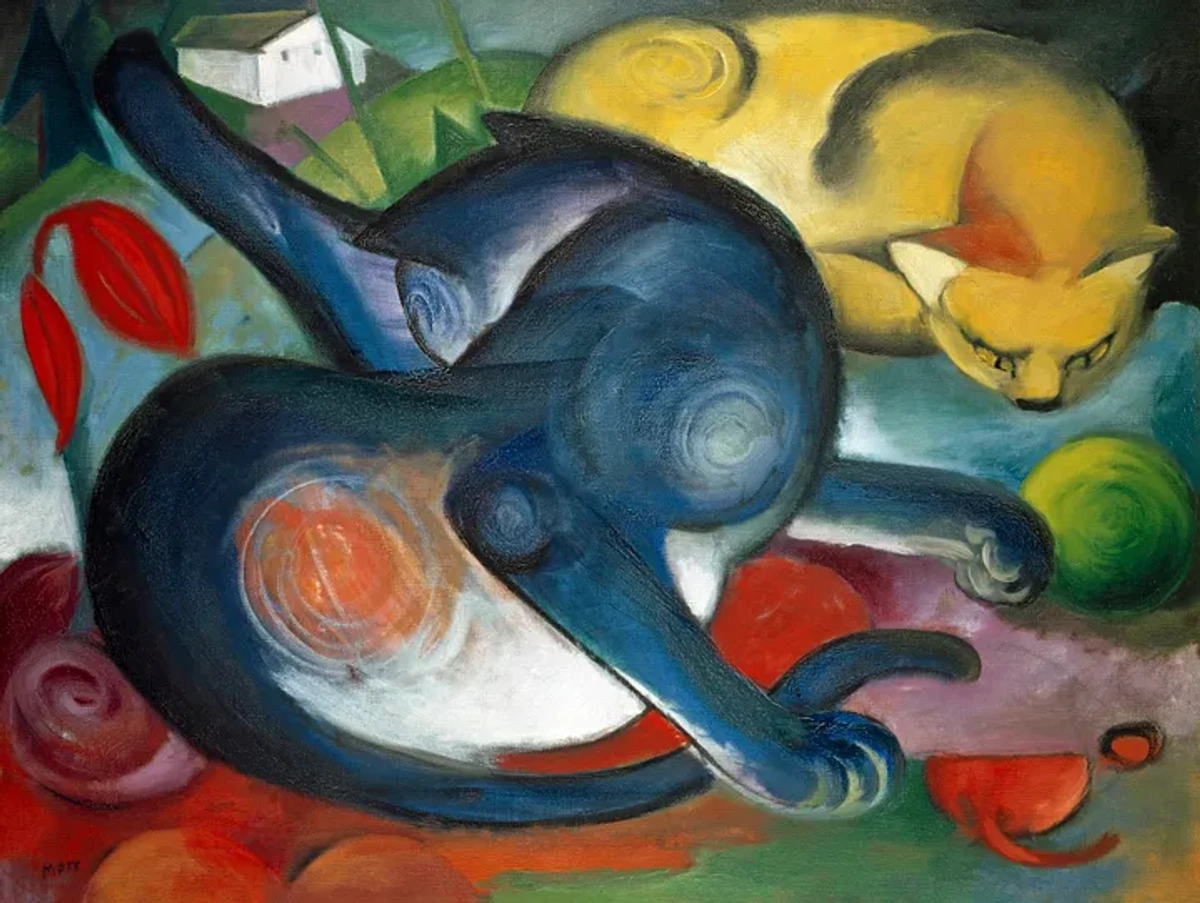
The Birth of Der Blaue Reiter: A Shared Vision for a Spiritual Art
This deeply personal spiritual yearning, however, would soon find fertile ground in collaboration, leading to the birth of an artistic collective that aimed to translate these inner visions into a universal language. Marc wasn't alone in his fervent spiritual and artistic search. His encounter with the Russian artist Wassily Kandinsky in 1910 proved pivotal. They bonded almost instantly over a shared conviction: that art could, and indeed should, be a direct bridge to the spiritual realm. They saw the prevailing materialism of their age as a spiritual sickness, and believed art held the antidote. This spiritual quest drew inspiration from various sources, including German Romantic philosophy, theosophy, and the mystical writings of thinkers like Rudolf Steiner, all pointing towards an unseen world accessible through intuition and art.
Together, in 1911, they founded Der Blaue Reiter (The Blue Rider). This wasn't a formal 'movement' with a rigid manifesto, which I always found incredibly refreshing and modern in its approach. Instead, it manifested more as an almanac – a diverse collection of essays, artworks, and ideas from artists across Europe, united by a belief in art's capacity to transcend the material world. This format allowed for a broader, more open dialogue, embracing various forms of expression, from folk art and children's drawings (which they saw as pure and uncorrupted) to abstract compositions, all rooted in a search for inner truth. For them, music, particularly the atonal compositions of Arnold Schoenberg, with its abstract purity and direct emotional impact, offered a powerful model for non-representational art that spoke directly to the soul. The very name, "The Blue Rider," was symbolic: "Blue" represented spirituality and masculinity, a key element in Marc's color theory, and "Rider" symbolized the artist's journey, the quest to break away from conventional forms and conquer new spiritual territories in art.
They sought out artists who shared this vision, including August Macke (known for his harmonious, lyrical compositions and vibrant depictions of modern life), Paul Klee (who would go on to develop a highly individual abstract language rooted in nature, music, and symbolism), Alexej von Jawlensky (renowned for his vibrant, mask-like portraits exploring spiritual transformation), and Gabriele Münter (a pioneering female Expressionist whose colorful landscapes and portraits explored psychological depth). They all were invited to explore new forms of expression rooted in spirituality, folklore, and the primal force of color. For them, color was not merely descriptive; it possessed an inherent, almost mystical energy capable of directly influencing the viewer's soul. Kandinsky's own journey towards pure abstraction, as seen in his early Composition series, perfectly exemplifies the group's aspiration to move beyond the literal and into the realm of the purely spiritual.
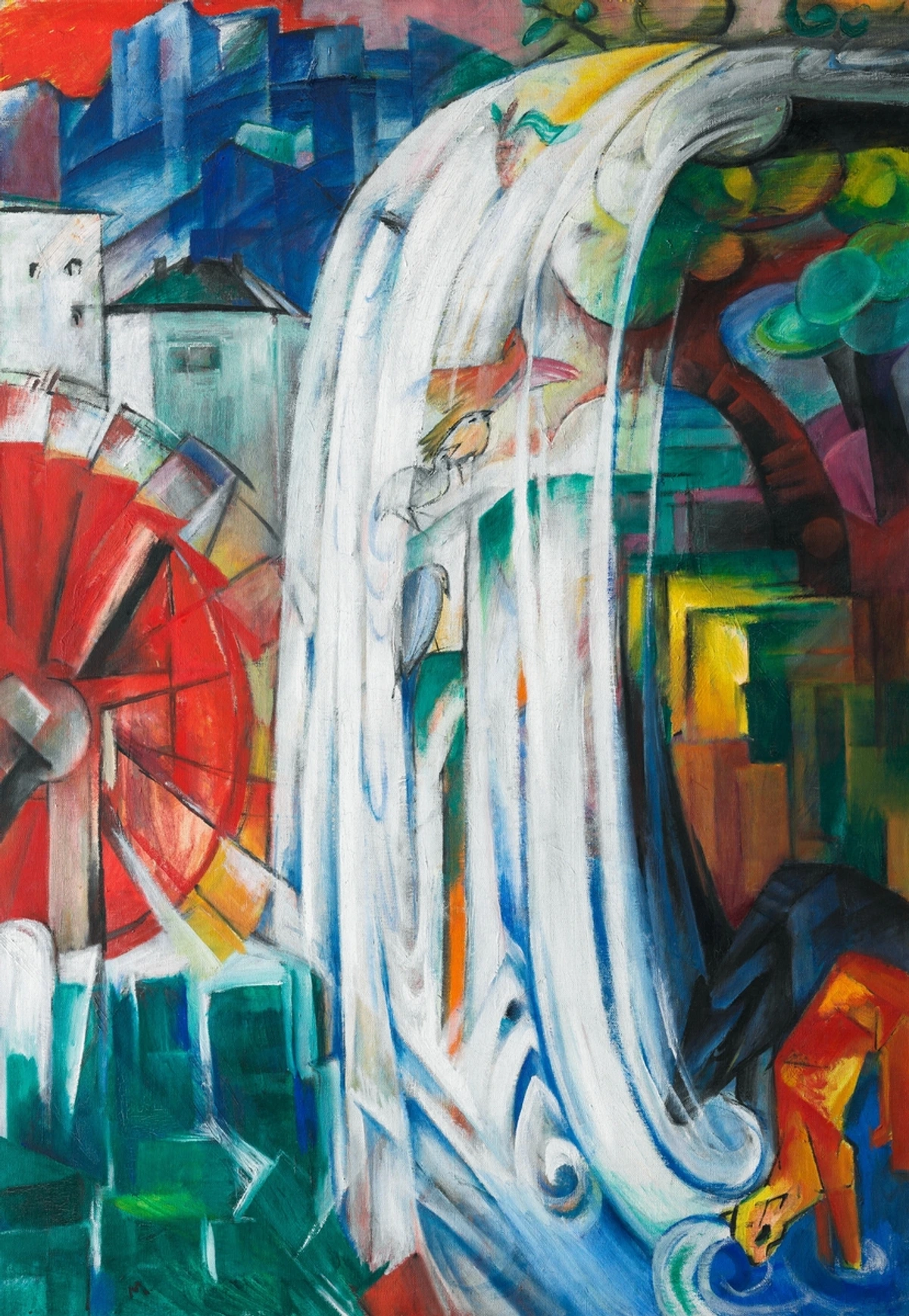
Their approach stood in stark contrast to the other major German Expressionist group, Die Brücke (The Bridge). I find these differences endlessly fascinating because they highlight that there's no single, monolithic path to being an 'Expressionist.' Both groups sought authenticity and emotional truth, but their methods and ultimate goals diverged significantly:
Feature  | Die Brücke (The Bridge) | Der Blaue Reiter (The Blue Rider) |
|---|---|---|
| Founded | 1905 in Dresden | 1911 in Munich |
| Key Artists | Ernst Ludwig Kirchner, Karl Schmidt-Rottluff, Erich Heckel, Emil Nolde, Max Pechstein | Franz Marc, Wassily Kandinsky, August Macke, Paul Klee, Alexej von Jawlensky, Gabriele Münter |
| Philosophy | Focused on confronting emotional authenticity and societal anxieties, often through social critique, urban alienation, and raw, immediate feeling. They wanted to build a 'bridge' to a new, more authentic future by tearing down old conventions. | Sought a spiritual reality, connecting art to music, nature, folklore, and the cosmos. Believed art could reveal profound inner truths and lead humanity back to a lost harmony. Felt humanity was already lost and looked for purity elsewhere. |
| Style | Jagged, distorted figures, harsh, contrasting, often clashing colors, bold outlines, woodcut-inspired lines, direct, often confrontational imagery. | Lyrical, often dissolving forms, symbolic and harmonious use of color, drawing from folk art, children's art, and medieval imagery, moving towards abstraction. |
| Subjects | Urban life, cabaret scenes, psychological tension, nudes in natural settings, portraits filled with angst and raw emotion. | Animals, mystical landscapes, cosmic visions, abstraction, portraits imbued with spiritual depth, often portraying innocence and harmony. |
| Key Difference | Direct, confrontational critique of modern society's ills, seeking regeneration through raw expression. | Retreat into spiritual abstraction, seeking redemption and harmony beyond the corrupted material world. |
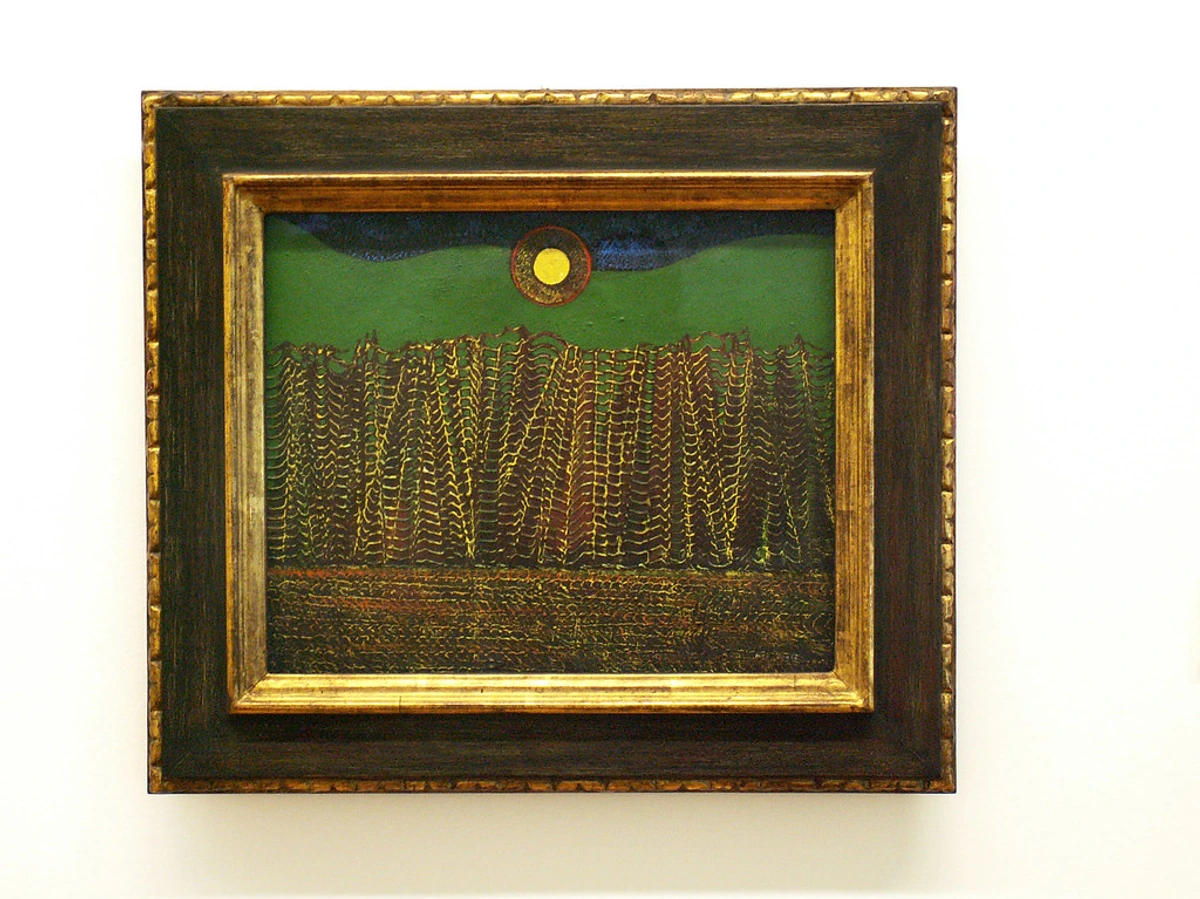
Die Brücke wanted to build a 'bridge' to a new, more authentic future by confronting the grit and anxieties of modern life head-on. Der Blaue Reiter, on the other hand, felt humanity was already lost and looked for purity in nature, in animals, and in the spiritual power of color. They sought a path to inner harmony and spiritual regeneration rather than external confrontation, often drawing subtle influences from contemporary movements like Cubism and Futurism, but transforming them into a distinctly spiritual language rather than focusing on pure formalism or dynamism.
Cracking the Color Code: What Marc's Animals Are Really Saying
You simply can't talk about Franz Marc without delving into his intensely personal and profound use of color. For him, color was not descriptive in the naturalistic sense; it was profoundly symbolic, a language to express the inner life or 'soul' of his subjects. He primarily worked in oil, tempera, and watercolor, often building up layers to achieve luminous, almost translucent effects that enhanced the spiritual quality of his forms. He developed his own unique color theory, a system he meticulously articulated to paint the spiritual essence of the world. While influenced by earlier color theorists like Goethe and Runge, Marc pushed the psychological and symbolic implications further. He famously wrote about his system:

- Blue is the masculine principle, severe and spiritual. Think of the deep, contemplative sky or the vast, enigmatic ocean. It evokes ideas of eternity and the divine. Marc even linked blue to the idea of sound or music, believing it had a direct pathway to the soul.
- Yellow is the feminine principle, gentle, happy, and sensual. Imagine the warm, life-giving sunlight nurturing the earth. It symbolizes joy and earthly delight.
- Red is matter, brutal and heavy. It speaks of the earthbound, the violent, the raw forces of life and death, often associated with aggression or passion.
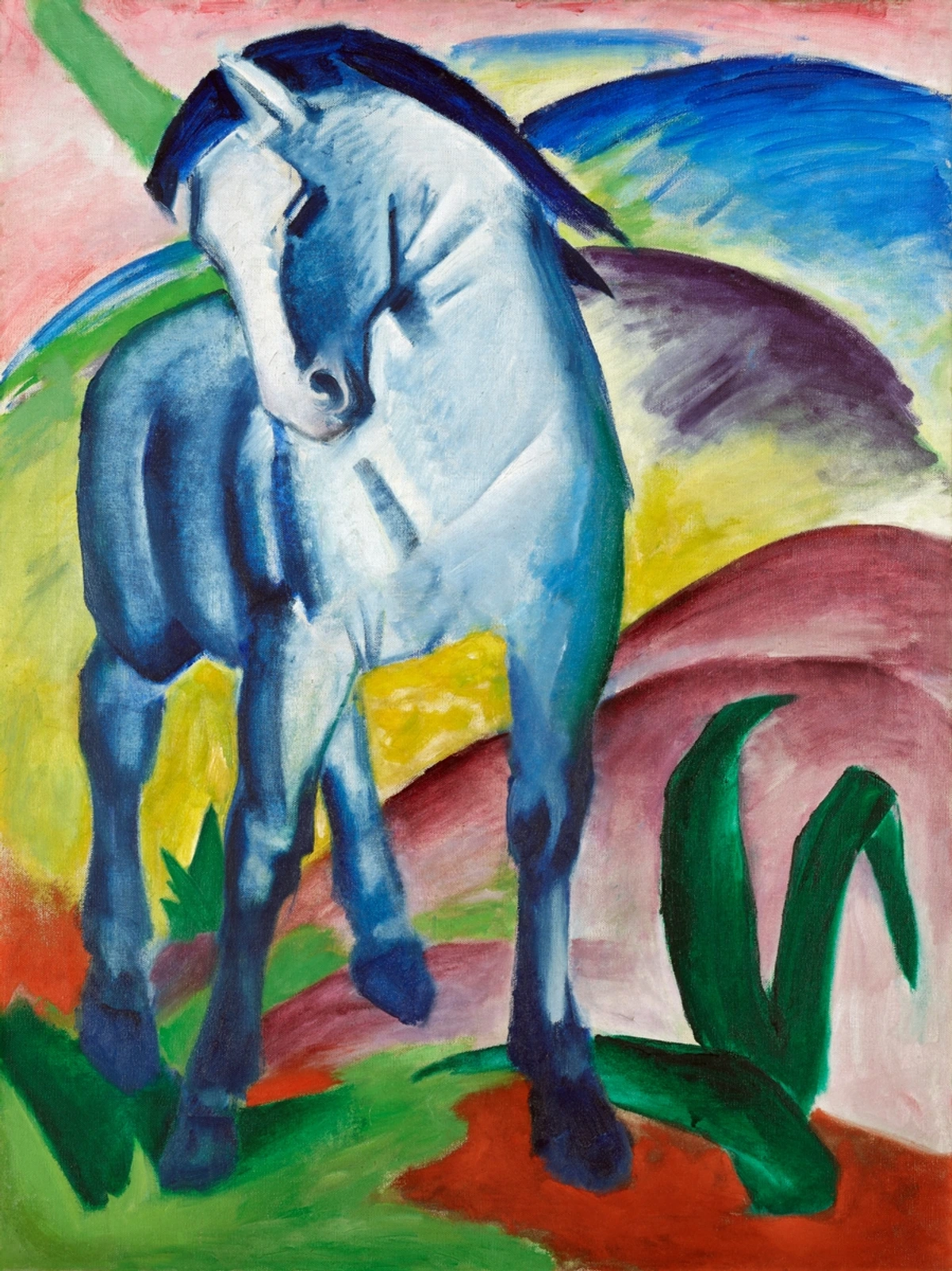
So, when Marc painted a blue horse, he wasn't just being whimsical or rejecting naturalism. He was trying to capture the spiritual essence of the animal – a 'Spiritual Horse,' imbued with profound inner purity. This wasn't a literal horse painted blue, but an expression of its inherent spiritual nature, a tangible manifestation of the blue, masculine principle. Similarly, a blue fox might symbolize its spiritual cunning and connection to primal forces, while a yellow cow represents its gentle, nurturing, and distinctly feminine earthiness. Even a red bird, if he had painted one, might signify its vital, untamed earthly passion. This wasn't some arbitrary choice, but a deeply felt symbolic language, a core part of the psychology of color in abstract art. He painted animals because he believed they possessed a primal innocence that humanity had tragically lost. For Marc, animals were not just creatures; they were direct connections to a pre-lapsarian paradise (a state of innocence before humanity's fall), a sanctuary from the corruption, materialism, and spiritual decay of the modern world. They embodied a harmony and purity he desperately longed for, symbols of the soul of the cosmos.
_07.jpg&w=1200&q=93&output=webp)
Key Works to Witness: Windows into a Spiritual Universe
To truly grasp Marc's vision and the intensity of his beliefs, we must look at some of his most potent creations. These aren't just paintings; they are profound windows into his soul and, in some cases, eerily prophetic statements about the turbulent era he inhabited.
The Large Blue Horses (1911)
Let's start with what many consider his quintessential surviving work. The Large Blue Horses is a serene and majestic portrayal of three horses, rendered in deep, contemplative blues against a vibrant, rolling landscape. This painting perfectly encapsulates his symbolic use of color and his spiritual view of nature. The monumental, simplified forms of the horses convey a profound sense of peace and primal power, embodying the spiritual, masculine principle of blue and the innocence Marc so revered in animals. It's a testament to his early mature style, a vision of harmony before the world descended into chaos.
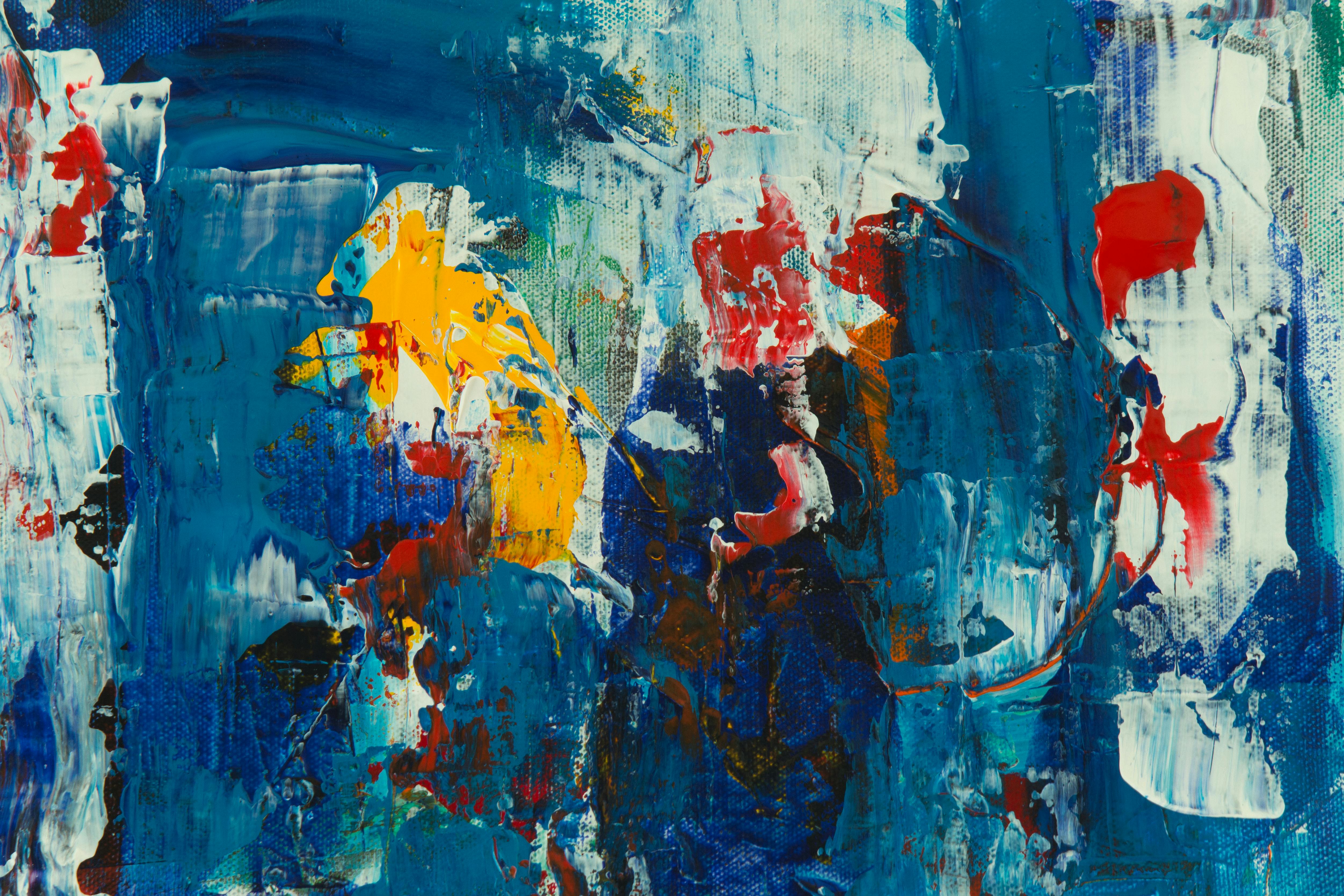
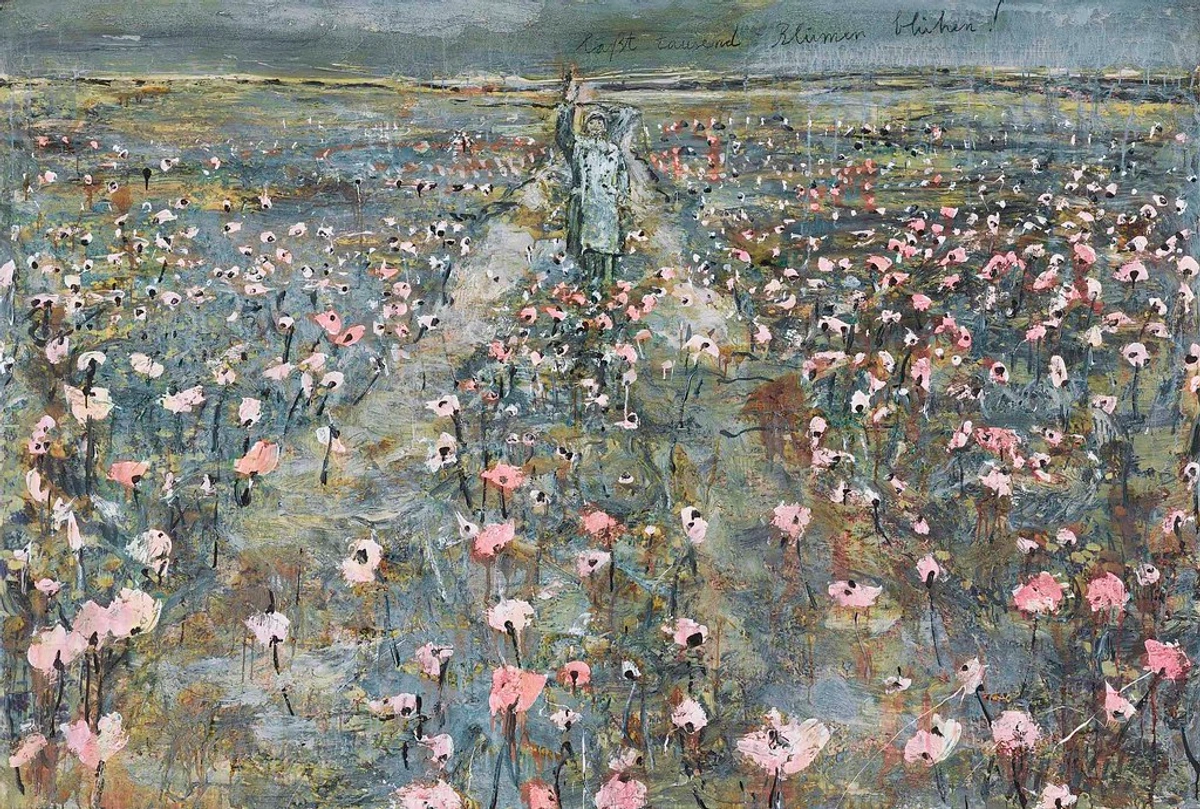
(Note: The following image is an abstract work that shares thematic resonance with Franz Marc's spiritual and color-symbolic approach, rather than being an original work by Marc himself. It is included to evoke the deep contemplation and color symbolism Marc explored.)
The Tower of Blue Horses (1913)
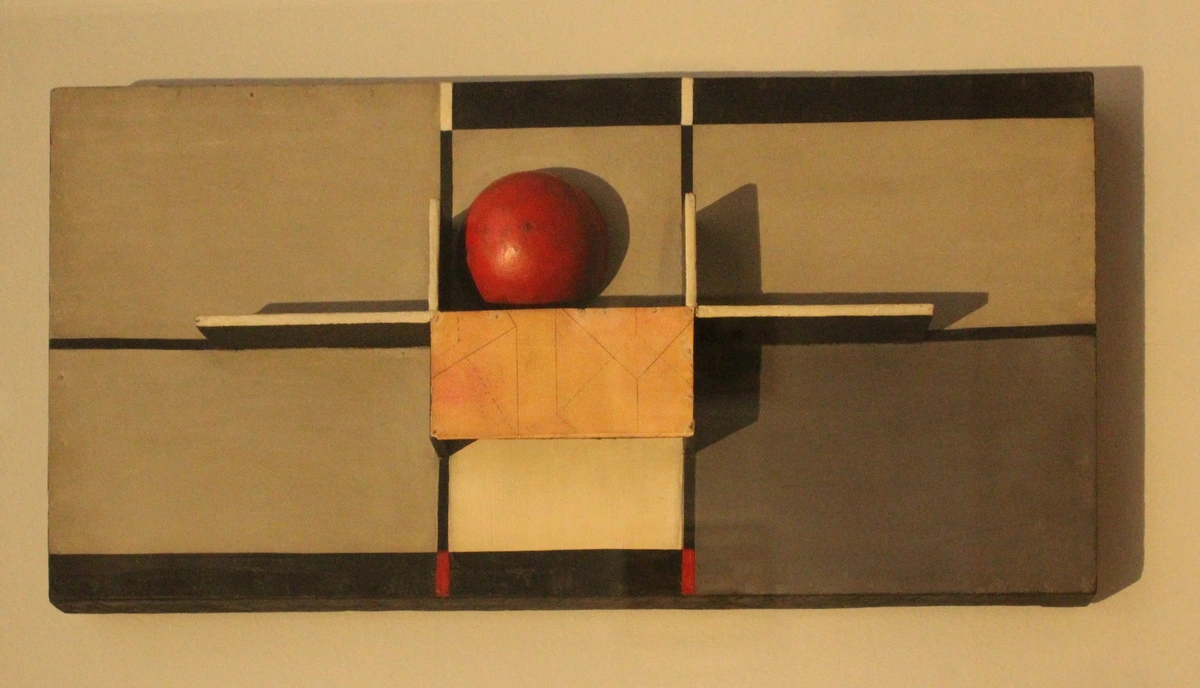
This is one of the great lost masterpieces of the 20th century, a piece that has haunted art history and my own imagination. It depicted four blue horses stacked in a powerful, vertical composition, their forms almost monumental, against a vibrant landscape of yellow and red. The horses seem to represent different stages of spiritual awareness, connected to the cosmos, symbolized by a rainbow and a crescent moon. It was a perfect summary of his ideals: animals as pure, cosmic beings, reaching for transcendence. The painting was last exhibited in Berlin in 1937, before being seized by the Nazis as 'degenerate art.' This label, Entartete Kunst, was applied to art they deemed un-German, Jewish, or communist, condemning its modern, abstract, and spiritual qualities as corrupting and a threat to their narrow, propagandistic vision of 'true' German art. Its subsequent disappearance during World War II, most likely destroyed, isn't just the loss of a painting; it's a gaping, tragic hole in our understanding of early modern art's mystical aspirations. We only know it today from sparse black and white photographs, a ghost of a masterpiece that still evokes immense power.
(Note: The following image, a surreal painting by René Magritte, is included here to symbolize the enduring mystery and absence of lost masterpieces like Marc's 'The Tower of Blue Horses', rather than depicting the actual lost work itself.)
Fate of the Animals (Tierschicksale) (1913)
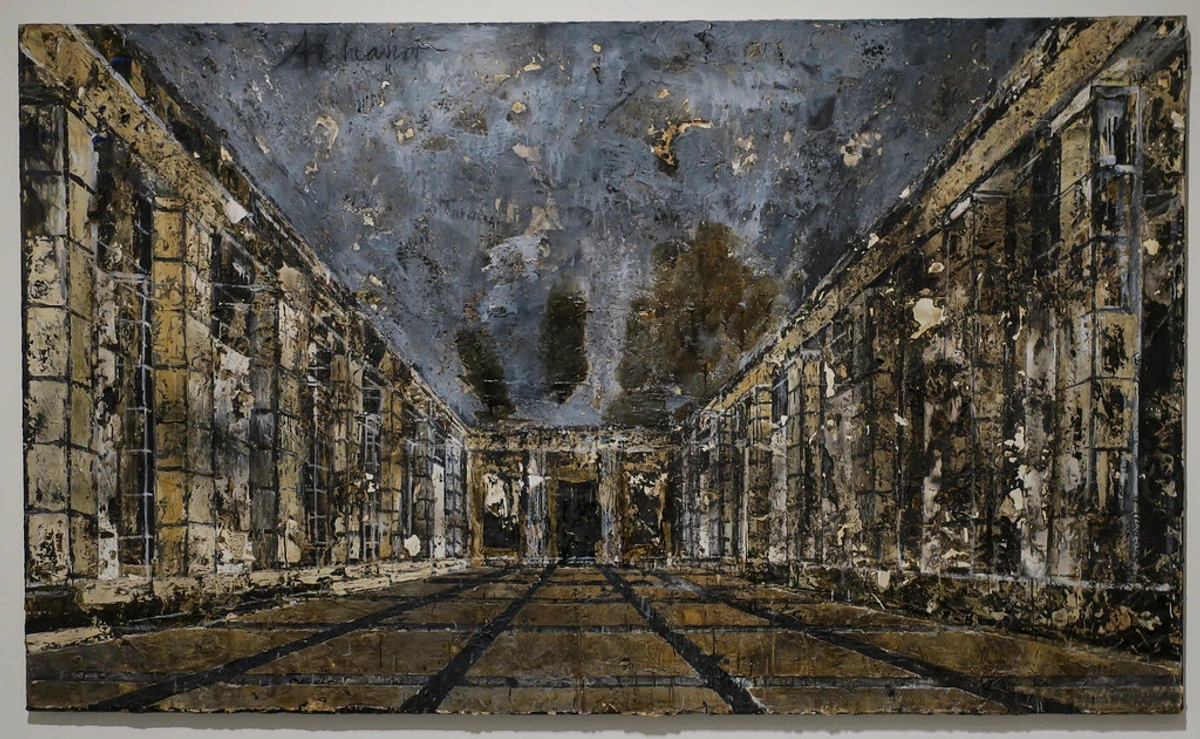
This painting is a visceral gut punch, a radical departure from Marc's earlier, more serene works. The harmony is gone, replaced by a chaotic, fractured vision of a forest consumed by a cataclysm. Animals are shown in terror—a blue deer, wild boars, and horses trapped in a brutal, geometric nightmare. The lines are sharp, almost shard-like, and the colors are violently clashing, expressing pure anguish. The entire approach to composition in art is shattered, deliberately evoking overwhelming chaos and despair. Marc himself wrote on the back of the canvas, "And all being is flaming suffering." Painted just before World War I broke out, it feels eerily prophetic, a stark vision of the destruction that would soon engulf Europe. The fragmentation of the animals and the landscape doesn't just show chaos; it conveys the complete breakdown of order, the rending apart of nature and innocence by an unseen, devastating force. The "flaming suffering" can be seen in the aggressive, sharp diagonals and the clashing reds and oranges, suggesting literal conflagration and intense emotional pain. It's a psychological landscape, a terrifying premonition of the brutal, dehumanizing force of total war.
(Note: The following abstract painting, with its dynamic geometric shapes and clashing colors, is included to illustrate the themes of fragmentation and emotional conflict inherent in Marc's 'Fate of the Animals'.)
These pivotal works not only define Franz Marc's unique artistic language but also serve as profound historical documents, mapping his evolving spiritual perspective against the backdrop of an increasingly volatile world.
A Life Interrupted: The War and a Tragic, Ironic End
Like many artists and intellectuals of his generation, Marc volunteered for military service when World War I began, swept up in an intense wave of patriotic fervor. This initial patriotism stemmed from a widespread belief across Europe that the war would be swift and purifying, a necessary, almost spiritual, catharsis to cleanse old corruptions and usher in a new, better world. It's a heartbreaking irony to think of such a sensitive soul, a painter of tranquil animals and cosmic harmony, embracing such a destructive force. He, like many others, naively believed the war could be a purifying fire, a necessary cataclysm that would destroy the old, corrupt Europe and pave the way for a spiritual rebirth, a new, purer society.
He was tragically wrong. The brutal reality of trench warfare horrified him, quickly stripping away any romantic notions. His letters from the front are filled with growing despair and disillusionment, a stark contrast to his earlier idealism. The war, for him, became the very antithesis of the spiritual paradise he sought. In a cruel twist of fate, in March 1916, the German government identified notable artists to be withdrawn from combat to protect them. Marc's name was on that list. But before the orders could reach him, he was struck and killed by a shell splinter during the Battle of Verdun. He was only 36 years old. To be taken just days, perhaps hours, before reprieve arrived is an irony almost too painful to comprehend, a tragic end to a brilliant, burgeoning career that you can trace on any artistic timeline. His final works, though few, showed a heightened fragmentation and a move towards even greater abstraction, hinting at powerful new directions his art might have taken had his life not been so cruelly interrupted.
Why Franz Marc Still Matters: A Timeless Pursuit for Meaning
So, why are we still talking about a German painter who loved blue horses over a century after his death? Because his quest is timeless. His work is a powerful reminder that art can be so much more than decoration or a pretty picture. It can be a profound search for meaning, a desperate attempt to connect with the world on a deeper, spiritual level – a fundamental human necessity. In a world increasingly fragmented, often superficial, and drowning in curated online personas, Marc's yearning for authenticity, purity, and inner truth feels more relevant than ever. He called for a spiritual renewal, a vision that feels urgently needed even today.
His aspirations resonate with contemporary artists who explore similar themes of nature, spirituality, and the human condition, seeking to imbue their work with a deeper purpose beyond mere aesthetics. For me, as an artist exploring abstraction and color, Marc's courageous pursuit of inner truth through symbolic language is a constant source of inspiration. That search for an inner truth, for a harmony between the soul and the canvas, continues to inspire artists today. That impulse to connect with something pure, something beyond the fleeting trends, is a powerful current that still flows through my own work. His aspirational vision reminds us that art can be a powerful tool for seeking meaning, a pursuit that continues today, and one that inspires the creation of new works you can explore and perhaps even collect here.
Marc showed us that a simple subject—an animal, a landscape—can become a vessel for the most profound ideas about life, spirituality, and our place in the universe. He dared to paint the world not merely as it looked, but as he felt it should be, an aspirational vision that reminds us of art's highest calling.
Key Themes in Franz Marc's Art
To summarize the core of Franz Marc's profound artistic output, here are the dominant themes that thread through his brief but impactful career, themes that continue to resonate with me and many artists today:
Spirituality & Mysticism
A lifelong search for spiritual truth, seeing art as a bridge to the divine and a reflection of universal harmony. Marc believed art could reveal the 'soul' of the world, influenced by broader European spiritual currents of his time, including German Romantic philosophy and theosophy.
Nature & Primitivism
Belief in the purity and innocence of nature, viewing it as a sanctuary from the corruption of modern society. This extended to appreciating the 'primitive' art forms like folk art and children's drawings for their untamed expressiveness and direct connection to essential truths.
Animal Symbolism
Animals as central figures, embodying a pre-lapsarian paradise and spiritual ideals. Each animal, and indeed each color, was imbued with specific psychological and cosmic meaning, making them metaphors for universal truths and symbols of a lost innocence.
Color as Language
Development of a unique, symbolic color theory where hues express inner essence and emotion, rather than mere optical reality. His meticulous system gave colors their own voice and spiritual weight, often drawing parallels between color and music.
Critique of Modernity
A deep disillusionment with the materialism, spiritual decay, and industrialization of contemporary human society, which he contrasted with the innate purity and harmonious existence of animals.
Preoccupation with Fate & Cataclysm
His later works, especially leading up to WWI, often show a prophetic awareness of impending destruction and suffering, a visceral foreshadowing of the horrors that would soon engulf Europe. This shift towards fragmentation and darker themes reflected his growing anxiety about the fate of the world.
FAQ: Your Franz Marc Questions Answered
What is German Expressionism?
German Expressionism was an early 20th-century art movement, primarily active from roughly 1905 to 1920, where artists sought to express emotional experience and inner states rather than objective physical reality. It emerged as a powerful response to the anxieties of modernity, often characterized by bold colors, distorted forms, and vigorous brushwork. Key groups included Die Brücke (The Bridge) and Der Blaue Reiter (The Blue Rider), though many individual artists also worked in an Expressionist style, like Oskar Kokoschka or Egon Schiele. Artists like Marc, Ernst Ludwig Kirchner (known for his raw urban scenes), Emil Nolde (with his intense, almost brutal colors and religious themes), August Macke (celebrated for his lyrical, harmonious compositions), and Käthe Kollwitz (whose incredibly moving work I've explored in my ultimate guide to Käthe Kollwitz) explored themes of alienation, spirituality, the human condition, and social critique.
Who was in the Blue Rider group besides Franz Marc?
The core of the group was Marc and Wassily Kandinsky. Other significant artists associated with Der Blaue Reiter included August Macke, who sadly also died early in WWI and contributed vibrant, optimistic works like Girl in a Green Jacket; Paul Klee, who went on to develop his own highly individual abstract language rooted in nature, music, and symbolism, as seen in works like Fish Magic (which embodies the group's aspiration to move beyond the literal through its abstract purity and dreamlike symbolism); Alexej von Jawlensky, known for his vibrant, often mask-like portraits exploring spiritual transformation; and Gabriele Münter, a pioneering female Expressionist whose colorful landscapes and portraits, such as Listening (The Portrait of Marianne Werefkin), were integral to the group's aesthetic, contributing a more intimate and intuitive approach. While their paths diverged after the group's brief existence, their shared experience laid the groundwork for significant developments in abstract art.
What is Franz Marc's most famous painting?
While The Tower of Blue Horses (1913) is perhaps his most famous conceptually due to its legendary status and tragic loss during WWII, his most famous surviving work is widely considered to be The Large Blue Horses (1911). It perfectly captures his symbolic use of color and his spiritual view of nature, showcasing the serene power he saw in animals and the deep, contemplative quality of his signature blue. Its fame stems from its direct embodiment of his unique artistic philosophy and its enduring appeal as a symbol of innocence and harmony.
Why did Franz Marc paint animals?
Marc saw animals as pure, spiritual beings who lived in harmony with nature, a state he believed humanity had lost due to materialism, industrialization, and corruption. For him, they were not just subjects but symbols of a pre-lapsarian paradise, a direct, uncorrupted connection to the cosmos. Painting them was his way of portraying this idealized, spiritual world, using his color theory to express their inner, spiritual essence rather than their mere physical appearance. Animals, for Marc, were metaphors for a lost innocence and a hoped-for spiritual renewal.
How did Franz Marc's artistic style evolve?
Marc's style underwent significant evolution during his short career. He began with more traditional, realistic landscapes and figures influenced by academic training. After his exposure to Impressionism and Post-Impressionism in Paris, his palette brightened, and his brushwork became looser and more expressive. His distinct Expressionist style, characterized by vibrant, symbolic colors and simplified, often monumental animal forms, truly emerged with the founding of Der Blaue Reiter. Towards the end of his short life, influenced by Cubism and Futurism, his forms became more fragmented, dynamic, and geometrically broken, foreshadowing a move towards greater abstraction, as powerfully seen in works like Fate of the Animals. This evolution reflects his increasing disillusionment with the material world and a growing sense of impending catastrophe.
Where can I see Franz Marc's paintings today?
Many of Franz Marc's surviving masterpieces are housed in prominent museums worldwide. You can find his work in institutions such as the Solomon R. Guggenheim Museum in New York (home to The Large Blue Horses), the Museum of Modern Art (MoMA) also in New York, the Tate Modern in London (a fantastic place to see modern art, as explored in my guide What is a Tate Modern), and the Lenbachhaus in Munich, which holds a significant collection from the Der Blaue Reiter group. The Kröller-Müller Museum in the Netherlands (my personal favorite to visit) also has notable pieces, offering a chance to see his work amidst a beautiful sculpture garden.
How did Franz Marc die?
He was tragically killed in action during World War I at the Battle of Verdun in 1916, at the age of 36. He was struck by a shell fragment just days before an official order to relieve him from duty was to be carried out – a cruel and ironic end to a brilliant, burgeoning career that was cut short far too soon.