What Is the Rosetta Stone? The Key That Unlocked Ancient Egypt
Discover the incredible story of the Rosetta Stone. Learn what it says, how it was found, and why this single slab of rock was the key to deciphering Egyptian hieroglyphs.

What Is the Rosetta Stone and Why Is It So Incredibly Important?
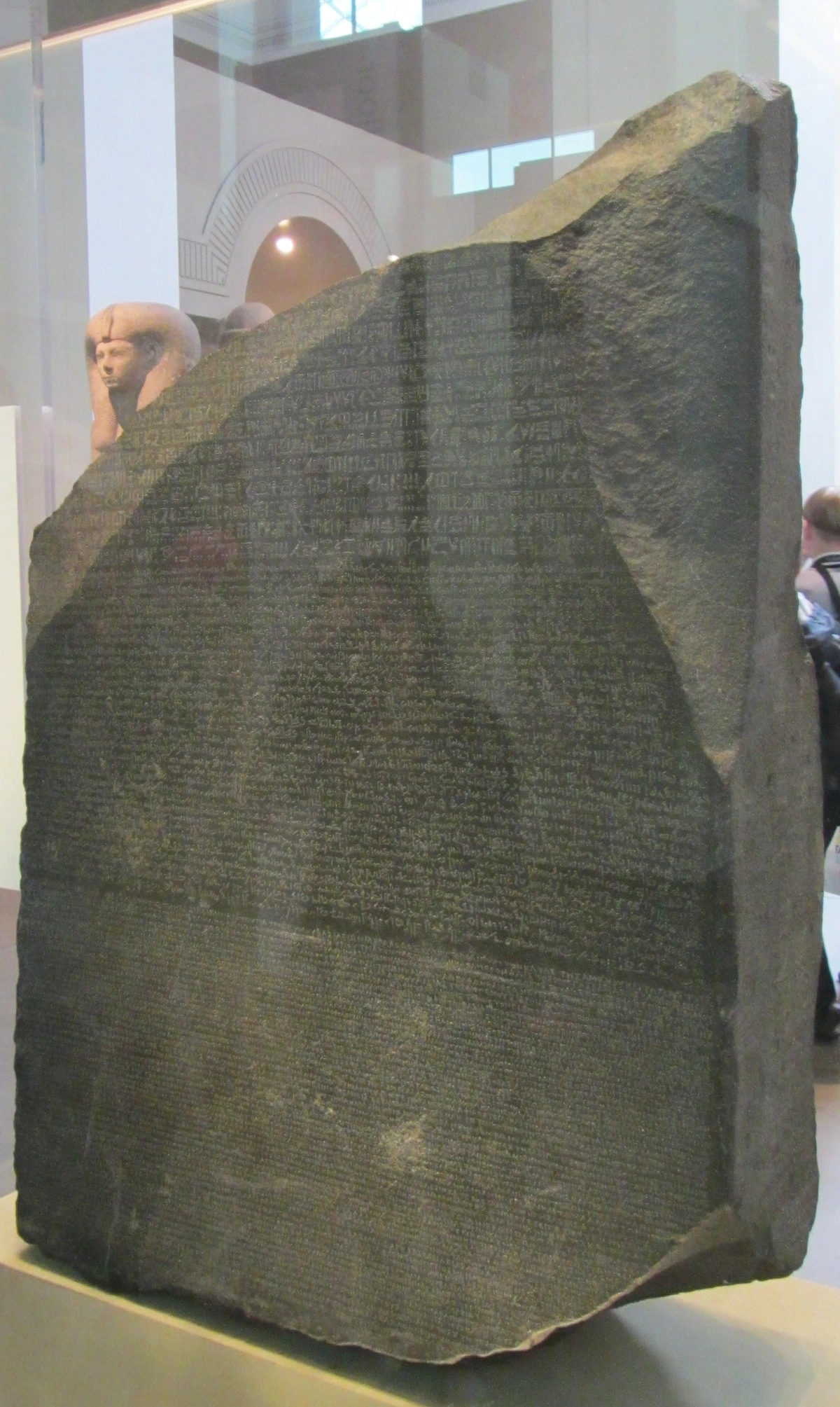
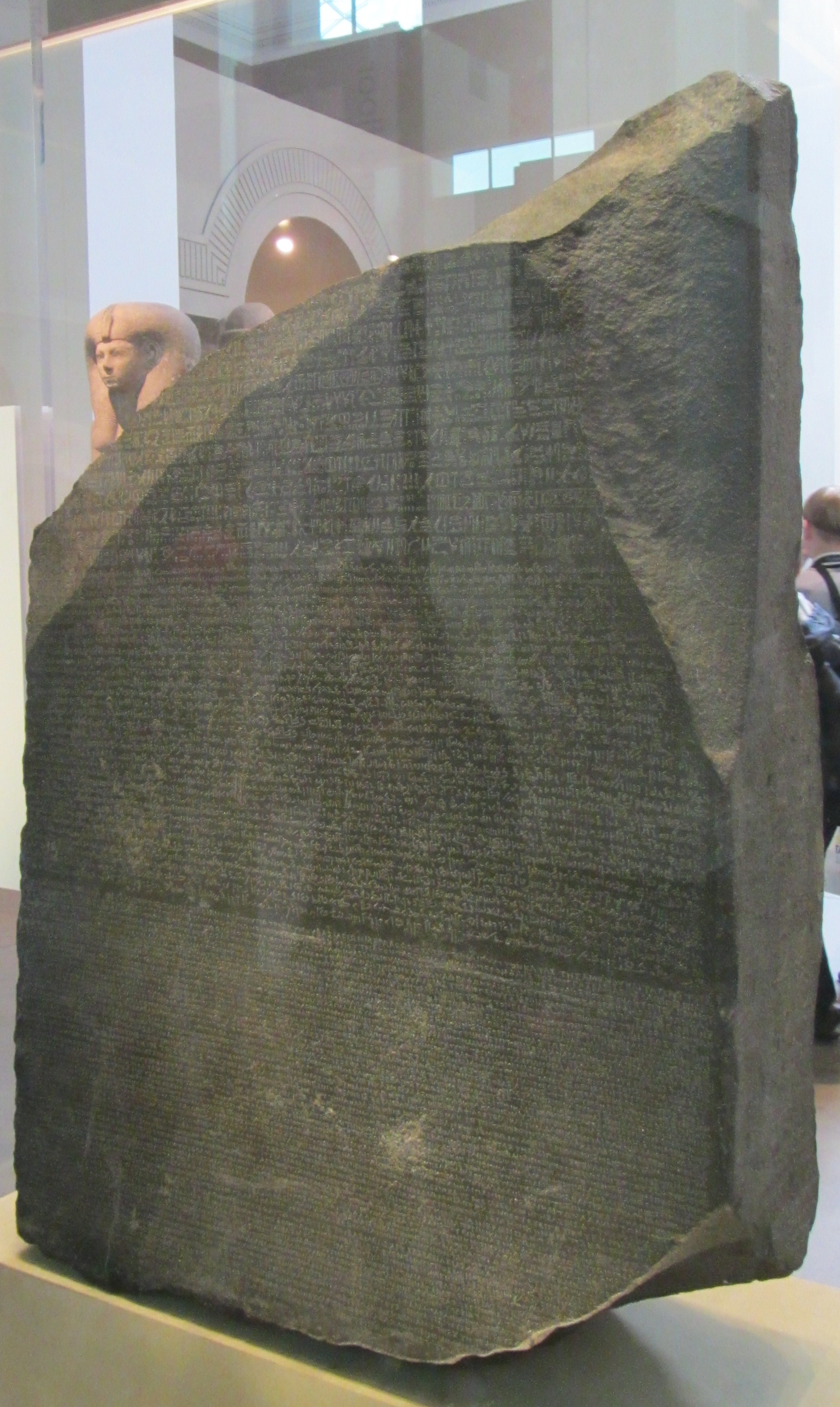
I remember the first time I saw the Rosetta Stone at the British Museum. I'd seen pictures, of course, but standing in front of it was different. It wasn't sparkling or colossal. It was a dark, fractured slab of rock behind thick glass, surrounded by a crowd of people all craning their necks. What struck me wasn't its superficial beauty, but the sheer, dense weight of history it held, and the profound mystery it once presented. It felt less like an artifact and more like a pivotal key, a literal Rosetta Stone (if you'll pardon the pun), to a completely lost world. The moment of its discovery, though accidental, would set in motion a chain of events that would forever alter our understanding of ancient Egyptian civilization, fundamentally changing how we viewed one of humanity's most enduring cultures. It also ignited a fierce and ongoing debate about cultural heritage and the ethics of museum acquisitions – a topic we'll delve into later.
At its heart, the Rosetta Stone is a single text, repeated in three different scripts. This simple, yet monumental, fact made it one of the most important archaeological discoveries in history. It was the ultimate linguistic cheat sheet, a bilingual (really, trilingual) key that allowed us to finally read Ancient Egyptian hieroglyphs, unlocking a civilization that had been silent, its written wisdom inaccessible, for nearly 2,000 years. Imagine having a massive library of knowledge, but all the books are in a language no one understands – that was ancient Egypt before this slab of stone came along. The very act of writing, the creation of these intricate symbols and cursive strokes, speaks volumes about a civilization's desire to record, to communicate, to ensure its legacy. And for nearly two millennia, that legacy was effectively locked away, shaping much of what we now understand about the enduring influence of ancient Egyptian art on modernism.
So, let’s break it down. What exactly is this famous rock, what message does it convey, and how did its unearthing and subsequent decipherment irrevocably change everything we thought we knew about ancient Egypt? It's a story of conquest, intellectual rivalry, and ultimately, a triumph of human ingenuity.
When I first encountered it, I understood why so many before me had been captivated. It’s not just a slab; it’s a portal, a tangible connection to the deep past.

The Writing Process of the Rosetta Stone: How Was It Made?
The creation of the Rosetta Stone, or any stele for that matter, was a meticulous and multi-step process, requiring skilled craftsmen and a clear understanding of the decree's purpose. First, the granodiorite block would have been quarried, shaped, and then polished to provide a smooth surface for inscription. Scribes would then meticulously draft the decree in all three languages – hieroglyphic, Demotic, and Greek – often working from an original papyrus copy. The text would then be carved by highly trained sculptors or stonemasons. Imagine the precision required to carve such intricate hieroglyphs, each a tiny work of art, alongside the flowing lines of Demotic and the standardized Greek script. This process wasn't just about recording words; it was an act of monumental art, intended to convey authority and permanence.
The Stone Itself: What Are You Actually Looking At?
If you ever visit the British Museum, you might be surprised by the Rosetta Stone's appearance. It isn't some grand, perfectly preserved monument. In fact, when you see the Rosetta Stone, you're not seeing the whole picture at all. It's actually a broken piece of a much larger commemorative slab, known as a stele (pronounced 'stee-lee'). Imagine a tall, upright stone or wooden slab, often inscribed, carved, or painted, serving as a monument, typically set up for public display. Originally, this stele would have stood prominently in a temple, a public proclamation for all to see – or at least, for all who possessed the literacy to interpret its intricate messages. These steles were commonplace in ancient Egypt, serving various functions from grave markers and boundary stones to official royal decrees and commemorative monuments for significant events, but few would attain the global fame of this particular fragment.
It’s made of a dark grey-pinkish stone called granodiorite, an igneous rock composed mainly of quartz, plagioclase feldspar, and hornblende. Its granular, crystalline texture, not unlike granite, often leads to it being mistaken for basalt. While relatively common, the choice of such a durable stone underscores the intent for this decree to endure through the ages, a testament to its perceived importance by the Ptolemaic rulers. It’s remarkably heavy, weighing around 760 kilograms (about 1,676 pounds), and stands at just over a meter tall (approximately 3 feet 8 inches). The physical damage – particularly the broken top and bottom-right corners – means we don't possess the complete text from any of the three inscriptions. Yet, miraculously, we have enough to piece together the profound puzzle, a truly fortunate accident of preservation. The fact that such an ordinary material could become the key to an entire civilization's language always strikes me as poetic.
The Three Scripts: A Linguistic Triple-Threat
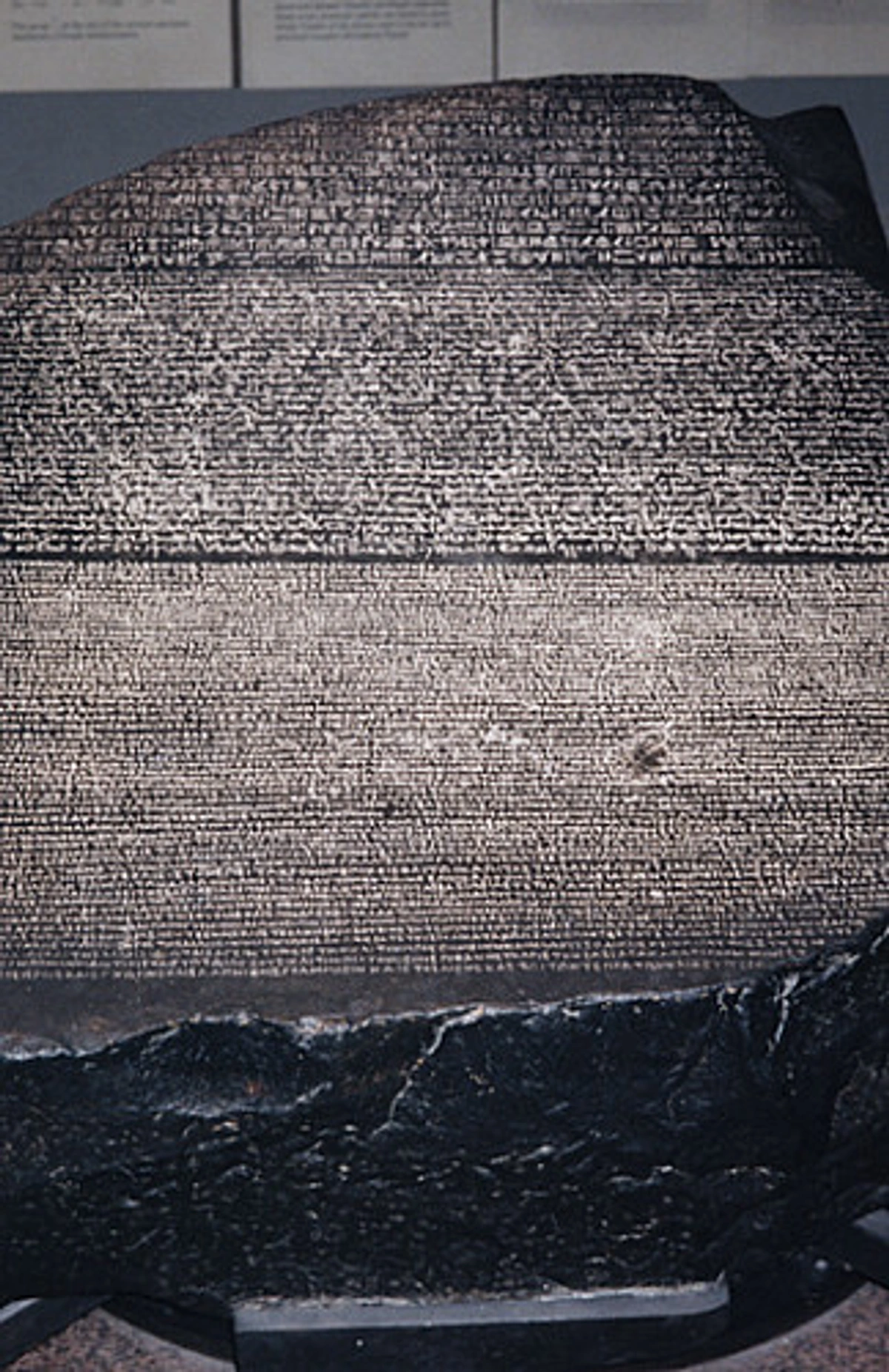
The genius of the stone lies in its parallel texts. The priests of the time knew that different people used different scripts, so to make sure the king’s message got across, they wrote it in the three major scripts of the day. This multilingual approach reflects the complex demographic and political landscape of Ptolemaic Egypt, a vibrant, often volatile melting pot where Greek rulers governed a largely Egyptian populace with its own ancient traditions and writing systems. It wasn't just a linguistic convenience; it was a pragmatic decision, a strategic communication plan for a multi-ethnic empire, designed to ensure maximum dissemination and legitimacy for the royal decree, especially since the Greek ruling class often struggled to connect with the native Egyptian population and its powerful religious institutions. It’s a fascinating insight into the complexities of ancient governance and cultural integration.
Each script had its own distinct visual character and context of use, making the parallel texts an immediate curiosity for scholars seeking to unlock the secrets of ancient Egypt's written heritage. Furthermore, understanding the nuances of each script's typical application was crucial for decipherment; knowing who used it and for what provided invaluable context.
Script  | Who Used It | What It Looked Like |
|---|---|---|
| Hieroglyphs | Priests, for sacred or official texts, especially on monuments and temples | The famous picture-writing, literally meaning 'sacred carvings.' These were intricate, visually rich, and highly formal, reserved for the most important inscriptions on temples, tombs, and official decrees like the Rosetta Stone. They include logograms (pictures representing whole words or concepts), phonograms (pictures representing sounds, akin to an alphabet), and determinatives (unpronounced pictures placed at the end of a word to clarify its meaning, especially for homophones). This script was a blend of art and language, reflecting the Egyptians' reverence for monumental expression. It's also worth noting that hieroglyphs could be written horizontally or vertically, and their reading direction was indicated by the way the animal or human figures faced – they always 'looked' towards the beginning of the text. Understanding this nuanced writing direction was another small but vital puzzle piece in the larger decipherment. |
| Demotic Script | Everyday people, for daily business, legal documents, and literature; essentially the 'popular' script | A highly cursive, much more simplified and faster-to-write version of hieroglyphs, evolving from a northern form of hieratic script. Demotic served as the common script of ancient Egypt for nearly a thousand years (roughly 650 BC to 450 AD), used for everything from private letters and legal contracts to literary works and scientific texts. Think of it as ancient shorthand for administrative and informal purposes, a testament to the bustling daily life of ancient Egyptians. Its evolution marked a significant step towards greater accessibility in written communication, moving away from the more labor-intensive hieroglyphs. This script's widespread daily use also meant it contained more common vocabulary, making it another crucial point of comparison. |
| Ancient Greek | The ruling Ptolemaic dynasty, government administration, and Greek populace in Egypt | The language of the Hellenistic ruling class, government administration, and international commerce and affairs during the Ptolemaic period in Egypt. Following Alexander the Great's conquest, Greek became the language of power and elite culture, particularly after the founding of Alexandria. This was the most widely understood script among the educated elite and administrators of the time, making it the invaluable comparative text for decipherment. Its familiarity provided the crucial linguistic bridge needed to begin understanding the other two mysterious scripts, serving as the anchor in this trilingual puzzle. |
This setup was the jackpot for historians. They could read the Greek and, by carefully comparing it to the other two mysterious scripts, they had a starting point to crack the code. The realization that royal names like Ptolemy and Cleopatra were often enclosed in oval frames called cartouches (a term I just adore, it sounds so regal, doesn't it?) was a monumental breakthrough. This wasn't just a stylistic choice; it was a deliberate system to highlight royal names, making them stand out. By matching the known Greek spellings of these names to the hieroglyphs within the cartouches, scholars like Thomas Young and Jean-François Champollion were able to assign tentative phonetic values to individual hieroglyphs. This was groundbreaking, as previous attempts had been stalled by the false assumption of purely symbolic representations, treating hieroglyphs as esoteric pictures rather than a phonetic language. Suddenly, the words of the pharaohs and priests were within reach, not as abstract concepts, but as spoken sounds frozen in stone, a profound shift in how we could engage with ancient Egyptian thought.
The Importance of Coptic
One often overlooked but absolutely crucial linguistic tool in deciphering hieroglyphs was Coptic. This language, still used today as a liturgical language in the Coptic Orthodox Church, is the direct descendant of ancient Egyptian. While Coptic is written primarily in the Greek alphabet, it incorporates a few additional characters derived from Demotic, reflecting its deep Egyptian roots. Critically, its grammatical structure and vocabulary preserved countless elements of ancient Egyptian, making it an invaluable Rosetta Stone for the Rosetta Stone itself, if you can imagine that! Think of it as the closest living relative to the language the hieroglyphs represented – a linguistic bridge spanning millennia. Scholars like Jean-François Champollion, as we'll soon discuss, had a deep understanding of Coptic, which gave them an unparalleled advantage in connecting the phonetic sounds of the hieroglyphs to a known, living language. He could literally hear the echoes of ancient Egyptian in Coptic, allowing him to hypothesize and confirm phonetic values with remarkable accuracy. It was like having a secret decoder ring, passed down through millennia, offering a direct aural connection to the ancient tongue.
So, What Does It Actually Say?
Here’s the slightly funny part. For a document that unlocked the secrets of an ancient civilization, the text itself is surprisingly… bureaucratic. It’s not an epic poem or a secret history, nor is it some long-lost wisdom of the pharaohs. It's a royal decree issued in Memphis, Egypt, in 196 BC on behalf of the then-teenage king, Ptolemy V Epiphanes. This mundane nature, however, ironically made it far more valuable as a linguistic tool, as it represented a common form of public communication.
The Decree of Memphis: A Royal Proclamation
The text inscribed on the Rosetta Stone is formally known as the Decree of Memphis. This wasn't some long-lost prophecy or a hidden treasure map; it was a rather ordinary administrative document, though its impact would be anything but. The decree was issued by a council of priests from Egypt's temples to affirm the royal cult of Ptolemy V, who had been crowned king eight years earlier but was only then deemed old enough to rule independently. This act was crucial in the politically volatile Ptolemaic Egypt, where the Greek ruling dynasty, established by one of Alexander the Great's generals, constantly sought to legitimize its authority among the traditional Egyptian populace and the powerful native priesthood. The decree served as a formal expression of gratitude and, more importantly, a public declaration of support from the influential priestly class to the young pharaoh, stabilizing his rule during a period of considerable unrest and native Egyptian revolts.
Essentially, it's a masterclass in ancient political PR and a vital legal document for understanding the intricacies of Ptolemaic governance. The decree confirms and strengthens the royal cult of the then 13-year-old king, Ptolemy V Epiphanes, whose reign had begun amidst considerable political instability. The Ptolemaic dynasty, established by one of Alexander the Great's generals, ruled Egypt as Greeks, always needing to legitimize their rule to the traditional Egyptian populace and the powerful native priesthood. The decree meticulously lists his 'good deeds' for Egypt – such as significant gifts to temples, remissions of taxes, and concessions to the priesthood, aiming to portray him as a benevolent and divinely favored ruler. These included measures like cancelling debts owed to the crown, granting amnesty to prisoners, and crucially, reaffirming the tax-exempt status of temple lands and personnel, and reducing the taxes on temple revenues. In return, it orders that statues of him be erected in every temple throughout Egypt, celebrating his divine status and ordering his birthday and coronation day to be celebrated as feast days, complete with libations and offerings. It’s fundamentally a public thank-you note from the powerful priestly elite to the monarch, shrewdly designed to secure their continued support for his rule and stabilize the Ptolemaic dynasty's authority over a largely Egyptian populace that was still adapting to Greek rule, all while reinforcing the traditional religious structures.

It’s a powerful reminder that history is often built on the mundane – a simple administrative decree, in this case, proved to be an invaluable linguistic bridge. The most extraordinary breakthroughs can come from the most ordinary documents, especially when they hold the key to unlocking vast historical narratives. It's a testament to the fact that even seemingly minor historical records can become monumental keys to understanding entire civilizations.

The Discovery and the Drama: A Tale of Soldiers and Scholars
The story of how the stone was found is almost as interesting as the text itself. It’s a tale of war, rivalry, and a bit of luck – a true testament to how serendipity often intertwines with human endeavor.
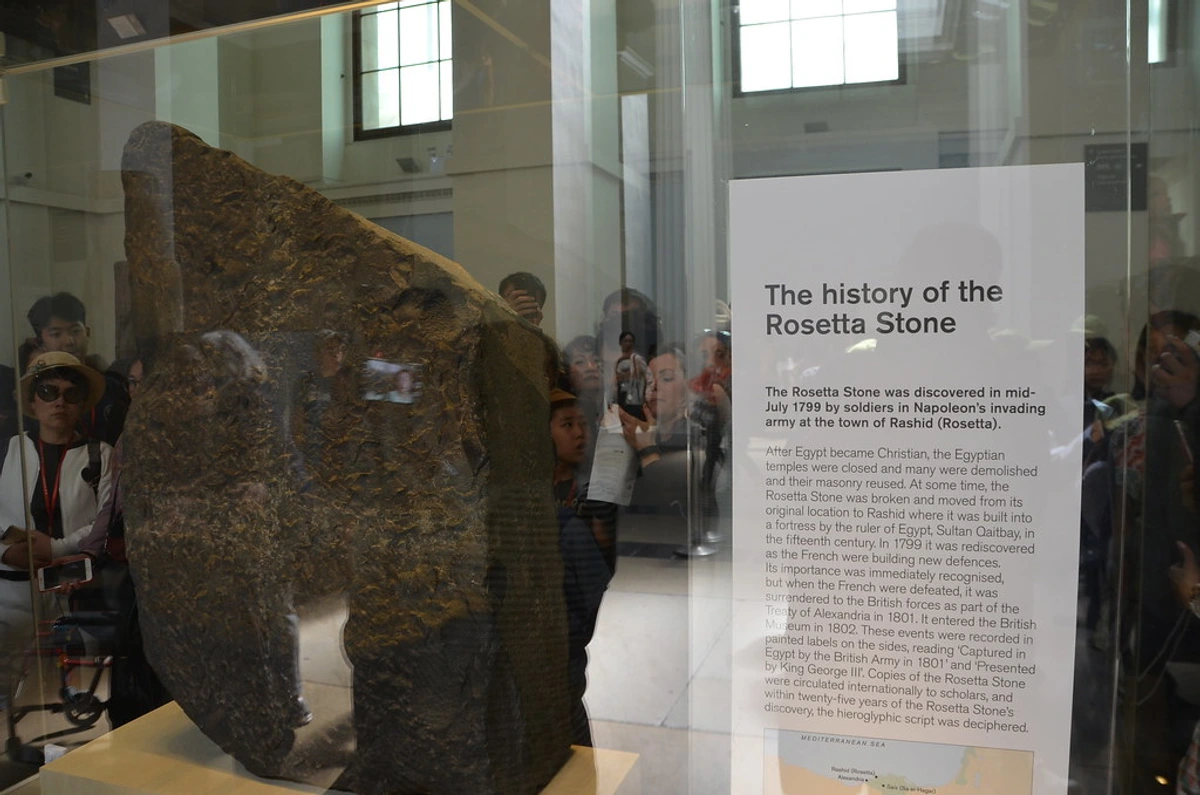
In 1799, Napoleon’s ambitious military campaign in Egypt was well underway, a fascinating blend of military conquest and scientific expedition. Napoleon, ever the visionary (or perhaps just a shrewd PR operator, always thinking of his legacy!), brought with him not only soldiers but also a large contingent of scholars, scientists, and artists – the famous Commission des Sciences et des Arts (Commission of Sciences and Arts), comprising over 160 savants. Their mission was nothing less than to systematically document and study Egypt's ancient wonders, its flora, fauna, and contemporary culture – an unprecedented scientific endeavor that would lay the groundwork for modern Egyptology and produce the monumental Description de l'Égypte. It's truly fascinating how, even amidst military conflict, this thirst for knowledge propelled such an undertaking, effectively launching the systematic study of ancient Egypt. During this period, a French engineer officer named Pierre-François Bouchard was supervising the demolition of an old, dilapidated wall to extend a fort, Fort Julien, near the port town of Rashid (which the French, for some reason, called Rosetta, hence the stone's name). There, built right into the ancient masonry, was this dark, inscribed stone. Bouchard, with a keen eye for historical significance, immediately recognized its unique nature and potential importance—a stone with three different scripts was clearly something special, not just another piece of rubble. He promptly reported his find to his superiors, ensuring the stone was swiftly sent to the Institute of Egypt in Cairo, where Napoleon's contingent of scholars and scientists had already begun their groundbreaking studies. They quickly recognized its immense potential, making copies and initial analyses that would prove crucial later on. I can only imagine the excitement in that room!
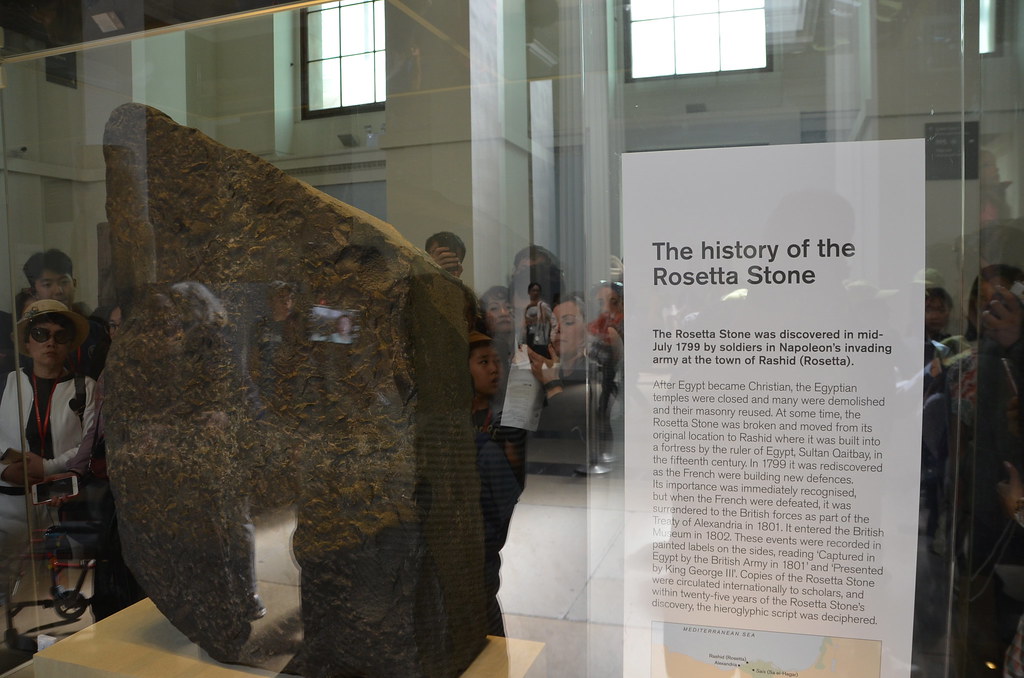
But then, as so often happens, international politics and military might got in the way of purely scientific pursuit. The British forces, allied with the Ottomans, decisively defeated the French in Egypt in 1801, marking the end of Napoleon's Egyptian adventure. During the subsequent negotiations for the French surrender, specifically the Treaty of Alexandria (1801), a significant argument erupted over the fate of the vast collection of ancient artifacts the French savants (scholars) had meticulously gathered. The British, as the victors, insisted on claiming these treasures, including the now-famous Rosetta Stone, as spoils of war. This wasn't just a casual request; it was a firm demand, reflecting the burgeoning European interest in ancient Egypt, a period often characterized by what we now critically examine as colonial acquisition. After some intense diplomatic wrangling, with figures like Colonel Tomkyns Hilgrove Turner representing the British, they won. The Rosetta Stone was then shipped to London aboard a captured French frigate, 'L'Égyptienne,' (how ironic, a French ship carrying French spoils to Britain!) and has been a cornerstone exhibit in the British Museum since its arrival in 1802. It's a journey from battlefield to museum, a testament to its perceived value even before its secrets were fully revealed, a true relic of both ancient and modern history, and a potent symbol of changing geopolitical power dynamics.
The Role of Copies and Reproductions
Crucially, before the British took possession, French scholars, aware of the stone's importance, had already made multiple copies, known as lithographs and plaster casts. These early reproductions were vital. They allowed scholars across Europe, including Thomas Young, to study the inscriptions without needing direct access to the original stone. This act of early dissemination underscores the collaborative, albeit competitive, nature of scientific discovery in the 19th century and ensured that the work of decipherment could continue even as the physical artifact changed hands. Without these foresightful reproductions, the race to decipher would have been significantly hampered, perhaps delaying our understanding of ancient Egypt by many more years.
This acquisition, of course, ignites one of the most fervent and enduring debates in museology and cultural heritage today: the ongoing question of repatriation. Should the stone be returned to Egypt, its country of origin? It's a deeply complicated question with compelling arguments on both sides, a microcosm of larger discussions about colonial legacies and cultural ownership.

The Repatriation Debate: Ownership and Ethics
On one hand, institutions like the British Museum argue that they have meticulously preserved the Rosetta Stone, preventing further degradation through advanced conservation techniques, and have made it globally accessible to millions of visitors from around the world, fostering education and cross-cultural understanding. They contend that it now serves as a 'universal' object, a key piece of world heritage that transcends national borders, and that its current location in a prominent museum maximizes its reach to a diverse, global audience, fulfilling a 'universal museum' ethos. They also highlight the rigorous conservation efforts and scholarly research that have taken place since its arrival, ensuring its long-term survival and study. The argument is often framed as benefiting all humanity, rather than a single nation, allowing scholars and the public from every continent to engage with this vital artifact.
On the other hand, the Egyptian government and many cultural heritage advocates argue forcefully for its repatriation, asserting that the stone is an irreplaceable part of Egypt's national identity and cultural heritage, taken as a spoil of war during a period of foreign occupation. They argue that its symbolic power and historical context would be most fully appreciated in its country of origin, inspiring and educating Egyptians about their ancestral past. This debate highlights the complex ethics of cultural ownership, colonial legacies, and the role of museums in a globalized world. I find myself grappling with this; what would its presence in Cairo mean for the collective spirit of the Egyptian people, and for the global understanding of its context? It's not a simple 'right' or 'wrong' answer, but a profound ethical consideration.
Potential Solutions and the Future of Cultural Heritage
The repatriation debate for objects like the Rosetta Stone isn't always a binary choice between "stay" or "return." Creative solutions are often proposed, such as long-term loans, shared exhibitions, or co-ownership agreements that allow the artifact to be displayed in both its country of origin and its current holding institution, fostering a spirit of collaboration over ownership. The rise of digital technologies also offers new avenues for access and study, allowing high-resolution 3D models and digital copies to be made available globally, irrespective of the physical object's location. While these digital solutions can never fully replace the awe of seeing the original artifact, they do offer a powerful way to democratize access and foster scholarship across borders, creating virtual 'global museums' accessible to everyone. This ongoing dialogue is shaping the very future of museology and how we define cultural property in an increasingly interconnected world, hopefully leading to more equitable and inclusive approaches to cultural heritage management.
For centuries leading up to the Rosetta Stone's dramatic discovery, European scholars, fascinated by the enigmatic Egyptian hieroglyphs, were largely working under a critical false assumption: that each intricate symbol represented a whole word, a complex idea, or a purely pictorial representation (pictogram). They treated it like a symbolic code, like a secret puzzle with profound esoteric meanings, rather than a living, phonetic language used for everyday communication. This approach led to countless dead ends and frustrated endeavors, with scholars often imposing their own interpretations rather than seeking objective linguistic structures. The fundamental challenge was the lack of any known bilingual text, a critical missing piece that kept the language impenetrable. The Rosetta Stone, with its undeniable parallel texts, provided the empirical evidence needed to finally prove this long-held theory wrong, setting the stage for a monumental intellectual shift. It was like realizing you'd been trying to read a novel as a series of unrelated emojis, frustratingly missing the phonetic sounds that bring language to life, and indeed, the very grammar and syntax that form a coherent language.
Early Attempts at Decipherment (Pre-Rosetta Stone)
Before the Rosetta Stone's dramatic appearance, the quest to understand hieroglyphs wasn't new. Scholars for centuries, even back to ancient Greek and Roman times, had puzzled over them, often creating fantastical interpretations. Medieval Arab scholars, notably Dhul-Nun al-Misri (9th century CE) and Ibn Wahshiyah (9th/10th century CE), made some remarkably insightful observations, recognizing phonetic elements and the direction of writing. Their work, unfortunately, remained largely unknown in Europe. In the Renaissance, European scholars like Athanasius Kircher (17th century), a German Jesuit polymath, also attempted decipherment. His work, though voluminous and influential in its time, was largely based on the symbolic misinterpretation that dogged many later efforts. He, like others, believed the hieroglyphs held profound mystical and esoteric knowledge, rather than being the practical, everyday script of a bustling civilization. These early attempts, while valiant and driven by genuine curiosity, highlight the sheer difficulty of the task without a firm linguistic key like the Rosetta Stone, which ultimately proved that hieroglyphs were not solely symbolic. Their efforts, though ultimately unsuccessful in full decipherment, demonstrate a continuous human fascination with decoding the past, a relentless human drive to understand.
The race to decipher it was fiercely competitive, a true intellectual marathon involving numerous dedicated scholars, each bringing their own linguistic theories and methodologies. But the ultimate triumph, the final crack in the code, culminated primarily in the work of two brilliant minds, often seen as intellectual rivals:
Figure | Nationality | Key Contribution | Impact |
|---|---|---|---|
| Thomas Young | British | Recognized cartouches held royal names; identified phonetic elements. | Provided initial phonetic breakthroughs; laid groundwork. |
| Jean-François Champollion | French | Realized hybrid nature of hieroglyphs (phonetic, ideographic, determinative). | Unlocked full decipherment; established modern Egyptology. |
While these two stand out, it's important to remember that science and discovery are often cumulative efforts, with many lesser-known figures contributing to the broader understanding.
- Thomas Young (Britain): A brilliant polymath, often called 'the last man who knew everything,' Young was a physician, physicist, and Egyptologist. He made the first truly major breakthrough in 1814. He correctly realized that the oval shapes, or cartouches, in the hieroglyphic text typically enclosed royal names. This was a crucial insight. By comparing the length and position of the cartouches with the name "Ptolemy" in the known Greek text, and by meticulously examining other cartouches from different monuments (like that of Cleopatra from the Philae Obelisk), he was able to assign tentative phonetic values to some of the hieroglyphs within them. He also deduced that some hieroglyphs were phonetic and others ideographic – a crucial step away from the purely symbolic assumption. He even correctly identified the direction of reading for hieroglyphs by observing which way the animal and human figures faced – they always 'looked' towards the beginning of the text. While he was undeniably on the right track, making groundbreaking observations about the direction of reading and phonetic usage, he couldn't quite make the final, comprehensive leap to fully crack the entire system, still believing it to be primarily symbolic, perhaps a bit too cautiously. His insights, however, were absolutely foundational, providing the essential roadmap for others.
- Jean-François Champollion (France): A prodigious linguistic genius, Champollion’s obsession with Egypt began in childhood. He famously immersed himself in numerous ancient languages, including Coptic (the direct descendant of ancient Egyptian), which would prove to be an invaluable tool for understanding the grammar and vocabulary of the ancient language. Building meticulously on Young's foundational work (and indeed, the contributions of many other scholars, including his own intense study of the Demotic script, which he believed held a more direct connection to hieroglyphs than others), Champollion experienced his pivotal 'eureka!' moment in 1822. He famously rushed to his brother's office, shouting "Je tiens l'affaire!" ("I've got it!") before collapsing. His breakthrough was the profound realization that the hieroglyphic system wasn't solely symbolic or purely phonetic; it was a sophisticated, intricate hybrid. Some signs represented sounds (phonograms), some represented whole ideas or objects (logograms or ideograms), and crucially, some acted as 'determinatives' – unpronounced signs placed at the end of a word to clarify its meaning, especially for homophones (words that sound the same but have different meanings), acting as a semantic guide. This insight into the tripartite nature of the script was the true, complete key, unlocking the system in its entirety, allowing the sounds and meanings of an entire civilization to finally speak.
In 1822, Champollion triumphantly announced his decipherment, publishing his seminal work, Précis du Système Hiéroglyphique des Anciens Égyptiens (Precis of the Hieroglyphic System of the Ancient Egyptians). This marked one of the greatest intellectual achievements in history, akin to suddenly being able to read every book ever written by an ancient civilization. The scholarly world was electrified. The world of ancient Egypt suddenly, gloriously opened up, revealing its own voice after millennia of silence, finally allowing us to peer directly into their thoughts and beliefs, rather than relying on external interpretations. It was a profound shift in how history could be understood and experienced, a moment that felt like the lights were suddenly turned on in a previously dark and silent room. This breakthrough didn't just impact Egyptology; it also provided invaluable context for classical studies, as ancient Egyptian records often corroborated or shed new light on accounts from Greek and Roman historians.
The Birth of Egyptology: A New Era of Understanding
This was more than just solving a puzzle; it was the birth of modern Egyptology, the systematic study of ancient Egyptian history, language, literature, religion, and art. With the ability to read hieroglyphs, scholars could now directly access a vast, previously impenetrable archive of Egyptian texts – from monumental inscriptions on temples and tombs to fragile papyrus scrolls detailing daily life, administrative records, medical treatises, literary masterpieces like the Story of Sinuhe, astronomical observations, and intricate religious texts such as the Book of the Dead. We could finally read their visual storytelling techniques in narrative art, their history, and their beliefs, all from their own perspective, rather than relying solely on the often-biased and incomplete accounts of Greek and Roman writers. It was like suddenly being able to hear the authentic voices of a long-silent empire, transforming our understanding of this magnificent civilization from mere conjecture to informed study. This breakthrough illuminated everything from the detailed chronicles of the pharaohs' reigns and the complexities of their political structures to the intricate mythology, religious practices, and even the enduring influence of ancient Egyptian art on modernism. The mundane and the divine were suddenly legible, allowing us to reconstruct a vibrant culture in stunning detail, shifting our perception of ancient Egyptians from a mystical, inscrutable people to a sophisticated, highly organized civilization with a rich intellectual life.
The ability to read these ancient texts didn't just provide historical facts; it opened a direct channel to the Egyptian worldview, their unique approach to design in art, and their deep philosophical insights. We could finally understand their nuanced perspectives on life, death, and the cosmos, moving beyond mere archaeological excavation to a genuine intellectual conversation with the past. This also meant we could distinguish between different phases of the language and script – Old, Middle, and Late Egyptian, and even Demotic – allowing for a more precise chronological understanding of their civilization's development.

Why the Rosetta Stone Matters Beyond Language
The Rosetta Stone has become far more than an archaeological artifact; it has transformed into a powerful, enduring metaphor for discovery, unlocking secrets, and bridging understanding across vast divides. Its name is now famously used for everything from popular language-learning software to groundbreaking space missions, symbolizing the quest to decipher complex systems and open new frontiers of knowledge. But its real importance is deeper, touching upon the very essence of how we understand history and human achievement.
Its Enduring Cultural and Symbolic Impact
Beyond its scientific and historical significance, the Rosetta Stone has permeated global culture, becoming a widely recognized symbol for "the key to understanding a complex problem." This metaphor is evident in countless domains. In computing, a "Rosetta Stone project" refers to an initiative aimed at preserving digital data by translating it into a more universal, future-proof format. In biology, a "Rosetta Stone protein" might be one that helps unravel a complex genetic pathway, unlocking the secrets of cellular function. The European Space Agency even named a mission to a comet "Rosetta," with its lander "Philae," directly referencing the historical artifacts that unlocked ancient mysteries, hoping to unlock the secrets of the early solar system. This enduring resonance speaks to humanity's inherent drive to decode the unknown, and the profound satisfaction that comes from bridging gaps in knowledge, a timeless quest that spans disciplines and millennia.
It’s a symbol of connection. It reminds us that with the right key, cultures separated by thousands of years can communicate. It's a testament to human curiosity and the relentless drive to understand, a beacon for anyone who has ever faced an inscrutable puzzle. Its very existence proves that even the most profound linguistic barriers can be overcome with persistence and intellect. It’s no wonder its name has become synonymous with a key to solving complex problems across diverse fields, from computing to genetic research to artificial intelligence – truly embodying its universal impact.
Other Important Bilingual Inscriptions
While the Rosetta Stone holds a truly unique and singular place in history as the key to ancient Egyptian language, it wasn't the only bilingual or trilingual inscription from that period. In fact, subsequent archaeological discoveries brought to light other similar decrees, reinforcing the historical context and the decipherment's accuracy. These were often public steles erected in temples, serving the same function of communicating royal decrees to the diverse populace, a clear administrative strategy. These crucial complementary finds include:
Decree Name | Discovery Year | Location of Discovery | Key Details |
|---|---|---|---|
| Decree of Canopus | 1866 | San el-Hagar | Issued in 238 BC on behalf of Ptolemy III Euergetes, it commemorated a military victory and the king's benevolent acts, including reforming the calendar. Like the Rosetta Stone, it was inscribed in hieroglyphic, Demotic, and Greek. Its discovery was instrumental in confirming Champollion's methods and expanding the corpus of deciphered texts, offering further evidence of the consistency of the Ptolemaic decrees and their linguistic structure. |
| Decree of Raphia | 1902 | Raphia (near Gaza) | Issued in 217 BC on behalf of Ptolemy IV Philopator, commemorating his victory over Antiochus III the Great at the Battle of Raphia. This decree also featured the trilingual inscription format and further solidified the understanding of Ptolemaic royal decrees and their widespread dissemination. Its text reveals important details about the Ptolemaic army and its campaigns, offering vital historical context to the period. |
| Philae Obelisk | 1815 (inscribed) | Philae (relocated to Kingston Lacy, UK) | While not a decree itself, this obelisk, brought to England in 1815, featured inscriptions in both hieroglyphic and Greek, importantly including the names of Ptolemy and Cleopatra within cartouches. This discovery provided crucial comparative material, particularly for Thomas Young, in identifying royal names before the full decipherment of the Rosetta Stone. The parallel Greek text was directly instrumental in allowing scholars to isolate and begin to sound out the hieroglyphic characters for these royal names, a massive step forward. |
These later finds not only corroborated Champollion's decipherment methods, solidifying the accuracy of his work, but also provided further context and expanded the corpus of readable ancient Egyptian texts. They illustrated a common and effective practice during the Ptolemaic era to disseminate royal decrees widely across linguistic groups within Egypt, ensuring that messages from the rulers reached all segments of society. They were like additional confirmations, adding more pieces to an already compelling puzzle and enriching our understanding of this fascinating period, proving the Rosetta Stone wasn't just a fluke, but a representation of a deliberate administrative strategy.

For me, and perhaps for many who engage with creative endeavors, it’s a profoundly powerful metaphor for the act of creation itself. Every blank canvas or untouched block of clay feels like an indecipherable script, brimming with unspoken feelings and nascent ideas. The artist's work is to relentlessly seek and find that elusive key – be it the perfect interplay of color, the decisive stroke of a line, or the harmonious application of design in art – that translates a complex internal world into something the external world can comprehend, appreciate, and feel. The history of this stone is a monumental story that fits neatly into our [/timeline] of human ingenuity and the relentless pursuit of meaning, reminding us that every creation, whether an ancient decree or a modern artwork, is an attempt to communicate across boundaries.
The Future of Decipherment
The Rosetta Stone's legacy extends far beyond ancient Egypt. Its story continues to inspire linguists, cryptographers, and archaeologists working to decipher other undeciphered scripts from around the world. Scripts like the Indus Valley Script (from ancient India), Linear A (from Minoan Crete), the RongoRongo script (from Easter Island), and the mysterious Voynich Manuscript still await their Champollion. These remain notoriously difficult for various reasons: the Indus Valley Script, for instance, has no known bilinguals and the texts are very short, making pattern recognition incredibly challenging; Linear A also lacks a bilingual, and the language it represents is unknown, hindering comparative linguistic analysis; RongoRongo, while having some longer texts, also lacks a bilingual key and its origin and linguistic context are obscure, creating a true enigma; and the Voynich Manuscript's language and purpose remain a complete enigma, possibly even a hoax, challenging the very notion of a decipherable text. The principles established by the Rosetta Stone's decipherment – the diligent search for bilingual texts, the systematic analysis of recurring patterns, the identification of proper names, and the careful comparison with known languages – remain the bedrock of such endeavors. It's a reminder that there are still many voices from the past waiting to be heard, many worlds yet to be unlocked, and that our human curiosity is boundless, constantly pushing us to crack the next code, to bring another lost civilization to light.
FAQ: Your Rosetta Stone Questions Answered
I find that when a single object holds so much history and intrigue, people always have a lot of questions. Here are some of the most common ones I hear about the Rosetta Stone, and my answers to them, hopefully shedding more light on this incredible artifact, and addressing some of the top search queries you might have:
Who commissioned the Rosetta Stone?
The Rosetta Stone was commissioned by a council of Egyptian priests at Memphis, not by Ptolemy V himself. It was a formal decree issued by this powerful priestly council to affirm the royal cult of King Ptolemy V Epiphanes, celebrating his benevolent acts towards the temples and the populace. This act was crucial in the politically volatile Ptolemaic Egypt, where the Greek ruling dynasty constantly sought to legitimize its authority among the traditional Egyptian populace and the powerful native priesthood. So, while it's about the king, it was issued by the priests as a strategic declaration of support for his rule, cementing his position and their own.
What is the historical period of the Rosetta Stone?
The Rosetta Stone dates to the Hellenistic period of ancient Egypt, specifically 196 BC. This was during the reign of the Ptolemaic dynasty, a Greek-speaking line of pharaohs who ruled Egypt after the death of Alexander the Great. It reflects a complex and fascinating time when Greek cultural influence was strong in Egypt, with Alexandria as a thriving Hellenistic intellectual hub, yet traditional Egyptian religious and linguistic practices were still deeply significant, often creating a dynamic tension that the Ptolemies sought to navigate through decrees like this one.
How large is the Rosetta Stone?
The Rosetta Stone stands approximately 112.3 cm (3 feet 8 inches) high, 75.7 cm (2 feet 5.8 inches) wide, and 28.4 cm (11 inches) thick. It's quite a substantial piece of rock, weighing around 760 kilograms (about 1,676 pounds). Its size and weight undoubtedly made its original carving and subsequent transport a significant undertaking, requiring considerable effort and planning by ancient artisans and, centuries later, by European soldiers and scholars.
What happened to the missing pieces of the Rosetta Stone?
The Rosetta Stone is clearly a fragment of a much larger stele, with its top and bottom-right sections missing. Unfortunately, the missing pieces have never been found, despite extensive searches. It's likely they were broken off and possibly repurposed as building material in antiquity during the stone's long burial, or simply lost to time and the elements, scattered by centuries of erosion and human activity. We can only imagine what further details of the decree, perhaps even decorative elements depicting Ptolemy V or other gods, might have been on those missing sections, adding even more richness to its story.
How was the Rosetta Stone transported?
After its capture by the British in 1801, during the chaotic aftermath of Napoleon's Egyptian campaign, the Rosetta Stone was transported from Egypt to England aboard the captured French frigate L'Égyptienne (which itself had been seized, adding a layer of irony to the tale, wouldn't you say?). It arrived in Portsmouth, England, in February 1802, and was then taken by a specially adapted wagon to the British Museum in London. Given its immense weight of 760 kg (over three-quarters of a ton!), this was a significant logistical undertaking for the time, requiring considerable effort and planning, especially considering the relatively rudimentary transport methods of the early 19th century. Imagine the sheer muscle and engineering involved! It certainly wasn't a journey for the faint of heart, or for a fragile object, but a testament to its perceived value even before its secrets were fully unlocked.
Where is the Rosetta Stone now?
It is prominently on public display at the British Museum in London and has been since 1802. During its long tenure there, it has only been moved a few times, notably during World War I for safekeeping in a London Underground station, and again for conservation work. Its presence in London makes it one of the museum's most iconic and visited exhibits.
What is the Rosetta Stone made of?
It's carved from granodiorite, a type of igneous rock similar to granite.
What is its current conservation status?
The Rosetta Stone is housed in a specially designed climate-controlled display case at the British Museum to protect it from environmental damage and degradation. It is regularly monitored and maintained by a dedicated team of conservation experts to ensure its long-term preservation for future generations, preventing any further loss of its precious inscriptions. Its display behind thick, protective glass not only protects it from human touch and potential vandalism but also shields it from dust, fluctuations in humidity and temperature, and even vibrations – all factors that could cause further deterioration to the ancient stone. It's a delicate balance between maximizing public display and ensuring diligent preservation, and I think they do a remarkable job, given the historical significance of the artifact.
Why is it called the Rosetta Stone?
It was discovered by French soldiers in July 1799 near the port town of Rashid, which they, being French, referred to as Rosetta. The name simply stuck, immortalizing the seemingly ordinary town in one of history's most extraordinary finds. It's a charming quirk of history, isn't it? Sometimes, the most important things get their names from the most happenstance of origins, and Rosetta is a perfect example of a name becoming globally significant through sheer association with discovery.
Has any part of the Rosetta Stone text been translated into English?
Yes, absolutely! The entire text of the Rosetta Stone has been translated into English (and many other languages) since its momentous decipherment by Jean-François Champollion. The Greek portion was quickly translated after its discovery, providing the initial key that set the decipherment in motion. Once the hieroglyphic and Demotic scripts were cracked, the full decree became completely comprehensible, revealing its 'mundane' but historically vital contents. You can easily find the full English translation of the Decree of Memphis in books on ancient Egypt, museum websites, and academic resources, allowing you to read the very words that once baffled the world.
Is the Rosetta Stone the only document of its kind?
No, it's not unique, though it was undeniably the first to be discovered and, crucially, the first to provide the key for deciphering hieroglyphs. While it holds that singular, iconic position in history, several other bilingual and trilingual decrees have since been found, the most notable being the Decree of Canopus (discovered in 1866) and the Decree of Raphia (discovered in 1902). Both of these also feature inscriptions in hieroglyphic, Demotic, and Greek scripts, further confirming Champollion's methods and expanding our understanding of the Ptolemaic period and the various reforms and events they documented. These later finds were incredibly valuable for cross-referencing and enriching the corpus of deciphered texts, adding layers of nuance and detail to our historical knowledge and validating the initial breakthrough. However, the Rosetta Stone remains paramount due to its historical role as the initial, electrifying breakthrough that cracked open an entire civilization – you never forget your first, right?
Should the Rosetta Stone be returned to Egypt?
This is a highly debated topic, and honestly, one that I find myself grappling with, seeing the merits in both arguments. The Egyptian government has formally requested its return, arguing it is an irreplaceable, vital piece of their cultural heritage that was taken as a spoil of war during a period of foreign occupation, a powerful symbol of their nationhood. They contend that it would be most appropriately displayed in its country of origin, specifically at the Grand Egyptian Museum in Giza, where its symbolic power and educational value would be maximized, fostering national pride and a direct connection to their ancient ancestors. The British Museum, on the other hand, argues that it is a global artifact, safely preserved, meticulously researched, and made accessible to a worldwide audience in London, representing a 'universal museum' ethos that transcends national boundaries. They highlight their meticulous conservation efforts and the millions of visitors from every corner of the globe who see it annually, suggesting that its current location allows for maximum global access and scholarly engagement. There are compelling arguments on both sides, touching on profound issues of colonial legacy, cultural identity, preservation, and global access. I wonder, what would its presence in Cairo mean for the collective spirit of the Egyptian people, and for the global understanding of its context? It's a complex ethical puzzle, much like the stone itself was a linguistic one, with no easy answers.
A Final Thought
So, the next time you encounter that famous dark slab – whether in person or in images – I urge you: don't just see a static museum piece. See a living key, a tangible spark of intellectual triumph. See a formidable linguistic puzzle box finally opened. See the vibrant, enduring bridge that connects our modern world to the incredible, complex, and deeply human civilization of ancient Egypt. It’s a profound testament to human ingenuity – both for the priests who carved it to disseminate a king’s message across a diverse populace, and for the brilliant, obsessive minds who, centuries later, used it to finally hear a lost empire speak again, sharing its wisdom and wonders with the world. If this journey into decipherment inspires you to unlock your own creative codes, you might find something that speaks to you in my gallery, perhaps even an abstract piece that feels like its own secret language. Discover the art
















It makes me reflect on how vital such keys are in all aspects of life – whether unlocking ancient languages, understanding complex scientific principles, or even simply deciphering the nuances of human connection, or interpreting the understanding balance in art composition. The Rosetta Stone's story is, in essence, a timeless narrative of curiosity, challenge, and ultimate discovery, fitting perfectly into the grand tapestry of human endeavor that is our [/timeline]. If this journey into decipherment inspires you to unlock your own creative codes, you might find something that speaks to you in my gallery, perhaps even an abstract piece that feels like its own secret language. Discover the art