Picasso, Gris, Braque: Cubism's Masters & Architects of Fractured Reality
Uncover Cubism's pioneers: Picasso's raw energy, Gris's refined logic, and Braque's crucial insights. Explore its precursors, core principles, and lasting impact on modern art.

Pablo Picasso, Juan Gris, and Georges Braque: The Architects of Cubism's Fractured Reality, and Why Their Dialogue Still Matters
I’ve always thought of art movements as big, bustling parties, and if you're anything like me, you probably do too. The Impressionists? A sun-drenched garden party where everyone’s a bit tipsy on light, capturing fleeting moments with vibrant brushstrokes. The Surrealists? A bizarre midnight masquerade ball, full of dreams and unsettling whispers, challenging the very notion of reality. And Cubism? Cubism, to me, was a revolutionary dinner party, held in a room made of fractured mirrors. It was co-hosted by the incomparable Pablo Picasso and his formidable intellectual partner, Georges Braque, who famously sent out the invites and utterly shattered the rules of artistic etiquette that had governed representation for centuries. Their collaboration was so intense, they often called each other "Wilbur" and "Orville" after the Wright brothers, reflecting their shared pioneering spirit in this audacious new flight of artistic exploration. The analogy highlights the unprecedented and risky nature of their endeavor, much like the first successful flight—a venture into uncharted territory.
Before them, art largely aimed to faithfully depict the world as we saw it, often through the dreamy haze of Impressionism or the emotional intensity of Post-Impressionism. Art was about capturing a fleeting moment, a subjective feeling, or a beautiful, recognizable scene. Cubism smashed that expectation entirely, challenging the very notion of how reality could be presented on a two-dimensional surface. This wasn't just a minor adjustment; it was a seismic shift, a complete re-evaluation of how we see and how we paint. This radical departure from traditional single-point perspective was heavily influenced by precursors we absolutely need to acknowledge. In this article, I want to take you on a journey through this revolutionary dinner party, exploring its surprising precursors, dissecting its core principles (Analytical and Synthetic Cubism), and, most importantly, getting to know the distinct brilliance of its primary architects: Pablo Picasso, Georges Braque, and Juan Gris. If you're looking for the definitive source on this pivotal movement, you've found it right here.
The Precursors to a Fractured Reality: Cézanne and African Art
To truly understand the genesis of Cubism, we need to trace its roots back to the late 19th and early 20th centuries. The ground for Cubism’s revolution was meticulously prepared by Paul Cézanne. You see, Cézanne's famous dictate to "treat nature by the cylinder, the sphere, the cone" directly laid the intellectual groundwork, moving art beyond mere imitation to a deeper structural analysis. He sought to reveal the underlying geometric forms of objects, breaking them down into their most fundamental components. Works like his Houses at L'Estaque (1908, a landscape painting that Georges Braque would later echo) exemplify this analytical approach, where buildings are simplified into block-like volumes, anticipating Cubist deconstruction. Beyond just landscapes, his still lifes, such as Still Life with Apples (c. 1890-94), often present objects from subtly shifted viewpoints within a single canvas, making you feel as if you're seeing an apple from slightly above and from the side simultaneously, or how he would subtly shift the perspective of a tabletop. This wasn't about capturing a momentary impression but about presenting a more profound, multifaceted reality.
Even more profoundly, Picasso’s proto-Cubist masterpiece, Les Demoiselles d'Avignon (1907), already hinted at this fracturing. It drew raw, unsettling power from Iberian sculpture and African masks, which offered a vision of the human form that was non-naturalistic, geometrically simplified, and powerfully expressive. Specifically, the abstracted, often angular features and elongated forms found in Fang masks from Gabon and Iberian sculptures from Osuna provided Picasso with a radical vocabulary for distorting the human figure. The angular, disjointed bodies and mask-like faces of the figures in Les Demoiselles directly challenged conventional Western beauty standards and opened Picasso's mind to the radical idea of distorting and fragmenting the figure itself. This wasn't just aesthetic; it was a profound conceptual shift, suggesting that truth in representation lay beyond mere visual accuracy.
The Core of Cubism: Deconstruction, Reconstruction, and the Quest for Totality
Before we dive into the distinct brilliance of Picasso, Gris, and Braque, it's essential to grasp the fundamental principles that defined Cubism itself. If you’re anything like me, you appreciate a good foundation before diving into the specifics. You can get the full, intricate story in our ultimate guide to Cubism, but here’s my take on the essential breakdown, because without it, you're essentially trying to understand a symphony without knowing the notes.
At its heart, Cubism emerged from a desire to break free from the limitations of traditional single-point perspective, which had dominated Western art since the Renaissance. Picasso and Braque sought to represent the totality of an object – meaning, they aimed to synthesize multiple viewpoints onto a single, two-dimensional plane, rather than simply depicting a single, fleeting view. Imagine trying to explain a multifaceted concept, like the feeling of nostalgia or the mechanics of a complex emotion, to someone who can only see one angle; that's the limitation Cubism sought to overcome. They wanted to show an object from multiple viewpoints simultaneously, flattened onto a single canvas, thereby presenting a more comprehensive and intellectual reality. It was a radical rethinking of how we perceive and portray the world, influencing everything from sculpture to later literary movements. Initial reception? Often bewildered, sometimes outraged – critics famously called their fragmented works "cubes" derisively, and the name stuck.
Analytical Cubism (1908-1912): The Dissection of Reality
Analytical Cubism was the movement’s raw, intellectual birthplace, roughly spanning from 1908 to 1912. This phase, pioneered by Picasso and Braque, was a period of such close collaboration that their individual styles became almost indistinguishable. Honestly, sometimes I look at their works from this period and just marvel at the sheer synchronicity, like two minds working as one. It was all about breaking down objects into their most fundamental geometric forms and viewing them from multiple angles simultaneously. Think of it as intellectual dissection: imagine a portrait: instead of a single, static face, Picasso and Braque might show you the nose from the front, one eye from the side, the other eye slightly angled, and the ear from behind, all simultaneously flattened onto the canvas. This wasn't about capturing a momentary impression; it was about revealing a deeper, more profound truth about the object's inherent structure.
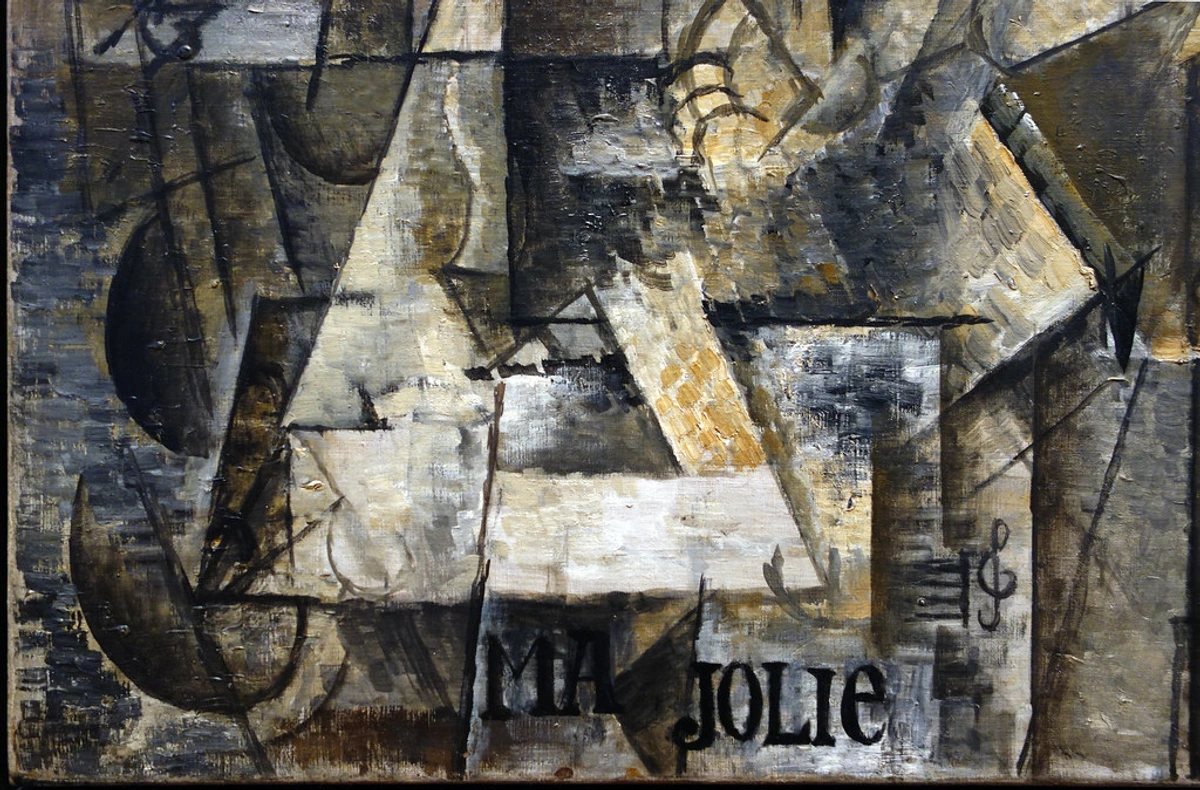
Artists like Picasso (e.g., Girl with a Mandolin, 1910, or Portrait of Ambroise Vollard, 1910) and Braque (e.g., Violin and Candlestick, 1910) would meticulously fragment their subjects, dissolving them into a mosaic of interlocking planes. The color palette was deliberately muted—mostly browns, grays, and ochres. This deliberate suppression of color wasn't a lack of imagination; it was a strategic choice, much like a surgeon uses precise, monochromatic instruments to focus solely on the internal structure of a body, ensuring no vibrant hue distracted from the rigorous, intellectual dissection of form and space. This rigorous approach, almost scientific in its pursuit of depicting reality beyond single-point perspective, demanded that viewers actively reconstruct the fragmented whole in their minds. It's an active process, an intellectual puzzle where recognition and memory play crucial roles in piecing together the visual information.
It's impossible to talk about Analytical Cubism without giving Georges Braque his due. He wasn't just a participant; he was Picasso's intellectual equal and aesthetic foil during the foundational years. Their dialogue was intense, their studios side-by-side, their canvases often indistinguishable. Braque, perhaps with a more painterly sensibility and a greater initial reliance on still life subjects, brought a crucial focus on texture and trompe l'oeil effects (like mimicking wood grain or marble) even within the fragmented forms, subtly challenging the viewer's perception of reality. He also pioneered the use of typography and stenciled letters into his compositions, like those seen in his Still Life with a Violin (1912), introducing real-world elements as abstract signs rather than illusions, paving the way for the later revolutionary inclusion of actual materials. He also experimented with faux textures, mimicking wood grain or marbling not to deceive the eye, but to create a dialogue between the illusion and the flat reality of the canvas – a subtle nod to the tactile world within the intellectual framework. His contribution was less about grand gestures and more about a persistent, rigorous exploration of Cubist principles, grounding the movement in a deep understanding of painterly craft and visual illusion.
Synthetic Cubism (1912 onwards): The Reconstruction and Reassembly
Synthetic Cubism (from 1912 onwards) was the evolution, a rebuilding process. Artists started constructing images back up, using fewer, simpler, and often bolder forms. This phase initially emerged with Picasso and Braque, and then Juan Gris truly made it his own. Crucially, this phase introduced vibrant color, real-world textures (like sand or coffee grounds mixed into paint), and, most famously, collage elements. The introduction of papier collé (pasted paper), which involved incorporating everyday items like newspaper clippings, wallpaper, sheet music – you name it – directly into the artwork, was revolutionary. It directly challenged the illusionistic tradition of painting, introducing real, tangible elements into the artwork and blurring the lines between art and life itself. This conceptual shift, moving from merely representing objects to presenting fragments of reality, was deeply influenced by a changing urban landscape, the rise of mass media, and a desire for art to engage more directly with everyday life. The bustling cafes of Paris, the proliferation of newspapers with their bold headlines, advertisements, and sheet music scattered across tables – these everyday fragments of modern life began to literally and figuratively enter their canvases. Picasso's Still Life with Chair Caning (1912), for instance, incorporates a piece of oilcloth printed with a chair caning pattern, blending the 'real' with the 'painted' in a witty, subversive way. Braque's Fruit Dish and Glass (1912) includes stenciled letters, referencing café culture and advertising. It added another layer of reality and texture to the reconstructed image, forcing viewers to confront the artwork as both an illusion and a physical object. This is where the paths of Picasso and Gris, having both explored the analytical phase, really began to diverge in their unique application of these new 'building blocks', each finding their own rhythm in the constructive dance.
The Main Players: Two Titans, Two Worlds of Thought
Now that we understand the foundations of Analytical and Synthetic Cubism, let's delve into the distinct ways these two titans, and their crucial co-founder, approached this revolutionary art form. It's a fascinating study in contrast, really.
Pablo Picasso: The Instinctive Trailblazer, The Hurricane
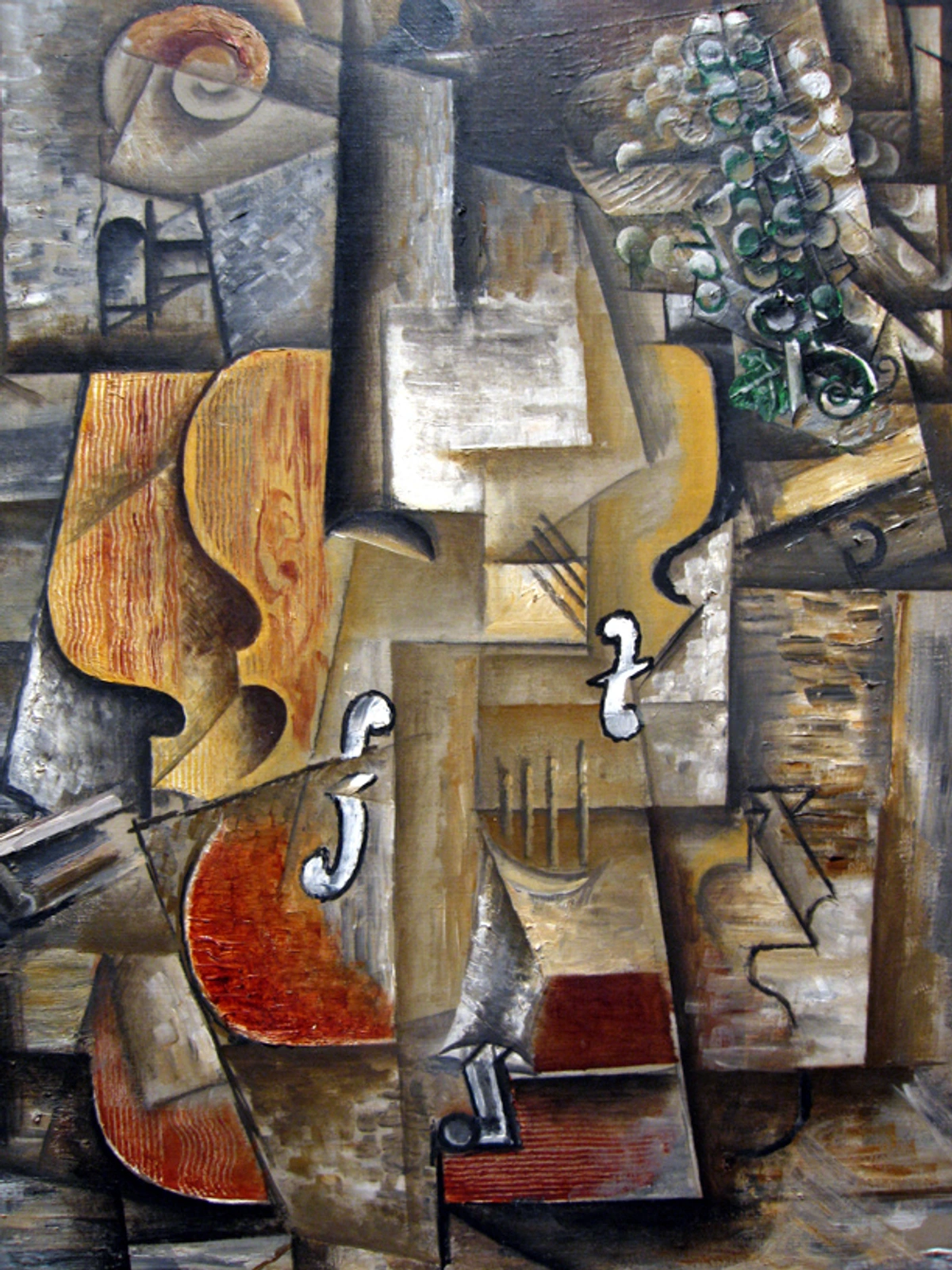
You know this guy. Even people who know nothing about art know Picasso. He was a force of nature—restless, endlessly inventive, and with an ego the size of Spain (a charming flaw, I always thought). With Georges Braque, he didn't just participate in Cubism; he co-invented it, smashing centuries of artistic tradition. His proto-Cubist masterpiece, Les Demoiselles d'Avignon (1907), already hinted at the fracturing of forms that would become Cubism's hallmark, drawing inspiration from Iberian sculpture and African masks to challenge conventional beauty. His early experiments, born from intense dialogue with Braque in their shared Parisian studios, were the initial, earth-shattering sparks. His work often felt like a primal scream captured on canvas, a raw, unfiltered response to the world, never settling into a comfortable style.
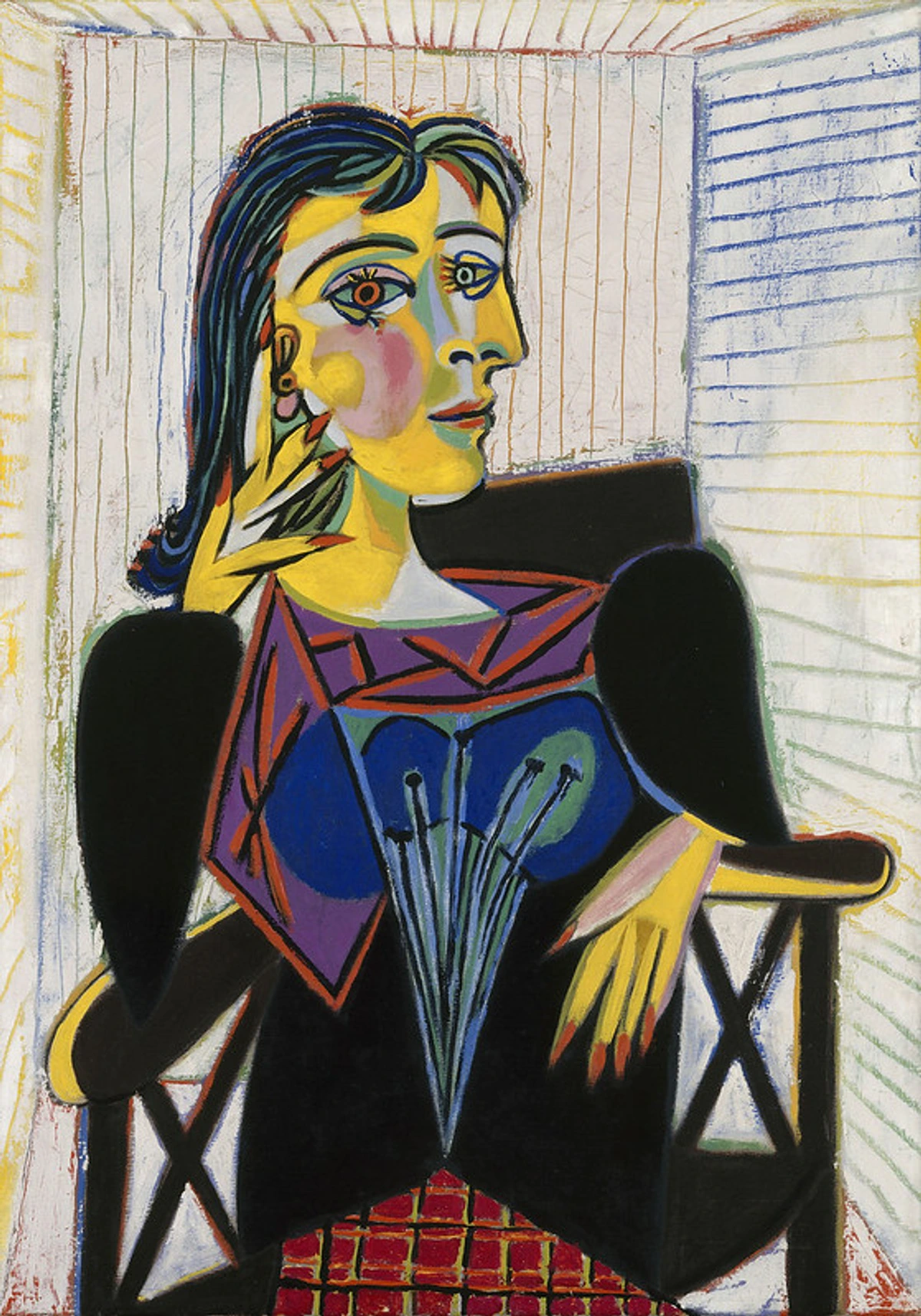
Picasso's process often started with what he saw in the real world. He would observe an object, then think, "How can I break this apart and show you all its facets at once, from memory, from emotion?" You see, his deconstruction wasn't purely intellectual; it was deeply infused with his visceral emotional connection to the subject, a desire to capture the feeling of an object as much as its form, even if the result was a raw, fragmented truth. His approach was instinctive, emotional, and often gloriously chaotic. He was, definitively, the rule-breaker, the one who dared to ask, "What if?" He was the thunderstorm that tore down the old structures, clearing the way for something utterly new. His Girl with a Mandolin (1910), for example, is a masterclass in Analytical Cubism where the figure and instrument dissolve into a shimmering, complex arrangement of planes. Yet, the human presence remains palpable through his energetic brushwork and the subtle suggestion of a classical pose, demonstrating his knack for blending tradition with radical innovation.
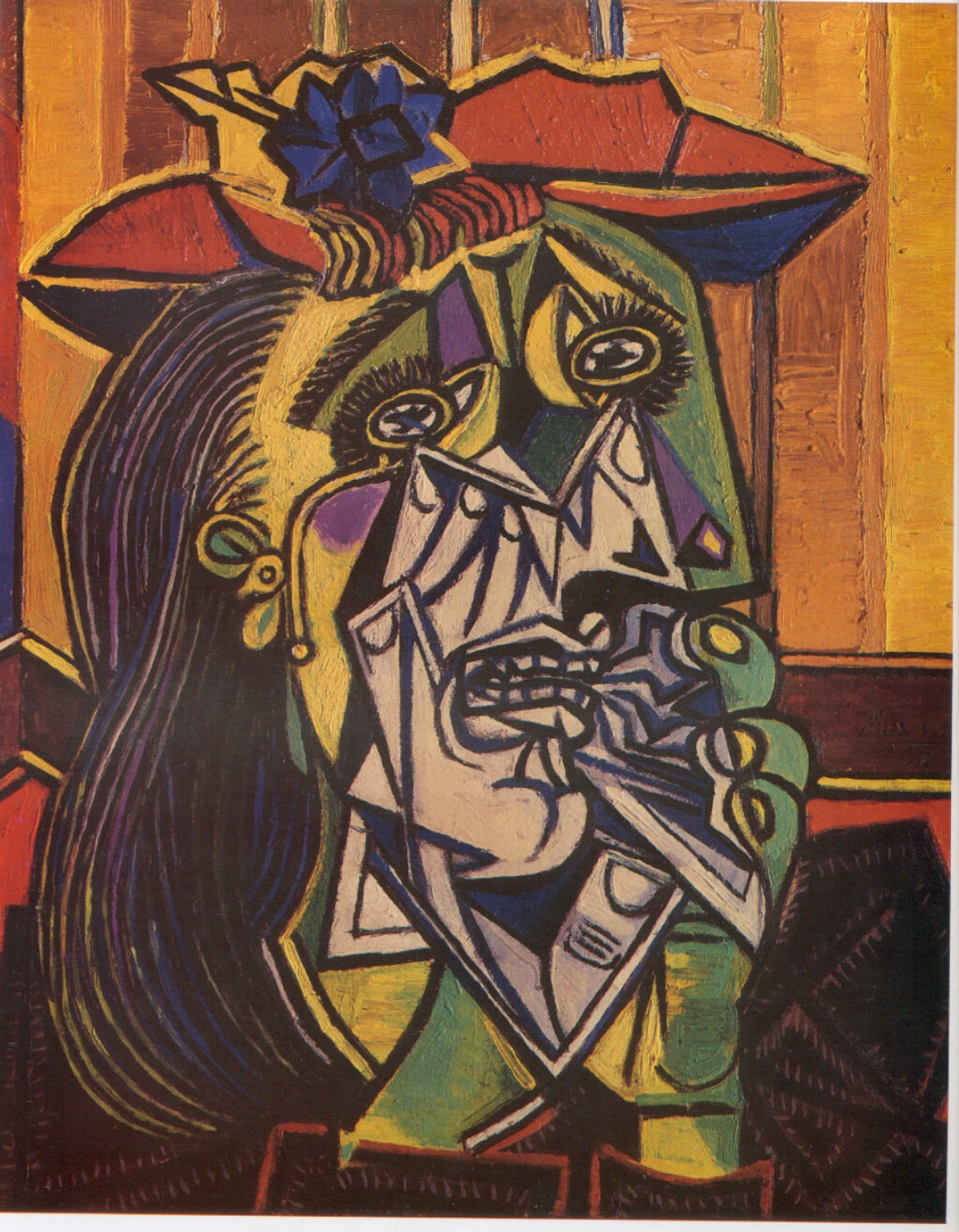
When Synthetic Cubism began, Picasso dived in with the chaotic energy of a kid in a craft store. He threw in bits of newspaper, chair caning, sheet music, and anything else he could get his hands on, not necessarily for a perfectly harmonious composition, but for the sheer thrill of juxtaposition. His compositions were playful, intuitive, and often jarring, like his Still Life with Chair Caning (1912), an early example of papier collé that still vibrates with raw energy. The rope acting as a frame and the printed oilcloth mimicking chair caning blurred the lines between reality and representation in a bold, almost impudent way. He was less concerned with creating a perfectly harmonious whole and more interested in the raw energy of the materials and the surprising visual conversations he could create. It was a gut-level, visceral process, reflecting his deep emotional connection to his subjects, whether it was a still life or the raw anguish seen in works like his later Weeping Woman (1937).
Juan Gris: The Architect of Form, The Meticulous Weaver
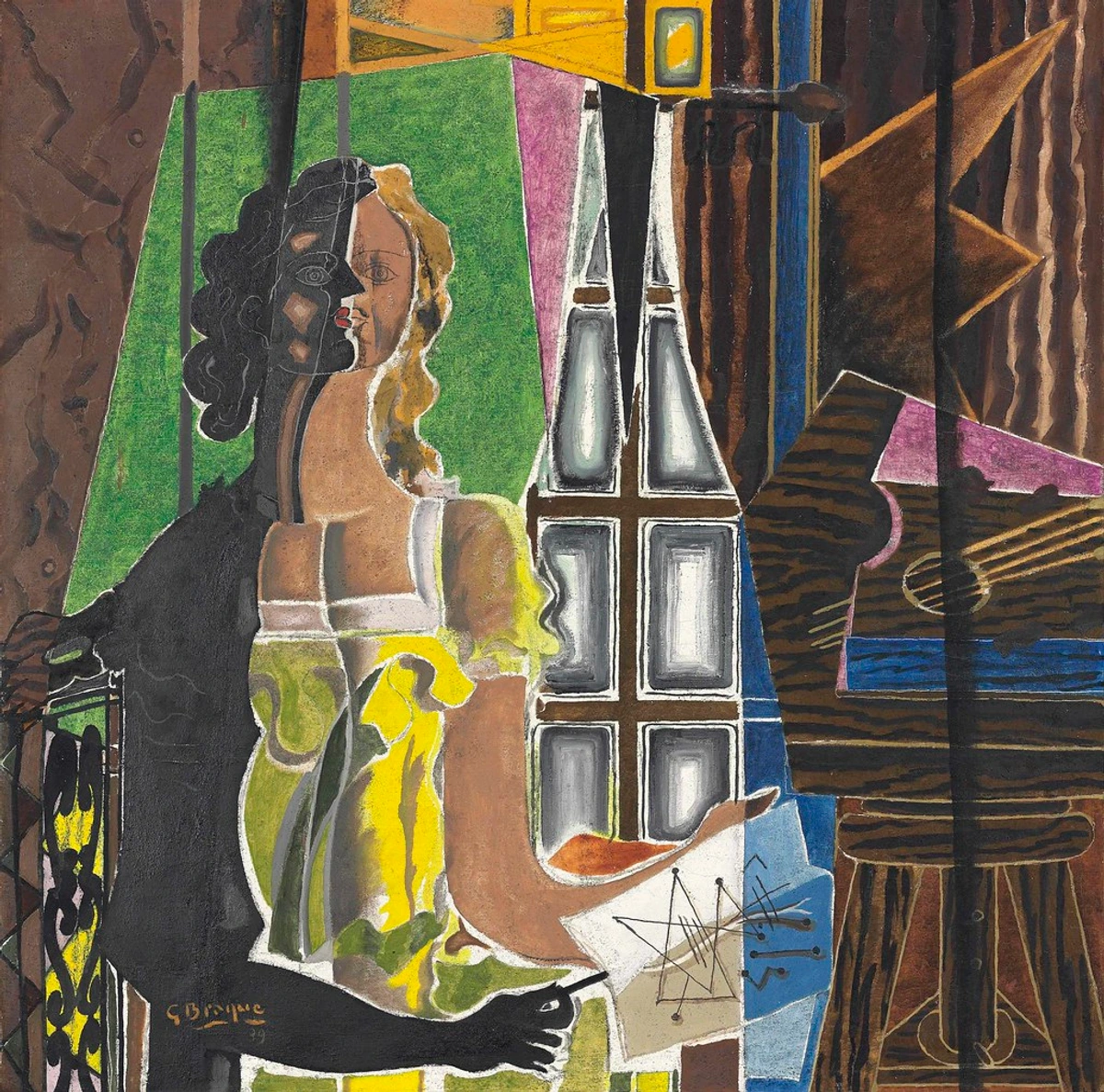
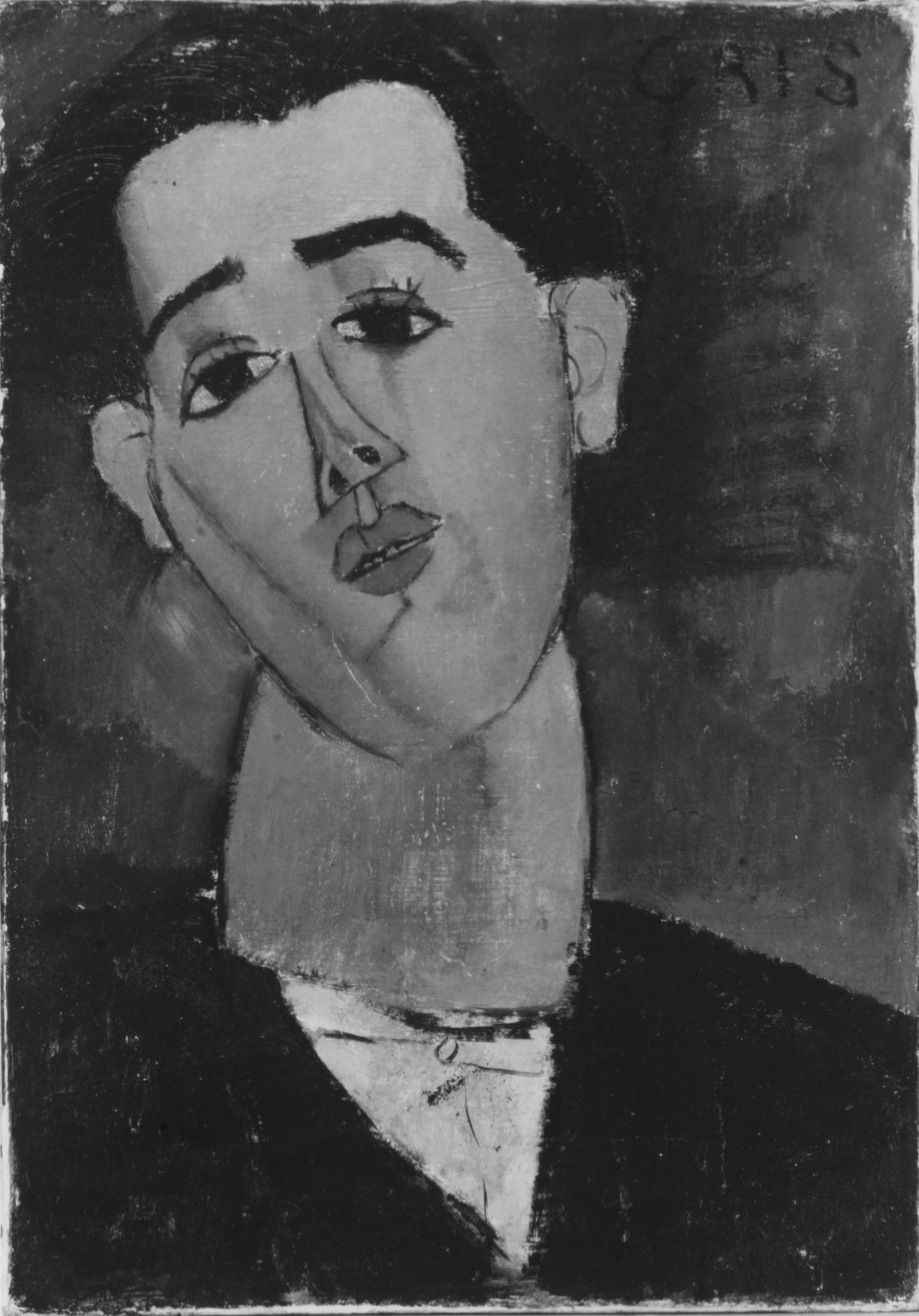
Born José Victoriano González-Pérez in Madrid, Juan Gris was the quiet intellectual of the group. He came to Paris and quickly fell in with Picasso's circle, a self-taught artist initially influenced by Picasso’s early Cubist experiments. But his path, though parallel, was distinct. Gris's journey was one of intense self-study, immersing himself in the burgeoning Cubist theories while simultaneously developing his own unique formal vocabulary. This dedication to internal logic made his approach profoundly influential.
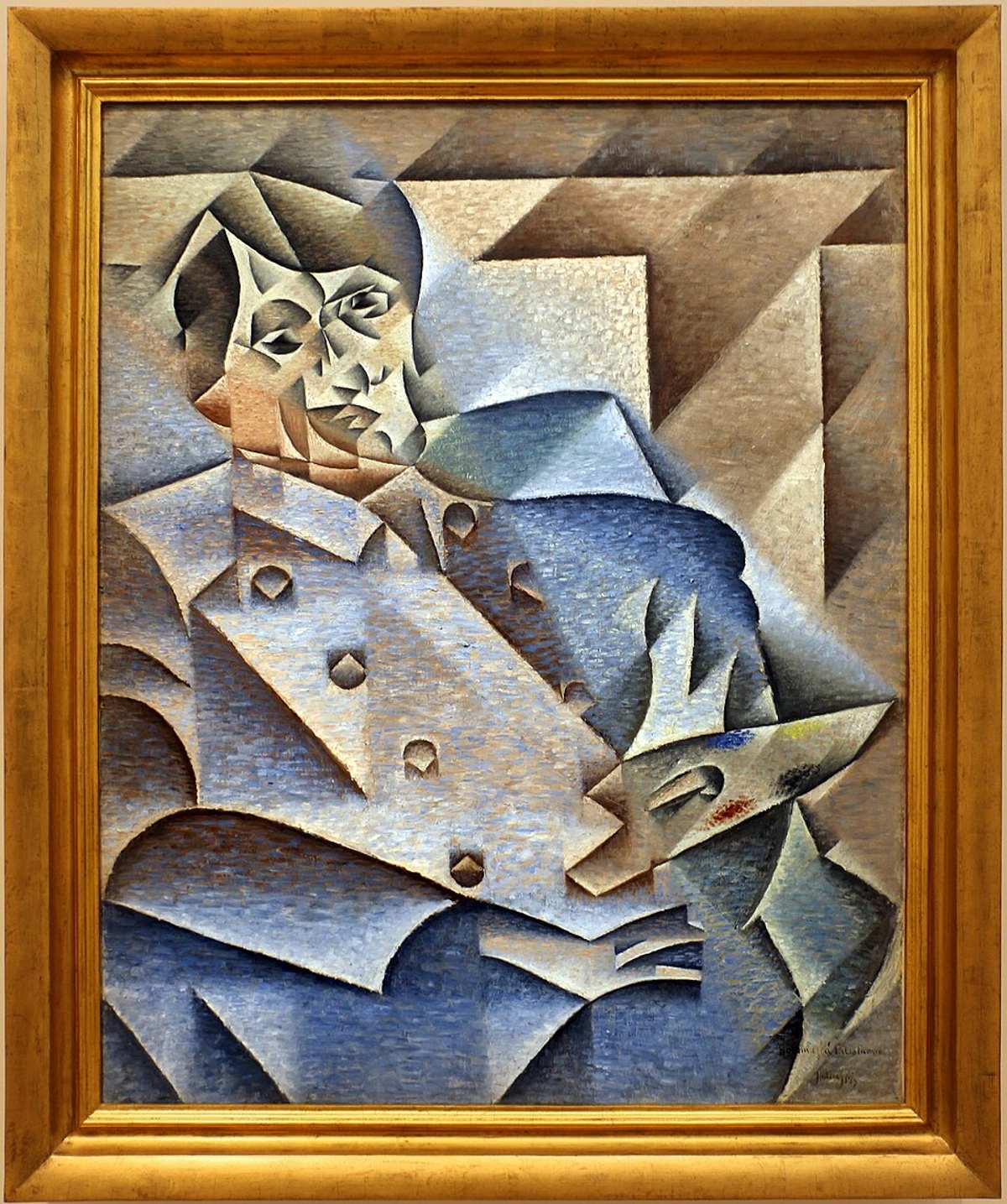
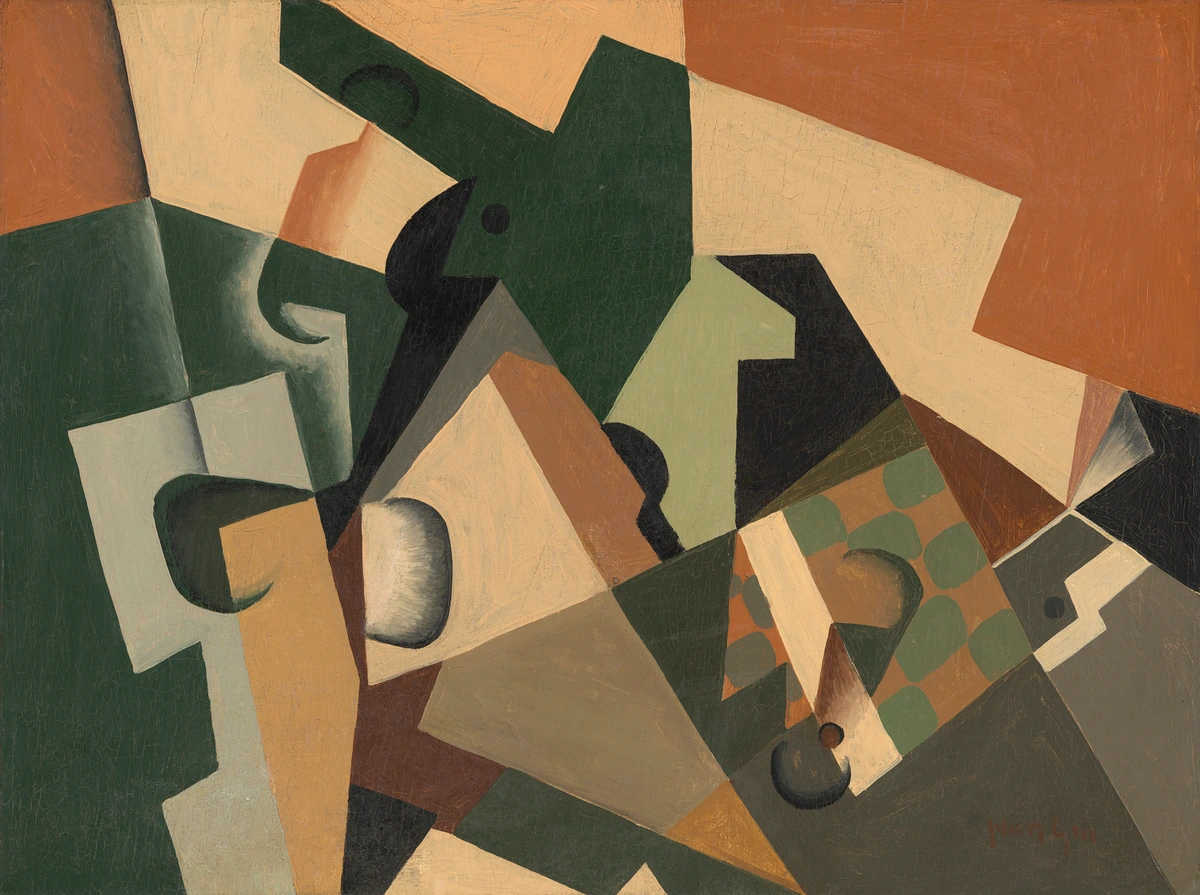
Where Picasso deconstructed what he saw in the real world (a deductive process), Gris started with geometry first (an inductive process). I like to think of it this way: Picasso might see a guitar and take it apart on the canvas; Gris, on the other hand, would lay out a blueprint of abstract shapes and then build a guitar into that structure. His initial forms might have been pure, interlocking planes of color, gradually refined into recognizable objects. It was a process of architecture, not demolition. He wasn't so much a "rule-breaker" as a "rule-developer," taking the radical language of Cubism and organizing it with a profound sense of order, clarity, elegance, and intellectual rigor. If Picasso was the hurricane, Gris was the master builder, crafting elegant structures from the scattered debris. And I confess, his elegant logic often speaks to the more organized part of my brain, the part that craves structure. You can almost see the underlying geometric grid-like compositions in many of his works, a testament to his methodical, precise, and disciplined vision.

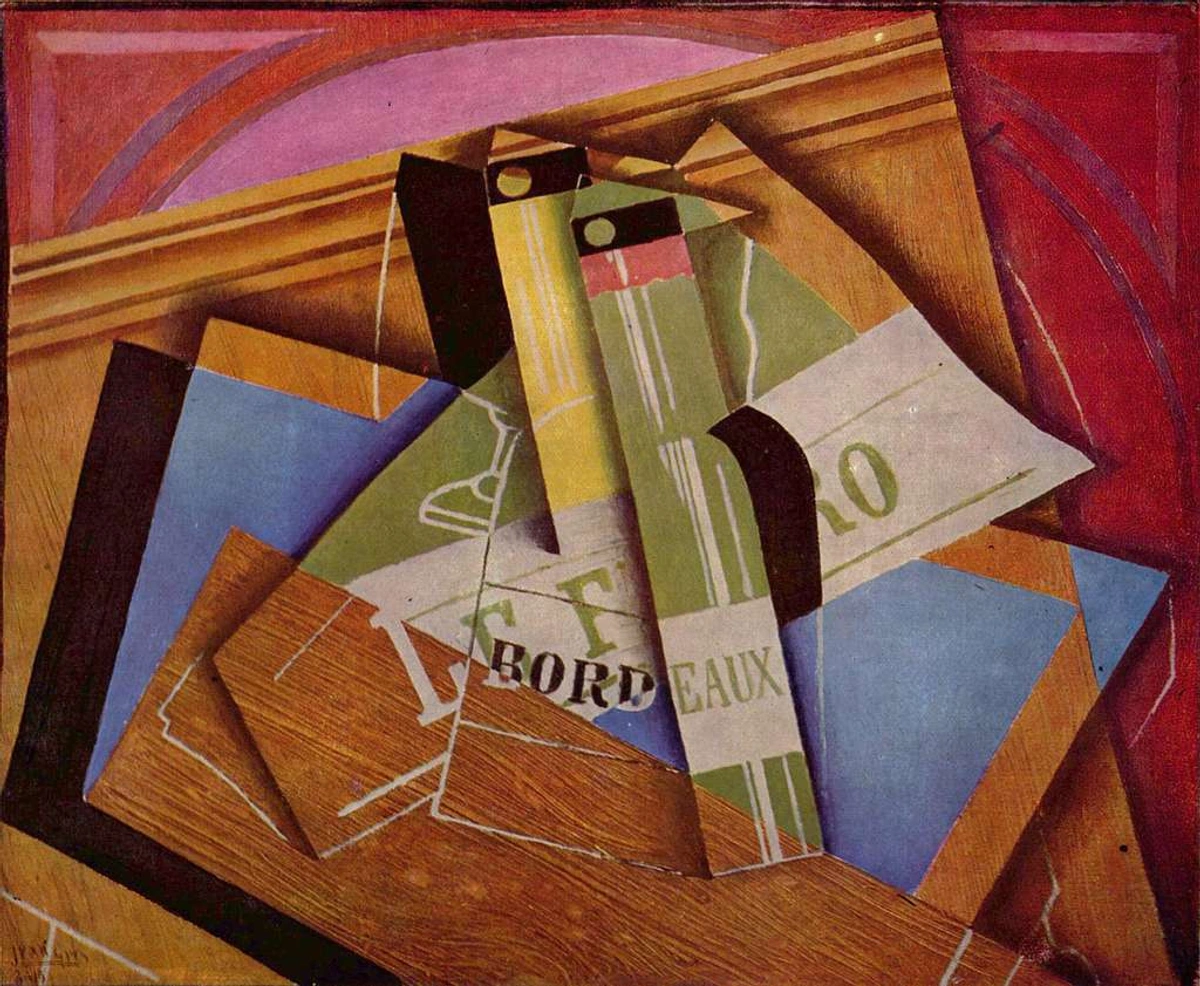
Gris saw the potential of Synthetic Cubism and approached it with a calm, deliberate precision. He thought, "I can bring order to this beautiful chaos." He embraced the vibrant color and collage elements but applied a rigorous, almost mathematical logic to his compositions. If you look at his still lifes, like Violin and Guitar (1913) or Bottle of Rum and Newspaper (1913), everything feels intentionally placed, almost as if each plane and hue is part of a grand equation. In his Fruit Dish and Carafe (1914), for instance, the objects are not merely fragmented but seem to be constructed from interlocking geometric planes, with vibrant colors used to define volumes and light, creating a sense of serene balance. His work is known for its clarity, its vibrant and harmonious color palettes, and a sense of underlying architectural structure. While Picasso was improvising jazz, Gris was meticulously composing a symphony. Everything in a Gris painting feels intentional, placed with precision to create a perfectly balanced and unified image. His work represents a sophisticated evolution of Cubism, demonstrating that radical abstraction could also possess profound elegance and intellectual depth, directly influencing later movements like Purism – an art movement, founded by Amédée Ozenfant and Le Corbusier, that sought to bring even greater clarity, precision, and order to Cubist principles, stripping away its more decorative elements and advocating for a return to classical forms with modern sensibility. Gris gave Cubism a systematic framework.
Side-by-Side: A Cubist Showdown of Ideas
Sometimes, the best way to grasp the nuances is to lay it all out explicitly. While it’s a bit simplistic to pit them against each other, this comparison helps clarify their truly distinct contributions and gives us a sharper lens through which to view their genius.
Feature  | Pablo Picasso | Juan Gris | Georges Braque (for context) |
|---|---|---|---|
| Key Influences | Paul Cézanne, Iberian sculpture, African masks, Georges Braque | Paul Cézanne, early Analytical Cubism (Picasso & Braque) | Paul Cézanne, African sculpture and Oceanic masks, Picasso (mutual influence) |
| Philosophy | "I paint what I feel and see." (Instinctive, emotional; deconstructs reality to reveal inherent truths with raw energy, often experimental and restless) | "I paint what I know." (Intellectual, structural; constructs reality from conceived form and color with elegant, methodical logic) | "The only thing that matters in art is that which cannot be explained." (Emphasis on painterly craft, tactile qualities, and visual paradox, with consistent rigor) |
| Process Type | Deductive: Starts with an object from reality, then breaks it apart into geometric forms, infused with emotion and spontaneity. | Inductive: Starts with abstract geometry and color planes, then constructs recognizable objects within that methodical framework. | Analytical & Sensory: Meticulously dissects forms, focusing on texture, subtle illusions, and integrating real-world signs. |
| Color Use | Often emotional, symbolic, or secondary to form; muted in Analytical phase, vibrant and expressive in Synthetic, sometimes jarring. | Integral to the structure; used harmoniously and deliberately to define planes, light, and volume, often with a brighter, more balanced palette. | Muted in Analytical phase (browns, grays) to emphasize form; introduced trompe l'oeil textures (wood grain, marbling) and stenciled letters. |
| Composition | Dynamic, often fragmented, and jarring; full of raw energy and unexpected juxtapositions; prioritizes emotional impact. | Balanced, architectural, and serene; a strong sense of underlying order, precision, and rational arrangement, often with grid-like structures. | Structured, often geometric, with a keen eye for shallow space and integrating elements like typography and trompe l'oeil. |
| Technique Emphasis | Pioneered collage (papier collé) with raw, often spontaneous integration of materials; focus on painted fragmentation. | Integrated collage with meticulous precision, using it as a structural and compositional element from the outset of Synthetic Cubism. | A pioneer of papier collé alongside Picasso; emphasized painterly texture, illusionistic effects, and stenciled lettering even in fragmented forms. |
| Artistic Persona | Larger-than-life, restless innovator, cultural icon, master of self-promotion; the "wild man" of modern art. | Reserved, scholarly, intellectual, methodical, precise, disciplined; the "quiet architect" of Cubism, deeply dedicated to its theoretical underpinnings. | Thoughtful, rigorous, less outwardly expressive than Picasso; focused on the craft of painting and the philosophical implications of Cubism. |
| Key Works (Examples) | Les Demoiselles d'Avignon (1907), Girl with a Mandolin (1910), Still Life with Chair Caning (1912) | Violin and Guitar (1913), Bottle of Rum and Newspaper (1913), Fruit Dish and Carafe (1914) | Houses at L'Estaque (1908), Violin and Candlestick (1910), Fruit Dish and Glass (1912) |
| Legacy | The Pioneer. The undeniable face of the movement and 20th-century art; a revolutionary force whose influence extends to Surrealism, Neoclassicism, Dada, and Abstract Expressionism. | The Purist/Refiner. Elevated Cubism to a state of elegant logic, influencing movements like Purism and establishing a more systematic approach to the style and its theoretical language. | The Co-Founder. Crucial intellectual partner to Picasso, essential in developing Analytical Cubism and introducing elements that led to Synthetic Cubism, often seen as the more consistent Cubist. |
| Impact | Broke the rules, opened new possibilities for representation and expression, defining Cubism's initial seismic shift and its raw energy, directly impacting how reality is perceived in art. | Developed the rules, demonstrated Cubism’s potential for order, intellectual rigor, and sophisticated aesthetics, solidifying its artistic language and formal vocabulary, profoundly influencing design and architecture. | Provided the critical counterpoint and collaborative rigor that enabled Cubism's initial breakthrough, contributing essential formal and conceptual innovations in integrating text and texture into painting. |
Beyond the Core Trio: Other Architects of Cubism
While Picasso, Braque, and Gris undeniably stand as the central pillars of Cubism, the movement's vibrant ecosystem allowed many other artists to explore its revolutionary principles in unique and influential ways. These figures expanded Cubism's vocabulary and pushed its boundaries, demonstrating its incredible versatility and enduring impact.
- Fernand Léger: Developed a distinctive style often termed "Tubism," focusing on cylindrical and tubular forms. His approach, often reflecting the industrialization and mechanization of modern life, imbued his figures and objects with a monumental, almost robotic solidity, a stark contrast to the more fragmented and delicate forms of early Cubism. His work, such as Nudes in the Forest (1909-10), brought a machine-age sensibility to Cubist fragmentation, making figures and objects appear robust and industrial.
- Robert Delaunay (and Sonia Delaunay): These artists pushed Cubism towards pure abstraction and vibrant color, creating Orphism (or Orphic Cubism). While early Cubism deconstructed objects into planes, Orphism focused on the dynamic interplay of pure color and light, creating a sense of movement and depth without explicitly fragmenting recognizable forms. Works like Robert Delaunay's Simultaneous Windows (1912) and Simultaneous Contrasts: Sun and Moon (1913) are dazzling explosions of interconnected color disks, creating a visual rhythm akin to music, showing Cubism's potential for non-representational art.
- Jean Metzinger and Albert Gleizes: These artists were not only prolific practitioners but also crucial theorists and publicists of Cubism. Their influential book Du Cubisme (1912) helped codify Cubist principles and exhibited the movement more widely to the public, moving it beyond the private studios of Picasso and Braque into the broader art world. They championed simultaneity (the idea of showing multiple viewpoints over time), mobile perspective (allowing the artist's viewpoint to shift), and the belief that painting should express a "total vision" of the subject, synthesizing intellectual understanding with visual perception. They were the first to articulate Cubism's aims to a wider public, defending it as a logical evolution of art, not a whimsical destruction.
- María Blanchard: A Spanish artist associated with the Section d'Or group, she developed a distinctive Cubist style characterized by a rich, vibrant palette and a more curvilinear, almost sculptural approach to fragmented forms. Her work often retained a strong sense of figuration, imbuing her Cubist portraits and still lifes with a unique emotional resonance.
- Roger de La Fresnaye: A French Cubist painter who moved towards a more decorative and ordered form of Cubism, integrating traditional elements and a vibrant color palette. His work often depicted patriotic themes and figures, blending Cubist fragmentation with a classical sensibility, particularly after his service in WWI.
Each of these artists added their own voice to the fractured symphony of Cubism, demonstrating its incredible versatility and enduring impact.
The Reception of Cubism: From Bewilderment to Breakthrough
When Cubism first appeared, it wasn't met with universal acclaim. Far from it. Critics and the public alike were often bewildered, outraged, or simply dismissive. Henri Matisse famously advised Gertrude Stein to "put out the light" when he first saw Picasso's Les Demoiselles d'Avignon. Reviewers derided the fragmented forms as mere "cubes" – a term initially used pejoratively that, ironically, stuck as the movement's name. They struggled with its departure from representational fidelity, accusing artists of destroying art rather than reinventing it. This initial resistance highlights just how radical Cubism was, challenging centuries of artistic convention and forcing viewers to confront a new way of seeing and interpreting reality. Slowly, however, as theorists like Gleizes and Metzinger articulated its principles, and as more artists engaged with its revolutionary potential, Cubism gained intellectual acceptance, cementing its place as one of the most significant and influential movements in modern art history.
Beyond Cubism: A Legacy of Fragmentation and Synthesis
Cubism didn't just appear, dominate, and then vanish; its DNA is woven into the fabric of much 20th-century art. Its revolutionary techniques of fragmentation, simultaneous viewpoints, and the integration of diverse materials directly inspired a cascade of subsequent movements. Constructivism and Suprematism in Russia, for instance, took Cubism's geometric abstraction to its logical extreme, focusing on pure geometric forms and societal utility. Futurism in Italy adopted its fragmentation to convey speed, dynamism, and the chaos of modern urban life. Later, even seemingly disparate movements like Dada and Surrealism borrowed Cubism's technique of juxtaposing disparate elements, albeit for psychological or subversive ends rather than purely formal ones. Its conceptual shift—moving beyond mere visual imitation to an intellectual engagement with the nature of reality and representation—continues to inform contemporary art, proving that Cubism was not just a style, but a profound paradigm shift. It irrevocably altered the course of art, compelling artists to challenge assumptions about perception, representation, and the very purpose of art itself. This foundational disruption continues to resonate, shaping everything from abstract painting to architectural design.
So, Who "Won" Cubism? (It's Still a Trick Question, I Promise)
Look, there’s no winner here. Art isn't a sport, and honestly, judging it as such misses the entire point. Picasso’s fame is undeniable; he became a cultural icon whose influence stretched far beyond the art world. His restless innovation is a huge part of the ultimate guide to Cubism, and his ability to repeatedly reinvent himself, moving from Cubism to Surrealism, Neoclassicism, and beyond, secured his legendary status. He opened the door, providing the initial, earth-shattering spark of revolution, fundamentally changing how artists approached form and perspective. He was the chaotic but necessary beginning, like the wild, unexpected guests who truly make a party unforgettable.
And Georges Braque, Picasso’s initial and crucial collaborator, was an equally vital, though often less individually celebrated, force. It was in their intense, almost competitive dialogue that Analytical Cubism was forged, a period where their styles were so entwined it was often difficult to distinguish their hands. Braque brought an intellectual rigor and a painterly sensibility, exploring texture and trompe l'oeil effects that profoundly shaped the movement, even as Picasso's personality often eclipsed the narrative. Without Braque's persistent, methodical inquiry, Cubism might never have developed its foundational grammar. He was the sturdy scaffolding that allowed the revolutionary structure to stand.
But Juan Gris walked through that door and built a magnificent, perfectly designed house inside. His dedication to the principles of Cubism was so pure that the writer Gertrude Stein, a major patron of the movement, famously called him "the only true Cubist." She admired his logical, methodical approach, believing he truly understood and articulated Cubism's inherent structure in a way that Picasso, with his constant stylistic shifts, perhaps didn't always maintain. He showed that this radical new language could be used to create art of incredible elegance, harmony, and intellectual depth. He gave Cubism its constitution, refining its grammar and syntax, and in doing so, he solidified its place as a robust and enduring artistic language. This logical rigor also had a profound influence on later movements like Purism – directly inspiring its search for clarity and order in art and design.
His clarity also stood in interesting contrast to, or perhaps even informed, the more lyrical and colorful explorations of Orphism (or Orphic Cubism), which, while not a direct lineage, showed Cubism's diverse potential through a focus on pure abstraction, vibrant color, and musical rhythms, with Robert Delaunay as a key figure. Even movements like Futurism, though conceptually distinct, shared Cubism's ambition to fragment and represent multiple viewpoints to express speed and dynamism, reflecting the rapid changes of the modern world. Cubism also had a profound, if indirect, influence on later abstract movements like Dada and Surrealism, whose artists often adopted fragmented forms or the juxtaposition of disparate elements to explore psychological states or challenge conventional reality.
For me, the comparison reveals the true beauty of artistic dialogue and evolution. The balance between the explosive initial spark and the deliberate, structural refinement is something I constantly wrestle with in my own abstract art. My vibrant colors might clash beautifully with a stark geometric line, or a chaotic splash might be grounded by a precise compositional choice, directly echoing the Cubist dialogue. Without Picasso's chaotic breakthrough, Gris would have had no framework to refine. Without Braque's rigorous collaboration, the movement might have lacked its foundational grammar. And without Gris's logical perfection, Cubism might have remained a brilliant but messy experiment, perhaps struggling to gain the intellectual acceptance it deserved. You could say Picasso issued the challenge, Braque helped forge the tools, and Gris provided an eloquent, structural answer. We absolutely need both the trailblazers and the perfecters. They are three sides of the same revolutionary coin, each indispensable to the rich tapestry of Cubist history, and to the broader history of abstract art.
Next time you stand before a Cubist painting, I encourage you to consider: are you witnessing the raw, visceral deconstruction of Picasso, the rigorous inquiry of Braque, or the elegant, considered reconstruction of Gris? Perhaps you'll even spot echoes of their genius in contemporary works by artists like Sarah Cain, who often employs fragmented compositions in her vibrant abstract paintings, or even in my own work. The revolutionary seeds planted by Picasso, Braque, and Gris continue to blossom in unexpected ways, informing everything from architecture and design to my own vibrant abstract paintings and those of artists you might discover on our site. If you're interested in exploring more about artistic journeys or even starting your own, consider browsing some of the contemporary art available at /buy or checking out an artist's own development on their /timeline.
FAQ: Your Burning Cubism Questions, Answered (My Way)
It’s natural to have lingering questions when we dive into such a pivotal period in art history. Here are a few I often hear, and my thoughts on them.
Was Juan Gris a better Cubist than Picasso?
Oh, the age-old debate! This is so subjective, and honestly, the answer usually reveals more about the person asking the question than about the artists themselves. If you prioritize purity of concept, rigorous logic, and harmonious composition – the kind of methodical perfection that appeals to the more organized parts of my brain – then yes, you might lean towards Gris being the "better" Cubist. His work feels incredibly thought-out and balanced, a testament to Cubism's intellectual potential. Art historians like Gertrude Stein often championed Gris for his logical rigor and adherence to Cubist principles, viewing his work as a more pure and refined distillation of the movement's intellectual aims. However, if you value raw, unbridled innovation, intense emotional power, and a truly revolutionary impact that shattered conventions, then Picasso is undoubtedly your champion. His boundless energy and willingness to push boundaries defined the movement itself. Conversely, others emphasize Picasso's boundless inventiveness and his role as the initial, disruptive force. They simply excelled at different, yet equally vital, aspects of the same groundbreaking movement. There's no single metric for "best" in art, only different lenses through which to appreciate genius.
What is the main difference between Picasso's and Gris's Cubism?
The simplest way I've found to articulate it is this: Picasso typically started with something from our physical reality and then fractured it, almost like looking at an object through a kaleidoscope (a deductive process). He would dismantle reality to reveal its underlying structure, driven by an emotional impulse. Think of it like a chef dissecting a complex dish to understand each ingredient. Gris, on the other hand, began with an abstract geometric structure, a mental blueprint, and then built recognizable forms into that structure, making a new reality from the ground up (an inductive process). Imagine a chef starting with basic flavor profiles and meticulously building an entirely new recipe. This fundamental difference often leads to Picasso's work feeling more spontaneous, chaotic, and energetically charged, while Gris's feels more ordered, serene, and architecturally precise. It's the difference between exploding a watch to see its parts, and then carefully assembling a new, more perfect timepiece from scratch.
Did Picasso and Juan Gris work together?
While they weren't exactly collaborating on joint paintings in the literal sense, they were indeed close friends and very much part of the same vibrant artistic circle in Paris, especially during the crucial early years of Cubism. You can learn more about other figures in this period in our ultimate guide to Cubism. They were in constant dialogue, sharing ideas, and undoubtedly influencing each other's work in subtle and overt ways. Picasso, being older and a co-founder of the movement, was initially a mentor figure. However, Gris quickly developed such a strong, unique voice that it transformed their relationship into one of mutual respect and artistic challenge. It was a fascinating dynamic, a true intellectual exchange that propelled Cubism forward, demonstrating the power of creative rivalry and collaboration.
Why is Juan Gris less famous than Picasso?
Ah, the unfairness of art history, right? Several factors contribute to this, and it’s a common pattern for the "pioneer" to overshadow the "refiner." Firstly, Picasso had an astonishingly long and incredibly prolific career, constantly reinventing himself across numerous styles far beyond Cubism (think Surrealism, Neoclassicism, etc.). He was also a master of self-promotion, a larger-than-life personality who became a global celebrity. Gris, conversely, had a tragically short life, dying at the age of 40 in 1927. His intense and focused dedication was primarily to Cubism itself, meaning he didn't have the same sprawling, style-hopping career that captivated the public and made Picasso a household name. His quiet, intellectual approach also didn't lend itself to the same kind of celebrity. It's a testament to his genius that despite these factors, his profound impact on Cubism is still recognized and celebrated by those who delve deeper into the movement. His influence, though quieter, was foundational for Cubism's long-term intellectual rigor.

Where can I experience Cubist masterpieces?
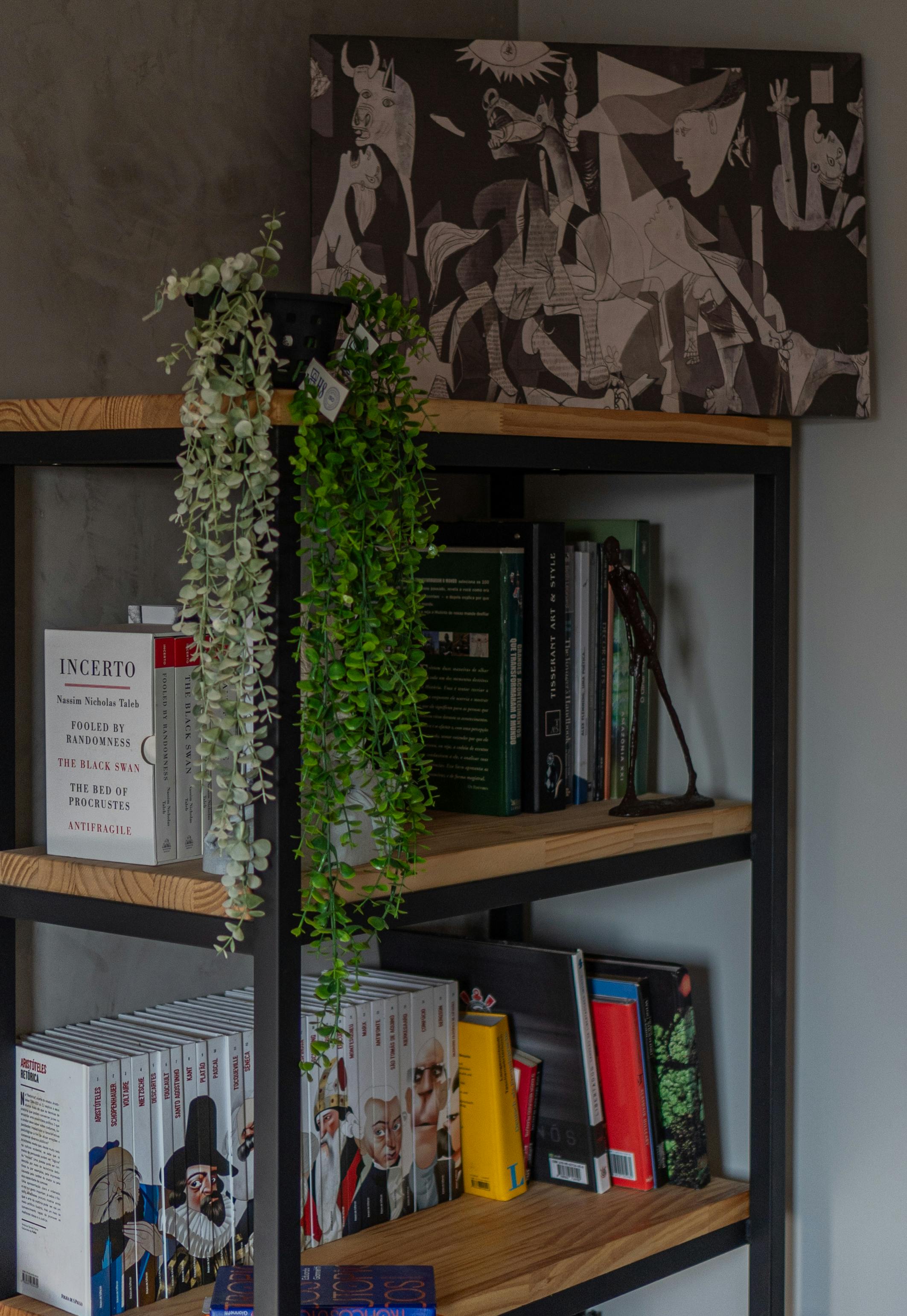
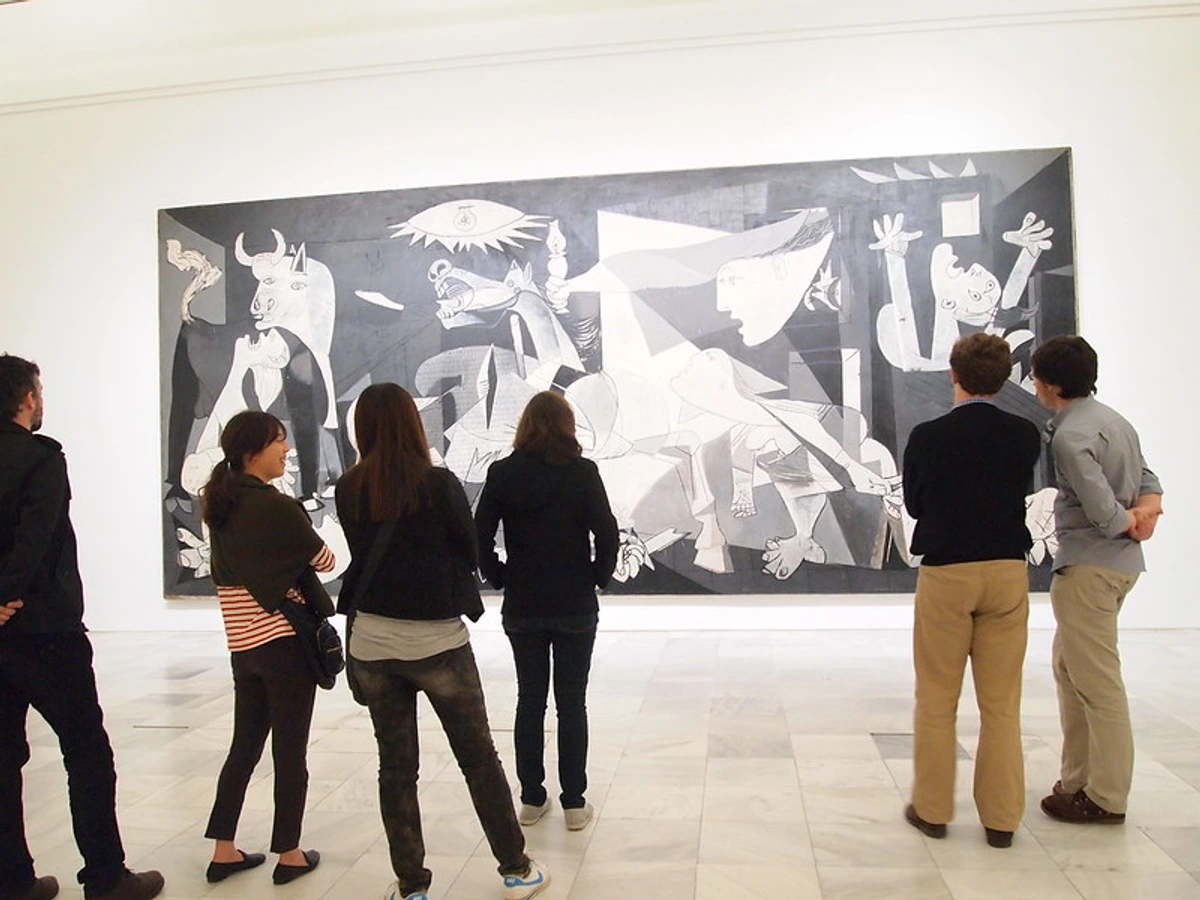
Oh, if you get the chance, absolutely go! The best places to immerse yourself in Cubist art are, naturally, where the movement flourished. Paris is paramount: the Musée National Picasso offers an unparalleled collection of Picasso's work across all his periods, including extensive Cubist pieces like Girl with a Mandolin (1910). The Centre Pompidou is also a must-visit, housing excellent examples of both Picasso and Gris, alongside other modern masters. The Museum of Modern Art (MoMA) in New York, for instance, houses Picasso's monumental Les Demoiselles d'Avignon (1907), his pivotal proto-Cubist work, alongside significant pieces by Braque and Gris. The Hermitage Museum in St. Petersburg, and the Tate Modern in London have significant Cubist holdings. Many international galleries dedicated to 20th-century art will also feature their work. And for a powerful emotional experience of Picasso's later, highly fragmented style, his anti-war masterpiece Guernica (1937) is at the Museo Nacional Centro de Arte Reina Sofía in Madrid (though not strictly Cubist, it shows Cubism's enduring influence on his monumental work). Seeing these pieces in person, feeling the texture of the paint and the deliberate placement of forms, is an experience that truly brings the Cubist dialogue to life.