What is The Last Supper Painting? Da Vinci's Masterpiece Explained
Explore Leonardo da Vinci's The Last Supper. Uncover its history, hidden symbolism, compositional genius, and the dramatic moment it captures in this expert guide.

What is The Last Supper Painting? An In-Depth Look at Da Vinci's Masterpiece – A Curator's Perspective
To stand before Leonardo da Vinci's The Last Supper is to witness time itself ripple and bend. For me, it has always been far more than a painting; it's a pivotal moment of human drama, frozen on a wall, yet pulsating with life. Tucked away in the humble refectory of the Convent of Santa Maria delle Grazie in Milan, this monumental work has been captivating hearts and minds for over five centuries, proving that a single moment can indeed hold infinite stories.
When I look at it, I don't just see a biblical scene; I see a profound exploration of the human condition. It’s a moment of high drama, frozen in time, where every gesture, every expression, tells a part of an incredibly human story – a tale of betrayal, faith, doubt, and ultimately, a revolutionary approach to visual storytelling that would reshape the course of Western art. This isn't just about art history; it's about the very essence of what it means to be human.
Come with me, then, as we delve into the world of this iconic mural, unraveling its fascinating historical context, the audacious (and problematic) artistic technique behind it, its rich and complex symbolism, and the dramatic saga of its creation, deterioration, and miraculous survival. It’s a journey that will take us through the High Renaissance, into the mind of a polymath, and ultimately, to the enduring legacy of a masterpiece that continues to challenge and inspire.
The High Renaissance: A Crucible for Genius
Before one can truly appreciate The Last Supper, it is crucial to immerse oneself in the extraordinary efflorescence of the High Renaissance—a period, roughly from the late 15th century to the early 16th century, that saw a breathtaking surge in artistic, scientific, and cultural innovation across Italy. It was a time when humanism flourished, when ancient classical ideals were rediscovered and fused with Christian theology, and when artists like Leonardo were not merely artisans but intellectuals, philosophers, and scientists. This era wasn't just about creating beautiful objects; it was about re-envisioning humanity's place in the universe, a grand intellectual and artistic experiment.
The flourishing of Humanism during this period, which emphasized human potential and achievement, directly influenced artists to portray individuals with unprecedented psychological depth and emotional complexity. This philosophical shift transformed art from purely religious allegory to a profound exploration of the human condition, celebrating the individual and their place in the world. I mean, think about it: suddenly, the focus wasn't just on the divine, but on us, on what makes us tick, our virtues, and our flaws. Artists were increasingly seen not just as skilled craftsmen, but as inspired geniuses capable of profound intellectual and emotional expression. Leonardo, Michelangelo, and Raphael, the three titans of this period, pushed the boundaries of what art could achieve, transforming it into a powerful vehicle for psychological insight and emotional expression. Their works showcased a newfound mastery of anatomy, perspective, and composition, elevating art to a higher intellectual plane. This focus on realistic, anatomically correct figures, coupled with dynamic compositions, can be further explored in our guides on definitive guide to proportion in art and understanding the elements of design in art.
This wasn't just an artistic revolution; it was an intellectual and cultural earthquake. The rediscovery of classical texts, advancements in science, and a burgeoning sense of individual agency all converged, creating a fertile ground for innovation. It's no wonder that a work of such profound psychological depth and technical ambition as The Last Supper could emerge from this era. This period truly set the stage for art to become a mirror to the human soul, a concept that still resonates deeply with me.
Key Characteristics of the High Renaissance
To better grasp the artistic revolution that birthed The Last Supper, consider the defining traits of this pivotal era:
Characteristic  | Description |
|---|---|
| Humanism | A philosophical movement emphasizing human potential, achievement, and a renewed interest in classical antiquity, shifting focus from purely divine matters to the human condition and individual experience. |
| Idealism & Beauty | Artists sought to depict subjects with perfect form, grace, and harmonious proportions, reflecting classical aesthetics and a pursuit of ideal beauty. |
| Realism & Naturalism | A commitment to depicting the world and human figures with anatomical accuracy, psychological depth, and believable emotions, moving away from more symbolic or stylized representations. |
| Mastery of Technique | Unprecedented command of perspective, chiaroscuro, sfumato, and composition, allowing for the creation of immersive, three-dimensional spaces and emotionally resonant figures. |
| Individual Genius | The emergence of the artist as an intellectual and visionary, rather than merely a skilled artisan, exemplified by polymaths like Leonardo da Vinci. |
| Classical Influence | A profound rediscovery and integration of ancient Roman and Greek art, philosophy, and architectural principles, blending classical ideals with Christian themes. |
This was truly the age of the "Renaissance Man" – polymaths like Leonardo da Vinci who excelled across disciplines, embodying the era's boundless ambition and intellectual curiosity. Such figures epitomized the era's belief that humanity was capable of limitless achievement, bridging art, science, philosophy, and engineering. It was against this vibrant backdrop that The Last Supper emerged, a testament to the era's boundless ambition and intellectual curiosity. It is truly a marvel to think about what was accomplished during this relatively short span.
The Polymath Ideal: Leonardo as the Ultimate Renaissance Man
Leonardo da Vinci was, without question, the quintessential "Renaissance Man." His time at Ludovico Sforza's court was not limited to painting; he served as a military engineer, designing fortifications and weaponry; an inventor, constantly sketching innovative machines and anatomical studies; a sculptor and architect, contributing to various projects; and a master of elaborate court festivities, staging theatrical productions and pageants. His work on The Last Supper was just one facet of his extraordinary contributions during this time. This multi-faceted genius directly informed his artistic vision, allowing him to integrate scientific observation, engineering principles, and a profound understanding of human psychology into his masterpieces. This ability to synthesize knowledge from disparate fields into a cohesive artistic statement is what truly defines the "Renaissance Man" ideal, and Leonardo embodied it more completely than perhaps any other figure in history. When you look at his notebooks, you see everything from detailed anatomical drawings to designs for flying machines, all feeding into his artistic output. It's utterly breathtaking to consider the scope of his mind.
To understand more about this incredible period, and the brilliant minds that shaped it, readers might find our guide to High Renaissance art, famous Renaissance artists, and the pivotal concept of what is humanism in Renaissance art illuminating.
The Birth of Modern Artistic Thought
What I find particularly fascinating about the High Renaissance is how it really laid the groundwork for modern artistic thought. It wasn't just about technical prowess; it was about integrating philosophical inquiry, scientific observation, and profound emotional understanding into art. Artists began to challenge conventions, seeking new ways to represent reality and the inner lives of their subjects. This era gave us the idea that art could be a mirror to the soul, not just a window to religious dogma. It’s a period that forever changed how we perceive the role of the artist and the purpose of art itself. Think about it: a single brushstroke could convey an entire universe of emotion. That, to me, is true genius.
The Historical Context: A Duke's Vision and Leonardo's Ambition
When one reflects on the genesis of The Last Supper, it’s impossible to separate the artwork from the ambitious figure of Ludovico Sforza, also known as Ludovico il Moro, the Duke of Milan. He was far more than a patron; he was a shrewd, strategic ruler who instinctively understood the immense power of art and architecture to project influence, solidify his dynasty's legacy, and legitimize his often-precarious rule. Around 1495, he commissioned this monumental work as part of an extensive renovation for the Dominican convent of Santa Maria delle Grazie, which had become a deeply personal church for the Sforza family. His ultimate vision was to transform the convent into a grand Sforza family mausoleum, with The Last Supper serving as the spiritual and artistic centerpiece for their eternal resting place, a public declaration of his piety and power. This kind of intertwining of religious devotion with dynastic ambition was, frankly, a common and utterly fascinating practice for the powerful families of the Renaissance.
Ludovico's patronage was deeply strategic. Milan, under his rule, was a significant political and economic power, but his legitimacy was often challenged, particularly after the death of his nephew, Gian Galeazzo Sforza. Art and grand architectural projects were potent tools to display wealth, piety, and an unshakeable connection to both divine favor and classical erudition. By commissioning a work of this scale and spiritual importance, Sforza was making a clear statement about his status and his family's enduring legacy, turning the convent into a personal testament to his power and devotion. This political dimension is a critical layer in understanding why such a monumental artwork came into being, and why it was entrusted to a genius like Leonardo. It's a fascinating intertwining of power, faith, and artistic ambition, a narrative that truly comes alive when you understand the political chessboard of Renaissance Italy. For a deeper understanding of this era's power dynamics, I often point people to resources on Italian Renaissance art.
Leonardo da Vinci, at this time, was deeply embedded in Sforza's court, not just as a painter, but as a military engineer, an inventor, a sculptor, an architect, and a master of elaborate court festivities. His role was less that of a traditional court artist and more that of a resident genius, a quintessential "Renaissance Man" whose talents were deployed across every conceivable field. This period in Milan, from roughly 1482 to 1499, was incredibly formative for Leonardo, providing him with unparalleled opportunities to experiment across an astonishing array of disciplines. He was effectively Sforza's chief creative, his go-to for everything from designing elaborate weaponry to staging spectacular court pageants that would dazzle visiting dignitaries. Being tasked with decorating the end wall of the convent's dining hall, or refectory, wasn't merely a decorative assignment; it was a profound opportunity for Leonardo to push artistic boundaries, fulfilling the Duke's grand aspirations while simultaneously pursuing his own insatiable curiosity about human psychology, optical illusions, and artistic innovation. Sforza, for his part, was deeply invested in displaying his power and piety through architectural and artistic patronage, ensuring The Last Supper would be seen by many and serve as a prominent symbol of his family's prestige. The commission was not merely an aesthetic endeavor but a strategic move in the complex political landscape of Renaissance Italy, where art was a powerful tool for legitimizing rule and projecting a cultivated image. This unique context of ambitious patronage and Leonardo's relative artistic freedom, though certainly bound by the commissioner's wishes, undoubtedly set the stage for one of history's most iconic and innovative works. Milan, under Ludovico, was a bustling intellectual hub, a perfect environment for a polymath like Leonardo to flourish and experiment. For more on the life and boundless curiosity of this singular artist, our ultimate guide to Leonardo da Vinci offers a deeper dive.
Leonardo's Diverse Roles at the Sforza Court
Leonardo's position at the Sforza court was a testament to his versatility and the era's demand for multi-talented individuals. His roles included:
Role | Description |
|---|---|
| Painter | Commissioned for portraits, religious works like The Last Supper, and decorative projects. |
| Military Engineer | Designed innovative weaponry, fortifications, and siege engines, applying his scientific and mechanical genius to warfare. |
| Inventor & Scientist | Conducted extensive studies in anatomy, botany, geology, and fluid dynamics, filling notebooks with sketches and observations, laying groundwork for future scientific inquiry. |
| Sculptor | Though few large-scale sculptures were completed, he received commissions for monumental works, such as the colossal equestrian statue of Francesco Sforza (the "Gran Cavallo"), which unfortunately was never cast. |
| Architect | Contributed designs and expertise to various architectural projects and urban planning initiatives within Milan. |
| Festival Organizer | Masterminded elaborate court pageants, theatrical productions, and elaborate costumes, showcasing his ingenuity in stage design and mechanical marvels. |
This extraordinary breadth of activity highlights why Leonardo is considered the quintessential "Renaissance Man," capable of seamlessly moving between artistic creation and scientific innovation.
Ludovico Sforza: A Patron with a Purpose
Ludovico il Moro wasn't just commissioning art for art's sake; he was building a legacy. The Dominican convent of Santa Maria delle Grazie was central to his ambitions, destined to become a grand Sforza family mausoleum. This meant The Last Supper wasn't merely a dining hall decoration; it was a spiritual and artistic centerpiece, a public declaration of his piety and power, intertwining religious devotion with dynastic ambition. It's a reminder that in the Renaissance, art and power were inextricably linked, each reinforcing the other in a carefully orchestrated display of influence. This grand vision certainly gave Leonardo the scope and challenge his genius craved, pushing him to create something truly unprecedented.
Unlike traditional murals, Leonardo famously—or perhaps, infamously—chose not to use the reliable buon fresco technique, which involves applying pigment to wet plaster. This method demands speed and precision, as the paint becomes chemically bonded to the wall as the plaster dries, making corrections virtually impossible once the plaster sets. Leonardo, with his famously slow, contemplative, and experimental working methods, sought greater flexibility, desiring the ability to make changes and achieve finer detail over an extended period. He was a perfectionist, always revising, always seeking that elusive ideal. Instead, he experimented with a dry technique, applying tempera (likely mixed with oil or other binders, potentially even lead white to enhance brightness, which would have made it more akin to an oil-tempera emulsion) directly onto a dry stone wall, which he had prepared with a gesso, pitch, and mastic underlayer. This was a radical departure, essentially treating the wall like a giant wooden panel. This afforded him the opportunity to work more slowly, to blend colors seamlessly (a technique akin to his famed sfumato in his panel paintings like the Mona Lisa, which readers can learn more about in our guide to what is sfumato), and to achieve greater detail and luminosity, much like an oil painting on a panel. He yearned for the rich, vibrant color and subtle transitions typical of oil painting, a quality buon fresco simply could not offer due to its rapid drying time. However, this audacious experimental method proved disastrously non-durable. The paint failed to adhere properly to the dry wall, and the painting began to deteriorate within a few years of its completion—a tragic flaw that has necessitated numerous and complex restoration efforts throughout its history. This decision ultimately sacrificed longevity for immediate artistic effect, a choice that has haunted its existence. For a deeper dive into traditional methods, to explore the range of materials available to artists, and to see what Leonardo avoided, readers can explore the history of fresco painting techniques and our definitive guide to paint types for artists.
Buon Fresco vs. Leonardo's Experimental Technique
To understand the magnitude of Leonardo's technical gamble, it helps to compare his chosen method with the established buon fresco technique:
Feature | Buon Fresco (True Fresco) | Leonardo's Experimental Technique (for The Last Supper) |
|---|---|---|
| Medium | Pigment mixed with water, applied to wet plaster (intonaco). | Tempera paint (egg yolk, oil, or other binders) applied to a dry stone wall prepared with gesso, pitch, mastic. |
| Drying Time | Very fast. Plaster dries quickly, requiring artists to work in small sections (giornate). | Slow. Allowed for extended working periods, blending, and revisions, much like oil painting. |
| Durability | Highly durable. Paint chemically bonds with the plaster, becoming an integral part of the wall. | Extremely fragile. Paint did not bond, leading to rapid flaking and deterioration almost immediately. |
| Color & Detail | More muted colors, challenging to achieve fine detail and seamless transitions (sfumato). | Allowed for vibrant colors, rich luminosity, and meticulous detail, akin to panel painting. |
| Corrections | Virtually impossible once the plaster dries; errors require removing and re-plastering sections. | Enabled artists to make changes and refinements over time, offering greater artistic freedom. |
| Longevity | Excellent, with many ancient and Renaissance frescoes surviving for centuries. | Disastrous. The work began to deteriorate within years, necessitating constant restoration. |
This table vividly illustrates Leonardo's audacious choice to prioritize artistic flexibility and visual effect over traditional durability, a decision that would define the artwork's troubled history.
The Risks of Innovation: Leonardo's Audacious Experiment
I find myself constantly in awe of Leonardo's willingness to push boundaries, even when it led to less-than-ideal outcomes. His choice to abandon the tried-and-true buon fresco for The Last Supper was a massive gamble. He desired control, the ability to refine and rework, a luxury that fast-drying wet plaster simply didn't afford. It’s almost a metaphor for his entire career: a brilliant mind prioritizing artistic expression and scientific inquiry over conventional wisdom. This pursuit of perfection, or at least the flexibility to pursue it, ultimately doomed the work to its delicate state, yet it also gave us a masterpiece of unparalleled detail and psychological depth. It reminds me that true innovation often comes with significant risks, and sometimes, the most groundbreaking creations are also the most fragile.

The Refectory: An Immersive Setting
I often find myself contemplating the profound genius behind the placement of The Last Supper on the northern wall of the refectory. This wasn't some arbitrary decision; it was profoundly deliberate and steeped in liturgical significance, transforming a mundane dining hall into a sacred, immersive experience. The refectory was where the Dominican friars would eat their meals in silence, often listening to spiritual readings or sermons. Imagine the quiet solemnity, the echoes of their own prayers, and then, before them, this vivid, almost living scene, appearing as a dramatic extension of their own communal life. Leonardo masterfully extended the actual space of the refectory into the illusionistic space of the painting. The vanishing point of his one-point linear perspective is precisely at Christ’s head, pulling the viewer's eye directly to him, but the painted architecture also meticulously mirrors the actual architecture of the room, creating an incredibly immersive experience. It is as if Jesus and his apostles are sharing a meal not just with each other, but with the friars themselves, literally breaking bread with the divine, inviting contemplation and profound spiritual reflection during their own mealtimes. This masterful spatial integration is a powerful, yet often overlooked, aspect of the work's genius, blurring the lines between art and reality, the sacred and the everyday, making the spiritual presence palpable within the mundane act of eating. Imagine the friars, day after day, performing their silent ritual meals, and then looking up to see this dynamic, emotionally charged tableau. It wasn't merely a decorative backdrop; it was an active, silent participant in their devotional life, a constant reminder of Christ's sacrifice and the weight of human action. It also served a practical purpose, enhancing the devotional experience of the friars as they shared their own meals, creating a profound connection between their daily lives and the sacred narrative. This intentional blurring of boundaries, this seamless extension of the refectory space into the painted world, is something I always marvel at—it truly makes you feel part of the scene.
A Table Shared: Art as an Extension of Life
To me, the refectory setting is absolutely crucial. Imagine the friars, seated in silent contemplation, their own simple meals laid before them, and then, this expansive, vibrant scene of Jesus and his apostles, appearing as a direct continuation of their own space. It wasn't just a painting to be admired; it was an active participant in their daily ritual, a constant, vivid sermon on the wall. This intentional blurring of boundaries between the painted world and the real world is a stroke of genius, transforming a mere dining hall into a profound spiritual theater. It’s a testament to how Renaissance artists understood the immersive potential of art, not just as a decoration, but as an experience that could deeply integrate with and elevate daily life.
The Subject: A Moment of High Drama and Profound Psychology
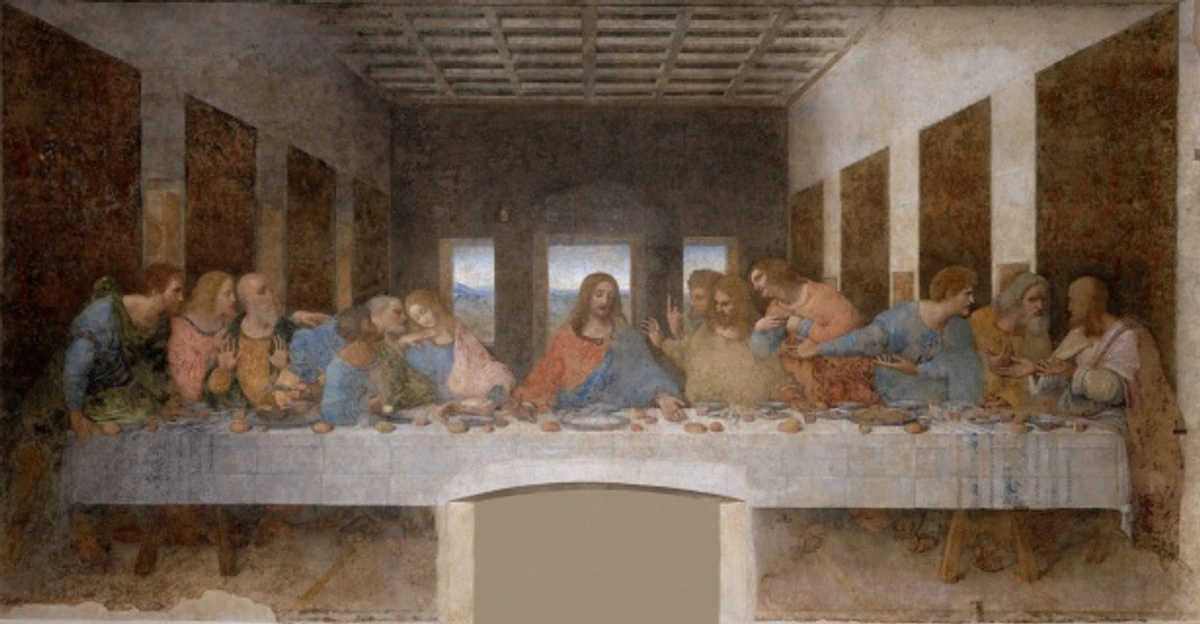
Now, to the narrative, because this is where The Last Supper truly comes alive. Leonardo, with his keen understanding of human nature and a dramatist's flair, chose to immortalize a single, extraordinarily charged moment from the Gospel of John 13:21. Imagine the scene: Jesus and his twelve apostles, gathered for their final meal before the impending crucifixion. The atmosphere, one can only assume, was one of uneasy fellowship, perhaps tinged with a premonition of apprehension, as the shadow of his impending fate loomed. Then, Jesus delivers the bombshell: "One of you will betray me." This single declaration shatters the fragile peace, sending a ripple of shock and disbelief, a veritable explosion of human emotion, through the gathering.
The true genius of The Last Supper lies in which specific moment Leonardo chose to capture. Many earlier depictions of this pivotal biblical event, while significant, often focused on the more serene institution of the Eucharist—the blessing of the bread and wine, a moment of profound spiritual significance but often less dramatic. One can imagine those static, almost processional scenes, lacking the immediate, visceral human response. But Leonardo, ever the keen observer of human nature and a master dramatist, went for the explosive aftermath of Jesus's stunning declaration: "One of you will betray me." What an audacious choice! He plunges viewers directly into the tumultuous wave of shock, denial, suspicion, and confusion that rips through the apostles, each reacting in a profoundly individual way, a veritable torrent of human feeling. Each face, each gesture, becomes a profound study of human reaction, a masterclass in capturing fleeting, intense emotion, all radiating outwards from the utterly calm, almost resigned figure of Christ at the center, the eye of the storm. This intense focus on raw human psychology, on depicting individuals with distinct inner lives rather than generic types, was a defining characteristic and a hallmark of the High Renaissance, and undoubtedly, a specialty of the unparalleled Leonardo da Vinci. This innovative approach to characterization moved art beyond mere symbolic representation to a profound exploration of human vulnerability and morality, forever changing the landscape of narrative painting. It is a dramatic choice that elevates the painting beyond mere illustration, transforming it into a timeless exploration of human morality and vulnerability. It's this singular decision that, for me, makes the painting truly unforgettable.
The Betrayal's Echo: Why This Moment Matters
Leonardo’s decision to capture the moment of betrayal, rather than the more tranquil institution of the Eucharist, speaks volumes about his understanding of drama and the human condition. It’s the instant before the storm, the ripple of chaos that precedes the ultimate sacrifice. This choice allows him to explore the full spectrum of human emotion—shock, denial, anger, sorrow, and even cunning—all within a single frame. It forces the viewer to confront not just the narrative, but the emotional truth of it, making the scene feel incredibly visceral and immediate. It's a masterclass in visual storytelling techniques in narrative art, using a single declaration to unleash a cascade of psychological insight.
Compositional Genius and Psychological Depth
When one first truly studies The Last Supper's composition, one is struck by how Leonardo completely upended centuries of artistic tradition. Earlier depictions of this pivotal scene often felt like formal lineups, with the apostles arranged in a somewhat static, almost symmetrical fashion, lacking genuine interaction—imagine them simply lined up for a portrait. They were almost decorative, rather than dramatic. But Leonardo? He injects an incredible dynamism, a palpable sense of real-time unfolding drama. His arrangement of the figures is nothing short of revolutionary, breaking away from those more static, tableau-like depictions. He meticulously organizes the apostles into four distinct groups of three, a deliberate choice that creates not just a mathematically harmonious composition, but also a palpable sense of movement, interaction, and emotional ripple. This careful grouping amplifies the psychological intensity, allowing for a focused exploration of individual and collective reactions. It's like watching a perfectly choreographed play where every actor knows their cue, reacting in a cascade of human emotion, all contained within a single, monumental tableau. This was a radical departure, and honestly, it changed everything for narrative painting.
The Power of Grouping: A Dynamic Narrative
Leonardo's revolutionary grouping of the apostles into four threesomes is, for the curator, one of the most brilliant aspects of the entire composition. It shatters the rigid formality of earlier Last Supper depictions, injecting dynamism and creating a sense of unfolding narrative. Each group is a miniature drama in itself, a contained emotional unit that contributes to the larger, overwhelming sense of chaos and revelation. This isn't just aesthetic; it’s a profound psychological strategy, allowing individual reactions to coalesce into a collective human experience. It demonstrates a sophisticated understanding of composition in art explained and how to guide the viewer's eye.
Compositional Harmony and Mathematical Precision
Leonardo's genius extends beyond individual psychology to the overarching compositional harmony of The Last Supper. The entire scene is constructed with a mathematical precision that underpins its dramatic impact. The arrangement of the apostles into four groups of three is not merely aesthetic; it imbues the composition with a sense of balance and rhythm, even amidst the emotional turmoil. The space itself is meticulously rendered using strict geometric principles, creating an illusion of depth that seamlessly integrates the painted world with the actual refectory. This blend of artistic intuition and scientific rigor is a hallmark of the High Renaissance, demonstrating how classical ideals of order and proportion could be applied to profound narrative effect. The careful placement of every figure, every architectural element, contributes to a unified visual experience that guides the viewer's eye and emotional response.
The Golden Ratio and Divine Proportion
While not explicitly stated, one often finds echoes of the Golden Ratio in Renaissance masterpieces, and The Last Supper is no exception. Though Leonardo never explicitly detailed its use here, the sense of inherent balance and aesthetic pleasure one derives from the composition suggests an intuitive, if not deliberate, application of principles of divine proportion. The way Christ is framed, the spacing of the apostles, the architectural elements—all hint at an underlying mathematical harmony that resonates deeply with classical ideals and the period's pursuit of perfection. This careful balance is a testament to the fact that understanding balance in art composition was paramount to creating works of enduring power, and sometimes it's felt more than seen. The idea of divine proportion, as it was called, was a powerful concept that resonated across art, architecture, and philosophy during the Renaissance.
A Masterclass in Perspective and Symbolic Geometry
Speaking of careful choreography, Leonardo's deployment of one-point linear perspective here is an absolute masterclass, a testament to his scientific rigor and artistic ingenuity. It's not just a technical feat; it's a profoundly symbolic one. If one follows any of the architectural lines in the room—the coffers in the ceiling, the subtle patterns of the tapestries on the walls—they all converge precisely at a single vanishing point. And where is that point? Right behind the head of Jesus. This isn't an accident, nor is it merely a trick of the eye. This deliberate placement makes Christ the undeniable geometric, compositional, and spiritual center of the entire work. It’s a powerful visual anchor that draws the eye, focus, and understanding directly to him, inviting entry into the sacred drama.
The Vanishing Point as a Theological Statement
For the curator, the genius of Leonardo's one-point linear perspective isn't just about creating a convincing illusion of depth; it's a profound theological statement. By placing the vanishing point directly behind Christ's head, Leonardo isn't merely adhering to artistic rules; he’s proclaiming Christ as the focal point of existence, the very axis around which the world—and this dramatic moment—revolves. It's a visual metaphor for divine order amidst human chaos, a subtle yet powerful declaration of his ultimate significance. This is a brilliant example of how Renaissance artists used scientific principles not just for realism, but for profound symbolic meaning, elevating art beyond mere depiction.
This technique doesn't just create a convincing illusion of three-dimensional depth, pulling viewers visually and emotionally into the scene. It powerfully reinforces Christ's central importance, making him the calm eye of the emotional hurricane swirling around him. It’s a testament to how Renaissance artists like Leonardo used scientific principles not just for realism, but for profound symbolic meaning, elevating art beyond mere depiction. For those who find themselves endlessly fascinated by how artists create these illusions, one can highly recommend our definitive guide to perspective in art. It’s a foundational element of Renaissance art, truly transforming two-dimensional surfaces into believable, immersive worlds.
The Apostles' Reactions: A Symphony of Human Emotion
But for the curator, the true heart of The Last Supper's genius lies in its profound psychological depth—specifically, in its unparalleled portrayal of twelve individuals, each a unique study in human reaction. Leonardo, with an almost clinical precision and an anthropologist's eye, treats them not as a uniform assembly of saints, but as distinct men, each grappling with Jesus's shocking revelation in their own deeply human, flawed way. It’s a moment of truth that strips away pretense, and their diverse, visceral responses are what make the painting so eternally compelling. One can almost hear the murmurs, the gasps, the frantic questions, and the internal turmoil echoing through the refectory, a symphony of human emotion. For those fascinated by how artists communicate such deep inner lives through posture and expression, the guide on how to interpret body language in portrait art might offer further insights.
The Universal Language of Gesture
It's truly remarkable how Leonardo captures such a raw, universal response to a shocking declaration. Each apostle's gesture, their furrowed brows, their outstretched hands, their recoil—these aren't just details; they are a language unto themselves, speaking across centuries. It reminds one that emotions are timeless, and Leonardo, with his keen anthropological eye, understood this deeply. He's not just illustrating a biblical scene; he's creating a profound study of human vulnerability and reaction, making the divine relatable through intensely human responses. This is why the painting continues to resonate, because at its heart, it’s about human experience and how individuals react when confronted with uncomfortable truths.
The Apostles' Individual Reactions: A Study in Humanity
The profound psychological depth of The Last Supper is most powerfully evident in the individualized reactions of the twelve apostles. Leonardo, with an almost scientific approach to human emotion, meticulously crafted each figure to convey a distinct, visceral response to Jesus's shattering announcement. This approach transformed them from mere biblical types into fully realized individuals grappling with an unthinkable truth. The interplay of their gestures, expressions, and body language creates a dynamic narrative, allowing viewers to witness the immediate, chaotic fallout of betrayal. This masterclass in human observation invites a closer look at each group:
Here is a breakdown of the four groups, from left to right, and what their reactions tell us:
Group | Apostles | Description of Reactions |
|---|---|---|
| Group 1 | Bartholomew, James the Less, Andrew | On the far left, this trio appears frozen in a moment of utter disbelief and palpable agitation. Bartholomew, almost leaping from his stool, leans forward intently, his whole body a question mark, straining to hear or comprehend the devastating words, a picture of youthful eagerness for truth and perhaps even a subtle hint of anger. His posture suggests an almost physical recoil from the unbelievable revelation. Andrew, with hands raised in a gesture of emphatic horror and self-preservation, seems to push away the unthinkable, his wide-open palms a visual shield against the shocking pronouncement, a clear sign of immediate denial. James the Less reaches out, perhaps toward Peter, seeking confirmation or solace, his expression a mix of shock and concern, his features reflecting a deep, internal struggle, almost a pleading for reassurance. Their collective reaction is a visceral start to the emotional ripple that sweeps across the entire table, setting the stage for the unfolding drama and highlighting the immediate, widespread impact of Jesus's words. |
| Group 2 | Judas Iscariot, Peter, John | This is arguably the most emotionally charged and symbolically potent group, a vortex of conflicting emotions at the very heart of the drama. Judas Iscariot, the betrayer, recoils sharply into the shadows, his face a dark, almost furtive profile, a visual embodiment of his inner turmoil and guilt, further emphasizing his moral isolation. He clutches a small bag—the notorious 30 pieces of silver, the very price of his treachery—and, in a moment that feels almost like a Freudian slip of the brush, he knocks over a salt cellar, a traditional omen of bad luck and a broken covenant. His isolation, both physical and moral, is stark and undeniable, a chilling portrait of treachery. Leaning fiercely forward, Peter grasps a knife, a dramatic foreshadowing of his impulsive defense of Jesus in Gethsemane, his brow furrowed with fierce loyalty and a readiness to act, his intensity almost aggressive, a figure of passionate, if sometimes rash, devotion. His fiery spirit contrasts sharply with the youthful John, who appears to swoon in grief, his head tilted away, almost collapsing onto Peter's protective embrace, embodying innocence and profound sorrow. The interplay of accusation, aggression, and tender sorrow here is breathtakingly complex, a microcosm of the entire scene's emotional weight. It's a masterclass in contrasting personalities and how they react under extreme duress, highlighting Leonardo's incredible observational skills. |
| Group 3 | Thomas, James the Greater, Philip | This group grapples with the terrible news through questioning and profound disbelief, each searching for an answer or pleading their innocence. Thomas points an assertive finger skyward, a gesture that can be read as either questioning the divine truth itself or perhaps seeking a higher, celestial explanation for such a devastating pronouncement, showcasing his characteristic skepticism, a figure who demands proof. James the Greater spreads his arms wide, a powerful gesture of utter disbelief and shock, almost an incredulous shrug, and perhaps even a resigned acceptance of the incomprehensible, as if asking, "How can this be?" His face conveys a profound sorrow mixed with bewilderment. Philip, with a more gentle and earnest expression, gestures towards himself, his question echoing with poignant vulnerability: "Is it I, Lord?" He seems to be pleading his innocence, deeply troubled by the mere possibility of betrayal, a picture of heartfelt sincerity and unblemished loyalty. |
| Group 4 | Matthew, Jude Thaddeus, Simon | On the far right, we see a huddle engaged in urgent discussion, their faces a tableau of confusion and earnest inquiry, reflecting a desire for understanding. Matthew and Jude Thaddeus turn with animated expressions toward Simon, who sits at the very end of the table, engaged in intense dialogue. They appear to be seeking clarification, an explanation, or perhaps even a denial of the unthinkable accusation, their faces a mix of concern and bewilderment. Simon, with his hands outstretched, seems to be responding, perhaps offering a hypothesis, a theory, or simply trying to make sense of the emotional chaos that has engulfed them all, a patriarchal figure attempting to bring order to disarray, his wisdom sought in a moment of profound crisis. This group's animated conversation beautifully conveys the immediate scramble for understanding amidst the profound crisis, showing the ripple effect of Jesus's announcement. |
Beyond the Table: The Setting as Silent Witness
While the apostles' reactions are undeniably the emotional heart of The Last Supper, a curator often looks beyond the immediate figures, towards the subtle yet profound contributions of the setting itself. Leonardo's background isn't merely decorative; it's an extension of the drama, a silent participant in the unfolding narrative, designed to amplify the psychological and theological weight of the moment. The architecture and landscape serve as crucial symbolic elements, guiding interpretation and reinforcing Christ's central role.
The Three Windows and Serene Landscape: A Divine Backdrop
One of the most striking elements is the arrangement of the three arched windows behind Christ. These windows open onto a serene, almost ethereal landscape, bathed in a soft, otherworldly light. This isn't just a picturesque view; it's a deliberate symbolic choice, a profound contrast to the human turmoil at the table. The number three immediately brings to mind the Holy Trinity (Father, Son, Holy Spirit), reinforcing Christ's divine nature and his connection to the spiritual realm. Furthermore, the tranquil, distant landscape provides a stark visual contrast to the human turmoil raging at the table. It symbolizes a realm of divine peace, a spiritual sanctuary that Christ, in his calm acceptance, is connected to, even as earthly betrayal unfolds. It represents hope, redemption, and the eternal, contrasting sharply with the fleeting anxieties of the human world and reminding the viewer of the divine order that transcends human chaos.
The Illusion of Space and Light: Guiding the Divine Narrative
Leonardo's masterful use of light in The Last Supper is also profound and strategically employed to enhance its theological message. The primary light source appears to come from the upper left, mirroring the actual windows of the refectory, further integrating the painted scene with the real space and blurring the lines between illusion and reality. However, an additional, almost divine light seems to emanate from behind Christ, subtly highlighting his figure and creating a halo-like effect without any traditional aureole. This strategic lighting underscores his spiritual significance, making him literally and figuratively the "light of the world," the calm eye of the storm. The deep, illusionistic space, meticulously created by the rigorous one-point perspective, pulls viewers into the scene, but also creates a sense of solemn grandeur, making the refectory appear larger and more sacred, transforming it into a spiritual stage where divine drama unfolds. This clever manipulation of space and light is not just a technical marvel; it's a deeply spiritual act, drawing the viewer into a profound communion with the sacred narrative.
Allegory and Anachronism: Leonardo's Narrative Choices
While The Last Supper is fundamentally a depiction of a biblical event, Leonardo, like many Renaissance artists, took certain liberties to enhance the narrative and symbolic impact. The opulent setting, with its rich tapestries and classical architecture, is an anachronism – the historical Last Supper would have occurred in a much simpler, upper room. This artistic choice elevates the scene, imbuing it with a grandeur that speaks to the divine significance of the moment rather than strict historical accuracy. It's a bit like a director choosing a lavish set for a historical drama, isn't it? Furthermore, Leonardo's focus on individual psychological reactions, rather than a more static, symbolic representation, reflects a broader shift in Renaissance art towards humanism and a deeper exploration of the human condition. Every detail, from the choice of moment to the environmental elements, serves an allegorical purpose, inviting deeper contemplation beyond the literal narrative.
The Setting as an Active Participant
The setting in The Last Supper is far more than just a backdrop; it’s an active participant in the drama. The way the painted architecture seamlessly extends the refectory’s actual space, the symbolic significance of the three windows, the serene landscape—all these elements work in concert to deepen the narrative and theological impact. It’s a masterclass in how an artist can use the environment to amplify human emotion and divine meaning, transforming a humble dining hall into a stage for one of history’s most profound moments. This subtle integration of space and symbolism truly blurs the lines between art and reality, inviting a more immersive and contemplative experience.

Hidden Meanings and Symbolism: Unveiling Leonardo's Layers
Beyond the sheer drama and psychological realism, The Last Supper is an absolute treasure trove of meticulously crafted symbolism. Leonardo, a profound thinker and polymath, imbued the scene with multiple, interwoven layers of meaning, inviting viewers to look beyond the immediate surface and ponder the deeper theological, narrative, and even philosophical implications. It is like finding hidden messages in plain sight, enriching the understanding of the scene and the biblical narrative it depicts in astonishing ways, a testament to the rich tradition of understanding symbolism in Renaissance art. The genius lies in how these symbols are subtly integrated into the naturalistic portrayal, making them part of the unfolding human drama rather than detached allegories:
- The Bread and Wine: Beyond their immediate role in the narrative, the bread and wine are, of course, the central symbols of the Eucharist, representing Christ's body and blood. Leonardo’s subtle gesture by Christ towards these elements transforms the Passover meal into the foundation of Christian communion, a ritual of immense spiritual significance. This moment, embedded within the chaos of human betrayal, highlights the enduring promise of salvation and the establishment of a new covenant.
- The Number Three: This pervasive recurrence of the number three is striking and undeniably deliberate, a hallmark of Renaissance symbolic thinking. The apostles are dramatically arranged into four distinct groups of three, creating a rhythmic harmony across the composition. Behind Jesus, three windows frame him almost like divine portals, opening onto a serene, heavenly landscape, further emphasizing his connection to the divine. And most notably, Jesus's own figure forms a calm, stable triangle, from his outstretched arms to his seated base—a quintessential Renaissance motif for divinity, stability, and perfection. This is a clear and powerful symbolic reference to the Holy Trinity—God the Father, God the Son, and the Holy Spirit—embedding a profound theological statement directly within the composition. It is a subtle yet pervasive way Leonardo guides the spiritual interpretation, inviting viewers to perceive the divine order within the human drama of betrayal.
- The Open Windows and Distant Landscape: The three arched windows behind Christ open onto a serene, almost ethereal landscape, bathed in a soft, otherworldly light. This isn't just a picturesque view; it's a deliberate symbolic choice, a profound contrast to the human turmoil at the table. It symbolizes a realm of divine peace, a spiritual sanctuary that Christ, in his calm acceptance, is connected to, even as earthly betrayal unfolds. This distant, tranquil vista represents hope, redemption, and the eternal, contrasting sharply with the fleeting anxieties of the human world and reminding the viewer of the divine order that transcends human chaos. It’s a powerful visual breath, a glimpse of the transcendent amidst the immanent.
- The Spilled Salt: This detail is particularly poignant, a tiny brushstroke laden with immense meaning. The overturned salt cellar, precariously close to Judas's elbow, is not just a minor accident. In Leonardo's time, and indeed in many cultures, spilled salt was a potent omen of bad luck, often specifically associated with a broken covenant, a ruptured friendship, or an impending betrayal. Here, it unmistakably signifies Judas's impending treachery, a subtle yet powerful visual cue to his treacherous act and the profound breach of trust he is about to commit. It is a small detail that speaks volumes about his character and fate, almost a whispered accusation of his guilt.
- The Bag of Silver: There is no mistaking the small, dark bag clutched in Judas's hand, almost hidden from view, a detail that sharply contrasts with the open gestures of the other apostles. This is not just a random prop or an incidental detail; it is a stark, undeniable visual symbol of the thirty pieces of silver he received for his treachery—the payment for his soul, as it were. It is a physical manifestation of his profound guilt, a constant, heavy reminder of the transactional price of his betrayal, and it subtly yet powerfully separates him from the innocent gestures and genuine reactions of the other apostles. This detail seals his narrative role with undeniable clarity, marking him as the one who has already chosen his path.
- Christ's Serenity and the Eucharist: Perhaps the most powerful and central symbol is Christ himself. In stark, almost divine contrast to the chaos and agitated emotional storm erupting around him, Jesus remains a picture of profound calm, serene acceptance, and almost preternatural resignation. His open hands gesture gently towards the bread and wine on the table, which are, of course, the central symbols of the Eucharist—his body and blood, signifying his willing sacrifice for humanity and the promise of salvation. This gesture transforms the meal from a simple Passover supper into a sacred, foundational ritual of Christianity, establishing a new covenant even amidst the drama of impending betrayal and the looming shadow of his crucifixion. It is a moment of profound spiritual significance that Leonardo masterfully underscores, positioning Christ as the eye of the storm and the focal point of divine intention.
- The Food on the Table: While often secondary to the human drama, the specific items on the table carry subtle symbolic weight. Beyond the essential bread and wine, small portions of fish (often identified as eels, though debated) and slices of orange can be seen. The fish might allude to traditional Lenten meals (as meat was typically avoided during Lent) or, for some, to early Christian symbolism (the ichthys). The oranges, a luxury item in Milan during the Renaissance, could symbolize wealth, paradise, or even a bitter-sweet premonition given the context of betrayal. These details, though minor, ground the sacred event in the tangible world, inviting further contemplation and reminding us of the earthly setting of this divine drama.
- The Empty Plates and Wine Glasses: A subtle, yet powerful detail that often gives pause is the relative emptiness of the table. While bread, wine, and some fish are present, the overall impression is one of sparse sustenance, highlighting the solemnity of the meal as a ritual rather than a lavish feast. The empty wine glasses, once full, might also symbolize the impending sacrifice and the new covenant, marking the transition to a new spiritual order. This intentional restraint focuses attention not on earthly abundance, but on the profound spiritual significance of the moment, a masterclass in understanding symbolism in Renaissance art through absence.
- The Tapestries: The painted tapestries on the upper walls of the refectory, though often overlooked, add to the sense of grandeur and formality. In Renaissance art, tapestries often served to convey status, wealth, or specific allegorical narratives. While the patterns here are subtle, they contribute to the overall opulent (yet anachronistic) setting, further elevating the divine drama unfolding below. They also showcase Leonardo's meticulous attention to detail, even in the background elements.
- Light and Shadow (Chiaroscuro): Leonardo's masterful use of chiaroscuro is also highly symbolic. The dramatic interplay of light and shadow not only creates three-dimensionality and emotional intensity but also highlights moral distinctions. Judas, notably, is cast in shadow, visually separating him and symbolizing the spiritual darkness of his betrayal. Christ, by contrast, is bathed in a soft, ethereal light, emphasizing his divine nature and moral purity. This artistic technique visually reinforces the narrative's themes of good versus evil, light versus darkness, and truth versus deception. For a more detailed exploration of this fascinating artistic principle, readers might consult our article on what is chiaroscuro in art history.
The Setting as a Stage for Divine Drama
Beyond individual symbols, the entire setting of The Last Supper functions as a meticulously designed stage for the divine drama. The illusionistic space, seamlessly integrated with the actual refectory, invites viewers to become participants in the scene. The symmetrical composition, centered on Christ, provides a sense of divine order even amidst the human chaos of betrayal. Every architectural detail, every play of light, serves to elevate the biblical narrative, transforming a simple meal into a profound theological statement. It is a testament to Leonardo's ability to weave complex symbolic meanings into a realistic and emotionally resonant depiction, making the spiritual palpable within the tangible world.
The 'Mona Lisa Effect': Leonardo's Unified Artistic Vision
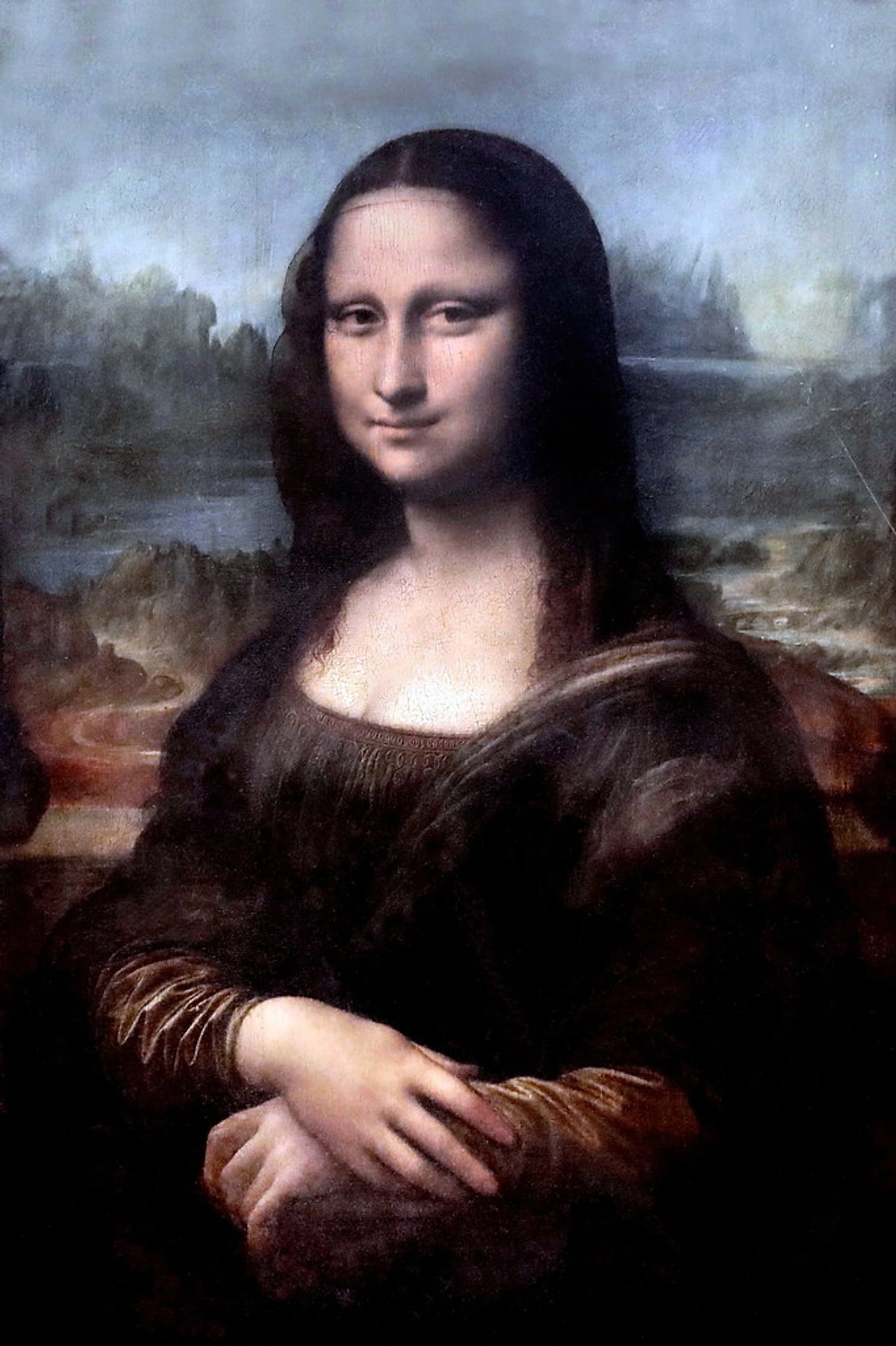
When one considers The Last Supper, it's impossible not to connect it to Leonardo's other iconic works, particularly the Mona Lisa. While seemingly disparate—one a monumental mural, the other a portrait—they share a profound undercurrent: Leonardo's insatiable quest for psychological realism and his innovative mastery of subtle artistic techniques. The soft, elusive blending of tones known as sfumato, so famously evident in the Mona Lisa's enigmatic smile (and which one can learn more about in our guide to why is the mona lisa so famous), is also subtly present in The Last Supper. It is a technique that allows for the seamless transition of colors and shadows, creating an almost hazy, dreamlike quality that enhances the emotional depth of his figures, making their expressions nuanced and deeply human. Furthermore, Leonardo's masterful deployment of chiaroscuro—the dramatic use of light and shadow—is evident in both works, lending them a profound three-dimensionality and psychological intensity that was groundbreaking for its time. This unified artistic vision, where he applies similar principles of scientific observation and psychological insight across different media and subjects, speaks to the extraordinary coherence of Leonardo's genius. He sought to capture not just external likeness, but the inner life, the very soul of his subjects, a hallmark of his enduring legacy and a testament to his singular approach to art.
Psychological Realism: A Shared Obsession
What truly unites The Last Supper and the Mona Lisa for me is Leonardo's relentless pursuit of psychological realism. He wasn't content with mere surface appearances; he wanted to delve into the depths of the human psyche, to capture the fleeting thoughts and hidden emotions that animate us. Whether it's the multitude of reactions to Jesus's declaration or the enigmatic smile of the Mona Lisa, Leonardo's works invite us to look deeper, to question, and to ponder the inner lives of his subjects. This obsession with inner truth is what makes his art so profoundly human and eternally captivating. It's a reminder that great art often reveals more about ourselves than it does about the subjects it portrays.
A Fragile Masterpiece: Deterioration and Ongoing Restoration
The story of The Last Supper is, in many ways, an epic narrative of survival against truly immense odds. It is a saga that highlights the inherent fragility of human creations, especially those born of daring experimentation. Leonardo's chosen technique, while brilliant in its ambition and artistic freedom, was, from a longevity standpoint, an undeniable, almost immediate failure. The paint began to flake off the wall almost immediately after its completion, turning what should have been a permanent mural into a rapidly decaying work, a race against time from its very inception. This rapid deterioration was a profound disappointment even in Leonardo's lifetime, leading to early, often misguided, attempts at repair.

Over the centuries, this masterpiece has endured an almost unimaginable litany of abuses, environmental stresses, and sheer misfortune. It has suffered from extreme humidity, water damage from floods, deliberate neglect (the refectory was at times left open to the elements, allowing moisture to seep into the walls, causing further blistering and flaking), and even significant physical alterations. One particularly regrettable decision occurred in 1652 when a doorway was cut directly into the very bottom of the painting, obliterating a section of Christ's feet—a literal amputation of a sacred image, a choice that still makes me wince. Later, during the Napoleonic wars, French troops allegedly used the refectory as a stable, further damaging the already fragile surface through neglect, vandalism, and abuse, turning a sacred space into something utilitarian and disrespectful. And in a chilling brush with obliteration, it miraculously survived the vibrations and near misses of Allied bombing during World War II, with protective scaffolding being its only shield, a true testament to its almost miraculous survival. It's an extraordinary testament to its enduring power and the human desire to preserve beauty that it has weathered so much, yet continues to captivate and inspire. To grasp the full scope of these challenges, it helps to delve into the definitive guide to art history eras and the context in which such works are created and sometimes tragically damaged.
The Doorway: A Scar on the Masterpiece
The 1652 decision to cut a doorway into the painting's base remains a stark reminder of how historical changes and practical needs can inadvertently desecrate invaluable art. To me, it's not just a missing section; it's a profound scar, a tangible representation of humanity's occasional disregard for its own cultural heritage. It reminds us that masterpieces, no matter how revered, are vulnerable to the passage of time and the interventions of generations, both intentional and accidental. It certainly adds a layer of poignant vulnerability to an already fragile work.
It has, consequently, been the subject of at least seven major restoration attempts throughout its tumultuous history, each with its own prevailing philosophy and varying degrees of success—and, sometimes, unfortunate failures. Some early restorations, particularly those in the 18th and 19th centuries, were actually quite damaging, often applying new, incompatible layers of paint over Leonardo's deteriorating originals, or even attempting to "repaint" entire sections in a style entirely alien to the master. These well-intentioned but misguided interventions often did more harm than good, further obscuring the original work and compounding the challenges for future conservators. The most recent and extensive restoration, a truly monumental undertaking, was completed in 1999 after an arduous 21 years of dedicated work by the renowned Pinin Brambilla Barcilon and her meticulous team. This latest effort was revolutionary in its painstaking, scientific approach, utilizing advanced imaging and chemical analysis to meticulously remove centuries of dirt, grime, and, crucially, layers of non-original overpainting from previous restorations, often revealing startling fragments of Leonardo's original genius beneath. The goal was not to "recreate" Leonardo, but to carefully reveal and stabilize as much of Leonardo's original, albeit extensively damaged, hand as possible, leaving areas where the original was irrevocably lost visible as a testament to its long, arduous history. It is a delicate, ethical balance between preservation, interpretation, and respecting the work's journey, a constant dialogue between art and science, and a model for future conservation projects.
A Timeline of The Last Supper's Restoration Efforts
The tumultuous history of The Last Supper's preservation can be summarized by its numerous restoration campaigns:
Period | Key Restorer / Intervention | Approach & Impact |
|---|---|---|
| Early 16th C. | Unrecorded attempts | Almost immediately after completion, the painting began to flake. Early repairs likely involved simple overpainting to stabilize the surface, though these were largely ineffective and likely caused further damage. |
| 17th C. | Unrecorded attempts | Further deterioration led to more attempts at stabilization. A doorway was cut into the bottom of the painting in 1652, physically altering the masterpiece and removing a section of Christ's feet. |
| 18th C. | Michelangelo Bellotti, Giuseppe Mazza | Bellotti attempted to use oil paint to restore large sections, causing significant damage by obscuring Leonardo's original work. Mazza followed a similar approach, further compounding the issue with heavy overpainting. |
| 19th C. | Stefano Barezzi, Pietro Resta | Barezzi tried to remove previous restorations but damaged the surface by using aggressive solvents. Resta, in contrast, focused on consolidation, but his work was still largely an interpretation rather than a pure preservation of the original. |
| Early 20th C. | Luigi Cavenaghi, Oreste Silvestri | Cavenaghi employed a more scientific approach for his time, focusing on consolidation and minimal intervention. Silvestri continued this, cleaning and attempting to stabilize the paint layers, recognizing the need for delicate handling. |
| Post WWII | Mauro Pelliccioli | After surviving Allied bombing (protected by scaffolding), Pelliccioli undertook significant cleaning and consolidation, meticulously detaching old restorations and stabilizing the remaining original fragments, marking a shift towards more rigorous conservation principles. |
| 1978-1999 | Pinin Brambilla Barcilon | The most extensive and scientifically advanced restoration. Using infrared reflectography and chemical analysis, Barcilon's team meticulously removed centuries of grime and overpaint, stabilizing Leonardo's fragile original pigments. The goal was preservation and revelation, not recreation, leaving visible areas where the original was irrevocably lost as a testament to its history. This effort set a new benchmark for art conservation. |
Each phase reflects the prevailing conservation philosophies and available technologies of its time, painting a complex picture of a masterpiece battling against its own inherent fragility and the ravages of history.
The Ethics of Restoration: A Continuous Debate
The profound ethical considerations that come with restoring a masterpiece like The Last Supper are often reflected upon by curators and conservators. How much intervention is too much? Where does one draw the line between preservation and reinterpretation? It's a constant tightrope walk, isn't it? The history of its restoration is a microcosm of the evolving philosophy of art conservation, moving from often heavy-handed repainting to today's meticulous, scientifically informed approach that prioritizes the artist's original intent while acknowledging the ravages of time. It’s a humbling endeavor, this dance between decay and preservation, and it reminds us that art is not static; it lives, breathes, and, at times, struggles to survive, demanding the most thoughtful and respectful care. I often think about the courage it takes for conservators to make decisions that will affect a masterpiece for centuries to come.

The Enduring Legacy and Influence of a Masterpiece
When one considers The Last Supper today, it is not merely a historical artifact; it is a phenomenon that has profoundly shaped Western art and culture, casting a long, indelible shadow of influence. Its impact extends far beyond the walls of the refectory, permeating religious art, secular painting, literature, and even popular culture. Leonardo’s innovative composition, his unprecedented psychological realism, and his dramatic storytelling have inspired countless artists, from his contemporaries like Raphael (whose own depictions of biblical scenes often echo Leonardo's dynamism) to modern masters. It fundamentally altered how artists approached narrative painting, pushing them to explore human emotion and individual character with a depth and nuance rarely seen before, moving beyond mere iconic representation to true psychological drama. This revolutionary approach to integrating human emotion with sacred narrative set a new benchmark for artistic achievement that continues to influence visual storytelling techniques in narrative art even today.
Consider the subsequent depictions of biblical scenes, or even grand historical paintings—many borrow elements of Leonardo's dynamic grouping, his revolutionary use of perspective to focus attention, and his unparalleled ability to convey profound meaning through subtle gesture and expressive emotion. Artists from the Baroque period, like Caravaggio and Bernini, would further develop this dramatic realism and emotional intensity, building on the psychological foundations Leonardo laid, pushing boundaries of emotional expression. For instance, the theatricality and intense emotional responses seen in many Baroque art masterpieces owe a significant debt to The Last Supper's revolutionary approach to narrative. Its influence even extends to modern art, with artists continuing to re-interpret its themes and composition, demonstrating its timeless pull. Moreover, its iconic status has transcended the art world, embedding itself deeply into popular culture, appearing in countless films, books (like Dan Brown's The Da Vinci Code), and contemporary artworks, sometimes reverently, sometimes controversially, always provoking discussion and engaging new audiences. It is a work that continually invites reinterpretation and study, securing its place not just as a cornerstone of the High Renaissance, but as a truly universal masterpiece that speaks to the human condition across millennia, a touchstone of Western civilization, and an enduring source of fascination for scholars and enthusiasts alike. This is the kind of art that sparks a lifelong journey of discovery.
Artists and Movements Influenced by The Last Supper
Leonardo's The Last Supper was not just a masterpiece in its own right; it was a watershed moment that reshaped artistic conventions and inspired countless creators across different eras and movements:
Artist / Movement | Key Influences from The Last Supper |
|---|---|
| Raphael | His narrative frescoes, such as those in the Vatican, often mirrored Leonardo's dynamic grouping of figures, psychological depth, and use of expressive gesture to convey complex emotions, elevating historical and biblical scenes. |
| Baroque Art | Artists like Caravaggio and Bernini dramatically developed Leonardo's emphasis on intense emotional realism, dramatic lighting (chiaroscuro), and theatrical compositions to create immersive and emotionally charged works, pushing the boundaries of narrative intensity. |
| Mannerism | While departing from High Renaissance harmony, Mannerist artists often exaggerated the emotional tension and contorted figures seen in The Last Supper, using its dramatic intensity as a springboard for their own expressive styles. |
| Romanticism | Later artists embraced the dramatic, emotional storytelling inherent in The Last Supper, using its power to depict heightened states of human experience, passion, and suffering, a hallmark of the Romantic era. |
| Modern Art | Contemporary artists continue to re-interpret its themes, composition, and iconic imagery, sometimes through homage, sometimes through parody, demonstrating its enduring relevance as a cultural touchstone and a powerful narrative template for exploring betrayal, faith, and human connection. |
This table illustrates just a fraction of the profound and wide-ranging impact The Last Supper has had, cementing its status as one of the most influential artworks in Western history.
Modern Interpretations and Pop Culture Impact
What is endlessly fascinating is how The Last Supper continues to permeate popular culture, taking on new lives in films, literature, and contemporary art. From Dan Brown's The Da Vinci Code (which, it must be noted, took considerable creative liberties!) to countless artistic homages and parodies, the image of Jesus and his apostles at that fateful table is instantly recognizable. This pervasive presence speaks volumes about its iconic power, how it has transcended its original religious context to become a universal symbol of betrayal, revelation, and shared humanity. It’s a testament to Leonardo's original narrative genius that the image itself has become a cultural touchstone, continually provoking discussion and engaging new audiences, even those far removed from its historical and theological origins.
Conclusion: An Enduring Conversation
Stepping away from The Last Supper, or even just reflecting on it, one is always left with a profound sense of awe—not just for Leonardo's genius, but for the sheer resilience of this work and its timeless message. It is more than just a painting; it is a profound psychological portrait of humanity grappling with faith, betrayal, doubt, and the divine. It invites viewers, compels them even, to consider not just what happened in that refectory in Milan over five centuries ago, but how individuals react to moments of truth and crisis, and what it means to witness such a pivotal, shattering moment.
In a world often fragmented and chaotic, Leonardo’s masterpiece stands as a testament to the enduring power of art to unify, to question, and to inspire. It asks viewers to look closely, to feel deeply, and to reflect on their own human condition, prompting them to examine their own reactions to life's profound declarations. And perhaps, that is the ultimate legacy of The Last Supper—not merely its beauty or its historical significance, but its timeless ability to spark an internal conversation within each individual, a testament to Leonardo's unparalleled insight into the human soul and his enduring artistic vision.





Frequently Asked Questions about The Last Supper
General Information & Context
What specific moment does The Last Supper depict? Leonardo da Vinci chose to immortalize a singular, extraordinarily charged moment from the Gospel of John 13:21: Jesus's dramatic declaration, "One of you will betray me." This pivotal instant shatters the fragile peace of the final meal, unleashing a ripple of shock, disbelief, and a torrent of human emotion among the apostles. It's a psychological explosion, if you will. Unlike many earlier depictions that focused on the more serene institution of the Eucharist—the blessing of the bread and wine—Leonardo plunged viewers directly into the tumultuous emotional aftermath of the bombshell announcement, highlighting the profound psychological drama of betrayal and human vulnerability. It’s this audacious dramatic choice that, for me, elevates it from a mere illustration to a profound human study.
Where is The Last Supper located? The Last Supper by Leonardo da Vinci is precisely located on the northern wall of the dining hall, also known as the refectory, within the Dominican Convent of Santa Maria delle Grazie in Milan, Italy. It's not a painting you can simply move to a museum; it's an integral part of its architectural and spiritual context. It's important to remember it's a site-specific mural, intimately connected to its original architectural setting, truly making it inseparable from its spiritual home. This unique placement within a dining hall profoundly shaped its purpose and impact on the friars who viewed it daily.
What food is depicted in The Last Supper? This is a surprisingly detailed question, and it speaks to Leonardo's attention to naturalistic detail, even amidst the high drama! While the focus is on the emotional interactions, Leonardo did meticulously include food. On the table, one can observe the quintessential bread and wine, which are, of course, central to the institution of the Eucharist and Christ's sacrifice. Famously, small individual portions of fish are also depicted, often identified as freshwater eels (agnoni in Italian), although there is scholarly debate about their exact species. The fish may allude to the traditional Lenten meal (as meat was typically avoided) or, for some, to early Christian symbolism (the ichthys). Alongside these, slices of orange or citrus fruit are visible. The oranges, a luxury item in Milan, could symbolize wealth, paradise, or even a bitter-sweet premonition given the context of betrayal. These carefully chosen elements ground the divine narrative in tangible, everyday reality, making the scene more relatable.
What was Leonardo da Vinci's role at Ludovico Sforza's court beyond painting? Leonardo da Vinci was a true polymath, and his role at Ludovico Sforza's court in Milan was incredibly diverse, far exceeding that of a traditional court painter. From roughly 1482 to 1499, he served as a military engineer, designing fortifications and weaponry; an inventor, constantly sketching innovative machines and anatomical studies; a sculptor and architect, contributing to various projects; and a master of elaborate court festivities, staging theatrical productions and pageants. He was essentially a resident genius, a quintessential "Renaissance Man" whose boundless curiosity and talents were deployed across every conceivable field, making this period incredibly formative for his wide-ranging experiments and intellectual pursuits. His work on The Last Supper was just one facet of his extraordinary contributions during this time.
Is it a true fresco? No, and this is a crucial point in understanding its history and extreme fragility. Leonardo da Vinci famously eschewed the traditional buon fresco (true fresco) technique, which involves applying pigment directly to wet plaster. This method demands quick, decisive work, something Leonardo, a meticulous perfectionist, disliked. Instead, he opted for an experimental method: applying tempera paint (likely mixed with oil or other binders such as egg yolk, creating a kind of oil-tempera emulsion) directly onto a dry stone wall, which he had prepared with a gesso, pitch, and mastic underlayer. This allowed him greater freedom and detail, much like painting on a wooden panel, but it proved to be a disastrous choice for durability, leading to the rapid deterioration that has necessitated countless restoration efforts. So, while it's a monumental wall painting, it's definitively not a true fresco. This technical gamble profoundly shaped its fate.
What specific materials did Leonardo use for his experimental technique? Leonardo da Vinci famously deviated from the traditional buon fresco technique for The Last Supper. Instead, he opted for an experimental method involving applying tempera paint, likely mixed with oil or other binders such as egg yolk, directly onto a dry stone wall. This wall had been meticulously prepared with a gesso, pitch, and mastic underlayer, essentially treating the wall like a large wooden panel. This allowed him the freedom to work slowly, blend colors seamlessly, and achieve the fine detail and luminosity characteristic of oil painting. However, this innovative choice ultimately proved disastrous for the artwork's longevity, as the paint failed to adhere properly to the dry surface, leading to its rapid deterioration.
Artistic & Symbolic Interpretations
How does Leonardo's one-point linear perspective work in the painting? Leonardo's masterful use of one-point linear perspective is a cornerstone of The Last Supper's compositional genius. It's truly a marvel to witness. All orthogonal lines (lines perpendicular to the picture plane, such as the coffers in the ceiling, the subtle patterns on the walls, and even the lines of the table) converge precisely at a single vanishing point. And where is this point? It's strategically placed directly behind Jesus's head, making him the undeniable geometric, compositional, and spiritual center of the entire work. This technique creates a profound illusion of three-dimensional depth, pulling the viewer's eye directly to Christ and immersing them in the sacred drama, reinforcing his central importance both visually and theologically. It’s a brilliant fusion of scientific principle and spiritual statement, a true hallmark of the Renaissance mind. For a deeper dive, our definitive guide to perspective in art is an invaluable resource.
What is the role of mathematics and geometry in The Last Supper's composition? Mathematics and geometry play a fundamental, though often subtle, role in The Last Supper's composition, reflecting the High Renaissance's fascination with classical ideals of order and proportion. It's a testament to Leonardo's polymathic mind, blending art, science, and theology into a single, cohesive vision. Beyond the rigorous one-point linear perspective that centers on Christ, the apostles are arranged into harmonious groups of three, creating a rhythmic balance across the table. Christ's figure itself forms a stable triangle, a quintessential Renaissance motif for divinity and perfection. While Leonardo didn't explicitly document his use of the Golden Ratio, the overall sense of aesthetic pleasure and inherent balance suggests an intuitive application of such principles. These underlying mathematical structures lend a sense of divine order and artistic control to a scene of profound human chaos, subtly reinforcing the theological message and demonstrating a meticulous, almost scientific, approach to art.
The Anatomy of Leonardo's Experimental Ground
Leonardo's meticulous preparation of the wall for The Last Supper was as innovative as his painting medium, though equally fraught with peril. The 'gesso, pitch, and mastic underlayer' refers to a multi-layered ground designed to create a smooth, absorbent surface suitable for his tempera-oil mix, akin to a panel painting. The gesso (a white mixture of plaster of Paris, chalk, or gypsum with a binder) provided a bright, uniform base. Pitch (a dark, viscous substance, often tar-based) and mastic (a resin) were likely incorporated, perhaps as binding agents or protective layers, though their precise role and exact composition remain subjects of scholarly debate. This complex, organic ground, while offering the artistic freedom Leonardo craved, ultimately proved incompatible with the humid refectory environment, contributing significantly to the artwork's early and persistent deterioration.
What is sfumato and how is it used here?
Leonardo's characteristic technique of sfumato, the soft, elusive blending of tones and colors, is subtly yet profoundly evident throughout The Last Supper. While often most visibly associated with his oil panel paintings like the Mona Lisa, in the mural, sfumato contributes to the nuanced emotional expressions of the apostles and the ethereal quality of the distant landscape seen through the windows. This gentle gradation of light and shadow avoids harsh outlines, creating a sense of depth and atmospheric perspective that enhances the psychological realism and dreamlike quality of the scene. It allows for the seamless transition of facial features and forms, making the figures appear more alive and their emotions more deeply felt, contributing significantly to the painting's overall dramatic impact and unified artistic vision. You can explore this technique further in our guide to what is sfumato.
Who is the person sitting to the right of Jesus? The figure seated immediately to Jesus's right (which, from the viewer's perspective, is to our left) is traditionally and widely identified as the Apostle John. Leonardo depicts him with distinctly youthful, almost ethereal, and somewhat androgynous features, a stylistic choice that has indeed led to much discussion and, in some popular narratives, unfounded speculation. However, this portrayal aligns perfectly with historical and artistic traditions that emphasized his role as the "beloved disciple," often seen as embodying purity, innocence, and deep spiritual connection to Christ. He is frequently depicted as the youngest of the apostles, a foil to the fiery Peter. His close proximity to Christ and his seemingly swooning posture, head tilted away in grief or perhaps in a moment of tender trust, further underscore his intimate relationship with Jesus and his profound emotional reaction to the revelation of betrayal, a testament to his sensitive nature.
What is the significance of Peter's posture and actions? Peter, depicted leaning fiercely forward and clutching a knife, embodies fierce loyalty, impulsiveness, and a readiness to act in defense of Jesus. His brow is furrowed with intense emotion, and his action with the knife is often seen as a dramatic foreshadowing of his impulsive act in the Garden of Gethsemane, where he later cuts off the ear of a high priest's servant. This detail highlights Peter's passionate, yet sometimes rash, nature, positioning him as both a protector of Christ and a flawed human disciple. His close proximity to John, whom he seems to be shielding, further underscores his role as a foundational figure among the apostles, even in his moments of human frailty.
How is the Apostle John identified in The Last Supper? The Apostle John, traditionally identified as the youthful figure seated immediately to Jesus's right (viewer's left), is recognized by his distinctly youthful, almost ethereal, and somewhat androgynous features. This portrayal aligns with historical and artistic traditions that emphasized his role as the "beloved disciple" and the youngest of the apostles, embodying purity, innocence, and a deep spiritual connection to Christ. His seemingly swooning posture, head tilted away in grief or perhaps in a moment of tender trust, further underscores his intimate relationship with Jesus and his profound emotional reaction to the revelation of betrayal, making his identity unmistakable within the narrative context.Who are all the apostles depicted?
Why is John depicted as so youthful and almost feminine? The Apostle John, traditionally identified as the figure immediately to Jesus's right (viewer's left), is depicted by Leonardo with distinctly youthful, almost ethereal, and somewhat androgynous features. This stylistic choice is consistent with historical and artistic traditions that often emphasized his role as the "beloved disciple" and the youngest of the apostles, embodying purity, innocence, and a deep spiritual connection to Christ. His appearance is a visual representation of his sensitive nature and profound sorrow at Jesus's announcement of betrayal. While popular culture has sometimes fueled unfounded speculation around this portrayal, from an art historical perspective, it aligns perfectly with the symbolic language of the Renaissance to convey specific virtues and narrative roles.
Who are all the apostles depicted? From left to right (from the viewer's perspective), Leonardo grouped the apostles as follows:
- Group 1: Bartholomew, James the Less, and Andrew.
- Group 2: Judas Iscariot, Peter, and John.
- Group 3: Thomas, James the Greater, and Philip.
- Group 4: Matthew, Jude Thaddeus, and Simon. Each figure is a distinct psychological study, meticulously rendered to convey a specific emotional response to Jesus's announcement.
Are there any other notable symbolic numbers or patterns? Beyond the prominent use of the number three (apostles in groups of three, three windows), Leonardo's composition is imbued with other subtle patterns. The table itself, though filled with individuals, forms a strong horizontal line that anchors the composition and emphasizes the unity of the group before Jesus's declaration breaks it. The linear perspective, converging at Christ's head, is another "pattern" of order, drawing all lines and attention to him. Even the reactions of the apostles, though varied, follow a wave-like pattern of shock spreading from the center outwards. These underlying geometric and numerical structures lend a sense of divine order and artistic control to a scene of profound human chaos, subtly reinforcing the theological message. It's a testament to Leonardo's polymathic mind, blending art, science, and theology into a single, cohesive vision.
Why is Judas Iscariot in shadow? Leonardo's use of light and shadow, a powerful technique known as chiaroscuro, is absolutely masterful in The Last Supper, and nowhere is it more effectively deployed than with Judas Iscariot. He is deliberately cast in shadow, subtly yet undeniably separated from the more brightly illuminated apostles. This visual isolation serves a dual purpose. Firstly, it physically distinguishes him, marking him as 'other.' Secondly, and perhaps more profoundly, it symbolizes the moral and spiritual darkness of his impending betrayal, literally shrouding him in the gloom of his actions. It's a brilliant visual metaphor, a technique Leonardo used to great dramatic effect throughout his career. For an even deeper dive into this fascinating artistic principle, one can check out our article on what is chiaroscuro in art history where the various applications and historical contexts of chiaroscuro in art are explored.
How does Leonardo visually isolate Judas from the other apostles? Leonardo da Vinci employs several ingenious visual techniques to isolate Judas Iscariot, subtly yet powerfully marking him as the betrayer. It's a masterclass in subtle visual psychology. Beyond being deliberately cast in shadow, physically distancing him from the light illuminating Christ and the other apostles, Judas is also the only figure leaning away from Jesus. He recoils into the composition's darkest corner, his furtive profile and clenched bag of silver further emphasizing his moral and spiritual separation. The knocked-over salt cellar near his elbow is another subtle but potent symbol of a broken covenant, a clear indicator of misfortune and broken trust. These combined visual cues create a palpable sense of his alienation and guilt, making his role in the drama unmistakably clear to the viewer without needing explicit textual labels, and truly reinforcing the tragedy of his choice.
What is the significance of the window landscape behind Jesus? The serene, illuminated landscape visible through the three windows behind Christ is far from incidental. It serves as a powerful symbolic counterpoint to the dramatic human emotions unfolding within the refectory. The three windows themselves subtly allude to the Holy Trinity, reinforcing Christ's divine nature and his connection to the heavens. The tranquil, open vista symbolizes peace, spiritual solace, and perhaps even the promise of redemption and the heavenly realm. It positions Christ not only as the geometric center of the composition but also as the spiritual bridge between the earthly realm of human suffering and the eternal, divine order, making his serene acceptance all the more poignant.
What is the symbolism of the architecture in the painting? The architecture in The Last Supper is far from mere background; it's an integral part of Leonardo's symbolic schema. The room is depicted with a coffered ceiling and tapestries, but crucially, the three windows behind Christ open onto a serene, illuminated landscape. These three windows can be interpreted as a symbolic representation of the Holy Trinity, reinforcing Christ's divinity and his connection to the heavens. The orderly, classical architecture itself reflects the Renaissance ideals of harmony, reason, and divine proportion, providing a stark contrast to the human chaos and emotional turmoil unfolding within the figures, creating a powerful visual tension.
How do classical ideals influence the composition of The Last Supper? The influence of classical ideals, particularly from ancient Greece and Rome, is deeply embedded in The Last Supper's composition, a hallmark of the High Renaissance. Leonardo employs principles of harmony, balance, and rational order, evident in the meticulous one-point linear perspective that centers on Christ and the symmetrical arrangement of the apostles into groups. The classical architectural elements within the painted refectory, such as the coffers in the ceiling and the orderly wall patterns, evoke a sense of timeless grandeur and divine proportion. This integration of classical aesthetic principles with Christian theology creates a powerful visual statement, elevating the human drama to a realm of universal significance and demonstrating the Renaissance artists' profound respect for ancient wisdom and beauty.
Why is The Last Supper so famous? Its enduring fame is a complex tapestry woven from several extraordinary threads. Firstly, there's the undeniable aura of its creator, the polymathic genius and visionary inventor Leonardo da Vinci himself—his very name conjures images of groundbreaking innovation and unparalleled artistic achievement. But beyond the artist, the painting itself is a powerhouse. It offers an incredibly powerful and psychologically rich depiction of a pivotal biblical moment, capturing human emotion with an intensity rarely matched, portraying the apostles not as types, but as distinct, flawed individuals. Its revolutionary composition and masterful use of one-point linear perspective were truly groundbreaking for its time, setting new standards for narrative art and influencing generations of artists. And finally, the dramatic, almost tragic, story of its creation, its immediate decay due to Leonardo's experimental technique, and its miraculous survival against all odds, including wars and neglect, adds a layer of compelling human drama and resilience that resonates deeply. It's this potent combination of artistic brilliance, profound storytelling, historical resilience, and an almost mythical aura that makes it one of the most famous artworks ever created, continually drawing millions of visitors and inspiring endless study.
The Enduring Mystery and Allure
What often goes unsaid about The Last Supper's fame is the element of mystery that surrounds it. Leonardo, with his secretive nature and penchant for puzzles, left behind a legacy that continues to invite speculation and interpretation. The ambiguities in certain figures, the elusive techniques, the tragic tale of its deterioration—all these elements add to an almost mythical allure. It's not just a painting; it's a profound cultural artifact that continues to challenge, inspire, and occasionally mystify, ensuring its place in the public imagination for centuries to come. This ongoing dialogue between the known and the unknown is, for the curator, a crucial component of its lasting power.
What makes Leonardo's Last Supper different from earlier depictions? Leonardo's Last Supper stands apart from earlier renditions primarily due to its unprecedented psychological realism and dramatic intensity. Prior to Leonardo, many depictions were more static, formal tableaux, often lining up the apostles symmetrically without much interaction, focusing perhaps on the institution of the Eucharist. Leonardo, however, chose the explosive moment of Jesus's betrayal announcement, capturing the apostles' diverse, visceral, and profoundly human reactions. His revolutionary compositional grouping, intricate use of perspective, and subtle portrayal of individual emotions created a dynamic narrative that drew viewers directly into the emotional heart of the story, transforming it from a mere religious illustration into a powerful psychological drama. This focus on individual character and emotion was truly groundbreaking and set a new standard for narrative painting.
How is Leonardo's characteristic technique of sfumato evident in The Last Supper? Leonardo's characteristic technique of sfumato, the soft, elusive blending of tones and colors, is subtly yet profoundly evident throughout The Last Supper. While often most visibly associated with his oil panel paintings like the Mona Lisa, in the mural, sfumato contributes to the nuanced emotional expressions of the apostles and the ethereal quality of the distant landscape seen through the windows. This gentle gradation of light and shadow avoids harsh outlines, creating a sense of depth and atmospheric perspective that enhances the psychological realism and dreamlike quality of the scene. It allows for the seamless transition of facial features and forms, making the figures appear more alive and their emotions more deeply felt, contributing significantly to the painting's overall dramatic impact and unified artistic vision.
Is there a hidden message or code in The Last Supper? This is a popular notion, fueled by books and films, but from an art historical perspective, the answer is generally no. While Leonardo was a master of symbolism and allegory (as we've explored), the idea of a 'secret code' or 'hidden message' distinct from its rich Christian iconography is largely a modern invention. The symbolism within the painting is complex but largely aligns with accepted theological and narrative interpretations of the time. The supposed hidden musical notes or geometric codes are often interpretations imposed onto the painting rather than intentional, concealed messages by Leonardo himself. His brilliance was in open, profound visual storytelling, not in cryptographic puzzles.
Where is Leonardo's use of chiaroscuro most impactful in The Last Supper? Leonardo's masterful use of chiaroscuro, the dramatic interplay of light and shadow, is profoundly impactful throughout The Last Supper, serving both artistic and symbolic purposes. It is perhaps most strikingly evident in the visual isolation of Judas Iscariot, who is deliberately cast in shadow, subtly yet undeniably separating him from the brightly illuminated apostles and symbolizing the moral darkness of his impending betrayal. Conversely, Christ is bathed in a soft, ethereal light, emphasizing his divine nature and moral purity. Chiaroscuro also sculpts the figures, giving them a three-dimensional presence and enhancing the emotional intensity of their reactions, making the scene feel incredibly tangible and immediate. This technique not only creates a sense of drama but also powerfully reinforces the narrative's themes of good versus evil, light versus darkness, and truth versus deception. For a more detailed exploration of this fascinating artistic principle, readers might consult our article on what is chiaroscuro in art history.
Dissecting Common Misconceptions
Beyond the 'secret code' theories, several other misconceptions often circulate about The Last Supper. For instance, some believe Mary Magdalene is depicted, a theory largely popularized by fiction but unsupported by art historical scholarship. Similarly, the idea that Judas is isolated on the opposite side of the table is often a misremembered detail from earlier Last Supper depictions; Leonardo controversially places him among the apostles, albeit in shadow. Addressing these common inaccuracies is crucial for a comprehensive understanding of the artwork, ensuring that its true artistic and historical significance is not overshadowed by unfounded myths. A curator's role involves separating fact from popular fiction to preserve the integrity of art history.
What influence did the Dominicans have on the artwork or its interpretation? The Dominican Order, for whom the Convent of Santa Maria delle Grazie was built, undoubtedly played a subtle yet significant role in the artwork's context and perhaps its initial interpretation. The Dominicans were known as the "Order of Preachers" and emphasized intellectual rigor, theological study, and a direct engagement with scripture. While Leonardo was given considerable artistic freedom, the friars, who would have dined daily before the painting, would have brought their own theological understanding and devotional practices to their contemplation of the scene. The choice of the "betrayal" moment, with its intense focus on human psychology and moral choice, would have resonated deeply with Dominican sermons and meditations on sin, redemption, and human frailty. While there's no direct evidence of Dominican intervention in Leonardo's artistic decisions, their intellectual and spiritual environment certainly provided the rich ground for the painting's profound reception.
How has technology aided in its preservation and study? Modern technology has played an absolutely crucial role in both preserving and understanding The Last Supper. Advanced imaging techniques, such as infrared reflectography and UV fluorescence, have allowed conservators to peer beneath layers of old paint and grime, revealing Leonardo's original underdrawings, pentimenti (changes made during the painting process), and even lost details with unprecedented clarity. State-of-the-art climate control systems in the refectory meticulously regulate temperature and humidity, which is crucial for stabilizing the fragile paint layers and preventing further decay. Scientific analysis of pigments and binders has shed light on Leonardo's materials and experimental techniques, helping to inform conservation strategies. Beyond preservation, digital reconstructions and virtual reality experiences allow scholars and the public to study the painting in unprecedented detail, offering insights into its original appearance and the artist's creative process, all without further endangering the physical masterpiece.
How long did it take Leonardo to paint The Last Supper? It's a bit of a tricky question, as Leonardo didn't work on it continuously, reflecting his methodical and often interrupted creative process. The commission began around 1495, and the main work was largely completed by 1498, although some accounts suggest he continued to touch it up for a short period after. So, roughly three years of intensive work, albeit interspersed with other projects and his notoriously slow, contemplative pace. The experimental technique he employed, by not requiring the rapid application of paint to wet plaster like traditional fresco, allowed him this luxury of time for revisions and meticulous detailing, unlike the speed and irreversible nature demanded by conventional mural painting methods.
How did the political climate of Renaissance Milan affect the commission? The political climate of Renaissance Milan, particularly under Ludovico Sforza, played a crucial role in the commission of The Last Supper. Ludovico, known as il Moro, was a shrewd and ambitious ruler who understood the immense power of art and architecture to project influence, solidify his dynasty's legacy, and legitimize his often-precarious rule. Milan was a significant political and economic power, but Sforza's legitimacy was frequently challenged. By commissioning monumental works like The Last Supper for his family mausoleum, he was making a clear public statement about his wealth, piety, and unshakeable connection to divine favor. The artwork was not merely an aesthetic endeavor but a strategic political move, leveraging art as a powerful tool in the complex and often turbulent landscape of Renaissance Italy. It's a reminder that great art often emerges from a nexus of patronage, power, and personal ambition.
What impact did the Napoleonic Wars have on The Last Supper? During the Napoleonic Wars, particularly when French troops occupied Milan, The Last Supper suffered significant neglect and abuse. The refectory of Santa Maria delle Grazie was allegedly used as a stable for horses, and soldiers reportedly threw bricks at the apostles' heads or climbed ladders to scratch out their eyes. This period of deliberate neglect and vandalism severely damaged the already fragile painting, compounding the deterioration caused by Leonardo's experimental technique and contributing to the need for extensive future restoration efforts. It's a stark reminder of how historical conflicts can inadvertently (or intentionally) threaten invaluable cultural heritage.Who funded The Last Supper commission? The Last Supper was commissioned by Ludovico Sforza, also known as Ludovico il Moro, the Duke of Milan. He was a powerful and ambitious ruler who utilized art and architecture as tools to project his influence, solidify his dynasty's legacy, and legitimize his rule. The monumental painting was part of his extensive renovation plans for the Dominican Convent of Santa Maria delle Grazie, which he intended to transform into a grand Sforza family mausoleum. This commission was a strategic move, intertwining religious devotion with dynastic ambition, a common practice among powerful Renaissance families.What role did music or sound play in the refectory during meals? It's fascinating to consider the sonic environment of the refectory! During meals, Dominican friars were typically expected to eat in silence, often listening to spiritual readings or sermons delivered from a pulpit. This enforced quietude would have profoundly impacted the experience of viewing The Last Supper. The painting, with its intense emotional drama, would have been contemplated without the distraction of conversation, allowing the visual narrative to resonate deeply within each friar. The silence would have amplified the "voice" of the painting, fostering a contemplative and introspective atmosphere and encouraging personal reflection on the biblical scene and its profound spiritual implications, making the visual experience even more immersive and impactful during their communal meals.
How can I view The Last Supper today? Viewing The Last Supper today is a highly regulated experience due to its extreme fragility and the necessity of maintaining a strictly controlled environment. Visitors must book tickets well in advance, often months ahead, as entry is limited to small groups for very short periods (typically 15 minutes). This strict regulation is essential to minimize exposure to humidity, dust, and other environmental factors that could accelerate its deterioration. It is an intimate, almost reverential experience, and the limited viewing time only heightens the sense of privilege and the urgency of appreciating this irreplaceable masterpiece, ensuring its continued preservation for future generations.
What lessons can we learn from the restoration efforts? The long and arduous history of The Last Supper's restoration offers invaluable lessons for art conservation, serving as a case study for the field. Firstly, it underscores the profound ethical dilemmas involved in restoring severely damaged works: how much intervention is too much? What constitutes "original" when so much has been lost and overpainted? Secondly, it highlights the paramount importance of scientific rigor and multidisciplinary approaches, moving beyond subjective aesthetic judgments to forensic analysis of materials and techniques. The 1999 restoration, in particular, demonstrated the success of painstaking, minimalist intervention, aiming to stabilize and reveal rather than "recreate" or interpret. It teaches that conservation is an ongoing dialogue, a continuous struggle against time, and a testament to human dedication to preserving cultural heritage for future generations, demanding humility and scientific precision.
What is the condition of The Last Supper today? Today, The Last Supper is in a stable, albeit extremely fragile, state of preservation. The extensive and painstaking restoration completed in 1999, led by Pinin Brambilla Barcilon, revealed much of Leonardo's original work that had been obscured by centuries of dirt, grime, and damaging overpaint. However, it also starkly highlighted how little of the original pigment truly remains due to centuries of decay and previous, often misguided, restorations. What viewers see today is, in essence, a ghost of its former glory, yet it remains incredibly moving and powerful, a testament to its original impact and the enduring human desire to preserve it. It requires constant, meticulous conservation efforts and is maintained in a strictly controlled environment within the refectory to prevent further deterioration, making highly regulated viewing a necessary measure.
What is the underlying theological message of The Last Supper? Beyond the dramatic narrative, The Last Supper is steeped in profound theological meaning. At its core, it visually encapsulates the institution of the Eucharist, representing Christ's willing sacrifice for the salvation of humanity. His calm, central presence amidst the apostles' turmoil symbolizes divine acceptance, premonition, and the promise of a new covenant through his impending sacrifice. It is a profound meditation on faith, doubt, loyalty, and betrayal, exploring the complex spectrum of human response to a divine truth. The painting also powerfully foreshadows Christ's crucifixion and resurrection, presenting the moment of betrayal as a necessary prelude to redemption. Ultimately, it serves as a powerful visual sermon on the core tenets of Christian faith, inviting contemplation on sacrifice, forgiveness, and the enduring presence of the divine in human experience.
Historical Context & Preservation
How many times has The Last Supper been restored? The Last Supper has undergone at least seven major restoration campaigns throughout its history, with countless minor interventions. This continuous cycle of decay and repair began almost immediately after its completion due to Leonardo's experimental technique, which proved disastrously non-durable. The most extensive and scientifically rigorous restoration was completed in 1999 by Pinin Brambilla Barcilon, a monumental effort that spanned 21 years. Each restoration has had its own philosophy and varying degrees of success, with earlier attempts often causing more harm than good by overpainting or using incompatible materials. The painting's history is, in many ways, a testament to the ongoing challenges of preserving fragile masterpieces.
How did this work influence the concept of the 'Renaissance Man'? The Last Supper itself is a powerful illustration of the "Renaissance Man" ideal, epitomized by its creator, Leonardo da Vinci. Its creation demanded a polymathic mind, someone who could integrate scientific understanding with artistic vision. The work demonstrates Leonardo's mastery not just of painting, but of optics (evident in his revolutionary use of perspective), human anatomy (reflected in the nuanced emotional expressions and gestures of the apostles), engineering (through his experimental, albeit ultimately fragile, painting technique), and even psychology (in his profound depiction of human reactions). This blend of meticulous observation, technical innovation, and profound philosophical inquiry directly contributed to the image of the Renaissance artist as a universal genius, pushing the boundaries of knowledge and creativity across diverse fields, and setting a new standard for intellectual and artistic ambition that defines the "Renaissance Man" ideal.
What is the historical significance of the location (Santa Maria delle Grazie)? The Convent of Santa Maria delle Grazie holds significant historical importance beyond just housing The Last Supper. Consecrated in 1469, it was a prominent Dominican convent that became a key site of patronage for Ludovico Sforza, Duke of Milan. Sforza adopted it as his family church, intending to transform it into a grand Sforza mausoleum. He commissioned not only The Last Supper for the refectory but also had the magnificent tribune (chancel) designed by Donato Bramante, another titan of the Renaissance. The church and convent complex itself is a UNESCO World Heritage site, recognized for its exceptional artistic and architectural value, intimately tied to the history of Milan, the powerful Sforza family, and the broader cultural and religious life of 15th-century Italy.
How did Leonardo's patrons react to his experimental technique?
How did Ludovico Sforza and contemporaries react to Leonardo's experimental painting technique, especially as it began to deteriorate? Initially, Ludovico Sforza, the Duke of Milan and Leonardo's patron, likely supported the experimental approach for The Last Supper, as it promised richer colors and greater detail that traditional fresco could not provide. However, as the painting began to deteriorate almost immediately—within just a few years of its completion—there was certainly growing concern and disappointment. Contemporary accounts suggest Leonardo faced criticism for his notoriously slow pace and unconventional methods, particularly as the fragility of the work became apparent. Despite the initial enthusiasm for his innovative approach, the rapid decay became a significant and undeniable problem, forcing early, often unsuccessful, restoration attempts and creating a cautionary tale about artistic experimentation versus the demands of permanence for such a monumental work.
Are there other famous 'Last Supper' paintings? Absolutely! While Leonardo's version is arguably the most famous and psychologically profound, the scene of The Last Supper has been a popular subject throughout Christian art history, inviting countless artistic interpretations across centuries and styles. Notable examples include:
- Giotto di Bondone's Last Supper (c. 1305) in the Scrovegni Chapel, Padua: A deeply spiritual fresco from the Proto-Renaissance, characterized by its emotional directness and innovative spatial representation for its time, though far more stylized than Leonardo's.
- Tintoretto's Last Supper (e.g., 1592-94) in San Giorgio Maggiore, Venice: A dramatic and dark interpretation from the late Renaissance/early Baroque period, known for its intense chiaroscuro, dizzying diagonal perspective, and a dynamic, almost chaotic composition, emphasizing supernatural light and movement.
- Salvador Dalí's The Sacrament of the Last Supper (1955): A surrealist and geometrically precise take on the theme, set within a dodecahedral (12-sided) space, emphasizing the spiritual and mystical elements, contrasting sharply with traditional realism.
- Dirk Bouts' The Last Supper (c. 1464-68) in St. Peter's Church, Leuven: A Flemish Primitive masterpiece known for its meticulous detail, realistic portrayal, and calm, reverent atmosphere, predating Leonardo's dramatic approach.
- Andrea del Castagno's Last Supper (1447) in Sant'Apollonia, Florence: An earlier Renaissance fresco known for its vivid colors, precise perspective, and the dramatic, isolated figure of Judas seated opposite the other apostles, already hinting at the psychological intensity later fully realized by Leonardo.
- Domenico Ghirlandaio's Last Supper (multiple versions, e.g., 1480 in Ognissanti, Florence): These frescoes depict the scene with remarkable realism and attention to detail, often including contemporary Florentine figures and elaborate backgrounds, offering a rich glimpse into late 15th-century life while still adhering to a more traditional, less explosive narrative than Leonardo's.
Each artist brought their unique style, theological interpretation, and cultural context to this pivotal biblical event, making it a rich subject for comparative study. It is always fascinating to see how different artistic minds tackle the same profound narrative across centuries, offering a diverse tapestry of human faith and artistic expression. These comparative studies help us understand the singular impact of Leonardo's vision within the broader context of art history, illuminating just how revolutionary his approach truly was.