What is the Bayeux Tapestry? The Ultimate Guide
Discover the true story of the Bayeux Tapestry. It's not a tapestry, but a 70-meter-long embroidery detailing the Norman Conquest, a masterpiece of visual storytelling and medieval propaganda.

The Bayeux Tapestry: More Than Just a Cloth – An Epic Embroidery of Conquest
I remember the first time I truly understood the Bayeux Tapestry, and it wasn't the monumental scale that hit me first, though 70 meters (that's roughly 230 feet!) of embroidered linen is undeniably breathtaking. No, it was the fundamental, game-changing detail that often gets overlooked, and frankly, I often forget it myself: it’s not actually a tapestry. That's right, the very name is a persistent misnomer, a subtle deception that profoundly reshapes how we view this incredible piece of history. But let's clear that up right away, because it's a nuance that fundamentally shifts our appreciation. When we talk about a "true" tapestry, we're picturing a design meticulously woven directly into the fabric itself as it's being created, much like a pixel in a digital image is an integral part of the image. Think of it as painting with threads on a loom, where the image is the fabric. This distinction is crucial, and it’s a hill I’m prepared to stitch for.
What we gaze upon in Bayeux is something far more intimate, more laborious, and honestly, more mind-boggling: a monumental work of embroidery. This is a story literally stitched onto a long, plain linen cloth using dyed woolen threads. It’s the difference between a woven painting and a drawn one, if you will—a critical distinction that speaks volumes about the craftsmanship and the unique historical context. It means individual hands painstakingly applied every detail, rather than a more mechanized (though still highly skilled) weaving process. This subtle but profound difference is often lost in popular understanding, but it fundamentally shifts our appreciation from a grand, industrial-scale weaving project to a deeply personal, painstaking act of drawing with thread. It's a misnomer that has persisted for centuries, perhaps due to its monumental scale, which often leads people to associate it with larger, more complex woven works. But understanding it as an embroidery elevates the incredible human effort behind each stitch and distinguishes it in the annals of textile art. Every single figure, every ship, every charging horse on that vast canvas was painstakingly outlined and filled in by hand, stitch by painstaking stitch. It’s not just a historical document; it's a testament to incredible human effort, an almost obsessive dedication, and a stunning, vibrant example of visual storytelling techniques in narrative art from nearly a millennium ago. Thinking of it as an embroidery makes it feel so much more personal, so much more the product of individual hands and minds bringing history to life. It’s less a formal monument and more a gargantuan, almost proto-cinematic, historical comic strip, a true marvel in the history of textile art. This intimate connection to the human hand, rather than the more industrial process of weaving, is part of what makes the Bayeux Embroidery (yes, I'm going to try and call it that sometimes!) so unique and so compelling to me. The very persistence of the "tapestry" misnomer, despite scholarly consensus, speaks to its overwhelming visual impact—it looks grand and complex enough to be a woven masterpiece, defying the simpler reality of its creation. But the truth of its embroidery only deepens its narrative; it's a hand-drawn chronicle on cloth, a truly unique undertaking in medieval art.
More than that, this magnificent embroidery functions as a vivid, almost proto-cinematic scroll that captures the drama, the politics, and the sheer brutality of 11th-century conquest in a way few other artifacts can. It chronicles the pivotal clash between Harold Godwinson, the last Anglo-Saxon King of England, and William, Duke of Normandy, later known as William the Conqueror. It’s a historical document, a work of art, and a masterclass in visual communication all rolled into one extraordinary textile. It’s also one of those pieces that makes me wonder about the human stories behind such massive undertakings—the hands that stitched it, the minds that conceived it, and the eyes that first beheld it, almost a thousand years ago, watching a victor's tale unfurl. It truly is a testament to the power of art to shape understanding and preserve memory, even if that memory is biased.
The Historical Backdrop: A Kingdom in Flux
Before we delve deeper into the artistry, it's vital to grasp the tumultuous political landscape that necessitated such a monumental historical record. Eleventh-century England was a rich and coveted prize, a relatively stable and wealthy kingdom, but one teetering on the edge of a succession crisis. Its deeply pious king, Edward the Confessor, was childless, a recipe for disaster in an era where dynastic continuity was paramount. Edward, often portrayed as a weak but devout monarch, had spent much of his youth in exile in Normandy, developing strong ties with William, Duke of Normandy, and the Norman court. These personal connections would become a crucial, and intensely contentious, element in the succession debate, especially given the lack of a clear, modern-day system of hereditary succession.
Anglo-Saxon England on the Eve of Conquest
To fully understand the stakes, we must appreciate the vibrant and well-organized society of Anglo-Saxon England. Far from a primitive backwater, the kingdom was characterized by a robust administrative system, strong local governance through powerful earldoms (like Harold's Wessex, one of the wealthiest and most influential regions), and a formidable military structure centered on the fyrd (a national militia that could be called upon for defense) and elite housecarls. These housecarls were professional, heavily armed soldiers, often equipped with formidable Danish axes, forming the disciplined core of Harold’s army. The English economy was thriving, based on agriculture and extensive trade networks, making it a highly attractive target for ambitious continental rulers. This was a kingdom with its own strong legal traditions, a rich artistic heritage (including the renowned Opus Anglicanum embroidery, which we'll discuss further), and a distinct cultural identity – all poised to be irrevocably reshaped.
Across the English Channel lay the powerful Duchy of Normandy, ruled by the ambitious and often ruthless William. A direct descendant of Viking invaders who had settled in France (think Rollo, the Viking chieftain who founded the Norman dynasty), William was a formidable leader who had consolidated his power through astute political maneuvering and military prowess. He cast a keen eye on England, believing he had a legitimate claim to the throne through Edward's alleged promise made during his exile and Harold's subsequent oath. William had systematically modernized his duchy's military, placing a strong emphasis on disciplined heavy cavalry and archers, which would prove a decisive advantage. The stage was thus set for a dramatic clash of cultures and claims, all meticulously (though biasedly) chronicled in the tapestry. This was not merely a conquest; it was a carefully constructed claim to legitimacy, woven thread by thread.
The Art of the Stitch: Techniques and Materials
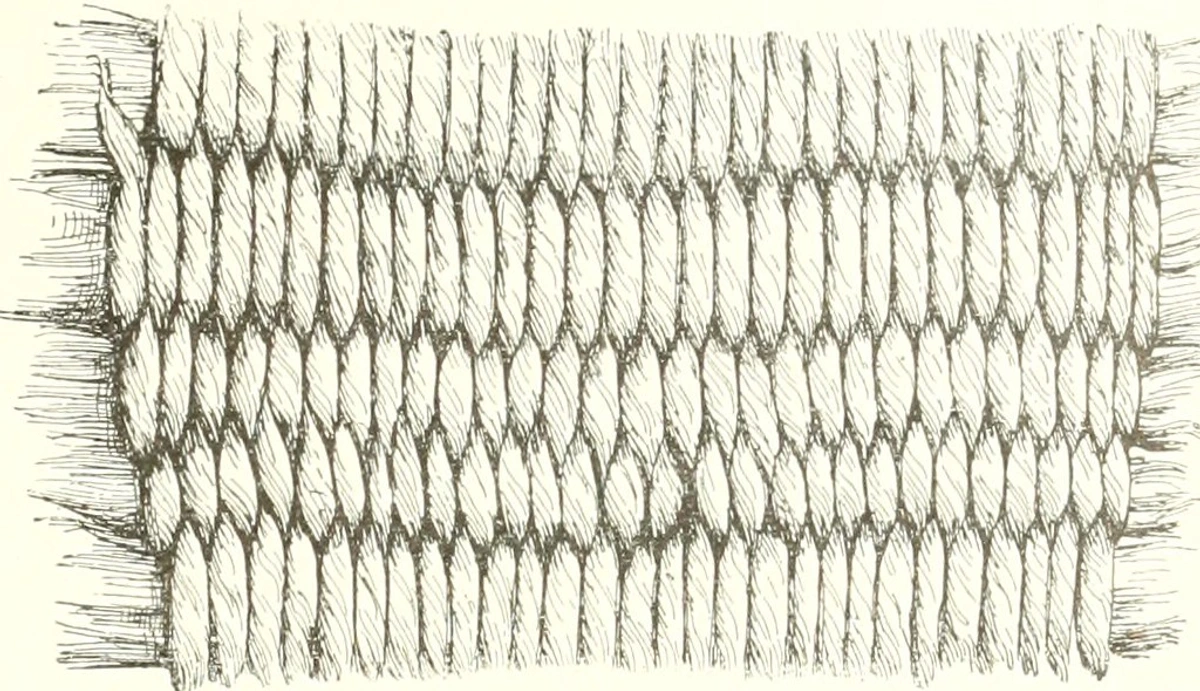
Delving into the distinction further reveals the sheer artistry and the incredible craftsmanship of the medieval period. The Bayeux Tapestry primarily employs two medieval embroidery stitches: stem stitch for outlining figures and inscriptions, and laid-and-couched work for filling in larger areas. Imagine the precision, patience, and sheer manual labor required to execute this across a 70-meter canvas! This level of skill and artistic endeavor is often associated with Opus Anglicanum, Latin for "English Work," a term for the high-quality medieval English embroidery renowned throughout Europe. This was not a minor craft; Opus Anglicanum was a luxury art form, commissioned by popes and kings, and its intricate gold-thread work and vibrant colors graced ecclesiastical vestments and aristocratic garments across the continent. While the Bayeux Tapestry uses simpler wool threads rather than the more opulent gold and silver often found in Opus Anglicanum, it undeniably shares the characteristic narrative ambition, meticulous craftsmanship, and distinctive stylistic traits of this celebrated English artistic tradition. This connection strongly supports the theory of Anglo-Saxon authorship, suggesting a continuity of highly developed textile art in England even under new Norman patronage. Laid-and-couched embroidery involves laying long threads across a surface and then stitching them down with smaller, perpendicular threads. This technique not only conserves the precious wool yarn (a significant economic factor in the 11th century, given the expense of dyeing and preparing wool) but also creates a distinct texture and durability that has allowed the tapestry to survive for nearly a thousand years. It also allowed for a more 'painterly' effect, achieving broader areas of color than stem stitch alone could manage efficiently.
The materials themselves speak volumes about the ingenuity and resourcefulness of the era. The linen ground, a tabby-woven fabric, would have been meticulously prepared, likely bleached and then stretched tautly, acting as a monumental canvas awaiting its narrative. The wool yarns, derived from local sheep, were then painstakingly dyed with natural pigments. The process of producing these dyes was an art in itself, often involving complex extraction methods, mordants (substances that help dyes fix to fibers), and repeated immersions to achieve desired saturation. Woad provided a range of blues, from pale sky to deep indigo, often associated with depth and distance; madder yielded an array of reds, from earthy terracotta to rich crimson, perhaps symbolizing the blood and drama of battle; and weld offered a spectrum of yellows, often seen as golden or olive hues, which could denote royal status or sunny landscapes. These natural dyes were not only costly and labor-intensive to produce but also offered a relatively limited, yet distinctively vibrant, palette. This restriction wasn't a flaw; it was an early masterclass in making the most of available resources, and it makes you appreciate the artistry even more when you consider the technological limitations of the time. The dedication to this meticulous craft is astounding and offers a window into the broader history of textile art during the medieval period. Every hue tells a story of medieval agrarian life, sophisticated chemical knowledge, and careful economic management of precious resources.
Quick Facts: The Bayeux Embroidery at a Glance
Before we dive into the stitches and scenes, here are the quick facts in a table, because sometimes a table is just what you need to grasp the essentials of this monumental work:
Feature  | Description |
|---|---|
| Official Classification | A monumental wool embroidery on linen, not a woven tapestry. |
| Overall Dimensions | Approx. 68.38 meters long and 50 cm tall (224 ft × 1.6 ft). |
| Estimated Creation Date | Around 1070s, within a decade of the Battle of Hastings. |
| Primary Materials | Dyed wool yarn (madder, woad, weld) embroidered on a tabby-woven linen ground. |
| Core Subject Matter | The Norman Conquest of England in 1066, primarily from a Norman perspective. |
| Current Home | Musée de la Tapisserie de Bayeux in Bayeux, Normandy, France. |
| Likely Patron | Widely believed to be Bishop Odo of Bayeux, William the Conqueror's half-brother. |
| Dominant Techniques | Stem stitch for outlining, laid-and-couched work for filling. |
| Storytelling Style | Continuous narrative, proto-cinematic scroll, sophisticated visual propaganda. |
| Construction | Nine main panels of unbleached linen, meticulously stitched together. |
| Probable Makers | Highly skilled Anglo-Saxon needlewomen, likely in Canterbury or Winchester. |

The Genesis of a Masterpiece: Origins and Commissioning
Before we dive further into the stitches and scenes, it's crucial to understand who conceived of this masterpiece and why. While the exact historical records are scarce, scholars widely attribute the commissioning of the Bayeux Tapestry (or more accurately, the Bayeux Embroidery) to Bishop Odo of Bayeux. Odo was not just a powerful cleric; he was William the Conqueror's half-brother, a key figure in the Norman Conquest, and a man with a vested interest in legitimizing William's claim to the English throne. The tapestry's pro-Norman bias makes perfect sense when you realize it was likely made for Odo's newly constructed Bayeux Cathedral, intended to be displayed publicly, perhaps even on feast days, to educate and influence a largely illiterate populace. Imagine walking into that cathedral and seeing this colossal "comic strip" unfurl before your eyes, telling the story of the conquest from the victor's perspective. Scholars believe it would have been hung along the nave, its continuous narrative guiding viewers through the events, much like monumental wall paintings in other Romanesque churches. This was not just a decorative item; it was a potent instrument of political and religious authority, using visual narrative to shape perceptions and solidify William's claim to the English throne. It was a strategic piece of medieval propaganda, designed to secure the narrative and cement William's authority, painting him as a divinely chosen monarch and Harold as a perjurer.
The Hands Behind the Threads: Anglo-Saxon Artistry under Norman Patronage
Here’s a truly fascinating cultural nuance: while the tapestry was almost certainly commissioned by a Norman patron for Norman purposes, the actual embroiderers are believed to have been highly skilled Anglo-Saxon women, likely working in a renowned workshop in England (perhaps Winchester or Canterbury). This creates a profound layer of cultural interplay – the conquered crafting the story of their conquerors. Evidence for Anglo-Saxon authorship comes from stylistic elements consistent with pre-Conquest English art, such as the distinct way horses and human figures are rendered (often with elongated limbs and stylized poses), as well as several Latin spelling errors in the tituli (captions) that suggest a non-Latin-speaking hand recording spoken Latin. This intricate piece of cultural heritage around the world is a prime example of how art can serve political ends, even with a subtle, dissenting 'whisper' from its creators, which we'll delve into later.
The Story Unfurls: A Proto-Cinematic Chronicle of Kings and Conquest
Imagine you wanted to document a world-changing event today, but you had no cameras, no internet, no printing press. How would you do it? You might create a mural, or write an epic poem. In the 11th century, they stitched a masterpiece. It's a testament to human ingenuity in storytelling that, even with limited means, they crafted such a compelling and enduring visual record. For me, it truly brings to life the essence of visual storytelling techniques in narrative art.
The Bayeux Tapestry chronicles the events leading up to the Norman Conquest of England in 1066, a narrative that begins even before the thunder of battle. It’s the story of two pivotal figures—Harold Godwinson, the powerful Earl of Wessex and heir to England's most influential noble family, and William, the ambitious Duke of Normandy and a formidable military leader—and their clash over the English throne, steeped in claims, oaths, and perceived betrayals. The narrative unfolds across a series of vibrant scenes, complete with Latin text captions (tituli) that act like subtitles, guiding a largely illiterate audience through the intricate political and military drama. These tituli are invaluable for interpreting the narrative, though as we'll see, their brevity often leaves room for fascinating scholarly debate.
The Tapestry's Enduring Journey: Conservation and Rediscovery
It’s a fragile survivor. For centuries, it was just brought out once a year to be hung in the Bayeux Cathedral. The fact that it still exists, let alone in such incredible condition, is a small miracle, a series of fortuitous circumstances and dedicated interventions that ensured its survival against the odds. From near-destruction during periods of conflict to its careful preservation in modern times, the tapestry's journey is as compelling as the story it tells.
From its creation, perhaps within a decade of the Battle of Hastings, the tapestry has weathered centuries. During the French Revolution, it was almost cut up to be used as covers for military wagons—a truly horrifying thought! Thankfully, quick-thinking local officials intervened. Later, during World War II, it was famously targeted by the Nazis, who saw it as a symbol of Germanic heritage and attempted to confiscate it for their own propagandistic purposes, moving it to Paris, then to a secure chateau. Its ultimate rescue by French Resistance and Allied forces is another chapter in its miraculous survival story. Today, it resides in the specially designed Musée de la Tapisserie de Bayeux, where it is meticulously cared for in a climate-controlled environment, its fragile linen and wool safeguarded for future generations. Modern conservation techniques involve strict environmental controls, limited light exposure, and ongoing research into textile preservation, all aimed at ensuring this unparalleled historical document continues to inspire and inform. It's a testament to the collective human will to preserve beauty and history, reminding me of the countless efforts to safeguard cultural heritage around the world.
Scholarly Debates and Enduring Mysteries
Despite nearly a millennium of study, the Bayeux Tapestry continues to spark vigorous debate among historians and art scholars. One of the most persistent questions revolves around its exact completion date and location; while Winchester or Canterbury are favored, the precise workshop remains elusive. Then there's the mystery of its missing end—what exactly would the final panels have depicted beyond William's coronation? Was there a scene of him receiving homage from the English nobility, or perhaps a depiction of the new Norman order being established?
Another fascinating area of scholarship concerns the extent of Anglo-Saxon influence on the narrative and artistic choices, especially within the friezes. How much subtle subversion could the Anglo-Saxon embroiderers weave into a Norman-commissioned piece? For instance, the enduring visual ambiguity surrounding Harold Godwinson's death (a central element often debated: was it an arrow to the eye, a sword blow, or a combination?) is a prime example of where interpretation diverges. These aren't just academic squabbles; they highlight the tapestry's enduring power to provoke interpretation and to remind us that history, especially when told through art, is rarely a simple, one-sided affair. The tapestry, therefore, isn't just a historical document; it's a living canvas for ongoing academic inquiry.
The tapestry reads from left to right, like a scroll, unfolding its monumental narrative panel by panel. It starts in 1064 when the King of England, Edward the Confessor, sends his most powerful earl, Harold, on a mission to Normandy. Things go wrong almost immediately. Harold is shipwrecked, taken captive, and eventually handed over to Duke William.
Here’s a simplified breakdown of the plot:
- Harold’s Fateful Trip to Normandy (Scenes 1-10): The tapestry begins in 1064, with King Edward the Confessor sending his most powerful earl, Harold Godwinson, on a mission to Normandy. The precise nature of this mission is one of the enduring mysteries and debates among historians. Was Harold truly sent by Edward to pledge fealty to William and confirm him as Edward’s successor, as the Normans (and thus the tapestry) vociferously claim? Or was it a diplomatic mission that went spectacularly wrong, perhaps to retrieve Anglo-Saxon hostages held by William, or even to arrange the return of Edward's nephew, Edward the Exile? Contemporary Anglo-Saxon sources are notably silent on this embassy, making the Norman account (and the tapestry's depiction) the dominant, though biased, narrative. The tapestry, naturally, frames it in a way that unequivocally legitimizes William’s later actions, portraying Harold as an emissary willingly participating in a crucial diplomatic exchange rather than a hapless traveler. What I find fascinating here is how the narrative is so carefully constructed to support William's later actions, even from the very first scenes, immediately establishing a clear pro-Norman bias.Things, of course, go wrong almost immediately; Harold is shipwrecked on the coast of Ponthieu, a county in northern France, and captured by the local count, Guy of Ponthieu. This unexpected turn of events proves incredibly fortuitous for William, who quickly hears of Harold's predicament. After a ransom is paid (or perhaps negotiated as part of a larger power play), Harold is eventually handed over to Duke William, who ‘rescues’ him from captivity—a seemingly benevolent act that strategically places Harold firmly in William’s debt and initiates a complicated power dynamic. It’s a classic move: rescue someone, then demand loyalty. This initial journey, far from a straightforward diplomatic mission, sets the stage for the dramatic conflicts to come, as Harold's fate becomes inextricably entwined with William's ambition for the English throne. The depiction of Harold being handed over to William under duress subtly underscores the manipulative nature of Norman diplomacy from the outset.
- The Sacred Oath (Scenes 18-23): This is a pivotal moment in the tapestry's narrative, perhaps the central justification for the Norman invasion, and one that resonates deeply with the religious beliefs of the medieval era. After his 'rescue,' William ensures Harold is firmly in his debt, then, critically, he forces Harold to swear a sacred oath. The precise terms are debated by historians, but it likely involved Harold promising to support William's claim to the English throne upon Edward’s death, and possibly even to guard Dover Castle and marry one of William's daughters. In a feudal society, such an oath was not merely a verbal agreement; it was a sacred, legally binding contract, witnessed by God and punishable by divine wrath if broken. To break such an oath was considered an act of profound sacrilege, inviting not just political condemnation but eternal damnation.The tapestry powerfully depicts Harold taking this oath over holy relics, which are visibly hidden beneath a cloth in the depiction. This visual detail is crucial, making the oath even more solemn and binding, as if God himself is a witness to the spiritual contract. For a medieval audience, an oath sworn on relics was an unbreakable bond, a spiritual contract. Breaking such an oath would invoke divine wrath and social condemnation, a fate far worse than mere social disgrace. The tapestry makes this explicit, visually emphasizing the sacred nature of the oath through the presence of Bishop Odo and other clerics. Whether Harold was coerced into this oath (which many historians believe, given his precarious position), genuinely intended to keep it, or was simply maneuvering for his own survival in a precarious situation, this act sets the stage for the dramatic conflict and becomes the cornerstone of William’s later propaganda, framing his invasion not as conquest, but as righteous retribution against a perjurer. This single act of perceived betrayal provided William with the moral high ground, a justification he meticulously exploited, and one that resonated profoundly with the Christian world of the 11th century, providing a powerful moral imperative for his invasion.
- Betrayal and Coronation (Scenes 24-34): Back in England, King Edward the Confessor dies in January 1066, leaving no direct heir. This plunges England into a succession crisis. While William claimed Edward had promised him the throne and Harold had sworn an oath to uphold this, the English Witenagemot (the Anglo-Saxon council of leading men, comprised of bishops, earls, and other nobles) had its own well-established traditions of electing a king, often from among the leading aristocratic families. This was a critical constitutional body, and its decision carried immense weight in Anglo-Saxon political thought.Ignoring the supposed oath and asserting their traditional right to choose their king, the English Witenagemot immediately crowns Harold Godwinson as their new monarch. The tapestry depicts Harold's coronation with a sense of haste and perhaps even usurpation—notice the slightly rushed appearance of the ceremony, and the subtle implication that the crown is being placed on a less-than-worthy head, contrasting sharply with the solemn, divinely sanctioned coronations of other monarchs. This clearly contrasts it with William's later, more 'legitimate' claim through divine sanction and broken promises. You can just feel the drama unfolding across the linen; William’s fury at this perceived betrayal is palpable, even before his depiction on the canvas. This act, in the Norman view, was a blatant act of perjury and a direct challenge to William's rightful inheritance, effectively igniting the fuse for invasion. The speed with which Harold was crowned, and the English lords' apparent disregard for any prior promises, fueled Norman outrage and provided immediate impetus for William to solidify his own claim through military force. The tapestry skillfully captures this sense of urgent betrayal and imminent retribution, setting the stage for a monumental confrontation. It's a masterclass in how visual narrative can subtly (or not so subtly) influence historical perception, here explicitly framing Harold's claim as illegitimate.
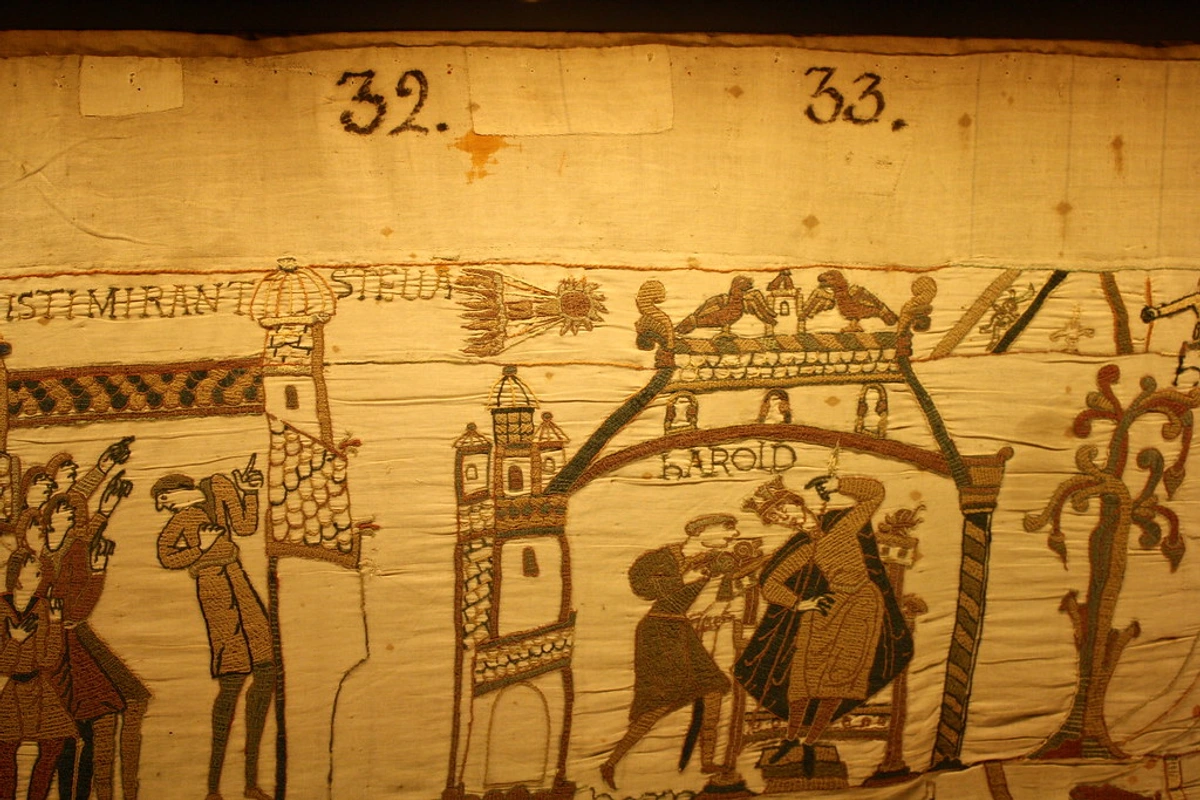
- The Comet (Scenes 34-36): Just a few months after Harold’s coronation, Halley's Comet makes a dramatic appearance in the sky, visible for several nights from April 24th to May 2nd, 1066. For a medieval populace, steeped in superstition and religious fervor, this celestial event was not merely a scientific curiosity but a terrifying omen, almost universally interpreted as a harbinger of doom or a sign of divine displeasure—often specifically linked to the downfall of kings and the collapse of kingdoms. History is rife with examples of celestial events being interpreted as portents, and the Bayeux Tapestry leverages this cultural belief with remarkable effectiveness to solidify its pro-Norman message.The tapestry vividly depicts the people below pointing up, spooked, clutching at their hair in fear, their faces etched with anxiety. Harold himself is shown on his throne, receiving news of the comet, his expression suggesting deep unease, almost a premonition of his impending fate. The scene then quickly shifts to the ghost-like ships of the Norman fleet, subtly but powerfully connecting the omen to the impending invasion. This was celestial proof that something big and bad was about to happen, reinforcing the Norman narrative of divine judgment against Harold and foreshadowing his inevitable doom. It's a masterful stroke of visual storytelling, harnessing deep-seated fears and beliefs to bolster the conqueror's cause, presenting the invasion as a divinely sanctioned inevitability and Harold's downfall as cosmic justice. The emotional impact of this scene on a medieval viewer would have been profound, directly linking natural phenomena to political destiny.
- The Norman Invasion Preparations (Scenes 37-52): William, absolutely furious at Harold's perceived betrayal, immediately begins preparations for an invasion. This was no small feat; it was an undertaking of truly monumental scale, requiring meticulous planning and execution in an era devoid of modern technology. The tapestry dedicates significant sections to this immense logistical effort, giving us invaluable insights into 11th-century military organization and strategic planning:
- Shipbuilding: We see scenes of felling trees, shaping timber, and constructing a massive fleet of purpose-built transport ships. This was a formidable undertaking for the 11th century, considering they had to build hundreds of vessels capable of carrying men, horses, and supplies.
- Army Assembly: William assembled a formidable multinational army from various fiefdoms across Normandy, Brittany, Flanders, and beyond, attracting mercenaries and knights with promises of land and riches in England. This diverse force, comprising heavy cavalry, archers, and infantry, reflected the military innovations of the Norman state.
- Loading Supplies: The tapestry meticulously depicts the loading of supplies, arms (including an abundance of bows and arrows, crucial for the Norman fighting style), and crucially, horses – the elite Norman cavalry – onto the ships.
- The Crossing: The scenes depicting the armada crossing the English Channel, from Dives-sur-Mer to Pevensey Bay, are a formidable display of military might and determination, showing a well-organized, disciplined force ready to execute a monumental strategic objective. The depiction of the ships, often with vivid animal head figureheads, underscores the continuing influence of Viking maritime traditions on Norman culture. It’s a perilous journey, reliant on fair winds and meticulous navigation, yet the tapestry conveys a sense of inexorable purpose.
Think about the sheer audacity of this undertaking: thousands of men, hundreds of horses, and all their provisions had to be transported across a treacherous body of water, reliant entirely on sail and oar. It makes you think about the sheer scale of mobilization in an era without modern machinery, and the immense pressure on the artisans and laborers involved, a testament to William's organizational genius. This was not merely a spontaneous raid but a carefully orchestrated military campaign, depicted with striking clarity. - The Battle of Hastings: The epic climax of the narrative, and arguably one of the most significant battles in English history. On October 14, 1066, the Norman and English armies clashed at the Battle of Hastings, fought on Senlac Hill (often referred to simply as 'Battle Abbey' today). The tapestry shows the brutal, day-long battle in gruesome detail—a chaotic mêlée of cavalry charges, infantry clashes, and archery. We see horses falling, soldiers being disemboweled, decapitated, and archers letting loose a storm of arrows against the formidable English shield wall, a defensive formation of tightly packed infantry (often housecarls, the king's elite guard) with interlocking shields that initially proved almost impervious to Norman attacks. This shield wall, a testament to Anglo-Saxon martial prowess, held firm for many hours against repeated Norman assaults, frustrating William's forces.The Normans struggled for hours against this resilient English defense, taking heavy casualties. The tapestry depicts the Norman tactic of feigned retreats, drawing segments of the English line out of formation as they broke ranks to pursue, which ultimately led to the shield wall's collapse as gaps appeared. This controversial tactic, debated by historians for centuries as either a deliberate stratagem or a desperate regrouping by beleaguered Norman forces, ultimately proved decisive against the otherwise formidable English defense. It’s a visceral, chaotic portrayal of medieval warfare, designed to impress upon the viewer the ferocity of the conflict and the eventual triumph of Norman strategy and overwhelming force over Anglo-Saxon steadfastness. It makes me wonder about the chaos and courage of those caught in the maelstrom, and the sheer endurance required on that fateful day.
- The Death of King Harold and Aftermath (Scenes 78-End): This is perhaps the most famous, and certainly the most intensely debated, scene in the entire tapestry, and a personal favorite for its sheer narrative ambiguity. The accompanying Latin text unequivocally declares, "HIC HAROLD REX INTERFECTUS EST" (Here King Harold has been killed). Yet, the visual representation offers a tantalizing enigma that has captivated scholars and enthusiasts for centuries.Above the inscription, one figure is shown pulling an arrow from his eye, while immediately adjacent, another figure is being struck down by a Norman knight's sword. Is Harold the one with the arrow? The one with the sword? Or, as many historians now suggest, are these two sequential moments representing Harold's fatal wounding by an arrow and his subsequent killing by a Norman knight (possibly Eustace of Boulogne, as implied in some accounts)? This deliberate visual enigma transforms a moment of historical fact into an enduring mystery, leaving us to ponder the specifics of fate and the power of visual storytelling to both inform and obscure. The scholarly debate over Harold's death often highlights the tapestry's capacity for calculated ambiguity, allowing for multiple interpretations while still conveying the ultimate outcome. The final extant scenes show the English forces fleeing in disarray, signaling the decisive Norman victory and the complete collapse of Anglo-Saxon resistance on the battlefield. This is a dramatic, brutal, and utterly unforgettable end to the story's central conflict.The very end of the cloth is missing, a tantalizing historical cliffhanger. However, it is widely believed to have concluded with William's triumphant entry into London and his coronation as King of England on Christmas Day, 1066, at Westminster Abbey. This momentous event solidified his claim and irrevocably marked the end of Anglo-Saxon rule, ushering in the Norman era in England and forever reshaping the course of British history. It leaves us with a sense of closure, even if we have to imagine the final stitches that would have depicted the ultimate vindication of William’s conquest and the formal establishment of Norman authority. This missing final act only adds to the tapestry's allure, inviting endless speculation about the precise imagery that would have crowned William's triumph.
When we think of grand narratives commissioned by rulers to immortalize their deeds, we might think of the Terracotta Army protecting Qin Shi Huang in China, or Roman triumphal arches. The Bayeux Tapestry fits perfectly into this tradition of using monumental art as a tool of power and legitimation. It begs the question: who controls the narrative? And more importantly, whose narrative gets to be preserved for a thousand years? This timeless use of art as propaganda is a fascinating thread to pull, much like those in the Bayeux Tapestry itself, connecting ancient narratives to our own contemporary media, where stories are constantly being shaped and reshaped.
Who's the Hero? A Masterclass in Propaganda
Here's where the narrative becomes less a historical record and more a masterclass in political maneuvering and visual rhetoric. This isn't an objective news report, mind you. No, this is history written, or rather, stitched, by the victors. The Bayeux Tapestry is, unequivocally, a piece of medieval propaganda. The tapestry was almost certainly commissioned by Odo, Bishop of Bayeux, who was not only a powerful cleric but also William the Conqueror's half-brother. Knowing this, the narrative immediately takes on a distinct bias, carefully constructed to present the Norman invasion as a divinely sanctioned, perfectly justified response to Harold's perceived betrayal.
The Norman Point of View: Justifying Conquest
The tapestry’s propagandistic intent is clear in its portrayal of the key players and their actions. It is, after all, a victor's history, crafted to legitimize William's conquest and paint Harold as a treacherous usurper. The visual rhetoric is masterful, subtly guiding the viewer's interpretation through every scene, often through subtle visual cues and framing. Consider the deliberate emphasis on gestures, facial expressions, and even the relative positioning of figures on the canvas—all employed to convey specific messages about legitimacy, loyalty, and betrayal. For instance, William is often depicted on horseback, commanding and decisive, while Harold is shown receiving omens or in less active roles, emphasizing his reactive rather than proactive stance. It's a calculated effort to shape public opinion and reinforce the new order, a common practice throughout history where art serves the powerful. Think about how many historical narratives are dictated by those who ultimately won the battles, literally and figuratively. This timeless manipulation of narrative, seen across historical periods, is a fascinating thread to pull, much like those in the Bayeux Tapestry itself, connecting ancient propaganda to our own contemporary media narratives. It makes me reflect on how stories, particularly visually compelling ones, shape our understanding of the past and present, much like an art history timeline helps us understand artistic evolution. For example, the repeated depiction of William's standard (a dragon banner, a symbol of Wessex, ironically, indicating his claim to the English throne) and the consistent portrayal of his military strength are all part of this visual argument, underscoring his divine right and martial superiority.
- Harold Godwinson: The Oath-Breaker. Harold's journey to Normandy, his unfortunate shipwreck, and especially his forced oath to William are all heavily emphasized as moments of divine intervention and a binding agreement. The narrative skillfully frames his subsequent coronation by the English lords as a perfidious act, a blatant violation of a sacred vow sworn over holy relics. This portrayal transforms William's invasion from a naked land-grab into a righteous crusade, a divinely sanctioned mission to punish a perjurer and reclaim his rightful inheritance. The tapestry wants you, the viewer, to feel that Harold had it coming, that his fate was a direct consequence of his perceived perfidy. Even minor details, like Harold accepting a feast from William or fighting alongside him against Conan II of Brittany, are visually presented to imply a subordinate relationship, subtly undermining Harold's independent authority before the conquest. This careful crafting of Harold's image as a vassal, rather than an equal, served to pre-emptively discredit any future claim he might make to the English throne.
- William the Conqueror: The Decisive, Pious Leader. In stark contrast, William is consistently depicted as a figure of authority, piety, and resolute determination. We see him consulting with his advisors, leading his troops with calm determination, and, crucially, portrayed as having God firmly on his side (note the presence of clerics like Bishop Odo, the blessing of his fleet, and even St. Michael the Archangel seemingly overseeing events in the frieze). His actions are always presented as a legitimate response to Harold's transgression, cloaked in religious and feudal righteousness. The entire narrative functions as a visual legal brief, arguing for William's divine right to rule England, meticulously constructing a justification for an act of conquest that would forever change the course of English history.
Subtle Subversion: The Anglo-Saxon Whisper
But here's a truly fascinating twist, one that I find endlessly intriguing and a testament to the resilience of artistic expression. While the tapestry's overarching message is undeniably Norman propaganda, scholars widely believe the actual embroiderers were Anglo-Saxon women, likely from a workshop in Kent, England, or possibly Winchester or Canterbury. The irony isn't lost on me! These artists, working under Norman patronage, may have subtly woven in their own dissenting voices, their own Anglo-Saxon 'whispers' of lament or subversion.
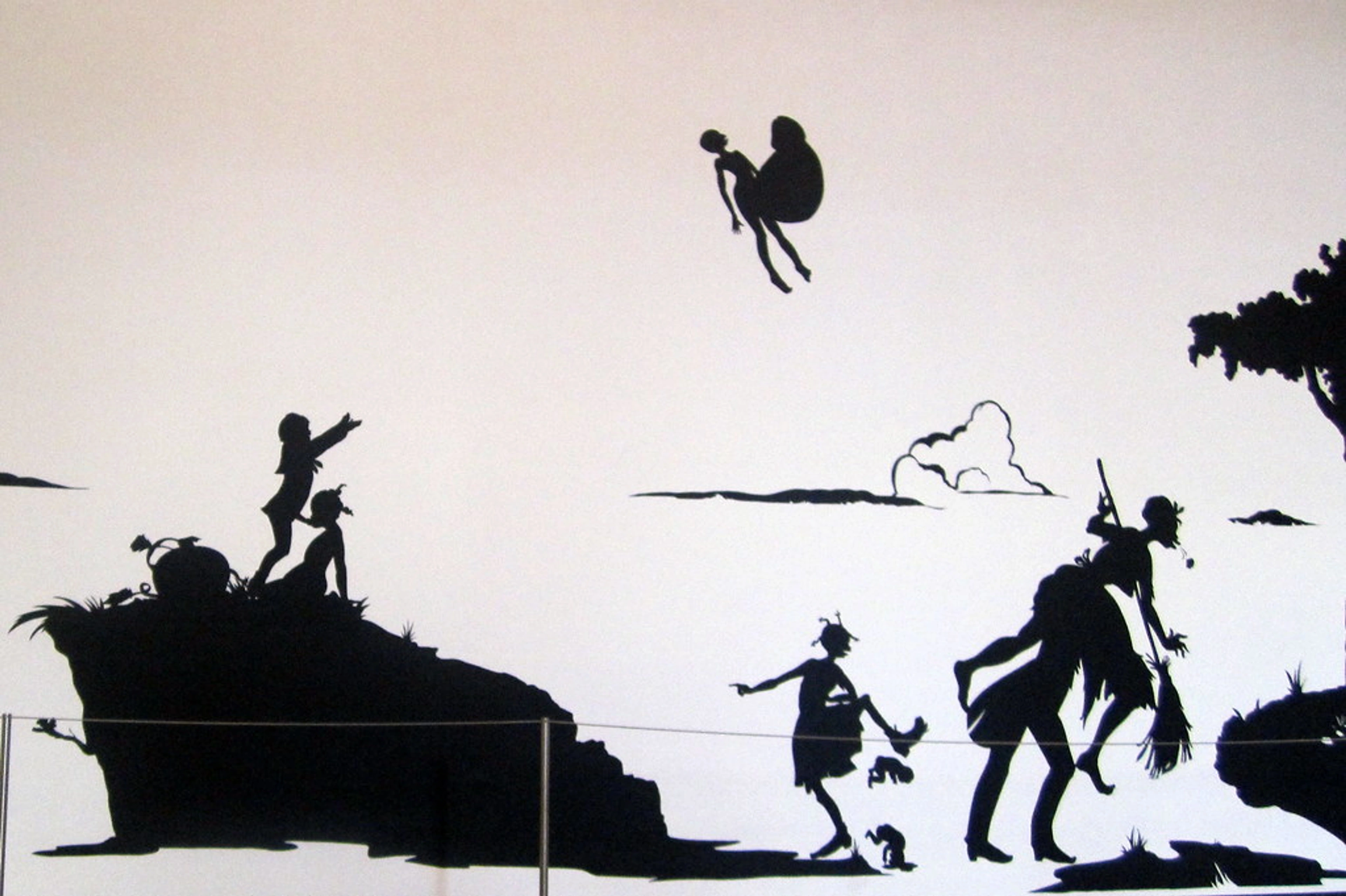
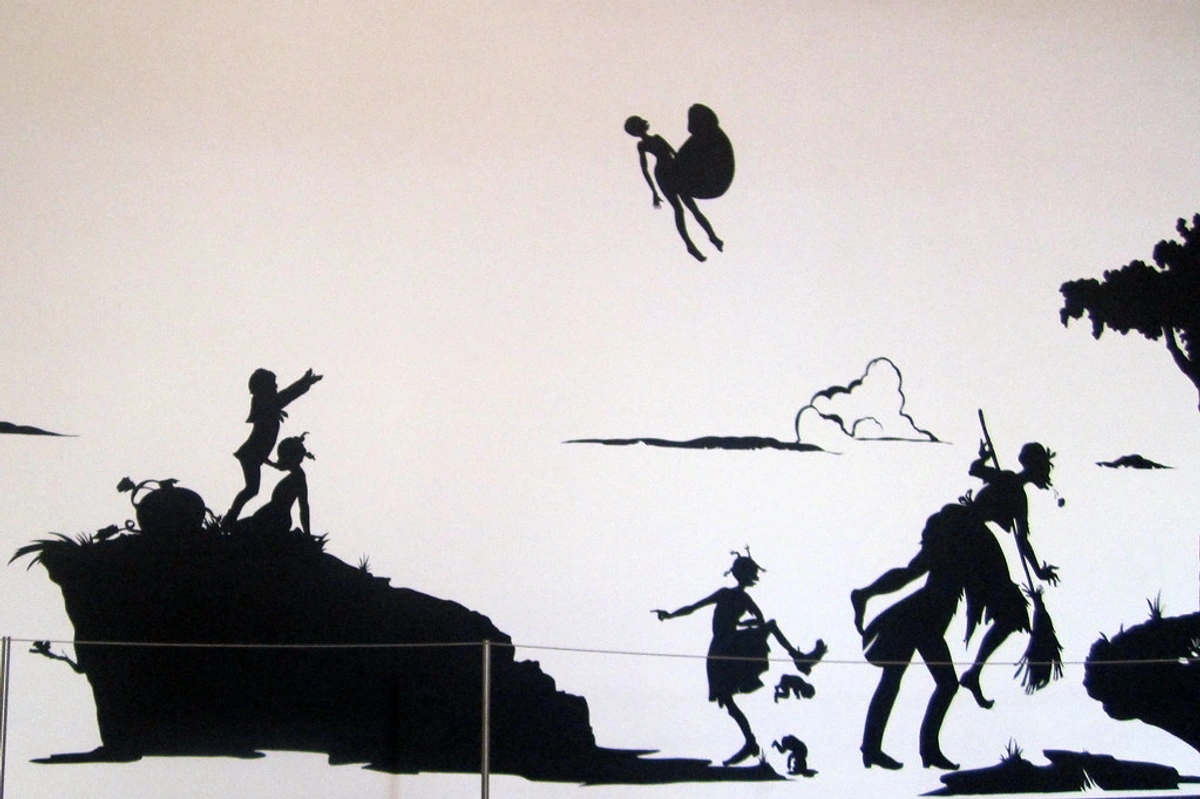
Evidence for Anglo-Saxon authorship comes from stylistic elements consistent with pre-Conquest English art, such as the distinct way horses and human figures are rendered (often with elongated limbs and stylized poses), as well as several Latin spelling errors in the tituli (captions) that suggest a non-Latin-speaking hand recording spoken Latin. The borders, or frieze, of the tapestry are particularly rich with these potential subversions. These upper and lower margins are filled with allegorical fables, fantastical animals, and sometimes scenes that seem to comment wryly or tragically on the main action above. For example, in scenes depicting Norman atrocities—like the burning of a house, which is quite vividly shown with a woman and child escaping, their home aflame—the frieze might show animals devouring corpses, or classical fables that imply hubris and downfall, such as the fox and the crow. These subtle visual commentaries can be interpreted as a lament for the vanquished, a quiet protest embedded within the official narrative. There are also moments where the border figures mirror the main action in a way that could be interpreted as a subtle lament, a visual sigh from the conquered. Perhaps these margins were where the defeated could whisper their own story, a complex interplay that suggests one narrative in the center and hints at another in the periphery. It's a powerful reminder that even under duress, artists find ways to express nuanced truths, injecting their own perspective into a seemingly dominant narrative, a concept I find incredibly compelling in art history, much like the challenging and often subversive work of Kara Walker in contemporary art.


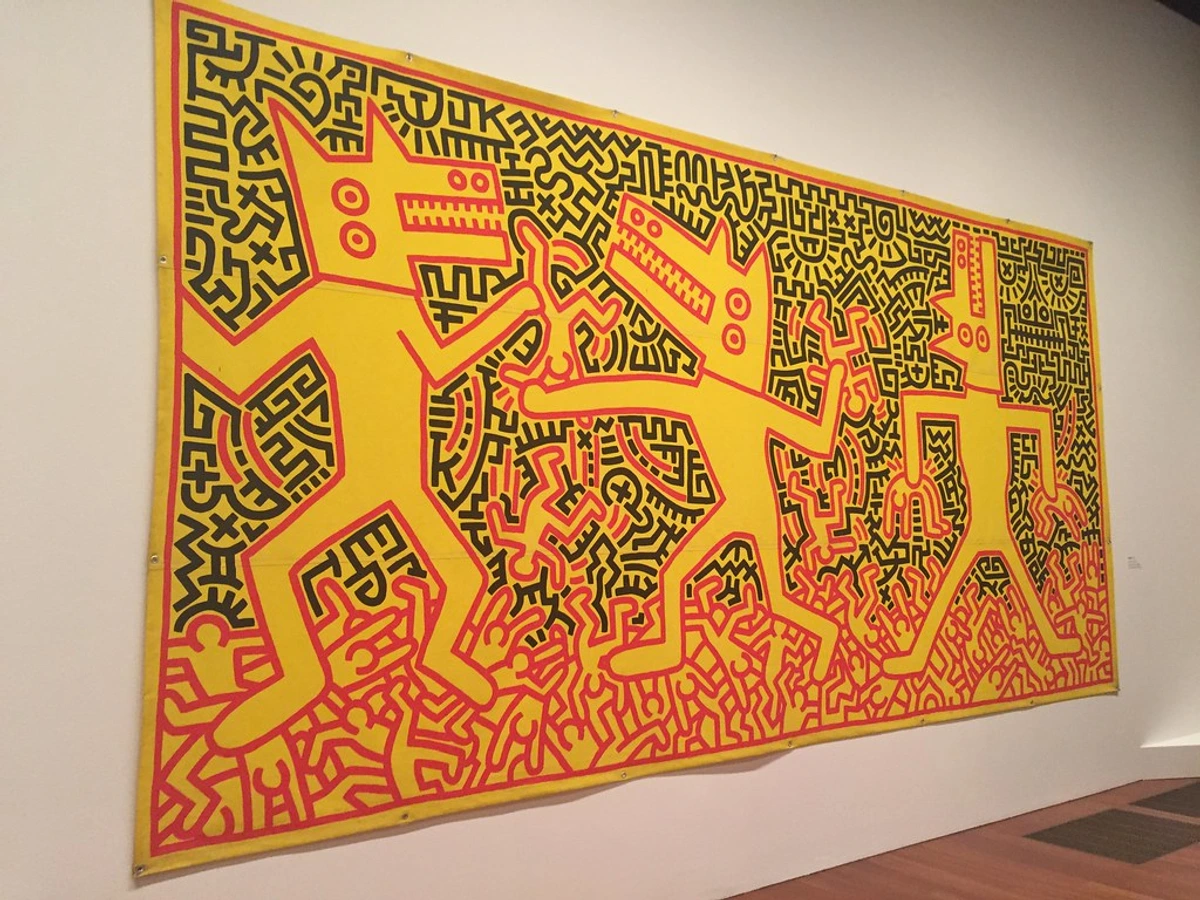
Even in contemporary art, artists like Keith Haring use bold outlines and a limited, vibrant palette to convey powerful narratives and emotions, much like the embroiderers of the Bayeux Tapestry did centuries ago. This enduring principle of visual communication transcends time and style.
The Bayeux Tapestry and the Norman Legacy
The Norman Conquest, so vividly depicted in this embroidery, was far more than just a change of kings; it irrevocably altered the course of English history, society, and culture. The tapestry itself, while created in England, became a powerful symbol of Norman rule. The new Norman elite brought with them French language and customs, which rapidly supplanted Anglo-Saxon English as the language of the court, administration, and law, fundamentally reshaping the English language we speak today, introducing thousands of French words that form the basis of much of our modern vocabulary. A new feudal system was firmly established, transforming land ownership and social hierarchies, with William distributing conquered lands to his loyal Norman barons, thereby establishing a new, centralized power structure. Norman architecture, with its grand castles and imposing cathedrals (often built on the sites of older Anglo-Saxon minsters), began to dominate the landscape, replacing many Anglo-Saxon structures. This monumental shift, orchestrated by William the Conqueror, led to a cultural synthesis that would define England for centuries, making the Bayeux Tapestry not just a record of a battle, but a visual testament to the profound and lasting impact of conquest on a nation's identity, language, and social fabric. It’s a stark reminder that history is often written (or stitched) by the victors, and its legacy stretches far beyond the battlefield.
Stylistic Influences and Romanesque Art
The Bayeux Tapestry, while utterly unique, is deeply rooted in the artistic traditions of its time. It draws heavily from Anglo-Saxon manuscript illumination, particularly evident in the expressive quality of its figures, the linear style of drawing, and the use of continuous narrative, where different scenes flow seamlessly into one another without clear breaks, characteristic of early narrative art forms. The distinctive "Wormian" style, characterized by interlacing patterns and zoomorphic motifs (animal forms, often serpentine and intertwined) found in Anglo-Saxon metalwork and manuscripts, can be subtly glimpsed in some of the tapestry's decorative elements, especially within the borders. Romanesque wall paintings and monumental sculpture also influenced its compositional strategies, emphasizing clear readability and didactic purpose, designed to communicate complex narratives to a largely illiterate audience. It bridges the gap between earlier manuscript art and later narrative painting, offering a fascinating snapshot of artistic evolution in the 11th century, demonstrating a remarkable synthesis of indigenous Anglo-Saxon and continental European Romanesque styles. This fusion of artistic traditions is one of its most compelling attributes.

Artistic Choices: Color, Composition, and Impact
The tapestry’s artistic strength extends far beyond its historical narrative; it's a masterclass in visual communication. The limited palette—a restrained collection of terracotta reds, blue-greens, golden yellows, and olive greens (derived from natural dyes like madder, woad, and weld)—is incredibly effective. Far from being a constraint, this choice enhances clarity and impact, making the scenes pop and the action intelligible from a distance. It's a prime example of how artists, even centuries ago, understood how artists use color not just for realism, but for symbolic meaning and emotional resonance. For instance, red is often used for emphasis, battle, and intensity, perhaps even signifying the bloodshed to come, while blue-green might delineate land or sea, or even denote different groups of soldiers or architectural elements. The strong outlines and block colors give it a graphic, almost modern, quality, demonstrating a sophisticated understanding of visual impact even with rudimentary means. As an artist working with vibrant, limited palettes myself, I find a deep connection with this approach, seeing how effective communication can arise from thoughtful constraint. You can find similar approaches to color and impact on my /buy page, where every choice is intentional.
The composition, too, is masterful, guiding the eye across the sprawling canvas, a sequential flow of events much like a modern film strip. This "continuous narrative" technique, where different scenes unfold without clear breaks, creates a dynamic, unfolding story that pulls the viewer along. The embroiderers employ a variety of visual cues to indicate movement, emotion, and the passage of time. Overlapping figures suggest crowds and depth, creating a sense of bustling activity, while repeated motifs and figures (like the comet appearing in multiple panels or the recurring depiction of Bishop Odo) reinforce narrative continuity and highlight key characters. Even rudimentary techniques like foreshortening are used to add dynamism, particularly to the horses, giving them a remarkable sense of powerful motion for the era, reminiscent of later equestrian art like that of Degas.

It truly functions as a proto-cinematic scroll, drawing the viewer's gaze from one dramatic moment to the next, a testament to its brilliant visual storytelling techniques in narrative art, especially considering the limited understanding of definitive guide to perspective in art in the 11th century.
Beyond the Canvas: The Friezes and Allegories
While the central narrative captures the grand historical sweep, the upper and lower borders—the friezes—deserve special attention. These margins are not merely decorative elements; they are teeming with allegorical fables, mythical beasts, scenes of daily life, and sometimes, stark commentaries on the events unfolding in the main register. We can categorize the frieze content into several types: explanatory (clarifying or elaborating on the main scene, like a horse about to trip over an obstacle), didactic (offering moral lessons, often through animal fables), symbolic (using animals or fables to represent abstract ideas like cunning or misfortune), and even subversive (offering a counter-narrative or lament from the perspective of the conquered, particularly prominent in battle scenes). In scenes depicting Norman atrocities, for example, the lower border often shows animals devouring human corpses or dismembered bodies, serving as a grim, visceral reminder of the human cost of war. These subtle additions are often interpreted by scholars as potential Anglo-Saxon 'whispers' of lament or subversion, a way for the artists to inject a different emotional tone or perspective into the dominant Norman narrative. It's a fascinating layer of complexity, hinting at a dual narrative playing out on the same canvas, a testament to the enduring power of art to express nuanced truths.
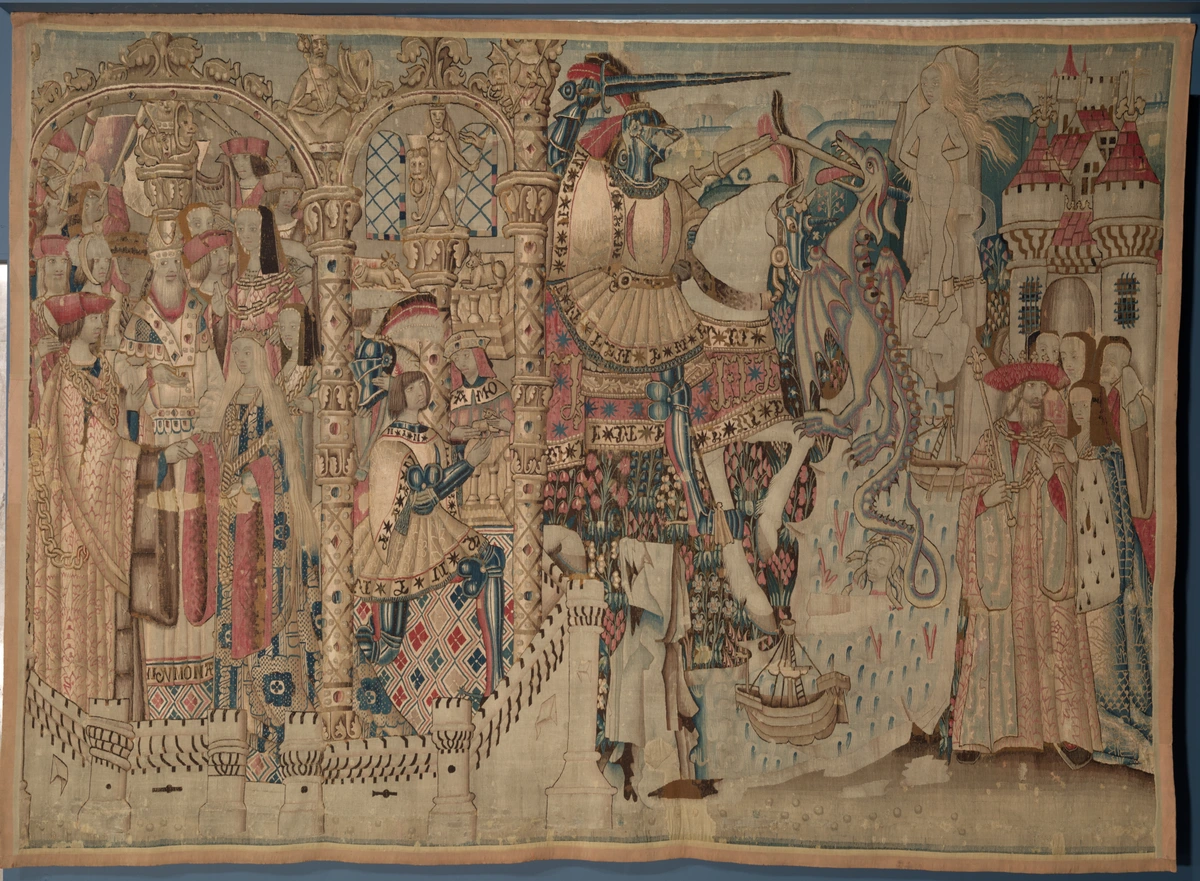
To properly appreciate the Bayeux Tapestry in its unique embroidered form, it's helpful to contrast it with actual woven tapestries, like this Renaissance example:

This contrast helps solidify why calling the Bayeux Tapestry an "embroidery" isn't just a technical quibble; it highlights the distinct artisanal process and the unique character of its creation. To further clarify, let's look at how it compares to other textile narrative arts:

Feature | Bayeux Embroidery | True Woven Tapestry |
|---|---|---|
| Technique | Stitched onto a separate linen ground | Woven directly into the warp and weft |
| Foundation | Finished plain linen fabric | Loom-threaded warp (vertical threads) |
| Yarn Application | Wool yarns applied with needles | Weft yarns (horizontal) woven through warp |
| Flexibility | More freedom for stitched detail | Design dictated by weaving structure |
| Material Use | More efficient use of costly dyed wool | Can be more material-intensive |
| Examples | Bayeux Tapestry | Medieval Unicorn Tapestries |
The Bayeux Tapestry: Physicality and Construction
Beyond the narrative and artistic choices, the sheer physical construction of the Bayeux Tapestry is awe-inspiring. It's made from nine main panels of unbleached tabby-woven linen, meticulously stitched together, ranging in length from 4.75 meters to 13.9 meters. The total length, as we know, is nearly 70 meters (about 230 feet), and it stands at a remarkably consistent height of approximately 50 centimeters (around 20 inches) throughout its entire run.
Physical Dimensions and Workshop Organization
Imagine the logistics of sourcing such a vast amount of quality linen and wool, preparing it, and then managing such a monumental artwork in a medieval workshop! The consistency of the stitching and design across such a huge expanse suggests a highly organized production, likely under the close supervision of a master embroiderer and a team of skilled craftswomen. It wasn't just a creative endeavor; it was a massive industrial project for its time, requiring immense coordination of labor, materials, and artistic direction. Imagine the challenge of maintaining continuity and a unified vision across nine distinct panels, especially with the limited communication and organizational tools available in the 11th century! The sheer scale of the undertaking points to a well-structured workshop, possibly with a division of labor: some embroiderers outlining the figures and inscriptions, others filling in the larger areas with laid-and-couched work, and perhaps a master artist or designer overseeing the entire narrative flow and composition. This level of collaborative effort, demanding both artistic vision and practical management, speaks volumes about the sophistication of medieval craftsmanship and project management – a true feat of artistic and logistical coordination that I find truly remarkable.
A Closer Look: Iconic Scenes and Details
To truly grasp the genius of the Bayeux Tapestry, you really need to zoom in and examine the details. The embroiderers were absolute masters at conveying intense action, nuanced emotion, and intricate daily life with surprisingly few stitched lines. It’s a lesson in economic storytelling that still resonates today.
Scene Spotlight: Medieval Daily Life and Warfare
Harold's Journey to Normandy (Scenes 1-10)
The very beginning of the tapestry sets the stage, not just for the political drama, but for vivid glimpses into everyday medieval life. We see Harold and his retinue riding towards Bosham Church in Sussex, a falconer with his bird, men dining, and then Harold embarking on his ship. These early scenes are rich in details of travel, architecture (notice the distinctive Anglo-Saxon timber buildings with their characteristic triangular gables and round-headed windows, offering invaluable insights into pre-Conquest construction and village life!), and social customs of the time. We see servants, falconers (falconry being a popular aristocratic pastime and a sign of status), and even the unique hairstyles and clothing of the era, providing invaluable visual information for historians about 11th-century Anglo-Saxon society. The ships themselves, with their distinctive Viking-era design – reflecting both Anglo-Saxon and Norman maritime heritage, a testament to the enduring influence of Norse seafaring – are a crucial record of the maritime technology of the period, demonstrating their prowess on the sea. These longships, adapted from earlier Norse designs, were versatile vessels, crucial for trade, raiding, and eventually, the Normans' ability to project power across the Channel. The tapestry offers invaluable visual data on their construction, rigging, and capacity, acting as a historical blueprint. It’s a captivating opening that immediately immerses you in the 11th-century world, offering both historical context and charming vignettes of daily existence before the storm of conquest hits.
The Norman Feast (Scene 48)
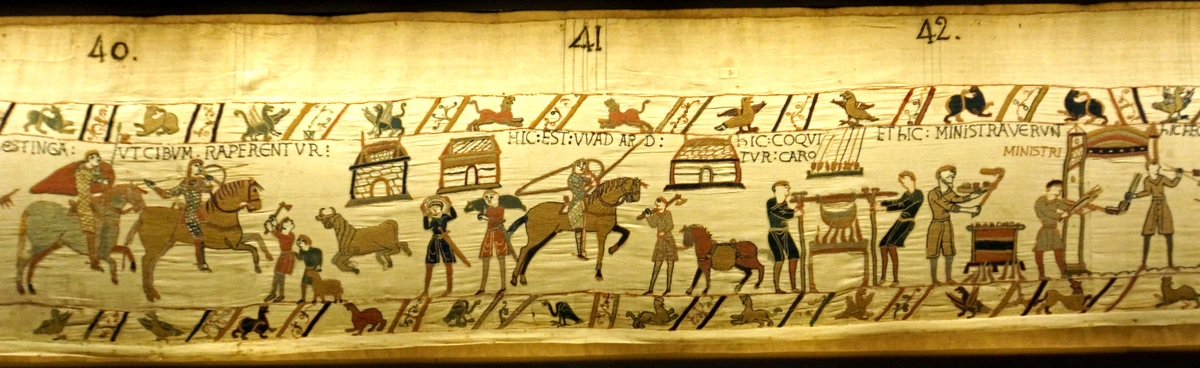
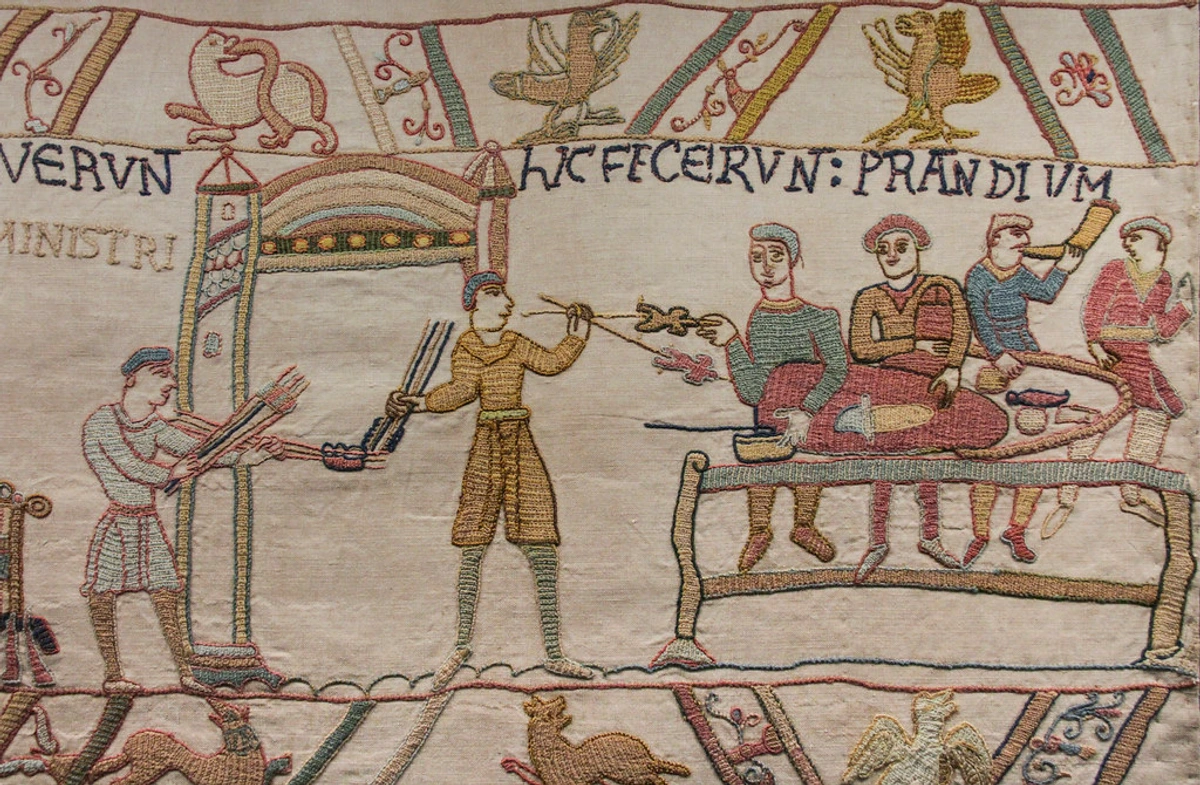
Just before the momentous clash, the tapestry dedicates a segment to the mundane, yet vital, logistics of a medieval army: cooking and feasting. We see servants busily roasting birds on spits over an open fire, bakers expertly pulling loaves of bread from an outdoor oven, and Bishop Odo himself, giving his blessing to the meal. This scene offers a rare and fantastic, almost intimate, glimpse into the practicalities of campaign life and medieval food culture, demonstrating that even a grand conquest runs on the fuel of good food. Imagine the daily challenges of feeding thousands of soldiers and horses in a foreign land! The tapestry shows the roasting of meat (perhaps even whole oxen, as implied by the scale), the baking of bread, and the serving of wine, highlighting a relatively well-provisioned and organized Norman army. This meticulous provision contrasts with the typical raiding and foraging associated with earlier armies, underscoring William's ambition to establish a new order rather than merely plunder. It reminds me that history isn't just about kings and battles, but also about the incredible effort that went into sustaining them, from the humblest cook to the highest-ranking bishop, who is prominently featured dining at a crescent-shaped table, reinforcing his status and involvement. It also serves to illustrate the organized nature of William's campaign, a stark contrast perhaps to the less prepared English forces, subtly reinforcing the Norman narrative of order and efficiency and the sophistication of their logistical planning. It's a vivid snapshot of the support structures necessary for any large-scale military operation, whether it's feeding an army or, well, feeding a hungry art historian after a long day of research!
The Cavalry Charge (Scenes 53-54)
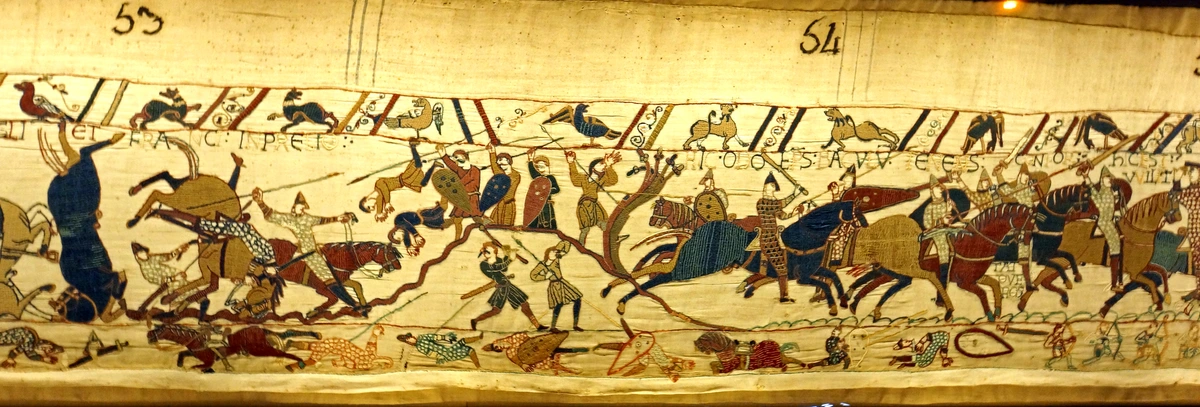
This is where the dynamism of the tapestry truly explodes. The battle scenes, particularly the Norman knights on horseback, are rendered with astonishing energy and a remarkable sense of movement. We see them charging headlong into the formidable English shield wall, lances lowered, a formidable and disciplined force, often employing their tactic of feigned retreat to break the English formation. The Norman cavalry, armed with lances, swords, and protected by chainmail hauberks (tunics made of interlinked metal rings) and distinctive conical helmets with nasal guards (a strip protecting the nose), represented a cutting-edge military force for the era, utilizing tactics and equipment that often outmatched their Anglo-Saxon counterparts.
The depiction of the horses is particularly masterful—full of controlled power, frenetic movement, and almost cinematic action, a stark contrast to the more static, defensive lines of the English infantry. The embroiderers innovatively use overlapping figures and simplified forms to convey speed and impact, making this one of the earliest and most vivid depictions of cavalry tactics in Western art, offering invaluable historical insight into medieval warfare. And in the lower border, the artists have stitched a grim counterpoint: the fallen, the wounded, the dead, a visceral reminder of the terrible cost of war, often depicted in a gruesome, almost unsentimental manner. It's organized chaos, perfectly captured in wool, a testament to the artists' ability to convey complex action with limited means, even without the benefit of a full understanding of definitive guide to perspective in art.
The Death of King Harold (Scene 78)
As discussed earlier in "The Story Unfurls," this is perhaps the most famous, and certainly the most intensely debated, scene in the entire tapestry, renowned for its sheer narrative ambiguity. The accompanying Latin text unequivocally declares, "HIC HAROLD REX INTERFECTUS EST" (Here King Harold has been killed). Yet, the visual representation offers a tantalizing enigma that has captivated scholars and enthusiasts for centuries, leaving us to ponder the specifics of fate and the power of visual storytelling to both inform and obscure. It’s a dramatic, brutal, and utterly unforgettable end to the story's central conflict.
Glossary of Key Terms
Term | Definition |
|---|---|
| Anglo-Saxon | Refers to the Germanic inhabitants of England from the 5th century until the Norman Conquest in 1066. |
| Battle of Hastings | The decisive battle on October 14, 1066, where William the Conqueror's Norman army defeated King Harold Godwinson's English forces. |
| Bishop Odo of Bayeux | William the Conqueror's half-brother, widely believed to be the patron and commissioner of the Bayeux Tapestry, prominently featured in its narrative. |
| Chainmail Hauberk | A type of armor consisting of interlinked metal rings, commonly worn by knights in the 11th century, providing essential protection in battle as depicted in the tapestry. |
| Continuous Narrative | An artistic device where multiple scenes or episodes of a story are depicted within a single frame or composition, without clear divisions, characteristic of the Bayeux Tapestry's proto-cinematic flow. |
| Embroidery | The art of decorating fabric or other materials with needle and thread or yarn, where the design is stitched onto the cloth. The Bayeux Tapestry is a monumental embroidery, not a woven tapestry. |
| Feigned Retreat | A military tactic, notably employed by the Normans at Hastings, where troops pretend to flee to draw an enemy out of formation before turning to attack, often leading to gaps in defensive lines. |
| Frieze | The decorative borders, both upper and lower, of the Bayeux Tapestry, often containing allegorical fables, scenes of daily life, and subtle commentaries on the main narrative. |
| Fyrd | The Anglo-Saxon national militia, composed of free men obliged to serve in the army, forming a significant part of Harold's forces. |
| Halley's Comet | A celestial event visible in 1066, depicted in the tapestry as a terrifying omen of doom preceding the Norman invasion, reinforcing the idea of divine displeasure. |
| Harold Godwinson | The last Anglo-Saxon King of England, whose coronation and controversial death are central to the tapestry's narrative and Norman justifications for invasion. |
| Housecarls | Elite professional soldiers in Anglo-Saxon England, forming the highly disciplined core of King Harold's army and renowned for their formidable shield wall formation. |
| Laid-and-Couched Stitch | A medieval embroidery technique used in the Bayeux Tapestry for filling in large areas, where long threads are laid across the surface and then stitched down with smaller, perpendicular threads, conserving wool and creating texture. |
| Madder | A plant used as a natural dye to produce a range of red and brown hues for the wool threads of the tapestry, a common and important medieval pigment. |
| Musée de la Tapisserie de Bayeux | The museum in Bayeux, Normandy, France, purpose-built to house and meticulously preserve the Bayeux Tapestry for future generations. |
| Norman Conquest | The 11th-century invasion and occupation of England by an army of Norman, Breton, Flemish, and other mercenaries led by William the Conqueror, culminating in the Battle of Hastings and forever reshaping English history. |
| Opus Anglicanum | Latin for "English Work," referring to the high-quality medieval English embroidery renowned throughout Europe, of which the Bayeux Tapestry is considered a prime, if unique, example. |
| Ponthieu | A county in northern France where Harold Godwinson was shipwrecked and captured by Count Guy, setting off the chain of events leading to his oath to William. |
| Senlac Hill | The ridge near Hastings where the main clash of the Battle of Hastings took place, the site of the Anglo-Saxon shield wall and Harold's final stand. |
| Shield Wall | A formidable defensive military formation of tightly packed infantry with interlocking shields, a key Anglo-Saxon tactic that proved highly effective until broken by Norman strategy. |
| Stem Stitch | An embroidery stitch used primarily for outlining figures, architectural details, and inscriptions in the Bayeux Tapestry, providing clarity and definition. |
| Tabby Weave | A basic textile weave where the warp and weft threads are interlaced in a simple over-and-under pattern, characteristic of the linen ground of the Bayeux Tapestry, providing a stable foundation for the embroidery. |
| Tituli | The concise Latin captions or inscriptions found throughout the Bayeux Tapestry, which serve to explain the narrative scenes to the viewer and often reinforce the Norman viewpoint. |
| Weld | A plant used as a natural dye to produce yellow hues for the wool threads of the tapestry, another essential natural pigment in the medieval palette. |
| William the Conqueror | Duke of Normandy who led the Norman Conquest of England in 1066, becoming King of England and ushering in a new era of Anglo-Norman rule. |
| Witenagemot | The Anglo-Saxon council of leading men (e.g., bishops, earls) who advised the king and traditionally had a crucial role in electing successors to the throne. |
| Woad | A plant used as a natural dye to produce a range of blue hues for the wool threads of the tapestry, a common and vital medieval blue pigment. |
Frequently Asked Questions about the Bayeux Tapestry
Q: So it's definitely not a tapestry? A: Correct. It's an embroidery. A tapestry's design is woven into the cloth itself, while an embroidery is stitched on top of a finished cloth. It's a common mistake, but an important distinction that highlights its unique craftsmanship!
Q: Who made it? A: The exact artists are unknown, but the dominant theory, strongly supported by stylistic and linguistic evidence, is that it was made in England by highly skilled Anglo-Saxon needlewomen, likely at the direction of its Norman commissioner, Bishop Odo of Bayeux. This adds a fascinating layer of cultural interplay to the narrative.
Q: Why is it so important? A: It's one of the very few surviving visual accounts of this pivotal period in European history. It provides priceless information about 11th-century life, from clothing and architecture to military tactics, shipbuilding, and even social customs. It's also a primary example of Romanesque art, an unparalleled masterpiece of narrative art, and a profound work of political propaganda. Its sheer scale and detail make it an indispensable historical document.
Q: What is the cultural significance of the Bayeux Tapestry today? A: Beyond its historical and artistic value, the Bayeux Tapestry holds immense cultural significance. It's a key icon for both English and French heritage, representing a pivotal moment in their shared history. It's also a celebrated example of medieval visual narrative, influencing countless artists, historians, and storytellers across generations. It reminds me of how historical artifacts continue to resonate and inform contemporary understanding, much like a timeline helps us chart artistic evolution.
Q: Is the tapestry complete? A: No, the very end of the tapestry is missing. Historians generally agree it would have depicted William the Conqueror's triumphant entry into London and his coronation as King of England on Christmas Day, 1066, providing a definitive conclusion to his claim to the throne. This missing section leaves us with a tantalizing historical cliffhanger, though its probable content is widely accepted.
Q: What is the purpose of the borders or friezes? A: The borders, or friezes, are far more than mere decoration. They often contain allegorical fables, scenes of daily life, and even gruesome depictions of death and destruction that can be interpreted as subtle commentaries on the main narrative. Scholars believe these borders might have been a way for the Anglo-Saxon embroiderers to inject their own perspectives and lamentations into a Norman-commissioned work, acting as a form of subtle subversion.
Q: Are there theories about why it was embroidered rather than woven? A: While definitive reasons are not recorded, scholars propose several theories. Embroidery allowed for greater detail and expressive fluidity in depicting figures and action compared to the more rigid structure of weaving. It also may have been a more cost-effective and quicker method for such a monumental piece, as it didn't require a specialized vertical loom large enough for the entire length. Furthermore, Anglo-Saxon England had a strong tradition of high-quality embroidery (Opus Anglicanum), suggesting local skilled craftswomen were readily available.
Q: How long did it take to make? A: We don't know for sure, but estimates range from a few years to a full decade. Considering the immense scale, detail, and intricate handiwork involved, it was undoubtedly a monumental undertaking requiring a dedicated team of embroiderers working in a highly organized workshop.
Q: Where was it kept for centuries? A: For centuries after its creation, the Bayeux Tapestry was kept in the Bayeux Cathedral in Normandy, where it was brought out and displayed annually, often on feast days. This public display helped reinforce the Norman narrative of the conquest to the local population and served as a powerful didactic tool.
Q: Is the story it tells accurate? A: It's accurate in its broad strokes—the key players and the outcome of the battle are correct. However, it's unequivocally told from a pro-Norman perspective, so it's best viewed as sophisticated historical propaganda rather than a neutral documentary. Details are often stylized or emphasized to serve the narrative's political goals, portraying William as the righteous claimant and Harold as the oath-breaker. Modern historians meticulously cross-reference the tapestry with other contemporary sources to get a more balanced understanding of events.
Q: Was the Bayeux Tapestry influenced by other art forms of its time? A: Absolutely! It shows clear influences from illuminated manuscripts (especially in its narrative flow and tituli), Romanesque wall paintings, and even the scroll-like storytelling traditions that date back to antiquity. It's a fascinating synthesis of various medieval visual communication strategies, adapted for its unique medium and monumental scale.
Q: How accurate is the depiction of armor and weapons? A: The tapestry is considered an incredibly valuable source for understanding 11th-century military equipment and tactics. While there might be some artistic license, the depictions of helmets, chainmail, shields, swords, spears, and bows are largely consistent with archaeological findings and other contemporary records, offering a detailed visual inventory of Norman and Anglo-Saxon warfare.
Q: How has it been conserved over the centuries? A: Its survival is indeed miraculous! For centuries, it was largely kept rolled up and displayed only occasionally, which inadvertently helped preserve it. It faced threats during the French Revolution (almost cut up for wagon covers!) and was famously targeted for confiscation by the Nazis during WWII. Modern conservation efforts involve carefully controlling its environment, limiting light exposure, and ongoing textile preservation techniques to ensure its longevity. It's now housed in a specially designed, climate-controlled environment.
Q: Is there a full-size replica? A: Yes! A full-size replica, painstakingly created by British embroiderers in the late 19th century, is displayed at the Reading Museum in England. This Victorian-era replica, commissioned as part of a revival of interest in medieval arts and crafts, offers another way for the public to experience the tapestry's narrative and scale without risking the original.
Q: What is the significance of the Latin captions (tituli)? A: The Latin captions, or tituli, are crucial for guiding the viewer through the narrative. They act like subtitles, identifying key figures and explaining events. While sometimes brief, they provide essential context and reinforce the official (Norman) interpretation of the story, serving both as an informative tool and a subtle propagandistic device. Interestingly, some Latin spelling errors suggest Anglo-Saxon authorship.
Q: How were the colors achieved in the 11th century? A: The colors were achieved using natural dyes extracted from plants. Woad provided a range of blues, madder produced reds and browns, and weld gave yellows. These dyes were carefully prepared and applied to wool yarns, resulting in the distinctive, vibrant, yet limited palette that characterizes the tapestry, showcasing remarkable medieval dyeing techniques.
Q: Are there any contemporary accounts of the tapestry's creation? A: Unfortunately, detailed contemporary accounts of the tapestry's creation are scarce, which is part of the mystery surrounding its exact origins and makers. Most of what we know is pieced together from stylistic analysis, historical context, and educated scholarly deduction. The lack of explicit documentation only adds to its mystique.
Q: Why are horses depicted in such a dynamic way? A: The horses in the Bayeux Tapestry are renowned for their energetic and dynamic depiction, often shown in various gaits and even somersaulting during battle. This is a stylistic characteristic of Anglo-Saxon art, which valued expressive movement over strict realism, and it adds immense vitality to the battle scenes, offering a unique glimpse into medieval equestrian art.
Q: What is the role of Bishop Odo in the narrative? A: Bishop Odo, William the Conqueror's half-brother, is a prominent figure in the tapestry, appearing in several key scenes, often in a position of authority or military leadership, even in battle. His visible presence and involvement in the story reinforce his importance in William's campaign and strongly suggest his role as the tapestry's primary patron and guiding influence.
Q: How has the Bayeux Tapestry influenced later art? A: The Bayeux Tapestry's unique narrative structure and visual storytelling techniques have influenced various art forms throughout history, from later medieval narratives to modern comics and film. Its ability to convey complex historical events in a compelling, sequential visual format has made it a continuous source of inspiration for artists and storytellers alike, truly a proto-comic strip.
Q: What are some modern interpretations or parodies of the Bayeux Tapestry? A: The Bayeux Tapestry's iconic style has inspired countless modern interpretations and parodies! From satirical cartoons depicting contemporary political events in the tapestry's style to elaborate fan-made versions of historical or fictional events (like a "Game of Thrones" tapestry), its distinctive visual language continues to be adapted and enjoyed. There are even digital versions and interactive experiences that reimagine its narrative for a modern audience, proving its enduring cultural resonance.
Q: What is the current status of the Bayeux Tapestry? A: The Bayeux Tapestry is a UNESCO World Heritage item and is housed in a purpose-built museum in Bayeux, Normandy, France. It remains a critically important historical document and a universally recognized masterpiece of Romanesque art, attracting hundreds of thousands of visitors annually. There are plans for a potential loan to the UK in the coming years, which would be a monumental event, marking a significant moment in Anglo-French cultural relations.
The Bayeux Tapestry: Enduring Legacy, Inspiration, and Future
As I reflect on the Bayeux Tapestry, I'm always struck by its sheer resilience. It's far more than just an artifact; it's a testament to human ingenuity, artistic dedication, and the enduring power of storytelling. Its survival is, frankly, astounding, a series of lucky escapes throughout history. It has weathered centuries of occasional neglect, narrowly escaped destruction during the French Revolution (almost being cut up for wagon covers, can you imagine?!), and was famously targeted for confiscation by the Nazis during WWII, who saw it as a symbol of Germanic history and a tool for their own propaganda. Yet, here it is, almost a millennium later, still captivating audiences, still sparking debates, and still teaching us about a pivotal moment in European history and the fascinating ways history is constructed. Its ability to transcend its original purpose and speak to new generations is, for me, one of its greatest legacies, a truly remarkable monument on the art history timeline.
This magnificent embroidery occupies a truly unique and pivotal position on the art history /timeline. It acts as a remarkable bridge between the meticulously illustrated manuscripts of the early Middle Ages and the grand narrative paintings that would emerge much later in the Renaissance. It's raw, it's direct, and it's bursting with life and historical detail. Looking at it, I can’t help but be reminded that the fundamental human need to tell stories—to explain, to justify, to remember—remains unchanged, whether that's through a contemporary abstract painting you might find on my /buy page, a modern film, a blog post, or a colossal, 70-meter strip of embroidered linen.
The Bayeux Tapestry in Modern Culture and Art
The tapestry's narrative power and iconic imagery continue to resonate today. Beyond being a subject of academic study, it has inspired countless artistic interpretations, replicas, and even parodies in popular culture. From meticulously crafted full-scale reproductions (like the one in Reading, England) to humorous contemporary cartoons, digital art, and even video games, its influence is wide-reaching. I've seen it referenced in everything from graphic novels to historical reenactments, proving its pervasive impact. It serves as a reminder that the art of visual storytelling techniques in narrative art transcends eras, finding new expressions and meanings as time marches on, proving that a thousand-year-old embroidery can still be incredibly relevant in our digital age. It's a testament to the enduring human fascination with epic tales and the power of visual communication, a principle that continues to inspire artists exhibiting at places like the /den-bosch-museum.
Comparing Narrative Art Forms: Bayeux Tapestry in Context
To fully appreciate the Bayeux Tapestry's unique approach to storytelling, and to contextualize its singular place in medieval art, it's helpful to compare it with other prominent narrative art forms of its time, each with its own conventions and intended audience:
| Feature | Bayeux Tapestry | Illuminated Manuscripts | Stained Glass Windows | |---|---|---| | Medium | Wool embroidery on linen | Pigments on parchment/vellum | Colored glass, leaded | | Technique | Stitching (stem, laid-and-couched) | Painting, drawing, gilding | Cutting, leading, firing | | Scale | Monumental (approx. 70m long) | Generally smaller (book pages) | Large-scale (cathedral windows) | | Audience | Public (initially displayed in a hall/church) | Elite, literate (clergy, nobility) | Public (churchgoers) | | Narrative Flow | Sequential, horizontal "comic strip" | Discontinuous (page by page), episodic | Often episodic, symbolic, vertical | | Key Function | Propaganda, historical record | Religious instruction, luxury item | Religious instruction, aesthetic | | Movement Depiction | Dynamic, action-oriented, early perspective | Stylized, often static, symbolic gestures | Static figures, symbolic composition | | Purpose | Historical narrative, political propaganda | Religious devotion, moral instruction | Religious instruction, decorative |











Ultimately, the Bayeux Tapestry is a powerful reminder that art is not just aesthetic; it is a profound historical document, a political statement, and a mirror reflecting the human condition. And to think, all of that started with a simple needle, some colorful threads, and one heck of a compelling story to tell. It continues to inspire, to challenge, and to remind us of the rich tapestry (irony intended, of course!) of our shared human history, proving that even a humble piece of embroidered linen can hold immeasurable depth and meaning. The Bayeux Tapestry, in its remarkable resilience and enduring narrative power, serves as a poignant reminder that art is never truly silent. It speaks across centuries, not just of battles and kings, but of human ambition, cultural clashes, and the universal need to tell and control stories. Its unique status as an embroidery, its subtle Anglo-Saxon 'whispers' within a Norman narrative, and its proto-cinematic flow continue to captivate and challenge. It reminds me that the fundamental human impulse to create, to document, and to communicate visually remains unchanged, whether through a thousand-year-old textile or the vibrant, contemporary abstract paintings you might discover on my /buy page, or in the curated spaces of the /den-bosch-museum. This colossal embroidered scroll is more than a historical relic; it is a living testament to art's ability to transcend time and medium, inviting us to look closer, question deeper, and appreciate the intricate threads that weave together our shared human history. What an incredible journey through time it offers, wouldn't you agree? It all comes back to telling a story, doesn't it?