Diverse Artistic Perspectives in Painting: A Journey Through Vision
Discover how cultural, personal, and philosophical differences shape unique painterly styles. Explore examples and learn to appreciate diverse artistic voices beyond what you see.

Diverse Artistic Perspectives in Painting: A Journey Through Vision
The last time I visited a contemporary art gallery, I overheard two people standing in front of a massive canvas covered in what looked like chaotic brushstrokes. One whispered, "This speaks to my soul," while the other snorted, "My kid could do that." I stood between them, thinking about how the exact same visual information could trigger such wildly different responses. We all look at paintings through our own lenses—colored by our experiences, biases, and what we had for breakfast that morning. I still remember arguing with my sister about whether a dress was blue-and-black or white-and-gold; if we can't even agree on something as simple as color, how could we possibly see art the same way?
This question becomes even more fascinating when you consider that your brain processes approximately 10 million bits of visual information per second, but your conscious mind only receives about 40 bits of that flood. What you "see" is literally a construction—your brain's best guess about what's out there, filtered through layers of expectation, memory, and cultural conditioning. When you and I look at the same painting, we're not just interpreting it differently; we might literally be seeing different things on a neurological level.
That's the magic of artistic perspectives: they transform the physical act of painting into a deeply personal conversation between the artist, the artwork, and you. But here's what most people miss: perspective isn't just about the artist's vision—it's also about your willingness to temporarily abandon your own reality and step into theirs.
Consider this: every great painting you've ever seen began as someone's private obsession, a conversation they were having with themselves about questions that probably don't have answers. Why does this particular shade of blue make my chest ache? What would it look like to paint the sound of your mother's voice? How do you capture the feeling of being 23 and terrified and ecstatic all at once? The canvas becomes a space where private wondering becomes public possibility.
The Kaleidoscope of Vision
Artistic perspective isn't just about vanishing points or technical skills. It's about the lens through which an artist perceives reality—and how they choose to translate that vision onto a canvas. Think about the last sunset photo you saw on social media. Someone filtered it to look dramatic and moody, another kept it natural, a third turned it into a pastel dreamscape.
None of them were 'wrong.' They were just showing you sunset through their particular lens.
But here's what's even more interesting: that lens isn't static. It shifts throughout your life. When I was younger, I was obsessed with precision and clarity in my work. Every brushstroke needed to be justified, every color choice needed a reason. Now, decades later, I'm more interested in ambiguity and suggestion. I want my paintings to ask questions rather than provide answers. Both approaches are authentic expressions of who I was at those different moments, but they emerged from completely different ways of seeing what painting could do.
Years ago, I had a conversation with a marine biologist that permanently changed how I think about perspective. She studied bioluminescent organisms—creatures that create their own light in the ocean's darkness. "Most people think about vision as something passive," she told me. "Light enters your eye, you see what's there. But that's not how it works for these animals. They're not just seeing what's illuminated—they're creating the light by which they see. They literally generate their own reality."
I've never forgotten that image—the artist as bioluminescent creature, generating the very conditions of perception rather than merely recording what's already visible. This reframes artistic practice from reproduction to creation, from mirror to light source. The canvas becomes a space where reality isn't found but forged, where the artist becomes a collaborator with perception itself rather than its servant. When you understand this, the old question "What is art supposed to look like?" reveals itself as meaningless—art looks like whatever consciousness creates when it's freed from the obligation to reproduce consensus reality.
This explains why trying to categorize art by "style" or "movement" often misses the point. The labels we use—Impressionism, Cubism, Abstract Expressionism, Minimalism—are useful shorthand, but they're retrospective impositions. The artists who created these movements weren't following a rulebook; they were following their own light, discovering their own ways of seeing, building their own lamps in the dark. When you look at a Van Gogh painting, you're not looking at "Post-Impressionism"—you're looking at what it felt like to be Vincent van Gogh on a particular Tuesday, trying to figure out how to keep going.
I think about this constantly when I'm painting. Artists are like those bioluminescent creatures—we're not just recording what's already visible. We're creating the conditions for seeing, generating new possibilities for perception. A painter doesn't just depict light; they create light by choosing colors, arranging forms, manipulating contrast. A photographer doesn't just capture reality; they frame it, filter it, and present it through their unique way of seeing.
This is what makes artistic perspective so powerful: it's not just about interpreting reality—it's about participating in its creation. When Rothko paints those luminous color fields, he's not showing us colored rectangles. He's showing us what it feels like to be alive and aware in the presence of something that transcends language. He's creating an emotional experience that doesn't depend on representation.
I remember the first time I saw a Rothko in person, after years of seeing reproductions. In books, they looked like simple colored rectangles—impressive in their way, but not particularly moving. In person, standing in front of a painting that's nine feet tall, I felt like I was standing at the edge of something vast and primordial. The colors seemed to vibrate, to breathe, to generate their own light. It wasn't like looking at a picture—it was like standing inside a moment of pure consciousness.
That experience taught me that there are forms of knowledge that can't be captured in words or concepts, but can be communicated through color and form. Rothko's perspective wasn't about ideas—it was about states of being. And he discovered a way to share those states directly, bypassing the usual interpretive machinery.
That's perspective in action, and it's amplified in art where artists aren't just capturing the world—they're reimagining it entirely. A sunset becomes more than just light diffraction—it becomes a meditation on impermanence, a celebration of warmth, or a warning about climate change. The canvas becomes a mirror reflecting not just what the artist sees, but how they feel about what they see.
I experienced this viscerally when I visited the cave paintings in Lascaux, France. Standing in that darkness, looking at animals painted 17,000 years ago, I was struck by how familiar the gestures felt. The way the artists used the cave wall's contours to give their subjects volume, the way they captured movement with simple lines, the way they clearly observed their subjects with intense attention—this wasn't primitive art. This was sophisticated seeing.
But what haunted me most wasn't their technical skill—it was the eerie contemporary feeling of those paintings. Looking at those ancient animals felt like encountering someone from a different culture rather than a different time. I realized that we tend to think of prehistory as a flat, undifferentiated expanse of "before," but those paintings were made by people with individual names, individual hands, individual frustrations and joys and favorite techniques. Some were better draughtsmen than others. Some cared more about anatomical accuracy; others prioritized spiritual presence. The cave wasn't filled with "primitive art"—it was filled with individual perspectives that managed to bridge seventeen millennia and still feel urgently alive.
But what amazed me most was realizing these artists weren't just painting what they saw. They were painting their relationship to what they saw—animals that were simultaneously food, danger, competition, and something sacred. The paintings aren't just depictions. They're documents of a particular way of being in the world, a particular perspective on humanity's place in nature.
I experienced something similar years later in the Australian outback, watching Indigenous artists paint their ancestral stories. What looked to my Western eye like abstract patterns and dots revealed themselves to be maps, family relationships, spiritual journeys—complex information encoded in visual form. Their perspective wasn't about "representing reality" as I understood it; it was about making visible a reality that exists parallel to the physical world, what we might call the sacred or the symbolic. That encounter taught me that artistic perspective isn't just personal—it's cultural, spiritual, cosmological.
This is what I mean when I say perspective encompasses everything: not just how you see, but how you live, what you value, what you fear, what you depend on, what you're trying to understand or honor or protect. Those cave painters saw bison differently than a contemporary wildlife photographer sees bison—not because they were less sophisticated, but because bison occupied a completely different place in their world.
This realization changed how I think about historical art. When I look at medieval religious paintings now, I try to imagine what it felt like to live in a world where spiritual reality felt as immediate and tangible as physical reality—where heaven and hell weren't metaphors but destinations, where saints and demons were real presences. The perspective those artists brought to their work emerges from a cosmology completely foreign to most modern viewers, and recognizing that distance is the beginning of genuine understanding.
I find myself wondering: how will future generations look at our art? What assumptions that feel self-evident to us will seem bizarre to them? What aspects of our perspective will be invisible to us because they're so fundamental to how we experience reality? What are we taking for granted that defines everything about how we see?
We're living through a period obsessed with identity politics, climate anxiety, and digital transformation—future viewers might look at our art the way we look at those medieval religious paintings, wondering what it felt like to live inside such specific cultural anxieties. They might find our casual mix of digital and analog tools as mystifying as we find medieval gold leaf techniques. The political content we bury in our art might seem as obvious and heavy-handed to them as Soviet propaganda posters seem to us today. Or worse: they might not even recognize it as political, the way we often miss the coded messages in Renaissance portraiture. Our most urgent concerns might become their historical curiosities, our innovations their obvious conventions, our radical gestures their classroom trivia.
The Neuroscience of Seeing
Here's something fascinating: your brain literally processes different artistic styles using different neural pathways. When you look at realistic art, your brain's object recognition systems light up. But when you look at abstract art, your emotional processing centers—the same ones activated by music—become more active. This is why abstract art can feel so immediate and visceral, even when you can't "recognize" what you're seeing.
This neurological reality helps explain the "my kid could do that" reaction that people often have to modern art. The assumption underlying that critique is that art should primarily engage our object-recognition systems—that "good" art makes us say, "Oh, that looks like a person" or "I recognize that landscape." But what if that's not the point? What if the goal is to bypass our recognition machinery entirely and speak directly to our emotional centers, the way music does?
When my friend looked at that Rothko and said it "feels like grief," she wasn't failing to understand the painting. She was understanding it precisely as intended—experiencing it on a neurological level that had nothing to do with recognition. Her brain was responding to color and form as pure emotion, the way it responds to a minor chord or a funeral dirge.
I once watched a friend look at a Rothko painting for the first time. After about ten minutes, she turned to me with tears in her eyes and said, "I don't know what it is, but it feels like grief." She wasn't seeing a picture of grief; she was experiencing the emotional quality that Rothko embedded in those color fields. This is perspective working at a neurological level—the artist's emotional state, translated into color and form, triggers a similar state in the viewer.
I think about this every time I see people dismiss abstract art as 'something a child could do.' What they're really saying is, 'I don't understand this language.' But here's the thing: every artistic perspective is a language. Some speak in realistic prose, others in abstract poetry. The 'child could do that' critique misunderstands what's happening—it's not about technical difficulty, it's about having something specific to say and choosing the right vocabulary to say it.
The irony is that children often see more clearly than adults, precisely because they haven't learned to filter their vision through layers of convention. I'm thinking of a four-year-old who told me that my painting "looks like how laughing feels." She wasn't seeing shapes or colors—she was experiencing the emotional quality directly, without the mediation of aesthetic categories. Adults have to work to recapture that directness, which is much harder than it sounds. We have to unlearn decades of conditioning about what art is "supposed to" look like.
This conditioning operates at a neurological level. Studies using eye-tracking technology show that trained artists literally look at paintings differently than non-artists. They spend more time on areas of compositional interest, their gaze follows different patterns, they notice relationships that untrained viewers miss. But here's what's fascinating: non-artists can learn to look like artists within just a few hours of training. The hardware is there; it just needs different software. Your eyes can learn new ways of seeing the same way your hands can learn new ways of grasping.
The implications are radical: seeing is a skill, not a given. You can deliberately choose to improve your vision, to notice more, to perceive more dimensions of reality. It's not about being "gifted" with special sensitivity—it's about training your attention, the same way a musician trains their ear or an athlete trains their body. I remember feeling shocked when I first understood this, realizing that my way of seeing wasn't just how seeing worked—it was my particular, developed, limited way of seeing, which meant it could be expanded.
I experienced this in reverse when I spent a month only drawing with my non-dominant hand. Suddenly, everything I "knew" about drawing became useless—my muscle memory was gone, my technical confidence vanished. What emerged was something cruder but more honest, less polished but more spontaneous. I was seeing through different hands, which turned out to be a way of seeing through different eyes.
This experiment revealed something I hadn't expected: my technical facility wasn't just enabling my vision—it was also limiting it. The ease with which I could produce certain effects had become a rut. I was making the art I knew how to make rather than the art I needed to make. Working with my "wrong" hand forced me to rediscover the struggle of making marks, the awkwardness of translating vision into form, the uncertainty that comes before mastery. It made me clumsy again, which turned out to be exactly what my work needed.
We can learn a lot about perspective by studying cognitive development. Children's drawings often have a raw emotional honesty precisely because they haven't learned the "rules" yet. As adults, we have to unlearn our desire to make things "look right" in order to access that same intuitive space. This is why many professional artists spend years trying to recapture the freedom they had as children—not because children are better artists, but because children haven't yet learned to filter their vision through convention.

The question isn't whether something "looks difficult." The question is whether it communicates something meaningful. A perfectly rendered bowl of fruit might demonstrate technical skill, but it might not tell us anything about how it feels to be hungry, or how the light felt at a particular moment, or what the artist was thinking about while painting it. An abstract mark, on the other hand, might convey everything about the artist's state of mind in that instant.
I often think about a famous critique of Robert Ryman's white paintings. The critic complained that anyone could paint a white square. Ryman's reported response was simple: "But they didn't." This captures something essential about perspective. The value isn't in the "difficulty" of the gesture, but in the consciousness that chose to make it, in the understanding that this particular white square at this particular moment in art history was a meaningful act. It wasn't "just" white paint—it was a question about painting itself, about materiality, about the relationship between color and support, about the minimum conditions under which something could still be called art.
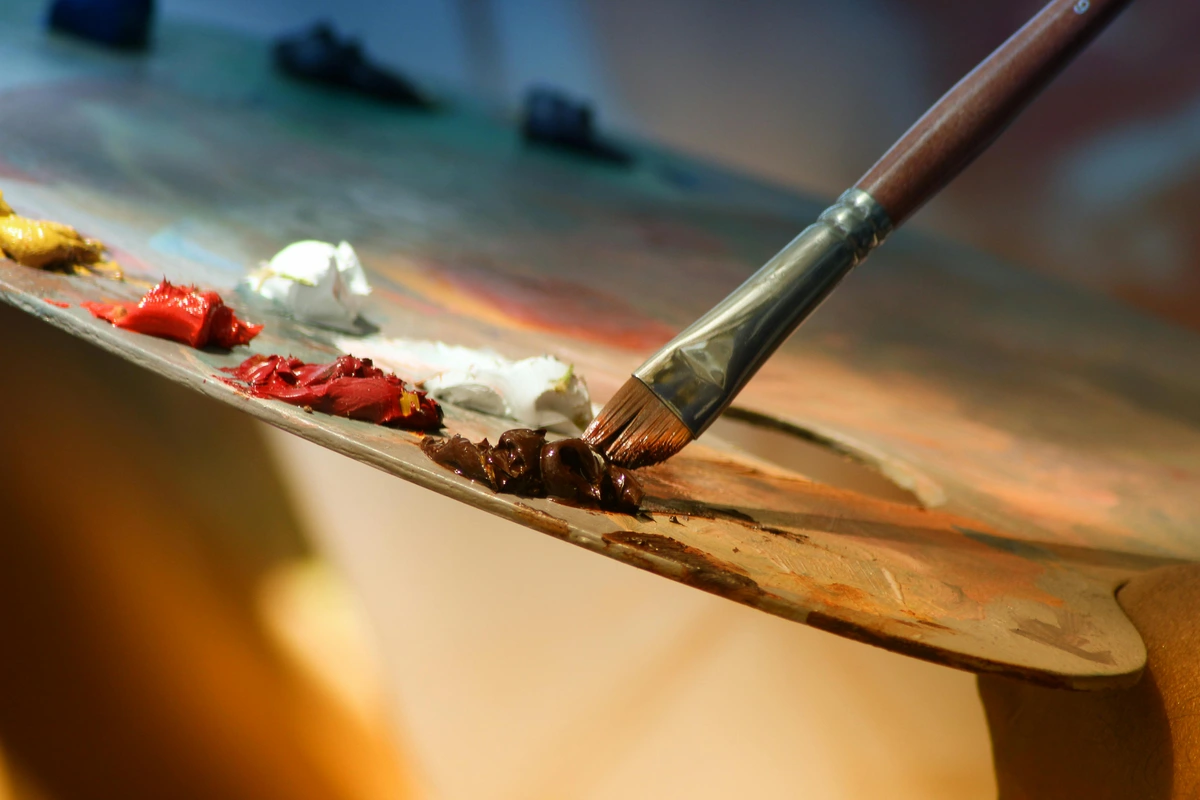
Artistic perspective isn’t just about vanishing points or technical skills. It’s about the lens through which an artist perceives reality—and how they choose to translate that vision onto a canvas. Remember that time you argued with a friend about the color of a sunset? One saw fiery oranges, the other pastel pinks. That’s perspective in action, and it’s amplified in art where artists aren’t just capturing the world—they’re reimagining it.
What Shapes an Artist’s Perspective?
- Cultural Background: A Japanese artist might embrace emptiness (ma), while a Mexican muralist bursts with symbolic vibrancy. Both are equally valid, yet worlds apart.
- Personal History: Trauma becomes haunting shadows in Edward Munch’s work; childhood joy fuels Marc Chagall’s floating lovers. Pain and sweetness warp reality differently for everyone.
- Philosophical Beliefs: Minimalists strip the world to its essence; existentialists pile on textures and contradictions to mirror life’s chaos.
- Sensory Experience: Some artists see sound as color (synesthesia), while others feel composition as physical weight.
- Political Climate: Times of oppression breed coded symbolism; periods of freedom encourage direct expression.
- Technological Access: The invention of photography didn't kill painting—it freed painters from documentation.
But here's what nobody tells beginners: a perspective isn't something you "find" like a lost set of keys. It's something you build, brick by brick, through the messy process of actually creating.
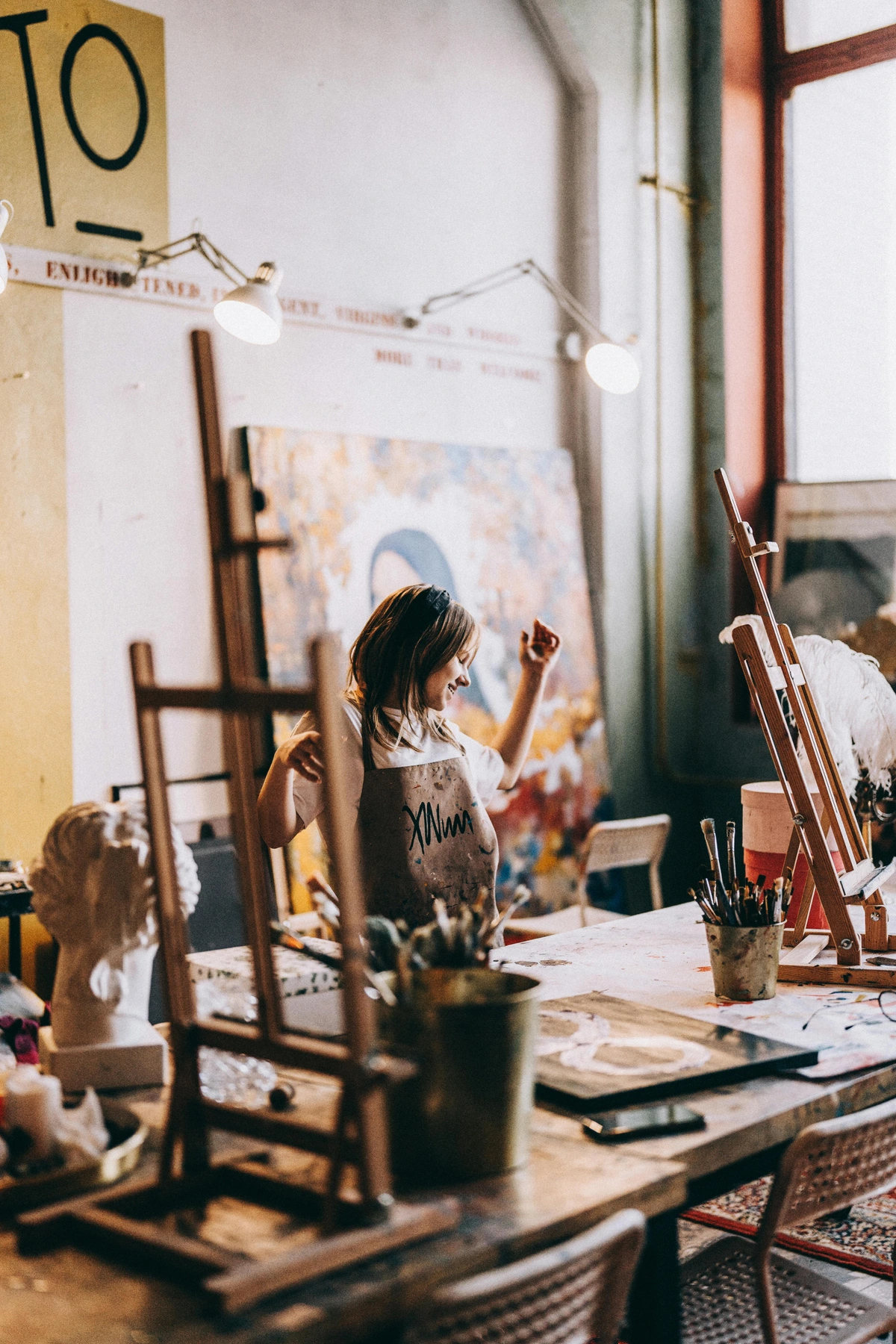
Technical vs. Emotional Perspectives
Artists juggle dual angles when painting:
Perspective Type  | Focus | Example |
|---|---|---|
| Technical | Composition, perspective, color theory | Da Vinci’s geometric perfectness in "The Last Supper" |
| Emotional | Feeling, symbolism, raw expression | Basquiat’s chaotic textures channeling racial tension |
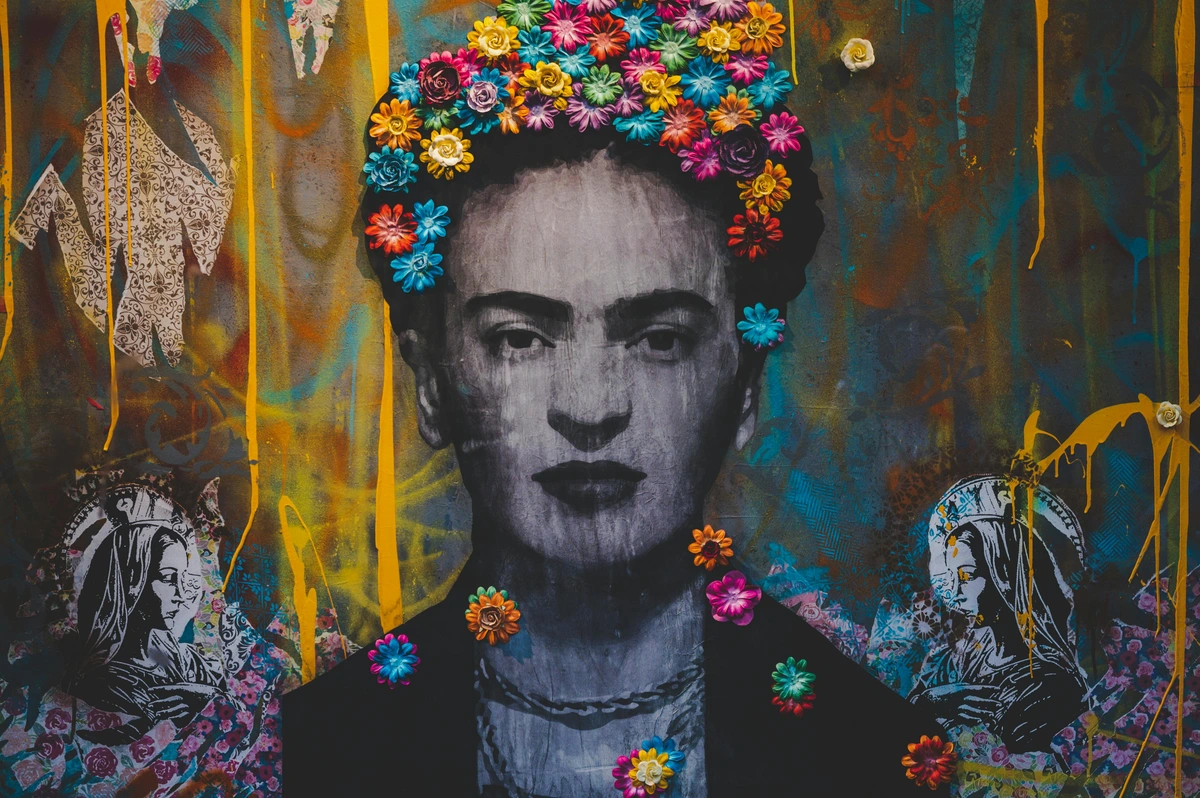
The greats, like Frida Kahlo, merge both. Her self-portraits aren’t anatomically "correct"—they’re visceral maps of pain and resilience. I once stood for 20 minutes in a Mexican museum, nose inches from her work, tracing every brushstroke with my eyes. It wasn’t just seeing. It was feeling.
That kind of fusion is what separates masterpieces from mere technique. When I first tried painting, I was obsessed with getting every detail "right." My perspective was purely mechanical—a straight line is straight, a circle is round. It took me years to understand that when Van Gogh paints a starry night, the sky isn't "wrong." He isn't failing to paint a photograph. He's showing us what turbulence feels like in the soul, not what stillness looks like to the eye.
This realization came to me in a museum in Amsterdam, standing before The Starry Night for the first time. In reproductions, I'd always thought it was beautiful but somehow "inaccurate." The cypress tree too flame-like, the stars too large, the village too small. But in person, something shifted. I wasn't looking at a picture of a night sky; I was looking at a document of someone's inner life, rendered visible. Van Gogh wasn't painting what he saw with his eyes; he was painting what he felt in his cells. That distinction changed everything for me, not just about Van Gogh, but about what painting could be.
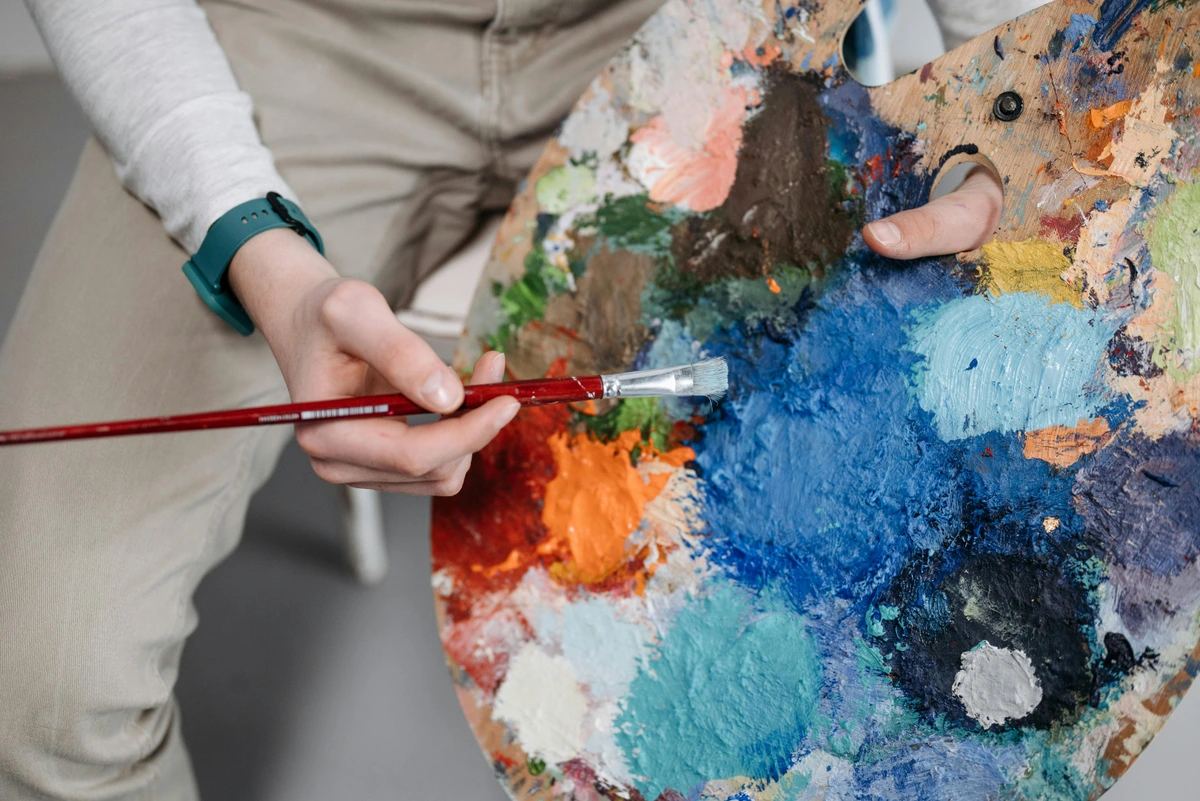
Abstract Art: The Ultimate Perspective Playground
Abstract art screams, "My reality isn’t yours!" It rejects the "how-to" of representation for the "why" of existence. Think Mark Rothko’s color fields—they’re not backgrounds. They’re meditations on human emotion you could swim in. Or Zdzisław Beksiński’s dystopian nightmares, which feel like glimpses into a collective subconscious.
This rejection of literal representation didn't happen in a vacuum. It emerged alongside radical new ideas in physics (Einstein's relativity), psychology (Freud's unconscious), and philosophy. When reality itself became something fluid and uncertain, art followed. A fixed perspective suddenly seemed naive. If time and space weren't absolute, why should vision be?
The timeline is almost spooky in its synchronicity: Einstein published his theory of special relativity in 1905, the same year Picasso painted Les Demoiselles d'Avignon, the painting that launched Cubism. Freud published The Interpretation of Dreams in 1899, just as artists were beginning to explore the irrational and unconscious. Quantum mechanics emerged in the 1920s, the same decade that saw the flowering of Dada and Surrealism. It's as if the entire culture was experiencing a collective shift in how reality was understood, with different disciplines arriving at parallel insights through different methods. Art wasn't illustrating scientific discoveries; it was participating in the same fundamental re-imagining of reality from a different vantage point. When physicists realized that the observer's perspective literally changes the behavior of particles, artists had already been experimenting for decades with how the observer's consciousness changes the meaning of paintings.
What's interesting is that this shift wasn't just philosophical—it was also technological. The invention of photography in the 19th century fundamentally changed painting's role. If a camera could capture reality more accurately and quickly than a brush, what was painting for? The answer that emerged was radical: painting could capture what the camera couldn't—interior experience, emotional states, philosophical concepts, the very act of perception itself.
This wasn't an automatic or universally accepted conclusion—there were decades of anxiety and resistance from painters who saw photography as competition rather than liberation. But the artists who embraced this new reality discovered something extraordinary: by being forced out of the documentation business, painting was freed to explore radically new territories. Color could become psychological rather than descriptive. Form could become conceptual rather than representational. Composition could become emotional rather than narrative. What initially looked like a threat turned out to be the most significant creative liberation in art history, forcing painting to become more ambitious and essential rather than less. Every technological disruption since has followed a similar pattern: the initial panic, then the gradual discovery of new creative territory that the technology has accidentally opened up.
Abstract artists weren't just rejecting representation; they were exploring consciousness directly. Wassily Kandinsky, often called the father of abstract art, wrote about creating "spiritual" paintings that operated like music—affecting the viewer directly through color and form without the mediation of recognizable subject matter. For Kandinsky, a painting wasn't a picture of something; it was something in its own right, with its own inherent energy and meaning.
Abstract artists aren't avoiding representation—they're representing concepts that can't be captured through direct observation. Love, grief, political rage, spiritual ecstasy—how do you "accurately" paint these? The answer is that "accurate" ceases to mean "looks like a photograph" and starts to mean "feels true to the experience."
I think about this when viewers complain that abstract art is "unclear" in its meaning. Of course it's unclear—it's trying to communicate something that language itself can only approximate! A painting about grief isn't trying to show you what grief looks like; it's trying to create the state of grief in your own body so you can recognize it from the inside. This is representation at a much deeper level than mere appearance. It's somatic representation—representing the felt experience of being alive rather than the visual appearance of being alive. The confusion comes from expecting one kind of representation and receiving another, then concluding that the mismatch is the art's failure rather than the expectation's inappropriateness.
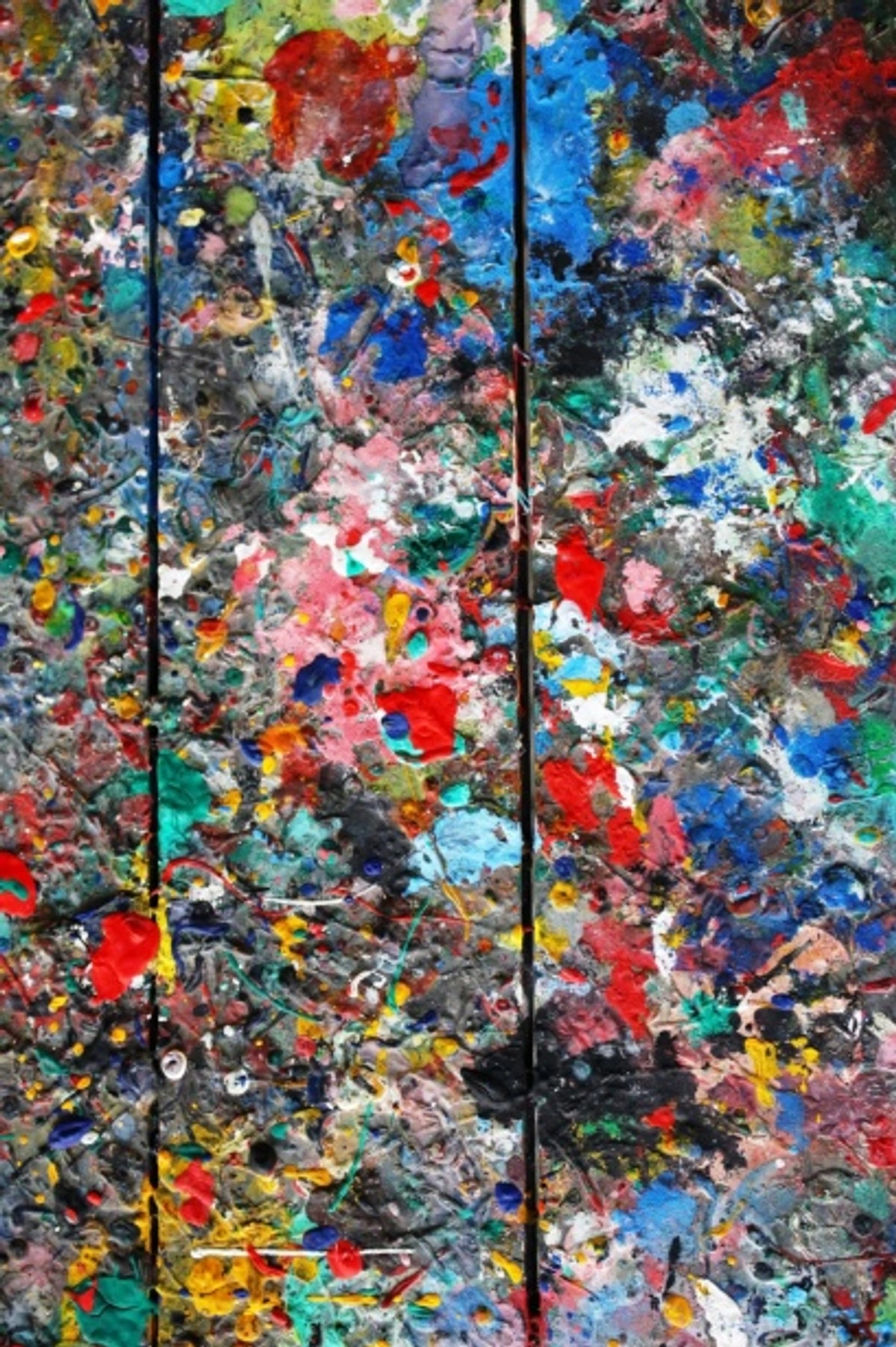
How Abstract Artists Speak a Unique Language
- Color as Emotion: Kandinsky linked yellow to "gentle madness." Blue became "a heavenly, ultimate peace."
- Form as Psychology: Klee’s "Twittering Machine" isn’t a machine—it’s anxiety given shape.
- Chaos as Order: Jackson Pollock’s drip paintings aren't random. They’re the hidden rhythm of his mind.
- Texture as Memory: Anselm Kiefer's thick, cracked surfaces feel archaeological—like digging through layers of history.
- Space as Presence: Agnes Martin's faint penciled lines create an almost-empty field that somehow feels full—like silence made visible.
- Gesture as Evidence: Every brushstroke in Joan Mitchell's work feels like an immediate emotional response, frozen in time.
Kandinsky actually experienced synesthesia—he literally saw colors when he heard music. So when he painted "Composition VIII," he wasn't trying to depict music. He was trying to translate the visual experience of music itself. This is what I mean when I say abstract art is often more honest than realism. It admits that painting a "happy yellow flower" doesn't capture the feeling of happiness—it just shows us a flower.
Practical Wisdom: How to See Through Others’ Eyes
Here’s my challenge: next time you dislike a painting, try this for five minutes:
- Stand uncomfortably close to it. Notice the physical texture of paint.
- Then move uncomfortably far away. How does the message change with distance?
- Ask yourself: "What if this depicts a trauma I’ve never experienced?"
- Consider: "Could the ugliness be a protest? Beauty isn’t always the goal."
- Finally: "What’s the one word the artist would use to describe this?" (Write it down.)
I've watched museum guards for hours (they're fascinating). One guard told me he's seen visitors spend three seconds on a painting they traveled thousands of miles to see. "They're not looking," he said. "They're collecting evidence that they were here." That's the opposite of perspective. That's tourism.
This reminds me of a study I once read about museum-going behavior. Researchers found that the average person spends about 27 seconds looking at a painting—barely enough time to register what's in front of them, let alone enter into a meaningful dialogue with it. But here's what's interesting: the same study found that when people were given simple prompts—questions to consider, or even just encouraged to look for specific details—their viewing time increased dramatically, and so did their reported enjoyment and understanding of the work.
The problem isn't that people are lazy or uneducated about art. The problem is that most of us haven't been taught how to look. We treat paintings like illustrations or decorations rather than complex conversations we can participate in. But learning to look is a skill, and like any skill, it improves with practice and guidance.
Think about it this way: you wouldn't expect to understand a complex piece of music on first hearing, or a dense philosophical text on first reading. You'd give yourself time to absorb it, to notice patterns, to return to it multiple times. So why do we expect instant understanding from visual art? The best paintings reveal themselves slowly, like relationships or fine wines. They require patience and presence.
Looking through another artist's eyes isn't passive observation—it's active imagination. You're temporarily setting aside your own reality to inhabit someone else's. It's difficult, sometimes uncomfortable work. You might not like what you find there. But you'll never see art—or yourself—the same way again.
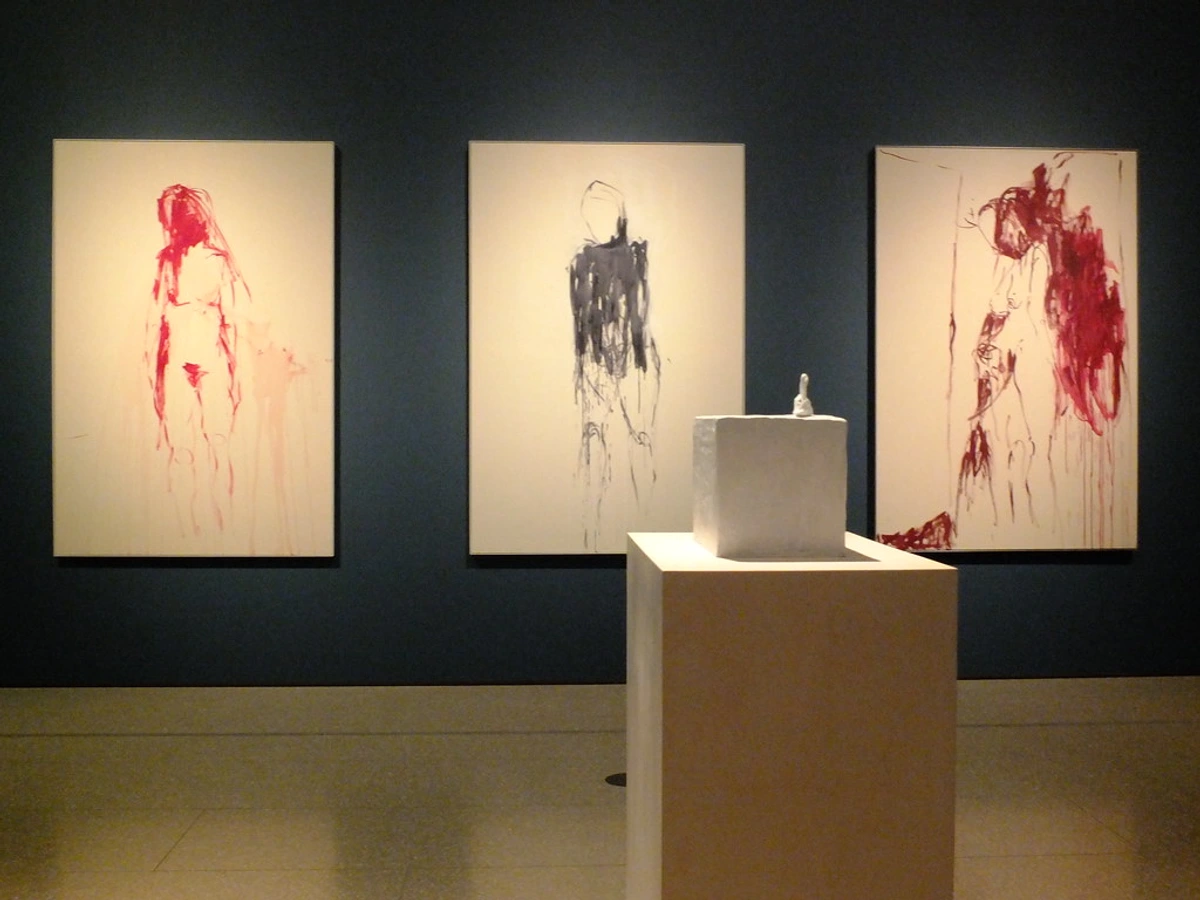
I did this with a chaotic Rothko-inspired canvas once. Disgusted first. Then I imagined it as a battle cry. Suddenly, the chaos made sense.
Years later, I tried something similar with a student's work. She showed me a painting that was technically flawed—human figures with odd proportions, colors that seemed to clash. She was ready to throw it away. "Before you do," I said, "tell me about the people in it." She described her family, how each one felt both incredibly close and impossibly distant. Those "wrong" proportions suddenly looked exactly right—they were the visual equivalent of the emotional distance she was describing. The "clashing" colors? Merely how different personalities in the same house can feel sometimes.
That's when I fully understood: you can't separate perspective from perception.
The Viewer's Gaze: When Perspectives Collide
Here's where things get really interesting: the moment when an artist's perspective collides with a viewer's. It's like two weather systems meeting—sometimes you get clear skies, sometimes you get a storm. Or sometimes you get something entirely unexpected—a third perspective that neither the artist nor the viewer brought to the encounter.
I witnessed this collision in the most literal sense several years ago at a museum. A man in his sixties and a teenager—clearly his grandson—were standing in front of the same Mark Rothko painting. The grandfather was frustrated. 'I just don't get it,' he kept saying. 'It's just colored rectangles. What am I supposed to be looking at?'
The teenager was quiet for a long time, then said something that took my breath away: 'I think it's about how big feelings don't always have shapes. Like, when something huge happens, sometimes all you have is the color of it.'
The grandfather looked at the painting again, then at his grandson, then back at the painting. You could see something shift in his posture. He didn't suddenly love the painting, but he was seeing it through his grandson's eyes now, and that changed everything. Two weather systems meeting: one brought decades of literal-mindedness and practical concerns; the other brought adolescent emotional intensity and a more metaphorical way of thinking. The result wasn't that one convinced the other, but that something new emerged in the space between them—a shared recognition that maybe both ways of seeing had value.
This is the alchemy that happens when perspectives collide without trying to dominate each other. The grandfather didn't "convert" to his grandson's way of seeing, and the grandson didn't abandon his approach to accommodate his grandfather. Instead, both perspectives changed slightly through the encounter. The grandfather discovered that emotional intensity could be a form of intelligence. The grandson learned that literal-mindedness often emerges from a lifetime of responsibility and consequence. The space between them became generative rather than adversarial, not because they reached agreement, but because they learned to see value in approaches different from their own—which is ultimately much more useful than agreement.
This is what the literary theorist Wolfgang Iser called the 'implied reader'—the idea that every artwork creates, in a sense, the kind of reader or viewer who can fully receive it. But I think it's more dynamic than that. I think both artist and viewer create each other, in real time, in that moment of encounter. The artist brings their perspective encoded in form and color; the viewer brings their capacity to decode it; and in that exchange, both are transformed.
This collision isn't just philosophical—it's neurological. Research using fMRI scans shows that when people look at art they find moving or meaningful, their brains show increased connectivity between the visual cortex and areas associated with emotion, pleasure, and personal meaning. In other words, when art "speaks to you," it's literally creating new neural pathways between what you see and what you feel.
But here's what's even more fascinating: the same study found that when people look at art they've been told is "valuable" or "important"—even if they don't personally like it—their brain activity changes. The regions associated with social cognition and conformity light up. This suggests that our response to art is never purely individual; it's always filtered through our awareness of cultural values, other people's opinions, and the social context in which we encounter the work.
I've experienced this myself. There are paintings I initially disliked because I thought I was "supposed to" like them, and the pressure to have the "correct" response interfered with my genuine reaction. It was only later, when I allowed myself to simply react without worrying about cultural consensus, that I discovered what I actually felt about the work. Sometimes my feelings aligned with the critical consensus; sometimes they didn't. Both outcomes were valuable because they taught me something about my own perceptual filters.
I think of this as the "chemistry of interpretation." Two elements combine and create something new. The artist brings their intention, skill, cultural background, and emotional state. The viewer brings their experiences, associations, mood that day, and aesthetic preferences. But here's what's magical: these don't just add together—they react. The result is often something neither person could have predicted.
This is why the same painting can mean completely different things to the same person at different times in their life. I've had paintings I adored in my twenties that I can't stand now, and vice versa. It's not that the painting changed. I changed. The collision between my perspective and the artist's created a different chemical reaction.
This temporal dimension of perspective fascinates me. A painting that seemed merely decorative to me five years ago might now seem deeply political, or vice versa. A work that felt incomprehensible might suddenly click into place after I've had certain life experiences—losing someone, falling in love, facing my own mortality. The painting hasn't changed, but the "me" who's looking at it has.
This is why I believe great art is always contemporary. We bring our present moment to the encounter, and the artwork brings its historical moment, and something new emerges from that meeting. When I look at a Vermeer painting today, I'm not just seeing what a 17th-century Dutchman saw. I'm seeing it through the lens of photography, of cinema, of feminist theory, of everything that's happened in the centuries since Vermeer laid down his brush. The painting gathers meaning like a stone gathers moss—not because it changes, but because the world around it does.
This also explains why certain artists fall in and out of fashion. Tastes change not because the art changes, but because we change. The questions we're asking as a culture shift, and we find different artists helpful in thinking through those questions.
I'll never forget a critique I witnessed in art school. A student had painted a series of dark, claustrophobic interiors. One professor called them "depressing." Another called them "comforting." Same paintings. Both professors were right—for themselves. The work somehow held both interpretations simultaneously, like a poem that means opposite things to different people.
This collision happens every time someone stands before a painting:
What the Artist Brings | What the Viewer Brings | The Result |
|---|---|---|
| Intention (conscious or not) | Personal associations | Interpretation |
| Cultural references | Life experiences | Meaning |
| Technical choices | Emotional state that day | Judgment |
| Unconscious symbols | Political beliefs | Connection or rejection |
| Material choices | Physical environment | Embodied experience |
| Historical moment | Cultural moment | Contemporary relevance |
| Training and influences | Education and exposure | Framework for understanding |
| Physical state during creation | Physiological state while viewing | Bodily response |
| Economic conditions | Class position | Economic reading |
| Life stage and maturity | Developmental stage | Age-related resonance |
| Relationship to audience | Social context of viewing | Communal vs. individual experience |
Notice that 'beauty' or 'quality' still aren't on this list. Those words often obscure more than they clarify. When someone says a painting is 'beautiful,' they might mean any number of things: it reminds them of home, it uses colors they find soothing, it depicts something they find morally admirable, it demonstrates technical skill they wish they had. 'Beautiful' is a shortcut for a much more complex reaction.

I've learned to be suspicious of my own immediate judgments. When I find myself hating a painting, I try to pause and ask: what about this is triggering such a strong reaction? Am I uncomfortable with the subject matter? Does it challenge assumptions I didn't even know I had? Does it remind me of something I'd rather forget? Sometimes the paintings I initially hate are the ones that end up changing me the most.
But here's an important caveat: not all art is worth your time. There's a difference between art that challenges you and art that's simply poorly executed or cynical. The key is learning to distinguish between your resistance to being challenged and your genuine aesthetic judgment. This takes practice, and the only way to develop it is to look at a lot of art—both art you love and art you don't—and to reflect honestly on your reactions.
I've also learned that different kinds of resistance serve different purposes. Resistance to political art might indicate that the work is succeeding in making me uncomfortable about something I'd rather not examine. Resistance to formal innovation might indicate that I'm attached to certain aesthetic conventions. Resistance to emotional vulnerability in art might mean the work is touching on something I protect in myself. Understanding what kind of resistance I'm experiencing helps me decide whether to push through it or honor it.
The goal isn't to like everything. The goal is to have genuine responses rather than reactive ones—to engage art from a place of curiosity rather than judgment.
Notice that "beauty" or "quality" aren't on this list. Those are just words we use when everything else aligns. I've had people tell me a painting "changed their life" while the person next to them called it "wallpaper." Who's right? Both. Neither. It doesn't matter.
But here's what's fascinating: both responses might be right. The person whose life was changed experienced something real and significant. The person who saw wallpaper experienced the absence of that significance, genuinely couldn't connect with what the painting offered. Both are reporting their authentic experience. The painting doesn't have a single objective quality called "life-changing" or "wallpaper"—it has the capacity to produce both responses in different viewers, often simultaneously.
This troubles our usual sense-making equipment. We want art to be either good or bad, important or trivial, meaningful or empty. But the most interesting art holds these contradictions without resolving them. It's both life-changing and wallpaper, depending on who's looking, when they're looking, what they bring to the encounter, what they need from it.
I experienced this in a gallery a few years ago. A friend and I stood before the same Anselm Kiefer painting—massive, textural, visibly heavy with history and trauma. I found it overwhelming, almost unbearable in its intensity. My friend found it theatrical, manipulative, emotionally cheap. We spent an hour arguing about it, both convinced the other was missing something obvious.
Then something shifted: we realized we were having two different conversations. I was responding to the painting's formal qualities—the weight of the materials, the complexity of the textures, the way it activated the space around it. He was responding to what he saw as its exploitation of historical trauma for aesthetic effect. Both responses were legitimate. The painting wasn't "good" or "bad"—it was provocative enough to generate genuine disagreement about fundamental questions: What does it mean to make art about suffering? Who has the right to represent historical trauma? When does seriousness become pretension?
That conversation changed how I think about critical disagreement. It's easy to dismiss people who don't like what you like as unsophisticated, or to feel defensive when your taste is challenged. It's much harder to recognize that different responses might be revealing different truths about the same object. The painting was an occasion for us to discover what we valued, what we were suspicious of, what questions we thought art should or shouldn't ask.
This is what I mean when I say the goal isn't consensus. The goal is recognition. I didn't need my friend to agree with me about Kiefer. I needed to understand why he saw it differently, because understanding his perspective taught me something about my own. His skepticism about emotional manipulation revealed that I sometimes value intensity over subtlety. My appreciation for formal complexity revealed that he sometimes mistrusts work that tries too hard to be "important." We both learned something about ourselves by encountering each other's perspectives.
This kind of productive disagreement is becoming endangered. Social media algorithms feed us opinions we already hold. Political polarization makes us wary of engaging with people who think differently. The art world—especially the commercial art world—rewards consensus, not controversy. Major galleries promote work that collectors can agree is valuable, which often means work that doesn't push too hard against existing taste.
But the most important art has always been controversial. Impressionism was initially rejected as unfinished. Cubism was called degenerate. Abstract Expressionism was mocked as childish. These movements became canonical only after decades of argument, during which people who loved them and people who hated them fought passionately for their positions. The disagreement wasn't incidental to their importance—it was constitutive of it.
I worry that we're losing this. I worry that the pressure to be immediately legible, to be easily shared on Instagram, to please existing tastes rather than challenge them—all of this pushes art toward consensus. Work that makes some people angry and other people ecstatic is harder to monetize than work that everyone finds pleasant. But the work that changes how we see the world is never pleasant for everyone.
This is why protecting spaces for genuine disagreement matters so much. Museums, galleries, art schools, critical journals—these aren't just places to display and discuss art. They're places where we can practice having productive arguments about things that matter, where we can encounter perspectives that unsettle us, where we can learn to disagree without dehumanizing each other.
The philosopher Jacques Rancière argues that art creates "dissensus"—not just disagreement about particular works, but fundamental disagreement about what counts as art, who gets to speak, whose experiences are visible. This dissensus is political, because it challenges the existing distribution of the sensible—the assumptions about who can see what, who can speak about what, whose perspective counts as legitimate.
When a graffiti artist tags a wall, they're not just making a mark—they're claiming space, asserting their right to be seen, disrupting the assumption that public space belongs only to sanctioned authority. When an artist from a marginalized community makes work about their experience, they're not just expressing themselves—they're insisting that their perspective is art, that their way of seeing deserves a public platform. When an experimental artist creates work that baffles traditional categories, they're not just being difficult—they're expanding what counts as legitimate artistic practice.
All of this matters much more than whether individual people like individual paintings. The collective project of art is the ongoing expansion of what can be seen, said, and felt in public space. Every painting that challenges existing taste, that comes from an unexpected perspective, that refuses to fit comfortable categories—each one pushes against the boundaries of the sensible, making the world slightly more capacious, slightly more open to difference.
This is why I've become less interested in whether specific works are "good" and more interested in whether they're generative. Does this work open up new possibilities? Does it make space for perspectives that weren't visible before? Does it create conversations that wouldn't have happened otherwise?
The work I return to, the work that changes me, isn't always the work I initially like. Sometimes it's the work that annoys me, challenges me, makes me uncomfortable. I keep thinking about it not because it gives me pleasure but because it gives me questions I didn't know how to ask. It opens up territory I didn't know existed. It makes me see differently, which means it makes me different.
That's the ultimate gift of artistic perspective: it doesn't just show you new things. It makes you new.
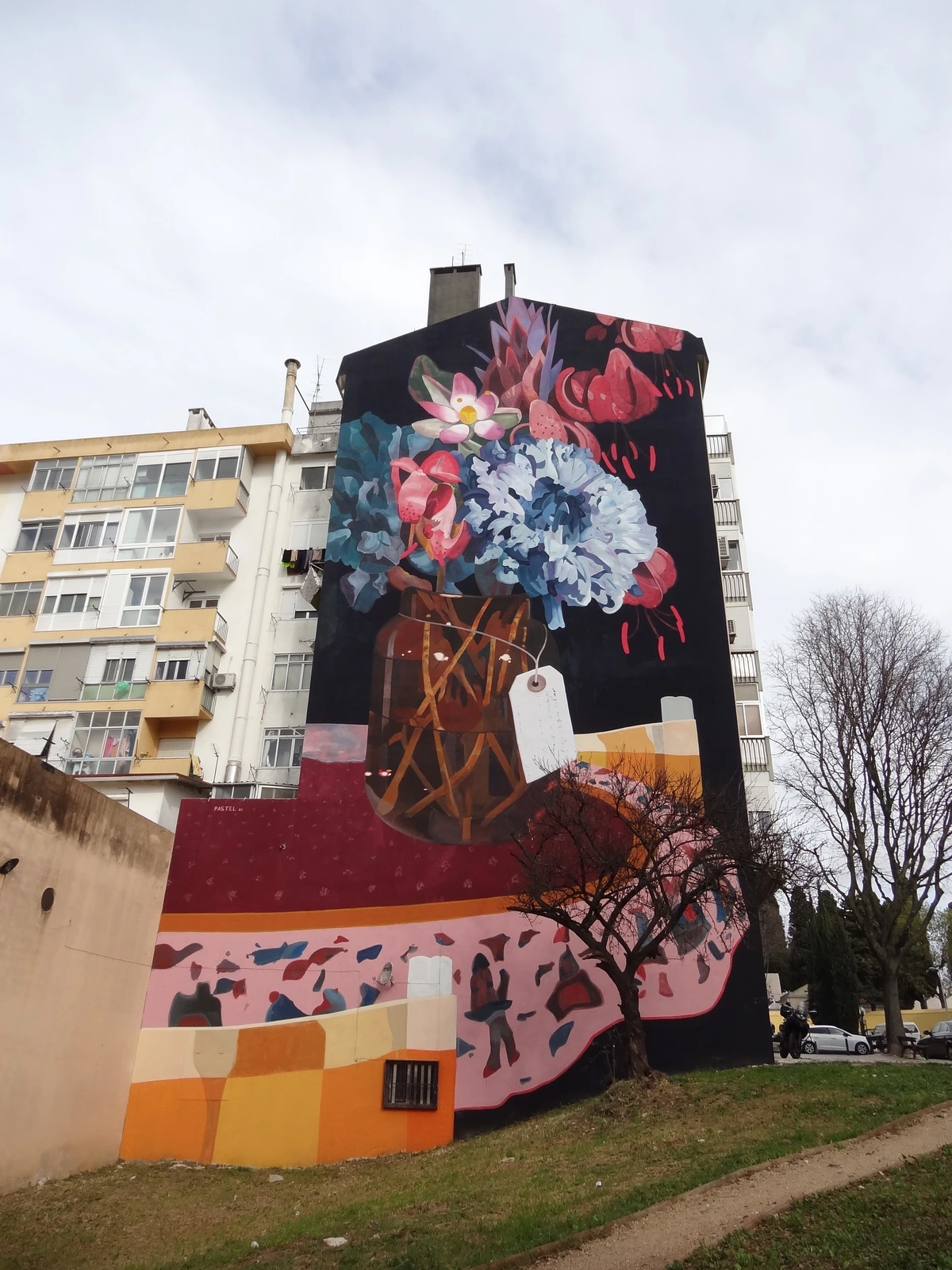
The goal isn't consensus. The goal is recognition: "Oh, someone else sees the world like this too." Or even: "I'd never have thought to see it that way, but now that you show me..."
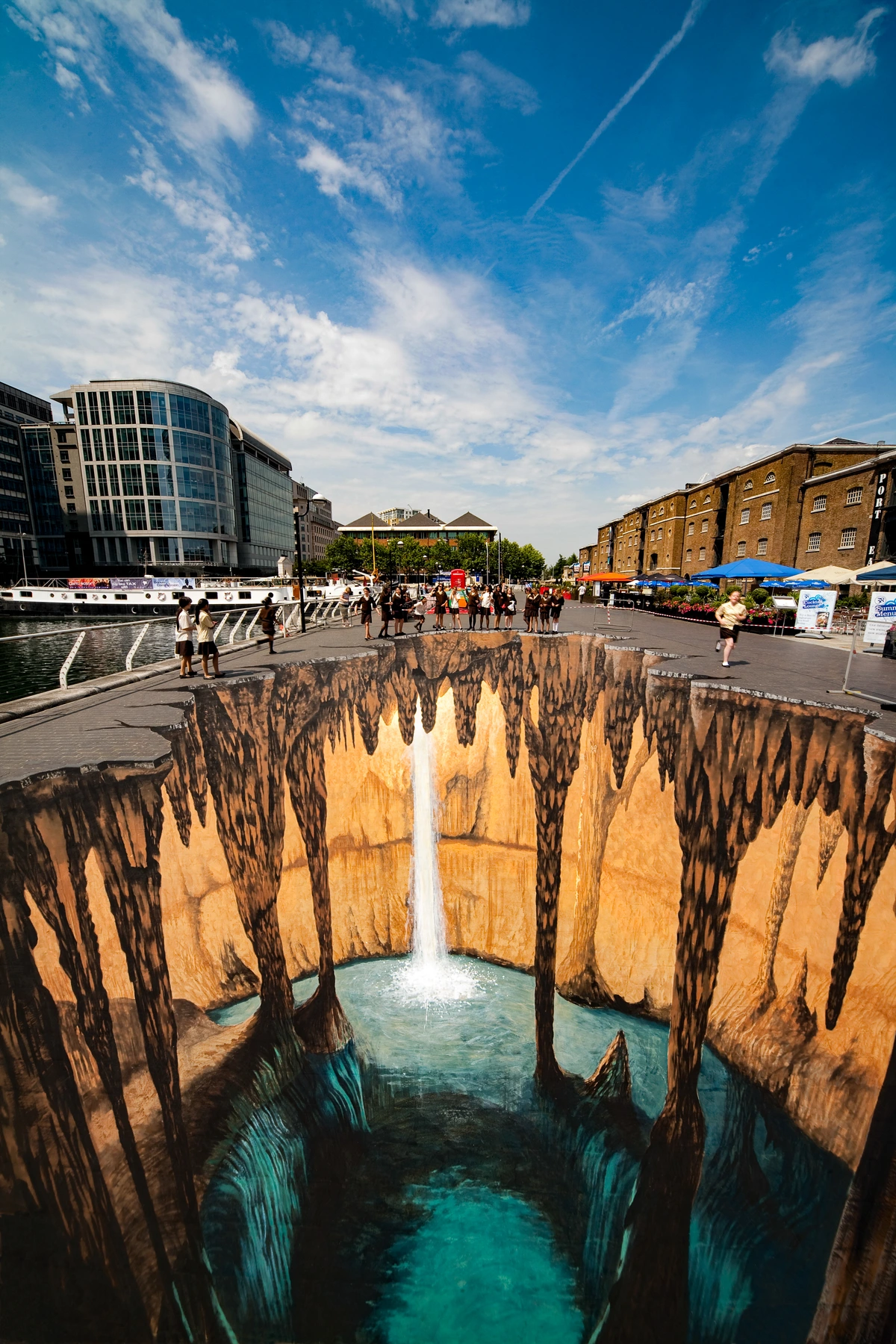
The most radical thing about artistic perspective is that it proves objective reality isn't the only reality. Every painting is an argument against the idea that there's only one way to see anything.
But here's what I've learned after decades of making and studying art: this multiplicity of perspectives isn't just a philosophical concept—it's a practical skill that can be systematically developed. You don't have to wait for enlightenment to see differently; you can train yourself to recognize and inhabit alternative ways of seeing, just as you can train yourself to speak a new language or play a musical instrument.
I discovered this years ago when I was stuck in what painters call a "rut"—making the same kind of work over and over, unable to see beyond my own habits. I was painting landscapes that all looked suspiciously similar, falling into the same compositional patterns, using the same color palette. It took a friend literally blindfolding me during a drawing exercise to break the pattern. "You're not drawing what you see," she said. "You're drawing what you already know how to draw." That blindfolded hour taught me more about perspective than years of art school, because it forced me to access different neural pathways, to trust senses beyond vision, to let go of the need to produce something recognizable.
The paradox is that we think we see what's there, but we actually see what our brain expects to be there. Visual perception isn't passive reception—it's active construction. Your brain processes roughly 10 million bits of visual information per second, but your conscious mind only processes about 40 bits. The rest gets filtered, prioritized, and interpreted based on your past experiences, current emotional state, cultural background, and countless other factors. This means that two people standing side-by-side might literally see different things when looking at the same painting, not just interpret them differently, but have genuinely different visual experiences.
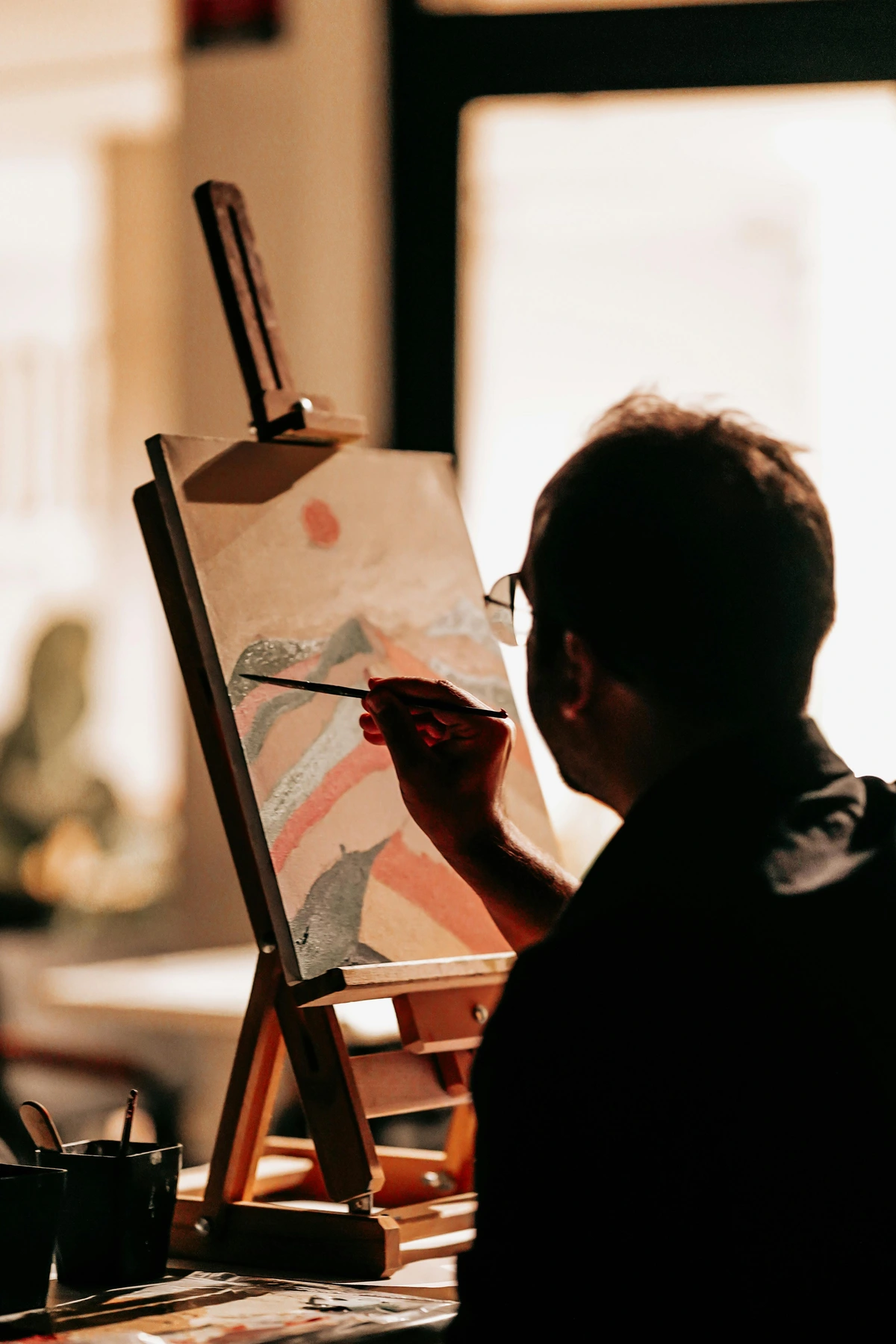
Why is perspective important in art?
Perspective makes art inclusive. It acknowledges that "truth" is subjective. Without it, we’d only see one story—a dangerous limitation.
Can two perspectives coexist in one painting?
Absolutely! Consider Basquiat’s crown motifs. They merge European heraldry with African royalty, creating a new historical narrative in a single symbol. Or look at how Jacob Lawrence painted the Great Migration—storytelling from a Black American perspective using the visual language of European modernism. The painting literally holds both worlds simultaneously. It's not a compromise; it's a fusion. I often think the best art works exactly this way—it refuses to choose sides.
Are perspectives taught or innate?
This is the ancient nature-versus-nurture debate wearing an artist's smock. Here's what I've observed after years of painting and teaching:
The technical components of perspective—compositional rules, color theory, understanding light—are absolutely teachable. Any reasonably dedicated person can learn these skills given enough time and practice.
But the deeper answer is more interesting, I think. While technical skills can be taught, who you are as an artist—your unique way of seeing and interpreting the world—emerges from the intersection of your innate tendencies and your life experiences. Some people do seem to be born with heightened sensitivity to color, or form, or emotional nuance. But that sensitivity only becomes an artistic perspective when it's developed through practice, study, and engagement with the world.
Think of it like language. We're all born with the capacity for language, but the particular language we speak depends on where and when we're born. Similarly, we might be born with certain perceptual tendencies, but our artistic perspective develops through exposure to different ways of seeing, different cultural traditions, different materials and techniques, different mentors and peers.
The most fascinating thing I've noticed is that technical training can sometimes temporarily obscure someone's innate perspective. Students often go through a phase where they're trying so hard to get everything "right" that they lose touch with their natural way of seeing. It's only later, when the technical skills become automatic, that their authentic perspective re-emerges—often stronger and more sophisticated for having been integrated with formal technique.
This suggests that perspective isn't just something you're born with or something you develop—it's something you discover and refine through the ongoing process of making art. Both nature and nurture matter, but the real magic happens in their interaction over time.
There's another dimension here that's often overlooked: the perspective imposed by your body itself. I learned this through a period of chronic wrist pain that forced me to stop painting for months. When I returned to it, I had to completely change my technique. No more tight, controlled brushwork. I had to work more loosely, use larger brushes, make broader gestures. What felt like a limitation became a breakthrough—my work became more spontaneous and energetic, less precious and controlled.
This made me realize how much our bodies shape our perspective. An artist with limited mobility develops different solutions than an artist who can climb ladders to work on massive canvases. An artist with chronic pain might develop a different relationship to time and patience than an artist whose body never fails them. An artist with synesthesia—a literal blending of sensory experiences—doesn't just think about color differently; they experience it differently on a neurological level.
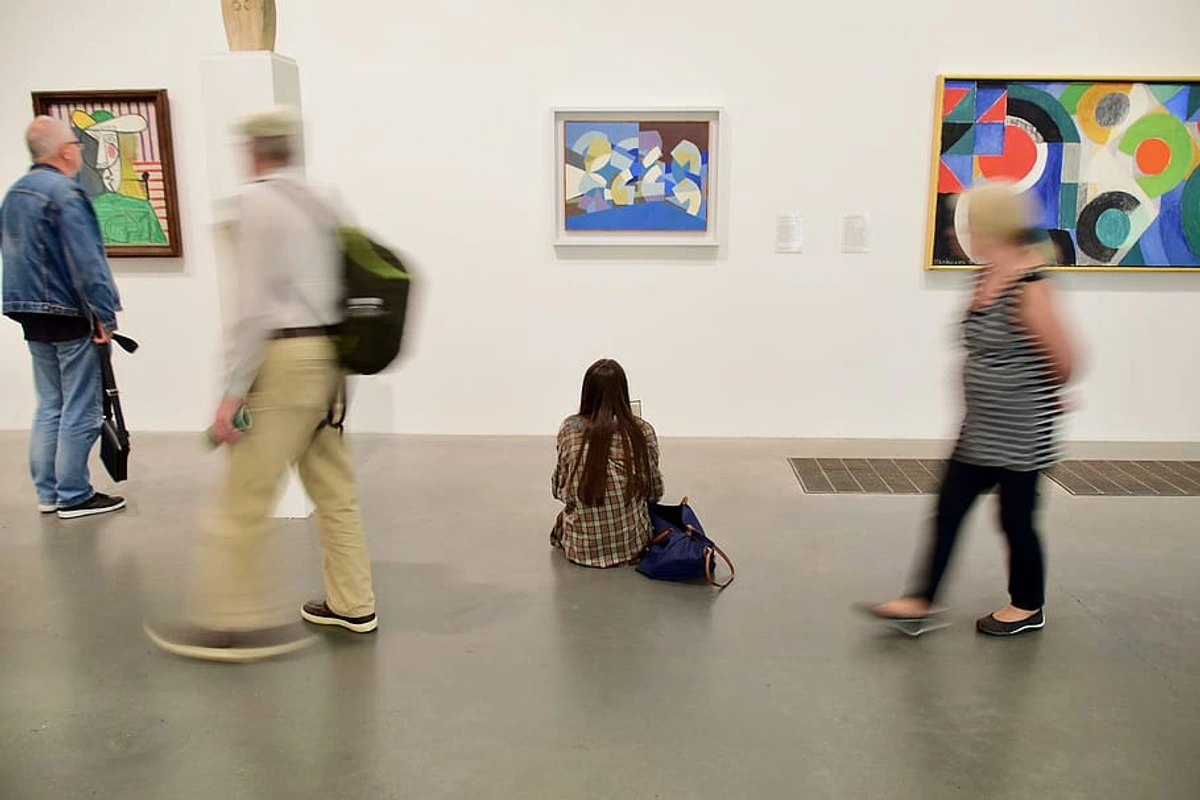
We tend to treat perspective as something that happens in the mind, something abstract and conceptual. But it's also deeply embodied. The physical experience of making art—the weight of a brush, the resistance of canvas, the smell of paint, the ache in your shoulders after hours of work—shapes what's possible and desirable for you as an artist. Your body imposes its own perspective, its own preferences and limitations and discoveries.
This embodied knowledge operates below the level of conscious thought. I once watched a master ceramist "diagnose" clay by touch alone—pressing her thumbs into the material, feeling its moisture content, particle size, and workability with an accuracy that exceeded any machine. Her hands had decades of accumulated wisdom that her conscious mind couldn't articulate. When she said "this clay feels wrong," she wasn't being mystical—she was reading subtle tactile information that most of us wouldn't even recognize as information.
Artists develop these embodied skills across every medium. Painters learn the exact viscosity of paint that creates certain effects, sculptors understand how different stones fracture along their grain, printmakers know the pressure and rhythm that produces perfect impressions. This knowledge isn't theoretical—it lives in muscles and nerves, gets refined through thousands of repetitions, becomes so automatic that it disappears from conscious awareness while continuing to guide every decision.
I learned this watching a master Japanese calligrapher at work. His movements were fluid, practiced, almost unconscious—until he made a mistake, and then I could see the conscious mind re-engage, the body momentarily losing its access to that deep knowledge. The difference between his natural brushstrokes and his "corrected" ones was visible: one flowed from decades of embodied practice, the other from conscious effort. It was like watching someone speak their native language versus struggling through a foreign phrase.
This embodied perspective explains why artists often describe their creative process as "getting out of my own way." The goal is to access that deeper knowledge that lives in the body, not in the thinking mind. Techniques like meditation, repetitive action, physical exhaustion, or altered states aren't about escaping reality—they're about accessing different layers of it, layers that are usually filtered out by our hyper-active conscious minds.
This is also why artists often struggle to explain their process verbally. The knowledge exists in a form that doesn't translate easily into language. Ask a painter why they chose a particular color, and you might get a shrug: "It felt right." That's not evasion—it's an honest description of how embodied knowledge operates. The decision happened faster than conscious thought, emerged from deep within the nervous system, bypassed the verbal centers of the brain entirely.
I've noticed this in my own teaching. When I demonstrate a technique, I can do it effortlessly. When I try to explain it step-by-step, I suddenly become clumsy, self-conscious, unable to access the same fluid expertise. The act of articulating what my body knows disrupts the knowing itself.
But the emotional perspective, the unique way you interpret and respond to the world? That seems partly innate and partly forged through experience. Some people come into the world already seeing more intensely, feeling more deeply, questioning more persistently. They're born with their volume turned up.

The magic happens in the synthesis. I know brilliant artists who break every rule because their perspective demands it. I also know technically perfect painters whose work feels dead because they never developed a personal vision.
The real question isn't 'innate or taught?' but 'Which perspective do you choose to develop?' You can be technically brilliant but emotionally shallow, or vice versa. The masters master both. They learn the rules so thoroughly that they can transcend them in service of their unique vision.
But developing perspective isn't just about individual choice—it's constrained or enabled by material conditions most artists never discuss. I learned this the hard way during a period when I couldn't afford quality materials. Working with cheap paints that wouldn't mix properly, brushes that shed hairs into every stroke, and paper that buckled under the lightest wash fundamentally changed my approach to painting. I had to work smaller, embrace the limitations, turn accidents into features. What started as frustration became a breakthrough: I discovered a raw immediacy in my work that had been smoothed over when I had access to "proper" materials.
This is what the art world rarely acknowledges: artistic perspective is shaped by economics as much as by vision. The painter with a spacious studio, unlimited materials, and financial security can develop a very different perspective from the artist working in a cramped apartment, counting every tube of paint. This isn't about talent or dedication—it's about access. When you're worried about rent, you make different decisions than when you're worried about gallery representation.
I think about the artists who work in conditions we'd consider impossible: creating murals in refugee camps, making sculptures from found objects in impoverished neighborhoods, developing digital art on shared computers in internet cafes. Their perspectives emerge from different questions because they face different constraints. A wealthy artist might ask, "How can I shock the art world?" while an artist in a favela might ask, "How can I create beauty in a place the world sees as ugly?" Both questions are valid. Both produce important art. But pretending they emerge from the same set of possibilities is dishonest.
This economic dimension affects everything from subject matter to scale to durability. An artist who needs to sell work to survive makes different choices than an artist supported by family wealth or a day job. I know artists who deliberately make smaller, more portable work because they've been evicted multiple times and need art they can carry. I know others who create massive installations because they've never had to worry about storage or transportation. Again, neither is better or more authentic—but they produce different kinds of perspective because they respond to different material realities.
When we talk about "finding your artistic perspective," we often present it as a purely psychological or spiritual journey. But it's also a logistical one. The time you have available, the space you can work in, the tools you can access—these aren't incidental details. They're fundamental forces shaping what's possible for you as an artist.
I learned this lesson brutally when I moved from a spacious studio to a tiny apartment. My large, gestural abstract paintings were suddenly impossible—literally no room to make them. I spent months frustrated, trying to force my old perspective into new constraints. Then I discovered miniature work, which I'd always dismissed as "not serious." But working small forced me to develop a different kind of attention, a different relationship to detail, a different sense of scale and space. What felt like limitation turned out to be transformation—I discovered an entire world of micro-expressions that I'd been blind to when I had unlimited space.
This isn't just about physical space. It's about all the constraints that shape creative possibility: the money you have for materials, the hours you can dedicate, the support (or lack thereof) from family and friends, the cultural expectations you're responding to, the market pressures you're navigating. The romantic myth of the artist as someone who transcends all limitations is just that—a myth. Real artists work within constraints, and the best ones use those constraints creatively, turning limitations into distinctive features.
Consider the difference between an artist with a trust fund and an artist working two jobs to pay rent. The first can afford to experiment freely, take risks, fail repeatedly without consequences. The second must be strategic, efficient, focused on work that sells. Neither produces "better" art necessarily, but they produce fundamentally different art because they're solving different problems. The privileged artist might explore conceptual questions about materiality and form. The working artist might develop innovations born of necessity—finding ways to make art with limited time and resources.
I think about the prison artists I've encountered, working with contraband materials, trading paintings for cigarettes, creating elaborate works in conditions designed to crush creativity. Their perspective doesn't emerge from aesthetic theory—it emerges from having to create meaning in a meaning-hostile environment. The urgency in their work, the inventive use of materials, the coded symbolism—all of it flows directly from their constraints.
Or consider artists in refugee camps, working with found materials, painting on whatever surfaces they can access, creating despite having lost everything. Their perspective carries the weight of displacement, the trauma of loss, the hope of survival. You can't separate the art from the conditions that produce it, because the conditions don't just influence the art—they're constitutive of it.
This makes me uncomfortable with the way we talk about "authenticity" in art. If authenticity means anything, it must include the authentic conditions of making—the real limitations, pressures, privileges, and challenges that shape each artist's work. Pretending these material realities don't matter is dishonest. Recognizing them doesn't diminish the art—it deepens our understanding of what art is and does in human lives.
Think about how jazz musicians work. They spend years learning scales, chord progressions, rhythms—all the technical fundamentals. But when they perform, they're not just executing learned patterns. They're improvising, responding to the moment, taking risks, following impulses. The technique doesn't disappear—it becomes automatic enough that it can serve the musician's immediate creative choices rather than restricting them.
This is what the composer Igor Stravinsky meant when he said that the more constraints he imposed on himself, the more free he felt. It sounds paradoxical, but it's absolutely true for painters too. When you don't have to think about how to mix a certain color or how to create a certain texture, you're freed to think about more important things: what you're actually trying to communicate, what emotional quality you want to create, what questions you want the painting to ask.
I've seen this in my own teaching. Students who skip the technical foundation often hit a wall where they have ideas they can't execute. Students who focus only on technique often create work that's perfect but lifeless. The sweet spot happens when technical mastery becomes so ingrained that it recedes into the background, like grammar for a skilled writer. You don't think about subject-verb agreement when you're writing a poem—you think about the poem. But if you don't know grammar, the poem will never work no matter how profound your ideas.
The masters understand this intuitively. They know that technique and perspective aren't opponents—they're dance partners. Your perspective leads, but your technique has to be strong enough to follow wherever your perspective wants to go.
Think of it like cooking: anyone can learn knife skills and cooking times (technical), but developing your own flavor palette, knowing what tastes good together, creating dishes that express something uniquely yours? That's the perspective part. And you develop it through both study and experimentation.
Can Perspective Be Taught?
Yes, but not directly. You can't teach someone 'Be original!' or 'Have a unique perspective!' What you can teach are the conditions that allow perspective to emerge:
- Creating an environment where experimentation is encouraged over perfection
- Exposing students to diverse artistic traditions and contemporary practices
- Teaching the history and context that makes innovation meaningful
- Developing technical skills so thoroughly that they become automatic
- Cultivating the habit of close looking, patient attention, and thoughtful response
- Encouraging honest dialogue about work-in-progress
- Building a community of peers who challenge and support each other
- Providing mentorship from working artists with different perspectives
- Teaching the business and professional skills that allow artistic practice to be sustainable
- Creating space for silence, for boredom, for the unstructured time where real ideas emerge
But here's the complication: even perfect conditions don't guarantee that perspective will emerge. Some students arrive with their vision already fully formed and just need permission to trust it. Others need years of struggling with materials and ideas before something authentic emerges. Still others find their voice by rejecting everything they were taught.
Wait—let me complicate this. I've been teaching art for twenty years, and I used to believe this answer completely. Now I'm not so sure. The more I teach, the more I suspect that perspective can't be taught, but it can be contagious. Students don't learn perspective by following instructions; they catch it through prolonged exposure to people who see differently, through immersion in challenging work, through environments that reward curiosity more than correctness.
I'm thinking of a student I'll call Maya, who arrived in my class with exceptional technical skills and no discernible perspective of her own. She could draw anything accurately, mix any color precisely, execute any technique flawlessly. Her work was perfect and lifeless. No matter what I tried—assignments, exercises, critiques, encouragement—she kept producing technically accomplished, emotionally empty paintings.
Then two things happened simultaneously: she fell in love with Joan Mitchell's work, and she fell in love with a poet who introduced her to experimental literature. Suddenly, her paintings changed completely—loose, gestural, risk-taking, full of genuine feeling. What happened? She hadn't learned perspective from my teaching. She'd caught it from prolonged exposure to artists who showed her what was possible, who gave her permission to access parts of herself she didn't know existed. She needed models, not methods.
This suggests that perspective emerges not from being taught but from encountering work that makes you want to see differently. The role of a teacher isn't to transmit perspective but to create conditions where students can catch it from each other and from the artists they discover. The classroom becomes less like instruction and more like infection—you're trying to expose students to as many contagious perspectives as possible and hope something takes.
But even this is too simple. Because while Maya "caught" perspective from exposure to great art, she also needed the technical foundation to act on it. Without her drawing skills and color knowledge, her new perspective would have remained unexpressed. This is the paradox: technique without perspective is empty, but perspective without technique is frustrated. You need both, but they develop through different processes—one through systematic practice, the other through what I can only call grace.
I've also noticed that perspective seems to emerge more reliably under certain conditions, even if it can't be forced. Students given real constraints—"You have to use only materials you find in this room," or "You have to make work that responds to a specific social problem"—often develop more interesting perspectives than students given unlimited freedom. Constraints force invention. Freedom often leads to paralysis or imitation.
Students who maintain sketchbooks, who draw constantly, who treat art-making as a daily practice rather than a special occasion, seem to find their perspective more reliably than students who only work when inspiration strikes. The perspective emerges through the cumulative practice, not in dramatic moments of insight.
Students who collaborate, who critique each other's work honestly, who form creative communities—these students accelerate each other's development in ways no individual teacher can match. Perspective isn't just individual; it's collective. We see ourselves more clearly when we see ourselves reflected in others.
So maybe the answer isn't "yes" or "no" but "yes, if." Yes, perspective can be taught if we understand teaching as creating ecosystems rather than transmitting information. Yes, if we recognize that the teacher's role is to model perspective-taking, not just to describe it. Yes, if we admit that most "teaching" actually happens peer-to-peer, through the informal exchange of influences and enthusiasms that no curriculum can predict or control.
The art schools that produce interesting artists aren't the ones with the best facilities or most famous faculty. They're the ones that create cultures where perspective is caught, not taught—where students encounter diverse ways of seeing, where failure is safe, where experimentation is expected, where the question "What if?" is valued more than the answer "I know."
But here's what makes all of this even more complicated: some students seem to arrive with their perspective already formed, almost fully developed. They don't need to catch it from exposure—they need to catch permission to trust it. These students often struggle in traditional art schools, where they're told they need to "learn the fundamentals" before they can develop their vision. But their fundamentals are already there, just not the ones the curriculum recognizes.
I'm thinking of another student, David, who painted only in black and white, only abstract shapes, only at night. His work was completely outside the conventions we were teaching. The faculty kept trying to "correct" him—getting him to use color, work representationally, paint during daylight hours. He either ignored us or produced work that satisfied the assignments while being visibly dutiful rather than authentic.
Years later, I saw his work in a major museum. He'd developed into a significant artist, and his mature work was essentially the same as what he'd been doing as a student—just more confident, more refined. The perspective was there from the beginning. What he needed wasn't teaching but permission to ignore his teachers.
This suggests that some artists don't develop perspective—they remember it. They arrive with a way of seeing the world that's already formed, and their artistic education is mostly about getting out of their own way. The role of the teacher isn't to shape their perspective but to recognize it, honor it, and get out of its way.
This makes teaching infinitely harder, because it means you can't have a single method or approach. Some students need exposure to diverse influences; others need protection from influence so they can hear their own voice. Some need rigorous technical training; others need permission to ignore technique. Some need to be pushed out of their comfort zone; others need to be allowed to stay there until they're ready to leave. The teacher has to diagnose what each student needs, which is almost impossible to do systematically.
Maybe the most honest answer to "Can perspective be taught?" is "It depends on what you mean by teaching, and it depends on who you're teaching, and it depends on where they are in their development, and it depends on factors no one understands yet." Which isn't a satisfying answer, but it might be the true one.
- Deep observation skills (learning to really see, not just look)
- Critical thinking (questioning assumptions, including your own)
- Emotional literacy (naming and understanding your own responses)
- Risk tolerance (being willing to fail, to experiment, to look foolish)
- Historical knowledge (understanding what's been done so you can build on it rather than repeat it)
The perspective itself? That emerges from the alchemy of all these ingredients plus your particular life experiences. Two students can receive identical training and create completely different work because they brought different raw materials to the process.
I've been thinking recently about a category of perspective we rarely discuss: artists who work at the edges of the market system. I met a woman once who'd been a successful commercial illustrator for decades before burning out and becoming a hospital janitor. She told me, "I clean the same rooms every night, and every night I notice something different—how the light hits the floor at 2 AM, how sounds bounce off the walls, how people arrange their belongings when they're vulnerable. I started making art about it, and it's the most honest work I've ever done."
Her story raises uncomfortable questions about the relationship between artistic integrity and economic survival. I've known artists who achieved financial success and then watched their work become formulaic, repeating what sold rather than risking what mattered. And I've known artists who maintained their vision by accepting poverty, their perspective sharpened rather than compromised by the constraints. But the romantic notion of the starving artist obscures a brutal reality: chronic stress, lack of materials, and constant financial anxiety also limit creative possibility. The relationship between economics and perspective isn't simple or predictable—and acknowledging that complexity feels more honest than pretending it doesn't exist.
This connects to the work of sociologist Pierre Bourdieu, who argued that our aesthetic preferences—what we consider "good" art, what moves us, what we're drawn to—aren't just individual choices. They're shaped by our "habitus," the durable dispositions we acquire through our social class, education, and cultural environment. A working-class person and a wealthy collector might look at the same painting and have genuinely different experiences of its value, meaning, and emotional impact, not because one is more sensitive or educated, but because they've inherited different frameworks for evaluation.
Her story raises uncomfortable questions about how economic pressure shapes artistic perspective. When she was working commercially, she had to filter her vision through client expectations, market demands, and the need to please gatekeepers. Once that pressure disappeared—once her creative practice was decoupled from survival—her perspective shifted dramatically. She was no longer making work she thought other people would want; she was making work she needed to make, which often means looking where other people aren't looking, asking questions that don't have obvious market value. This suggests that our romantic ideas about "authenticity" need to account for economic realities—it's easier to be authentic when your rent doesn't depend on being liked.
Her perspective didn't emerge from art school or gallery connections. It emerged from paying attention in a space that most people treat as invisible. Her work gave dignity to experiences the art world rarely acknowledges. This is what I mean when I say perspective is everywhere—you just have to be willing to look where others aren't looking.
This makes me wonder about all the perspectives we're missing because we've decided only certain people get to be artists. What would art look like if we valued the perspective of someone who's worked the night shift for thirty years as much as we value someone with an MFA? What insights about time, labor, space, and human dignity might they bring that the rest of us are missing?
The most radical thing about artistic perspective is that it's infinite—every human life is a potential lens for seeing the world anew. The tragedy is how few of those lenses we actually get to look through.
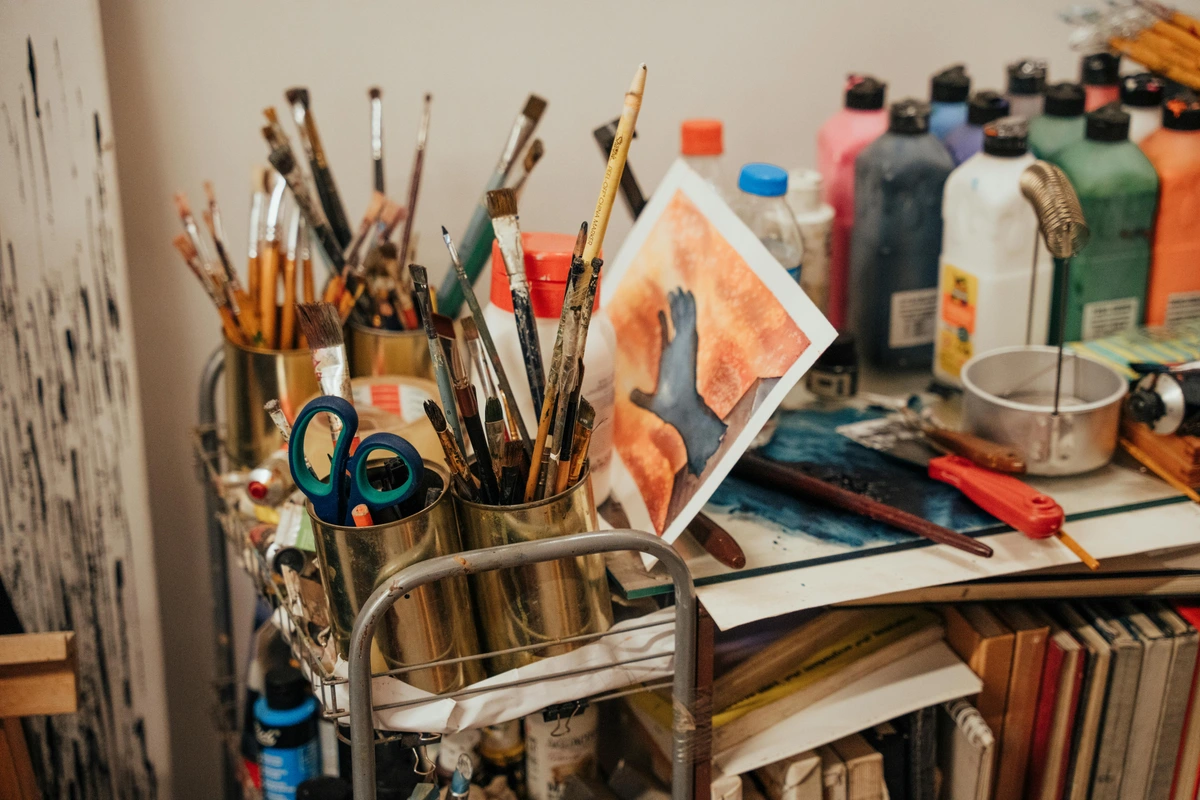
How do I find my own artistic perspective?
Finding your artistic perspective is less like discovering buried treasure and more like carving a riverbed—the water (your perspective) is already flowing; you just need to channel it and follow where it wants to go.
But here's what nobody tells you: the process isn't always pleasant or glamorous. Developing a perspective means making a lot of bad art. It means working through periods when you hate everything you make. It means feeling lost and uncertain more often than you feel confident and clear. The path to finding your voice as an artist is paved with failed experiments, abandoned projects, and paintings that make you cringe when you look back at them.
The uncomfortable truth is that you probably already have a perspective—you just might not recognize it yet, or you might be actively resisting it because it doesn't match your idea of what an "artist" should be. Maybe you're drawn to dark, moody palettes but think you should paint bright, cheerful images because that's what sells, or because that's what "serious" artists do. Maybe you love detailed, intricate work but feel pressure to work more gesturally because that's what's in fashion. Maybe you're drawn to political subject matter but worry it will seem too "aggressive" or "unsubtle."
The most important step in finding your perspective is giving yourself permission to follow your natural inclinations, even when they lead you away from what you think you should be doing. Your perspective lives in the work that feels most necessary to you, not in the work you think other people will approve of or want to buy.
I often tell my students: make the work that only you can make. Not because you're special or unique in some cosmic sense, but because you have a combination of experiences, obsessions, skills, and blind spots that no one else has. Your perspective is what makes the work yours, even when you're working with the same subject matter as thousands of other artists.
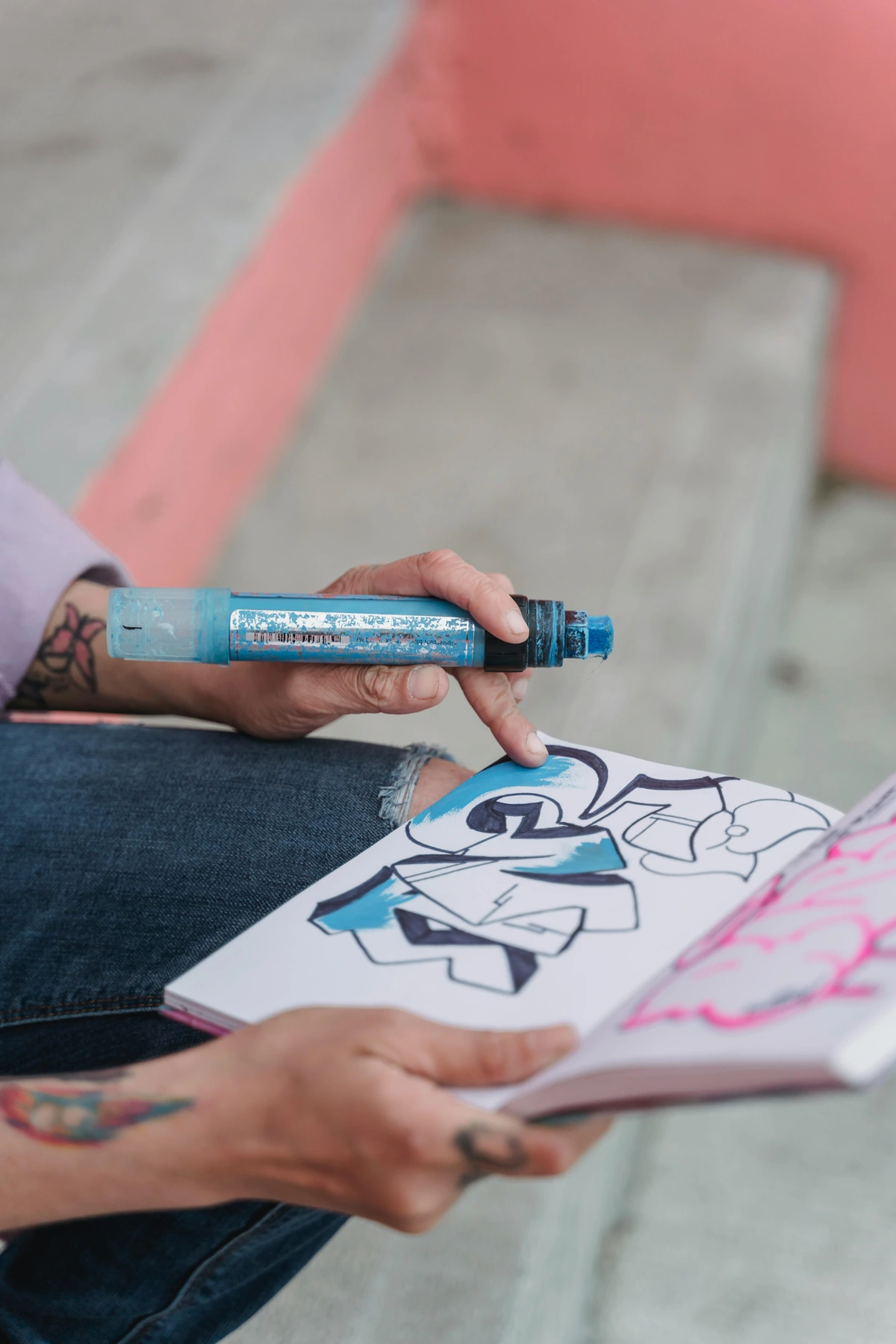
Here's what works:
- Accept that you already have one — You're not starting from zero. Your perspective is already operating; you just haven't recognized it yet. Pay attention to what you're naturally drawn to—certain colors, subjects, moods, textures. That's your perspective whispering to you.
- Study masters obsessively, then betray them — Copy paintings you love. Learn their methods. Understand their decisions. Then, deliberately break their rules. If a master used subtle color transitions, try violent contrasts. If they worked large, go miniature. This isn't disrespect—it's how you discover what's yours versus what you've absorbed. I spent months copying Matisse paintings, trying to understand how he achieved such clarity and simplicity. Then I took his approach to color and applied it to subjects he never would have chosen—industrial landscapes, digital interfaces, the aesthetics of failure and decay. The result wasn't Matisse, and it wasn't me trying to be Matisse. It was me discovering what I cared about through the lens of someone else's solutions.
- Become a detective of your own reactions — Keep an emotion journal, but don't just write 'happy' or 'sad.' Go deeper. What makes you furious? What makes you melancholic? What landscape makes your chest ache? What injustice makes your hands shake? These are clues to your perspective.
- Paint from memory, not photos — Photos do the seeing for you. When you paint from memory, your brain does fascinating things—it exaggerates what mattered, omits what didn't, transforms reality to match your emotional truth. That's pure perspective.
- Experiment with media that scares you — If you're a painter, try sculpture. If you work digitally, try charcoal smudging your hands. I once spent six months working only with materials I found frustrating, and it completely rewired how I approach my primary medium. New tools create new perspectives.
- Develop rituals — Some artists need complete silence; others need loud music. Some work best at 4 AM; others need the energy of a crowded café. Your optimal conditions for creating are part of your perspective.
- Ask uncomfortable questions — Why do I avoid certain subjects? Why do I default to certain colors? What am I afraid to paint? What do I keep painting over and over without realizing it?
- Travel physically or mentally — Visit places that challenge your worldview. Read books outside your comfort zone. Watch films from cultures different from yours. Your perspective grows when it's stretched.
- Collaborate with artists who see differently — Their perspective will rub off on yours in surprising ways. A color field painter working with a hyperrealist creates something neither could alone.
- Make teaching part of your practice — Nothing clarifies your own perspective like trying to explain your choices to someone else. In articulating why you made a certain decision—why this color, why this composition—you discover what you actually believe about art. I've learned more about my own work from my students' questions than from years of solitary studio time.
- Pay attention to your failures — What you consider 'failed' paintings often reveal more about your true perspective than your successes. I've learned more from paintings I hated than from ones I loved.
- Maintain creative constraints — Sometimes unlimited freedom paralyzes perspective. Give yourself arbitrary limitations: only use three colors, paint upside down, work only during full moons. Constraints force innovation and reveal hidden tendencies. I learned this from watching my friend David, a sculptor with endless resources and a huge studio, produce lifeless, overworked pieces. One day his studio flooded and he lost almost everything except a few small tools and some scrap metal. The work he made with those limitations was shockingly better—more urgent, more inventive, more alive. He'd been paralyzed by infinite possibility, and losing most of it freed him to actually create instead of merely organize options. This taught me that perspective isn't just about seeing; it's about what you do with what you see, and sometimes having fewer choices paradoxically increases creativity by forcing commitment.
- Document obsessively — Keep sketchbooks, take photos, collect objects. Your recurring fascinations will reveal themselves over time.
- Talk about your work — When you have to explain your paintings to others, you often discover what you actually think about them. Teaching clarifies.
- Protect your attention — Your perspective gets diluted when you consume too much similar content. Take breaks from social media, museums, even other artists' work. Create from emptiness sometimes.
- Embrace your limitations — What you can't do is often more defining than what you can do. Limited resources force creative solutions. Limited time forces efficiency. Limited skill in one area might push you to develop strength in another.
- Work in series — A single painting can be an accident. A series of ten paintings reveals patterns. Repeated investigation of the same subject or problem over time reveals what you're actually interested in versus what you thought you were interested in.
- Keep a "failed work" journal — Document what doesn't work and why. The patterns in your failures often reveal more about your true perspective than your successes.
- Surround yourself with critical friends, not cheerleaders — Find people who will tell you when your work is getting lazy, when you're repeating yourself, when you're playing it safe. Growth happens at the edges of your comfort zone, and you need people who care enough about you to push you there.
- Study artists you dislike — Understanding why you dislike something teaches you as much about your own aesthetic as studying artists you admire. Plus, sometimes your opinion will change once you understand their process and intentions.
- Study artists you dislike — Understanding why you dislike something teaches you as much about your own aesthetic as studying artists you admire. Plus, sometimes your opinion will change once you understand their process and intentions.
- Create artificial constraints — Limit your palette to three colors. Work only in black and white for a month. Use only found materials. Constraints force you to solve problems differently, revealing new aspects of your perspective.
- Write about your work — The act of translating visual decisions into words clarifies what you're actually doing versus what you think you're doing.
- Follow your anger — What makes you furious? What injustices burn in your mind? Art that comes from genuine moral outrage has an authenticity that can't be faked.
- Notice what you avoid — The subjects, colors, and styles you consistently avoid might be where your most authentic work is hiding. We often avoid what feels too personal or too vulnerable.
- Make work for an audience of one — Choose one person—living or dead, known or imaginary—and make work as if only they will see it. This bypasses the pressure to please everyone and often reveals what's actually important to you.
The process is messy, non-linear, and takes time. But eventually, you'll notice patterns—certain themes, approaches, questions that keep appearing. That's your perspective announcing itself.
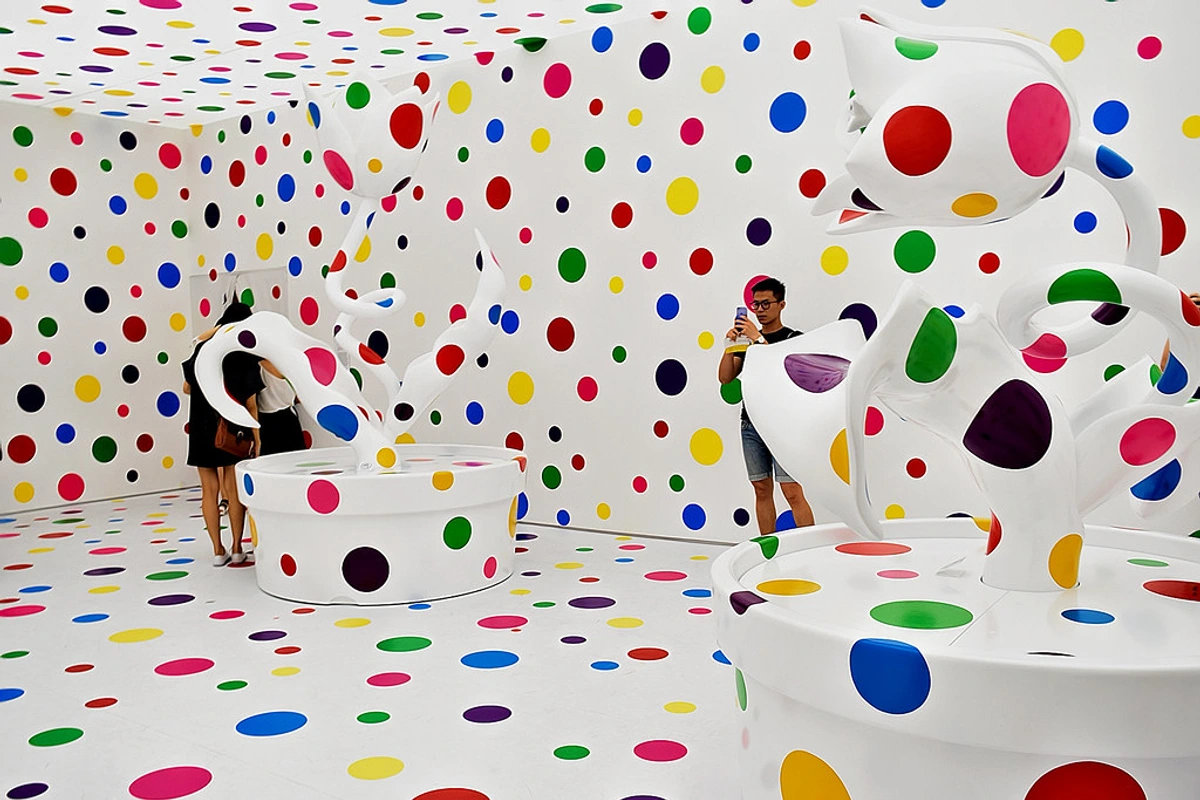
Do artists ever lose their perspective?
Sure. Burnout happens. That’s why many artists create series—one perspective exhausts them. Van Gogh’s sunburnt yellows became somber greens as his mood shifted. The canvas doesn’t lie.
The Evolution of Perspective: How Artists Change Over Time
Here's something that doesn't get discussed enough: artistic perspective isn't static. It evolves throughout an artist's life, sometimes dramatically. But it's not just about aging or accumulating experiences—though those matter—it's about the fundamental instability of seeing itself.
I went through what I now call my "perspective crisis" at thirty-five. I'd built a successful career painting urban landscapes, developed a recognizable style, gained gallery representation, was making good money. By all external measures, I was succeeding as an artist. But privately, I was miserable. Every painting felt like a repeat of the last. I was executing a style rather than discovering something new. The perspective that had once felt authentic had become a prison.
It took me another five years to understand what had happened: my perspective hadn't evolved because I'd stopped taking risks. Success had made me conservative—I was painting what I knew would sell, what galleries expected, what collectors recognized as "my work." I'd stopped asking genuine questions and started producing answers I already had. My perspective had hardened into a brand.
Breaking out of that required deliberately sabotaging my own success. I started painting with materials I hated (I'm naturally drawn to bright colors; I forced myself to work in grayscale for a year). I stopped showing my work to galleries and dealers. I destroyed paintings I knew were "good" because they felt too comfortable. It was terrifying and necessary. The perspective that eventually emerged was rougher, less polished, more honest—and completely different from what had made me successful in the first place.
This taught me that perspective doesn't just evolve passively over time. It requires active cultivation, willingness to abandon what's working, courage to embrace uncertainty. The artists I most admire aren't the ones who found their style and perfected it—they're the ones who kept outgrowing their own certainties, who were willing to make work that confused their existing audience, who treated security as a warning sign that they weren't pushing hard enough.
Consider the late work of artists who produced their most important work in old age—Goya's Black Paintings, Titian's late myths, Monet's water lilies, Nevelson's monumental sculptures. These aren't just older versions of their earlier work; they're qualitatively different, operating by different rules, animated by different questions. Something happens when artists stop caring about legacy, reputation, market success—when mortality becomes more present than ambition. The perspective shifts from "How do I make great art?" to "What does it even mean to make art at all?"
This pattern suggests that perspective isn't just about accumulating skill and knowledge—it's also about shedding illusions, about what falls away when the urgency for external validation diminishes. The young artist often paints for an imagined audience of critics, peers, collectors. The old artist often paints for the sheer necessity of it, because not painting would be a kind of death. That shift from external to internal motivation doesn't necessarily make the work "better," but it makes it different in fundamental ways.
I've noticed this pattern in my own aging: the questions that animated me at twenty—about recognition, influence, innovation—have mostly fallen away. The questions that animate me now are quieter: How do you make work that's honest? What does it mean to create something beautiful in a world full of suffering? How do you keep seeing freshly when your eyes are tired? The perspective hasn't just evolved—it's simplified, stripped down to essentials that felt irrelevant when I was younger.
This evolution isn't always toward greater complexity. Sometimes it moves toward radical simplicity. Sometimes it circles back to questions that seemed settled decades earlier. Sometimes it breaks entirely with everything that came before. The only constant is that it refuses to stay still. Look at Picasso—he went through distinct periods (Blue, Rose, African-influenced, Cubist, Classical, Surrealist) that weren't just stylistic changes. They reflected fundamental shifts in how he saw the world.
But here's what I think is even more interesting: perspective doesn't just evolve in response to life experience—it evolves in response to the work itself. Every painting you make teaches you something, and what you learn changes how you approach the next painting. It's a feedback loop: your perspective generates the work, the work teaches you about your perspective, and that new understanding changes your perspective for the next work.
I experienced this myself when I went through what I now think of as my 'color panic' period. For months, every painting I made seemed to default to the same muddy palette. I was frustrated, convinced I just didn't understand color theory well enough. I read books, took workshops, studied the masters—nothing helped. Then one day, working on what I'd decided would be my last painting before giving up, I ran out of my usual paints and had to use some old tubes I'd forgotten about. The colors were vivid in a way that felt almost embarrassing to me. But something happened when I started mixing them—the painting came alive in ways I hadn't experienced in months.
Looking back later, I realized what had happened: I'd been so focused on getting color "right" that I'd lost touch with what colors actually meant to me emotionally. My color panic wasn't a technical problem; it was a perspective problem. I was trying to paint colors that I thought were "correct" rather than colors that felt true to my experience. Those old, forgotten paints forced me out of my overthinking and back into my intuition.
What fascinates me now is how I could have been so blind to my own patterns. Was I afraid of being too emotional, too obvious, too vulnerable? Had I absorbed some idea that "serious" art needed to be restrained, muted, respectable? The answers aren't simple, but the experience taught me that perspective operates below the level of conscious decision-making. Your choices reveal what you actually believe about art, which might be completely different from what you think you believe.
Looking back later, I realized what had happened: I'd been so focused on getting color 'right' that I'd lost touch with what colors actually meant to me emotionally. My color panic wasn't a technical problem; it was a perspective problem. I was trying to paint colors that I thought were 'correct' rather than colors that felt true to my experience. Those old, forgotten paints forced me out of my overthinking and back into my intuition.
This evolutionary process isn't always smooth or linear. Some artists have periods of rapid transformation followed by years of consolidation. Others change gradually over decades. Still others have several distinct 'careers' within one lifetime, moving through completely different approaches at different stages.
Consider Philip Guston's trajectory: early figurative work, then decades as an important abstract expressionist, then a shocking return to figurative work in his later years. Critics initially rejected his late work, calling it crude and embarrassing. But Guston was following his evolving perspective, and we now recognize those late paintings as among his most powerful. He wasn't regressing—he was responding to an America that seemed to demand a different kind of engagement, a different way of seeing.
I see this pattern repeatedly in art history: an artist develops a successful way of working, achieves recognition, then abandons that success to pursue something riskier and less certain. It's as if the comfort of mastery becomes uncomfortable—as if staying in one place, even a successful place, feels like a kind of death.
This suggests that artistic development isn't about arriving at a destination, but about remaining responsive to your own evolution—to the questions that keep opening up as previous questions get answered, or sometimes as previous questions reveal themselves to be the wrong questions entirely.
I find this comforting, honestly. The pressure to 'find your style' and stick with it forever can be paralyzing. But the truth is, your perspective should change as you do. The way I saw the world at twenty—with all that certainty and anger and romantic idealism—is different from how I see it now. If my paintings still looked the same, that would mean I hadn't grown.
Some artists have dramatic transformations:
- Philip Guston started as an abstract expressionist and ended up painting cartoonish, disturbing figurative works. He didn't 'lose his way'—he followed his changing perspective into uncomfortable territory. What's less discussed is the backlash he faced—former friends and colleagues felt betrayed, as if he'd abandoned the cause of abstraction. His late work was initially rejected as crude, embarrassing, an aesthetic failure. It took years for critics to recognize that Guston hadn't abandoned sophistication—he'd discovered a different kind of sophistication, one that could accommodate political rage and personal doubt, that refused to separate formal questions from moral ones. His perspective evolved toward greater honesty, which meant accepting ugliness as a legitimate artistic language.
- J.M.W. Turner began painting realistic landscapes and gradually dissolved them into almost pure light. As he aged, he seemed less interested in what things looked like and more interested in what they felt like. But this wasn't just aesthetic evolution—it paralleled his growing political radicalism. The same Turner who painted dissolving forms was also advocating for workers' rights, supporting Chartist demonstrations, using his position to speak against social injustice. His technical experiments with light were inseparable from his moral vision of a world where old hierarchies were breaking down, where everything solid was melting into air. He wasn't just painting pretty sunsets—he was painting historical transformation as sensory experience.
- Georgia O'Keeffe initially painted realistic depictions but moved toward abstraction as she developed her unique vision of flowers and landscapes. What's fascinating is how her perspective was shaped by her determination to be taken seriously in a male-dominated art world. Male critics constantly sexualized her flower paintings, reading them through Freudian lenses that reduced her work to biology. O'Keeffe's response was to push further into abstraction—not to deny the bodily associations, but to complicate them, to insist that her work operated on multiple levels simultaneously. Her perspective evolved partly in dialogue with, partly in resistance to, the way audiences insisted on misreading her intentions. She wasn't just developing a personal style—she was fighting for control over her own artistic meaning.
These weren't random changes. They were artists responding to shifts in their inner lives, their beliefs, their relationships to mortality, their understanding of what art could do. Your perspective isn't something you arrive at; it's something you travel with. But here's what art history often sanitizes: this traveling is rarely smooth or celebrated in the moment. Guston's late work was panned. Turner was called mad. O'Keeffe was patronized. The perspectives we now consider visionary often seemed like failures or betrayals when they first appeared.
This suggests something uncomfortable: if your perspective is genuinely evolving, you should expect to confuse, disappoint, or alienate people who loved your earlier work. Evolution means outgrowing your existing audience as much as it means growing into new territory. The artists who maintain consistent popularity across decades are often the ones who found something successful and stopped risking it—which is another way of saying they stopped growing.
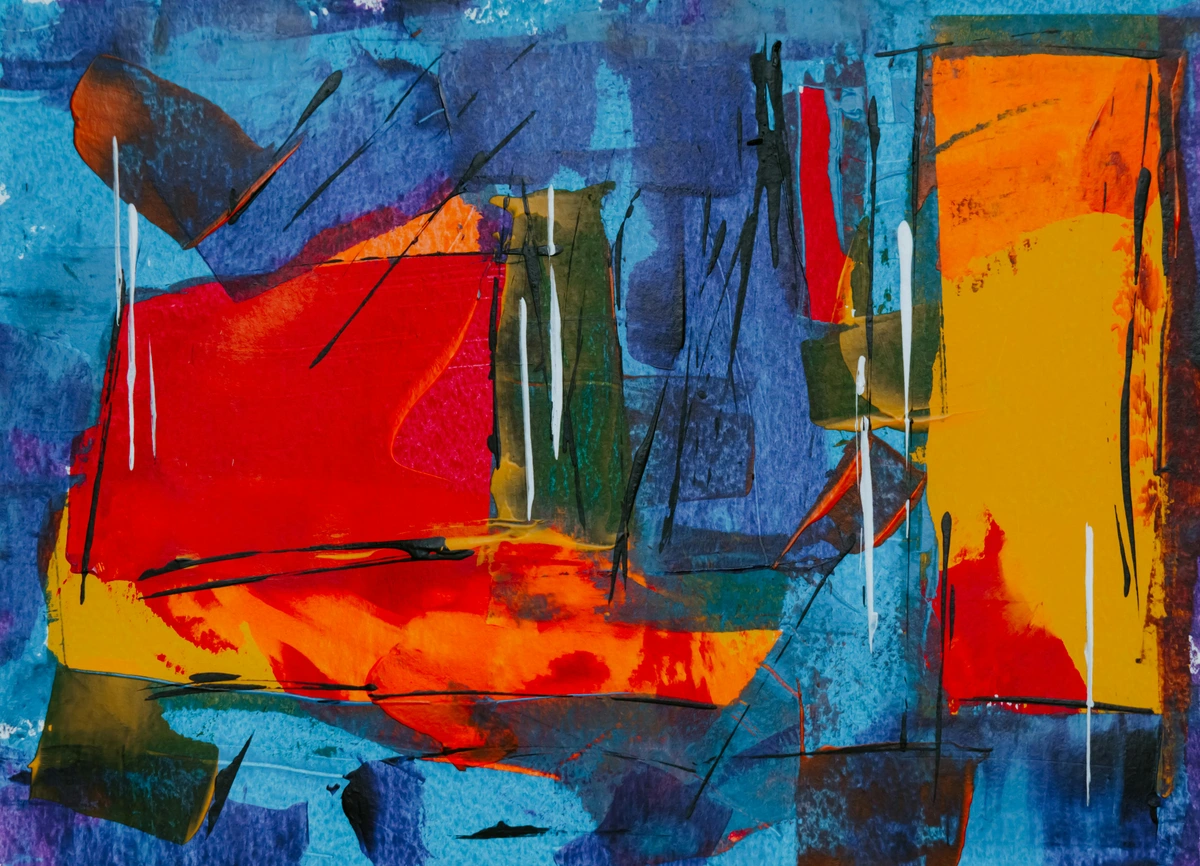
I used to worry that changing my style would confuse people or make me seem scattered. Then I realized: consistency is overrated. Growth is underrated. If you're the same artist at fifty that you were at twenty-five, you probably haven't been paying attention to your life.
The Transformative Power of Artistic Perspective
I think the most amazing thing about artistic perspective is its ability to change how you see everything else. It's like getting prescription glasses for the first time—suddenly you realize how blurry your vision was before.
But this transformation isn't just about seeing art differently—it's about seeing everything differently. When you've spent time with abstract art, you start noticing abstract qualities in everyday life: the way shadows create unexpected shapes on a wall, the way rain makes patterns on a window, the way light hits a building at a certain time of day. The world becomes endlessly fascinating because you're constantly seeing formal relationships, color harmonies, compositional possibilities.
This trained perception spills over into encounters with art itself in the most unexpected ways. I remember visiting a friend in Singapore who took me to see the city's famous vertical gardens—massive walls covered in living plants, creating intricate patterns of green against concrete. "Look at that," he said, pointing to where one type of plant gave way to another, creating a subtle texture shift. "This is why I could never be a minimalist. Nature doesn't do minimalism—it does complexity within simple forms."
That observation changed how I thought about both minimalism and nature. I started noticing how much of what we call "minimalist" is actually incredibly complex—the way a Judd box reflects light differently depending on where you stand, how a Reinhardt black painting reveals subtle color variations as your eyes adjust, how Agnes Martin's pencil lines create optical effects that seem impossible given their simplicity. My friend had been trained as a botanist, not an art critic, but his perspective helped me see familiar art with new eyes.
This is the thing about perspective: it's transferable. Skills learned in one domain illuminate others in ways you'd never predict. A friend who's a mechanic once looked at a sculpture I was working on and said, "The problem is your center of gravity is off." He was right—what looked like an aesthetic problem was actually a physics problem, and he saw it immediately because mechanics had trained him to think about weight and balance in ways art school hadn't taught me.
I've started deliberately seeking out perspectives from outside the art world. I ask mathematicians about symmetry, dancers about gesture, chefs about color and composition, programmers about systems and structure. Each discipline offers a different lens for seeing the same fundamental questions about form, meaning, and human experience.
The most fascinating thing I've discovered is that these other fields often have clearer language for concepts that the art world treats as vague or mysterious. Mathematicians have rigorous ways of talking about patterns and relationships. Dancers have precise vocabulary for movement and expression. Chefs understand how different elements work together to create sensory experiences. These aren't metaphors—they're different frameworks for thinking about the same fundamental human activities: creating, organizing, expressing, experiencing.
This cross-pollination of perspectives is how art evolves. The invention of perspective in Renaissance painting borrowed from geometry and optics. The development of photography changed how painters thought about representation. The discovery of African art transformed European modernism. Today, neuroscience and computer science are changing how we understand perception and creativity.
The most exciting art often happens at the boundaries between disciplines—when someone takes a concept from one field and applies it to another, creating something neither could have produced alone. This is why insular art worlds stagnate while porous ones flourish. New perspectives don't just come from within art; they come from everywhere.
This trained vision spills over into other domains too. You might find yourself more sensitive to the aesthetics of food, or fashion, or architecture. You might start noticing how political speeches use visual rhetoric, or how advertising manipulates color and composition to create emotional responses. You might become more aware of the design of the objects you use every day, or the way cities are organized spatially.
The funny thing is, once this way of seeing gets activated, you can't turn it off. I find myself unconsciously analyzing the color schemes of restaurants, the composition of movie frames, the way clothing hangs on people's bodies. It's not necessarily "better" than not seeing this way—sometimes it's exhausting—but it's definitely richer and more complex.
The most profound transformation, though, is internal. Learning to appreciate diverse artistic perspectives teaches you that your way of seeing isn't the only way, or even necessarily the best way. This has political implications: if there are multiple valid ways to see visual reality, maybe there are multiple valid ways to organize society, or distribute resources, or understand human nature. Art becomes training for democracy—practice in holding multiple perspectives simultaneously without demanding that one must vanquish the others.
I witnessed this transformation in my nephew, who grew up in a politically homogeneous suburb where everyone looked, thought, and voted the same way. When he was sixteen, I took him to a contemporary art museum—not because I thought it would "improve" him, but because I needed to kill an afternoon. We ended up in a gallery of politically charged work: paintings about immigration, sculptures about police violence, installations about climate change. Much of it came from perspectives completely alien to his experience.
I watched him struggling with it, his face showing exactly what you'd expect from a privileged teenager encountering work that challenged his assumptions: confusion, defensiveness, the impulse to dismiss. But something shifted when we stood before a video piece by a Palestinian artist—beautiful, haunting footage of daily life under occupation. My nephew sat on the gallery floor and watched the entire thirty-minute loop. When it ended, he didn't say anything for a long time. Finally: "I never thought about what that actually looks like."
That moment didn't change his politics overnight—these things never do. But it planted a seed of doubt about his certainties, a crack in the monolith of his inherited worldview. Over the next few years, I watched him seek out perspectives that challenged him: reading authors from different cultures, learning languages, eventually traveling to places that forced him to question his assumptions. That single afternoon of art didn't convert him to anything—it inoculated him against the idea that his perspective was universal.
This is what makes art dangerous to authoritarian thinking. Authoritarianism depends on the belief that there's only one correct perspective—the leader's, the party's, the nation's. Art insists on multiplicity, ambiguity, the legitimacy of seeing differently. When you've spent time with paintings that refuse to resolve into simple meaning, you become resistant to political rhetoric that offers simple answers to complex problems. When you've wrestled with art that comes from radically different life experiences than your own, you become suspicious of political narratives that depend on demonizing otherness.
The connection isn't automatic or guaranteed—you can appreciate artistic complexity while remaining politically simplistic—but the skills overlap. Both require tolerance for ambiguity, willingness to sit with discomfort, capacity to hold multiple possibilities without premature closure. The art critic Peter Schjeldahl once wrote that looking at art is "the opposite of shopping"—instead of choosing what you already want, you're learning to want what you didn't know existed. That's also the opposite of ideology, which tells you what to want and why you already have it.
I think this is why regimes that exert total control always turn their attention to art eventually. It's not enough to control what people think—you have to control how they see, because seeing is the gateway to thinking differently. When you eliminate artistic alternatives, you eliminate the training ground for imagining political alternatives. The imagination atrophies, not because people become less intelligent, but because they lose access to the tools that exercise imaginative capacity.
This is the paradox of art's political role: it's most powerful when it's least instrumental. A painting that's explicitly "political" in its subject matter might mobilize people who already agree with its message. But a painting that teaches you how to see differently—that expands your capacity for perspective-taking, that makes you comfortable with complexity—changes how you engage with all political questions, not just the ones the painting addresses directly. It's the difference between giving someone a fish and teaching them to fish, except the fish is democracy and the fishing rod is your capacity to imagine that things could be otherwise.
But this training only works if we actually engage with diverse perspectives, not just with work that confirms what we already believe. I see this failure in both conservative and progressive art worlds—the tendency to create echo chambers where "diverse voices" actually means "different people saying the same things." Real perspective-taking requires encountering work that genuinely unsettles you, that comes from frameworks you don't share, that operates by values you find foreign or even objectionable.
The philosopher Richard Rorty argued that moral progress happens through "sentimental education"—expanding the circle of people we can imagine as "one of us." Art is perhaps the most powerful technology for sentimental education we've invented. A novel can make you care about characters you'd never meet in real life. A painting can make you feel the humanity of subjects you've been taught to see as alien. A film can reveal the dignity in experiences you've been trained to pity or dismiss.
This education isn't automatic. You can consume vast amounts of art without ever having your perspective challenged—in fact, most people do. But when it works, when you genuinely encounter something that makes you see differently, it changes not just what you think but what you're capable of feeling. That capacity—to feel with and for people whose experiences differ from yours—is the psychological foundation of democratic life.
The political theorist Hannah Arendt wrote that the most dangerous people aren't the ones who do evil, but the ones who can't think from anyone else's perspective. She called this inability "thoughtlessness"—not stupidity, but a kind of imaginative poverty, a failure to access the mental world of others. Art fights thoughtlessness systematically. It force-feeds you perspectives you didn't choose, experiences you haven't had, ways of seeing that disrupt your certainties.
This is uncomfortable work. It means allowing yourself to be confused, challenged, even offended. It means sitting with art that you don't immediately like or understand. It means recognizing that your aesthetic and political judgments might be limited by your own unexamined assumptions. But the payoff is enormous: you become more interesting to yourself, more useful to others, more capable of navigating a complex world without collapsing into defensiveness or despair. Art becomes training for democracy—practice in holding multiple perspectives simultaneously without demanding that one must vanquish the others.
But here's where it gets genuinely difficult: this democratic training can become uncritical relativism if we're not careful. The key distinction—and I think about this constantly—is the difference between respecting multiple perspectives and treating all perspectives as equally valid. Some perspectives are constrained by ignorance, prejudice, or bad faith. Some emerge from careful thought while others emerge from lazy assumptions. The goal isn't to abandon judgment—it's to develop better judgment by testing your own assumptions against genuinely different ways of thinking, then refining your criteria through those encounters. Democracy doesn't require us to believe that every opinion is equally valuable; it requires us to create conditions where better ideas can emerge through open encounter with different perspectives, where the strongest arguments prevail not through power but through persuasion.
Of course, some might argue that this sounds like moral relativism. If all perspectives are valid, does that mean any perspective is valid? Here's where it gets interesting. Art actually teaches the opposite of relativism—it teaches discrimination.
When you spend hundreds of hours looking at paintings, you develop incredibly strong preferences and incredibly nuanced judgment. You become more, not less, decisive about what you think works and what doesn't. The crucial difference is that your criteria expand beyond simple categories like 'good' and 'bad.' You might prefer Rothko to Bouguereau not because one is 'better art' in some absolute sense, but because one is more successful at what it's trying to do, or because it asks more interesting questions, or because it illuminates something you hadn't seen before.
This is what the philosopher Isaiah Berlin called 'value pluralism'—the recognition that there are multiple genuine human goods that can't always be reconciled with each other. Freedom and equality, justice and mercy, tradition and innovation—these things sometimes conflict, and no single perspective can resolve that conflict perfectly.
Art doesn't teach you that anything goes. It teaches you that many things go, and that choosing among them requires wisdom rather than rules.
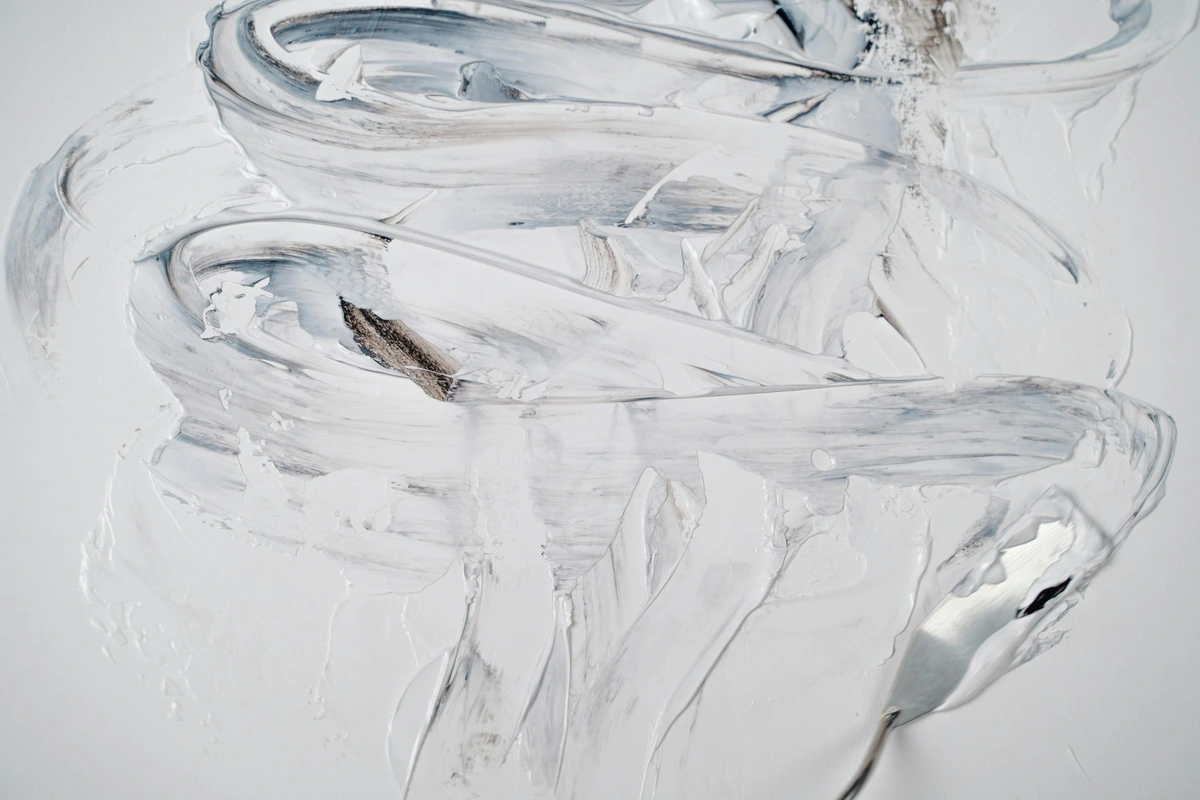
This is why art education matters so much, especially now. We live in a world where algorithms feed us increasingly narrow versions of reality, where social media creates echo chambers, where political polarization means we rarely encounter perspectives that challenge our own. Art forces us out of our comfort zones. It insists on complexity. It demands that we hold multiple truths simultaneously.
This isn't some abstract threat facing democracy. There's fascinating research on what happens to societies when they stop investing in what we might call 'perspective-taking' institutions. The political scientist Robert Putnam's work on social capital showed that the decline of community organizations—from bowling leagues to reading groups to neighborhood associations—correlated with increased political polarization.
These seemingly unrelated activities had something crucial in common: they forced people to interact with others who weren't exactly like them. They were micro-practices in perspective-taking. You might not care about someone's politics while you're trying to keep a book club from collapsing or coordinate a community garden.
Art museums and galleries, at their best, serve exactly this function. They're one of the few remaining spaces where a retired factory worker, a college student, a wealthy donor, and an immigrant family might all encounter the same object and have to negotiate their different responses to it. They're spaces where disagreement can be generative rather than destructive.
The alarming thing is that as we've moved more of our lives online, we've outsourced our perspective-taking to algorithms that profit from telling us exactly what we want to hear. It's not just that social media creates echo chambers—though it does—it's that it trains us to expect our perspective to be constantly validated. Art does the opposite. It's constantly challenging your perspective, asking you to step outside your default settings, offering you lenses you didn't know existed.
I think this is why certain authoritarian regimes are so threatened by abstract or experimental art. It's not just that the art might contain political messages—it's that the art models a way of thinking that's fundamentally incompatible with authoritarianism. When you learn to appreciate multiple perspectives in art, you become resistant to single-perspective thinking in general. You develop a tolerance for ambiguity, a capacity for nuance, and an appreciation for complexity that authoritarianism cannot tolerate.
When you learn to appreciate how a Dutch master sees light, or how an African mask expresses emotion, you start seeing those same qualities in your daily life. A sunset becomes more than just colors—it becomes a Rothko painting. A crowded street becomes more than just people—it becomes a Basquiat canvas.
The art critic John Berger wrote that 'seeing comes before words.' I'd add that certain kinds of seeing come before certain kinds of thinking. When you learn to perceive the world through multiple aesthetic frameworks, you develop a kind of mental flexibility that spills over into other areas. You become better at holding multiple possibilities in your mind simultaneously. You become more comfortable with ambiguity. You get better at recognizing that your way of seeing isn't the only way—or even necessarily the best way.
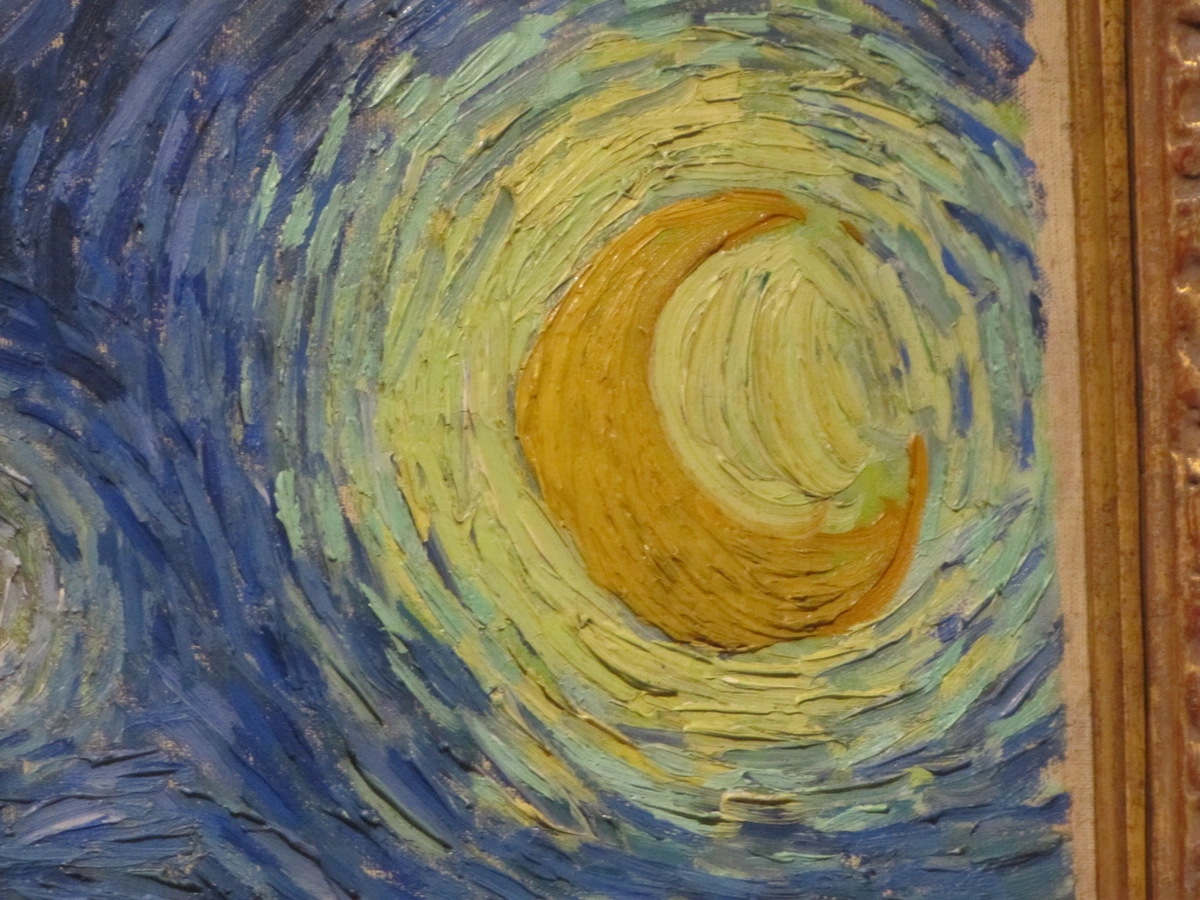
I've noticed this in my own life. Before I seriously studied art, I tended to see things in binary terms: good/bad, beautiful/ugly, right/wrong. Art taught me to appreciate nuance, to look for context, to understand that something can be both beautiful and disturbing, both true and false, both skillfully executed and emotionally empty. These aren't contradictions; they're complexities.
The military historian John Keegan argued that what made great generals wasn't just strategy—it was their ability to hold in mind what the battlefield looked like from multiple perspectives simultaneously. They had to understand how the terrain appeared from the enemy's position, how different troop formations would look from various angles, how weather and light would affect visibility across the field. This kind of mental flexibility is remarkably similar to what happens when we learn to appreciate art.
It's also, interestingly, what happens in psychological therapy. Good therapists don't just give you answers. They help you see your own situation from multiple perspectives. They ask, 'How would your relationship with X look if you weren't afraid of Y? What if this problem is actually an opportunity in disguise? What would your wisest self say about this situation?'
Art trains exactly this muscle—the ability to step outside your default perspective and inhabit other ways of seeing, even temporarily. It's mental cross-training for situations where binary thinking fails you. And in a complex world, binary thinking fails you often.
But there's an important complication: this perspective-taking can become a form of paralysis if it's not balanced with the ability to make decisions and take action. I've known artists so skilled at seeing every side of a situation that they become incapable of committing to any particular position. Their work becomes endlessly subtle but ultimately unmemorable because it never crystallizes into a definite statement. The goal isn't to abandon conviction in favor of perpetual ambiguity—it's to hold conviction while remaining aware of its limitations, to make decisive choices while recognizing their contingency. This is the paradox: you need both the skeptical awareness that sees multiple perspectives and the committed action that chooses one anyway. The best artists I know are the ones who can inhabit this paradox without freezing.
I remember walking home after spending hours in a museum with a Joan Mitchell exhibition. Suddenly, the way leaves moved in the wind looked different—more gestural, more expressive. The chrome fender of a parked car caught light in a way that made me think of Ellsworth Kelly. My actual vision hadn't changed, but my perception had been rewired. I was seeing the world through Joan Mitchell's eyes—or at least, through the eyes she had lent me for the afternoon.
But what happens when this perceptual rewiring becomes more than just an aesthetic experience? What happens when it starts to change how you think, how you vote, how you relate to other people?
I witnessed this transformation in someone I'll call Sarah, who worked as a corporate lawyer—logical, analytical, oriented toward measurable outcomes and clear criteria. She came to art almost accidentally, dragged to museums by friends, initially resistant to what she saw as vague, subjective, self-indulgent nonsense. She literally couldn't understand why anyone would value work that didn't have clear purpose or function.
Then something shifted—I'm still not sure what. Maybe it was seeing her first Rothko, or maybe it was a conversation with a stranger in a gallery, or maybe it was just accumulated exposure slowly rewiring her brain. But over about two years, I watched her move from dismissing abstract art to appreciating it to finally needing it.
The change wasn't just aesthetic. She started talking differently about her work, questioning assumptions she'd never examined, seeing complexity in situations she would previously have treated as straightforward. She told me once that studying art had taught her that "not everything important is measurable, and not everything measurable is important"—a revolutionary insight in her corporate environment.
She didn't quit her job or turn into a different person. She just became more nuanced, more comfortable with ambiguity, more willing to consider multiple perspectives before reaching conclusions. She started asking questions in meetings that she wouldn't have known how to ask before: "What are we not seeing here? What if we approached this completely differently? What assumptions are we making that we haven't examined?"
This is what I mean when I say art trains democratic capacities. Sarah wasn't learning about art—she was learning how to think in ways that her professional training hadn't taught her. Her legal education had emphasized logical reasoning, precedent, clear argumentation. Her art education (self-directed as it was) taught her everything else: how to sit with uncertainty, how to recognize patterns, how to trust intuition, how to appreciate complexity, how to see from multiple angles.
Authoritarian thinking hates this stuff. It wants clear categories, unambiguous answers, single narratives. Art insists on the opposite: multiple meanings, irreducible complexity, voices that refuse to harmonize. When you've spent time with paintings that mean six contradictory things simultaneously, political propaganda feels crude and obvious. When you've learned to appreciate perspectives radically different from your own, you become resistant to rhetoric that depends on dehumanizing opponents.
This isn't automatic or guaranteed—you can love Rothko and still vote for fascists—but the skills overlap. Both require tolerance for ambiguity, comfort with complexity, capacity to hold multiple possibilities without premature closure. Both require recognizing that your way of seeing isn't the only way, that other perspectives have legitimacy, that understanding doesn't require agreement.
The writer Teju Cole has written beautifully about this. He argues that looking at art teaches you how to pay attention—not just to art, but to everything. When you've trained yourself to notice the subtle differences between similar shades of blue in a painting, you're more likely to notice subtle differences in political arguments that seem identical. When you've learned to see how artists make meaning through composition and contrast, you're more likely to see how politicians make meaning through narrative and rhetoric.
Art doesn't just give you different things to see—it gives you different ways of seeing. And those ways of seeing transfer to domains far beyond galleries and museums. They change how you read the news, how you evaluate arguments, how you engage with people who disagree with you, how you navigate complexity in your own life.
I've noticed this in my own behavior. Before I seriously engaged with art, I tended toward binary thinking: good/bad, right/wrong, success/failure. Art taught me to appreciate nuance, to look for context, to understand that something can be both beautiful and disturbing, both true and false, both skillfully executed and emotionally empty. These aren't contradictions—they're complexities that felt like contradictions when I didn't have the tools to think about them.
This matters politically because democratic life requires holding multiple truths simultaneously. You have to believe in your own position while recognizing that reasonable people might disagree. You have to commit to action while understanding that your actions might be wrong. You have to fight for what you believe in while remaining open to changing your beliefs. These aren't just political skills—they're perceptual skills, and art is one of the most powerful ways to develop them.
I don't want to overstate this. Art alone won't save democracy, and plenty of sophisticated art lovers are morally shallow. But I do believe that cultures that value artistic complexity tend to be more resilient than cultures that demand simplicity. When people learn to appreciate work that challenges them, they become more difficult to manipulate with simple narratives. When people develop nuanced aesthetic judgment, they tend to apply that nuance to other domains as well.
The opposite is also true. I worry about the proliferation of what you might call "art substitutes"—entertainment products that deliver aesthetic pleasure without requiring any perceptual work. I'm not against entertainment, but I recognize that it operates differently than art. Entertainment gives you what you already want; art changes what you want. Entertainment confirms your existing perspective; art challenges you to adopt new ones.
When our visual environment consists mostly of entertainment—of images designed to be immediately legible, emotionally obvious, quickly consumed—we lose the practice of looking closely, thinking deeply, sitting with uncertainty. Our perceptual muscles atrophy, and we become more vulnerable to manipulation, more impatient with complexity, more suspicious of anything that doesn't immediately confirm what we already believe.
This isn't hypothetical. We can see it happening. The average person spends more time looking at screens than at the actual world around them, and the images on those screens are increasingly engineered for maximum engagement rather than depth. Algorithms learn what we like and give us more of it, creating feedback loops that narrow rather than expand our perspective. Social media rewards quick reactions, not sustained engagement.
The result is what the philosopher Byung-Chul Han calls the "burnout society"—a culture so focused on productivity and efficiency that it loses the capacity for contemplation, for boredom, for the kind of patient attention that art requires and democracy depends on. When everything becomes content to be consumed, nothing becomes meaning to be wrestled with.
Art fights this, not by offering different content, but by demanding a different relationship to attention. When you stand before a painting, you're practicing a form of attention that has become rare: patient, open-ended, willing to be confused, committed to staying present with something that doesn't immediately deliver value.
That practice spills over. It has to. Once you've learned to pay attention this way, you start paying attention differently everywhere. You notice more, question more, wonder more. You become less satisfied with simple answers because you've learned how rich and strange the questions really are.
This is why I believe art isn't a luxury—it's literally training for being human in a complex world. It's practice in all the skills that authoritarianism destroys: patience, nuance, complexity, empathy, doubt, wonder. When we lose access to art, we lose access to ourselves, to each other, to the world as it actually is rather than as we wish it were.
All of which sounds terribly serious, and maybe that's the problem. Maybe the most radical thing about art is that it's also joyful, playful, pleasurable—that it expands our capacity for delight as much as our capacity for thought. The same skills that help you navigate political complexity also help you appreciate a sunset, a conversation, a moment of unexpected beauty in your daily life.
But that joy isn't separate from the seriousness. It's precisely because art increases your capacity for pleasure that it increases your stake in defending a world where such pleasure is possible. When you've learned to see the world as infinitely rich and mysterious, you become less willing to accept systems that reduce everything to utility and profit. When you've experienced how art can transform your understanding of what's possible, you become committed to defending the conditions that make such transformation possible.
This is why artists have always been among the first targets of authoritarian regimes. It's not because individual artists are especially powerful or their work especially subversive. It's because art itself trains people to think and see in ways that authoritarianism cannot tolerate: complexly, ambiguously, independently, with tolerance for uncertainty and appreciation for difference.
Protecting art isn't about protecting pretty objects. It's about protecting the space where we practice being fully human—where we learn to see the world through others' eyes, where we encounter perspectives that challenge our certainties, where we develop the capacity to navigate complexity without collapsing into fear or dogma. It's about protecting one of the few remaining places where we can practice the skills that democracy desperately needs but rarely teaches.
The next time someone asks you why art matters, you could tell them it makes you a better citizen, a better person, more capable of empathy and complexity. Or you could just say: look at this painting. Stand here with me for a moment. Tell me what you see.
That conversation—that moment of shared attention, of attempting to articulate what feels inarticulable, of encountering something together while seeing it differently—that's where the real magic happens. That's where perspective stops being an abstract concept and becomes a living practice. That's where we learn not just to see art, but to see through art to everything else. This is where artistic perspective stops being "just art" and becomes something closer to spiritual or political practice.
Consider the research on what's called "aesthetic education" in the Soviet Union, where psychologists discovered that workers who regularly visited art museums were harder to manipulate with propaganda. Once you've learned to see the world through dozens of different perspectives, you become suspicious of anyone who claims there's only one correct way to see anything.
There's something almost subversive about this kind of training. Authoritarian regimes consistently suppress experimental art not necessarily because individual paintings contain forbidden messages, but because the very practice of looking at art from multiple viewpoints undermines the single-perspective logic that authoritarianism requires.
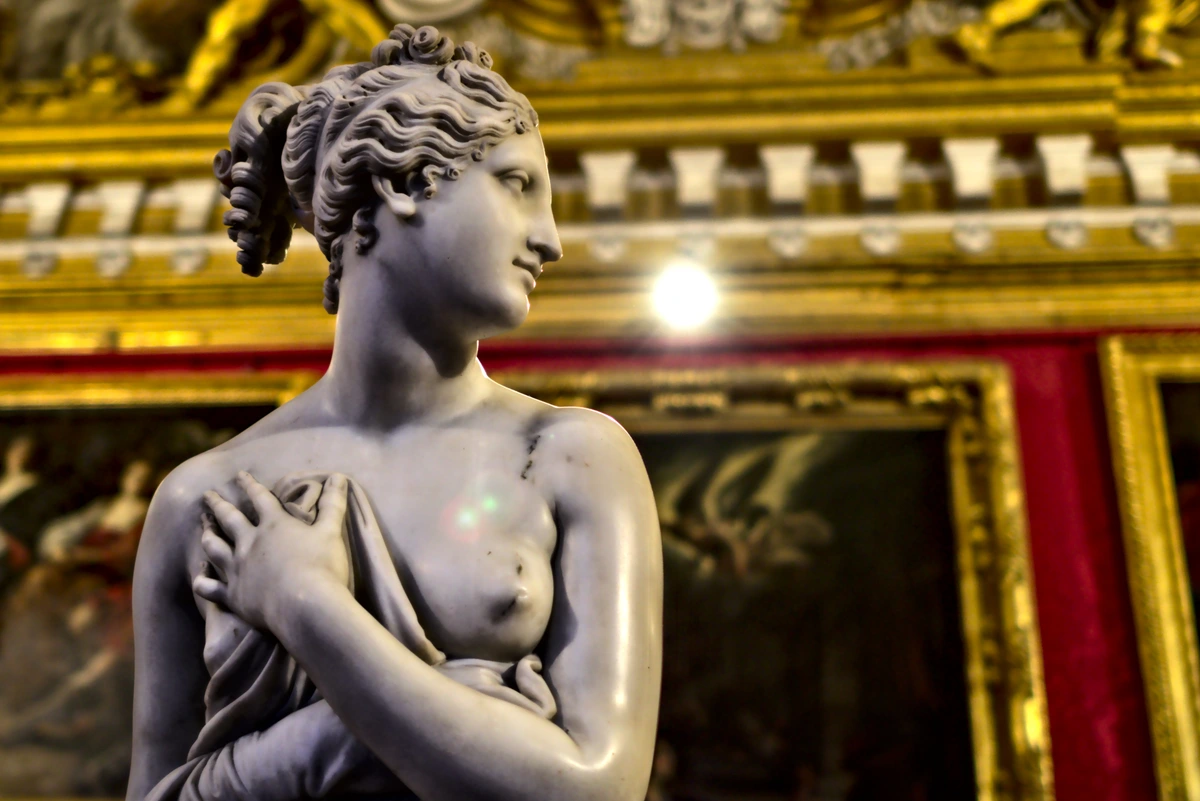
That's the ultimate magic trick: art teaches you to see the world as multiple overlapping realities, all equally true depending on whose eyes you're borrowing. It's like having access to multiple operating systems for reality—you can boot up the Rothko OS, the Basquiat OS, the Hokusai OS, each revealing different aspects of the same world.
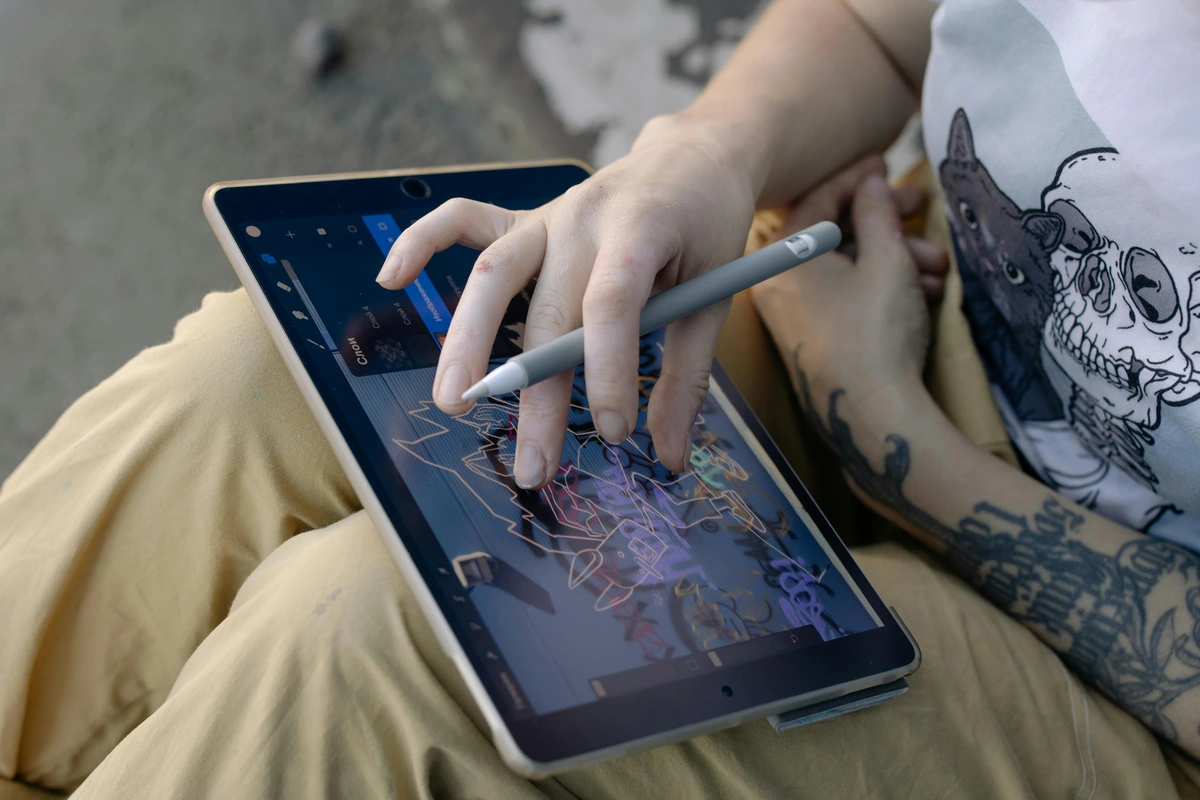
Why This Matters More Than Ever:
In an age of algorithms that feed us increasingly narrow versions of reality, art becomes an act of resistance. It insists on complexity, ambiguity, and multiple truths coexisting. You can't put a painting through a fact-checker. You can't reduce it to binary code. It exists in that messy, gray, profoundly human space between 'true' and 'false,' 'right' and 'wrong.'
But here's the troubling paradox: the same algorithms that threaten to narrow our perspectives also offer unprecedented access to diverse artistic perspectives. A teenager in rural Kansas can see high-resolution images of cave paintings, Japanese prints, and contemporary installations—all in an afternoon. The democratization of access to art is one of the most significant cultural developments in human history, and we're just beginning to understand its implications.
The question isn't whether algorithms will shape our relationship to art—they already do. The question is whether we'll develop the critical skills to use them thoughtfully rather than passively consuming whatever they feed us. Will we become more diverse in our aesthetic tastes, or more homogenized? More adventurous in our explorations, or more trapped in echo chambers?
I see evidence for both possibilities. On one hand, platforms like Instagram expose people to a broader range of art than previous generations could access. A teenager in rural Kansas can discover contemporary artists from Lagos, Tokyo, or São Paulo—something that would have required expensive travel and connections just a decade ago. Museum collections are being digitized at an unprecedented rate, making historically significant work accessible to anyone with internet. This democratization of access is genuine and important. On the other hand, the engagement algorithms that power these platforms are designed to maximize attention, which often means surfacing work that's immediately legible, emotionally obvious, or algorithmically optimized for engagement rather than depth. Quiet, subtle, demanding work struggles to compete with flashy, easily digestible content because the metrics that govern visibility favor immediate response over sustained engagement.
I see evidence for both possibilities. On one hand, social media exposes people to a broader range of art than previous generations could access. I've watched young artists discover influences from cultures they'd never encounter in their local museums or schools. On the other hand, engagement algorithms often reward work that's immediately accessible, emotionally obvious, technically flashy—work that doesn't require the kind of sustained attention that develops deep aesthetic understanding.
The problem isn't that young people are shallow or uncurious—the opposite is true. They're incredibly sophisticated at navigating digital platforms and discovering unexpected work. The problem is that the platforms themselves are governed by metrics that don't distinguish between engagement and understanding, between attention and appreciation. A painting that generates immediate "wow" reactions will outperform a painting that requires ten minutes of quiet looking to reveal its depth, because the algorithms optimize for speed and intensity of reaction rather than quality or duration of engagement. This creates a subtle but pervasive pressure on artists to make work that performs well in the first three seconds of viewing, which inevitably favors certain kinds of art over others—work that's visually striking, emotionally obvious, thematically simple. Work that reveals itself slowly, that rewards sustained attention, that operates at the edges of legibility—these approaches struggle to find oxygen in attention economies designed around quick consumption.
The risk isn't that people will stop looking at art. The risk is that we'll lose the capacity for the kind of looking that changes us—the patient, uncertain, recursive engagement with work that resists easy understanding. When everything competes for attention in the same feed, the quiet work suffers. When everything is reduced to 'content,' the work that demands more than quick consumption gets filtered out.
This is why physical spaces—museums, galleries, public installations—remain crucial even as digital access expands. These spaces slow us down, remove distractions, create conditions for the kind of sustained attention that digital platforms struggle to support. They're not just places to see art—they're places to practice a different way of seeing, a different relationship to attention, a different experience of time.
I've started thinking about this as the difference between viewing and watching. We watch content. We view art. Watching is passive, habitual, often unconscious. Viewing is active, intentional, demanding. The more time we spend watching, the harder it becomes to view—and the more essential it becomes to cultivate the skills that viewing requires.
The most important thing physical spaces do is gather people together in the presence of art—not as isolated consumers, but as a temporary community of attention. I've had some of my most memorable experiences of art while overhearing conversations between strangers, watching children react to work adults found difficult, seeing how different people navigate the same space and encounter the same objects. These social dimensions of art experience can't be replicated digitally.
This doesn't mean digital access isn't valuable—it's revolutionary. But it suggests we need both: the breadth that digital platforms provide, and the depth that physical spaces enable. The challenge is learning to move fluidly between these different modes of engagement, developing the skills each requires while recognizing their different limitations and possibilities.
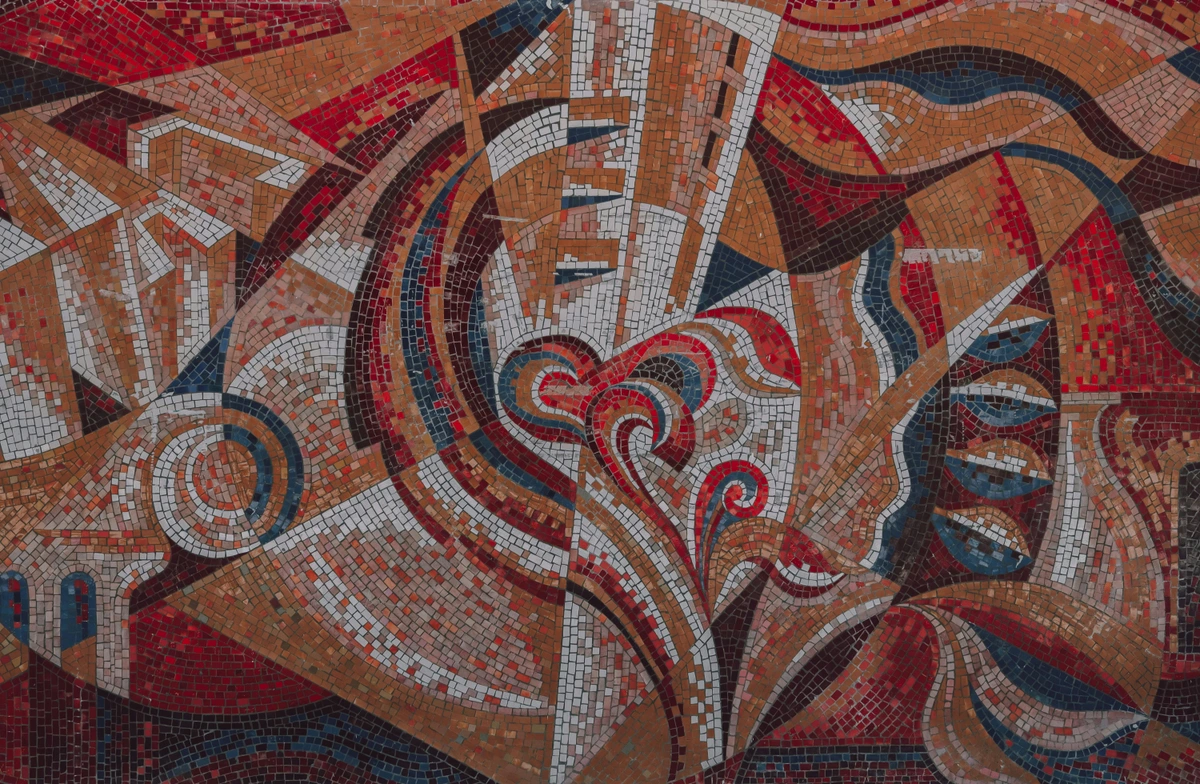
Learning to appreciate diverse artistic perspectives is training for empathy. It's learning to hold multiple realities in your mind simultaneously. If you can understand why someone would paint a solid blue canvas and call it profound, you're better equipped to understand why someone might hold political beliefs that seem incomprehensible to you. Both require entering someone else's reality tunnel.
But there's an important caveat here: some perspectives are inaccessible not because of lack of imagination, but because of lived experience. I can study Holocaust imagery, read survivor testimony, watch documentaries, and still have only the dimmest understanding of what it means to create art after surviving genocide. I can appreciate the technical skill and formal qualities of art made by people with radically different experiences than mine, but I can't truly inhabit their perspective—and attempting to claim that I can is itself a form of appropriation.
This is where the empathy claim gets complicated. When I stand before a painting by an Indigenous Australian artist depicting ancestral stories I have no access to, I can appreciate the visual power, the formal decisions, the technical mastery. But I can't understand the cultural meaning or spiritual significance in the same way someone from that culture would. Recognizing the limits of my understanding is itself a form of respect—and paradoxically, it might bring me closer to genuine empathy than pretending I can "enter" perspectives that aren't mine to inhabit.
I experienced this when a friend who'd grown up in poverty told me, "Your paintings about working-class life are beautiful, but they don't feel like my life." At first, I was defensive. But then I realized she was right—my perspective was looking at working-class life from the outside, finding beauty in its textures and patterns. Her perspective was living inside that reality, experiencing it as constraint rather than aesthetic opportunity. Both perspectives are real, but they're not interchangeable.
The empathy that art fosters isn't about claiming to fully understand other people's experiences. It's about recognizing the depth and reality of those experiences even when they exceed our comprehension. It's about developing the capacity to say, "I don't understand this, but I recognize that it's meaningful, and I'm willing to learn what I can while acknowledging what I can't know."
This capacity for respectful not-knowing is becoming dangerously rare in our culture. We're pressured to have instant opinions about everything, to perform expertise on topics we barely understand, to treat uncertainty as a weakness to be masked rather than an invitation to learn. Art insists on the opposite: it teaches us that some of the most important knowledge can't be captured in simple propositions, that some experiences exceed our capacity to articulate them, that some truths reveal themselves slowly through patient attention rather than quick analysis. The ability to dwell in productive uncertainty—to remain present with something you don't fully understand while remaining open to what it might teach you—is a skill that art develops and democracy desperately needs.
This kind of empathy doesn't require erasing difference or claiming universal access to all human experience. It requires holding two truths simultaneously: "Your experience is valid and real," and "Your experience is different from mine in ways that matter." This is a much more complex form of empathy than simple identification, but it's also more honest and ultimately more useful.
I think about this when I encounter art from traditions I wasn't raised in. I can appreciate Islamic geometric patterns, Japanese woodblock prints, African masks, without pretending I understand them the way believers or practitioners do. The gap between my appreciation and their understanding isn't a failure—it's a recognition of genuine difference. And in a multicultural world, learning to appreciate across difference without claiming mastery is a crucial skill.
This is why the museum guard's comment about people collecting evidence rather than looking matters so much. The superficial engagement with diverse perspectives—checking boxes, accumulating experiences, claiming knowledge you don't actually have—misses the deeper point. Genuine engagement with diverse perspectives teaches you how much you don't know, how partial your own view is, how many ways of being human exist beyond your comprehension.
This realization should be humbling, not intimidating. Recognizing the limits of your perspective is the beginning of wisdom. It's what makes you curious rather than judgmental, open rather than defensive, capable of learning rather than assuming you already know. These qualities are essential not just for appreciating art, but for living responsibly in a diverse world.
The empathy that matters isn't about feeling what others feel—that's impossible and often presumptuous. It's about recognizing that others feel deeply, that their feelings are real even when mysterious to us, and that those feelings deserve respect even when we don't understand them. This recognition alters how we move through the world.
But empathy doesn't mean agreement. I can understand why someone would make a particular political choice based on their life experiences without agreeing with that choice. Similarly, I can understand why an artist made certain formal decisions without necessarily liking the result. Understanding and agreement are different things—and in our polarized moment, we often conflate them.
The key skill that art teaches is holding two seemingly contradictory things simultaneously: I can understand this perspective, AND I can maintain my own. I can appreciate what this artist is doing, AND I can acknowledge that it doesn't work for me personally. I can learn from an approach I disagree with, AND I can continue to pursue my own different approach.
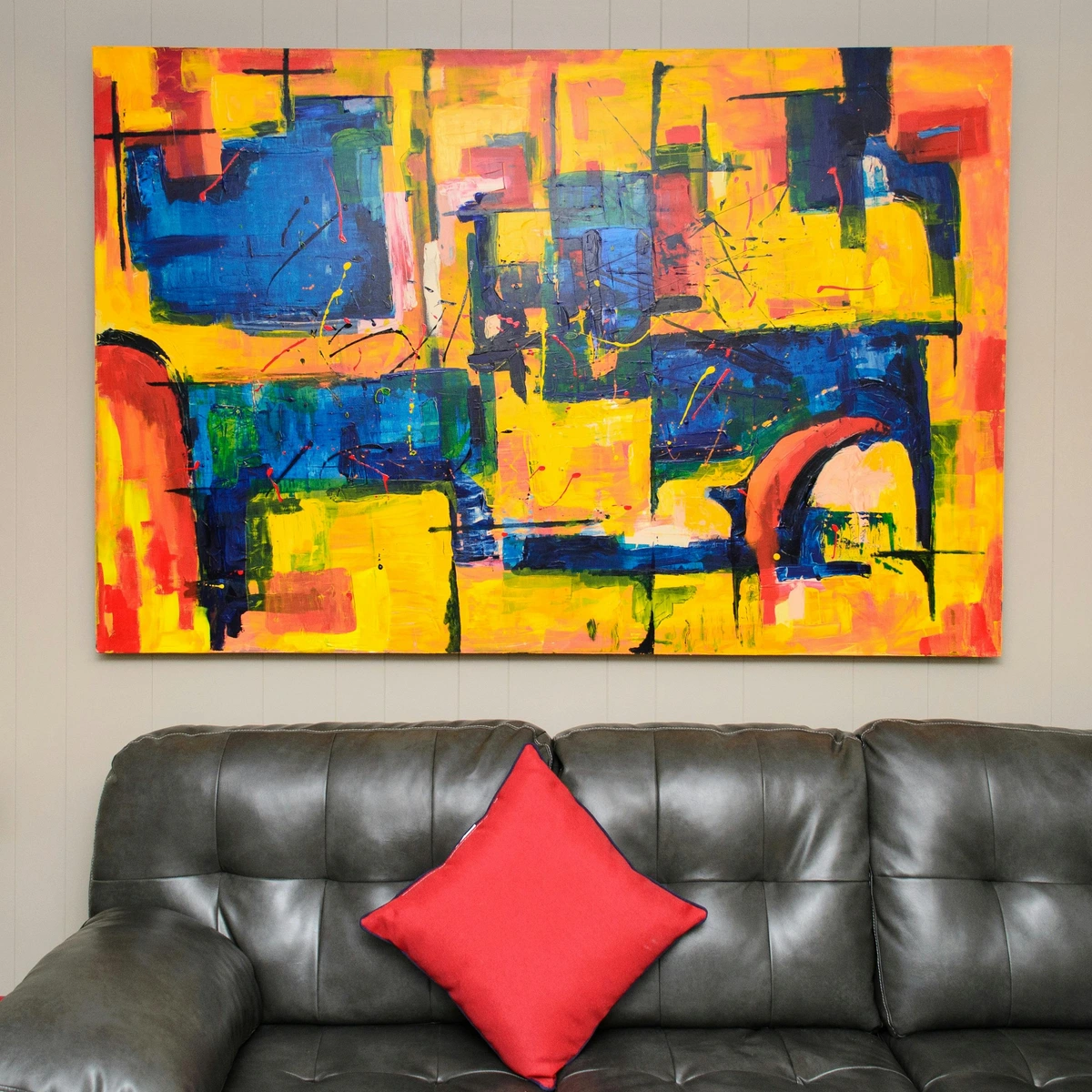
This skill—polyphonic thinking, the ability to hold multiple perspectives simultaneously—is becoming endangered in our culture. We're trained to pick sides, to reduce complex issues to binary choices, to treat disagreement as betrayal. Art insists on a different way of being in the world. It models complexity. It demonstrates that multiple truths can coexist without canceling each other out.
A civil engineer designing water systems for cities in the developing world told me that learning to think like an artist made him better at his job. 'I used to show up with a perfectly engineered solution that looked great on paper,' he said, 'but completely failed to account for how people actually used water, or what the landscape meant to them, or what would happen if I was wrong. Art taught me to approach a villager's perspective not as an obstacle to overcome, but as valuable data that could save the entire project.'
The most sophisticated solution is often the one that accommodates multiple truths simultaneously. A bridge might need to be structurally sound from an engineering perspective, aesthetically pleasing from an environmental perspective, economically viable from a political perspective, and culturally respectful from a human perspective. Insisting that only one of these perspectives matters is how you get elegant failures—bridges that look beautiful but wash away in the first flood, or sturdy bridges that destroy the communities they're meant to serve.
The great myth of the 'objective' solution is that it represents a view from nowhere—a perspective that isn't a perspective. This literally doesn't exist. There's always a perspective. The question is whether you're aware of it or not.
I've noticed this in my own political conversations. Friends who can appreciate challenging art tend to be better at having productive conversations about politics. They're able to understand where the other person is coming from without immediately feeling pressured to agree or disagree. They can hold the conversation in a state of generative ambiguity rather than rushing to resolution. They can appreciate the complexity of other people's positions without feeling threatened by that complexity.
But I've also noticed something more troubling: the same skills that make for good conversation don't necessarily translate to effective political action. Politics requires decision, commitment, sometimes even intransigence. You can appreciate the complexity of your opponent's position while still organizing to defeat them at the ballot box. Understanding doesn't require agreement, and sometimes too much understanding can paralyze action.
I struggled with this during recent political campaigns. I found myself sympathizing with people whose views I fundamentally opposed, understanding how their life experiences led them to conclusions I found dangerous. This understanding didn't make me agree with them—it made me more effective at engaging them, but also more aware of the gap between understanding and endorsement.
This is where the political analogy gets complicated. Art can exist in productive ambiguity indefinitely. Politics often requires choosing sides, making decisions, taking action. The skills that serve you well in a museum—openness to multiple interpretations, willingness to suspend judgment, appreciation for complexity—might not serve you well in a legislative battle or political campaign.
This tension has been bothering me more as I've watched political polarization intensify. I used to assume that more perspective-taking, more empathy, more appreciation for complexity would automatically lead to better political outcomes. But I've started to question this. Effective political action sometimes requires single-minded conviction, strategic simplification, and refusal to see nuance where nuance becomes an excuse for inaction. When you're trying to organize resistance to authoritarianism or push for urgent policy change, the endless openness that serves art appreciation can become a liability. The person who can see every side of climate change might struggle to demand specific action, while the person who sees the issue in simple moral terms might be more effective at mobilizing change. This creates a genuine conflict: the same cognitive flexibility that makes someone a sophisticated art viewer might make them an indecisive political actor.
But I think there's a deeper connection that does matter politically. Art training develops the capacity to imagine alternative possibilities—to ask 'What if things were different?' This is crucial for politics, which is ultimately about imagining and creating different ways of organizing society. When art weakens, the political imagination shrinks. People become unable to envision alternatives to current arrangements, unable to imagine that things could be otherwise.
I've noticed this in discussions about everything from climate change to economic inequality. People who can't imagine alternative ways of organizing society often can't imagine alternative solutions to social problems. They're trapped in the current reality, unable to see beyond it. Art trains exactly this capacity—the ability to envision worlds that don't exist yet, to imagine forms of human flourishing that haven't been realized.
This doesn't mean artists should run the world—most of us would be terrible at it. But it does mean that healthy political cultures need robust artistic cultures. When people lose the capacity for imaginative thinking, for perspective-taking, for holding complexity, they become vulnerable to authoritarian leaders who offer simple stories and clear enemies. They become unable to engage productively with difference, uncertainty, and change.
The connection isn't that art makes you a better political actor in the short term. It's that art keeps alive the imaginative capacities that democracy depends on in the long term. When we lose the ability to see through others' eyes, to imagine alternative futures, to hold multiple truths simultaneously, we've lost something essential to democratic life.
This is why I've become less interested in whether individual paintings are 'political' in their content, and more interested in whether they exercise the mental muscles that democracy requires. A painting that teaches you to see complexity, to appreciate ambiguity, to recognize the limits of your own perspective—that's doing political work, even if it's a still life or an abstract composition.
This perspective helps explain why authoritarian regimes consistently target artists and cultural institutions. It's not just that specific artworks might contain forbidden political messages—though that matters—it's that the practice of art itself cultivates habits of mind that authoritarianism cannot tolerate: questioning assumptions, imagining alternatives, tolerating ambiguity, thinking metaphorically, seeing from multiple viewpoints. When you've spent hours in a museum learning to appreciate radically different ways of seeing, you become naturally suspicious of anyone who claims there's only one correct way to view anything.
This isn't a coincidence. Looking at art is practice in exactly the kind of thinking our democracy desperately needs: the ability to encounter difference without demanding conversion, to appreciate complexity without becoming paralyzed, to hold multiple perspectives without losing your own.
There's actually research supporting this connection. Studies in what's called 'aesthetics and civic engagement' have found that people who regularly engage with the arts—not necessarily as creators, but as thoughtful viewers—show higher levels of what political scientists call 'democratic competence.' They're better at understanding complex policy issues, more tolerant of opposing viewpoints, and more likely to participate in civic life. It's as if learning to appreciate artistic complexity trains the same mental muscles you need to navigate political complexity.
I don't think this is because art makes you smarter in some generic sense. I think it's because art teaches you how to handle ambiguity. In politics, we're often presented with false binaries—you're either for us or against us, either patriotic or traitorous, either progressive or regressive. But serious engagement with art reveals that most meaningful questions can't be resolved that way. A painting can be both beautiful and disturbing, both technically masterful and emotionally dishonest, both revolutionary and traditional. It can hold contradictions without collapsing into nonsense.
This tolerance for ambiguity is particularly crucial when we consider perspectives that genuinely unsettle us—art that challenges our moral commitments or political beliefs. I'm thinking here of artists like Richard Prince, who built a career on rephotographing other people's images, or of Dana Schutz's painting of Emmett Till, which sparked intense debates about who has the right to depict Black suffering. These works raise uncomfortable questions about appropriation, empathy, representation, and the limits of artistic freedom.
The easy response is to simply condemn the work and the artist. The harder, more valuable response is to use the work as an opportunity to examine our own assumptions. What does it mean to say that certain subjects are "off-limits" to certain artists? Where do we draw those boundaries, and why? What happens when the desire to protect vulnerable communities comes into conflict with the principle of artistic freedom? These aren't simple questions with clear answers—they're genuine dilemmas that thoughtful people can disagree about.
Artistic perspective at its most challenging forces us to inhabit these dilemmas rather than resolving them prematurely. This doesn't mean "anything goes" or that all perspectives are equally valid. It means recognizing that the work of figuring out which perspectives are valuable and which are harmful requires sustained engagement, not just snap judgments.
This is especially important in our current moment of intense cultural polarization, where social media rewards immediate outrage and definitive pronouncements. Art asks us to slow down, to sit with discomfort, to consider multiple angles before reaching conclusions. It's not that art has no moral dimension—quite the opposite. Art has such profound moral weight that it demands our most careful, patient attention rather than our quickest reactions.
The perspectives that challenge us most aggressively might be the ones that teach us most about our own blind spots and limitations. I'm not suggesting we should uncritically embrace perspectives we find morally troubling. I am suggesting that art's capacity to disturb, provoke, and unsettle is central to its value—and that learning to engage productively with challenging perspectives is essential democratic work.
Perhaps the ultimate test of perspective-taking is encountering work that seems to violate your deepest values while still being able to ask: "What can I learn from this encounter, even if I ultimately reject the work's premises?" This isn't relativism—it's intellectual humility combined with moral seriousness. It's the recognition that even wrong perspectives can teach us something about the human condition, about the range of possible responses to the world, about the challenges of communication across difference.
That said, some perspectives genuinely are harmful, and part of developing critical judgment is learning to distinguish between work that challenges us productively and work that perpetuates harm. This is where things get genuinely difficult, because there's no algorithm for making these distinctions. They require wisdom, experience, dialogue, and a willingness to be wrong—precisely the capacities that art education develops.
Take the controversy over Dana Schutz's painting of Emmett Till, exhibited at the Whitney Biennial in 2017. The painting showed the murdered teenager in his casket, rendered in Schutz's expressionistic style. Some critics—particularly Black critics and activists—argued that Schutz, a white artist, had no right to depict Black suffering, that the painting aestheticized racial violence, that it exploited trauma for cultural capital within an art world that systematically excludes Black artists.
Others defended the work as a legitimate artistic response to racial violence, arguing that art shouldn't be restricted by identity categories, that empathy across difference is possible and necessary, that the painting came from genuine moral outrage rather than exploitation.
I watched this debate unfold with increasing discomfort, because both sides seemed to be articulating important truths. It's true that white artists have historically profited from depicting Black suffering while Black artists struggle to gain recognition. It's also true that policing artistic expression based on identity categories sets dangerous precedents. It's true that empathy can cross racial lines. It's also true that empathy can be condescending or appropriative. All of these truths matter, but they point in different directions.
Here's what I found most revealing: the debate wasn't really about the painting as an isolated object. It was about the conditions under which the painting was created and received—the fact that it appeared in a prestigious white-cube gallery, was made by a successful white artist, was celebrated within an art world that remains overwhelmingly white and wealthy. The painting wasn't just paint on canvas; it was an event within a larger system of power and representation.
This suggests that perspective isn't just individual—it's structural. Schutz's individual intentions mattered less than the structural position from which she spoke. A Black artist making the same painting might have been received completely differently—not because the visual qualities would differ, but because the social context would. The painting's meaning depended on who made it, where it was shown, who was looking at it, what histories of representation it was entering into.
This complicates the idea of perspective as something purely personal or perceptual. Our perspectives aren't just shaped by our individual experiences and choices—they're shaped by our positions within systems of power, by the histories we inherit, by the communities we belong to or are excluded from. A white artist painting Black suffering isn't just an individual expressing empathy—they're participating in a long history of white artists representing Black bodies, a history that includes both genuine solidarity and opportunistic exploitation.
This doesn't mean such art should never be made. It means artists have to think structurally, not just individually, about what they're doing. The question isn't just "What do I feel?" but "What role am I playing in this system? What histories am I activating? What conversations am I either advancing or obstructing?" Perspective requires historical consciousness, not just emotional sincerity.
The Schutz controversy also revealed something important about censorship and criticism. Those calling for the painting's removal weren't necessarily calling for censorship in the abstract—they were calling for institutional accountability. They were saying: this museum, which claims to represent contemporary art, has a responsibility to think about the messages it's sending, the voices it's platforming, the ways it participates in ongoing systems of exclusion and harm.
This is different from arguing that certain images should never exist anywhere. It's arguing that prestigious institutions have heightened responsibilities because their endorsement confers legitimacy. The same painting shown in a community center, or a protest, or an artist-run space might have generated completely different conversations. Context shapes meaning as much as content does.
I think about this every time I see calls to censor or remove art. The question isn't just "Is this work offensive?" but "Offensive to whom? In what context? With what effects? Who has power in this situation, and how is that power being exercised?" These questions don't have simple answers, but avoiding them guarantees we'll make bad decisions.
Take the recent controversies over Confederate monuments. People defending the monuments often argue that removing them is "erasing history." People calling for removal argue that public monuments aren't neutral history—they're celebrations of particular values, erected to promote particular narratives about the past. Both claims have truth. The monuments are historical artifacts. They're also political statements. The question is what we do with that recognition.
One perspective says: preserve everything, because all historical evidence matters. Another perspective says: not all historical evidence deserves equal public celebration—some commemorates values we should repudiate, not honor. Another perspective says: add context rather than remove objects—turn monuments into teachable moments about why they were created, what they meant, how our understanding has changed.
Each perspective has merit. Each comes from genuine values—respect for history, commitment to justice, belief in education. The challenge is that these values sometimes conflict, and there's no neutral position from which to resolve the conflict. Every decision excludes other possibilities.
This is what makes perspective so difficult and so important. We have to make judgments without guarantees, act without certainty, decide without perfect information—all while recognizing that reasonable people might reach different conclusions, that our own judgments might be limited by blind spots we can't see.
In the case of the Till painting, the Whitney made one decision—to keep the painting but engage with the controversy. That wasn't necessarily the right decision, but it was a decision that kept the conversation alive rather than shutting it down. Sometimes the most ethical response isn't resolving the question but staying with the difficulty of it.
I think about this when I encounter work that challenges my political commitments. Sometimes my resistance to a work reveals more about my limitations than the work's. Sometimes my appreciation reveals more about my blind spots. Sometimes both are true simultaneously. The work of critical judgment is learning to tell the difference, which means being willing to be wrong, willing to change your mind, willing to stay confused longer than feels comfortable.
This is exhausting work. It would be easier if art were either good or bad, if perspectives were either valid or invalid, if decisions were either right or wrong. But that's not the world we inhabit. The world we inhabit is messy, contradictory, full of genuine dilemmas where multiple values conflict and no option is without cost. Art doesn't escape this messiness—it embraces it, works with it, makes it visible.
This is why art matters more, not less, in politically polarized times. It's one of the few remaining spaces where we can hold complexity without demanding premature resolution, where we can encounter perspectives that genuinely unsettle us without having to immediately agree or disagree, where we can practice the difficult work of seeing through others' eyes even when—especially when—those eyes see a world we don't recognize.
The goal isn't to achieve perfect understanding or moral certainty. The goal is to become more comfortable with ambiguity, more skilled at navigating difference, more humble about the limits of our own vision. The goal is to become the kind of person who can encounter challenging perspectives without either collapsing into relativism or hardening into dogmatism—who can hold conflicting truths simultaneously while still making principled judgments.
This is difficult, ongoing work. It doesn't end. But that's exactly why it matters.
The goal isn't to like everything or approve of everything. The goal is to develop the capacity for judgment that's simultaneously rigorous and generous, critical and open, principled and flexible. This kind of judgment is essential not just for appreciating art, but for navigating the complex moral landscape of human life.
This ability to sustain complexity turns out to be crucial for democratic citizenship. Democracies don't work when citizens see politics as a battle between absolute good and absolute evil. They work when citizens can recognize that reasonable people might disagree, that most policies involve trade-offs rather than perfect solutions, and that political opponents aren't necessarily enemies of civilization.
Art doesn't necessarily make you more liberal or more conservative. But it does tend to make you more comfortable with nuance, more suspicious of simplistic narratives, and more willing to entertain the possibility that people who see things differently might not be stupid or evil—they might just be seeing through a different lens.
The political theorist Hannah Arendt wrote about "the banality of evil"—how ordinary people can commit atrocities not through passionate malevolence but through thoughtless conformity, through an inability to see beyond their immediate circumstances and social roles. I've always thought the inverse is equally true: there's a kind of "banality of good" that emerges from the capacity to see beyond your own interests, to imagine other people's inner lives, to recognize the complexity of situations that seem simple from a distance. Art trains this capacity systematically. When you've spent years practicing perspective-taking in the relatively safe space of aesthetic experience, you're more likely to exercise that muscle when it matters—in political disagreements, workplace conflicts, family arguments, and the countless other moments where seeing someone else's perspective changes everything.
The writer Teju Cole once wrote that looking at art teaches you how to pay attention—not just to art, but to everything. When you've trained yourself to notice the subtle differences between similar shades of blue in a painting, you're more likely to notice subtle differences in political arguments that seem identical. When you've learned to see how artists make meaning through composition and contrast, you're more likely to see how politicians make meaning through narrative and rhetoric. Art doesn't just give you different things to see—it gives you different ways of seeing. And those ways of seeing transfer to domains far beyond galleries and museums.
This isn't to say that all perspectives are equally valid or that there's no such thing as better or worse in art or politics. Part of what art teaches is how to make distinctions—how to recognize when something is complex versus when it's just confused, when something is innovative versus when it's just novel, when something is challenging versus when it's just inept. These same skills turn out to be crucial for political judgment. The difference is that art gives you a low-stakes environment to practice them.
But here's where things get genuinely difficult: sometimes the perspectives that seem most "inept" or "confused" are actually the most innovative—they just haven't developed the language or techniques to make their vision legible yet. I think about the so-called "outsider artists" who worked outside the art world for decades before being "discovered." Their work was often dismissed as crude or unskilled, not because it wasn't powerful, but because it didn't operate by rules that mainstream art recognized.
Henry Darger created hundreds of intricate paintings illustrating an epic fantasy world, working in isolation for most of his life. His work was technically unconventional, narratively bizarre, and compositionally strange. It violated nearly every rule of "good" art. Yet once you spend time with it, you realize he wasn't failing to make conventional art—he was successfully making something entirely new, something that required its own criteria for evaluation.
This presents a genuine dilemma: how do you distinguish between work that's inept and work that's operating by different rules? Between work that's confused and work that's creating its own logic? Between work that's simply bad and work that's so innovative it hasn't yet developed the context to be understood?
I don't think there's a simple answer to this question. What I do know is that good criticism helps create the conditions for new work to be seen and understood. When critics like Clement Greenberg championed abstract expressionism, or when later critics helped contextualize conceptual art, they weren't just evaluating individual works—they were creating frameworks that made new forms of art intelligible.
This is why the critic's role is so important, and why the decline of serious art criticism in mainstream media is so damaging. Without critics who can help us see work that operates by unfamiliar rules, we tend to default to familiar criteria—which means we miss the most innovative work happening right now.
I experienced this myself when I first encountered what I now consider some of the most important contemporary art. My initial reaction was often "I don't get it" or "Is this even art?" It took time, study, conversation, and exposure to begin to understand what these artists were doing and why it mattered. The work wasn't deficient; my capacity to see it was.
This doesn't mean we should uncritically celebrate everything that's difficult or unfamiliar. Some work really is inept or confused or cynical. But it does mean we should be wary of our initial negative reactions, especially when encountering work from artists with different backgrounds, training, or cultural contexts than our own.
The most valuable lesson art has taught me is that understanding often comes slowly, and that my first reaction is rarely my best or most accurate one. The work that initially confused me often turned out to be the work that changed me most profoundly. The work that immediately pleased me often turned out to be superficial or derivative.
This is why I've learned to be suspicious of my own certainty. When I feel absolutely confident that something is good or bad, right or wrong, I try to pause and ask: "What if I'm missing something? What if this work is operating by rules I haven't yet understood? What if my criteria are too narrow?" Sometimes the answer is "No, this really is just bad." But sometimes the answer is "Oh, I see it now"—and those moments of discovery are among the most rewarding in my life as an artist and viewer.
The skill that matters most isn't having good taste or correct opinions. It's cultivating what the educational philosopher Eleanor Duckworth calls "the virtues of not knowing"—curiosity, patience, humility in the face of complexity. These virtues are systematically trained and rewarded in art, where the most interesting questions don't have clear answers, where the most important discoveries often come from following uncertainty rather than fleeing from it.
The skill that art develops isn't just the ability to make distinctions. It's the ability to remain open to the possibility that your distinctions might be wrong, that your criteria might be limited, that your perspective might need expansion. This intellectual humility is rare in our culture, and desperately needed.
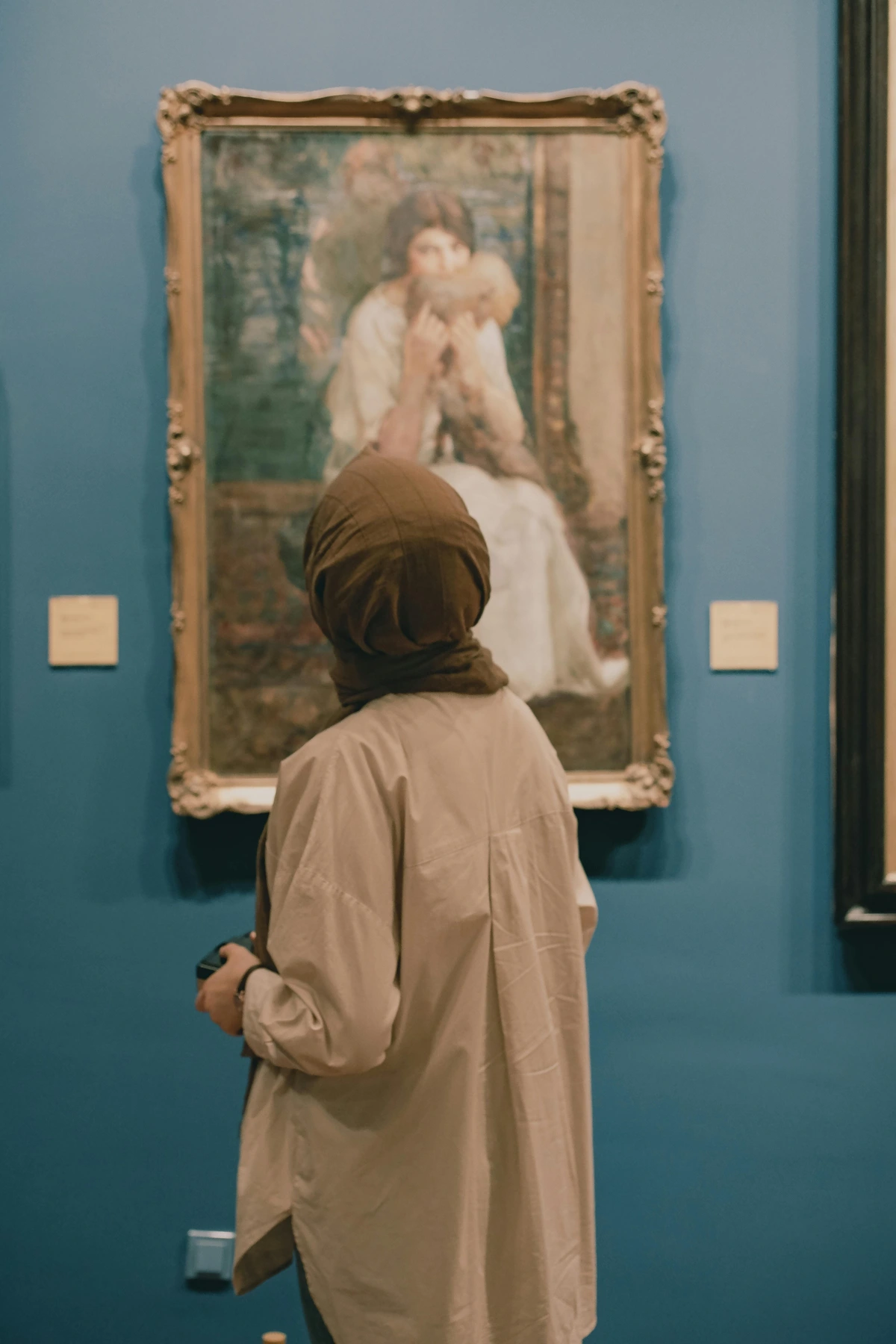
This is the deeper reason why art education matters—not to create more artists (though that's wonderful), but to create more nuanced, flexible, empathetic humans. When we learn to see the world through multiple frames, we become less brittle, less defensive, less convinced that our way of seeing is the only way.
Art doesn't just decorate walls—it rewires your brain. I mean this almost literally. Neuroaesthetics research shows that viewing art you find beautiful activates the same brain regions as falling in love. But beyond the neuroscience, art teaches you that there are always multiple ways to see the same thing.
This is perhaps the most valuable lesson in our increasingly polarized world. The next time you find yourself in an argument with someone who "just doesn't get it," remember that you're probably seeing the same thing through completely different lenses. And maybe, just maybe, that's not a problem to be solved, but a truth to be embraced.
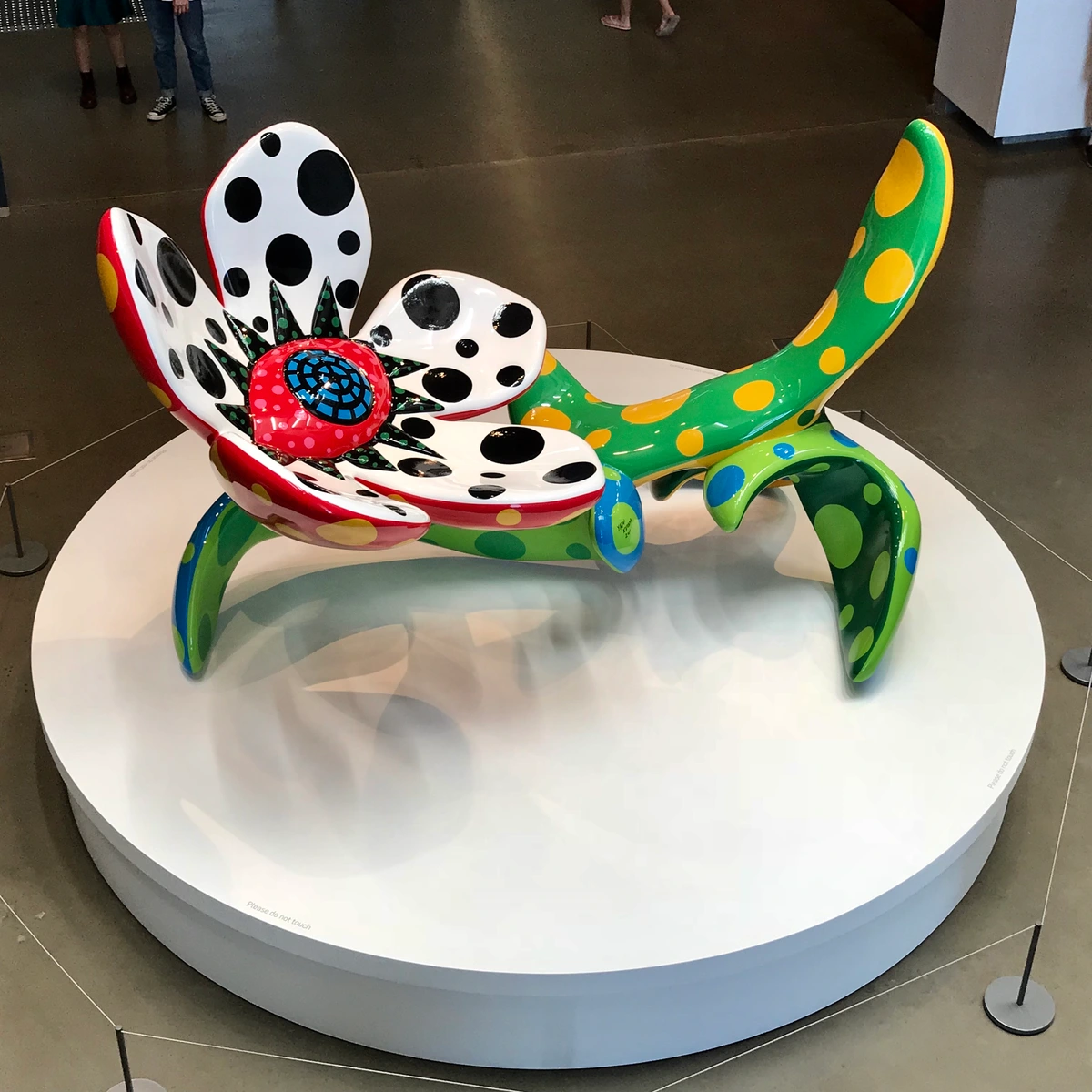
It’s why I believe art isn't a luxury—it's a survival skill. In a world constantly trying to tell you there’s only one right answer, one correct way to see things, art whispers the liberating truth: there are infinite perspectives, infinite realities, infinite ways of being human. And they're all valid.
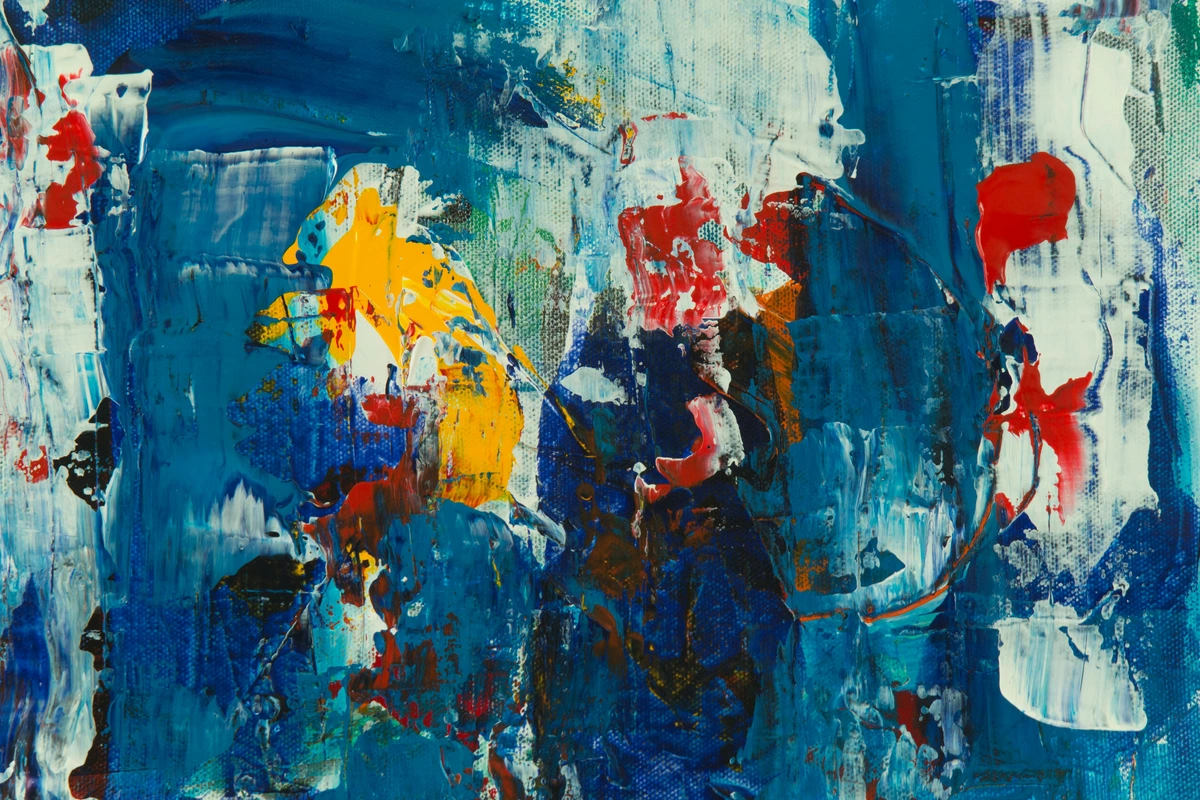
Artistic perspectives are invitations. They say, "Walk in my shoes. See my world." They challenge our biases, comfort our loneliness, and remind us that no two realities are identical. The best art doesn’t comfort—it provokes. It doesn’t simplify—it deepens.







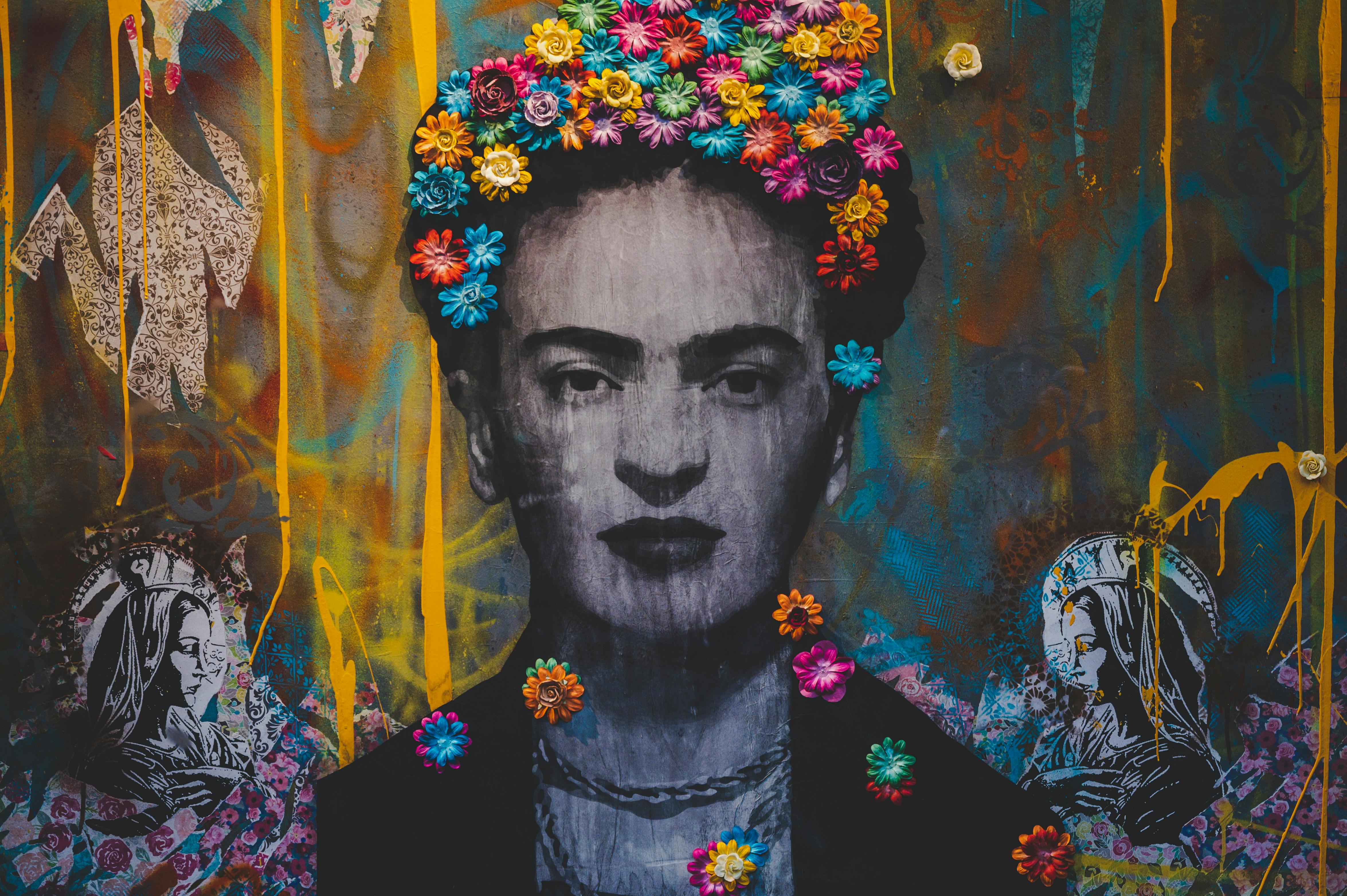







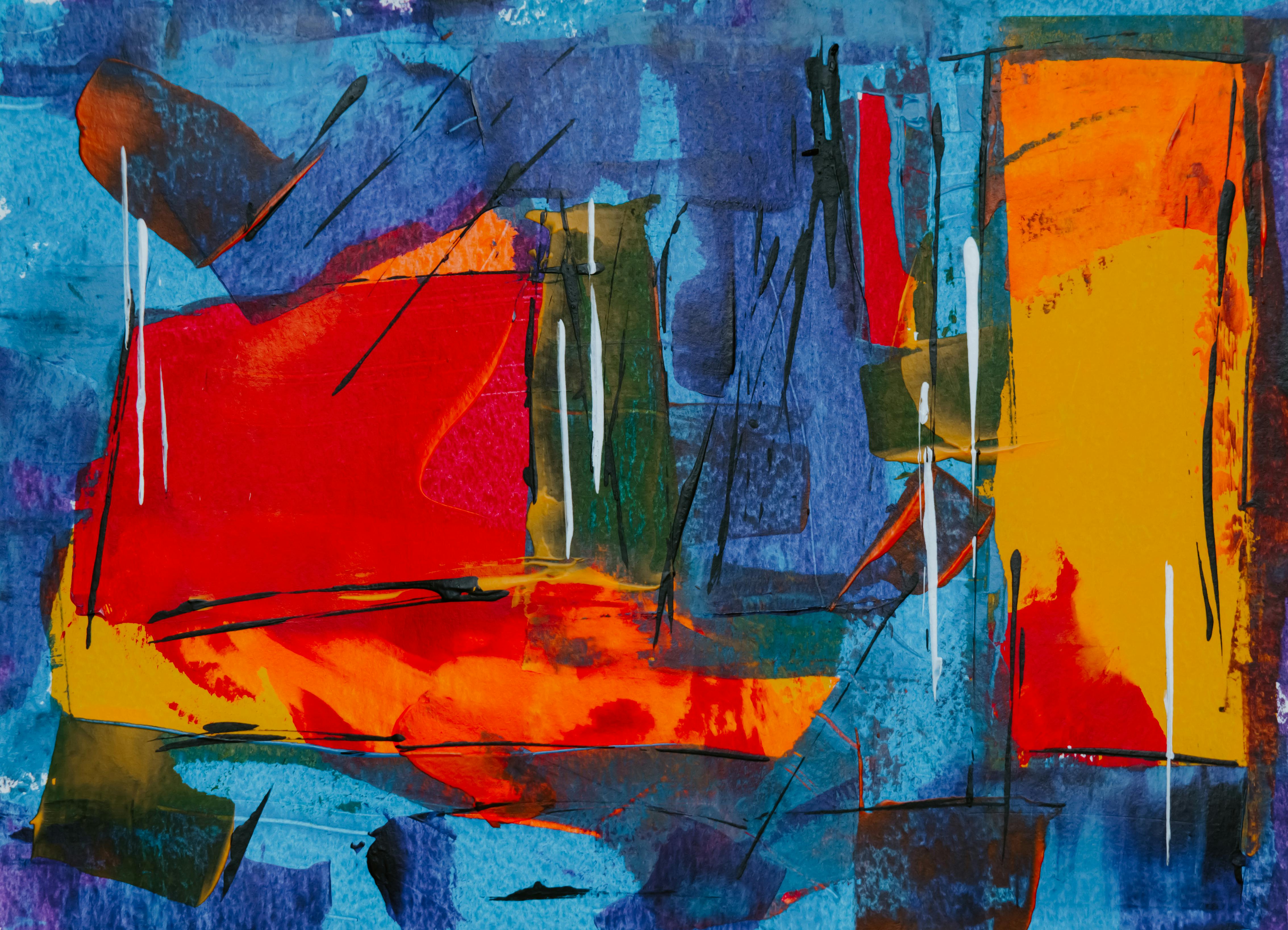


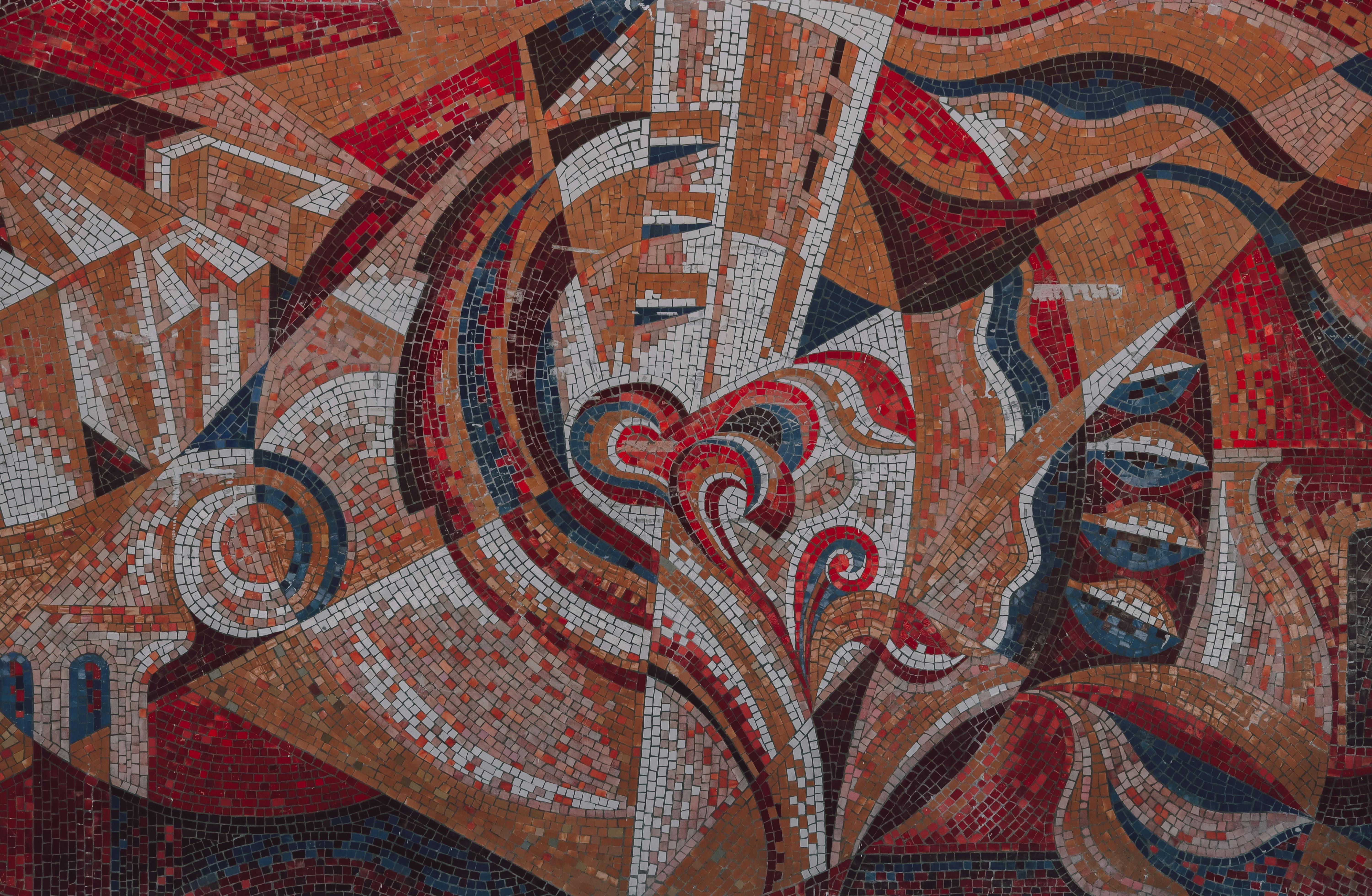
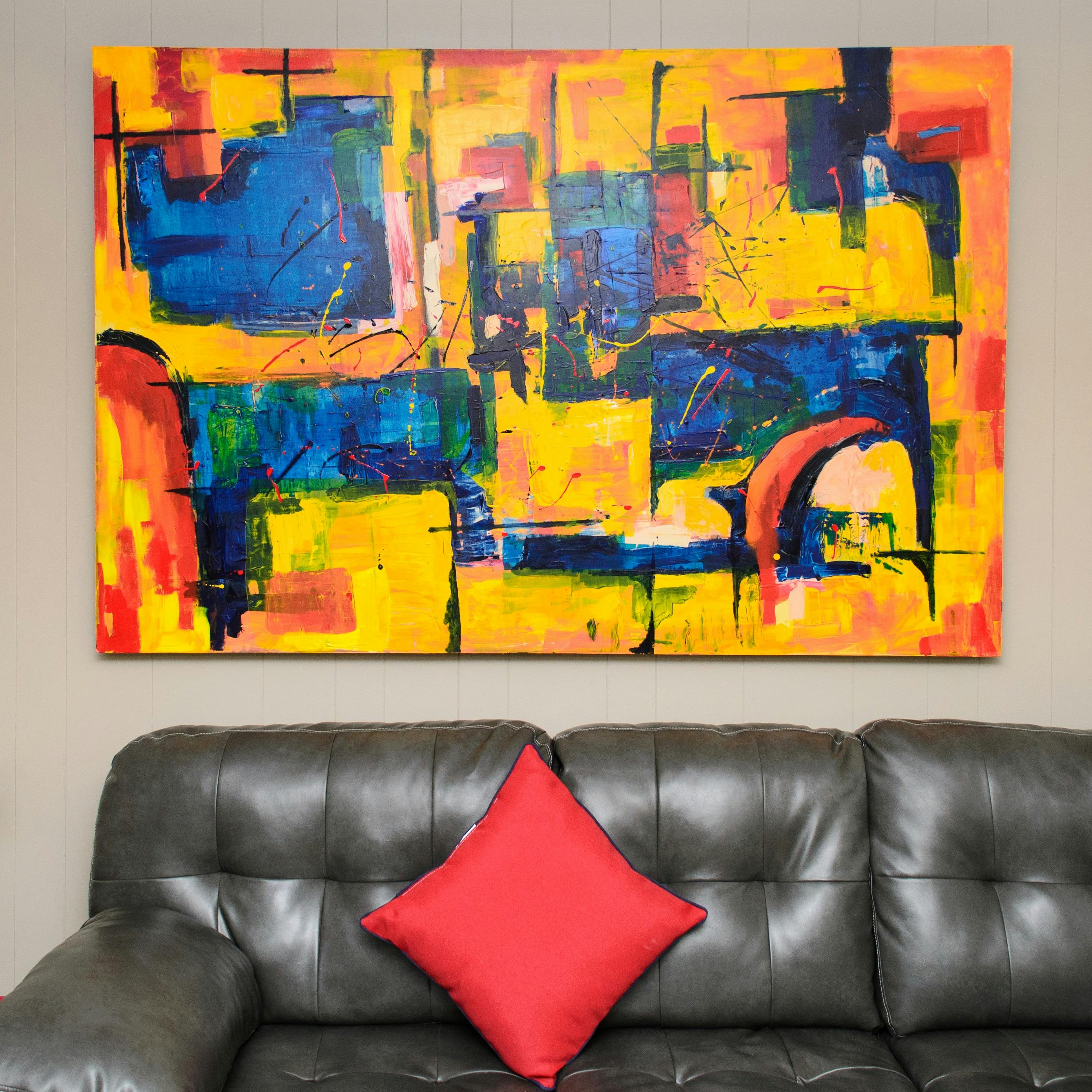


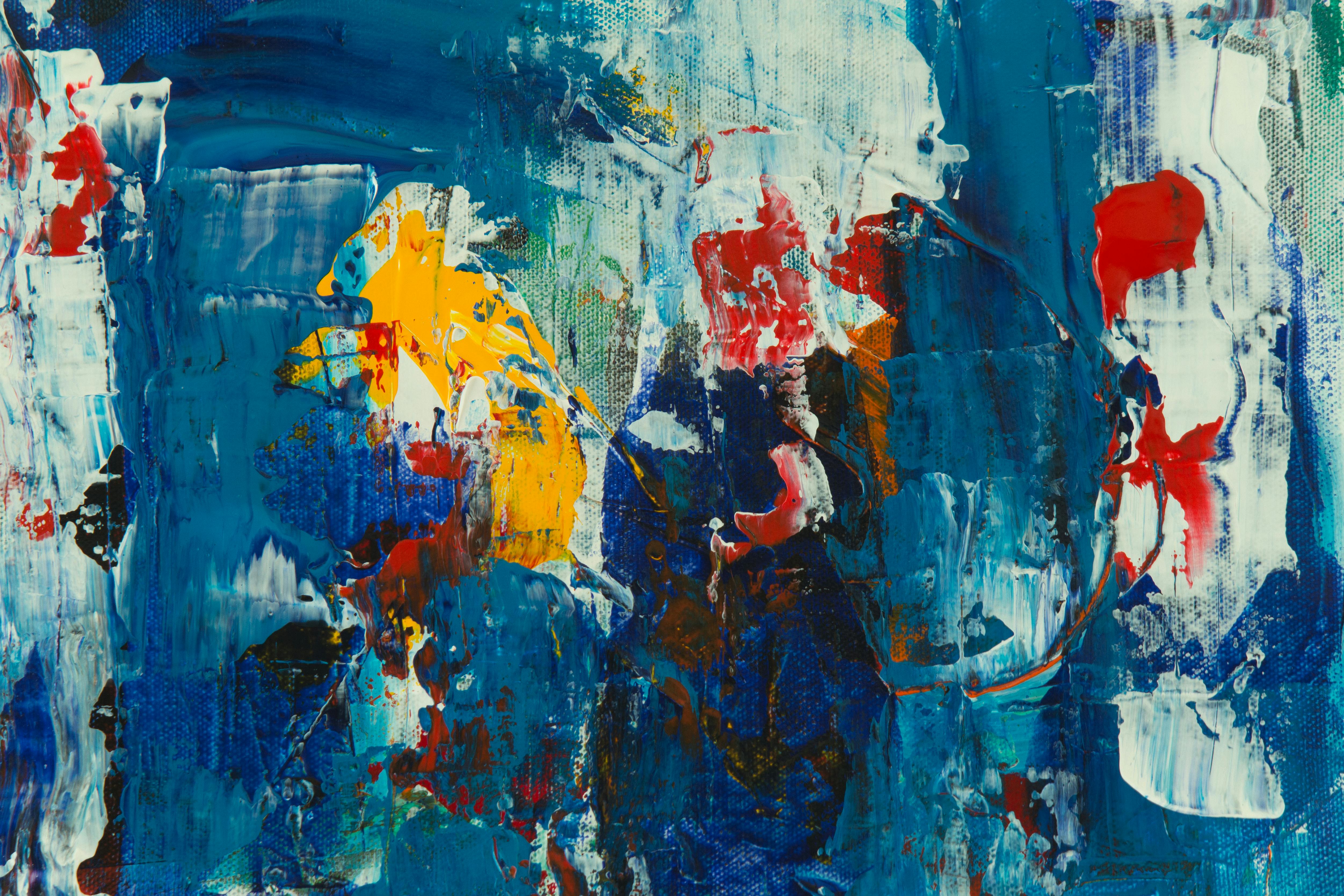

Next time you stand before a painting, don’t ask "Is this good?" Ask "What is this trying to tell me?" You might just find a piece of yourself in someone else’s vision.