What Are the Three Ages of Art History?
What are the Three Ages of Art History?

What Are the Three Ages of Art History? A Journey Through Time, Material, and Human Expression
You know that feeling when you're staring at something—a painting, a sculpture, maybe even the way light hits a building—and you feel this sudden, deep connection to the countless people who must have stared at beautiful things for thousands of years? I get that a lot. It’s a comforting thought, a reminder that the impulse to make and appreciate art is one of the oldest things about us.
Recently, I found myself down a particularly fascinating rabbit hole, trying to trace this thread back as far as it would go. I wasn't just looking at pretty pictures; I was hunting for a structure, a way to make sense of the immense, chaotic timeline of human creativity. That's when I stumbled across a concept that completely reframed how I see art's history. It’s not a formal, academic rule, but a powerful mental model borrowed from archaeology: the idea of the Three Ages, specifically the Stone Age, Bronze Age, and Iron Age. It’s a framework that bypasses the dizzying parade of 'isms'—Baroque, Impressionism, Cubism—and grounds us in something more primal: the stuff our ancestors' tools were made of. Because the tool doesn't just shape the art; it shapes the mind of the artist and the society they inhabit.
Archaeology has gifted art history this elegant structure, forcing us to confront how material revolutions—the mastery of stone, then metal, then a harder metal—did more than just change our tools. They re-wired our brains, birthing new forms of worship, new scales of political power, and ultimately, new definitions of what it means to be an individual creator. This system, first systematically applied by the Danish antiquarian Christian Jürgensen Thomsen to organize the collection of the National Museum of Denmark in the early 19th century, revolutionized how we understand prehistoric technology. He didn’t just create categories; he created a narrative of human ingenuity.
And it's a narrative fraught with fascinating bias. It’s crucial to remember that this tidy Stone-Bronze-Iron progression is a European-derived model, born from the specific archaeological finds of that continent. It’s less of a universal law and more of a powerful regional hypothesis that, for all its limitations, gives us a scaffolding to hang a global story on.
The Three-Age System: An Archaeologist's Gift to Art
Think about the first time you ever used a truly new tool—maybe a new kind of paintbrush, or a new software feature. If you're anything like me, the tool itself probably changed what you thought was even possible, nudging your creation in a direction you hadn't anticipated. This is the core insight of archaeology's Three-Age framework, a gift to art history that cuts through centuries of stylistic jargon.
Before we dive in, let's clear one thing up. If you've ever taken an art history class, you probably remember a dizzying list of 'isms' and periods—Renaissance, Baroque, Impressionism, Cubism. That's a perfectly valid way to slice the pie, especially for the last 500 years. But it's a system that centers the last few centuries of a single continent. It's like judging the history of flight only by the jet age, forgetting the millennia humans spent studying kites, birds, and basic aerodynamics. The material-first lens forces us to consider the deeper forces at play long before 'style' became the dominant conversation. But what about the other 300,000 years of our species' creative history? Have you ever stared at a timeline of art history and felt your eyes glaze over? I have. It can look like a subway map designed by a committee, with lines darting everywhere for different movements and styles. It can make you feel like you need a PhD just to keep up. A much simpler, more fundamental story is hiding in plain sight, and it all comes down to what was in our ancestors' hands. Think about it for a second: the difference between trying to carve a figure from river clay versus chiseling it from granite isn't just about hardness. It's about patience, planning, and the very idea of permanence. Clay is quick, intuitive, and forgiving. Granite demands a long-term vision and a deep understanding of fracture points. The material teaches the maker. This material-first perspective cuts through the noise of stylistic movements and gets to the heart of how art was made, which in turn shaped what could be expressed.
That’s where the Three-Age System comes in. It’s not really about distinct stylistic movements. It's about material. It’s about the fundamental technological revolutions that gave artists entirely new things to work with, and in doing so, completely changed what was possible for human expression. It’s the story of us learning to make stuff, and in the process, learning to remake ourselves. I find it’s the perfect antidote to the endless lists of periods and "isms"—it cuts straight to the bone of why art evolved, not just how it looked.
The three ages are, of course, the Stone Age, the Bronze Age, and the Iron Age. It sounds simple, maybe even a little crude. But stick with me. When you apply this lens to art, it becomes a tool of incredible power for understanding our deepest creative roots, revealing a technology-driven history that long predates the silicon chip or the printing press, and arguably has just as much impact on the canvas of human culture. This model is not a rigid cage but a set of profound questions: what did it feel like to create with only stone? What new desires did bronze awaken? How did iron change the very definition of a public monument? By asking these questions, we get closer to the lived experience of our creative ancestors, understanding art not as a static object but as a dynamic dialogue between human ingenuity and the material world.
The Stone Age: The First Marks and the Birth of Symbolic Thought
Imagine, for a moment, you're holding a piece of ochre. It's just a soft, reddish rock. But roughly 100,000 years ago, someone at Blombos Cave in South Africa picked up a piece just like it and ground it down to create a pigment. They weren't just making a mark; they were cracking open a new dimension of human consciousness. The ability to say, "This red powder stands for something else"—blood, life, a territorial claim, a spiritual force—is arguably the greatest cognitive leap in our species' history. It's the moment we began to live in a world of symbols, a shared mental landscape shaped by our ability to imagine and represent. They were likely making paint. For what? We don't know for sure. Body decoration? Marking objects? This singular act is, for me, one of the most profound moments in human history. It’s the moment we see the birth of symbolic thought—the ability to represent one thing with another.
The Stone Age is where art began, not as a hobby for the elite, but as a fundamental human behavior, deeply intertwined with survival, ritual, and our perception of the world. Art was not a leisure activity that happened after the day's work was done; it was the work. In a world without writing, art was the database, the legal code, the spiritual text, and the town hall meeting, all rolled into one. A pigment-stained shell necklace from 75,000 years ago isn't just decoration; it's a social signal, a form of non-verbal identity as powerful as any team jersey today—and likely far more meaningful. Think of it this way: before we could write words, we wrote the world. A pigment-stained shell necklace from 75,000 years ago isn't just decoration; it's a social signal, a form of non-verbal identity as powerful as any team jersey today.
It's tempting to think of art as a luxury, a cultural add-on, something you do after you've secured food and shelter. But what these first marks prove is the opposite: the drive to create symbols, to make meaning, to find patterns, is part of our survival kit as a species. Think about it from a social perspective. In hunter-gatherer bands, where everyone knew everyone else, art became a way to manage complex social relationships, to identify allies, and to signal shared beliefs. It was social glue, a way to coordinate group action not just for the hunt, but for everything from raising children to mourning the dead. The ability to create and interpret symbols was as critical as the ability to fashion a sharp spear. It was how we collaborated on the hunt before we had complex language, how we mourned the dead before we had theology, and how we navigated the invisible spirit worlds we sensed all around us. It’s as fundamental as language, because in many ways, it was our first language.
The Tools and the Expression
Art in the Stone Age was a direct conversation with the environment. The tools were what they could find and shape: flint for engraving, natural pigments (ochre, charcoal, chalk), and the very walls of caves. There was no separation between the artist and the natural world; the artist was a participant within an ecosystem, drawing their materials directly from their surroundings. I often imagine the process of sourcing ochre. You wouldn't just grab any reddish rock; you'd learn which specific outcroppings yielded the most vibrant color, which formations could be ground into the finest powder. The very act of gathering materials was a form of artistic training, forcing an intimate knowledge of geology and chemistry that we now delegate to specialized manufacturers. There's an intimacy to this process that factory-made tubes of paint can't replicate. The modern artist buys a standard canvas; the Stone Age artist had an intimate, physical knowledge of the rock wall, feeling its texture, mapping its natural hollows and protrusions, and building a composition in partnership with the earth itself. This act of collaboration with the environment is something we can easily overlook. The artist was a director of natural features. If a wall had a bulge, it might become an animal's haunch. A natural crevice might be incorporated as a symbolic entrance to the underworld. This wasn't just painting on the world; it was a form of co-creation with the world, a dialogue between human imagination and the raw canvas of the planet.
This wasn't just material gathering; it was a form of ecological knowledge. Knowing which rocks could be ground for red pigment, which charred sticks made the blackest lines, and which reeds could be used to apply color was a specialized craft. It was chemistry and geology, learned through thousands of years of trial and error. It was an art of necessity and immediacy, where the material and the message were one. You didn't just pick up any rock; you chose the one that spoke to you, and you learned its secrets—how it flaked, how it held a line, how its color deepened when wet. This tactile intimacy is something we often lose with modern, store-bought materials. The connection between the material and the maker was so close that it is difficult to even draw a line between them. The artist's hand and mind were shaped by the stone they worked with. This deep materialism meant that the artistic process was a continuous negotiation, a physical dialogue between the artist's will and the stone's resistance. Every flake that came off taught a lesson, every unexpected fracture forced a creative pivot. This is a form of embodied intelligence, a kind of thinking that happens through the hands, not just the brain.

- Parietal Art: This is the most famous expression—the breathtaking paintings on cave walls. Think of the majestic bulls and horses of the Lascaux caves in France, painted over 17,000 years ago, or the recently discovered, even more ancient paintings in the Chauvet cave. These weren't casual doodles; they required planning, scaffolding, portable light sources (like stone lamps burning animal fat), and immense skill. The artists used the contours of the rock to give their animals form and life. They were performing a kind of magic, a ritual where the act of painting a successful hunt might have been believed to ensure a real one. It feels less like decoration and more like a form of spiritual technology—the earliest virtual reality, designed to interface with the spirit world.
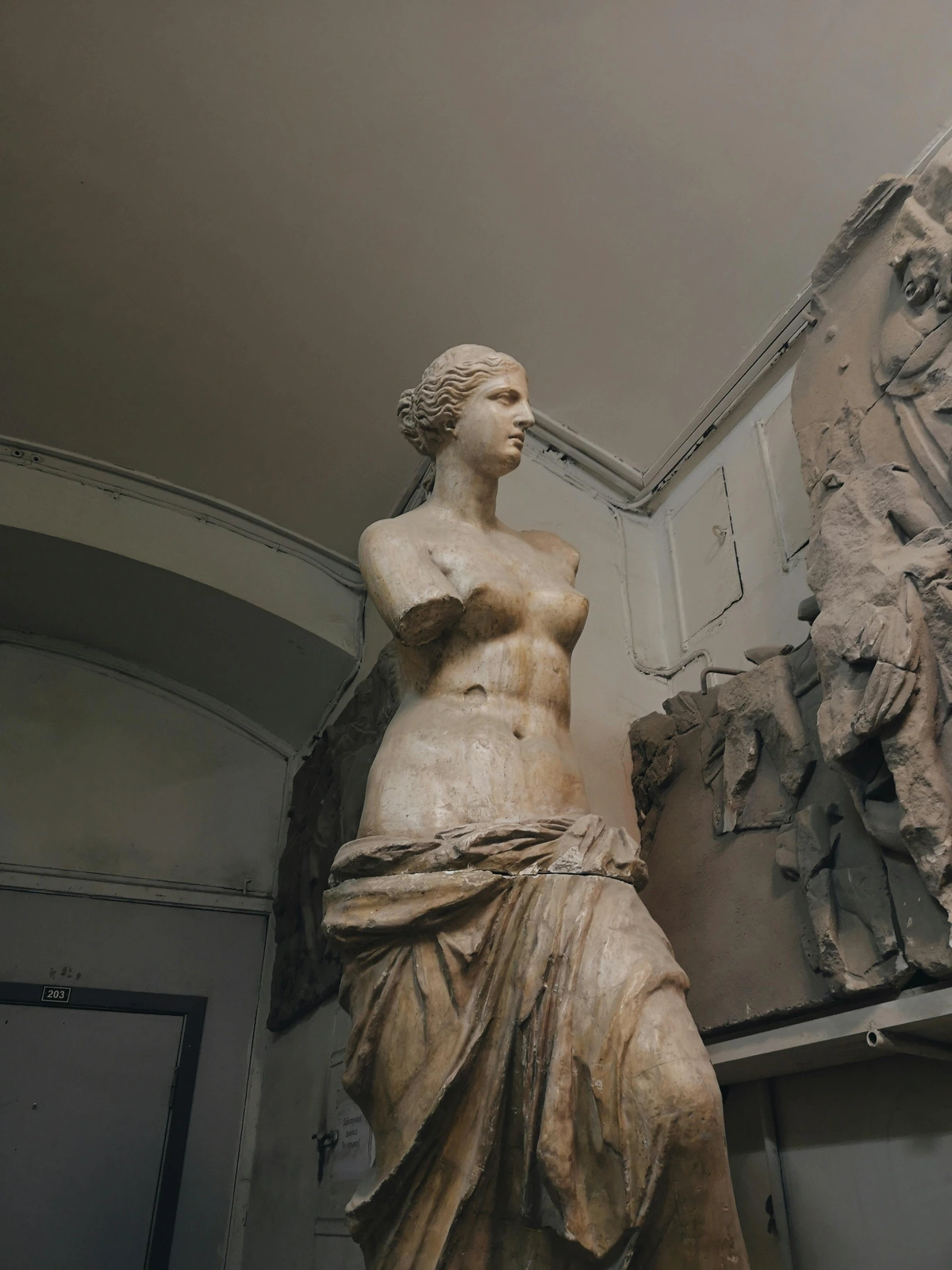
- Portable Art: Just as fascinating, and perhaps more intimate, are the small, carved objects. The Venus figurines, like the famous Willendorf Venus, found from France to Siberia, are a perfect example. These palm-sized carvings, with their exaggerated female forms, might not have been objects of beauty in their time but rather powerful, portable symbols of fertility and stability in a harsh world. The fact that we can’t know for sure is what makes them so compelling. They are fragments of a lost language, and we can only guess at their grammar. But their widespread distribution hints at a shared symbolic vocabulary stretching across the prehistoric world.
Beyond figurines, portable art includes intricately carved spear-throwers (atlatls) and small "bâtons de commandement," which may have been used to straighten wooden shafts. Even a utilitarian object was a canvas, decorated with animal forms that perhaps imbued the tool with the spirit and strength of the creature depicted.
The Underlying Themes of Stone Age Art
Across tens of thousands of years, a clear set of themes emerges:
- Ritual and Shamanism: Much of this art was likely linked to spiritual beliefs, functioning as a kind of "graphic language" for the sacred. The cave paintings were in deep, dark chambers, places of ritual, not daily life. This physical journey into the earth, often involving crawling through narrow passages with only flickering torchlight, must have been a profound psychological experience. The art at the end of this journey wasn't just decoration; it was the climax of a sacred script. Techniques like blowing pigment through a hollow bone to create stencils of hands, or using chewed twigs as brushes, suggest a performative, almost ritualistic act of creation. The art wasn’t just watched; it was performed in a liminal space between worlds. These artists were likely not "artists" in our sense, but spiritual specialists—shamans—whose job was to traverse the spirit realm and return with visions of power.
- Hunting and Sympathetic Magic: While hunting scenes are iconic, their purpose was likely more than just a "how-to" guide. Many anthropologists argue they were acts of "sympathetic magic." By ritually painting an animal being struck by spears, the community was attempting to influence the outcome of the real hunt, to bring the animal's spirit under their control. It was predictive programming, but with ochre and charcoal.
- A Universal Vocabulary: What strikes me most is that you see similar styles and subjects across continents, from the cave hands of Spain to the hand stencils of Sulawesi. This suggests a shared, fundamental visual vocabulary emerging from the human psyche. Before trade routes or written language, there was a shared impulse to draw hands with stumps for fingers and to carve exaggerated female forms out of stone. It’s a powerful reminder of our common origins, a deep hum of human experience that connects us across space and time, a collective unconscious made visible on rock walls.
The Bronze Age: Metal, Civilization, and the Stories We Tell
Then, everything changed. We figured out how to mix copper and tin to create bronze. This wasn't just a better tool; it was a technology that fundamentally rewired human society. Think about the supply chain: you needed miners for the ore, traders to bring the tin from hundreds of miles away, and highly skilled smelters and casters working at temperatures they could only achieve with advanced furnace technology. This complex, multi-step process demanded centralized organization. It demanded an elite.
This technological leap ushered in the age of cities, writing, specialized labor, and complex social hierarchies. You no longer had to be a part-time hunter and part-time artist; a new class of specialized artisans arose, people whose entire job was to master this difficult, new material. Kings and Pharaohs sponsored these master crafters, giving them the resources and time to create objects of unprecedented complexity and beauty, objects meant to solidify their own power and legacy for all eternity. This relationship between artist and patron is another invention of the Bronze Age, a contract that would dominate the art world for thousands of years to come. It creates a push and pull that is still with us today: the artist's unique vision versus the patron’s practical or political needs. And art, as you might expect, changed with it. It abandoned the caves and became a central feature of the new public squares and palaces.
New Materials, New Possibilities
Bronze could be cast. This is a mind-bending innovation. Instead of just carving away at a material, artists could now create a mold and pour liquid metal into it. This allowed for unprecedented detail, complexity, and, crucially, mass production. For the first time, you could create multiple copies of an object. I often think of it as the first great separation between the artist’s idea and the artist’s hand. A master sculptor could design a piece, and then others could execute it, again and again. This is a massive conceptual leap—art as a reproducible idea, not just a singular, unique object. It’s the distant, ancient ancestor of the print, the photograph, and even the digital file.
Artists also began to master other materials on a grand scale, like fired clay for pottery and terracotta, and precious metals like gold for elite objects.
The Function and Form of Bronze Age Art
Art in the Bronze Age began to serve new masters: the state, the king, and the gods of organized religion. Power became centralized, and art became one of its primary visual languages. The old, universal symbols of the Stone Age—like the figures in a cave—gave way to the specific iconography of statecraft and official religion. Art was no longer just about fertility magic or the spirit of the hunt; it was about taxes, treaties, and the divine right of kings. A statue was no longer just a representation; it was a political statement carved in stone or cast in metal. It was a visual contract between the ruler and the ruled—and sometimes the gods. Think of the Code of Hammurabi, with its laws carved into a massive stone stele; the art wasn't separate from the law, it was the law, made permanent and public. Art became the operating system of the state, a way to visualize and consolidate a complex, stratified society. It was the code that ran the mainframe of the palace and the temple. A wall relief showing a pharaoh smiting his enemies wasn't just a piece of decoration; it was a functional piece of political software. It ran a program in the minds of viewers, reinforcing hierarchy, outlining the consequences of dissent, and solidifying the leader's divine mandate. The art was the user interface, making the complex and often brutal machinery of the state feel simple, natural, and inevitable.
- Weapons and Armor as Status Symbols: A bronze sword wasn't just a weapon; it was a symbol of power and rank. Beautifully decorated ceremonial daggers (like those found in Minoan Crete) and helmets (like the magnificent boar's tusk helmet described in Homer's Iliad) tell us that warfare and social status were now central to life. These weapons were less functional tools and more political statements forged in metal. The intricate inlay work, the rare materials, the sheer impractical weight of many surviving examples—it all points to a new social order where display was paramount. Owning such an object was a declaration of your connection to the elite, a wearable proof of your elevated status. It was a way of broadcasting your power in a world where most people still used simple copper or stone tools. The sword didn't just protect the king; it made the king. These weren't tools for the average soldier; they were extravagant displays of wealth and authority, often too ornate and valuable to ever be used in battle. They were wearable propaganda, political statements forged in metal, communicating status to both the living and the dead buried alongside them.
- Narrative Art: This represents a profound cognitive shift. The cave painter captured a moment of instinct and magic; the Bronze Age artist constructed a linear sequence of events. The Standard of Ur from ancient Mesopotamia is a perfect example, using shell, lapis lazuli, and red limestone to tell a continuous story of "War" and "Peace" on two sides. It's propaganda—the first comic book, sponsored by the state. One side shows the king, larger than everyone else, leading chariots and soldiers into battle. The other shows him presiding over a fantastic banquet, with captured goods being presented to him. The message is brutally simple: the ruler is the source of both military victory and economic abundance. The artist uses a clear visual hierarchy—scale and placement—to communicate who is in charge, a visual language of power that would be used for the next 5,000 years of state-sponsored art. This object also speaks to a new level of economic power; the lapis lazuli had to be brought over 1,500 miles from Afghanistan. This wasn't just art; it was a display of geopolitical reach. We see this impulse everywhere: in the immense bronze cauldrons of ancient China (the ding), decorated with intricate narratives of the afterlife, or the exquisite gold funerary masks of Mycenaean kings. These weren't portraits in the modern sense; they were archetypes, declarations of divine status meant to last for eternity. Here, art isn’t just telling a story; it’s calcifying a specific worldview into the permanent record of civilization.
- Funerary Goods and the Afterlife: Bronze Age cultures, from the Egyptians to the Chinese, filled the tombs of their elite with stunning art—jade carvings, bronze vessels, golden masks. This art was functional; its purpose was to serve and protect the deceased in the afterlife. The Egyptian Book of the Dead, with its magnificent illustrations, is a guidebook for the soul, a work of art inseparable from its spiritual function. The golden funeral mask of Tutankhamun wasn't just for show; it was meant to magically assist the pharaoh's spirit in recognizing its own body. These objects tell us that for Bronze Age people, art wasn't a frivolous decoration—it was essential infrastructure for the afterlife, a necessary tool for navigating the cosmos after death. Entire economies and state resources were marshaled to equip a single ruler for eternity, an almost unimaginable allocation of labor and treasure that dwarfs most modern public art projects.
The Iron Age: Empires, Innovation, and the Individual
The discovery of iron was another seismic shift. It was more common than copper or tin, and when smelted correctly (a much trickier process than bronze smelting), much harder and more durable. This eventually democratized metal tools and weapons but also had a paradoxical effect: it first concentrated power in the hands of those who could control the complex "secret" of its production, and then, as the knowledge spread, it utterly transformed the common person's world. It was the industrial revolution of the ancient world.
Think of the iron axe. A bronze axe was valuable and rare. An iron axe was, relatively speaking, cheap and tough. This single tool reshaped the entire European landscape, allowing for the mass clearing of forests for farmland on a scale previously impossible. Art followed this transformation, often celebrating the ordered, "civilized" landscape of fields and towns that replaced the old, wild forests. The art of the Iron Age is an art of the city, the state, and the controlled agricultural landscape.
Art became more widespread, more practical, and in many ways, more recognizable to our modern eyes. A Roman coin wasn't just money; it was a tiny, circulating piece of propaganda, carrying the emperor's face—and his authority—to the farthest corners of the known world. The idea of 'brand identity' through art isn't a modern invention; the Romans mastered it two thousand years ago.
The Iron Age Toolkit
Iron tools allowed for incredible advancements in other crafts. Sculptors could now carve harder stones with greater precision. The invention of the potter's wheel (in earlier periods but widely adopted now) allowed for perfect symmetry in pottery, turning a household object into a canvas for intricate geometric designs and painted scenes. For the first time, an object could be perfectly round, a feat impossible to achieve by hand-coiling. This obsession with geometric perfection is a major theme in Iron Age art—we see it in the flawless curves of Greek vases and the perfect proportions of Roman architecture. It reflects a new, underlying worldview: that the universe itself is orderly and can be understood through mathematics and reason. The tool didn’t just make creation faster; it changed the very ideal of what was considered beautiful, shifting it away from the wild, unpredictable forms of nature and towards an idealized, human-made perfection.
- Currency and Trade as Propaganda: Artistry was applied to small, everyday objects of power. The invention of coins (first in Lydia around 600 BCE) was an artistic as well as an economic revolution. For the first time, you had a tiny, mass-produced piece of art that circulated to every corner of an empire. A citizen in a remote province might never see the emperor, but they would hold his face in their hand every single day. It was brilliant, tangible propaganda, embedding the symbols of the state into the most basic act of everyday life: commerce. The very trustworthiness of the currency was tied to the authority and recognizability of the portrait stamped upon it. The brand identity of the state was in your pocket.
- Architectural Grandeur: The great empires of the Iron Age—the Greeks, the Romans, the Persians—expressed their power through monumental architecture. Think of the Parthenon in Athens. It’s not just a building; it's an optical illusion, a masterpiece of sculpture and engineering designed to look perfect to the human eye from a distance. Every metope and frieze tells a story from mythology. The Doric, Ionic, and Corinthian columns are artistic choices as much as they are structural ones. When you walk through the ruins of a Roman forum, you are walking through a propaganda landscape designed to make you feel small and the state feel eternal. The message was clear and aimed at everyone: the citizen, the foreigner, the slave. Power was baked into the very fabric of public life, into the streets you walked and the buildings that surrounded you. Art became the wallpaper of empire.
- The Rise of the Individual Artist: This is perhaps the most important development for the modern artist. In the Stone and Bronze Ages, artists were almost always anonymous, mere extensions of their culture or rulers. But in the Iron Age, for the first time, we start to know the names of artists. The Greek sculptor Phidias, who oversaw the sculpture of the Parthenon, was a celebrated figure. We also know the names of vase painters like Exekias and Euphronios, who began to sign their work, proudly identifying themselves as the creators. This marks the beginning of the artist as a creative genius, an individual with a unique vision. This single shift irrevocably changes the course of art history forever. Suddenly, it's not just about what was made, but who made it. This was a revolutionary break from the past. Before, the artist's hand was subsumed into the collective will of the culture or the decree of the ruler. Their identity was irrelevant. Now, with names like Phidias or Exekias, the artist's own skill, their unique 'signature style,' became the value. It set the stage for the entire modern conception of the artist as a unique visionary, a tortured genius, or a cultural celebrity. It created the idea of the 'masterpiece' as an object of individual brilliance, rather than a product of cultural necessity. The Greek vase painter who signed his work was planting the seed that would one day grow into Michelangelo, Van Gogh, and every artist known by a single name. It sets the stage for every great master we revere, from Giotto to Basquiat.
Why This Ancient System Still Matters to an Artist Today
So why, you might ask, does a contemporary artist spend so much time thinking about rocks, bronze, and iron? It’s because this ancient framework offers a powerful way to understand the art of our own time. The "digital revolution" is just the latest in a long line of material revolutions. The discovery of oil paint was an age. The invention of photography was an age. The personal computer and the internet—the materials of my own time—are an age. We’re now deep into a new "Digital Age" of artistic creation, an age defined by immateriality, code, and instant global distribution.
We tend to think of art history as a linear evolution towards greater sophistication. But that's wrong. It's a series of punctuated explosions, set off by new technologies that force us to ask: what is art for? The answer, across the ages, is remarkably consistent: to make the invisible visible. The Stone Age artist made the spirit world visible on a cave wall. The Bronze Age artist made the concept of divine kingship visible in a golden mask. The Iron Age artist made the abstract principles of civic virtue and philosophical reason visible in a perfectly proportioned temple or a heroic statue. And today, digital artists make complex data and invisible algorithms visible in dynamic, interactive visualizations. Each technological 'age' is simply a new toolset for this same fundamental, human project: to externalize our inner worlds and give form to our most profound ideas.
Every era has its "three ages." Think of the discovery of oil paint in the Renaissance, which allowed for unprecedented realism and luminous depth. Think of the invention of photography, which freed painters from the burden of pure representation and gave birth to Impressionism and, eventually, abstraction. Or consider the personal computer and the internet—the materials of my own age. Each of these was a new material, a new mode of seeing, that made the old ways of doing things feel obsolete while opening up a universe of unexplored possibilities. The canvas was replaced by the screen, the brush by the algorithm, and the result is a new kind of art that we are still learning how to see and understand. Even within one lifetime, we have seen more "ages" of art technology than our ancestors saw in millennia.

This is how progress in art often happens: a new tool or material appears, and a handful of curious people start playing with it, pushing its limits to see what it can do. We are all standing on the shoulders of the first person who decided to grind a piece of ochre and make a mark on a wall.
A Deeper Dive into the Ages: A Comparative Table
To help visualize the profound shifts, let's break down the core characteristics of each age side-by-side. This isn't just a timeline; it's a comparison of worldviews, each made possible by the dominant technology of its time. Seeing these elements juxtaposed like this reveals patterns that are often invisible when we study the periods in isolation.
To help visualize the profound shifts, let's break down the core characteristics of each age side-by-side. This isn't just a timeline; it's a comparison of worldviews, each made possible by the dominant technology of its time.
Feature  | Stone Age | Bronze Age | Iron Age |
|---|---|---|---|
| Core Material | Stone, wood, bone, natural pigments (ochre, charcoal) | Alloy of copper and tin (bronze), gold, silver, fired clay | Iron, steel, glass, concrete, advanced ceramics |
| Artistic Innovation | Carving, engraving, painting, stenciling, rudimentary sculpture | Lost-wax casting, mass production, glazing, detailed metalwork, narrative reliefs | Precision carving with iron tools, potter's wheel, monumental construction, coinage |
| Primary Audience | The community, the spirits, the ancestors | The gods, the divine king, the state, the elite | The public, the citizen, the consumer, the patron |
| Core Themes | Hunting magic, fertility, shamanic ritual, animal spirits | Divine kingship, state mythology, military conquest, the afterlife | Civic identity, philosophical ideals (beauty, reason), conquest, trade |
| The Artist's Role | Anonymous spiritual specialist or a member of the tribe; art as a collective, ritual act | Master artisan serving a royal/divine patron; art as a skilled craft in service of power | Celebrated master/maker with a name and reputation; art as an expression of individual genius |
| Function of Art | Practical magic, ritual tool, spiritual technology, cultural glue | Political propaganda, religious instruction, assertion of eternal power, economic symbol | Public edification, beautification of the state, personal expression, commercial good |
| Key Technologies | Fire-hardening, pigment processing, controlled fire, composite tools | Alloying, kiln-firing, complex molds, long-distance trade networks | Smelting at high temperatures, quenching, standardized weights and measures, aqueducts |
| Example | Cave paintings at Lascaux, Venus of Willendorf, hand stencils at El Castillo | Standard of Ur, Gold Mask of Tutankhamun, Stonehenge, Minoan bull-leaper frescoes | The Parthenon, The Colosseum, a Roman coin, a Greek black-figure vase |
Looking at it laid out like this, you can really see the trajectory: from the collective and magical, to the hierarchical and political, to the public and personal. Each age builds on the last, but also represents a fundamental change in the very purpose of making art.
Frequently Asked Questions (FAQ)
It's one thing to lay out a big idea like the Three-Age system, but the real magic always happens in the details. Here are some of the most common questions and, more importantly, the deeper thoughts they spark.
Q: Is the Three-Age system used by practicing art historians today?
A: It's not the primary tool for categorizing art movements, but it's an incredibly useful conceptual framework. Professional art historians today use a much more detailed and region-specific set of periods. However, the Three-Age system is invaluable because it forces us to think about the most fundamental driver of artistic change: technology. It's a way of looking at the big picture before you dive into the details of Florentine vs. Venetian Renaissance painting styles. For me, the best way to think about it is as a deep historical 'operating system.' The Three Ages describe the fundamental hardware and foundational code of a society—its material capabilities. The specific art movements that come later are like the apps and user interfaces that run on top of that system. You can't understand why a certain app was designed the way it was without understanding the limitations and possibilities of the operating system it was built on. Think of it like this: the Three-Age system gives you the continental map—the broad, tectonic shifts that shape the landscape. Specialized art history gives you the street maps of individual cities—the intricate details of a specific neighborhood, who lived there, and what their lives were like. You need both to have a complete picture. Without the continental map, you can’t understand why the cities are where they are. It's the difference between geology and geography—one explains why the mountain exists, and the other describes the paths you can take to get to the top.

Q: What came after the Iron Age in terms of art history?
A: This is where the archaeological definition of "ages" based on dominant materials gives way to the more familiar art historical periods. Art history typically continues with eras defined by major cultural and stylistic shifts, such as Classical Antiquity (Greek and Roman art), the Middle Ages, the Renaissance, and so on. The Iron Age, in a way, laid the groundwork for all of this by enabling technological possibilities that allowed these later, more nuanced styles and movements to flourish. I sometimes think of it as a double helix. The Three-Age system represents the spiral of technology and material capability. Wrapped around it is the second spiral of culture, philosophy, and aesthetic taste. After the Iron Age, the technological foundation was set, so the cultural spiral became the more dominant driver of change, giving us the rich tapestry of periods we study today.
Q: Are there examples of places that skipped an "Age"?
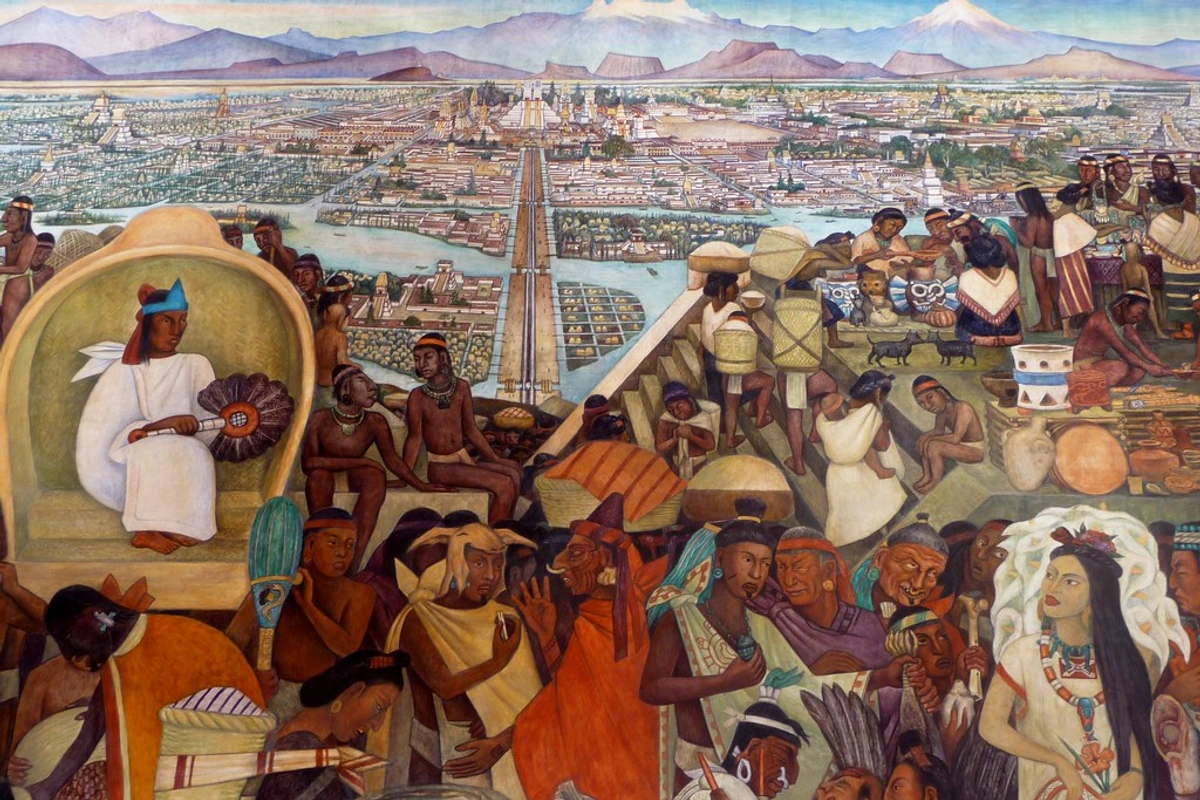
A: Yes, absolutely. This is a critical point. The Three-Age system is a model, not a strict universal timeline. Some cultures, particularly in the Americas and parts of Africa, developed sophisticated art with unique materials that don't fit neatly into the Stone-Bronze-Iron progression. The monumental stone heads of the Olmec in Mesoamerica, carved with incredible skill from volcanic basalt, stand as a testament to a distinct artistic tradition that never passed through a Bronze Age. Likewise, the Moche of ancient Peru mastered goldsmithing and created breathtakingly complex funerary masks and ceremonial regalia, but did so without ever having developed bronze on a large scale. This highlights a crucial truth: there are multiple, parallel paths of innovation. Insisting that everyone's history must follow the European model is like criticizing a fish for not knowing how to climb a tree. It makes no sense. Each culture had its own unique dialogue with its environment and its own unique set of technological and artistic priorities, leading to completely different, yet equally valid, definitions of what art could be. Likewise, the Moche of ancient Peru mastered goldsmithing and created breathtakingly complex funerary masks and ceremonial regalia, but did so without ever having developed bronze on a large scale. This highlights a crucial truth: there are multiple, parallel paths of innovation.
Consider the materials they mastered:
- The Andes: Advanced textiles and goldworking (using techniques like lost-wax casting) were paramount, used to signify status and for religious purposes in ways bronze did elsewhere.
- Olmec Mesoamerica: Mastery of jade and basalt carving dominated their artistic output long before metals became common.
- Nok Culture (West Africa): While they developed iron-smelting technology, their most famous artistic achievements are their terracotta sculptures, which stand as a unique and powerful artistic tradition.
The system is a European-derived concept, and viewing it as a global, linear progression is a mistake. It's a tool, not a rule. Holding up the European model as a universal standard erases these incredible, parallel stories of innovation.
Q: How does abstract/contemporary art fit into this model?
A: In a fascinating way. In some sense, modern movements like Cubism or Abstract Expressionism could be seen as a philosophical return to the Stone Age. They aren't about technological advancement in materials (though new paints and media certainly helped); they're about a primal, pre-literate exploration of form, color, and emotion. My own work often involves using modern tools like software and digital printing, but the core of it is still about that fundamental Stone Age impulse: to use color and shape to express something for which words are insufficient. Art movements that move away from representation often feel ancient because they are tapping into a deeper, older current of human expression. A Mark Rothko painting doesn't tell a story about a specific event; it attempts to induce a state of feeling, much like the immersive, atmospheric environment of a painted cave. It's art that operates on our psychology at a level that exists before and beneath language, making it feel both cutting-edge and primal at the same time. An artist like Jackson Pollock, dripping paint on a canvas on the floor, is channeling that same raw, physical, almost shamanistic energy as the first cave painter. It’s a rejection of the grand, narrative storytelling of the Bronze and Iron Ages in favor of a more direct, visceral experience. I would go even further. Think about a contemporary artist like Anish Kapoor, who works with pure materiality—a void of pigment, a distorted mirror, an massive, fleshy form. His work often bypasses language and narrative, aiming for that gut-level, pre-verbal recognition. It feels less like it was "made" and more like it was "discovered," much like those first hand stencils in the caves. This isn't about being primitive; it's about accessing a different, more fundamental channel of human perception. It's a reminder that the entire 5,000-year detour through narrative, allegory, and individualism is just one possible path for art, not the only one. It’s art that happens before words, that bypasses the logical mind and aims straight for the gut. And that, I think, is why abstract art can feel so ancient, so primal, even when it’s made with the most modern of tools. It’s a return to the cave.






A Final Thought: A Line That Connects Us All
When we step back and look at the sweep of art history through this lens, a single, continuous story emerges. It’s a story that begins with a person using a stone to carve a story into a rock, and it continues with a person today using a stylus to create a digital masterpiece. The tools, the scale, and the culture are unimaginably different. But the impulse is exactly the same. It's the desire to leave a mark, to make sense of the world, to communicate something profound about what it feels like to be alive. That impulse is unbroken. What started as a spiritual act in a cave has evolved into a global, networked conversation. Yet, the fundamental act remains a transaction between a single mind and a chosen material, between an inner vision and the outer world's capacity to receive it. We are still trying to externalize what is inside us, to share a piece of our consciousness with someone, somewhere, maybe even thousands of years in the future. We are still just trying to make a mark.
And it's not just about art. It's about technology as the engine of human consciousness. Each new material—from the first forged bronze blade to the silicon chip—didn't just give us a new tool. It gave us new metaphors. Bronze gave us the metaphor of the centralized state; iron gave us the metaphor of the individual citizen; the screen gives us the metaphor of the networked mind. These metaphors are powerful because they shape our 'common sense.' The centralization inherent in bronze production predisposed us to accept the idea of a powerful central monarch. The standardizing nature of the potter's wheel and iron tools made the idea of universal laws—applied equally to all citizens—feel natural and right. The internet makes ideas like swarm intelligence and decentralized consensus seem like obvious truths. The history of art, viewed through this lens, is a history of these changing metaphors made visible. When an artist today stands in their studio, surrounded by the tools of their own trade—a digital tablet, a powerful computer, a high-resolution printer—they can feel a universe away from a lump of ochre or a stone carving tool. But every time they start a new piece, they face the same blankness, the same silent challenge that the first artist did in the flickering light of a cave. That moment, that confrontation with a blank space that needs to be filled with meaning, is the timeless link that connects every artist who has ever lived. The tools change; the fundamental questions do not. How do I translate this feeling into a form? How do I make something inside of me real and present in the outside world? How do I make the invisible visible? The journey of art history is simply the long, winding record of our species attempting to answer those questions, using whatever materials we had at hand.
The materials change, the methods evolve, but the conversation between a human and the void remains. The desire to make a mark that says, 'I was here. I saw this. I felt this,' is the unbroken thread of our creativity.