The Ancient Echo in Every Brushstroke: How the Three-Age Period Still Shapes Modern Art
Discover the long-forgotten DNA inside your art. Journey from Stone Age caves to abstract canvases to see how ancient techniques still shape modern creativity.

The Ancient Echo in Every Brushstroke: How the Three-Age Period Still Shapes Modern Art
Have you ever stood in front of a massive abstract canvas, one bursting with raw, primal energy, and felt a strange sense of déjà vu? I have. A few years ago, I found myself in a museum, staring at a work by someone like Franz Kline—all bold, black slashes on a white field. It felt brutal, immediate, and deeply familiar, but I couldn't place why. Then it hit me. It wasn't another painting it reminded me of. It was the Lascaux cave paintings. That same powerful, unrefined line, that same urgent need to make a mark, separated by 17,000 years.
That moment sparked a question I couldn't shake: how much of our most celebrated modern art is just a sophisticated echo of our most ancient past? It's a haunting thought, really. We imagine we're pushing boundaries, discovering something utterly new, and yet—somehow—we find ourselves returning to the very first gestures, the primal impulses of our ancestors.
So, I started digging. It turns out, the story of art is less a straight line of progress and more a series of deep, recursive loops. Our journey is often broken down into the Three-Age Period: the Stone Age, the Bronze Age, and the Iron Age. This framework wasn't just about better tools; it was about a fundamental evolution in how we think, create, and see the world. The DNA of those ancient moments is still woven into the fabric of modern art. This isn't about vague influence or sentimentality; it's about specific, observable principles of making and thinking that our distant ancestors perfected, and which keep emerging in new forms because they are fundamental to how we engage with the world through material and action.
The Primal Language of the Stone Age: Ab Ex and Cave Walls
Let's start with the Stone Age. While it spans a mind-bogglingly long period (from the first chipped tool to the dawn of farming), its artistic peak is the Paleolithic era—the Old Stone Age. This period, lasting from roughly 2.5 million years ago to about 10,000 BCE, saw the emergence of Homo sapiens and the very first artistic impulses.
Think of the breathtakingly beautiful cave paintings at Lascaux and Chauvet. What stuns you about them isn't their realism (though the animal drawings are masterful); it's their sheer, unadulterated energy. These weren't just pictures; they were rituals, a form of sympathetic magic where drawing the hunt was a way of influencing it. They represent a direct sensory experience translated into visual form—a world perceived through movement, danger, and awe. This immediacy is something we often lose in our hyper-mediated world, and perhaps that's why it feels so electrifying when we encounter it again, thousands of years later.
Here’s the thing that connects to modern art: the artists of Lascaux didn't have a canon of art history to draw from. They had direct experience. Their hands were guided by necessity, wonder, and perhaps a touch of fear. They painted what they saw, but more importantly, they painted how they felt about what they saw. This authenticity of feeling, untethered from tradition, is precisely what many modernist movements, from the Fauves to the Abstract Expressionists, desperately sought to recapture.
Does that sound familiar? It should. It's the entire philosophy behind Abstract Expressionism. Artists like Jackson Pollock and Willem de Kooning weren't trying to paint a vase of flowers. They were trying to externalize an internal state. Pollock’s drip paintings were a performance, a ritual of movement and action. The resulting canvas was a record of that dance, a fossil of energy, much like the flickering torchlight that brought those cave bison to life. The medium wasn't just paint; it was the body in motion. Both the Paleolithic artist and the Abstract Expressionist were more concerned with the act and the energy than a perfect representational outcome. It's this shared focus on the process as the product, on the artist's physical presence leaving a permanent trace, that forms a direct and undeniable lineage.
This philosophy is even more pronounced in movements like Art Informel in Europe and Gutai in Japan. The Gutai manifesto literally spoke of "concreting" the artist's spirit, often through violent, performative acts of creation that destroyed the materials themselves—an echo of the raw, unfiltered creative impulse that predates all formal technique. What's fascinating here is the globalization of this primal instinct. It's not just a Western phenomenon. The desire to tear through the polite veneer of artmaking and get to something visceral and real appears across cultures once the intellectual constraints are removed.
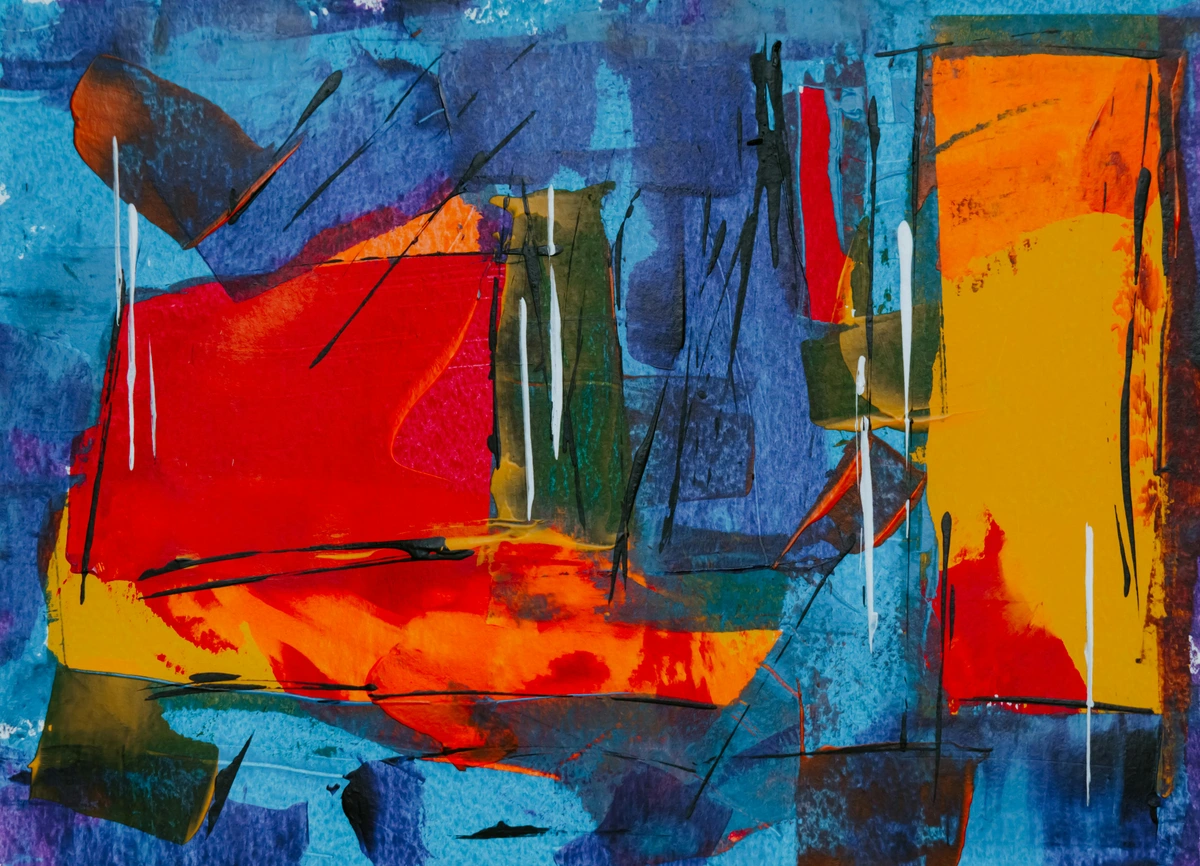
And let's not forget the most fundamental tool: the hand. The very first 'stencils' were Paleolithic hands sprayed with pigment onto cave walls across Europe and Indonesia—a direct, physical imprint of existence. This impulse re-emerges with startling clarity centuries later. Fast forward to modern artists like Yves Klein, who used nude models as 'living brushes' to create his Anthropometry series. The technology is more sophisticated, but the core concept—the artist's body as a tool and a form of signature—is shockingly ancient.
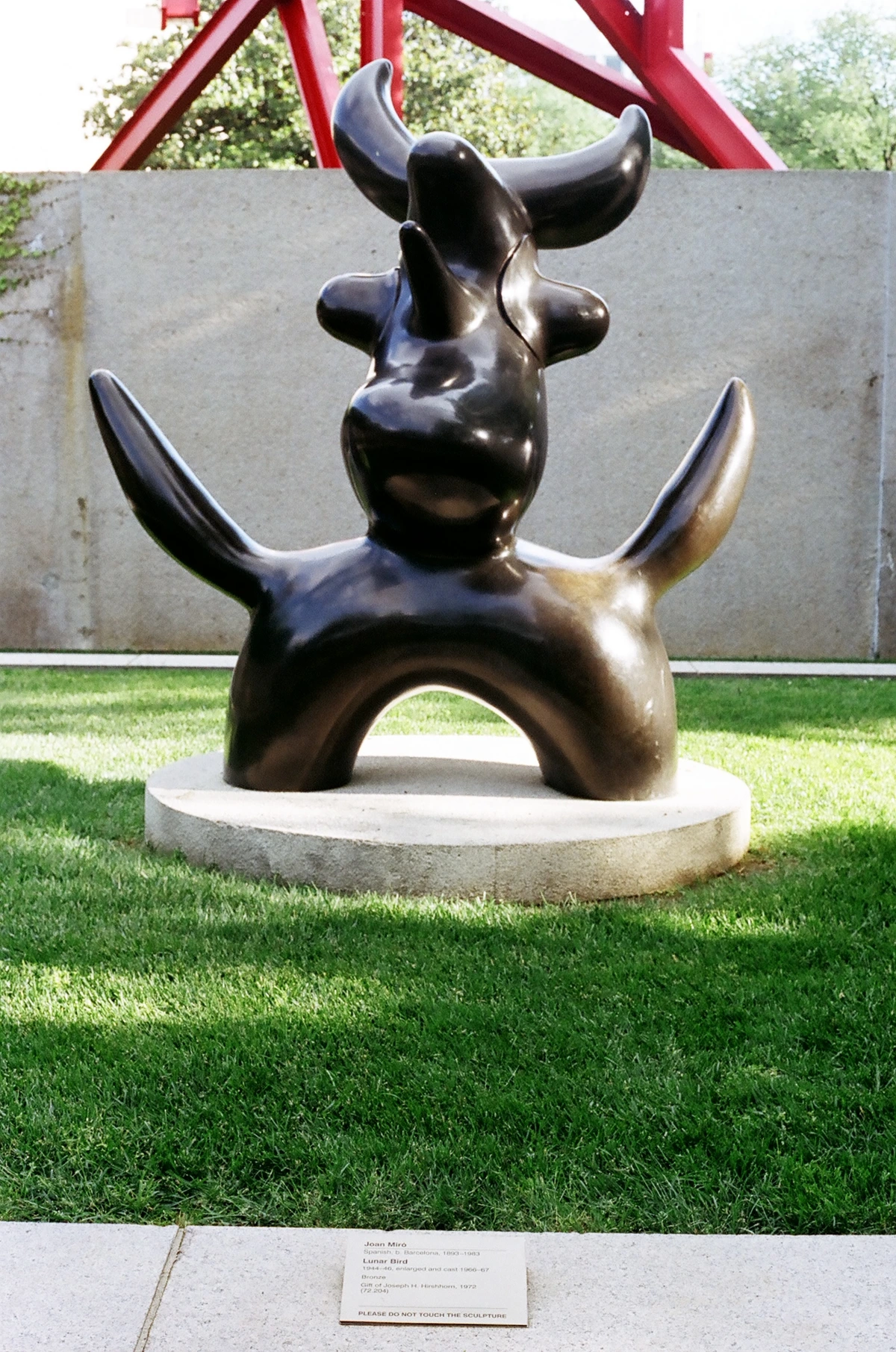
Even more compelling is the work of artists like Ana Mendieta, whose Silueta series involved pressing her own body into the earth, sand, and mud, or using gunpowder to create charred silhouettes. It feels like a direct spiritual descendant of those first handprints, using the body not just as a tool, but as the very subject and vessel of the artwork.
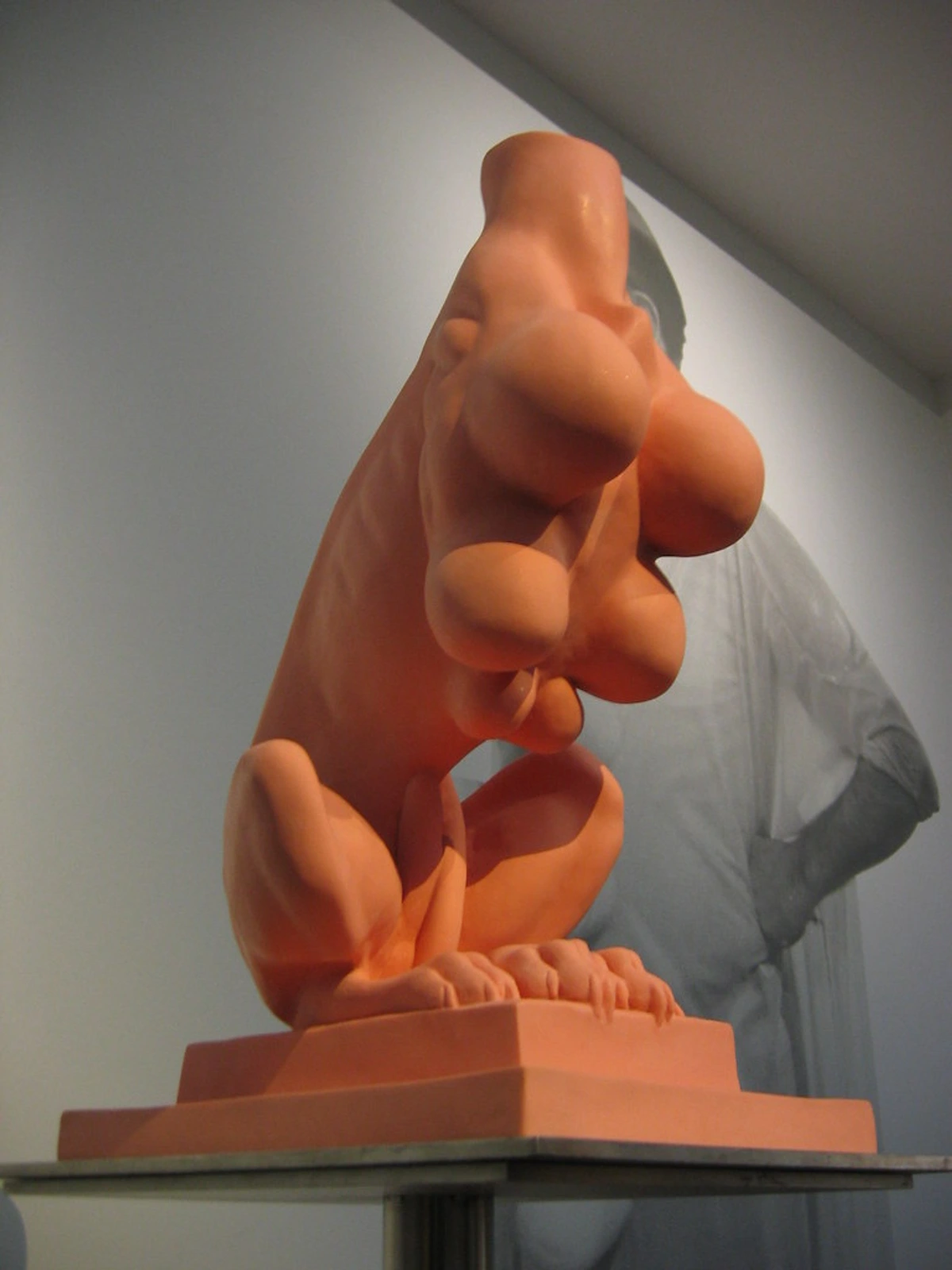
But it goes deeper. The very impulse to leave a mark, to say 'I was here,' resonates through millennia. Think of Cy Twombly's scribbled, graffiti-like canvases. They feel childlike, elemental, as if the very act of dragging a pencil across a surface is the point. This isn't far from the earliest ochre markings on a rock face—a primal declaration of existence. This lineage continues with artists like Jean-Michel Basquiat, whose frantic, scrawled text and symbols felt like a direct transmission from the streets, a modern cave wall where the primal 'I exist' is mixed with a furious critique of power and society.
This impulse isn't limited to pencil and paper. Entire movements have been built around this act. Art Brut ("raw art"), championed by Jean Dubuffet, explicitly sought out art made by non-professionals, children, and psychiatric patients, valuing its raw, unmediated power over the sanitized work of the academy. In a sense, Art Brut was an attempt to peel back thousands of years of art-historical training and reconnect with that essential Stone Age gesture. The irony is that by the time Dubuffet was curating it, this 'raw' gesture had become its own highly self-conscious art movement, showing yet another recursive loop in how we understand primitivism.
The Craft Revolution: Bronze Age Mastery and Bauhaus Principles
Now, the world changed. We moved into the Bronze Age (roughly 3300-1200 BCE), and with it came a seismic shift in consciousness. It was no longer enough to just find a material; now, you had to make it. Bronze doesn't exist in nature. It's an alloy of copper and tin, a product of human ingenuity. This discovery didn't just give us better swords; it created the first true artisans—metalsmiths who understood chemistry, temperature, and the marriage of form and function. The very act of smelting—transforming rocks into a gleaming, liquid metal—must have felt like alchemy, a fundamental collaboration between human intellect and the power of fire.
The very essence of bronze—its creation through combination, its fluidity when molten, its permanence and resonance when cool—required a new kind of thinking. It was a move away from chance and immediacy and towards premeditation, design, and a profound mastery of process.
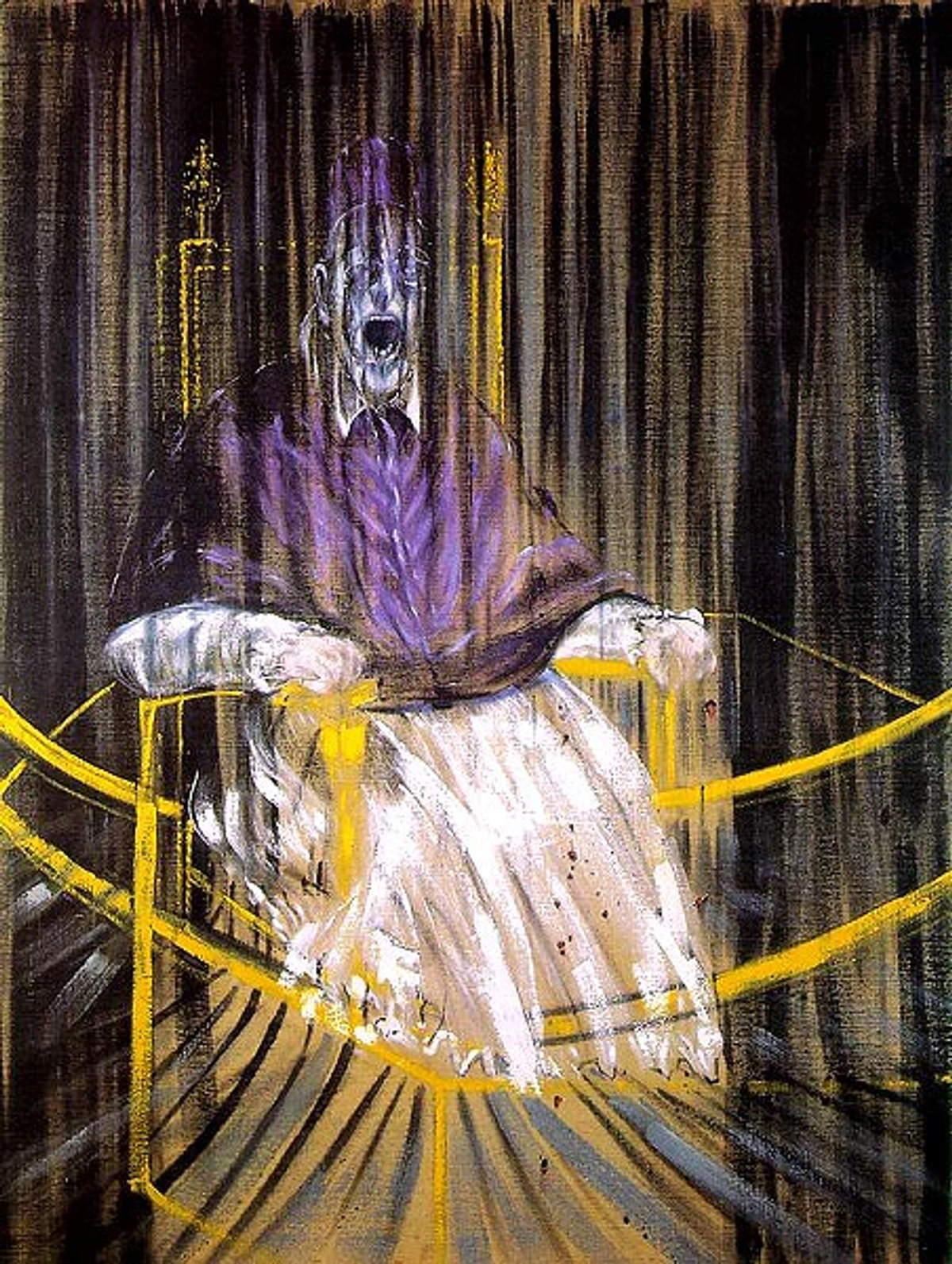
This era was defined by the sacred vessel. Bronze cauldrons, ritual cups, and ornate weaponry required an entirely new mindset. It was about process, craft, and precision. You couldn't rush a bronze pour. You had to plan, to build a mold, to get the temperature exactly right. This was the birth of the designer—the person who could unite a beautiful form with a specific, useful purpose. The logic was inescapable: get the process wrong, and your creation would be flawed and useless. Get it right, and you produced an object of lasting power and beauty. It instilled a mindset where every step had to be planned, every variable controlled.
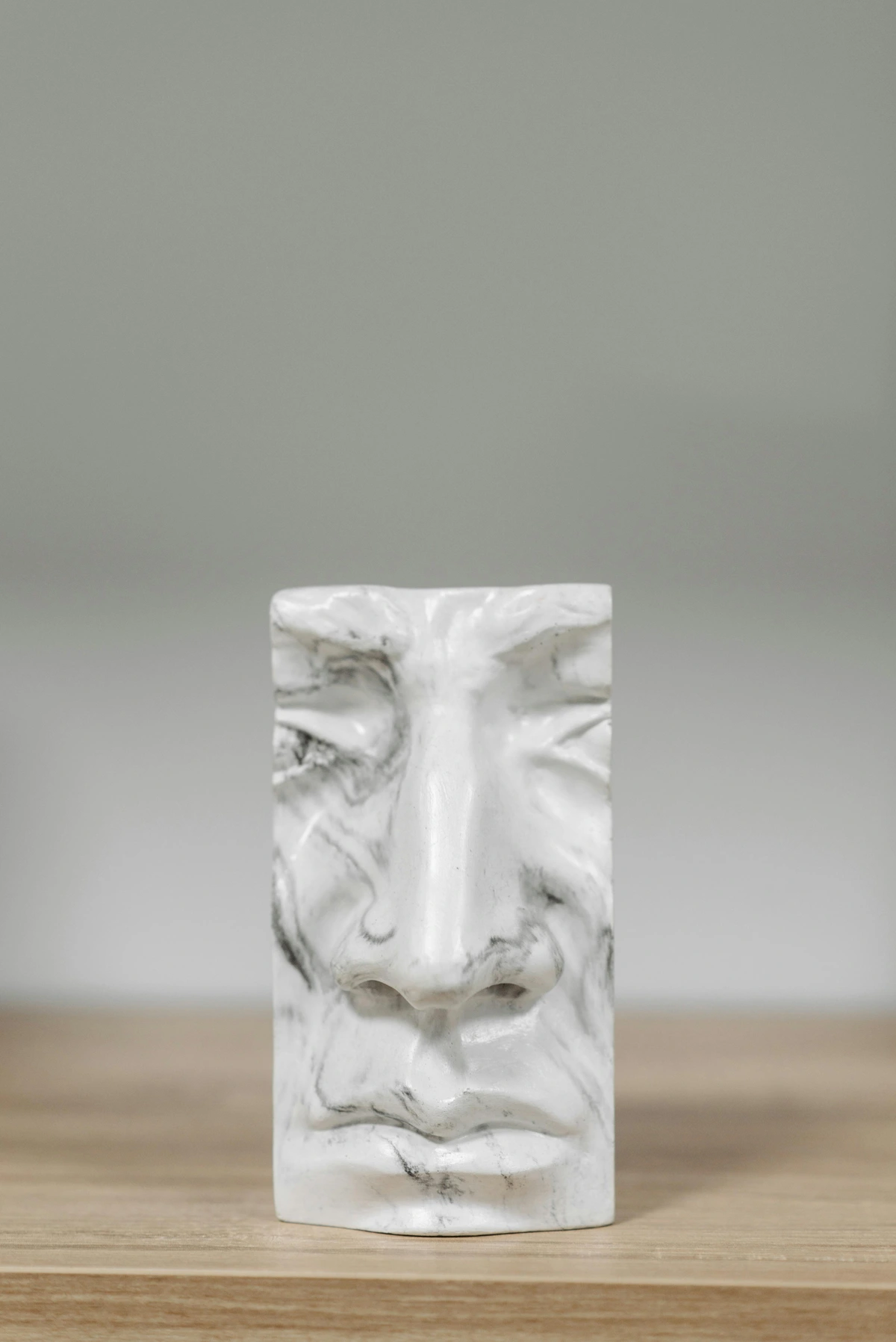
I see this Bronze Age spirit most clearly in the 20th-century movement of the Bauhaus. Their entire philosophy was a return to fundamental principles of craft. Artists like Marianne Brandt weren't just creating sculptures; she was designing tea infusers and ashtrays that were objects of sublime beauty but also impeccably functional. The Bauhaus ideal of "form follows function" would have been second nature to a Bronze Age metalsmith. Both were concerned with how an object felt in the hand, how it worked, and how its form arose logically from its intended use. This marriage of aesthetics and utility created an elegance that was both profound and practical, an ideal that continues to influence design today.
The connection is more than philosophical. Movements like De Stijl, with its rigid geometry, and Russian Constructivism, with its emphasis on the material properties of art, echo this Bronze Age sensibility. They consciously stripped away the representational in favor of an art of pure invention, conceived and executed according to clear, almost mathematical principles, just like casting a perfect bronze tool.

credit, licence
The Bauhaus emphasis on materials, on understanding the inherent properties of wood, metal, and glass, is a direct echo of the Bronze Age artisan's intimate knowledge of their craft. They both understood that true beauty arises from a deep respect for the material itself, not from superficial decoration tacked on as an afterthought. It's a fundamental humbleness before the medium, an understanding that the artist's job is to reveal the potential within the material, not impose their will upon it without regard for its nature.
This isn't just true for the Bauhaus. Think of the minimalist sculptures of artists like Donald Judd. His precisely fabricated boxes are a testament to their materials. The sheen on anodized aluminum, the weight of a steel rectangle—the aesthetic experience is the material and its precise, logical form. There's no narrative, no hand gesture, just a perfect, considered object. It's the Bronze Age ideal, stripped down to its absolute essence. Minimalism, in this way, is the ultimate expression of Bronze Age logic, where the presence of the object is defined entirely by the perfection of its making and the clarity of its form.

The Iron Age Nerve: Technology, Power, and Modern Angst
Finally, we arrive at the Iron Age (starting around 1200 BCE). From a technological standpoint, iron is a game-changer. It's harder, more abundant, and allows for a massive expansion of agriculture, warfare, and empire-building. But there's a psychological shift here, too. If the Bronze Age was about elegant, deliberate craftsmanship, the Iron Age was about power, scale, and the machine.
Iron fundamentally altered the relationship between humans and the material world. Bronze was precious, regional, and tied to elite trade routes. Iron, in contrast, was everywhere. It was a democratization of power, but also its industrialization. The iron plow tamed the land, the iron quill recorded the law, and the iron sword enforced it. It was the first truly global material, and it ushered in an age of vast empires and equally vast, impersonal systems.
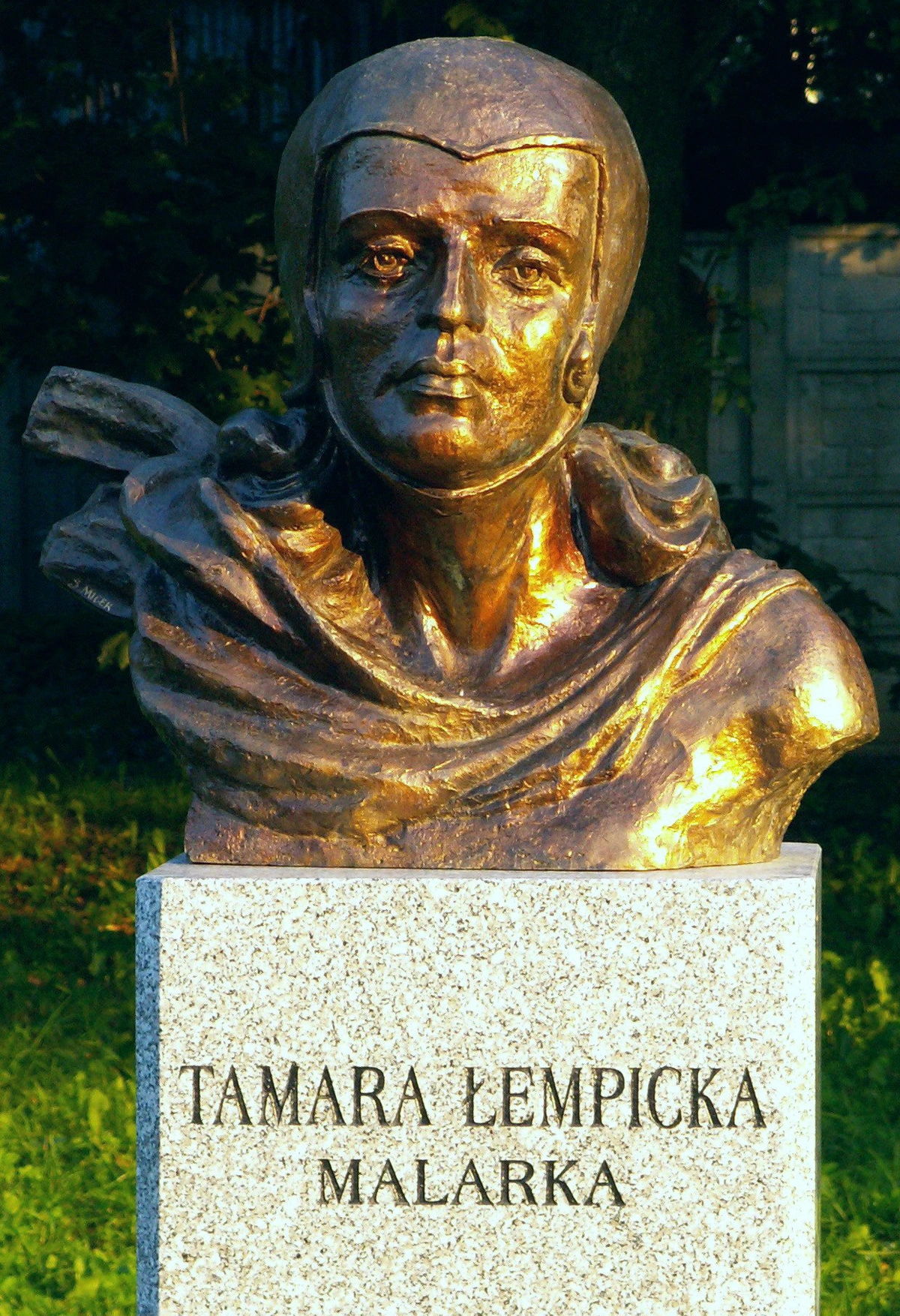
Iron is the material of the state, of the legion, of the complex society. It's less about the individual artisan's mark and more about standardization. An iron plowshare could drastically reshape a landscape, and an iron sword could reshape a society. This new material reality demanded a new kind of artistry—one that could engage with technology on a massive scale, and grapple with the societal changes it wrought. It was the birth of an art not just about personal expression, but about navigating and responding to vast, impersonal systems of power.
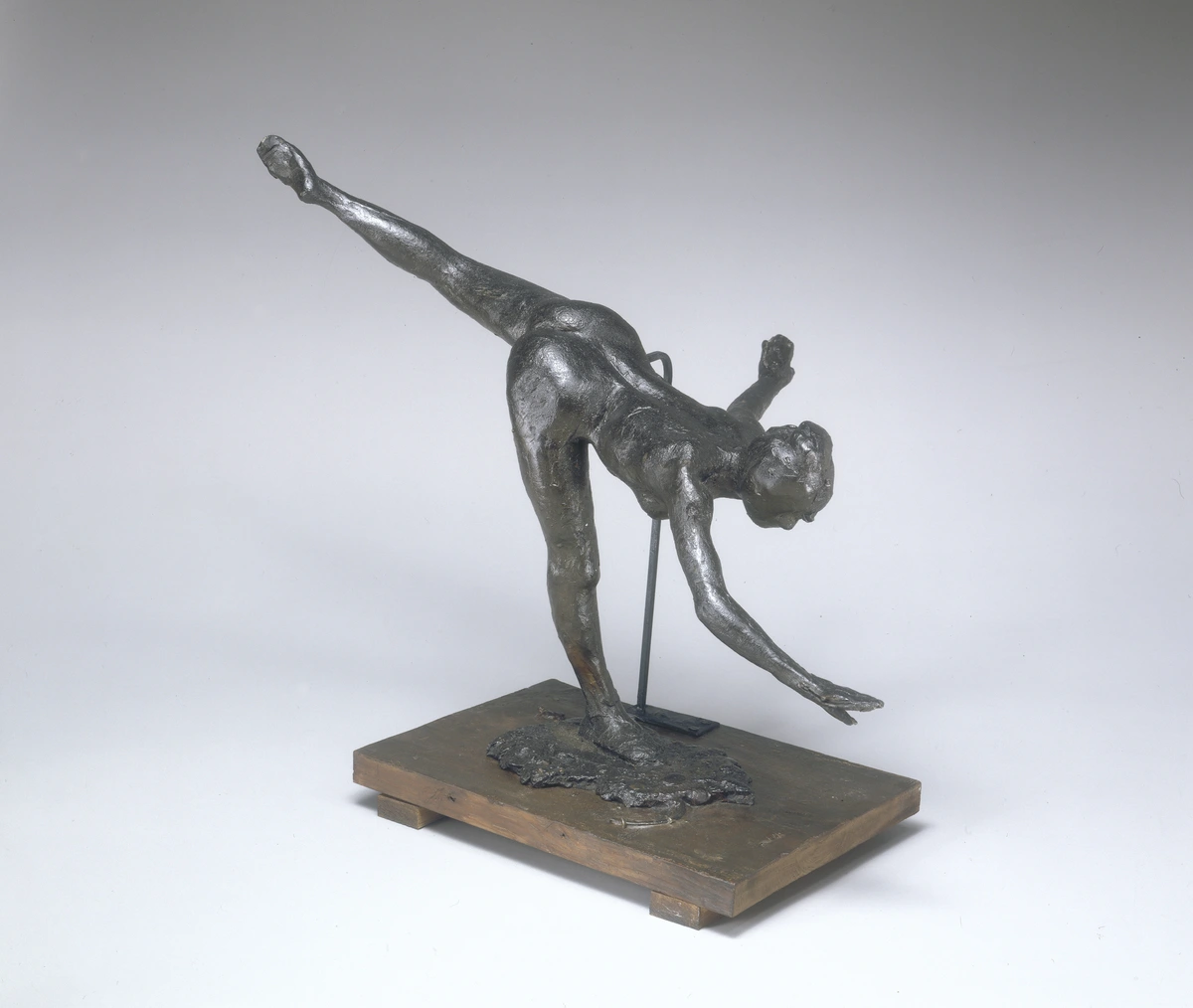
This connection to modern art's long and complicated relationship with the industrial and technological world is clear. The Futurists, who fell in love with the speed, noise, and violence of the machine age, exemplify this. Their canvases are full of dynamism, fragmentation, and mechanical energy, reflecting a world transformed by iron-forged technology. It’s a celebration of pure, unadulterated power, a gleeful plunge into the chaos of the new age. They embraced the very qualities that made iron transformative: its power, its speed, and its capacity for destruction.
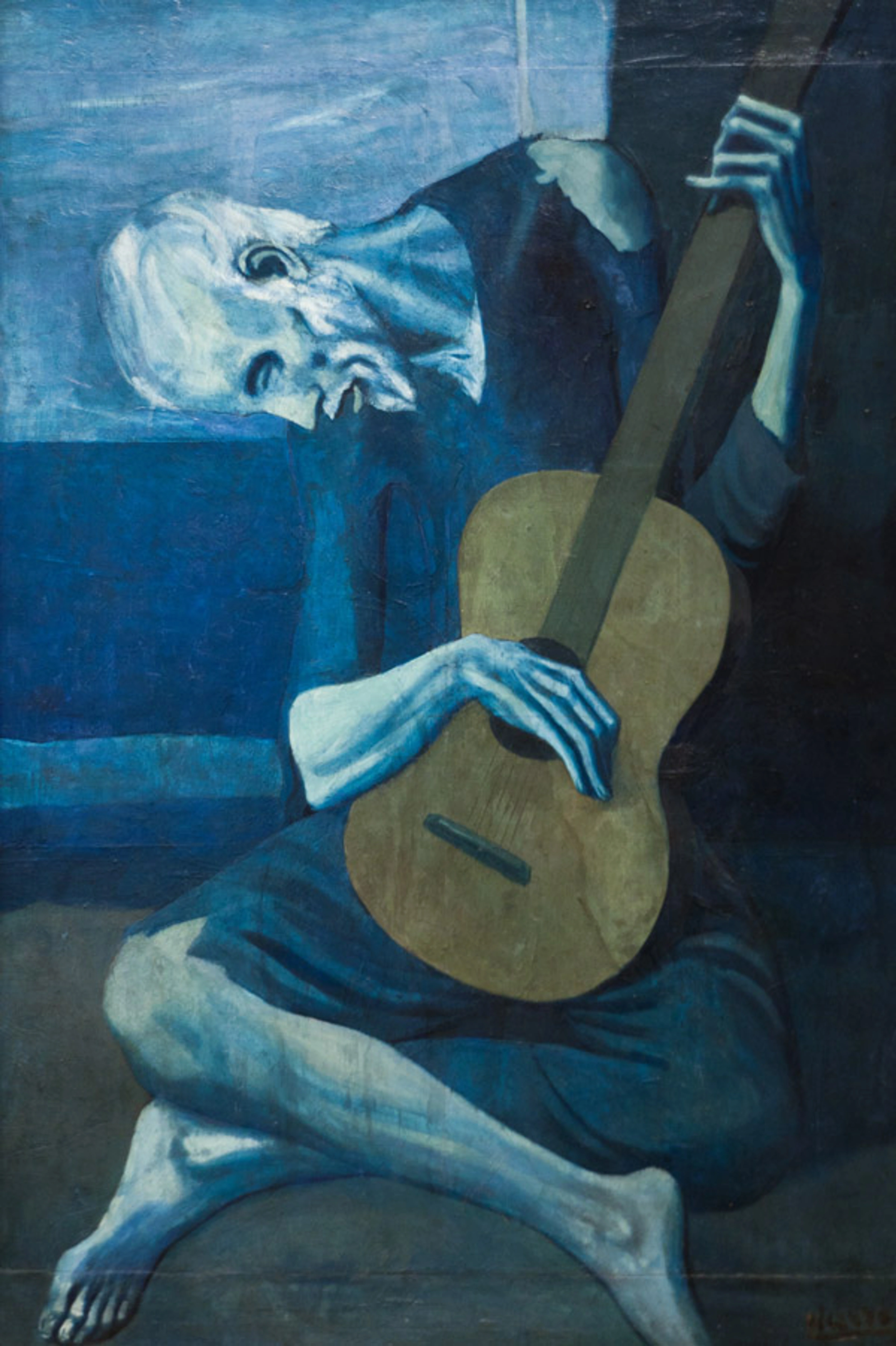
But the relationship was complex from the start. Contrast the Futurists with the Cubists. While also fascinated by modern life, their approach was more analytical. They took the world apart—mechanically, intellectually—to see how it worked. In their fragmented guitars and geometric faces, you see the artist not just celebrating the machine, but acting like one—as a dispassionate observer and deconstructor. It was an art of engineering as much as it was an art of painting. The Cubists essentially became the technical analysts of a world built on Iron Age logic, breaking it down into its fundamental components without necessarily celebrating the results.
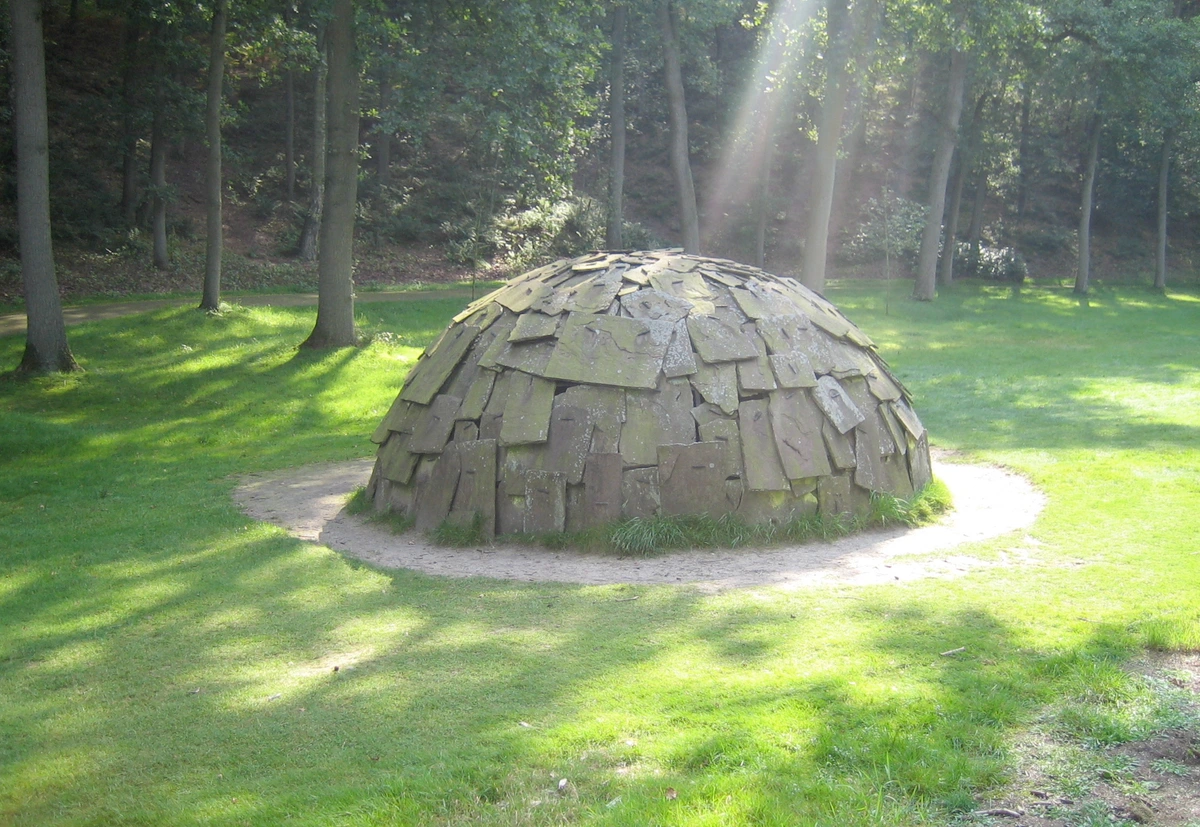
But there's another, darker side. A few decades later, the junk sculptures of artists like John Chamberlain or the welded-metal figures of Eduardo Paolozzi take that same industrial material and turn it into something human. Chamberlain’s crushed car parts are like the rusted, twisted remains of a mechanized civilization. Paolozzi’s robotic figures are fascinating but also deeply anxious, reflecting our own fears about being dehumanized by the very technology we created. It's the classic Iron Age dilemma: who is wielding the tool, and who is being crushed by it? What was a celebration for the Futurists became a source of anxiety and profound critique as artists began to grapple with the unintended consequences of a world dominated by its own creations.
This anxiety blooms into a full-blown critique in the Dada movement, which used absurdity and readymade objects (like Duchamp's Fountain) to mock the sterile logic of the industrial world. They were the first to ask if the "advance" of the Iron Age had, in fact, driven us mad. Similarly, the rusted, weathered steel of post-war sculptors like Richard Serra forces a confrontation with the material of our own built environment, transforming the cold steel of industry into objects of profound and sometimes terrifying experience. The ultimate Dada gesture was to take the most utilitarian product of the Iron Age – the urinal – and declare it a work of art, short-circuiting the entire rational system of industrial production and aesthetic value.
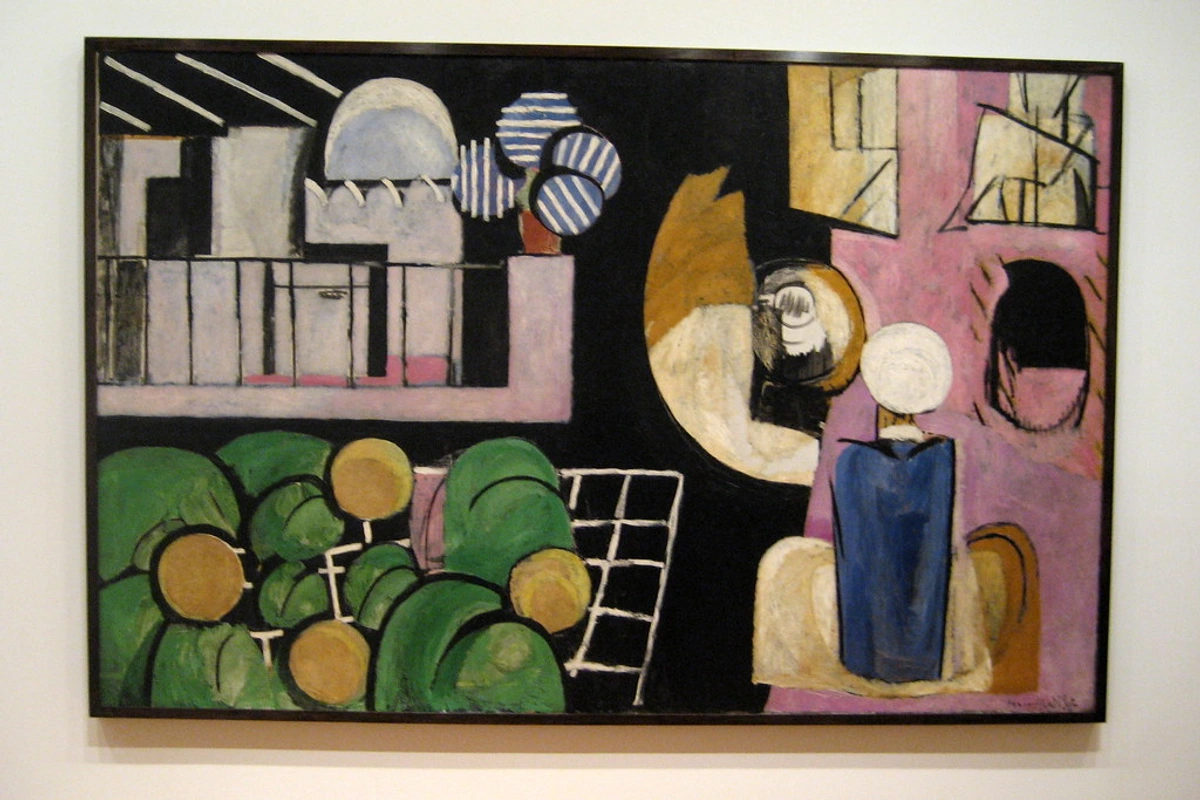
And what could be more emblematic of this Iron Age inheritance than found-object art? It finds its ultimate expression in the monumental steel works of Richard Serra. His gigantic, rusted, curved sheets of COR-TEN steel aren't just sculptures you look at; they're environments that you experience. They behave like architecture. They have a cold, industrial power that is both awe-inspiring and intimidating. They are pure Iron Age, stripped of any pretense. Serra doesn't just use the material; he unleashes its most fundamental properties on the viewer, creating a confrontation between the human body and the sheer weight and scale of industrial force.
Then there's the raw, unapologetic use of scrap metal in the work of artists like David Smith or Anthony Caro. Their welded steel constructions show the seams, the bolts, the very process of their making. They don't hide their industrial origins; they celebrate them, transforming the cold language of the factory into a surprisingly lyrical and human form. The legacy continues today in the work of sculptors like Richard Deacon, who manipulates industrial materials into organic, sometimes sensuous forms, highlighting the constant tension between nature and industry.
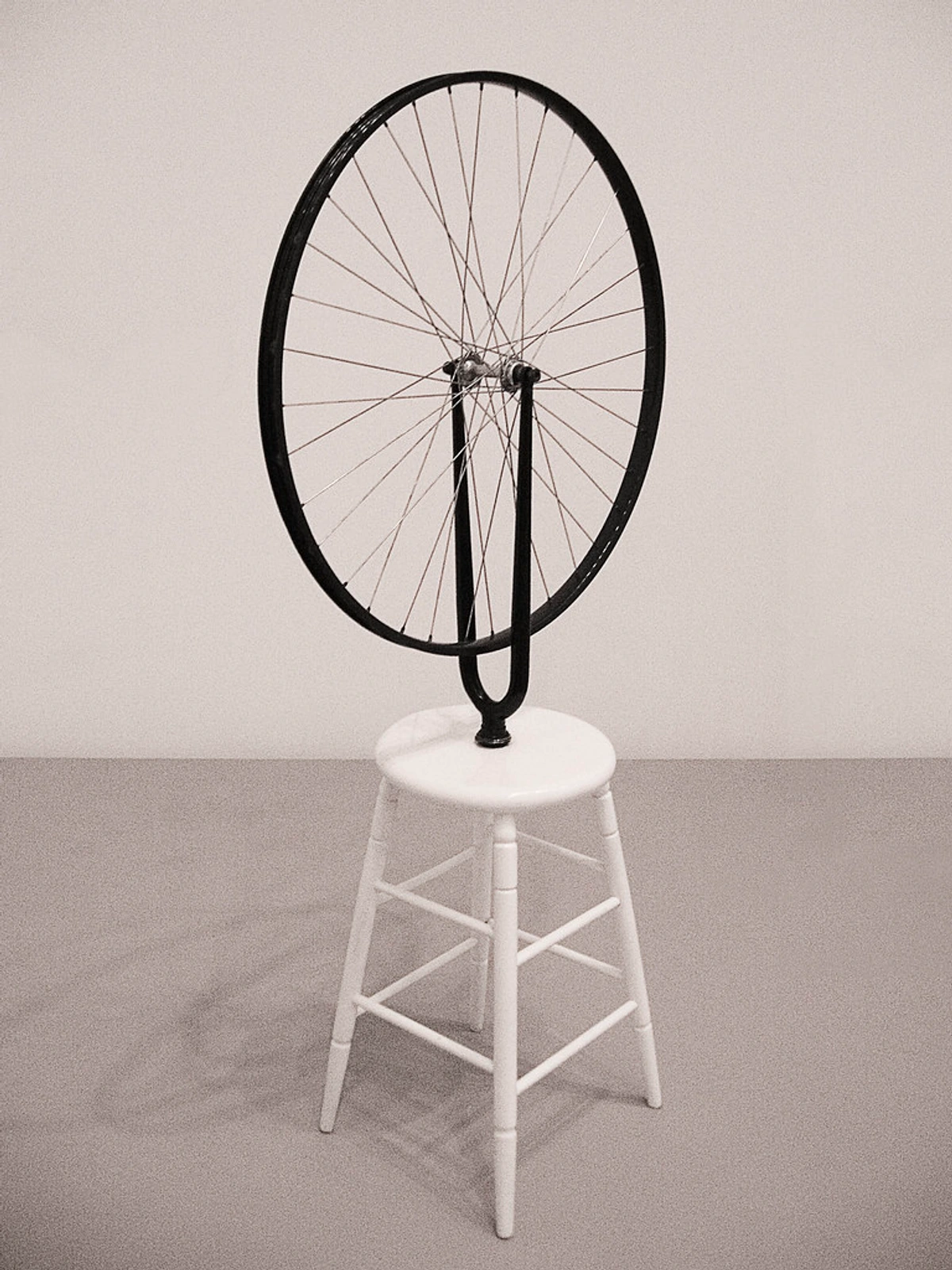
Even contemporary artists today are still wrestling with this Iron Age inheritance. Andreas Gursky's photographs of vast industrial complexes and trading floors, populated by tiny human figures, question our place within the systems we've built. Land art, like the work of Christo and Jeanne-Claude, who wrapped coastlines in fabric using industrial-scale logistics, or Robert Smithson's Spiral Jetty, is the ultimate Iron Age art form: using industrial machinery to create gestures of immense, landscape-altering scale, showing how technology can simultaneously shape nature into art and scar it.
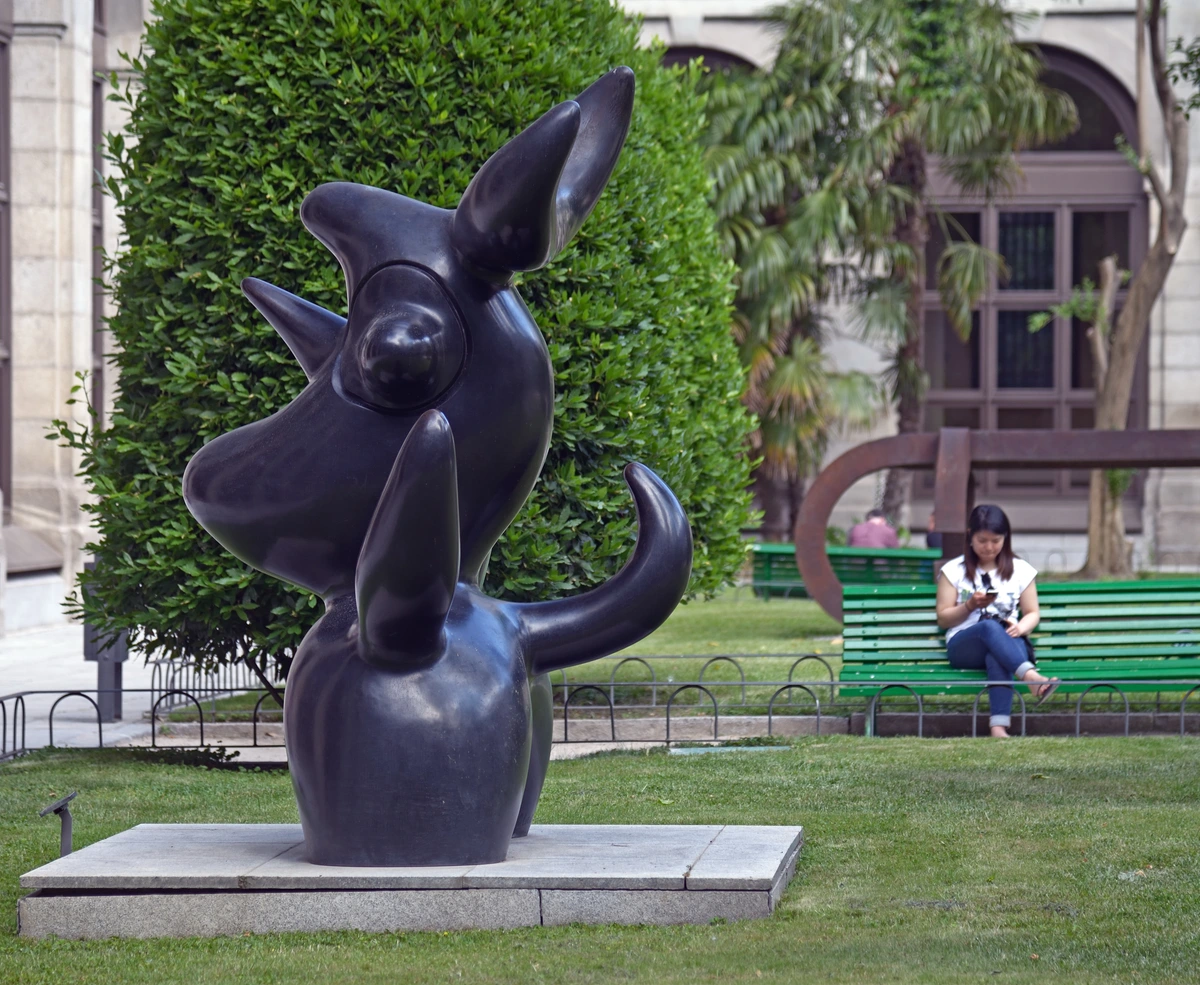
Where the Stone Age gives us raw emotion and the Bronze Age gives us considered form, the Iron Age gives us the reckoning with power, industry, and the vast, impersonal systems that shape our world. This tension—between the individual human spirit and the immense forces of the modern world—is arguably the defining anxiety of 20th-century art. It all begins with the first iron bloom.
The Contemporary Connection: Why This Ancient Trilogy Still Matters
You might be wondering why any of this matters for a contemporary artist working today. After all, we live in the age of fiber optics and AI, not flint and bronze. And that’s exactly the point.
Think of these three ages not as a rigid historical timeline, but as three fundamental creative modes, or "operating systems," that are constantly available to us. Most great works of art don't exist purely in one mode; they are a masterful synthesis of all three.
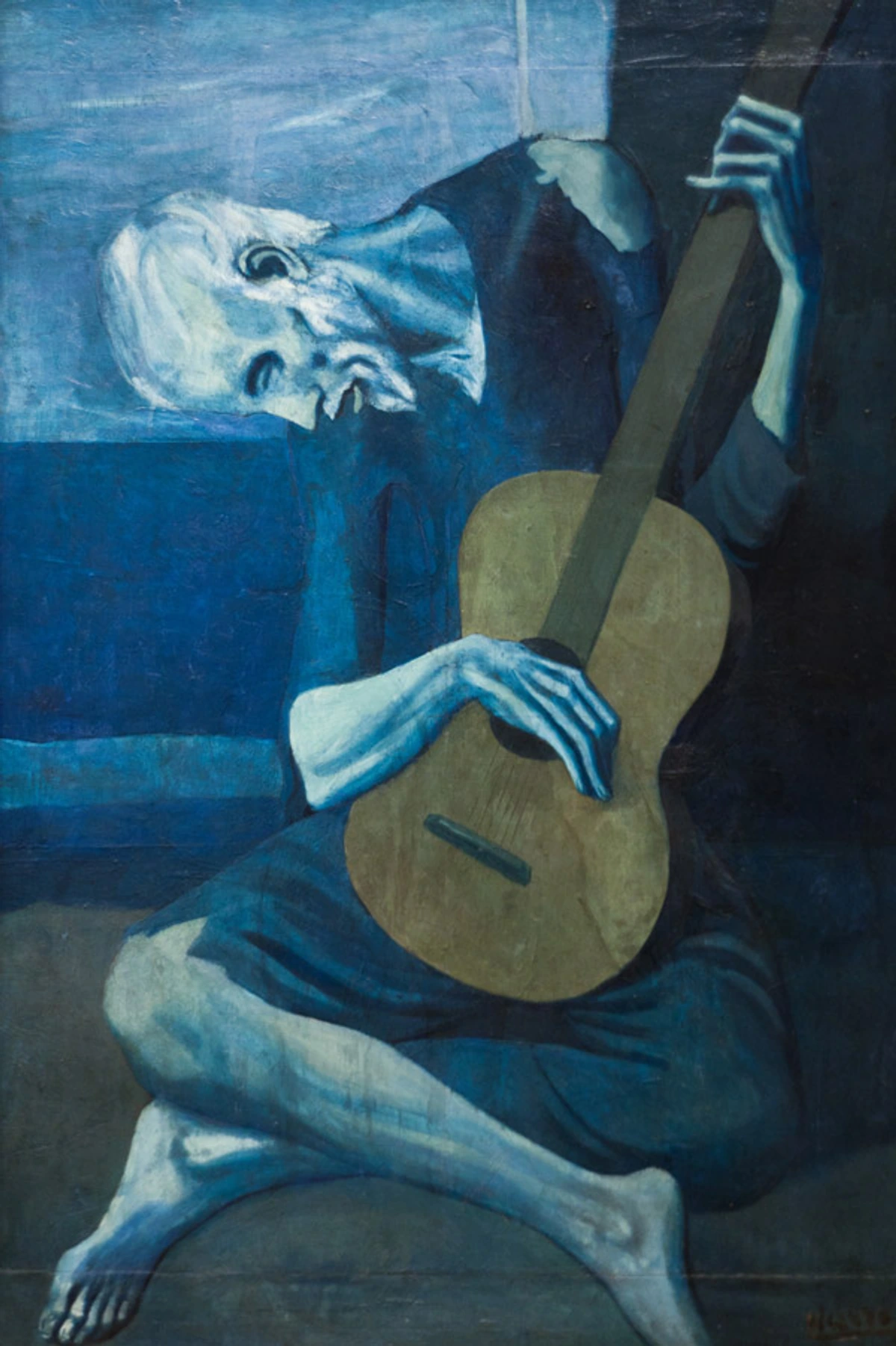
Understanding these three ancient impulses is like having access to the primary colors of human creativity. They are fundamental archetypes, or creative modes, that artists dip into consciously or unconsciously.
- The Stone Age gives us the language of raw gesture, emotion, and intuition—the unthinking, primal mark that existed before language had a name for it.
- The Bronze Age gives us the principle of considered design and masterful craft—the marriage of beauty, purpose, and deep material understanding.
- The Iron Age gives us the challenge of confronting technology and material on a massive scale, making art that engages with the immense, sometimes impersonal, systems that shape our world.
Today, this plays out everywhere. The survival of hand-done craft like pottery or woodworking is a conscious embrace of the Bronze Age spirit in a world dominated by Iron Age mass production.
I find these three forces at play in my own work all the time. The initial impulse is often Stone Age: a gut feeling, a color that demands to be used, a gesture that feels urgent. The execution then requires a Bronze Age mentality: which medium will serve this idea best? How can the form enhance the function? Is this construction sound? And finally, there's the Iron Age context: I'm working in the 21st century, my consciousness shaped by data overload, climate change, and global connection. The artwork has to somehow contain all three of these things at once, and the struggle is often getting them to harmonize rather than compete.
Consider the iterative process of working with digital tools. You might start with a quick, intuitive sketch on a tablet (Stone Age), then spend hours refining the composition using layers, masks, and vector paths (a very Bronze Age form of craft). The final piece, perhaps shared globally via the internet and viewed on a screen, is deeply embedded in its Iron Age technological context. Each stage requires a different mindset, yet all are part of the same creative act. It's a powerful reminder that modern tools don't erase our ancient impulses; they just provide a new arena for them to play out.
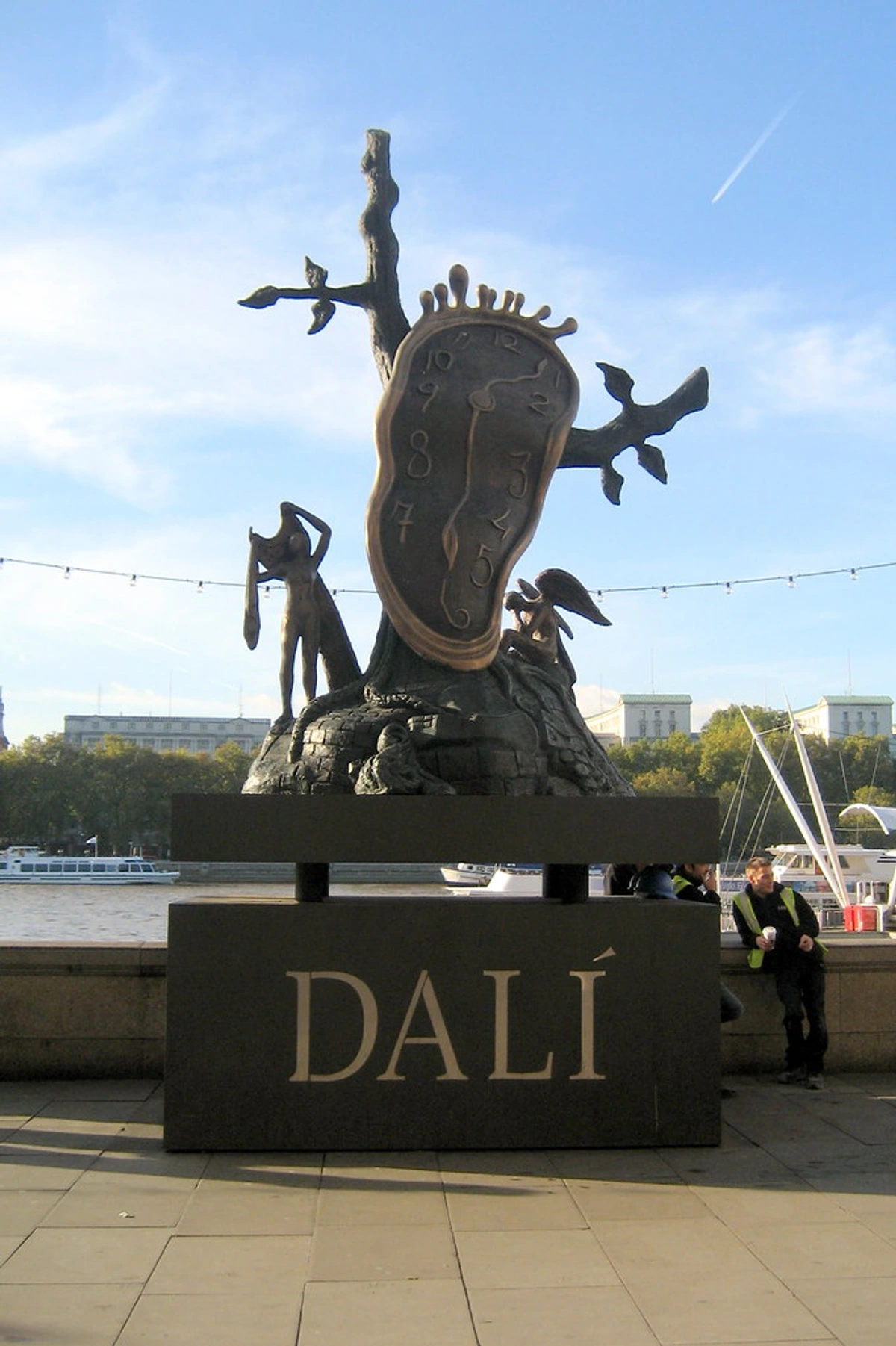
Today's most interesting artists are often the ones who can fluently move between these ancient modes. An artist might use digital fabrication (Iron Age) to create a perfectly designed object (Bronze Age) that evokes a primal emotional response (Stone Age). They aren't stuck in one era; they are synthesizing them all. This ability to shift between modes, to call upon the immediate gesture, the thoughtful design, or the systemic critique, is the mark of a truly mature and versatile creative voice.
This synthesis is visible in the work of countless contemporary artists, who often seem to cycle through these ancient mindsets without even being aware of it.
- El Anatsui's shimmering tapestries, made from discarded bottle caps, are a prime example. The raw, chaotic collecting of materials (Stone), their meticulous assembly into a grand structure (Bronze), and their commentary on global trade, waste, and post-colonialism (Iron) are all perfectly balanced.
- The work of Julie Mehretu is a perfect storm of all three. Her paintings begin with spontaneous, gestural marks (Stone), which are then layered and organized with architectural precision (Bronze), often based on maps, historical events, and the flows of capital—the vast, impersonal systems of our time (Iron). The complexity of her work mirrors the complexity of our world, where our deepest human feelings interact with abstract global forces, all mediated through the precise logic of creation.
It’s a kind of artistic triage, a constant balancing act, where the final work is most powerful when it speaks in all three of these ancient languages at once.
FAQ
Do art historians actually use the Three-Age System? No, not as a direct tool for art criticism. The Stone-Bronze-Iron framework is an archaeological tool developed in the 19th century to classify prehistoric artifacts. However, its focus on fundamental shifts in human technology and social organization provides a powerful, if metaphorical, lens for understanding our creative DNA and the recurring patterns in human expression. It's less a formal theory and more a useful way of thinking about how deep-seated modes of making continue to surface, no matter how sophisticated our tools become.
Does this mean modern art is unoriginal? Not at all. This is precisely the wrong conclusion to draw. Think of it like language. We all use a pre-existing vocabulary and grammar to speak, but that doesn't make our conversations unoriginal. The ancient Three-Age periods gave us our fundamental artistic vocabulary. What contemporary artists do is form entirely new sentences, poems, and conversations with that ancient language, often informed by entirely new contexts an ancient person could never have imagined. True originality lies not in inventing something from nothing—an impossible task—but in creating novel and meaningful combinations that feel both ancient and shockingly new.
Can you give more examples of how this shows up in an art collection? Absolutely. Imagine walking through a gallery or museum:
- A painting with visible, expressive brushstrokes and handprints (Stone Age influence).
- A minimalist sculpture made from polished steel that precisely fits a corner (Bronze Age influence).
- A large installation made from recycled industrial materials like car parts or steel beams (Iron Age influence).
Many works will contain elements of all three. An abstract painting might have a primal energy (Stone Age) but be constructed with incredibly precise, almost architectural planning (Bronze/Iron Age).
It can also be a powerful tool for curating a collection. As a collector, understanding whether you're drawn to the raw gesture, the perfect object, or the confrontation with modern systems can help you define your taste and build a more cohesive and meaningful body of work.
How can I see these influences as an artist myself? I’d recommend looking at your own creative process. Do you have a phase of chaotic, intuitive mark-making? That's your inner Stone Ager. Do you have a phase of careful planning, measuring, and refining? That's your inner Bronze Age artisan. Do you work with new materials, technology, or tackle large-scale societal themes? That's your inner Iron Age smith. Embracing all three can lead to a richer practice.
To make this tangible, try this exercise: For one week, consciously dedicate your studio time to each "age."
- Day 1-2 (Stone Age): No planning. No rulers. Just you, a simple tool, and a substrate. Focus entirely on gesture, feeling, and mark-making. Create a mess. See what emerges from the chaos.
- Day 3-4 (Bronze Age): Take one of those messy gestures and refine it. Plan its composition meticulously. Think about its form, its support, its construction. Make a perfect, considered object out of the raw chaos.
- Day 5-7 (Iron Age): Now, place that object in a modern context. Photograph it against an urban landscape. Recreate it using a digital tool. Think about how it comments on our world of systems, technology, and data. You'll likely find your work has a newfound depth and power.
Conclusion: Finding Your Own Ancient Voice
In the end, I don't believe we're just looking back in time. I believe we are, in some fundamental way, carrying these past lives within us. The impulse to smear pigment on a wall in Lascaux is the same one that drives a street artist with a spray can today. The care it took to cast a perfect bronze axehead is the same care a digital designer puts into a seamless user interface.
Recognizing this deep history isn't an academic exercise; it's a practical tool. It's a vocabulary for understanding our own creative impulses. It helps us diagnose creative blocks (maybe your inner Bronze Age artisan is being overpowered by your inner Iron Age technologist) and find new pathways forward.
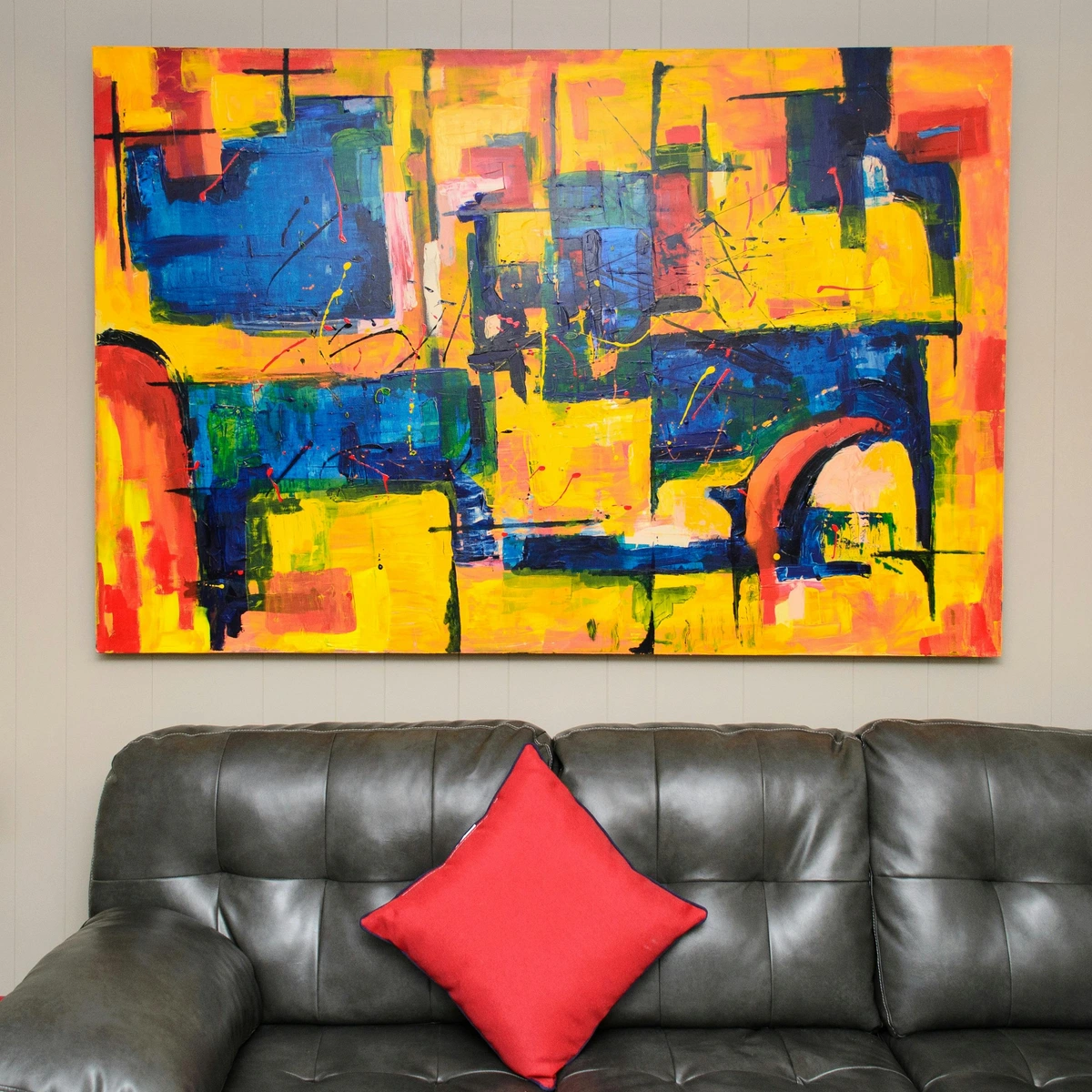
It's a humbling and inspiring thought. When you pick up a brush or a stylus, you aren't starting from zero. You are taking your place in a lineage of makers that stretches back to the dawn of our species. The tools change, the societies grow complex, but the fundamental acts—the mark, the vessel, the system—remain. Your voice is unique, but it speaks with an ancient and powerful accent. This ancestral echo isn’t a limitation; it’s a source of strength and depth that connects your individual practice to the longest, most enduring story we know: the human need to create.

So, the next time you're in the studio, stuck on a piece, ask yourself: in this moment, which age am I in? Is this piece calling for more raw, Stone Age intuition? More thoughtful, Bronze Age structure? Or a bolder confrontation with its Iron Age context? Maybe the answer is synthesis, or maybe it's a stubborn commitment to one. Recognizing the dialectic is the first step to mastering it.
It's a profound reminder that to be a contemporary artist isn't to forget the past, but to have a conversation with it. We are all echoes of our ancestors, and in every brushstroke, there is an ancient voice asking to be heard. Your job is simply to listen. The act of creation has always been an act of listening.
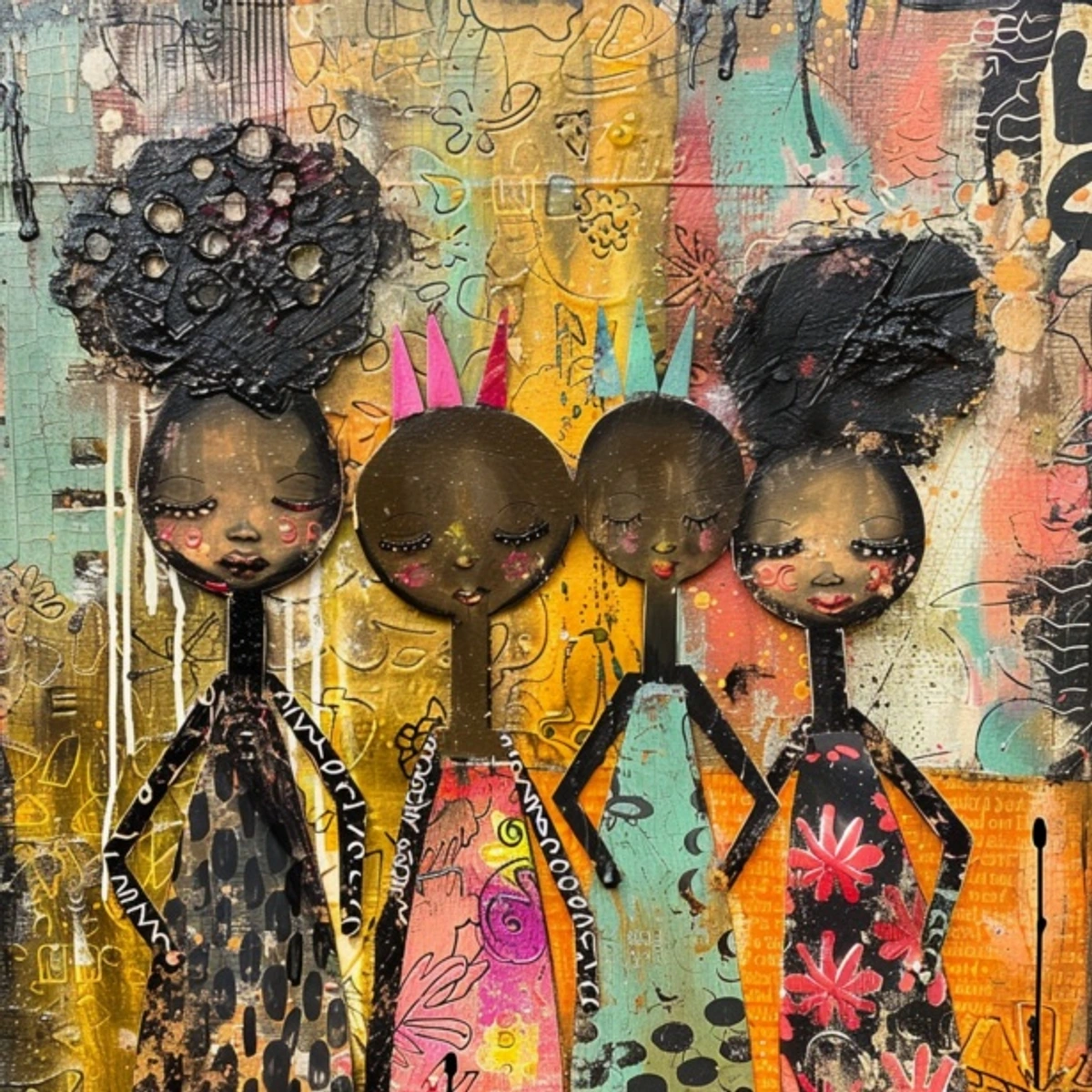



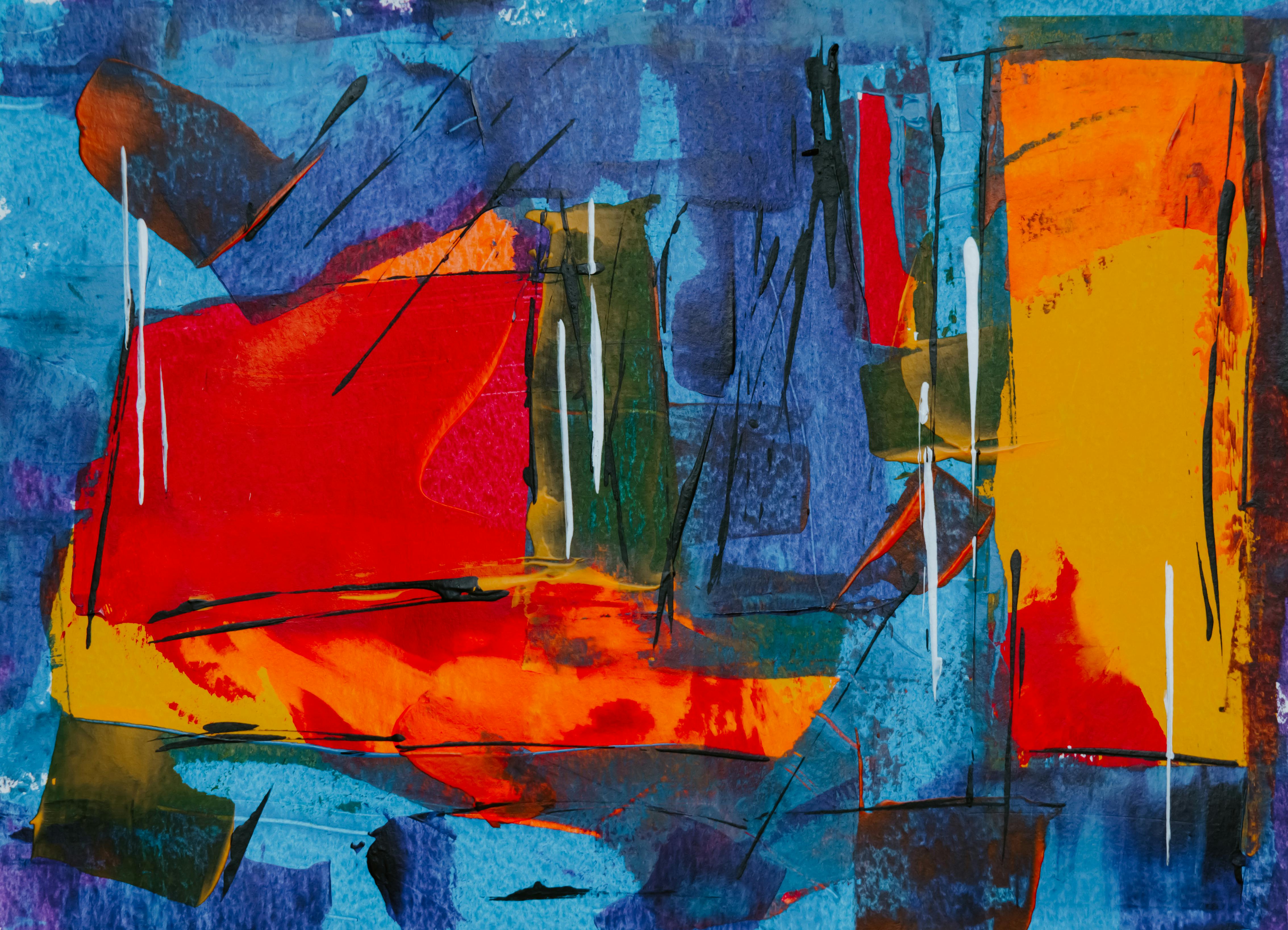







If this exploration of art's deep history sparks something in you, I encourage you to keep exploring. You might enjoy tracing these threads on my /timeline of inspiration, or perhaps you'll find an original piece that speaks to your own inner ancient voice in the /buy collection.