
Who Was Franz Kline? An Artist's Guide to Abstract Expressionism
A deep dive into the life and work of Franz Kline. Discover the man behind the monumental black and white paintings and his role in Abstract Expressionism.

Franz Kline: The Master of Monumental Gestures and Abstract Expressionism
Let's be honest, walking into a room and encountering a colossal Franz Kline painting for the first time can be a bit of a shock. My initial thought, years ago, was something along the lines of, "Is that it? Just giant black slashes on a canvas?" And if you've had a similar, slightly skeptical reaction, you're in good company. There's an apparent simplicity, a raw immediacy, that can almost trick you into believing there's less to it than meets the eye. But here’s the thing: that very direct, gut-punch of a reaction is precisely what makes Kline's work so profoundly captivating and, dare I say, essential to understanding 20th-century art. We're not talking about mere lines; we're talking about pure, unadulterated energy, emotion, and intellect, distilled into monumental form. It's a visual conversation that demands your full presence, a masterclass in how to abstract art.
I remember the first time I really saw a Kline – not just looked at it, but let it hit me. It wasn't in a pristine white gallery, but in a dusty art history textbook, a small, grainy reproduction that still managed to scream off the page. It challenged every preconceived notion I had about what art 'should' be. And that, I've come to realize, is his genius. He forced you to confront the canvas, to feel the raw presence of the paint, to engage with the sheer act of creation. It's an experience that transcends mere observation; it's a visceral dialogue.
In this article, we're not just going to skim the surface. We're going to dive deep into the world of Franz Kline, a true titan of Abstract Expressionism and a foundational member of the legendary New York School. If you're seeking an even more exhaustive account of his journey, our comprehensive Franz Kline biography awaits. But for now, let's explore how a man shaped by the stark, powerful contrasts of Pennsylvania's industrial heartland came to redefine the visual language of his time, proving that black and white, wielded with radical force, could convey a universe of meaning, texture, and feeling. It's a story of personal vision transforming into a universal, visceral language that continues to resonate. We'll delve into his methods, his philosophical underpinnings, and the lasting impact of his monumental gestures on the art world, ensuring you walk away with a profound appreciation for one of modern art's most compelling figures.
Who Was Franz Kline, Really? Beyond the Brushstrokes
To truly get a Kline painting, you almost need to feel the pulse of the man himself. He wasn't some isolated genius; his art was inextricably linked to his life, his temperament, and his journey. Born in the heart of industrial America, his story is less about innate artistic destiny and more about a persistent, often tumultuous, transformation. His early life was marked by the tragic loss of his father at a young age, leading to a period in an orphanage. This early instability, I believe, contributed to a resilience and a drive that would later manifest in his powerful artistic output. He was known among his peers for his gregarious personality, his sharp wit, and a certain boisterous charm that belied the intense focus he brought to his canvases. Think of him as an intellectual brawler, someone who loved a good debate as much as he loved slinging paint. This duality—the jovial public persona and the intensely serious artist—is, I believe, key to understanding the dynamism within his work. He was a force of nature, both socially and artistically.
Early Life and Industrial Echoes: The Crucible of Form
Franz Kline's formative years were spent in Wilkes-Barre, Pennsylvania, a region defined by its coal mines and heavy industry. Imagine the landscape: towering black slag heaps, the skeletal forms of steel bridges crisscrossing rivers, the massive, rhythmic machinery of industry. These weren't just backdrops; they were the very visual grammar of his youth. I truly believe that the immense structural integrity, the almost architectural quality of his later abstract work, isn't just a happy accident. It's deeply, subconsciously informed by the powerful, imposing forms that surrounded him as a child. The stark contrasts of light and shadow, the soot-stained buildings, the raw power of the machinery—all of this seeped into his visual lexicon, becoming a silent vocabulary for his abstract expressions. It's a powerful reminder of how our environment shapes our artistic voice, sometimes in ways we don't even realize for years, only to emerge, transformed, in our most profound creative output. It makes you wonder what subtle influences from your own surroundings are shaping your creative expression, doesn't it? This notion of a visual language steeped in experience is a thread running through much of the history of abstract art.
The Formative Years: From Figurative Skill to Abstract Vision
Before he became the titan of abstraction we know, Kline was a highly skilled figurative artist. And frankly, a really good one! This isn't a minor footnote; it's a critical piece of his artistic puzzle. He didn't just stumble into Abstract Expressionism. He dedicated years to rigorous academic training, first at Boston University and the Vesper George School of Art, then further honing his craft at Heatherley School of Fine Art in London. During these formative years, he diligently drew cartoons (he even aspired to be a cartoonist at one point!), sketched figures, and painted cityscapes, absorbing lessons from masters like Rembrandt and Goya. This traditional grounding, this mastery of representation, is absolutely crucial. It reinforces a truth I often tell myself: you have to understand and master the rules—the anatomy, perspective, light—before you can truly and meaningfully break them. His early work wasn't just impressive; it was the crucible where his understanding of form, weight, and composition was forged, skills he would later distill and explode onto monumental canvases. Without this bedrock of traditional training, his abstractions might have been merely chaotic; instead, they possess an inherent structural logic and a deliberate power.
The New York School and Greenwich Village Ferment: A Crucible of Ideas
Moving to Greenwich Village in New York City in the mid-1930s wasn't just a change of address for Kline; it was an immersion into a fervent, intellectual, and artistic hotbed that would fundamentally reshape his entire approach. This was where he found his tribe, a dazzling constellation of artists—Jackson Pollock, Willem de Kooning, Mark Rothko, Barnett Newman, Robert Motherwell, and many others—who were, together, birthing what would become the Abstract Expressionism movement. Imagine the scene: smoky, bohemian bars like the legendary Cedar Tavern, filled with intense, often heated, late-night debates on everything from existential philosophy to the future of painting. These artists weren't just painting pretty pictures; they were wrestling with profound, existential questions. How do you capture the raw, often anxious, energy of a post-war America? How do you translate pure emotion onto a canvas without resorting to tired, traditional representation? This was a period of intense intellectual camaraderie, relentless experimentation, and a shared, almost desperate hunger for a new, authentically American artistic language that could speak to the deepest human experiences. Kline, with his sharp mind and convivial nature, thrived in this environment, soaking up ideas and contributing his own burgeoning vision. Imagine the electricity in the air, the feeling of being on the cusp of something entirely new—it must have been intoxicating for an artist coming into his own.
It's in this very context that Kline's personal evolution mirrors the broader trajectory of the New York School. While some artists like Pollock embraced drip painting as "action painting," Kline's approach, though equally energetic, leaned more into the architectural power of the brushstroke, creating a unique dialogue within the movement, a testament to the diverse expressions within the evolution of abstract art. This environment also nurtured a sense of rebellion against European artistic dominance, a desire to forge a distinctly American aesthetic that was bold, raw, and monumental.
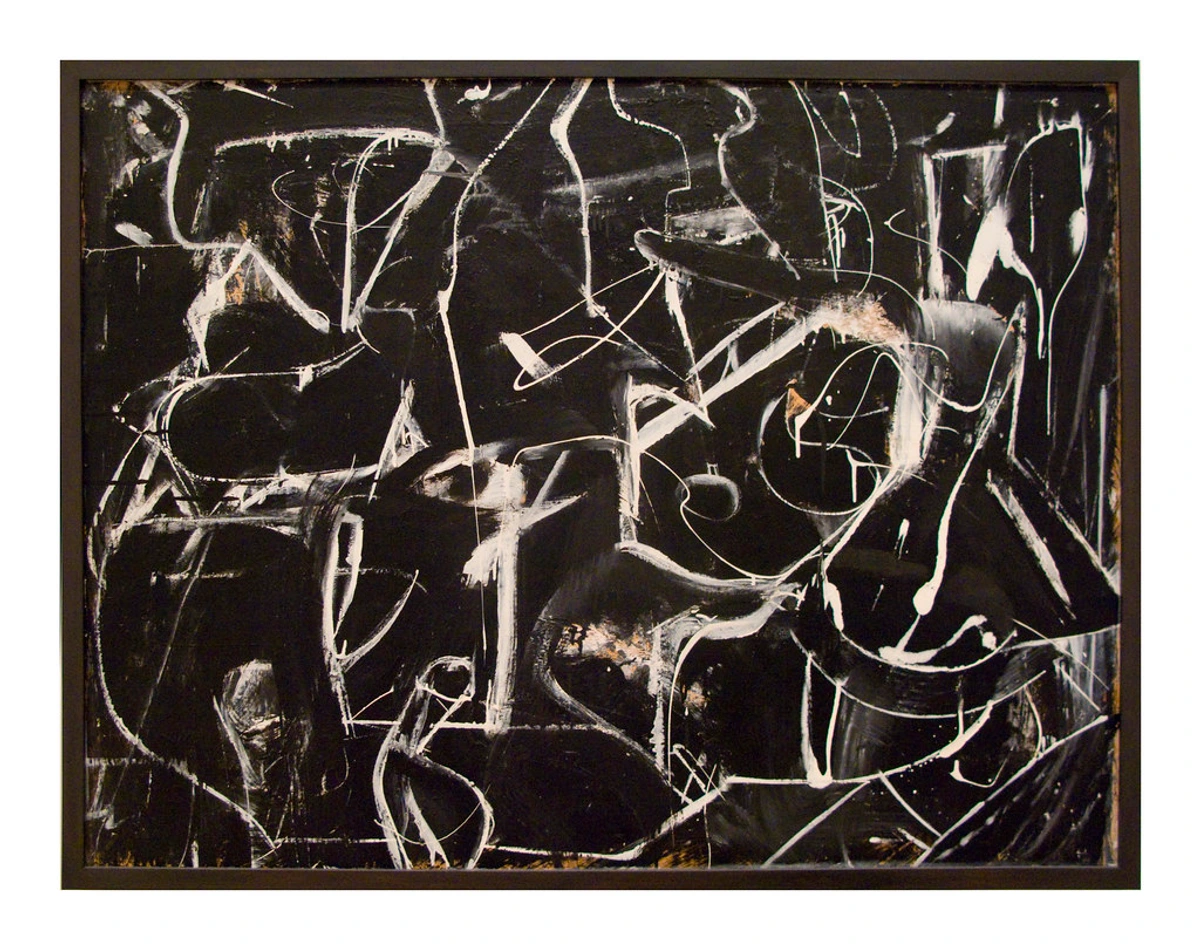
This era of artistic ferment also saw the emergence of various stylistic directions within Abstract Expressionism, from the spontaneous gestures of action painters to the contemplative fields of colorists. Kline's work, a powerful synthesis of both energy and structure, sits firmly in the former camp, yet with a unique architectural rigor that set him apart. His paintings, even the most explosive, always retained a sense of underlying order, a nod to the industrial forms that permeated his childhood. It's a powerful contrast, this controlled chaos, that makes his contribution so distinct.
The Famous "Aha!" Moment
There's a truly legendary story that I absolutely love, because it speaks so deeply to the experience of seeing your own work—or indeed, anything familiar—with profoundly fresh eyes. Kline was in his studio in 1949, and his friend, the equally formidable Willem de Kooning, was present. Kline was using an old Bell-Opticon projector to blow up some of his small, intimate, ink sketches—often studies he’d done in a telephone book—onto the wall. Seeing these spontaneous, almost subconscious drawings magnified to a monumental, room-filling scale wasn't just interesting; it was a pure, unadulterated lightning bolt moment. De Kooning himself is said to have encouraged Kline, recognizing the raw power in the blown-up abstractions.The small, fluid marks that were almost accidental on paper suddenly became massive, architectural gestures, imbued with an undeniable structural integrity. The relationship between the black ink and the white paper, once merely ground and figure, transformed into a dynamic, explosive battle of forces, each element actively pushing and pulling for dominance. He didn't just see the power in his own hand; he saw it magnified, monumentalized, and unleashed. From that pivotal point on, his artistic focus irrevocably shifted. He largely abandoned the small scale and embraced the massive canvas, making art that didn't just hang passively on a wall but actively confronted you, demanding a physical and emotional response. It was a masterclass in understanding composition in art, stripped down to its most fundamental and powerful elements.
The Black and White Dialectic: A Deeper Look into the Power of Restraint
So, what truly makes these monumental black and white canvases so utterly unforgettable, so profoundly compelling? It's far too easy to glance at them and dismissively think, "He just sloshed some paint around, right?" But the truth, as is almost always the case with truly great art, is infinitely more deliberate, intellectually rigorous, and emotionally profound. Kline wasn't just making pictures; he was dissecting the very act of painting, exploring fundamental questions about form, space, and gesture with a limited palette that paradoxically expanded his expressive range. It’s a bold artistic statement, demanding attention with its deceptive simplicity, a true testament to the power of abstract art styles.
The Power of the Line: Structure, Speed, and Emotion
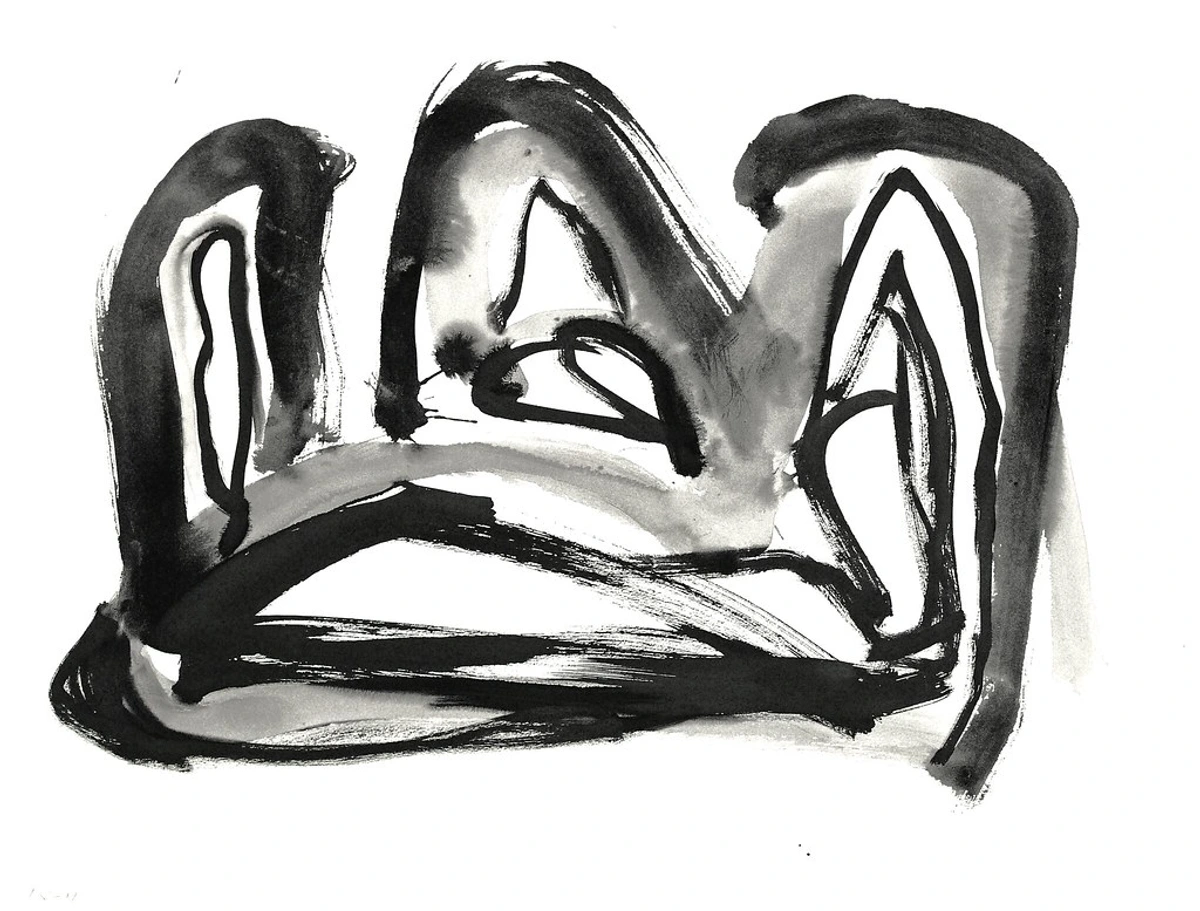
First, let's talk about the line. In Kline's hands, a line is never just a simple outline or a mere boundary. His lines are powerful, self-contained structures. They possess immense weight, incredible speed, and a visible history of their creation. He didn’t use delicate artist’s brushes; instead, he wielded huge, broad house painter's brushes, often applying commercial enamel paint with a raw physicality that you can almost feel vibrating in the finished work. Each sweeping, forceful brushstroke is a direct record of an event, a moment of intense decision, an emotion made visible on the canvas. It’s a testament to the sheer physical engagement Kline had with his materials and his process. You can almost feel the sweep of his arm, the pressure of the brush, the wet paint hitting the canvas. It's the essence of what we call gestural mark-making, elevated to an architectural scale. The brushstrokes aren't just applied; they are enacted, leaving behind a tangible trace of the artist's action.
White as an Active Force: The Illusion of Emptiness and the Dialectic of Contrast
Now, for what I consider the most crucial, often misunderstood, insight into Kline's work: the white is not a background. Seriously, let's underline that, because it changes everything. The white areas in a Kline painting are never passive, never mere empty spaces against which the black forms are applied. Oh no, the white is an active, formidable participant, a co-conspirator, in the entire compositional drama. Kline would often paint the white areas over the black, meticulously carving into the forms, pushing and pulling the shapes, creating an extraordinary sense of palpable tension and movement. It's not about black on white; it's about black and white, two equally powerful forces engaged in a dynamic interplay, a constant push and pull. This is a profound, almost philosophical lesson in the power of positive and negative space. The white is not an absence; it is a vital, breathing presence, a structured void that actively defines and is defined by the black, creating an electrifying visual dialectic. It's less a figure-ground relationship and more a dynamic, interdependent system where both elements possess equal weight and meaning, a powerful expression of abstract art. This constant push-and-pull, this active tension, is what truly makes his work vibrate with life and feel so much larger than just paint on canvas.
Here’s a simple breakdown of what makes his iconic style so powerful:

Feature  | Description |
|---|---|
| Scale | Monumental. His canvases are often human-sized or larger, designed to confront and envelop the viewer. |
| Gesture | Energetic and architectural. The lines feel like they were built, not just painted. They have weight and structure. |
| Materials | Often inexpensive house paint (like Ripolin) on unprimed canvas, adding to the raw, industrial aesthetic. |
| Spontaneity | A myth. While the final paintings look immediate, they were often based on numerous preparatory sketches. He was a master of making the deliberate look spontaneous. |
| Color | Primarily black and white, but his "black" was often a mix of other colors to achieve a certain depth, and the "white" was an active compositional element. |
Technique and Process: The Physical Act of Creation
Understanding Kline isn't just about looking at the finished product; it's about appreciating the act of its creation. His studio was less a sterile environment and more a battleground where he physically engaged with his materials. The monumental scale he embraced meant his entire body was involved in each stroke. He wasn't delicately dabbing; he was sweeping, pushing, pulling, and carving with large housepainting brushes, often on unprimed canvas tacked directly to the wall. This allowed for maximum physical freedom and an immediate, unmediated transfer of energy from artist to artwork, an almost direct translation of emotion.
He sometimes worked out his compositions through numerous small, rapid ink sketches—the famous "telephone book drawings"—which were then projected and translated to the massive canvas. But it wasn't a simple scaling-up. The translation process involved re-enacting the spontaneity, finding the essential gesture, and often introducing new improvisations on the grand scale. This blend of calculated planning and raw, in-the-moment execution is what gives his paintings their extraordinary tension and dynamism. It’s a powerful lesson in how the how of art-making can be just as expressive as the what, influencing artists in contemporary art to this day.
The Role of Scale: Confrontation and Immersion
I think we need to talk more about the scale of Kline's work. It's not merely a practical choice; it's a fundamental aspect of his artistic philosophy. His canvases often overwhelm the viewer, forcing a direct, almost confrontational encounter. You don't just observe a Kline; you are immersed in it. This monumental scale transforms the raw energy of his brushstrokes into something architectural, creating environments rather than mere images. It's a testament to his ambition to create art that demanded a physical as well as an emotional response, breaking down the traditional distance between the artwork and its audience. It's an experience that really sticks with you, long after you've left the gallery.
The Return of Color: A Later Evolution and Expanded Palette
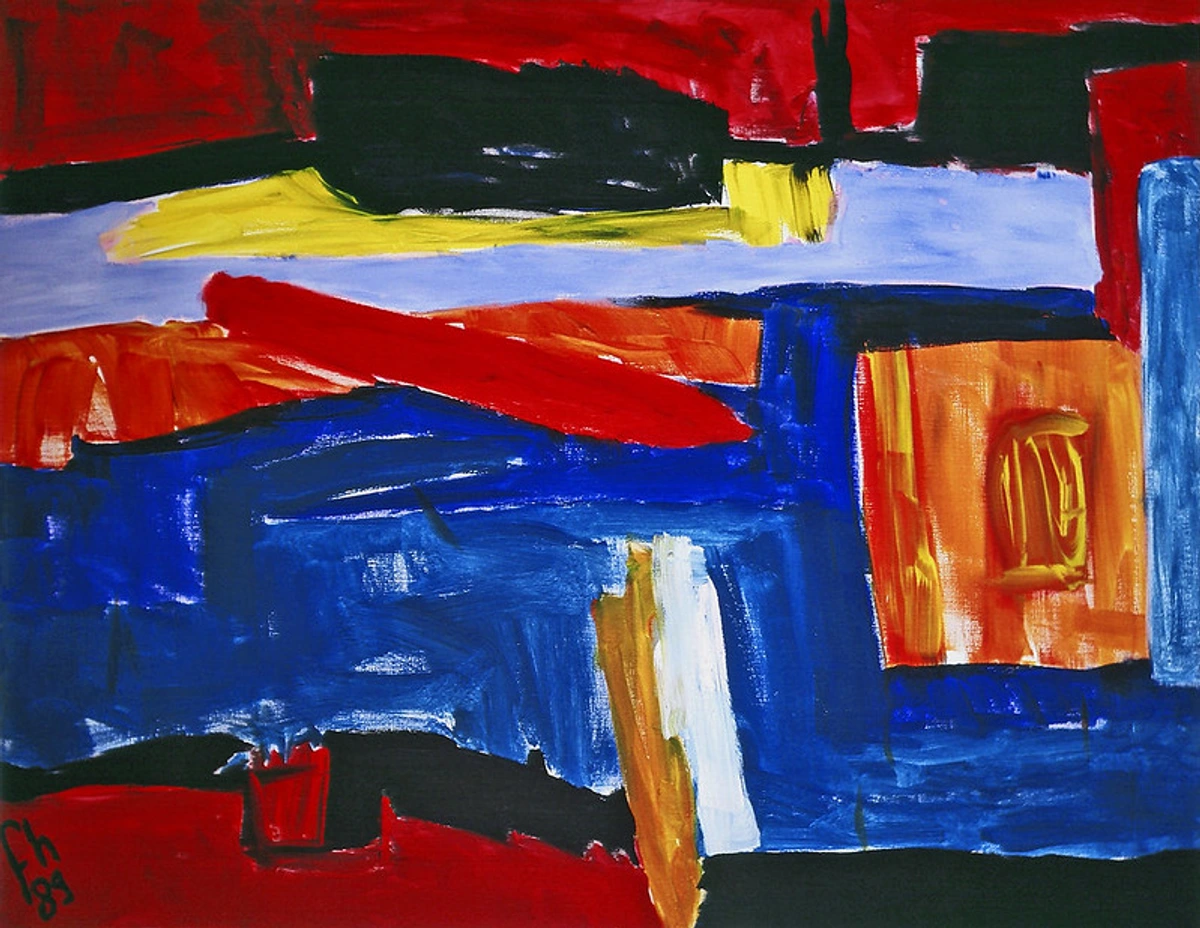
Just when you think you’ve got Franz Kline neatly categorized as "the black-and-white guy"—the master of monochrome—he throws a fascinating, vibrant curveball. Later in his career, particularly in the early 1960s, he began to reintroduce an expanded palette, experimenting with rich blues, reds, yellows, and greens into his monumental canvases. And you know what? It works—powerfully, unexpectedly. Works like Rue B (1959), a dynamic composition of deep blues and greens against a black structure, exemplify this shift, demonstrating his continued mastery.
The underlying architecture, the same powerful, dynamic structures, the intense interplay of forces, are undeniably still there. But now, they are charged with the added emotional weight, psychological depth, and visual complexity that only color can bring. This wasn't a sudden, arbitrary pivot or a compromise; it was a natural, almost inevitable evolution, building upon the foundational mastery he had so rigorously achieved with his limited monochromatic palette. Critics at the time were, understandably, sometimes divided, having become accustomed to his signature black and white. But looking back from our vantage point, it feels less like a departure and more like a profound expansion of his visual vocabulary. He had so thoroughly mastered form, gesture, and composition that color simply became another incredibly potent tool in his arsenal, not a crutch to lean on. It's compelling proof that his core artistic strength was always rooted in the dynamic, expressive structure of his paintings, a profound lesson that transcends any specific color theory or restrictive palette. This period showcased his continued artistic courage and a willingness to push the boundaries of his own established identity.
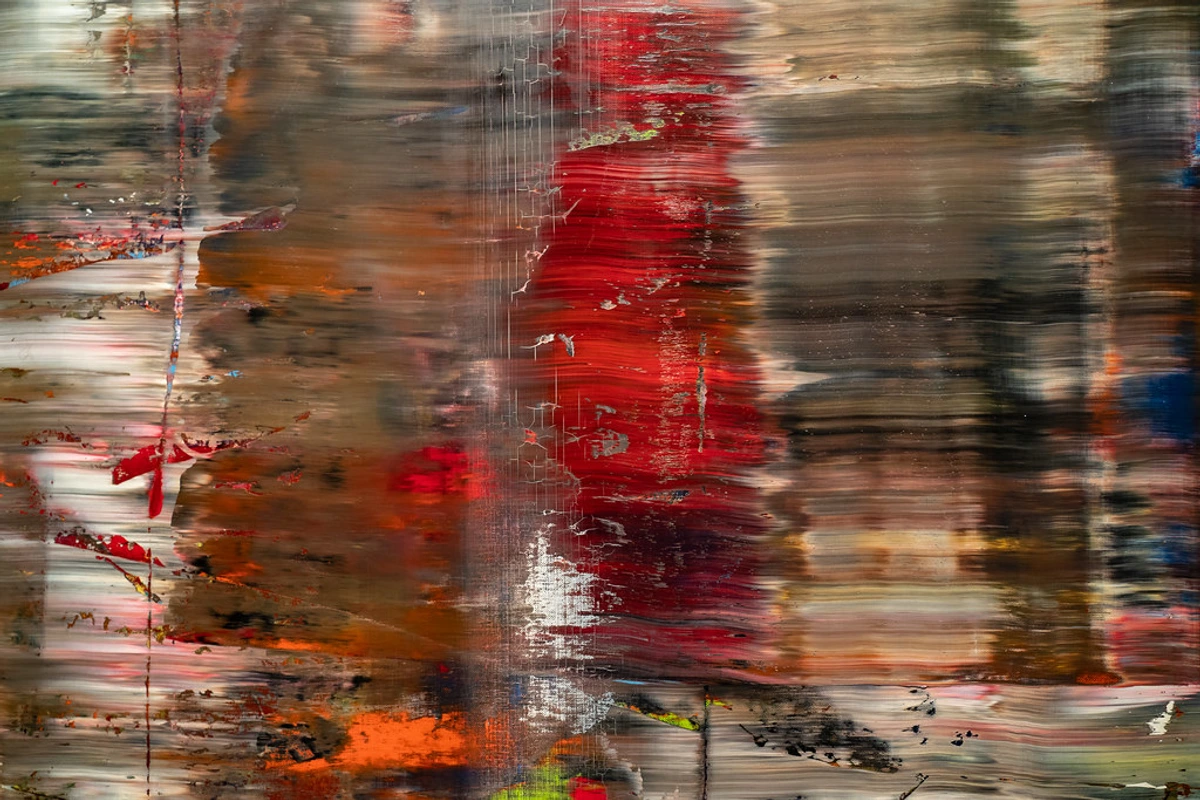
It's in these later works that you can truly appreciate the depth of his understanding of form. He wasn't relying on color to create impact; he was amplifying his already powerful forms with it. The colors he chose were often deep and resonant, adding new layers of emotional complexity without detracting from the visceral force of his brushwork. It's a beautiful example of how an artist, having mastered one language, can fearlessly begin to speak another, enriching their entire oeuvre.## Franz Kline's Enduring Legacy and Influence: An Architect of Emotion
Exhibitions and Critical Acclaim
Kline's ascent to prominence was swift, driven by a series of significant exhibitions that introduced his powerful vision to the art world. His first solo exhibition in 1950 at the Egan Gallery in New York City was a watershed moment, cementing his reputation as a formidable Abstract Expressionist. Critics and collectors were captivated by the sheer scale and raw energy of his black and white canvases. This exhibition, in particular, solidified the impact of his "aha!" moment, showcasing his newly embraced monumental scale to an eager, albeit sometimes baffled, public. Throughout the 1950s and early 1960s, he participated in numerous important group shows, including the groundbreaking "The New American Painting" exhibition, which toured Europe and helped establish the global dominance of the New York School. This international exposure was crucial in cementing his, and the movement's, reputation.
His work was quickly acquired by major institutions, solidifying his critical acclaim and ensuring his place in the art historical canon. These exhibitions weren't just about showing art; they were about a forceful declaration of a new artistic language, and Kline was at its forefront. They created a dialogue, often a heated one, about the very nature of art and its purpose in a rapidly changing world. It's truly fascinating to imagine the discussions these works provoked.
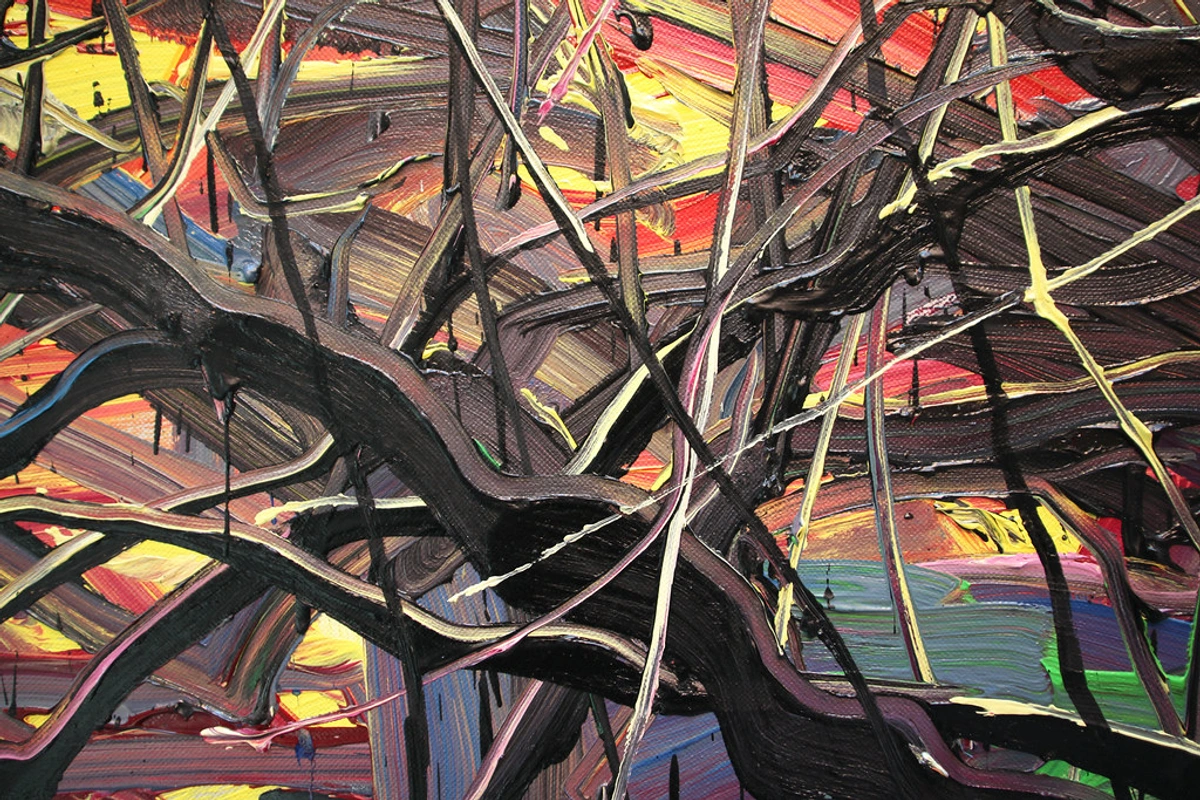
Franz Kline's impact on 20th-century art is nothing short of immense. He wasn't just a participant; he was a key architect in defining the raw, energetic, and unapologetically American voice of Abstract Expressionism. He fundamentally challenged the notion that a complex palette was necessary to convey profound, complex emotions, demonstrating the unparalleled expressive power of stark contrast and monumental gesture. His revolutionary approach influenced countless artists, paving the way for movements like Minimalism by unequivocally proving the aesthetic power of reduced forms and essential structures. He taught us that a single, powerful stroke could be as evocative, if not more so, than a meticulously rendered scene. His insistence on the integrity of the picture plane and the directness of the artistic statement foreshadowed later conceptual approaches to art-making.
Beyond Minimalism, his emphasis on the act of painting and the raw physicality of the brushstroke resonated with subsequent generations, influencing aspects of Neo-Expressionism and even contemporary street art, showing the universal appeal of primal mark-making. Artists like Cy Twombly, in his early calligraphic works, and even some contemporary graffiti artists, echo Kline's energy and directness. He gave permission, in a way, for artists to strip back the unnecessary and focus on the fundamental impact of a mark.
Major Works and Their Enduring Impact
Let's talk about some of the masterpieces that cemented Kline's place in art history. These aren't just paintings; they're visceral experiences, demanding your full attention:
- Mahoning (1956): Held at the Whitney Museum of American Art, Mahoning is a quintessential black and white work, a dynamic explosion of forms that feels both meticulously constructed and wildly spontaneous. The title itself references a river and an industrial town in Pennsylvania, subtly linking back to his early influences while transcending literal representation. It's a prime example of his ability to imbue abstract forms with profound structural and emotional weight, often evoking the massive machinery and bridges of his youth.
- Chief (1950): A truly commanding and vigorous painting, part of the Museum of Modern Art's collection, Chief is often cited as one of his first truly abstract "black and white" works. Its title is said to refer to a locomotive from his childhood, again hinting at the industrial power that fueled his visual language. The painting confronts you with its raw energy, its massive brushstrokes acting like girders supporting a dynamic, collapsing, or emerging structure. It’s a powerful, almost confrontational piece.
- Painting Number 2 (1954): This work, like many others, showcases Kline's powerful gestural abstraction, with robust black forms that seem to push and pull against the white ground. It's a testament to his consistent exploration of the black-and-white dialectic, demonstrating how a limited palette can yield unlimited expressive potential.
- Nijinsky (1950): Named after the legendary ballet dancer Vaslav Nijinsky, this painting captures a sense of powerful movement, tension, and grace, translated into abstract, architectural forms. It's a beautiful example of how Kline could infuse his abstractions with an almost corporeal, performative energy, echoing the themes of his early figurative work while entirely reinventing them. The implied motion is palpable.
- Rue B (1959): This is a fantastic example of Kline's later exploration of color. While still retaining his signature bold brushstrokes and powerful structure, Rue B introduces vibrant blues, greens, and blacks, showcasing his ability to integrate color as an amplifier of form rather than a mere decorative element. It proves that his mastery extended far beyond monochrome.
These paintings, along with countless others, are prominently featured in the collections of major museums worldwide, including the Metropolitan Museum of Art, the Art Institute of Chicago, Tate Modern, and many others, unequivocally solidifying his position as a titan of 20th-century art.
Critical Reception and Enduring Influence
Kline's work, like that of many groundbreaking artists, wasn't always universally embraced. Early critical reception often struggled with the apparent simplicity of his black and white abstractions. Some found them confrontational, even aggressive, mistaking his raw energy for a lack of sophistication. However, a core group of influential critics, notably Clement Greenberg and Thomas B. Hess, quickly recognized the profound intellectual and emotional depth beneath the surface. They championed his work, understanding his powerful contributions to the emerging American art scene and his unique position within the New York School. The initial confusion, I think, speaks to the truly radical nature of his departure from established norms.
Over time, his reputation solidified. Today, he is unequivocally considered one of the seminal figures of Abstract Expressionism, lauded for his fearless pursuit of essential form and his ability to infuse monumental gestures with intense psychological resonance. His influence extends beyond the immediate confines of the movement, resonating with artists interested in scale, spontaneity, and the power of the primal mark. He opened doors for artists exploring simplified forms and dramatic contrasts, proving that less, when executed with conviction, could indeed be more. His legacy is not just about the paintings he left behind, but the profound shift in perception he inspired regarding the very nature of artistic expression, a shift that continues to ripple through contemporary art practices. It's a remarkable testament to the power of a singular vision.
Franz Kline in the Art Market: A Coveted Legacy
As a pivotal and undeniable figure in the Abstract Expressionism movement, Franz Kline's work commands significant, often breathtaking, attention in the global art market. His paintings, particularly the large-scale black and white masterpieces from the 1950s, are among the most highly sought-after pieces by major private collectors, discerning institutions, and public museums worldwide. The rarity of his large-scale works, combined with his relatively short but impactful career, further contributes to their allure.
These aren't just investments; they're artistic touchstones. Kline's works consistently achieve multi-million dollar prices at international auctions, often breaking records and fueling intense bidding wars. This reflects not only their undeniable historical importance within American modernism but also their exceptional artistic quality, their visceral power, and their enduring, almost timeless, appeal. The market for Kline's work remains incredibly robust, driven by a universal recognition of his singular vision and his profound impact on the trajectory of abstract art. For those fortunate enough to acquire a Kline, it's far more than just purchasing a painting; it's securing a tangible piece of art history, a testament to a radical approach that fundamentally reshaped how we understand abstraction and the very act of painting. The value isn't just in the canvas and paint, but in the enduring dialogue it sparks, the emotional response it elicits, and its undisputed place in the canon of great art. It's a legacy that transcends mere monetary value, speaking to the profound cultural resonance of his work.
The Philosophy Behind the Black and White: More Than Just Color
Beyond the technical aspects of brushwork and scale, there's a profound philosophy embedded in Kline's black and white paintings. He wasn't rejecting color out of some artistic limitation; he was making a deliberate, powerful choice. For Kline, the absence of a full spectrum allowed him to strip away distractions and focus on the absolute fundamentals: the dynamic interplay of form, the raw energy of gesture, and the essential relationship between presence (black) and activated absence (white).
I think of it as a kind of visual minimalism before Minimalism was even fully defined. It's about distilling complexity down to its most potent core. The tension isn't just aesthetic; it's almost existential. It explores the push and pull of opposing forces, creation and destruction, structure and chaos. In this sense, his limited palette became an expansive tool, capable of conveying psychological states, architectural grandeur, and primal emotional responses with unparalleled directness. It's a reminder that sometimes, by imposing severe limitations, an artist can unlock an even greater, more universal, expressive freedom. This profound approach significantly contributed to the understanding of the definitive guide to understanding abstraction in contemporary art.


Frequently Asked Questions (FAQ)
What is Franz Kline best known for?
Franz Kline is most famously known for his monumental, intensely dynamic black and white abstract paintings from the 1950s. These works are considered essential cornerstones of the American Abstract Expressionism movement, particularly within the "action painting" style, though his methods were more deliberate than purely spontaneous. His ability to create such powerful statements with a limited palette is a testament to his genius.
Was Franz Kline's work truly spontaneous?
This is one of the most persistent myths surrounding Kline, and it's a fascinating one. While his paintings undeniably exude a powerful, raw energy and an appearance of effortless immediacy, they were rarely purely spontaneous. Kline often meticulously worked out his compositions through numerous preparatory sketches, sometimes using small "telephone book drawings" (doodles on phone book pages) which he would then project and enlarge onto the canvas. He was a master of making the deliberate look explosive and instinctive, a true paradox of his artistic process. This process allowed him to refine his gestures and structural elements before committing them to the large canvas, ensuring maximum impact.
Why did Franz Kline predominantly use black and white?
Kline's choice of a limited black and white palette was a deliberate artistic decision, not a constraint. He believed it allowed him to strip away distractions and focus intensely on the fundamental elements of his art: structure, raw gesture, the dynamic interplay of opposing forces, and the relationship between positive and negative space. He famously stated that black felt like a color in its own right, capable of immense emotional range and depth, and white was an active compositional element, not merely a background. For him, black and white were not merely shades, but active forces engaged in a constant dialogue.
How much is a Franz Kline painting worth in the current art market?
As a major figure of 20th-century art, Franz Kline's original works are highly valuable and immensely sought after. His paintings consistently command multi-million dollar prices at auction, reflecting their historical significance, artistic quality, and enduring appeal to major private collectors and prestigious institutions. The market for his work remains robust due to its iconic status in American modernism and the relatively finite number of large-scale works available.
Is it true Franz Kline often used commercial house paint in his works?
Yes, absolutely! Kline frequently used commercial enamels and large house painter's brushes. This choice was partly pragmatic, especially in his earlier, less affluent days, but it quickly became a core part of his aesthetic. The industrial nature of the paint and tools contributed to the raw, gritty, and unpretentious feel of his work, aligning with the powerful, urban, and industrial landscapes that influenced him. It was a bold, almost defiant choice, further cementing his place in the definitive guide to understanding abstract art from cubism to contemporary expression.
Where can I experience Franz Kline's work firsthand?
Franz Kline's monumental paintings are held in the permanent collections of many prestigious museums worldwide. Key institutions offering excellent opportunities to experience his work include the Museum of Modern Art (MoMA) and the Whitney Museum of American Art in New York City, the Art Institute of Chicago, the National Gallery of Art in Washington D.C., the San Francisco Museum of Modern Art (SFMOMA), and Tate Modern in London, among others. Visiting these museums provides the best way to grasp the immersive scale and visceral impact of his canvases. Seriously, seeing them in person is a completely different experience from any reproduction.
What were Franz Kline's major artistic influences and who did he influence?
Beyond the stark industrial landscapes of his Pennsylvania youth, Kline was deeply influenced by European masters like Rembrandt, Goya, and Velázquez in his early figurative work, admiring their dramatic use of light and shadow. However, his pivotal shift to abstraction was heavily informed by his contemporaries in the New York School, particularly his close friend Willem de Kooning. While he never explicitly acknowledged it as a direct influence, the gestural quality of his lines often draws comparisons to Eastern calligraphy due to its energetic brushwork and economy of form. Ultimately, his greatest influence was arguably the raw energy and rapidly changing urban landscape of post-war New York City, combined with the intellectual ferment of his artist peers at places like the Cedar Tavern.
As for his influence, Kline paved the way for future movements focused on essential forms and bold statements, most notably Minimalism. His powerful gestures and use of positive/negative space resonated deeply with artists exploring fundamental visual elements, and his approach to color in his later works foreshadowed aspects of color field painting. He remains a touchstone for any artist exploring the power of the singular, expressive mark, inspiring everyone from Neo-Expressionists to contemporary street artists.
Did Franz Kline have a recognizable signature style in his paintings?
Absolutely. Kline's signature style is immediately recognizable by his monumental, often jagged or rectilinear, black brushstrokes on a white ground (or vice versa). These strokes are characterized by their immense scale, raw energy, and the palpable tension created between the black forms and the active white spaces. His works often evoke architectural structures, industrial machinery, or a sense of violent yet controlled movement, making them distinct within the broader Abstract Expressionist movement. It's a visual language that, once seen, is hard to forget.
How did Abstract Expressionism impact Franz Kline's career?
Abstract Expressionism was not just a movement Kline participated in; it was the crucible that forged his mature style. The intellectual and artistic environment of the New York School, with its emphasis on individual expression, raw emotion, and rejection of traditional representation, provided the perfect fertile ground for his transformation from a figurative artist to an abstract master. The shared quest among his peers to create an authentically American art form that spoke to the post-war human condition directly fueled his iconic black and white abstractions. It gave him the artistic license and peer validation to fully explore his monumental vision.
What was Kline's view on the meaning or interpretation of his abstract paintings?
Kline was generally reticent about offering explicit interpretations of his work, believing that the paintings should speak for themselves and be experienced directly by the viewer. He often emphasized the formal elements—the lines, the spaces, the energy—over narrative content. While his titles (like Chief or Mahoning) might offer hints, he maintained that the emotional and structural impact was paramount, resisting overly intellectualized explanations. He wanted the viewer to engage viscerally with the painting, much like one might experience a powerful piece of music or a dramatic landscape. His lasting impact, I believe, lies precisely in this ability to communicate profound human experience through the raw power of pure abstraction, leaving a mark not just on art history, but on anyone who truly sees his work.
What distinguished Kline's 'action painting' from Pollock's?
While both Kline and Pollock are considered 'action painters' within Abstract Expressionism, their methods and aesthetic outcomes differed significantly. Pollock's 'drip paintings' involved laying canvas on the floor and dripping, pouring, or splattering paint from above, resulting in an all-over, interwoven network of lines without a clear focal point. His process was often improvisational and intensely physical. Kline, by contrast, worked on upright canvases, employing large house painting brushes and bold, deliberate strokes. While energetic, his 'action' was more contained and structural, often resulting in monumental, architectural forms with a clear push-and-pull between black and white masses. His 'spontaneity' was often carefully pre-meditated through numerous sketches, unlike Pollock's more immediate and fluid approach. Both were revolutionary, but their 'actions' left very different, albeit equally powerful, signatures on the canvas.