Franz Kline: Industrial Soul, Abstract Power & Enduring Legacy
Explore Franz Kline's life, his iconic black & white abstract art, industrial roots, the re-emergence of color, and his profound impact on Abstract Expressionism. Your definitive guide to structured chaos and raw energy.

Franz Kline: The Man Who Painted with the Power of a Locomotive, and the Soul of Industry
I remember the first time I stood in front of a real Franz Kline painting. It wasn't in a book; it was the real deal, hanging on a museum wall, and it felt less like a painting and more like a physical event. It was huge, raw, and had the energy of a freight train roaring past. You could almost feel the vibration. It didn't ask for my opinion; it just was. This raw, unyielding presence—the very essence of a locomotive's power or a factory's relentless soul—is, I believe, the key to understanding this giant of Abstract Expressionism. It was this overwhelming scale that immediately conveyed a sense of monumentality, making you feel as if you'd accidentally wandered onto the set of a colossal movie without realizing it. And that, I think, is the key to understanding this giant of Abstract Expressionism. It’s this undeniable presence, this almost brutalist assertion of form – a kind of raw, uncompromising monumentality – that continues to captivate me, and which I strive to imbue in my own canvases. In this article, we'll embark on a deep dive into his life, his remarkable artistic evolution, his signature style—from explosive monochrome to the re-emergence of color—and the profound, structural impact he continues to have on the art world, forging timeless principles from raw energy and structured chaos. This is your definitive guide to understanding the monumental force that was Franz Kline.
We're going to dive into the life of Franz Kline, but this isn't just a history lesson. It's an attempt to get inside the head of a man who took the grit and muscle of industrial America and slapped it onto a canvas. Forget delicate brushwork; think industrial-grade house-painting brushes wielded with the sheer physical effort of a steelworker, translating raw, architectural power directly onto the canvas. Join me as we peel back the layers of this powerhouse artist, from his industrial roots to his explosive abstract language, and discover why his work still roars today.
From Coal Country to Canvas: The Early Years and Artistic Apprenticeship
Franz Kline, a pivotal figure in Abstract Expressionism, wasn't born into the chic New York art scene. His biography begins in 1910 in Wilkes-Barre, Pennsylvania, a coal-mining town – a backdrop that, for me, feels palpable in his later work. I often wonder how the towering, skeletal forms of mine shafts and the robust, utilitarian structures of railway bridges, blast furnaces, and steel mills, the deep shadows of colossal industrial structures, and the omnipresent grimness of such a place, seeped into his visual memory. One can almost see the skeletal silhouettes of anthracite coal breakers and the imposing structures of the Delaware and Hudson Canal Company permeating his early landscapes, foreshadowing the architectural boldness to come. It’s not just an absence of color in his later black-and-white works; it's the very essence of coal dust, steel girders, and grimy power that found its way onto his canvases. His early life was also marked by profound tragedy—his father's suicide when he was just seven. It’s a thought that lingers, how such an early and brutal loss might embed a certain raw, unyielding perspective, a profound sense of the precariousness of existence, that 'grit and muscle' that would later find its voice in his powerful Franz Kline style, perhaps even shaping his fascination with unyielding, fundamental structures.
Before he found his abstract thunder, he was a figurative painter. And a pretty good one, actually. He studied art in Boston (at Boston University) and later in London (at the Heatherley School of Fine Art). These weren't fleeting stints; he spent years diligently honing foundational skills in drawing, traditional composition, and color theory. I imagine him in those European studios, meticulously studying the masters, perhaps even feeling a quiet frustration with the constraints of representation. Returning to Pennsylvania, he spent years meticulously capturing life in towns like Shenandoah or Scranton – rendering portraits of locals, lively bar scenes filled with working-class characters, or the rolling, often industrial, landscapes of his native state. These early works are competent, traditional, and give almost no direct hint of the explosive energy he would later unleash. Yet, if you squint, you can perhaps see a nascent mastery of line – not just descriptive, but already hinting at a bold, structural energy in the way he rendered a bar stool or the angle of a factory roof – a keen sense of underlying structure (the very building blocks of composition in art), or a dramatic play of light and shadow that, when stripped of its descriptive duties, would become the very language of his abstract art. It’s a good reminder that artistic revolutions don't happen overnight; sometimes, you have to master the rules before you can shatter them.
The “Aha!” Moment: The Bell-Opticon Projector and the Dawn of Abstraction
Every artist has stories about their breakthrough moment, but Kline's is legendary. It’s almost a cliché, but this one truly transformed his trajectory. Around 1949, his friend Willem de Kooning suggested he try projecting some of his smaller ink sketches onto the wall using a Bell-Opticon projector.
When he did, something clicked, and I can only imagine the visceral impact. Imagine a subtle ink drawing of a chair leg – intricate, descriptive, perhaps already quite gestural in its execution. Now, project it to fill an entire wall. That curve, once a mere detail, bloomed into a monumental arc. The cross-hatching, once defining texture, transformed into a dynamic interplay of light and shadow, a pure abstract gesture that seemed to vibrate with its own energy. The chair dissolved, its identity lost, and what remained was pure structure, raw gesture, and unadulterated force that thrummed with monumental power. What truly happened here, I believe, is that the projector didn't just enlarge his sketches; it revealed the inherent abstract qualities of his own drawn lines, liberating them from the task of describing something specific. For the first time, he saw the raw energy and potential monumentality that lay dormant in his spontaneous marks, unburdened by narrative. It amplified the raw energy already present in his mark-making until it screamed with monumental power. That was it. That was the leap for his black and white abstract art. It's not unlike how a photographer might crop an image to find an unexpected composition, or how a musician might isolate a single riff and amplify it to create a new sonic landscape. It was an act of amplification and revelation, showing him the immense, unarticulated power lying dormant in his own hand.
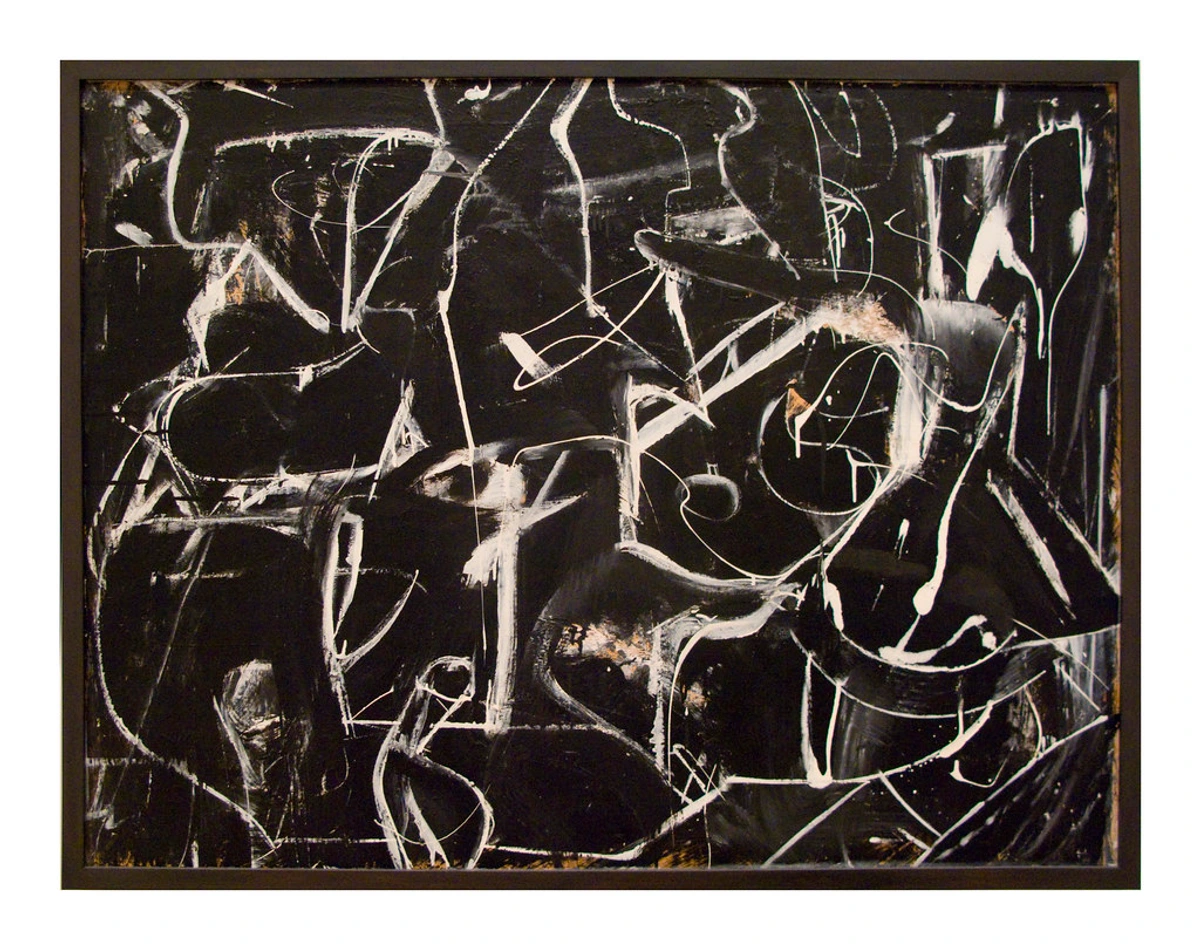
He famously said, "The final test of a painting... is, does the painter's emotion come across?" By blowing up his sketches, he found a way to amplify his own gestures into pure, unadulterated emotion, establishing the iconic Franz Kline style, a unique form of gestural abstraction that felt both intensely personal and universally impactful.
Deconstructing the Black and White Giants: An In-Depth Franz Kline Analysis
So, how did Franz Kline conjure such raw power from seemingly simple elements? When you first encounter a classic Kline, you might think, "Okay, it's just a big black slash on a white canvas." And you wouldn't be entirely wrong, but that's like saying a symphony is just a bunch of notes. The magic, the sheer force, is in how those elements are used, and in the deep thought behind them. Let's dismantle some common assumptions and explore the profound complexity of his monochrome masterpieces.
Feature  | Common Misconception | The Reality |
|---|---|---|
| Process | A single, spontaneous burst of energy. | Meticulously planned with numerous preparatory sketches, often on phone book pages, refining gestures before a large canvas was even approached. |
| The Color White | Just the background or negative space. | An active, positive element, painted and worked just as much as the black. It sculpts, carves, and defines the black forms, acting as an active participant rather than passive emptiness. Sometimes white is thickly painted over earlier black forms as part of the dynamic interplay, almost like 'erasing' or 'building up' with light. |
| The Color Black | Simply black paint. | Far from it. Kline often mixed various black pigments, such as lamp black and bone black, sometimes adding blues, browns, or even greens, to achieve a profound richness and depth. It was never a flat, single pigment, but a complex, almost textural, void that absorbed and reflected light in nuanced ways, giving it a velvety, substantial presence. |
| Subject Matter | Entirely non-representational. | While abstract, his forms were often rooted in the structural memory of real-world objects: bridges (like those over the Schuylkill River), I-beams, chairs, buildings, even figures. These were then abstracted to their bare essence, giving his work a powerful, almost brutalist, architectural integrity. |
| Scale | Always monumental. | While known for monumentality, Kline also created numerous smaller studies and works, demonstrating that the essence of his powerful gestural style could be scaled. |
| Tools | Only brushes. | While commercial house-painting brushes were primary, evidence suggests he also used spatulas, rollers, and even his hands for specific textural effects or robust applications. |
| Architectural Relationship | Merely inspired by structures. | His compositions directly echoed architectural principles like load-bearing structures, negative space within frameworks, and the dynamic interplay of solid and void, demonstrating a deep, almost engineering-like understanding of form. |
The Dynamic Dialogue of Black and White
Here’s the thing that trips a lot of people up: Kline wasn't just slapping black paint onto a pre-painted white canvas. Oh no, that would be far too simple. He worked on both the black and the white areas simultaneously, as if they were two sparring partners locked in an intense dialogue. The white is just as important as the black – it's not some passive void or negative space; it's a positive, active force. It pushes against the black, carves into it, defines its edges, and actively participates in the composition. Look closely at paintings like 'Mahoning.' You'll see areas where the white isn't just blank canvas but appears to be pushed back by the black, or where the black seems to leap out from behind a thick impasto of white, creating a tangible sense of depth and recession. It's akin to light carving into shadow, or a sculptor adding or subtracting clay. The canvas was truly a battlefield between these two monumental forces, and he was the general orchestrating the fight, the choreographer of chaos. You can see the push and pull not just in the forms, but often in the textured application of the white paint, sometimes thick and aggressive, other times thin and reactive, always in direct conversation with the black.
Beyond Simple Black: The Nuances of Pigment and Material
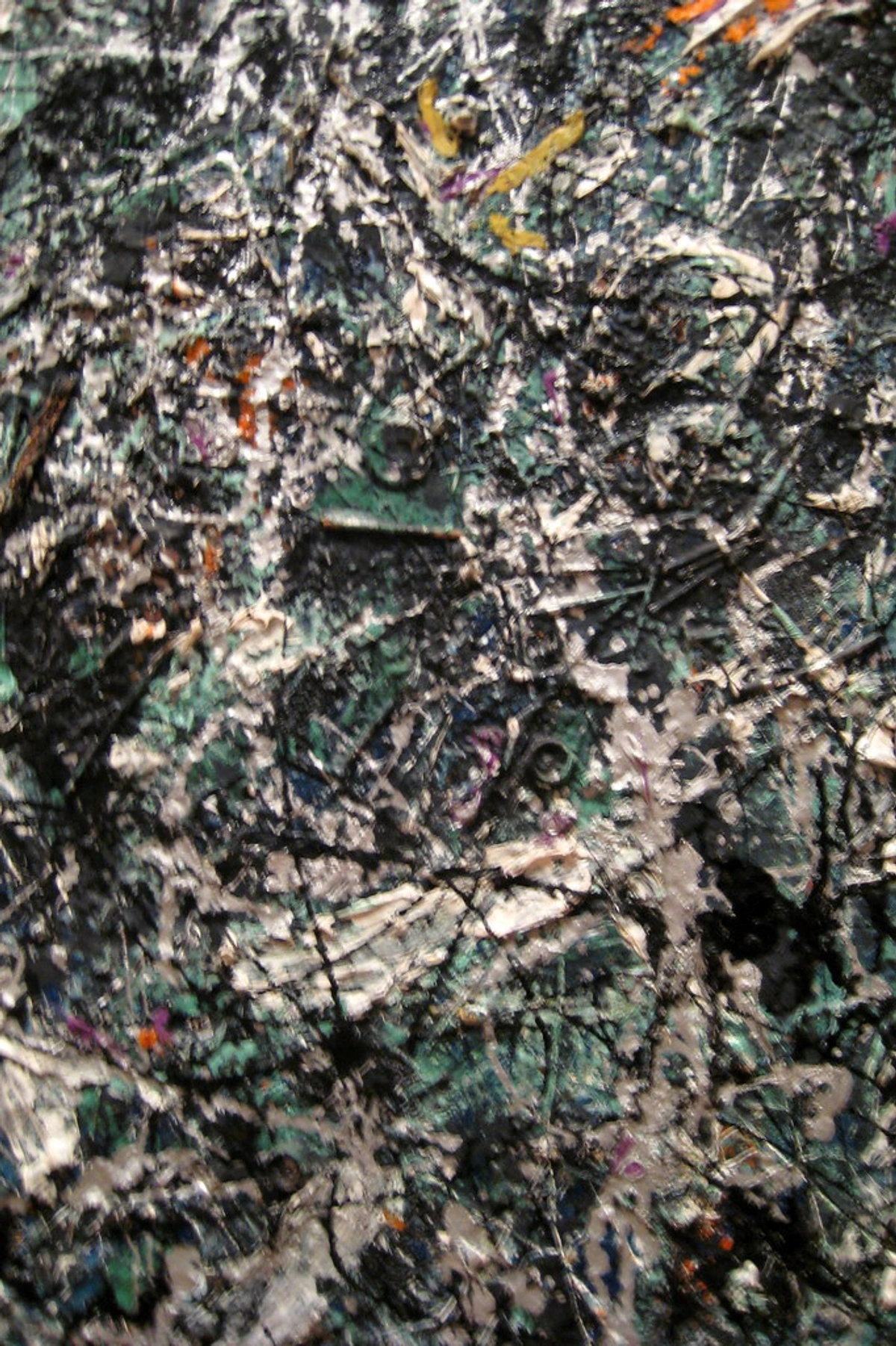
And about that black paint? It was rarely just black. Kline, with an almost alchemical touch, would mix various black pigments, often adding blues, browns, or even greens to achieve a profound richness and depth. My take on this is that he wasn't just painting a color; he was painting a presence, something that could hold its own against the equally active white, a velvet abyss that could absorb light one moment and subtly reflect it the next, making it feel weighty and alive. By adding subtle blues to black, he might have aimed for the deep, iridescent quality of a stormy sky over an industrial town, or the bruised, inky depths of a coal mine. Browns could evoke rust or weathered steel, while greens might hint at oil slicks or stagnant water – all echoes of his industrial milieu. The same meticulousness applied to his choice of brushes, which were often commercial house-painting brushes, allowing him to apply large, forceful strokes, truly embodying the raw, non-precious feel of his work. He preferred working on large, often unprimed canvases, allowing the raw texture of the canvas itself to become part of the work, reinforcing that grounded, industrial aesthetic.
The Myth of Spontaneity: The Physicality of His Process
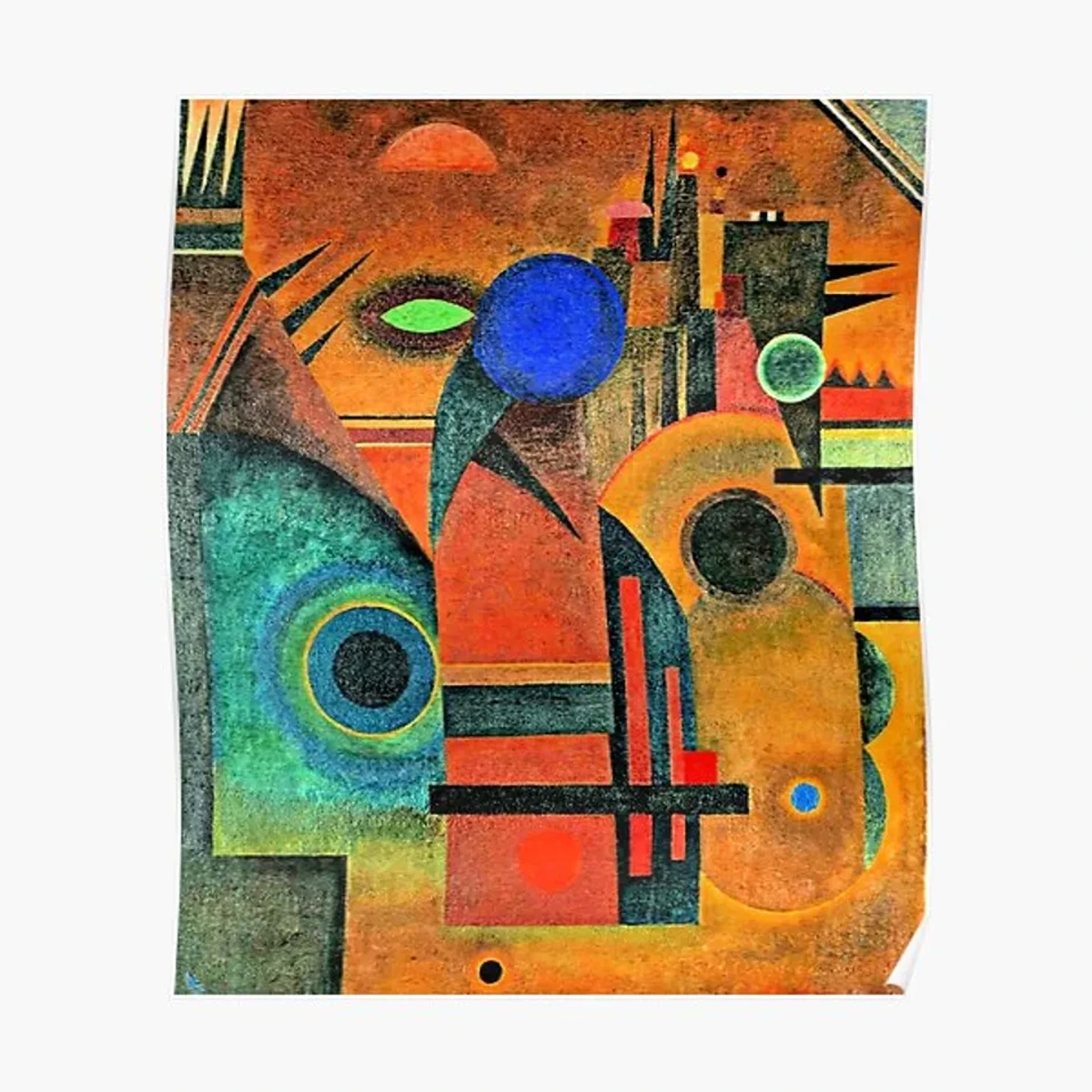
His work looks incredibly fast and spontaneous, like he just lashed out at the canvas in a single, violent motion. And wouldn't it be romantic if that were true? But that's an illusion, my friend. A beautifully choreographed illusion. Kline was meticulous. He would create dozens, sometimes hundreds, of preparatory sketches – often on anything he could find, from phone book pages to scraps of paper. He would study these small compositions, refining them, tweaking a curve here, adjusting a line there (truly a master of the elements of art: line and mark-making), before ever approaching the monumental canvas (which could be up to 10 feet wide!).
I often reflect on the sheer physical stamina this must have required. Imagine being in his cramped New York studio, perhaps at night, with a canvas twice your height. Imagine Kline, a man of significant physical presence, wielding a 5-foot brush with the force of a lumberjack, his entire body engaged in the act of painting. This wasn't delicate easel work; it was a full-body workout, a battle with paint and scale. He might have taped small studies to the wall, then, armed with his house-painting brushes, moved across the canvas with the force of a dancer, replicating and re-embodying the gestures he had already perfected in miniature. The final painting was an act of re-creation, a performance of a gesture he had already perfected. It had all the raw energy of a spontaneous act, but with the underlying structured chaos of a carefully planned composition. It’s exactly like a jazz musician's solo – think of a master like Charlie Parker, whose improvisations feel completely free and in-the-moment, yet are built on years of practice, a deep understanding of scales, and an innate sense of structure. The 'spontaneity' is the performance, but the 'chaos' is deeply structured by mastery. Or, imagine a perfectly executed, complex dance routine: it flows with such natural grace that you'd never guess the countless hours of precise planning and rehearsal that went into every single movement. It’s like watching a masterful demolition; the controlled explosion brings down a structure with immense force, yet every charge, every placement, was calculated to achieve that specific, powerful collapse. Kline’s work has that same paradox: a controlled detonation of gesture. This careful preparation, combined with the sheer physical stamina required to execute such large-scale works in his often cramped New York studios, is a crucial aspect of understanding the Franz Kline analysis of his monumental works. It’s the difference between a raw scream and a perfectly delivered, powerful monologue.
A Titan Among Titans: Franz Kline's Place in Abstract Expressionism
Franz Kline was undoubtedly a key figure in the New York School, that rowdy, brilliant group of Abstract Expressionists who irrevocably changed the course of art history. He was right there in the mix with giants like Jackson Pollock, Willem de Kooning, and Joan Mitchell. This was a post-World War II America, grappling with monumental shifts, and these artists were wrestling with fundamental questions: how do you paint after such profound global trauma? How do you make art that feels immediate, authentic, and raw in a shattered world? Their answer, often, was pure, unfiltered expression.
While Pollock was unleashing raw energy through dripping paint, focusing on the immersive, all-over field, and de Kooning was wrestling with the angst and beauty of the human figure, breaking it apart and reconstructing it with furious gestures, Kline carved out his own unique territory. His work possessed an architectural, almost structural, integrity that truly set it apart among these key Abstract Expressionist painters. My sense is that you can almost feel the girders of mighty cantilever bridges, the towering frames of Art Deco skyscrapers, the raw skeletons of industrial buildings and vital infrastructure in his paintings; not just as inspiration, but as geometric and structural forces directly informing the angles and thrusts of his brushstrokes. He brought a sense of massive, physical construction and a powerful, almost brutalist aesthetic to the emotional world of abstract art. Brutalism, with its emphasis on raw concrete, exposed structure, and monumental scale, shares a spiritual kinship with Kline's work; his paintings, too, reveal their construction, their fundamental forms, and possess an unvarnished, powerful presence that eschews superficiality. It wasn't just about the gesture; it was about the structure of the gesture, the sense of immense, unyielding forms. While Pollock explored the boundless cosmos of paint and de Kooning dissected the angst-ridden beauty of the human figure, Kline seemed to be constructing vast, industrial cathedrals from pure energy, monumentalizing structure itself. I find that unique balance of raw energy and powerful underlying structure utterly compelling. It’s a tension I consistently explore in my own work, this push and pull between visceral movement and foundational stability.
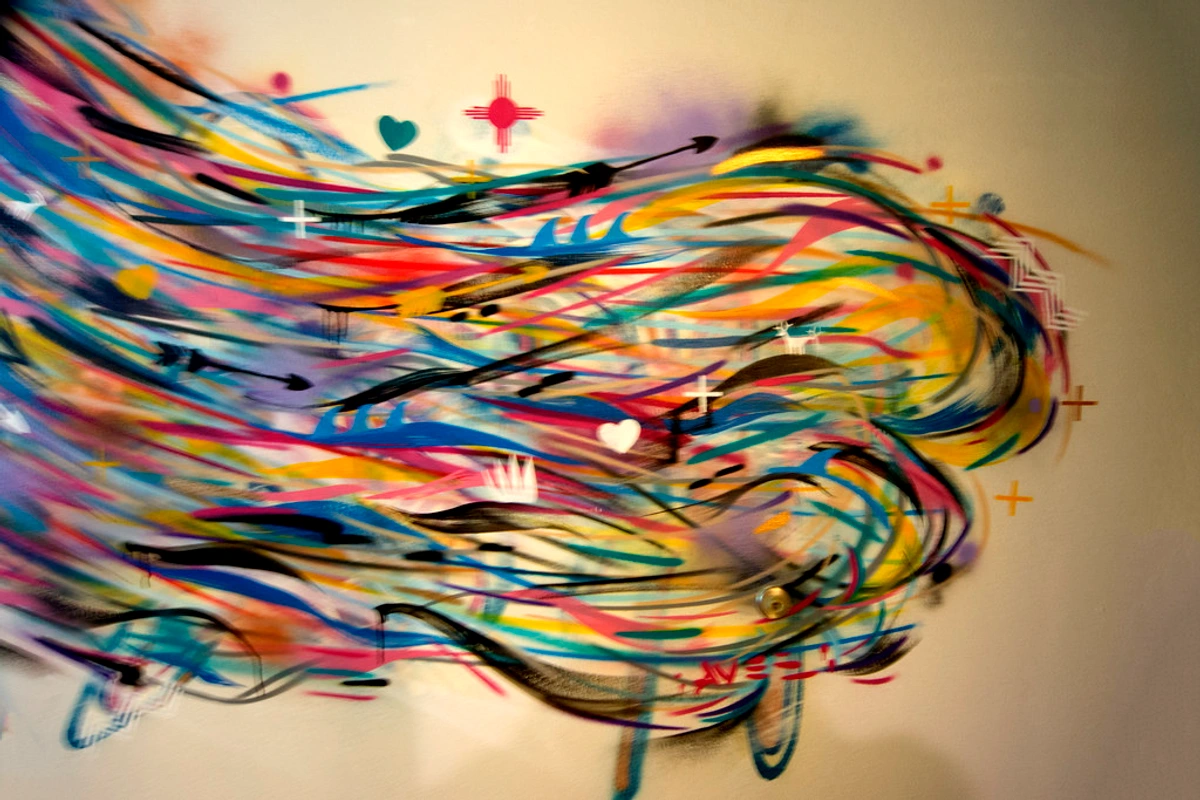
Kline’s personal life was intertwined with this vibrant scene. He was known for his gregarious personality, his friendships with fellow artists, and his frequenting of the Cedar Tavern, a legendary haunt for the Abstract Expressionists. These social connections, this intense dialogue among peers, undoubtedly fueled his artistic development, providing a crucible of shared ambition and competitive camaraderie. He was very much a product of his time and place, distilling the anxieties and energies of post-war New York into a stark, powerful visual language.

The Re-Emergence of Color: Beyond Black and White
While Franz Kline is most celebrated for his powerful black and white abstractions, it's a common misconception that he only painted in monochrome. I find this often surprises people. What truly fascinates me is that in the mid-1950s, after cementing his reputation with his iconic monochrome works, he began to reintroduce color into his large-scale abstract works, moving beyond the stark dichotomy that defined his most famous period. This wasn’t a timid step; it was an explosive re-engagement.
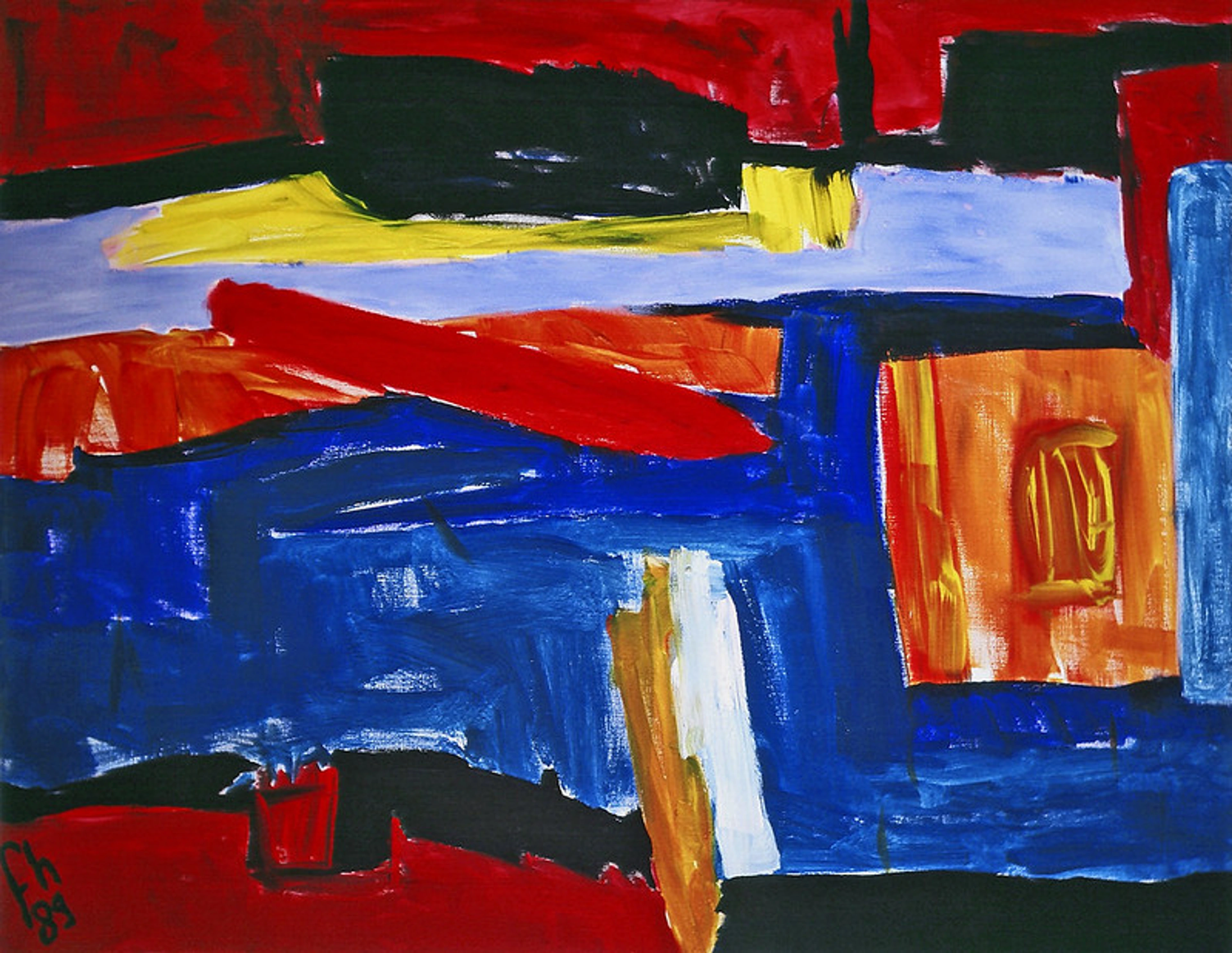
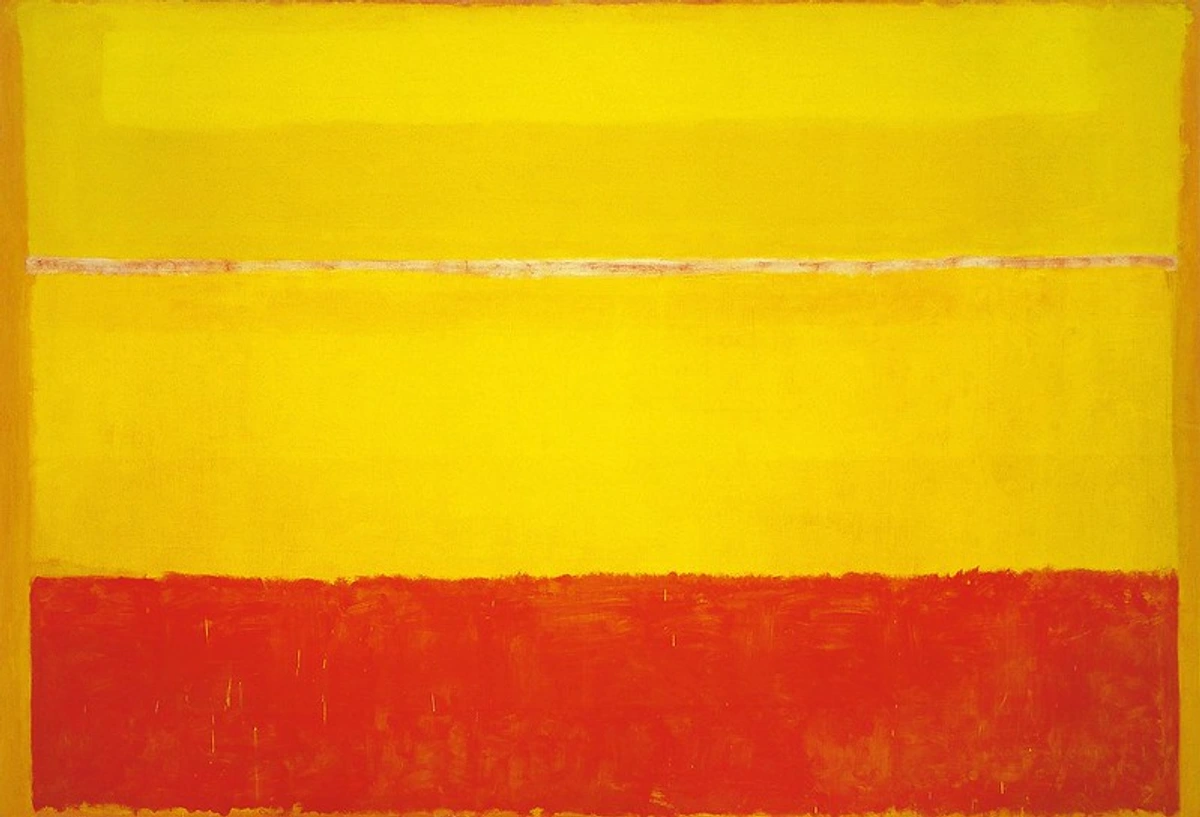
These later works, like "Orange and Black Wall" (1959), where vibrant orange hues clash and converge with bold black forms, or "Red Painting" (1961), a dynamic composition dominated by passionate crimson and deep blues, maintain the same furious energy and structural integrity but explode with bold, vibrant hues. In "Orange and Black Wall," the orange doesn't just sit there; it burns against the dark expanse, a fiery eruption that feels both industrial and primal. The black, no longer just a void, becomes a crucible containing this vibrant energy. Similarly, in "Red Painting," the crimson is not merely a hue but a pulsating force, contained and amplified by the cool depths of blue, creating a new form of tension and dynamic interplay. He wasn't just adding splashes of color; he was integrating them deeply into the composition, using reds, blues, greens, and yellows to create new forms of tension and dynamic interplay. My belief is that this reintroduction wasn't a departure, but an expansion. Having mastered the fundamental drama of line and form in black and white, he was now exploring how color could amplify, rather than dilute, that raw emotional power. The critical reception for these works was mixed at first; some saw it as a shift away from his iconic monochrome, while others recognized it as a bold evolution. Perhaps the fiery reds echoed the blast furnaces of his youth or the deep blues invoked the shadows of a factory floor, colors not just added, but deeply felt and intrinsically linked to his industrial roots. The colors became another structural element, another player in the intensely physical dialogue on the canvas, adding a new layer of psychological depth and emotional resonance. It was another layer of complexity for his evolving Franz Kline style, proving his mastery extended beyond the grayscale, an exploration of how raw energy could be harnessed through a vibrant new palette.
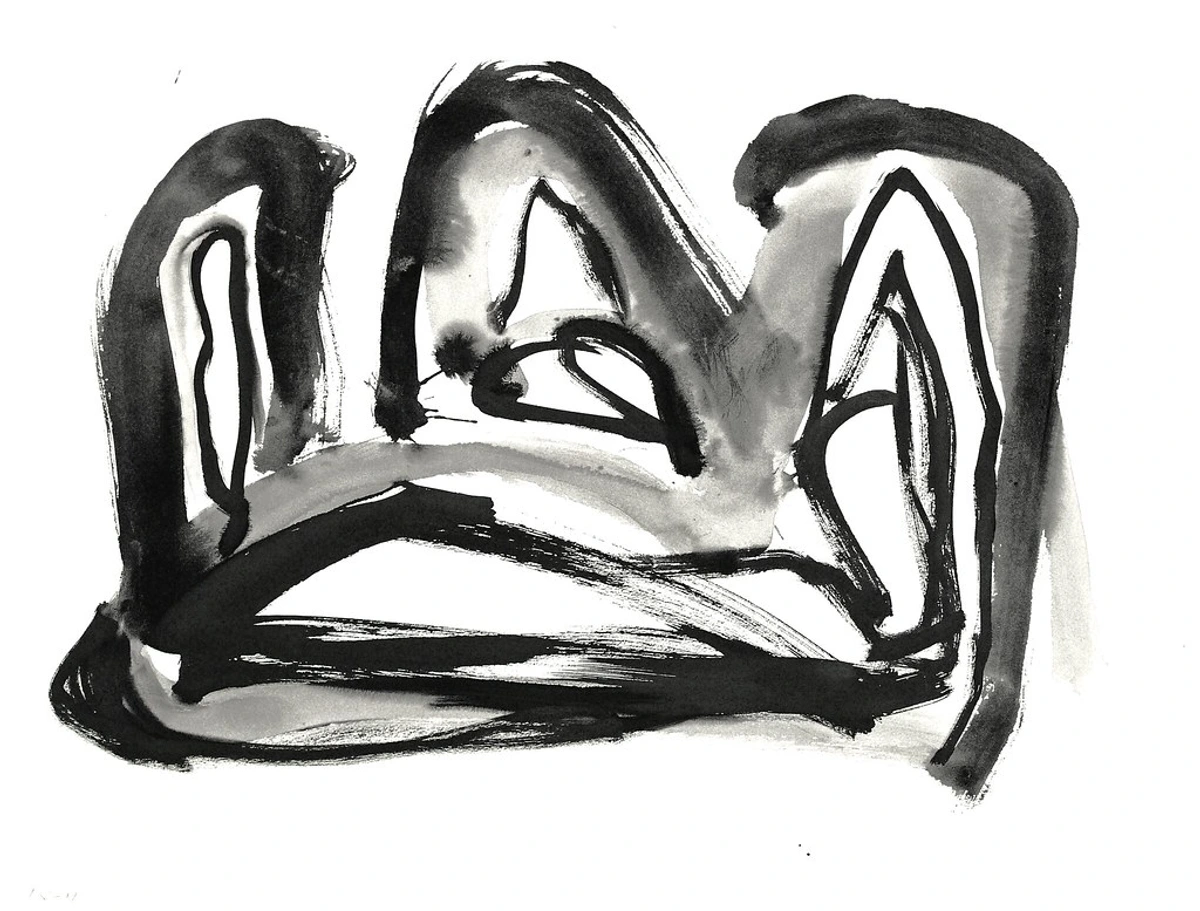
Legacy: Why Do These Slashes Still Matter?
Franz Kline died relatively young, at 51, in 1962, a relatively short but incredibly impactful career for an Abstract Expressionism artist. His impact was immense, demonstrating that you could create paintings with the scale and power of architecture – truly evoking the massive steel girders and concrete forms of modern construction – but with the intimacy and immediacy of a personal signature. His work, for me, beautifully bridges the raw, unadulterated emotion of Action Painting with the structural, almost minimalist concerns that would later inform movements like Minimalism or even aspects of Neo-Expressionism. His emphasis on stark forms and compositional rigor can be seen as a precursor to the Minimalist fascination with pure geometry and reduced visual language, while his bold, gestural application of paint directly paved the way for later artists who sought to express raw emotion through dynamic mark-making. It's as if he took the chaos of the gesture and anchored it with the logic of construction, a dynamic tension that defines his lasting influence on subsequent generations of gestural abstractionists and even those concerned with pure form, like some contemporary sculptors seeking a brutalist aesthetic. This brutalist sensibility, this honest presentation of materials and structure, finds echoes in today's architectural landscape and in contemporary art that prioritizes raw form and tactile experience, an approach I find myself drawn to in my own textured canvases.
During his lifetime, Kline's powerful works commanded significant attention in the burgeoning post-war art market, attracting collectors who recognized the visceral energy and profound statement embedded in his canvases. Posthumously, his legacy has only grown, with his pieces consistently performing strongly in auctions and holding revered positions in major museum collections worldwide. While the digital art and NFT space represents a fascinating new frontier, Kline's enduring significance firmly grounds itself in the tangible, physical experience of paint on canvas – a raw, direct encounter where the texture, scale, and palpable energy of the brushstroke can be felt, a sensory richness no screen can fully replicate. I find myself increasingly drawn to this intrinsic physical connection in my own work.
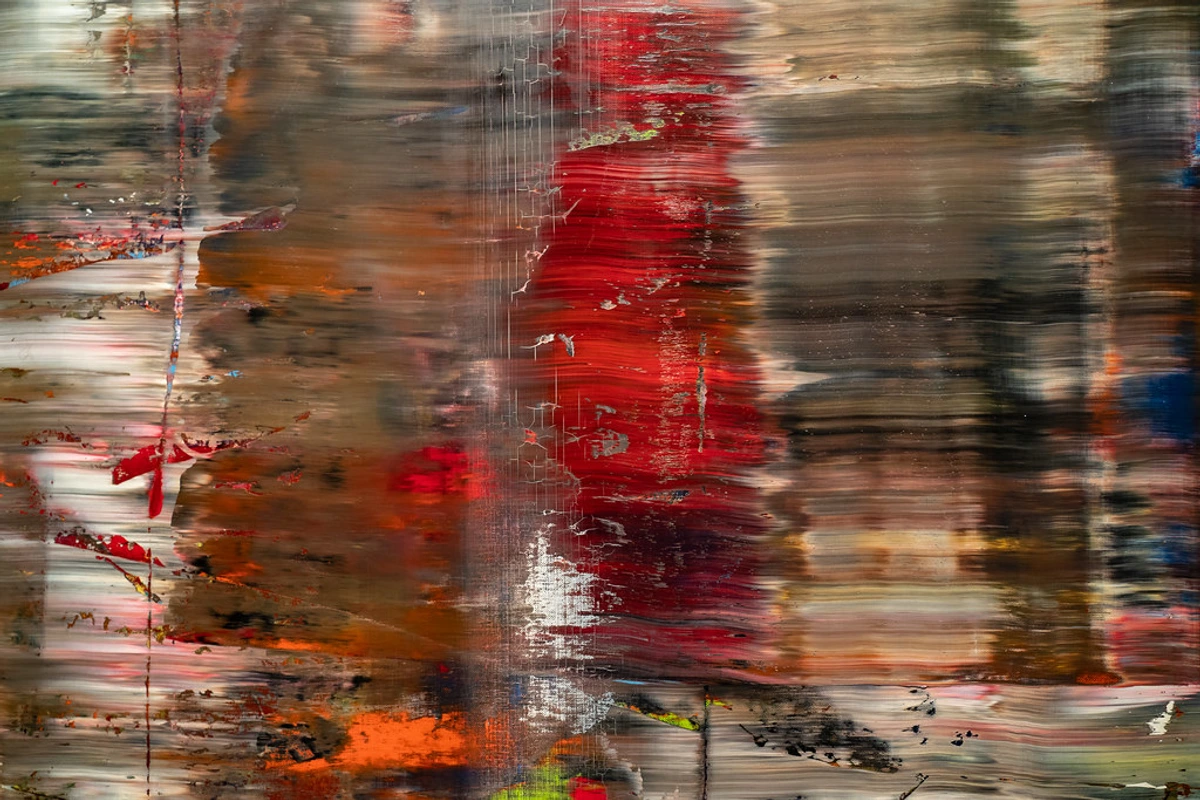
When I look at his paintings today, I'm still struck by that raw power. It’s unapologetic, demanding your attention. It doesn't care if you like it; it simply demands to be experienced. It's a testament to the idea that the simplest elements—a black line, a white space, or later, a burst of color—can contain a universe of feeling, power, and history, creating a profound, structured chaos that resonates deeply. If you're ever lucky enough to stand in front of one, just stop and let it hit you. You'll know what I mean. His influence on key Abstract Expressionist painters and subsequent movements is undeniable, solidifying his place as a true master who, in his relatively brief career, built a monumental legacy. For me, Kline's work stands as a powerful reminder that art can be both intensely personal and universally impactful, a structure forged from pure emotion, and a timeless inspiration for translating raw feeling into tangible form – a lesson that continues to resonate with artists like myself, who seek to harness that same potent blend of power and presence in their own creations.
Inspired by the raw energy and structured chaos of masters like Kline, I constantly explore new ways to translate emotion into form. His ability to fuse raw power with underlying structure is a profound inspiration that deeply informs my own creative journey, pushing me to explore how the bold gestures of industry and the visceral emotions of life can be translated into tangible, powerful forms on the canvas. You can visit my [/timeline] to discover my creative process or explore my original artworks available at [/buy] and find your own piece of contemporary abstract art, echoing these timeless principles.
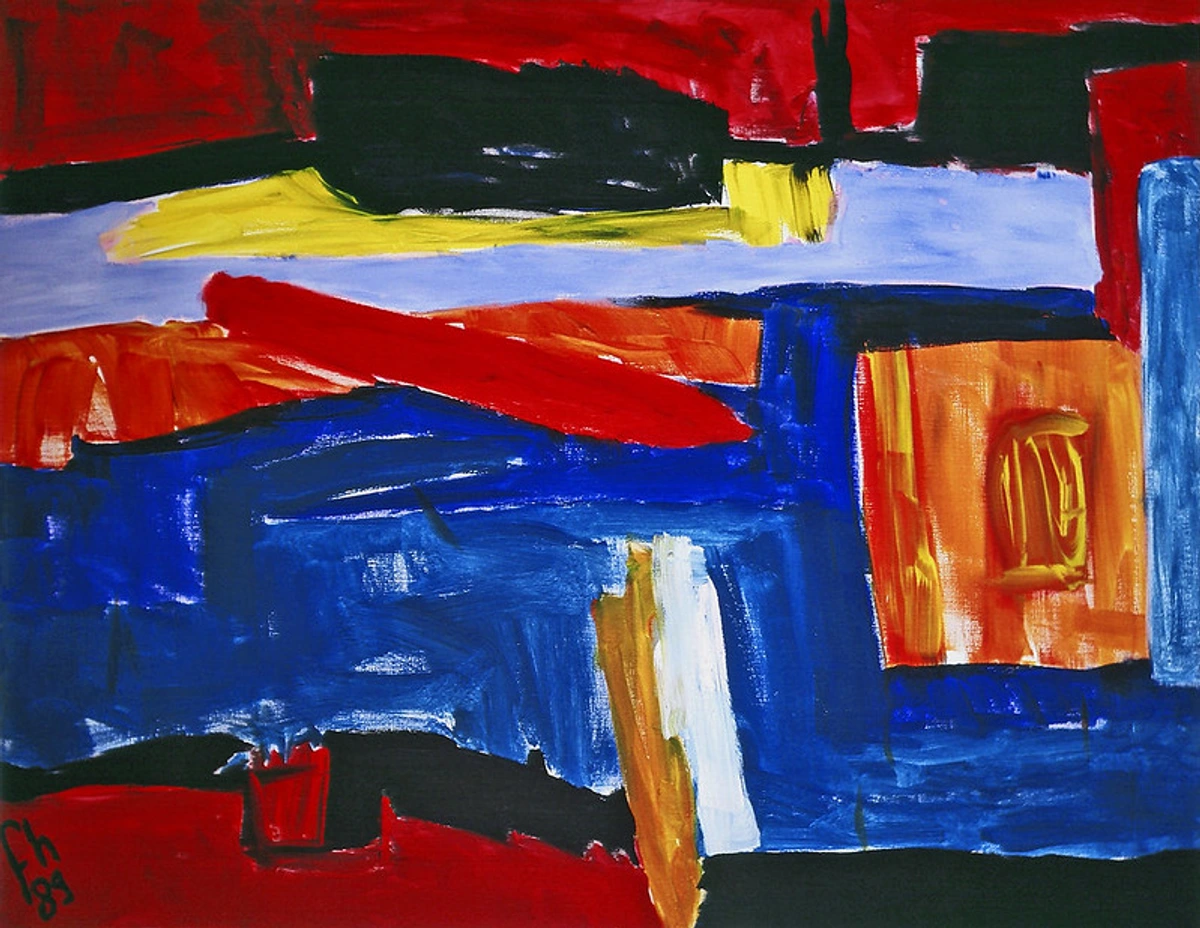
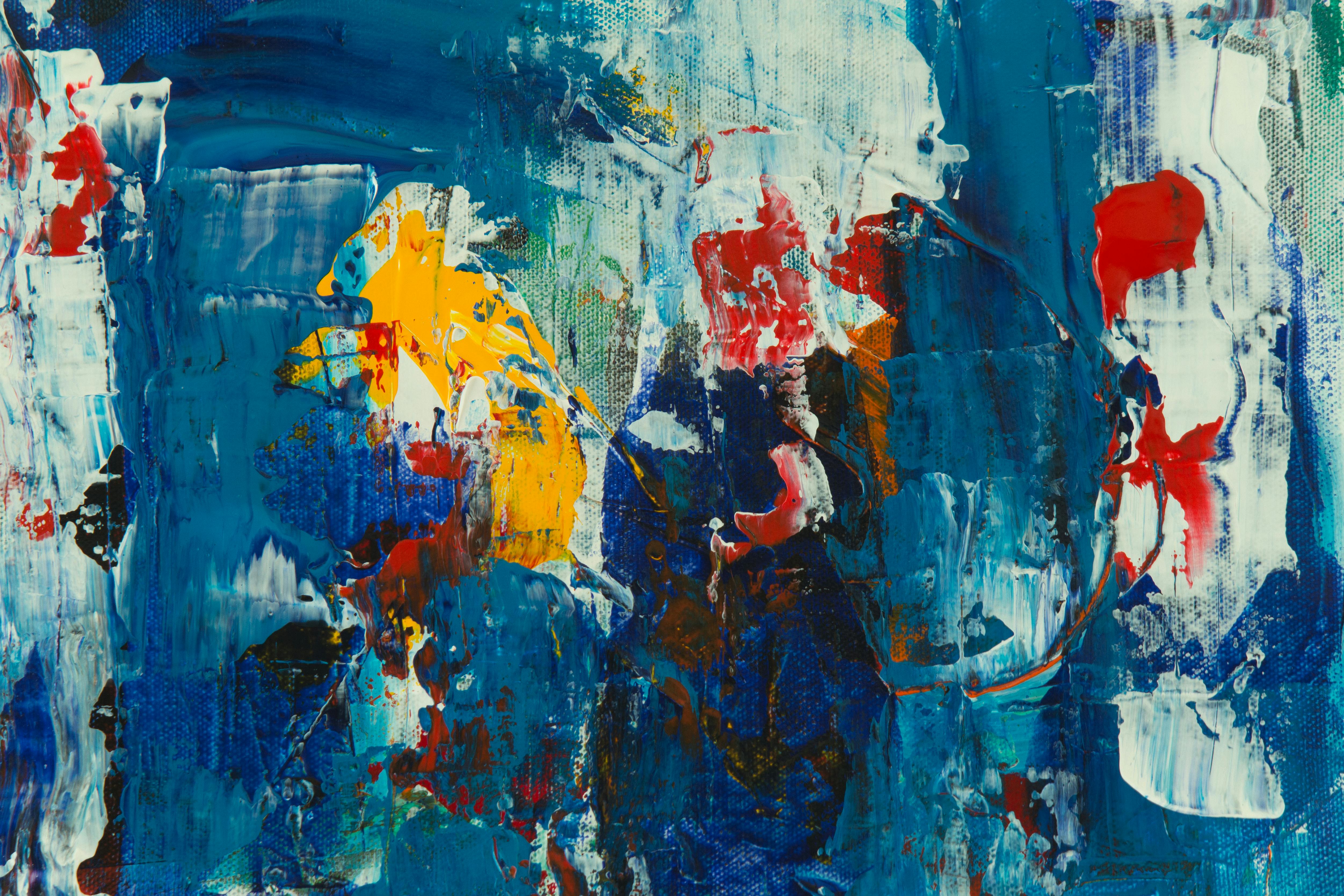


This raw, functional aesthetic with paint splatters on weathered wood panels, reminds me in some ways of the almost industrial atmosphere Kline created in his own studio, a place where raw emotion was forged into monumental art.
Frequently Asked Questions about Franz Kline: Your Guide to the Abstract Expressionist Master
What is Franz Kline best known for?
Franz Kline is most famous for his large-scale, powerful black and white abstract art, created predominantly between the late 1940s and his death in 1962. These iconic works, characterized by their sweeping, architectural brushstrokes, monumental scale, and dynamic compositions on canvases often over 8 feet tall, define much of his unique Franz Kline style within Abstract Expressionism, showcasing a powerful blend of raw energy and structural integrity.
Did Franz Kline only paint in black and white?
No, absolutely not. While his monochrome works are his most iconic, the Franz Kline biography reveals he began his career as a figurative and color painter. Crucially, in the mid-1950s, he powerfully reintroduced bold, vibrant colors into his large abstract works, exploring how color could enhance the structural power and emotional depth he had already mastered. This demonstrates a deep, evolving engagement with his craft and an expansion of his signature style beyond the grayscale, often referred to as his later works or colorist period.
What materials did Kline use?
For his monumental canvases, Kline famously embraced commercial house-painting brushes and commercial paints, often working on large, unprimed canvases. This choice of materials, eschewing traditional fine art supplies and embracing the large scale of house-painting brushes, contributed significantly to the raw, gritty, and direct feel of his distinctive work. It allowed for powerful, broad gestures and a deliberate industrial aesthetic, prioritizing immediate, forceful application over delicate detail, letting the canvas itself absorb the paint and become an active participant.
Is Franz Kline's work considered Action Painting?
Yes, his work is a prime example of Action Painting, a significant style within Abstract Expressionism. The term emphasizes the physical act of painting, the gestural marks, and the artist's intense, almost performative engagement with the canvas as a primary subject of the work. Kline's dynamic, meticulously planned, yet powerfully executed brushstrokes embody this perfectly, showcasing a unique form of 'action' that, unlike Pollock's spontaneous drips, was often a re-enactment of a refined gesture, merging raw energy with structured intent. This approach is often described as 'structured spontaneity' or 'gestural abstraction.'
How was Franz Kline's work received by critics during his lifetime?
Initially, his radical black and white abstractions were met with a mix of astonishment and skepticism. Some critics questioned the apparent simplicity of his forms, while others lauded their monumental scale and raw expressive power. However, as Abstract Expressionism gained prominence, Kline quickly rose to critical acclaim, celebrated for the raw power, structural integrity, and unique emotional force of his work, recognized as one of the movement's leading figures. His later color works, however, initially received a more mixed critical reception, with some preferring his iconic monochrome style.
What are some of Franz Kline's most famous paintings?
Some of Franz Kline's most iconic and powerful works, defining his black-and-white period and later color explorations, include:
- "Mahoning" (1956)
- "Chief" (1950)
- "Wanamaker Block" (1955)
- "Nijinsky" (1950)
- "Orange and Black Wall" (1959)
- "Red Painting" (1961)
These pieces exemplify his dominant black-and-white period, as well as his later, vibrant explorations of color, showcasing the monumental scale and gestural abstraction he mastered.
Where can I see Franz Kline's paintings and learn more about this Abstract Expressionism artist?
His powerful work is held in major museum collections around the world, including the Museum of Modern Art (MoMA) and the Solomon R. Guggenheim Museum in New York, the Tate Modern in London, the Art Institute of Chicago, and the Hirshhorn Museum and Sculpture Garden in Washington D.C. For those interested in the artistic journeys of masters like Kline, and how their structured chaos inspires contemporary work, my own timeline of influences and exhibitions is available on my [/timeline] page. Many key Abstract Expressionist painters draw inspiration from his bold approach, and his works remain highly sought after by collectors, appreciated for their historical significance and enduring artistic impact. I encourage you to seek out his works in person; the sheer scale and visceral impact are an unforgettable experience. His profound contribution to gestural abstraction and monumental form continues to resonate deeply in the contemporary art world.