Who Was Tristan Tzara? The Mad Genius Who Founded Dada
A deep, personal, and authoritative exploration of Tristan Tzara—the provocative Dada founder who declared, 'I detest common sense.' Uncover the man behind the myth, his world-shaking art, and why his radical spirit still matters.

Who Was Tristan Tzara? The Brilliant, Baffling Founder of Dada
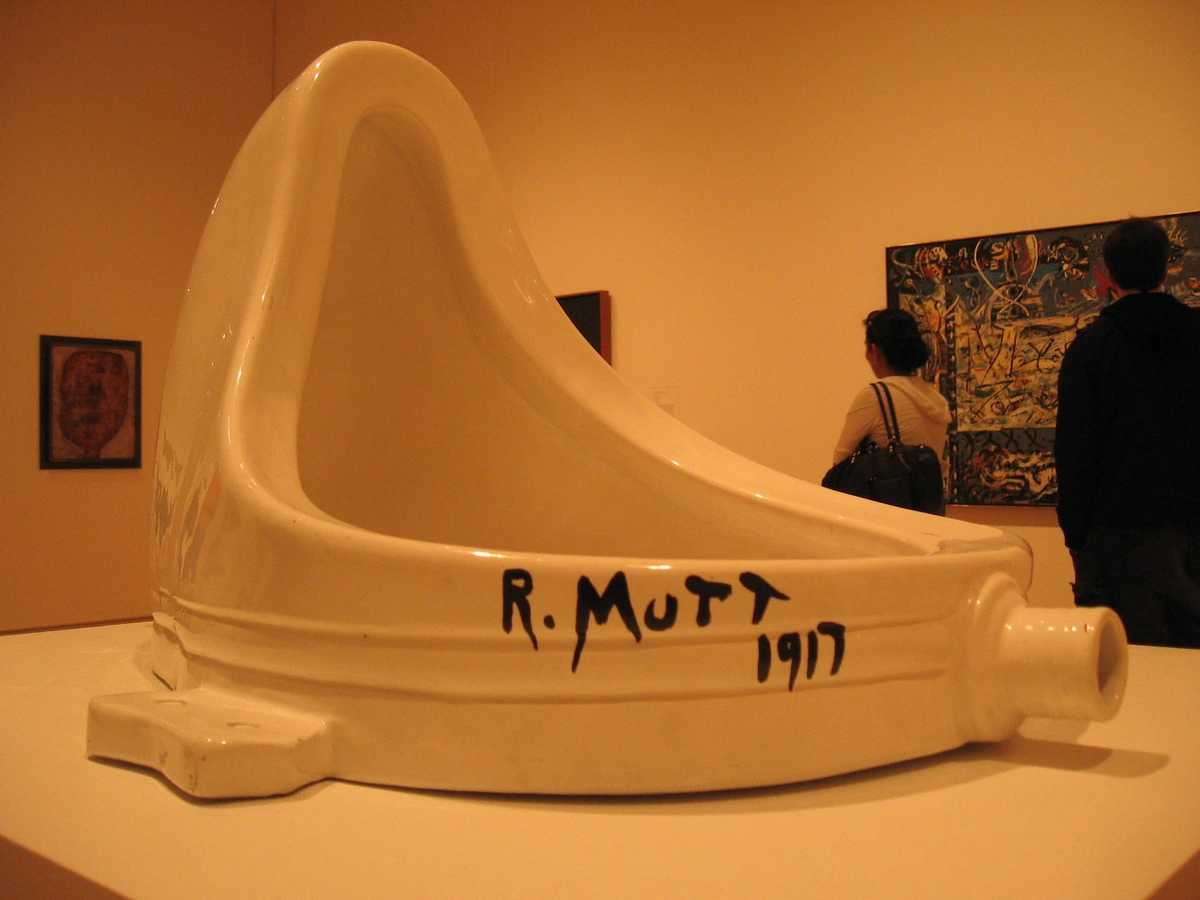
You've probably heard the name Dada and imagined a chaotic jumble of nonsense. A urinal signed "R. Mutt." Poems made of random words pulled from a hat. It all feels like a historical prank, doesn't it? But here’s the thing I couldn't shake: at the center of this beautiful madness was a man whose very name was a performance. Tristan Tzara wasn't just playing games; he was waging a war on reason itself.
When I first tried to understand Tzara, I hit a wall of contradictions. He was a performance artist before the term existed, a poet who destroyed language, and a Romanian Jew who became a central figure in French avant-garde circles. He once said, "I detest common sense." My initial reaction was to laugh it off—who doesn’t get frustrated with logic? But the more time you spend with his ideas, the more you realize he wasn't just being difficult. He was pointing at the ruins of a world torn apart by World War I and asking, "Your logic and your reason brought you this. Why should we trust it?"
From Samuel Rosenstock to Tristan Tzara: The Making of a Movement
Before he was Tzara, he was Samuel Rosenstock, born on April 4, 1896, in Moinești, a small town in the Bacău region of Romania. His family was part of the educated, upwardly mobile Jewish middle class, allowing him access to a strong education. It’s a classic artist origin story in one way—a bright young man from the provinces heads to the intellectual hubs of Europe. But Rosenstock didn't just change his location; he shed his identity.
By his late teens, he was already publishing his first avant-garde poems in Romanian journals like Simbolul (co-founded with his friend Ion Vinea), showing an early flair for challenging poetic conventions. The themes of his early work were already hinting at the radical break to come, exploring ideas of negation and the limitations of language. This wasn’t a man who suddenly discovered rebellion; he was honing it from a young age.
The Symbolist Influence in Bucharest
The Bucharest of Tzara's youth was a crucible of Eastern European modernism, heavily influenced by French Symbolism. This wasn't simply about pretty words; it was a philosophy that sought to access higher truths through suggestion and mystery rather than direct statement. Poets like Mihai Eminescu and French figures like Stéphane Mallarmé were part of the air he breathed.
You can see this early influence clearly in his 1915 poem "Cuvântul (The Word)," published in Simbolul. It reads: "The word is a dead bird / Forsaken in the square of my brain." Even before Dada, the central problem for Tzara was the inadequacy of language itself. He wasn't yet tearing it apart, but he was acutely aware of its decay. This early, melancholic Symbolism is the shadow against which his later, explosive nihilism would shine so brightly.
The Cataclysm of War as a Creative Catalyst
To grasp what sparked Dada, you have to forget the neat chronology of art history textbooks for a moment. The movement wasn't born from an aesthetic debate; it was vomited forth by a continent tearing itself to pieces. When World War I began in 1914, it immediately shattered the optimistic narrative of European progress. The "Great War" introduced the world to industrialized slaughter—machine guns, chemical weapons, and unprecedented casualties. It made a mockery of the Enlightenment ideals of reason, order, and civilization.
For a young, idealistic artist like Rosenstock, this wasn't a distant political event; it was a profound philosophical betrayal. The very culture that produced Goethe and Voltaire had descended into a barbarism more profound than anything that had come before. How could one continue to write beautiful, logical poetry in a world where logic had justified the trenches?
This pervasive sense of absurdity led to what historians call the "flight to Zürich." Artists, pacifists, and dissidents from all over Europe sought refuge in neutral Switzerland. It was in this pressure cooker of exiles, a city teeming with the disillusioned and the desperate, that Dada was conceived. The war wasn't merely the backdrop; it was the essential ingredient. Without the profound cynicism it inspired, Dada would have been just another avant-garde experiment. With it, it became a necessary scream.

In 1915, a pivotal change occurred. Rosenstock and his artistic circle, including Vinea and the visual artist Marcel Janco, created new names for themselves. It was more than a pseudonym; it was an act of self-creation. Samuel became Tristan, likely evoking the mythic Celtic lover Tristan, a figure of passion and tragic fate. He took on the surname Tzara, which holds multiple meanings: it can mean "country" or "land" in Romanian, but it also sounds like the Romanian "ţară" and could be a subtle, ironic statement on belonging and exile. But I can't help but feel it sounds like a character from a play he was writing for his own life.
Marcel Janco, by the way, would become a vital visual architect of Dada, his angular masks and abstract paintings giving a physical form to the movement's psychological terror. To understand their relationship, imagine two bright flames fuelling each other. Janco’s art provided the visual stage for Tzara’s philosophical performance.
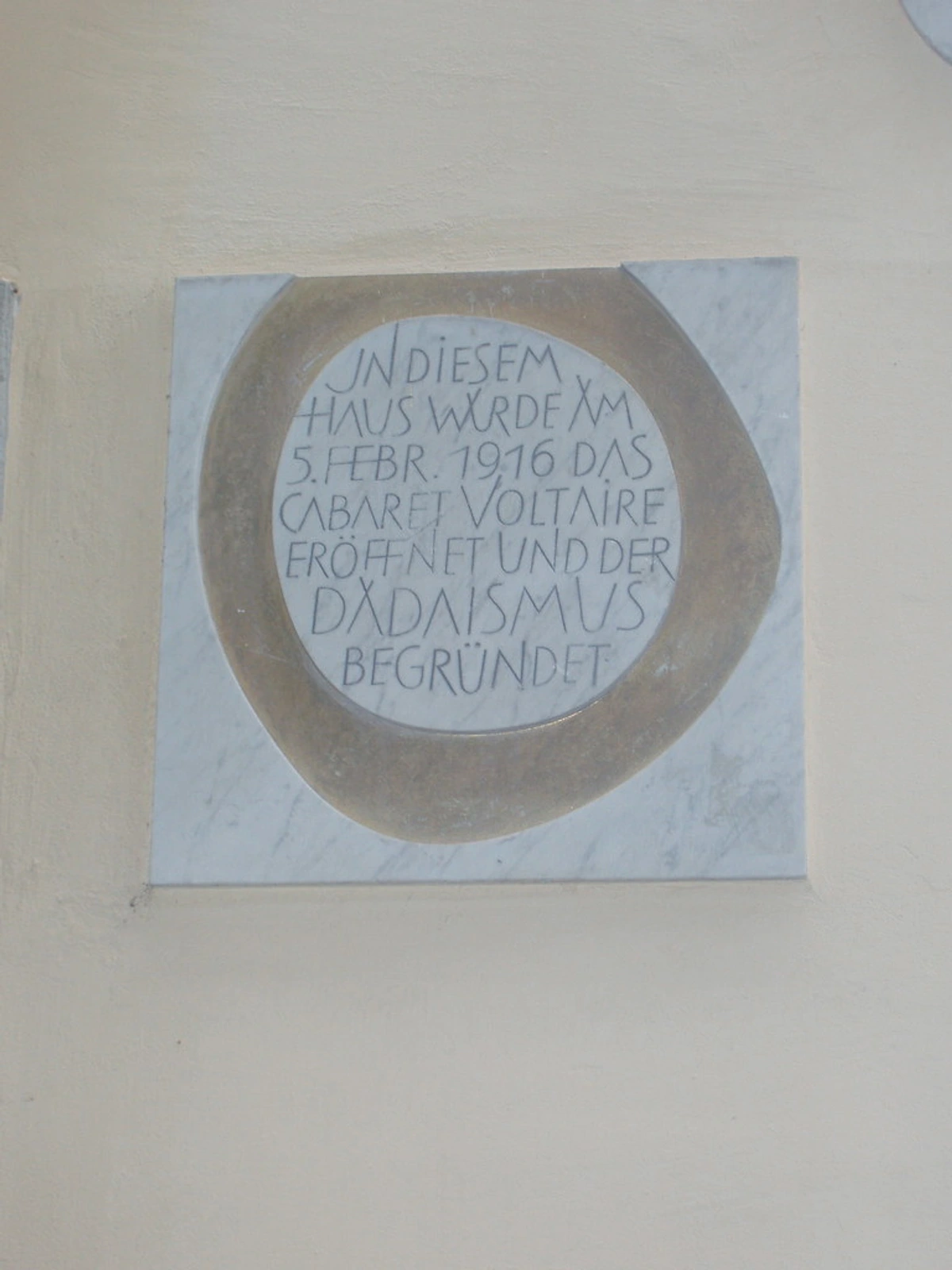
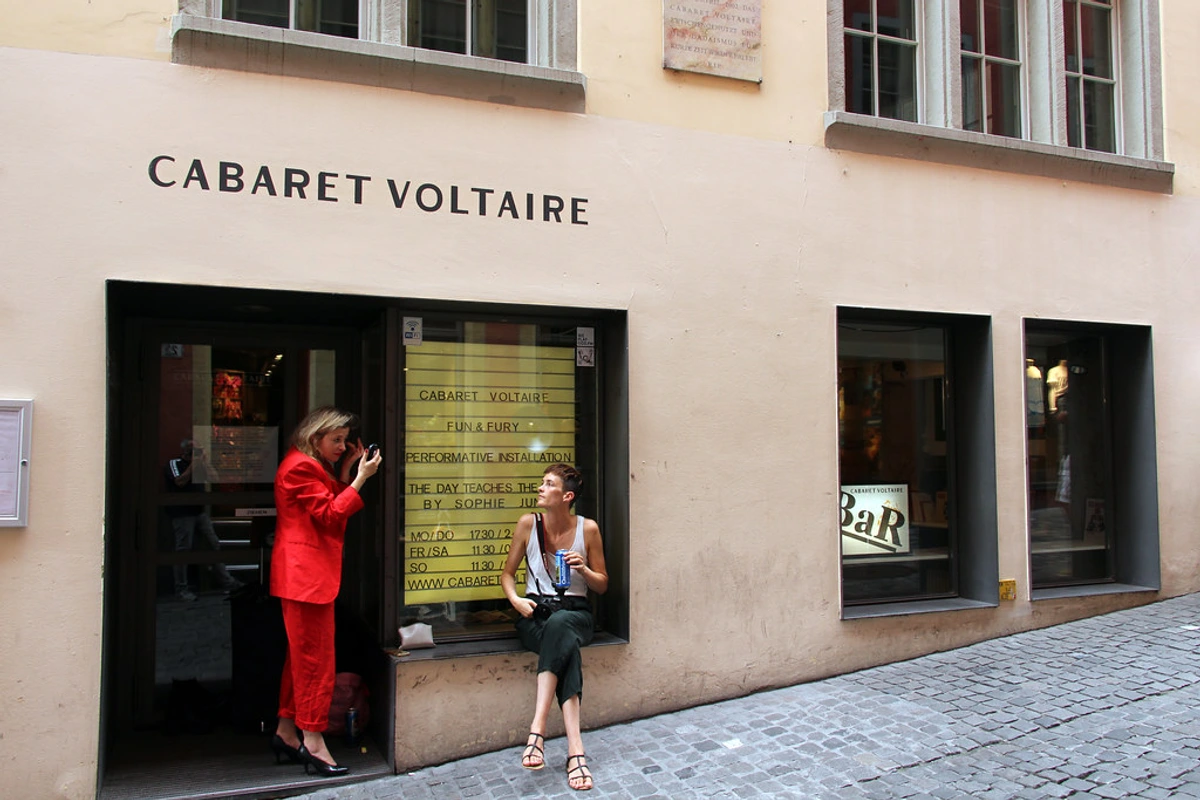
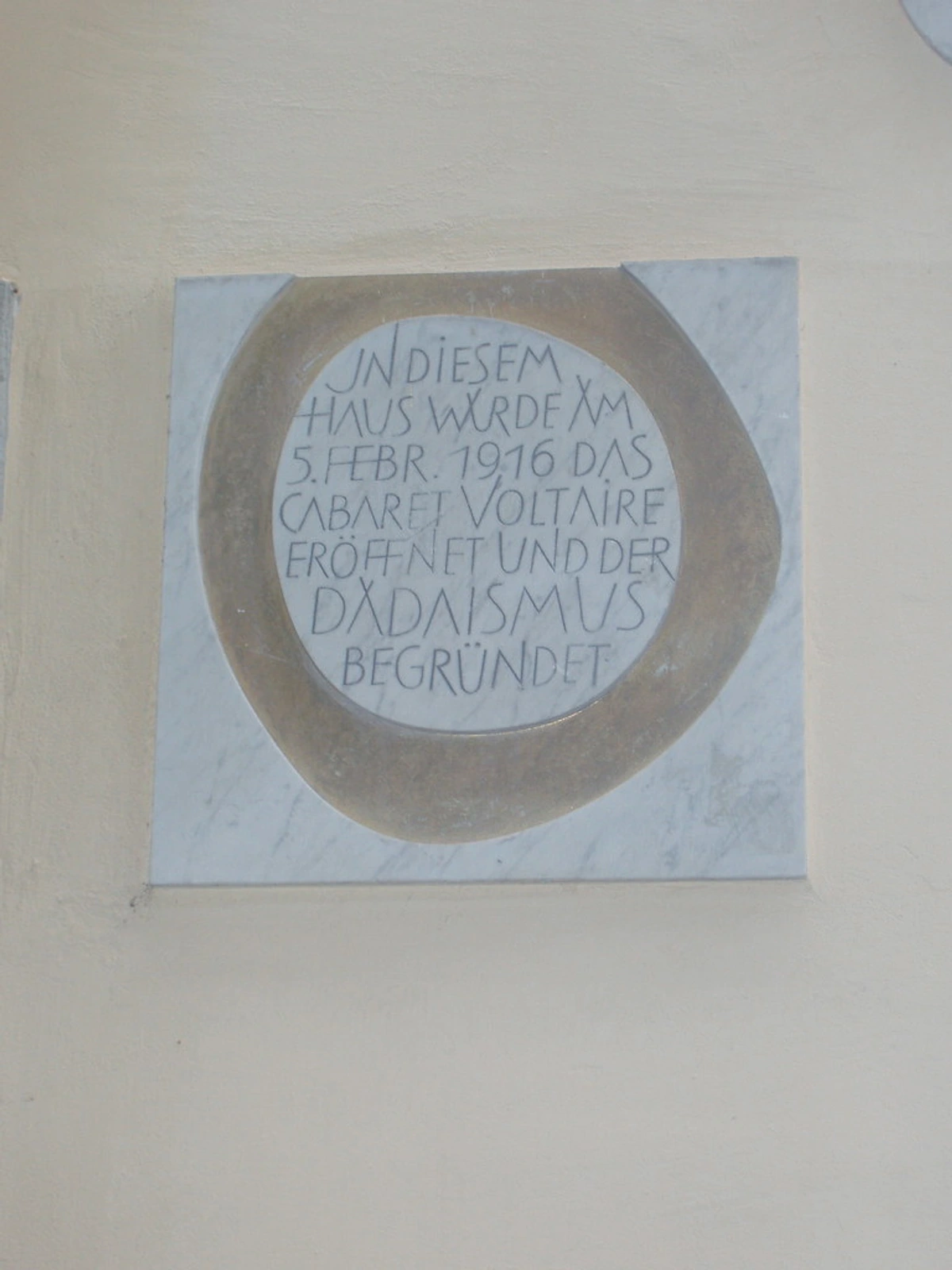
By 1916, this new character, Tristan Tzara, found himself in Zurich, Switzerland. This wasn't just any city; it was a neutral refuge for artists, thinkers, and dissidents from all over war-torn Europe. This was the backdrop. The world was, quite literally, falling apart. In the midst of this absurdity, Tzara co-founded a movement in a tiny, smoky nightclub called the Cabaret Voltaire. It was more than just a place; it was a laboratory for a new kind of protest. The protest wasn't political in the usual sense. It wasn't an argument. It was anti-art.
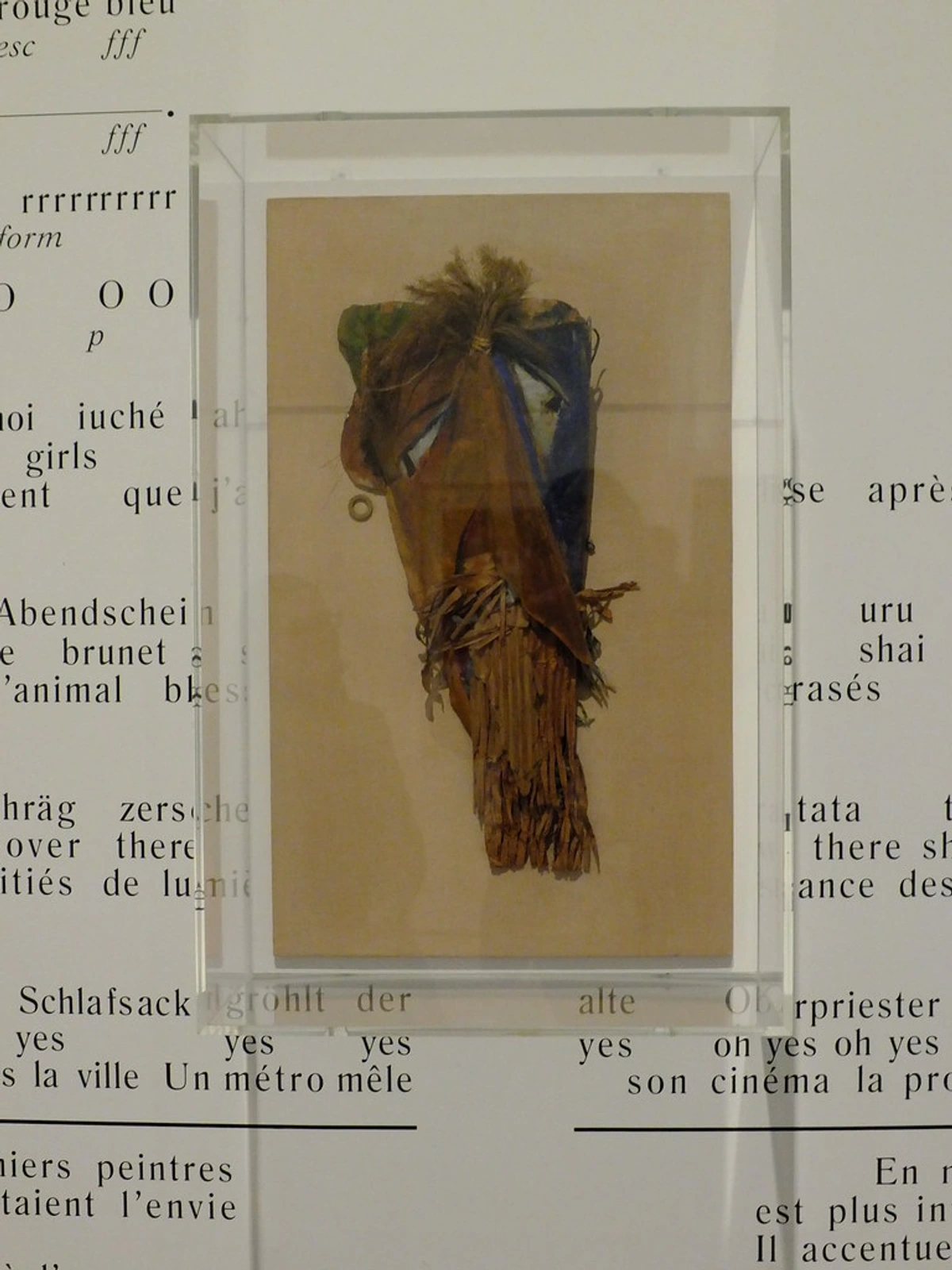
Pepe Dinox, CC BY-SA 4.0, via Wikimedia Commons
Above: Janco's masks, worn in performances at Cabaret Voltaire, were physical manifestations of Tzara's philosophy—grotesque, primal, and defiantly non-human forms to confront a broken world.
The Art of Making No Sense: Tzara's Signature Works
What does anti-art even look like? Tzara’s answer was to take the creative process we take for granted and reduce it to a joke. His works weren't just objects or texts; they were events, provocations, and philosophical demonstrations designed to short-circuit rational thought. They aimed to dismantle three pillars of the art establishment: the artist as genius, language as a tool for meaning, and logic as the basis for experience.
I've often thought that trying to analyze Tzara's work is like trying to dissect a joke. The moment you pull it apart, it dies. The real power wasn't in the "what," but in the "why." Why reduce poetry to chance? Why stage a play that makes no sense? The answer was always to force us, the audience, to confront the arbitrary rules we accept without question.
The Dada Manifesto of 1918
The manifesto is a dizzying piece of writing. It doesn’t lay out a clear program. Instead, it performs the very chaos it preaches. He famously wrote, "Dada means nothing." Think about the audacity of that. Here, at the birth of a movement that would change art forever, its leader declares it meaningless. He was sick of manifestos that promised utopia and delivered catastrophe. His was a statement of pure freedom, a declaration of independence from meaning itself. It was a philosophical hand grenade tossed into the salon of art history.
How to Make a Dadaist Poem
This is perhaps Tzara's most brilliant, populist, and downright hilarious instruction manual. He gave you a step-by-step guide to creating a poem, and the steps were designed to dismantle the very idea of artistic genius. You take a newspaper article. You cut out all the words. You shake them up in a bag. You pull them out one by one and copy them down in that order. That's it.
I tried it once. The result was, unsurprisingly, gibberish. But the lesson wasn't in the poem you produced; it was in the process. He was telling us that choosing words is an act of control, and control is an illusion. To truly discover your own voice, perhaps you first have to give up trying to find it.
The Gas Heart (Le Cœur à Gaz)
This "play," written in 1921, is arguably the most absurd thing ever written for the stage. It features characters named Eye, Mouth, Nose, Neck, and Ear. It lasts about six minutes, and the dialogue is a collection of non-sequiturs and abstract exclamations.
The script reads like nonsense: "NECK: You are a beautiful landscape... EYE: I am a gas heart." It's impossible to perform with any semblance of realism. The entire event is designed to frustrate interpretation. When the play was staged in Paris in 1923, it famously caused a riot, with the audience throwing objects at the actors. For Tzara, this was a victory. It proved his point: society, when confronted with pure nonsense that refuses to play by its rules, reveals its own violent, irrational underpinnings. It was Tzara demonstrating that the logic of our senses—the very basis of our experience—could be subverted.
Imagine being in that theatre in 1923. You've paid for a seat, expecting a story, characters, a plot. Instead, you get six minutes of anatomical absurdity. Of course you'd be angry. But Tzara's point is that your anger reveals your investment in the very system—the logic of narrative, of meaning, of theatre itself—that has just led Europe out of one catastrophic war and blindly toward another. The riot wasn't a failure of the play; it was its successful conclusion.
Above: A playbill for the 1923 Paris performance of Tzara's The Gas Heart, which famously erupted into a riot. The placard was an invitation to a kind of intellectual and aesthetic battleground.

The Paris Years, Surrealism, and a Fractured Movement
The Paris Years: A Collision of Egos and Ideologies
By 1920, Zürich was too small for Tzara's ambitions. Dada had already begun to metastasize. There were outposts in Cologne with Max Ernst, in Berlin with George Grosz, and proto-Dada rumblings in New York with Marcel Duchamp. But Paris was the undisputed heart of the avant-garde.
Tzara's arrival there was like a rockstar moving to the big city. He was already infamous for his manifestos and his connection to the Zürich scene. The Paris Dada group, which included provocative figures like André Breton, Paul Éluard, Philippe Soupault, and Louis Aragon, initially welcomed him as a kindred spirit.
The Paris scene, however, was different from its Alpine predecessor. It was more literary, more theoretical, already buzzing with pre-Surrealist ideas that Breton was beginning to formalize. A fundamental tension existed from the start. Zürich Dada was about pure, joyful destruction—a nihilistic scream. Paris Dada was more like a chaotic game of chess, full of complex personalities and simmering rivalries. It was a powder keg waiting for a match, and Tzara's disruptive energy was the perfect accelerant.
The Spectacle and the Schism: Dada Events in Paris
The clash between Zürich chaos and Parisian intellectualism played out in a series of legendary, scandalous public performances. These events weren't art shows; they were carefully orchestrated bear-baiting sessions, designed to inflame public opinion and expose the hypocrisy of the art establishment.
- The 1920 "Dada Salon": Tzara curated this exhibition with an anarchic spirit. Paintings were hung in deliberately chaotic arrangements, some high on the wall, others upside down, next to slogans written directly on the gallery walls. It visually assaulted the viewer's expectation of what an art salon should be.
- "The First Friday of Littérature" (1922): Breton organized a mock trial of the nationalist writer Maurice Barrès. Tzara participated in this absurdist "court case," where logic was turned on its head and the very idea of judgment was put on trial.
- "Barbe's Heart" Evening (1923): This was the explosion. Ostensibly a fundraiser for a young artist named Antonin Barbe, the evening was deliberately designed to mock everyone involved, from the artists to the wealthy patrons. It culminated in a full-blown riot on stage. For Breton and his followers, this was the final proof that Tzara's chaotic antics were juvenile and counter-productive. For Tzara, the chaos was the whole point. This event marked the definitive, symbolic break between Dada and Breton's emerging Surrealism.
The movement, however, couldn't hold its centrifugal force. There were power struggles, especially with figures like André Breton, the self-appointed "Pope of Surrealism." It was a clash of fundamental worldviews.
The Inevitable Divorce: Tzara vs. Breton
The fundamental conflict between Dada and Surrealism can be understood by examining the personalities of its two figureheads.
Aspect  | Dada (Tzara's Vision) | Early Surrealism (Breton's Vision) |
|---|---|---|
| Primary Goal | Negation, destruction of all systems | To build a new reality from the irrational |
| Attitude | Nihilistic, anarchic, anti-serious | Experimental, focused, pseudo-scientific |
| Leadership | Rejected leaders; inherently chaotic | Centralized, with Breton as the 'Pope' |
| View of the Irrational | A tool for demolition | A tool for construction and discovery |
| Result | Self-destruction, a liberating void | A new, structured artistic movement |
It was an inevitable divorce. Tzara, the agent of chaos who declared, "I detest common sense," couldn't possibly abide by Breton's increasingly authoritarian leadership. Their whispered arguments and public provocations culminated in a near-brawl at the 1923 'Evening of the Bearded Heart'. By 1924, with Breton's publication of the First Manifesto of Surrealism, the schism was complete. The chaotic spirit of Dada was officially dead, entombed and institutionalized by Surrealism.
It was an inevitable divorce. Tzara, the agent of chaos, couldn't abide by Breton's increasingly authoritarian leadership. Their rivalry famously culminated in a near-brawl at a 1923 theatrical event. By the mid-1920s, the official Dada movement was over, having paved the way for Surrealism and essentially burnt itself out. Tzara didn't stop creating, but his artistic journey took him into more overtly political and poetic realms, including a formal commitment to communism and participation in the Spanish Civil War.
The World After Dada: Tzara's Later Life & Political Turn
The end of Dada did not mark the end of Tzara. On the contrary, it freed him. After the chaotic 1920s, his work in the 1930s took a profound political turn. He officially joined the French Communist Party and became a dedicated advocate for anti-fascist causes. His art could no longer afford to be merely "anti"; it had to be "for" something.
This evolution is one of the most fascinating aspects of his life. On the surface, going from "Dada means nothing" to Marxist dialectics seems like a complete reversal. Yet, when you dig deeper, a consistent thread emerges: a deep, unyielding hatred for authority, oppression, and dogma. The target simply shifted from the abstract tyranny of reason to the concrete tyranny of fascism.
In his poetry of the 1930s, we see a new voice. The playful nihilism is gone, replaced by a hard-edged, sorrowful anger. His poetic masterpiece of this period, L'Homme approximatif (The Approximate Man, 1931), is a sprawling epic of alienation and yearning. He replaces the static collage of a random poem with a dynamic, desperate search for a new, collective human reality. The poem is difficult, often obscure, but it pulses with a political and spiritual urgency that was absent from his Dada work.
Every piece of performance art that breaks the fourth wall owes him a debt. Every absurdist playwright from Eugène Ionesco to Samuel Beckett is working in a theatre he helped build. Every musician who incorporates noise, every collage artist who juxtaposes found objects, every poet who consciously challenges the sanctity of the poetic line is following in his footsteps. The term 'influence' feels too weak; 'permission slip' is more accurate. He gave artists the permission to be irrational, to reject, to be silly, to be political, to be nothing at all. He expanded the definition of art forever.
But Tzara's legacy isn't just a historical fact. It's a living force. Think about the last time you saw a provocative installation that made you uncomfortable, or heard a piece of music that made you question the very definition of music. That's Tzara's ghost, whispering in your ear, "Why not?"
I often think of his legacy as a set of tools he left scattered on the floor of the 20th century. Every generation of artists since has picked one up and built something new, something he could never have imagined.
Looking at the world today—a world that often feels as illogical and dangerous as it did in 1916—Tzara's nihilistic laughter doesn’t feel like a surrender. It feels like a survival tactic. We can honor his legacy not by copying his absurdity, but by embracing his courage. The courage to doubt, to question, and above all, to detest a "common sense" that no longer makes any sense at all. The spirit of Dada challenges us to look at the accepted logic of our own time—from political polarisation to consumer culture—and ask, as Tzara did, "Whose logic is this? And what does it serve?"
A Postscript: The Tzara Paradox — Destruction as Creation
There's a deep irony at the heart of Tzara's project that I keep coming back to. The man who declared "Dada means nothing" created a movement that meant everything to 20th-century art. The poet who sought to destroy language did so by using language in ways no one had ever imagined. The anarchist who wanted to burn down all systems created one of the most powerful and enduring artistic systems of the modern era.
Perhaps this was his greatest lesson. By setting out to destroy art, he ended up saving it from its own complacency. He forced it to confront its own emptiness, its own pretensions, and in doing so, he cleared the ground for something new and unforeseen to grow. He proved that sometimes, the most constructive act is the most destructive one. To build a new future, you first have to be brave enough to laugh at the ruins of the past.
Dada in Popular Culture and Media
It might seem absurd to talk about Dada in the same breath as blockbuster movies or chart-topping songs, but its DNA is there if you know where to look. Tzara's ethos has trickled down into our everyday cultural diet in strange and wonderful ways.
Think about it: what is a Monty Python sketch if not a form of Dadaist theatre? The abrupt shifts in logic, the rejection of narrative, the willingness to be absurd for absurdity's sake—it's all there. Or consider the satirical news of The Onion, which uses a veneer of journalistic reason to expose the underlying nonsense of our world. That's a deeply Dada impulse.
Even in music, the influence is clear. The tape-loop experiments of Brian Eno and Robert Fripp, the industrial noise of bands like Throbbing Gristle, the lyrical cut-ups of David Bowie, and the sample-based collages of modern hip-hop and electronic music all owe a debt to Tzara's original idea that art could be made by cutting things up and reassembling them.
I once saw a TikTok where someone had edited a politician's speech into a rhythmic beat. The original meaning was gone, replaced by a hypnotic, nonsensical rhythm. The comment section was filled with people calling it "Dada." And you know what? They were absolutely right. In our hyper-connected, media-saturated world, Tzara's century-old joke feels more relevant than ever.
FAQ: The Dada Distilled
Let's be honest, Tzara can be a lot to take in. Here are some of the questions I found myself asking along the way.
What did Tristan Tzara do for a living?
This is a tricky question, as Tzara lived the life of a dedicated avant-garde poet and intellectual. For much of his life, especially during the intense Dada years, his "work" was his art and activism. He published poetry, essays, and manifestos, often in small, independent journals. Later in life, after his political turn, his work became more formalized. He was a prominent figure among left-leaning French intellectuals, contributing to communist-backed publications and participating in political causes, which would have provided some structure and income, though never making him wealthy. He ultimately earned his living as a writer and political activist, though always on the fringes of conventional employment.
What does the name "Dada" actually mean?
The best answer is Tristan Tzara's: "Dada means nothing." Legend has it that the name was chosen by randomly stabbing a knife into a French-German dictionary (the word "dada" is a French child's word for "hobby-horse"). The point wasn't the meaning; it was the act of choosing something meaningless. It was the perfect name for a movement born from the absurdity of a world at war.
Was Dadaism really just trolling?
It's a fair question, and on a bad day, I might have said yes. But trolling is usually about causing a reaction for its own sake. Dada was a profound philosophical and artistic response to a global catastrophe. The pranks and the chaos were a form of protest. It was a way of saying, "Your civilization is a brutal joke, so our art will be a brutal joke right back at you." The difference is the motivation. One is cynical fun; the other is deadly serious.
How did Dada influence modern art?
Dada's fingerprints are everywhere. Here's a quick table to break it down:
Tzara's Toolbox: A Legacy in Practice
Let's put this into a more concrete table, breaking down exactly how Dada ideas migrated into later art movements.
Dada Idea (The Tzara Principle) | Evolution in Modern Art |
|---|---|
| The Readymade (The artist as selector, not creator) | This became the bedrock of conceptual art. It paved the way for Pop Art (Andy Warhol and his Brillo boxes), Installation Art, and the entire modern practice of using found objects and questioning the idea of originality. |
| Collage & Photomontage (Shattering the single, rational perspective) | This wasn't just a technique; it was a new way of seeing. It influenced everything from Hannah Höch's political photomontages to Robert Rauschenberg's "combines" and is a foundational element of modern graphic design and advertising. |
| Chance, Randomness & the Subconscious (Removing the artist's conscious control) | Tzara's cut-up poems were a direct line to the automatic writing of the Surrealists. It influenced composers like John Cage, who used chance operations in his music, and later inspired generative art and algorithmic creativity. |
| Performance as Anti-Art (The event is the artwork) | The chaotic provocations at the Cabaret Voltaire were the blueprint for everything that came after: Happenings, Fluxus events, and the endurance-based work of Marina Abramović. |
| The Primacy of the Idea (The concept is more important than the object) | This is perhaps his most profound legacy. It led to Conceptual Art, where the idea is paramount (think of Sol LeWitt's wall drawings, which are just sets of instructions). It gave us Arte Povera and much of Postmodernism, where context and theory reign supreme. |
Who were Tzara's key collaborators in Dada?
While Tzara was a central figure, Dada was a collective effort. He worked closely with a range of artists and thinkers, each bringing a unique element to the movement:









- Hugo Ball & Emmy Hennings: The founders of the Cabaret Voltaire in Zürich. While Tzara was a star performer, it was Ball and Hennings who created the stage. Ball's 1916 "sound poems," where he recited nonsense verse in a cardboard suit, are legendary. They established the club as a space for total artistic anarchy.
- Hans (Jean) Arp: A pivotal visual artist and poet. Arp's organic, abstract wood reliefs and his Dada collages (often made by dropping torn paper and gluing it where it landed) provided a vital visual language for the movement. His work embodied the principle of chance.
- Marcel Janco: Tzara's childhood friend from Romania. Janco was a multi-talented artist whose expressionistic paintings and, most famously, his primitive, grotesque masks were central to the Zürich performances. These masks physically transformed the performers, stripping them of their individual humanity.
- Richard Huelsenbeck: A German poet and one of the founding members in Zürich. He brought a harder, more political edge to Dada and was the one who brought the movement to Berlin after the war, where it took a sharp political turn.
- Francis Picabia: The wealthy, rebellious French artist who acted as a vital bridge. He connected the Zürich group with the avant-garde in Paris and, crucially, with the New York scene centered around Alfred Stieglitz and Marcel Duchamp. His mechanomorphic paintings were a Dada critique of technological fetishism.
- Georges Ribemont-Dessaignes: A French writer and artist who was a key figure in the Paris Dada group. A passionate provocateur, he was a central player in the chaotic readings and performances that defined the movement in France.