What is Cabaret Voltaire? The Dada Movement's Revolutionary Birthplace
Discover how a Zurich tavern sparked the Dada anti-art rebellion. Explore Cabaret Voltaire's history, key figures, and enduring legacy in contemporary art.

What is Cabaret Voltaire? The Dada Movement's Revolutionary Birthplace
Have you ever found yourself suddenly, inexplicably, laughing at something that is completely absurd, only to realize a second later that the laughter was a cover for a profound sense of shock? That's the emotional gut-punch of Cabaret Voltaire. It's a feeling, a place, a moment in time where the world, as it was understood, cracked open. That's the feeling Cabaret Voltaire gave art in 1916. Imagine it’s 1916. You're in Zurich, a neutral Swiss city swollen with refugees, dissidents, and spies. Beyond its borders, the mechanized slaughter of the Great War has rendered words like "honor," "glory," and "civilization" obscene jokes. The old world is dying, and in a cramped, smoke-choked tavern on the Spiegelgasse, a new one—bizarre, loud, and brilliantly nonsensical—is being violently born. This is Cabaret Voltaire, the unlikely incubator where Dada first drew breath. More than just an art movement, Dada was an artistic, philosophical, and political assault on a world gone mad. It was a declaration that if reason leads to war, then nonsense is the only sane response.
The Tinderbox: Europe in 1916
Let's set the scene. World War I rages, an unprecedented industrial meat-grinder consuming a generation. Traditional values lie shattered in the mud of the trenches. This isn't the Old World anymore; it's its bloody, mechanized funeral. In the midst of this, artists like Hugo Ball and Emmy Hennings flee the collapsing empires of Europe, landing in Zurich—a neutral Swiss oasis buzzing with refugees, spies, philosophers, and political agitators. The air is thick with a quiet, desperate question: What's the point of making 'beautiful' art when the world has become a slaughterhouse?
Zurich was a strange pressure cooker. On one hand, it was a haven of peace, a place where you could still hear yourself think. On the other hand, it was filled with a volatile mix of people who had seen the worst of humanity. This created a unique psychological climate, a kind of pressure that could only be released through radical, explosive expression. Art had to become something else entirely if it was to have any relevance at all in such a world. It couldn't just paint over the cracks; it had to dive headfirst into them.
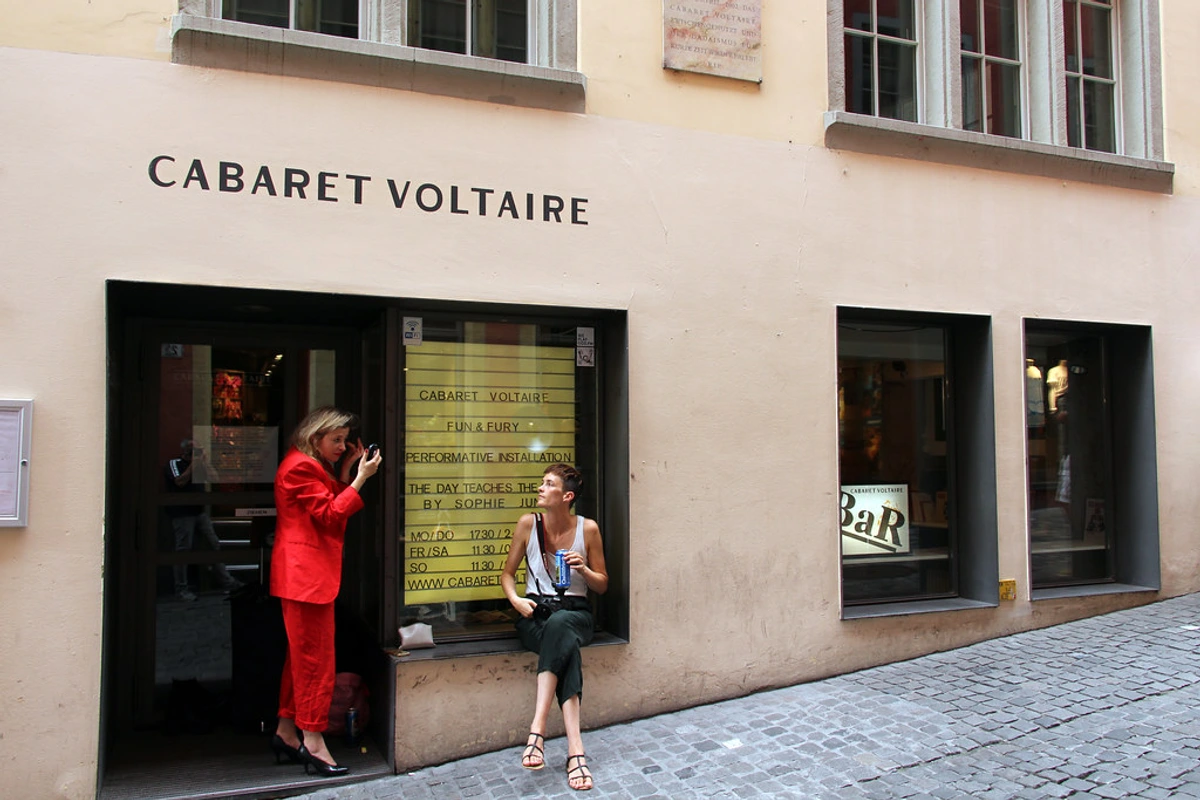
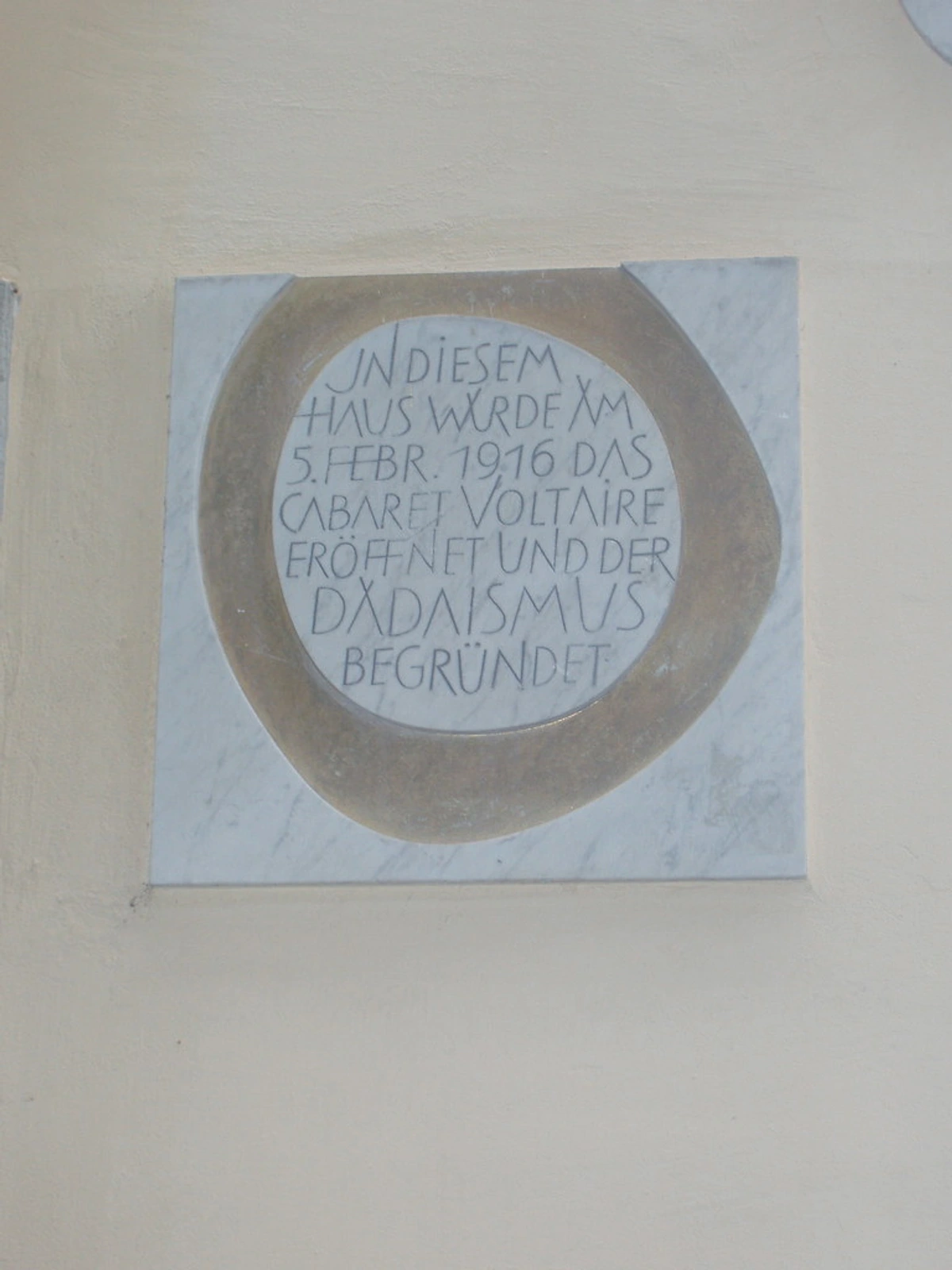
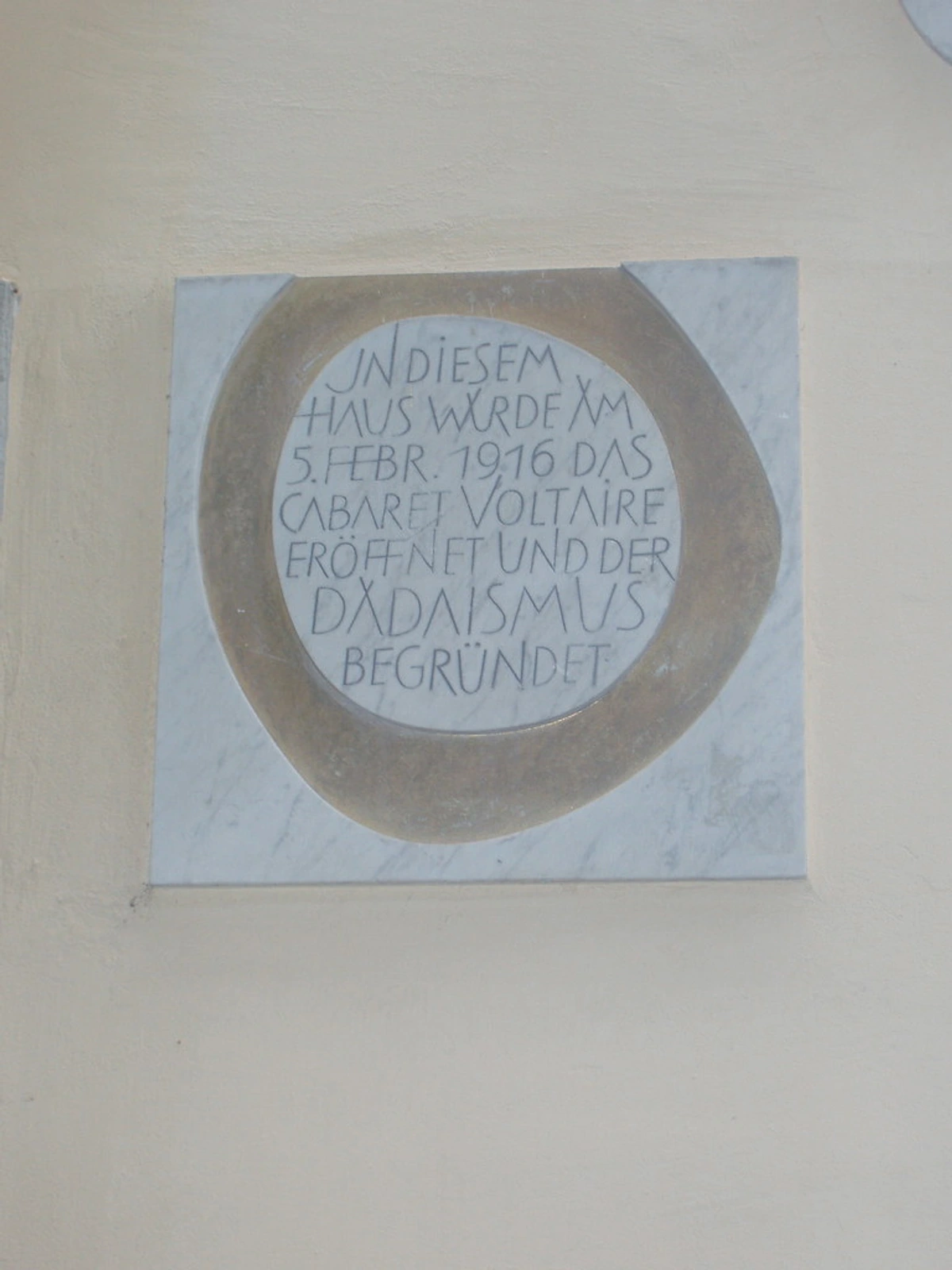
In this suffocating atmosphere, the search for a physical space to vent this collective psychic energy begins. Hugo Ball and Emmy Hennings find it in a small, unassuming third-floor tavern at Spiegelgasse 1. On February 5, 1916, armed with little more than a meager loan, an upright piano, and a shared, desperate need to do something, they throw open the doors to Cabaret Voltaire. It is not conceived as a mere cabaret, but as a weapon. A grenade, disguised as a nightclub, hurled at the temple of "respectable" art. It was intended as a platform for "artistic entertainment," but from the very first night, it was clear it would be anything but entertainment as usual. The mission was clear: to create a space where logic and reason—the very tools that had built the war machine—would be systematically taken apart, night after chaotic night.
Chaos Incorporated: An Average Night at the Cabaret
The nightly schedule at Cabaret Voltaire was predictably unpredictable, a carefully orchestrated assault on the senses. It wasn't your velvet-ropes nightclub. The air was thick with pipe smoke, cheap wine, and the frenetic crackle of a world turned upside down. Hugo Ball described the early days as him and Hennings performing almost every night, sometimes for just a handful of bewildered onlookers, other times for a raucous, overflowing crowd. The central draw, however, was the manifesto itself—a text that was never just read, but screamed, chanted, and embodied each night in a living, breathing declaration of war against reason itself. Let's break down the sensory overload you'd experience on a typical evening, circa 1916:
- The Lineup Was Never Final: An evening might start with Hugo Ball at the piano, struggling to keep an ancient upright in tune. This would be followed by readings of French, German, and Russian poetry—but never straightforwardly. They were often yelled, whispered, or chanted in a rhythmic cacophony that rendered the original meaning utterly irrelevant.
- Simultaneist Verses & Sound Poetry: The core of the performance was what we now call "sound poetry." Instead of reciting structured poems, performers like Ball and Tzara would detonate pure, nonsensical sound. The infamous chant "Ta ta ta, Tzara!" wasn't just a cheer; it was an embodiment of Dada itself—a return to infantile babble, a rejection of language as a tool for propaganda and official lies. Their goal, as Ball wrote in his diary Flight Out of Time, was to achieve a "verse without words," where phonetics alone carried all the emotional weight, stripped of logic and semantics.
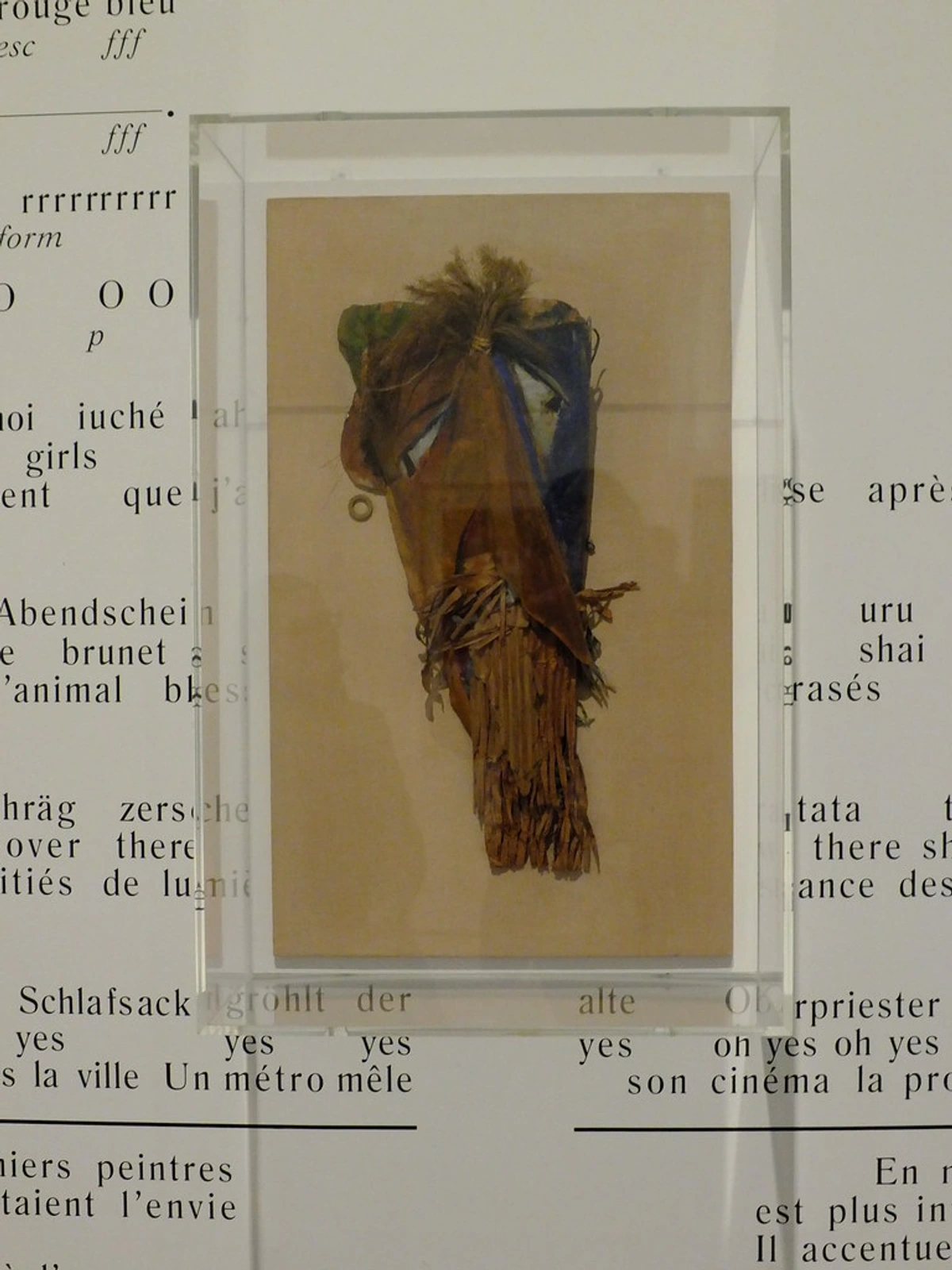
- Cubist Dances & Abstract Parades: Ball's performance in his "Bishop Costume" remains the most iconic example of Dada's physical theatre. He wasn't just wearing a bizarre outfit; he was becoming a "living sculpture of absurdity," a swiveling, abstract entity that moved with slow, ritualistic gestures. Emmy Hennings would follow with her "Cubist Dances," moving in sharp, geometric patterns, her body a marionette of modernism. These weren't plays; they were raw experiments in abstract movement, some of the earliest and boldest instances of what we now call Performance Art.
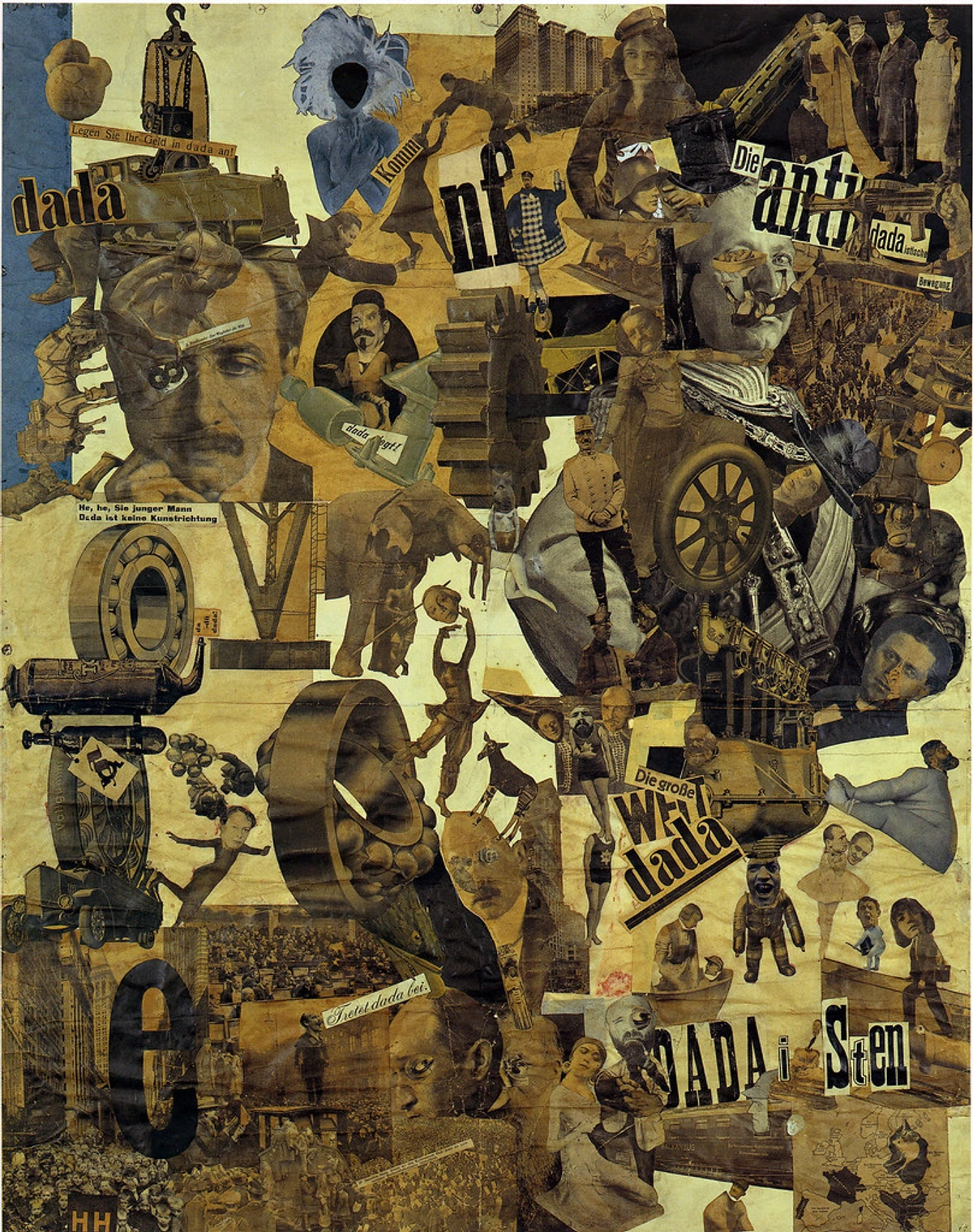
- Visual Collages & Merz Pictures: The walls were a constantly shifting exhibition of collage, plastered with scraps of newspaper, tram tickets, and torn product labels. Artists like Hans Arp would create what he called "chance collages," dropping pieces of paper and gluing them exactly where they fell. This act of surrendering artistic control was a direct assault on the God-like figure of the artist as a conscious, infallible creator. It invited the chaos of the world directly into the creative process. These early experiments laid the groundwork for Kurt Schwitters' later "Merz" pictures, complex assemblages of urban junk that elevated society's leftovers into high art, all to prove a radical point: art was supposed to be gloriously, defiantly "useless."
- Noise Music & Sonic Anarchy: The audience was subjected to a relentless soundscape of dissonant jazz, experimental compositions, and pure noise. Musicians would bang on pots, play violins with barbed wire, or perform melodies backward. Harmony was the enemy, a relic of a complacent, pre-war tranquility that no longer existed. The goal was to create sounds that were jarring, aggressive, and unavoidable—an acoustic mirror to the artillery barrages echoing across Europe.
Hugo Ball in his famous "Bishop Costume," a towering construction of cardboard and paint, became a living sculpture of absurdity during his performances at Cabaret Voltaire. His movements, restricted and ritualistic, transformed the human form into a vessel of pure, irrational expression, setting the stage for what would become performance art. Marcel Janco, Public domain, via Wikimedia Commons.
"We had lost confidence in our culture. Everything had to be demolished. We had to rid ourselves of the old wisdom, the old logic, the old taste, the old culture." —Hugo Ball, Flight Out of Time
This quote wasn't just a poetic lament; it was the Dada working manifesto. The destruction they sought wasn't mindless. It was surgical. They wanted to tear down a specific cultural edifice—one built on the pillars of logic, nationalism, and aesthetic tradition that had just led Europe into an unprecedented bloodbath. It was an act of intellectual self-preservation.
Core Tenets: The Dada OS - Rebooting Art's Operating System
They needed a name. Think of it as a brand for their anti-brand. The apocryphal story is priceless: Richard Huelsenbeck, so the tale goes, plunged a penknife into a French-German dictionary and landed on "Dada" – baby talk for "hobbyhorse." Another version has it as the shared, nonsense utterance of Ball and Tzara in a cafe. The truth is irrelevant. The name was perfect. It was international, nonsensical, and gloriously childish. It meant nothing, and in that meaninglessness, it mocked the very idea of grand, meaningful manifestos—the kind of high-minded rhetoric that had just led the world to war. But behind this deliberate absurdity were deadly serious intentions, a set of core rules for an anti-art movement.
The Dada Manifesto: Principles of an Anti-Art Movement
If you're trying to understand Dada, don't look for a single, coherent rulebook. You'll just find contradictions and manifestos that mock the very idea of manifestos. It's like trying to nail jelly to a wall. But there was a method to the madness. Underneath the chaos were a few core operating principles, a shared set of rebellious instincts that acted like a software virus, designed to crash the entire operating system of Western art and force a reboot.
Dada Principle  | What It Meant | Why It Was Revolutionary |
|---|---|---|
| Rejection of Aesthetic | Beauty is a lie in a broken world. The pretty paintings in gilded frames felt like a grotesque joke when men were dying in mud-soaked trenches. Art had to reflect the chaos and ugliness of the times. | This pivot was seismic. It turned 'ugly' or nonsensical into valid art forms, dismantling centuries of classical idealism and paving the way for Surrealism, abstract expressionism, and beyond. |
| Embrace of Chance | Art shouldn't be about genius or careful planning. Typos, accidental spills, and dice rolls were embraced as creative collaborators. Hans Arp famously created collages by dropping pieces of paper and gluing them where they fell. | This was a radical undermining of the artist's ego and control, suggesting that creativity could emerge from the unconscious or from pure, beautiful accident. You see its echo in Jackson Pollock's drip paintings and John Cage's chance-based music. |
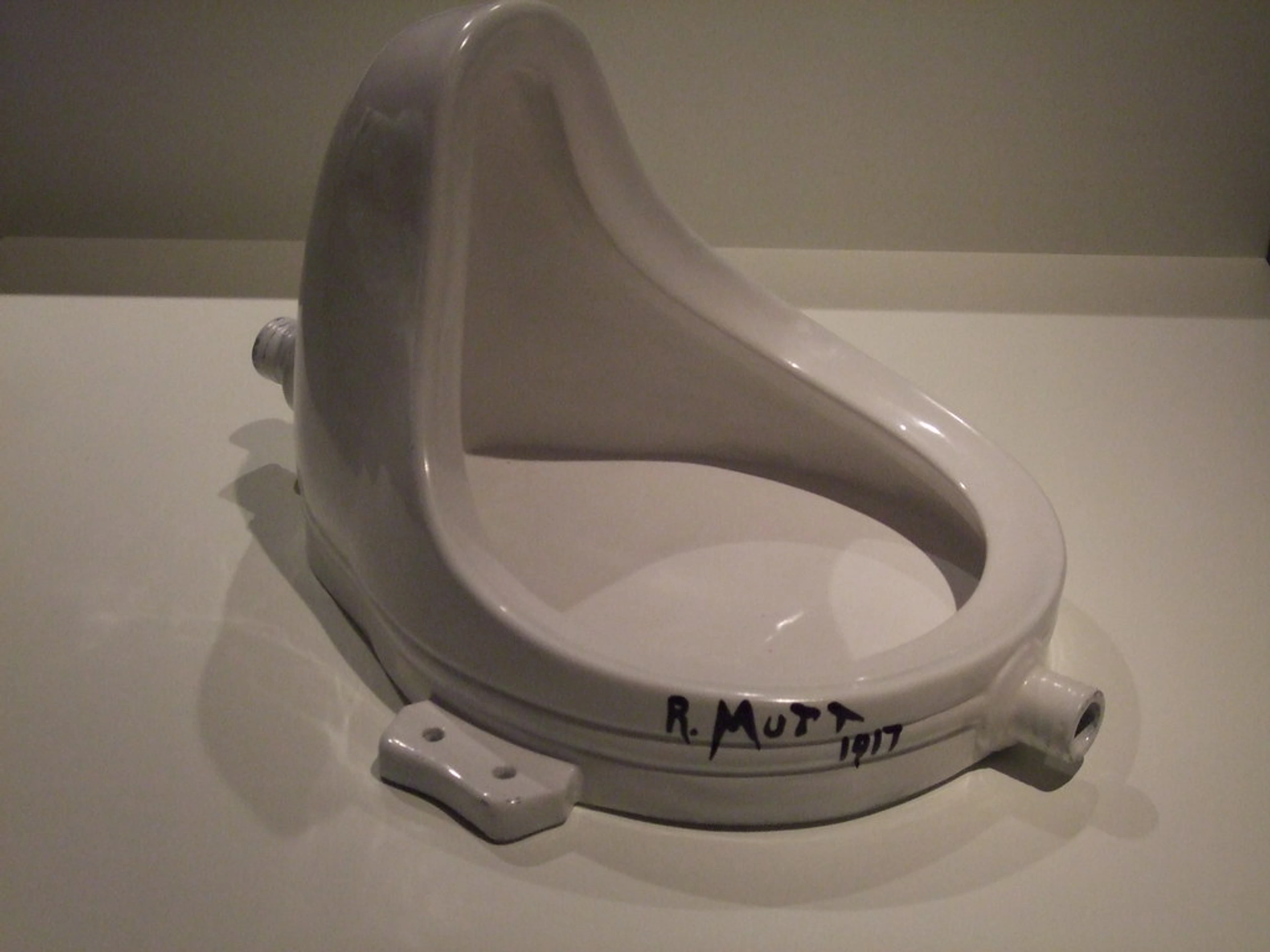
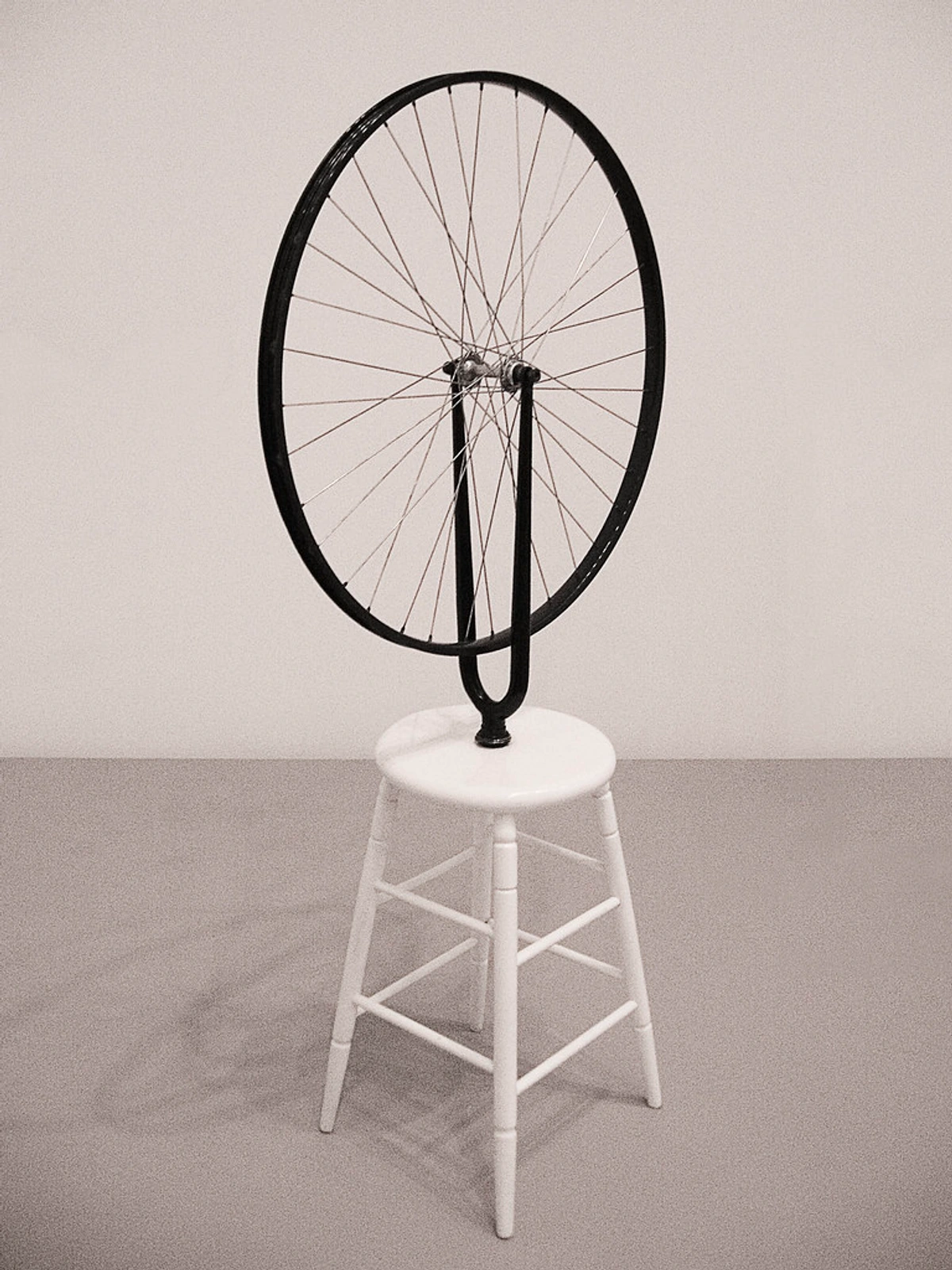
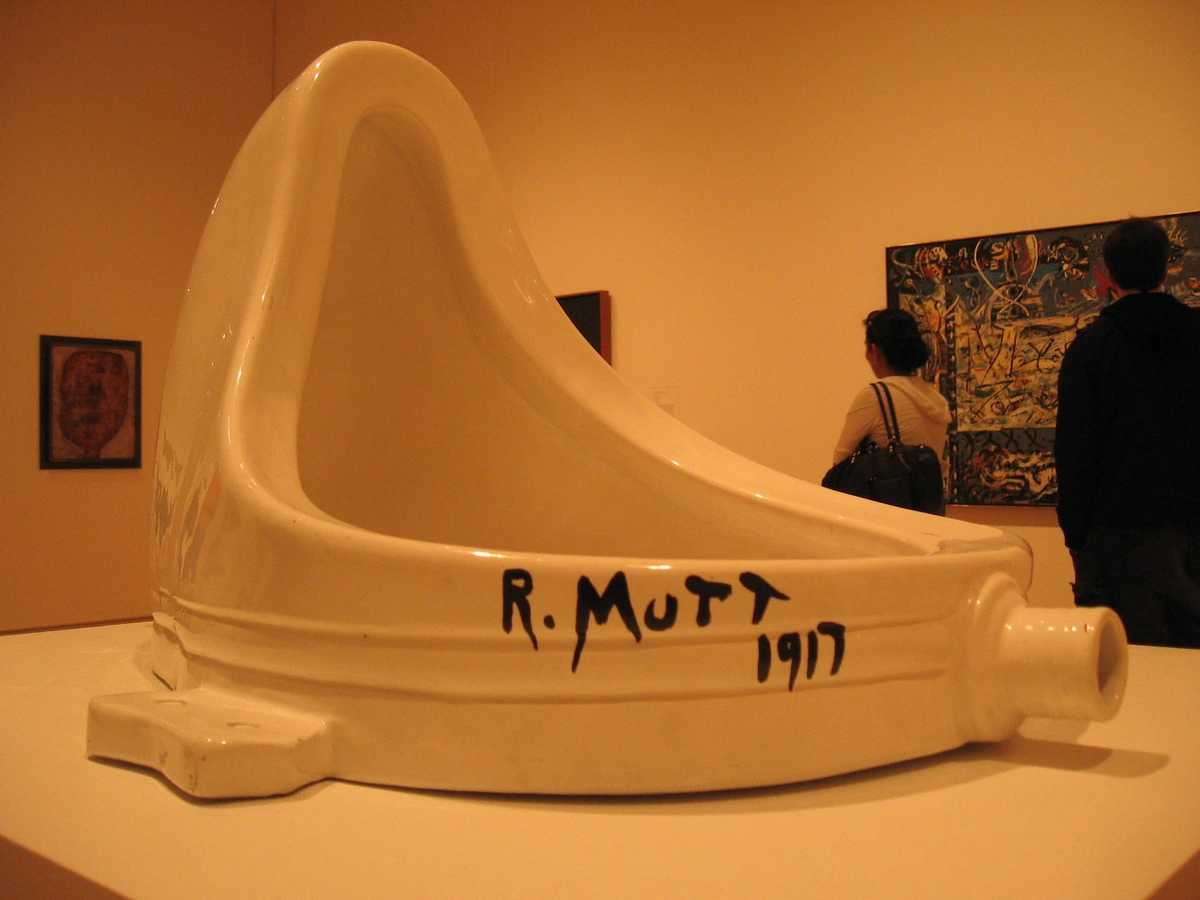
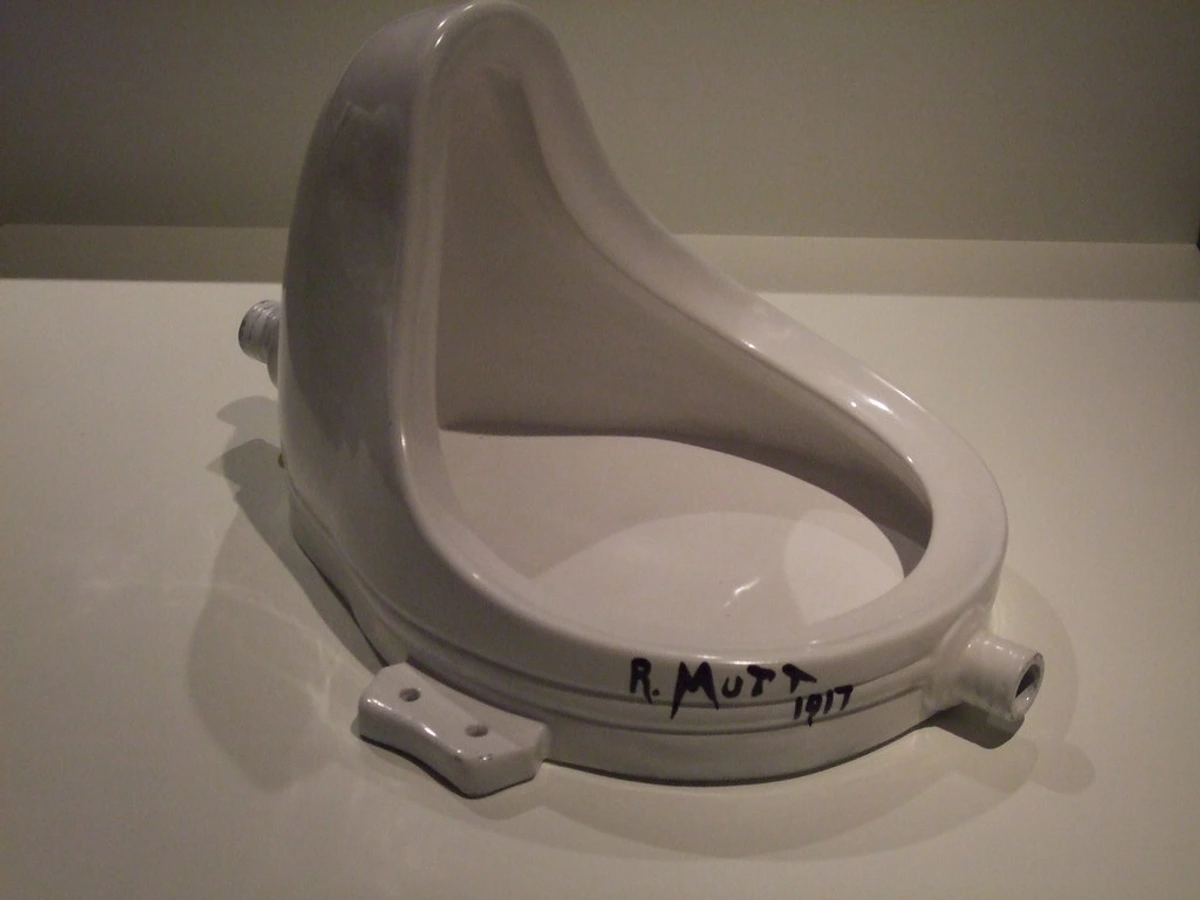
| Anti-Art Stance | The idea of 'Art' with a capital 'A' was elitist and pretentious. The concept of the 'readymade' was their ultimate weapon: a urinal signed 'R. Mutt' was a philosophical statement, not just a prank. | It democratized creativity by insisting that the artist's mind was more important than their technical skill. The question it raised—"Yeah, but is it art?"—still challenges us today. |
| Absurdity as Truth | Logic, reason, 'civilized' society... these were the very things that had led Europe into a meat grinder of a war. The only sane response to an insane world was to embrace glorious, provocative nonsense. | This principle forced people to confront the madness of their own 'rational' world. By being deliberately absurd, Dada held up a funhouse mirror to a society that had lost its mind, a powerful critique that resonates in political satire and culture jamming to this day. |
These four principles weren't just rules; they were weapons. Each one was designed to undermine a specific pillar of the art establishment, from its reliance on beauty, to its cult of genius, to its institutional gatekeeping. Together, they formed a powerful toolkit for dismantling an old world and clearing space for something entirely new.
The Cast of Chaos: Who Was Throwing the Nonsense Grenades?
This wasn't Ball's solo show. Think of it as a dysfunctional, chaotic family, each member contributing a unique form of creative sabotage. The Cabaret was a stage, but it was the people who made it a revolution. They were a motley crew of exiles, poets, and artists, bound together less by a shared aesthetic and more by a shared feeling of disgust and a desperate need for a new kind of creative freedom.
- Hugo Ball & Emmy Hennings: The Heart. Ball, the German intellectual and mystic, provided the philosophical spine, while Hennings, a cabaret singer and performance artist, brought the raw, gritty energy of a life lived on the fringes. Together, they weren't just running a venue; they were staging a nightly exorcism of European culture.
- Tristan Tzara: The Mouth. A Romanian poet with an unparalleled flair for self-promotion and provocation. Tzara was the movement's tireless networker and propagandist, the one who truly turned "Dada" into a global phenomenon with his incendiary manifestos and ceaseless letter-writing campaigns.
- Marcel Janco & Hans Arp: The Eyes. Janco, another Romanian, was the visual architect, crafting the bizarre, unsettling masks and abstract reliefs that defined the Cabaret's aesthetic. Arp (also known as Jean Arp), a German-French artist, was the gentle soul of absurdity, developing his chance-based collages and biomorphic sculptures that challenged the very nature of artistic creation.
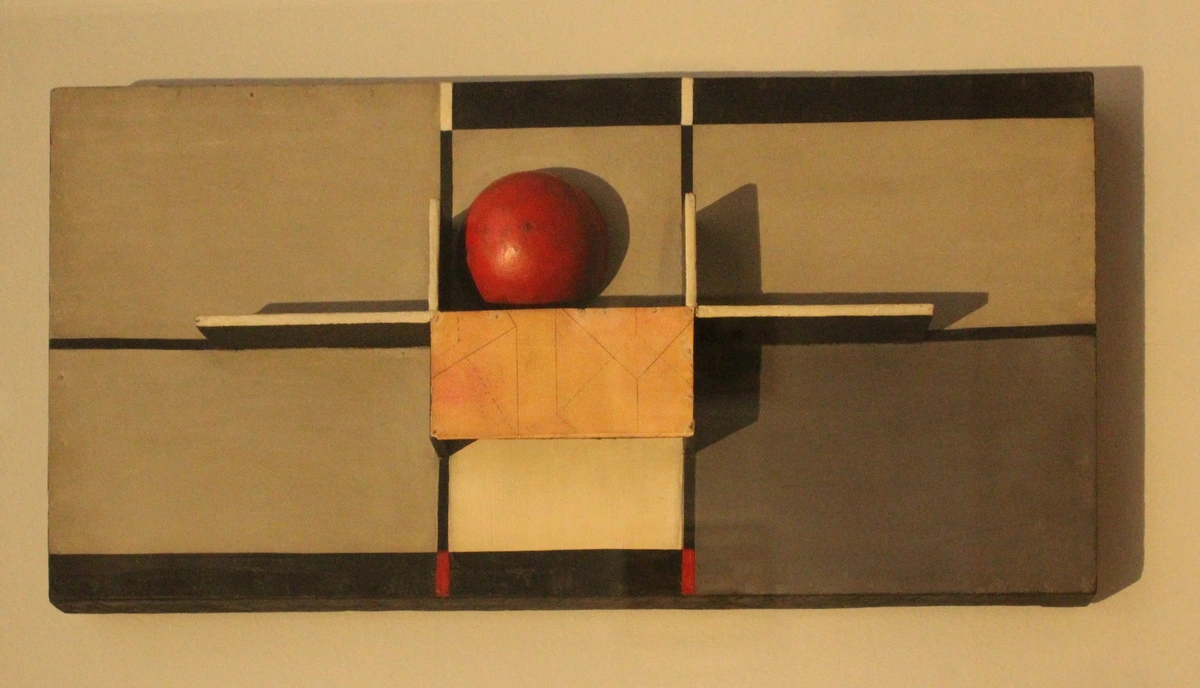
- Sophie Taeuber-Arp: The Underrated Virtuoso. Often overshadowed, Taeuber-Arp was a powerhouse. She was a professor of textile arts, a groundbreaking dancer, and a creator of exquisite abstract tapestries and geometric wood reliefs. Her work proved that Dada wasn't just about destruction; it could also build new, refined forms from the ruins. She brought structural rigor to the chaos, a vital counterpoint to the raw aggression of her peers. Her story is a reminder that Dada's legacy isn't a monolith; it's full of unexpected subtleties. If you're drawn to the elegance within abstract work, you can explore the influence of such visionaries in contemporary art.
- Richard Huelsenbeck: The Fist. The German provocateur who brought a raw, aggressive, and explicitly political "Angst" to the group. His departure from Zurich would see him transplant this confrontational energy to Berlin, creating a far more politicized version of Dada.
The Aftermath: How the Dada Virus Spread from Zurich
By 1918, the initial kinetic energy of Cabaret Voltaire began to fizzle. The war was ending, people were scattering, and the daily grind of sustaining such a high level of creative anarchy took its toll. Hugo Ball, spiritually and physically exhausted, retreated from the art world and returned to Catholicism. But the genie was out of the bottle. The ideas, the attitude, the very word Dada—it became a cultural virus, spreading from city to city, mutating and adapting to its new hosts across Europe and America:
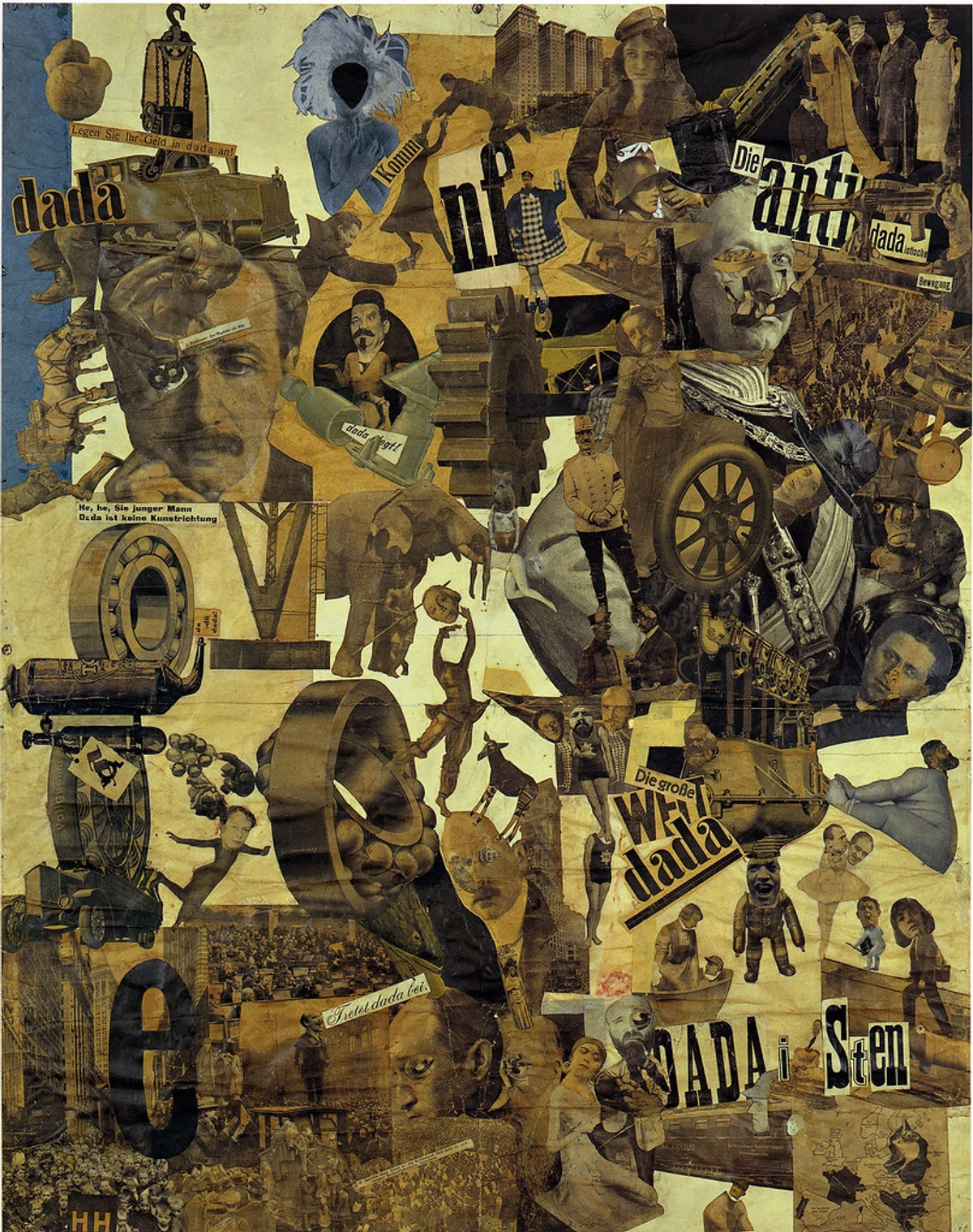
- Berlin Dada: More explicitly political and aggressive. Led by figures like Richard Huelsenbeck, John Heartfield, and George Grosz, Berlin Dada used the newly-honed weapon of photomontage to launch savage attacks on Weimar politicians, war profiteers, and the military-industrial complex. Their magazines and exhibitions were direct calls to action against a rising tide of nationalism.
- Paris Dada: When Tzara moved to Paris, he found a receptive audience among the city's avant-garde. Dada here became more literary and theoretical, influencing writers like Andre Breton. This strain of Dada eventually evolved directly into Surrealism, swapping pure negation for an exploration of the subconscious mind. The nonsensical was no longer just a critique; it was a gateway to a higher reality.
- New York Dada: Unbeknownst to the Zurich group, a parallel universe was forming in New York. Led by the mischievous intellectual Marcel Duchamp, and joined by figures like Man Ray and Francis Picabia, New York Dada was less political and more cerebral. It was here that the "readymade"—most notoriously, a urinal titled Fountain and signed "R. Mutt"—was perfected. They weren't staging noisy performance art; they were calmly, coolly asking the most subversive question of all: What even is art?
The spirit of Dada—rejecting the status quo, embracing randomness, and insisting art could be found in the mundane—became foundational for nearly every subsequent 20th-century art movement. Pop Art's fascination with advertising was essentially a Dada-esque act of turning lowbrow culture on its head. Jackson Pollock's drip paintings embraced pure chance. Even the monochrome canvases of Minimalism owe Dada a debt for asking the fundamental question: what are the absolute essentials of an art object? This impulse to question, not just what art is, but what it could be, continues to be explored in vibrant new ways. If you're drawn to this spirit of redefinition, you can explore contemporary abstract prints and originals that carry this torch forward.
Why Cabaret Voltaire Matters Now: Dada is Dead, Long Live Dada
So, why should you care about a noisy cabaret from over a century ago? Because its rebellion never stopped echoing. Dada wasn't just an art movement; it was an attitude, a software update for the creative brain that we're all still running today. Think of it as the "wet cement" of the art world—forever inviting us to leave a mark and disrupt the smooth, boring pavement of convention. That original impulse to question, to rebel, to find meaning in the meaningless, is now woven into the very fabric of modern culture.
- The Birth of Performance Art: Every time you see an artist use their body as the canvas, testing endurance or breaking social taboos, you are seeing the ghost of Hugo Ball in his bishop costume. The chaotic Zurich nights were its ground zero, transforming the artist from a maker of objects into a living, breathing medium. Modern performance art, from the psychologically intense work of Marina Abramović to the radical social commentary of contemporary drag, owes its existence to that tiny stage.
- Abstract & Contemporary Art: The rejection of literal representation, the idea that a color or shape can hold emotion without depicting a real-world object? That's Dada's child. When an artist throws paint with wild abandon or builds a chaotic collage of textures and hues, they're channeling the Cabaret Voltaire spirit. This legacy lives on vibrantly in contemporary art that continues to push boundaries and challenge what art "should" be. If you're intrigued by work that defies easy categorization, you can explore contemporary abstract prints and originals that carry this torch.
- Culture Jamming & Political Satire: Using absurdity to critique power? That's pure Dada. Think Banksy's guerilla street art, the Guerrilla Girls' fact-punching posters, or a politically savage meme going viral on social media. The goal is the same: weaponize an image or idea to expose an ugly truth about society in a way that is both immediate and impossible to ignore.
- Punk Rock, Zines, and Open Source: The anti-elitism, the DIY ("do-it-yourself") ethos—the idea that you don't need permission, money, or an institution to make art? That's Dadaism seeping into our daily lives. It's the energy behind punk rock music, hand-crafted zines, and开源软件 (open-source software). It's the insistence that you don't need a gallery's validation to create, to critique, or simply to be yourself.
A collage embodying the Dadaist spirit of fragmentation and juxtaposition User:Kleinzach, CC BY 2.5, via Wikimedia Commons
Cabaret Voltaire Today: From Ghost to Shrine
The physical cabaret was a victim of history. The original tavern was reduced to rubble during a bombing raid in World War II. For decades, the address at Spiegelgasse 1 was just a vacant lot with a plaque on a wall, a ghost of a revolution. It seemed the legacy might be confined to history books.
But in 2002, a group of artists, refusing to let the spirit die, staged an impromptu sit-in and performance, effectively re-squatting the historic location. This act of creative defiance led to the re-establishment of Cabaret Voltaire at its original address. It's a classic Dada story: an act of rebellious occupation forcing a new reality into existence.
Today, it isn't just a museum; it's a living, breathing cultural center that embodies the Dada spirit in the 21st century. It houses a permanent exhibition on its own history, a radical bookshop filled with manifestos and art theory, a performance space where contemporary artists continue to challenge norms, and even publishes its own magazines. It has become a pilgrimage site for the creatively restless, a place where you can feel the faint echo of those nonsense chants bouncing off the walls, reminding us that the revolution is, in fact, ongoing.
Exterior of Cabaret Voltaire today, a site of ongoing creative rebellion. Stefan Keller, Attribution via Wikimedia Commons


FAQs: Your Dada Queries Answered
Q: Was Cabaret Voltaire the ONLY place Dada started? A: No! Parallel bubbles existed in New York (Duchamp, Man Ray) and Berlin (George Grosz, John Heartfield). But Zurich was the explicit, organized catalyst that defined Dada's identity and spread the manifesto worldwide. The name 'Dada' was coined in Zurich, creating a rallying cry that unified these disparate, simultaneous rebellions into a recognizable movement.
Q: Were the Dadaists serious? It just looks like silly chaos. A: Deeply serious. Their 'silliness' was a calculated, desperate response to unprecedented horror. They saw the 'logic' and 'reason' of society leading straight to the trenches. Absurdity was the only sane reaction to an insane world. They weren't joking; they were exposing the jokes.
Q: Is Dada still an active movement? A: Not as a formal group, but Dada exists as a pervasive mindset, a permanent software update for the creative brain. Anytime an artist challenges the system, embraces chance, rejects market pressure, or finds art in the discarded, they're channeling the Cabaret Voltaire spirit. It's less a club and more a permanent creative rebellion that continues to shape how we think about and create art today.
Q: Did Dadaist artists actually sell their work? Doesn't that contradict anti-art? A: Ah, the eternal contradiction! Yes, they did – often out of necessity to survive. Tzara, Duchamp, others sold pieces. This highlights Dada's complexity: they rebelled against the art establishment and capitalist values, but still participated in the system to exist. It's a tension that persists today for any artist trying to be radical while also paying the rent. We remain skeptical of modern replicas of market structures, seeing them as largely antithetical to Dada's core ethos of rejecting commodification.
Q: What's the biggest misconception about Dada? A: That it was purely nihilistic – just destruction for destruction's sake. While they destroyed, it was always with the intent of clearing space for something new, something truer, less corrupted by the 'Old World.' Their goal was rebirth, not oblivion.
Q: How did Dada influence modern advertising and graphic design? A: This is a classic case of the avant-garde being co-opted. Dada's use of photomontage, bold typography, and jarring juxtapositions was revolutionary. These techniques were incredibly effective at grabbing attention, and were quickly (and ironically) adopted by the very commercial and political propaganda machines that Dada despised. The visual chaos of modern advertising owes an enormous, if unacknowledged, debt to Dada.
Q: What was the role of women in Dada? A: This is a critical question. While often sidelined in mainstream histories, women like Sophie Taeuber-Arp, Emmy Hennings, and Hannah Höch were central, not peripheral, to the movement. They were innovators in performance, dance, textiles, and photomontage, shaping the very core of Dada's aesthetic.
Q: What's the connection between Dada and technology? A: It's complex. On one hand, Dadaists railed against the mechanization and dehumanization of the modern world, which had culminated in the war machine. On the other hand, they embraced new technologies like the typewriter, mass-produced print media, and photography as tools for their rebellion. They were masterful deconstructionists, using the very materials of the modern world against itself.
The Final Nonsense: A Legacy of Liberation
Cabaret Voltaire wasn't a building. It was an idea, smuggled out of a world war and poured into a small, noisy room: that art doesn't have to be pretty, logical, or sellable to be true. It can be noise, nonsense, and pure, unfiltered feeling. Its legacy is the persistent, nagging voice in the back of our heads that asks, "Why not?" every time we're presented with a rule.
It reminds us that creation is also destruction, that questioning everything is the first step to anything new, and that true freedom sometimes requires embracing glorious, absurd chaos. That impulse—to disrupt, to question, to find meaning in meaninglessness—is the beating heart of modern and contemporary art. It's the ghost in the machine of every Pollock flinging paint, every Warhol painting a soup can, every artist today challenging what art can be. If you're curious about the creative paths forged by such radical ideas, you can explore the artist's timeline of creative evolution.
And so, next time you see something that makes you scratch your head and think, "is that even art?"—maybe, just maybe, you're encountering the ghost of Hugo Ball, smiling from within a cardboard mitre. The revolution, it seems, wasn't televised; it was performed in a smoke-filled room. And the echo? You can still hear it.