Max Ernst: The Birdman, The Forest-Dweller, The Accidental Genius – The Ultimate Guide
Dive deep into Max Ernst's radical world: Dada rebel, Surrealist architect, and 'Accidental Genius.' Explore his revolutionary techniques, iconic Loplop, profound key works, and enduring art legacy that liberates imagination.

Max Ernst: The Birdman, The Forest-Dweller, The Accidental Genius – The Ultimate Guide
Take a look at The Elephant Celebes, Max Ernst's iconic boiler-headed creature. What exactly is going on there? A monstrous, industrial beast with a frilly cuff, a vacuum hose trunk, and a headless nude… it’s utterly bizarre, yet utterly compelling. Honestly, my own mind often feels like a tangled sketchpad of half-formed ideas, but Max Ernst? His brain must have been a magnificent, chaotic dream factory, churning out visions that bent reality itself. He seemed to have a direct, unfiltered line to the subconscious, pulling from a wellspring most of us only glimpse in fleeting moments. Ernst wasn't just part of Surrealism; he was its walking, breathing embodiment, a true architect of its dreamscapes, a bridge between Dada's furious destruction and Surrealism's profound creation. This isn't just another biographical sketch; it's my dive deep into the very heart of Ernst's radical vision. I aim for this to be the most complete guide you'll find to his revolutionary techniques, his haunting 'Birdman' persona, his deep connection to the natural world as a 'Forest-Dweller,' and the profound legacy he left on art as an 'Accidental Genius.' Let's peel back the layers and uncover the genius behind his iconic art, exploring how he became an undeniable cornerstone in understanding the trajectory of modernism.
When you first encounter his work, it can feel impenetrable. A mess of bird-headed people, monstrous elephants made of industrial parts, and apocalyptic landscapes that look like they're melting. It's a bit like stumbling into someone else's fever dream – disorienting, maybe a little alarming, but utterly captivating. But stick with it. Because what you're seeing isn't just random weirdness for the sake of it. You're seeing an artist wrestling with the chaos of his time—two World Wars, exile, the collapse of everything that seemed certain—and finding a new, vital language to talk about it. His art is a raw, unvarnished reflection of an era where logic had betrayed humanity, prompting him to seek truth in the irrational. This journey into the subconscious, into the illogical, wasn't just a stylistic choice; it was a profound act of defiance and discovery. How did he do it? That's what we're here to unravel.
I believe Ernst taught art how to dream, and it's a lesson we're still learning today. Let's explore the man who showed us how.
From Brühl to Rebellion: The Forest-Dweller's Early Chaos
Max Ernst was born in Brühl, Germany, in 1891. His early life, spent in the Eifel region with its ancient volcanic landscapes, dense forests, and deep valleys around his hometown, deeply embedded a sense of primal mystery and a profound connection to nature. This sensitivity would later flourish in his art, marking him as a true 'Forest-Dweller' of the imagination. His father, a strict and amateur painter, was also a physician with a keen interest in phrenology—the now-debunked pseudo-science of reading character from skull shape. I can almost hear the theories being discussed at the dinner table; maybe young Ernst felt his own wild imagination being mapped on his skull, subtly nudging him towards a lifelong fascination with inner landscapes and hidden psychological truths. He was supposed to be a respectable academic, studying philosophy and art history, even briefly attending the Düsseldorf Academy of Arts. But I imagine he found its traditional curriculum utterly stifling, a rigid cage for a mind like his that hungered for an art that could speak to the deeper, often darker, currents beneath reality. He bypassed formal instruction, teaching himself to paint by voraciously studying the bold innovations of artists like Van Gogh and the German Expressionists of groups like Die Brücke and Der Blaue Reiter. Their raw emotion, distorted forms, and focus on subjective experience and the "primitive" resonated deeply; think of Die Brücke's raw, emotional intensity and distorted forms, or Der Blaue Reiter's spiritual quest for inner truth. These influences shaped him from the start as a self-taught provocateur, sketching out his own wildly unconventional path.
Then World War I happened. Ernst served in the German army for four brutal years. This wasn't just a war; it was a factory of mechanized death, a descent into an industrial slaughterhouse where logic and reason had led to unprecedented atrocities. He later famously stated, "Max Ernst died on the 1st of August, 1914." The person who returned was someone else entirely – someone profoundly disillusioned, who saw the very foundations of rationality as complicit in the senseless horror. This traumatic experience became the fertile ground for his furious rejection of all that seemed sane, setting the stage for radical artistic experimentation and a lifelong distrust of conventional thought. It was a catalyst that drove him to seek truth in the illogical, in the fragmented, and in the dream-like chaos that mirrored the world around him, becoming the true birthplace of his radical thought.
This is where Dada comes in. After the war, in Cologne, Ernst became a central figure in the Dada movement alongside artists like Johannes Baargeld, Hans Arp, and politically charged figures such as Hannah Höch. Dada was less of an art style and more of a collective primal scream – a furious, often absurd, rejection of the rationality that had led to such senseless destruction. It was anti-art, anti-logic, anti-bourgeois, a direct response to a world gone mad. Dadaists embraced absurdity, chance, and nonsense, using provocative actions and 'ready-mades' (everyday objects presented as art) to dismantle artistic conventions and societal norms. Ernst, a natural provocateur, was instrumental in organizing controversial Dada exhibitions (like the infamous "Dada-Vorfrühling" exhibition in 1920, held in a public urinal – talk about challenging expectations, right? Viewers had to walk through a men's room to reach it, and it was eventually shut down by police! Beyond the shock of the venue, it featured scandalous works like his own mechanical relief Fatagaga and Hans Arp's biomorphic forms, challenging every notion of aesthetic taste and bourgeois sensibilities!). He also published satirical journals like Der Ventilator, and crafted manifestos that ripped apart artistic conventions. His active participation in the spirit of the Manifesto of the 1918 Dadaist International Congress championed a destructive energy that cleared the path for entirely new ways of seeing and making, laying the very groundwork for Surrealism's constructive exploration of the mind.
The High Priest of Surrealism: Charting the Unconscious & The Uncanny
By 1922, Ernst had moved to Paris and fell in with a new crowd, including André Breton, Paul Éluard, and Louis Aragon. The chaotic, destructive energy of Dada was starting to evolve into something else: Surrealism. If Dada aimed to destroy, Surrealism sought to explore. It was deeply fascinated by the nascent theories of psychoanalysis, particularly Freud's ideas about dreams, the subconscious mind, and the 'uncanny' – that unsettling feeling when something familiar becomes strangely unfamiliar. Think of a doll that looks too human, or a childhood memory that suddenly feels alien and disturbing. The Surrealists sought to bypass conscious control, believing that this hidden realm of psychic automatism (the spontaneous expression of the subconscious) held a deeper, more profound truth than waking reality. It wasn't just about recording dreams; it was about actively inducing a dream-like state to tap into the raw, uncensored stream of consciousness, a direct conduit to repressed desires, societal anxieties, and universal archetypes. By freeing the mind from rational thought, they believed true, unfettered creativity could emerge.
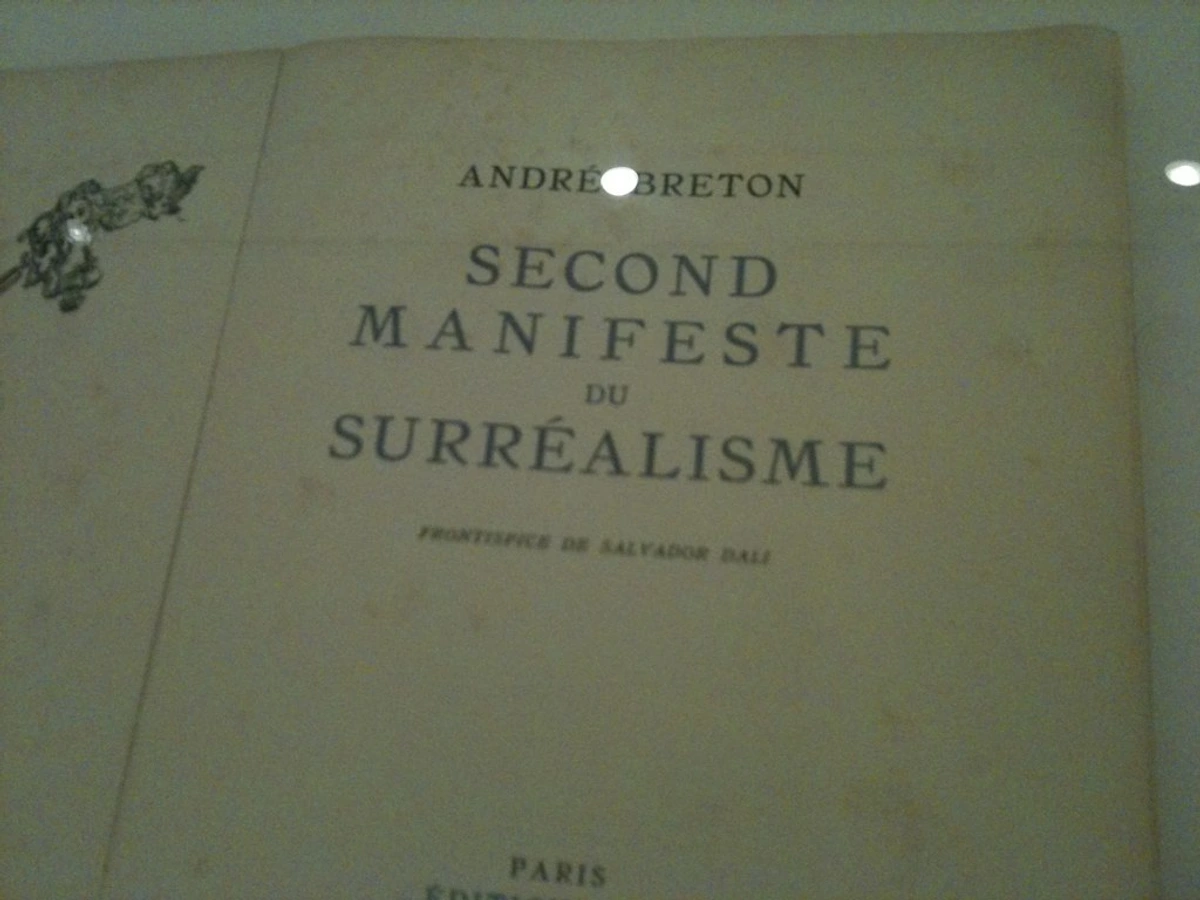
Ernst was a natural fit. His innate predisposition for dream-like imagery, his profound suspicion of conventional logic, and his pioneering Dadaist spirit made him a pivotal figure. He wasn't just illustrating dreams; he was actively inventing methods to coax them out of unexpected places, becoming a true innovator in the nascent movement. He contributed significantly to the First Surrealist Manifesto in 1924 and engaged in early collaborative experiments with André Breton, developing techniques like cadavre exquis (exquisite corpse, a collective drawing or writing game where each person adds to a drawing or text without seeing the previous contribution) that solidified the movement's focus on automatism and the liberation of the imagination. His ability to bridge the gap between conscious intent and unconscious revelation made him, in Breton’s words, "the most magnificently haunted man." If you want to dive deeper into how this fascination with the subconscious evolved, you might enjoy exploring the enduring legacy of surrealism.
Ernst's Toolbox of the Subconscious: A Dance with Chance & The Accidental Genius
But how did Ernst actually do it? How did he tap into that wellspring of the subconscious, bypassing the conscious, rational part of his brain? He developed a remarkable toolkit of techniques, akin to creative "cheat codes," that relied on chance, texture, and the unexpected. Imagine textures that seem to breathe, or images that emerge as if from a fog, revealing hidden worlds. This wasn't just random experimentation; it was a conscious strategy to invite the unconscious, a partnership with the accidental, transforming mundane materials into profound psychological landscapes. This approach liberated him from the 'tyranny of the preconceived image', allowing the artwork to emerge from a dialogue between the artist and the world, solidifying his reputation as an 'Accidental Genius' – not by accident of skill, but by ingeniously structuring conditions for profound, unforeseen discoveries to occur. It's like setting up a brilliant domino run and then being utterly surprised by the final pattern. That's true genius, I think. Ernst's deep interest in scientific processes—from geology and botany to the then-new field of psychoanalysis—informed his approach, making him a kind of experimental scientist of the soul.
Technique  | Description | Why It Was Revolutionary & Accidental Genius | Philosophical Underpinning & Artistic Revelation |
|---|---|---|---|
| Frottage | (From the French frotter, "to rub") Placing paper over a textured surface (like wood grain, leaves, or fabric) and rubbing it with a pencil or crayon. | It discovered images rather than merely inventing them, transforming mundane textures into evocative, dream-like forms that felt like 'found treasures' within the artwork. This 'accidental' revelation of hidden worlds revolutionized how artists could approach creation, a signature of Ernst's ingenious approach. | To externalize subconscious associations, allowing the unconscious to project meaning onto ambiguous forms, thereby releasing the artist from conscious control. It transformed the hidden patterns of nature into otherworldly forests and ancient civilizations, evoking a primal, dreamlike atmosphere where the familiar became profoundly uncanny. It unveiled the hidden life of objects, blurring the line between inanimate matter and psychic projection. |
| Grattage | (From gratter, "to scrape") A layer of paint is laid over the canvas, which is placed on a textured object. The top layer of paint is then scraped away. | This transferred texture directly onto the canvas, yielding ghostly, unpredictable effects that suggested erosion, decay, or vast geological time. It was a revolutionary way to unearth deep history and underlying structures, creating a sense of ancient decay from a 'controlled accident.' | To expose underlying realities and hidden structures, often symbolizing destruction, decay, or the scars of history on the collective psyche. It literally scraped away surface appearances to reveal deeper, often unsettling, truths and the brutalist impact of time, offering chilling visual metaphors for the ruins of civilization. |
| Decalcomania | Pressing paint between two surfaces (like glass or paper) and then pulling them apart. | The result is a symmetrical, Rorschach-like blot that generated organic, biomorphic forms, which the artist could then interpret and develop into complex scenes. This revolutionary 'controlled accident' created unexpected atmospheric or cellular structures, revealing latent imagery that felt both alien and strangely familiar. | To generate biomorphic forms from randomness, allowing the artist's subconscious to project meaning onto ambiguous shapes, much like interpreting clouds. It reflected the unpredictable and fluid nature of the subconscious and the mind's ability to find order in chaos, providing a powerful visual language for trauma and transformation. It mirrored the amorphous, fluid nature of dreams and the Rorschach-like projections of the mind onto ambiguity. |
| Collage | Cutting up and reassembling images from old books, catalogues, and prints to create bizarre new narratives and uncanny juxtapositions. | Ernst used this to twist familiar Victorian imagery into something deeply unsettling and dream-like, subverting their original context and creating profound psychological disjunction and ironic commentary on bourgeois society. This revolutionary juxtaposition created new, 'accidental' realities from existing fragments, often with a mischievous, subversive intent. | To subvert logic and create new, uncanny realities by juxtaposing disparate elements, often satirizing bourgeois conventions and exploring unconscious desires. It destabilized the viewer's perception of reality and the sanctity of original meaning, creating a sense of psychological shock and exploring hidden anxieties. It deliberately fractured and reassembled the world to reveal its inherent absurdity and the unsettling poetry of chance encounters. |
Witness the magic unfold: a visual demonstration of frottage in action. This embrace of the accidental is something I think about a lot in my own studio. Sometimes the best thing you can do is get out of your own way and let the materials speak, letting chance guide a brushstroke or a color combination. In my own studio, I sometimes feel that same rush of discovery when a random drip or a chance encounter of colors unlocks an unforeseen direction for a painting. It's a humbling yet exhilarating process, a beautiful reminder that creativity isn't always about conscious control.
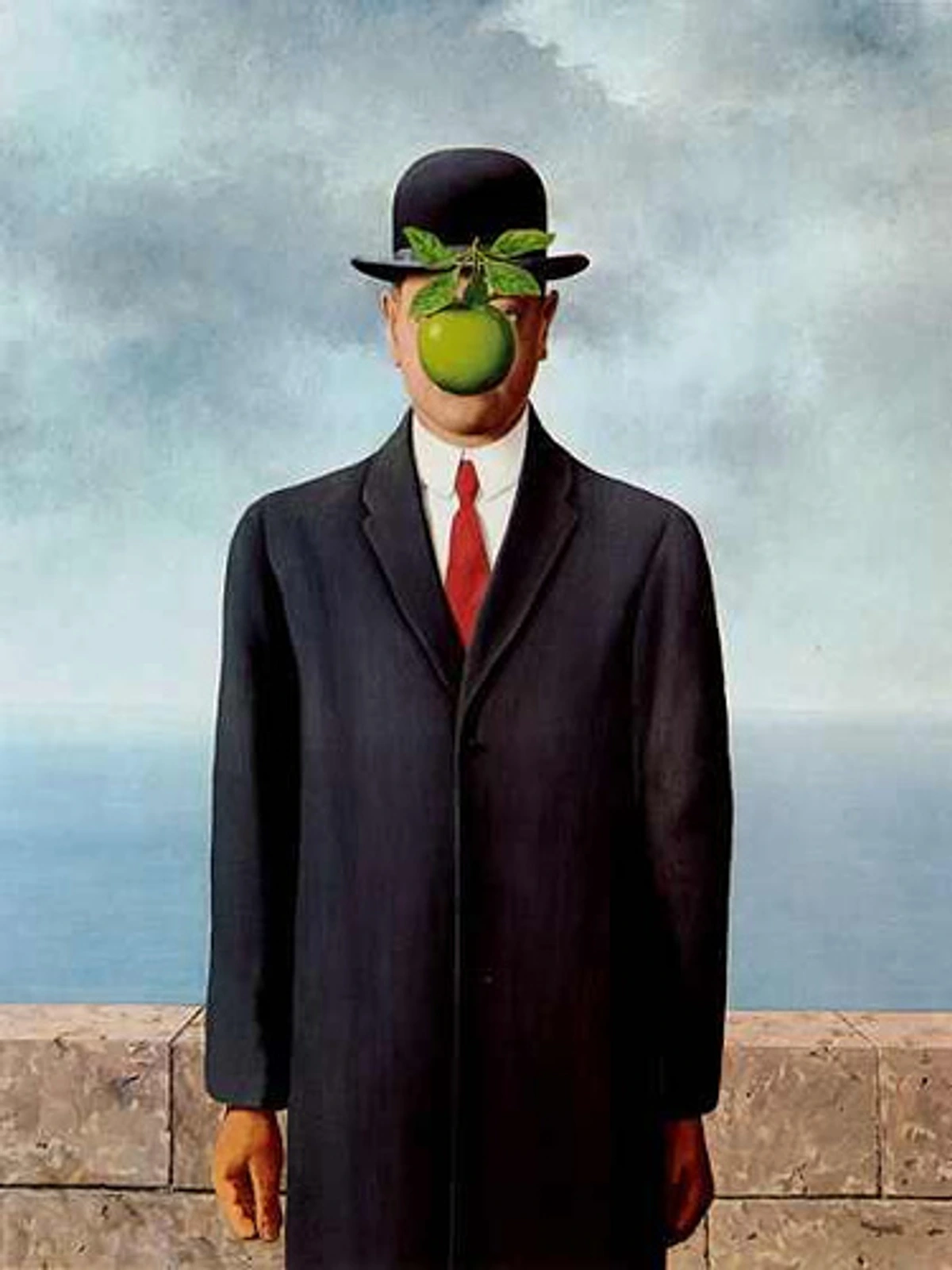
Max Ernst's pioneering of automatism and chance operations laid crucial groundwork for later movements, demonstrating new ways to express inner turmoil and subconscious impulses on canvas. If you're interested in how artists twist familiar imagery into the surreal, you'll find similar ideas at play in the works of other masters, like those explored in this article on who is rene magritte. You might also find connections to my own artistic journey of finding my voice: the evolution of my abstract artistic style and why I paint abstract: my personal philosophy and artistic vision.
Loplop: The Bird Superior & The Forest-Dweller – Ernst's Avian and Natural World
Armed with these radical techniques, Ernst began to populate his inner landscapes with recurring symbols that felt both deeply personal and universally archetypal. You can't talk about Max Ernst without talking about birds. He was obsessed. This fascination began with a feverish hallucination he had as a child, where he perceived wood grain patterns as eyes, and it was cemented by the traumatic death of his beloved pet cockatoo on the very day his sister was born. This profound conflation of birth and death, humanity and avian life, haunted him, becoming a powerful and deeply personal symbol in his mythology.
Beyond his innovative techniques, Ernst also infused his work with a recurring personal mythology, most notably through his avian alter ego, Loplop, the Bird Superior. Loplop would often appear in his works, sometimes as a character, other times as a presenter or narrator of the scene. He'd stand in for the artist, introduce other paintings, or simply hover as a mysterious, omniscient presence. It was Ernst's way of inserting himself into his own subconscious landscapes, a guide through his own dreams and a representation of his inner, wilder self. This figure wasn't static; from a simple, almost innocent avian companion, Loplop evolved into a complex, often unsettling, anthropomorphic figure—sometimes a masked, almost shamanistic presence, other times an armored warrior bird, always embodying a primal freedom, instinctual wisdom, and a defiant escape from societal convention. This evolution reflected Ernst's changing emotional and psychological states, becoming an essential, unsettling signature of his imagination and a constant companion in his surreal narratives, often symbolizing the artist's escape from societal constraints or a commentary on the human condition itself.
But Ernst's inner world wasn't just populated by birds; it was deeply rooted in the primal allure of the forest, earning him the moniker 'The Forest-Dweller.' His childhood in the Eifel region of Germany, surrounded by dense woods, ancient myths, and unique geological formations, fostered a profound sensitivity to the natural world. Forests in his art are rarely idyllic; they are often dense, mysterious, and even menacing, filled with petrified forms, strange growths, and an unsettling silence that echoes the profound depths and potential dangers of the subconscious itself. These aren't just landscapes; they are potent psychological spaces, reflecting both the protective embrace of nature and its potential for claustrophobia and hidden dangers, a direct echo of his own subconscious and the turbulent times he lived through. His 'forests' become metaphors for the human psyche itself – vast, uncharted, and full of both beauty and terror.
Key Works & Their Echoes: Windows into the Surreal Mind
How did these groundbreaking techniques and personal mythologies translate into tangible masterpieces? To truly grasp the impact and evolution of Ernst's artistic vision, examining some of his most seminal works is essential. These aren't just paintings; they're manifestos, each one a vivid, often unsettling, dreamworld that showcases his mastery of technique and narrative, while also reflecting his personal evolution and the tumultuous times he lived through. For me, these are the kinds of works that grab you, pull you in, and refuse to let go – they resonate with a deeper, often unspoken, part of our own experience, much like the unsettling power of Edvard Munch's work, which you can explore in who is edvard munch.

Here are some of Max Ernst's most iconic works, each a testament to his unique vision and inventive spirit:
- Aquis Submersus (1919): Oil on canvas. This early, enigmatic work is a fascinating precursor to his full Surrealist explorations. It depicts a ghostly, often underwater-like scene with architectural elements and figures that seem to dissolve into their surroundings. The Latin title, meaning "submerged in water," hints at themes of drowning or being lost in the subconscious. The sense of figures dissolving into the watery landscape powerfully evokes the feeling of being psychologically submerged, a direct metaphor for the trauma of WWI where rationality itself felt drowned in an ocean of madness. It’s an unsettling piece that demonstrates his early engagement with dream logic and symbolic narratives, strongly evoking the uncanny through its familiar yet unsettling atmosphere.
- Ubu Roi (1919): This Dadaist collage and print series, inspired by Alfred Jarry's absurd play, is a furious explosion of chaotic energy. Ernst takes found imagery—often from scientific illustrations, children's books, or advertisements—and brutally juxtaposes them to create monstrous, nonsensical figures. Think Victorian anatomical charts crossed with Punch and Judy puppets, reassembled into something profoundly disturbing. Ubu Roi captures the grotesque, anti-authoritarian spirit of Dada, reflecting Ernst's own deep disillusionment with the logic and power structures that led to the war. It's a defiant, darkly humorous mockery of societal norms, an early masterclass in using collage to dismantle and reconfigure reality, creating unsettling uncanny visual puns.
- The Elephant Celebes (1921): Oil on canvas, 126 x 107 cm. One of his first truly great Surrealist paintings, this is a monumental, almost terrifying work. It features a boiler-like creature with a trunk like a vacuum hose, a frilly cuff, and a headless female nude. This piece masterfully bridges the chaotic absurdity of Dada with the nascent psychological explorations of Surrealism, presenting a disturbing fusion of industrial horror and organic forms, perhaps drawing on the Surrealist fascination with early anthropological studies and even Freud's Totem and Taboo. The headless nude can be interpreted as a symbol of dehumanization or the objectification of women, while the oppressive, almost suffocating presence of the 'elephant' against a barren landscape conjures primal fears and the dark undercurrents of the industrial age. It makes no logical sense, and yet it feels… frighteningly correct in its evocation of the subconscious and its profound sense of the uncanny.
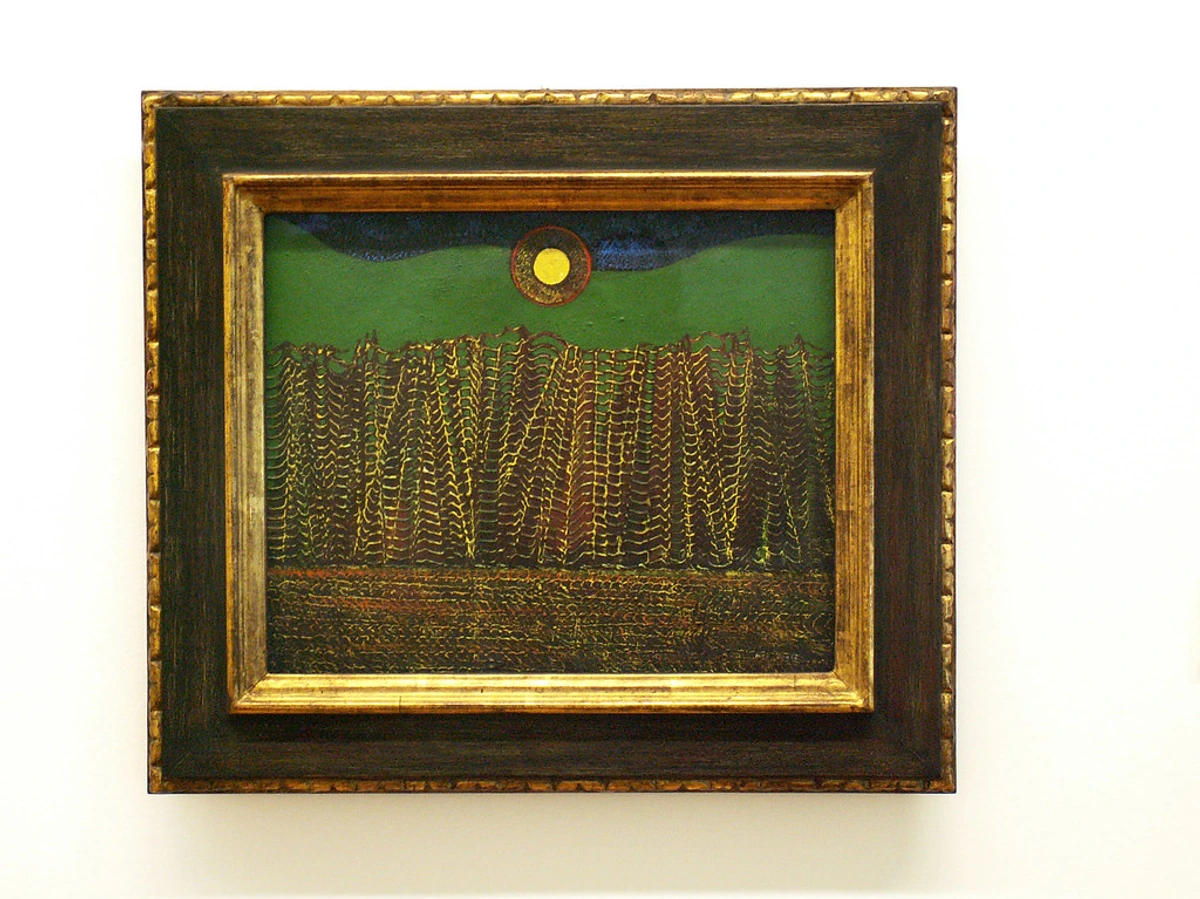
- The Big Forest (1927): Oil on canvas. A quintessential example of Ernst's 'Forest-Dweller' persona and his mastery of frottage. Here, the forest is not a place of idyllic beauty but a dense, petrified, almost alien landscape. He would place paper over bark, leaves, rough fabric, or even floorboards, rubbing to capture their subtle textures, which then transformed into monumental, fossilized trees. The textures give the trees a ghostly, ancient quality, as if they are both organic and fossilized. These are psychological forests, mirroring the subconscious mind: vast, mysterious, and capable of both profound beauty and terrifying enclosure. The sense of foreboding and primal energy is palpable, a direct link to his childhood experiences and the myths of the Eifel region, creating an overwhelmingly uncanny natural world.
- The Horde (1927): Oil on canvas. Created using his signature grattage technique, The Horde depicts monstrous, almost primeval figures emerging from a scraped, textured background. These hybrid creatures, often with raptor-like heads or bestial bodies, embody a raw, destructive energy. They seem to be born directly from the chaotic textures of the canvas, representing humanity's darkest impulses, the collective trauma of war, primal fears, or mythological beasts emerging from the primeval soup. This work is a powerful demonstration of how Ernst used 'controlled accidents' to manifest unsettling, unconscious fears, transforming surface texture into a profound psychological landscape of primal terror, a visceral portrayal of the uncanny in human form.
- The Entire City (1935-36): Oil on canvas. This is a powerful example of Ernst's urban landscapes, often created with collage elements and later replicated with grattage. It depicts a crumbling, deserted city, dominated by decaying architectural forms and strange, monolithic structures. His decaying architectural forms often resembled ruined temples, ancient fortresses, or petrified cities, hinting at a world abandoned by humanity, left to crumble under its own weight—a chilling, almost prophetic vision of impending war. The sense of desolation and impending ruin is overwhelming, a reflection of the political tensions and anxieties of pre-WWII Europe. These are cities where human presence is absent, but human folly is everywhere, haunting, empty, and filled with the uncanny echo of what once was.
- The Robing of the Bride (1940): Oil on canvas, 130 x 96.5 cm. A theatrical, jewel-toned painting filled with bird-headed figures and mysterious symbolism. At its center, a striking female figure with a bird's head and a red, flowing robe, seemingly caught in a ritualistic moment. The surrounding figures, including a small green bird-man (Loplop himself, acting as an attendant or witness) and an armored male figure who might represent a protective or dominating male presence (or perhaps even a veiled reference to Ernst's father or his own masculine archetype), add to the enigmatic narrative. The rich Freudian undertones suggest a complex interplay of desire, fear, and transformation—perhaps a veiled commentary on patriarchal society, the artist's own anxieties about commitment, or the primal ritual of initiation. It’s both beautiful and deeply unsettling, a perfect example of his later, more narrative style, where personal mythology takes center stage, feeling like a scene from a play where nobody knows their lines because the script is written in a language that doesn't exist yet, brimming with the uncanny.
- Europe After the Rain II (1940-42): Oil on canvas, 54.5 x 147.8 cm. Painted while he was in exile in the United States, having fled the Nazis. This is a haunting, terrifying landscape created primarily with decalcomania. The technique allowed for the emergence of petrified forms, resembling eroded rock formations, skeletal ruins, or grotesque, mutated organisms. The muted, decaying colors and intricate textures vividly depict a fossilized, post-apocalyptic world, a direct reflection of the continent he had to leave behind and the devastating conflict that consumed it. It’s a masterpiece of texture and despair, a prophetic vision of destruction, capturing the trauma of war and displacement with chilling clarity and an overwhelming sense of the uncanny.
credit, licence
Influences and Inspirations: Architects of the Dreamscape
No artist exists in a vacuum, and even Ernst, with his singular vision, drew from a fascinating array of sources that echoed in his dreamscapes. Beyond his early appreciation for Van Gogh and the Expressionists, I see echoes of deeper, more esoteric influences that profoundly shaped his surreal world:
- Giorgio de Chirico: The Italian Metaphysical painter's eerie, deserted cityscapes with their deep shadows, illogical perspectives, and melancholic mood deeply resonated with Ernst's desire to create unsettling, dream-like environments that hint at unseen narratives. His influence is particularly visible in Ernst's urban landscapes like The Entire City, where he conjured silent, ruined spaces that felt both familiar and deeply alien, echoing de Chirico's sense of the 'uncanny' and the haunting beauty of existential emptiness.
- Hieronymus Bosch: Bosch's fantastical, moralistic, and often grotesque visions from centuries earlier provided a blueprint for combining disparate elements into a coherent, if bizarre, narrative tableau. Ernst shared this ability to construct entire worlds from fragments of the imagination, filled with grotesque hybrid creatures and moral allegories within surreal scenarios. Ernst's own intricate, multi-layered compositions, populated by grotesque hybrid creatures and surreal scenarios, clearly draw from Bosch's tradition of fantastical moral allegories, showing a lineage of embracing the monstrous and the symbolic, as seen in The Horde.
- Scientific and Medical Illustrations: Ernst sometimes incorporated the precise, almost clinical rendering found in old encyclopedias, anatomical drawings, and botanical texts. For example, he might combine the delicate structures of insect anatomy with human limbs, or feature precise botanical illustrations floating in otherworldly landscapes. He would then subtly twist these objective representations, subverting their original purpose of objective truth to create uncanny juxtapositions of the precise and the absurd. It was a fascinating way to make the familiar alien and the factual fantastical.
- Psychiatric Art: There was a significant interest among early 20th-century artists in the spontaneous, unfiltered expressions found in art by psychiatric patients. Ernst, like many Surrealists, was fascinated by this "unreasoned" logic, seeing it as a direct, unmediated channel to the raw, primal imagery of the subconscious mind, bypassing cultural conditioning and academic constraints. He studied collections of such art, including those compiled by Dr. Prinzhorn, finding validation for his own pursuit of unfiltered psychic expression.
- Ancient and Tribal Art: The Surrealists were deeply interested in non-Western art, seeing in ethnographic objects, masks, and primal symbols a raw, unfiltered expression of the subconscious mind, unburdened by Western rationalism. This resonated with Ernst's search for universal, archetypal imagery and a deeper, more elemental human experience. This interest manifested in his totemic sculptures and recurring motifs, and in the primal, mask-like forms of his 'Bird Superior' alter ego, Loplop, echoing the power and mystery of ancient cultural symbols.
Censorship, Exile, and Artistic Resilience: A Life in Tumult
Beyond the internal landscapes of his art, Max Ernst's life was profoundly shaped by the tumultuous external forces of the 20th century. As a prominent Surrealist and former Dadaist, his work was deemed "degenerate art" (Entartete Kunst) by the Nazi regime in Germany. This wasn't just aesthetic disapproval; the Nazis actively suppressed art that challenged their totalitarian ideology, associating modernism, particularly Surrealism's embrace of the irrational and the subconscious, with "Jewish Bolshevism" and a perceived decline of traditional German values. To brand such deeply personal, psychologically rich work as "degenerate" feels like the ultimate irony, a profound betrayal of art's purpose, akin to declaring dreams illegal. Many of his pieces, including paintings like The Robing of the Bride and various collages, were confiscated from German museums, some publicly defaced, and even included in the infamous "Degenerate Art" exhibition of 1937, intended to publicly shame modern artists. This persecution forced him to flee Germany, eventually settling in France.
His struggles continued in France, where, as a German national, he was interned as an "enemy alien" in various camps at the outbreak of World War II. These harrowing experiences, marked by confinement and uncertainty, deeply impacted his art, leading to works infused with themes of isolation, destruction, and a fractured Europe. This period also saw the development of works that subtly critiqued the absurd logic of war and political oppression. He managed to escape to America in 1941, famously aided by the American journalist Varian Fry and his then-wife, the art collector Peggy Guggenheim. This act of rescue was a testament to the urgency of preserving artistic freedom and intellectual life during a time of immense global crisis.
Max Ernst's Lasting Impact: A Liberator of Imagination
Ernst's life continued to be as rich and varied as his art. In the US, he continued to create, influencing a new generation of American artists, including the burgeoning Abstract Expressionists. His embrace of automatism and reliance on chance operations offered a powerful alternative to traditional easel painting. For example, Jackson Pollock's groundbreaking drip painting, with its all-over compositions and emphasis on process over predetermined form, can be seen as a direct descendant of Ernst's frottage and grattage, where the artwork emerges from a dialogue between the artist's action and the material's chance responses. Similarly, Willem de Kooning's raw, gestural brushstrokes and Arshile Gorky's biomorphic forms demonstrate how Ernst's methods provided new ways to express inner turmoil and subconscious impulses on canvas, shifting the focus from conscious design to raw, intuitive process. Ernst also briefly collaborated on early surrealist films, like The Surrealist House, demonstrating the movement's broader impact beyond painting and onto cinematic narrative.
Beyond painting, Ernst's later work frequently explored intricate, often totemic, sculptural forms. From his early plaster sculptures to his distinctive bronzes, these three-dimensional dreamscapes continued his fascination with avian themes, ancient mythological figures, and the primal forces of nature. His sculptures, like his paintings, often feel like unearthed artifacts from a forgotten civilization, bridging the gap between surreal fantasy and tangible form. Works like his bronze Capricorne (1948), an elaborate, multi-figured totem featuring a bird-headed king and queen, directly extend his pictorial mythology into three dimensions.
He eventually returned to France, finding a lasting partnership and artistic dialogue with the American painter Dorothea Tanning. Their life together, often spent in Arizona and later in France, was marked by mutual creative inspiration. While Ernst's fundamental Surrealist vision remained, his later work sometimes explored more playful, intricate sculptural forms, such as his distinctive bronze totems. These often continued his avian themes and explored ancient mythological figures, further cementing his reputation as one of the most versatile and inventive artists of the 20th century. He also participated in important Surrealist exhibitions outside Paris, in cities like London and Prague, extending the movement's international reach and its lasting influence on modern and contemporary art. While the art market continues to evolve with digital frontiers like NFTs, Ernst's focus remained on the tangible, human touch in creation, a testament to the enduring power of physical art.



Max Ernst's Enduring Legacy: A Liberator of Imagination
Max Ernst's influence on subsequent generations of artists is profound and multi-faceted. His pioneering techniques of automatism, particularly frottage, grattage, and decalcomania, offered radical new ways to bypass conscious control and tap into the subconscious. This deeply inspired the Abstract Expressionists in America, like Jackson Pollock, who adopted similar methods of chance and direct engagement with materials to create their expansive, process-driven works. Beyond painting, his subversive use of found imagery in collage influenced Pop Art and various forms of appropriation art, while his playful, performative approach to technique prefigured aspects of conceptual and performance art. He liberated artists from traditional constraints, demonstrating new ways to explore psychological depth and imaginative realms, solidifying his role as a true liberator of the artistic imagination. Surrealism, thanks in no small part to figures like Ernst, didn't just transform art; it permeated literature, film, and even fashion, reshaping how we perceive reality and the power of the unconscious across culture. For those diving deeper into art history, his impact is an undeniable cornerstone in understanding the trajectory of modernism.

FAQ: Max Ernst – Your Questions Answered
What are the main characteristics of Max Ernst's art? Max Ernst's art is profoundly characterized by its dream-like, often unsettling imagery, featuring fantastic hybrid creatures (especially bird-headed figures like Loplop), bizarre juxtapositions of ordinary objects, and a deep fascination with forests, geological formations, and apocalyptic landscapes. He was a master of innovative techniques like frottage, grattage, and decalcomania, which he used to access the subconscious and create rich, unexpected textures and forms. His work also delves deep into themes of nature, mythology, personal trauma, and the human psyche, often serving as a powerful form of self-exploration and social critique against the backdrop of a tumultuous 20th century.
Was Max Ernst a Dadaist or a Surrealist? Max Ernst was unequivocally both, and his career beautifully illustrates the evolution from Dada to Surrealism. He was a leading figure in the Cologne Dada group immediately after World War I, participating in anti-art provocations and satirical exhibitions as a furious rejection of societal rationality. He then became one of the foundational members of the Surrealist movement in Paris, playing a crucial role in bridging Dada's nihilistic chaos and rejection of convention to Surrealism's imaginative depth and constructive exploration of the subconscious through automatist techniques.
What did Max Ernst's Loplop character represent? Loplop, the Bird Superior, was Max Ernst's most significant and enduring artistic alter ego and a recurring motif. Rooted in childhood memories and trauma – particularly a feverish hallucination and the death of his pet cockatoo – this bird-like figure served as a guide, an observer, and sometimes a narrator within his artworks. Loplop embodied Ernst's inner self, representing themes of freedom, instinct, primal forces, and a deep, often unsettling, connection to nature. It evolved from a simple bird image to a complex, anthropomorphic, and sometimes menacing presence over his career, becoming a potent signature of his personal mythology and a constant companion in his surreal narratives, often symbolizing the artist's escape from societal constraints or offering a subtle commentary on the human condition.
How did Max Ernst influence other artists? Max Ernst revolutionized artistic practice by providing new methods for accessing the subconscious and embracing chance. His development and masterful use of techniques such as frottage, grattage, decalcomania, and collage profoundly influenced later movements, notably inspiring the automatist practices of the Abstract Expressionists like Jackson Pollock, Willem de Kooning, and Arshile Gorky. He liberated artists from traditional constraints, demonstrating new ways to explore psychological depth and imaginative realms. His conceptual approach to art-making, encouraging artists to explore the irrational and the subjective, broadened the very definition of artistic creation, impacting Pop Art, conceptual art, and even film and literature.
What are some common misconceptions about Max Ernst's art? A common misconception is that Max Ernst's art is purely random or nonsensical. While his work often appears chaotic or irrational, his techniques were deliberately designed to access the subconscious, not simply generate arbitrary images; his compositions were meticulously developed and interpreted from these chance-derived beginnings. Another misconception is that his art is solely dark and disturbing; while he explored profound anxieties and wartime trauma, he also delved into themes of liberation, joy, wonder, and the poetic mystery of the world. His art is deeply rooted in personal experience, psychology, social critique, and a sophisticated understanding of art history, making each piece a carefully constructed window into the uncanny, rarely a product of mere randomness.
What is the 'uncanny' in Max Ernst's work? In Max Ernst's art, the 'uncanny' (a concept deeply explored by Freud and central to Surrealism) refers to that unsettling psychological experience where something familiar becomes strangely unfamiliar or disturbing. It's the feeling of something being both known and unknown, comforting and terrifying. Ernst masterfully evoked the uncanny through bizarre juxtapositions in his collages, the dream-like transformations in his frottage and grattage works, and the anthropomorphic, yet alien, presence of figures like Loplop. His art often presents scenes that feel like half-remembered dreams or forgotten childhood fears, taking ordinary elements and twisting them just enough to create a profound sense of psychological disquiet and mystery.
What is Max Ernst's connection to Surrealist films? Max Ernst was involved in the broader Surrealist movement's foray into cinema. While he did not direct many films himself, he collaborated with key Surrealist filmmakers. Notably, he designed sets and costumes for Luis Buñuel's iconic L'Âge d'Or (The Age of Gold, 1930) and was a close associate of other cinematic figures exploring Surrealist themes, such as Jean Cocteau. His own brief film experiment, The Surrealist House, further demonstrates his interest in extending Surrealism's dream logic and visual language into the moving image, showing how the movement's impact extended far beyond painting.
Where can I see Max Ernst's artwork today? Max Ernst's influential works are held in major art institutions worldwide. You can find his paintings, collages, and sculptures in renowned museums such as the Museum of Modern Art (MoMA) in New York, the Tate Modern in London, the Centre Pompidou in Paris, the Peggy Guggenheim Collection in Venice, and the Kunstsammlung Nordrhein-Westfalen in Düsseldorf, among many others. These collections offer extensive insights into his diverse techniques and thematic explorations.
What are some lesser-known but significant works by Max Ernst? While many of Max Ernst's works are iconic, some lesser-known pieces offer crucial insights into his expansive vision. Two Children are Threatened by a Nightingale (1924), for instance, is a haunting work combining painting with a small wooden structure, exemplifying his early exploration of three-dimensional elements and the uncanny. Garden Airplane Traps (1935) explores his recurring themes of nature and industrialization with a surreal, menacing beauty. His numerous smaller collages, often found in publications or artists' books, also reveal his playful yet profound subversion of found imagery, demonstrating his meticulous yet spontaneous approach to art-making beyond his grander canvases.
The Enduring Echo: A Permission Slip to Be Wild
Max Ernst lived a life as surreal as his paintings—interned in France as an "enemy alien," rescued by Peggy Guggenheim (whom he later married), escaping to America with the help of Varian Fry, and eventually finding peace back in France with his fourth wife, the artist Dorothea Tanning. Their story of mutual creative inspiration is a powerful one. His journey is a testament to the courage of embracing one's inner world, no matter how strange, and transforming personal trauma into universal art, which you can see reflected in my own artistic [/timeline].
For me, the enduring legacy of Max Ernst isn't just a collection of paintings. It’s an attitude. It’s the courage to look at a piece of wood and see a world, to trust a random rubbing, to believe that the most interesting ideas are the ones you can’t quite explain. He showed us that art doesn't have to come from a grand, planned vision. It can bubble up from the floorboards, from a happy accident, from a half-remembered dream. It’s a profound reminder that imagination isn’t confined by logic or reason; it often thrives in the unexpected, the peculiar, and the deeply personal. In an age saturated with digital information, where algorithms strive to predict and categorize every aspect of our lives, Ernst's embrace of the irrational and the subconscious offers a vital counterpoint—a permission slip to resist the predictable, to explore the beautiful nonsense of our inner worlds, and to find the extraordinary in the mundane. That’s a powerful gift, and it's what inspires me to keep making my own kind of beautiful nonsense. If his spirit resonates with you, you might find some kindred unconventional beauty among the pieces I currently have available [/buy].