What Is The Three-Age Period in Art History? The Ultimate Guide
An engaging, personal guide to the Three-Age Period system in art history. Explore how the Stone, Bronze, and Iron Ages shaped ancient art, from cave paintings to metalwork, in this authoritative, accessible article.

What Is The Three-Age Period In Art History? Let's Dig Through The Layers.
The first time I truly understood the Three-Age System, I wasn’t in a lecture hall or reading a dusty textbook. I was holding a simple flint arrowhead I'd found on a hike. Its edges were sharp, its form elegant but brutally functional. Later that week, I stood before a Bronze Age torque in a museum, its gold coils shimmering with an almost liquid energy. The contrast was staggering. One was born from chipping away, the other from pouring in. It hit me then: this wasn’t just a timeline; it was a story of how human consciousness itself changed when we changed our materials.
To summarize tens of thousands of years of human creativity with just three words—The Stone Age, The Bronze Age, and The Iron Age—does sound impossibly simple, even a bit arrogant, doesn't it? It’s a system so hilariously straightforward you’d be forgiven for thinking it's a children's book title. But here's the strange thing – it works. And for anyone curious about the deep roots of art, it's an incredibly useful starting point, a scaffold on which we can hang the entire grand narrative of human expression.
This guide is designed to be the most comprehensive resource you'll find. We'll dive deep into not just the what, but the why—why a change in material sparked a revolution in the human soul.
Have you ever wondered if you could summarize tens of thousands of years of human creativity with just three words? It sounds impossible, even a bit arrogant, doesn't it? That’s the first thing I think about when I hear the term Three-Age Period. It’s a system so hilariously simple that you’d be forgiven for thinking it's a children's book title: The Stone Age, The Bronze Age, and The Iron Age. But here's the strange thing – it works. And for anyone curious about the deep roots of art, it’s an incredibly useful starting point.
This guide is designed to be the most comprehensive resource you'll find, whether you're a student writing a paper, an art lover tracing influences, or just someone who's curious about how a hand axe connects to a digital sculpture. We'll dive deep into not just the what, but the why—why a change in material sparked a revolution in the human soul.
This framework isn't just a timeline; it’s a reflection of us. We didn't just pick up rocks; we started painting on cave walls. We didn't just melt copper and tin; we began to forge powerful symbols. We didn't just smelt iron; we crafted intricate, enduring objects that reshaped society. Each age marks a revolution not just in tool-making, but in imagination itself.
So, What Is the Three-Age System, Really?
Let's be clear: this system wasn't invented by some ancient historian chiseling away in a toga. It was an archaeologist, Christian Jürgensen Thomsen, working in the early 1800s at the National Museum of Denmark in Copenhagen. Picture his office not as a pristine lab, but as a glorious, chaotic attic overflowing with artifacts—stone axes, bronze arm rings, iron swords—all jumbled together with no labels, no dates, no context. It was an impossible mess, a puzzle without a picture on the box. Thomsen's monumental contribution wasn't just creating a filing system; it was recognizing that this collection told a single, coherent story about human progress. His genius was in seeing past the individual object to the material it was made from, creating a narrative of technological evolution that became the bedrock of modern archaeology.
Thomsen's brilliant, simple idea was to sort everything based on the primary material used for tools and weapons. The theory, now a cornerstone of archaeology, was that humanity progressed in a technological sequence: first using stone, then metal alloys like bronze, and finally iron. It’s a technological ladder. On the surface, it's about tools. But dig a little deeper, and you'll find it's actually about art. It reveals the very soul of ancient creativity, showing how our choice of material dictates our method.
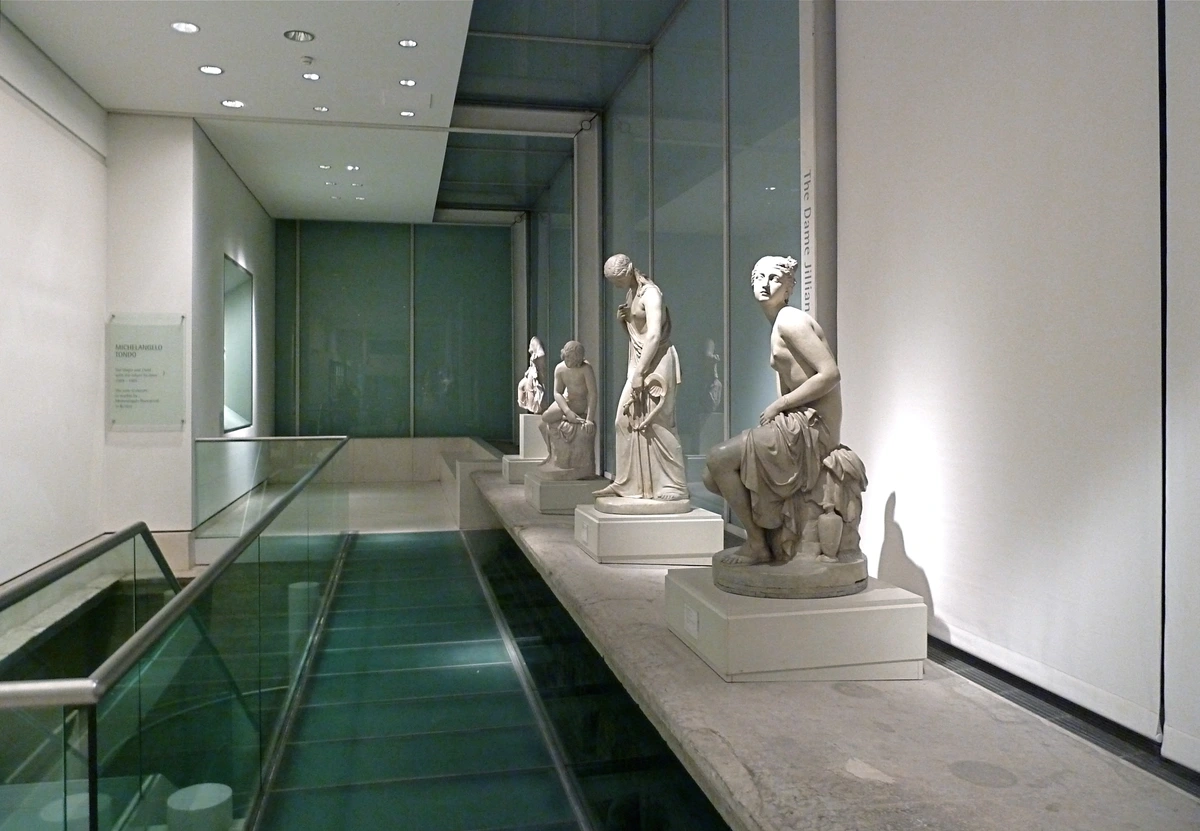
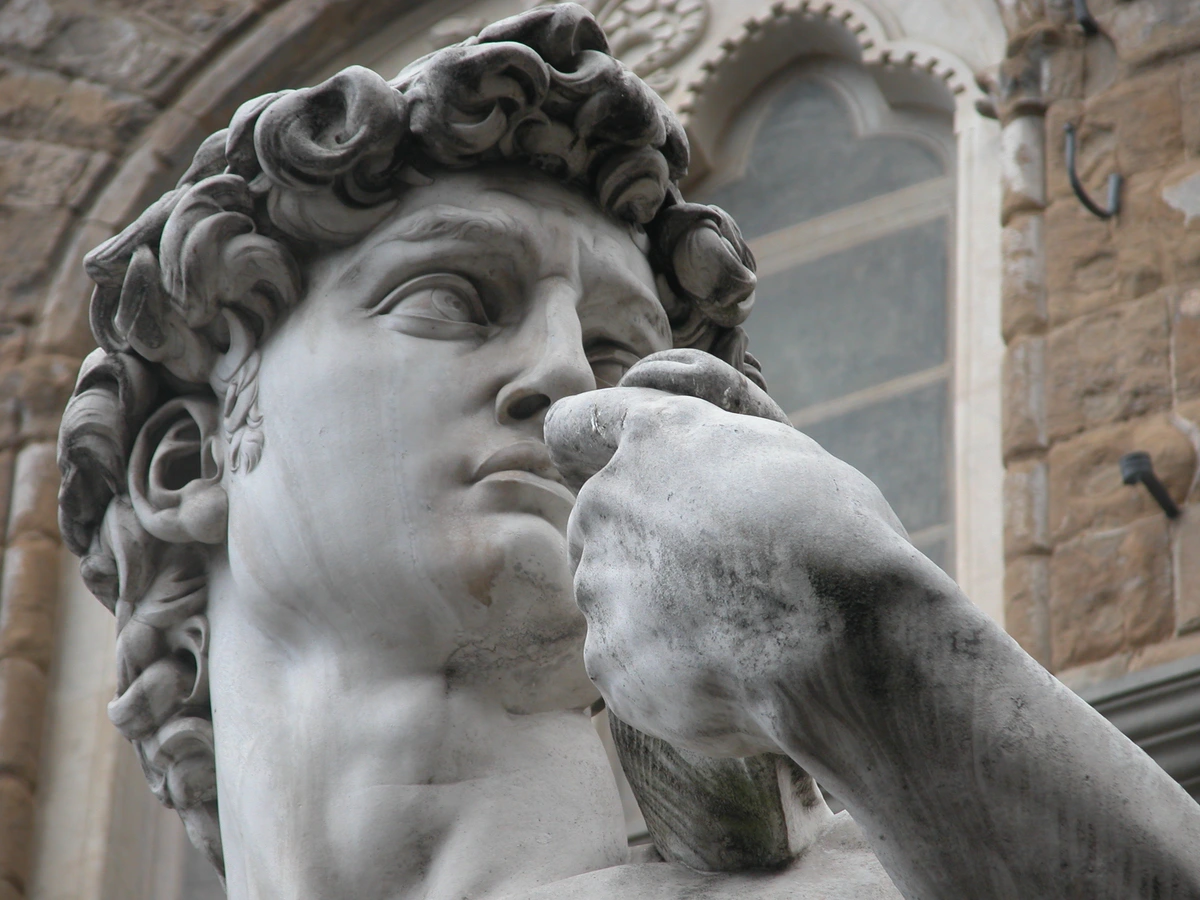
This connection between material and aesthetic is profound. The hard, unyielding nature of flint forces a subtractive, reductive process—you chip away what you don't need. Michelangelo famously said he saw the angel in the marble and carved until he set him free; he was thinking like a Stone Age artist. Meanwhile, the molten, pour-able magic of bronze invites an additive process—a sculpture built from a void. This opens the door to complexity and fluidity. Iron later came with its own language—one of heat, hammer, and immense force, requiring a different kind of artistic discipline entirely.
The following table is the best way I've found to see this progression at a glance. It’s a cheat sheet for understanding how a change in material didn't just lead to better weapons, but to a fundamentally new language of artistic expression.
Age  | Approximate Time Period (Varies by Region) | Key Material(s) | Impact on Art & Expression | Signatures of the Age |
|---|---|---|---|---|
| Stone Age | c. 3.4 million years ago – c. 2000 BCE | Flint, obsidian, bone, wood, pigments | The birth of sculpture and painting, tied to rock, cave walls, and the natural environment. Art served ritual, symbolism, and survival. | Subtractive carving, cave murals, Venus figurines, megalithic structures, rock art. |
| Bronze Age | c. 3300 BCE – c. 1200 BCE | Bronze (copper & tin alloy), gold, silver | Enabled complex casting, leading to ornate jewelry, ritual objects, and finely detailed artifacts. Art became intertwined with social elite, power, and divine authority. | Lost-wax casting, repoussé, granulation, weapon artistry, large-scale figure sculpture, narrative art. |
| Iron Age | c. 1200 BCE – c. 1 BCE (in many regions) | Iron, Steel | Allowed for harder, more durable and accessible tools, leading to detailed metalwork, inlay arts, and large-scale construction. Art often expressed identity, status, and intricate craftsmanship. | Blacksmithing, detailed inlay (e.g., Celtic, Villanovan), steel weaponry, architectural ironwork, coinage, chainmail. |
It's crucial to remember this isn't a light switch being flipped. There was no global news bulletin announcing, "Attention humanity, the Stone Age is officially over!" These transitions were slow, messy, and deeply regional. It's less of a timeline and more of a braided river, with different currents running at different speeds. Neolithic farmers in Europe might still be sharpening stone sickles long after Bronze Age smiths in Mesopotamia were crafting elaborate helmets. Some cultures, like the Indigenous peoples of the Americas or Australia, created staggeringly sophisticated art with stone, bone, and wood for millennia without a metal age in the same sequence. The timeline isn't a tidy sequence but a patchwork of innovation, migration, and cultural overlap—a wonderfully human story of adaptation and persistence, not a straight line. Thinking about it that way makes you appreciate the intricate paths societies took, each finding its own way to turn substance into meaning.
The Iron Age: The Democratization of Power
Then came iron—a metal so common its ore could be found almost anywhere. If bronze was the exclusive domain of kings and gods, iron was the metal of the people. The Iron Age, beginning around 1200 BCE in many regions, didn't just change art; it reshaped the entire social fabric. The immense heat required to smelt it—hotter than bronze—gave rise to the iconic figure of the blacksmith, a master of fire and force, a magician of the mundane.
Artistically, iron allowed for a different kind of expression. It was stronger, more abundant, and could be hammered and worked into new forms with an unprecedented level of precision. The aesthetic of the Iron Age became one of sharpness, durability, and meticulous surface detail. This was no longer the art of gods and kings, but the art of soldiers, farmers, and chieftains. Think of the impossibly intricate spirals and swirls of Celtic metalwork, the gleaming, polished blades of a Roman gladius, or the beautiful, functional curve of a steel plough. Art began to serve agriculture, warfare, and identity on a scale never before possible. The very essence of line and form shifted, as seen in the elements of art line, where a metal edge could create a new kind of sharp definition, a visual language forged in fire.
The Artistry of Iron
The artistic heart of the Iron Age beat in the forge. It wasn't just about making tools that were stronger; it was about imbuing them with a sense of identity. The smith was not just a technician, but an artist, a problem-solver imbuing raw, stubborn material with both function and meaning through sustained, focused effort. They were manipulating the fundamental elements of design, creating line and form from fire and metal. Every hammer blow was a conscious design choice.
The Artistry of Iron: Techniques and Aesthetics
The artistic heart of the Iron Age beat in the forge. It wasn't just about making tools that were stronger; it was about imbuing them with a sense of identity. The smith was not just a technician, but an artist. They were manipulating the fundamental elements of design, creating line and form from fire and metal. Every hammer blow was a conscious design choice.
This era saw the perfection of techniques like welding, inlaying, and pattern-welding, where rods of different iron types were twisted and hammered together to create a blade that was both incredibly strong and remarkably beautiful, with a distinctive swirling pattern. It was an aesthetic of controlled power, a marriage of brute force and meticulous artistry that took years of study to master.
While bronze was for the elite, iron's ubiquity meant that art and excellent craftsmanship became more widespread. A farmer could own an iron plough that was as beautifully made as it was functional. A common soldier could carry a sword that, while not gold-inlaid, was perfectly balanced and bore the unique marks of its maker. This was the true artistic legacy of the Iron Age: the democratization of quality craftsmanship.
Voices from the Iron Age
- The Celts (c. 450–1 BCE): Their mastery of La Tène style produced some of the most breathtakingly complex metalwork of the ancient world. Elaborate torcs (neck rings), shields like the magnificent Battersea Shield, and sword hilts adorned with swirling, abstract patterns that seem to capture a sense of life's energy. This aesthetic wasn't just decoration; it was a visual language of immense spiritual and social power, a dazzling dance of form and void.
- The Greeks & Romans (c. 800 BCE onward): Civilization shifted decisively toward iron and steel. Beyond the formidable weaponry of the Roman legion, it found expression in the graceful curves of tools and the strong gates of cities. In Greece, the use of iron clamps and dowels allowed for the construction of massive temples like the Parthenon, enabling architectural feats of grace and scale.
- Africa (c. 1000 BCE onward): In Nubia (modern Sudan) and other parts of Africa, ironworking developed independently. The kingdom of Meroë became a powerhouse of iron production. This technological mastery fueled the rise of powerful kingdoms and created beautiful, symbolic objects, including intricate ceremonial knives and iron staffs of office.
- China (c. 600 BCE onward): While China's Iron Age began later, it led to revolutionary advancements like the blast furnace, allowing for mass production of cast iron tools and weapons, which fundamentally altered agricultural output and military capacity.
- The Villanovan Culture (c. 900–700 BCE): In what is now Italy, the precursors to the Etruscans created beautiful, incised urns and household items, often using iron for decorative and functional touches.
Iron, in its ubiquity, made the future possible. It became the fundamental building block of civilization, enabling not just swords to build empires, but the plows to feed them. Art made of iron was often functional, yes, but it was also a mark of identity—a clan's unique pattern on a shield, a smith's personal mark on a fine blade. It was the beginning of artistic expression becoming more widespread, more integrated into the everyday life of a much broader population, paving the way for the art of the classical and modern worlds. It prefigured the Bauhaus notion that form follows function, where the strength of iron met the grace of good design.

The Stone Age: Our First Artistic Language
Before metal, there was stone. But to call this era 'primitive' is to make a huge mistake. The Stone Age is where we learned to be artists, inventors, and storytellers. It's the longest chapter in the human story—over 3 million years long. Art historians and archaeologists typically divide it into three parts, each with its own distinct character: the Paleolithic (Old Stone Age), the Mesolithic (Middle Stone Age), and the Neolithic (New Stone Age). To understand this period is to understand the very origins of the elements and principles of art.
Paleolithic (c. 40,000–10,000 BCE): The Birth of Imagination
Standing in a cave like Lascaux or Altamira, the first thing that strikes me isn't the age, but the presence. The animals aren't static portraits; they have volume, they seem to move across the uneven rock surface, shadows and bulges of the cave wall serving as muscles, haunches, a shoulder. Artists used the natural contours to give their paintings a three-dimensional life, a technique that feels incredibly advanced. That horse isn't just painted on the rock; it emerges from it, born from the earth itself. It's a powerful use of the element of line, but a line that lives and breathes.
This is the art of the Paleolithic, a period stretching from roughly 40,000 to 10,000 years ago. It's been called the first 'art for art's sake,' but that misses the point entirely. This art wasn't decoration; it was woven into the very fabric of survival—connected to hunting magic, spiritual rituals, or the transmission of vital, life-or-death knowledge across generations. It was a form of proto-writing, a library painted on limestone, each stroke a deliberate expression of artistic expression.
Think about the process. Crushed minerals for pigment—ochre for red and yellow, manganese for black—mixed with water or animal fat and then applied with brushes made from hair, feathers, or moss, or even blown through hollow bones. Charcoal for crisp outlines. It was a sophisticated art kit for the world's first artists, a toolkit born from profound observation of the environment. And the first sculptures weren't monumental, but intimate and portable, like the famous Venus figurines (e.g., the Venus of Willendorf, c. 25,000 BCE)—statuettes of women with exaggerated features, carved from soft stone, bone, or ivory. What were they? Goddesses? Fertility symbols? Good luck charms? We don't know for sure, but they represent the first time we took a raw material and transformed it into a wholly symbolic object. I imagine gathering these materials was almost as important as the painting itself—a ritual of connection before a single mark was made. This is where the very idea of an 'object of art' begins.
Mesolithic (c. 10,000–5,000 BCE): Art in Motion
The world warmed. Glaciers receded, and the herds migrated. Human life became more fluid, adapting to changing coastlines and forests. Art had to become portable. Stylized, simplified human figures engaged in hunting and ritual dances appear on small stones, pebbles, and cliff faces, often in dynamic groups. The ground-forged pigments of the Paleolithic were now used to create art that could travel with the community.
It feels less about the monumental, individual animal and more about the community, the action, the story. The art begins to capture rhythm and collective energy—scenes of motion, of groups dancing, of hunters in pursuit. This reflected a life lived more nomadically, in constant dialogue with an environment in flux. Art became something you could carry with you, a reminder of community and shared experience amid constant change. It's a shift from depicting the timeless essence of an animal to capturing a fleeting moment of human life, an early form of narrative art. Think of it as the first sketchbook—personal, immediate, and concerned with the passage of time.
The Neolithic revolution wasn't just about agriculture—it was an explosion of a new artistic imagination. For the first time, we had villages, and with them came a new set of preoccupations: land, property, ancestors, and social structure. Art became a symbol of these new, settled lives. This is when we truly started building, erecting monuments that connected earth and sky.
You see this profound shift in polished, beautifully crafted tools like the jadeite axes found across Europe. These weren't just chopping tools; their perfect finish and exotic material suggest they were symbols of power, ritual objects, or indicators of social status. It was a clear move from the purely functional to the deeply symbolic. The axe was no longer just an axe; it was a statement.

And then there are sites like Göbekli Tepe in Turkey (which predates Stonehenge by over 6,000 years), fragments of the very first decorated pottery from Mesopotamia—an invention as revolutionary as the wheel—and the awe-inspiring megalithic structures like Newgrange in Ireland or Stonehenge in England. These are not the art of individuals in a cave; this is communal art on a massive scale, demanding coordination, shared knowledge, and a collective vision. It shows complex social organization and a shared belief system, engineered and etched into the very landscape.
The Bronze Age: The Birth of High Technology
The Revolution of Molten Metal
And what a transformation it was. Stone carving is a subtractive art; you chip away until the form reveals itself, always at the mercy of the stone's natural flaws. Bronze, on the other hand, was additive—alchemy, turning dust and ore into liquid light. You build a mold, you mix your alloys—copper singing its orange song, tin cooling it into a new strength—and you pour that glowing liquid into a shaped void. Copper, the primary ingredient, was relatively easy to find, but tin was a rare, exotic material that required vast, international trade routes to acquire. For the first time, artists could not only reproduce the same object over and over, but could create hollow, lightweight objects with astonishingly thin walls and previously unimaginable complexity. It was a shift from coaxing form out of the world to pouring it into the world. This new technology gave expression to a new social order, one where power was concentrated and divinity was mediated through objects of exquisite beauty.
A Gallery in Fire: Iconic Bronze Age Art
A Gallery in Fire: Iconic Bronze Age Art
Travel the world, and the artifacts tell a consistent story of artistry married to social power. Bronze was rare, valuable, and demanding—requiring long-distance trade for tin and copper, and closely guarded specialist knowledge. This scarcity elevated it beyond mere material into a symbol of authority, wealth, and divine connection. Its art was, by its very nature, the art of an elite. It marked a fundamental divergence from the accessible, communal imagery of cave art. Bronze objects weren't just seen; they were possessed, traded, and hoarded, making them potent symbols of control and influence.
The Mediterranean (c. 3000–1200 BCE)
The "Mask of Agamemnon" (c. 1550–1500 BCE) from Mycenae is a haunting masterpiece of repoussé—a technique where metal is hammered into shape from the reverse side. Its features are so life-like you feel you're staring into the face of a king from a world of myth. Then there are the Cretan "Bull-Leaping" frescoes—a dynamic, almost balletic depiction of human and animal power. Though not bronze themselves, they pulse with the same fluid energy. The Cycladic figurines (c. 3200–2000 BCE), with their minimalist, abstract forms, show a mastery of marble that resonates with the pure forms artists still chase today, like a Sol LeWitt wall drawing in three dimensions.

China (c. 1600–1046 BCE)
The Shang Dynasty took bronze casting to a staggering level of sophistication. Their massive ritual wine vessels and cauldrons, known as ding, are not just containers; they are statements of cosmic order, decorated with intricate taotie motifs—stylized animal faces that are both mesmerizing and slightly terrifying. The casting was so precise, so advanced, that it still leaves modern metallurgists in awe. It's an aesthetic of overwhelming power, where dense, intricate patterns swirl and compress into a singular, awe-inspiring presence. This wasn't just art; it was a technology of statecraft, used in ceremonies to communicate with ancestors and legitimize a ruler's authority.
Mesopotamia (c. 2300 BCE)
The legendary bronze head of an Akkadian ruler, believed to be Sargon of Akkad, is a powerful statement of imperial might. The attention to realistic detail—from the braided hair to the upward-gazing eyes—is remarkable, making the divine king a tangible, yet untouchable, presence. It's not just a portrait; it's the embodiment of an idea—that a single man could channel the power of the gods and command an empire. This focus on individual portraiture marks a radical departure from the more symbolic art of earlier periods.









Europe (c. 1400 BCE)
From the Nordic lands came objects like the stunning Trundholm Sun Chariot—a model of a horse pulling a golden sun disc. It's a beautiful, simple, and deeply symbolic expression of a cosmological belief system captured in bronze and gold. It shows art serving a narrative purpose, illustrating the daily journey of the sun across the heavens. Less about the glory of a king, and more about the rhythm of the universe as understood by a whole community. This object, small enough to hold, encapsulates a grand cosmic idea, proving that Bronze Age art could be as much about poetry as it was about power.
What unites these disparate pieces is their connection to a social elite. This is not the democratic art of the cave painting, accessible to all in the clan. This is the art of palaces and temples, used to signify power, wealth, and divine authority. It declared, on a fundamental level, who was set apart. It established a clear link between material wealth and artistic achievement, a theme that would echo through history.
In many ways, the Bronze Age feels like the world's first high-tech revolution. It fueled international trade routes spanning from the tin mines of Cornwall in England to the cities of Mesopotamia. This period saw the first complex societies, the first palaces, and the first professional artisans. Elites hoarded bronze, and control over its production became a source of immense power. But for the artist, bronze offered something even more profound: it was the first truly transformative technology of expression since the invention of paint, fundamentally redefining the possibilities of artistic expression. It allowed for new art forms and set the stage for the grand sculptural traditions of the classical world.