How Mass Production Made Art a Part of Everyday Life
Explore the revolutionary journey of art from exclusive masterpieces to accessible prints. Discover how technologies like the printing press and digital printing changed our relationship with art forever.

The Poster on Your Wall: How Mass Production Changed Art Forever

Take a look around your home right now. Go on, I'll wait. Do you see a framed poster of a Van Gogh, a print of a favorite abstract piece, or perhaps even a postcard of the Mona Lisa stuck to your fridge? For the vast majority of us today, having such immediate access to these iconic images, or even a beautiful fine art print of a contemporary work you love, is completely normal. We can own a piece of art history, or a stunning new piece, for the price of a cup of coffee. But I want you to pause and truly reflect on how utterly revolutionary that is. It's a concept I find myself grappling with constantly: how did we arrive at this point, where art, once the exclusive, often divine, domain of kings, churches, and the fabulously wealthy, is now a democratic, ubiquitous presence in our everyday lives? This isn't just a story of technological advancement; it's a profound journey of shifting societal perceptions, expanding access, and a relentless redefinition of what art itself truly means to us. Come with me as we explore how the ability to make many of one image didn't just change production, but profoundly redefined creativity, ownership, artistic value, and our very relationship with visual culture. This is the story of art's journey from the singular to the reproducible, from the sacred to the everyday, and how it continues to challenge our understanding of originality, especially in the context of modern vs. contemporary art distinctions.
It's a beautiful, complicated picture, this journey of art's reproduction. From the hand-carved woodblock of the 15th century to the ephemeral digital file of today, it is, in many profound ways, the story of art's liberation. Mass production took art from the gilded palace and the hallowed cathedral and placed it directly into our hands, our homes, and our everyday lives. This ongoing revolution has forced us to constantly redefine what we mean by 'original,' 'valuable,' and indeed, 'art' itself, relentlessly pushing the boundaries of what's possible and challenging our perceptions at every turn. It's a testament to human ingenuity, our boundless capacity for innovation, and our endless, fundamental desire to connect through images, regardless of their origin or medium.
For the vast majority of human history, art was a one-of-a-kind experience. It was an object you had to travel great distances to see, often commissioned by the fabulously wealthy, powerful rulers, or the church. The idea that you—an ordinary person—could own a piece of it was not just unthinkable, it was culturally impossible. Art was tied to status, ritual, and specific locations. This entire, monumental shift in our relationship with art, from the exclusive to the universally accessible, is a compelling story about technology, one that unfolds across centuries and through multiple, often surprising, revolutions. It's the narrative of how mass production didn't just change how we make things; it profoundly altered how we see and value creativity itself, constantly challenging our definitions of originality, ownership, and even the very purpose of art.
Early Echoes of Replication: Before the Press
While Gutenberg's printing press often gets the spotlight (and rightly so!), it's worth remembering that the impulse to duplicate images isn't new. Ancient civilizations utilized seals, coins, and carved molds to create multiple identical impressions. Roman coins, for example, disseminated imperial imagery across vast empires, functioning as early forms of mass media. Even medieval guilds employed stamps and templates for decorative arts, ensuring a degree of uniformity across their crafts. Think of the intricate patterns repeated on pottery or textiles, or the pervasive use of seals to authenticate documents and spread official iconography throughout ancient and medieval administrations. Consider, too, the Roman practice of minting coins with imperial portraits, which served as a portable, widely distributed form of propaganda, effectively disseminating the emperor's image and authority across vast territories. These early methods weren't about 'art for the masses' in the modern sense, nor were they primarily focused on artistic distribution, but they absolutely laid crucial conceptual groundwork for repeatable imagery. They whispered the first profound idea: an image, once made, could indeed be made again, hinting at a future where art could escape its singular confines and reach a much wider audience. This fundamental human desire to replicate and share visual information, whether for ritual, power, or decoration, was a constant undercurrent that would eventually burst forth with revolutionary technologies.
The Age Before the Machine: Art for the Few
Before the 15th century, if you wanted to see a powerful image, you'd likely go to a church to see an altarpiece or perhaps a lord's castle to see a tapestry. Art was fundamentally unique and site-specific. Books were hand-copied by monks, and visual stories, like the incredible Bayeux Tapestry, were painstakingly embroidered by hand over years. Each object was a singular masterpiece, a repository of immense time, unparalleled skill, and vast resources. I mean, imagine the sheer dedication: years spent by dozens of artisans on a single tapestry, or monks painstakingly illuminating every page of a Bible by hand, each one a tiny universe of detail. To even glimpse such a work, you often undertook a pilgrimage, journeying to a cathedral or a royal court. The idea of owning one was not just foreign; it was an absurdity, akin to trying to possess a mountain. Art was strictly reserved for an elite few who wielded immense power, wealth, and spiritual authority. The painstaking labor involved meant that each piece was inherently valuable, not just for its artistic merit, but for the sheer human effort it represented. The very concept of an 'art market' as we understand it today was largely non-existent; instead, art served as a symbol of divine favor, political might, or personal prestige. Think of the illuminated manuscripts, not just as texts, but as precious objects, often bound in jewels and gold, commissioned by royalty or high clergy. These were not meant for public consumption but for private devotion or the display of aristocratic power. It was a world where the artist was often an anonymous artisan, part of a workshop or guild, and their skill was in service of the patron's vision, rather than a pursuit of individual fame or widespread recognition. The idea of an artist's signature being a mark of value, separate from the patron's commission, was still largely nascent.

Before the printing press, even simple visual information was difficult to share widely. Imagine trying to disseminate a portrait of a new monarch or a religious scene to a populace that mostly couldn't read and had no access to reproduced images. It was a world where visual literacy was shaped by the church and the elite, limiting both the production and perception of art.
This wasn't art for the people; it was art for power, for posterity, and for piety. The average person’s visual world was incredibly limited, confined to what they saw in their immediate surroundings—the local church fresco, a carved patron saint, or perhaps a rare illuminated manuscript glimpsed in a noble's collection. The dissemination of even simple images was slow and costly, controlled by scribes and artisans working within tightly regulated medieval guilds. The very idea of carrying an image, let alone owning one, was a foreign concept, a privilege far beyond reach. That, however, was about to change, dramatically, thanks to a German inventor named Johannes Gutenberg and a quiet revolution brewing in the Rhine Valley that would shake the foundations of visual culture.
The First Revolution: The Printing Press
The invention of the movable-type printing press around 1440 is mostly celebrated for its impact on text, sparking the information age, but its effect on images was just as profound—and perhaps less obvious in its initial shockwaves.
Before Gutenberg: The Rise of Block Books
Even before Gutenberg's revolutionary movable type, an earlier, less flexible form of printmaking existed: the block book. Popular in Europe during the first half of the 15th century, these books were made by carving an entire page (text and images) into a single block of wood. While still laborious, they allowed for the reproduction of popular religious narratives, prophecies, and instructive texts, such as the Ars Moriendi (The Art of Dying) or the Biblia Pauperum (Poor Man's Bible). These block books demonstrated a clear demand for reproducible visual and textual information and served as an important precursor, proving the viability of printed books and images, even with their limitations in flexibility and efficiency compared to movable type. They were, in essence, an early, though limited, attempt at mass communication through images.
Suddenly, with Gutenberg's innovation, images could be carved into woodblocks or engraved into metal plates, inked, and pressed onto paper again and again. For the first time, an artist like Albrecht Dürer could create a print and sell hundreds, even thousands, of identical copies across Europe. This wasn't merely a technological upgrade; it was a conceptual earthquake, creating entirely new categories of visual art and communication. It fundamentally shifted the relationship between artist, artwork, and audience. Suddenly, Dürer wasn't just creating a singular masterpiece for a patron; he was becoming a brand, a widely recognized artist, disseminating his vision across borders, and building a reputation that spanned nations. I'd argue that the ability to reproduce images rapidly had as much, if not more, impact on the Renaissance mind than the reproduction of text, opening up a new visual economy. It meant that religious iconography, scientific diagrams, and geographical maps could be standardized and widely distributed, fostering a shared understanding and accelerating the spread of knowledge in unprecedented ways. It also meant that, for the first time, visual satires and political broadsides could quickly reach a mass audience, shaping public opinion and contributing to social and religious reform movements. It meant that religious iconography, scientific diagrams, and geographical maps could be standardized and widely distributed, fostering a shared understanding and accelerating the spread of knowledge in unprecedented ways. It also meant that, for the first time, visual satires and political broadsides could quickly reach a mass audience, shaping public opinion and contributing to social and religious reform movements.
Key Figures in Early Printmaking
Artist/Inventor  | Key Contribution | Impact on Art Reproduction |
|---|---|---|
| Johannes Gutenberg | Invented movable type printing press (c. 1440) | Revolutionized text and image reproduction, making books and prints widely accessible, paving the way for the Renaissance and Reformation. |
| Albrecht Dürer | Master engraver and woodcutter | Elevated printmaking to a high art form, proving its artistic merit and commercial viability across Europe, making him one of the first 'celebrity' artists. He was a shrewd businessman, often marketing his prints directly and using his monogram to establish brand recognition, which was revolutionary for an artist of his time. |
| Martin Schongauer | Influential engraver | Known for detailed and expressive copperplate engravings, influencing Dürer and subsequent generations, and perfecting the intaglio technique. |
| Lucas Cranach the Elder | Painter and printmaker | Prolific producer of woodcuts and engravings, often for Reformation propaganda and portraiture, significantly shaping the visual identity of the Protestant movement and its leaders through powerful, reproducible imagery. |
| Andrea Mantegna | Italian Renaissance painter & engraver | Master of perspective and classical themes; his engravings helped disseminate Italian Renaissance styles and classical iconography across Europe, spreading new artistic trends and ideas. |
| Master E.S. | Anonymous German engraver (mid-15th C) | Prolific producer of copperplate engravings, noted for technical skill and intricate details, bridging the gap between medieval and early Renaissance printmaking. |
This was a seismic shift. An idea or a style was no longer confined to a single location. It could travel, influence other artists, and be seen by people from different social classes. It was the birth of the art market as we know it and the beginning of the democratization of the image. My mind immediately goes to the surge of printed pamphlets and satirical caricatures that began to circulate, influencing public opinion and shaping cultural narratives in ways previously unimaginable. Just think about the sheer power of that: an image, once confined, now traveling far and wide, sparking discussion, debate, and sometimes, outright rebellion. Beyond political and religious uses, reproducible prints also served crucial educational functions, disseminating anatomical studies, botanical illustrations, architectural plans, and geographical maps, thereby accelerating the spread of scientific and empirical knowledge far beyond the reach of a few handwritten manuscripts.
Art as Propaganda and Education
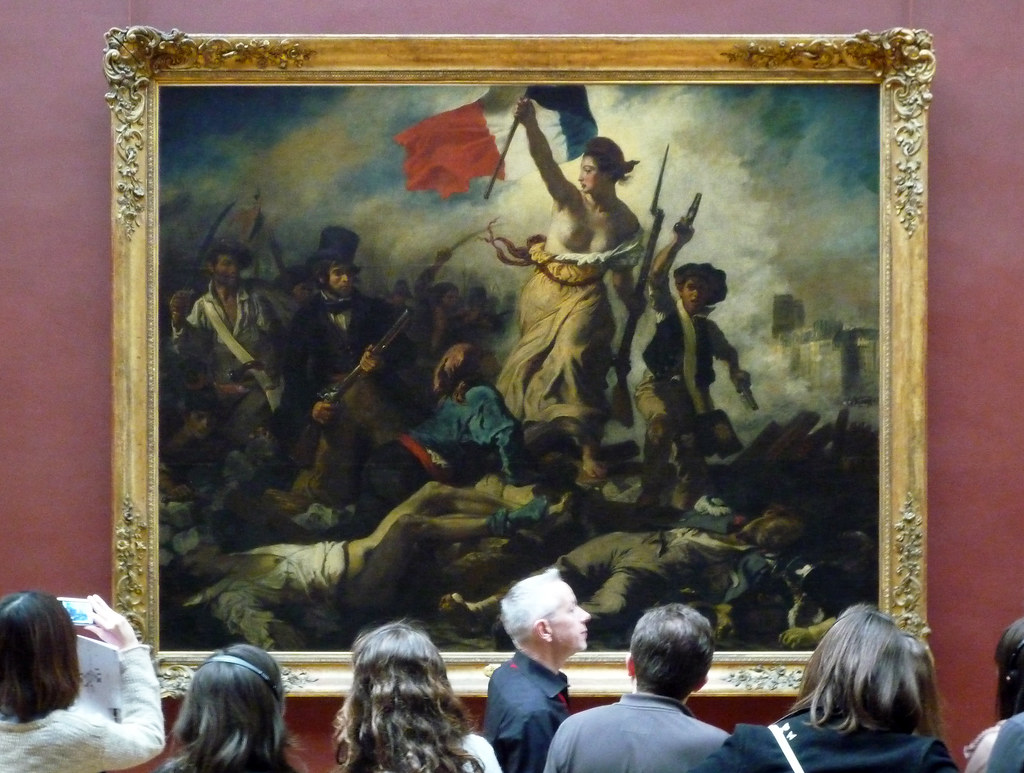
Beyond simply making art accessible, the printing press also weaponized it. Suddenly, rulers, religious leaders, and revolutionaries could disseminate their messages visually to a broad, literate or semi-literate audience. Think of the Protestant Reformation, where woodcuts were used to spread caricatures of the Pope or illustrate religious doctrines. This wasn't just decoration; it was potent political and ideological messaging, shaping public opinion on an unprecedented scale. It reminds me that art, in any form, has always been a powerful tool for persuasion. We see this vividly in historical moments like the Protestant Reformation, where imagery was weaponized to challenge authority. Or consider the French Revolution, where powerful allegorical images, much like Liberty Leading the People by Delacroix, galvanized public sentiment, inspiring citizens and shaping collective memory long after the revolution itself. It’s fascinating how the ability to reproduce these images amplified their message exponentially, turning singular works into widely recognized symbols of dissent and national identity. This era cemented art's role not just as a reflection of power, but as an active shaper of societal change.

Early Printmaking Techniques
The initial wave of printmaking techniques after Gutenberg opened up entirely new avenues for artistic expression and distribution. These processes, while laborious compared to today's standards, allowed for an unprecedented scale of image dissemination compared to the singular, hand-produced artworks of the past. It's a testament to human ingenuity: find a way to make something precious, then find a way to make more of it, and faster.
Technique | Key Feature | Artistic Application & Impact |
|---|---|---|
| Woodcut | Image carved into a plank of wood; relief printing. | Versatile for book illustration (e.g., Bibles, broadsides). Robust, but limited fine detail. Enabled early mass communication and religious/political propaganda. Early masters also experimented with Chiaroscuro woodcut, using multiple blocks inked with different colors to achieve tonal gradations, adding a new dimension of artistic expression. |
| Engraving | Image incised into a metal (copper) plate with a burin; intaglio printing. | Allowed for intricate detail and subtle shading, producing sharp, clean lines. Used for high-quality single-sheet prints, maps, scientific illustrations, and architectural designs. This demanding technique, often called Line Engraving, required immense skill and precision, making it suitable for reproducing Old Master paintings and conveying academic rigor. |
| Etching | Image incised into a wax-coated metal plate with acid; intaglio printing. | More flexible than engraving, allowed for a more 'painterly' line and expressive quality. Popularized by Rembrandt, who masterfully used it to capture intricate details and emotional depth, it truly opened up new avenues for artistic freedom and spontaneity compared to the more rigid engraving process. |
| Mezzotint | Roughening a metal plate, then smoothing areas to create tones; intaglio printing. | Produced rich, velvety tones, ideal for reproducing paintings, especially portraits, with a distinctive softness and depth. Less common for original compositions, its strength lay in its ability to translate the rich tonal ranges of oil paintings into print, making it a favorite for reproducing portraits and intricate scenes. |
| Aquatint | Etching process using powdered resin to create tonal areas. | Allowed artists to achieve nuanced gradations of tone, similar to watercolor washes, excellent for atmospheric effects and landscapes. Popularized by Goya for its expressive capabilities, particularly in his 'Caprichos' series, combining drawing with subtle tonal variation. |
| Drypoint | Direct engraving onto a metal plate with a sharp point, creating a burr. | Produced a soft, velvety line unique to the technique, often used for delicate and expressive imagery. Rembrandt was also a master of drypoint, using it to add rich, fuzzy details to his prints, creating a distinctive, almost smoky line. |
| Lithography | Image drawn onto a flat stone or metal plate with grease; planographic printing. | Revolutionized color printing and mass advertising in the 19th century, allowing for fine detail, blended tones, and large editions. Enabled artists like Toulouse-Lautrec to create iconic posters. |
The Industrial Revolution: Art for the Home
Fast forward a few centuries, and the Industrial Revolution kicks things into high gear. This era, bursting with steam, factories, and rapid innovation, completely transformed the landscape of art reproduction. New technologies like lithography (invented by Alois Senefelder around 1796, printing from a flat stone or metal plate using a grease-and-water repellent principle) and, crucially, photography emerged. These processes made reproducing images cheaper, faster, and more accurate than ever before. It's almost hard to grasp the jump in fidelity and speed—from painstakingly carved wood to chemical processes that captured light in an instant. Lithography, with its ability to produce rich tonal variations and blend colors seamlessly, truly revolutionized color printing and advertising, making vibrant imagery commonplace and enabling the widespread creation of posters, book illustrations, and popular prints. Specifically, chromolithography, a multi-stone lithographic process, allowed for the production of full-color images with remarkable fidelity, bringing colorful, often elaborate, reproductions of art and advertising into nearly every home and public space. This process was a game-changer for commercial art, transforming consumer goods and popular media. But photography, well, that was the real game-changer. This wasn't just about prints; it was about truly capturing a moment, a face, a landscape with astonishing realism and a directness previously unimaginable. The implications were immense, shaking the very foundations of artistic representation, challenging traditional notions of skill, observation, and truth itself. The mechanical eye of the camera offered an 'objective' record, something painting had long striven for, forcing artists to reconsider their purpose and methods. This was the dawn of a new era of visual documentation and popular imagery, setting the stage for art's move from the elite gallery to the everyday home.
The Rise of Photography: A New Form of Mass Art
Photography, invented in the early 19th century, was perhaps the ultimate disruptor. For the first time, images weren't just reproductions of other art; they were an art form in themselves, capable of capturing reality directly. Pioneers like Nicéphore Niépce, who captured the earliest known photograph in 1826, and Louis Daguerre, with his revolutionary Daguerreotype process in 1839, laid the groundwork for technologies that could seemingly freeze time and capture reality with unparalleled accuracy. Later, William Henry Fox Talbot's Calotype offered reproducible negatives, pushing photography toward true mass dissemination. This sparked huge debates in the art world that still echo today—is it truly art if a machine does most of the 'drawing,' or if the artist's hand is seemingly absent? Initially, photography fiercely challenged the very definition of artistic skill, originality, and the painter's role. It pushed painting to abandon its mimetic function and explore new avenues like Impressionism and abstraction. But photography quickly democratized portraiture, landscape, and reportage, making visual records accessible to everyone. Suddenly, ordinary families could afford a portrait, replacing expensive painted miniatures and securing a visual legacy. Distant lands, exotic cultures, and current events could be seen by millions through photographs in books and magazines, fostering a new global awareness and a shared visual vocabulary that shaped how we understood the world and ourselves. It was a powerful new medium, blurring the lines between art, information, and deeply personal memory. I mean, imagine seeing an image of the pyramids of Egypt, not as a painter's romantic interpretation, but as a stark, verifiable photographic record. That changes everything.
Simultaneously, a new middle class was rising, with disposable income and a desire to decorate their homes. They couldn't afford an original oil painting by Renoir, but they could absolutely buy a print to hang in their parlor. Illustrated magazines and newspapers brought current events to life with images, creating a shared visual culture on an unprecedented scale. Photography didn't just capture existing art; it became a powerful art form in its own right, influencing painting and pushing artists to explore new visual territories. It was the true birth of 'art for the home,' a far cry from the church altarpieces of old, transforming parlors into miniature galleries of reproducible wonders. This marked a significant social shift, as art transitioned from being a public display of power to a private expression of taste and aspiration. Suddenly, you could bring images of grand European landscapes, famous historical figures, or exotic locales into your personal space, cultivating a sense of cultural belonging that was previously impossible.
The Commercialization of Art and Advertising
The Industrial Revolution also gave birth to modern advertising. With mass production came mass consumer goods, and with consumer goods came the need to market them. Reproducible imagery, particularly through lithography, became the backbone of this new commercial art. Vibrant posters, magazine advertisements, and product labels were designed to capture attention and influence desires. This fusion of art and commerce created a new visual language, one that was immediate, pervasive, and often incredibly inventive, fundamentally changing how art engaged with the public sphere. It was art not just for contemplation, but for persuasion and consumption. The role of the graphic designer emerged as a distinct profession, specializing in combining images and text for maximum impact, from elegant product labels to bold, eye-catching posters that dominated urban landscapes.
This era also saw movements like Art Nouveau (and the distinction between Art Nouveau vs Art Deco is fascinating in itself) and the Art Deco movement embrace industrial materials and streamlined, reproducible designs. Art Nouveau, with its organic, flowing lines and an emphasis on total art (Gesamtkunstwerk), found its voice not just in unique, handcrafted masterpieces but crucially in mass-produced posters, jewelry, and decorative objects. This movement sought to make beautiful, integrated design accessible to a broader public, bridging the gap between fine art and applied arts. Similarly, the Art Deco movement championed a sleek, geometric, and often symmetrical aesthetic that was perfect for everything from architecture to everyday household items, fundamentally changing the look of consumer goods and public spaces. The very design in art began to reflect the possibilities of the machine, celebrating symmetry, repetition, and the sleekness of modernity in a way that spoke to the industrial age. Think of the vibrant, captivating posters and advertisements of the early 20th century – works of art designed specifically for mass consumption, shaping aesthetic tastes and consumer desires in powerful new ways. This was where fine art and commercial art began their long, complicated dance, a tango that continues to this day, profoundly influenced by the ubiquity of reproduction.
The Avant-Garde and the Machine: Embracing Modernity
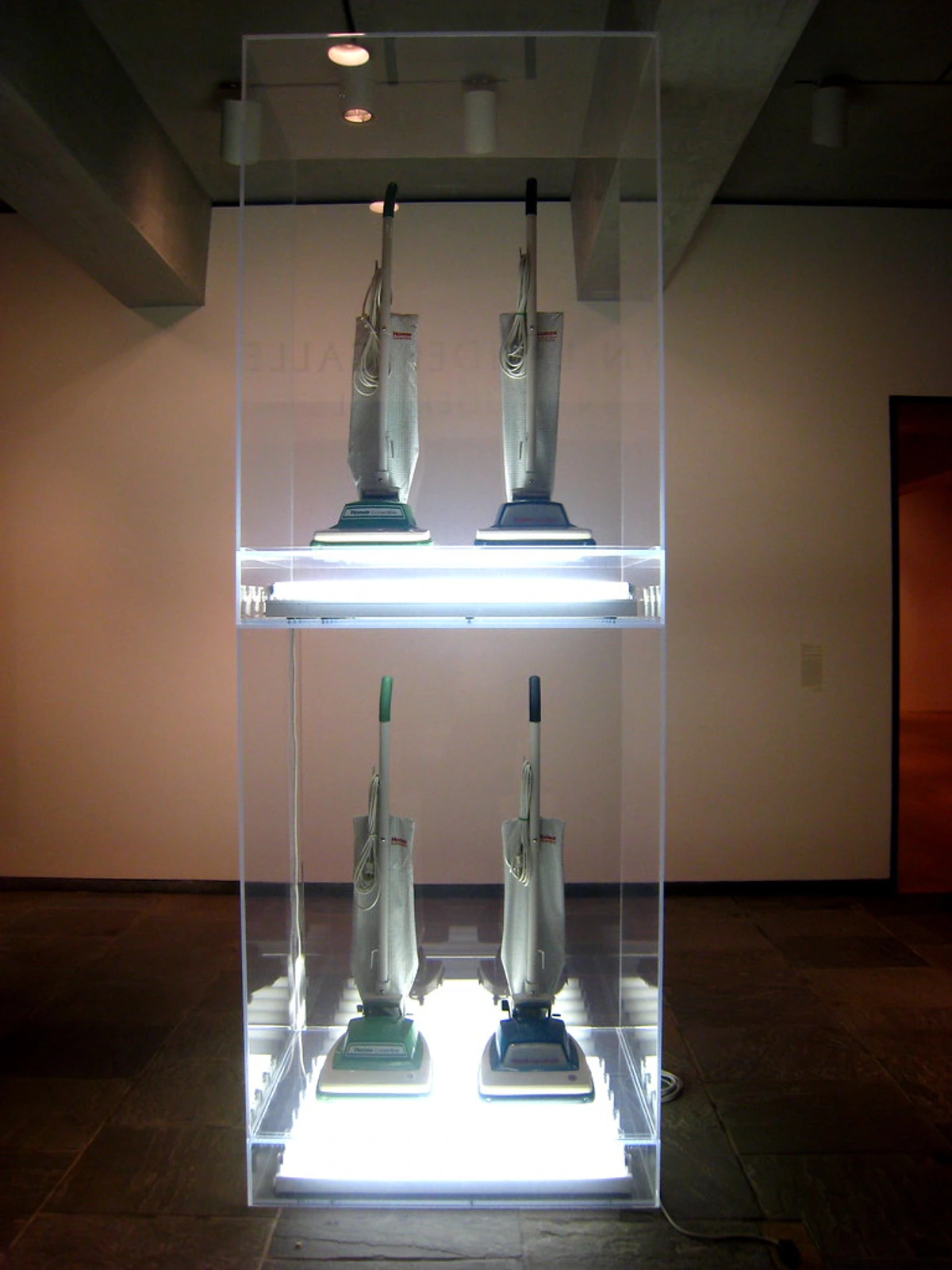
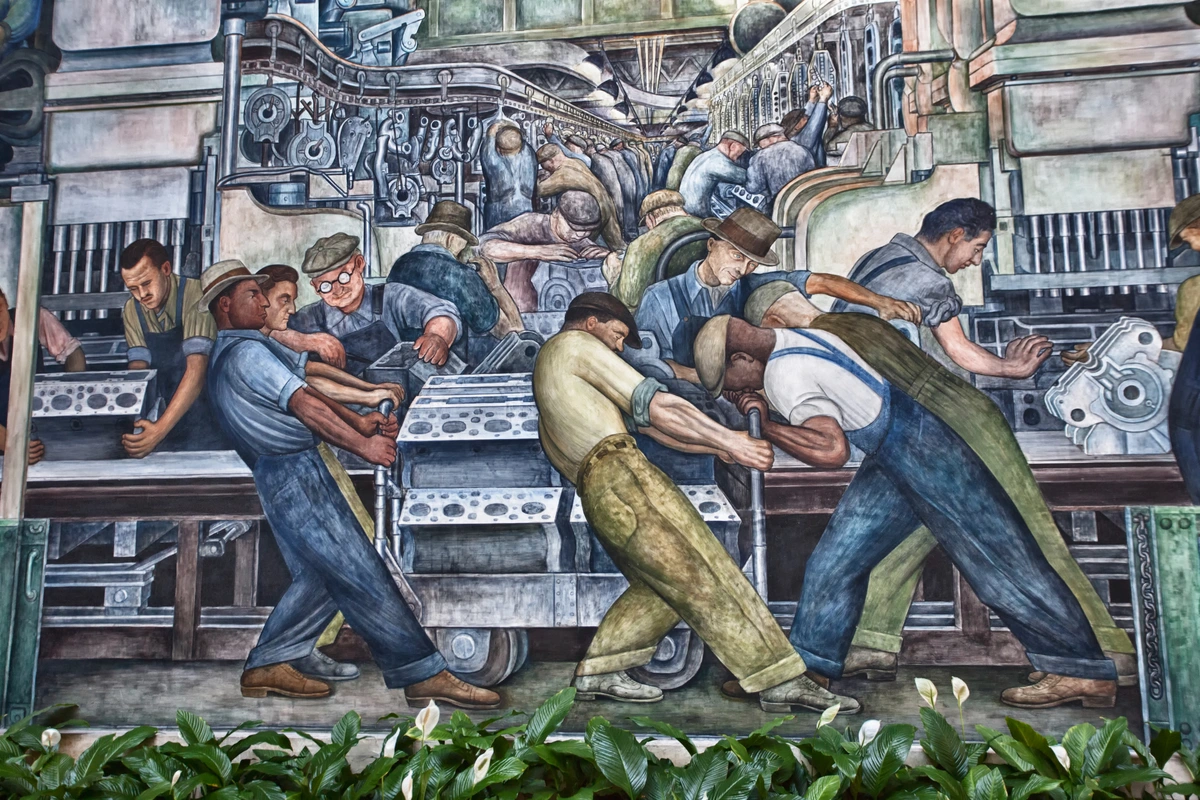
As the Industrial Revolution matured, and the world hurtled towards the 20th century, artists couldn't ignore the seismic shifts in manufacturing and society. For some, the machine was a terrifying, dehumanizing force; for others, it was a muse, a symbol of progress, and a source of new aesthetics. This tension fueled many of the avant-garde movements that redefined art. They weren't just thinking about mass production, they were living in a world shaped by it, a world of assembly lines, rapid transport, and ever-increasing consumer goods. How could art remain aloof from these changes? It couldn't. The very fabric of modern life, the pace of change, and the new visual experiences of the city all demanded a new artistic response. This led to a fascinating period of experimentation, rejection, and outright embrace of the industrial aesthetic. It was a time of immense social upheaval, and artists often grappled with the dehumanizing aspects of mechanization even as they harnessed its power for new forms of expression.
Many artists of this period were not just reacting to mass production but actively engaging with its processes and aesthetics. They saw the potential of the machine to liberate art from elitism, even if the results were sometimes unsettling to traditionalists. This was a crucial period where the boundaries between fine art, craft, and industrial design began to truly blur, setting the stage for even more radical interventions in the latter half of the 20th century.
Movements like Futurism (established in Italy in the early 20th century) vehemently glorified speed, technology, and the dynamism of the modern industrial world, often using fragmented forms and blurred lines inspired by mechanical motion and urban chaos. They were obsessed with the machine, seeing it as the harbinger of a glorious new era, rejecting the static art of the past. Cubism, while not directly about mass production, broke down objects into geometric forms, almost like disassembling a manufactured product to understand its components, challenging traditional single-point perspective and laying intellectual groundwork for new ways of seeing. And then came the Bauhaus, a revolutionary German art school (founded by Walter Gropius in 1919) that championed the complete integration of art and craft with industrial production, explicitly aiming to create beautiful, functional, and mass-producible objects for the masses. Their philosophy was that good design, reproducible design, should be accessible to everyone, profoundly influencing modern architecture, furniture, graphic design, and industrial aesthetics globally.
Movement | Relationship to Mass Production | Key Artistic Impact |
|---|---|---|
| Futurism | Celebrated industrial speed, technology, and dynamism; influenced by machine aesthetics. | Dynamic compositions, fragmented forms, glorification of movement, often depicted machinery and urban chaos, rejecting traditional artistic subjects. |
| Dada | Critiqued industrial society and warfare through absurdist, anti-art; used ready-mades (mass-produced objects). | Challenged notions of originality and artistic skill through provocative works and the use of 'ready-mades' – ordinary manufactured objects elevated to art, like Marcel Duchamp's urinal. This movement highlighted the absurdity of modern life and war, directly questioning the perceived 'aura' of unique artworks. |
| Bauhaus | Integrated art, craft, and industrial production; aimed for functional, mass-producible design. | Influenced modern architecture, furniture design, graphic design, emphasizing clean lines, utility, and the idea that good design should be accessible to all. |
| De Stijl (Neoplasticism) | Advocated for pure abstraction with geometric forms and primary colors, aiming for universal harmony. | Its clean, grid-like aesthetic and emphasis on order, using only primary colors and geometric forms, reflected a desire for clarity and universal harmony in a complex, rapidly industrializing world. While not directly about mass production, its principles of standardization, modularity, and emphasis on universal forms aligned perfectly with industrial capabilities, influencing graphic, product, and architectural design towards a modern, functional aesthetic. |
| Constructivism | Embraced industrial materials and techniques to serve social revolution; art as a tool for societal change. | Created functional, utilitarian art (propaganda posters, textiles, architectural models) for the masses, rejecting 'art for art's sake' and integrating art into everyday life. Their bold, graphic designs, often using photomontage and stark primary colors, were intrinsically tied to the reproducible nature of print media, making art a vital component of political messaging and everyday utility. |
20th Century Disruptors: Pop Art and the Screenprint
For a long time, mass production was seen as the enemy of 'true' art. Art was supposed to be original, born of the artist's unique touch, a singular expression of genius. Then, in the 1960s, a group of artists came along and flipped that idea on its head, quite spectacularly. This was the era of booming consumer culture, television, and advertising; a world increasingly defined by mass media and disposable goods. It was impossible to ignore, and these artists embraced it with a wink, a knowing smile, and sometimes, a critical eye, fundamentally altering the conversation around art's purpose and its audience.
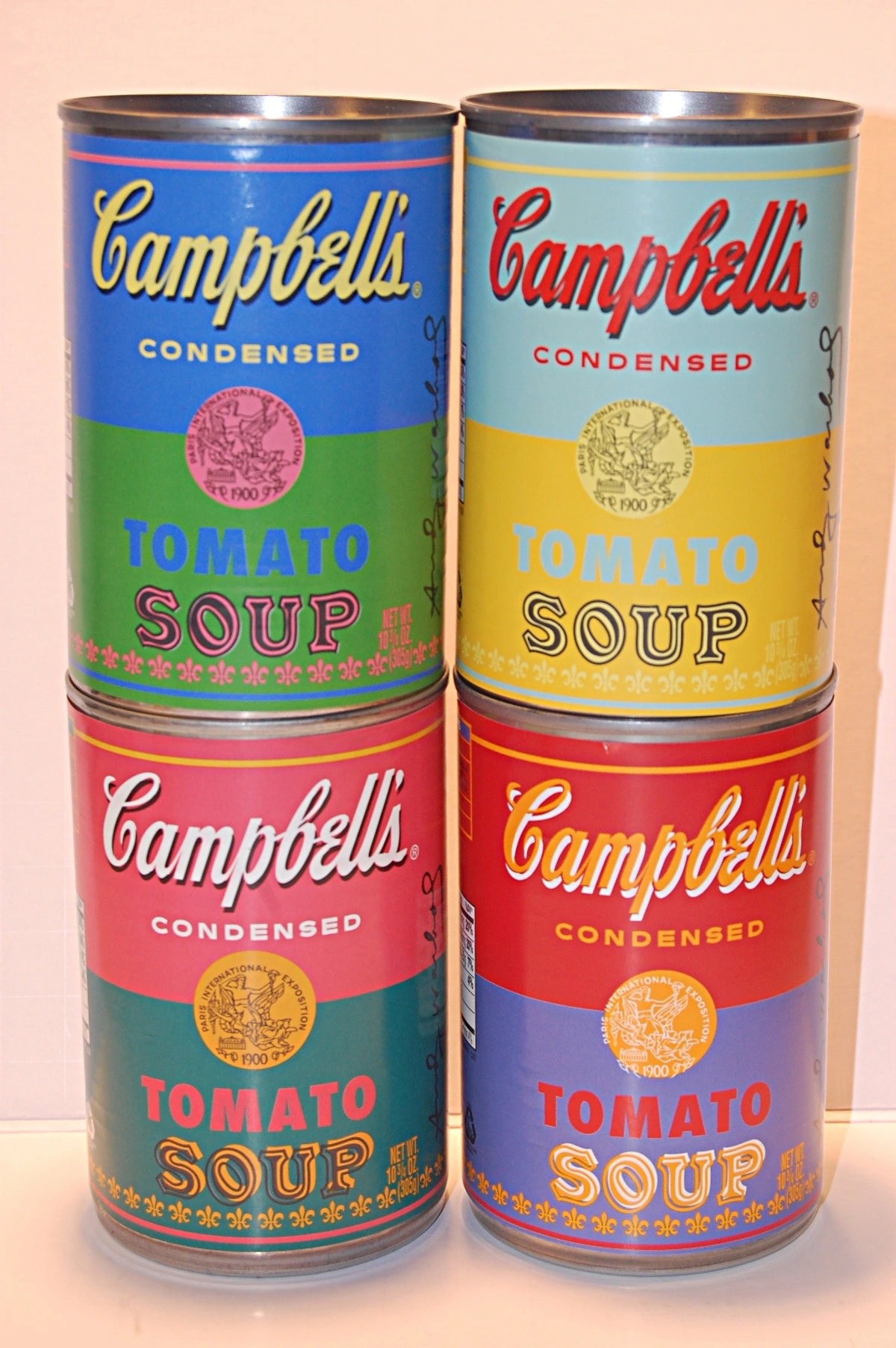
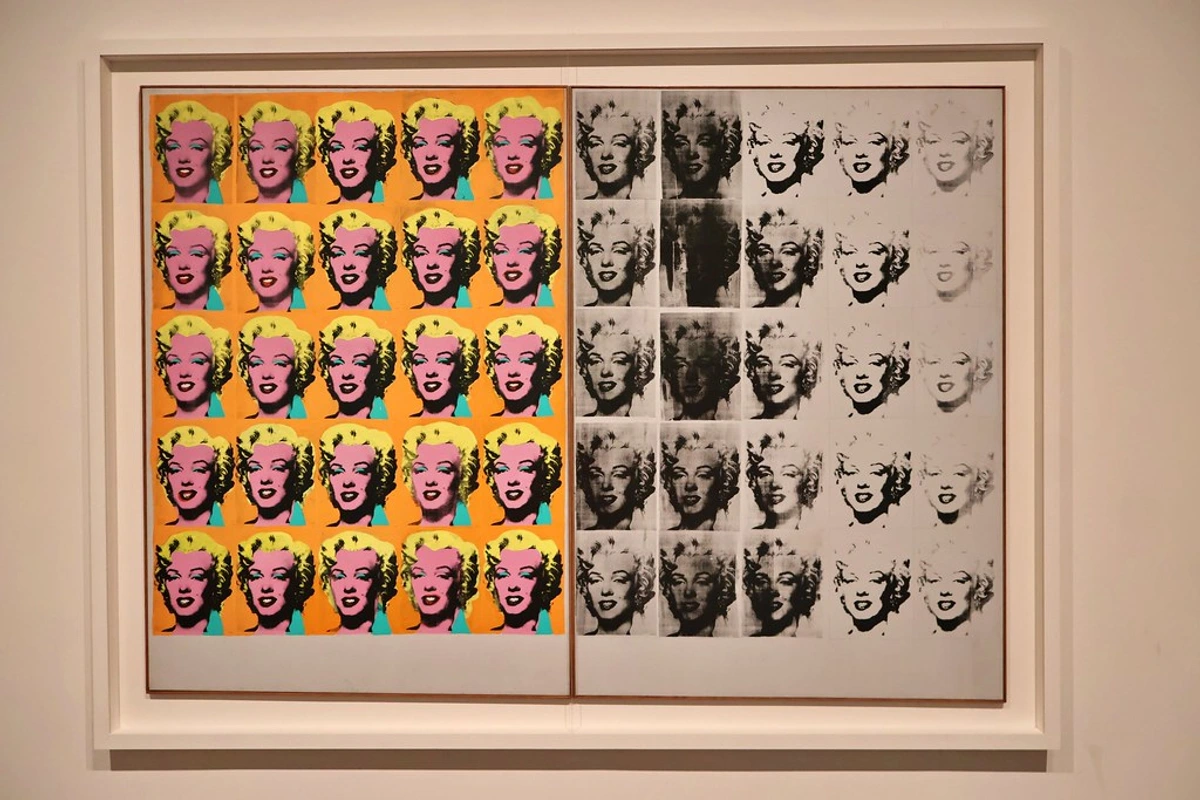
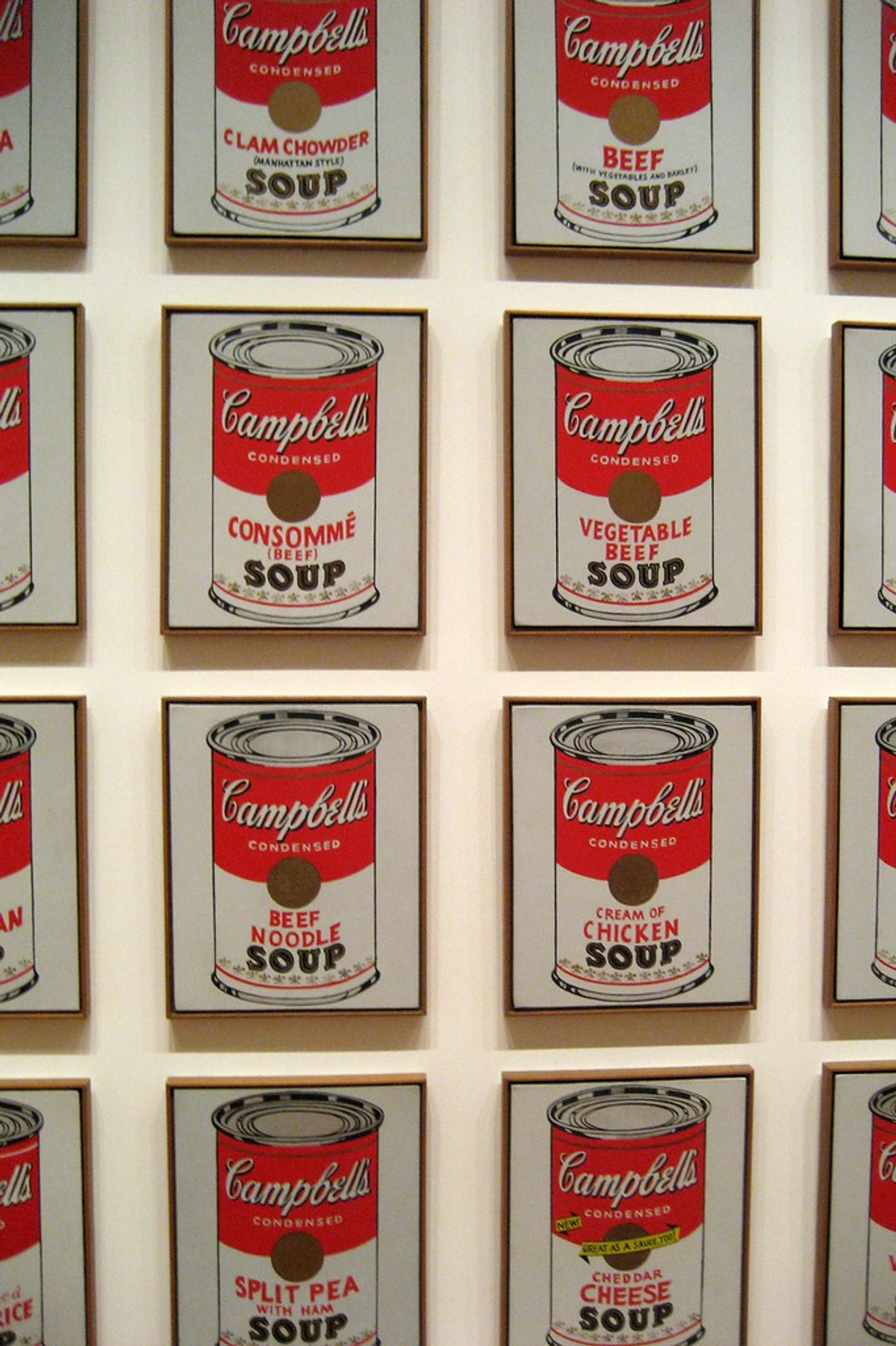
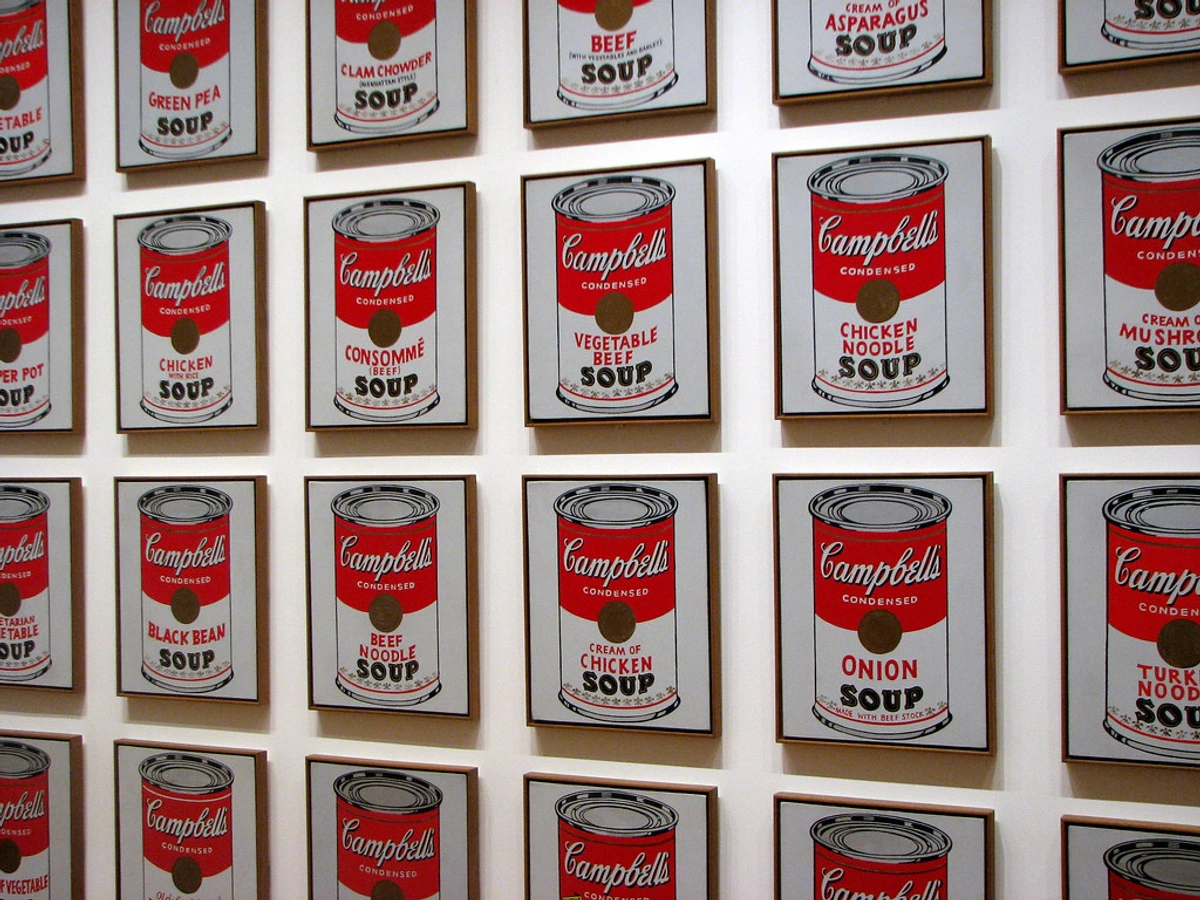
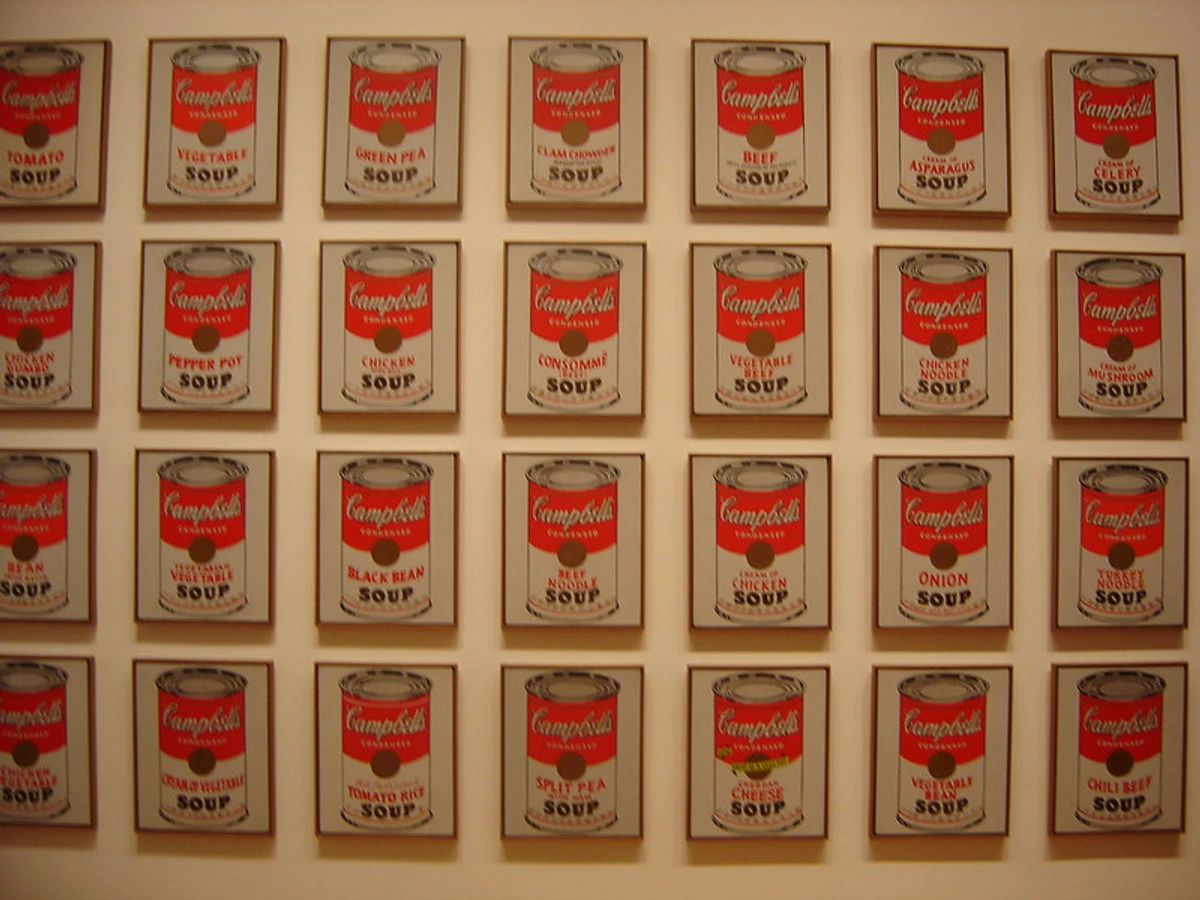
Pop artists, most famously Andy Warhol, didn't just use mass production; they celebrated it. Warhol's studio was called "The Factory" for a reason—it was an assembly line for art, rejecting the romantic notion of the solitary genius. He used commercial techniques like screenprinting to create his famous images of Campbell's Soup cans, Brillo boxes, and Marilyn Monroe. His point was profound: in a world saturated with mass media, advertising, and celebrity culture, these common, endlessly reproduced images were our culture. Why pretend otherwise? Other Pop artists like Roy Lichtenstein similarly appropriated comic strip imagery, meticulously hand-painting them to look like mechanical reproductions, questioning originality and authorship through the use of Benday dots and bold outlines. Think also of James Rosenquist's monumental billboard-like paintings, directly referencing advertising imagery and the scale of mass media, or Claes Oldenburg's soft sculptures of everyday objects, satirizing consumerism by transforming the mundane into the monumental. And Richard Hamilton's groundbreaking collage, 'Just what is it that makes today's homes so different, so appealing?' perfectly encapsulates the consumerist zeitgeist, using mass-produced images to critique and celebrate mass culture simultaneously.
By taking a soup can or a comic book panel and presenting it as 'art,' Warhol and Lichtenstein forced the art world to fundamentally question its own definitions of value, originality, and artistic merit. They deliberately blurred the line between 'high art' and 'low culture,' between a unique handmade object and a commercial product. The influence of artists like Jasper Johns, who had earlier explored the use of everyday objects and iconic symbols (like flags and targets) as subject matter, paved the way for Pop Art's profound questioning of what constitutes art and originality. This was a disruption we are still grappling with today, as we navigate a world of viral images, digitally reproduced content, and AI-generated visuals. Artists like Christopher Wool would later explore similar themes of pattern and repetition, questioning the artist's hand in a mechanical world, almost as if the brush itself were a printing press.
Pop Art and the Commercial Image: A Summary
Pop Art didn't just use mass-produced imagery; it elevated it, forcing a re-evaluation of what constitutes 'art' in a consumer-driven society.
Artist | Key Contribution | Impact on Art & Mass Culture |
|---|---|---|
| Andy Warhol | Screenprinting of consumer products (Soup Cans) and celebrity portraits (Marilyn Monroe). | Blurred lines between fine art and commercial art, celebrated mass culture, challenged notions of artistic originality and genius through mechanical reproduction. |
| Roy Lichtenstein | Appropriation of comic strip panels, using Benday dots and bold outlines. | Questioned authorship and originality, highlighted the aesthetic qualities of commercial illustration, and made commentary on popular culture. |
| Richard Hamilton | Pioneering Pop Art collages, critiquing consumerism. | Defined early Pop Art principles, emphasizing the transient, expendable, and glamorous nature of mass culture. |
| Jasper Johns | Use of everyday objects and symbols (flags, targets) as subject matter. | Challenged traditional painting through repetition and iconic imagery, prompting reflection on perception and representation of common objects. |
Street Art: Public Reproduction in the Digital Age
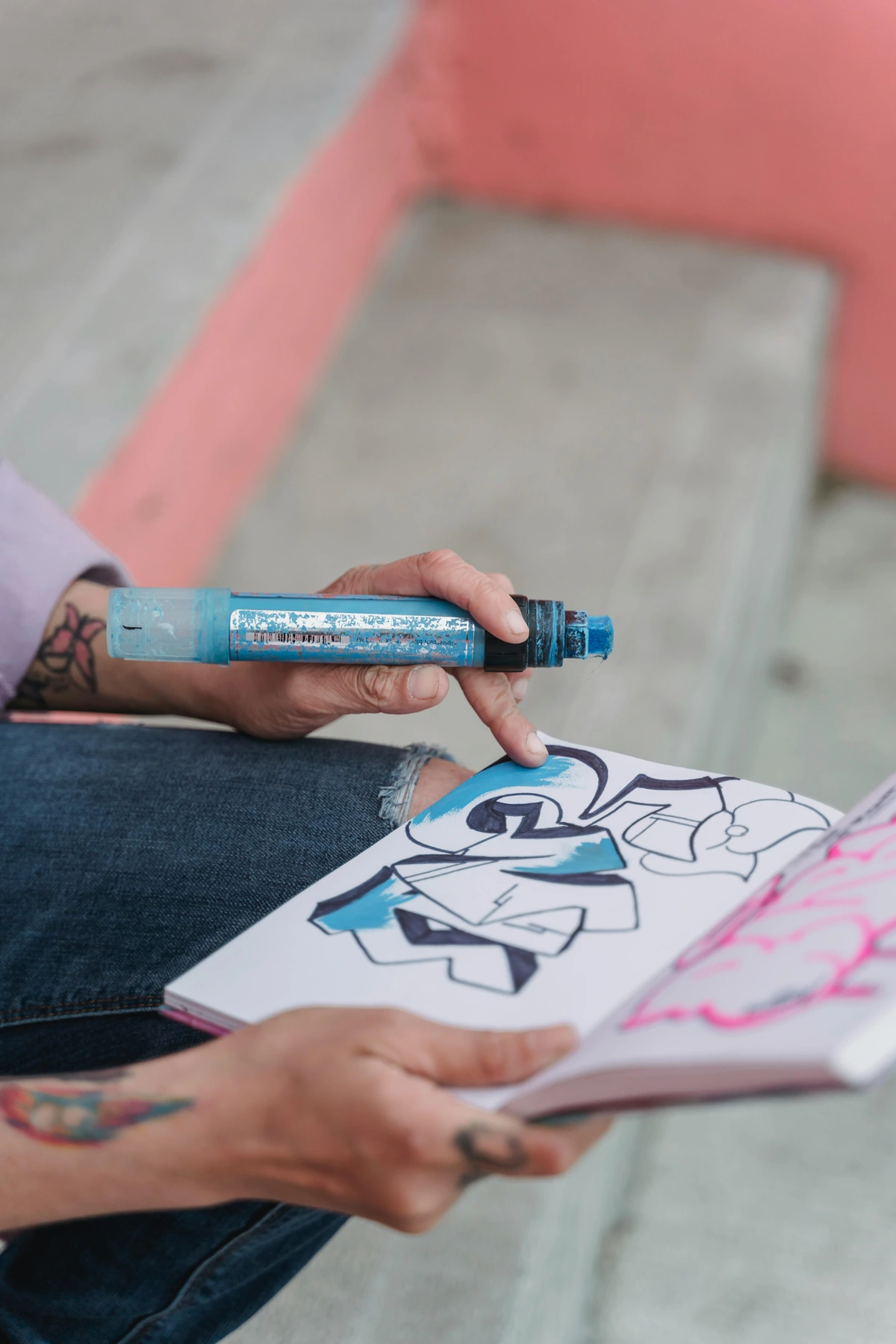
While rooted in urban culture and often unique in its original placement, street art has become a powerful, globally recognized art form largely because of its mass reproduction. A piece by an artist like Banksy might appear overnight on a wall, but it lives on infinitely through photographs, social media shares, and news coverage. The original is ephemeral, often painted over or removed, but its image, its message, is globally disseminated within hours, seen by millions. This creates a fascinating paradox: an artwork designed for a specific location, often illegally and ephemerally, achieves its mass impact and enduring legacy through digital replication. It becomes a viral phenomenon and a powerful form of contemporary 'mass art' precisely because its image is captured, shared, and debated online globally. The original is often painted over or removed, but its image, its message, is globally disseminated within hours, seen by millions. It's a testament to the ongoing power of the reproduced image, even when the original is fleeting, highlighting how digital culture reshapes the very concept of artistic presence. The immediate, often guerrilla nature of street art, combined with the instantaneous global reach of social media, means that its impact is amplified far beyond its physical location. This global audience fosters dialogue, critique, and even a form of collective ownership over these public artworks, even if their physical lifespan is uncertain. Furthermore, street art's subversive potential, often delivering sharp social or political commentary, is supercharged by this digital dissemination, allowing messages to bypass traditional gatekeepers and reach millions instantly.
This phenomenon illustrates a profound shift in how we consume and value art. The original object, the physical spray paint on a wall, retains a certain 'authenticity,' but the reproduced image carries the cultural weight. It's a modern echo of Benjamin's aura, but instead of being diminished, the aura of street art is paradoxically expanded by its digital reproduction.
The Digital Age: Art in Every Pocket
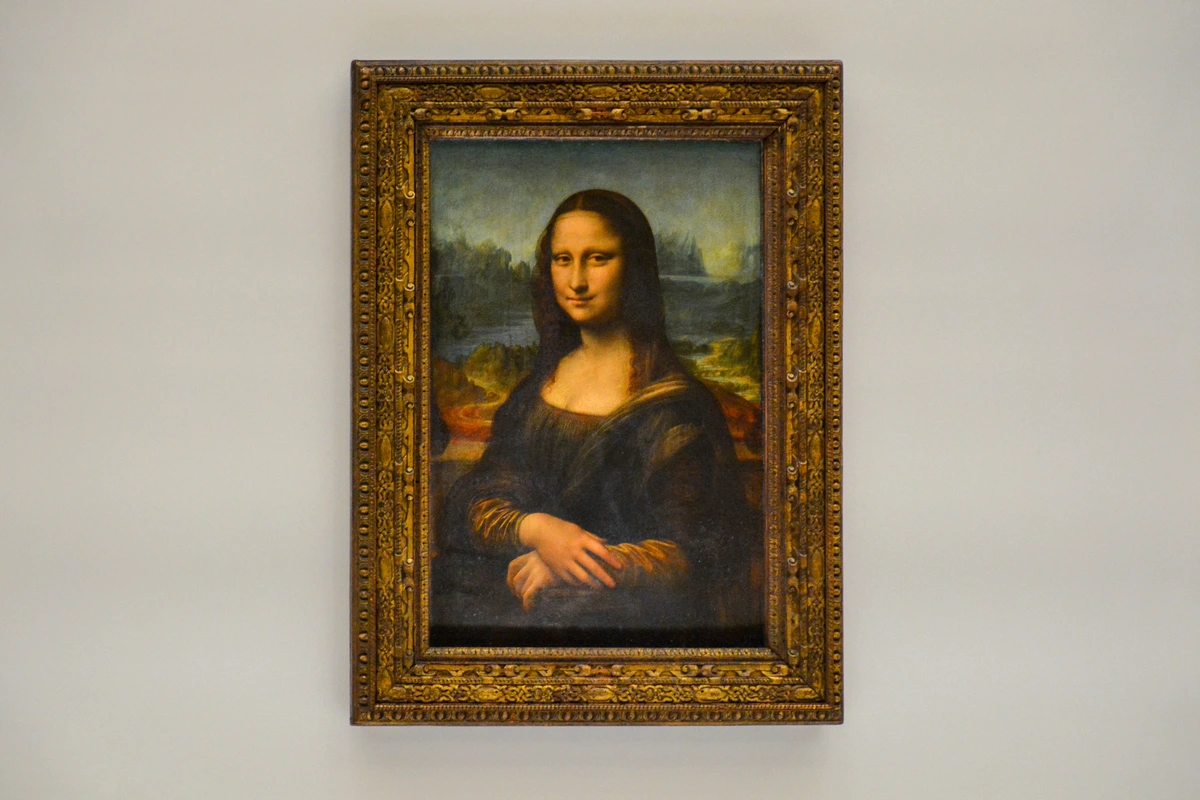
And that brings us to today. The internet and digital printing have created yet another revolution, one that makes Warhol's Factory look almost quaint in its physicality. We're talking about a paradigm shift where pixels, not plates, are the new medium. High-quality Giclée prints can reproduce an original painting with astonishing fidelity, capturing every brushstroke and subtle color variation, making museum-quality reproductions accessible to anyone with an internet connection. Print-on-demand services mean an artist can upload a file and sell their work to a global audience without ever touching a printing press, a gallery wall, or even a physical canvas, until an order comes in. The means of production are no longer a barrier; they're an enabler, democratizing art creation and distribution on an unimaginable scale.
Key Digital Art Technologies and Their Impact
Technology | Key Feature | Impact on Art Accessibility & Creation |
|---|---|---|
| Giclée Printing | High-fidelity inkjet printing for fine art reproductions using archival inks. | Museum-quality prints, allowing artists to sell reproductions that are nearly indistinguishable from originals, broadening access to high-end art for collectors at various price points. |
| Print-on-Demand (POD) | Production of items (prints, merchandise) only when an order is placed, minimizing waste and upfront costs. | Lowers barriers to entry for artists, eliminating inventory costs and enabling global reach for sales, fostering a more inclusive and diverse art market. |
| Digital Art Software (e.g., Photoshop, Procreate, Blender)** | Powerful tools like Photoshop, Procreate, and Blender for creating and manipulating art digitally, often with layers, brushes, and 3D modeling capabilities. | Expands artistic possibilities exponentially, allowing for easy iteration, non-destructive editing, infinite replication, and the creation of entirely new art forms like digital painting, 3D modeling, animation, and immersive experiences. It drastically lowers the technical barrier to creating complex visuals. |
| AI Art & Generative Platforms (e.g., Midjourney, DALL-E, Stable Diffusion)** | Algorithms that generate images from text prompts or existing datasets, often with surprising and unpredictable results. | Pushes the boundaries of authorship and creativity, generating entirely new artworks from code and data, blurring the lines between human and machine creativity. This presents both exciting new tools for artists and complex ethical questions regarding originality, ownership, and intellectual property. |
| Online Platforms (e.g., Etsy, Instagram, ArtStation, Patreon)** | Marketplaces and social media for artists to showcase and sell work, build communities, and engage directly with fans. | Direct connection between artists and global audiences, bypassing traditional gallery gatekeepers. These platforms enable community building, crowdfunding, and unprecedented reach for independent artists, fostering new models of art patronage and dissemination. |
I can create a painting in my studio, and within hours, someone on the other side of the world can see it online and buy a print that will be produced and shipped directly to them. The traditional barriers between artist, artwork, and audience have all but vanished, replaced by sophisticated algorithms and global logistics. This instant, global reach and frictionless distribution is genuinely breathtaking when you pause to consider it. It's truly 'art in every pocket' now, often quite literally on our phone screens, fostering an unprecedented level of visual literacy and engagement globally, and allowing artists to build international careers from anywhere. This democratization of both creation and consumption means that diverse voices and styles can find an audience, challenging the historical dominance of traditional art centers and gatekeepers. The sheer volume of art available online is staggering, creating both immense opportunity and new challenges in terms of visibility and curation.
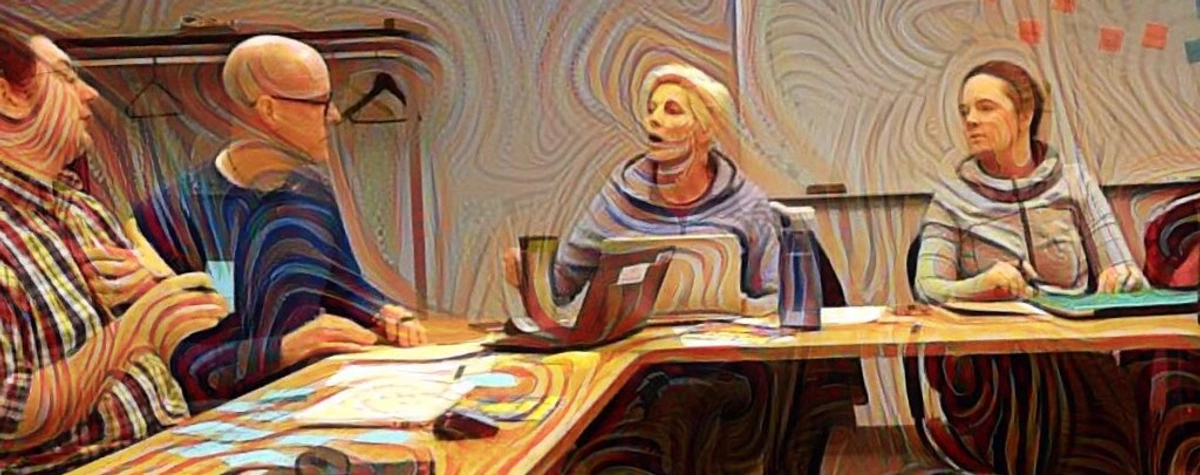
This digital accessibility also raises new questions, particularly around concepts like NFTs (Non-Fungible Tokens) and digital ownership. While the underlying blockchain technology is intriguing as a method of proving verifiable scarcity for digital assets, the core issue remains the same for me: how do we define inherent artistic value when an image can be copied infinitely with no loss of quality? And what does 'owning' a digital file truly mean beyond a verifiable entry on a decentralized ledger? It's a fascinating, complex space, and while it offers new avenues for artists to monetize their work and establish provenance in the digital realm, I tend to be deeply skeptical of anything that primarily tries to artificially impose scarcity on something that is inherently abundant and easily reproducible. The core promise of verifiable ownership is compelling in theory, but the extreme volatility of the market, the often speculative and hype-driven nature of many NFT projects, and the significant environmental impact of some underlying blockchain technologies are substantial concerns that, as an artist and a conscious human, I simply cannot ignore. The rapid rise and dramatic fall of certain NFT trends also starkly highlight the often speculative, rather than purely artistic, drivers behind much of the market. It's a new chapter, certainly, full of technical innovation, but the profound philosophical questions about art's essence, its true value, and its public purpose persist, perhaps even intensified by these digital innovations.
The Curator's View: Has Something Been Lost?
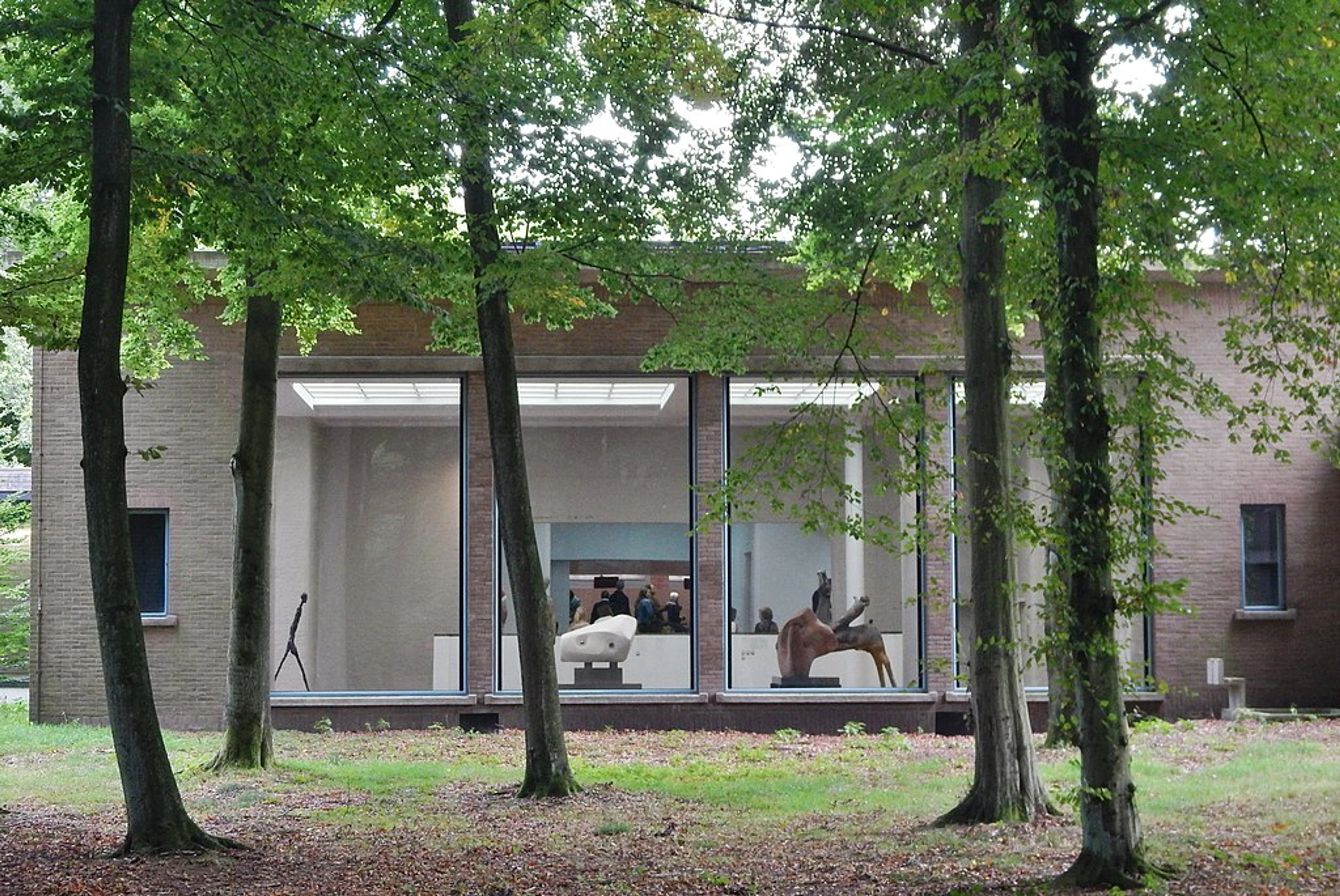
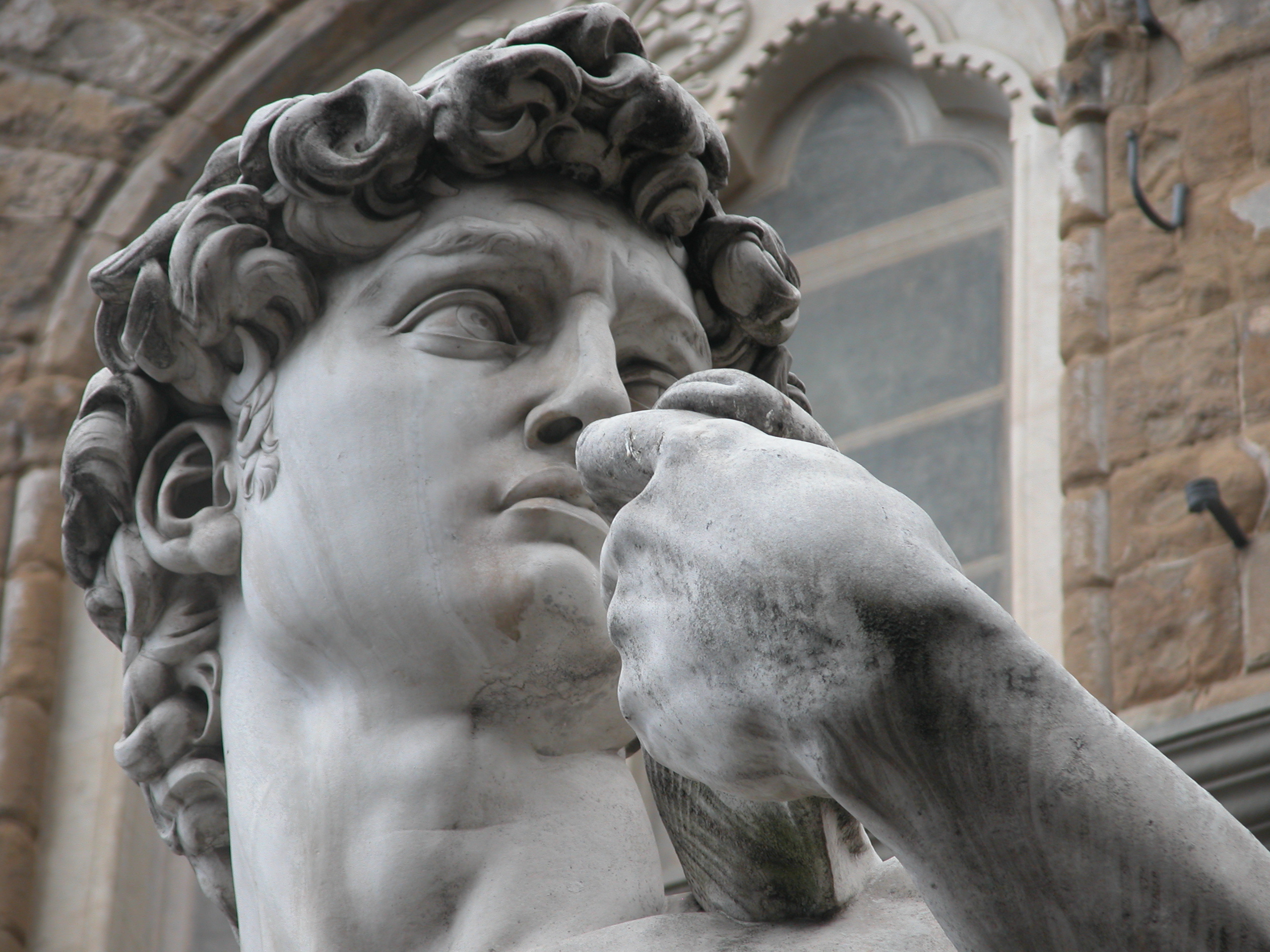
So, with a perfect replica on your wall, is the experience of visiting a physical institution like the Den Bosch museum to see an original obsolete? Does my abstract digital print hold the same inherent weight as a historical oil painting? I don't think so, and here's why. This brings us to a fascinating idea from the philosopher Walter Benjamin, who, in his seminal 1936 essay "The Work of Art in the Age of Mechanical Reproduction," wrote about the "aura" of a work of art. It's a concept that resonates deeply with me, even in our hyper-digital world. I mean, think about it: when you see a photograph of a famous painting, it's just an image. But when you stand before the original, say a Rothko at the Den Bosch museum, you don't just see it; you feel its monumental scale, its tangible texture, the subtle way the light truly interacts with the pigments in that specific space. That, for me, is the essence of its aura. It's not just about seeing; it's about being profoundly present with something that has lived through time, bearing the undeniable, unique mark of its creator and its journey. Benjamin's concept isn't about snobbery; it's about understanding the unique, unrepeatable experience that comes from encountering an object with a singular history. It's the palpable sense of human touch, the imperfections, the subtle sheen of aged varnish, the way certain colors have deepened or faded over centuries, the sheer fact that this very object was held by the artist centuries ago, perhaps touched by countless hands through history. No digital file, however high-resolution, however perfectly color-matched, can replicate that multi-sensory, time-infused experience.
Benjamin argued that an original artwork has a unique presence in time and space. It has a history. It has texture. You can see the brushstrokes, the imperfections, the physical evidence of its creation – the artist's hand, the age of the canvas, the way light plays on its surface. A reproduction, no matter how good, lacks this aura. It's a copy, an image of an artwork, but not the artwork itself. It's like listening to a recording of a live concert; you get the music, certainly, but you miss the electric energy of the crowd, the spontaneous improvisation, the shared breath of the performers and audience in that moment. You don't get the unique smell of the venue, the jostle of the crowd, the heat, or the sudden, electric silence between notes. That unique, unrepeatable moment, that tangible link to its origin in time and space—its physical history, its unique presence—is the aura. It's what makes the original a singular, irreplaceable experience. And I'm not just talking about physical presence; I'm talking about the accumulated history, the provenance, the stories that an object gathers over its lifetime. A reproduction simply cannot carry that weight.
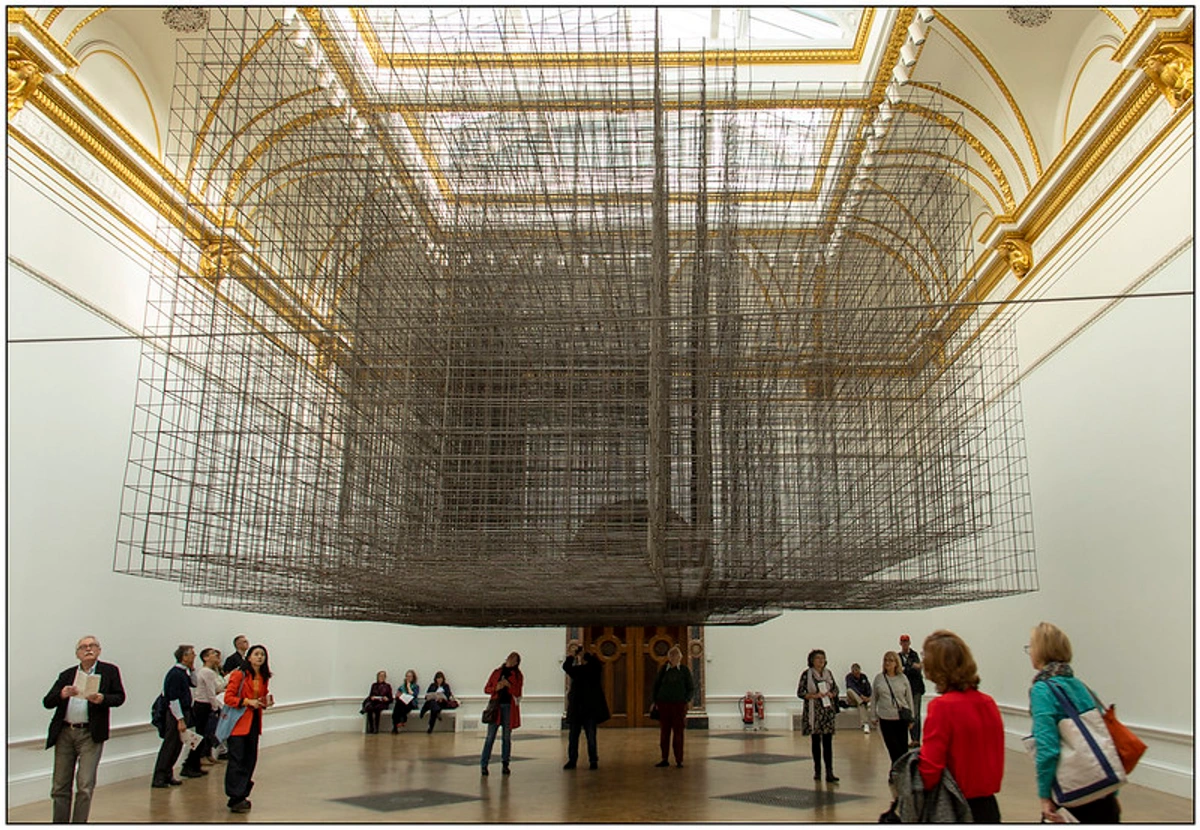
Benjamin’s ideas prompt us to consider whether the pursuit of endless accessibility might inadvertently dilute the very essence of what makes art powerful and meaningful. While reproductions undoubtedly serve vital educational and decorative purposes, the unique magic of the original remains paramount for many, myself included. It’s not just about what you see, but what you feel in the presence of an object that has traversed centuries.
Analyzing the artistic merit of a painting often involves appreciating this very uniqueness, this tangible link to its creation. Mass production gives us access, which is an incredible gift. It allows us to learn, to be inspired, and to live with images we love. But it doesn't replace the quiet, powerful, almost spiritual experience of standing in front of the real thing, absorbing its original presence. It's not about one being 'better' than the other; it's about two fundamentally different, equally valuable experiences.
The Role of Museums in an Age of Reproduction
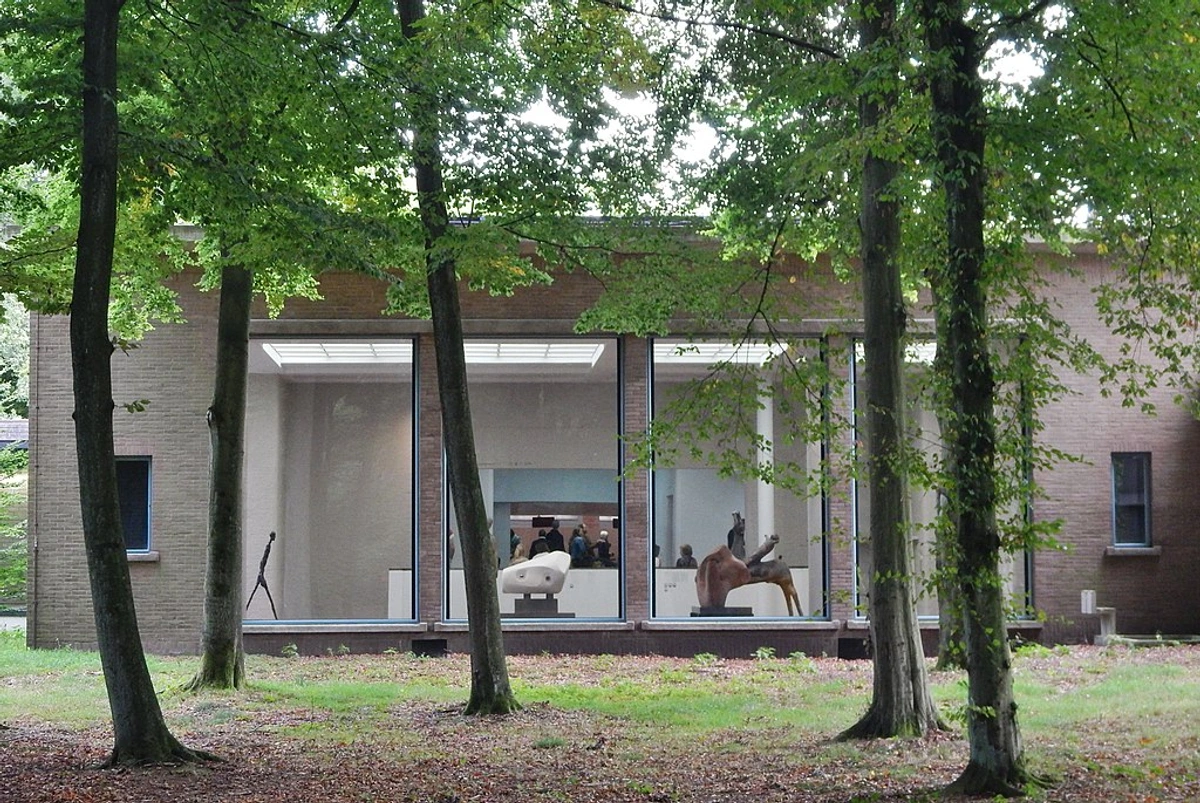
If perfect reproductions exist, do museums become obsolete? Absolutely not! In fact, I'd argue their role becomes even more vital. Museums are the guardians of that 'aura.' They offer the unique, irreplaceable context, the palpable physical presence, and the essential educational framework that reproductions, no matter how perfect, simply cannot. Museums curate profound narratives, meticulously preserve fragile originals for future generations, and provide invaluable spaces for communal contemplation, critical dialogue, and shared cultural experience. Seeing an artwork in person, within a dedicated, thoughtfully curated space, is a pilgrimage that connects us to history, culture, and the very human act of creation in a way a digital file or a printed poster never can fully replicate. It's why I'll always champion the museum experience—it’s a living connection to history, a chance to witness the tangible evidence of human ingenuity, and to experience that irreplaceable aura for yourself. Moreover, museums provide crucial scholarly resources, conservation efforts, and educational programs that simply cannot be replicated by digital images. They are active centers of research and learning, deepening our collective understanding of human creativity and its evolution.


Frequently Asked Questions (FAQ)
What was the first form of mass-produced art?
While early forms of repeatable imagery existed (like seals and coins in ancient civilizations), woodcuts and engravings, which became widely popular after the invention of Gutenberg's printing press in the 15th century, are generally considered the first true mass-produced art forms. They allowed a single image to be reproduced hundreds or thousands of times, disseminating artistic and informational content across Europe.
How did early printmaking techniques differ from painting?
Early printmaking techniques, like woodcuts and engravings, were fundamentally different from painting in their execution and artistic output. Painting involved direct application of pigment by hand onto a surface, resulting in a unique, singular object with visible brushstrokes and textures. Printmaking, by contrast, involved creating a matrix (a woodblock or metal plate) from which multiple identical or near-identical impressions could be made. This process required a different set of skills—carving, incising, inking, and pressing—and emphasized line, contrast, and repeatable patterns over painterly blending and unique texture. While a painting was a unique 'original,' a print allowed the artist's work to be disseminated widely, creating a new category of 'original print' that was distinct from a painted masterpiece.
How did Pop Art change the view of mass production?
Pop Art, led by figures like Andy Warhol and Roy Lichtenstein, dramatically changed the view of mass production by celebrating it rather than shunning it. These artists appropriated commercial techniques (like screenprinting) and imagery (like soup cans and comic strips) to argue that the distinction between 'high art' and 'low' commercial culture was no longer relevant in the modern, consumer-saturated world. They highlighted that mass-produced images were our culture.
What is a Giclée print?
A Giclée (pronounced zhee-KLAY, from the French for 'to spray') is a high-quality fine art print made using a specialized inkjet printer. These prints are renowned for their exceptional color accuracy, wide color gamut, and archival longevity (often 100+ years), making them the industry standard for museum-quality reproductions of paintings, photographs, and digital art. They are designed to be virtually indistinguishable from the original when viewed side-by-side.
Does a reproduction have the same value as an original?
Financially and historically, no. The original artwork is unique and carries the "aura" of the artist's direct touch, its physical history, and its singular presence in time and space, making it far more valuable to collectors and institutions. However, a high-quality reproduction has immense personal, decorative, and educational value, allowing countless people to enjoy and be inspired by an image that would otherwise be inaccessible. Their value lies in accessibility and broad appreciation, rather than unique scarcity.
What is an editioned print?
An editioned print refers to a series of identical prints, pulled from the same matrix (e.g., a woodblock, etching plate, or lithographic stone) and supervised by the artist. These prints are typically numbered (e.g., 1/50, indicating the first print of an edition of 50) and signed by the artist. Crucially, each print in a limited edition is considered an original work of art, despite being one of many, because the artist was directly involved in its creation and deemed each impression artistically acceptable. This distinguishes them from open-edition reproductions, which can be printed endlessly without the artist's direct involvement in each impression.
What is the concept of 'aura' in art?
The concept of "aura," introduced by philosopher Walter Benjamin, refers to the unique presence of an original work of art in time and space. It encompasses its physical history, its authenticity, and the sense of reverence and wonder it inspires due to its singularity and direct connection to its creation. Benjamin argued that mechanical reproduction diminishes this aura, as copies lack the original's unique history and presence, even while increasing accessibility.
How has the internet most affected art accessibility?
The internet has acted as a global gallery, a boundless library, and an open marketplace. It allows artists to bypass traditional gatekeepers (galleries, dealers, critics) and connect directly with a worldwide audience, facilitating sales and recognition regardless of geographical location. Simultaneously, it gives art lovers instant access to virtually the entire history of art from their screens, fostering unprecedented visual literacy and blurring the lines between private viewing and public exhibition. This democratized access is perhaps its most profound effect.
The Ethics of Digital Reproduction and AI Art
The digital age, while liberating in many ways, has also brought forth a new set of ethical dilemmas, particularly concerning digital reproduction and the rise of AI art. When an image can be perfectly replicated and infinitely shared, how do we ensure artists are fairly compensated and their intellectual property is protected? The ease of 'sampling' or 'remixing' digital content blurs the lines of authorship and originality, leading to complex legal and moral questions about derivative works. Furthermore, AI art, generated by algorithms trained on vast datasets of existing human-created art, challenges our fundamental understanding of creativity. Who owns the 'original' in an AI-generated piece? Is it the programmer, the prompt engineer, the AI itself, or the artists whose work formed the training data? These aren't just academic questions; they have real-world implications for artists' livelihoods, copyright law, and the very definition of artistic practice in the 21st century.

The Future of Art and Replication: Blurring Lines
Where do we go from here? The trajectory is clear: technology will continue to blur the lines between original and copy, artist and audience, creation and consumption. Virtual Reality (VR) galleries now allow truly immersive experiences of art from anywhere in the world, transporting viewers into meticulously reconstructed digital museum spaces or entirely fantastical artistic realms. Simultaneously, Augmented Reality (AR) overlays digital art onto our physical world, transforming everyday environments—a city street, your living room—into dynamic, interactive canvases. AI collaborators are pushing the boundaries of authorship, generating entirely new artworks from sophisticated algorithms and vast datasets, blurring the lines of who, or what, is truly the artist. Personalized art experiences delivered directly to our smart devices—these aren't sci-fi anymore; they're happening right now. The questions Benjamin posed almost a century ago about the 'aura' are more relevant and pressing than ever. What is art when it can be instantly replicated, infinitely manipulated, and experienced entirely without physical presence? What about the ethical implications of AI art and intellectual property, of deepfakes and algorithmic bias? These are the complex, exciting, and sometimes daunting questions that continue to shape the narrative of art in our mass-produced, hyper-digital world.
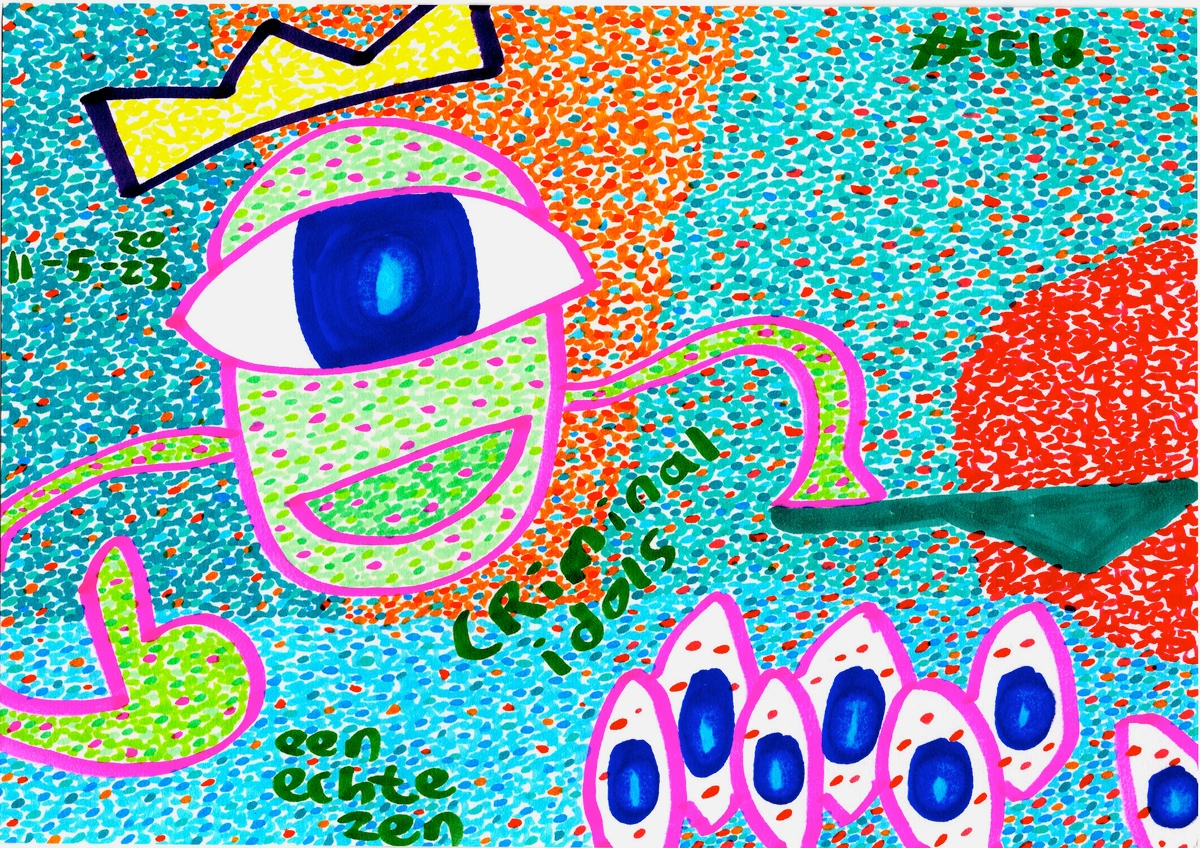
I believe the answer lies not in fear of the new, but in a deeper understanding of what we value. The unique, handmade object will always hold a special place, imbued with the artist's direct touch, their struggles, their triumphs, and their finite presence. It's a tangible link to a human hand and mind. But the reproducible image, whether a Dürer print or a vibrant digital masterpiece, offers a different, equally powerful kind of value: accessibility, widespread inspiration, education, and a shared visual language that binds us together across cultures and continents. It forces us to continually redefine our terms, to expand our appreciation, and to engage in a constant dialogue about what art truly is. And honestly, isn't that a richer, more engaging conversation to be having?
Impact of Mass Production on Art Forms: A Summary
Art Form / Era | Original State | Key Technologies | Impact of Mass Production |
|---|---|---|---|
| Pre-Gutenberg Art | Unique, site-specific, ritualistic (e.g., cave paintings, frescoes, tapestries). | Seals, coins, carved molds, stencils. | Limited replication for political, religious, or decorative dissemination. Images were primarily symbolic and site-bound. |
| Early Printmaking (15th-18th C) | Unique paintings, drawings, manuscripts. | Woodcuts, Engravings, Etchings. | Enabled widespread distribution of images, democratized access to religious, educational, and secular imagery, fostered a nascent art market. |
| Industrial Revolution Art (19th C) | Unique paintings, sculptures, bespoke crafts. | Lithography, Photography (Daguerreotype, Calotype, Wet Collodion). | Created entirely new art forms, allowed for cheaper, faster, and more accurate reproductions, fueled the rise of illustrated press, advertising, and a new middle-class art market. |
| 20th Century Art (Early & Pop Art) | Original art often unique; mass media, photography, and film ubiquitous. | Screenprinting, Mass Advertising Techniques, Readymades. | Avant-garde challenged art's definition (Dada, Bauhaus). Pop Art directly incorporated mass-produced imagery/techniques, explicitly blurring 'high vs. low' art. |
| Digital Age Art (21st C) | Unique physical art, digital-native art, ephemeral street art. | Giclée Printing, Print-on-Demand, Digital Art Software, AI Art, NFTs, VR/AR platforms. | Infinite reproducibility, global instant distribution, rise of new forms (AI art, NFTs, AR/VR art), blurring of physical and digital realms, new challenges to ownership and value. |












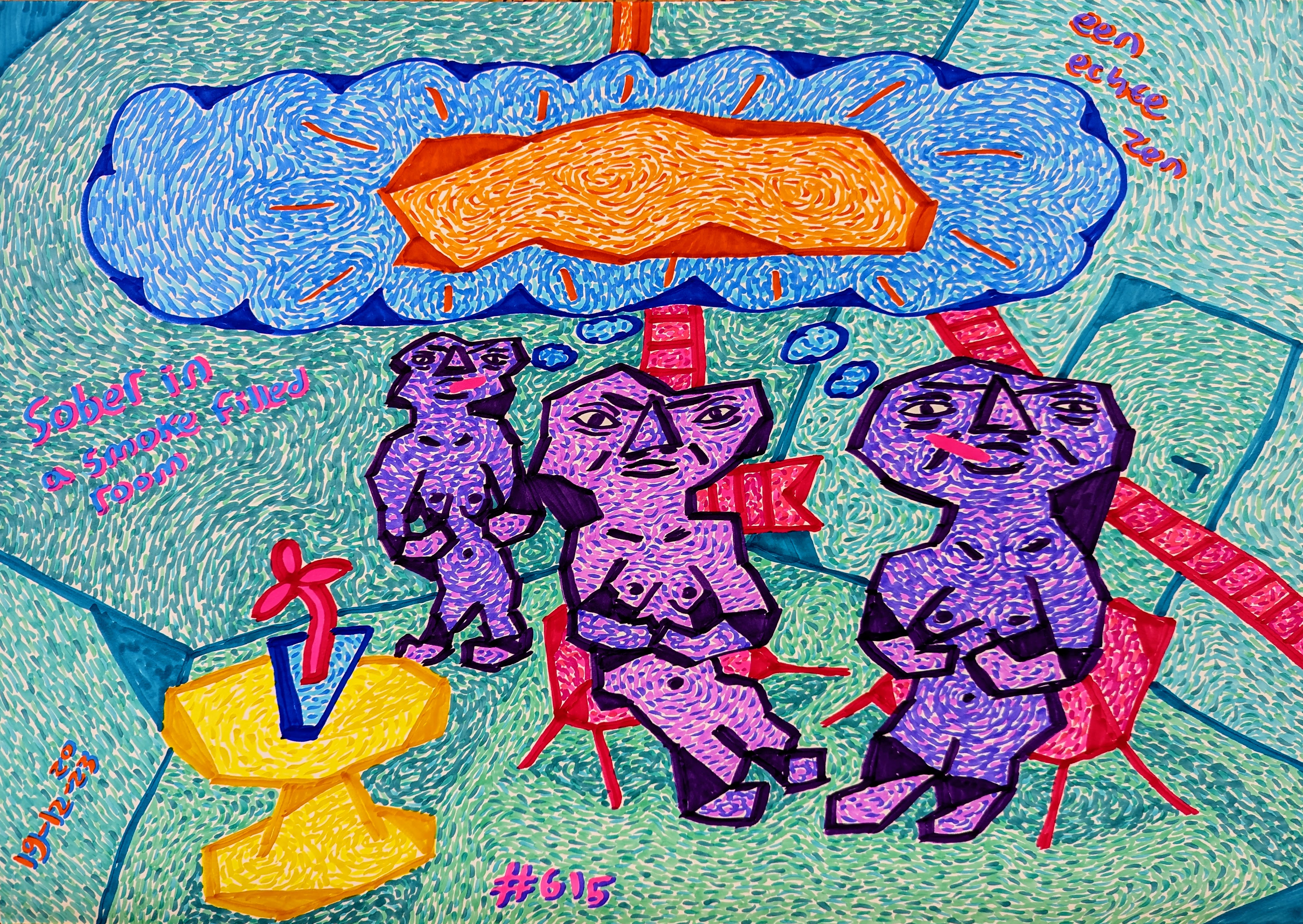
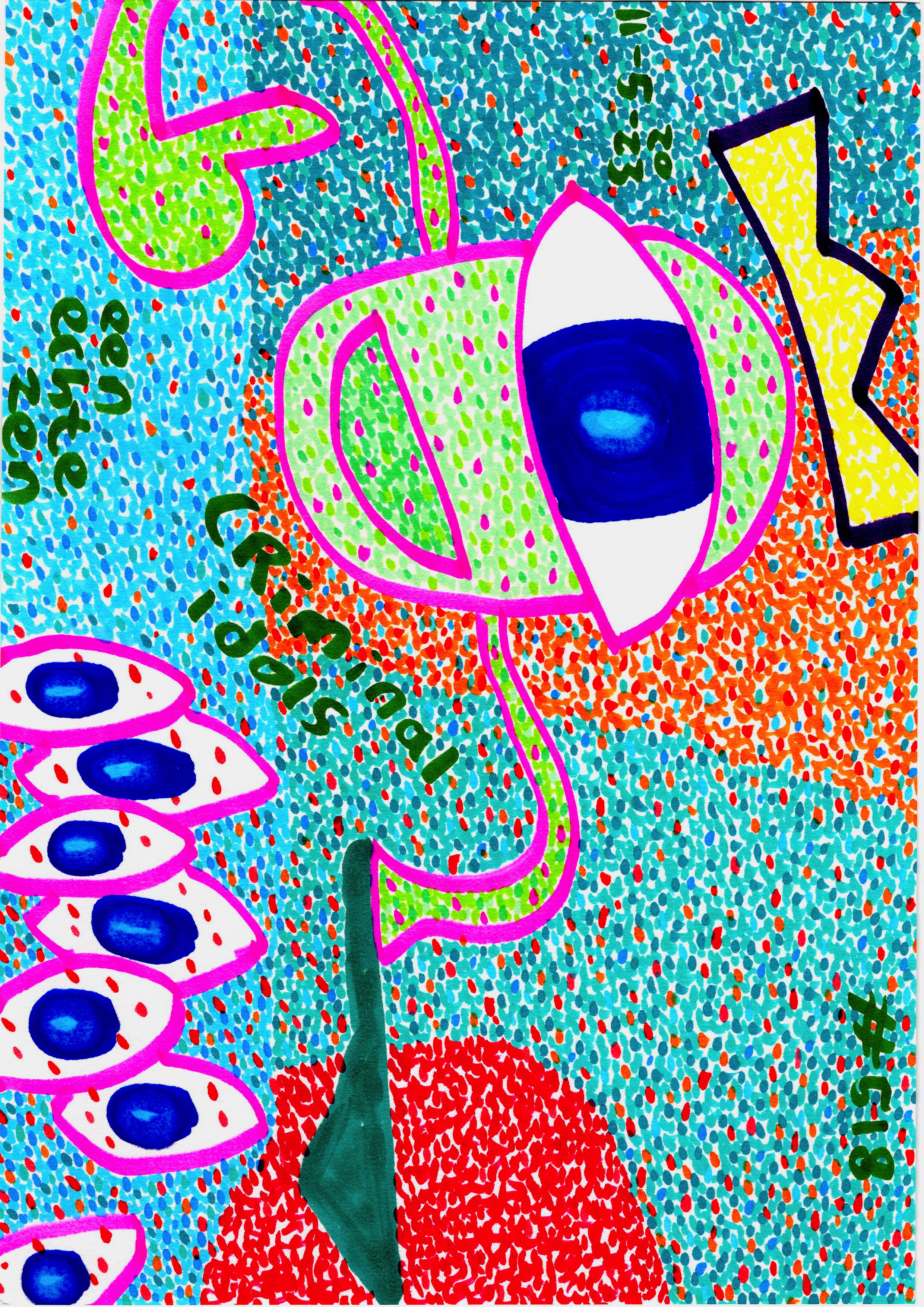

The Evolution of Artistic Labor: From Artisan to Digital Creator
The journey of art's reproduction isn't just a story of technology; it's also a story of the evolving role of the artist. In the pre-Gutenberg era, the artist was often an artisan, a skilled laborer working within a guild system, their individual genius often subsumed by collective craftsmanship. The printing press allowed for the emergence of the 'artist-entrepreneur' like Dürer, who could disseminate their unique vision widely. The Industrial Revolution saw the rise of commercial artists and photographers, working within new industrial frameworks, often blurring the lines between art and industry. Today, the digital age presents artists with an unprecedented array of tools and distribution channels, from independent online sales to AI co-creation. This constant evolution of artistic labor—from solitary artisan to factory-like producer to global digital creator—reflects the changing relationship between creation, craft, commerce, and the audience, profoundly reshaping what it means to be an artist in a world of endless reproduction.
While I will always advocate for the magical, undeniable experience of seeing an original work in person – the scale, the texture, the undeniable 'presence' – I also wholeheartedly celebrate the print on your wall. That access is a hard-won marvel of technology and creativity, creating a world richer and more visually literate than ever before. It's a complicated, fascinating tapestry of progress, philosophy, and everyday joy. And that, to me, is a beautiful picture, indeed. Because after all, if you love it, and it sparks something within you—a moment of connection, a flicker of contemplation, or just a burst of joy—isn't that what art is truly about? The medium and the means of production are fascinating, but the experience it provides, the emotion it evokes, remains paramount. So, whether it's a singular brushstroke on a canvas or a perfectly rendered print on your wall, the power of art endures, transforming our spaces and, if we let it, ourselves. It’s the experience that matters.