
What is Dadaism? An Artist's Guide to the Anti-Art Movement
Ever feel like art is a joke? You might be a Dadaist. Dive into the chaotic, absurd, and brilliant world of Dadaism, the anti-art movement that changed everything.

Dadaism: The Glorious, Absurdist Art Movement That Blew Up the Rulebook and Sparked a Century of Rebellion
Okay, I'll admit it: I've always had a soft spot for the unruly, the illogical, and the downright absurd. Maybe it's a personality flaw, or perhaps it's a deep-seated appreciation for movements that dare to question the very foundations we build our worlds on. So, when I first encountered Dadaism, it felt less like an art history lesson and more like a rallying cry. Have you ever looked at a piece of modern art and thought, "Is this a joke?" I know I have, more times than I can count. But what if I told you that, for a pivotal moment in history, art was supposed to be a joke? What if the entire point was to be utterly nonsensical, to aggressively reject logic, and to gleefully give the established art world a giant, raspberry-blowing middle finger? What if that was the most profound artistic statement imaginable? That, my friends, is the glorious, defiant, and enduring heart of Dada. It's a journey into the very soul of rebellion, a movement that quite literally declared war on common sense and traditional aesthetics, radically redefining what art could be.
At its heart, Dadaism was an avant-garde art movement that emerged during World War I, characterized by its deliberate irrationality, nihilism, and rejection of prevailing standards in art. It wasn't just an art style; it was a philosophical stance, a defiant shout against the perceived madness of a world consumed by war, and a precursor to so much of what we now consider abstract art and modern artistic thought. This article will unravel the threads of its audacious beginnings, explore its anarchic principles, introduce you to the brilliant minds who fueled its fire, and trace its astonishing, enduring legacy across a century of art and culture, mapping its vital place on the art timeline. If that rebellious spirit sparks something in you, then you're going to feel right at home with Dadaism, an artistic declaration of war on common sense and traditional aesthetics that radically redefined art's very nature and, frankly, set the stage for much of the artistic rebellion that followed.
The World Before the Scream: Pre-Dada Context
Before we dive into the glorious chaos of Dada, it's worth taking a moment to picture the world that birthed it. The early 20th century was a tumultuous time, marked by rapid industrialization, scientific breakthroughs that simultaneously thrilled and terrified, and a growing sense of disillusionment with traditional values. Art movements like Cubism, with its revolutionary fragmentation of form, and Futurism, passionately celebrating speed, technology, and even the "beauty of war," had already begun to shatter conventional perspectives and challenge the very notion of objective reality. Both movements, in their own ways, laid crucial groundwork for the radical departures that Dada would soon undertake, though Dada would ultimately reject Futurism's embrace of violence, seeing its glorification of aggression as utterly bankrupt. Expressionism, too, was a powerful force, channeling the raw emotional turmoil and psychological anxieties that simmered beneath the surface of early 20th-century life. Think of the angst-ridden figures of Edvard Munch's work, screaming silently in the face of an indifferent world. It was a premonition, really. But beneath this veneer of progress, a simmering tension was building, a sense that the very fabric of society was fraying. The promise of reason and enlightenment, which had driven centuries of European thought, felt increasingly hollow as nations geared up for what would become the most brutal conflict humanity had ever seen, prompting a new wave of disillusionment and a search for more authentic, if chaotic, forms of expression. It was a period ripe for radical change, not just in art, but in how humanity understood its place in a rapidly industrializing, yet increasingly violent, world. The elegant solutions of rationalism, once held as the pinnacle of human achievement, were starting to look a lot like broken promises, unable to prevent the looming catastrophe of World War I. This profound disillusionment fueled a desperate search for new, more authentic, if chaotic, forms of expression, ultimately paving the way for Dada's outright rejection of all that came before.
It’s crucial to understand that Dada wasn't just a random outburst; it was a visceral, guttural response to the ultimate failure of this perceived 'progress.' When the guns of World War I finally roared to life, obliterating a generation and shattering the illusion of a rational, ordered world, many artists and intellectuals found themselves utterly aghast. The neat categories, the beautiful aesthetics, the logical narratives – they all seemed utterly meaningless in the face of such industrialized slaughter. So, how do you respond when the world you knew has gone irrevocably mad? For a small group of defiant souls, the answer was clear: mirror that madness, amplify it, and mock it with every fiber of their artistic being. That, my friends, is where our story truly begins.
I've always thought of Dada not just as an art style, but as a profoundly urgent state of mind. It was a visceral protest, a spontaneous performance, and a glorious, chaotic mess born from the profound trauma of a world quite literally tearing itself apart. You see, the Dadaists weren't just making art; they were performing an exorcism on a world that had gone mad, a ritualistic purging of the societal ills they saw as rampant. It's fascinating to trace its lineage, recognizing it as the direct ancestor of so much contemporary art that dares to challenge our very definition of what art can be. From the conceptual breakthroughs of Marcel Duchamp to the rebellious spirit of punk rock, Dada's fingerprints are everywhere. To truly grasp Dadaism is to gain a key to a huge, often misunderstood, part of art history. So, let's unlock that door together and see what glorious chaos lies within. It's an invitation to confront the uncomfortable, to question the unquestionable, and to find a strange kind of beauty in the wreckage of logic.
A Rebellion Born from Chaos: The Birth of Dada
Imagine it's the middle of World War I. Europe is a slaughterhouse. Logic, reason, and the supposed progress of society have led to trenches, mustard gas, and a generation of young men being obliterated. The staggering casualty counts—millions dead, millions more maimed—weren't just statistics; they were an unbearable weight on the collective psyche. The very notion of civilization seemed to have collapsed, revealing a grotesque underbelly of irrationality and violence masked by polite society. If you were a creative person, a refugee from this madness, wouldn't you start to question the very culture that produced it? Wouldn't you be driven to madness yourself, or perhaps, to a new form of sanity in utter defiance? I know I'd be looking for a way to scream, and many of them did, quite literally, through visceral sound and performance, transforming their personal anguish into collective artistic protest.
That's exactly what happened. In the sanctuary of neutral Zurich, Switzerland, a group of artists, writers, and intellectuals—figures like Hugo Ball, Emmy Hennings, Tristan Tzara, Jean Arp, and Richard Huelsenbeck—gathered at a small, unassuming establishment: the Cabaret Voltaire. This wasn't just a nightclub; it was a sanctuary for the disillusioned, a vibrant, smoky crucible of artistic rebellion, a place where the old world was openly, defiantly, and hilariously mocked. The air was thick with cigarette smoke, revolutionary zeal, and the clatter of experimental instruments. Imagine a dive bar, but instead of cover bands, you get Hugo Ball in a bizarre 'Magical Bishop' costume, performing his abstract sound poem 'Karawane,' while Emmy Hennings dances in grotesque masks, and Tristan Tzara recites manifestos that deliberately contradict themselves. You'd hear primal screams, poetry composed from newspaper clippings, and disorienting music – a deliberate assault on the senses, designed to shock the bourgeois audience out of their complacency. These were not just artists; they were refugees from the madness, deeply disgusted by the senseless slaughter that 'reason' had wrought. They viewed the 'logic' of the bourgeoisie, the fervent nationalism, and the supposed cultural progress that had led to the war as utterly bankrupt. Their response? To reject it all, to scream, to laugh, to create pure, unadulterated nonsense. They embraced the illogical, the irrational, and the nonsensical, believing that if the world had descended into absurdity, their art would simply mirror, and even amplify, that absurdity. Here, amidst smoke, defiant declarations, and a cacophony of sounds, performance art, sound poetry, and spontaneous 'happenings' took root, laying the groundwork for a revolutionary new way of thinking about creativity, pushing the boundaries of artistic expression beyond traditional forms. This crucible of creativity fostered an environment where anything was possible, and nothing was sacred, becoming a symbol of resistance and artistic liberation. Ball himself, often adorned in bizarre, sculptural costumes (like his famous 'Magical Bishop' attire made of cardboard), would recite sound poems, attempting to strip language bare of its conventional meaning and push the boundaries of communication into pure, raw vocalization. It was an exhilarating, terrifying, and utterly liberating experience, I imagine, for both the creators and the bewildered audience. This refusal to conform, this active embracing of chaos, was Dada's first defiant breath, a radical re-evaluation of what art could be and how it could respond to unprecedented global trauma. In his 'Karawane' performance, Ball wore a tall, cylindrical hat and a cloak made of cardboard, making him appear like a fantastical, almost alien figure. His recitation of phonetically arranged syllables, devoid of conventional linguistic meaning, was a deliberate act of linguistic rebellion, a return to the primal sounds before words were corrupted by rational thought. It was a profound statement about the bankruptcy of language in the face of wartime propaganda and deception.
Dada was their weapon, a word that perfectly encapsulated their defiance. The name itself is famously nonsensical, and that was entirely by design, which, when you think about it, is a stroke of pure genius. While the most popular legend suggests they randomly stuck a knife into a dictionary, landing on 'dada'—a French colloquialism for 'hobbyhorse'—there are other tales. Some say it was derived from a word for 'yes, yes' in Russian or Romanian, or even a German word for 'good-bye,' a farewell to the old world. The fascinating part, to me, is that 'dada' also evokes the first babbling sounds of a child, a return to a pre-linguistic, innocent state before language becomes corrupted by the 'logic' of the adult world. This idea of linguistic purity, or rather, deliberate meaninglessness, was a core tenet. But the truth is, the specific origin hardly matters; the key was its inherent meaninglessness, its childish simplicity, and its universality. It was a sound, a feeling, more than a definition – a word that defied rational explanation, an ideal moniker for a movement that celebrated the very undoing of conventional meaning, a profound statement that language itself, when stripped of imposed logic, could be a tool for liberation. It was a word that truly embraced the absurd, hinting at the movement's playful, yet deeply subversive, nature. This deliberate embrace of meaninglessness was a powerful statement against the grand narratives and 'logical' systems that had, in their view, led to the horrors of the war. They refused to be confined by labels, even their own, embodying an ultimate artistic freedom and a radical rejection of established order. It was, in essence, an anti-word for an anti-art movement, a declaration that if language itself had led to such horrors, then language itself needed to be dismantled. It reminds me of how sometimes, when you're utterly frustrated, all you can do is make a primal sound, and that, in a way, is what Dada was doing – a guttural cry against a world that had lost its way. This deliberate ambiguity of the name perfectly reflected the movement's rejection of all fixed meanings and its embrace of chaos and subjective interpretation. Truly, it was an invitation to rethink everything, starting with the very words we use. Perhaps the most profound aspect of the name is its very lack of a fixed meaning, allowing it to embody the movement's core principle of anti-dogma and radical openness.
The Core Beliefs (Or Lack Thereof): Dada's Anti-Establishment Stance
Trying to pin down Dada's 'rules' is like trying to nail Jell-O to a wall – it's a gloriously futile exercise. Its main rule was to have no rules, to actively defy categorization and embrace contradiction. Yet, beneath the chaotic surface, there was a profound philosophical stance, a shared 'vibe' that challenged every pillar of traditional art and society. They weren't just being rebellious for the sake of it; their protest was deeply intellectual, aimed at dismantling the very systems of thought and culture they believed had led to global catastrophe. If I had to summarize that defiant spirit, that deliberate embrace of paradox and subversion, that active refusal to conform, it would look something like this. Remember, these weren't rigid tenets, but fluid, often contradictory positions designed to provoke and dismantle, reflecting the inherent chaos they sought to mirror and critique. It was a conscious rejection of dogma in favor of radical, unsettling inquiry, a philosophical stance that questioned the very nature of reality and human experience. It was an intellectual act of creative destruction, dismantling established truths to make room for radical new possibilities.
It's almost as if they looked at the neatly arranged edifice of Western culture and simply asked, "But what if we didn't play by those rules anymore?" The ensuing explosion of 'anti-art' was their answer.
Key Philosophical Pillars
Traditional Values  | Dadaism's Radical Response | Underlying Dadaist Philosophy |
|---|---|---|
| Reason & Logic | Embraced nonsense, chaos, intuition, and the irrational, viewing them as truer reflections of human experience. | If rationality led to war, then irrationality was the only sane response. Dismantling ordered thought was a path to liberation. |
| Aesthetics & Beauty | Championed the grotesque, random, industrial, jarring; found truth in the mundane and the accidental. | Traditional beauty was complicit in societal decay, serving bourgeois tastes. Subverting beauty redefined artistic value and challenged artistic hierarchies. |
| Meaning & Morality | Rejected existing systems as corrupt and complicit; celebrated chance, absurdity, and individual liberation. | All grand narratives of meaning had failed, leading to despair. Nihilism was not an end, but a path to existential freedom and questioning. |
| Skill & Craftsmanship | Deemed overrated; prioritized the idea, provocation, and intellectual challenge, often through found objects or collaborative efforts. | The artist's hand was less important than the conceptual act, democratizing art and paving the way for conceptual art. |
| Art as a Commodity | Art as a fleeting, provocative act, a challenge to comfort and market forces, designed to be ephemeral or even destroyable. | Art should disrupt, not be a precious object for elite consumption. It should be an experience, not a possession. |
| Order & Harmony | Actively cultivated discord, contradiction, and spontaneity, reflecting the fractured modern world. | Mimicking the perceived chaos of the world was a form of authentic expression, a mirror held up to society's madness. |
This table really lays out how deeply Dadaists interrogated the very bedrock of Western thought. It wasn't just about art; it was a total philosophical overhaul.

It was the ultimate anti-art. A movement that sought to destroy art as they knew it, and in doing so, paradoxically, create something entirely new and foundational for the future. I often wonder if they knew how foundational it would truly become, or if they were just reveling in the glorious act of smashing things. My guess is a bit of both, but mostly the smashing.
The Power of the Manifesto: Dada's Battle Cries
The Dadaists were master communicators, using manifestos not just as declarations, but as performative acts of rebellion. These weren't academic papers; they were fiery, often contradictory, texts designed to provoke, to infuriate, and to awaken. Figures like Tristan Tzara and Richard Huelsenbeck would deliver these manifestos with impassioned zeal, challenging audiences and the art world to question everything. The very act of writing and proclaiming these anti-dogmas was a central part of Dada's disruptive strategy, turning literary expression into a confrontational performance. They were battle cries against complacency, designed to awaken and enrage, often delivered with dramatic flair to bewildered audiences. Tzara's 'Dada Manifesto 1918,' for instance, famously proclaimed: "Dada is dead. Dada is a dogma. Dada is a trap. Long live Dada!" — a perfect embodiment of the movement's self-contradictory and anti-establishment spirit. It was an intellectual judo flip, using the audience's expectations against them.
Manifesto | Key Figure | Core Theme & Impact |
|---|---|---|
| Dada Manifesto 1918 | Tristan Tzara | A foundational text, it famously declared 'Dada is dead. Dada is a dogma. Dada is a trap. Long live Dada!' — embodying the movement's paradox and rejection of fixed meaning. It was a call to dismantle language and logic, seeing them as corrupted tools of a failed society. |
| Manifesto of the Dadaist Revolution | Richard Huelsenbeck | A more politically charged document, particularly from the Berlin Dada group, emphasizing Dada's role as a weapon against the Weimar Republic's corruption and social hypocrisy. It pushed for art as a tool for radical social change, a direct attack on the political status quo. |
| Dada is European | Walter Serner | Less about a positive program, more about dismantling existing values and exposing the 'European' delusion of cultural superiority that led to war. Advocated for a nihilistic, critical stance, urging a complete re-evaluation of Western civilization's perceived achievements. |
| Dadaist Manifesto (First German Dada Manifesto) | Richard Huelsenbeck | Presented in Berlin in 1918, this manifesto denounced Expressionism for its sentimentality and promoted Dada as a truly international, politically engaged, and anti-bourgeois art form. It was a fiery call to action against cultural complacency and political apathy. |
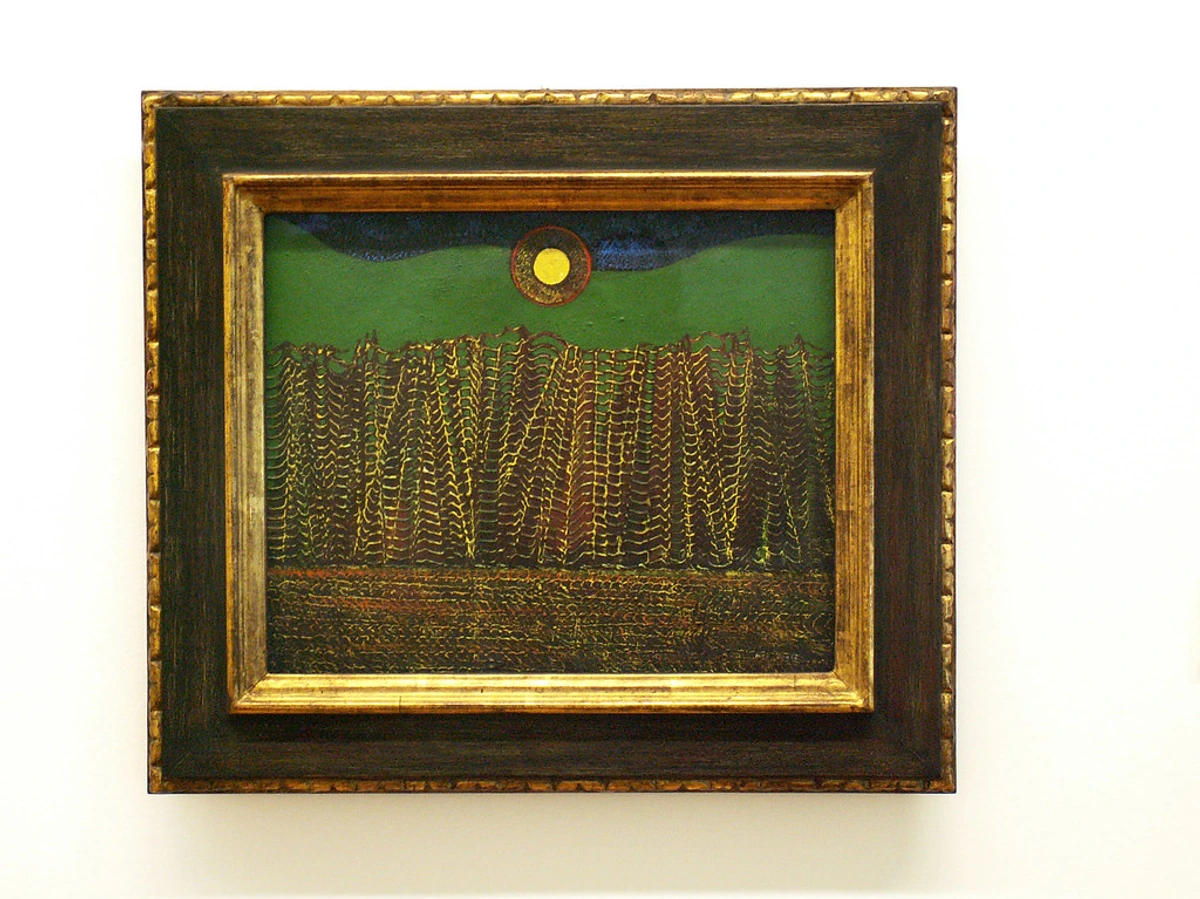
In essence, Dadaism was a defiant shriek in the face of a world gone mad, stripping away pretension and demanding a radical reconsideration of art's purpose. It's a challenging, often uncomfortable, but always exhilarating ride.
The Faces of Dada: A Global Rebellion
Dada wasn't just confined to the smoky confines of Cabaret Voltaire in Zurich, mind you. It was like a potent virus of an idea that swiftly spread its infectious absurdity to major cultural hubs across the globe: New York, Berlin, Paris, and beyond. Each city developed its own distinctive flavor of Dada, shaped by local politics and artistic temperaments, but they were all inextricably connected by a shared, fierce spirit of rebellion. It's truly fascinating to see how the core anti-art ethos found unique expressions wherever it landed. Let's meet a few of the brilliant minds who dared to be so wonderfully, provocatively absurd.
Global Outposts of Absurdity: How Dada Spread
While Zurich was the birthplace, the restless spirit of Dada couldn't be contained by Swiss neutrality. It quickly migrated, carried by its disillusioned founders and new converts, igniting local movements that were both distinct and deeply interconnected. This wasn't a centralized art movement; it was more like a networked rebellion, with each city contributing its own unique blend of artistic and political subversion.
- New York Dada (c. 1915-1920): Even before the official launch in Zurich, a proto-Dada spirit was brewing in New York, spearheaded by figures like Marcel Duchamp, Francis Picabia, and Man Ray. Their skepticism towards traditional art institutions and embrace of the readymade laid crucial groundwork. America's distance from the European war allowed for a slightly different, perhaps less overtly political, but equally radical, exploration of art's boundaries, often expressed through intellectual wit and a fascination with the mechanical. Think of the photographic experiments of Man Ray, or Duchamp's audacious decision to exhibit a urinal. Journals like The Blind Man and 291 (published by Alfred Stieglitz) were key platforms for disseminating these ideas, fostering a transatlantic dialogue among avant-garde artists. It was a Dadaism flavored with technological fascination and a wry, detached intellectualism, often seen as more philosophical and less directly confrontational than its European counterparts, though no less revolutionary.
- Berlin Dada (c. 1917-1920): In post-war Germany, Dada took on a far more aggressive, politically charged tone. The artists here—Hannah Höch, Raoul Hausmann, George Grosz, John Heartfield—were deeply entrenched in satirizing the corrupt Weimar Republic, rampant militarism, and the hypocrisies of bourgeois society. Their photomontages were sharp-edged weapons of social critique, designed to shock and expose, often fusing photographic fragments with text to create jarring, powerful indictments of power and hypocrisy. The economic hardship and political instability of post-WWI Germany provided fertile ground for this intense, confrontational form of Dada, making their art a direct weapon against societal decay.
- Cologne Dada (c. 1919-1922): A smaller but significant outpost, Cologne Dada (c. 1919-1922) was led by figures like Max Ernst, Johannes Theodor Baargeld, and Jean Arp. They were known for their collaborative, experimental approach, delving into surrealist techniques and often publishing their own provocative journals, such as Die Schammade. Their work often had a more lyrical, poetic quality than the confrontational Berlin group, exploring themes of fantasy and the subconscious while still retaining Dada's subversive edge.
- Paris Dada (c. 1920-1924): Many of the original Zurich Dadaists, including Tristan Tzara, eventually gravitated to Paris, joining forces with French writers and artists like André Breton, Louis Aragon, and Man Ray. Here, Paris Dada (c. 1920-1924) became a hotbed of provocative performances, scandalous manifestos, and a relentless assault on literary and artistic conventions. It was an intense period of intellectual sparring and collaborative experimentation, with figures like Breton already pushing towards a deeper exploration of the subconscious mind. This intellectual ferment ultimately paved the way for Dada's evolution into Surrealism, as the destructive impulse of Dada gave way to a desire to construct a new reality from the fragments of the unconscious. It was a transition, not an ending, and one of the most fascinating narratives in modern art.
These interconnected hubs formed a global dialogue of absurdity, proving that the anti-art impulse was a universal response to a world in crisis. Each city's unique socio-political landscape provided fertile ground for Dada's particular brand of rebellion, showing just how adaptable its core tenets were. Now, let's meet a few of the brilliant minds who dared to be so wonderfully, provocatively absurd.

Sophie Taeuber-Arp (Zurich & Paris Dada: The Versatile Abstractor)
Sophie Taeuber-Arp was a Swiss artist, dancer, and designer, and a crucial figure in Zurich Dada, often overshadowed by her male contemporaries. Her approach was uniquely innovative, combining abstraction with a playful, yet rigorous, exploration of form and color. She worked across an incredible array of media, from textiles and beadwork to sculpture, painting, and intricate puppet designs for Dada performances at the Cabaret Voltaire. Her geometric, abstract compositions, including her famous carved wooden 'Dada Heads' and abstract textile works, challenged conventional notions of art, suggesting that craft, design, and 'fine art' could coexist and enrich each other. She deliberately blurred the boundaries between disciplines, asserting the artistic merit of traditionally 'feminine' crafts and paving the way for a more integrated approach to art and design. Her abstract textile works, for example, were not merely decorative but revolutionary statements, asserting the artistic merit of traditionally 'feminine' crafts and deliberately blurring the boundaries between fine art and functional design, a radical move for her time. These carved wooden heads, often featuring simplified, abstract features, were simultaneously playful and profound, embodying the Dadaist spirit of re-evaluating the human form and identity. Her work was a quiet, yet powerful, rebellion, demonstrating that the 'anti-art' ethos could manifest not just in explosive protest, but in meticulous, beautiful reinvention. She was a true pioneer in abstract art and a testament to the fact that Dada wasn't always about angry protest; it could also be about quiet, profound reinvention. I often find her work to be a refreshing counterpoint, a rhythmic order within the chaos, proving that rebellion can be elegant.

Hannah Höch (Berlin Dada: The Sharp-Edged Mirror)
One of the pioneering artists of Berlin Dada, Hannah Höch was a master of photomontage, a technique she arguably co-invented and certainly perfected. She didn't just glue paper scraps together; she meticulously cut and rearranged images from newspapers, magazines, and fashion journals to create biting social and political critiques. Her work, like the iconic Cut with the Kitchen Knife Dada through the Last Weimar Beer-Belly Cultural Epoch of Germany (what a title, right?), didn't just satirize the Weimar Republic, consumer culture, and the changing roles of women; it actively dissected and reassembled the visual propaganda of her time, forcing viewers to confront the distorted realities of their society. Höch's photomontages were particularly incisive in their feminist critique, often combining images of 'new women' (independent, modern, often androgynous) with fragmented male figures or political symbols, visually dismantling patriarchal power structures and media representations of female identity. Her bold appropriation and reassembly of mass media imagery gave voice to the anxieties and possibilities of women in a rapidly changing society, making her an undeniable pioneer of feminist art. I see her work as a sharp-edged mirror held up to a fractured society, revealing the absurdity beneath the veneer of supposed progress, especially in how it exposed the patriarchal structures and hypocrisy of the time. Her images were a direct challenge to the superficiality of mass media and a powerful assertion of a female perspective in a turbulent era. She took the chaotic input of daily life and transformed it into a coherent, yet still unsettling, visual statement, making profound commentaries on gender, politics, and technology. Her contributions were absolutely vital in carving out space for women in a male-dominated avant-garde, and her fierce independence still inspires me today. You can imagine the strength and conviction it took to produce such pointed work at that time, essentially waging war with scissors and glue and defying artistic conventions in a world that sought to confine women to domestic roles. She really showed us how art could be a powerful tool for social justice.
Marcel Duchamp (New York Dada: The Grand Provocateur)
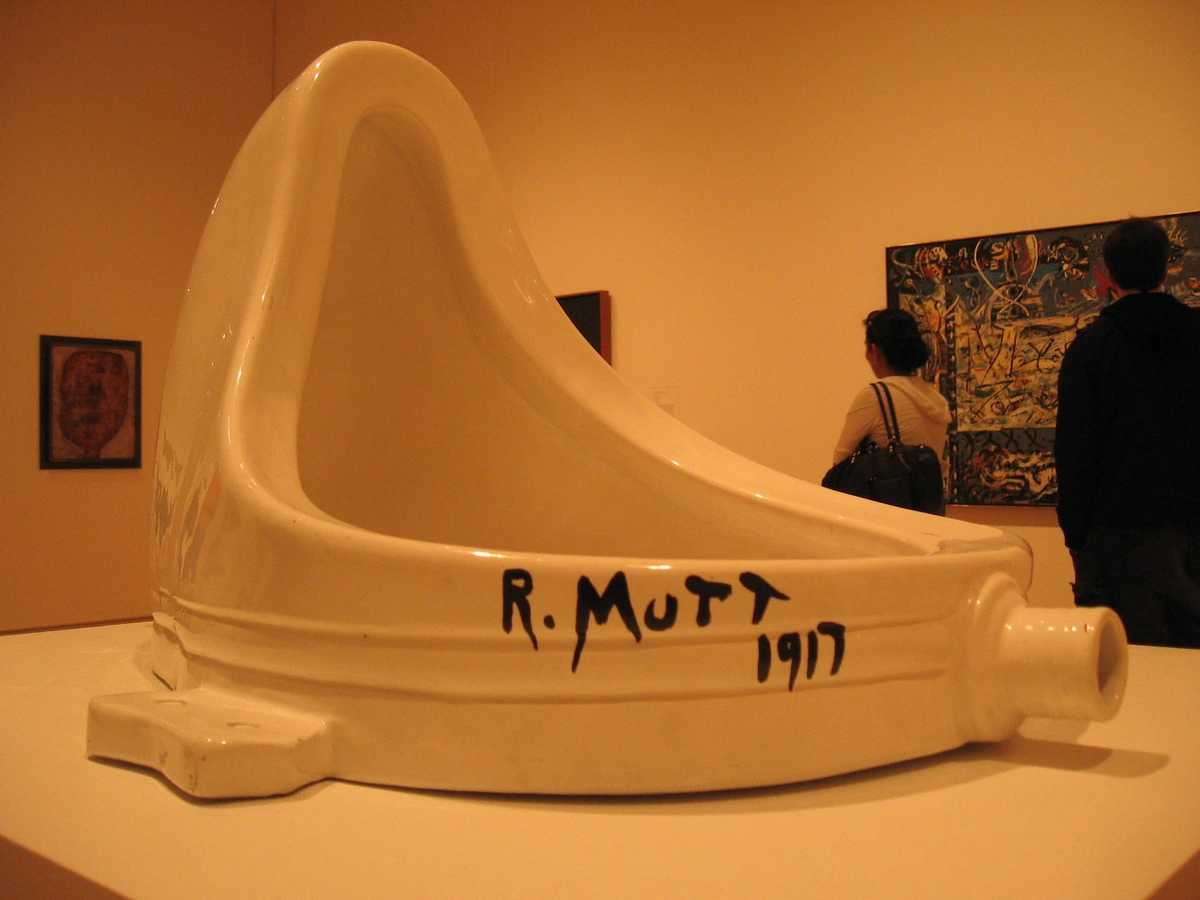
If Dada had a high priest, a grand provocateur, it was undoubtedly Marcel Duchamp, a figure whose work remains profoundly influential and deeply interrogated in contemporary art circles. To truly grasp his impact, it’s worth diving deeper into his dedicated biography, the Ultimate Guide to Marcel Duchamp. He's the one who truly blew apart the traditional definition of art with his concept of the 'readymade.' Beyond his objects, Duchamp also famously explored themes of identity and gender fluidity through his female alter ego, Rrose Sélavy, adding another layer of conceptual provocation to his legacy. This wasn't about creation in the classical sense; it was about selection and re-contextualization. This wasn't about creation in the classical sense; it was about selection and re-contextualization. Duchamp would take an ordinary, often mass-produced, utilitarian object, give it a title, and simply declare it art by placing it in an art context. It sounds simple, but the philosophical implications were seismic, challenging the very notion of artistic labor, skill, the aura of the artwork, and even the role of the artist. It wasn't about the beauty or craftsmanship of the object, but the idea behind its presentation – the intellectual challenge it posed. His most famous (and infamously scandalous) piece is Fountain.

Yes, it's a porcelain urinal, turned on its back. He bought it, signed it 'R. Mutt 1917,' and submitted it to an art exhibition, ostensibly as a work by a fictitious artist. They rejected it, of course, deeming it indecent and not art. But that very act of rejection, the controversy it ignited, was precisely the point—and arguably, the art itself. Duchamp challenged the fundamental definition of what an artist does, and what 'art' even is. Does an artist need to physically craft an object? Or is the artistic act found in the intellectual choice, the re-contextualization, the very questioning of the institution? This single, audacious act profoundly influenced a century of art to come, from Pop Art to Conceptual Art. Other famous readymades include his Bicycle Wheel (a bicycle wheel mounted on a stool) and Bottle Rack, further solidifying his position as a pioneer of challenging artistic conventions and literally forcing the art world to confront its own biases. It makes you wonder, doesn't it, if we're still grappling with the same questions about what constitutes art today. The readymade was a philosophical bomb, blowing up the idea that art had to be beautiful or even made by the artist's hand, placing the focus squarely on the idea itself. It challenged the very essence of artistic value and production, asking: what if the artist's greatest act is simply to choose, rather than to create?
Kurt Schwitters (Hanover Dada: The Scavenger of Genius)
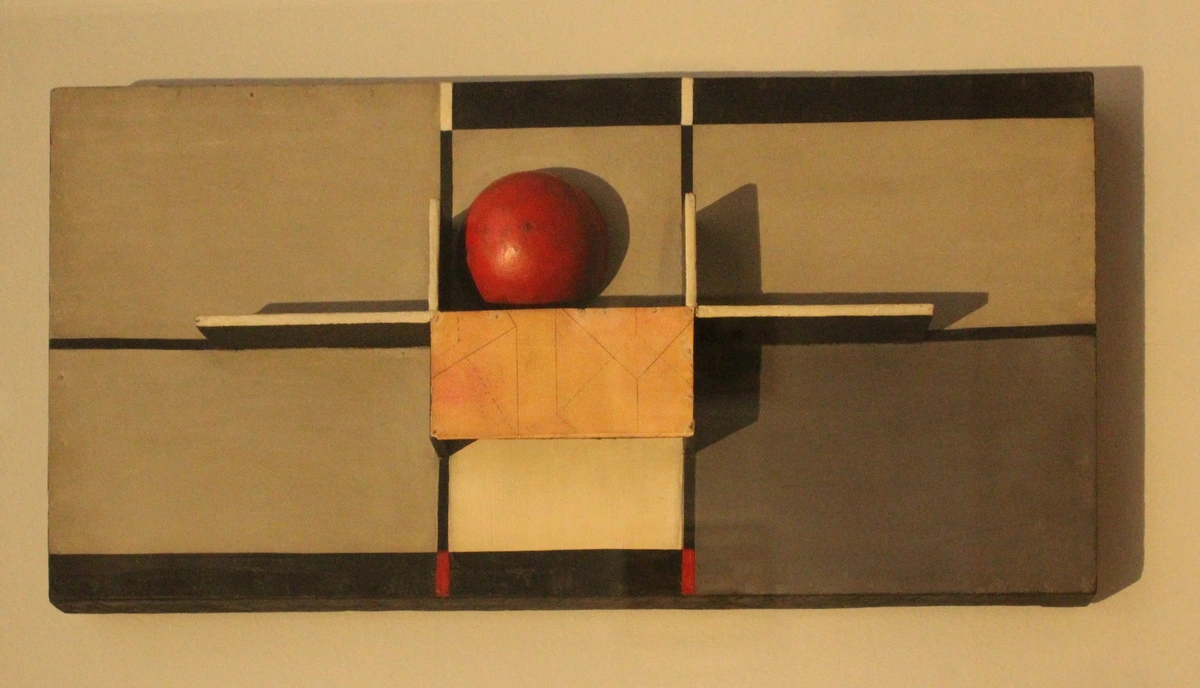
In Germany, specifically Hanover, Kurt Schwitters carved out a unique, deeply personal path within Dada. While many of his Dada contemporaries were overtly political, Schwitters was captivated by the discarded detritus of modern society. He obsessively collected bus tickets, newspaper scraps, bits of wood, fabric, and whatever else he found on the streets, transforming them into intricate, beautiful collages and assemblages he called 'Merz.' The term 'Merz' itself came from a fragment of the word 'Kommerz' (commerce) he found in a discarded bank advertisement. For Schwitters, Merz was not just a style; it was an artistic principle, an ambition to combine all conceivable materials and art forms into a total work of art (Gesamtkunstwerk), pushing beyond traditional boundaries and creating new aesthetic experiences. He was literally turning society's garbage into profound art, elevating the forgotten and ignored, challenging our notions of value and beauty. His independence meant he was never fully embraced by the more politically charged Berlin Dadaists, who sometimes saw his work as insufficiently political, but his vision remained uniquely powerful, creating a deeply personal, one-man Dada universe that was both playful and deeply philosophical. His ambition to create a Merzbau, a massive, evolving architectural collage within his own home, a kind of walk-in artwork that continuously grew and transformed, really shows the immersive, all-encompassing nature of his art, a true example of a Gesamtkunstwerk (total work of art). This multi-sensory environment, constructed from salvaged materials, was an embodiment of his philosophy, blurring the lines between art, architecture, and everyday life, a true precursor to installation art. Sadly, both his original Merzbau in Hanover and a second one in Norway were destroyed during World War II bombings, a poignant loss that underscores the ephemeral nature of even the most ambitious art in times of conflict. It makes me think of how even the most mundane objects can be imbued with profound significance if you just look at them differently, or how an artist can build an entire world from scraps, much like an alchemist turning lead into gold. His work is a powerful precursor to collage art and assemblage as we know it today, showcasing how personal vision can transform the discarded into the sublime.

Jean Arp (Zurich & Paris Dada: Sculptor of Chance)
Jean Arp, a crucial figure in the Zurich Dada group and husband to Sophie Taeuber-Arp, was a master of chance and organic forms. Initially known for his abstract wood reliefs, he embraced what he called 'laws of chance' in his work, famously creating collages by tearing paper into pieces, letting them fall onto a surface, and then gluing them where they landed. This wasn't about laziness or a lack of skill; it was a profound act of rejecting artistic control and ego, believing that art could emerge from spontaneity and the unpredictable, hinting at a natural, uncorrupted order beneath the chaos. This radical embrace of chance profoundly influenced later movements like Fluxus and laid groundwork for process-based art. His biomorphic sculptures, with their smooth, organic, often sensual forms, were a stark contrast to the sharp-edged mechanics of some of his contemporaries, yet equally defiant in their rejection of traditional representation. These fluid, abstract shapes, often reminiscent of human torsos, leaves, or natural elements, were an assertion of a more primal, intuitive understanding of form, embracing the beauty found in the accidental and the spontaneous. These fluid, abstract shapes, often reminiscent of human torsos or natural elements, were an assertion of a more primal, intuitive understanding of form. Arp's work truly embodied the Dadaist idea that art could emerge from spontaneity and the unpredictable, hinting at a natural, uncorrupted order beneath the chaos. He showed us that even in utter randomness, beauty can be found, if you're willing to look, and that art could be as elusive and ever-changing as life itself. His embrace of the natural and the accidental makes his work feel both ancient and utterly modern, a quiet defiance against the industrial chaos of the world.
Hans Richter (Zurich & Berlin Dada: The Filmmaker and Theorist)
Hans Richter was a German painter, graphic artist, and experimental filmmaker who played a significant role in both Zurich and Berlin Dada. He was deeply interested in the theory of abstract art and its potential for political and social change. While his early work included abstract paintings and collages, he is perhaps best known for his pioneering Dadaist films, such as Rhythm 21, which explored abstract forms and rhythmic movement, challenging traditional narrative cinema. Rhythm 21 (1921) is a seminal work in abstract animation, using geometric shapes that expand, contract, and shift on screen, creating a dynamic visual symphony entirely independent of conventional storytelling. This pioneering film explored the pure visual language of moving forms, pushing cinema beyond its narrative confines and establishing a precedent for experimental filmmaking. Imagine watching something that looked like a visual symphony, entirely unlike anything else being produced at the time! Richter believed in the collective nature of art and was a key organizer and theoretician, co-founding the 'Group of Revolutionary Constructivists' and contributing significantly to Dada journals like G. He was one of those rare artists who could both create and articulate the profound intellectual underpinnings of the movement, constantly pushing the boundaries of what art could be, and how it could challenge established norms, especially through the nascent medium of film. His work reminds us that Dada wasn't just chaos, but often a meticulously planned assault on convention.
Raoul Hausmann (Berlin Dada: The Photomontage Pioneer and 'Dadasopher')
Often credited with co-inventing photomontage alongside Hannah Höch, Raoul Hausmann was a fiery and highly influential figure in Berlin Dada. He coined the term 'Dadasophy' – his unique philosophical framework for Dada – and was a prolific writer, performer, and visual artist. His photomontages, like The Spirit of Our Time – Mechanical Head (1920), brutally critiqued modern society's obsession with logic and technology, portraying humanity as automatons devoid of individual thought and emotional depth, pieced together from industrial components. This iconic work, a mannequin head adorned with measuring devices, a typewriter cylinder, and a wallet, was a chilling commentary on how easily individuals could become cogs in a mechanistic war machine, stripped of their individuality and reduced to functional parts. It powerfully expressed the Dadaist critique of a society that valued utility and conformity over authentic human experience. He was a force of nature, relentlessly pushing against artistic and societal conventions, advocating for a radical re-evaluation of everything, from language to identity, through his fierce polemics and confrontational art. His work perfectly embodies that aggressive questioning of identity and purpose that was so central to Berlin Dada, a relentless intellectual and artistic assault on the status quo, showing how art could be a powerful weapon of social critique.
George Grosz (Berlin Dada: The Caricaturist of Corruption)
Another key figure in Berlin Dada, George Grosz was a fierce satirist and caricaturist whose drawings and paintings unsparingly exposed the corruption, decadence, and militarism of post-WWI German society. His grotesque, exaggerated figures of bloated capitalists, lecherous officers, and desperate common folk were a direct visual assault on the ruling class and the hypocrisies of bourgeois life. Works like Republican Automatons (1920) or his many satirical drawings of military figures, corrupt politicians, and profiteering capitalists brutally exposed the moral decay he witnessed, stripping away the polite veneer to expose the raw, ugly truth beneath. His unsparing depictions served as visual indictments of the societal forces he believed led to war and suffering. I mean, if you want to see a society flayed open with a pen, Grosz is your man! While his style was often more traditionally representational than some Dadaists, his intent was pure Dada: to use art as a weapon against a morally bankrupt world, and to rip apart its false facade with savage precision. His commitment to social realism, even while embracing the Dadaist spirit of protest, made his work uniquely powerful and unignorable. His work is a powerful, if uncomfortable, reminder of art's capacity for social critique and how a drawing can be as sharp as a sword.

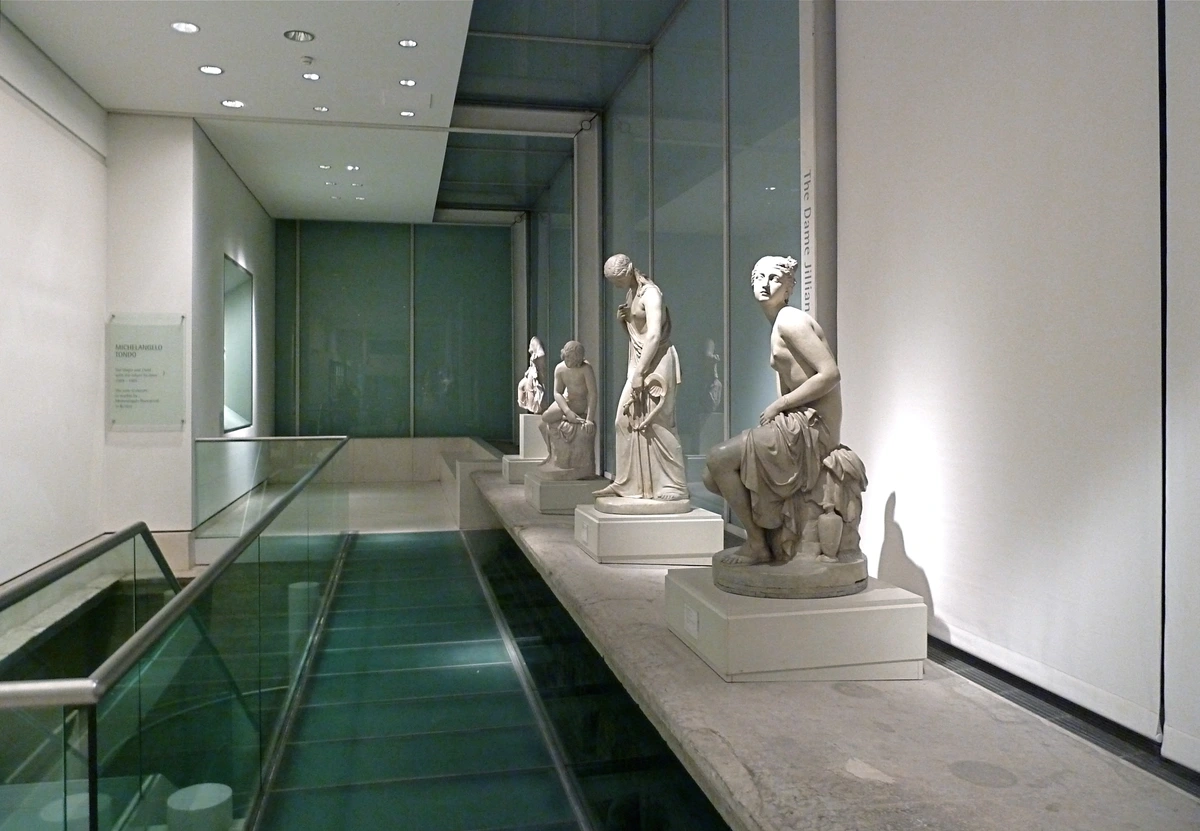
This embrace of found materials and fragmentation, particularly in collage and photomontage, was a hallmark of Dada, reflecting the fractured reality of the post-war world. It’s an approach you can still see thriving in contemporary mixed media art. And really, isn't that what we're doing every day, piecing together fragments of information and experiences into some kind of coherent (or gloriously incoherent) whole? That's pure Dada, right there. This collective engagement with materials and methods, rather than focusing on individual genius, also strengthened Dada's anti-establishment stance.
Tristan Tzara (Zurich & Paris Dada: The High Priest of Nonsense Poetry)
A poet and electrifying performer, Tristan Tzara was one of the pivotal figures in the original Zurich crew, and later a central force in Paris Dada. He was a true master of provocation, using words as powerfully as Duchamp used objects. He famously wrote several Dada manifestos, which were themselves as chaotic and contradictory as the art they championed—often declaring principles only to immediately contradict them. These were not serious academic tracts but explosive, performative texts designed to infuriate and awaken, read aloud to often bewildered or enraged audiences. Imagine the pure audacity of declaring, "Dada is dead. Dada is a dogma. Dada is a trap. Long live Dada!" It was an intellectual assault designed to keep you off balance. He also pioneered 'chance poetry.' His widely known method involved cutting words from a newspaper, putting them in a bag, shaking them vigorously, and then pulling them out one by one to form a poem. The resulting verse was a pure product of chance, a direct assault on the controlled, deliberate, and 'meaningful' process of traditional writing, aiming to liberate language from its conventional constraints. The resulting verse was a pure product of chance, a direct assault on the controlled, deliberate, and 'meaningful' process of traditional writing. For Tzara, this wasn't laziness; it was a profound act of liberation from the tyranny of logic and conventional aesthetics, a way to dismantle the oppressive structures of language itself. His manifestos, often delivered with a theatrical flourish, were themselves performance pieces, using inflammatory language and self-contradiction to shock audiences and undermine established literary norms. It was about letting go, letting the universe dictate the art, which is, honestly, a pretty radical idea that still resonates in contemporary poetry and performance. I often wonder what kind of poem I'd pull out of a hat, and what new meanings might emerge, truly embracing the serendipitous in creation.
Francis Picabia (New York & Paris Dada: The Eclectic Iconoclast)
Francis Picabia was a truly enigmatic and eclectic artist whose career spanned Futurism, Cubism, and Dada before eventually dipping into Surrealism. In New York, he became a key figure, publishing the influential magazine 291 and later 391, which were platforms for Dadaist ideas and art, disseminating its provocative messages across the Atlantic. His early Dada works often involved 'mechanomorphic' portraits, where human figures were depicted as intricate, absurd machines, satirizing the dehumanizing aspects of modern technology and society, and questioning the very nature of human identity in an industrialized world. A prime example is Portrait of a Young American Girl in a State of Nudity: The Spark Plug (1915), which replaced a human subject with a diagram of a spark plug, a biting commentary on the mechanistic view of humanity and the objectification of the individual in an industrial age. His prolific output across various influential journals like 291 and 391 also cemented his role as a key intellectual force. These 'machine portraits' were a biting critique of the rational, industrial society that, to the Dadaists, had led to the war, reducing individuals to mere cogs in a larger, destructive apparatus. He was a restless experimenter, constantly reinventing his style and defying categorization, perfectly embodying Dada's anti-establishment spirit and its embrace of the unpredictable. He was the kind of artist who would always keep you on your toes, never quite doing what was expected, and I find that wonderfully refreshing in a world that often demands conformity, a true artistic chameleon.

Man Ray
Man Ray (New York & Paris Dada: The Master of Light and Object)
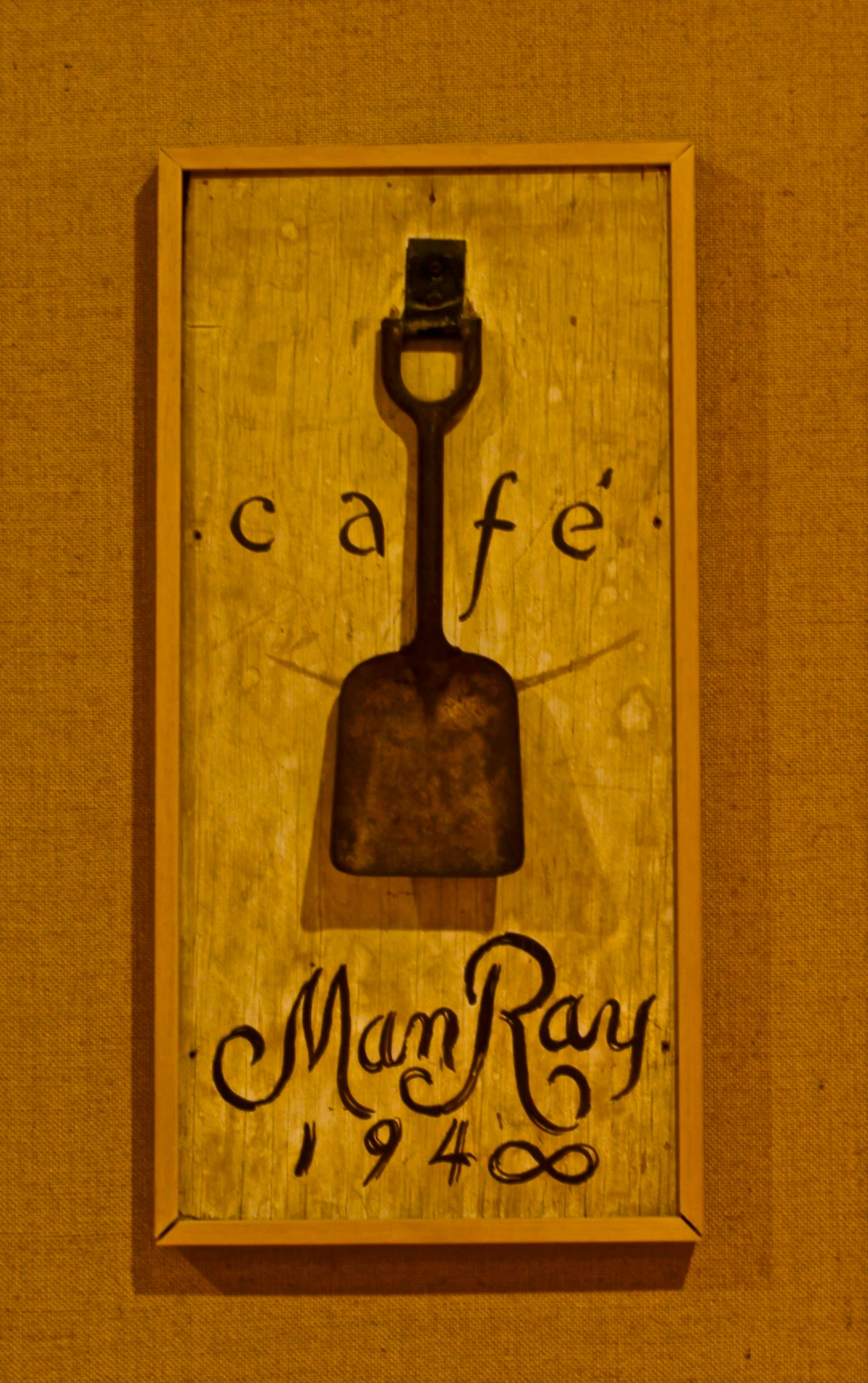
While Duchamp was busy with his readymades in New York, Man Ray (born Emmanuel Radnitzky) was exploring photography and object-making with a distinctly Dadaist sensibility before moving to Paris to become a key figure in both Dada and Surrealism. He's perhaps best known for his rayographs, a technique of creating photographic images without a camera by placing objects directly onto photographic paper and exposing it to light. These ghostly, abstract images were born of chance and light, perfectly embodying the Dadaist embrace of the unexpected and pushing the boundaries of what photography could be. His object assemblages, like Cadeau (Gift), an iron with tacks glued to its sole, were equally provocative, turning everyday items into unsettling, useless sculptures that challenged utility and beauty, forcing us to question the inherent value we assign to objects. This deliberate subversion of functionality and expectation was a hallmark of his Dadaist phase, paving the way for his later Surrealist explorations. The irony of presenting a functional object rendered useless as a 'gift' perfectly encapsulated the Dadaist subversion of expectations and commodity culture. I find Man Ray's ability to transcend media, moving seamlessly between painting, sculpture, and revolutionary photography, truly inspiring, and a testament to the boundless creativity that emerged from the Dada spirit. His innovative approach to photography, in particular, expanded the very definition of the medium, making him a pioneer in experimental art.
Did Dadaism Die? (Spoiler Alert: Absolutely Not)
As a formal movement, Dada burned out by the early 1920s. I mean, let's be honest, it was probably too chaotic to last. How can you have a cohesive 'movement' when your core principle is to reject all cohesion? It's a delightful paradox! The very energy that fueled its explosive birth also made its sustained existence as a unified group impossible. But here's the kicker: while the formal movement may have dispersed, its spirit, its defiant DNA, never truly died. Many of the Dadaists, especially in Paris, transitioned into a new movement that explored the subconscious and dreams: Surrealism. This evolution from pure destruction to a more psychological exploration, away from Dada's initial shock tactics and towards Surrealism's deeper dives into the psyche, is one of the most fascinating narratives in modern art history. Indeed, the enduring impact of Dadaism on subsequent movements is a testament to its radical power and is explored in depth in resources like The Enduring Influence of Dadaism on Contemporary Art and Its Legacy.
But the raw, defiant, questioning spirit of Dada? Oh, let me tell you, it never truly died. It simply mutated, adapted, and infiltrated countless subsequent movements. It's like a persistent, provocative ghost haunting the corridors of modern art, always ready to whisper a challenging question in your ear. Its influence is absolutely massive, far-reaching, and still incredibly potent today. It's like a secret handshake among artists who refuse to play by the rules. Let's look at some direct descendants, shall we? You might be surprised where you find its fingerprints.

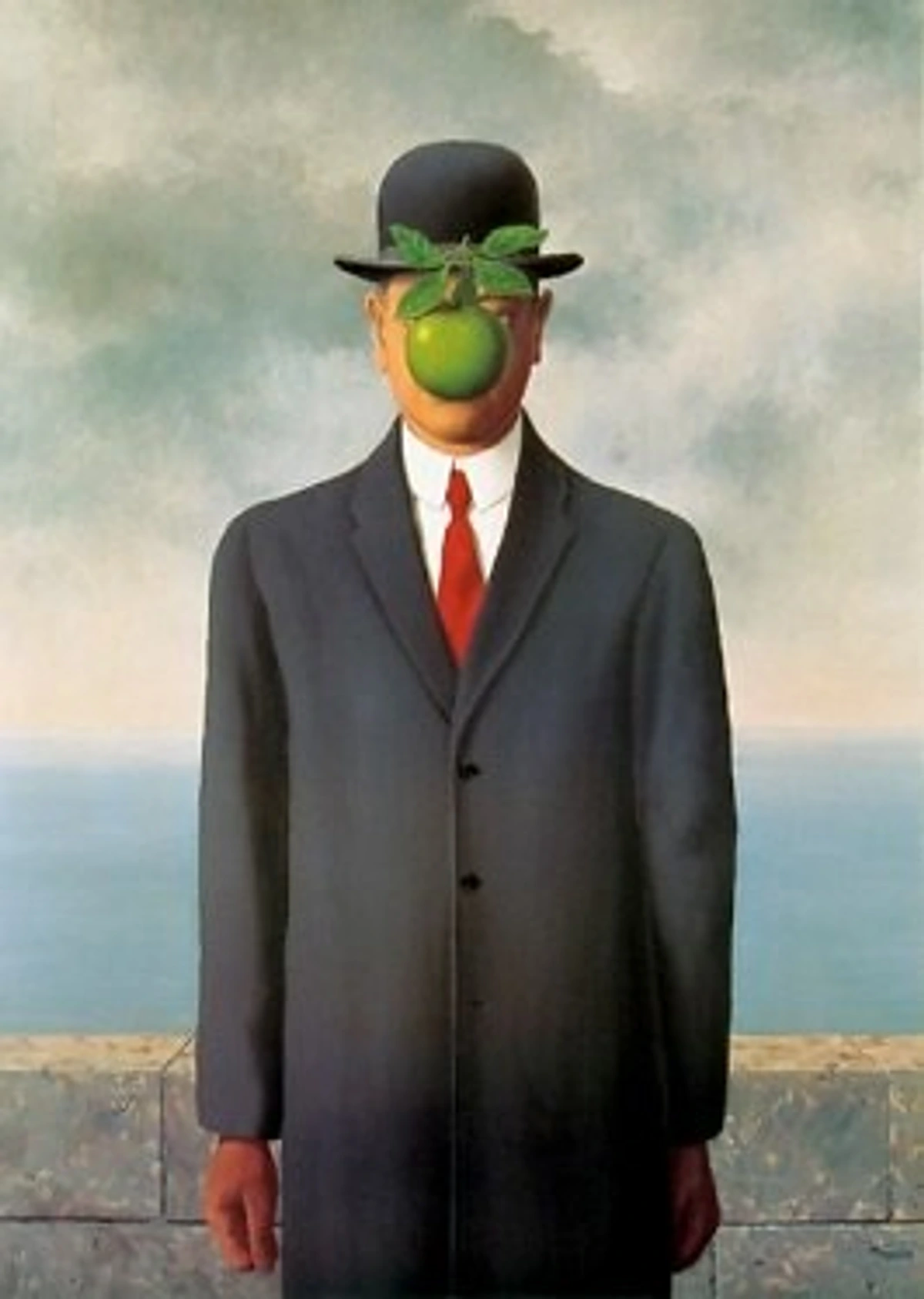
- Surrealism: As mentioned, many Dadaists, especially in Paris like André Breton, Max Ernst, and Man Ray, transitioned seamlessly into Surrealism. While Dada sought to destroy existing structures, Surrealism, led by Breton, aimed to construct a new reality by exploring the subconscious, dreams, and automatic processes like automatic drawing and writing. It was less about nihilistic protest and more about unlocking a deeper, psychological truth, a 'super-reality,' drawing heavily on Freudian concepts. The shared interest in irrationality, the power of the unconscious mind, and the anti-establishment ethos clearly shows Dada's foundational role. It was like Dada provided the wrecking ball, and Surrealism started to rebuild with the fascinating debris, creating a world both familiar and utterly bizarre, often with a dreamlike logic all its own. The core difference, for me, lies in Dada's outright rejection of meaning versus Surrealism's search for hidden meaning, making it a natural, yet distinct, evolution. Think of Salvador Dalí's melting clocks or René Magritte's enigmatic figures – these dreamscapes owe a massive debt to Dada's initial assault on logic, transforming chaos into a new, often unsettling, order.
- Pop Art: Think about Andy Warhol's iconic soup cans or his Brillo boxes. That's a direct, undeniable descendant of Duchamp's readymades. Pop artists took common consumer objects, elevated them to the status of art, and, in doing so, blurred the lines between high art and popular culture, just as Duchamp had done with his urinal. It was a commentary on consumerism, mass production, and the very act of artistic selection, often with a wry, Dadaist sense of humor, turning the mundane into the monumental. I see a clear line from a signed urinal to a silk-screened Campbell's can. Its influence is absolutely massive, and I'd argue Pop Art owes a huge debt to Dada's foundational questioning of art's purpose and value, challenging the very definition of what is considered 'fine art'. You can't tell me Warhol wasn't winking at Duchamp every time he silkscreened a dollar sign! It's the ultimate 'I told you so' from the past to the future of art. The repetitive nature of many Pop Art pieces also echoed Dada's rejection of uniqueness and the 'aura' of the artwork.
- Neo-Dada: Emerging in the 1950s and 60s, Neo-Dada artists like Robert Rauschenberg and Jasper Johns consciously drew inspiration from Dada, particularly Duchamp's readymades and collages. They re-introduced found objects and everyday imagery into fine art, often blurring the lines between painting and sculpture and incorporating performance. Rauschenberg's 'Combines,' for example, were artworks that fused painting and sculpture using everyday objects, directly channeling the spirit of Dadaist assemblage, demonstrating a renewed interest in the ordinary and the found. This movement served as a crucial bridge, carrying the Dadaist flame into the mid-20th century and influencing subsequent generations. It was a bridge between the original Dada spirit and later movements like Pop Art and Conceptual Art, showing that the Dadaist flame never truly extinguished, but merely smoldered until the next generation fanned it back to life with a fresh, contemporary perspective. Their work reaffirmed the power of the mundane and the conceptual in artistic practice.
So, while Dada as a formal movement was short-lived, its spirit became truly immortal, permeating the very fabric of modern artistic thought and practice. It taught art to be bravely, defiantly, and joyfully absurd, and for that, I am eternally grateful.

Key Artistic Techniques of Dadaism
Dadaists were masters of diverse techniques, all aimed at subverting tradition and challenging perception. While they famously declared 'no rules,' certain methods became hallmarks of their irreverent approach, acting as powerful weapons against conventional aesthetics and the very idea of artistic skill. They sought to de-skill art, making the concept more important than the execution, and these techniques were their tools:
Technique | Description | Core Idea | Key Figures/Examples |
|---|---|---|---|
| Readymade | Ordinary manufactured objects selected by the artist and designated as works of art, challenging notions of artistic skill, originality, and the very definition of what art can be. | To shift focus from manual creation to intellectual selection, prioritizing the idea over execution, thereby democratizing art. | Marcel Duchamp (Fountain, Bicycle Wheel) |
| Object Assemblages | The construction of three-dimensional artworks by combining various found objects, often mundane or discarded items, creating new, sometimes unsettling or nonsensical, configurations that questioned function and aesthetic value. | To elevate the mundane and discarded, challenging hierarchies of materials and traditional aesthetic value, turning 'junk' into art. | Man Ray (Cadeau - an iron with tacks), Kurt Schwitters (Merz objects) |
| Photomontage | A revolutionary type of collage made by cutting, gluing, rearranging, and overlapping photographs, often from newspapers and magazines, to create new, often jarring, and highly political images that critiqued society. | To dissect and reassemble mass media visuals for biting social and political critique, revealing hidden meanings or creating new, disorienting narratives. | Hannah Höch (Cut with the Kitchen Knife Dada...), Raoul Hausmann |
| Collage/Assemblage | Incorporating found materials (paper scraps, bus tickets, wood, fabric, everyday detritus) into two- or three-dimensional artworks, embracing the 'low' and discarded as worthy of artistic attention and challenging traditional hierarchies of materials. | To directly engage with the detritus of modern life, elevating the forgotten and creating fragmented realities, mirroring the fractured state of society. | Kurt Schwitters (Merz works), Jean Arp (reliefs, especially his 'chance' collages) |
| Readymade (Assisted) | Ordinary manufactured objects, sometimes altered or combined with other elements by the artist, and designated as works of art, taking the concept of the pure readymade a step further by involving some artistic intervention and a touch of the absurd. | To further challenge authorship and artistic labor by adding minimal, ironic intervention to found objects, demonstrating that a slight shift in context can transform meaning. | Marcel Duchamp (Bicycle Wheel, a bicycle wheel mounted on a stool) |
| Chance Operations | Deliberately incorporating randomness and unpredictability into the creative process to remove authorial intent and embrace the serendipitous. | To reject artistic control and ego, allowing the universe or unconscious to dictate composition and meaning, leading to unexpected artistic outcomes. | Tristan Tzara (chance poetry), Jean Arp (collages arranged by chance) |
| Sound Poetry/Performance Art | Recitations of meaningless sounds, nonsensical theatrical events, and public provocations aimed at shocking the audience and questioning traditional performance and language itself. | To create immediate, visceral, and often confrontational experiences, stripping language bare and challenging theatrical conventions, returning to primal forms of expression. | Hugo Ball (Cabaret Voltaire performances, sound poems like 'Karawane'), Emmy Hennings |
| Manifestos | Public declarations of artistic intent and philosophical stances, often self-contradictory, inflammatory, and deliberately provocative, designed to challenge, not explain. | To use words as weapons, engaging in intellectual guerrilla warfare through performative, anti-dogmatic texts, sparking debate and outrage. | Tristan Tzara (Dada Manifesto 1918), Richard Huelsenbeck |
| Photograms/Rayographs | Creating photographic images without a camera by placing objects directly onto light-sensitive paper and exposing it to light, resulting in ghostly, abstract forms that embraced chance and experimentation. | To challenge traditional photography, embracing the unexpected and revealing the abstract potential of light and shadow, bypassing the camera's 'objective' gaze. | Man Ray (Rayographs) |

Dada Beyond Art: Literature, Performance, Typography, and Philosophy
While we often focus on the visual arts when discussing Dadaism, its influence permeated far beyond the canvas and the sculpture pedestal. Dada was a truly multi-faceted cultural phenomenon that deeply impacted literature, poetry, theatre, graphic design, and even philosophy. It was a total assault on conventional thought, making its mark in every medium it touched, a kind of cultural insurgency that aimed to disrupt every aspect of bourgeois life. It makes you wonder, doesn't it, how much of contemporary culture is still grappling with the same questions, or if we've merely found new ways to express the glorious absurdity that Dada first unearthed?
Dada and Music: A Cacophony of Rebellion
Beyond sound poetry, Dada's influence on music was profound, particularly in its rejection of traditional harmony, rhythm, and instrumentation. Composers like Erwin Schulhoff, deeply inspired by Dada, experimented with noise, jazz, and unconventional vocalizations, pushing music to its limits. The very performances at Cabaret Voltaire, with their cacophonous sounds and simultaneous recitations, laid groundwork for later experimental music and noise art. It was about dismantling the very structures of musical language, much as they did with visual art and poetry, opening the door for future avant-garde composers to explore sounds previously deemed 'unmusical,' laying the groundwork for movements like musique concrète and noise music. Composers like Erik Satie, though not a Dadaist himself, shared a similar spirit of irreverence and experimentalism that resonated with the movement, particularly in his use of repetition and unconventional structures. The Dadaists saw music not just as a pleasant arrangement of sounds, but as a tool for provocation, a sonic mirror to the chaos of the world.
- Literature and Poetry: * Literature and Poetry: Dadaist poets, like Tristan Tzara and Hugo Ball, experimented with sound poetry and chance poetry, aiming to liberate language from meaning and logic, believing traditional language had become corrupted. They saw words not just as carriers of sense, but as raw sounds and symbols, capable of evoking primal responses rather than conveying rational ideas. Think of Ball's 'Karawane,' a poem made of pure vocalizations, pushing language to its absolute limit, a kind of linguistic primal scream, a return to the purest, most uncorrupted form of expression. Their manifestos, too, were literary works—performative, contradictory, and designed to provoke, often read aloud to a bewildered or enraged audience, shattering the comfort of conventional narrative and demanding a visceral response. These literary explorations paved the way for later experimental writing and performance art, influencing concrete poetry and literary movements focused on the deconstruction of narrative and meaning, asserting that the sound and visual form of language could be as significant as its semantic content.
- Performance and Theatre: * Performance and Theatre: The Cabaret Voltaire in Zurich was the undisputed birthplace of Dada's performance aspect. Artists staged bizarre, spontaneous 'happenings' involving elaborate costumes, grotesque masks, simultaneous poems recited in multiple languages, disjointed music, and cacophonous noise. These performances were deliberately anti-theatrical, aiming to shock the bourgeois audience out of its complacency and create a direct, unfiltered, and often confrontational experience of chaos and absurdity. It was a raw, unfiltered assault on all expectations, often pushing the boundaries of what was considered acceptable, and honestly, a fascinating precursor to much of the performance art we see today. The goal was not traditional entertainment, but rather a direct confrontation with the audience, aiming to shock them out of their complacency and provoke a visceral reaction. Imagine being in that audience – I bet you wouldn't forget it, and you'd definitely be talking about it for days! These 'happenings' were often improvised, blurring the lines between rehearsal and performance, further undermining traditional theatrical conventions.
- Philosophy and Anti-Philosophy: * Philosophy and Anti-Philosophy: At its core, Dada was a philosophical movement of negation, a radical interrogation of existence itself. It questioned the very foundations of Western thought, particularly the Enlightenment's emphasis on reason and progress, which they saw as having led directly to the catastrophe of World War I. Dadaists embraced nihilism (the rejection of all moral and religious principles, often in the belief that life is meaningless) as a response to this perceived societal breakdown. However, it wasn't a passive, despairing nihilism; it was an active, joyous destruction that paradoxically paved the way for new ways of seeing and thinking, hinting at a kind of existential liberation. They demonstrated that sometimes, to build anew, you first have to smash what's old and broken, a sort of creative demolition. It was a profound act of intellectual and emotional liberation, freeing them from the very systems they blamed for the world's horrors. They weren't just saying 'no'; they were saying 'no, and watch what happens next!' and daring you to imagine something entirely new, fostering a spirit of radical individualism and creative freedom, and advocating for a more authentic engagement with reality, however absurd. This active nihilism, far from being purely destructive, aimed to clear the intellectual ground for new possibilities, asserting the right to define one's own reality amidst the chaos.
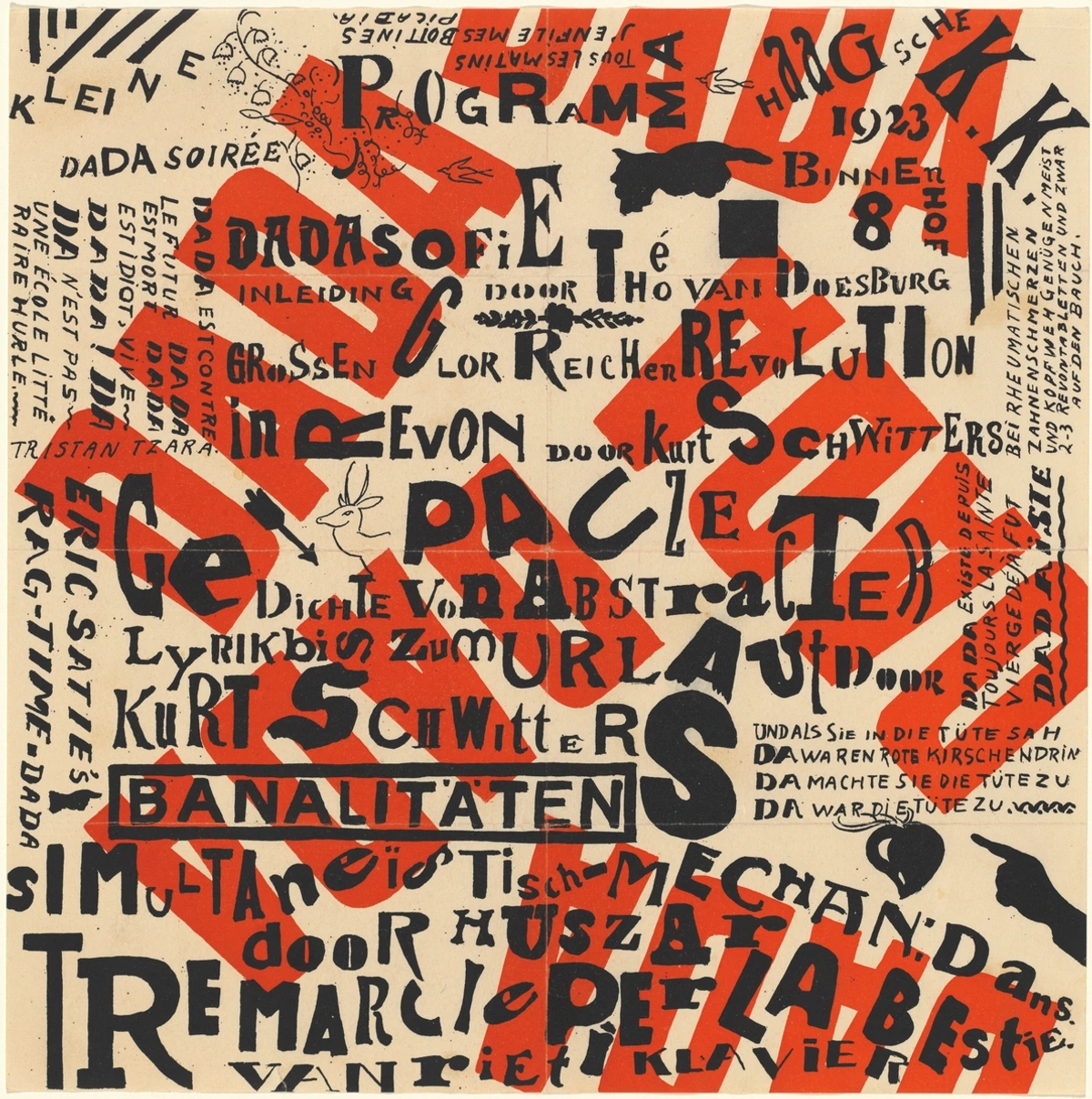
- Typography and Graphic Design: * Typography and Graphic Design: Dadaists radically experimented with typography, layout, and collage in their manifestos, journals, and exhibition posters. They shattered conventional grid structures, used diverse typefaces and sizes, and incorporated photographic elements, influencing modern graphic design profoundly. It was a visual language of chaos that challenged legibility and hierarchy, much like their poems challenged meaning, and it left an indelible mark on everything from advertising to contemporary art book design. Just look at the visual punch of a Dadaist poster, and you'll see a clear lineage to contemporary experimental design – a playful defiance of order that continues to inspire. They understood that the visual presentation of text could be as provocative as the words themselves, treating typography as a sculptural medium, a concept that profoundly influenced later movements in modern graphic design, from Bauhaus to post-modernism. This radical approach to visual communication was a direct attack on the perceived order and rationality of traditional print media.
Frequently Asked Questions about Dadaism
I often find that even after diving deep into Dada, certain questions pop up again and again. It's almost as if the movement itself encourages a constant questioning! So, let's tackle some of those common queries, shall we? You're not alone if these things have been buzzing around in your head – in fact, asking these questions is truly in the spirit of Dada!
What was Dada's relationship with photography?
Dadaists embraced photography, particularly in its experimental forms, as a powerful tool for subversion and critique. They rejected traditional, 'objective' photography, instead favoring techniques that manipulated and fragmented images. Photomontage, pioneered by artists like Hannah Höch and Raoul Hausmann, involved cutting and reassembling photographs from mass media to create jarring, satirical, and often politically charged compositions. Man Ray's rayographs (photograms), created without a camera by placing objects directly onto photographic paper, highlighted the element of chance and the abstract potential of light, challenging the very notion of photographic truth. For Dadaists, photography was not about capturing reality, but about dissecting it, distorting it, and exposing its underlying absurdities, making it a truly 'anti-art' medium that questioned representation itself. It was a way to disrupt visual propaganda and create new, unsettling narratives.
What distinguished Zurich Dada from Berlin Dada?
This is a fantastic point of distinction! While both movements shared the core anti-art, anti-establishment ethos, their local contexts shaped their expressions. Zurich Dada, born in neutral Switzerland during WWI, was more focused on artistic and literary experimentation, sound poetry, abstract performances, and a more generalized rejection of rationality. It was a haven for artists fleeing the war, creating a space for intellectual and aesthetic rebellion. Think of Hugo Ball's 'Magical Bishop' costume and sound poems at Cabaret Voltaire. Berlin Dada, however, emerged in a post-war Germany grappling with immense political turmoil, economic collapse, and a deeply fractured society (the Weimar Republic). Consequently, Berlin Dada was far more overtly political, aggressive, and satirical. Artists like Hannah Höch, Raoul Hausmann, and George Grosz used sharp-edged photomontages and biting caricatures as direct weapons against the corrupt government, militarism, and bourgeois hypocrisy. While Zurich sought to critique through absurdity, Berlin sought to expose and dismantle through fierce social commentary, often with a raw, confrontational energy. It was like two different manifestations of the same angry spirit, one more philosophical, the other more directly activist, each reflecting the specific pressures and traumas of their respective environments.
Did Dadaism influence architecture or design beyond fashion?
While not directly resulting in a distinct architectural style, Dada's influence permeated design through its radical ideas. Kurt Schwitters' Merzbau, an evolving, architectural collage within his own home, was a direct manifestation of Dadaist principles applied to space, creating an immersive, multi-media Gesamtkunstwerk. Dada's experimental typography and graphic design, characterized by fragmented layouts, varied typefaces, and asymmetrical compositions, profoundly impacted modern graphic design, foreshadowing the aesthetics of movements like the Bauhaus and post-modern design. More broadly, Dada's embrace of found objects and industrial materials, its challenge to functionality, and its rejection of bourgeois aesthetics encouraged a spirit of innovation and unconventionality that resonated in later functional and non-functional design, moving beyond purely decorative purposes to conceptual and critical statements.
How did Dadaists view traditional museums and galleries?
Oh, with utter disdain and a healthy dose of mockery, of course! Traditional museums and galleries, to the Dadaists, represented everything they despised: the commodification of art, the elitism of the bourgeois art market, and the staid, conventional aesthetic values they were actively trying to destroy. They saw these institutions as gatekeepers, perpetuating a system that had led to societal breakdown. Their response often involved staging their own 'anti-art' exhibitions in unconventional spaces, creating works that were deliberately offensive or confusing, and even inviting the audience to deface or destroy the art. The aim was to provoke, to shatter complacency, and to demonstrate that true art, in their view, transcended the confines of institutional approval. Duchamp's Fountain, famously rejected by an exhibition, perfectly illustrates this clash with the established art world. They believed art should be a fleeting, provocative act, not a precious object for display in a gilded cage, but a dynamic, often confrontational, experience. They truly sought to dismantle the ivory tower of art.
What was the socio-political climate in Europe that led to Dada's emergence?
Dadaism was a direct artistic response to the catastrophic socio-political climate in Europe during and immediately after World War I (1914-1918). The war, with its unprecedented scale of industrialized slaughter and human suffering, shattered faith in reason, progress, and the established social and political order. Artists and intellectuals, many of whom were refugees in neutral Zurich, viewed the conflict as a grotesque consequence of bourgeois nationalism, militarism, and the very rationalistic thought that had promised enlightenment. They were deeply disillusioned by a society that could descend into such madness, and Dada became their defiant, nihilistic protest against the perceived collapse of civilization. It was an attempt to mirror the world's absurdity with their own artistic chaos, rejecting the values they believed had led to such widespread devastation.
What was the connection between Dadaism and Cubism/Futurism?
That's a crucial question for understanding Dada's origins! Dada emerged in a world already shaken by revolutionary movements like Cubism and Futurism. These earlier avant-garde movements had already begun to dismantle traditional representation, experimenting with fragmented perspectives (Cubism) and celebrating speed, technology, and violence (Futurism). Dadaists certainly learned from their aesthetic innovations, particularly in their use of collage and fractured imagery. However, Dada took things a step further. While Cubism and Futurism were often still invested in creating 'new' art or celebrating 'progress' (even if a violent form for Futurism), Dada fundamentally rejected the very notion of progress and art itself. They viewed the technological advancements celebrated by Futurism as having directly led to the mechanized slaughter of WWI. So, you could say Cubism and Futurism were the older, rebellious siblings who started breaking rules, and Dada was the younger, angrier sibling who decided to burn the whole house down because the rules were fundamentally flawed. Dada adopted many of their techniques but inverted their underlying philosophical optimism into a fierce, nihilistic critique, turning the very tools of progress into instruments of protest.

How did Dadaism challenge traditional notions of authorship?
Dadaists actively sought to dismantle the traditional notion of the artist as a solitary genius. They embraced anonymity, as seen with Marcel Duchamp's pseudonym 'R. Mutt' for Fountain, blurring the lines between artist and persona. Chance operations, such as Tristan Tzara's method for creating poetry from newspaper clippings or Jean Arp's collages, deliberately removed the artist's conscious control, suggesting that art could emerge from spontaneity rather than deliberate intention. Furthermore, many Dada works were collaborative, emphasizing the collective spirit of the movement over individual authorship. This rejection of singular artistic genius and embrace of the impersonal or accidental was a radical critique of the commodification of art and the romanticized figure of the artist, pushing instead for the idea behind the art to be paramount.
How did Dadaists use humor and irony?
Hmm, this is a brilliant question because Dada without its particular brand of humor is like a joke without a punchline! The Dadaists used humor not for entertainment, but as a corrosive, disruptive force. Their jokes were often dark, absurd, and deeply ironic, designed to mock the pretensions of bourgeois society and the 'logic' that led to war. Think about Duchamp's Fountain – submitting a urinal as art wasn't just a challenge; it was a hilarious, scandalous prank on the art establishment, a perfect example of their calculated provocation. Tristan Tzara's chance poetry, while philosophical, also had an element of playful absurdity, deliberately creating nonsense to highlight the inherent meaninglessness they perceived in conventional language. This wasn't about making you laugh comfortably; it was about making you laugh, or perhaps squirm, at the ridiculousness of the world, thereby exposing its hypocrisies. Their humor was a weapon, a form of intellectual guerrilla warfare, and a way to maintain a kind of sanity in a world they saw as insane. I think that's why it still resonates – the world often still feels absurd, and sometimes, all you can do is laugh, particularly when confronted with the bizarre logic of the powerful. Their use of the grotesque and the nonsensical was a deliberate strategy to dismantle the seriousness and authority of established culture, using laughter as a form of rebellion.

How did Dadaists interact with the public?
Dadaists sought a direct, often confrontational, interaction with the public, aiming to shock them out of complacency rather than entertain or please. Performances at the Cabaret Voltaire were cacophonous, chaotic 'happenings' designed to provoke and even offend, often featuring simultaneous recitations, discordant music, and bizarre costumes. Exhibitions were frequently staged in unconventional spaces and sometimes included instructions for viewers to deface or destroy the art. Their manifestos were read aloud with theatrical flair, designed to infuriate and awaken. The goal was to break down the passive relationship between audience and artwork, forcing viewers to actively engage with the absurdity and question their own assumptions about art and society. This aggressive public engagement was a core part of their anti-art agenda. They understood that public outrage and confusion could be just as powerful as artistic appreciation in challenging the status quo.
What impact did women artists have in Dadaism?
While often male-dominated in historical narratives, women artists were absolutely crucial to Dadaism, particularly in its development and broader impact. Figures like Hannah Höch in Berlin were pioneers of photomontage, using their art for biting social and political critiques, especially concerning gender roles in post-WWI Germany. She dared to dissect and reassemble images of women from mainstream media, challenging societal expectations with every cut and paste. Sophie Taeuber-Arp in Zurich contributed significantly through her abstract textiles, dance, and puppet designs, blurring the lines between fine art and craft and championing abstraction when it was still a radical concept. Emmy Hennings was a central performer and co-founder of the Cabaret Voltaire, whose powerful performances, often in grotesque masks, set the stage for much of Dadaist theatre and explored themes of identity and fragmentation. These women were not merely participants; they were innovators who challenged patriarchal structures within the avant-garde itself, carving out vital spaces for female expression and shaping the movement's diverse aesthetic. Their contributions underscore Dada's commitment to radical inclusivity and breaking all norms, even those within its own circles, often through quiet subversion or explosive protest. Their fierce independence was a powerful statement in an era when female artists were often relegated to secondary roles. Their work collectively expanded Dada's reach and impact, demonstrating that the movement's radical spirit was truly inclusive of diverse voices and artistic practices.
What is the significance of the Cabaret Voltaire?
The Cabaret Voltaire, opened in February 1916 in Zurich, Switzerland, holds immense significance as the undisputed birthplace and spiritual home of Dadaism. It was more than just a nightclub; it was a sanctuary for artists, writers, and intellectuals (many of them war refugees) seeking an alternative to the perceived madness of a world consumed by war. Here, figures like Hugo Ball, Emmy Hennings, and Tristan Tzara staged their radical performances, combining sound poetry, experimental music, dance, and manifestos. It was a crucible of artistic rebellion where the old world was openly mocked, and new, anarchic forms of expression were forged. The Cabaret Voltaire provided the physical and intellectual space for Dada's initial explosive energy, laying the foundational groundwork for modern performance art and challenging conventional notions of art, theatre, and audience engagement.
What was the role of manifestos in Dadaism?
Ah, the manifestos! These weren't just dry academic papers for the Dadaists; they were explosive, performative works of art in themselves. Written by figures like Tristan Tzara and Richard Huelsenbeck, these manifestos were public declarations of artistic intent and philosophical stances, often self-contradictory, inflammatory, and deliberately provocative. They were designed to challenge, to infuriate, and to awaken, frequently read aloud to bewildered or enraged audiences, shattering the comfort of conventional narrative and demanding a visceral response. They often declared principles only to immediately contradict them, embodying the very chaos and anti-logic that Dada championed. For them, the act of proclaiming was as important as what was proclaimed, emphasizing disruption over coherent doctrine. It's a bit like watching a brilliant comedian whose routine is designed to make you question everything you thought you knew, rather than just laugh at a setup. They showed that words, even in contradiction, could be a powerful tool for rebellion, a weaponized form of literature, and a direct assault on the pretension of academic discourse. The manifestos served as a crucial means for Dadaists to articulate their anti-art philosophy and engage directly with the public in a confrontational manner.
What are some key Dada art exhibitions?
Dadaists, in their critique of traditional art institutions, often created their own provocative exhibitions designed to challenge and disrupt. Some notable examples include:
- Cabaret Voltaire (1916, Zurich): While primarily a performance venue, its early events showcased the nascent Dadaist aesthetic and performance art.
- Erste Internationale Dada-Messe (First International Dada Fair) (1920, Berlin): Organized by Raoul Hausmann, George Grosz, and John Heartfield, this exhibition was a monumental display of Berlin Dada's political photomontages and assemblages. It famously featured a hanging effigy of a German officer with a pig's head and a sign reading "In the hands of those who are still able to operate mechanical limbs," directly satirizing militarism and bourgeois society. It was a confrontational, immersive experience, designed to shock and provoke the public.
- Exhibition Dada (1921, Paris): Organized by Tristan Tzara, this event marked Dada's strong presence in Paris and further fueled the transition towards Surrealism, with its focus on scandalous performances and provocative displays, and featuring artists like Max Ernst and Man Ray. These exhibitions were less about presenting beautiful objects and more about creating an experience of chaos, critique, and intellectual challenge, often blurring the lines between art and life. They were extensions of the Dadaist performance aesthetic, designed to confront rather than merely display.
What were common Dadaist materials and techniques?
Dadaists embraced a wide array of materials and techniques, often using 'anti-art' methods precisely to challenge traditional notions of craftsmanship and value. Common materials included anything they could lay their hands on: found objects, newspaper clippings, photographs, everyday detritus, industrial products, and even just raw sounds. Key techniques were readymades (found objects designated as art), photomontage (collages of photographic images), assemblage (three-dimensional collages that often incorporated found objects), chance operations (deliberately incorporating randomness into creation, like Tristan Tzara's poetry or Jean Arp's collages), sound poetry (liberating language from meaning and focusing on pure vocalization), and performance art (spontaneous, often provocative public events designed to shock and engage, or disengage, the audience). It was all about rejecting the preciousness of art and finding beauty (or glorious ugliness) in the unexpected, proving that anything could be art if presented with a defiant spirit and a healthy dose of provocation.
What were Dada's main publications?
Dadaists were prolific publishers, using journals and manifestos as crucial platforms to disseminate their ideas and provoke the public. Key publications included:
- Cabaret Voltaire (1916): The initial almanac published by Hugo Ball, documenting the early Zurich performances and ideas.
- Dada (1917-1921): Edited by Tristan Tzara, this was arguably the most significant Dada journal, featuring contributions from artists across various hubs and acting as a central voice for the movement. It often included manifestos, poems, and reproductions of artworks.
- 291 and 391 (1915-1924): Published by Francis Picabia in New York and later Paris, these magazines were vital for connecting European and American avant-garde artists, often featuring mechanomorphic drawings and experimental typography.
- Der Dada (1919-1920): A more politically charged journal from the Berlin Dada group, edited by Raoul Hausmann, John Heartfield, and George Grosz, known for its biting social critique through photomontage and aggressive texts.
- Merz (1923-1932): Kurt Schwitters' individual publication, used to promote his Merz concept, showcasing his unique collages, typographic experiments, and writings, embodying his total art approach.
These publications weren't just about recording history; they were active participants in the Dadaist rebellion, using radical typography and layout to challenge traditional notions of reading and information dissemination.
How did Dadaism influence literary movements beyond poetry?
Beyond its direct impact on sound and chance poetry, Dadaism profoundly influenced broader literary movements by challenging conventional narrative structures, authorial control, and the very function of language. Its embrace of fragmentation (as in collage), non-sequitur, and deliberate absurdity encouraged writers to break free from linear storytelling and traditional grammar. This paved the way for experimental prose, stream-of-consciousness techniques, and the exploration of the subconscious that would become central to Surrealist literature. Dada's manifestos, as performative literary acts, also influenced later avant-garde literary groups to use manifestos not just as statements of intent, but as provocative, anti-authoritarian artistic expressions themselves. It liberated literature from the expectation of clear meaning, allowing for richer, more ambiguous, and challenging textual experiences.
Did Dadaism have a unified artistic style?
That's another fantastic question that gets right to the heart of Dada! The short answer is: absolutely not. In fact, resisting a unified style was a core tenet of the movement. How can you defy all rules if you then create a new set of rules in the form of a 'style'? Dadaists embraced a dizzying array of approaches precisely to reject categorization and traditional aesthetics. You had Hugo Ball's abstract sound poems, Hannah Höch's sharp photomontages, Marcel Duchamp's conceptual readymades, Kurt Schwitters' intricate assemblages, and George Grosz's biting caricatures. Each artist, and each city where Dada flourished (Zurich, Berlin, New York, Paris), developed its own unique expression. The unity of Dada lay not in its visual coherence, but in its shared spirit of rebellion, its philosophical stance against the status quo, and its unwavering commitment to anti-art. It was a movement defined by its intellectual and emotional approach, not by a particular aesthetic, which makes it, I think, all the more enduring and fascinating. It's like a diverse chorus, all singing their own wild, defiant tune, but all united by the same punk rock spirit, a cacophony of individual protests forming a collective roar. The very refusal of a singular style was, in itself, a powerful Dadaist statement against artistic conformity.

What are some lesser-known facts about Dada?
Oh, where to begin! Dada is full of delightful oddities. For instance, did you know:
- The Cabaret Voltaire was tiny: It was a small, unassuming pub, a world away from the grand art institutions they were railing against. It just goes to show you don't need huge spaces to spark a revolution; sometimes, a cramped, smoke-filled room is all it takes.
- Dadaists were master provocateurs: They weren't just making art; they were staging elaborate PR stunts and public disruptions, understanding the power of media attention long before viral marketing existed. They consciously used scandal to get their message across, transforming public outrage into artistic statement.
- They had 'anti-art' exhibitions: Some Dada shows were designed to provoke anger, not admiration. They'd sometimes even provide axes for visitors to destroy the art, or put out contradictory signs to confuse guests, truly blurring the line between art and audience interaction and inviting audience complicity in the destruction of art. Talk about audience engagement! One particularly infamous incident involved a toilet bowl being displayed as a centerpiece at the First International Dada Fair in Berlin, further solidifying their disdain for traditional exhibition practices.
- Dada played with assumed identities: Marcel Duchamp famously used the pseudonym 'R. Mutt' for Fountain, but many other Dadaists also adopted alter egos and invented fictional characters to further detach themselves from traditional artistic authorship and embrace anonymity, blurring the lines between artist and persona. This was a radical rejection of the cult of artistic genius.
- Early Dada films were abstract: Pioneering figures like Hans Richter created abstract animations that focused on rhythm and geometric forms, a radical departure from narrative filmmaking at the time, seeing film as another medium for pure artistic expression, liberated from narrative constraints. This truly pushed the boundaries of cinema beyond storytelling.
These little details, I think, really highlight the depth of their commitment to questioning everything, even the very framework of an art exhibition and the identity of the artist.

Was Dadaism a political movement?
Absolutely, though its politics were often expressed through negation, satire, and sheer, joyful destruction rather than purely explicit manifestos (though, ironically, Dada had many, many manifestos!). Born from the trauma of World War I, Dada was inherently anti-war, anti-nationalist, and fiercely anti-bourgeois. Artists like those in Berlin Dada (e.g., Hannah Höch, George Grosz, John Heartfield) used their art, particularly photomontage, to launch scathing critiques against the Weimar Republic, rampant militarism, and societal corruption they saw everywhere, becoming visual activists. Even the seemingly apolitical acts of Duchamp's readymades were deeply political in their challenge to the very definition of art and the institutions that upheld it, which were, of course, inextricably linked to the bourgeois class and their values. They were basically saying, 'If this is what your logic leads to, then we choose illogic, and we'll throw your own garbage back at you as art!' This wasn't just artistic rebellion; it was a profound socio-political statement against the systemic failures they witnessed, a defiant middle finger to the establishment. Dada's political stance was interwoven with its artistic practice, making it impossible to separate the two; the art was the protest.

How did Dada influence fashion and design?
Dada's influence on fashion and design, while perhaps less direct than on fine art, was nevertheless significant, fostering a spirit of anti-establishment, improvisation, and the unconventional. You can see it in:
- Costume Design: The bizarre, geometric, and often deliberately unwearable costumes created for Dada performances, particularly at Cabaret Voltaire (like Hugo Ball's 'Magical Bishop' outfit), challenged traditional notions of clothing as functional or beautiful, instead using it as a tool for visual provocation and abstraction. These were wearable sculptures, designed to disrupt traditional notions of costume.
- Typography & Layout: Their radical experiments with typography in manifestos and journals—using jarring juxtapositions of typefaces, sizes, and orientations—laid groundwork for modern graphic design and advertising that sought to grab attention rather than simply convey information. This fragmented, dynamic aesthetic still influences designers today, visible in everything from magazine layouts to brand identities.
- Collage in Textiles: The principles of collage and assemblage, taking disparate elements and recombining them, found their way into textile and fashion design, suggesting a deconstruction and re-patterning of existing forms, often using unexpected materials or juxtapositions. This embrace of unconventional materials challenged the luxury and exclusivity of traditional fashion.
- Anti-Fashion: More broadly, Dada's celebration of the absurd and its rejection of bourgeois values contributed to a counter-cultural 'anti-fashion' sentiment, inspiring later movements like punk, which embraced DIY aesthetics, ripped clothing, and safety pins as symbols of rebellion against commercialized beauty standards. It was about making a statement, not conforming to trends.
So, while you won't find many Dadaist fashion labels, their spirit of irreverence and radical experimentation certainly shaped how we think about self-expression through dress and visual communication, pushing the boundaries of what is considered stylish or acceptable. Their impact was about attitude and conceptual approach rather than a specific aesthetic.
Where can I see Dada art today?
Dada art is primarily housed in major museums around the world. Significant collections can be found at the Museum of Modern Art (MoMA) in New York, the Centre Pompidou in Paris, the Kunsthaus Zürich, and the Berlinische Galerie in Berlin. You'll also find important works in private collections and other prominent art institutions globally. Given its often ephemeral nature (those wild performances, spoken manifestos, and spontaneous happenings!), much of Dada's legacy is also experienced through documentation, photography, and its enduring influence on subsequent movements. So, while you might not see a live 'Dada performance' happening every day, you'll definitely see its ripples in what's being made now, especially in contemporary art galleries. It's like a secret ingredient in the recipe of modern art, always adding a dash of delightful subversion, constantly challenging our preconceptions of what art can be. Many art historical exhibitions also frequently feature Dada works, demonstrating its ongoing relevance.
What is the timeline of Dadaism?
While Dadaism as a formal movement was relatively short-lived (roughly 1916-1924), its impact was absolutely profound and lasting, echoing across the entire 20th century and beyond. It began in Zurich in February 1916 with the opening of the Cabaret Voltaire, a true ground zero for artistic rebellion. The ideas quickly spread, reaching New York by 1917 (with figures like Duchamp and Man Ray) and Berlin by the same year (with Höch and Hausmann), each city adding its own distinct flavor to the movement. By 1919, it had a strong presence in Paris, largely due to Tristan Tzara's influence. By the mid-1920s, many of its proponents had moved on, often transitioning into Surrealism or other avant-garde movements, recognizing that the initial destructive impulse had served its purpose. However, its philosophical and aesthetic challenges continue to resonate and inspire new art today. It was a quick, explosive burn, but it left a crater of influence that we're still exploring, a testament to its radical power. Its short, intense lifespan allowed it to make a significant, disruptive mark without becoming dogmatic itself.

What are the main characteristics of Dada art?
Key characteristics of Dada art are a radical rejection of conventional logic, reason, and traditional aesthetics. It positively revels in nonsense, irrationality, and the absurd, often embracing contradiction as a core principle. Common techniques include the use of 'readymades' (found objects, often industrial), collage, photomontage (often for political satire), assemblage (three-dimensional constructions from found objects), chance operations (incorporating randomness), sound poetry (liberating language from meaning), and performance art (often spontaneous, theatrical 'happenings'). The overall mood is typically satirical, darkly humorous, overtly provocative, and fiercely critical of established society, culture, and especially the institutions of art. It was art designed to make you think, or perhaps, to stop thinking altogether and just feel the chaos, pushing the viewer into a state of active questioning. It's about tearing down the old to see what new truths (or glorious lies) emerge from the rubble, a kind of creative destruction that leaves you both bewildered and enlightened.
When and where did Dadaism start?
Dadaism officially burst onto the scene in February 1916 at the now-legendary Cabaret Voltaire in Zurich, Switzerland. It was founded by a dynamic group of avant-garde artists and writers—many of whom were refugees from the horrors of World War I—seeking an artistic and philosophical escape, a defiant scream, from the madness they saw unfolding across Europe. Zurich, as a neutral city, became a crucible for this intense creative reaction, a haven for those disillusioned with society's failures and the perceived collapse of rationality. It's incredible to think that such a pivotal movement, with such lasting global repercussions, was born in such a small, vibrant space – a true testament to the power of a few rebellious minds, united by a shared disgust for the status quo. The Cabaret Voltaire provided a physical and intellectual sanctuary for these artists to develop their radical ideas.

Why was Dadaism created?
Dadaism was a direct, furious, and utterly necessary reaction against the devastating horrors and perceived senselessness of World War I. The Dadaists fundamentally blamed the prevailing logic, reason, and rigid bourgeois values of contemporary Western culture for leading humanity into such a catastrophic conflict. They saw the war as the ultimate proof that rationality had failed, and therefore, their response was to reject rationality itself, and embrace its antithesis. Their art was a profound and often chaotic protest, an embrace of irrationality, absurdity, and nihilism as the only sane response to a world they believed had gone utterly mad. It was a way to dismantle the very foundations of the culture they deemed responsible for the war, to expose its hypocrisy and ugliness. It was, quite simply, a primal scream in an era of unprecedented global suffering, a desperate but joyful attempt to find new meaning in a meaningless world, or at least to expose the meaninglessness they perceived. They believed that by mirroring the world's madness, they could somehow exorcise it, or at least make people question it.
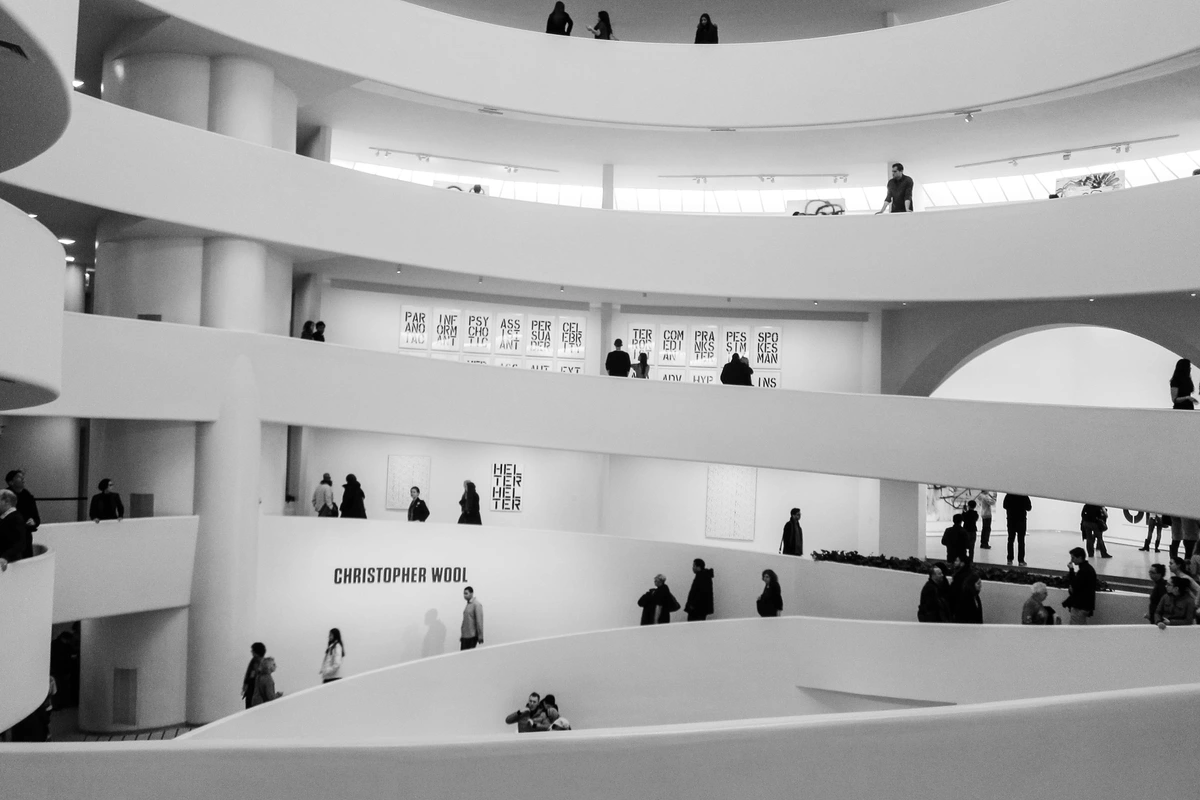
Is Dadaism the same as Surrealism?
No, but they are definitely related, like rebellious siblings! Surrealism grew directly out of Dadaism in the early 1920s, with many Dadaists (like André Breton and Man Ray) transitioning into the new movement. While both were deeply interested in the irrational and challenging conventional thought, Dadaism was more about nihilistic protest, destruction, and a rejection of meaning. Surrealism, on the other hand, was more 'constructive,' focused on exploring the subconscious mind, dreams, and automatic processes as a way to create a new reality, a 'sur-reality,' often drawing on Freudian psychoanalysis. Dada aimed to tear down, Surrealism aimed to delve inward and rebuild, albeit with very strange, dreamlike materials. Think of Dada as the wild, angry youth, and Surrealism as its slightly more contemplative, but still profoundly unconventional, adult self. The relationship is less about identity and more about a clear evolutionary path from radical negation to psychological exploration. It's like Dada cleared the forest, and Surrealism then built a magnificent, dreamlike house in the clearing. While Dada was a destructive force, Surrealism sought to explore and express the hidden realities of the human psyche.
A Final, Absurd Thought
So, is Dadaism just a dusty historical footnote? A weird, noisy blip on the art timeline that we can neatly tuck away? I really don't think so. In a world increasingly saturated with information, 'hot takes,' and often baffling political and social chaos, the Dadaist impulse to question absolutely everything, to defiantly embrace absurdity, and to refuse to take anything at face value feels more relevant now than ever before. It's a reminder that sometimes, the most profound questions come wrapped in the most outrageous, often humorous, packages. The contemporary art world, often criticized for its inaccessibility or 'elitism,' owes so much of its critical edge and willingness to experiment to these early rebels. The spirit of Dada is a vital counter-force, always nudging us to look deeper, question louder, and perhaps, create a little more glorious chaos. It reminds us that art isn't always about comfort; sometimes, it's about confrontation, and that's precisely where its power lies.

















Next time you encounter a piece of art—whether it's in a pristine gallery or a gritty street mural—that confuses you, or even frankly angers you, take a second. Pause. Maybe it's not trying to be conventionally beautiful. Maybe it's not trying to make immediate sense. Maybe, just maybe, it's not even trying to be 'art' in the way you understand it. Perhaps, just like Marcel Duchamp did with his infamous urinal over a century ago, it's simply asking you a fundamental question: "What do you think art is? And why?" And honestly, that's a question always worth asking, because the answer might just open up your mind to a whole new universe of creative possibilities and radical self-expression. If this journey into glorious absurdity has sparked your curiosity, I encourage you to explore more contemporary art galleries and see how the Dadaist spirit continues to evolve and provoke, permeating everything from abstract expressionism to digital art installations. Perhaps you'll find yourself questioning an artwork, challenging an assumption, or even feeling a spark of that rebellious Dadaist energy. Or better yet, go out and create your own glorious nonsense – a truly original idea, a provocative performance, a collage from life's discarded fragments. The world probably needs it now more than ever, a reminder to perpetually question, to never settle for easy answers, and to find profound liberation in a defiant, joyful absurdity. Perhaps you'll even find yourself drawn to abstract art or conceptual art, recognizing their deep roots in Dada's radical questioning. It's an invitation to join the ongoing rebellion against the mundane and the expected.