
Marcel Duchamp's Fountain: The Revolutionary Readymade That Shook the Art World
Uncover Marcel Duchamp's 'Fountain,' the scandalous urinal that redefined art. Explore its defiant origins, intellectual impact, and profound legacy on conceptual, modern, and contemporary art.

Marcel Duchamp's Fountain: The Revolutionary Readymade That Shook the Art World
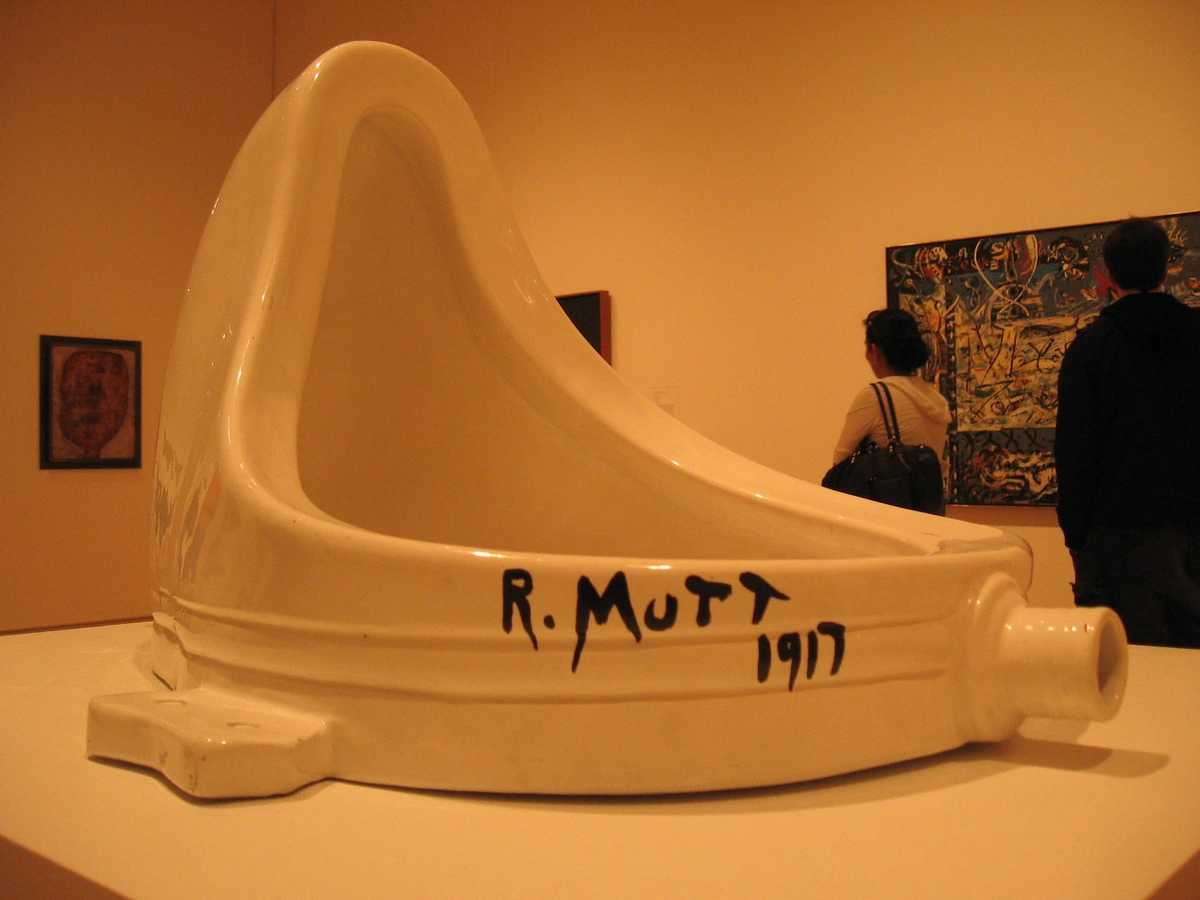
Marcel Duchamp's Fountain isn't just a piece of art; it's a defiant question mark hurled at the art world, still reverberating today. The first time I truly grappled with it, my reaction wasn't a lightning bolt of understanding, but a slow, almost grudging thaw of bewilderment. My inner artist, who obsesses over the perfect brushstroke, wanted to scoff. Like many, I initially felt a mix of genuine bewilderment and a slight, almost involuntary eye-roll: "A urinal? That's art? Is this some kind of sophisticated, elaborate joke designed to mock everything I thought I knew about painting and sculpture?" It felt cheeky, maybe even a little lazy, like someone decided to be provocative for provocation's sake. And honestly, a part of me, the one that still sweats over a fresh canvas, occasionally wonders if that wasn't a tiny bit true for Duchamp, too—a mischievous glint in his eye as he signed "R. Mutt." This humble plumbing fixture didn't just challenge; it caused an earthquake that shifted the very foundations of how we define and experience art, rattling the walls of tradition and opening up entirely new conceptual spaces.
But then, as I dug deeper, the sheer audacity of it, the quiet conceptual brilliance, began to click into place. I realized my initial bewilderment was exactly the point, an invitation to a deeper intellectual game. It wasn't about the object itself – this unassuming, mass-produced porcelain urinal. It was about everything around the object: the profound questions it dared to ask, the art institutions it gleefully provoked by exposing their own hypocrisies, and the fundamental re-evaluation it demanded of what we, as a society, consider "art." This piece didn't just ruffle feathers; it tore down foundational walls—walls built from centuries of emphasis on aesthetic beauty, manual skill, and elite taste—creating a tremor that still reverberates through the art world today. It's a bit like when you've meticulously planned a complex painting, only for someone to look at your palette and casually suggest that the act of choosing the colors, not the painting itself, is where the real art lies. That's a mind-bender, right? A challenge not just to your hands, but to the very core of your artistic philosophy. That’s what Fountain did. In this ultimate guide, I want to demystify this revolutionary work, exploring not just what it is, but why it changed everything, how it continues to shape our understanding of art today, and what profound questions it still poses for artists and audiences alike.
The Man Behind the Provocation: Who Was Marcel Duchamp?
Before Fountain became a lightning rod, Marcel Duchamp (1887-1968) was already an enigma within the European avant-garde. Born into an artistic family in France, he initially experimented with Impressionism and Cubism, but quickly grew disillusioned with what he termed "retinal art" – art that appealed solely to the eye, focusing on visual pleasure and traditional aesthetic beauty. He felt art had become too passive, too focused on the mere pleasure of looking, rather than engaging the mind. "I was interested in ideas—not merely visual products," he famously declared. He was driven by a radical skepticism towards established artistic norms, questioning the very purpose and value of art in a rapidly industrializing world. This philosophical stance, coupled with his sharp intellect and a subversive sense of humor, set the stage for his groundbreaking experiments with everyday objects, forever changing the trajectory of art history and positioning him as a seminal figure in modern and contemporary art.
The Birth of the 'Readymade': How Duchamp Rewrote the Rules of Art
The idea of art where the artist doesn't make anything? It sounds like a paradox, doesn't it? But for Marcel Duchamp, this was the revolutionary genesis of the readymade: an ordinary manufactured object that an artist selects and presents as a work of art. If you're anything like me, you've spent countless hours honing a craft, pouring your essence into every detail. So, the idea of a readymade might initially feel… well, a little counter-intuitive. No sculpting, no painting, no drawing in the traditional sense. The artist isn't creating the object; they are choosing it. This monumental shift, from emphasizing the physical hand of the artist to prioritizing the intellectual mind, was a conceptual earthquake.
It declared that the artistic act could reside purely in the intellectual gesture, the conceptual choice, rather than in manual skill, aesthetic beauty, or even the artist's unique touch. It asked: What if the intention and the context are the art, not the craft? This was a direct challenge to what Duchamp called "retinal art" – art that appeals solely to the eye and traditional aesthetic sensibilities, focusing on visual pleasure and craftsmanship, much like the academic nudes or landscapes popular at the time. (I mean, who among us hasn't been a little too focused on the perfect color blend, only to forget the idea behind the painting?). This revolutionary approach also introduced the powerful concept of appropriation – the act of taking an existing image or object and re-contextualizing it to create new meaning – turning a mundane item into a profound statement simply through selection, thereby stripping it of its utilitarian purpose and infusing it with new intellectual value.
Before Fountain exploded onto the scene, Duchamp had already been quietly (or not so quietly, if you were paying attention) experimenting with this idea. In 1913, he gave us Bicycle Wheel, a simple bicycle wheel mounted upside down on a kitchen stool, spinning freely. Then came Bottle Rack (1914), a metal rack designed for drying bottles, standing starkly alone, and even Hat Rack (1917) and Comb (1916). These were everyday, mass-produced items, wrenched from their functional contexts and elevated to art. For me, these early experiments force a question I often grapple with in my own abstract work: where does the art truly reside? Is it in the precise brushstroke, the intricate composition, the vibrant color—or is it in the intention, the underlying idea, the conversation it sparks? Duchamp firmly pushed the needle towards the latter. He was, in essence, demanding: "Who decides what art is? And by what criteria?" This wasn't just a playful jab; it laid the foundational groundwork for movements like Dadaism, which reveled in challenging the establishment and embracing the absurd, and was a direct ancestor to what we now call Conceptual Art.
The Unveiling of 'Fountain': A 1917 Scandal That Redefined Art
Can you imagine the uproar? To truly grasp the sheer audacity of Fountain, we need to rewind to the art world of 1917. This wasn't just about a urinal; it was about smashing the prevailing criteria for "art" deeply rooted in aesthetic beauty, undeniable manual skill, and a certain reverence for traditional mediums like painting and sculpture. Academic traditions, steeped in classical forms and craftsmanship, still held considerable sway. Even as avant-garde movements like Cubism and Fauvism had already begun to push boundaries with form and color, they usually did so within accepted mediums, still largely valuing the artist's hand. Art, by and large, was meant to be made by an artist, with skill and purpose, and ideally, be pleasing to the eye.
Into this rather conservative (though dynamically evolving) milieu stepped Duchamp. He was on the board of the newly formed Society of Independent Artists in New York. This society was founded precisely as a rebellion against the traditional, jury-led exhibitions, promising "No jury" and "no prizes," and vowing to exhibit any work submitted upon payment of a modest fee. This, of course, was an invitation Duchamp couldn't resist. When Fountain arrived, submitted under the pseudonym R. Mutt, the committee—composed of many prominent artists—was utterly flummoxed. I can almost hear the nervous murmurs, the sputtering indignation. "A urinal? Here? What has the world come to?" my imagined committee member sputters. My guess is they felt personally challenged, perhaps even ridiculed, by this brazen disregard for their established norms. How could this mundane, manufactured object—a standard "Bedfordshire" model urinal, common for its utilitarian, mass-produced white porcelain, measuring approximately 2 feet (60 cm) high, and typically found in public restrooms or commercial buildings—be considered art? Its materials were not bronze or marble, but plumbing porcelain. Its function was not aesthetic, but excretory. They simply couldn't bring themselves to exhibit it.
Their objections were explicit and revealing:
- Aesthetically Vulgar: They found it lacking artistic craftsmanship, too mundane, and frankly, ugly. The utilitarian function and mass-produced nature were deemed antithetical to art, a direct affront to centuries of artistic tradition.
- Immoral: Challenging the sanctity and decorum of the gallery space with a bathroom fixture was seen as offensive, crude, and a violation of public decency within the hallowed halls of art.
- Plagiarism: This truly baffles me! They questioned its originality, as if R. Mutt had somehow copied the idea of a urinal. The profound irony lies in the fact that Duchamp's radical gesture was precisely about appropriation – the act of taking an existing object and re-contextualizing it – and challenging the very concept of originality itself. The accusation was, in a strange way, a potent, albeit unintended, confirmation of his point, highlighting the art world's struggle to grapple with new definitions of authorship.
By presenting a factory-made object, he forced the art world to confront its criteria for originality and the unique 'hand' of the artist. The committee members also deeply struggled with the concept of a mass-produced, functional object replacing the unique, skilled creation as the hallmark of art. This implicitly challenged the very value system of the art market and the status of the artist as a craftsman. It was an attack on the gallery system itself, a powerful piece of institutional critique – art that examines and critiques the power structures, conventions, and exclusionary practices of art institutions themselves – before the term even existed. Think of it: an artwork designed to dismantle the very framework that deems what an artwork is. How meta is that?

They did what any self-respecting, utterly confused institution would do: they hid it behind a partition. Duchamp, along with others, promptly resigned in protest, arguing that the committee's refusal directly contradicted their stated principles. It was a brilliant, strategic move—a piece of performance art in itself, where the act of submitting and the response to the submission became part of the artwork's meaning. The subsequent debate alone cemented Fountain's place in history. Crucially, the influential photographer and gallery owner Alfred Stieglitz photographed Fountain at his renowned 291 Gallery. This photograph, starkly composed and dramatically lit, became its vital visual record and an unexpected, enduring platform. In a profound twist, this photographic image, more than any physical exhibition, became the primary way the artwork was experienced and discussed, arguably becoming the artwork itself and profoundly contributing to the dematerialization of the art object – the idea that the artwork's essence can transcend its physical form. This prefigured later uses of photography in Conceptual Art documentation.

Duchamp later anonymously defended the piece in a journal, stating: "Whether Mr. Mutt with his own hands made the fountain or not has no importance. He CHOSE it. He took an ordinary article of life, placed it so that its useful significance disappeared under the new title and point of view—created a new thought for that object." And just like that, a discarded plumbing fixture became one of the most talked-about, debated, and ultimately influential artworks of the 20th century. Fountain was considered art not because of its inherent aesthetic qualities, but because it provoked a crucial, paradigm-shifting conversation. It was a declaration that the artist's intellect could be the primary tool, a concept that continues to resonate with me as I explore the interplay of ideas and form in my own abstract compositions.
Key Moments in Fountain's Transformative Journey
Year  | Event | Significance |
|---|---|---|
| 1913 | Bicycle Wheel (first readymade) | Duchamp began experimenting with elevating everyday objects, such as a bicycle wheel mounted on a stool, laying the groundwork for Fountain and the conceptual shift, asking "What is art?" This was the first explicit declaration of the readymade concept, signaling a profound shift from manual creation to intellectual selection. |
| 1917 | Submission to Society of Independent Artists | Duchamp, under the pseudonym R. Mutt, directly challenged the committee's stated "no jury" policy and the very definition of art itself. This act sparked immense controversy and immediately revealed the hypocrisy within the art establishment that claimed to be open-minded while clinging to traditional values. |
| 1917 | Rejection by Committee | The committee's refusal to exhibit Fountain exposed the rigid, conservative definitions within the art establishment of the time. It was deemed "immoral, vulgar, and plagiarism," specifically rejecting its mass-produced, utilitarian nature as art and the perceived lack of traditional artistic skill. This rejection, ironically, fueled its legend. |
| 1917 | Photograph by Alfred Stieglitz (291 Gallery) | Provided critical documentation and a lasting visual record by the influential photographer Alfred Stieglitz, cementing its legacy beyond its physical disappearance. This iconic image effectively became the primary "artwork," accessible to a wider public and validating its conceptual power in the absence of the original physical object, foreshadowing art's dematerialization. |
| ~1917 | Disappearance of the original | The specific urinal Duchamp submitted was lost shortly after the exhibition (likely discarded by cleaning staff). This accidental loss ironically reinforced the idea that the concept was more important than the physical object, a point still debated by art historians today. It underlined the work's inherent dematerialization and the primacy of the idea. |
| 1950s | First Reproductions/Replicas Created & Authorized | Duchamp himself began commissioning and authorizing replicas. This ensured the artwork's survival and widespread study, and critically, underscored that the idea was paramount, not the singular, physical object, fundamentally challenging traditional notions of authenticity, uniqueness, and the art market's valuation of original masterpieces. |
The Lost Original and Enduring Concept: Why Replicas Define 'Fountain'
One of the most enduring and, frankly, fascinating aspects of Fountain's story is the fate of the original. "Where can I see a Duchamp urinal?" is a common question, and the answer is usually: not the original. The specific urinal Duchamp submitted in 1917 was lost shortly after the scandalous exhibition (or rather, non-exhibition). Speculation suggests it was simply discarded, perhaps by a cleaning crew unaware of its burgeoning artistic significance – a wonderfully ironic, almost Dadaist, end for a piece that challenged definitions of value. Consequently, the original Fountain's whereabouts are unknown, and its ultimate fate remains an open question, a subject of ongoing art historical discussion, lacking definitive provenance or a location today. It's truly a lost object, a ghost of a concept, its disappearance only amplifying the idea that the physical object was never the real point.
What we primarily encounter today are not "the" original, but rather a series of reproductions and replicas commissioned and authorized by Duchamp himself, starting in the 1950s. He supervised their creation, often using standard porcelain urinals, much like the original. Duchamp's deliberate choice to create and authenticate these multiples was not an act of frustration over the lost original, but a profound statement in itself. He explicitly stated that the replicas were a means to reinforce that the idea was paramount, not the singular, physical object. He wasn't interested in the cult of the unique masterpiece; he was interested in the enduring power of the concept. This proliferation of identical, yet "original" artworks fundamentally challenges traditional notions of authenticity and uniqueness in art, and raises complex questions for the ethics of art collecting and conservation. It makes us ask: can an artwork be multiplied without losing its 'soul'? Duchamp's answer was a resounding yes, because the soul was in the thought.
For critical theorists, Fountain presented a fundamental "problem" in the history of art – the problem of definition itself. George Kubler, in The Shape of Time, saw it as a pivotal "prime object" that generates copies, emphasizing the shift from unique objects to a conceptual lineage. Imagine an original blueprint that gives rise to countless identical structures; the blueprint's power isn't diminished by the many buildings it creates. Arthur Danto, with his "artworld theory" as presented in The Transfiguration of the Commonplace, used Fountain as a prime example, arguing that it is the "artworld" – the network of artists, critics, curators, and institutions – that confers the status of art upon an object, not its inherent aesthetic qualities. It's like a secret handshake among those in the know: the urinal became art because the art world acknowledged the conceptual proposition it presented. This emphasized how art shifted from a sensory experience to an intellectual one, making its copies just as 'authentic' in conveying the core idea. For collectors, this means grappling with whether a replica holds the same market or historical value, adding a layer of philosophical debate to ownership.
This wasn't just about shocking people (though it certainly did that, and quite effectively). Duchamp was deliberately challenging the very foundation of art appreciation, shifting it away from the purely sensory and into the intensely intellectual realm. Before Fountain, the value of art was largely tied to aesthetic beauty, the artist's skill, and the craft involved. With Fountain, Duchamp proposed that art could be primarily about ideas. The intellectual act of selection and presentation became the art itself, demanding that viewers engage with it on a conceptual level rather than just an emotional or aesthetic one. As he put it, the "new thought for that object" wasn't inherent in the urinal itself; it was created by the artist's choice, the new context, and, crucially, the viewer's subsequent engagement. The art wasn't merely in the object itself; it existed powerfully in the space between the object, the artist's intention, and the viewer's mind – a dynamic, relational understanding of art, much like how a conversation's meaning truly emerges from the interaction, not just the words themselves. This touches on deep philosophical underpinnings about aesthetics, intentionality, and the very sociology of art itself – how our collective agreement shapes what is considered valuable. Critics like Rosalind Krauss later analyzed Fountain as a pivotal work of Conceptual Art, highlighting its dematerialization of the art object and its focus on intellectual operations.
Beyond the Urinal: 'Fountain's' Profound Influence on Art History
It’s like when I’m grappling with an abstract painting; sometimes the initial visual impact is strong, but the true depth emerges as I consider the artist's process, their choices, and the underlying questions they're posing. Or, for instance, when an artist presents something that seems ordinary, but through its framing, it forces you to reconsider its purpose, its beauty, or its political weight. That's the Duchamp effect, amplified. The profound connection to Dadaism is undeniable; Fountain embodied the anti-art, anti-establishment spirit that fueled Dadaist manifestos and performances, openly mocking bourgeois tastes and societal norms. It also subtly laid groundwork for early Surrealism, especially in its exploration of the arbitrary nature of objects and the subconscious mind.
This conceptual leap directly paved the way for artists like Andy Warhol, who unapologetically presented everyday commercial objects like soup cans or Brillo Boxes as art. Warhol's work, a clear echo of Duchamp's audacity, forced us to question mass production, consumerism, and the blurring boundary between art and advertising in a post-Fountain world. He took Duchamp's premise and scaled it to the dizzying heights of consumer culture. But it wasn't universally acclaimed; early critiques of the readymade concept often dismissed it as lazy, a joke taken too far, or a mockery of artistic skill. "Anyone could do that!" was a common refrain – missing the point entirely, of course. The skill in a readymade lies not in the physical execution, but in the selection, repositioning, and conceptual framing. The point wasn't the act of producing the object, but the act of choosing it and placing it within an art context, thereby shifting its meaning and forcing a dialogue. This crucial distinction, emphasizing the artist as a chooser rather than merely a maker, is often overlooked and remains a central pillar of post-modern art. The initial shock and scandal gradually gave way to academic acceptance, particularly from the mid-20th century onwards, as art historians and theorists recognized its pivotal role in shifting artistic discourse from aesthetics to conceptualism. Even today, contemporary feminist art critiques might re-examine Fountain, not just as a critique of art institutions, but also as a challenge to their historically masculine, exclusionary spaces.

The reverberations of Fountain are impossible to overstate. It’s one of those pivot points in art history, a real game-changer that irrevocably altered the course of modern and contemporary art. It opened the floodgates for later movements like Pop Art, Conceptual Art, and Minimalism, where everyday objects, industrial materials, and pure concepts became legitimate artistic mediums. Suddenly, anything could be art, as long as the artist, and by extension, the viewer, was willing to engage with the underlying idea. Artists engaging in institutional critique or social practice art owe a profound debt to Duchamp's initial provocation, using art to question the very systems that define it. The reception of Fountain has, of course, evolved over time; initially seen as an outrageous prank, it is now almost universally recognized as a foundational work of 20th-century art, a touchstone for understanding modernity's intellectual turn, and a subject of ongoing critical discourse in art history departments globally.

My Creative Echoes: 'Fountain's' Enduring Lesson
From where I stand, creating and reflecting on abstract art, I see Fountain not as a singular object but as a profound portal. It asks us to reconsider everything: the role of the artist, the role of the viewer, the sanctity of the gallery space, and the very definition of creativity. It's an enduring lesson in the power of intention. It reminds me that sometimes the most profound statements are made not by adding more, but by re-framing what's already there. Just as Duchamp’s selection of a urinal was a deliberate act of re-contextualization, my own work often begins with identifying a particular rhythm or form in the everyday—the stark geometry of a city skyline, the repetitive patterns of industrial machinery, or the vibrant energy of a bustling street. By extracting these elements and re-presenting them through bold colors and abstract forms, I'm inviting you to find new meaning in the familiar, challenging perceptions of identity and value.
The art isn't just in the paint on the canvas; it's in the choice to highlight that particular rhythm or pattern, and the conversation it sparks. It’s a reminder that art isn't just about beauty or skill; it's about dialogue, disruption, and ultimately, expansion. It’s about being brave enough to show the world something it never expected, and then having the conviction to say, "Yes, this counts." This notion of finding profound meaning in unexpected places resonates deeply with my own artistic journey, often making me question the subtle ways I frame and present my abstract pieces. While I'm focused on creating vibrant, abstract art that you can buy and bring into your home, the underlying spirit of questioning and reimagining is always there. The journey of art, really, is a continuous unfolding of new ideas, much like my own artistic timeline. So next time you encounter something ordinary, ask yourself: what new thought could you create for that object?

Frequently Asked Questions (FAQ)
Here are some of the most common questions people ask about Marcel Duchamp's Fountain, designed to give you a comprehensive understanding of this pivotal artwork.
Q: What is a "readymade"?
A: A readymade is an ordinary manufactured object selected and presented as a work of art by an artist. Marcel Duchamp popularized the concept, emphasizing the artist's intellectual choice over manual skill and aesthetic creation. The readymade challenges the traditional definition of art by making the conceptual act of choosing and presenting the core artistic gesture, often provoking new dialogues about the nature of art and originality. It fundamentally shifted artistic criteria towards the artist's mind, demonstrating that the act of selection can be as profound as the act of creation.
Q: Was Fountain considered art at the time?
A: No, Fountain was controversially rejected by the Society of Independent Artists in 1917, despite their "no jury" policy, on grounds of being immoral, vulgar, and even plagiarism. The committee struggled with its mass-produced nature and utilitarian function, arguing it lacked artistic craftsmanship and challenged established aesthetic and moral norms. While not officially exhibited, its submission and rejection sparked a heated debate that, ironically, cemented its status as a revolutionary work of Conceptual Art, forcing a re-evaluation of artistic criteria and paving the way for the avant-garde movements.

Q: Where is the original Fountain now?
A: The original Fountain submitted in 1917 was lost shortly after its submission and is considered missing, possibly discarded by sanitation workers who saw it as a mere plumbing fixture. What we see today in museums and galleries are various reproductions and replicas made later by Duchamp himself, often in limited editions, starting from the 1950s. These replicas embody the artwork's core concept that the idea, not the singular object, is paramount, challenging traditional notions of authenticity and uniqueness in modern and contemporary art. The disappearance ironically reinforced its conceptual message.

Q: What kind of urinal did Duchamp use for Fountain?
A: Marcel Duchamp used a standard, mass-produced "Bedfordshire" model urinal, which he purchased from J. L. Mott Iron Works, a plumbing supply store in New York. This particular model, a common, white porcelain fixture approximately 2 feet (60 cm) high, was chosen for its ordinariness and utilitarian design. The selection of such an unremarkable, everyday object was crucial to the artwork's challenge to traditional notions of artistic craft and aesthetic value, emphasizing its commonness and lack of inherent artistic merit before his intervention.
Q: Why is Fountain important today?
A: Fountain's importance lies in its radical challenge to traditional definitions of art. It shifted focus from aesthetic beauty and craftsmanship to conceptual meaning, paving the way for Conceptual Art, Pop Art, Minimalism, and many contemporary practices where the idea behind the work is paramount. It fundamentally changed how we perceive art and the artist's role by elevating intellectual choice to an artistic act, proving that art can be a dialogue rather than just an object to admire. It continues to inspire artists to question existing norms and push boundaries, making it a cornerstone for understanding 20th and 21st-century artistic innovation and art movements.
Q: What was the significance of Alfred Stieglitz's involvement with Fountain?
A: Alfred Stieglitz, an influential photographer and gallery owner, photographed Fountain at his 291 Gallery after its rejection. This stark, iconic photograph provided a crucial visual record and platform for the artwork, allowing it to be seen and debated by a wider audience. This act was instrumental in cementing Fountain's place in art history, as the image became the primary way the artwork was experienced and discussed, arguably becoming the artwork itself and emphasizing the power of documentation in conceptual art and the shift from physical object to concept. Without Stieglitz's photograph, Fountain's legend might have been lost to time.








Q: What is "retinal art"?
A: "Retinal art" is a term coined by Marcel Duchamp to describe art that primarily appeals to the eye and traditional aesthetic sensibilities, focusing on visual beauty, composition, and craftsmanship. Duchamp explicitly rejected retinal art, arguing for a more intellectual and conceptual approach where the idea behind the artwork was paramount, rather than its purely visual appeal. He felt that art had become too focused on satisfying the eye without engaging the mind, much like the academic works of the Neoclassicism period. For him, true art should provoke thought, not just visual pleasure.
Q: Does the use of "readymades" devalue skilled craftsmanship in art?
A: This is a long-standing debate. While readymades emphasize intellectual choice over manual skill, Duchamp's intention was not necessarily to devalue craftsmanship, but to expand the definition of art. He argued that art could exist beyond the realm of traditional craft, opening doors for new forms of expression. Instead of negating skill, it challenges the primacy of skill as the sole measure of art. Many contemporary artists continue to hone traditional skills while others choose conceptual approaches, demonstrating that both paths hold validity in the diverse art world. It’s about broadening the conversation, not shutting down existing practices.
Q: Is Fountain considered an elitist artwork?
A: While Fountain challenges traditional art institutions, some argue that its highly conceptual nature and reliance on art historical context can make it seem elitist or inaccessible to those without specific art education. However, its use of an everyday object can also be seen as democratic, inviting anyone to question what art is. The perceived elitism often stems from the intellectual demands it places on the viewer, requiring engagement with complex ideas about art's definition and context, rather than its material or subject matter. The very ordinariness of the urinal, for instance, makes the fundamental question it poses universally accessible.
Q: What philosophical questions does Fountain raise about art?
A: Fountain raises fundamental philosophical questions, primarily: "What is art?" and "Who decides what art is?" It challenges traditional aesthetics by divorcing art from beauty, craftsmanship, and originality, forcing us to consider the role of the artist's intention, the context of presentation, and the viewer's interpretation. It delves into the nature of authenticity, the art institution's power, and whether the intellectual act of 'choosing' can be as artistic as the manual act of 'making'. It's a cornerstone for understanding what is modern art and its evolution, essentially prompting an ontology of art – a deep inquiry into the very being and nature of art itself.
Further Reading & Exploration
To continue your journey through the revolutionary world of art and delve deeper into the ideas sparked by Marcel Duchamp's Fountain, consider exploring these related topics: