
Redefining Canvas: When Tradition Meets Contemporary Art
Explore how centuries-old art conventions challenge and inspire today's bold creative expressions. A fresh perspective on the living dialogue between classical foundations and modern abstraction.

Redefining Canvas: When Tradition Meets Contemporary Art
Remember the first time you visited a classical art museum? Those grand canvases whispering stories from centuries past, where every brushstroke obeyed strict rules of perspective, symmetry, and realism. Now contrast that with the contemporary galleries pulsing with color, texture, and pure emotional energy. What happened in that creative chasm? How did we get from meticulously rendered fruit bowls to paintings that feel like they’re vibrating with electric joy?
I remember standing in front of a massive Delacroix painting as a teenager, mesmerized by the drama and precision. The figures were perfect, the composition flawless. It felt like witnessing a sacred performance where every element knew its place. A decade later, I found myself in a converted warehouse surrounded by abstract installations that seemed to vibrate with their own internal energy. A canvas wasn't a window into reality anymore—it was a raw nerve ending pulsing with emotion. The contrast couldn't have been starker—yet both experiences shared something vital: a complete absorption in the act of looking.
As an artist navigating this landscape, I often ponder this invisible line between traditional notions in art and the boundary-pushing work we create today. It's not about choosing sides—it's about understanding how these ancient conversations continue to shape our modern visual language. And the stakes feel higher now than ever. How do you make a mark when every surface—digital and physical—is already saturated with images? This question haunts my studio at 3 AM. Let's unpack this together, shall we?
Here's the reality: we're living through the most radical democratization of art-making in human history. Anyone with a smartphone can create, share, and sell visual work. That's liberating—but also terrifying for artists trying to stand out. The old gatekeepers crumbled, replaced by algorithmic feeds and influencer economies. Yet buried beneath this digital avalanche lies a profound tension between honoring craft traditions and forging entirely new languages.
The Anatomies of Artistic Tradition
Let’s be honest: for generations, "good art" came with a rulebook thicker than a tax manual. These weren’t just preferences—they were institutionalized truths enforced by academies and critics. Today, we recognize them as fascinating historical constructs rather than universal laws.
Traditional Notion  | Core Principle | Example in Modern Context | Deeper Implication |
|---|---|---|---|
| :--- | :--- | :--- | :--- |
| Mimesis | Art must imitate physical reality | Abstract art capturing emotional "truth" rather than visual reality | What if the goal isn't to show the world, but to make the feeling of being in the world visible? |
| Hierarchy of Genres | Landscape < Portrait < History Painting | Hybrid works where street photography reclaims historical grandeur, such as JR's massive photographic installations in marginalized communities | This hierarchy reflected 17th-century social values. Contemporary work explodes this by asking: whose story deserves "grand" treatment and who has been historically excluded from these narratives? |
| Technical Mastery | Perfection through disciplined practice | Deliberate "imperfections" conveying raw emotion or political commentary, as seen in Jean-Michel Basquiat's work where frantic marks carry meaning beyond polished surfaces | The hand's tremor becomes a political statement—who gets to decide what "good" looks like and whose nervous system deserves representation? |
| Beauty as Purpose | Art must elevate through aesthetic ideals | Provocative "ugliness" challenging dominant power structures, as seen in the Vienna Actionists or Paul McCarthy's confrontational works | When aesthetics become tools of exclusion, rejecting them becomes a moral act. Who decides which bodies, emotions, or experiences are beautiful? |
| Single-Point Perspective | Mathematical precision creating illusionistic depth | Fractured planes in Cubism revealing multiple viewpoints simultaneously, later expanded by digital artists creating impossible architectural spaces | The ultimate power move: insisting there isn't one correct way to see anything or experience reality. |
| Naturalistic Color | Pigments mimicking observable reality | Arbitrary color choices expressing emotional states, like the Fauves' radical departure from visual accuracy, extending to contemporary artists like Yayoi Kusama using color to induce psychological states | Color stops describing the object and starts describing the human nervous system, becoming a direct conduit for emotion. |
| Narrative Clarity | Art conveying clear moral or historical messages | Abstraction demanding personal interpretation and emotional response over prescribed meaning | Perhaps meaning isn't something an artist delivers, but something a viewer co-creates. The artwork becomes a mirror reflecting the observer's inner world. |
| Precious Materials | Oil on canvas, bronze, marble as highest forms | Ephemeral installations, recycled materials, algorithms, even bacteria as art media | The material hierarchy reinforced scarcity and market control. Digital era asks: can art be abundant? What happens when art embraces decay and impermanence instead of eternal preservation? |
| Solitary Genius | Art created by individual masters in isolation | Collaborative practices, community-based projects, AI as co-creator | Turns out, creativity was always collective—we just hid the collaborators. The myth of the lone genius served market interests more than artistic truth. |
| Passive Viewing | Art observed in silent contemplation | Participatory installations, VR environments, performance art dissolving observer/observed | The museum as temple becomes the museum as playground, laboratory, battleground. The viewer becomes co-creator of the experience. |
Breaking the Brushwork Mold
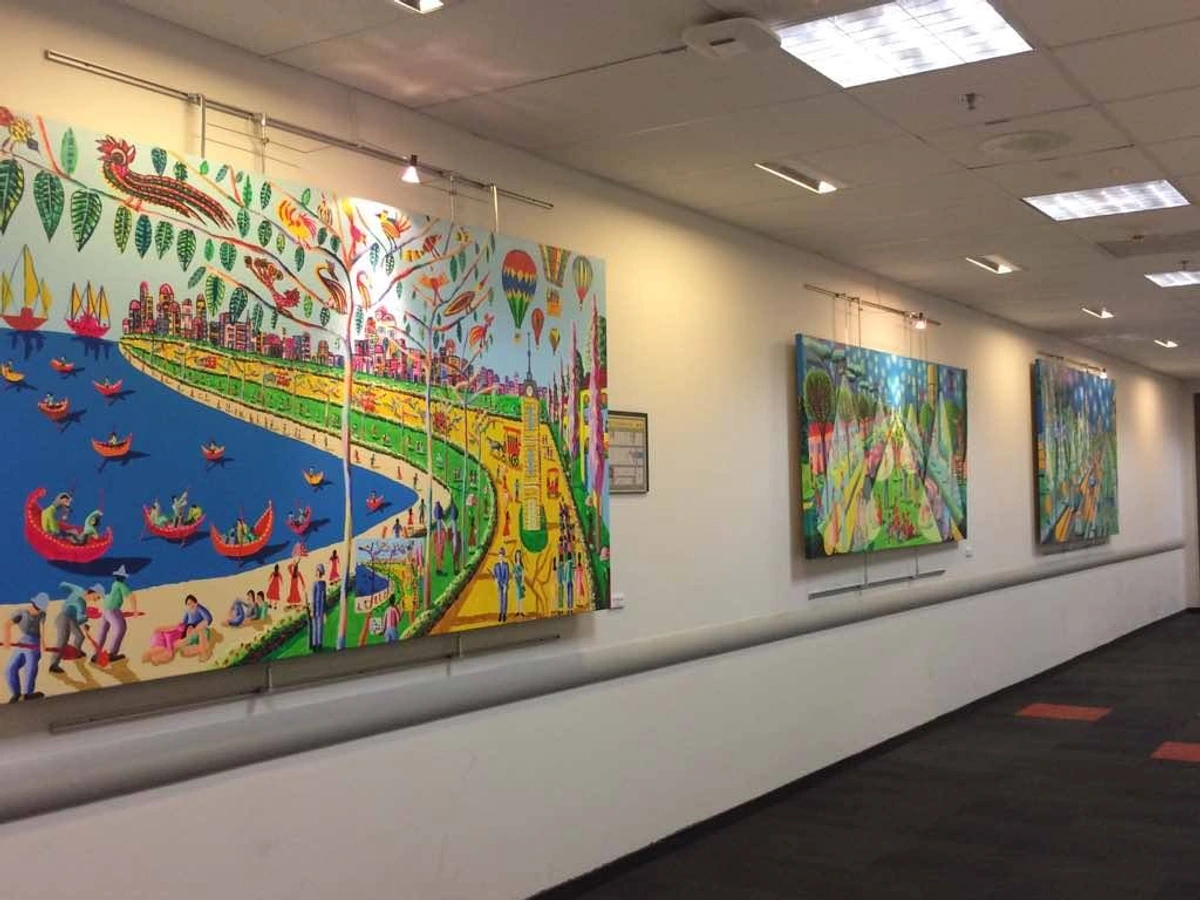
Consider the Renaissance fixation on linear perspective—a revolutionary tool for creating depth. But what happens when artists intentionally flatten that perspective? Think Klimt’s gold-leaf patterns or Haring’s cartoonish figures. They’re not rejecting perspective; they’re saying, "What new worlds open up when we shatter this illusion?" That tension fascinates me. It’s like a jazz musician taking a classical melody and morphing it into chaotic, joyful improvisation.
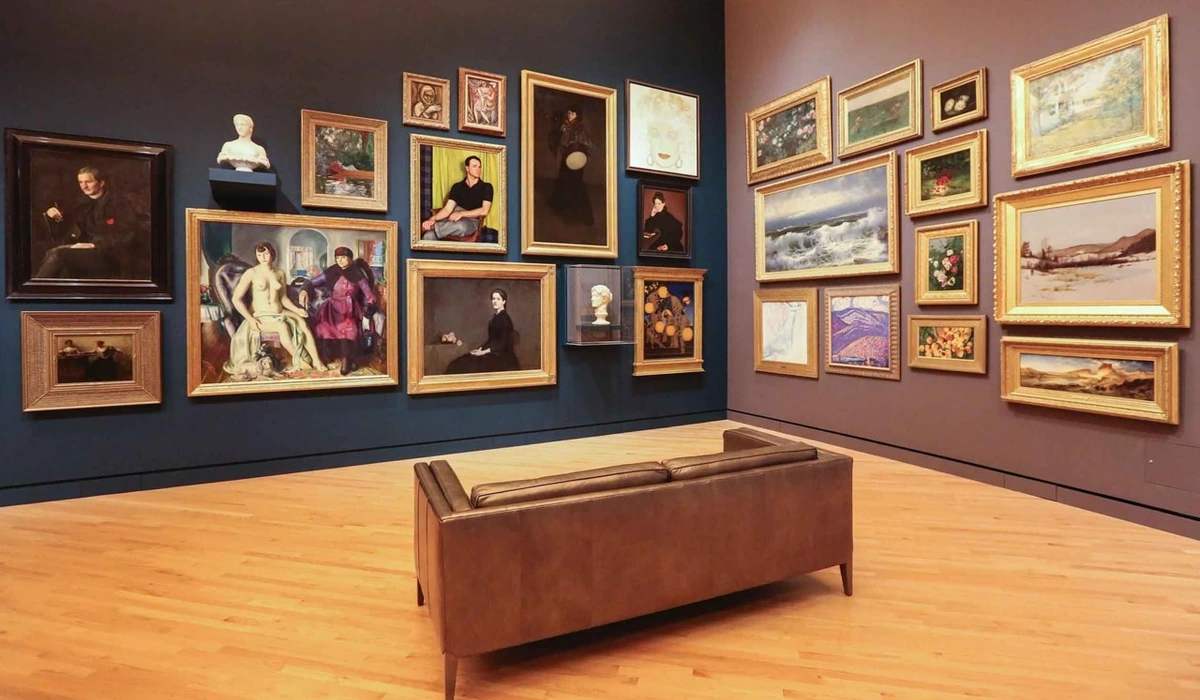
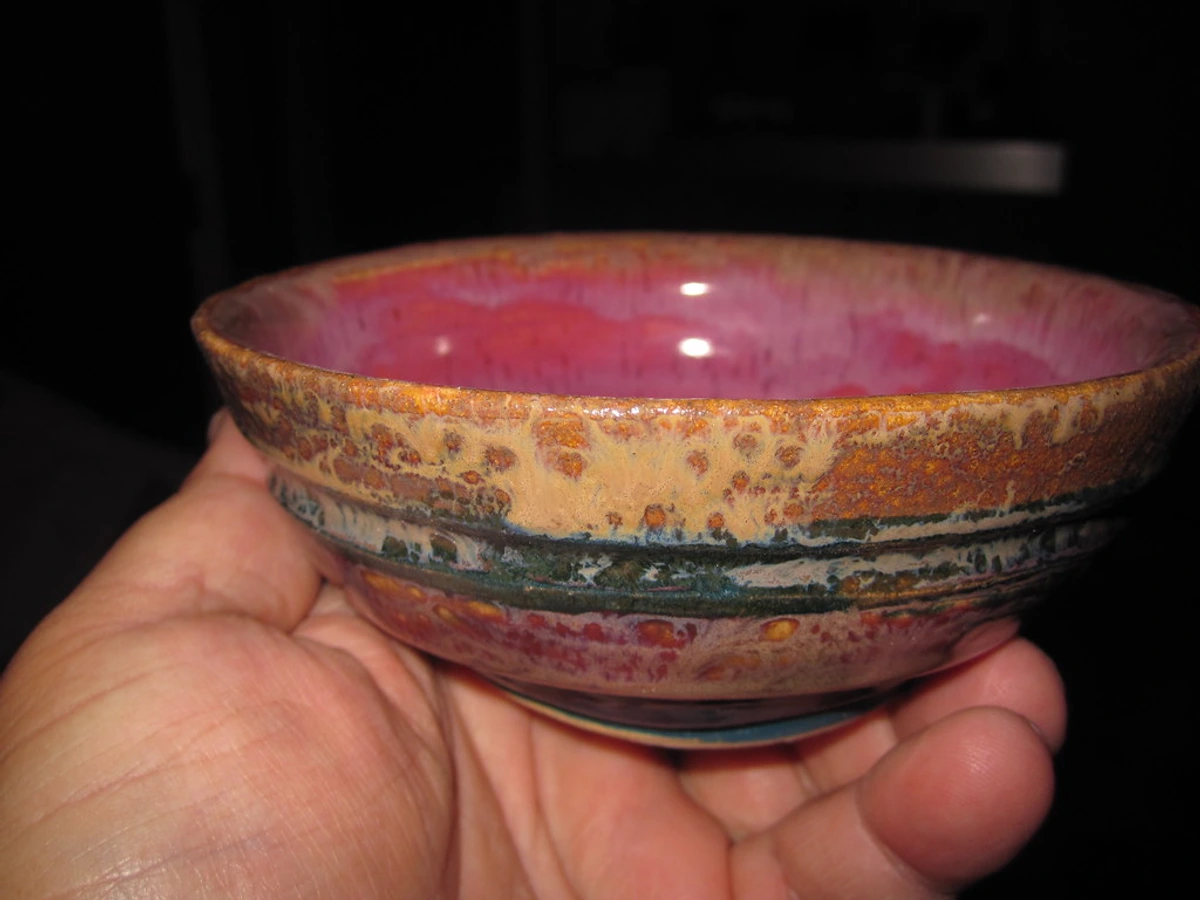
I once spent weeks painstakingly mastering Baroque chiaroscuro in art school. The teacher would correct my shadows like it was life-or-death. Fast forward a decade, and I’ll splash neon purple next to cobalt blue simply because it makes my own heart skip a beat. Does that make me disrespectful to tradition? Not at all. Tradition gave me the tools—and the glorious freedom to repurpose them.
Why It All Started to Crack
The Engine Room: Cracks in the Academic Machine
The 19th century became a seismic rupture in artistic conformity. Courbet declaring "I paint what I see," Manet scandalizing Paris with Olympia’s direct gaze, Cézanne building mountains from geometric blocks—these weren’t just rebellious artists. They were torchbearers revealing that traditional notions in art were never natural laws, but cultural agreements waiting to be renegotiated.
What’s wild? While we see modern art as revolutionary, even its "anti-traditional" stance becomes tradition itself. Pollack’s drips were once radical; now they’re academic canon. Pollock himself would probably hate that irony. This recursive cycle proves art isn’t linear—it’s a conversation where we keep kicking against the walls to find new doors.
The Colorful Legacy in Contemporary Practice
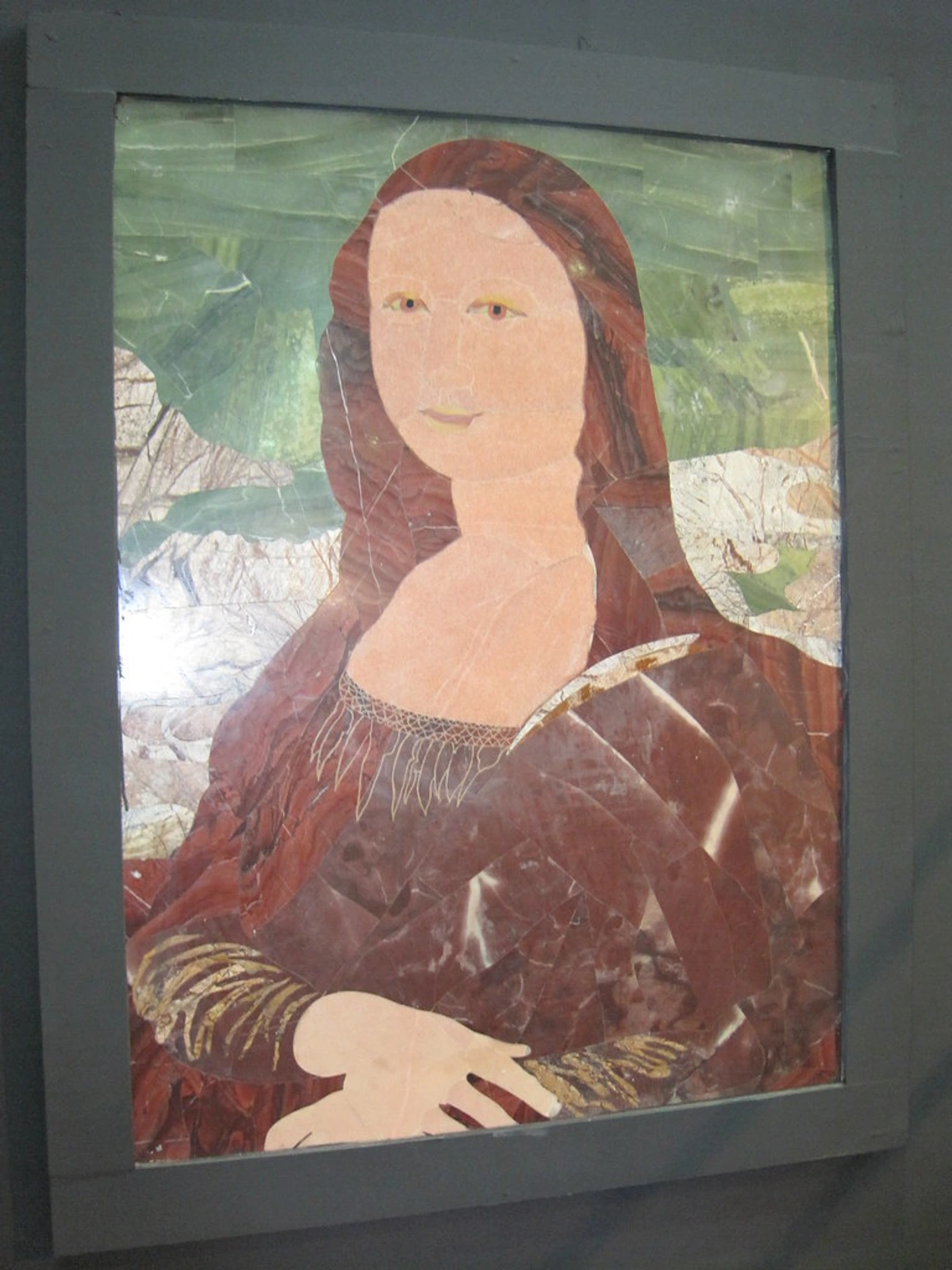
Walk through my studio right now, and you’ll see sketches where I test how Baroque composition principles warp under digital glitches. Or canvases where Renaissance portraiture meets cartoonish exaggeration. These aren’t academic exercises—they’re love letters to the past and future simultaneously.
Practical Tensions Artists Navigate
Challenge | Traditional Approach | Contemporary Adaptation | The Creative Opportunity |
|---|---|---|---|
| Skill Narratives | Years mastering anatomy/form | Intentional "naive" styles challenging elitism | Deliberately unskilled art becomes a political statement about who gets to define "good" |
| Audience Engagement | Art as passive contemplation | Immersive installations requiring interaction, like Yayoi Kusama's Infinity Mirrors rooms changing viewer-art relationship completely | The viewer completes the artwork, making every experience unique and democratizing artistic ownership |
| Commerce & Values | Patrons funding "masterpieces" | Direct artist-fan economies bypassing gatekeepers, platforms enabling artists to earn through subscriptions, digital sales, and crowdfunding | The artist can speak directly to their audience, building community while maintaining creative and financial independence |
| Materiality | Precious pigments on canvas | Recycled plastics, light projections, digital layers, bio-art using living organisms | The choice of material becomes part of the message, not just the medium—art becomes ecological statement |
| Medium Exclusivity | Paintings, sculpture, drawing as distinct categories | Multimedia works breaking down boundaries, like digital art merging with traditional painting | Hybrid forms create entirely new visual languages |
| Production Time | Years perfecting single masterpieces | AI-assisted creation, rapid prototyping, conceptual art prioritizing idea over execution time | Speed becomes a tool for experimentation, allowing more ideas to be tested without preciousness paralyzing creativity |
| Distribution | Physical galleries in major art centers | Global online platforms, virtual reality exhibitions, digital marketplaces democratizing access | Art can reach anyone with an internet connection, bypassing geographic and economic barriers that once limited audience |
| Authenticity | Signature as proof of authorship | Questioning originality through appropriation, remix culture, AI co-creation | What does "authentic" even mean when influence is everywhere? Authorship itself becomes collaborative, contested, and layered |
| Preservation | Art built to last centuries | Ephemeral art, performance, digital works that decay or glitch | Does art need to be permanent to matter? |
| Location | White cube galleries, museums | Public spaces, abandoned buildings, the internet itself | Art escapes the temple and invades everyday life, becoming integrated rather than elevated above daily experience |
This is where the magic happens. When a young artist digitally glitches a classical sculpture or a street artist reinterprets Renaissance frescoes in alleyways—they’re not erasing history. They’re making it roar with relevance. That’s why I created my timeline of creative revolutions—to show how each wave of "new" art always honors its ancestors while pushing toward tomorrow.
The Digital Paradox: How Technology Reshapes Tradition
Here's what keeps me up at night: we're living through the most profound transformation in image-making since the invention of photography, but we're barely processing what it means. AI can now generate images in any style—from Renaissance masters to abstract expressionism—with astonishing accuracy. At the same time, artists are using digital tools not to replace traditional technique, but to extend it in directions our ancestors couldn't have imagined.
I've watched painters project digital compositions onto canvases, then work over them by hand. Sculptors 3D-print maquettes before carving final pieces in marble. The digital and the analogue aren't in conflict—they've become different phases of the same creative process. This hybrid approach feels like the future to me: technology as servant rather than master, expanding what human hands can achieve rather than replacing them entirely.
Yet I remain deeply skeptical of the promise that technology will democratize art completely. Yes, more people can create and share work than ever before. But algorithms tend to amplify what's already popular, creating new forms of conformity even as they claim to celebrate individuality. The most radical artists I know are often the least visible online—not because their work isn't good, but because it doesn't fit the visual language that platforms reward.
The real innovation isn't happening in Silicon Valley's AI labs; it's happening in bedrooms where kids are mixing anime aesthetics with classical painting techniques, in community studios where elders teach traditional crafts to digital natives, in basements where VR headsets meet oil paints. Technology matters, but not as much as the human desire to make meaning through mark-making.
Why This Conversation Matters to You
Whether you’re an amateur painter, a seasoned collector, or just someone who scrolls past art online, understanding these tensions transforms your relationship with art. When you see a chaotic abstract piece and feel resistance, ask yourself: "What traditional idea is this challenging?" That resistance isn’t ignorance—it’s a sign you’re witnessing evolution. When you admire a hyperrealist portrait, appreciate both the technical skill AND how the genre now questions our obsession with digital perfection.

Art survives through rebellion rooted in respect. The most exciting contemporary work? It whispers to Botticelli and shouts at AI-generated images simultaneously. The most exciting contemporary work? It whispers to Botticelli and shouts at AI-generated images simultaneously.

I'm fascinated by how contemporary artists negotiate this terrain. Some, like Kerry James Marshall, paint in classical historical styles but populate their canvases with Black figures—explicitly correcting art history's erasures while working within its most hallowed traditions. Others, like Hito Steyerl, embrace digital degradation as aesthetic, finding beauty in compression artifacts and corrupted files. These aren't rejections of history; they're translations of timeless human impulses into new vocabularies.
FAQs: Demystifying Art’s Old Rules
Q: Are traditional notions in art just outdated restrictions? Not at all! Think of them as ancestral DNA—some strands shape us, others we intentionally edit. Knowing the rules lets us break meaningfully rather than flail blindly. Learning traditional drawing techniques like perspective and chiaroscuro doesn't constrain your creativity—it gives you vocabulary to express more complex ideas. Like learning grammar before writing poetry, mastery of tradition provides the foundation for true innovation. The real restriction isn't knowing the "rules"—it's believing they're sacred.
Think of it this way: jazz musicians who never learned music theory can create beautiful melodies, but those who mastered bebop harmony before playing free jazz bring an entirely different level of intentionality to their experiments. The same applies to visual artists. Understanding compositional principles doesn't mean you're obligated to use them traditionally—it means you can deploy them subversively, ironically, or in conversation with their original context.
Here's the twist: the most radical thing you can do is sometimes follow the rules exactly. I've seen contemporary artists create impeccably traditional still lifes, portraits, or landscapes—but they do it with full self-awareness, as an intellectual choice rather than an unconscious habit. The work becomes a meditation on the history of looking itself. It's not nostalgic; it's forensic, dissecting why certain visual languages feel permanent while others disappear.
Q: Why do contemporary artists borrow from historical styles? Because rebellion without reference is just noise. It's the difference between a toddler scribbling and Cy Twombly's controlled gestural marks. One is random; the other is loaded with art historical awareness. Warhol’s soup cans made sense because we recognized classical still life conventions. Modern artists reference tradition to subvert, honor, or reveal new layers in the conversation.
Q: Does prioritizing technique over originality make an artist traditional? Technique is a tool—not a moral stance. Precision becomes "traditional" when it inhibits expression, not honors it. A photorealist painter pushing social commentary feels radically different from one replicating flowers without engagement. Consider Kehinde Wiley's portraits—technically masterful in their rendering, but radically contemporary in their diverse subjects, poses borrowed from classical European portraiture, applied to contemporary Black subjects. The technique serves the concept, not the other way around. Anyone can learn to draw realistically. Not everyone can use that skill to say something urgent about the world.
The inverse is also true: skill alone guarantees nothing. I've seen technically impeccable drawings that feel completely vacant, while so-called "primitive" or naive work can radiate profound emotional truth. The question isn't whether you have skill, but what you're using that skill to do. Are you reinforcing comfortable conventions, or are you using technical mastery to make us see something we've never noticed before?
What excites me about the current moment is how many artists are transparent about their technical processes. You can watch time-lapse videos of painters building up layers, or see Instagram stories showing an artist's failed experiments. This demystification feels significant—we're witnessing the end of the myth that great art emerges fully formed from the artist's genius. Instead, we see the sweat, the false starts, the problem-solving. It's more inspiring, frankly, than the old mystique.
Q: How do NFTs relate to traditional art values? This is where traditions clash dramatically. Blockchain claims to democratize art like never before, yet replaces centuries of physical curation with volatile digital markets. I remain skeptical: while fascinating tech, it struggles to capture painting’s tactile soul—the scent of turpentine, the layered brushstrokes you can practically feel. Some traditions aren’t digital.
Q: As a viewer, how do I "understand" abstract art after knowing traditional rules? Stop trying to "decode" it like a puzzle. Instead, notice what emotions emerge when it defies your expectations. How does it feel to see proportions broken or perspectives warped? Your visceral reaction is valid—it doesn’t need translation through outdated frameworks.
Painting Forward
Art history isn’t a dusty museum exhibit under glass. It’s a pulsating river we’re all wading through, upstream toward who knows what shores. The masters gave us palettes of rules and techniques—and now we’re adding neon, glitch, and vulnerability.
So next time you stand before a canvas vibrating with unexpected hues, know this: every stroke is both a conversation with Van Gogh and a middle finger to anyone who demands art stay "in its lane." Tradition gave us the alphabet; contemporary art writes poetry with it.
What makes contemporary art so exhilarating—and occasionally infuriating—is its refusal to stay put. Just when you think you understand the boundaries, someone like Anicka Yi comes along making art from bacteria, or Trevor Paglen trains AI to generate images based on surveillance data, or Arthur Jafa creates video collages that feel like visual incarnations of Black American music.

These artists aren't rejecting tradition; they're expanding what tradition means. They're asking: whose stories haven't been told? Which materials haven't been deemed worthy? What experiences haven't yet found their visual language? The answer to those questions is where the next tradition begins.





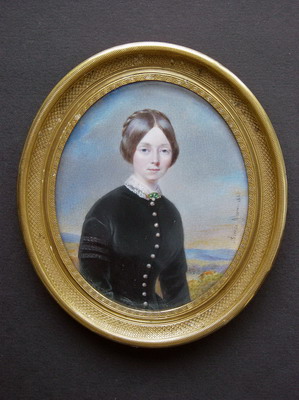
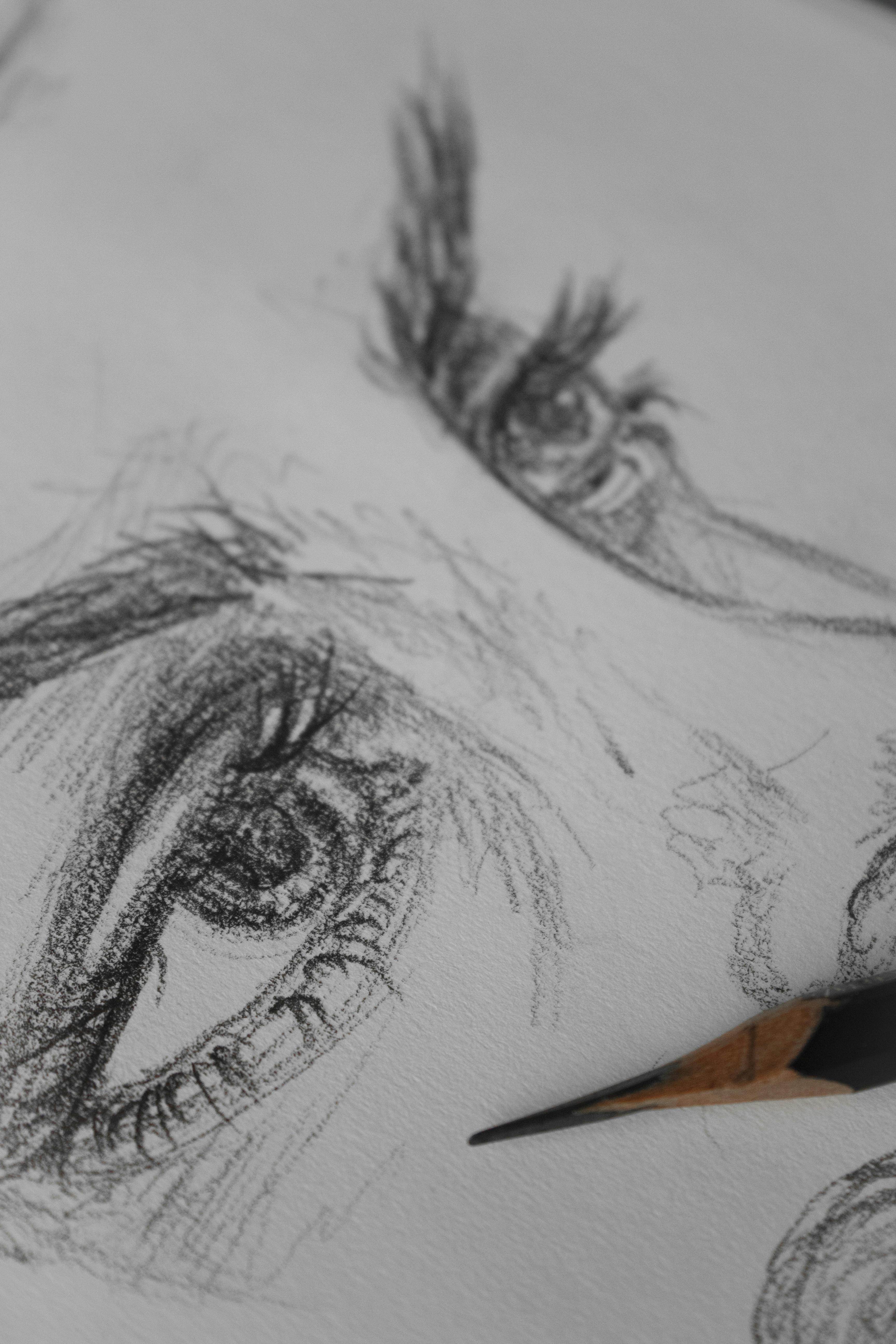
What will your next brushstroke add to this magnificent, messy, ever-evolving story?
Art keeps changing because consciousness keeps changing. The traditions we inherit aren't shackles—they're springboards. Every rule broken thoughtfully creates space for someone else's voice. Every technique subverted opens a door for experiences that haven't yet found representation.
In my own work, I keep returning to this question: what would happen if we treated art history not as a static archive, but as a living conversation where every generation gets to add new voices to the chorus? The answer, I suspect, looks something like the work you'll find in my [buy] collection—pieces that feel both ancient and brand new, familiar and alien, comforting and disruptive all at once.
Explore my [timeline] of artistic revolutions to see how this conversation has unfolded across centuries, or dive directly into the [buy] collection to discover contemporary work that continues rewriting the rules. The brush is in your hands now.
Which tradition will you honor? Which will you reinvent? Which will you help create?