Who Was Édouard Manet? A Curator's Deep Dive into Modern Art's Maverick
Dive deep into Édouard Manet's revolutionary art and life. Explore his controversial masterpieces, unique style, and pivotal role bridging Realism to Impressionism with a curator's personal insights.

Édouard Manet: A Curator's Ultimate Deep Dive into Modern Art's Maverick
I've spent countless hours wandering through galleries, staring at canvases that whisper stories across centuries, much like I explore new possibilities in the /buy section today. And honestly, few artists get my art-loving heart thumping quite like Édouard Manet. He wasn't just a painter; he was a seismic shift, a foundational bridge between two worlds in art history – the academic past and the audacious future. He didn't just participate in the art world; he fundamentally reshaped it, ushering in the era of modern art as we understand it today. Every time I stand before one of his works, I'm struck by how profoundly modern it feels, even today. It's like he looked at the artistic rules, chuckled, and decided to paint his own. He was the quintessential Parisian flâneur, a keen observer of urban life, who dared to bring the raw, unvarnished reality of his time onto canvases that had long been reserved for gods, goddesses, and grand historical narratives. He forced the art world to confront uncomfortable truths, and in doing so, he irrevocably altered its trajectory, laying the groundwork for movements like /finder/page/ultimate-guide-to-impressionism, /finder/page/ultimate-guide-to-expressionism, and even /finder/page/ultimate-guide-to-cubism. He’s often called the 'father of modern painting,' and once you dive into his world, you'll see why. His audacity cleared a path for generations of artists to challenge convention and redefine artistic purpose, setting the stage for a new era in visual art that continues to evolve. He didn't just show modernity; he embodied it, presenting a world in flux with an unflinching gaze that still resonates. This comprehensive article will be your go-to resource for understanding this pivotal artist – Édouard Manet – from his rebellious beginnings to his enduring legacy. We'll delve into the nuances of his personal life, his groundbreaking works, his influential circle, his unique artistic techniques, and the profound impact he continues to have on contemporary art. Prepare to see beyond the scandals and appreciate the true depth of his genius, solidifying his place as a pioneer of modern painting and a master of 19th-century French art.
His approach was revolutionary, not just in his choice of subject matter, but in his audacious technique, his deliberate flattening of form, and his striking use of color – elements that would profoundly influence the trajectory of visual art for generations to come. Manet wasn't merely documenting his era; he was actively shaping how it was seen, perceived, and questioned. He introduced a raw, unvarnished realism to art, turning away from the polished idealism of the academy to capture the fleeting moments and stark realities of contemporary Parisian life. This focus on the ephemeral and the everyday, rendered with an almost shocking directness, solidified his position as the ultimate chronicler of modern urban existence and a defiant voice against artistic stagnation. He became a master of depicting Parisian life, from its bustling streets to its intimate café scenes, always with his characteristic unflinching gaze.
His approach was revolutionary, not just in his choice of subject matter, but in his audacious technique, his deliberate flattening of form, and his striking use of color – elements that would profoundly influence the trajectory of visual art for generations to come. Manet wasn't merely documenting his era; he was actively shaping how it was seen, perceived, and questioned. He introduced a raw, unvarnished realism to art, turning away from the polished idealism of the academy to capture the fleeting moments and stark realities of contemporary Parisian life. This focus on the ephemeral and the everyday, rendered with an almost shocking directness, solidified his position as the ultimate chronicler of modern urban existence and a defiant voice against artistic stagnation.
The Parisian Maverick: Manet's Early Life and Artistic Rebellion
Born in Paris in 1832 to a prominent and well-connected family – his father, Auguste Manet, was a high-ranking civil servant in the Ministry of Justice, and his mother, Eugénie-Desirée Fournier, was the daughter of a diplomat – Édouard was initially expected to follow in his father's footsteps and pursue a career in law. But, as often happens with true artists, destiny had other plans. His passion for painting was undeniable, even if it meant a perpetual clash with the conservative expectations of his time. I've always found it fascinating how societal pressures can either crush artistic spirit or, as in Manet's case, galvanize a fierce independence. This familial pressure to conform, I think, fueled some of his later rebellion against the rigid artistic establishment, solidifying his resolve to break with convention and forge a path dedicated to artistic truth, no matter the cost. It was a tension that would define much of his career, pitting personal vision against societal expectation. His upbringing also afforded him access to Paris's cultural elite, yet he chose to challenge their very aesthetic sensibilities, a paradox that makes his story all the more compelling. These early experiences nurtured a defiant spirit that would come to define his legacy as a pioneer of modern art.
Manet's formal artistic training began even before Couture, with drawing lessons that hinted at his prodigious talent. After failing the naval academy entrance exam twice (a detail that always makes me smile – even prodigies have off days!), a compromise was reached: he entered the studio of Thomas Couture, a rather academic painter, for six years (1850-1856). This period, I imagine, was filled with more frustration than inspiration for young Manet, much like trying to force a wild stream into a neatly paved channel. Couture, though a fine technician, adhered to the strictures of the official Salon, the state-sponsored art exhibition that dictated artistic taste and success in France. Couture's teaching emphasized meticulous draughtsmanship, idealized forms, and grand historical or mythological narratives – a pedagogical approach utterly at odds with Manet's burgeoning interest in the raw vitality of contemporary life. While Manet absorbed crucial technical skills, yes, he also developed a fierce conviction that art needed to reflect his reality, not just dusty historical or mythological scenes or the polished ideals of the academy. He recognized that the grand narratives and smooth finishes of academic art felt increasingly irrelevant to the dynamic, rapidly changing Paris he observed around him. This period under Couture, despite its frustrations, was instrumental in Manet's development, providing him with a strong foundation in draughtsmanship and composition, even as he consciously rebelled against its dogmas. It was during these formative years that he began to forge his own path, a path that would lead him directly into confrontation with the art world's rigid traditions and ultimately redefine what painting could be. His early works, even those adhering more closely to traditional themes, often bore a nascent sense of unease or unconventionality, hinting at the revolutionary spirit simmering beneath the surface and setting the stage for his later provocations. This foundational training, even if largely rejected, provided him with the tools to meticulously dismantle the very traditions he learned, making his rebellion all the more potent and informed.
He wanted to paint what he saw, not what he was told to see. This might sound obvious now, but trust me, in 19th-century France, it was nothing short of revolutionary. The Salon system, with its rigid rules and preference for historical, religious, and allegorical subjects, held immense power, acting as the gatekeeper of artistic taste and commercial success. To challenge it was to risk your entire career and reputation. Yet, Manet, even in his youth, found himself gravitating towards radical subject matter. For instance, his early work, The Absinthe Drinker (1859), a stark, unflinching portrayal of a Parisian ragpicker – a figure from the fringes of society, often associated with poverty and vice – was roundly rejected by the Salon. This rejection wasn't just for its 'unworthy' subject matter, its depiction of a social outcast, but also for its audacious technique: the dark, somber tones, the unidealized realism, and the figure's almost confrontational directness were a clear affront to academic sensibilities, signaling Manet's deliberate break from tradition and a harbinger of the many controversies to come. This painting, influenced by Velázquez's philosophical portrayals of beggars and court dwarfs, was a deliberate challenge to the prevailing taste for prettified and morally uplifting subjects. I often think of this period as a crucible, where Manet was tempering his artistic steel, honing his defiant vision and preparing for the battles ahead.
He also began frequenting the Louvre, not just to copy old masters (though he did that too, studying Velázquez, Goya, Titian, and the Dutch masters intently), but to deconstruct their techniques, to understand their power, and then to boldly reinterpret them for his own time. He was particularly drawn to the Spanish Golden Age masters, especially Diego Velázquez and Francisco Goya, seeing in their work a directness, psychological depth, and bold, almost stark realism that he sought to infuse into his own contemporary subjects. He admired Velázquez's masterful handling of black and grey tones, his ability to define form with broad brushstrokes (as seen in Las Meninas, which Manet reportedly studied intensely), and Goya's unflinching depiction of human struggle and social critique, particularly in works like The Third of May 1808 and his Black Paintings. He also drew inspiration from Titian's bold compositions and rich color (reinterpreting Venus of Urbino in his Olympia), and from Dutch masters like Frans Hals, whose lively portraits (e.g., The Merry Drinker) captured a profound sense of individuality and spontaneous energy. It's a bit like a chef learning classic recipes only to invent entirely new, shocking dishes from the same ingredients, using them as a springboard for radical innovation. He absorbed the lessons of the past only to decisively break with them, laying the groundwork for a new vision, a vision that would profoundly influence the /finder/page/ultimate-guide-to-impressionism movement and the artists who would follow him. This audacious approach was truly the genesis of modern painting, proving that innovation often springs from a deep understanding and radical reinterpretation of tradition. His keen study of the Old Masters was not an act of reverence, but a strategic appropriation, a way to arm himself with the tools needed to dismantle the very traditions he so meticulously absorbed. This is a crucial element in understanding Manet’s unique form of rebellion.

His early career was punctuated by frequent visits to the Louvre and a deep study of art history. He absorbed the lessons of the past, not to mimic, but to master and then subvert. This deep understanding of tradition allowed him to create truly radical departures, knowing exactly which rules he was breaking and why. He was building a new artistic language, brick by brick, from the foundations of the old. This intellectual rigor, combined with his innate audacity, positioned him as a unique force in 19th-century art, a bridge between the reverence for the past and the demands of the emerging modern era. He was a transitional figure, a unique blend of scholar and rebel, whose knowledge of art history empowered his revolutionary vision, laying the foundation for modern art movements to come.
The Shock of the New: Unpacking Manet's Controversial Masterpieces
If you want to understand Manet's impact, you have to look at the controversies he ignited. These weren't just polite disagreements; they were full-blown public scandals that rattled the foundations of the art world. For me, it’s these moments of outrage that truly define his audacious spirit. He seemed to have a knack for presenting exactly what the Parisian bourgeoisie didn't want to see, or rather, what they saw every day but preferred to ignore in their art. It was almost as if he held up a mirror to society, reflecting back its hypocrisies and discomforts with an unblinking honesty that was deeply unsettling for many. These works weren't just paintings; they were provocations, designed to challenge the very definitions of beauty, morality, and artistic purpose, forever changing the dialogue between artist and audience. His approach was a deliberate affront to the staid sensibilities of the Second Empire bourgeoisie, who expected art to be morally uplifting or aesthetically pleasing in a conventional way. Manet offered them neither, instead opting for a raw, sometimes brutal, honesty that laid bare society's hypocrisies and discomforts.

Manet's Early Controversial Works at a Glance
To truly grasp the upheaval Manet caused, one needs to look at the specific works that ignited public fury. These weren't just paintings; they were manifestos, challenging the very core of academic art and societal norms. This table offers a quick overview of some of his most incendiary early pieces and why they mattered so much, both artistically and culturally:
Title  | Year | Significance |
|---|---|---|
| The Absinthe Drinker | 1859 | One of his first major Salon rejections; depicted a marginalized figure, challenging idealized subjects. |
| The Spanish Singer | 1860 | Accepted by the Salon but criticized for its 'crudeness'; an early example of his 'snapshot' realism and bold brushwork, influenced by his study of Velázquez and Goya. |
| Le Déjeuner sur l'herbe | 1863 | Rejected by the Salon, exhibited at the /finder/page/salon-des-refuses; scandalous for its contemporary nudes in a modern setting, breaking classical norms and challenging societal hypocrisy. |
| Olympia | 1863 | Accepted by the Salon, but ignited public fury; a direct, unidealized portrayal of a Parisian courtesan, challenging traditional nudes like Titian's Venus of Urbino by stripping away classical justification and confronting the viewer directly, her unapologetic gaze a stark departure from allegorical nudes. |
| The Fifer | 1866 | Rejected by the Salon; praised for its striking flatness, bold outlines, and stark portrayal of an anonymous musician, showcasing Manet's radical simplification of form and rejection of illusionistic depth. |

Le Déjeuner sur l'herbe (Luncheon on the Grass)
Manet and the Art of the Nude: Challenging Convention
Manet’s approach to the nude was arguably his most controversial and enduring contribution to modern art. Unlike the academic tradition which cloaked nudity in mythological narratives or historical allegories, Manet dared to present the female form as it existed in his contemporary Parisian world – unidealized, direct, and often unsettling. His nudes were not goddesses or distant muses; they were real women, often engaging the viewer with an unapologetic gaze that broke the traditional power dynamics of art. This stark honesty stripped away centuries of comforting artistic fictions, forcing the audience to confront uncomfortable truths about class, desire, and the representation of women in society. His nudes were not passive objects of beauty but active participants, often confronting the viewer directly, challenging the male gaze that had long dominated art history. It was a radical act of artistic honesty, and one that paved the way for future artists to explore the human body with unprecedented freedom and psychological depth, making him a foundational figure in the re-evaluation of the nude in modern art.
Ah, Le Déjeuner sur l'herbe, 1863. This painting, rejected by the official Salon and then famously exhibited at the infamous /finder/page/salon-des-refuses, was an absolute bombshell. I mean, imagine the scene: a casually nude woman, looking directly out at you, the viewer, seated amongst two fully clothed, contemporary men (Manet's brother Eugène and his future brother-in-law Ferdinand Leenhoff) in a forest setting. And there’s a forgotten picnic, a discarded dress, a second woman bathing in the background. The audacity! People weren't just shocked by the nudity (classical nudes were fine, thank you very much – as long as they were draped in mythological justification); they were appalled by the context. This wasn't a goddess or a mythological figure; this was a real woman – Victorine Meurent, one of Manet's favorite models, perhaps a Parisian prostitute or artist's model – looking unapologetically and directly at the Parisian bourgeoisie. It stripped away all the comforting fictions of academic art, presenting an undeniable slice of modern life that felt raw and confrontational. The public was outraged, finding the figures' contemporary dress and the woman's direct gaze utterly indecent and vulgar, a direct affront to their carefully constructed moral sensibilities and expectations of art. Critics decried its 'ugliness' and 'commonness,' unable to reconcile its subject matter with their notions of high art, branding it as an assault on decency and artistic tradition. The flatness of the painting, the almost crude brushwork, the stark lighting – it was a direct assault on the smooth, idealized finish favored by the academy. Manet was consciously echoing works like Giorgione's Pastoral Concert or Titian's Fête champêtre, but by replacing allegorical figures with contemporary Parisians, he delivered a powerful, and deeply unsettling, critique of contemporary society’s hypocrisy, particularly its double standards regarding class and sexuality. The composition itself, with its jarring perspective and seemingly unposed figures, further challenged conventional artistic representations, making it a truly revolutionary and provocative statement, one that still sparks debate today about gender roles, social critique, and the function of art. This painting, a true manifesto of modernity, boldly announced Manet’s intention to dismantle artistic conventions and confront societal truths head-on.
It wasn't just about nudity; it was about the uncomfortable truth of modern urban life, forcing viewers to confront their own biases and the performative nature of their morality. It was a mirror held up to a society that preferred to ignore its own reflection.
Olympia: The Unblinking Gaze
If Déjeuner was a shock, Olympia (1863) was a double lightning strike, striking directly at the heart of academic hypocrisy. Again, a nude woman, but this time she’s not even trying to pretend to be Venus; she is defiantly, unapologetically herself. This is Victorine Meurent again, cast as a Parisian courtesan, starkly lit, with an unblinking, challenging gaze that meets the viewer's head-on. Her maid, a black woman named Laure, presents her with a bouquet of flowers from an admirer, and a black cat (a traditional symbol of sexuality, independence, and sometimes ill omen, often contrasted with a faithful dog) arches its back at her feet, embodying a raw, untamed nature. Compared to the demure, idealized classical nudes that audiences were accustomed to (think Titian's Venus of Urbino, which Manet overtly referenced in both pose and composition, only to subvert its meaning by presenting a contemporary figure, not a goddess), Manet's Olympia was a cold splash of reality, a bold reinterpretation that stripped away centuries of euphemism. He dared to paint the female body not as an object of unattainable beauty or mythological allegory, but as a real, working woman, fully aware of her power and agency in a transactional world. The sharp contours, the stark lighting, and the almost aggressive directness of her gaze were a brutal rejection of the soft, romanticized nudes of academic tradition, which often served the male gaze, often without acknowledging its underlying power dynamics. Olympia's defiant look and casual pose, along with the presence of her maid (highlighting issues of race, class, and colonial power structures of the era) and the potent symbolism of the black cat, were loaded with meaning, hinting at the realities of prostitution, societal hypocrisy, and the complex dynamics of power and desire in 19th-century Paris. It was scandalous, provocative, and absolutely groundbreaking. He forced people to confront uncomfortable truths about society and art, particularly regarding class, gender, and desire, making Olympia a landmark in art history and a touchstone for discussions on the representation of women in art and the shifting role of the artist as social critic. This audacious work, a true icon of modern art, continues to challenge viewers and inspire dialogue about power, representation, and artistic freedom.
Manet's Circle: Friends, Models, and Literary Liaisons
Manet was not a solitary genius toiling in isolation; he was a social creature, deeply embedded in the intellectual and artistic ferment of 19th-century Paris. His studio and his favored cafés, like the Café Guerbois and later the Nouvelle Athènes, became unofficial salons where artists, writers, and critics gathered to debate the future of art, philosophy, and society. These friendships and collaborations profoundly shaped his work and his reputation, offering both intellectual stimulation and crucial support in the face of widespread public condemnation. For me, seeing the intricate web of connections an artist weaves is just as fascinating as the art itself, revealing how ideas cross-pollinate and movements are born not just from individual genius, but from shared dialogue and collective ambition.
Key Figures in Manet's Social & Artistic Orbit
Manet's connections were a constellation of talent, illuminating the avant-garde landscape of his time. This circle of friends and colleagues, a veritable who's who of 19th-century Parisian intellectuals and artists, provided a fertile ground for artistic innovation and critical discourse. Here are some of the stars in his orbit:
Figure | Relationship/Role | Key Influence/Interaction |
|---|---|---|
| Charles Baudelaire | Poet, critic, friend, mentor | Championed modernity, articulated the concept of the 'flâneur,' profoundly influencing Manet's urban depictions, and defining the 'heroism of modern life.' His theories on modernity in art provided a crucial intellectual framework for Manet's work. |
| Eugène Manet | Brother | Frequently featured in Manet's paintings, most notably as one of the clothed men in Le Déjeuner sur l'herbe. |
| Émile Zola | Novelist, critic, staunch defender | Publicly defended Manet against critics, publishing influential articles, solidifying their shared commitment to Realism and Naturalism. |
| Stéphane Mallarmé | Symbolist poet, intellectual companion | Provided philosophical depth, became a close friend and wrote an early, insightful biography of the artist. Their collaboration on Poe's The Raven highlights their shared intellectual and artistic landscape. |
| Victorine Meurent | Primary model, artist in her own right | Embodied the 'modern woman' in his most famous, controversial works, Olympia and Le Déjeuner sur l'herbe, her direct gaze becoming iconic. She challenged traditional notions of female representation in art. |
| Berthe Morisot | Sister-in-law, fellow /finder/page/ultimate-guide-to-impressionism painter, model | Engaged in significant artistic exchange, influencing Manet's palette and approach to light; a formidable artist herself and a pioneer for women in art. |
| Edgar Degas | Fellow artist, key figure in modern art | Shared ambition to break from academic art, their relationship marked by both mutual respect and intense artistic debates. A central figure in the Impressionist movement. |
| /finder/page/ultimate-guide-to-claude-monet, Pierre-Auguste Renoir, Camille Pissarro, Alfred Sisley | Impressionist painters | Members of his extended circle, deeply admired his pioneering spirit and revolutionary approach to subject matter. They formed the core of the Impressionist avant-garde. |
| Henri Fantin-Latour | Painter, friend | Documented the artistic circle in group portraits, like Hommage à Manet, highlighting his central position. |
| Antonin Proust | Childhood friend, politician, Minister of Arts | Provided lifelong personal support and later advocated for Manet's official recognition and purchases for national collections. Instrumental in Manet receiving the Légion d'honneur. |
Literary Champions: Baudelaire, Zola, Mallarmé
One of Manet’s most crucial relationships was with the poet and art critic Charles Baudelaire. Baudelaire, an early champion of modernity in art and a profound influence on Symbolist and Decadent movements, encouraged Manet to paint 'the heroism of modern life.' He understood Manet’s radical vision, even when others condemned it, recognizing the painter's commitment to capturing the fleeting, contemporary reality. Baudelaire's influential essay, 'The Painter of Modern Life' (1863), articulated many of the principles Manet was instinctively pursuing, defining the artist's role as one who immerses himself in the transient, the fleeting, and the contingent – a stark contrast to the static historical and mythological subjects favored by the academy. He urged artists to find beauty in the contemporary, to be "of their time," a call to arms for a new generation of painters. It was Baudelaire’s seminal ideas on the flâneur – the detached, observant stroller of urban life, a figure soaking in the crowds and anonymity of the modern city – that deeply resonated with Manet, profoundly influencing his depictions of Parisian society, from bustling boulevards and public parks to intimate café scenes. Think of Manet’s portrayals of musicians, café patrons, and street vendors – figures like The Street Singer (c. 1862) or Music in the Tuileries Gardens (1862) – these are the visual embodiments of Baudelaire's modern heroes. This intellectual kinship provided Manet with a crucial theoretical framework for his artistic explorations, helping him articulate the profound significance of his seemingly simple, everyday subjects and firmly rooting his art in the vibrant, complex reality of 19th-century Paris, solidifying his role as the visual poet of modernity.
Another significant ally was the writer Émile Zola. Zola, the father of literary naturalism, famously defended Manet against his critics, publishing an impassioned article in 1866 titled 'A New Manner in Painting: Édouard Manet.' Zola declared Manet a revolutionary, praising his directness and rejection of academic art, arguing that Manet's work was a truthful reflection of contemporary society. He saw Manet as a kindred spirit, a fellow pioneer in challenging outmoded conventions and embracing realism in literature, believing that both art forms should depict life as it truly is, without embellishment or moralizing. Manet, in turn, painted a famous portrait of Zola (1868), a work that serves as a visual testament to their friendship and shared artistic vision, almost a manifesto in paint. The portrait depicts Zola surrounded by symbols of their intellectual world: a Japanese print of a sumo wrestler and a screen (common inspirations for both artists, signaling a decisive break from Western artistic traditions and their shared fascination with Japonisme, an influence that profoundly shaped modern art with its flattened perspective and bold outlines), a copy of Zola's own pamphlet defending Manet, and a small print of Olympia on the wall, proudly asserting their defiance. This painting, in its quiet dignity and celebration of artistic rebellion, is a powerful statement about the shifting cultural landscape of the time, where art and literature converged to redefine modern aesthetics and challenge the status quo, effectively enshrining their shared commitment to a radical artistic path. The inclusion of the Japanese print and the print of Olympia were deliberate choices, signaling Manet's influences and his defiant stance against academic norms, making the portrait a manifesto in itself.

Later, the Symbolist poet Stéphane Mallarmé became a close friend and fervent supporter. Mallarmé's intellectual curiosity matched Manet's artistic audacity, and he became a significant interpreter of Manet's work, writing a biography of the artist in 1876 that captured the essence of Manet’s unique position in modern art. Their intellectual exchanges, I imagine, must have been vibrant, pushing the boundaries of both painting and poetry and exploring new modes of expression for modernity. Their friendship was truly one of mutual respect and profound understanding, with Mallarmé recognizing the philosophical depth beneath Manet's seemingly straightforward depictions of modern life and articulating it for a wider audience. Mallarmé even translated Manet's literary influences, such as Edgar Allan Poe's The Raven, into French, and Manet himself provided etchings for the publication, highlighting their shared intellectual landscape and cross-pollination of artistic ideas, seeing in Poe's aesthetic theories a parallel to Manet's visual innovations. This collaboration underscored the deep intellectual and artistic dialogue that characterized Manet's circle, where poetry, literature, and visual art converged to push the boundaries of modern expression. It’s a beautiful example of how different art forms can illuminate and enrich one another through genuine intellectual kinship, providing Manet with crucial intellectual validation and expanding the theoretical discourse around his groundbreaking work.

Key Models and Muses: Victorine Meurent and Berthe Morisot
Manet also had a remarkable relationship with his models, often choosing individuals who embodied the spirit of modern Parisian life rather than idealized figures. Victorine Meurent, the audacious nude in both Le Déjeuner sur l'herbe and Olympia, was more than just a model; she was an artist in her own right, embodying the spirit of the modern woman Manet so often depicted – direct, confident, and unafraid to meet the viewer's gaze. Her unblinking directness in Olympia, I think, isn't just Manet’s invention; it’s a powerful reflection of her own strong presence and independent spirit, a woman who commanded attention. Remarkably, Meurent herself became an accomplished painter, exhibiting at the official Salon in 1876 and 1879 (even having one work, a self-portrait, accepted over a Manet!), a testament to her own artistic aspirations and defiance of conventional roles for women in that era. Her story reminds us that even within the confines of a patriarchal art world, talented women found ways to express themselves, much like other pioneering female artists like /finder/page/ultimate-guide-to-mary-cassatt. Meurent's artistic journey, though often overshadowed by her role as Manet's muse, is a testament to her determination and talent, showcasing her own unique vision which blended traditional portraiture with a keen sense of contemporary observation. It’s a powerful reminder that the subjects of art can be just as complex and groundbreaking as the artists themselves, challenging the passive role often assigned to models and highlighting the often-overlooked agency of women in the 19th-century art world.
Manet and the Spanish Influence: A Dialogue with the Old Masters
Manet’s profound admiration for Spanish Golden Age painters, particularly Diego Velázquez and Francisco Goya, was a cornerstone of his artistic development and a key to understanding his break with French academic tradition. He made multiple trips to Spain (most notably in 1865, where he visited the Prado Museum) and spent countless hours in the Louvre studying their works, copying and reinterpreting them. From Velázquez, he absorbed lessons in bold, decisive brushwork, a mastery of black and grey tones (which he elevated to active colors), and a directness in portraiture that eschewed academic idealization, capturing the essence of his sitters without flattery. Goya, in turn, inspired his willingness to depict unflinching reality, keen social commentary (especially in his depictions of bullfighting and everyday life), and dramatic, often unsettling, compositions with stark contrasts.
You can see this profound influence overtly in works like The Spanish Singer (1860), where the figure's costume and direct gaze evoke Spanish portraiture, and The Fifer (1866), where the stark background, bold contours, and powerful individuality of the anonymous musician echo the Spanish masters' unflinching realism and their theatrical presentation of figures. His fascination with bullfighting scenes, often depicted in a series of powerful prints and paintings (e.g., Bullfight, 1864), also shows a clear connection to Goya's dramatic and unflinching portrayals of this Spanish cultural tradition. This deliberate embrace of Spanish realism, often seen as 'primitive' by the French academy, was another powerful way Manet broke from the prevailing French academic tastes, providing him with a robust artistic language for his own modern vision. He wasn't merely imitating; he was engaging in a profound dialogue with art history, recontextualizing its power for his own time, demonstrating how a deep understanding of the past could fuel radical innovation.
His sister-in-law, Berthe Morisot, was another pivotal figure, both as a model and as a fellow artist. Manet painted her numerous times, capturing her intelligence, elegance, and intense gaze, notably in works like Berthe Morisot with a Bouquet of Violets (1872) and The Balcony (1868-69). Their artistic exchange was a genuine dialogue, with Morisot, an accomplished /finder/page/ultimate-guide-to-impressionism painter herself and a founding member of the Impressionist group, often influencing Manet’s approach to color and light, particularly in his later work. She encouraged his move towards a lighter palette and looser, more Impressionistic brushstrokes, demonstrating how profoundly even a 'maverick' can be shaped by their closest artistic peers. Their relationship highlights how art often thrives on these close personal and professional connections, fostering mutual growth and innovation, and pushing the boundaries of what is considered acceptable. Morisot, with her own distinct artistic voice and a pioneering spirit for women artists, proved to be an indispensable artistic confidante and muse, an intellectual equal in their shared pursuit of modern art. Manet’s portraits of Morisot are some of his most sensitive and psychologically nuanced, revealing a deep respect for her intellect and artistry, and showcasing the profound impact of their artistic dialogue on both their practices. Morisot’s direct engagement with the Impressionist aesthetic undoubtedly nudged Manet towards a more vibrant and less constrained palette in his later works, a testament to their dynamic artistic partnership.
Other Artistic Connections: The Café Guerbois Circle
His social circle was broad, extending to many of the nascent Impressionist painters, making him a central figure in the avant-garde. Manet's favored meeting place was the Café Guerbois in the Batignolles quarter of Paris, a vibrant, smoke-filled hub that became an unofficial salon, a true crucible of modern art. Here, artists, writers, and critics, including Edgar Degas, /finder/page/ultimate-guide-to-claude-monet, Pierre-Auguste Renoir, Camille Pissarro, Alfred Sisley, and Henri Fantin-Latour, gathered regularly to passionately debate the future of art, share radical ideas, and challenge the academic establishment. Degas, despite their later differences and artistic disagreements, initially shared Manet’s ambition to break from academic art, and their interactions were often stimulating, though sometimes prickly, as is often the case with strong artistic personalities. It’s fascinating to see how these pioneering artists both collaborated and competed, exchanging ideas and pushing each other towards a new artistic frontier, ultimately shaping the very direction of modern art. While Manet never officially joined the Impressionists, his presence and his work were a constant point of reference and inspiration for them, influencing their move towards modern subjects and a freer brushwork. These informal gatherings were as important as any formal art school in fostering the revolution of painting, providing a space for intellectual camaraderie and spirited arguments that were truly the lifeblood of the burgeoning avant-garde, allowing new movements to coalesce. Imagine the passionate arguments, the clinking of glasses, and the scent of tobacco and turpentine filling the air – it was the perfect incubator for artistic rebellion, forging the networks that would define an era. This intellectual exchange at the Café Guerbois was a vital catalyst for the development of Impressionism and Post-Impressionism, showcasing Manet's role as a central figure in the burgeoning Parisian art scene.
The Salon des Refusés and the Birth of the Avant-Garde
Manet’s art, particularly Le Déjeuner sur l'herbe, played a pivotal role in the creation of the Salon des Refusés in 1863. After an unprecedented number of works were rejected by the official Salon jury that year, Emperor Napoleon III, responding to public outcry (and perhaps a desire to appear liberal), decreed that the rejected artists could exhibit their works in an alternative exhibition. The Salon des Refusés, literally 'Salon of the Refused,' became an accidental birthplace for the avant-garde. While initially intended to appease the disgruntled artists, it inadvertently drew massive crowds, often hostile, and served to highlight the stark differences between academic art and the emerging modern styles. Manet's Le Déjeuner sur l'herbe was the undeniable star of this alternative exhibition, drawing the most scorn and ridicule, but also immense attention and sparking a fierce debate about the very nature of art and its purpose. This event was a crucial turning point, not only providing an outlet for rejected artists but, more importantly, legitimizing the very idea of independent exhibitions and fostering a sense of collective identity among artists who felt alienated by the traditional system. The scandal surrounding Le Déjeuner sur l'herbe at the Salon des Refusés, despite being largely negative, inadvertently positioned Manet as a leader of the nascent avant-garde, a figurehead for those seeking to break free from academic strictures. It directly paved the way for the ground-breaking Impressionist exhibitions a decade later, demonstrating that artists could bypass the Salon and present their work directly to the public, thus fundamentally altering the power dynamics of the art world. It was a clear signal that the authority of the Academy was beginning to wane, and a new era of artistic independence was dawning.
Bridging Worlds: Realism to Impressionism
Manet is often mistakenly called an Impressionist. And while he undeniably influenced the movement and was a close friend to many of its key figures like /finder/page/ultimate-guide-to-claude-monet and Berthe Morisot (his sister-in-law and a fantastic artist in her own right, by the way, not unlike the incredible /finder/page/ultimate-guide-to-mary-cassatt), he never fully adopted the Impressionists' scientific approach to light and color, or their unwavering commitment to painting en plein air. I see him as a crucial link, a bridge builder – a godfather figure, perhaps, more than a direct participant in the /finder/page/ultimate-guide-to-impressionism movement itself. He forged a path, clearing the dense undergrowth of academic tradition, and they walked down it, but he remained distinctly his own. He was the provocateur, the one who broke the doors down, allowing others to explore the new landscape, much like a trailblazer carving a path through an untouched wilderness. Understanding this distinction is key to appreciating Manet’s unique position as a precursor to modernity rather than a direct member of any single artistic school.
He shared their desire to paint modern life, their looser, more spontaneous brushwork, and their rejection of academic constraints. His ability to capture fleeting moments, his bold use of color, and his focus on everyday subjects certainly paved the way for the Impressionists, demonstrating that contemporary reality was a worthy subject for serious art. However, a crucial distinction lies in their approach to execution: Manet primarily worked in his studio, carefully composing his scenes, even if inspired by observations of the world outside. The Impressionists, on the other hand, passionately championed /finder/page/what-is-plein-air-painting, painting outdoors directly from nature to capture the fleeting effects of light and atmosphere, often sacrificing solid form for luminous sensation and using broken brushstrokes to render the shimmering quality of light, as seen in Monet's Impression, Sunrise or Renoir's Moulin de la Galette. But Manet was fundamentally a realist, albeit one with a radical vision that pushed the boundaries of what realism could be. He was more concerned with the interplay of flat planes and forms, the graphic quality, and the psychological depth of his compositions, rather than the shimmering atmospheric effects that fascinated Monet and Renoir. This isn’t a small detail; it’s a fundamental difference in artistic philosophy, often leading me to describe him as a "painter's painter" – someone whose formal innovations were as profound as his thematic ones. He retained a solidity of form and a clarity of outline that the Impressionists often dissolved in their pursuit of light and ephemeral sensation, seeking to capture the moment rather than the essence. Manet's figures often possess a certain detached monumentality, even when depicted in casual settings, contrasting with the Impressionists' more integrated and fluid compositions. It’s a subtle distinction, but an important one for understanding his unique and indispensable position in art history. If you're ever in Paris, visiting the Musée d'Orsay, you'll see his works often displayed near theirs, highlighting both their connections and their compelling differences. You'll understand what I mean – it's like observing two brilliant minds converging on a similar problem, but arriving at distinct, equally profound solutions, each enriching the artistic tapestry of the era and demonstrating the diverse paths to modernity. This nuanced relationship highlights why Manet is considered a transitional figure in art history, bridging the gap between Realism and Impressionism with his unique vision.
Manet vs. Impressionists: A Comparative View
To truly appreciate Manet's unique standing, it helps to understand how he both aligned with and diverged from the burgeoning Impressionist movement. Here’s a comparative look:
Feature | Édouard Manet | Impressionists (e.g., Monet, Renoir) |
|---|---|---|
| Subject Matter | Modern urban life, portraits, still life, often confrontational, psychologically charged, and socially critical. | Landscapes, cityscapes, everyday life, light's fleeting effects, focused on visual sensation, often more optimistic or celebratory. |
| Brushwork | Visible, direct, often bold and concise; retained strong outlines and solidity of form, emphasizing graphic impact. | Loose, broken, dissolving forms into light and color; focused on optical effects, vibrant luminosity, and capturing momentary sensations. |
| Use of Black | Freely used black as a vibrant, active color, creating strong contrasts, graphic accents, and defining forms. | Generally avoided black, achieving darker tones through mixing complementary colors to maintain luminosity. |
| Studio vs. Plein Air | Primarily worked in the studio, even for contemporary scenes, often using preliminary sketches, models, and carefully considered compositions. | Strong commitment to painting en plein air (outdoors) to directly capture natural light, atmospheric changes, and transient visual effects. |
| Focus | Interplay of flat planes, strong graphic composition, psychological depth, social commentary, and a confrontational relationship with the viewer, often with a sense of detachment. | Capturing instantaneous impressions, atmospheric effects, changing light, the sensory experience of a moment, and subjective perception, often emphasizing movement and flux. |
| Engagement with Viewer | Direct, often challenging gaze, forcing confrontation. | More observational, often inviting the viewer into a scene rather than directly confronting them. |
| Relationship to Academic Art | Directly confronted and subverted academic traditions from within the Salon system, challenging subject matter, technique, and moralizing narratives. | Rejected academicism and formed independent exhibitions (the Impressionist Exhibitions), their revolution more stylistic and perceptual, focusing on new ways of seeing and capturing light. |
| Influence on Future Art | Laid foundational groundwork for modern art, influencing Realism, Impressionism, Post-Impressionism, Symbolism, and even early 20th-century movements like /finder/page/ultimate-guide-to-cubism and /finder/page/ultimate-guide-to-expressionism. | Catalyzed subsequent art movements by demonstrating the power of light, color, and direct observation, paving the way for Post-Impressionism, Neo-Impressionism, and abstraction. |

Beyond the Scandal: Manet's Later Works and Enduring Legacy
Manet's career wasn't just a series of scandals; it was a continuous and dynamic journey of artistic exploration and refinement. While his early period (roughly 1860s) was marked by confrontational realism and public scandal, he gradually softened his approach and embraced new subjects and stylistic nuances. He moved from the stark, almost provocative directness of Olympia to a more subtle, yet still profound, engagement with his subjects, showcasing a continuous artistic evolution. These later works, though perhaps less overtly rebellious, reveal a deeper psychological complexity and a refined observational skill, proving his artistic range extended far beyond mere provocation. It's in these later pieces that I find a more introspective Manet, still revolutionary, but with a quiet intensity. This artistic evolution demonstrates his profound adaptability and his unwavering commitment to capturing the essence of modern life with ever-increasing subtlety and depth. This artistic evolution demonstrates his profound adaptability and his unwavering commitment to capturing the essence of modern life with ever-increasing subtlety and depth.
Consider The Balcony (1868-69), where three figures, including Berthe Morisot (dressed in green, holding a fan), gaze out from a balcony, seemingly disconnected from each other and their surroundings, caught in a moment of urban anonymity. The painting is a fascinating study in psychological distance, a visual contemplation on the isolation that can exist even amidst a crowd, and the enigmatic nature of human interaction. The figures, bathed in a strong, almost artificial light, appear almost like actors on a stage, observing or being observed, echoing themes in Spanish painting, particularly Goya's Majas on a Balcony, but translated into a distinctly modern context and predating similar themes of alienation and urban contemplation in artists like Edward Hopper by decades. It’s a quiet yet profound commentary on modern urban existence. Then, of course, there’s A Bar at the Folies-Bergère (1882), his final major work and a crowning achievement, painted just a year before his death. It’s a mesmerizing puzzle: a barmaid, Suzanne, stares blankly out from behind her counter, her direct yet distant gaze meeting ours. Crucially, her reflection in the mirror behind her shows a different angle, a different interaction with a male patron (whose reflection is almost a ghostly presence), creating a dizzying, fractured perspective that defies logical space and challenges our understanding of reality. This unsettling sense of detachment is a masterful commentary on perception, illusion, and the profound loneliness that can exist even in the most bustling environments of modern entertainment. The scene is both vibrant and melancholic, capturing the glittering superficiality and the underlying anonymity of Parisian nightlife, and is often considered a profound meditation on the isolation of the individual in the modern metropolis. This painting feels like a culmination of his lifelong exploration of modern life, ambiguity, and the spectator’s role, inviting us to question what is real and what is reflected, and the hidden depths of human experience within a rapidly modernizing world. It's a complex, poignant work that resonates deeply even today, a poignant farewell to the world he so brilliantly captured.

credit, licence ### Manet's Evocative Still Lifes and Marine Paintings
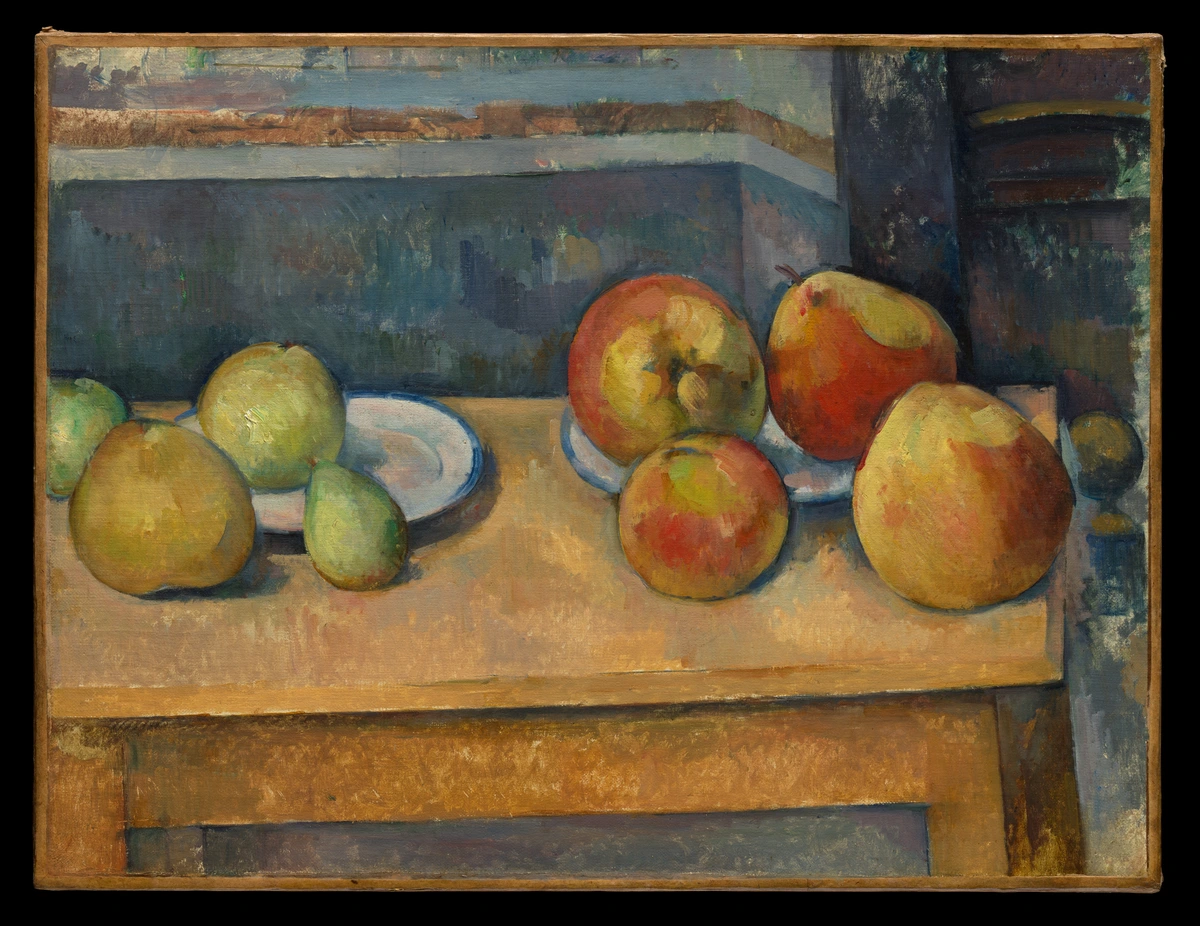
And his still lifes, particularly from his later years, like White Lilacs in a Glass Vase (1882), A Bunch of Asparagus (1880), and The Lemon (1880), are simply exquisite – quiet moments of profound beauty, painted with a freshness and immediacy that rivals any Impressionist. These weren't mere exercises or preparatory studies; they were profound meditations on form, color, and light, elevating everyday objects to subjects worthy of serious artistic contemplation. Manet treated a vase of flowers or a single piece of fruit with the same intensity and directness he applied to his figures, revealing a master refining his vision, still challenging, but perhaps with a quieter, more introspective power. These works subtly underscored his belief that any subject, however humble, could be transformed into high art. He often focused on minimal arrangements, drawing attention to the object's inherent beauty and form, a radical departure from the opulent and symbolic still lifes of earlier periods, and foreshadowing the minimalist tendencies of later art movements. His still lifes, with their bold outlines and unpretentious subjects, celebrate the beauty of the ordinary, inviting viewers to find profound meaning in the overlooked details of daily existence.
He also engaged with marine paintings, particularly after a trip to Boulogne-sur-Mer and during his stays at various coastal resorts. Works like The Kearsarge at Boulogne (1864), depicting the American Civil War naval battle between the USS Kearsarge and the CSS Alabama, and Boating (1874), capture his interest in contemporary events and his ability to render the dynamic energy of the sea with bold, rapid brushstrokes. These scenes of naval battles, bustling ports, or leisurely summer activities by the water demonstrate another facet of his commitment to depicting modern life, expanding his repertoire beyond the human figure and urban interiors. Works like Boating (1874) are particularly noteworthy, showcasing his ability to capture a sense of immediacy and movement with a lighter palette, almost hinting at Impressionistic concerns while maintaining his distinctive formal rigor. They show a fascination with movement and light on water, a theme that would also captivate the Impressionists, but approached with his characteristic solidity and graphic precision, avoiding the complete dissolution of form for which Impressionism became known.

Manet's legacy is immense. He challenged conventions, championed modernity, and paved the way for countless artists who followed. He taught us that art could be about here and now, about the everyday, the unfiltered gaze, and the beauty found in realism. His influence can be traced directly through Impressionism, of course, but also into Post-Impressionism, affecting artists like /finder/page/who-is-georges-seurat with his bold compositions and structured approach to color, and even artists like Paul Cézanne, who deeply admired Manet's structural integrity and sought to reconcile Impressionism's fleeting sensations with a more classical solidity, building upon Manet's foundations to explore new forms. His daring brushwork and psychological depth also laid groundwork for figures like Vincent van Gogh, whose vibrant colors and expressive brushwork echo Manet's boldness, and Paul Gauguin, profoundly impacting their expressive use of color and form, particularly in their portraits and explorations of modern subjectivity. Furthermore, his innovations extended into the more radical movements of the early 20th century like /finder/page/ultimate-guide-to-expressionism with its raw emotional intensity and /finder/page/ultimate-guide-to-cubism with its fragmented forms and multiple perspectives, showing how his breaking of traditional perspective laid the groundwork for more radical spatial explorations. If you look at the evolution of modern art, you'll see Manet's fingerprints everywhere, a testament to his lasting impact on the visual language of his time and ours. He remains a crucial figure in the history of modern painting, a true revolutionary whose influence continues to resonate with artists and art lovers alike.
The Lingering Echo: Manet's Enduring Influence
Manet's impact extends far beyond the immediate circle of his contemporaries. His bold defiance of academic strictures and his commitment to depicting modern life opened the floodgates for subsequent generations of artists to explore new themes and techniques. From the shimmering surfaces of the Impressionists to the fragmented realities of the Cubists, Manet's ghost looms large, a constant reminder of the power of breaking conventions. He taught artists to look inward at their own subjective experience and outward at the changing world around them, making art a dynamic mirror rather than a static window to an idealized past. His revolutionary use of color and light, his willingness to flatten forms, and his psychological depth continue to inspire artists even today, proving that true innovation transcends time.
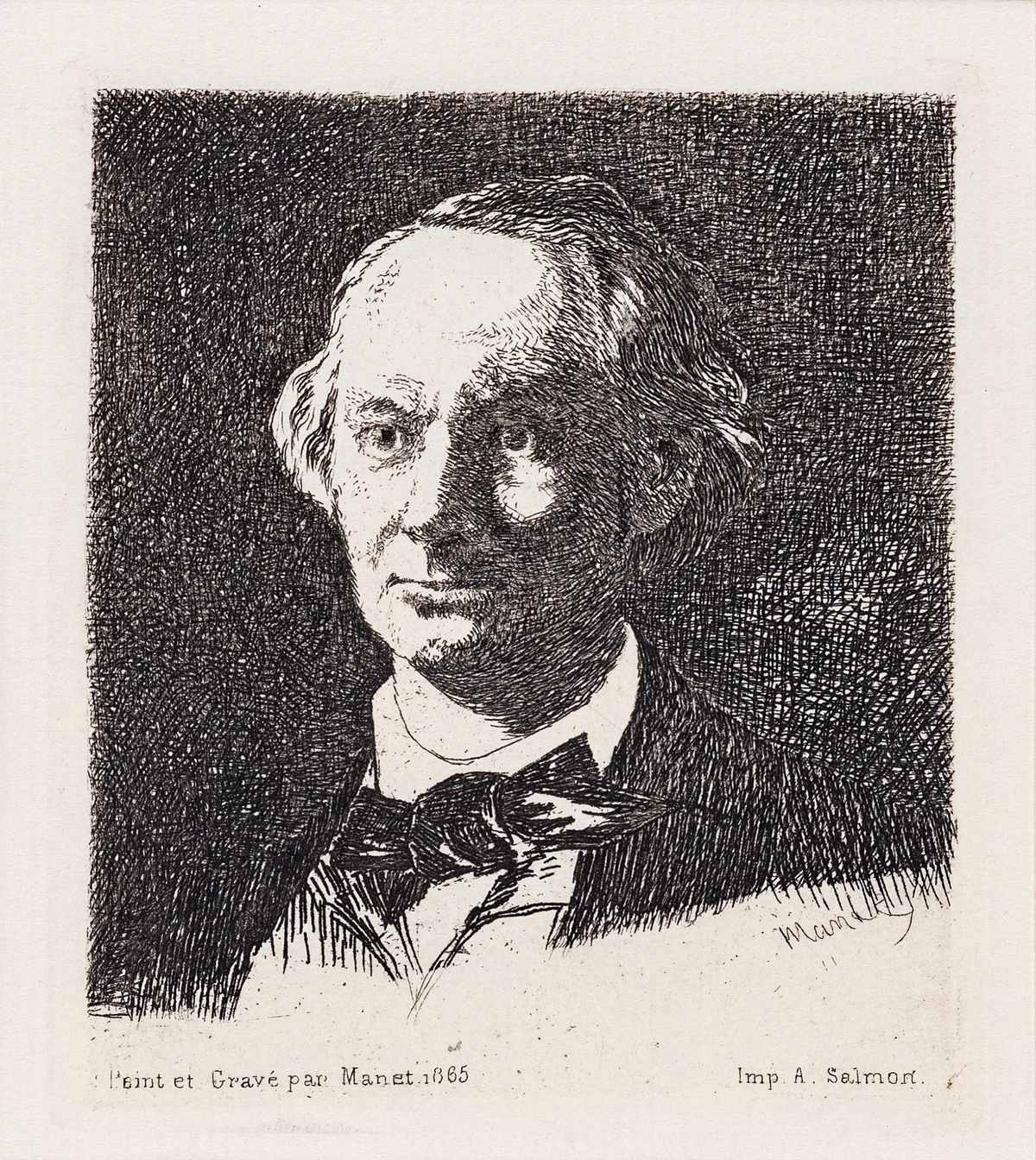
Manet's Graphic Arts and Printmaking: Beyond the Canvas
While painting was undeniably his primary medium, Édouard Manet also made significant and often-overlooked contributions to the graphic arts, producing a substantial body of etchings, lithographs, and wood engravings throughout his career. These works, often closely related to his paintings in subject matter – depicting portraits, café scenes, bullfights, and illustrations for literary works (such as Stéphane Mallarmé's translation of Edgar Allan Poe's The Raven, for which Manet created six evocative etchings) – allowed him to experiment with different forms of expression and reach a wider audience beyond the confines of the Salon.
His prints demonstrate the same innovative spirit as his canvases, using bold, decisive lines, striking contrasts between light and dark, and a directness of observation. He frequently translated his major pictorial themes, like the unblinking gaze of Olympia or the drama of a bullfight, into the stark contrasts and nuanced tonality of black and white. For Manet, printmaking was not merely a reproductive art to disseminate his paintings; it was an independent artistic endeavor, reflecting his commitment to exploring all facets of visual communication in the modern era and showcasing his mastery across various media. It's truly fascinating to see how his vision translates, stripped of color, into powerful graphic statements, emphasizing form and contrast in a way that prefigures later modernist printmaking. He embraced the unique expressive qualities of each printmaking technique, from the delicate lines of etching to the bold contrasts of lithography, proving his versatility and deep understanding of artistic media. His printmaking often served as a vital laboratory for experimenting with compositional ideas and dramatic contrasts of light and shadow, which he then translated into his paintings.
He didn’t just paint; he instigated a revolution, creating a visual language for a new era. It’s a testament to his vision, his unwavering commitment to his own artistic truth, regardless of public outcry. I often wonder what he would make of some of the works we show at the /den-bosch-museum today, particularly those that push the boundaries even further, building on his radical spirit. He truly shifted the goalposts of what art could be, and for that, we owe him an immense debt. His contributions to the visual language of modernism are immeasurable, continuing to inspire artists to challenge, innovate, and redefine the very purpose of art.
Manet's Techniques: The Language of a Maverick
Manet's approach to painting was often unconventional for his time, challenging established norms and forging a new visual language. He was a craftsman of the highest order, but one who deliberately broke the rules to serve a new artistic truth. When you look closely at his work, you'll notice a few signature characteristics that set him apart and made him such a revolutionary figure, solidifying his reputation as a master of modern painting techniques:

- Flatness and Bold Outlines: Unlike his academic contemporaries who aimed for illusionistic depth and meticulous modeling to create a convincing three-dimensional illusion, Manet often used large, flat areas of color, almost like cut-outs or painted backdrops. This wasn’t a lack of skill; in fact, he was a superb draughtsman. Instead, it was a deliberate and radical choice, creating a powerful sense of immediacy and challenging the illusionistic pretensions of traditional painting. He would sometimes outline figures boldly, giving them a striking graphic quality that anticipates later art forms, even hinting at movements like /finder/page/ultimate-guide-to-cubism. This flattening of form, sometimes referred to as 'flatness of field' or 'painting in patches,' was a revolutionary departure, emphasizing the painting as a two-dimensional surface rather than a deceptive window into a believable, three-dimensional world. It was a conscious rejection of academic illusionism, a bold move that underscored the artificiality of the canvas while paradoxically making his subjects feel more real and immediate, stripped of idealizing artifice and pointing towards the abstract qualities inherent in painting itself, foreshadowing much of 20th-century abstraction, and deeply influencing artists like Paul Cézanne in their exploration of pictorial structure.
- Direct Gaze: His figures, especially in his controversial nudes like Olympia and Le Déjeuner sur l'herbe, often look directly out at the viewer, breaking the conventional 'fourth wall' of painting. This directness is confrontational, almost accusatory, and pulls the audience into the painting's space, challenging their traditional role as passive observers. It creates an unsettling, almost uncomfortable intimacy that was truly revolutionary for its time, shattering the illusion of a detached viewpoint and forcing a direct, psychological engagement with the subject. It makes you feel seen, and perhaps, implicated – as if you are part of the scene, or even the subject of their gaze, demanding your attention and complicity and making the act of viewing an active, rather than passive, experience. This daring technique fundamentally redefined the relationship between the artwork and its audience, challenging the viewer's comfortable detachment and forcing a direct, psychological encounter.
- Loose, Visible Brushwork: While not as dissolved or broken as the Impressionists' characteristic brushwork, Manet's brushstrokes are often visible and energetic, giving his surfaces a lively, painterly quality. This was a deliberate rejection of the highly finished, polished surfaces prized by the Salon, which often sought to conceal the artist's hand, aiming for an almost photographic smoothness and an illusion of reality. For Manet, the visible brushstroke was part of the painting's truth, a sign of its modernity and an acknowledgment of the artist's presence in the creation process – it was a bold statement that the hand of the artist was part of the artwork, not something to be hidden. This intentional 'unfinishedness,' or non-finitio, was a radical act, allowing the viewer to participate in the act of seeing and interpretation, and contributing to the sense of freshness and spontaneity in his work. It speaks to a raw immediacy that was entirely new, a deliberate choice that celebrated the act of painting itself rather than obscuring the hand behind it, paving the way for later movements that prized the expressive gesture and the visible mark of the artist. This technique was a bold declaration of artistic freedom, pushing the boundaries of what was considered 'finished' in academic art.
- Striking Contrasts of Light and Dark (and the Bold Use of Black): Manet was a master of chiaroscuro – the use of strong contrasts between light and dark – but he used it in a very modern way, often creating stark, almost abrupt contrasts without the subtle gradations and blended transitions of the Old Masters. He famously employed black, not just as a shadow tone, but as a vibrant, active color in its own right, adding to the sense of directness and drama in his compositions. This revolutionary use of black, a bold choice at the time that defied academic conventions (which typically avoided pure black and encouraged building up darks through multiple color mixtures to achieve rich, nuanced shadows), made his figures pop with an almost photographic intensity and graphic power, emphasizing form through contrast rather than meticulous modeling. He treated black not as the absence of color, but as a rich, active pigment, full of expressive potential, a lesson future artists would take to heart and apply in their own explorations of color and form, solidifying his reputation as a color innovator. This audacious use of black, often deployed in sharp juxtaposition with lighter tones, contributed significantly to the dramatic impact and modernity of his compositions. It was a conscious rejection of the academic ideal of 'color harmony' and a bold embrace of visual impact.
- Everyday Subjects: He boldly elevated genres like portraiture, still life, and scenes of contemporary life – from cafés to concerts to private moments – to the same importance as traditional historical or mythological paintings, which had long been considered the pinnacle of artistic achievement. This was a radical democratization of subject matter, a significant shift that opened up new possibilities for art and directly influenced movements like Realism and Impressionism, validating the idea that the 'heroism of modern life' was a worthy subject for serious artistic exploration, and asserting that true art could be found in the mundane as much as the monumental. He truly believed that the street vendor, the barmaid, or a simple bouquet of flowers held as much artistic potential, psychological complexity, and societal commentary as any classical hero, effectively democratizing artistic subject matter. This radical shift in focus established the everyday as a worthy subject for fine art, a concept that would become foundational for future art movements.
Manet and Portraiture: Capturing Modern Identity
Beyond his controversial nudes and urban scenes, Manet was a masterful portrait painter, using this genre to explore the complexities of modern identity. His portraits are characterized by their directness, psychological penetration, and often, an enigmatic quality that challenges the viewer to look beyond the surface. He avoided the flattering conventions of academic portraiture, instead focusing on capturing the unique essence of his sitters, whether it was his intellectual friends, fellow artists, or society figures. Works like Portrait of Émile Zola (1868) or Berthe Morisot with a Bouquet of Violets (1872) are not just likenesses; they are incisive studies in character, presented with a stark honesty that was revolutionary for its time. He also painted numerous portraits of women, artists, and musicians, each imbued with a striking individuality and an almost unsettling psychological depth. Works like Madame Manet at the Piano (1867) or Georges Clemenceau (1879-80) demonstrate his ability to capture the sitter's inner life with remarkable insight and economy of means. Through his portraits, Manet revealed the individual within the modern crowd, making each sitter a compelling figure of their era. He showed that a scene in a bustling café, a portrait of a contemporary individual, or a simple vase of flowers could hold as much artistic weight, psychological depth, and cultural meaning as any classical epic or mythological narrative. It was a radical democratization of subject matter, paving the way for the celebration of the everyday in art, a concept that would become fundamental to modern artistic thought. This bold declaration that the quotidian was as deserving of artistic attention as the epic truly redefined the boundaries of art for generations to come, asserting that the individual, in their unvarnished reality, was a profound subject for artistic inquiry. His portraits stand as psychological benchmarks of his era, capturing the nuanced identities of 19th-century Parisian society.
Manet's Growing Recognition and Later Exhibitions
While Manet often clashed with the Salon, his influence grew steadily, especially among younger artists and a discerning circle of critics and collectors. Towards the end of his life, there was a growing, albeit slow, recognition of his profound contributions. In 1881, he was awarded the Légion d'honneur, a significant official acknowledgment, largely thanks to the efforts of his childhood friend Antonin Proust, who had become Minister of Arts. This marked a shift, however belated, in the institutional perception of his work.
Crucially, in 1867, Manet mounted a major private exhibition of his work outside the official Universal Exhibition in Paris, financing it himself. This independent show, while not a commercial success, was a powerful statement of his artistic autonomy and his refusal to compromise his vision. It was a defiant act of self-assertion, demonstrating his commitment to presenting his art on his own terms and showing the art world that he would not be silenced. Later, a significant retrospective exhibition of his work was held posthumously in 1884, organized by his friends Émile Zola and Antonin Proust, cementing his place in art history and finally granting him the widespread critical acclaim that had largely eluded him during his lifetime. This exhibition was instrumental in establishing his legacy and educating the public about the true scope of his revolutionary impact on modern art.
Manet's Signature Techniques at a Glance
Technique | Description | Impact on Art |
|---|---|---|
| Flatness & Bold Outlines | Deliberate use of flat color areas and strong contours, minimizing illusionistic depth. | Challenged traditional realism, emphasized painting's two-dimensionality, influenced Cubism. |
| Direct Gaze | Figures, especially nudes, often look straight at the viewer, engaging them confrontally. | Broke the 'fourth wall,' created psychological intimacy, subverted passive viewing. |
| Loose, Visible Brushwork | Brushstrokes are evident, creating lively surfaces rather than polished, academic finishes. | Rejected Salon's smooth ideal, celebrated the artist's hand, contributed to Impressionist aesthetics. |
| Striking Contrasts (Use of Black) | Masterful use of stark light/dark contrasts, notably employing black as a vibrant color rather than just shadow. | Added drama and graphic power, made figures 'pop,' defied academic color theory. |
| Everyday Subjects | Elevated genre scenes, portraits, and still lifes of contemporary Parisian life to the same importance as historical or mythological subjects, depicting modern life without moralizing. | Redefined 'worthy' artistic subjects, challenged hierarchies, and opened doors for Realism, Impressionism, and subsequent modern movements. |
| Japanese Influence (Japonisme) | Incorporated elements of ukiyo-e prints like flattened forms, bold outlines, sharp cropping, and asymmetrical compositions into his work, seen in his Portrait of Émile Zola (1868) and his interest in bold patterns. | Introduced a radical new aesthetic, broke from Western academic perspective and illusionism, and deeply influenced modern art's formal innovations and compositional strategies. |
FAQs: Your Burning Questions About Manet, Answered
I get a lot of questions about Manet, and it’s always a pleasure to discuss his fascinating impact, especially since he remains such a pivotal and often misunderstood figure. Here are some of the most common ones, offering deeper insights into his life and work. I’ve tried to demystify some of the lingering questions about this extraordinary artist, providing comprehensive answers that reinforce his significance in art history:
What kind of models did Manet use?
Manet frequently used individuals from his immediate circle – friends, family members, and professional models who were part of contemporary Parisian life. His choice of models was deliberate and revolutionary; unlike academic painters who favored idealized, anonymous figures, Manet sought out real people who embodied the spirit and complexities of modern urban existence, like Victorine Meurent and Berthe Morisot (as discussed in 'Manet's Circle'). He captured their distinct personalities and everyday realities, lending a profound sense of authenticity to his work.
Who was Édouard Manet?
Édouard Manet (1832-1883) was a French painter pivotal in the transition from Realism to Impressionism. He is widely considered one of the first artists of modern life, a true maverick who challenged academic conventions and inspired new generations of painters with his revolutionary approach to subject matter and technique, fundamentally altering the trajectory of Western art and ushering in the era of modernity. For a deeper dive, explore our introduction to his work.

What was Manet's relationship with the Salon system?
Manet had a complex and often contentious relationship with the official Salon system throughout his career. Despite his radical artistic vision and the frequent rejections and public scandals his works provoked, he consistently submitted to the Salon, seeing it as the primary avenue for official recognition and critical discourse. Unlike many of the Impressionists who eventually opted for independent exhibitions, Manet sought to revolutionize art from within the established institutions. His occasional acceptances, such as The Spanish Singer (1861) or Olympia (1865), were highly valued by him. This persistent engagement highlights his desire to confront and transform the art world's conventions head-on, rather than simply abandoning them. He wanted his work to be seen and debated in the most prominent arena available, even if it meant enduring harsh criticism and public ridicule.
What materials and techniques did Manet typically use?
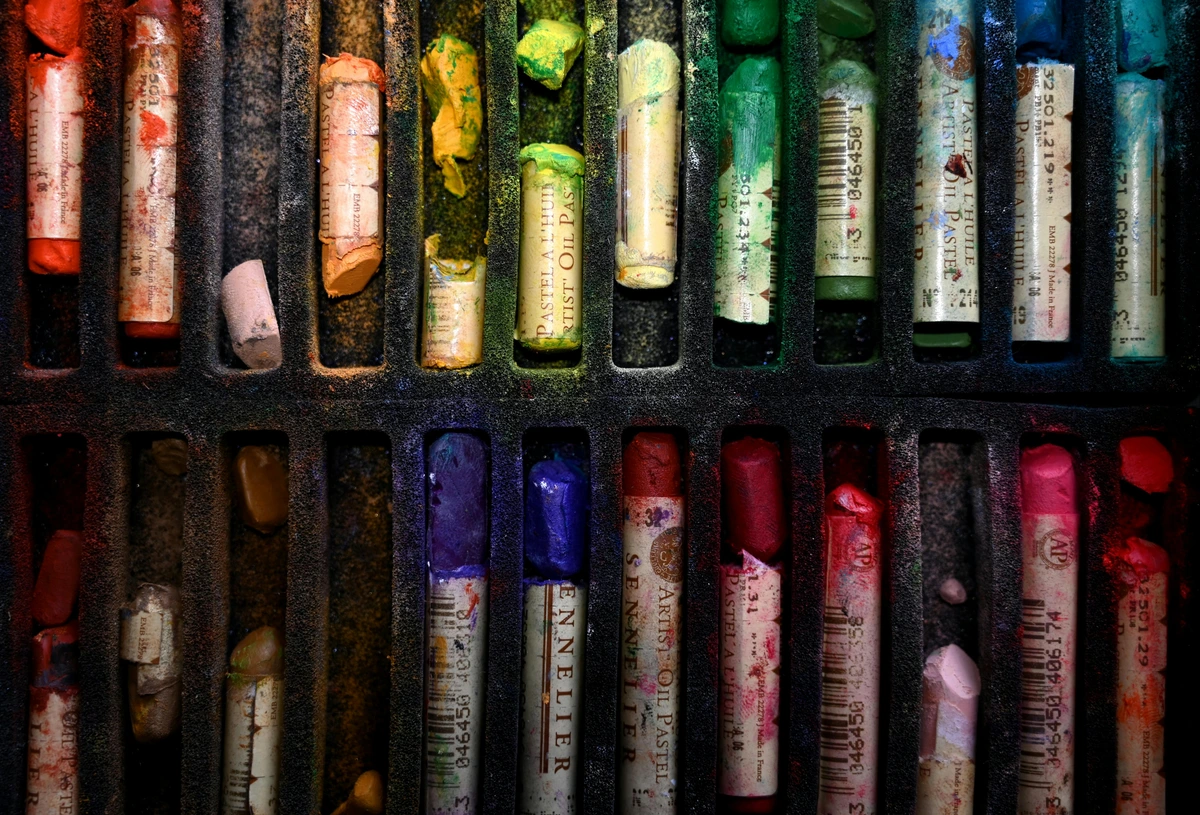
He also worked in pastels, particularly in his later years, creating lighter, more luminous portraits and genre scenes that show a softer side of his artistic exploration.
Manet primarily worked with oil on canvas, a traditional medium that he nevertheless employed in revolutionary ways. He was known for his rapid, fluid brushstrokes and a technique often described as alla prima, or 'wet-on-wet,' meaning he applied paint directly to the canvas without waiting for layers to dry, which contributed to the immediacy and freshness of his work. His palette was often characterized by a bold use of black and strong, unmodulated colors, creating striking contrasts rather than subtle gradations. He would sometimes apply paint thinly, allowing the canvas to show through, or in thicker impasto, creating texture. He also employed a technique of laying down large, flat areas of color, almost like painted cutouts, which emphasized the two-dimensionality of the canvas. This departure from academic blending and meticulous finish was central to his modern aesthetic.
While his masterpieces dominate the narrative, Manet produced a wealth of other significant works that deserve our attention. I particularly love his marine paintings, such as The Kearsarge at Boulogne (1864), which showcase his bold brushwork and interest in contemporary events (the American Civil War naval battle). His series of bar and café scenes, beyond A Bar at the Folies-Bergère, also offer fascinating glimpses into Parisian life, like Masked Ball at the Opera (1873), The Café-Concert (1878), and At the Café (c. 1878), each capturing the vibrant yet often anonymous energy of urban entertainment. And don’t overlook his exquisite still lifes; they are sublime meditations on form and color, like Bouquet of Lilacs (1882) or The Lemon (1880), demonstrating his mastery even in quieter moments. His genre scenes, such as The Universal Exhibition of 1867 (1867), also provide unique historical insights into his era. These works further highlight his versatility and his unwavering commitment to capturing the 'heroism of modern life' in all its facets, proving his genius wasn't limited to his most scandalous pieces. These lesser-known yet equally compelling works reinforce his breadth of talent and his relentless pursuit of capturing the essence of 19th-century Parisian culture.
Did Manet participate in the Impressionist exhibitions?
No, Manet famously never exhibited with the Impressionist group, despite his close friendships with many of its members (like /finder/page/ultimate-guide-to-claude-monet, Degas, and Morisot) and his undeniable influence on their style and subject matter. He continued to submit his works to the official Salon, even after repeated rejections (and occasional successes, which he greatly valued), hoping to achieve success and recognition within the established system. He maintained a fiercely independent stance, preferring to forge his own path and conquer the traditional art world from within, rather than align completely with a new, experimental movement, a decision that speaks volumes about his complex relationship with both tradition and innovation. He sought to revolutionize art from its very core institutions, a strategy distinct from the Impressionists' more collective, separatist approach.
What were Manet's primary artistic influences?
Manet was deeply influenced by the Old Masters, particularly Spanish painters like Diego Velázquez and Francisco Goya, whose bold brushwork and unflinching realism he greatly admired (see 'Manet and the Spanish Influence'). He also studied Dutch masters like Frans Hals, appreciating their lively portraits and their ability to capture individual character. Beyond historical influences, his most significant and constant inspiration was undoubtedly the world around him – the bustling streets of Paris, its vibrant cafés, its diverse people, and its rapidly changing social fabric, all filtered through his unique, modern sensibility. He also incorporated elements from Japanese ukiyo-e prints into his style, demonstrating a blend of historical reverence and radical modernity that defined his unique vision. It was this potent combination of tradition and innovation that made his art so groundbreaking. This diverse array of influences allowed him to forge a truly original and revolutionary style, solidifying his role as a key figure in modern art history.
Why was Manet controversial?
Manet's art was controversial primarily because he dared to paint contemporary subjects with a raw, unflinching realism and an unconventional style that directly challenged the idealized themes favored by established art institutions. His treatment of the nude in Le Déjeuner sur l'herbe and Olympia, presenting real women in modern contexts rather than classical allegories, was particularly shocking, as detailed in 'The Shock of the New.' His visible brushwork and flat planes of color also went against the highly finished surfaces prized by the Salon, making him a truth-teller in an age that preferred comforting fictions. He wasn't afraid to expose the hypocrisies of his society, and that, naturally, made many people uncomfortable. His choice to depict the realities of modern life rather than idealized narratives was a direct affront to the prevailing artistic and social norms of his time, making him a lightning rod for controversy. His revolutionary vision fundamentally reshaped the discourse around artistic freedom and social critique.
Did Manet achieve commercial success during his lifetime?
While Manet eventually gained some recognition and a dedicated circle of patrons and collectors, his early and middle career was marked by significant struggle and public outrage. He rarely achieved the widespread commercial success or critical acceptance enjoyed by his academic contemporaries, and at times, his works were even vandalized in exhibitions. His independent spirit meant he often prioritized his artistic vision over immediate financial gain, but he was fortunate to be supported by his affluent family and later by a growing network of avant-garde friends, writers, critics, and discerning admirers who understood and championed his groundbreaking importance, even when the wider public did not. It's a classic tale of a visionary ahead of his time, often misunderstood but ultimately celebrated for his profound impact. He found solace and validation more in the intellectual kinship of his peers than in the fickle embrace of the market, a testament to his artistic integrity. His posthumous recognition, however, cemented his place as an undeniable force in the development of modern art.
What was Manet's financial situation?
Manet came from a wealthy family, which provided him with a degree of financial independence throughout his career. This allowed him the freedom to pursue his unconventional artistic vision without being entirely reliant on the whims of the Salon or the commercial market, though he still desired official recognition and sales. While his works often faced rejection and public ridicule, he was never destitute, thanks to his family's support and a small but growing circle of discerning patrons who admired his groundbreaking approach. This financial cushioning, I think, gave him the courage to defy convention repeatedly.
What is Manet's most famous painting?
While Manet has several iconic works, Le Déjeuner sur l'herbe (Luncheon on the Grass) and Olympia, both from 1863, are arguably his most famous. They caused immense scandal and are considered revolutionary masterpieces that redefined modern art and continue to provoke discussion today, sparking intense debate about morality, artistic representation, and the role of the artist in society. These two paintings, above all others, cemented his reputation as the enfant terrible of the Parisian art scene, launching him into notoriety and forever changing the conversation around art and morality. They are the benchmarks by which his audacity is often measured, and for good reason; they were genuine seismic shifts in the art world. These two paintings, above all others, cemented his reputation as the enfant terrible of the Parisian art scene, launching him into notoriety and forever changing the conversation around art and morality.
What kind of subjects did Manet paint in his later career?
In his later career, marked by declining health but undiminished artistic vision, Manet continued to paint portraits, still lifes, and scenes of Parisian social life, often with a lighter palette and looser, more luminous brushwork. These works, including A Bar at the Folies-Bergère (1882) and numerous flower paintings like Bouquet of Lilacs (1882) or The Lemon (1880), showcased a refined touch and a poignant exploration of beauty, even as his physical condition deteriorated. He also created a series of small, intimate pastels, often depicting society women, which allowed him to work quickly and capture fleeting impressions with great elegance and an almost Impressionistic lightness, demonstrating his adaptability and continuous experimentation.
Was Manet an Impressionist?
No, Manet was not strictly an Impressionist, although he was a central figure in the Impressionist circle and greatly influenced them. As discussed in the 'Bridging Worlds: Realism to Impressionism' section, he is often seen as a precursor or a bridge between Realism and Impressionism, maintaining a stronger focus on form, outline, and graphic qualities over the fleeting optical effects that fascinated many Impressionists.

What is Japonisme and how did it influence Manet?
Japonisme refers to the widespread influence of Japanese art, particularly ukiyo-e woodblock prints, on Western art during the late 19th century. Manet was one of the earliest and most enthusiastic adopters of this aesthetic, incorporating elements like flattened forms, bold outlines, asymmetrical compositions, and sharp cropping into his work. You can see its impact in the decorative screen behind Émile Zola in his portrait (1868) and in the overall graphic quality and innovative perspectives found in many of Manet’s paintings and prints. This embrace of Japanese aesthetics provided a radical alternative to traditional Western perspective and illusionism, profoundly influencing modern art's formal innovations and compositional strategies, including the work of the Impressionists and Post-Impressionists.
How did Manet's health affect his later work?
Manet suffered from chronic illness, likely syphilis, which severely impacted his health in his later years, leading to paralysis, intense pain, and eventually the amputation of his left leg due to gangrene in 1883, just months before his death. Despite these immense challenges, he continued to paint with remarkable resilience and determination, often focusing on smaller, more intimate subjects like exquisite still lifes of flowers and fruits, and intimate portraits, which he could manage from his studio or even from his bed. His later works, though perhaps fewer in number and constrained by his physical limitations, demonstrate an enduring artistic vitality, a refined touch, and a poignant exploration of beauty, even as his physical condition deteriorated. They are a testament to his indomitable spirit and unwavering dedication to art, producing some of his most introspective and deeply felt works during this period, imbued with a quiet power and contemplative quality. It's heartbreaking to consider the art he might have created had he enjoyed full health, yet astonishing what he achieved under such duress.
Where can I see Manet's work?
Manet's major works are housed in prominent museums worldwide, a testament to his global significance. The Musée d'Orsay in Paris holds an extensive and indispensable collection, including masterpieces like Le Déjeuner sur l'herbe, Olympia, and A Bar at the Folies-Bergère. You can also find his seminal paintings at the Metropolitan Museum of Art in New York, the Art Institute of Chicago, the National Gallery of Art in Washington, D.C., and the Courtauld Gallery in London, among many others, including the Musée Marmottan Monet in Paris and the Rijksmuseum in Amsterdam. Beyond these major institutions, his works are spread across prestigious collections worldwide, making him a truly global artist whose influence transcends national boundaries. I highly recommend making a trip to see them in person; the vibrancy, the tactile quality of the paint, and the sheer audacity of his vision are truly something else that reproductions can only hint at. Each painting is an experience, a conversation across time, offering a direct encounter with his revolutionary spirit and a profound understanding of his place in art history. Trust me, there's nothing quite like standing before an original Manet.
My Final Thoughts: The Manet Experience – A Legacy of Unflinching Truth
For me, Manet is a reminder that true innovation often comes from discomfort, from poking at the edges of what's acceptable. He didn't just paint pretty pictures; he painted questions, provocations, and a bold vision of what art could be. When you stand before a Manet, you're not just looking at a canvas; you're witnessing a pivotal moment in art history, a defiant declaration that the world, in all its messy, beautiful, and sometimes uncomfortable reality, was worthy of artistic capture. It's an experience that makes you rethink everything, much like how I approach new canvases for sale on the /buy section, looking for that spark that hints at a new direction and a new conversation. So, the next time you encounter a Manet, lean in. Let his unblinking gaze meet yours, and consider the rebellious spirit that forever changed the course of art. It’s a journey worth taking, trust me – a journey into the heart of modernity itself, proving that art's greatest power lies in its ability to challenge, illuminate, and endure. And if you're ever near our /den-bosch-museum, you'll see how his legacy continues to ripple through contemporary art, influencing artists who still dare to break the rules and redefine what art can be, proving his enduring relevance and reminding us that art’s purpose is to question, provoke, and illuminate, pushing boundaries even today. This article, I hope, serves as a starting point for your own deeper exploration of Manet, guiding you through his life and work with the insights of a curator who has spent years grappling with his profound impact on the art world.