Realism in Art: The Definitive Guide to Unvarnished Truth & Its Enduring Legacy
Uncover the unvarnished truth of Realism in art. Explore its radical origins, core principles, key artists, global impact, and how its spirit of authenticity shapes today's art.

Realism in Art: The Definitive Guide to Unvarnished Truth & Its Enduring Legacy
I’ll never forget the first time a painting by Gustave Courbet truly hit me. It wasn't because it was conventionally beautiful, or grandiose, or populated with fantastical beasts from myth. No, it was the raw, unadorned feeling of truth – a moment ripped from everyday existence and presented without a single filter. It was like he'd scraped away all the polite society, all the myths, all the romantic fluff, and just handed me a slice of raw, undeniable life. That moment, for me, was a profound connection, a kind of deep authenticity that I still chase in my own abstract, colorful works, albeit through a different visual language. But it wasn't just Courbet. I remember later, seeing a faded photograph of a factory worker's hands, gnarled and stained, and realizing that the power of that image, though from a different medium, echoed Courbet's brutal honesty. What makes a painting truly real? How does an artist capture not just an image, but the very essence of a moment, without artificial idealization or a whisper of sentimentality? This profound connection to unfiltered truth is the very heart of Realism in art, or at least my perspective on it. This article aims to be your definitive guide, exploring Realism's origins, core principles, and enduring legacy through the eyes of someone who deeply believes in art's power to connect us to reality. It's a journey into the unvarnished truth, and by the end, I hope you’ll see why its principles still resonate so profoundly, even in the most abstract forms.
Now, I know what you’re probably thinking: "Isn’t all art realistic if it depicts something recognizable?" And this leads to a crucial distinction, because the answer is a resounding no. You can paint a hyper-detailed mythical creature or an idealized portrait of a historical king – technically skilled, undeniably recognizable – but that doesn't make it Realism with a capital 'R'. Realism (with a capital 'R') is a deliberate artistic movement and philosophy that prioritized the truthful, objective depiction of everyday life, social conditions, and ordinary people, rejecting idealization and romanticism. It isn't merely about technical skill in rendering a scene accurately; it's a profound philosophical stance, a movement born out of a desperate desire to break free from the idealized, the dramatic, and the romanticized narratives that had dominated art for centuries. It challenged artists to consider not just the subject, but the deliberate act of observation and presentation. It’s about life, raw and unfiltered, with its tapestry of mundane triumphs and quiet struggles. It’s about showing you what is, not what you wish it were. This unyielding commitment to portraying reality as it truly is, even in its less glamorous forms, is what sets Realism apart. It was, in essence, a radical act of democratizing art, inviting everyone to see their own lives reflected on the canvas and pushing art beyond the exclusive domain of church, nobility, or grand historical events to a broader, more public sphere.
Unveiling Realism: More Than Meets the Eye
When I first delved into art history, Realism seemed a bit… understated. No grand gestures, no epic battles, just people doing everyday things. But the more I looked, the more I understood its quiet, revolutionary power. For me, it felt less like a booming orchestra and more like a steady, resonant hum – revolutionary precisely because it rejected the heroic and embraced the ordinary. This seemingly understated approach was, in fact, deeply rooted in the intellectual currents of the time, particularly the rise of philosophical ideas like positivism – the belief, championed by figures like Auguste Comte, that knowledge should be based on scientific observation and empirical evidence – and the Enlightenment, which emphasized reason over dogma and romantic fantasy. Positivism's influence was profound because it encouraged a systematic, verifiable approach to understanding the world. Artists, much like scientists documenting the natural world, sought to observe and render the social world with an objective, analytical eye, replacing subjective emotion with verifiable fact. This scientific approach directly translated into the artistic practice of meticulously depicting what was seen, not what was imagined or embellished. It was a commitment to depicting truth, plain and simple.

The Pursuit of Verisimilitude: Beyond Just "Looking Real"
This is where many get tripped up. Realism isn't about being photo-realistic, although later movements like Hyperrealism certainly pushed that boundary. No, verisimilitude is the key word here – the appearance of being true or real. It means depicting subjects, situations, and details as they exist in everyday life, without artificial idealization or embellishment. When I see a farmer's calloused hands, depicted with every crease and stain, I feel a profound connection to their arduous life, rather than a classically sculpted, blemish-free hand. Or consider a still life of a freshly caught fish: a Realist would show its scales, its slightly glazed eye, the wetness, the very evidence of its recent demise, rather than an idealized, gleaming, perfectly posed specimen. Think also of a worn leather armchair, depicted with every scuff and crack, or a chipped enamel teapot on a kitchen counter. These mundane imperfections become profound truths. In portraiture, it meant capturing the sitter's typical expression or worn clothes, not just their facial features. In urban scenes, it meant depicting the grit, the bustling crowds, and the varied atmosphere of the city, not merely its impressive architecture. Realism sought to capture the essence of reality, not just its surface, extending to the psychological and social truths of its subjects. It was about an unvarnished truth, even if it wasn't always pretty. And that pursuit of underlying truth? It's something even abstract art, like my own, strives for, just in a different visual language.

Everyday Heroes and Heroines: The Focus Shifts to the Proletariat
For so long, art was primarily for the church, the nobility, or to depict grand historical events and mythological narratives. But Realism said, "Hold on a minute. What about the farmer? The washerwoman? The weary factory worker?" It champions the common person, or proletariat (the working class), portraying them with dignity and gravitas, elevating their struggles and daily lives to the same level of importance previously reserved for kings and gods. This was radical, truly, an act of subversion against centuries of artistic tradition. Artists like Jean-François Millet, in works such as The Gleaners (1857), imbued his peasant figures with a quiet, almost monumental dignity through their postures and the vast, open landscapes that framed them, their bent backs a testament to enduring labor. Similarly, Gustave Courbet monumentalized the common folk in A Burial at Ornans, granting an ordinary village funeral the scale and seriousness typically reserved for epic historical paintings, shocking the establishment. It challenged not just artistic conventions but the very social hierarchy, suggesting that the lives of ordinary people were as worthy of monumental scale and careful observation as any historical or mythological figure.
A Mirror to Society: Art as Social Commentary
This is where Realism really gets its teeth, in my opinion. Artists like Gustave Courbet, often credited as the father of the Realist movement (though art historical narratives are always complex and debated), weren't just painting pretty pictures. They were making statements. They tackled the brutal realities of labor, social injustice, the widespread poverty exacerbated by the Industrial Revolution, and the simple, unheroic moments that make up most of human existence. Courbet’s massive canvas, A Burial at Ornans (1849-50), depicting a common funeral, was shocking precisely because it gave the same scale and gravitas to ordinary townsfolk as historical masterpieces gave to emperors. Imagine a critic of the day, used to mythological nudes and dramatic battle scenes, encountering Courbet's A Burial at Ornans – a monumental depiction of a common village funeral, complete with ordinary townsfolk and even a gravedigger. I can only imagine the collective gasp; it was deemed "vulgar" and a "caricature of nature" by the powerful French Salon, precisely because it dared to monumentalize the mundane rather than the mythical. It's art that asks you to look and think, not just admire or be passively entertained. It feels very much like an early form of quiet activism, actually. Honoré Daumier, for example, used his sharp wit and unflinching eye to satirize the Parisian bourgeoisie (the middle class, whom he often depicted as conventional, materialistic, or hypocritical) and highlight the struggles of the working class and the inequities of the legal system in works like The Legislative Belly, which lampooned corrupt politicians, or his poignant prints depicting the everyday trials of ordinary citizens, often exposing the hypocrisy and corruption of the elite. His harrowing lithograph Rue Transnonain (1834), for example, starkly depicted a massacre of innocent civilians by government soldiers, serving as a powerful, undeniable document of state violence that shocked viewers with its raw portrayal of human suffering and injustice.
Unflinching Honesty: No Sugarcoating Allowed
Imagine an artist in the mid-19th century choosing to depict a common stone-breaker, backbreaking work, worn clothes, rather than a triumphant general or a mythological hero. That's the honesty I'm talking about. There's no idealized beauty here, no flattering light or convenient narrative. It's about presenting the world as it is, warts and all, and trusting the viewer to find meaning in that raw truth. It certainly took a certain kind of courage, not just to paint such subjects, but to challenge the powerful academic and Salon systems that dictated what 'high art' should be. These institutions typically favored mythological, historical, or religious narratives, and idealized forms that adhered to strict classical aesthetics – emphasizing smooth finishes, perfect proportions, and allegorical meaning. Realists, by choosing contemporary, often 'vulgar' subjects and depicting them without embellishment, were enacting a profound defiance, pure and simple – a refusal to conform to prescribed notions of beauty or acceptable subject matter. It was the artistic equivalent of saying, "I'm going to tell you the truth, whether you want to hear it or not." (And trust me, as someone who paints abstractly, sometimes telling an 'unvarnished truth' about my inner world still feels just as defiant!)
Distinguishing Realism: Its Artistic Neighbors and Niche
To truly grasp Realism's unique contribution, it's helpful to see how it distinguished itself from its contemporaries. The following table breaks down the key differences and offers a clear comparison with movements that share some common ground but diverge significantly in their aims and execution. It's a useful way to answer common questions like "What is the difference between Realism and Romanticism?" or "What is the difference between Realism and Naturalism?"
Feature  | Realism | Romanticism | Naturalism | |
|---|---|---|---|---|
| Focus | Everyday life, social conditions, ordinary people, objective observation | Emotion, individualism, the sublime, exotic, historical, subjective experience | Scientific observation, deterministic portrayal of nature/society, often grim | Light, color, fleeting moments, subjective perception of reality |
| Subject Matter | Peasants, workers, urban scenes, portraits, contemporary life, social issues | Dramatic events, sweeping landscapes, literature, mythology, medievalism, exotic cultures | Social ills, poverty, harsh realities of human existence, often dark and pessimistic | Landscapes, cityscapes, portraits, everyday leisure scenes, transient effects of light |
| Style | Objective, detailed, unidealized, stark, often somber, direct and unembellished brushwork | Emotional, often dramatic, idealized, vivid, loose brushwork to convey feeling | Meticulous detail, often pessimistic, clinical, systematic approach to depiction, focus on scientific observation of cause and effect | Visible brushstrokes, focus on light, subjective, ephemeral, capturing the momentary |
| Goal | Depict truth, social critique, document reality, foster empathy, democratize art | Evoke strong feelings, escape reality, celebrate individualism and the sublime | Scientific accuracy in depiction of reality, expose societal ills, advocate for reform through deterministic portrayal, demonstrate the inescapable influence of environment and heredity | Capture a momentary perception, depict light and atmosphere, explore the subjective visual experience |
| Subjectivity vs. Objectivity | Strongly objective, seeking to present reality without personal bias | Strongly subjective, prioritizing individual emotion and experience | Objective in observation; deterministic in worldview, often presenting humans as products of fate and circumstance | Subjective in perception, but objective in the study of light and color |
Looking at this comparison, I always marvel at how Realism carved out its own distinct territory by focusing on the unadorned present and ordinary individuals, a quiet revolution against the grand narratives of its predecessors.
The Genesis of Realism: A Moment of Reckoning
While we can find moments of intense observation and verisimilitude in Renaissance art or the poignant portraits by masters like Rembrandt, these were often embedded within broader religious or aristocratic patronage, or served to idealize rather than simply depict. True Realism as a distinct, self-aware movement, with a clear philosophical agenda, exploded in the mid-19th century. This was a period of immense social upheaval, fueled by the Industrial Revolution which transformed agrarian societies into urban, industrialized ones, creating stark new class divisions and widespread poverty. Beyond mere economics, shifts in education, increased literacy, and the rise of a more critical public sphere also contributed to a demand for art that reflected contemporary life. The burgeoning middle class, with their new economic power, also began to demand art that reflected their own lives and values, providing an audience for Realist painters and supporting a shift away from courtly commissions. The influence of scientific illustration and detailed anatomical studies also nudged artists towards a more rigorous and objective approach to depiction.
Interestingly, the simultaneous rise of photography provided artists with a new tool and a new challenge. While photography could capture reality with an undeniable, objective fidelity, it also pushed painters to consider what their medium could uniquely offer beyond mere replication. Photography's ability to freeze a moment with perfect accuracy actually inspired painters to an even greater commitment to observable detail and the nuances of transient moments, but also freed them to explore subjective interpretation or emotional resonance that a camera couldn't (at the time) easily convey.
The Mid-19th Century Uprising: A Reaction to Romanticism
The real explosion of Realism was largely a direct response to the grandiose emotions and idealized narratives of Romanticism and the stoic classicism of Neoclassicism. For Realists, Romanticism felt like an escape, a focus on the past, on heightened emotion, the sublime, and the fantastical, rather than confronting the pressing realities of a rapidly changing industrial society. Artists like Gustave Courbet famously declared, "Painting is an essentially concrete art and can only consist in the representation of things both real and existing." He resolutely turned away from angels, myths, and historical heroes to paint the undeniable reality he encountered.
His massive canvases depicting ordinary funerals, like A Burial at Ornans (1849-50), or laborious work, such as The Stone Breakers (1849), were shocking in their scale and subject matter. Imagine a critic of the day, used to mythological nudes and dramatic battle scenes, encountering Courbet's A Burial at Ornans – a monumental depiction of a common village funeral, complete with ordinary townsfolk and even a gravedigger. I can only imagine the collective gasp; it was deemed "vulgar" and a "caricature of nature" by the powerful French Salon, the official art exhibition of the Académie des Beaux-Arts in Paris. The Salon typically favored mythological, historical, and religious subjects, rendered in an idealized classical style with smooth finishes and allegorical meanings. Courbet, ever the provocateur, embraced this controversy, using it to further his agenda of an art for the people, not just for the elite. One can almost hear the collective tut-tutting from the hallowed halls of the establishment! His painting The Stone Breakers, for instance, depicts two anonymous laborers, one old, one young, engaged in backbreaking, unending work. Their faces are turned away, their clothes ragged, their tools worn – monumentalizing their arduous reality without a hint of sentimentality or heroism. It was a visceral depiction of the grinding poverty faced by the working class, a direct challenge to the Salon's power and tastes.
For me, this shift is fascinating. It's like the art world collectively decided, "Enough with the dramatic opera; let's stage a compelling documentary about us, right now." It was a bold move, and it ruffled more than a few feathers among the established critics of the day. This also laid some of the groundwork for later movements across other mediums, like the literary Realism of Flaubert or Tolstoy. It was a declaration that the everyday was worthy of artistic reverence.

Pioneers of the Brush: Key Figures of the Early Realist Movement
This revolutionary spirit found its voice through a generation of artists who would become the cornerstones of the Realist movement:
- Gustave Courbet (French, 1819–1877): The undisputed leader, a true provocateur. His work, like A Burial at Ornans (1849-50) and The Stone Breakers (1849), caused scandals but firmly established the focus on depicting life as he experienced it, no more, no less. The Stone Breakers, for instance, depicts two anonymous laborers, one old, one young, engaged in backbreaking work, their faces turned away, monumentalizing their arduous reality. His refusal to idealize or embellish was a direct challenge to the Salon's power and tastes, often using monumental scale to elevate ordinary subjects previously considered unworthy of 'high art'.
- Jean-François Millet (French, 1814–1875): Known for his empathetic portrayals of peasant life. Works like The Gleaners (1857) respectfully depict women gathering leftover stalks of grain after a harvest, their bent backs and humble attire imbued with a quiet dignity that resonated with agricultural labor. Millet brought a profound pathos to rural labor, though his work was sometimes criticized for allegedly glorifying poverty or hinting at social unrest, showing just how controversial these 'simple' subjects could be in a politically charged era.
- Honoré Daumier (French, 1808–1879): Primarily a prolific printmaker and caricaturist, Daumier used his sharp wit and unflinching eye to satirize Parisian society and comment on political injustice. His powerful caricatures of legal and political figures (e.g., The Legislative Belly, which exposed the venality of French parliamentarians, or the harrowing Rue Transnonain, a stark depiction of state violence) and his unflinching depictions of working-class life, like The Third-Class Carriage (c. 1862–64), were incredibly impactful. He directly confronted the abuses of power, social inequities, and the hypocrisies of the elite through his accessible yet profound art.
- Édouard Manet (French, 1832–1883): Often seen as a crucial bridge figure between Realism and Impressionism, Manet’s work caused profound scandals for its stark, modern depictions of figures and its challenging of academic conventions. His works like Olympia (1863) and Le Déjeuner sur l'herbe (1863) shocked not for nudity itself, but for presenting real, contemporary women with unapologetic gazes in modern settings, a far cry from idealized mythological figures. The directness, flattened forms, and refusal to idealize made his work profoundly Realist in spirit, even as his looser brushwork and focus on light paved the way for Impressionism's subjective explorations of light and color.
Realism's Global Echoes and Enduring Legacies
The revolutionary spirit of Realism, once ignited in 19th-century France, proved to be an enduring flame, its embers fanned across the globe and adapted to countless local contexts. This wasn't just a French phenomenon; it was a universal impulse to depict truth, taking on distinct flavors as it spread.
American Realism: From Urban Grit to Quiet Solitude
In the United States, Realism took on distinct flavors. Artists like Thomas Eakins (1844-1916) captured unflinching psychological portraits and scenes of everyday life and surgery (e.g., The Gross Clinic (1875), a controversial work due to its graphic depiction of a surgical operation). Eakins' meticulous, almost scientific approach to anatomy and psychological truth, often showing individuals as products of their heredity and environment, made him a pioneer of American Realism and closely aligned his work with Naturalism. He was even known for his controversial teaching methods, including using dissections to ensure anatomical accuracy, further solidifying his commitment to unvarnished truth. Later, artists like Robert Henri, John Sloan, and George Luks, forming the Ashcan School, captured the grit and vitality of urban life in early 20th-century New York. They focused on working-class neighborhoods, bustling streets, lively saloons, and crowded tenement life, presenting a raw and energetic view of the American metropolis, often depicting immigrants and the everyday entertainments of the working class (you can explore more in my guide on /finder/page/the-ashcan-school-realism-in-early-20th-century-american-art). Beyond the Ashcan School, artists like Charles Sheeler and other Precisionists documented the crisp, clean lines of industrial architecture and the geometric forms of machinery with stark realism, showcasing a different facet of American modernity. Sheeler's Criss-Crossed Conveyors, Ford River Rouge Plant (1927), for instance, meticulously rendered the geometric precision of industrial might, transforming factories into monuments of modern life.
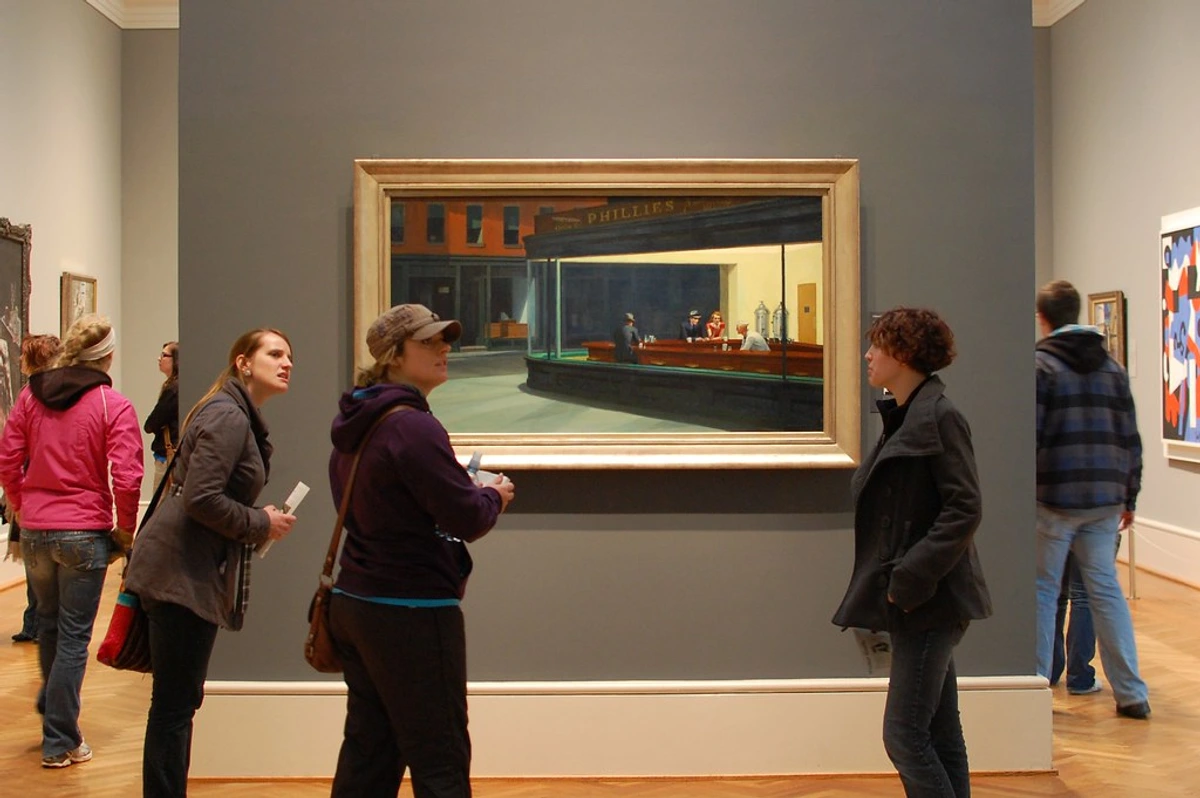
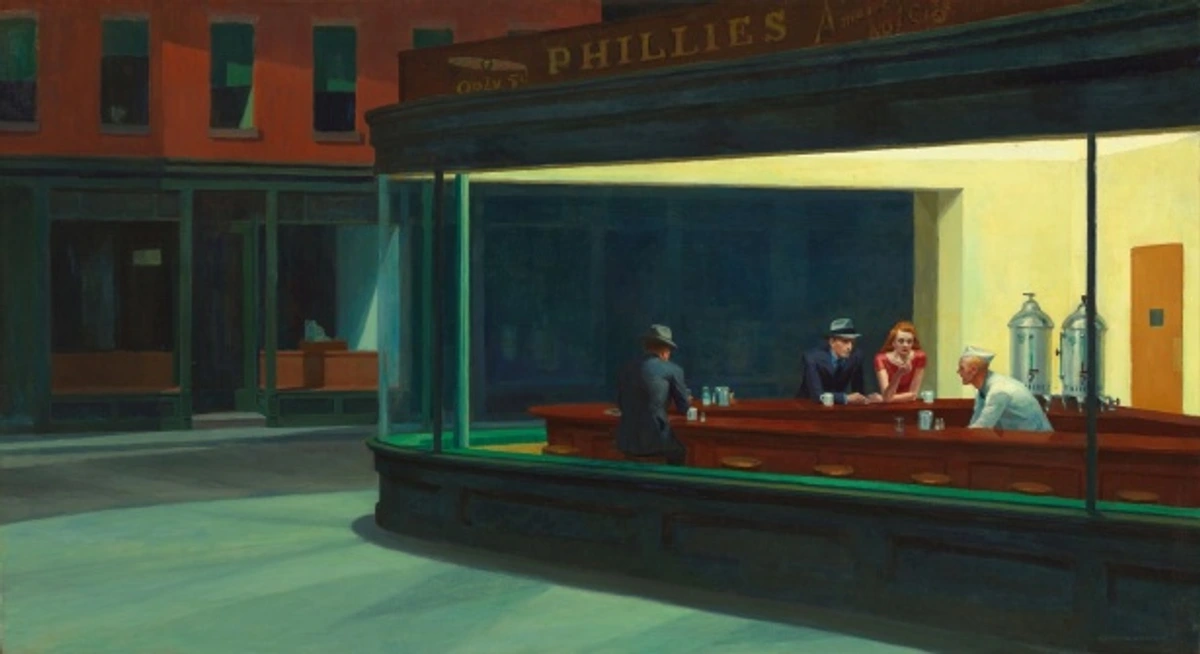
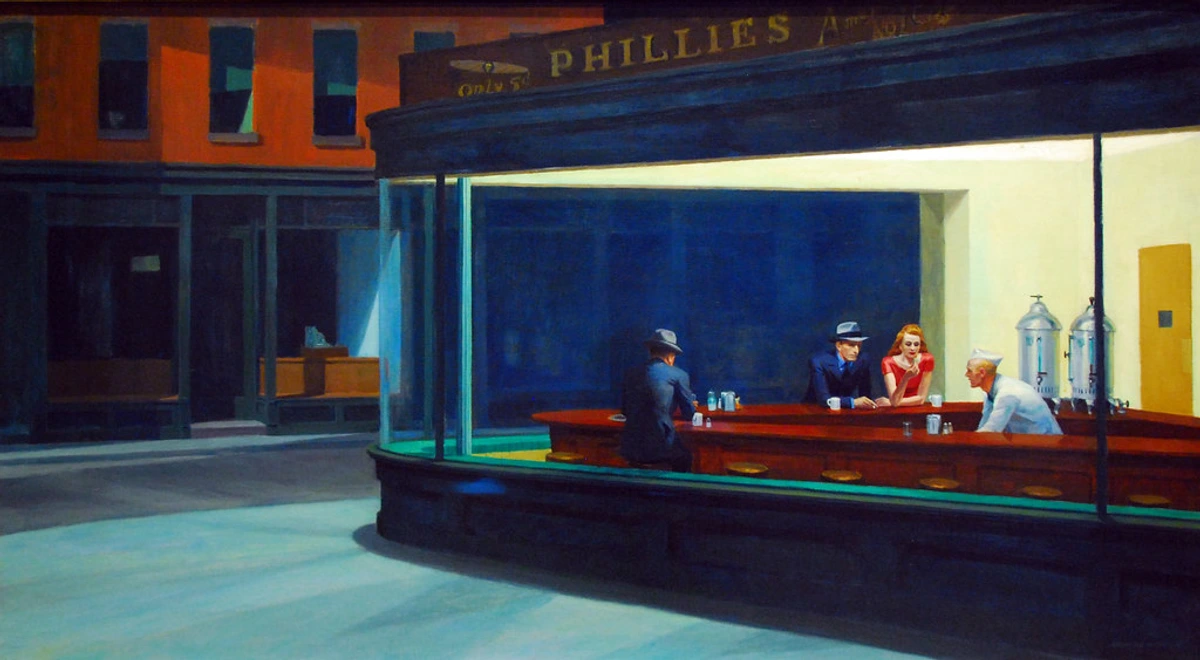
And then there's Edward Hopper (1882-1967), an artist whose work I've always been drawn to. His paintings, often depicting isolated figures in urban or roadside settings, convey a profound sense of modern solitude and quiet introspection. His Nighthawks (1942), for instance, is an iconic example of how everyday scenes can reveal deeper emotional truths about urban alienation. The stark, artificial lighting (often fluorescent), the silent, disconnected figures, the barrier of the diner counter – they all contribute to a feeling of poignant, shared loneliness. Hopper masterfully uses composition, light, and a muted color palette to evoke this sense of quiet drama and psychological depth in works like Early Sunday Morning (1930) and Automat (1927). If you've ever felt that particular urban solitude, you know exactly what I mean. If you want to dive deeper into his masterful works, check out my ultimate guide to Edward Hopper.
Social Realism: Art for the People
Across the globe, particularly in the early to mid-20th century, Realism took on a more overt political and social dimension. Social Realism sought to highlight the struggles of the working class and advocate for social change. It often used an accessible, narrative style to communicate powerful messages, aiming to educate the masses and build national identity in post-revolutionary societies. A fantastic example of this is Mexican Muralism, with powerful artists like Diego Rivera, José Clemente Orozco, and David Alfaro Siqueiros creating monumental public works. Rivera's murals often celebrated Mexico's indigenous history and agrarian workers; Orozco's tackled themes of human suffering and revolutionary struggle (e.g., The Trench, with its raw depiction of bodies intertwined in combat, conveying the brutal reality of revolution); and Siqueiros' works, like New Democracy, were bold calls for social and political liberation, often depicting figures breaking free from chains. These murals told the story of their nation's history and revolutionary ideals to a wide audience.
I remember seeing some of these murals myself, and the sheer scale and raw emotion are utterly captivating. They're not just art; they're public history lessons carved into walls. Beyond Mexico, artists like Ben Shahn and Dorothea Lange (whose Migrant Mother (1936) became an icon of the Great Depression, powerfully documenting the plight of displaced farmworkers) in the US, and Käthe Kollwitz in Germany (known for her empathetic depictions of working-class suffering and the devastation of war, e.g., The Weavers' Revolt (1893-97), a series of prints profoundly impacting viewers with its raw portrayal of exploitation), profoundly impacted society with their Social Realist works. Another powerful example of Realism's global reach is the Russian Peredvizhniki (or "The Wanderers") in the late 19th century. This group of artists famously broke away from the academic Salon to organize their own traveling exhibitions, bringing art directly to the people and focusing on rural life, social injustice, and historical narratives from a uniquely Russian perspective. They were, in essence, an early form of art activism, proving that the impulse to depict the unvarnished truth was a universal one.
Realism in Other Mediums: A Broader Canvas
The impact of Realism extended far beyond the painter's canvas, fundamentally shaping the narratives and aesthetics of other major art forms:
- Literature: Literary Realism, flourishing in the mid-to-late 19th century, mirrored the visual arts' commitment to depicting everyday life with psychological depth and social accuracy. Authors like Gustave Flaubert (Madame Bovary), Leo Tolstoy (Anna Karenina), and George Eliot (Middlemarch) meticulously detailed the inner lives and social environments of their characters, often critiquing societal norms and class structures with unflinching honesty. Flaubert’s Madame Bovary, for example, is famous for its detailed, unromanticized portrayal of provincial bourgeois life and the tragic consequences of romantic illusions. Their focus on observable reality and psychological motivations was a direct echo of the visual Realist agenda.
- Theatre: While perhaps less overtly called "Realism" as a movement, the principles of realistic staging, character development, and dialogue became foundational in modern theatre. Playwrights sought to depict life as it was, moving away from melodramatic flourishes towards authentic human interaction and social commentary. Henrik Ibsen, with plays like A Doll's House (1879) and Hedda Gabler (1890), challenged bourgeois morality and societal expectations through realistic portrayals of domestic life and gender roles, directly reflecting Realism's drive to expose societal truths. Figures like Konstantin Stanislavski revolutionized acting through his "system," which encouraged actors to embody psychologically complex, realistic characters, bringing an unprecedented level of authenticity to the stage. The use of detailed, often 'fourth wall' breaking sets, and naturalistic dialogue aimed to create an illusion of real life unfolding before the audience.
- Photography: The rise of photography in the mid-19th century, with its seemingly objective capture of reality, both challenged and inspired Realist painters. While early cameras had limitations (like long exposure times that made candid shots difficult), photographers quickly embraced documentary approaches, capturing ordinary people and scenes. This photographic eye influenced painters to push for even greater fidelity to observable detail and to consider the nuances of transient moments, blurring the lines between what the painter's eye and the camera's lens could achieve. It became a powerful tool for social commentary, documenting poverty and injustice with undeniable proof.
The Legacy: From Photo-Realism to Hyperrealism
The impulse to depict reality never truly faded; it simply evolved. In the late 20th and early 21st centuries, movements like Photo-Realism and Hyperrealism emerged, taking the technical accuracy of depiction to astonishing new levels. These artists often work from photographs, using techniques like airbrushing, meticulous layering, or even projecting images to create paintings or sculptures that are almost indistinguishable from the real thing. This pushes the boundaries of what "realistic" can even mean, raising profound philosophical questions about originality, reproduction, the nature of authenticity, and our perception of reality in a world saturated with images. When art becomes a perfect copy of a photograph, does the artist's hand matter less than their eye? Does it make us question what is real when the copy is so perfect? It's a fascinating, mind-bending continuation of Realism's quest for truth, often with an underlying commentary on consumerism or the mediated nature of our experience.
I've seen some of these pieces up close, and honestly, they sometimes make me question my own eyes. It's a different kind of truth, focused intensely on visual fidelity, but often with an underlying commentary on perception itself. It makes me wonder if, in our digital age, the most 'real' art might actually be the most abstract – that which strips away the literal to get to a deeper, emotional truth that connects with the human experience. Beyond these ultra-realistic movements, the spirit of Realism also lives on in much of contemporary figurative art, where artists continue to explore the human condition, social issues, and everyday life with a renewed commitment to direct observation and personal narrative, even if their styles are diverse and experimental.

Realism in the Contemporary World (and a brief word on its criticisms)
The spirit of Realism, the unvarnished truth, didn't vanish with the advent of abstract movements. Instead, it adapted, finding new forms in contemporary art. Think of documentary filmmaking, street photography, or even certain forms of conceptual art that use everyday objects to make profound statements about society. Many contemporary artists, while not strictly Realists in style, share that commitment to social commentary, to portraying contemporary life, and to challenging established norms, whether through performance art, installation, or digital media. This ongoing impulse to hold a mirror to society, to refuse idealization, and to engage with the actual rather than the imagined, is Realism’s lasting gift.
Of course, Realism wasn't without its detractors. Critics often found its focus on the mundane to be, frankly, boring. Where was the beauty? The lofty ideals? For those accustomed to classical grandeur or romantic drama, Realist paintings often appeared simply ugly, unrefined, or even vulgar. I can almost hear a critic of the day lamenting, "Why render such commonplace scenes when art should elevate and inspire the spirit?" The official French Salon, for example, frequently rejected Courbet's works, accusing him of creating "caricatures of nature" and lacking artistic elevation. There were also accusations of sensationalism, especially when artists depicted poverty or social ills, with some seeing it as glorifying the 'low' aspects of society rather than elevating the spirit. And, as mentioned, its alignment with social critique often drew political accusations, with some critics linking it to socialist leanings, which was a dangerous association at the time. But for me, these criticisms often missed the point: the beauty was in the honesty, the idealism in the truth, and the politics in daring to show what was really there.
Key Takeaways: Understanding Realism's Enduring Power
- A Radical Break: Realism deliberately rejected the idealized and romanticized art of previous eras, opting for an "unvarnished truth."
- Focus on the Ordinary: It championed the common person and everyday life, elevating the mundane to monumental status.
- Social Mirror: Realism often served as powerful social commentary, exposing injustices and realities of the Industrial Revolution.
- Verisimilitude, Not Just Reality: It sought the appearance of truth and reality, capturing psychological and social essences beyond mere visual accuracy.
- Global Influence: Its principles spread worldwide, inspiring movements like Social Realism and influencing literature, theatre, and photography.
- Legacy of Authenticity: The pursuit of honesty and authentic connection remains a core principle, even in contemporary and abstract art.
Why Realism Still Resonates with Me (and Maybe You, Too)
While my canvases might be drowning in vibrant colors and abstract forms that you can explore and even purchase at /buy, the foundational principles of Realism—honesty, a keen eye for observation, and a willingness to explore the depths of human experience—are incredibly important to me. They are the grounding wire for any creative act, even if the final expression looks nothing like a detailed portrait. The pursuit of an authentic essence, whether of a physical object or an inner emotion, is a thread that connects Courbet's stark realism to the boldest abstract expression. Just as Courbet sought the 'truth' of a farmer's toil, I seek the 'truth' of an emotion through its color and form. When I'm struggling with a composition, I often think of Courbet's The Stone Breakers – the sheer weight of their labor, the gravity of their posture. I try to capture that essence of struggle, not visually, but through the tension and balance of my colors and shapes. My own process, though visually distinct, often starts with a deeply observed emotional truth or a fleeting sensory experience that I then translate into colors and shapes. It’s like a Realist painter translating an observed scene, but my "scene" is often internal. The commitment to representing what is, even if 'what is' is an internal state or an abstract concept, stems directly from that Realist sensibility. Can abstract art be "real"? Absolutely, if it's honest to its own truth. It’s a shared language of authenticity, whether spoken in the language of oil paint on canvas or the vibrant hues of an abstract composition.

Realism, for all its lack of dramatic flair, offers something profound: the opportunity for genuine connection. When I see a Realist painting, I don't just see paint on a canvas; I see a moment, a person, a struggle, or a quiet truth that I can recognize in my own life or the world around me. It’s a powerful reminder that art doesn’t always have to shout to be heard; sometimes, a whisper of truth, even translated through abstract forms like those you'll find in my own collection, is more than enough to stir the soul. The honest observation of the world, whether external or internal, remains the bedrock of meaningful art for me, and I believe, for anyone seeking depth and connection in creative expression. So, the next time you encounter a work of art, whether it's a stark Realist portrait or a vibrant abstract canvas, ask yourself: what truth is the artist trying to reveal, and how does it resonate with your own experience?
Frequently Asked Questions About Realism in Art
What are the main themes of Realism in art?
The main themes of Realism in art revolve around depicting everyday life and the human experience without idealization. Key themes include:
- Social Commentary: Highlighting inequalities, the harsh realities of labor, poverty, and social injustices, often fueled by the Industrial Revolution.
- The Dignity of the Ordinary: Elevating common people (peasants, workers, the middle class) and mundane subjects to the level of high art, previously reserved for historical or mythological figures.
- Psychological Depth: Capturing the inner lives, emotions, and specific characteristics of individuals, often as products of their environment.
- Verisimilitude: A rigorous commitment to visual accuracy, depicting details, textures, and light as they truly appear, even if 'unflattering'.
- Critique of Idealism: A deliberate rejection of the romanticized, dramatic, or fantastical narratives prevalent in earlier art, favoring an unvarnished truth.
What is the main goal of Realism in art?
The main goal of Realism in art is to depict subjects, situations, and details as they appear in everyday life, without idealization or romantic embellishment. It seeks to present an "unvarnished truth," often serving as social commentary by highlighting the lives and struggles of ordinary people, and challenging the academic art traditions of its time. Realism aimed to democratize art by making it accessible and relatable to a wider audience, fostering a deeper, more empathetic engagement with reality, rather than offering escape.
Is photography considered Realism?
While photography, especially documentary photography, often captures reality with unparalleled fidelity and shares Realism's interest in depicting the world as it is, it is not considered part of the Realism art movement of the 19th century itself. The Realism movement was a specific artistic and philosophical shift primarily within painting and sculpture. However, the rise of photography profoundly influenced later Realist and Naturalist artists, inspiring new ways of seeing and depicting the world, and subsequently led to movements like Photo-Realism and Hyperrealism, which explicitly engage with photographic aesthetics and the question of visual fidelity. Its spirit certainly carried over and influenced later photographic art and movements.
How did Realism differ from Romanticism?
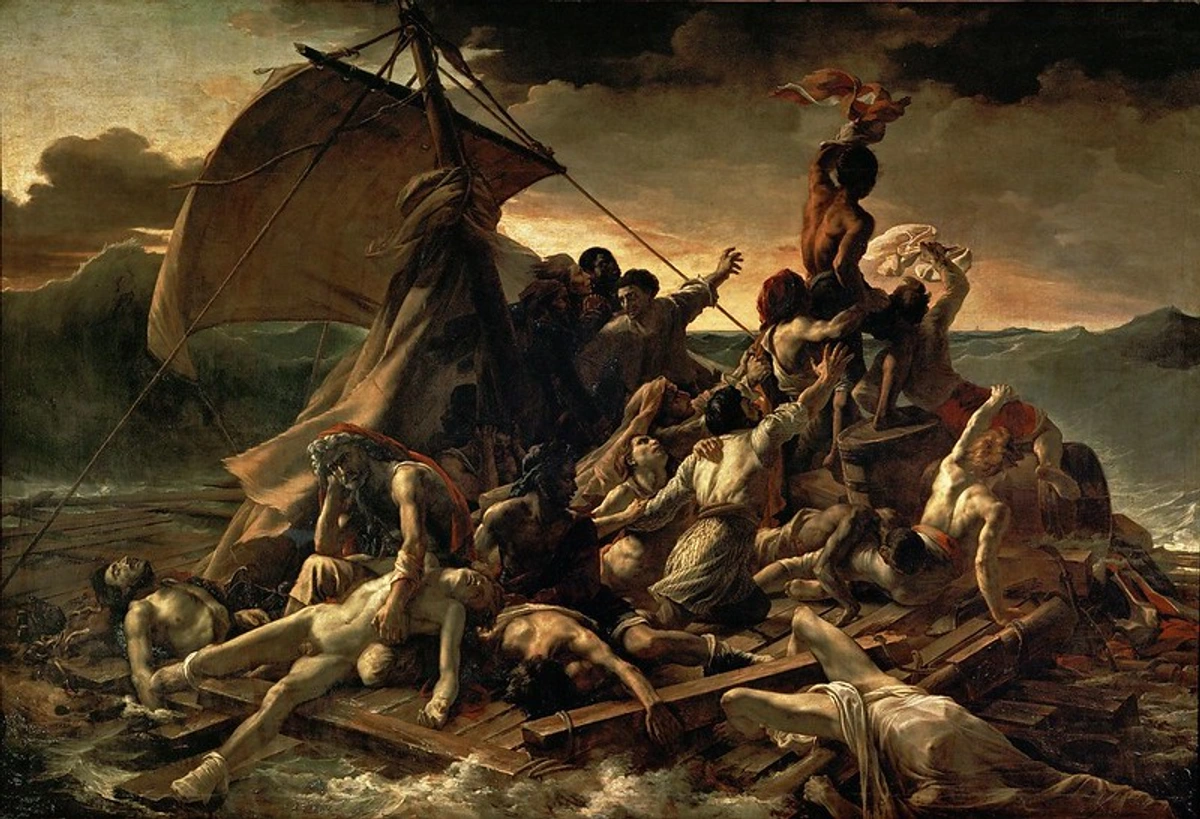
Realism dramatically differed from Romanticism in both subject and intent. Romanticism emphasized intense emotion, individualism, the sublime, and often idealized or dramatic historical, mythological, or exotic subjects, as well as sweeping, awe-inspiring natural landscapes. Its goal was often to evoke strong feelings, awe, or offer an escape from reality, celebrating individualism and the sublime. Realism, in contrast, rejected these grandiose themes, focusing instead on objective observations of contemporary, everyday life, social conditions, and ordinary people, often with a critical eye. Realism aimed to document and critique reality itself, fostering reflection and empathy rather than catharsis or escapism.




Who are the most famous Realist artists?
Some of the most famous Realist artists include:
- Gustave Courbet (French, 1819–1877) – Often considered the father of the Realist movement, known for A Burial at Ornans and The Stone Breakers.
- Jean-François Millet (French, 1814–1875) – Celebrated for his empathetic depictions of peasant life, such as The Gleaners.
- Honoré Daumier (French, 1808–1879) – A prolific caricaturist and painter who critiqued Parisian society, the legal system, and political figures, and depicted the working class, notably in The Third-Class Carriage.
- Édouard Manet (French, 1832–1883) – A transitional figure whose modern subjects and direct style, seen in Olympia and Le Déjeuner sur l'herbe, bridged Realism and Impressionism. His unflinching gaze and portrayal of contemporary life were profoundly Realist in spirit.
- Thomas Eakins (American, 1844–1916) – Known for his unflinching portraits and surgical scenes, like The Gross Clinic, embodying a scientific approach to truth.
- Edward Hopper (American, 1882–1967) – Famous for his evocative scenes of urban and rural American life, conveying solitude and introspection, most notably in Nighthawks.
- Käthe Kollwitz (German, 1867–1945) – A powerful Social Realist known for her empathetic portrayals of working-class suffering and the devastation of war.
What is the difference between Realism and Naturalism?
While closely related and often overlapping, Realism and Naturalism have subtle differences. Realism generally focuses on depicting contemporary life and society objectively, without idealization, often with a social critical intent to raise awareness or challenge norms, showcasing ordinary life. If Realism is a journalist reporting on a day's events, Naturalism, while also committed to detailed and unidealized representation, is more like a scientist meticulously documenting the biological, environmental, and socio-economic factors that led to those events. Naturalist artists and writers typically portray individuals as products of their heredity and environment, emphasizing the often-harsh and sometimes tragic impact of social and biological forces (such as poverty, addiction, or inherited traits) on human lives. Naturalism tends to be more pessimistic, clinical, and systematic in its observation of reality, often presenting humans as pawns of fate and circumstance, with a strong emphasis on exposing societal ills for reform and demonstrating the inescapable influence of environment and heredity.
How does Photo-Realism or Hyperrealism relate to Realism?
Photo-Realism and Hyperrealism are later movements, primarily from the late 20th and early 21st centuries, that take the core Realist impulse for accurate depiction to an extreme. While 19th-century Realism sought to depict observable reality and social truth, Photo-Realism and Hyperrealism often work directly from photographs to create paintings or sculptures that are virtually indistinguishable from the source image. They share Realism's technical fidelity but often diverge in intent. Instead of purely social commentary, these later movements frequently explore themes of perception, the nature of representation, consumerism, and the relationship between photography and painting, raising philosophical questions about what constitutes 'reality' in an image-saturated world. They are, in a sense, a hyper-extension and re-examination of Realism's foundational commitment to visual truth.