Ashcan School: Raw Urban Realism, Rebels & Lasting Legacy
Dive deep into the Ashcan School's rebellious realism, explore key artists like Henri & Sloan, and uncover their vital impact documenting early 20th-century urban life and challenging academic art.

What if the most profound art isn't found in gilded frames, but in the grit and grime of everyday life?
Ashcan School: Raw Urban Realism, Rebels & Lasting Legacy
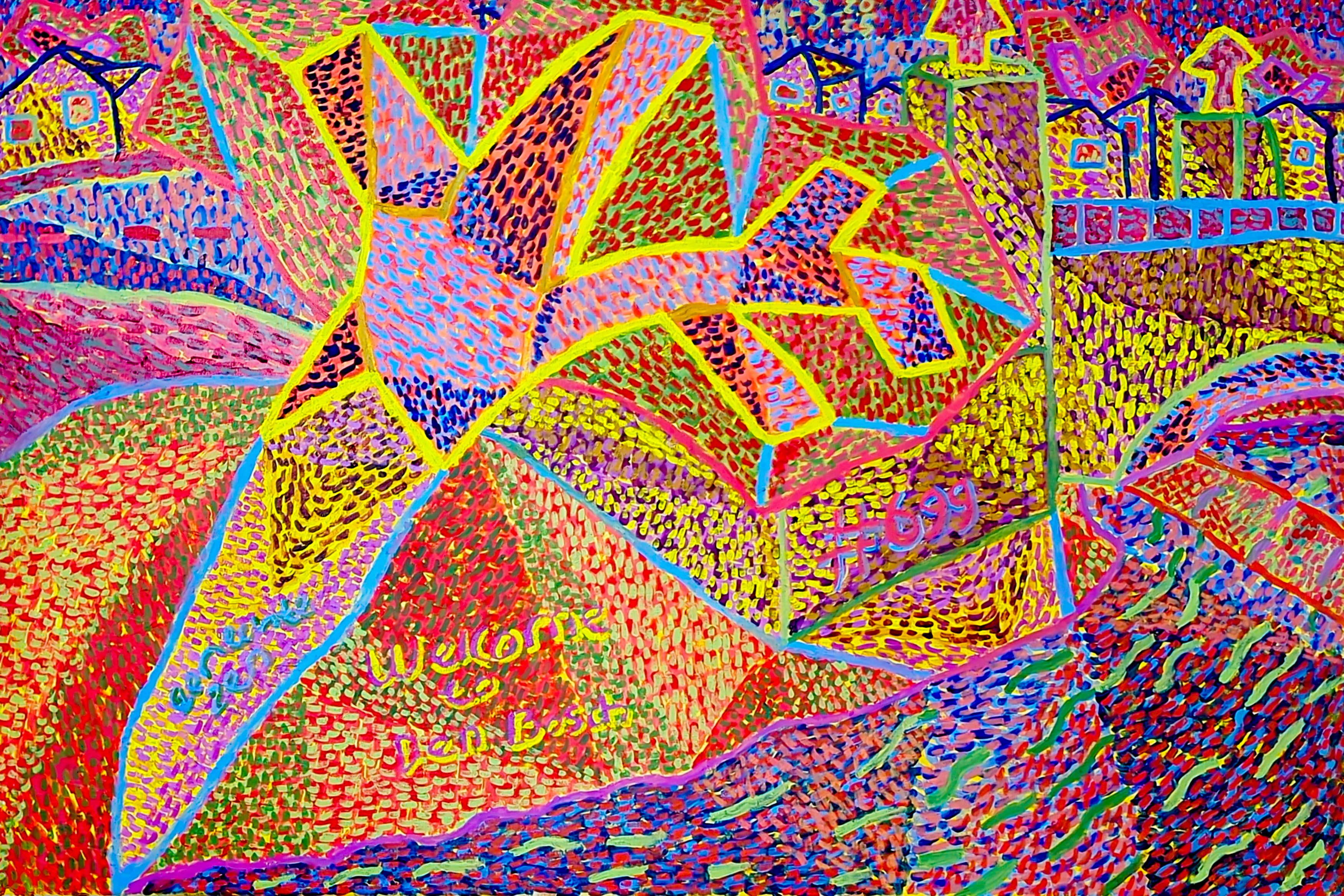
You know, sometimes I look at art history, and it feels like everyone's constantly chasing the next big, flashy thing. All those grand narratives, epic battles between styles from genteel salons to avant-garde manifestos… and then you stumble upon a movement like the Ashcan School, and it just… grounds you. For me, it was like finding an old, well-worn photo album amidst a stack of glossy magazines – raw, honest, and utterly captivating. It’s that feeling of quiet discovery, like stumbling upon a hidden alleyway in a familiar city that reveals a whole new story.I remember my first encounter with an Ashcan piece, a street scene, probably by John Sloan. I was expecting something refined, perhaps even a bit romanticized, given the era. But what I saw was a snapshot of life, unvarnished. Kids playing in the street, laundry hanging from fire escapes, a couple gossiping on a stoop. It wasn't 'pretty' in the conventional sense, but it was profoundly real. I could almost hear the city's hum, smell the smoke, feel the cobblestones beneath my feet.And in that moment, I realized these artists weren't just painting scenes; they were painting conversations, struggles, joys, and the messy, glorious pulse of a burgeoning nation. They showed us America's true face, dirt and all. It’s this unfiltered observation, this commitment to showing what is rather than what should be, that resonates so deeply with my own approach to art. It influences me whether I'm working with vibrant colors, exploring complex abstract art styles, or simply observing the subtle rhythms that make a modern city tick. Because, let’s be honest, finding the genuine amidst the polished is a journey, whether you’re delving into historical movements or wrestling with a blank canvas. So, buckle up, because this article is my deep dive into their gritty, vibrant world – exploring their origins, their unapologetically real subject matter, their distinctive style, the key figures who dared to challenge convention, and why their honest gaze still speaks so profoundly to us today.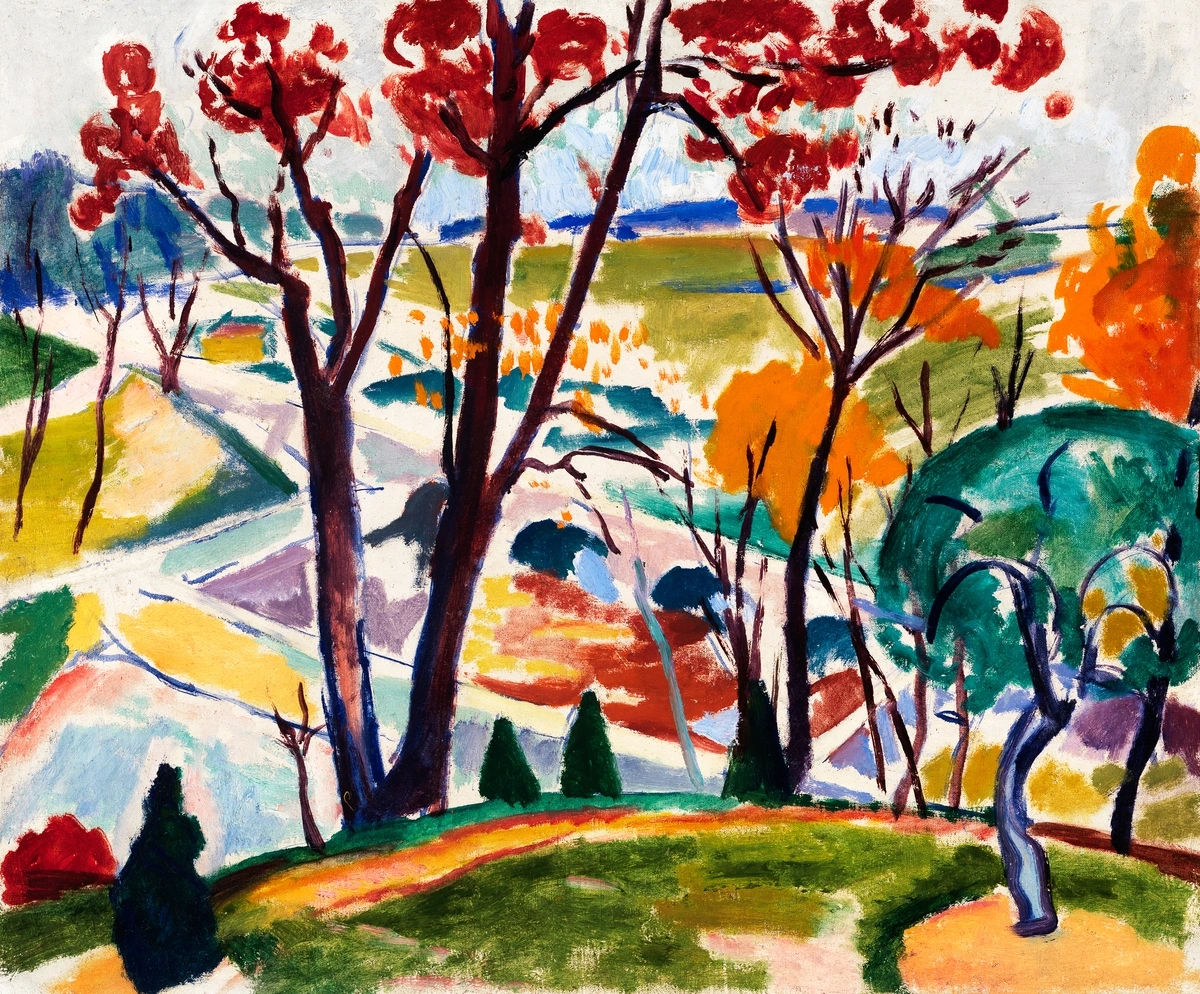 credit: https://www.rawpixel.com/image/3070907/free-illustration-image-landscape-abstract-painting, licence: https://creativecommons.org/publicdomain/zero/1.0/---## So, Who Were These "Rebels with a Cause"? And Why Did They Emerge?To truly understand the Ashcan School's impact, we first need to look at who these artists were and the dynamic context they emerged from. Their rise wasn't an isolated event; it was a direct response to a rapidly changing America and a rigid art establishment. This movement, often characterized by its gritty urban realism, truly found its footing in the early 20th century, roughly spanning from 1900 to 1917, a pivotal time when the United States was transitioning into a global industrial power, marked by unprecedented urban growth and societal shifts.### The Genteel Art World They ChallengedBack at the turn of the 20th century, American art was, let's just say, a bit polite, a little… buttoned-up. It was largely influenced by rigid European academic traditions, particularly those from French institutions like the Académie Julian or the powerful Paris Salons, which promoted a hierarchical approach to art, emphasizing polished mythological scenes, historical allegories, and idealized portraits. This meant focusing on polished portraits of the wealthy, grand landscapes that felt more imagined than observed, or mythological scenes straight out of classical textbooks. Think genteel salons and the stately, often hushed, halls of institutions like the National Academy of Design, where the approved style was often a refined, almost sanitized form of academic realism or the grandeur of the Beaux-Arts tradition. Artists were encouraged to emulate established European masters, like the French academic painter William-Adolphe Bouguereau, whose smooth, idealized figures and meticulously rendered scenes were held up as the pinnacle of artistic achievement. This art, often commissioned by the wealthy elite, frequently depicted historical allegories, mythological subjects, or polished portraits. It was beautiful, yes, but ultimately, a bit bloodless. Even American landscape painting, exemplified by certain aspects of the Hudson River School, while distinctly American, sometimes leaned towards the sublime and idealized rather than the raw, everyday vista.It also felt like there was a rigid gatekeeping happening. Artists like Thomas Eakins, while committed to American realism and known for his scientific precision and honest portrayal of the human figure, still operated within a more academic framework, often focusing on subjects like medical clinics or rowing scenes with a formal, almost detached observation. The National Academy of Design, for instance, had strict juries and exhibition criteria that often rejected anything deemed 'unpretty,' 'vulgar,' or too overtly modern and American in its subject matter or style. This created a stifling environment for artists who felt compelled to reflect the rapidly evolving world around them.### The Eight: A Diverse Collective with a Shared VisionBut then came Robert Henri, a charismatic painter and teacher, who felt a different kind of truth needed telling. He wasn't alone. He gathered around him a group of like-minded artists – John Sloan, George Bellows, William Glackens, Everett Shinn, Arthur B. Davies, Ernest Lawson, and Maurice Prendergast, among others – who became known collectively as "The Eight." While diverse in their individual backgrounds – many, like John Sloan and William Glackens, had sharpened their observational skills and quick sketching abilities as newspaper illustrators for publications like The Philadelphia Press or New York World. This trade demanded an immediate, journalistic eye for detail and narrative, teaching them to capture the essence of a scene quickly and vividly, a skill directly translatable to their dynamic canvases. George Bellows, though formally trained at the Pennsylvania Academy of the Fine Arts, fiercely embraced an independent spirit, often depicting raw, powerful urban scenes. Arthur B. Davies, on the other hand, often leaned towards Symbolism, offering more lyrical, dreamlike allegories and romantic counterpoints to the group's predominant realism. Maurice Prendergast brought a unique, Post-Impressionist mosaic-like brushwork and patterned forms to his scenes, having absorbed influences from European movements like French Impressionism and Post-Impressionism during his studies abroad. Unlike many of his peers who adopted a darker palette for urban realism, Prendergast adapted these bright, fragmented styles to depict the democratic pulse of American public life, focusing on bustling parks and beaches. Everett Shinn was known for his theatrical observations of city nightlife and vaudeville. They shared a fundamental belief: art should reflect the dynamism and diverse realities of urban American life, not just its idealized upper crust. Their bohemian lifestyles and sometimes meager earnings fostered a raw, unpretentious spirit, and many relied on their illustration work to make ends meet, further cementing their commitment to depicting contemporary life for a broader audience.The economic realities of being an artist during this period were often challenging. Many of "The Eight" struggled to sell their paintings, which were often considered too radical or "ugly" by the prevailing tastes of wealthy collectors. This financial precarity ironically reinforced their commitment to depicting the lives of ordinary people, as it was the reality they themselves often inhabited. The act of turning to illustration wasn't just about honing skills; it was a necessary means of survival that kept them connected to the pulse of popular culture and everyday narratives.Their philosophy was particularly potent in New York City, which was undergoing a dramatic transformation. Rapid industrialization, massive waves of immigration from Europe – including large numbers of Italian, Irish, Jewish, and Eastern European communities – and burgeoning urban centers were creating a vibrant, often chaotic, melting pot. The sheer scale of change, with millions flocking to cities, meant that life on the streets was more varied, more intense, and certainly less 'polite' than the art world generally acknowledged. The Ashcan artists were compelled to document this unfolding drama, capturing the lives of the newly arrived immigrants, the bustling markets, and the vibrant, sometimes gritty, street life, finding profound human stories in the everyday struggles and joys of these diverse communities. It was a chaotic, beautiful, and utterly human moment, just begging for someone to truly see it.---## The Eight Exhibition of 1908: Their Audacious StatementBefore they were widely known as the 'Ashcan School,' The Eight made their collective statement with a groundbreaking exhibition in 1908 at the Macbeth Galleries in New York. This wasn't just any show; it was a direct, almost audacious, challenge to the conservative National Academy of Design, which often rejected works that didn't fit its narrow aesthetic standards – dismissing anything too 'unpretty' or overtly modern. Imagine critics, accustomed to academic polish and depictions of serene landscapes or mythological nudes, staring at Glackens' bustling street scenes or Sloan's candid portrayals of working-class women. It would have felt like a punch to the gut of artistic propriety.The exhibition caused an immediate stir, generating both praise for its vitality and sharp criticism for its perceived 'vulgarity' and shocking lack of traditional beauty. Works like William Glackens' "Hammerstein's Roof Garden" (c. 1901), which showed a lively, unrefined crowd enjoying popular entertainment, or John Sloan’s candid portraits of working-class women, like "Hairdresser's Window" (1907), which captured everyday moments with unflinching realism, were a stark contrast to the academic ideal. One prominent critic, James Huneker, while acknowledging their vitality, referred to their subjects as 'the raw side of life,' a polite dismissal of what he clearly considered uncouth. This defiant act solidified their stance as champions of a new, distinctly American realism.By daring to exhibit independently and championing contemporary American subjects, they fundamentally challenged the gatekeepers of the art world, effectively paving the way for later, even more radical shows like the 1913 Armory Show. The Armory Show, a pivotal moment in American art, introduced European modernism to American audiences on a grand scale, but it was the Ashcan School that had already softened the ground, demonstrating that art could break free from academic confines and embrace diverse, even controversial, styles and subjects. They proved that a collective challenge to the status quo was not only possible, but profoundly necessary for artistic evolution. It was a loud, clear message that the art world was about to get a whole lot messier, in the best possible way.---## The "Ashcan" Moniker: From Insult to IdentityAnd eventually, this exhibition, and the subsequent critical reception, led to their approach to art earning them the rather unflattering, but ultimately endearing, moniker: the "Ashcan School." "Ashcan." Can you imagine? It was originally meant as a derogatory term, coined around 1916 by art critic Art Young in The Masses, implying their subject matter was as mundane and dirty as the contents of an ashcan, particularly when contrasted with the idealized European-influenced art then prevalent. The Masses, a radical socialist magazine known for its progressive political and social commentary, championed the working class and critiqued societal norms, and was a prominent platform where this critique was amplified and debated. In this context, the term, though derogatory, inadvertently aligned with the artists' own mission to depict the 'real' America, making it a perfectly ironic and potent descriptor. But these artists, bless their hearts, owned it. They didn't want polished idealism; they wanted the grit, the noise, the everyday drama of city life. They were, in essence, photojournalists with paintbrushes, documenting a world often overlooked by the high-brow art establishment. It was a refreshing, almost defiant, honesty. It reminds me a bit of how later expressionism would also rebel against convention, though with a different aesthetic aim. While Expressionists sought to convey subjective emotional states through distorted reality, the Ashcan artists rooted their challenge in a raw, objective observation of urban life. Both movements, however, were unified by a shared spirit of challenging the artistic status quo, even if their visual outcomes diverged significantly.---## The Gritty Canvas of Urban Life: What They Actually PaintedIf you were walking through early 20th-century New York, you'd find the canvas for the Ashcan School everywhere. Forget nymphs and noblemen; these artists ignored the 'artistic' conventions of the day and gave us the beating heart of the city itself. This wasn't just about choosing new subjects; it was a profound shift in artistic priorities, driven by the rapid industrialization and massive waves of immigration transforming America into a bustling, often chaotic, melting pot. They saw the dramatic social and economic shifts unfolding on the streets and felt compelled to document them. Their backgrounds as newspaper illustrators, demanding quick sketches and keen observation, directly informed their ability to capture fleeting moments and narrative tension in their paintings, turning everyday scenes into compelling stories. They believed art should reflect life as it was truly lived, not as it was idealized.The Ashcan artists, much like their French Realist predecessors such as Gustave Courbet and Édouard Manet, embraced subjects considered controversial or un-artistic by the academies. While the French Realists challenged the Salon with gritty depictions of rural life or contemporary city scenes (often sparking outrage), the Ashcan artists applied a similar principle to the American urban experience, finding profound human stories in the everyday struggles and joys of diverse communities.The Ashcan artists gave us: * Tenement life: The cramped, vibrant existence of immigrant families, brimming with untold stories. These scenes were often considered too 'lowbrow' and unsightly for serious art, yet the Ashcan artists saw profound human dignity and narrative in them. Think of Robert Henri’s tender portraits of working-class women like "Eva Green" (1907), capturing her quiet dignity amidst struggle, or John Sloan’s detailed scenes of back alleys and rooftops such as "Roofs, Summer Night" (1906), revealing the intimate, often unseen, lives of city dwellers. * Street scenes: Children playing, vendors hawking wares, horse-drawn carriages amidst early automobiles, like many of William Glackens' early New York streetscapes such as "Fifth Avenue, Winter" (c. 1905), bustling with horse-drawn carriages and early automobiles, or George Bellows' more imposing depictions of excavations and bridges like "Excavation at Night" (1908), showcasing the raw power of urban development, often with an almost monumental scale. This also extended to busy docks, noisy factories, and the emerging public transportation, capturing the ceaseless rhythm of the burgeoning metropolis. * Boxing matches: The raw physicality and emotion of the ring, capturing both the brutality and the spectacle, a George Bellows specialty with iconic works like "Stag at Sharkey's" (1909) and "Both Members of This Club" (1909). Such violent subjects were far from the genteel sensibilities of academic art, marking a deliberate provocation and bringing the visceral energy of a prize fight directly to the canvas. * Working-class leisure: People at parks, theaters, bars, living their unglamorous but rich lives. Everett Shinn excelled at depicting theater scenes, vaudeville acts, and the vibrant, often hidden, nightlife of the city, bringing a theatrical flair to his urban observations in pieces like "London Hippodrome" (1902) or "Outdoor Stage, Paris" (1907). * Nightlife: The flickering gaslights, the shadows, the clandestine allure of the city after dark, often captured with a sense of bustling intimacy by artists like Shinn or Glackens, revealing the city's hidden pulse once the sun went down.This approach, incidentally, shares a surprising kinship with the emerging medium of photography, which was also documenting everyday life with an unprecedented immediacy. Ashcan artists, much like early documentary photographers such as Jacob Riis, whose raw images exposed tenement conditions in stark detail, or Lewis Hine, who documented child labor with unflinching honesty, aimed to capture a fleeting moment, a candid 'snapshot' of reality. Even more art-focused photographers like Alfred Stieglitz, though working with a different aesthetic, shared a commitment to capturing the essence of New York life. However, unlike the often stark, black-and-white immediacy of photography, the Ashcan artists imbued their scenes with painterly emotion, using color and brushwork to convey mood and narrative depth. Their canvases weren't just records; they were interpretations, filtered through a human gaze that added a layer of subjective truth. They observed life directly, often from their windows or during walks, much as a photographer would compose a scene, focusing on the dynamic energy and unposed authenticity of urban existence. I often think about this when I'm looking at my own city, 's-Hertogenbosch, today. How many hidden stories, how much vibrant energy, goes unnoticed in the quiet corners or bustling markets? The Ashcan School taught me to look closer, to appreciate the beauty and complexity in the mundane. It’s a bit like trying to find the story in an abstract painting – sometimes the meaning isn't overt, but it's deeply felt, revealing itself through careful observation and engagement. And by choosing to focus on these ordinary, often overlooked scenes, the Ashcan artists were making a subtle yet powerful social commentary, validating the lives and experiences of the working class and immigrant communities who were the true pulse of the modern city. It was an art of empathy, a quiet protest against the artistic and social hierarchies of their time.---## Beyond the "Ugly": Unpacking Their Artistic StyleSo, what did these artists do with their brushes to capture such raw reality? Their impact wasn't just in what they chose to paint; it was profoundly rooted in how they painted it. The Ashcan School wasn't just about controversial subject matter; their style was also a deliberate, often defiant, departure from the polished techniques of their predecessors. They often used a darker, more muted palette, reflecting the grimy reality of city streets and the dim interiors of tenements – a direct rejection of the brighter, often sentimental colors and smooth finishes of academic art. For me, this wasn't just about visual accuracy; it was about conveying the prevailing mood and social commentary, lending a sense of weight and truth to their observations. Yet, within these restrained tones, their canvases were infused with a surprising vibrancy, a palpable energy that leaped off the surface.Their brushwork was bold, often loose and painterly, characterized by visible strokes and a powerful sense of impasto – a technique where paint is applied thickly, often so thickly that it stands out from the surface, creating a textured effect. This added to the raw, immediate feel of their work, making the very surface of the canvas feel alive. They weren't striving for photographic precision, which would have felt too static; instead, they aimed for a sense of veritas, a deeper truth. Veritas, quite simply, means truth or reality. It wasn't realism just for realism's sake, but realism as a vehicle to convey feeling, narrative, and the very spirit of a place and its people. This 'veritas' differed significantly from earlier forms of objective realism, which might have aimed for almost scientific precision or idealized beauty. For example, while
 Dutch Golden Age realism celebrated meticulous detail and the domestic sphere, and American Regionalism later idealized rural life, the Ashcan artists pursued an emotional and social truth, one that captured the dynamic, often messy, pulse of urban life rather than a static, perfected image. This wasn't the kind of academic painting where every detail was painstakingly rendered with meticulous precision, striving for an idealized beauty often detached from daily life; instead, they prioritized capturing the essence of a moment – the fleeting glance, the hurried gesture, the palpable energy of a crowd. They paid close attention to composition, often using dramatic diagonals or a sense of asymmetry to create dynamic, arresting scenes that felt caught in motion.Think about it: if you're trying to convey the chaos and frenetic energy of a crowded New York street, you don't paint every brick perfectly; you paint the blur of movement, the clash of colors, the feeling of being there. This emphasis on capturing subjective experience, even within realism, is fascinating, and something I often grapple with in my own process. My own canvases, though often abstract and bursting with color, seek a similar kind of 'veritas' – not a literal truth, but an emotional or spiritual one, using form and hue to evoke the unseen pulse of experience, much like the Ashcan artists sought the pulse of the city.Their style also marked a distinct divergence from the somewhat contemporary movement of American Impressionism. While artists like Childe Hassam, Theodore Robinson, or Mary Cassatt also depicted modern life, their focus was often on the play of light and fleeting atmospheric effects, rendered in brighter, more luminous palettes. They typically depicted genteel scenes of parks, gardens, and fashionable society, capturing serene moments of middle and upper-class leisure. The Ashcan School, in stark contrast, delved into the shadows, the grit, and the raw social dynamics of the burgeoning metropolis, using a more robust and less ethereal approach to realism, finding their narratives in the cacophony rather than the calm. Their art felt heavy with the weight of urban reality, whereas Impressionism felt light with the fleeting touch of sunlight. credit: https://www.publicdomainpictures.net/pictures/250000/nahled/messy-colorful-artists-palette.jpg, licence: https://creativecommons.org/publicdomain/zero/1.0/---## Spotlight on Some Key Players: The Faces Behind the BrushstrokesTo truly appreciate their collective vision, let's meet some of the individuals who brought this gritty realism to life. These were the architects, the minds, and the hands that dared to capture this vibrant American reality, proving that individual perspectives could coalesce into a powerful, unified movement. Let's dive into a few of the personalities who shaped this intriguing movement.### Robert Henri: The Guiding LightHenri was more than just a painter; he was a revolutionary teacher and the spiritual heartbeat of the movement. He encouraged his students to look beyond the classroom, to paint from life, and to embrace the contemporary world around them. "Art cannot be separated from life," he'd famously say, a sentiment that still rings true for me. He pushed for artistic freedom and individuality, essentially giving his students permission to be honest. His own work, like "The Art Student (Miss Josephine Nivison)" (1906) or "Salome" (1909), often depicted portraits of ordinary people, filled with an empathetic gaze and a deep psychological insight. Without Henri's passion and mentorship, the Ashcan School might never have coalesced with such force. He truly believed in art reflecting the human condition, in all its messy glory. His dedication to truth, even when it’s messy, resonates deeply with my own desire to find authenticity in art, no matter the style. That kind of unyielding belief in art’s power to connect us is something I carry into every brushstroke, especially in my own vibrant, often abstract, creations. His commitment to capturing human experience with empathy truly defines the Ashcan spirit.