Hokusai's Great Wave: How Japanese Art Reshaped Western Masters
Dive into Hokusai's Great Wave and Japonisme. Discover how Japanese art revolutionized Western masters, redefined perspective, and forever changed painting, architecture, and modern design.

How a Giant Japanese Wave Washed Over Western Art, And Why It Still Fascinates Me
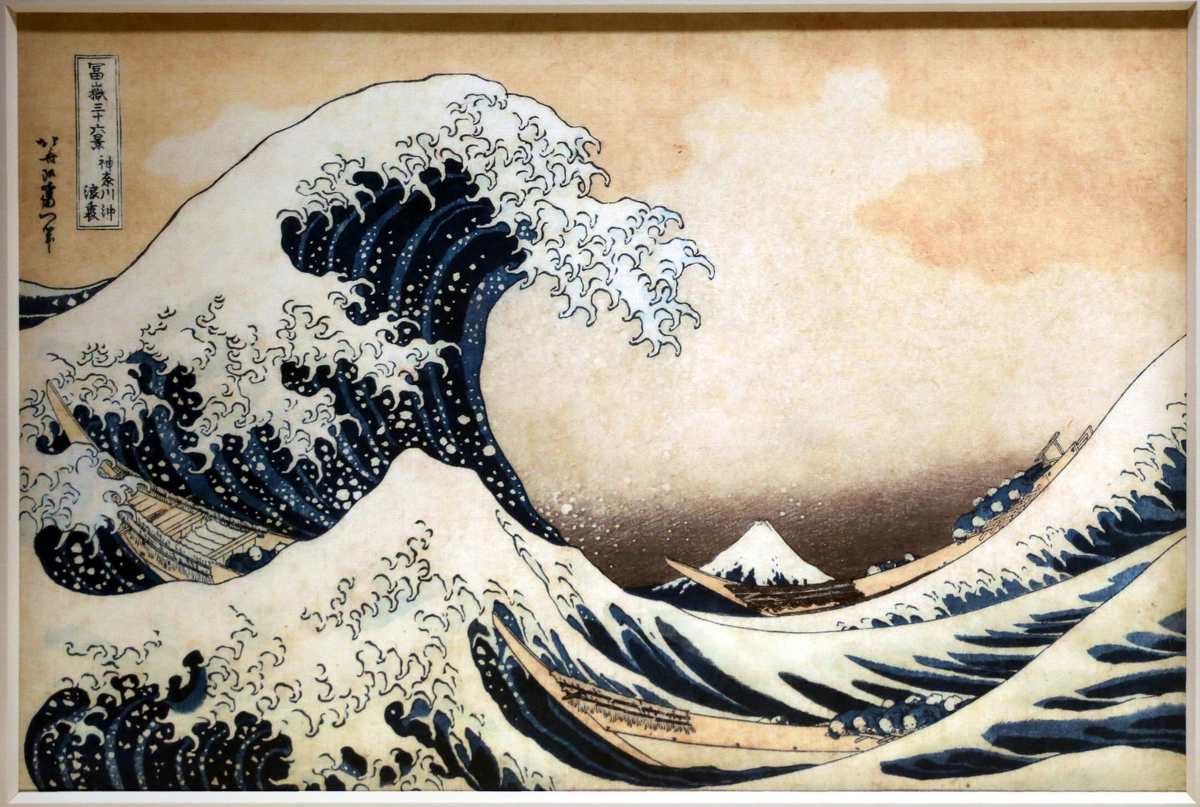
You know the one. That colossal, clawing wave, a monster of deep blue and white foam, threatening to swallow three tiny boats. In the distance, a serene Mount Fuji looks on, almost comically small. It's The Great Wave off Kanagawa by Katsushika Hokusai, and if you're anything like me, you've seen it everywhere – from coffee mugs to high-end galleries. It’s an image that just demands attention. But what I've always genuinely wondered, staring at its intricate power, is not just what it is, but how this single woodblock print became such an undeniable titan of global art. It’s more than just a famous picture; it's a profound story about how art can transcend borders and entirely reshape how we see the world.
For me, the real intrigue has always been this: how did this single woodblock print, created around 1831 in a Japan that was almost completely closed off to the rest of the world, become one of the most profoundly influential pieces of art in the West? This isn't just a story about a pretty picture; it's about a powerful cultural tsunami that completely reshaped how European and American artists saw the world, offering a whole new visual vocabulary. I want to delve into that journey, exploring the specific impact of Hokusai's masterpiece and the broader movement of Japonisme on Western art, especially how it challenged traditional notions of perspective, composition, and even color. And honestly, it’s a story that resonates deeply with how I approach my own work – finding new ways to express the raw power and beauty I see around me.
Before the Flood: Japan's Insular Artistic World and Its Awakening
It’s hard to imagine now, but for over 200 years, Japan operated under a strict isolationist policy called Sakoku, or 'locked country'. This wasn't just about closing borders; it was a deliberate strategy by the ruling Shogunate to prevent foreign influence, particularly from Western missionaries, and to maintain internal stability and power. While some limited cultural exchange occurred through specific trading ports like Dejima with the Dutch, Japan's artistic development largely turned inwards, refining its own unique traditions.
During this period, Japanese art developed its own distinct traditions. While older, more aristocratic forms like Yamato-e (classical narrative painting, often depicting courtly life and historical events with subtle colors and flowing lines) and the Kanō school (an influential painting school patronized by the ruling elite, known for its bold brushwork, decorative screens, and official themes) refined established aesthetics, the art that would later captivate the West was different. It was ukiyo-e woodblock prints, created primarily for Japan's burgeoning urban merchant class, not for export or elite patrons. The term "ukiyo-e" itself means "pictures of the floating world," depicting the transient pleasures of everyday life – kabuki actors, beautiful courtesans, sumo wrestlers, and stunning landscapes. It was, in essence, the mass media of its day, affordable and widely enjoyed by a populace keen on escapism and immediate gratification. I like to think of it as the original viral art, easily reproducible and widely distributed. The craft involved a complex collaboration between artist, carver, printer, and publisher, with multiple woodblocks carved for each color, allowing for vibrant, flat areas of pigment and characteristic crisp outlines that could be reproduced in vast numbers. These prints were produced with remarkable speed and efficiency, making them accessible souvenirs sold in bustling city shops and at local festivals, a stark contrast to the singular, expensive oil paintings of Europe.
Then, in the 1850s, everything changed. American warships, led by Commodore Matthew Perry, essentially forced Japan to open its ports to trade. This was a seismic geopolitical event, shaking Japan out of its long isolation and creating a new sense of curiosity and tension on both sides. Suddenly, a veritable flood of Japanese goods – not just the now-famous prints, but also exquisite ceramics, intricate lacquerware, luxurious silks, and elegant fans – started pouring into Europe and America. For artists in Paris, then the undeniable epicenter of the Western art world, it was nothing short of an epiphany. Europe, still reeling from the Industrial Revolution and a growing fascination with the exotic, was ripe for a new aesthetic. The academic art institutions, like the rigid Royal Academy of Arts, had preached the same rules for centuries, prioritizing classical narratives and idealized forms. This influx of Japanese art felt like discovering an entirely new visual language, a world away from their academic traditions, and it literally blew the dust off many a studio.
A New Way of Seeing: The Japonisme Revolution
So, what exactly was it about this "new visual language" that caused such a stir? The obsession that swept through Europe and America was soon dubbed Japonisme. It wasn't just a fleeting trend; it was a profound cultural and artistic revolution. These Japanese prints, especially Hokusai's dynamic compositions and Hiroshige's serene landscapes, seemed to cheerfully disregard nearly every "rule" Western art academies had preached for centuries. For artists feeling stifled by the rigid dogma of institutions like the Royal Academy of Arts (which you can explore more about in [what-is-the-royal-academy-of-arts]), which often prioritized historical and mythological narratives in a strict hierarchy of genres (like the Neoclassical emphasis on grand themes), this influx of Japanese art was pure liberation. It was a profound permission slip, showing that art could be something else entirely, something vibrant and immediate.
For generations, Western painting was fixated on creating a realistic, three-dimensional illusion on a flat canvas, using techniques like linear perspective to guide the eye towards a single vanishing point. Think of those classical Renaissance landscapes, carefully constructed with receding lines and perfectly centered subjects, often emphasizing idealized beauty and chiaroscuro (strong contrasts of light and dark) or sfumato (soft, gradual blending of colors and tones to create subtle transitions between light and shadow). But Hokusai and his ukiyo-e contemporaries simply tossed that convention aside. They presented flat planes of vibrant color, often with dramatic, asymmetrical compositions and radical cropping that suggested a scene extending beyond the frame – something utterly alien and thrilling to Western eyes. Imagine a portrait where a figure is cut off at the shoulder, a landscape viewed from an impossibly high vantage point, or a bustling street scene where the main subject is pushed to the edge. This wasn't just decorative; it was a bold artistic statement, a kind of flattened reality that felt surprisingly modern and immediate.
To truly grasp the seismic shift, let's lay out the stark differences between these artistic philosophies:
Feature  | Traditional Western Art (Pre-Japonisme) | Ukiyo-e (like The Great Wave) |
|---|---|---|
| Perspective | Linear, with a single vanishing point, deeply mathematical. Emphasized deep recession. | Flat planes of color, often with little sense of deep recession. Oblique perspective was common, where parallel lines don't converge but objects appear smaller with distance (imagine looking down a long, straight street where the buildings appear smaller in the distance but their parallel sides don't seem to meet). |
| Composition/Use of Space | Balanced, symmetrical, with a clear focal point. Figures typically centered. Careful proportion. | Radical cropping, asymmetrical balance, and elevated or unusual viewpoints, creating dynamism. Explore balance more in [understanding-balance-in-art-composition]. |
| Subject Matter | Grand historical, religious, or mythological narratives. Hierarchy of genres often devaluing everyday scenes. | Scenes from everyday life, nature, common people, weather, urban entertainment, a celebration of the "floating world." Iconic examples include Utamaro's elegant bijin-ga (portraits of beautiful women) and Hiroshige's travel series like The Fifty-three Stations of the Tōkaidō. |
| Line | Often hidden or blended to create smooth forms and depth, minimizing outlines. | Bold, crisp black outlines are a key expressive element, defining forms and adding energy. Learn about lines in art: [elements-of-art-line]. |
| Color | Shaded and modeled to show depth and form, often naturalistic and modulated (e.g., using sfumato or glazing) to create chiaroscuro effects. Understand color in art: [how-artists-use-color]. | Flat, unmixed areas of vibrant, often non-naturalistic color, applied with precision. No chiaroscuro, pure color for impact. |
It told Western artists: you don't have to painstakingly imitate reality; you can interpret it, distort it, crop it, flatten it, and still create something incredibly powerful and meaningful. I mean, what a revelation that must have been for a young artist trying to find their voice!
It's also worth noting that ukiyo-e prints were remarkably accessible. Unlike expensive oil paintings or sculptures, they were mass-produced and affordable, making them popular souvenirs and household decorations, even for the working and middle classes in Japan. This accessibility contributed significantly to their widespread distribution in the West, quickly becoming a visual language understood across different social strata, not just in exclusive art circles. Of course, not everyone immediately embraced this "new" art; some traditionalists dismissed it as mere decorative curiosities, or even 'primitive,' but their objections were quickly drowned out by the enthusiastic embrace of the avant-garde who saw its revolutionary potential.
The Impressionists and Post-Impressionists Catch the Wave
This revolutionary new visual toolkit landed right in the laps of a group of rebellious young painters we now call the Impressionists. They were already pushing against academic norms, trying to capture fleeting moments and the transient effects of light, and Japanese art showed them precisely how to break free and move forward. You can explore more about these pioneers in our guide to [famous-impressionist-artists].
- Claude Monet was an avid collector of Japanese prints, reportedly owning hundreds. You can see the profound influence in his iconic water lily series: the flattened perspective, the intense focus on natural patterns, the way the surface of the water becomes a world unto itself. He even famously painted his wife, Camille, in a kimono (La Japonaise), a direct and vibrant homage clearly signaling his deep fascination and respect for Japanese aesthetics. Monet's garden at Giverny, itself, was designed with a Japanese bridge and water garden, a living testament to this enduring influence.
- Edgar Degas found immense inspiration in the unusual cropping and asymmetrical compositions of ukiyo-e. Think of his paintings of ballerinas or laundresses, such as The Dance Class, often caught from unexpected, high, or dramatically cut-off angles. That distinct sense of immediacy and dynamism, as if you've stumbled upon a private moment? It's pure ukiyo-e dynamism, borrowed and brilliantly adapted to Western subjects to create a sense of candid realism.
- Mary Cassatt, a prominent American Impressionist working in Paris, created a remarkable series of prints directly inspired by Japanese masters after seeing pivotal exhibitions of Japanese art, like those at the École des Beaux-Arts. She was completely blown away by their elegant simplicity, their flat planes of color, and their intimate depictions of domestic life. Her celebrated prints of mothers and children, for example, echoed the tenderness and directness she admired in ukiyo-e depictions of everyday Japanese family scenes, translating that private world into a groundbreaking Western context.
Vincent van Gogh's Total Immersion
And then there was Vincent van Gogh. To say he was merely "influenced" feels like an understatement; he was utterly consumed. He meticulously collected hundreds of Japanese prints, studying them with an almost religious fervor. He hung them in his studio, drawing inspiration from their vibrant colors and bold compositions, and even made oil copies of them to fully understand their secrets. He learned from their use of strong, crisp outlines, their bold, flat areas of color, and their dynamic, often diagonal, compositions that created a powerful sense of movement. The very concept of applying pure, unmixed color directly to the canvas, bypassing traditional Western modulation and chiaroscuro, came directly from his study of Japanese prints, leading to his signature expressive palette. He once wrote to his brother Theo, declaring unequivocally that all his work was “founded on the Japanese,” viewing Japan as a kind of artistic utopia, a place where art truly captured the essence of life. For him, it was a revelation, showing him a path to a more direct and emotionally potent expression.
When I look at the swirling, expressive energy in Van Gogh's The Starry Night or his dynamic landscapes, I can't help but see the undeniable echo of Hokusai's powerful, clawing wave. It's that same raw, untamable power of nature, expressed not just through bold, dynamic lines but also a vibrant, almost impasto application of paint that distinctly mirrors the crisp, layered colors and energetic spirit of the woodblock. He didn't just borrow; through these Japanese masters, he learned a whole new way to infuse his canvases with direct, visceral emotion. The full story of Ukiyo-e is fascinating and you can read more in [the-enduring-legacy-of-ukiyo-e:-japanese-woodblock-prints-and-their-global-impact].
Beyond Impressionism: Post-Impressionist Explorations
The influence didn't stop with Impressionism. Post-Impressionists continued to absorb and transform the lessons of Japonisme. Artists like Paul Gauguin, fascinated by non-Western cultures, adopted flat planes of intense color and bold outlines in his pursuit of symbolism and primitive expression. While less overtly Japanese in style, artists like Paul Cézanne also experimented with multiple perspectives and flattened forms in his landscapes and still lifes, arguably building on the ideas of breaking traditional single-point perspective that ukiyo-e had introduced. This freedom to depart from strict realism, to interpret rather than merely reproduce, owed a significant debt to the precedent set by Japanese art. Think of Henri Matisse and the Fauves (see his 'Open Window' painting below); their bold, non-naturalistic use of color and flattened forms clearly built on the groundwork laid by Japonisme.

The Ripple Effect: Beyond Painting to Modern Design and the Unintended Tsunami
The cultural wave unleashed by Japanese art didn't stop at the easel of painters; its profound influence rippled out across the entire spectrum of creative disciplines, continuing to reshape aesthetic sensibilities well into the 20th century and beyond. This profound cultural exchange fundamentally altered the artistic landscape.
- Music: The evocative power of Hokusai's Great Wave even found its way into sound. The celebrated French composer Claude Debussy was so captivated by the print's dynamic energy and depiction of the sea's immense power that he chose to feature it prominently on the cover of the score for his masterpiece orchestral work, La Mer (The Sea). You can almost hear the surging swells and crashing foam in his musical movements, a direct translation of visual dynamism into auditory experience, a truly unique form of artistic revolution.
- Architecture: American architect Frank Lloyd Wright, a towering figure in modern design, was not only a major collector but also a shrewd dealer of Japanese prints. He didn't just admire them; their principles of simplicity, modularity, open interior spaces, deep integration with nature, and the use of cantilevered forms profoundly informed his groundbreaking architectural designs, such as the Prairie Style homes and even the iconic Imperial Hotel in Tokyo. He truly understood how to translate the flat planes and dynamic balance of ukiyo-e into three-dimensional living spaces, demonstrating a remarkable shift in artistic perspective.
- Graphic Design & Art Nouveau: The bold, crisp outlines, flat areas of vibrant color, and strong compositions of ukiyo-e became a foundational language for modern poster art and early graphic design. This influence was particularly visible in the Art Nouveau movement that flourished at the turn of the 20th century. Art Nouveau embraced organic lines, decorative patterns, and a fusion of fine art with applied arts – all echoing the aesthetic principles of Japanese prints. For instance, the use of elegant, undulating lines, asymmetry, and flat color fields to depict stylized natural forms (like flowers or flowing hair) in Art Nouveau posters and illustrations directly drew from ukiyo-e. Artists like Aubrey Beardsley adopted the dramatic linear qualities and strong silhouettes, while Henri de Toulouse-Lautrec clearly drew from the bold outlines, flat color fields, and dynamic, often cropped compositions in his iconic posters of Parisian nightlife. The focus on strong, graphic impact and a rejection of traditional pictorial depth perfectly aligned with the emerging needs of commercial art. You can explore more about this connection with
[art-nouveau-artists]. This was a genuine visual vocabulary transformation. - Textile, Ceramics, and Photography: Beyond painting and architecture, the aesthetic principles of Japonisme seeped into other visual arts. In textile design, simplified natural motifs, asymmetrical patterns, and flat color fields became popular, famously influencing designs like those seen in Chinoiserie but now with a direct Japanese flair. Ceramics saw an adoption of Japanese forms, glazes, and decorative motifs, inspiring movements like the Mingei (folk art) movement even in the West. Even early photography, particularly in portraiture and landscape, began to experiment with unconventional cropping, elevated viewpoints, and a heightened awareness of compositional balance, mirroring the visual innovations seen in ukiyo-e, moving away from purely documentary realism towards more artistic interpretations.
The Unintended Tsunami: A Global Artistic Dialogue
What I find truly fascinating about Japonisme is that this profound cultural exchange was largely unintended by the Japanese artists themselves. Hokusai and his contemporaries were creating art for their domestic audience, reflecting their own floating world. They weren't setting out to revolutionize European painting or inspire American architecture. Yet, the raw power and innovative visual language of their work spoke across cultures and centuries, creating a global artistic dialogue that continues to resonate today. It’s a powerful reminder that art, in its purest form, has a universal language.
Why This Wave? Why Hokusai? The Enduring Power
So, after all this, what is it about The Great Wave – and indeed, the broader influence of ukiyo-e – that gives it such profound, enduring staying power? I've spent a lot of time thinking about it, and for me, it’s the masterful balance of inherent opposites. It’s undeniably beautiful, yet terrifying in its raw power. It’s incredibly dynamic, almost vibrating with energy, yet utterly perfectly composed. It captures a fleeting, violent moment in nature, yet feels utterly timeless, speaking to something ancient within us. The universal human fascination with the sea, its immense beauty and unpredictable danger, certainly plays a role. Hokusai himself was prolific, working under many names and constantly evolving his style throughout his long career, but The Great Wave stands as a testament to his mastery of capturing profound emotion through stark visual innovation. His ability to distill complex emotions and vast natural forces into a strikingly simple yet powerful composition is, to me, a mark of true genius.
The image of those tiny, vulnerable human figures in their boats, bravely confronting the immense, overwhelming power of nature – that, I believe, is a universal story. It’s a primal theme, this relationship between humanity and the vast, untamable forces around us, and it’s one that I find myself returning to again and again in my own abstract and colorful work. The way Hokusai captured that tension, that fleeting moment of courage against chaos, is something truly special. You can certainly see some of those explorations on my /timeline, and if you're curious about how I translate these themes into art, you might enjoy browsing pieces available to /buy. You might even find some echoes of Japonisme in contemporary [the-ultimate-guide-to-abstract-art-movements-from-early-pioneers-to-contemporary-trends]. It’s a powerful, almost humbling reminder that a single piece of art, crafted with what seem like simple tools of wood, paper, and ink, can truly cross oceans and centuries, not just to influence, but to fundamentally change the way an entire culture, and indeed, all of us, perceive the world around us and the art within it. It's a true legacy of Japanese art history, a legacy that continues to inspire artists working in digital realms today, where flat design, bold graphics, and dynamic compositions reign supreme.



FAQ: The Great Wave, Ukiyo-e, and Japonisme
What exactly is 'The Great Wave off Kanagawa'?
It's a yoko-e (landscape-oriented) woodblock print by the iconic Japanese artist Katsushika Hokusai, created around 1831. It's the most famous piece from his celebrated series called Thirty-six Views of Mount Fuji. You can learn more about Hokusai and his work in our ultimate guide: [ultimate-guide-to-katsushika-hokusai].
What is Japonisme and why was it significant? Japonisme refers to the widespread fascination with Japanese art and design among Western artists and collectors in the late 19th century, particularly after Japan opened its ports in the 1850s. It was significant because it introduced radical new visual ideas – such as flat perspective, bold lines, asymmetrical compositions, and everyday subject matter – that profoundly challenged traditional Western academic art and inspired movements like Impressionism, Post-Impressionism, and Art Nouveau.
Who was Katsushika Hokusai? Katsushika Hokusai (1760-1849) was an incredibly prolific and influential ukiyo-e painter and printmaker during Japan's Edo period (1603-1868). He produced an estimated 30,000 works in his lifetime and is renowned for his innovative compositions, mastery of perspective, and focus on the lives of ordinary people and the natural world.
What does 'ukiyo-e' mean and what are its key characteristics? The term "ukiyo-e" translates to "pictures of the floating world." It refers to an art movement during Japan's Edo period that depicted the transient, pleasurable aspects of life in the urban centers – kabuki theater, courtesans, sumo wrestlers, folk tales, and stunning landscapes. Its key characteristics include:
- Flat, vibrant colors: Often unmixed and applied in bold planes.
- Strong outlines: Crisp, black lines define forms and add energy.
- Asymmetrical compositions: Dynamic and often cropped, creating a sense of immediacy.
- Unusual perspectives: Elevated viewpoints or oblique perspective rather than linear.
- Everyday subject matter: Focus on popular culture, nature, and common people.
What was the craft behind ukiyo-e woodblock printing? Ukiyo-e printing was a collaborative and intricate process. It involved an artist creating the design, a skilled carver meticulously carving separate woodblocks for each color, a printer applying pigments to the blocks and pressing the paper, and a publisher overseeing the entire production and distribution. Multiple blocks were precisely registered to create the layered, vibrant, and characteristic flat color fields of the final print, allowing for mass production.
Why was 'The Great Wave' and ukiyo-e so influential in the West, and how did it challenge traditions? The arrival of Japanese prints in Europe in the 1850s was a revelation, coinciding with a period where Western artists sought alternatives to rigid academic traditions. Ukiyo-e's flat perspective, bold lines, dramatic cropping, asymmetrical compositions, and focus on capturing momentary aspects of nature offered a completely fresh and liberating visual language. It challenged Western art by:
- Rejecting linear perspective: Introducing flat planes and oblique perspective.
- Breaking compositional rules: Employing asymmetry and radical cropping.
- Elevating everyday subjects: Moving beyond traditional hierarchies of grand historical or religious themes.
- Emphasizing line and pure color: Contrasting with Western chiaroscuro, sfumato, and blended forms.
The prints' affordability and mass production also greatly facilitated their widespread distribution and influence, contributing to this artistic perspective shift.
Which Western artists were most notably influenced by Japonisme? Key figures deeply affected by Japonisme include the Impressionists (Claude Monet, Edgar Degas, Mary Cassatt) and Post-Impressionists (Vincent van Gogh, Paul Gauguin, Paul Cézanne, Henri Matisse). The influence also extended to composers like Claude Debussy (with his orchestral work La Mer) and pioneering architects like Frank Lloyd Wright, who integrated Japanese aesthetic principles into his designs. The Art Nouveau movement also drew heavily from Japanese motifs and design principles, showcasing a truly global artistic movements connection.
How did Japanese prints influence Impressionism and Post-Impressionism specifically? Japanese prints profoundly impacted Impressionists like Monet, Degas, and Cassatt by demonstrating new ways to depict fleeting moments, use flattened perspectives, bold compositions, and focus on everyday subjects. For Post-Impressionists like Van Gogh, Gauguin, and Cézanne, ukiyo-e reinforced the use of vibrant, unmixed colors, strong outlines, and the freedom to interpret reality rather than merely reproduce it, paving the way for more expressive and abstract forms of art.
What are some other famous ukiyo-e artists besides Hokusai? While Hokusai is arguably the most famous, other giants of ukiyo-e include Ando Hiroshige (celebrated for his landscape series like Fifty-three Stations of the Tōkaidō, focusing on travel and nature), Utamaro (known for his exquisite bijinga, or portraits of beautiful women, emphasizing grace and elegance), and Sharaku (famous for his enigmatic kabuki actor portraits, capturing their dramatic stage personas with striking intensity). Each contributed uniquely to the rich tapestry of the "floating world." The economic aspect of Japanese print trade meant that mass production made these works widely available and affordable, allowing them to spread globally and influence countless artists, a key factor in its global impact.