
Why Time Melts in Surrealist Art: Beyond Dalí's Clocks
Ever feel like time is bending? Explore the weird and wonderful symbolism of time in Surrealist art, from Dalí's melting clocks to Magritte's frozen moments.

Why Time Melts: Surrealism's Audacious Dance with Subjective Time – The Definitive Guide to Warped Clocks and Dream Logic
Have you ever had a moment where time just… bent? I have this weird memory from when I was a kid. I was lying in the grass, watching ants march over a discarded apple core, and for a moment, the world just... slowed down. The buzzing of a bee felt like a symphony, the sun on my face was a physical weight, and the minutes stretched into what felt like an hour. Then, just as quickly, it was gone. It was just a hot afternoon again. It's funny how those fleeting, almost surreal, moments of altered perception stick with you, isn't it? That feeling of time stretching, bending, and even pausing, isn't just a quirk of childhood; it's a profound, universal experience that the Surrealists, those wild, wonderful rebels of the art world, understood intimately. They tapped into something deeply human: the subjective, often bizarre, way we feel time, rather than how a clock measures it. They weren't just painting pretty pictures; they were inviting us into a deeper, more authentic reality, one where our inner world dictates the rhythm, not some external ticking mechanism. It’s a concept that has resonated with me deeply in my own artistic journey, often informing how I approach capturing ephemeral emotions and experiences on canvas.
This isn't just a superficial look at a few famous paintings; this is the ultimate, most comprehensive guide. We're going to pull back the curtain on the Surrealists' audacious assault on conventional chronology, diving deep into the philosophical underpinnings, the psychological insights, and the diverse artistic interpretations that make their approach to time so endlessly fascinating. If you're looking for the definitive resource to understanding this captivating aspect of their work, and how it still resonates with our chaotic modern lives, you've found it right here. Dive into the world of Surrealism with me, and let's unravel why, in their vision, time doesn't just tick – it breathes, dreams, and sometimes, gloriously, melts. Prepare to have your perception of time delightfully warped.
The Surrealists knew that feeling in their bones. They lived it. They were, in essence, trying to paint the world as it feels rather than how it's objectively measured. When we talk about the symbolism of time in Surrealist art or the representation of time in art, most people immediately picture Salvador Dalí's melting clocks, and for good reason. They're iconic, almost a universal shorthand for the movement. But trust me, that's just the movie poster for a much deeper, stranger, and more fascinating film. The Surrealists weren't just painting droopy watches; they were fundamentally questioning the very nature of time as a steady, reliable ruler ticking away our lives, a ruler that often feels like an oppressive dictator. They saw it as something far more capricious, more connected to our inner worlds, memories, and dreams than any external mechanism could ever hope to measure. This wasn't just an artistic whim; it was a radical philosophical stance, a rejection of the perceived order of the modern world and its relentless push for efficiency and control. They sought to liberate humanity from the tyranny of the clock, inviting us into a realm where subjective experience reigns supreme and the soul is free to wander. It’s a core component of what makes Surrealism such an enduring legacy of surrealism. This radical re-evaluation of time, driven by profound philosophical insights and a desire to tap into the subconscious, challenged the very foundations of Western rational thought, inviting us to see time not as a fixed line, but as a dynamic, emotional, and intensely personal experience, a tapestry woven from memory, desire, and the eternal now.
They saw time for what it often feels like: a fluid, emotional, and utterly bizarre construct. So, let's peel back the canvas and look past the obvious to see what they were really trying to tell us about the hidden dimensions of our temporal existence.
## The Surrealist Movement: A Timely Disruption of Time
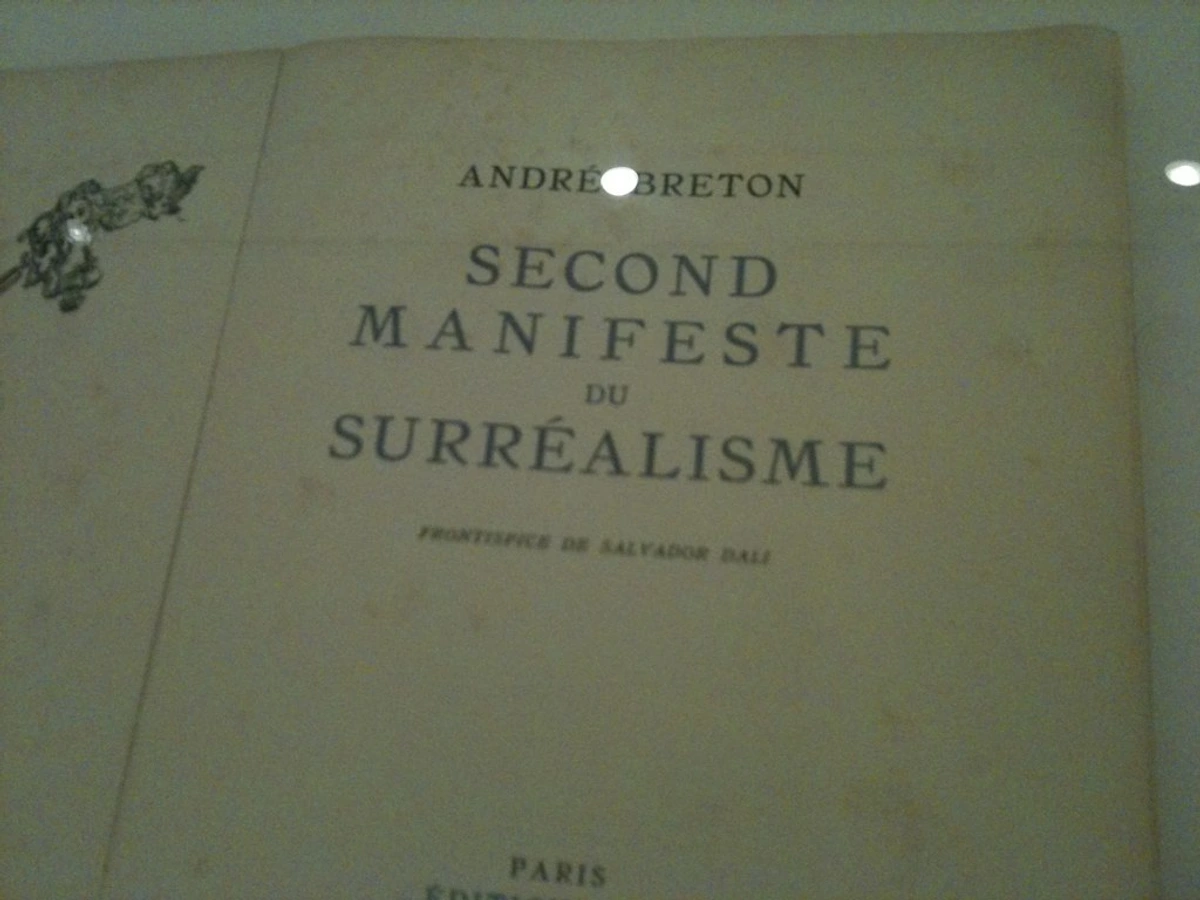
Before we dive deeper into the individual artistic expressions, it's worth a moment to remember the specific historical window in which Surrealism emerged and truly thrived. Born from the ashes of Dadaism – a movement defined by its chaotic negation of art and societal norms – in Paris in the 1920s, with André Breton’s "Manifesto of Surrealism" (1924) as its guiding star, Surrealism pivoted from destruction to a profound reconstruction of reality. While Dada aimed to dismantle the very notion of art in the face of a broken world, Surrealism sought to build a new reality based on the subconscious. It was a movement of radical liberation, not mere negation. The movement was a direct product of its time – a time reeling from industrial warfare, grappling with widespread economic depression, the rise of totalitarian regimes, scientific paradigm shifts, and exploring new psychological frontiers. This precise historical moment, fraught with uncertainty and profound intellectual ferment, was not just a backdrop; it was the very catalyst for the Surrealists' radical reconceptualization of time. Before Dada and Surrealism violently shattered conventions, earlier avant-garde movements like Symbolism and early Modernism had already begun to chip away at realism's rigid grip, opening doors to more subjective and emotionally charged representations. Artists were already hinting at deeper realities beneath the surface of the observable world, setting the stage for a more radical break.
They weren't just painting pictures; they were forging a new way of seeing, feeling, and experiencing existence in an era that demanded a complete break from the past. It's this historical embeddedness that makes their artistic revolt against linear time so potent and enduring. They sought to transcend the mundane, to delve into the uncharted territories of the mind, and to create a more authentic, dream-like reality, ultimately influencing subsequent movements like Abstract Art, Cubism, and even the decorative stylings of Art Deco through their shared challenge to conventional aesthetics.
Beyond the Melting Clock: What Were the Surrealists Really Saying? The Catalysts for Temporal Distortion
To truly grasp why artists suddenly started treating time like melted cheese, or a forgotten dream, you have to understand the world they were living in. The early 20th century was a volatile cocktail of profound chaos and mind-bending scientific discovery, a period perfectly ripe for questioning every established norm. World War I had just brutally shattered the neat, Victorian idea of orderly, linear progress, revealing the raw, irrational, and brutally destructive underbelly of humanity. The sheer, unprecedented scale of mechanized slaughter and the senseless, horrific loss of life made a mockery of any notion of a predictable, progressive future. Suddenly, the future didn't look like a straight line to a better tomorrow; it looked like a scarred battlefield, a landscape of collective trauma, profound uncertainty, and psychological scars that would last generations. Added to this was the pervasive economic depression that followed, further eroding faith in capitalist systems and the promise of a stable, linear societal progression. The rise of totalitarian regimes across Europe further highlighted humanity's capacity for irrationality and control, fostering a deep distrust in established power structures and their insistence on linear, predictable societal development. The collective psyche was reeling, desperately searching for new ways to make sense of a world that had seemingly lost its mind, and with it, its rigid, comforting sense of time. This societal breakdown, this profound disillusionment with the Enlightenment's promise of rationality and progress, was a fertile, even necessary, ground for artists who instinctively sensed a deeper, more chaotic reality churning beneath the surface—a reality where time itself was fundamentally fractured.
The Intellectual Bombs that Broke the Pocket Watch: Einstein, Freud, Bergson, and Jung
Into this maelstrom of societal upheaval, a quartet of revolutionary thinkers dropped intellectual bombs that irrevocably altered humanity's perception of reality and paved the way for Surrealism's temporal rebellion.
First, Albert Einstein, with his groundbreaking theories of relativity, fundamentally challenged the Newtonian view of time as an absolute, universal constant. He showed the world that time isn't constant at all; it's wonderfully, terrifyingly relative. It can bend, stretch, and warp depending on speed and gravity. Imagine trying to explain that to someone who believed a clock was the ultimate arbiter! This wasn't just abstract physics; it was a profound philosophical shift, echoing what many felt intuitively – that time wasn't a rigid, external force, but something deeply intertwined with our own perception and position in the universe. If science, long considered the bastion of objective truth, was now proclaiming that time itself was flexible, permeable, and even subjective to the observer, why shouldn't art follow suit? This profound revelation blew open new avenues for artistic expression, legitimizing the deeply personal, subjective experience as a valid lens for reality, paving the way for visual metaphors like Dalí's melting clocks which embody this scientific fluidity in a strikingly accessible way.
Around the same time, French philosopher Henri Bergson introduced his revolutionary concept of 'durée' (duration). He sharply distinguished between measurable, chronological time (the "clock time" of science and daily life) and subjective, experienced time. For Bergson, true time was a continuous, indivisible flow, deeply personal and qualitative, a concept that defied objective measurement. Think of it less like a series of ticks on a clock face and more like the feeling you get when you're completely absorbed in a creative project, where hours disappear, or a powerful dream where moments stretch into eternities. This idea resonated deeply with artists yearning to capture the inner rhythm of life, rather than its external measurement, knowing that sometimes, a single, potent moment can contain an eternity of feeling, a profound qualitative richness beyond mere quantifiable duration. It offered a philosophical justification for representing time as something felt and lived, rather than merely counted, allowing artists to explore the subjective experience of time not as a deviation from reality, but as its most authentic form.
Then came Sigmund Freud, who dared to meticulously map the bewildering landscape of the human subconscious. He argued that beneath our rational, clock-watching minds lies a chaotic, primal world of dreams, desires, and fears where linear time simply doesn't exist. In a dream, you can effortlessly be a child and an adult simultaneously, experience events from different eras converging, or find the past and future folding into a single, potent, timeless moment. Freudian concepts like repression (where painful memories are pushed out of conscious awareness only to influence behavior in a timeless fashion), the return of the repressed, the Oedipus complex, and the very structure of dream analysis, where symbols are timeless and condensed, offered a profound new language for artists. This revelation was pure gold; it offered a scientific, psychological validation of their deepest intuitions about a non-linear reality, providing a theoretical bedrock for their audacious rejection of conventional temporal narratives in art. The idea that our unconscious mind operates on a different temporal logic, a "timelessness," was a revelation that directly informed Surrealist visual and literary explorations.
And finally, Carl Jung, expanding on Freud's groundbreaking work, introduced the profound concepts of the collective unconscious and archetypes. These were not just personal psychological constructs but timeless patterns of thought, universal symbols, and imagery shared across all humanity, regardless of culture or era. Think of the universal mother figure (Magna Mater), the trickster, or the hero's journey – these are not bound by a specific 'when'. They represented primal forms that transcended individual experience and historical epochs, suggesting a vast, shared, and intrinsically timeless reservoir of human experience. For Surrealists, tapping into these archetypes allowed them to create art that resonated on a universal, primordial level, bypassing the specifics of any historical moment. These ideas further untethered consciousness from the mundane ticking of clocks, suggesting deeper, more ancient, and cyclical rhythms at play. This rich, newly charted psychological landscape, combined with the scientific dismantling of objective time, was the true, fertile inspiration for the definitive guide to surrealism art movement. It was an intellectual earthquake that perfectly primed the canvas for Surrealism's unique, groundbreaking exploration of temporal distortion.
The Surrealists, now armed with these profound ideas from science and psychology, were ready to forge a new artistic path. Unlike the iconoclastic negation of Dadaism (from which many Surrealists emerged), their aim was not to destroy but to reconstruct, to build a new reality based on the subconscious. It was a movement of radical liberation, not mere negation. They wanted to create art that bypassed the rational, critical mind, speaking directly to the subconscious, to the untamed landscape of the dream world. In that subconscious realm, the pocket watch is not just broken; it's utterly irrelevant, a quaint relic of a world and a way of thinking that no longer applies. It's a land where past, present, and future are all happening right now. This embrace of the subconscious as a primary source of truth led to an art that was inherently timeless, defying the linear constraints of conventional narratives and societal expectations.
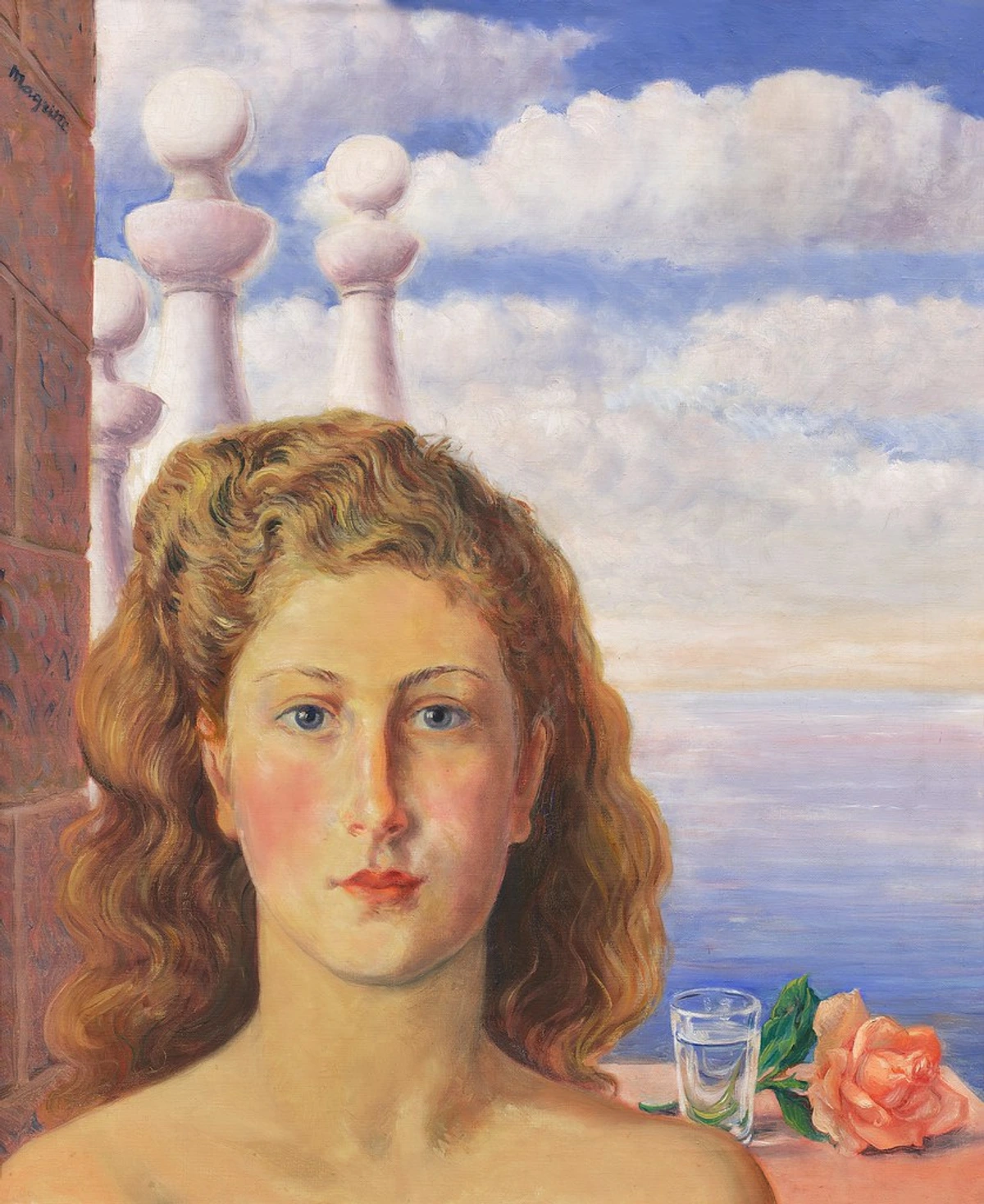
This fundamental shift in artistic philosophy — from destroying to dreaming, from negation to revelation — paved the way for a revolutionary understanding and depiction of time in art, leading to many famous surrealist artists exploring these themes with unprecedented freedom.
credit, licence
The transition was less a clean break and more an evolution, retaining Dada's subversive spirit while channeling it into a constructive exploration of inner reality, a pivotal moment in 20th-century art history.
The Usual Suspects: How Key Surrealists Messed with Time
While they shared a common goal, different artists had their own unique ways of putting time in a blender. It wasn't all about liquidity; sometimes, it was about being frozen solid.
Salvador Dalí: The Persistence of Softness and the Paranoiac-Critical Method
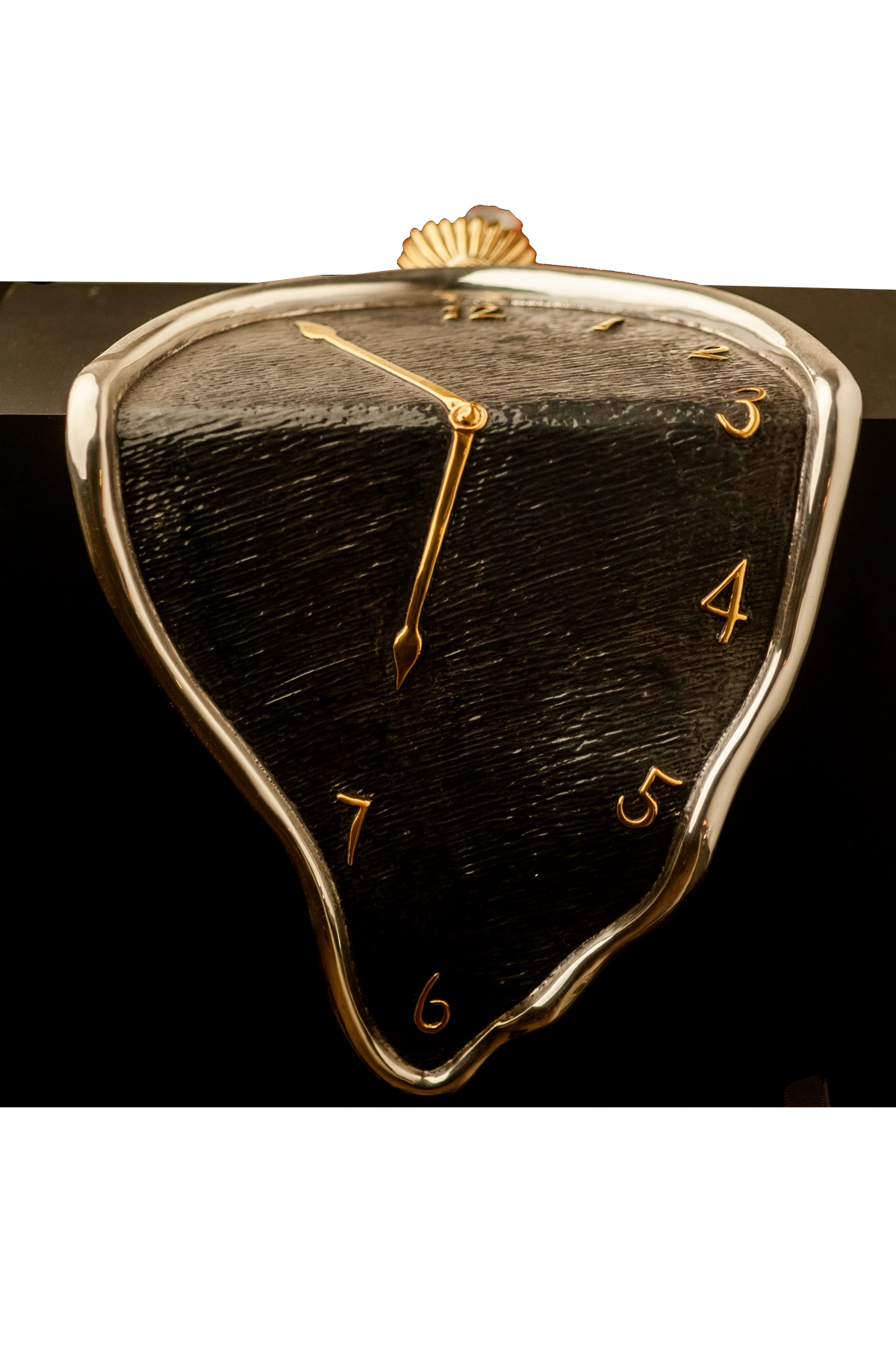
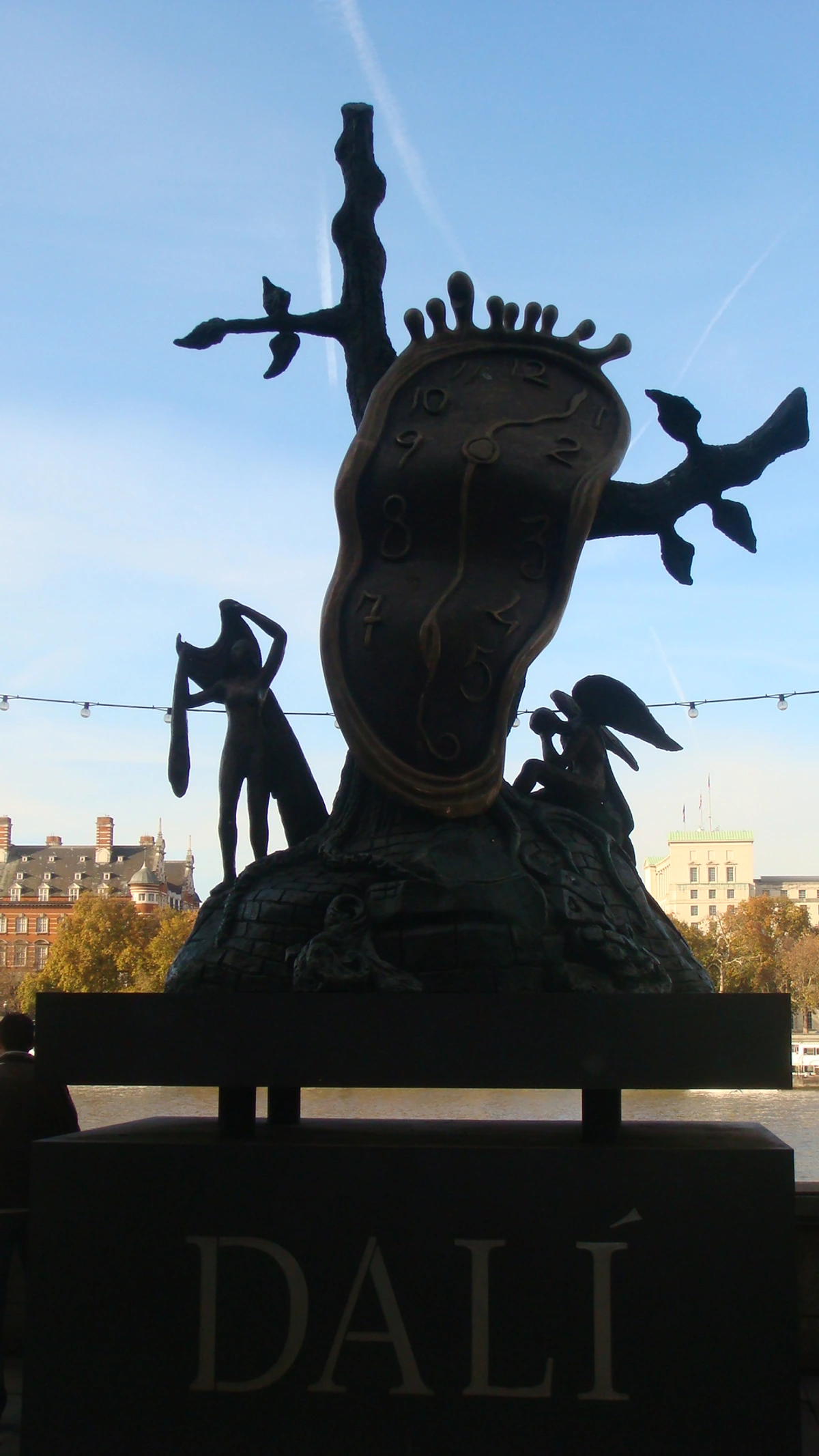
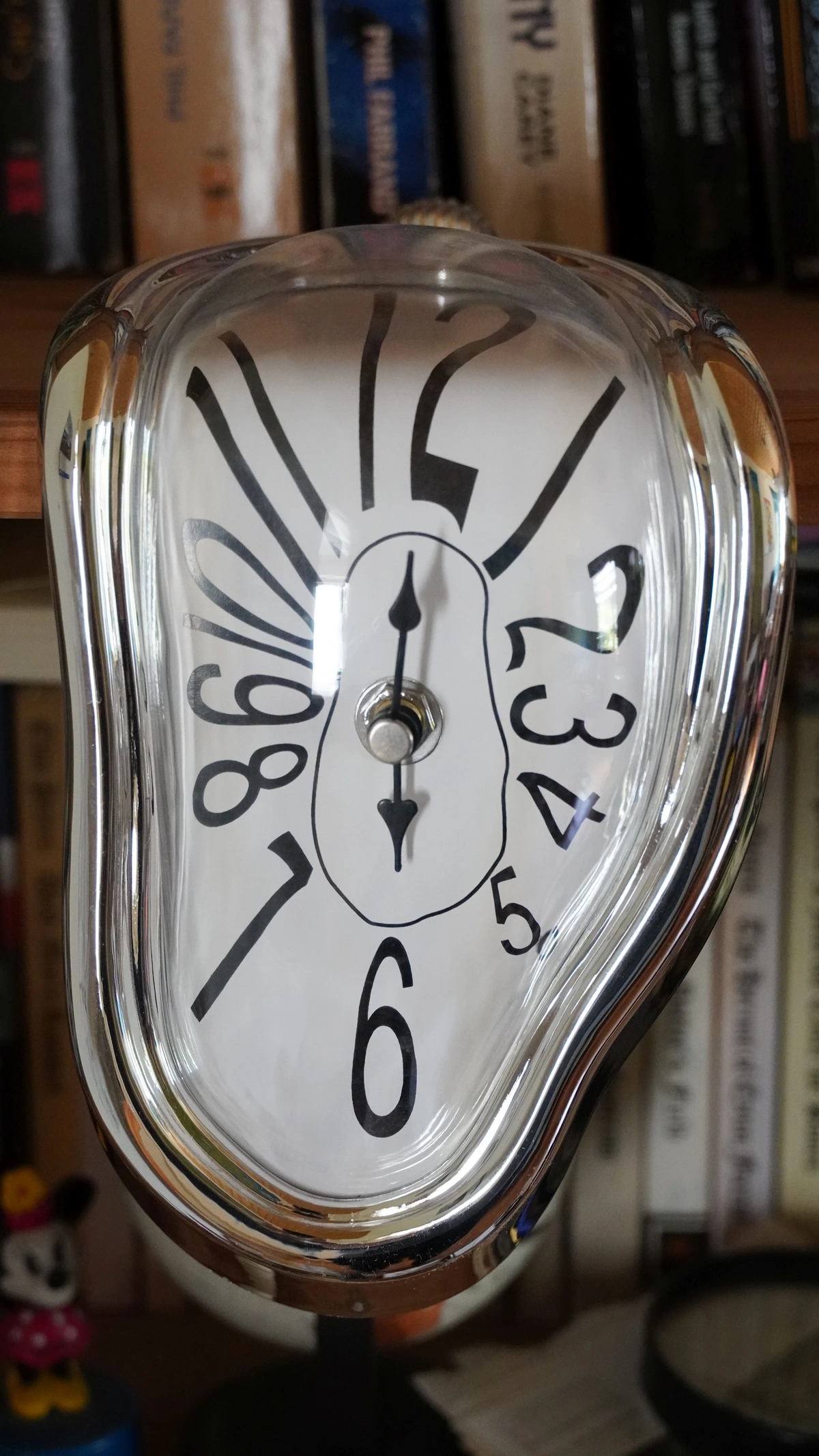
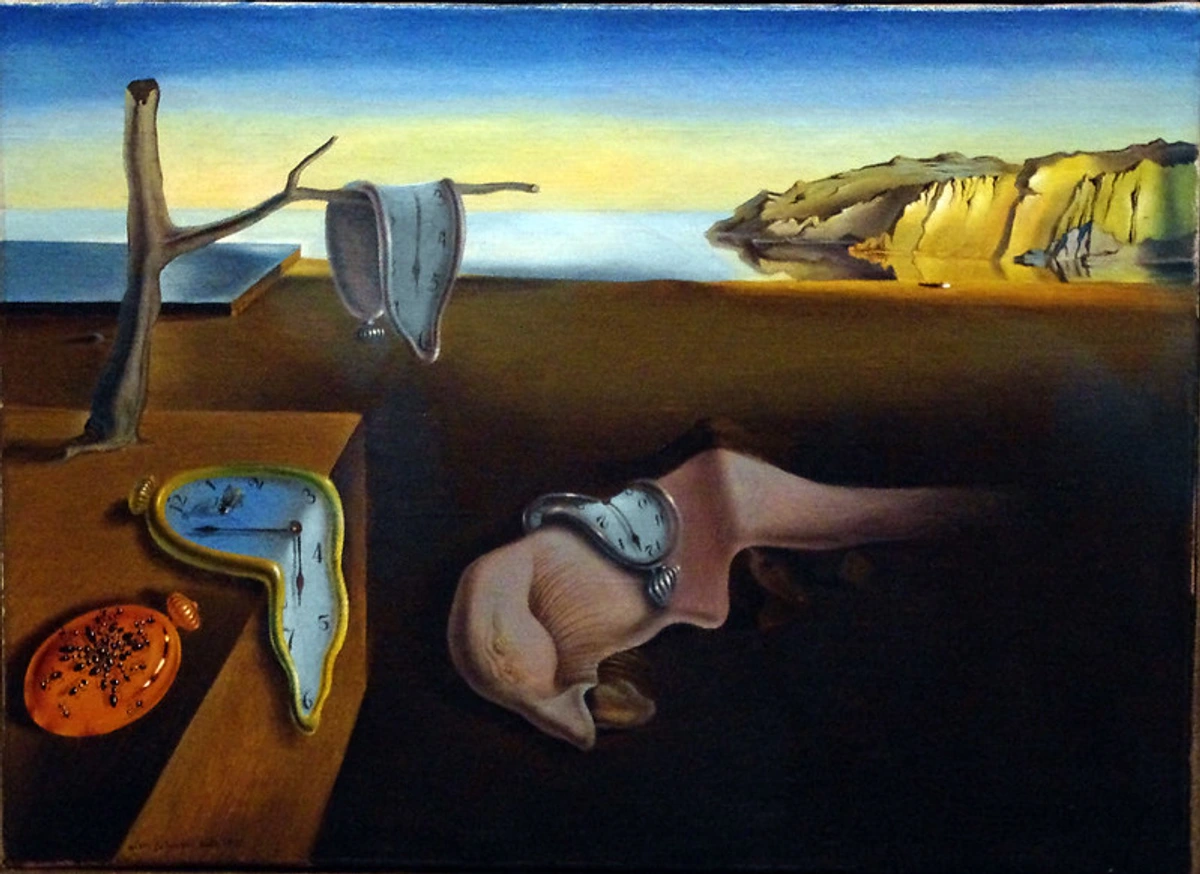
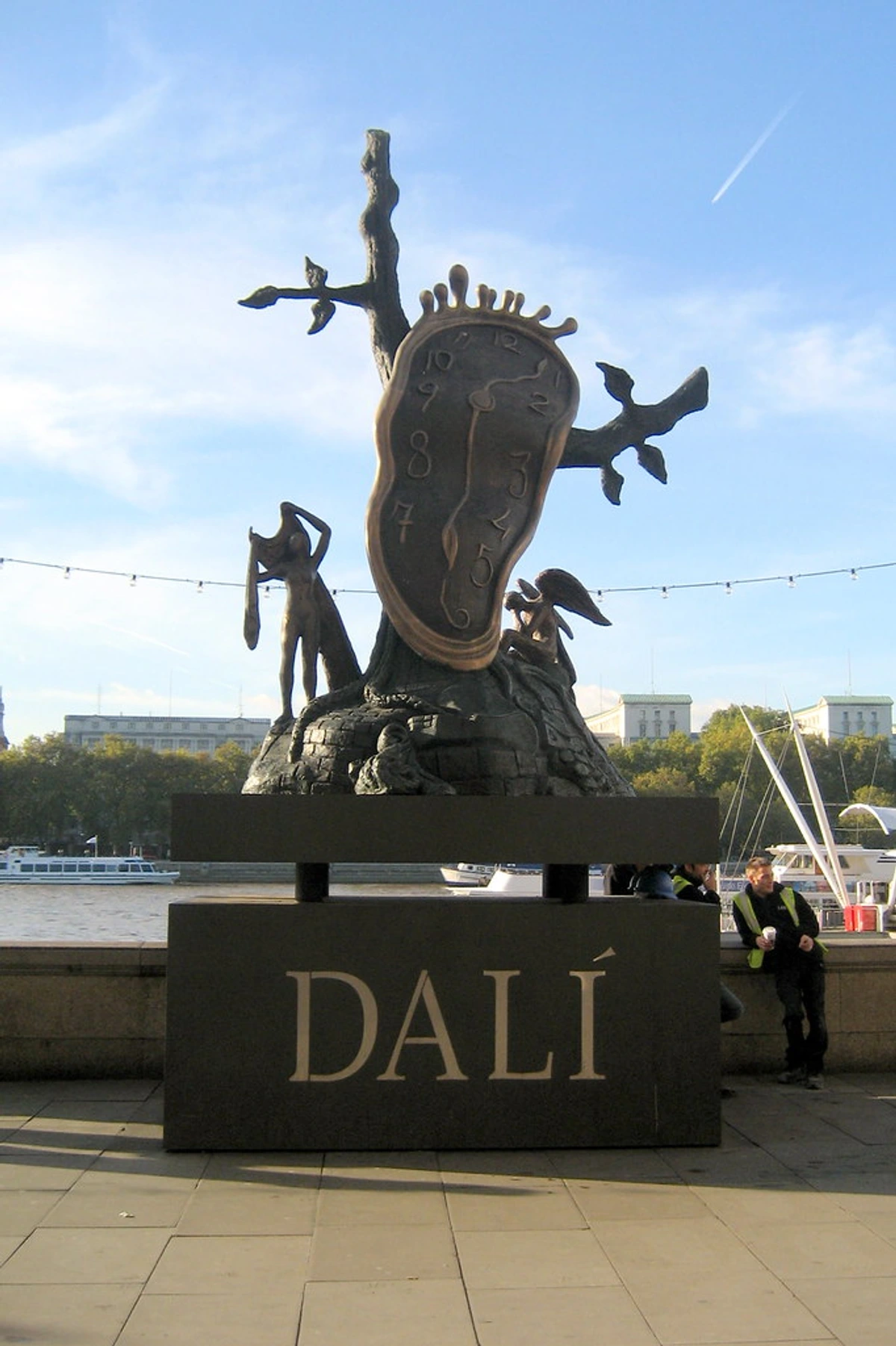
Okay, let's start with the man himself, the flamboyant showman and undeniable genius, Salvador Dalí. He famously claimed the inspiration for his iconic melting clocks in his 1931 masterpiece, The Persistence of Memory, came from watching a wheel of Camembert cheese melt in the sun. I love that. It’s so mundane and yet so profoundly indicative of his thought process. For Dalí, time wasn't a rigid, mechanical concept; it was organic, soft, and subject to decay, much like life itself. This visceral, almost edible quality of time is central to its power. His work often features a haunting, almost photographic blend of the hyper-realistic and the utterly fantastical, lending his dreamscapes a disturbingly tangible quality.
Beyond The Persistence of Memory, you see this profound warped temporality threaded through many of Dalí's works. Consider pieces like Soft Construction with Boiled Beans (Premonition of Civil War) (1936), where a monstrous, contorted figure, a chilling premonition of the Spanish Civil War, exists outside any clear timeframe, embodying a timeless, universal anguish. Or Metamorphosis of Narcissus (1937), where the classical myth is reinterpreted through a double image that ingeniously shifts between the figure of Narcissus and a petrified hand holding an egg – a visual paradox that utterly collapses narrative time. He also depicted eggs in other contexts, often symbolizing potential, birth, and the vulnerability of new beginnings, reinforcing a cyclical view of existence. Then there's The Great Masturbator (1929), where the artist's own anxieties and desires are projected onto a desolate landscape, creating a timeless psychological self-portrait. Dalí also famously employed his unique paranoiac-critical method, a spontaneous method of irrational knowledge based upon the critical-interpretive association of delirious phenomena, to tap directly into the subconscious and bring forth images that inherently defied logical chronology. This method allowed him to see multiple, often contradictory, images within a single form, further collapsing fixed perceptions of reality and time. It's a powerful testament to his unique vision as a what is surrealism innovator and his profound influence on how we perceive the movement as a whole. Dalí’s landscapes are often stark and desolate, mirroring a psychological interior, while recurring motifs like ants, flies, and decaying objects underscore the ephemeral nature of existence and the relentless march of time towards decay. The vibrant yet unsettling colors he often employed also played a psychological role, deepening the emotional impact of his temporal distortions.
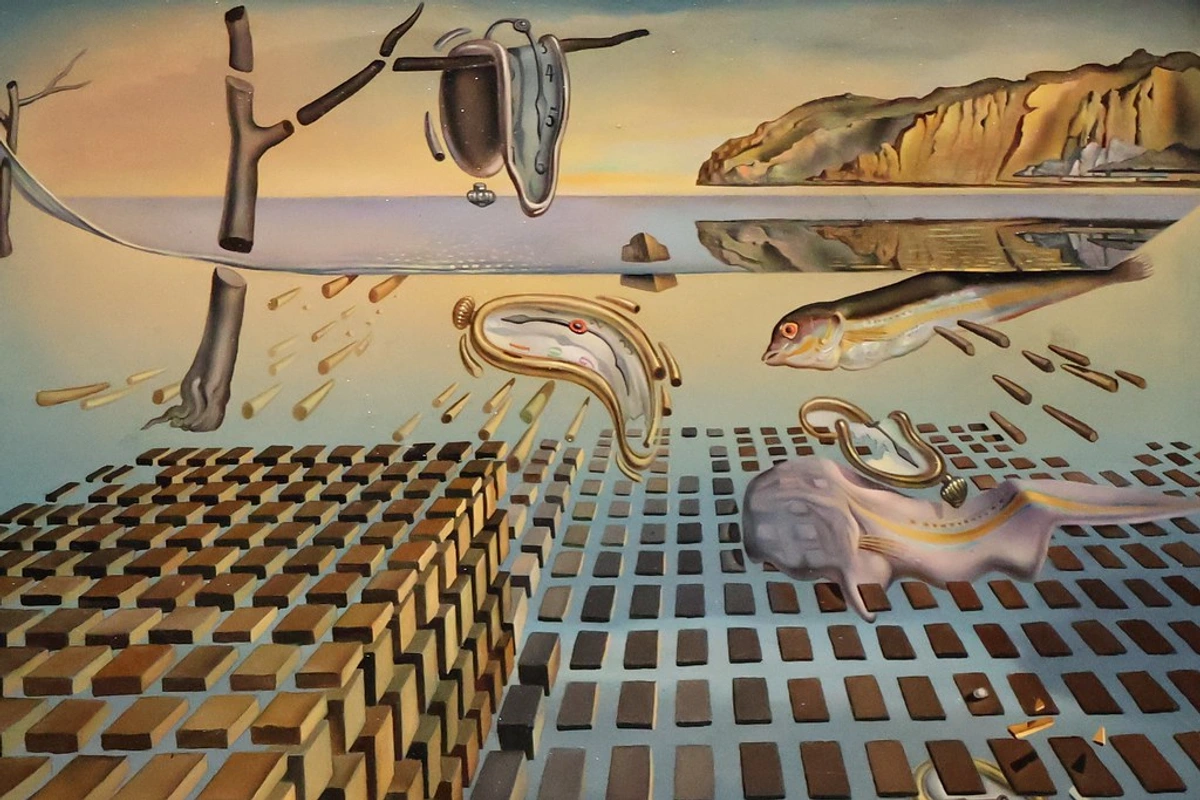
The clocks are draped over a barren landscape, a dreamscape inspired by his Catalan home. They are useless for telling time. One is being eaten by ants, a recurring symbol for Dalí representing decay, death, and mortality. By having them swarm over a clock, Dalí suggests that even time itself, that supposedly objective and relentless force, is subject to the same processes of decomposition and consumption as all living things. It's a stark reminder of the ephemeral nature of existence and the ultimate meaninglessness of rigid temporal measurement in the face of biological reality. He wasn't just saying time is relative; he was saying that our rigid, measured concept of time is meaningless in the face of memory and dreams. Time is soft, organic, almost edible, but death, ironically, is precise. His profound exploration of decay and transformation through these symbols speaks volumes about his understanding of time as an ephemeral, yet deeply powerful, force. This visceral imagery underscores the movement's rejection of rational control over life's deeper forces.
René Magritte: The Frozen Moment and the Paradox of Time
Then you have someone like René Magritte. He wasn't as flamboyant as Dalí, but his take on time is, to me, even more unsettling, perhaps because it often feels closer to my everyday experience of cognitive dissonance. Magritte didn't melt time; he stopped it dead in its tracks, creating impossible paradoxes that demand intellectual engagement.
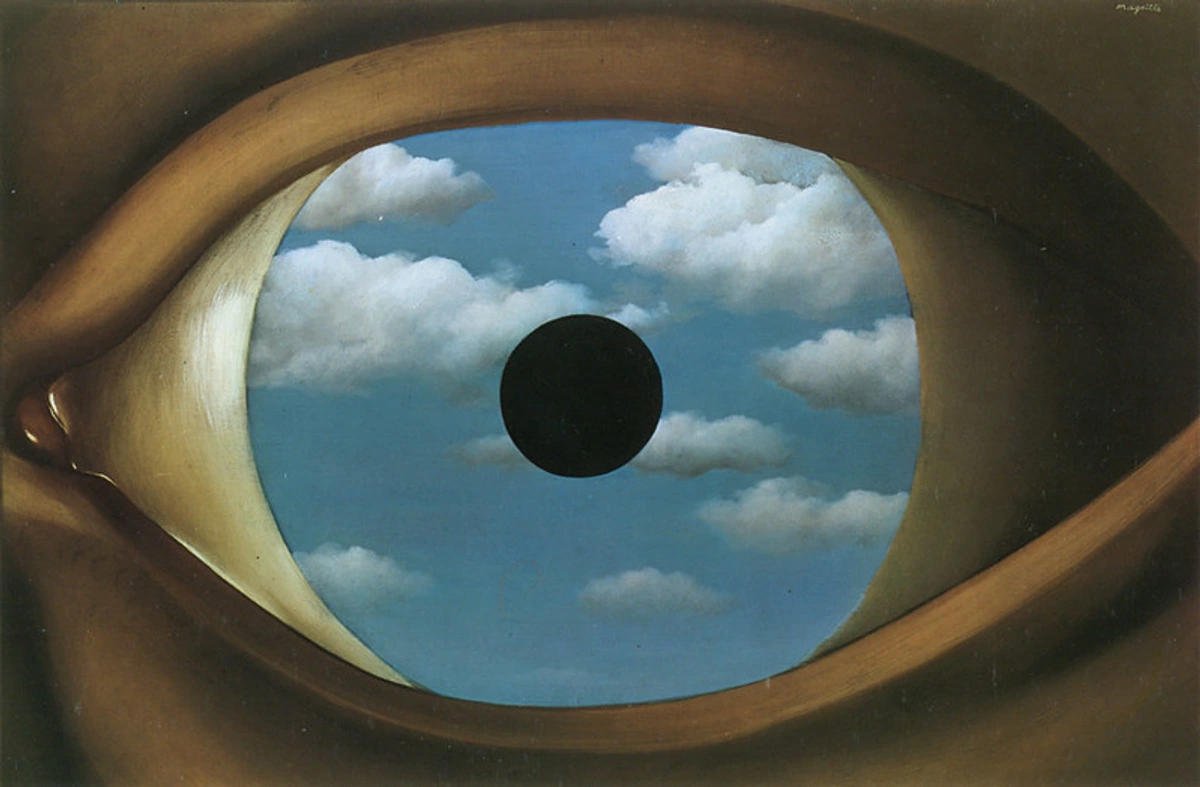
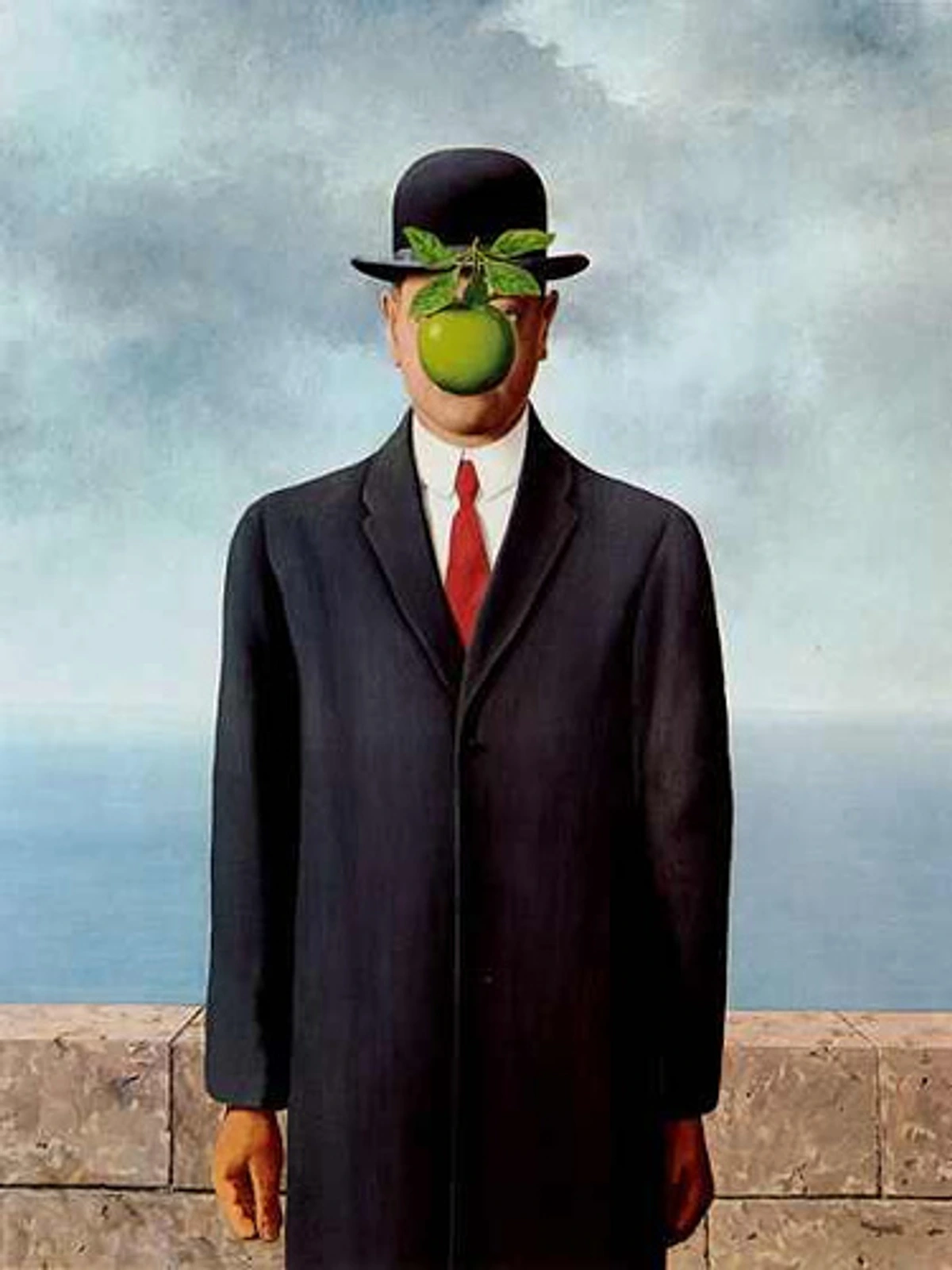
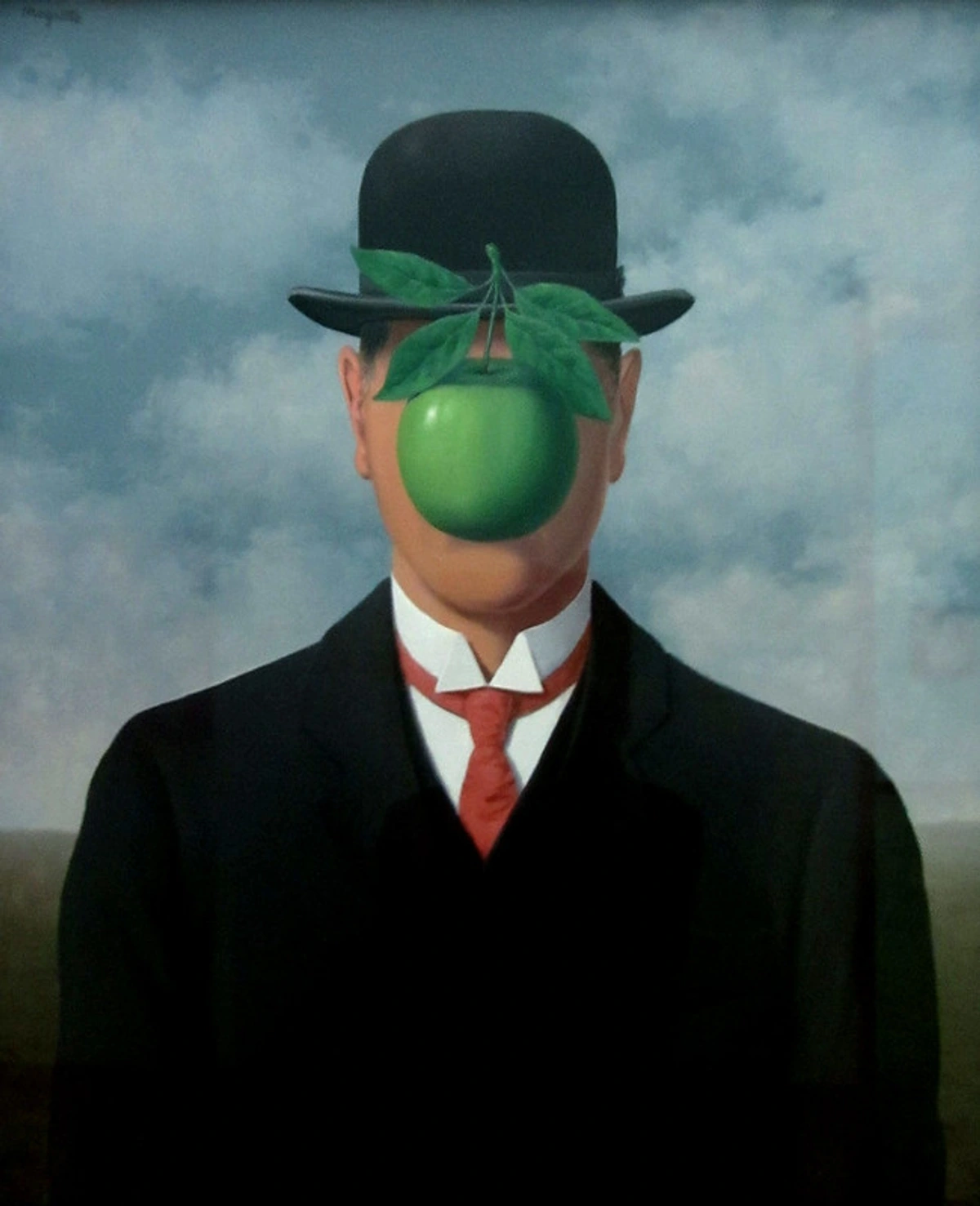
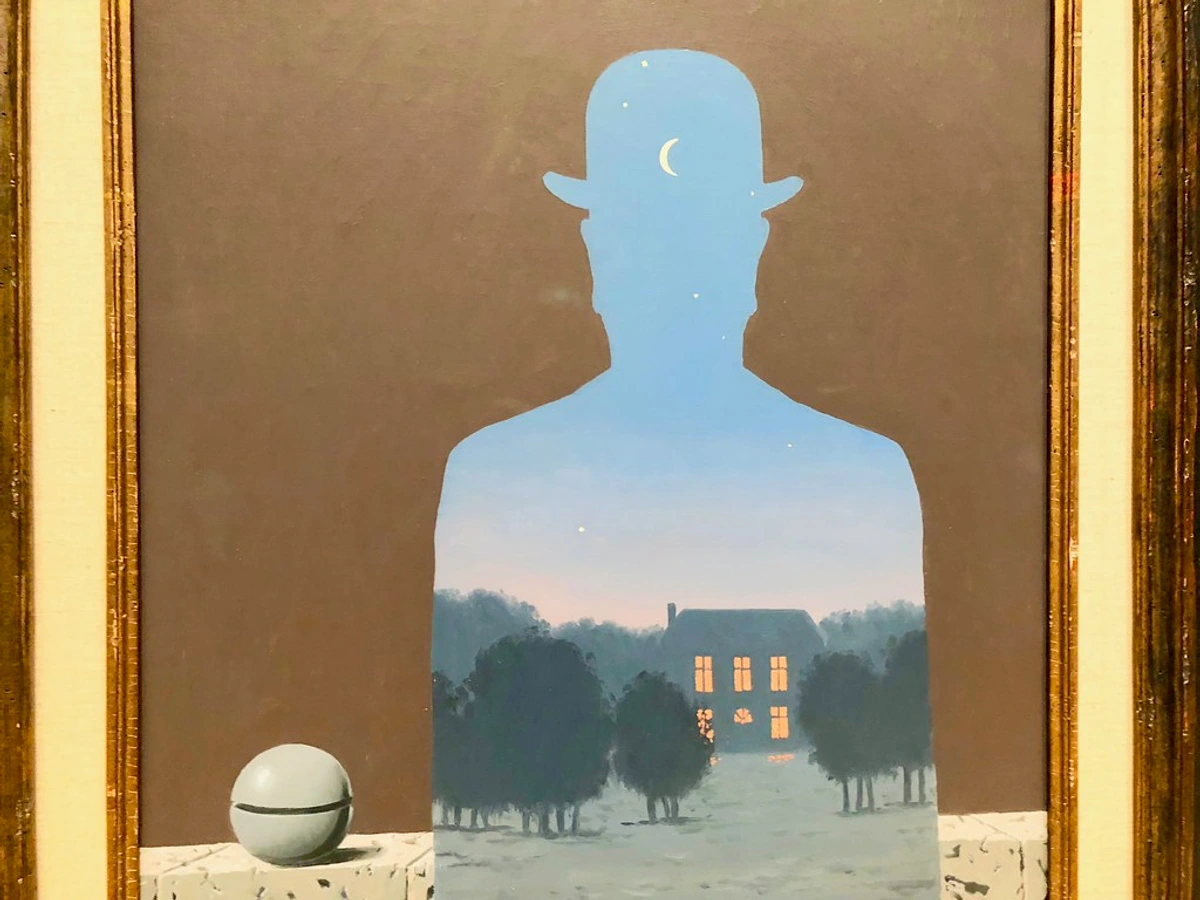
Think of his iconic painting Time Transfixed (1938), where a powerful steam locomotive bursts out of a bourgeois parlor fireplace. The train, a potent symbol of industrial progress, unstoppable schedules, and linear movement, is literally frozen in time, going nowhere. The clock on the mantelpiece reads a specific time, but that time is rendered utterly meaningless by the sheer, unsettling absurdity unfolding before us. It’s a moment suspended in an almost comedic, yet deeply profound, absurdity. Magritte forces you to ask: What time is it in this room? The answer is, it's Magritte-o'clock, a time that defies all rational measurement and simply doesn't exist outside the painting's frame. This relentless questioning of objective reality extends to other works, like The Empire of Light series, where day and night coexist in the same impossible landscape, further collapsing conventional temporal understanding. Or The Voice of Space (1928), where a man's head is replaced by three bells in a stark desert landscape, utterly displacing sound and time. Or consider The False Mirror (1929), where a human eye contains a cloudy sky, effectively turning the organ of sight into a window to an internal, subjective temporal reality, blurring the line between objective observation and internal experience. Or take The Son of Man (1964), where a man in a bowler hat has his face obscured by a green apple – a timeless, enigmatic image that refuses to reveal itself fully, defying a fixed interpretation in any single moment. Magritte's approach to time wasn't about the dramatic decay of clocks, but the subtle, intellectual subversion of expectation and the very nature of perception itself. He forced viewers to confront the arbitrary nature of what we consider 'real' and 'logical,' a questioning that inevitably extends to our understanding of time. By presenting everyday objects in impossible temporal contexts, he invited a philosophical inquiry into the 'now'—is it fixed? Is it singular? Or is it a malleable construct shaped by our minds? This deliberate cognitive dissonance often leaves me, and I suspect you, feeling delightfully disoriented, yet intellectually stimulated.
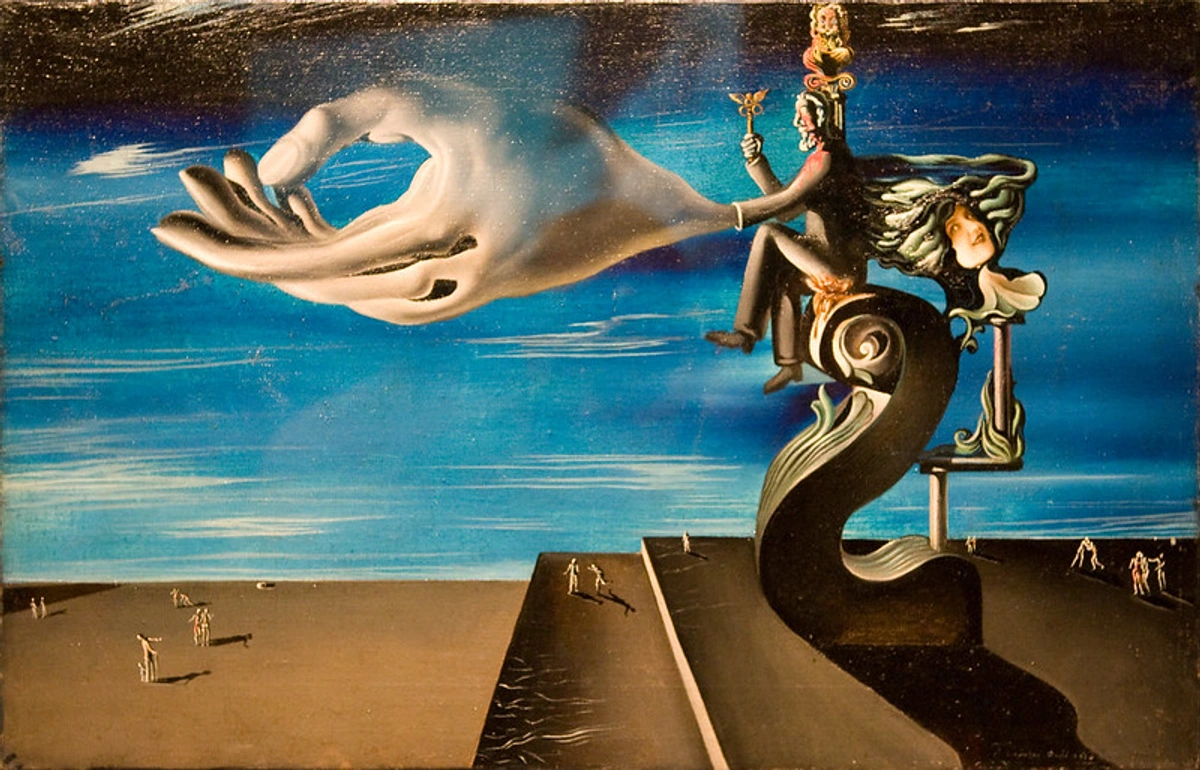

Magritte’s genius lay in his ability to make the ordinary profoundly unsettling. His famous painting The Treachery of Images ("Ceci n'est pas une pipe" - This is not a pipe) questions the very nature of representation itself, and by extension, our perception of reality and the fixedness of meaning over time. If a depiction isn't the thing itself, if the signifier can be detached from the signified, then how do we assign permanence to anything, including the consistent passage of moments? He invites us into a philosophical paradox where time, like language and concepts, is endlessly debatable and subject to interpretation, never truly fixed in a singular meaning. This meta-commentary on art and reality inherently destabilizes our temporal assumptions, suggesting that our understanding of 'now' is as constructed as language itself. For a deeper dive into this master of illusion and the profound questions he posed, check out this guide to what is the meaning of the treachery of images and who is rene magritte.

Max Ernst and Giorgio de Chirico: The Eternal Wait and the Melancholy of Stagnant Time
Other artists, like Max Ernst and the proto-Surrealist Giorgio de Chirico, explored time not through melting or freezing, but through an overwhelming atmosphere of eternal waiting and profound melancholy. Max Ernst, a true innovator in technique, delved into the subconscious using methods like frottage and grattage. By rubbing pencils over textured surfaces (frottage) or scraping paint from a canvas (grattage), he aimed to bypass conscious control, allowing the texture to suggest forms and images. The resulting works, often resembling fossilized landscapes or primeval forests, felt ancient, primordial, and utterly outside linear history. His works, like Europe After the Rain II (1940-42) or The Elephant Celebes (1921), often evoke a sense of deep time, a geological or mythical past that bleeds unsettlingly into the present, hinting at cycles of destruction and rebirth. It's a fantastic example of frottage and grattage techniques of max ernst, creating a visual archaeology of the mind where time is measured in geological epochs and subconscious tremors rather than ticking seconds.
credit, licence
De Chirico’s paintings, foundational to what he termed Metaphysical Art, depicted hauntingly empty Italian piazzas bathed in stark, dramatic shadows, often framed by towering arcades, and frequently featuring a single, enigmatic figure or classical statue. Works like The Enigma of a Day (1914), Melancholy and Mystery of a Street (1914), or The Red Tower (1913) perfectly embody this unsettling stillness. These disparate elements combine to evoke a profound sense of perpetual waiting, a dream-like state where time has become stagnant, caught in an inescapable loop of expectation. It’s an endless, sun-drenched afternoon where nothing is ever going to happen, yet everything feels pregnant with unspoken meaning and a palpable sense of anxiety – a premonitory tension that lingers outside of any measurable clock-time. It’s a stage set for a drama that never quite begins, a pervasive atmosphere that proved a profound influence on the Surrealists' quest for timelessness and mystery, laying crucial groundwork for many of their subsequent spatial and temporal distortions. This feeling of a moment stretched to infinity, of a suspended present, was a huge influence on the entire movement, powerfully reinforcing the idea that time could be a psychological state rather than a mere objective measurement. It’s a crucial aspect of understanding Max Ernst, Surrealism pioneer and the lineage of Surrealist thought. De Chirico’s meticulously rendered, yet deeply irrational, spaces became prototypes for the Surrealist dreamscape, where architectural elements often lose their traditional function, contributing to the sense of temporal dislocation, inviting us to ponder the enigma of existence itself. His "Metaphysical Art", with its unsettling stillness, deep shadows, and stark contrasts of light, created a sense of a world frozen outside of ordinary time, a perpetual present pregnant with unspoken meaning, almost like a premonition of fate. This profound atmosphere of expectation and timelessness was a direct precursor to Surrealism's own temporal experiments.
Yves Tanguy: The Alien Eternity
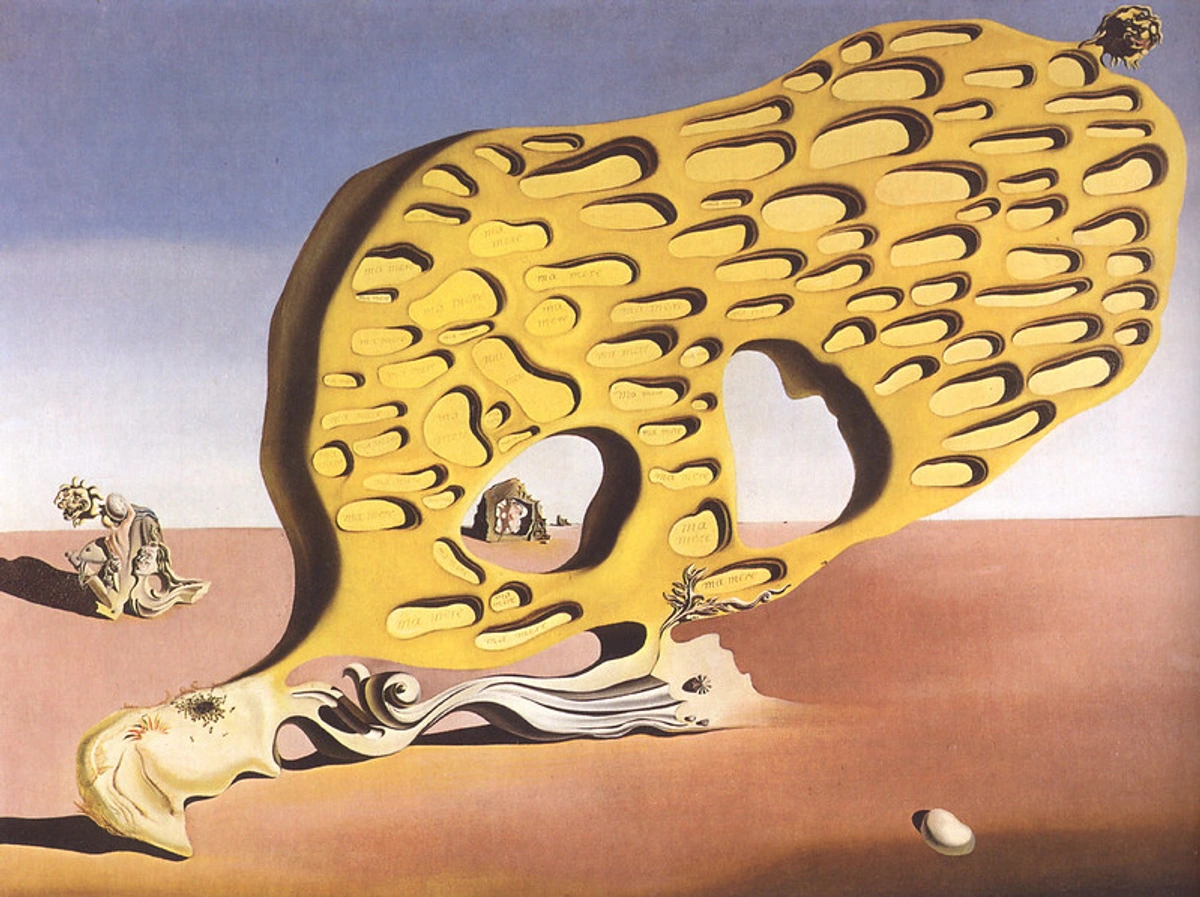
Imagine a landscape that feels both familiar and utterly alien, existing in a time before time, or perhaps after, in a kind of pre-human or post-apocalyptic timelessness. That's the world of Yves Tanguy. His desolate, often monochromatic canvases are populated by biomorphic forms – strange, bone-like or amoebic structures that seem to float in an eternal, airless void. Works like Mama, Papa is Wounded! (1927), Divisibility United (1943), or From Green to White (1954) present stark, lunar-like plains populated by these enigmatic forms, creating a palpable sense of deep geological time, or a moment suspended in an indifferent cosmic vacuum.
There are no clocks here, no human constructs of measurement. Time simply is, vast and indifferent, a silent witness to the inexplicable interactions of his uncanny objects. It's a profound exploration of timelessness, not as a cessation of movement, but as an endless, unchanging state. His meticulous rendering of these surreal landscapes, often devoid of human presence, invites us to consider time on a cosmic scale, a silent eternity beyond our earthly concerns, a truly alien eternity.

Joan Miró: Cosmic Time and Playfulness – The Liberation of the Universal Rhythm
On the lighter, yet no less profound side of the Surrealist spectrum in his treatment of time, is Joan Miró. His canvases explode with vibrant colors, whimsical forms, and cosmic imagery, often feeling like visual poetry. Miró, in his desire to "assassinate painting" to liberate it from its bourgeois constraints, tapped into a childlike sense of wonder and a primal connection to the universe. For him, time was cyclical, governed by the ancient rhythms of nature, the celestial dance of planets, and the constellations. His seminal constellation paintings, such as The Morning Star (1940-41) or Women and Birds at Sunrise (1946), or earlier works like Dog Barking at the Moon (1926) or Harlequin's Carnival (1924-25), depict a universe in perpetual, joyous motion, yet each element feels suspended in a glorious, timeless present. It’s a profound return to an innocent, pre-linear understanding of existence, a visual poem to the universe's own boundless rhythm, where the human conception of chronological hours fades into insignificance against the vastness of cosmic cycles. Miró's vision suggests that true time is not measured by clocks but by the ebb and flow of life itself, a concept that feels as boundless as the universe itself, resonating with my own explorations on my timeline. His canvases explode with a vibrant palette, where the psychology of color often communicates primal energies and cosmic rhythms, rather than realistic representation. His whimsical yet deeply philosophical approach reminds us that time can be a source of joy and boundless imagination, a far cry from the oppressive tick-tock of a factory clock, embracing instead the timeless, universal rhythm of life itself.
Meret Oppenheim: Disrupting the Everyday Clock and the Timeless Object
While Dalí melted clocks and Magritte froze them, Meret Oppenheim, with a mischievous yet profound sensibility, approached time by challenging our ingrained expectations of familiar objects and their associated temporal functions. Her most famous work, Object (Déjeuner en fourrure) (Breakfast in Fur) (1936), a seemingly ordinary teacup, saucer, and spoon covered entirely in gazelle fur, deliberately disrupts our assumptions about utility, comfort, and, crucially, how we use objects over time. The very moment you try to imagine drinking from that cup, time itself seems to snag, creating a sense of delicious, unsettling unease and an immediate halt to any expectation of linear function. It’s not about grand philosophical statements on relativity or cosmic cycles, but rather a playful yet potent disruption of the mundane, linear passage of hours, reminding us that even the most ordinary moments can contain unsettling, timeless paradoxes. Other works, like her Fur Gloves (1936), similarly disrupt utility and expected temporal use, prompting us to question the inherent function and lifespan of an object. Oppenheim’s work forces a pause, a break in the ordinary flow of routine, transforming a commonplace act into a moment of bizarre, timeless contemplation. She highlighted how perception, rather than a clock, truly dictates our experience of time. Her ingenious use of the Surrealist object as a vehicle for temporal questioning opened up new avenues for artistic expression, challenging viewers to rethink their relationship with the everyday and the flow of moments, offering a distinctively female perspective on the domestic and the uncanny, often infused with a subtle eroticism that further destabilized conventional perceptions.
Remedios Varo and Leonora Carrington: Esoteric and Cyclical Time – The Mystical Journeys
For artists like Remedios Varo and Leonora Carrington, two extraordinary women who forged their own unique paths within Surrealism, time was less about Newtonian physics or Freudian psychology and more about alchemy, magic, dreams, and esoteric wisdom. Their intricate, often narrative paintings unfold like mystical parables or visual spells, where characters embark on profound inner journeys, undergo transformations, and exist in a realm where past, present, and future are fluid and interconnected. They drew heavily from mythological cycles, ancient wisdom traditions, Gnosticism, Hermeticism, and the alchemical process of transformation, suggesting a cyclical understanding of time – a perpetual unfolding and returning – rather than a linear march towards progress or decay.
Consider Varo’s Star Catcher (1956), Creation of the Birds (1957), Papilla Estelar (Star Maker) (1958), or Bordando el manto terrestre (Embroidering the Earth's Mantle) (1961), where fantastical figures engage in arcane rituals, manipulating cosmic forces in a timeless, magical workshop or a collective act of creation that transcends human history. Varo’s The Hand of Fatima (1956) also depicts a figure engrossed in a timeless mystical craft, while Woman Leaving the Psychoanalyst (1961) suggests a break from linear, rational psychological processing into a more intuitive temporal understanding. Similarly, Carrington’s Self-Portrait (Inn of the Dawn Horse) (1937-38), The Giantess (The Guardian of the Egg) (1947), The Garden of Paracelsus (1957), or And Then We Saw the Daughter of the Minotaur (1953) are steeped in personal mythology, animal symbolism, and an ancient, matriarchal consciousness that transcends conventional chronology. Her Temple of the Word (1956) further illustrates a timeless, sacred space for esoteric knowledge. Their work often feels like a glimpse into a parallel dimension where the boundaries of time and space are permeable, echoing a feminist and ecological critique of linear, patriarchal notions of progress. It’s a fascinating delve into the timeless human quest for meaning beyond the material world, often touching upon themes that intertwine with esoteric traditions and a broader, more inclusive understanding of reality. Their intricate visual narratives invite us to consider time not as a single stream, but as a multi-layered river, flowing through myth, memory, and the unseen currents of existence, offering a distinctively female and often mystical perspective on temporal experience, profoundly impacting how we perceive magic and the feminine in art.
Other Temporal Alchemists: Beyond the Usual Suspects
While the names above often dominate discussions, the Surrealist movement was a vast and interconnected web of artists, each contributing their unique perspective to the distortion of time. It wasn't a monolithic approach, but a chorus of individual visions, all united in their rebellion against objective chronology. Let's briefly touch on a couple more figures whose work profoundly influenced how we perceive time in the Surrealist context.
Dorothea Tanning: Unsettling Transformations and Enduring Moments
Another formidable female Surrealist, Dorothea Tanning, explored temporal distortion through dreamlike scenarios and unsettling transformations. Her paintings often feature figures in states of metamorphosis, caught between different realities and times. Eine Kleine Nachtmusik (1943), for example, depicts two young girls in a state of tense, timeless anticipation, with a giant sunflower dramatically collapsing in a hotel hallway. The scene is both mundane and deeply bizarre, freezing a moment of unsettling potential and foreshadowing. Her iconic Birthday (1942), a self-portrait, places her nude in an endless sequence of opening doors, hinting at infinite possibilities and the relentless unfolding of self across time, yet captured in a single, potent moment. Tanning's work consistently suggests that reality is permeable, and time is a fluid medium through which surprising and enduring transformations occur, challenging the notion of a fixed personal chronology.
Man Ray: Freezing and Fragmenting Moments in a Darkroom
Beyond painting, Man Ray (sadly no internal page yet!) was a pivotal figure, using photography to utterly subvert the medium's supposed objectivity. His rayographs (photograms made without a camera by placing objects directly onto photographic paper and exposing it to light) captured abstract, timeless forms, defying conventional photographic chronology by arresting objects in a ghostly, unidentifiable moment. These unique images existed outside the usual temporal parameters of photography, existing in a permanent, dream-like present. Techniques like solarization, which partially reverses the tones in a photographic image, also created an ethereal, timeless quality, blurring the line between negative and positive, past and present, making the captured moment feel both hyper-present and impossibly distant, a true temporal paradox in light. His portraits, often highly stylized, presented subjects not as fixed individuals in a specific moment, but as archetypal figures or psychological states, captured in a kind of frozen, symbolic time. He saw the camera not just as a tool for documentation, but for profound temporal distortion, capturing the uncanny and the dreamlike within the seemingly objective lens of photography.
Claude Cahun: Unmasking the Self Across Time
Though briefly mentioned earlier, Claude Cahun deserves further recognition for her profound explorations of identity and time through self-portraiture. Using photography and performance, Cahun created a vast body of work that challenged fixed notions of gender, persona, and, crucially, a stable self across time. Her various guises and theatrical stagings in her self-portraits (e.g., Self-Portrait, c. 1927) don't merely depict different costumes; they suggest a multiplicity of selves that exist simultaneously, refusing to be pinned down to a single moment or a linear narrative of identity. By deliberately challenging gender norms and presenting herself as an ever-shifting persona, Cahun underscored how social constructs of identity are themselves temporal, forcing viewers to question what a 'fixed' self or a 'linear' life truly means. Her work is a powerful testament to the fluidity of personal time and the construction of identity as an ongoing, non-linear process, making her a vital figure in the Surrealist inquiry into temporal selfhood. Her radical approach anticipated contemporary discussions around performativity and the non-binary nature of identity, further emphasizing time's malleability in shaping who we are.
Beyond the Canvas: Surrealism's Temporal Impact on Other Arts
While this article predominantly explores visual art, the Surrealist assault on conventional time permeated literature, theatre, and even nascent forms of sound art. Writers like André Breton, Louis Aragon, and Philippe Soupault, through automatic writing, crafted narratives that defied chronological order, allowing dreams and subconscious associations to dictate the flow. Their collaborative text, The Magnetic Fields (1920), stands as an early and pivotal example of this temporal liberation in literature. Theatre practitioners, influenced by Surrealist concepts, experimented with non-linear plots, disjointed dialogue, and symbolic staging to evoke a dream-like, timeless atmosphere. Even in early sound experiments, the juxtaposition of unrelated sounds aimed to break from linear musical progression. This interdisciplinary reach demonstrates that the Surrealist vision of temporal distortion was not confined to a single medium, but was a pervasive philosophical stance, a comprehensive rebellion against the tyranny of the clock across all creative expressions.
The Surrealists understood, perhaps more profoundly than any movement before them, that time wasn't just an external phenomenon – a cold, objective constant ticking away on a wall. Rather, it was an intricate, internal landscape, intimately shaped by our individual minds, the chaotic logic of our dreams, and the mutable nature of our memories. Their exploration went far beyond simply depicting distorted timepieces; they delved into the very fabric of our subjective experience, revealing a temporal reality that was fluid, personal, and endlessly fascinating. For them, the true clock was within, operating on rhythms far more complex than any mechanical device could measure.
The Chronological Collapse: Montage and Juxtaposition
One of the most direct ways Surrealists messed with linear time was through formal techniques of montage and juxtaposition. Borrowing from cinematic editing and the visual language of collage art (which was itself a powerful Surrealist medium), artists would bring together disparate images, objects, or figures from different historical periods or logical contexts into a single frame. This deliberate, often shocking, assembly of unrelated elements created a chronological collapse, forcing the viewer to confront a new, non-linear reality. By placing a Victorian lady next to a Roman ruin, or a modern object in a prehistoric landscape, they obliterated conventional temporal boundaries, suggesting that all moments exist simultaneously in the subconscious. For instance, in Max Ernst's collages and graphic novels like La Femme 100 Têtes (The Hundred Headless Woman) (1929), he seamlessly blended Victorian engravings with fantastical elements, creating narratives that defy any single historical period and instead plunge the viewer into a timeless, dreamlike continuity. This wasn't just aesthetic play; it was a philosophical statement, demonstrating that meaning and time are not fixed but are generated by the unexpected collisions of elements, much like in a dream where disparate images coalesce into a new, potent narrative. Think of it as a deliberate temporal anarchy, where the usual rules of 'when' simply cease to apply, opening up a boundless space for interpretation, a truly bewildering temporal tapestry. Max Ernst, a master of this, would often layer disparate images, forcing unexpected encounters that defied any single temporal reading.
Dépaysement: The Dislocation of Time and Place
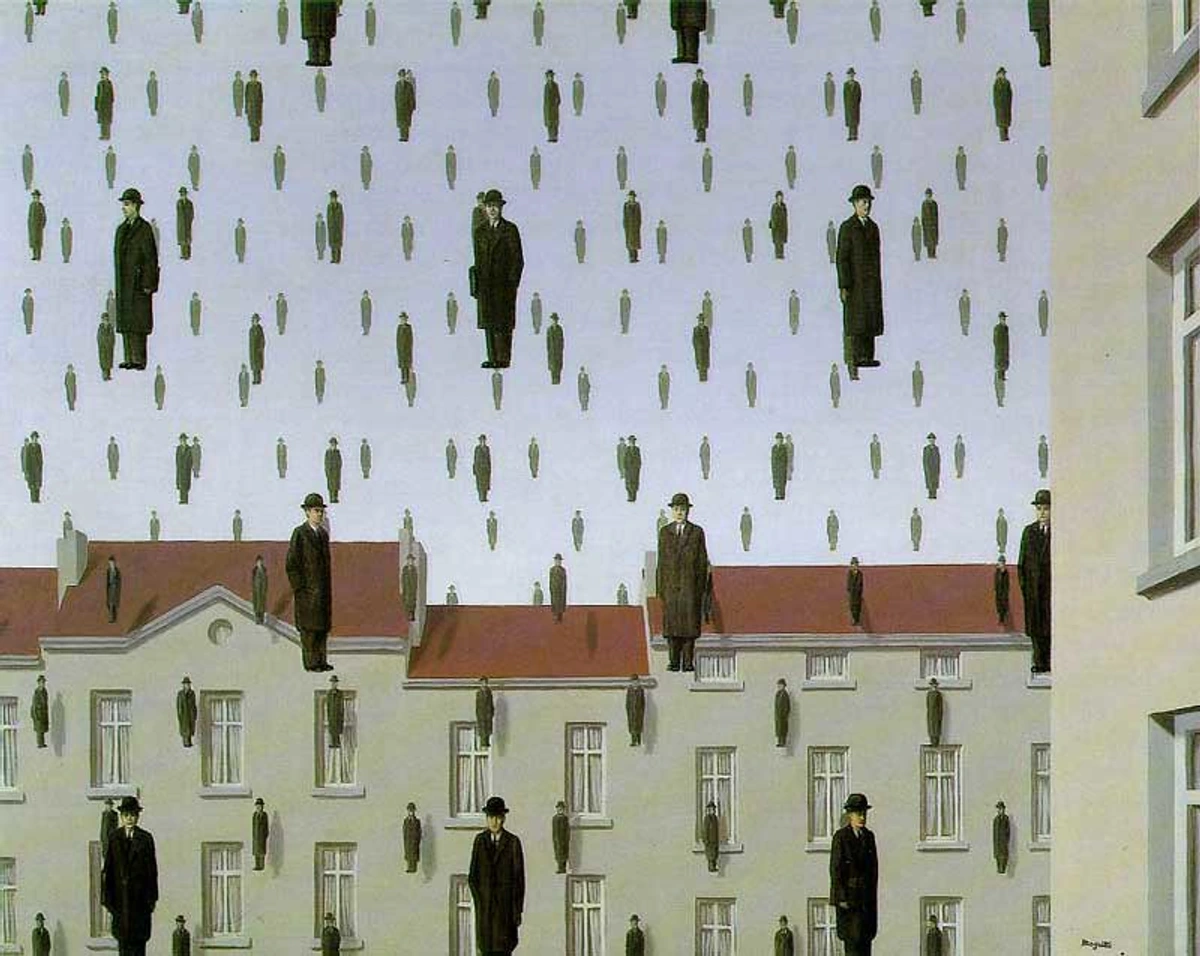
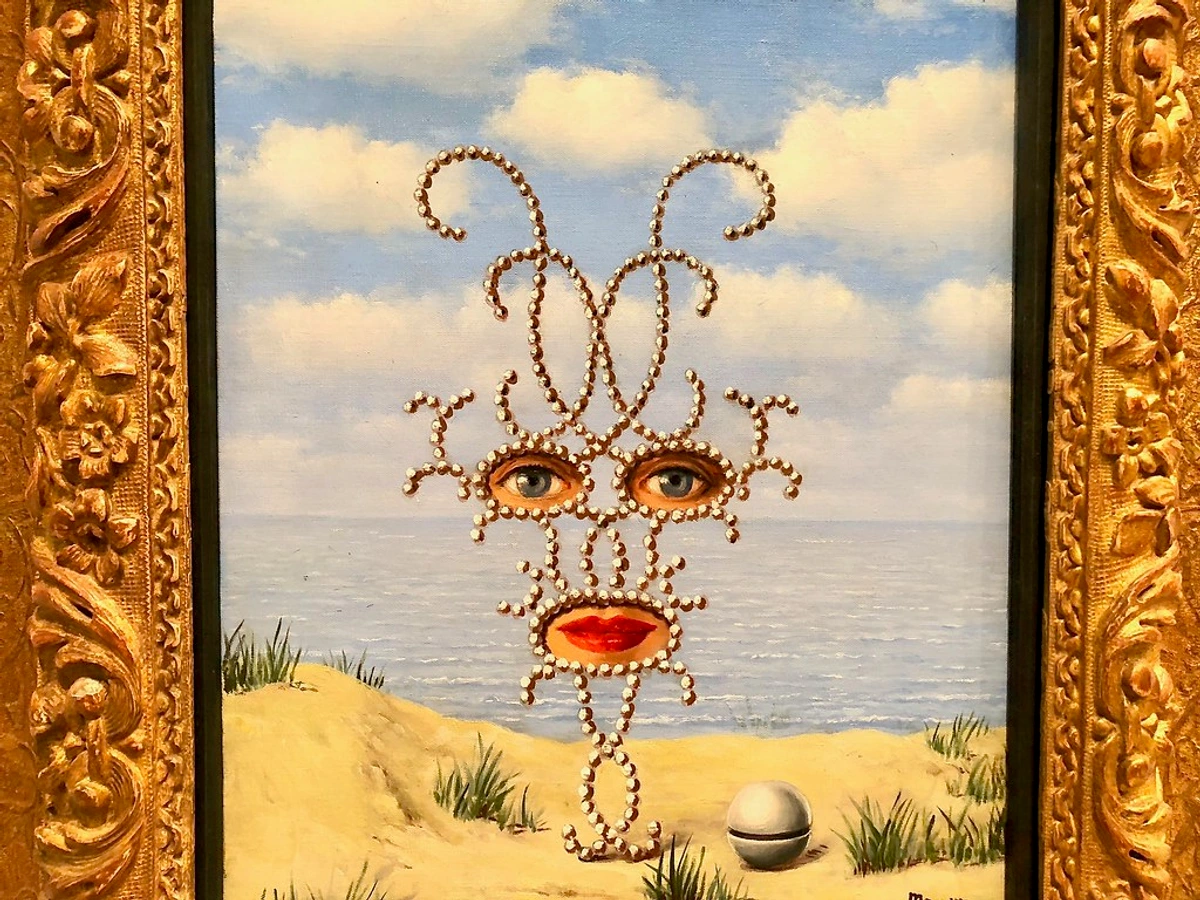
One subtle yet profoundly powerful tool the Surrealists used to disrupt conventional time was dépaysement. This French term, roughly translating to "disorientation," "displacement," or "unfamiliarity," refers to the deliberate juxtaposition of an object or image in an unfamiliar, often illogical, context. Think of Magritte's monumental apple filling an entire room in The Listening Room, or a rain of bowler-hatted businessmen falling from the sky in Golconda, or even a classical sculpture placed jarringly in a desolate modern landscape, like de Chirico's isolated statues in empty piazzas. Other examples include Meret Oppenheim's fur-covered teacup, which takes a domestic object out of its functional, temporal context, or Salvador Dalí's Lobster Telephone, transforming a functional device into a bizarre, timeless sculpture. By systematically removing familiar elements from their expected environments, artists created a jarring, timeless effect. The viewer is forced to pause, to question, to re-evaluate their ingrained assumptions. The familiar no longer adheres to its expected temporal function or sequence, thereby creating a pocket of suspended time where rational logic dissolves, and new, often unsettling, meanings emerge. It’s like stepping into a particularly vivid dream where the rules of reality have been subtly, yet irrevocably, altered, making the present moment feel entirely alien and unsettlingly outside of chronology, demanding a new way of seeing. It's not just about visual shock; it's about a deep psychological re-calibration of what 'now' truly means.
The Uncanny (Das Unheimliche) and Temporal Displacement
Closely related to dépaysement is Freud's concept of the uncanny (Das Unheimliche), which describes a feeling of unsettling familiarity – something that is simultaneously strange and familiar, evoking a sense of dread or unease. Surrealists masterfully exploited this psychological phenomenon to create temporal distortions. When an object from the past, or an image that feels archetypally ancient, suddenly appears in a contemporary or illogical setting, it creates this uncanny temporal displacement. Think of Hans Bellmer's unsettling dolls, which combine childlike innocence with grotesque fragmentation, evoking a timeless sense of both comfort and profound disturbance. It blurs the lines between then and now, between conscious and subconscious, making us question the stability of the present moment and the objectivity of time itself. This feeling often stems from a repressed memory or instinct returning, perhaps a long-forgotten childhood fear suddenly manifesting in an adult dream, bringing a timeless, unsettling past into the perceived present and disrupting our sense of linear progression. I've often felt this when stumbling upon an old toy or a forgotten photograph, a sudden jolt of a past self intruding on the present, and that's precisely the temporal manipulation the Surrealists aimed for.
The Spectator's Role: An Active Participant in Temporal Distortion
One of the most radical aspects of Surrealism's engagement with time is the crucial role it assigns to the spectator. Unlike traditional art that often presents a fixed narrative or a singular moment for passive observation, Surrealist works actively demand the viewer's mental participation in constructing temporal meaning. When confronted with a melting clock or a train in a fireplace, your mind doesn't just register the image; it struggles with the logical inconsistency, and in that struggle, you become an active participant in the temporal distortion. You bring your own memories, dreams, and associations to the artwork, thereby weaving a unique, subjective timeline into the experience. The artwork becomes a mirror, reflecting your internal clock and inviting you to re-evaluate your own relationship with linear time. This is why these works continue to resonate so powerfully; they aren't just showing you a warped reality, they're inviting you to feel it, to step into their dream logic, and to activate your own inner sense of timelessness. It's a profound invitation to engage, rather than merely observe, becoming co-creators of the temporal narrative.
The Role of Dreams in Time Perception
At the very core of Surrealism's revolution against linear time lies the profound influence of dreams. For the Surrealists, the dream state was not merely a nocturnal diversion but a truer, more liberated form of reality—a realm where the strictures of waking life, especially chronological time, simply didn't apply. It was in dreams that they found explicit proof of time's inherent fluidity, where the past could merge with the present, and the future could be a distorted echo of what has been. This radical embrace of the dream world, central to what is surrealism, profoundly shaped their artistic output and their entire philosophy of temporal perception. It informed their techniques and provided the rationale for their seemingly irrational juxtapositions, providing a scientific and psychological justification for their artistic revolt. If you've ever had a dream where a childhood friend appears with a futuristic gadget, or you're simultaneously experiencing multiple ages of your life, then you've glimpsed the Surrealist understanding of temporal freedom – a freedom they sought to bring into waking artistic expression.
Dream Logic and Automatic Writing: Accessing the Timeless Subconscious
One of the most profound and influential ways Surrealists systematically messed with time was by wholeheartedly embracing dream logic. In dreams, the conventional rules of chronology, cause-and-effect, and even identity simply collapse. You can find yourself walking through a childhood home that suddenly morphs into a futuristic city, or encounter people from vastly different eras interacting seamlessly, as if their respective historical moments hold no barriers. The past, present, and future intermingle without friction, creating a fluid, ever-shifting narrative. The Surrealists sought to meticulously mimic this non-linear, associational flow in their waking creative lives through techniques like automatic writing and automatic drawing. These practices, championed vigorously by André Breton, involved letting the hand move freely across the page or the pen flow across paper, deliberately bypassing conscious control and rational thought, to tap directly into the unfiltered stream of the subconscious. The resulting texts or images often defied conventional narrative or temporal sequence, creating a raw, timeless, and unfiltered expression of the inner world – a direct conduit to the mind's own unique, non-chronological clock. Think of Louis Aragon and Philippe Soupault's collaborative automatic text, The Magnetic Fields, which exemplifies this unbound, temporally fluid prose. The process itself was a journey into the uncharted territories of the mind: writing continuously, without pause or revision, allowing thoughts, images, and words to tumble onto the page as they arrived, mimicking the spontaneous, non-linear flow of dreams. It's like finding a secret language where every symbol holds multiple temporal meanings simultaneously, unbound by the typical constraints of beginning, middle, and end, creating a truly layered experience of time. This liberation from conscious control was a powerful act of rebellion against the rational, clock-driven world, revealing a deeper, more authentic reality, and offering a potent tool for bypassing the linear constraints of conscious thought.
Memory, Nostalgia, and the Unfixed Past: The Fluidity of Personal Time
Our memories are not perfectly preserved recordings; rather, they are fluid, mutable, and constantly being re-edited by our present emotions, experiences, and desires. The Surrealists intuitively grasped this profound psychological truth long before cognitive science caught up. Artists like Dalí, with his intensely personal dreamscapes often rooted in childhood memories of Catalonia, understood that the past is not a fixed, immutable point but a psychological space that can be revisited, distorted, recombined, and re-experienced with new meaning. I know I've often felt a memory shift in significance or even detail depending on my present mood—a happy recollection suddenly tinged with melancholy, or a vague event sharpening into vivid clarity. The Surrealists intuitively grasped this mutability, understanding that the past isn't a static photograph but a living, breathing entity in our minds. This exploration of memory often led to feelings of nostalgia, not a sentimental longing for a specific, fixed past, but a yearning for the feeling or essence of a past moment, a sentiment that inherently transcends linear time. The way we instinctively recall events, piecing them together non-sequentially, creating new narratives from fragmented recollections, perfectly mirrors the Surrealist dismantling of chronological order. They understood that the past isn't behind us; it's a living, breathing part of our internal present. This constant re-creation of our personal histories ensures that our past is never truly static, but a dynamic, ever-evolving landscape. Even the fragmented perspectives of Cubism hinted at this multi-faceted recall, though less about dream logic and more about visual perception, suggesting that reality itself is a construct of multiple viewpoints across various moments.
Time and Identity: The Fragmented Self Across Moments
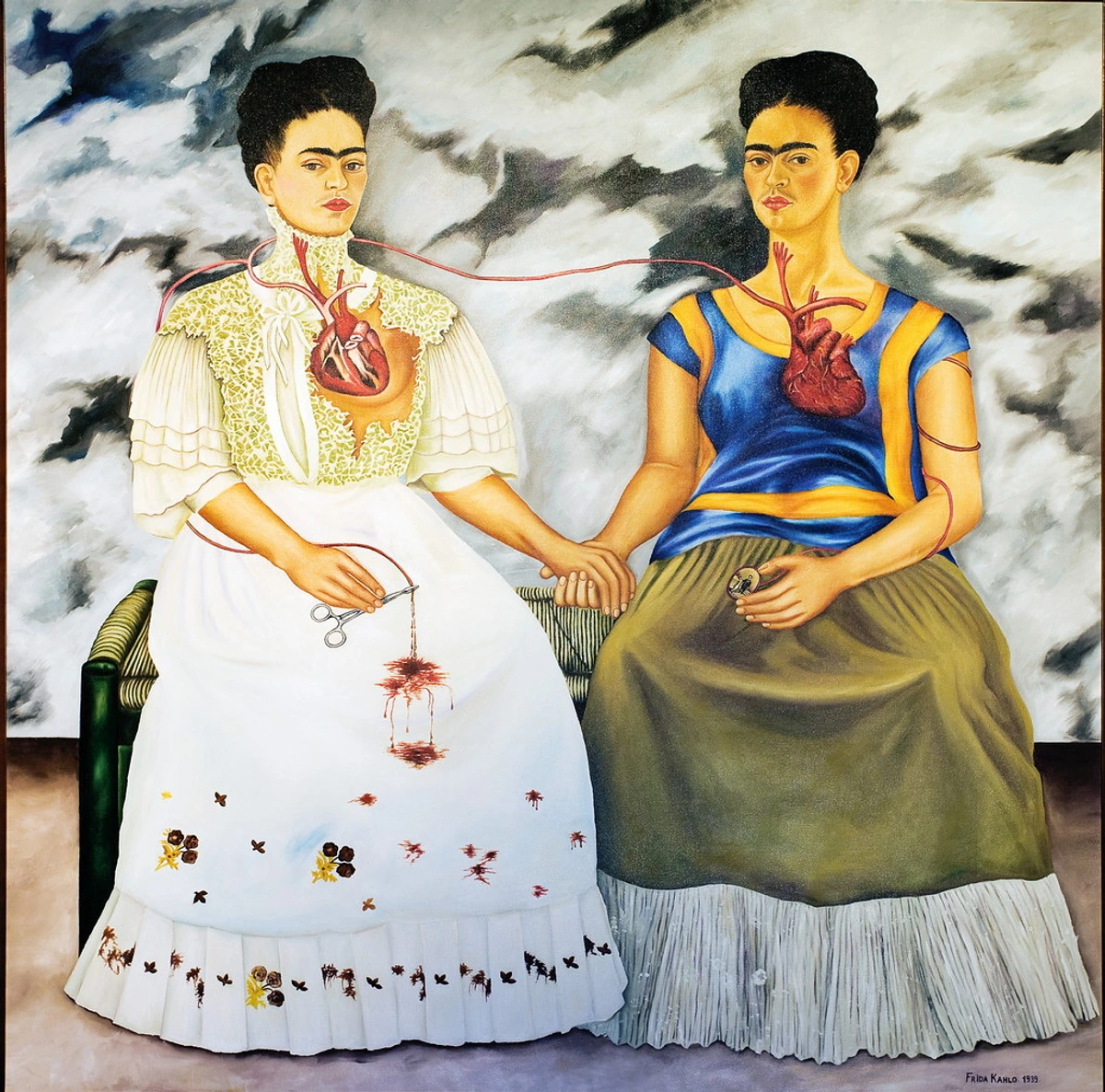
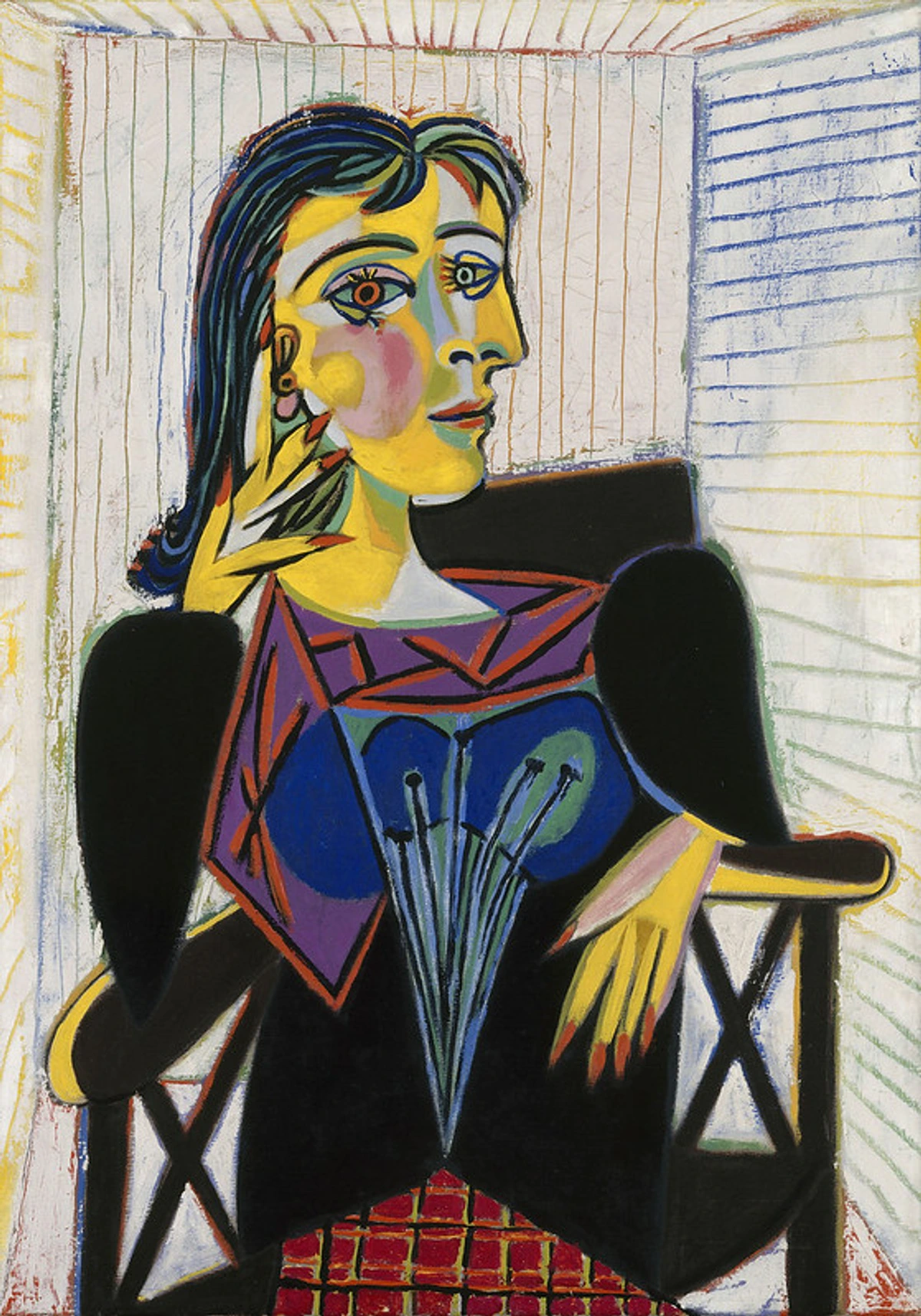
The Surrealists understood that our sense of self, our identity, is deeply intertwined with our experience of time. If time is fluid and non-linear, then identity cannot be a fixed, static entity. Many Surrealist works explore the fragmented self, portraying figures whose identities shift across different temporal states. In dreams, we can be multiple versions of ourselves – past, present, and imagined futures – all at once. Artists like Frida Kahlo, though often associated with other movements, frequently depicted multiple versions of herself in different temporal states within a single canvas, reflecting the trauma and resilience that shaped her identity across time. Figures like Claude Cahun, through her provocative self-portraits, also challenged fixed notions of gender and identity across temporal perceptions. This fragmentation of identity, mirroring the fragmentation of time, suggested that the true self is not found in a linear biography, but in the confluence of all experienced moments, both conscious and subconscious. It challenges the very idea of a fixed self, instead proposing a fluid, evolving identity that shifts across temporal states. Our societal roles, external pressures, and even our own internal narratives constantly shape and reshape who we are, creating a layered, multi-temporal identity that resists simple categorization. It's a powerful idea: that who we are is not simply a product of what we've done, but a living tapestry woven from all our subjective temporal experiences, a self that is constantly being remade in the now. The Surrealists, therefore, offered a revolutionary perspective on selfhood, one that resonates deeply with our contemporary understanding of identity as performative and multi-faceted, and often a construct rather than an inherent truth.
Alchemy, Archetypes, and Cyclical Time: The Mystical Undercurrents of Existence
The Surrealists were profoundly fascinated by the esoteric, and none more so than alchemy. Far from being simply a pseudo-science focused on transmuting lead into gold, alchemy, for them, represented a profound philosophical and psychological quest for transformation – a complex process of turning base matter (or the base self) into a refined, spiritual gold (or a higher consciousness). This intricate pursuit inherently implied a cyclical view of time, where processes repeat, transform, and ultimately return, rather than moving in a simplistic, linear progression. The alchemical stages – Nigredo (blackening/decomposition), Albedo (whitening/purification), and Rubedo (reddening/union of opposites) – perfectly mirrored internal psychological journeys and the cyclical nature of death and rebirth, presenting time as a series of recurring transformations rather than a simple straight line. This deep connection to alchemical symbolism is particularly evident in the works of Remedios Varo and Leonora Carrington, where figures often engage in a timeless quest for esoteric knowledge and self-transformation, seeing the universe as a grand, repeating experiment in transformation.
Coupled with Carl Jung's concept of archetypes, which are timeless, universal patterns residing in the collective unconscious, Surrealism ventured into realms where time was not merely a measure of external progress but a deep, recurring, mythic rhythm. Archetypes provided a framework for a timeless human drama, a shared narrative that existed across all cultures and ages. They sought to tap into these universal, timeless truths that existed outside of any particular historical moment or cultural context, finding a common ground for all human experience across ages. The goal was to connect with something ancient and perennial, a time outside of time, where the boundaries between myth, dream, and waking reality dissolved. This deep dive into the mystical, cyclical side of time is what truly sets the definitive guide to surrealism art movement apart, offering a profound sense of continuity despite the superficial disruptions of modern life. It’s a profound testament to the Surrealist belief that the deepest truths about existence, and indeed about time, are to be found not in the observable world, but in the hidden, symbolic realms of the collective psyche and ancient wisdom.

A Visual Glossary of Surrealist Time: Symbols and Their Temporal Meanings
To make it a bit clearer, and because I love a good summary, here's a quick breakdown of common Surrealist symbols and what they often suggest regarding time. Of course, with Surrealism, nothing is ever truly set in stone (unless it's melting), but these are common threads of interpretation that have emerged over decades of study.
Symbol  | Common Temporal Meaning | Key Artist(s) | Works Example |
|---|---|---|---|
| Melting Clocks | The fluidity, irrelevance, and decay of objective, rational time; the subversion of mechanical order. | Salvador Dalí | The Persistence of Memory |
| Ants | Decay, death, the inevitable consumption of things by nature; the ephemeral nature of all existence. | Salvador Dalí | The Persistence of Memory |
| Eggs | Potential, birth, the beginning of time, cosmic origins; vulnerability, rebirth, and the cyclical nature of life. | Salvador Dalí, Leonora Carrington | Dalí's Geopoliticus Child Watching the Birth of the New Man, Carrington's The Giantess |
| Trains / Locomotives | An unstoppable force of industrial time, linear progress, often frozen or paradoxically placed; the interruption of progress. | René Magritte, Giorgio de Chirico | Magritte's Time Transfixed, de Chirico's The Enigma of a Day |
| Empty Cityscapes / Piazzas | Time as stagnation, eternal waiting, and oppressive silence; the timeless void of existential dread or contemplation. | Giorgio de Chirico | Melancholy and Mystery of a Street |
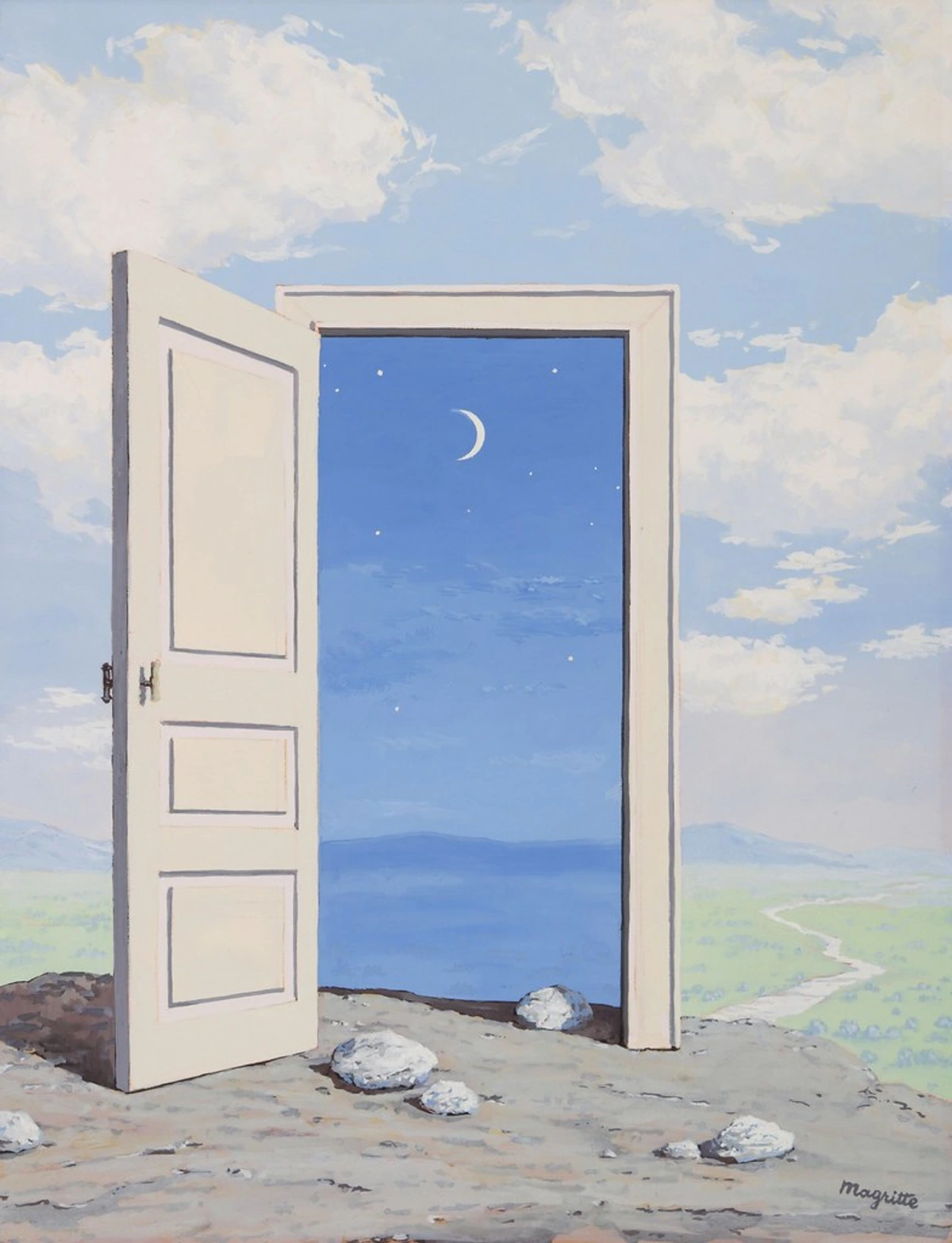
| Day and Night in One Scene | The collapse of logical time, merging different moments into one; the impossible dream state, defying linear chronology. | René Magritte | The Empire of Light series |
| Biomorphic Forms | Primitive, timeless life forms; organic evolution outside of human chronology; the ancient, primordial past. | Yves Tanguy, Joan Miró | Tanguy's Divisibility United, Miró's Personages and Birds |
| Everyday Objects (Disrupted) | Challenging the function and expected temporal use of familiar items; introducing paradox into the mundane, freezing routine. | Meret Oppenheim | Object (Déjeuner en fourrure) |
| Cosmic Imagery / Constellations | Cyclical time, universal rhythms; a return to primordial, intuitive understanding of time and existence, vastness of eternity. | Joan Miró, Yves Tanguy | Miró's The Morning Star, Tanguy's From Green to White |
| Esoteric / Alchemical Symbols | Transformation, mystical cycles; a quest for timeless truths beyond linear progress, spiritual evolution and recurrence. | Remedios Varo, Leonora Carrington | Varo's Creation of the Birds, Carrington's The Garden of Paracelsus |
| Frottage / Grattage Textures | Accessing ancient or primal imagery; evoking deep, geological, or subconscious time, bypassing conscious control. | Max Ernst | Europe After the Rain II |
| Mirrors / Reflections | Distorted realities, fragmented identities across time; the subjective nature of perception, the past revisited and altered. | René Magritte, Frida Kahlo | Magritte's The False Mirror, Kahlo's The Two Fridas |
| The Gaze / Stare | A timeless, often unsettling, direct confrontation with the viewer; implying an eternal, unchanging presence or internal reflection. | Salvador Dalí, Max Ernst | Dalí's self-portraits, Ernst's L'Ange du Foyer |
| The Forest / Jungle | Primitive, untamed nature; a timeless, unconscious realm of instincts and hidden depths, untouched by human chronology. | Max Ernst, Leonora Carrington | Ernst's The Entire City, Carrington's Self-Portrait (Inn of the Dawn Horse) |
| Stone Figures / Statues | Immovable, eternal presence; a symbol of ancient time and the enduring power of history and myth, the weight of the past. | Giorgio de Chirico, René Magritte | De Chirico's The Red Tower, Magritte's The Therapist |
| Windows | Portals between inner and outer worlds, subjective and objective realities; a frame for altered temporal perception. | René Magritte, Yves Tanguy | Magritte's Human Condition, Tanguy's The Witness |
| Birds / Animals (Mythic) | Instinctual, primal time; messengers from the subconscious, embodying ancient wisdom or cyclical patterns. | Leonora Carrington, Joan Miró, Remedios Varo | Carrington's And Then We Saw the Daughter of the Minotaur, Miró's Dog Barking at the Moon |
| Hands / Limbs (Disembodied/Distorted) | Fragmentation of the human form, questioning bodily integrity and its temporal continuity; dislocated action, symbolic gestures outside linear narrative. | Salvador Dalí, Hans Bellmer | Dalí's The Great Masturbator, Bellmer's The Doll |
| The Veil / Obscured Face | Hiding identity, universalizing the figure beyond a specific time; mystery, the unseen, questioning what is revealed in a given moment. | René Magritte | The Lovers |
| Mechanical Figures / Automata | The dehumanizing aspect of industrial time, uncanny valley, unsettling stillness; a critique of a clockwork world. | Giorgio de Chirico, Max Ernst | De Chirico's The Disquieting Muses, Ernst's Oedipus Rex |
| Labyrinth / Maze | The winding, non-linear path of the subconscious, an eternal quest; the subjective journey through time. | Max Ernst, Leonora Carrington | Ernst's A L'Intérieur de la Vue, Carrington's narratives |
| Key / Lock | Access to hidden knowledge, unlock time's secrets; the opening and closing of temporal understanding. | René Magritte, Salvador Dalí | Magritte's The Key to the Fields |
| Eye (Disembodied) | Omnipresent vision, internal sight, the timeless gaze of the subconscious; distortion of objective perception. | Salvador Dalí, René Magritte | Dalí's The Eye of Time, Magritte's The False Mirror |
| Masks / Disguises | Shifting identity, hidden selves, the performative nature of existence across time; concealing and revealing temporal aspects of self. | Leonora Carrington, Hans Bellmer | Carrington's animal alter-egos, Bellmer's dolls |
| Architectural Fragments / Ruins | The weight of history, fragmented past bleeding into present, the cyclical nature of decay and rebirth. | Giorgio de Chirico, Salvador Dalí | De Chirico's Metaphysical Town Squares, Dalí's Archaeological Reminiscence of Millet's Angelus |

Why Does This Still Mess With Our Heads Today?
I think the reason these images still resonate is that our relationship with time has only gotten weirder, not simpler. The digital age has, in many ways, brought the Surrealist vision of time to our fingertips. The internet has created a timeless space where news from a second ago sits next to an article from 1998, a continuous, non-linear stream of information. Our phones hold thousands of memories we can access instantly, collapsing the distance of the past into an ever-present now. We scroll through feeds where moments are fleeting and endless at the same time, often feeling like we're suspended in a perpetual present, disconnected from a clear beginning or end. Social media algorithms, with their curated feeds, often present a non-linear flow of information, blurring personal and collective timelines into a constant, overwhelming stream. It's a chaotic symphony of 'now,' 'then,' and 'soon' all jumbled together, a truly Surrealist landscape for the modern mind. Think of the endless scroll, where a fleeting meme from today sits alongside a deeply personal memory from years ago, all within the same digital continuum. Even our concept of digital ownership, occasionally touching upon blockchain technology and NFTs, feels like a strange attempt to fix permanence in an inherently fluid digital stream, a fascinating modern paradox that the Surrealists would have loved – though perhaps they'd question the underlying permanence it purports to offer, given their skepticism of fixed reality and their embrace of the ephemeral. This constant inundation of disparate temporal information creates a unique form of digital dépaysement, where the familiar context of time is perpetually disrupted. The very pace of modern life, with its constant demands for multitasking and immediate gratification, often feels like a Magritte painting: a train bursting through a fireplace, defying logic and linear progression, leaving us disoriented in an accelerated, yet often stagnant, present.
In a way, we're all living in a Surrealist painting now, whether we realize it or not. The rigid, 9-to-5, clock-in-clock-out version of time feels increasingly like a facade, just like it did to those artists a century ago. It’s a performative act, a societal agreement, rather than an undeniable truth that truly captures the messy reality of our lives. When I work on my own pieces, which you can explore on my timeline, I'm rarely thinking about the hours ticking by. Instead, I'm trying to capture a feeling, a fleeting emotion, a particular quality of light that might have lasted a second or seemed to stretch for a day. The Surrealists gave us permission to do that, to honor our internal clocks over the one on the wall, to trust the subjective experience of time that shapes our deepest creative expressions. And if you're curious about bringing some of that timeless, expressive energy into your own space, take a moment to buy some art that speaks to your own internal clock.
Surrealism's Enduring Legacy on Contemporary Temporal Art
The echoes of Surrealism's temporal explorations are not just historical footnotes; they actively shape contemporary art. Artists today, unconstrained by traditional academic rules, freely manipulate time in their work, whether through video installations that loop and distort events, performance art that challenges linear narratives, or digital art that creates hyper-real yet impossibly timed scenarios. The Surrealist emphasis on the unconscious, dream logic, and subjective experience has paved the way for a rich tapestry of temporal experiments in our current artistic landscape. From artists using AI to generate dreamscapes that defy chronology to those employing augmented reality to layer past and present, to those exploring virtual reality environments where temporal rules are entirely redefined, the core idea—that time is fluid and personal—continues to inspire new generations to break free from the clock and explore the boundless dimensions of subjective time.

Frequently Asked Questions (FAQ)
It’s natural to have questions about a topic as mind-bending as Surrealism’s take on time. I know when I first dove into this, my head was spinning! So, to help you navigate this wonderfully warped landscape, here are some of the most common questions I get, along with my thoughts.
What are the philosophical implications of rejecting linear time in Surrealism?
Rejecting linear time allowed Surrealists to delve into deeper philosophical questions about reality, existence, and freedom. It challenged the Enlightenment's emphasis on rationality and progress, proposing instead a reality governed by intuition, dreams, and the subconscious. Philosophically, it implied that meaning is not found in chronological progression, but in the timeless collision of disparate elements, in the subjective experience of the moment, and in the eternal patterns of archetypes and myths. It was a liberation from perceived societal constraints, a radical redefinition of human experience that prioritized the inner world over external, measurable reality.
What is the most famous symbol of time in Surrealism?
Without a doubt, it's Salvador Dalí's melting clock, most famously from his 1931 painting The Persistence of Memory. It has become a universal shorthand for Surrealism and the fluid nature of time, so much so that it's almost a cliché, yet its power remains undiminished precisely because it visually captures a profound, relatable truth about our experience of time. It's a powerful entry point to understanding how Surrealists challenged rigid perceptions of reality.
How has Surrealism's approach to time influenced contemporary art?
Surrealism's radical re-evaluation of time continues to profoundly influence contemporary art. Many artists today explore non-linear narratives, dream logic, fragmented identities, and subjective temporalities in painting, sculpture, film, and digital art. The movement's emphasis on the subconscious, the uncanny, and the fluidity of reality laid crucial groundwork for postmodern art, conceptual art, and even performance art, where the experience of time is often manipulated and questioned. Its legacy can be seen in works that defy easy categorization, forcing viewers to engage with time on a deeper, more emotional, and intellectual level.
Why were Surrealists so obsessed with time?
Their obsession was a direct and profound reaction to the tumultuous early 20th century. The trauma of World War I brutally destroyed the naive idea of orderly, linear progress. New scientific theories from Einstein suggested time was relative and flexible, not absolute. And most crucially, Freud's psychoanalysis revealed the timeless, non-linear nature of the subconscious dream world, giving artists a powerful theoretical framework to explore this inner reality and, more importantly, a powerful reason to liberate humanity from the perceived tyranny of linear, mechanistic time.
Did all Surrealists paint melting clocks?
No, not at all! The melting clock was very much a Dalí trademark, his personal brand of temporal distortion. Other Surrealists explored time in vastly different ways. René Magritte, for instance, created impossible paradoxes by freezing time or by combining day and night in the same scene. Giorgio de Chirico, a proto-Surrealist, painted desolate cityscapes where time felt stagnant, heavy, and eternal. Yves Tanguy created primordial landscapes suggesting a time before human consciousness. Max Ernst explored deep, geological time through his frottage and grattage techniques. Each artist found their unique temporal language, proving the sheer diversity and richness of Surrealist approaches to time.
What do the ants on the clock mean in Dalí's work?
As discussed in the section on Salvador Dalí, the ants on Dalí's timepieces are a powerful and consistent symbol of decay, death, and mortality. They underscore the ephemeral nature of existence and the ultimate meaninglessness of rigid temporal measurement in the face of biological reality, suggesting that even time itself is subject to decomposition. This visceral imagery aligns with the Surrealist rejection of rational control over life's deeper, often unsettling, forces.
How did Freud influence the Surrealist concept of time?
Freud's theories were absolutely foundational for Surrealism. His revolutionary idea of the subconscious as a realm without linear time—where past, present, and future are jumbled, where desires from childhood can manifest in adult dreams—gave the Surrealists a powerful theoretical framework for their artistic explorations. They saw the dream state as a truer, more liberated form of reality, and they wanted their art to mirror this non-chronological, associational dream logic, bringing the timeless inner world to the surface and challenging the supremacy of waking, rational thought.
What is "subjective time" in the context of Surrealism?
Subjective time refers to an individual's personal, emotional, and often distorted experience of time, as opposed to objective, clock-measured time. It's that feeling when a moment of joy flashes by in what feels like seconds, while a tedious task can drag on for an eternity. For the Surrealists, subjective time was paramount, reflecting how moments can stretch or compress, how memories are re-ordered and even reinvented, and how powerful emotions can pull us into the past or project us into the future, all independent of the clock's relentless ticking. It's the inner clock, guided by feeling and intuition, rather than external mechanisms, that truly dictates our temporal reality.

What is the concept of "eternal return" in relation to Surrealist time?
The concept of "eternal return," often associated with philosophers like Friedrich Nietzsche, posits that all events in the universe repeat themselves infinitely, identical in every detail, across endless cycles of time. While not explicitly adopted by all Surrealists, this idea resonates with their cyclical view of time, particularly evident in works drawing from alchemy and mythology by artists like Varo and Carrington. It suggests a time that is not linear and progressive, but rather a perpetual unfolding and returning, where history is not a march forward but a series of recurring transformations and repetitions. This offers a radical alternative to the anxiety of a singular, irreversible timeline.
How did World War I influence Surrealist views on time?
World War I was a catastrophic event that utterly shattered the prevailing belief in linear progress and an orderly future. The brutality, mechanization, and chaos of the war undermined the rational foundations of society, leading many artists and thinkers to question all established systems, including the rigid measurement of time. The war created a collective psychological trauma and profound disillusionment that made a subjective, fractured, and even absurd experience of time feel far more authentic than any objective standard, propelling artists to seek deeper, non-linear realities.
What role did Surrealist literature play in exploring time?
Absolutely! While this article focuses on visual art, literary Surrealists like André Breton, Louis Aragon, and Philippe Soupault (with their collaborative automatic text The Magnetic Fields) embraced similar non-linear, dream-like narratives. Their prose often jumps between events, defies logical sequence, and blends reality with fantasy, mirroring the fluid temporalities found in Surrealist painting. Poets like Paul Éluard also explored the timelessness of love and emotion, while writers like Antonin Artaud delved into the primal, non-sequential aspects of human experience. These works are a direct translation of dream logic into text, forcing the reader to experience time not as a sequence, but as a dense, interwoven tapestry of moments and impressions, a true literary temporal distortion.
Did women Surrealists approach time differently?
Many notable women Surrealists, such as Remedios Varo and Leonora Carrington, often incorporated esoteric, alchemical, mythological, and even feminist themes into their work, which inherently lean towards cyclical rather than linear time. Their narratives frequently involve transformation, journeys, and ancient wisdom, suggesting a deeper, recurring temporal rhythm that contrasted with the male-dominated, more overtly psychological or political explorations of their male counterparts. They often brought a unique blend of feminist perspective and mystical insight to their temporal distortions, focusing on inner worlds and archetypal narratives that transcended conventional patriarchal notions of history. Another powerful figure, though often associated with other movements, was Frida Kahlo, whose self-portraits often depicted fragmented temporal states, reflecting her complex relationship with time, pain, and identity.
What is Automatic Writing, and how does it relate to Surrealist time?
Automatic writing (and drawing) was a key Surrealist technique, championed by André Breton, that involved bypassing conscious thought and rational control to tap directly into the subconscious mind. The artist would write or draw without editing or planning, allowing images and words to flow freely. This process inherently produced non-linear, non-chronological results, mirroring the timeless, jumbled nature of dreams and demonstrating how the subconscious operates outside of conventional clock time. It was a direct method to access and express the mind's subjective temporal landscape.
How did Dadaism influence Surrealism's view of time?
Dadaism, born from the disillusionment of WWI, violently rejected all artistic and societal norms, including the very concept of rational order and linear progress. While Surrealism moved beyond Dada's nihilism, it inherited this fundamental critique of conventional time. Dada's embrace of chance, absurdity, and fragmentation directly opened the door for Surrealists to further explore the non-linear, subjective, and illogical aspects of time, paving the way for their revolutionary depictions of temporal distortion. You can explore more about this foundational movement in The Enduring Influence of Dadaism on Contemporary Art and its Legacy.

How does Surrealism relate to the concept of psychological time?
Surrealism is deeply intertwined with psychological time, which refers to how our internal mental states, emotions, and experiences shape our perception of duration. It's why moments of intense joy can feel fleeting, while moments of boredom can stretch endlessly. Surrealists, heavily influenced by Freud and Jung, believed that this internal, subjective experience of time was more truthful than objective clock time. Their art sought to express this psychological reality, portraying warped landscapes, illogical sequences, and timeless dreamscapes that reflected the mind's own fluid, non-linear clock, making the inner world paramount to temporal understanding. It's the ultimate internal compass, charting our personal temporal journeys.
What is Dépaysement in Surrealism?
Dépaysement refers to the deliberate act of placing an object or image in an unfamiliar, often illogical, context. This technique creates a sense of disorientation and detachment, challenging the viewer's ingrained assumptions about reality and time. By disrupting the expected environment of a familiar item, Surrealists created a pocket of suspended time, where rational logic dissolves, and new, often unsettling, meanings emerge, making the present moment feel entirely alien and outside conventional chronology.
How did early 20th-century events, beyond WWI, shape Surrealist views on time?
Beyond the devastating impact of World War I, the early 20th century was marked by widespread economic depression, the rise of totalitarian regimes, and rapid scientific advancements. These events collectively eroded faith in linear progress and rational societal order. The resulting collective trauma, disillusionment, and intellectual ferment created fertile ground for Surrealists to reject objective time in favor of a more subjective, fractured, and even absurd experience of temporal reality, seeking deeper truths in the subconscious and dream worlds.
How did Surrealist photography and cinema contribute to the distortion of time?
Surrealist photography and cinema ingeniously subverted their mediums' inherent ability to capture objective time. Photographers like Man Ray used techniques such as rayographs (photograms), solarization, and multiple exposures to create timeless, dreamlike images that defied linear chronology. In cinema, films like Buñuel and Dalí's Un Chien Andalou employed jump cuts, illogical sequences, and non-linear narratives to force viewers into an emotional and associative experience of time, mirroring the fluid, non-chronological nature of dreams and challenging conventional storytelling.
Time Isn't Ticking, It's Breathing: A Conclusion
When you immerse yourself in a Surrealist painting, don't try to figure out what time it is according to a clock. That's fundamentally the wrong question. Instead, ask yourself, what does this time feel like? Does it feel slow and heavy, like de Chirico's oppressive shadows? Does it feel nonsensical and frozen, like Magritte's train bursting from a fireplace? Or does it feel soft, organic, and decaying, like Dalí's cheese-inspired clocks? The beauty of Surrealism's engagement with time is precisely this liberation from the mechanical, an invitation into a deeper, subjective temporal reality, one that resonates powerfully with my own artistic explorations. My work, much like the Surrealists, seeks to capture those fleeting, internal sensations that defy the clock, transforming them into vibrant, timeless expressions. It's about letting the inner rhythm guide the hand, and trusting that the emotional truth of a moment is far more profound than its chronological measurement. It's a journey into the self, a testament to the enduring power of dreams, memory, and subjective experience over any external measure. They shattered the clock, but in doing so, they revealed a universe of internal clocks, each ticking to its own unique, beautiful rhythm. And if you're curious about bringing some of that timeless, expressive energy into your own space, take a moment to buy some art that speaks to your own internal clock.


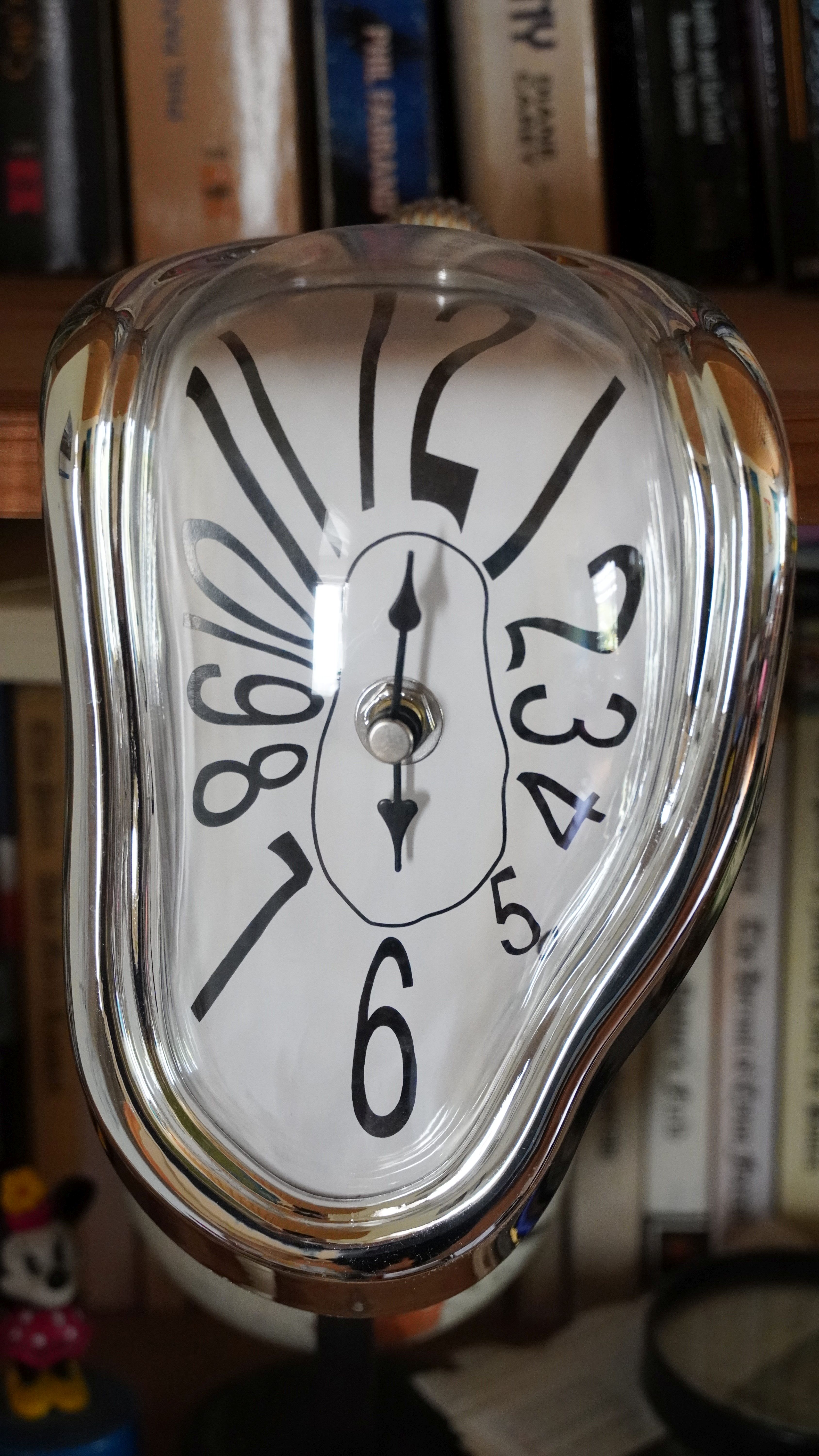









Surrealist Photography and Cinema: Manipulating the Flow and Freezing the Moment
Beyond painting, Surrealists also profoundly explored the manipulation of time through the emerging mediums of photography and cinema. Photography, often seen as capturing a precise, objective moment, was ingeniously subverted by artists like Man Ray and Claude Cahun, who used experimental techniques like solarization, rayographs (photograms), multiple exposures, and distorted perspectives to create images that seemed to exist outside linear time. These photographs often felt less like documentary records and more like dream fragments, capturing timeless archetypes or uncanny psychological states rather than specific, chronological instances. They froze time in a way that defied its conventional passage, creating a visual language for the non-linear workings of the subconscious. The European House of Photography, for example, often features exhibitions that highlight such temporal manipulations in visual art.


Jean Cocteau's Blood of a Poet (1930) similarly uses temporal loops, illogical sequences, and haunting visual metaphors to create a dream-like, non-linear flow. The film deliberately disorients the viewer, inviting them to abandon rational time and embrace a more subjective, artistic experience where cause and effect are fluid, and the boundaries between reality and imagination dissolve. It's a masterclass in cinematic temporal distortion, illustrating how the subconscious can be translated into a moving image.
Surrealist cinema, pioneered by figures like Luis Buñuel and Salvador Dalí with their infamous Un Chien Andalou (1929), took temporal disruption to its audacious extreme. This short film famously features jarring title cards like "Eight years later" followed immediately by characters in the exact same scene, completely disregarding chronological coherence. Jump cuts, slow motion, dream sequences, and illogical sequencing created a deeply dream-like, non-linear narrative that utterly defied audience expectations of linear progression, proving that time in art could be as malleable as memory itself. It forced viewers to experience time emotionally and associatively, rather than logically, plunging them into the subconscious's timeless realm.
The Myth of Progress and the Embrace of Cyclicality
At its heart, the Surrealist attack on linear time was also a profound critique of the Western myth of progress. The belief that history moves in a straight line towards an ever-better future had been utterly shattered by the horrors of World War I, and further questioned by the economic and political instability of the interwar period. The broken promise of linear progress left a void that the Surrealists filled by drawing inspiration from ancient mythologies, esoteric traditions, and the endless cycles of nature, often favoring a cyclical view of time. This perspective suggests that events, themes, and even consciousness itself, repeat and recur, rather than simply progressing from point A to point B. For them, history was not a relentless march forward, but a series of returns, transformations, and eternal rhythms. This cyclical mindset offered a powerful alternative to the anxieties of a perpetually uncertain future, allowing for a deeper connection to timeless truths and a release from the illusion of linear progress. This embrace of ancient rhythms and recurring patterns can be seen as an early form of ecological consciousness, recognizing humanity's place within grander, timeless natural cycles, rather than a linear domination over them.
The greatest lesson the Surrealists taught us about time, the one I carry into my own work, is that it isn't a rigid ruler to measure our lives by. It's not a cold, objective constant. It's a vast, ever-changing landscape – a desert stretching to infinity, a crowded room where every moment happens at once, or a quiet field at dusk where past and future softly merge. It's a deeply personal, emotional, and utterly subjective experience. And it's always, always weirder, more wonderful, and more profoundly impactful than you think. Embrace the strange, fluid reality of your own internal clock, and you might just unlock a whole new universe within yourself.