
Kazimir Malevich's Black Square: The Definitive Guide to the Painting That Changed Everything
I need to confess something upfront: for years, I thought Malevich's Black Square was either a joke I wasn't getting or the ultimate expression of artistic arrogance. A black square? Really? That's what hangs in the Tretyakov Gallery as one of the most important paintings of the 20th century?
Then I started digging, and I'll be honest—my perspective did a complete 180. What feels like the simplest gesture in art history turns out to be one of the most complex. It's not a painting of a black square; it's a painting about painting. It's about what we decide has value, what we consider "real" art, and whether you need to represent something from the visible world to say something true about existence itself.
If you've ever stared at this painting and felt confused, frustrated, or even a little angry that someone could get away with this, you're in exactly the right headspace to understand why it matters. This isn't just a painting; it's a philosophical argument rendered in paint, a historical document of revolutionary thinking, and a surprisingly emotional object once you know its story. It's worth noting that if you're interested in the profound impact of revolutionary art on culture and aesthetics, you might also appreciate exploring the contemporary, colorful abstract art available at the zenmuseum.com artist's gallery, which carries forward the legacy of geometric abstraction in new and vibrant directions. Let's dive in.
Table of Contents
- The Paradox in a Frame: What Is Black Square?
- The Man Who Dared to Paint Nothing: Kazimir Malevich's Journey
- The Technical Reality: It's Not Actually a Square (And Other Glorious Imperfections)
- The Art Historical Earthquake: Why Black Square Changed Everything
- The Philosophy in Paint: What Were Malevich's Actual Ideas?
- Reading the Painting: How to Actually Look at Black Square
- The Evolution of a Revolution: Malevich's Suprematist Compositions
- The Shock of 1915: Black Square's Public Debut
- Cultural Impact and Legacy: How Black Square Echoed Through the Century
- The Four Versions: A Tale of Repetition and Ruin
- Black Square vs. Other Iconic Black Paintings
- Conserving Controversy: The Troubled Life of a Masterpiece
- Critical Reception: What the Experts Say About Black Square
- Malevich's Own Words: Key Quotes That Illuminate His Vision
- Visiting Black Square: A Practical Gallery Guide
- Black Square in Popular Culture: From Icon to Meme
- The Contemporary Resonance: Why Black Square Still Matters Today
- Frequently Asked Questions About Kazimir Malevich's Black Square
- Conclusion: The Painting That Refuses to Be Finished
The Paradox in a Frame: What Is Black Square?
Here's the deceptively simple answer: Black Square is an oil painting by Russian artist Kazimir Malevich from 1915. It's exactly what it sounds like—a black square painted on a white background and displayed as a work of art.
The slightly more complicated answer? It's the founding document of an entire art movement called Suprematism, which Malevich described as "the supremacy of pure feeling or perception in the pictorial arts." He wasn't trying to paint a black square in a room, or a black square at night, or any other representational thing. He was trying to paint feeling itself—to strip away everything we think art should be until only the most essential geometric form remained.
I find myself asking: when you remove the subject matter, what's left? According to Malevich, you're left with pure painting.
Think of it this way: if traditional painting is like writing a novel with characters and plot, Malevich decided to write using only the alphabet itself—the raw building blocks of communication, freed from any particular story.
The Immediate Precedents: Beyond the Myth of Solitary Genius
While Malevich’s gesture feels singular, it’s important to remember he wasn't working in a vacuum. The decade leading up to 1915 was a pressure cooker of radical ideas. The Russian avant-garde was a tight-knit community of artists, poets, and thinkers who were all pushing against the boundaries of their respective fields. Malevich was in constant dialogue with his contemporaries, and Black Square was, in many ways, the most extreme answer to a question they were all asking: how do we create an art for a new world?
It’s a mistake to see Black Square as a purely linear progression from earlier art movements. Yes, Malevich moved through Impressionism, Cubism, and Futurism, but Black Square was a leap, not a step. It was a fundamental break. Earlier movements deconstructed reality; Malevich proposed abandoning it entirely. This distinction is crucial. Cubism tears a guitar apart to show us its many possible faces simultaneously. Black Square asks what it feels like to perceive when there is no guitar at all.
And the parallels aren't limited to painting. During the same period, the poet Velimir Khlebnikov was inventing a 'trans-rational' language of pure sound (Zaum), and the composer Mikhail Matyushin was experimenting with microtonal music. Malevich’s visual zero point was part of this broader cultural impulse to find the fundamental building blocks of human expression.
The Man Who Dared to Paint Nothing: Kazimir Malevich's Journey
Kazimir Severinovich Malevich was born in 1879 in Kyiv, which was then part of the Russian Empire. His artistic journey reads like a microcosm of early 20th-century art itself—he moved through Impressionism, Symbolism, Fauvism, and Cubism before arriving at the breakthrough that would define his legacy.
What's fascinating about his early work is that you can literally watch him chipping away at representation, year by year, painting by painting. His Cubo-Futurist paintings from 1912-1914 show human figures and objects systematically breaking apart into geometric fragments. It's as if he was conducting a series of experiments, testing how much recognizable content he could remove before the painting stopped being 'about' something and started being something itself—a pure arrangement of form and color.
The story often gets simplified to "one day he decided to paint a black square," but the truth is far more interesting. Malevich was deeply involved in the explosive avant-garde scene in Russia during the 1910s. He was collaborating with poets, designing sets for experimental operas (including the famous Victory Over the Sun in 1913), and constantly pushing at the boundaries of what was possible in visual art.
The year 1915 is when everything crystalized. At an exhibition called "0,10" (pronounced "zero-ten"), Malevich hung Black Square in what's known as the "red corner" of the room—traditionally the place where Russian Orthodox icons would be displayed in a home. This wasn't subtle. He was declaring this painting to be the new icon for a new age.
But here's what I find even more interesting: the exhibition itself was revolutionary in its own right. The name "0,10" signaled the artists' intention to start from zero and work with just ten participants. The gallery was transformed into an immersive environment where paintings weren't just hung on walls—they became architectural elements. Malevich didn't just exhibit a painting; he created a temple for a new aesthetic faith.
And yet, the most crucial context is the political one. Russia in 1915 was a nation on the brink. The First World War was tearing the Russian Empire apart, and the revolutions of 1917 were just around the corner. For Malevich, Black Square wasn’t just an art historical statement; it was part of a total transformation of society. He saw the political revolution and the artistic revolution as two expressions of the same impulse: a complete break with the past to build a new world from the ground up. His painting was a performance of that radical new beginning.

Here's what strikes me most about Malevich during this period: he wasn't just making paintings; he was writing manifestos. In his 1915 essay "From Cubism and Futurism to Suprematism," he argued that previous art movements were still chained to depicting objects from the visible world. Suprematism, he declared, would transcend this limitation entirely.
This is crucial to understanding Black Square: it wasn't created in a vacuum. Russian society was collapsing under the weight of World War I and internal revolution. Everything—art, politics, social structures—was being questioned and rebuilt. Malevich saw himself as part of this total transformation. His painting wasn't just a formal experiment; it was a political and spiritual statement about the possibility of starting completely fresh.
The Technical Reality: It's Not Actually a Square (And Other Glorious Imperfections)
This is where things get deliciously human. If you ever get a chance to see Black Square in person, here's what you'll discover: it's not actually a perfect square. The sides aren't perfectly straight, the black isn't uniform, and you can see brushstrokes and even the texture of the canvas peeking through in places.
But the technical analysis gets even more fascinating. In 2015, scientists at the Tretyakov Gallery conducted extensive analysis using infrared spectroscopy and X-rays—and what they discovered beneath the surface is astonishing. There weren't just random underpaintings; there were two complete earlier compositions hidden under that iconic black, including traces of what appears to be a colorful Cubo-Futurist work and possibly an earlier geometric abstraction. This evidence that the 'zero point' of art wasn't actually created from nothing, but emerged from earlier, more traditional work, doesn't undermine Malevich's achievement—it makes it more human and more profound.
Far from being a flaw, these imperfections might be the whole point. Malevich wasn't trying to create a perfect industrial graphic. He was painting by hand, and the evidence of that human hand matters.
Even more fascinating? The painting has cracked and deteriorated over time, revealing earlier layers beneath. X-ray analysis has shown that there were previous compositions hiding under that iconic black paint. It's as if the painting itself refuses to be just one thing—it carries its own history within it.
The craquelure—that network of fine cracks in the paint—creates what look like ghostly white lines across the black surface. I've always wondered: did Malevich anticipate this? Was it part of his conception that time itself would become a collaborator in the work? We'll never know for sure, but the result is a painting that feels more alive, more fragile, and somehow more profound than any perfect geometric form could ever be. The cracks remind us that even the most revolutionary ideas exist in time and are subject to decay.
There's a certain poetry to this decay that I find incredibly moving. Malevich was trying to create an icon, something timeless and pure that would exist outside of ordinary time. But the physical reality of the painting has fought against this ambition at every turn. The black pigment he used (likely a combination of bone char and oil) was inherently unstable. Over the past century, it hasn't just cracked—it has started to reveal its own secrets, forcing us to ask whether any artwork can truly transcend its material existence. The painting has become a meditation on time itself.
The Art Historical Earthquake: Why Black Square Changed Everything
Before 1915, art had a pretty fundamental assumption built into it: art should represent something. Even the most abstract Cubist paintings were still taking the real world—a guitar, a bottle, a person—as their starting point and then breaking them apart.
The clearest way I can explain the difference is this: Cubism is like taking a photograph of a person and then cutting it up and rearranging the pieces into something harder to recognize. But you still know there was originally a person there. Suprematism, on the other hand, is like starting with the camera itself and asking: "What if we never aimed this at anything in the first place?"
Black Square said, essentially: nope. It wasn't a revolution in how we represent the world—it was a revolution against representation itself. This is what makes it so fundamentally different from everything that came before. Previous art movements had been about finding new ways to depict reality; Malevich was proposing that reality itself was no longer the subject. Pure painting didn't need to refer to anything outside itself.
This wasn't just a change in subject matter—it was a fundamental reset of artistic priorities. Malevich wasn't interested in capturing visible reality or even emotional responses to visible reality. He wanted to bypass external perception entirely and access what he called "pure feeling." It was an attempt to create art that existed independently of the objective world, like mathematics or music.
Malevich wasn't breaking down reality; he was starting from zero. He called his new system "Suprematism" because it was meant to be supreme over everything that came before. In his mind, this was art freed from what he called "the ballast of the objective world."
Every artist who has worked in pure abstraction since 1915 is, in a sense, walking on the path that Malevich cleared. He opened up an entirely new set of possibilities by proving that you didn't need to depict anything recognizable for your work to be meaningful. You could create a visual language based entirely on line, color, and form—a language that operated outside the rules of representation.
The effect was like pulling a thread that unraveled the entire sweater of Western art tradition. Suddenly, art could be anything. It could be nothing more than geometric shapes floating in space. It could be white on white. It could be ideas.
I find it helpful to think about what came after Black Square:
- Constructivism (1915-1930s): Artists like Vladimir Tatlin and Alexander Rodchenko took Suprematism's geometric forms and applied them to industrial design, architecture, and propaganda posters, declaring that art should serve the revolution. Their work became the visual language of the early Soviet state, transforming Malevich's spiritual philosophy into utilitarian social practice.
- De Stijl (1917-1932): Piet Mondrian in the Netherlands pursued his own version of pure geometric abstraction, eventually developing his famous grid paintings with primary colors separated by black lines. Though Mondrian and Malevich likely never met, they were working on parallel tracks toward similar ends—a universal visual language based on pure geometric relationships.
- The Bauhaus (1919-1933): Walter Gropius founded this influential German school that brought together fine art and industrial design, with teachers like Wassily Kandinsky exploring the spiritual dimensions of geometric abstraction. Laszlo Moholy-Nagy, a key Bauhaus figure, created geometric abstract works clearly influenced by Malevich's Suprematism.
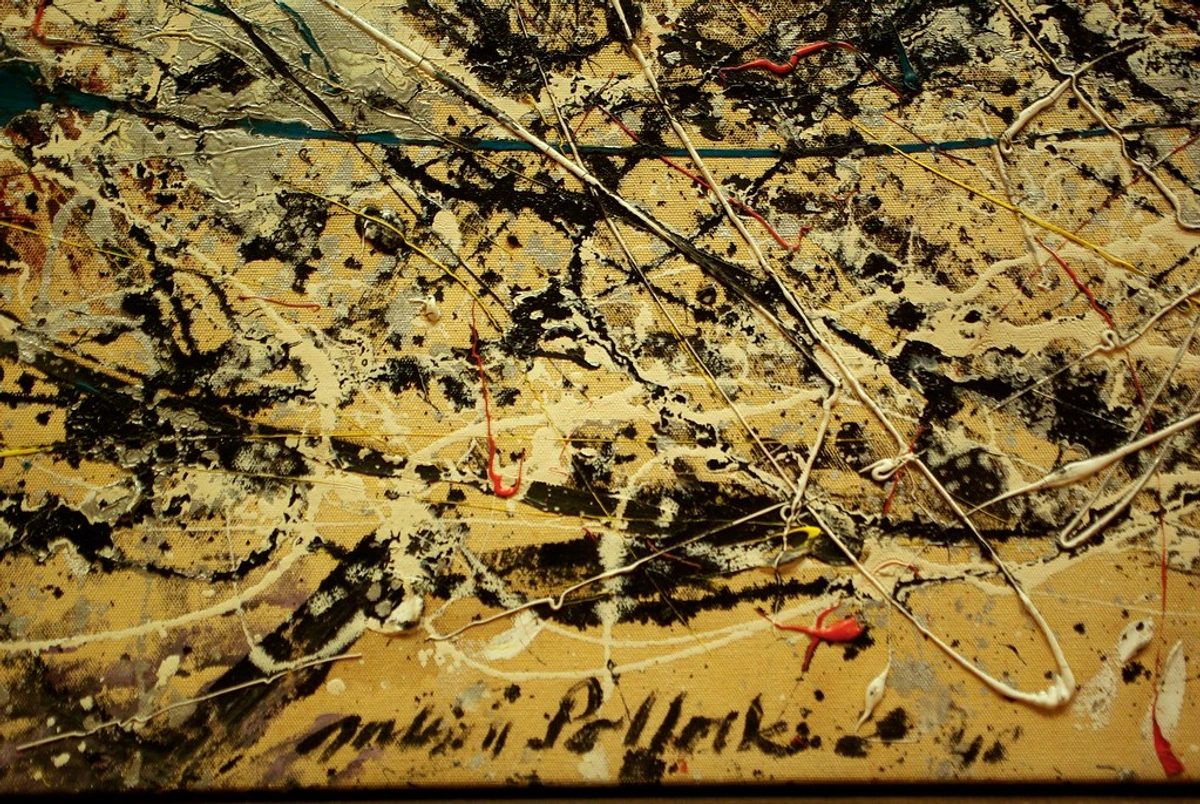
- Abstract Expressionism (1940s-1950s): American artists like Jackson Pollock and Mark Rothko would develop entirely different approaches to abstraction, but they worked in a world where non-representational art had already been established as a legitimate path. The critic Clement Greenberg would later trace a direct line from Malevich to these American developments.
- Minimalism (1960s): Artists like Donald Judd and Frank Stella would take Malevich's reductionism even further, creating works that existed primarily as simple objects in space. When Stella said "What you see is what you see," he was both continuing and rejecting Malevich's project—embracing the object quality while rejecting the spiritual metaphysics.
None of this would have been possible without Malevich's radical first step. He didn't just open a door—he demolished the entire wall and showed everyone what was possible on the other side.
The Philosophical Rivalry: Malevich vs. Tatlin
The story of the Russian avant-garde isn't just one of unity; it's a story of fierce rivalry and fundamental disagreement. While Malevich was developing Suprematism, his contemporary Vladimir Tatlin was pioneering Constructivism. On the surface, both movements used geometric forms, but their philosophies were diametrically opposed. Malevich wanted to liberate art from all worldly concerns—utility, politics, social purpose. Art, for him, was about pure feeling, a spiritual activity. Tatlin, on the other hand, declared that art was dead and must be subsumed into life as functional, socially useful objects. His famous Monument to the Third International was a spiraling tower meant to rotate and house government functions. It was art as engineering, the opposite of Malevich's metaphysical pursuits. This split was so fundamental that it led to direct conflict. At the 0,10 exhibition, legend has it that Tatlin, upon seeing Black Square, called it 'that decadent trash' and demanded it be taken down. Malevich, in turn, saw Tatlin's functionalism as a betrayal of art's true purpose. Understanding this rivalry is essential because it reveals that Black Square wasn't just a new style; it was a militant declaration of art's autonomy in a world that was increasingly demanding it serve a purpose.
The Philosophy in Paint: What Were Malevich's Actual Ideas?
Malevich wasn't just painting—he was thinking, writing, and arguing. His philosophical framework is as important as the paintings themselves. It's worth remembering that Russia in the early 20th century was experiencing an explosion of philosophical and mystical thinking—from Orthodox Christian mysticism to Madame Blavatsky's Theosophy to radical new ideas in physics and mathematics. Malevich's ideas didn't emerge from nowhere; they were part of a larger cultural conversation about higher dimensions, spiritual reality, and the limits of human perception.
What's striking when you read his theoretical writings is how deeply they connect to Russian spiritual traditions, particularly the concept of "sobornost"—a kind of spiritual togetherness or collective consciousness that transcends individual ego. Malevich saw Black Square not as an object created by his individual genius, but as something he had discovered or channeled from a deeper, collective level of human consciousness. This connects his work to much older Russian traditions of icon painting, where the artist was seen as a vessel rather than an author.
Here's a breakdown of his key concepts:
Suprematism: The New Painterly Realism
I know, that sounds like a contradiction or maybe even artistic doublespeak. How can something that looks nothing like reality be called 'realism'? For Malevich, earlier art was actually less real precisely because it was copying appearances—trying to reproduce the surface of things rather than getting at their essential truth. True reality, he argued, lay in pure feeling and perception itself, completely detached from external objects. This is what he meant by 'the supremacy of pure feeling.'
When you look at Black Square, you're not supposed to see a black square in the world—a black tile, a dark doorway, a shadow. You're supposed to experience the feeling that a black square evokes. It's the difference between representing an emotion (painting a sad person to make the viewer feel sad) and embodying it (creating an object that directly evokes sadness through its formal qualities). This distinction is absolutely crucial for understanding why Black Square wasn't just another painting—it was an entirely different category of experience. Malevich invites you into a kind of meditative state, where the act of looking becomes its own form of spiritual practice, free from the usual mental chatter of "What is this supposed to be?"
This represents a fundamental philosophical shift. For centuries, Western art had been built on the assumption that the artist's job was to hold up a mirror—however distorted or interpreted—to the external world. Malevich turned that mirror 180 degrees and pointed it at internal experience instead. He wasn't interested in what things looked like, but in what it felt like to perceive anything at all.
Zero Point: Starting From Nothing
Malevich talked about reaching what he called the "zero point of painting." This is the idea that the evolution of art had reached a moment where you had to strip away everything that wasn't essential and start again from the most basic building blocks.
Think about it in terms of mathematics. You can build any number from zero and one. Malevich saw the basic geometric forms—the square, the circle, the cross—as the equivalent "zero and one" for visual art. From these simplest elements, you could build an entirely new visual language.
This mathematical thinking wasn't just a metaphor for Malevich—it was a deep philosophical commitment. He was fascinated by the mathematical concept of the fourth dimension, popularized by mathematicians like Charles Hinton and writers like H.G. Wells. The idea that there might be geometric forms beyond human perception resonated with his spiritual beliefs about a higher reality that art could access but not represent.
But "zero" had a deeper meaning for Malevich than just "nothing." In his writing, he connects it to concepts of infinity and totality—the point at which all possibilities exist simultaneously before any particular choice has been made. To reach zero meant achieving a kind of spiritual emptiness where genuine creation could begin. It was as much a mystical concept as a formal one. Consider that for centuries, Russian Orthodox icon painters had been trying to depict divine presence through gold backgrounds and stylized figures—Malevich was doing something similar, but he had stripped away even the figure, leaving only the essential geometric field that represents pure divinity.

The Fourth Dimension
This is where Malevich gets truly head-spinning. Influenced by contemporary theories about higher dimensions in physics and mathematics, he claimed that Suprematist forms existed in a kind of fourth dimension beyond our normal experience of space and time. The context here is crucial—Einstein had published his general theory of relativity just a few years earlier in 1915, and the mathematical community was buzzing with discussions about non-Euclidean geometry and higher dimensional space. Malevich saw himself not as an artist who was borrowing from science, but as someone who was working on the same frontier with different tools.
He wrote about creating forms that had "no practical use" and belonged purely to the realm of art itself. In a way, he was trying to create objects that existed outside of our utilitarian universe—pure aesthetic experiences. This connects to a broader Russian philosophical tradition that goes back to the 19th century, particularly the ideas of philosopher Vladimir Solovyov, who argued that true reality was a spiritual realm that could only be accessed through aesthetic and mystical experience, not rational thought or practical action. For Malevich, the white space surrounding his geometric forms wasn't empty—it was the visual equivalent of that spiritual reality.
The fourth dimension concept is worth unpacking. Malevich was reading contemporary mathematicians like Bernhard Riemann and physicists like Albert Einstein who were revolutionizing our understanding of space and time. The idea that there might be dimensions of reality beyond our ordinary perception fascinated artists and mystics alike. For Malevich, the flat plane of the canvas wasn't something to be overcome through illusionistic rendering—it was the perfect space for manifesting these higher-dimensional ideas.
The Shock of 1915: Black Square's Public Debut
The "0,10" exhibition in Petrograd (now St. Petersburg) was radical even by avant-garde standards. The number referred to the goal of getting beyond art's past and starting from zero, with just ten artists participating. The exhibition was filled with what we'd now call installation art—works that transformed the entire gallery space.
The title "0,10" was deliberately chosen to suggest the mathematical concept of starting from absolute zero with just ten participants, but it also carried revolutionary political overtones in Russia's collapsing imperial society. The exhibition took place at the Dobychina Gallery, which was known for hosting avant-garde works, but even by those standards, this show was unprecedented.
We know from contemporary accounts that there were essentially two camps among the participating artists: those who supported Malevich's radical geometric abstraction, and those who followed Vladimir Tatlin's more materialist, Constructivist approach. This wasn't just an exhibition—it was a battleground for the soul of the Russian avant-garde.
Contemporary accounts describe an atmosphere of incredible tension and excitement. The opening night, December 19, 1915, became legendary among the avant-garde community. It wasn't just an art exhibition; it felt like witnessing the birth of a new world. The exhibition space itself blurred the boundaries between art and life in ways that would take decades for the rest of the art world to catch up with. El Lissitzky's Proun rooms, with their geometric paintings extending into architectural space, created an environment where the viewer was literally surrounded by the new art. Malevich understood that if he was going to declare a revolution in art, he needed to display his work in a space that was equally revolutionary.
And then there was Black Square, hanging in that sacred corner of the room—the so-called "red corner" or "beautiful corner" where Russian Orthodox families traditionally kept their most important religious icons. This was a profoundly provocative gesture. Contemporary installation photographs and eyewitness accounts suggest it was displayed high up, near the ceiling, forcing viewers into the physical posture of religious contemplation while facing what to many seemed like utter emptiness. It forced a confrontation not just with the painting, but with the very act of looking at something with reverence.
We have to imagine what this felt like to see in 1915. The Russian Empire was collapsing. World War I was raging. The October Revolution was just two years away. Everything that had seemed permanent was suddenly up for grabs—politics, society, culture, even the fundamental structures of reality.
Malevich understood this moment perfectly. He wasn't just making art; he was meeting the revolutionary spirit of his age. His manifesto for the exhibition read:
'I have transformed myself in the zero of form and have gone beyond 0 to 1, beyond 1, and beyond zero.'
The reaction was predictably polarized, and honestly, that's exactly what you'd expect from a work that challenges so many fundamental assumptions about what art is supposed to be.
The reaction was predictably polarized. Some saw it as the logical endpoint of everything modern art had been moving toward. Others saw it as the death of art, a fraud, a emperor's-new-clothes moment. Both sides were, in their own ways, correct.
Much of the discourse around Black Square has focused on the shocked or dismissive reactions. Contemporary critics did indeed call it "the death of art" and questioned whether it was art at all. But what's less discussed is that some critics immediately recognized its significance. They saw that it represented a genuine paradigm shift—not just another style, but a fundamental redefinition of what art could be. This split reaction tells us something important: the painting forced people to take a position on art's most basic questions, which is exactly what revolutionary work should do.
Reading the Painting: How to Actually Look at Black Square
I've spent a lot of time with this painting (in reproduction, anyway), and here's what I've learned about how to approach it. If you're in a museum and you see it, try this:
Here's something I've learned from talking to curators and conservators: looking at Black Square in reproduction is completely different from encountering it in person. In photographs, it looks flat, uniform, mathematically precise. In reality, it's surprisingly textured, subtly varied in tone, and anything but perfect. There's a kind of aura that comes from its physical presence—the way light reflects off the cracked surface, the way the edges aren't quite straight, the evidence of the human hand that made it. This gap between the image of the painting and the painting itself might actually be the most important thing to understand about it.
Step 1: Just look. Don't try to "solve" it or figure out what it "means" immediately. Just notice your own reactions. Are you confused? Annoyed? Intrigued? Bored? All of these are valid responses. Your initial frustration is actually the first step toward understanding the work—Malevich deliberately created something that couldn't be "figured out" through normal interpretive strategies.
And here's the thing: Malevich actually anticipated your confusion and annoyance. He knew that viewers would struggle with the work, especially in 1915. That struggle wasn't a sign that the painting had failed—it was a sign that it was working. The painting was deliberately designed to short-circuit your usual ways of looking at art. If you feel irritated that "anyone could do this," you're experiencing exactly what countless viewers have felt for over a century.
Step 2: Look closer. Notice the imperfections. See how the paint isn't uniform, how the lines aren't perfectly straight. This isn't a machine-made object—it's the result of a human hand struggling with a radical idea. The brushstrokes aren't accidental—Malevich chose to apply the paint with visible texture, creating a surface that catches light and creates subtle variations in tone.
The texture tells a story. In person, you can see the physical evidence of Malevich's brushwork—the way the paint pooled slightly in some areas, the places where the canvas texture shows through. These aren't signs of poor craftsmanship. They're evidence that this was actually painted by a human being, not manufactured according to a perfect industrial plan. When you stare long enough, you start to see the black as a surface rather than an absence, as a field of material rather than a void. It's like the difference between looking at a black wall and looking into a deep well—one is a surface, the other suggests infinite depth.
Step 3: Imagine the context. Picture yourself in 1915 Russia, standing in a gallery where everything you thought you knew about art is being called into question. What would this black square mean to you then? Remember that for many viewers, this wasn't just an art exhibition—it felt like standing at the edge of a precipice, with the old world collapsing behind them and a new, uncertain future stretching ahead.
Step 4: Think about absence. What isn't here? There's no representation of the visible world. No story, no moral, no obvious beauty. By taking all of that away, what has Malevich made room for? This absence isn't empty—it's filled with potential meaning. It's like the difference between a room full of furniture and an empty room where you can imagine anything.
This is perhaps the most radical aspect of the work. By removing everything we normally associate with art, Malevich forces us to confront something we rarely think about: the act of looking itself. When there's nothing to interpret, nothing to recognize, nothing to admire for its technique, what are you left with? Just you and the painting, and the strange, unsettling experience of being in each other's presence. This is what makes Black Square feel so contemporary—it's almost like a prototype for what we now call relational aesthetics, where the artwork isn't the object itself but the experience it creates for the viewer.
Step 5: Ask what remains. When you remove everything else, you're left with the most basic elements of painting: form, color, texture, and the relationship between the painting and the space around it. That's what Suprematism is about.
The Evolution of a Revolution: Malevich's Suprematist Compositions
Black Square was just the beginning—Malevich's version of a thesis statement. Over the next few years, he would develop a whole vocabulary of Suprematist paintings that took his initial idea and pushed it in dozens of directions.
He quickly moved beyond just the square. It's crucial to understand that Suprematism wasn't just about squares—it was about developing an entire visual language of pure geometric forms. I think of Black Square as the student declaring he's learned the first letter of a new alphabet. What came next? The rest of the alphabet, then words, then sentences, then entire paragraphs.
- Circles: Black Circle (1915) offered a softer, more infinite version of the same concept. The circle represented infinity and perfection, the form with no beginning and no end.
- Crosses: Black Cross (1915) brought religious symbolism into his geometric language while simultaneously rejecting traditional religious art. It was both sacred and secular, familiar and completely new.
- Floating forms: His paintings from 1915-1916 show colored geometric shapes—red rectangles, yellow trapezoids, blue ovals—floating in white space, as if they existed in some weightless cosmic dimension. These works feel like diagrams of invisible forces, like maps of spiritual gravity.
- Multi-colored complexity: Later works added more shapes and colors, creating complex relationships between forms that seemed to exist in a space governed by different physical laws.
- White on white: His ultimate gesture was White on White (1918), where a white square floats on a white background. If Black Square was zero, this was approaching the infinite—a point where even the distinction between form and background begins to break down.
What I find fascinating about this progression is that Malevich wasn't just repeating himself. He was systematically exploring every possibility that his initial breakthrough had opened up. It was as if he had discovered a new country and was now mapping its entire territory. Between 1915 and the early 1920s, he created dozens of Suprematist paintings, each one testing different combinations of his geometric vocabulary. He was like a scientist conducting controlled experiments in visual perception.
I think it's easy for contemporary viewers to assume all Suprematist paintings look basically the same—just geometric shapes on white backgrounds. But that's like saying all poems are just words on paper. Once you spend time with them, you start to recognize the incredible variety and emotional subtlety Malevich was able to create. The specific placement of a red square positioned at a 45-degree angle can suggest dynamism and movement, while the same square placed parallel to the canvas edge feels stable and contemplative. A red square positioned diagonally in the corner of a canvas creates a completely different emotional effect than a blue circle hovering near the center. These compositions aren't just decorative arrangements—they're carefully calibrated experiences designed to evoke specific states of perception.
What strikes me most about this period is how Malevich applied his Suprematist principles to different contexts. He designed porcelain services with Suprematist patterns, created architectural models called "architectons," and even painted Suprematist compositions on the walls of peasant houses in his village. This wasn't just studio art—it was an attempt to transform the entire visual environment of everyday life.
Cultural Impact and Legacy: How Black Square Echoed Through the Century
The influence of Black Square has been so profound that it's actually hard to measure. Like a stone dropped in a pond, the ripples just keep expanding. It's one of those rare works of art that didn't just influence other artists—it fundamentally changed what humans thought was possible in visual expression.
What often gets overlooked is how quickly its influence spread far beyond the relatively small world of avant-garde painting. Within just a few years of its creation, the geometric aesthetic of Suprematism was appearing in textile designs, architectural projects, book covers, and even political propaganda posters. The State Porcelain Factory in Petrograd began producing ceramic designs based on Malevich's forms, creating the extraordinary situation where Russian peasants were eating off plates decorated with the same revolutionary geometric aesthetic that was scandalizing the art world. Malevich's students and collaborators—figures like El Lissitzky, Nikolai Suetin, and Ilya Chashnik—took his ideas in dozens of practical directions, demonstrating that this supposedly 'pure' art could have concrete applications in everyday Soviet life.
The spread was helped along by Malevich's teaching activities. In 1919, he began teaching at the Vitebsk Art School, where he gathered around him a group of devoted students who called themselves "Unovis" (Affirmers of the New Art). This group became a kind of Suprematist missionary organization, spreading the geometric gospel throughout the Soviet Union through posters, educational materials, and architectural projects.
Architecture
The geometric purity of Malevich's work directly influenced architectural movements, particularly Russian Constructivism. Architects started designing buildings that looked like Suprematist paintings translated into three dimensions—functional forms stripped down to their essentials. For architects like Konstantin Melnikov and the Vesnin brothers, Malevich's paintings weren't just visual inspiration—they were blueprints for a new kind of spatial thinking.
But the relationship went both ways. Malevich himself created architectural models called "architectons"—three-dimensional Suprematist compositions that explored how his geometric forms could exist in real space. Begun in the early 1920s, these plaster models look like neither conventional buildings nor pure sculptures—they seem like diagrams of fourth-dimensional space, both utopian and impossible. These strange, futuristic-looking structures weren't meant to be built buildings; they were thought experiments about pure spatial relationships. They show that Malevich wasn't just making paintings—he was developing a comprehensive philosophy of form that could apply across different mediums.
His influence extended beyond Russia through traveling exhibitions and publications that spread his ideas across Europe. When Walter Gropius was developing the curriculum for the Bauhaus school in Germany, Malevich's work was already being discussed as a model for how basic geometric forms could serve as the foundation for all visual education.
Design and Typography
That modernist aesthetic you see in everything from furniture to book covers to logos? Malevich is part of that story. The idea that form and function could come together in clean geometric relationships has its roots in the Suprematist experiment.
Perhaps nowhere is this more visible than in the work of El Lissitzky, one of Malevich's most important collaborators. Lissitzky took Suprematist principles and applied them to graphic design, creating revolutionary book layouts, exhibition designs, and propaganda posters that treated typography and image as equal geometric elements in a unified composition. You can trace a line from Lissitzky's work in the 1920s directly to the Swiss Style of graphic design that dominated the mid-20th century—and from there to the clean, geometry-influenced design of everything from Apple products to contemporary website layouts.

Later Art Movements
Abstract Expressionism, Minimalism, Conceptual Art—all of them owe something to Malevich's initial gesture. When Jackson Pollock was making his drip paintings, when Mark Rothko was creating his color field paintings, when Donald Judd was installing his minimalist boxes, they were all working in a world that Malevich had made possible.
The irony is that something that seems so simple—a black square—actually opened up the most complex possibilities in modern art.
The Four Versions: A Tale of Repetition and Ruin
Here's something most people don't know: Malevich actually painted multiple versions of Black Square. Each one tells its own story:
Version  | Year | Current Location | Notable Features | Historical Context |
|---|---|---|---|---|
| Original | 1915 | Tretyakov Gallery, Moscow | The most famous version, showing significant craquelure, brushstrokes visible, not-quite-perfect geometry | Painted for the "0,10" exhibition, displayed in the icon corner as a revolutionary statement |
| Second | c. 1923 | Russian Museum, St. Petersburg | More precise geometry, painted with greater technical care | Created for the Venice Biennale, representing the new Soviet state to an international audience |
| Third | 1929 | Unknown | Part of Malevich's theoretical reconsideration | Created during a period when Malevich was reconsidering his earlier theories and developing new concepts |
| Fourth | c. 1932 | Private collection | The most geometrically perfect version, showing Malevich's developing relationship with the image | Painted during Stalin's rise to power, as avant-garde art came under increasing political pressure |

Why did he keep returning to this image? The answer seems to be both practical and philosophical. On one level, the multiple versions reflect different moments in Russian history and Malevich's own career—diplomatic missions, theoretical reconsiderations, changing relationships with political power. On another level, they suggest that this image was never meant to be a single, stable statement. Instead, it was something that needed to be re-performed, reconsidered, and re-created at different moments in time.
What I find compelling is that even the "failures" or imperfections in the various versions add to the painting's mythology. They suggest an artist wrestling with an idea so powerful that he could never quite exhaust it.
Black Square vs. Other Iconic Black Paintings: The Context That Makes Malevich Unique
Malevich wasn't the only artist thinking about black paintings, but his approach was distinct from everyone else's. Here's how it compares:
Artist | Work | Approach | Key Difference from Malevich | Visual Characteristics |
|---|---|---|---|---|
| Kazimir Malevich | Black Square | Geometric abstraction, philosophy of zero point | Founding gesture of pure non-objective art intended as a new universal language | Single quadrilateral, meant to be seen as a pure geometric form rather than painted surface |
| Ad Reinhardt | Abstract Painting series | Contemplative minimalism, almost invisible differences in black | More about meditation and purification than revolutionary breakthrough | Near-identical dark crosses that slowly reveal themselves through patient viewing |
| Frank Stella | Black Paintings series | Stripe-based abstract patterns, logical progression | More systematic and less metaphysical than Malevich | geometric patterns like stripes follow the canvas shape itself |
| Pierre Soulages | Outrenoir (Beyond Black) | Focus on light reflection and absorption off black paint | Investigates material properties and light rather than philosophical zero point | Thick, textured surfaces where black creates complex light effects |
| Richard Serra | Black drawings | Physical weight of material, process-oriented | About materiality and gesture rather than transcendence | Heavy, dense applications where the black paint has literal physical weight |
The crucial difference isn't just historical priority—it's about intention. When Stella painted his black paintings in the 1950s, he was working in a world where abstraction was already established. His famous statement 'What you see is what you see' was a direct rejection of the kind of mystical and spiritual content that Malevich was trying to achieve. For Malevich, the black square wasn't just paint on canvas—it was a portal to a higher dimension of pure feeling.

The key difference lies in Malevich's ambition. While other artists used black in various ways, Malevich was making a philosophical argument about the very foundations of what art could be.
The Contemporary Resonance: Why Black Square Still Matters Today
You might be wondering: okay, that was revolutionary in 1915, but what does a black square painted over a century ago have to do with us today?
More than you might realize.
In our age of infinite digital images, where everyone is constantly taking photos and sharing them instantly, Black Square offers a bracing counter-argument. It suggests that there's still value in stopping, in stripping away, in choosing to present the simplest possible statement.
I think about this every time I see someone obsessively documenting their meal instead of eating it, or watching a concert through their phone screen instead of experiencing it directly. Malevich's painting feels like a hundred-year-old prophecy about our relationship with images. We're drowning in representation—endless photos, videos, memes, and digital content that supposedly shows us reality but actually distances us from direct experience. Black Square insists on the opposite: the value of presence over representation, of direct feeling over mediated experience. It asks: what happens to our perception when we remove the endless stream of content and confront a single, simple form?
There's a deeper philosophical resonance here that connects to our moment of environmental crisis. Malevich was working at a time when industrial society was consuming natural resources at an unprecedented rate, turning everything into raw material for production. Black Square represents the opposite impulse—not a minimal consumption of resources (though it uses few), but a maximum efficiency of meaning. It suggests that we don't need more stuff, more images, more information, to communicate profound ideas. Sometimes the most powerful statement is the one that removes everything except the essential.
I see echoes of Malevich's gesture in:
- Contemporary art practice: Artists like Tauba Auerbach, who explore the boundaries of perception and optical phenomena, are working in territory that Malevich first discovered.
- Digital art and NFTs: While I remain skeptical of much NFT culture, the conversation about digital scarcity and authenticity in virtual spaces echoes Malevich's insistence that art could exist independently of material value or traditional craft.
- Performance and body art: When artists use their own bodies as the medium, they're working in territory that Malevich helped open by proving that art doesn't need to be an object that represents something else.
- Conceptual art: The very idea that the concept behind a work could matter more than its appearance—that's pure Malevich. From Duchamp's urinal to contemporary conceptual practices, artists have embraced the idea that art can be primarily about ideas rather than visual pleasure.
Malevich also speaks to our contemporary anxiety about meaning. We're surrounded by information, by images, by content. Black Square is the ultimate act of resistance: it refuses to add more information to the world. Instead, it asks us to consider what remains when we stop trying to mean something and just are.
And in our moment of global political uncertainty, economic instability, and environmental crisis, Black Square offers a different kind of relevance. Malevich was working in a time when everything seemed to be collapsing—the Russian Empire, traditional social structures, the certainties that had governed European civilization for centuries. The painting was his answer to chaos: not the comforting illusion of order, but an embrace of radical simplicity that could serve as a foundation for building something completely new. It's an object lesson in finding possibility within limitation, and in discovering freedom through constraint.
I see parallels in the ways people are responding to our current moment. The minimalist movement, tiny house culture, the return to crafts and analog technologies—these all represent a similar desire to strip away excess and return to essentials. Malevich's gesture feels more urgent than ever because it reminds us that sometimes the most radical response to complexity isn't more complexity, but radical simplicity.
Conserving Controversy: The Troubled Life of a Masterpiece
The physical preservation of Black Square has become as much of a story as its creation. The original 1915 version has suffered considerably over the past century:
- The paint has cracked extensively, creating a network of fine lines across the surface
- The underlying paint layers have started to become visible in places
- There have been debates among conservators about whether to restore the work or let it continue to deteriorate naturally
This deterioration turns out to be part of what makes the painting feel so urgent. It's not a frozen icon from the past—it's a living object that's actively changing, coming apart, revealing its own secrets.
There's something almost poetic about the fact that a work that was meant to be a perfect, timeless statement has become so time-bound and fragile. Malevich wanted to transcend the material world, but the material world keeps asserting itself.
Critical Reception: What the Experts Say About Black Square
The critical conversation around Black Square has evolved dramatically over the decades. Here's how various prominent voices have interpreted the work:
Contemporary Criticism (1910s-1920s):
- Many critics were baffled or outraged
- Some saw it as a logical endpoint of avant-garde experimentation
- Others dismissed it as the ultimate expression of artistic decline
Mid-Century Formalist Criticism (1940s-1960s):
- Critics like Clement Greenberg viewed Malevich as a crucial figure in the development of pure abstraction
- Emphasis on formal qualities and the evolution of painting as a medium
- Seen as a foundation stone for American Abstract Expressionism
Post-Structuralist Interpretation (1970s-1990s):
- Focus on the painting as a statement about representation itself
- Exploration of its relationship to power, ideology, and cultural revolution
- Analysis of Malevich's own writings as key to interpretation
Contemporary Scholarship:
- Greater attention to the historical context of the Russian Revolution
- Interest in the painting as a performance of radical innovation
- Examination of the multiple versions and their different contexts
Malevich's Own Words: Key Quotes That Illuminate His Vision
To really understand Black Square, you need to hear from the artist himself. Here are some of Malevich's most revealing statements:
"Under Suprematism I understand the supremacy of pure feeling in creative art. To the Suprematist, the visual phenomena of the objective world are, in themselves, meaningless; what is significant is feeling."
"I have transformed myself in the zero of form and have gone beyond 0 to 1, beyond 1, and beyond zero."
"The square is not a subconscious form. It is the creation of intuitive reason. The face of the new art. The square is a living, royal infant."
"Let us seize the world as a whole, let us organize it in our own creative will!"
What strikes me in all these statements—and what comes through even more strongly when you read his full manifestos and letters—is Malevich's absolute, unshakable confidence. He wasn't tentative or apologetic about what he was doing. He believed with every fiber of his being that he was opening a new chapter in human creativity, that he had discovered something as fundamental to art as the discovery of fire was to human civilization. And honestly? History has largely proven him right.
Visiting Black Square: A Practical Gallery Guide
If you're planning a pilgrimage to see Black Square in person, here's what you need to know about where to find the different versions and what to expect:
Tretyakov Gallery (Moscow):
- Highlight: Houses the original 1915 version—the one that started it all
- Display: Often given pride of place in the Russian avant-garde galleries
- Context: Surrounded by Malevich's other works and those of his contemporaries like Kandinsky and Tatlin
- Pro Tip: Give yourself plenty of time. The gallery has extensive collections, and you'll want to see Black Square not as an isolated masterpiece but as part of the broader revolutionary moment in Russian art. Consider hiring a guide who specializes in the avant-garde period.
- Realistic Expectations: Don't expect it to be huge—it's smaller than most people imagine, and the deterioration is quite visible up close.
Russian Museum (St. Petersburg):
- Highlight: Houses the second version from around 1923
- Display: Part of their superb collection of Russian art across all periods
- Context: The museum provides excellent historical context for understanding where avant-garde art fits in the broader scope of Russian cultural history
- Pro Tip: Take advantage of their guided tours focusing specifically on the avant-garde period. The museum's curators do an excellent job explaining not just what you're looking at, but why it mattered so profoundly.
MoMA (New York):
- Highlight: While they don't have a version of Black Square itself, they have exceptional Malevich works and world-class related avant-garde material
- Context: The museum has arguably the best collection of modern art in the Western hemisphere
- Pro Tip: Look for connections between Malevich and the American abstract artists who came later. You can literally trace the influence—from Malevich's geometric forms to the work of artists like Ad Reinhardt and Frank Stella, who took his ideas in entirely new directions.
Important note: Due to the painting's fragile condition and its status as a national treasure, the original 1915 version is sometimes temporarily removed from display for conservation. Always check the museum's website before planning a special trip specifically to see it.
The Shock of 1915: Black Square's Public Debut and Critical Reception
The '0,10' exhibition in Petrograd (now St. Petersburg) was radical even by avant-garde standards. The name signified the goal of getting beyond art's past and starting from zero, with just ten artists participating. The exhibition space itself became an immersive environment, blurring the boundaries between art and life in ways that anticipated later developments in installation and performance art.
Malevich understood that if he was going to declare a revolution in art, he needed to display his work in a space that was equally revolutionary. Contemporary accounts describe an atmosphere of tension and excitement. Visitors found themselves not just looking at paintings on walls, but surrounded by a new kind of spatial experience where geometric forms extended into architectural space.
The most provocative gesture was the placement of Black Square in what's known as the 'red corner'—traditionally the sacred space where Russian Orthodox families displayed their religious icons. This wasn't subtle symbolism; it was a direct challenge to both religious and artistic tradition. Contemporary installation photographs and various eyewitness accounts suggest it was displayed high up, near the ceiling, forcing viewers into the physical posture of looking up at something sacred while contemplating what to many seemed like utter emptiness. This wasn't just a visual experience; it was a full-body, spatial experience that connected to centuries of religious tradition while simultaneously subverting it.
Contemporary critics were predictably polarized. Some immediately dismissed it as 'the death of art' or a simple fraud. One critic famously asked whether it was 'art or just a black square?'—missing the point that this was exactly the question Malevich wanted people to confront. Others, however, recognized its profound significance almost immediately. They understood that this wasn't just another style but a fundamental redefinition of what art could be.
The painting's debut came at a moment when everything in Russian society was being questioned. World War I was raging, the Russian Empire was collapsing, and the October Revolution was just two years away. In this context, Malevich's gesture resonated far beyond art world debates. It felt like part of the same revolutionary energy that was transforming everything else.
Frequently Asked Questions About Kazimir Malevich's Black Square
Is Black Square actually just a black square?
Technically yes, but philosophically no. Yes, it's a quadrilateral painted black. But Malevich conceived it as the "zero point" of painting—the most basic element from which all other art could be built. It represents the complete rejection of representation and the embrace of pure feeling in art.
Why is Black Square considered so important in art history?
It marks the beginning of pure geometric abstraction and Suprematism. Before Black Square, even “abstractions” typically referred to something recognizable. Malevich eliminated reference to the visible world entirely, opening possibilities for Abstract Expressionism, Minimalism, and countless other movements.

How much is Black Square worth?
It's essentially priceless and cannot be sold. It belongs to Russian state museums and is considered a national cultural treasure. Its value is primarily historical and cultural rather than commercial.
Why did Malevich paint multiple versions?
Malevich returned to this foundational image several times throughout his career. Each version seems to represent a slightly different approach to his core concept. The repeated return suggests how central this idea remained to his thinking.
What does the deterioration of the painting mean for its value?
Counterintuitively, some critics argue that the cracking and aging make the work more profound—adding layers of time and history to Malevich's revolutionary gesture. It's a living document rather than a frozen icon.
Was Malevich serious or was it a joke?
He was absolutely serious. While the gesture might seem absurd or provocative on the surface, Malevich was making a profoundly serious philosophical statement. The careful placement in the exhibition's icon corner, the extensive theoretical writing that accompanied the work, and his subsequent development of Suprematism all prove this was intended as a solemn declaration about the future of art. Contemporary accounts suggest he was quite serious when he spoke about the painting's spiritual and revolutionary significance.
How do I appreciate this painting if I don't understand it?
Try this: forget about understanding. Just notice your reactions. Then consider what Malevich was trying to strip away. Finally, think about what remains when representation and storytelling are removed—just the basic elements of painting. Ask what feeling the black square evokes for you.
Why not just paint a black square myself?
You absolutely could. But you'd be standing on Malevich's shoulders. The crucial difference is that he was the first to do it, the first to declare it as the foundation for a new approach to art, and the first to articulate the philosophy behind it. It's the context and the ideas that make it revolutionary.
Are there any competing candidates for "first abstract painting"?
Several artists approached abstraction around the same time, including Kandinsky, Kupka, and Delaunay. However, most early abstractions retained some connection to visible forms. Black Square's purity and Malevich’s explicit philosophical declaration make it uniquely significant.
What should I look for when viewing it in person?
First, look at the imperfections—uneven brushstrokes, not-quite-perfect geometry. Second, notice how the painting dictates the space around it. Finally, consider what it means to dedicate such a large format to such an elemental statement.

Black Square in Popular Culture: The Painting That Became a Meme
Like all truly revolutionary ideas, Black Square has been absorbed into our cultural DNA in ways both serious and playful:
- Design inspiration: Countless logos, album covers, and graphic designs echo its stark geometry
- Comedic references: The classic "my kid could do that" reaction has become part of art history folklore
- Philosophical shorthand: When people want to talk about minimalism or essentialism, Black Square often serves as the reference point
- Academic debate: It remains a touchstone in discussions about what constitutes art and meaning
What fascinates me is how Malevich's most radical gesture has become so familiar that it's almost invisible. We're surrounded by its influence in ways we don't even notice.
Conclusion: The Painting That Refuses to Be Finished
I want to end with a personal story. The first time I visited the Tretyakov Gallery and stood in front of the original Black Square, I expected to have some kind of epiphany. I'd read all the theory, I knew the history, I understood the context. Surely now, face to face with the actual painting, I would finally "get" it in some profound way.
Here's what actually happened: I was surprised by how small it looked. How fragile. How imperfect. How the cracks made it look ancient rather than revolutionary. How the black wasn't infinite depth but just... paint.
For a moment, I was disappointed. Then I realized that's exactly the point.







Malevich wasn't trying to create a perfect, timeless icon. He was making a human gesture—flawed, specific, mortal—that pointed toward infinity. The painting isn't the infinite; it's the gesture toward it. The cracks, the imperfections, the hand of the artist visible in every brushstroke—these aren't failures to achieve some ideal. They're evidence that a real person stood in a specific historical moment and dared to ask: what if art doesn't need to be about any thing?
More than a century later, we're still living in the world that question opened up. Every time you see a minimalist design, every time you encounter art that prioritizes concept over craft, every time you find yourself moved by something that doesn't look like anything—you're experiencing the long shadow of that black square.
It's easy to dismiss as simple. But the simplest things are often the most profound. Understood on its own terms, Black Square isn't a painting about a black square. It's a painting about possibility itself. And that, I've learned, is anything but simple.