Unpeeling the Layers: A Deep Dive into Mark Bradford's Painting Techniques
Ever wondered how Mark Bradford creates his massive, map-like artworks? I explore his unique techniques of décollage, layering, and sanding found materials.

Mark Bradford: Unpeeling the Layers of Urban Life, Art, and Social Abstraction
Have you ever encountered a work of art that feels less like a painting and more like a vibrant, breathing archive? That’s precisely the experience of standing before a Mark Bradford piece. It’s not just a canvas; it’s a living testament to urban history, a cross-section of a city’s very skin, meticulously built up from forgotten posters, faded paint, and the subtle, layered textures of time and decay. My first instinct, honestly, wasn't to admire its beauty, but to grapple with its sheer material presence: "What is this truly made of?" The revelation that it wasn't primarily paint, but the very fabric of city life—discarded, overlooked, and brimming with unspoken narratives—was, and remains, a stroke of undeniable genius. It’s as if he’s taken the tumultuous pulse of a city, rendered it into an abstract art landscape, and laid it bare for all to confront. It’s a compelling, almost confrontational invitation to look beyond the surface and consider the profound histories embedded within the everyday.
Bradford’s vision boldly transcends traditional painting, offering a searing, often profound, commentary on society through the seemingly mundane ephemera of daily existence. He prefers the term 'builder' to 'painter', a designation that makes perfect sense once you unravel his meticulous, often physically demanding process. He doesn’t merely apply color; he excavates the layered narratives of urban life, peeling back the accumulated histories embedded within our cities. In this comprehensive guide, we're embarking on a deep dive into the world of Mark Bradford, meticulously dissecting the techniques, inspirations, and the profound messages woven into every complex stratum of his compelling work. Prepare to see the city—and indeed, art itself—in a whole new light. We'll explore not just how he creates these monumental works, but why they resonate so deeply, making him one of the most vital voices in contemporary art. We aim to offer the most exhaustive and insightful exploration of his practice, a true testament to the power of art to both reflect and reshape our understanding of the world. This article will be your definitive resource, unpacking his social abstraction and revealing how his unique process speaks volumes about contemporary urban experience and personal identity. I promise, you'll walk away seeing much more than just a canvas.
Have you ever encountered a work of art that feels less like a painting and more like a vibrant, breathing archive? That’s precisely the experience of standing before a Mark Bradford piece. It’s not just a canvas; it’s a living testament to urban history, a cross-section of a city’s very skin, meticulously built up from forgotten posters, faded paint, and the subtle, layered textures of time and decay. My first instinct, honestly, wasn't to admire its beauty, but to grapple with its sheer material presence: "What is this truly made of?" The revelation that it wasn't primarily paint, but the very fabric of city life—discarded, overlooked, and brimming with unspoken narratives—was, and remains, a stroke of undeniable genius. It’s as if he’s taken the tumultuous pulse of a city, rendered it into an abstract art landscape, and laid it bare for all to confront.
Bradford’s vision boldly transcends traditional painting, offering a searing, often profound, commentary on society through the seemingly mundane ephemera of daily existence. He prefers the term 'builder' to 'painter', a designation that makes perfect sense once you unravel his meticulous, often physically demanding process. He doesn’t merely apply color; he excavates the layered narratives of urban life, peeling back the accumulated histories embedded within our cities. In this comprehensive guide, we're embarking on a deep dive into the world of Mark Bradford, meticulously dissecting the techniques, inspirations, and the profound messages woven into every complex stratum of his compelling work. Prepare to see the city—and indeed, art itself—in a whole new light. We'll explore not just how he creates these monumental works, but why they resonate so deeply, making him one of the most vital voices in contemporary art.
The Life and Times of Mark Bradford: A Contextual Journey
The Artist: Mark Bradford's Journey
Mark Bradford's trajectory to becoming one of the most significant artists of our time is as layered and complex as his artwork itself, echoing the very surfaces he creates. Born in 1961 in the vibrant, yet often challenging, Leimert Park neighborhood of South Central Los Angeles, California, Bradford's early life was profoundly shaped by his mother's beauty salon. This wasn't merely a place for hairstyling; it was the beating heart of his community, a dynamic hub where stories were exchanged, gossip flowed, news disseminated, and the daily struggles and triumphs of its patrons unfolded. This early, immersive education in local culture, commerce, and communication—the very pulse of urban life—laid the essential groundwork for his later artistic explorations of social dynamics, economic stratification, and urban textures. I can only imagine the rich tapestry of conversations, the palpable energy, and the constant presence of ephemeral materials like hair perm papers that he encountered daily; for an artist-in-waiting, it was a veritable treasure trove. It was here, in this intimate communal space, that he first began to keenly observe the intricate layers of human interaction and the fleeting, often overlooked, beauty of discarded objects, a crucial grounding that set him apart from many of his peers. The stories of Leimert Park, a historically significant Black cultural hub, became the unseen threads weaving through the very fabric of his canvases, long before he ever picked up a sander with artistic intent. Leimert Park itself is a fascinating, historically rich neighborhood—a thriving center for Black arts and culture in Los Angeles for decades. Its vibrant entrepreneurial spirit and community activism provided an unspoken curriculum for a young Bradford, shaping his sensitivity to local economies, social dynamics, and the powerful narratives embedded in everyday urban existence.
Early Influences and the Salon as a Microcosm: A Crucible of Observation
The Transformative Power of His Mother's Vision
It’s impossible to overstate the influence of Bradford’s mother, Janice Bradford, on his artistic journey. Her salon wasn't just a business; it was a sanctuary, a site of transformation, and a vibrant social institution. She instilled in him an incredible work ethic and an appreciation for the subtle politics of appearance and self-presentation. The salon itself was a kind of living, breathing art installation, constantly evolving with new hairstyles, fashion trends, and, crucially, the ephemeral detritus of beauty—the very materials he would later elevate. It’s a powerful testament to how deeply our earliest environments can shape our creative lens.
The beauty salon, for Bradford, was far more than a business; it was a vibrant microcosm of the world, a place where identity was shaped, shared, and sometimes, even disguised. He saw the transformative power of adornment, the social rituals, and the deep-seated community bonds forged over hours spent under the dryer. The discarded materials of the salon—the aforementioned perm papers, foil, and even snippets of hair—became a nascent vocabulary for his later artistic practice, teaching him about accumulation, transformation, and the subtle narratives embedded in the everyday. This wasn't a formal art education, but a profound apprenticeship in urban anthropology. The daily rhythm of the salon, the political conversations, the fashion statements, the gossip – it all imprinted on a young Bradford, offering a raw, unfiltered sociological lens that would later define his artistic practice. This informal schooling in the textures of community and commerce proved to be an invaluable foundation, one that few formally trained artists could ever replicate. It gave him an innate understanding of the 'stuff' of life, both material and immaterial, that he would later manipulate so powerfully on canvas.
The Unconventional Path to Artistry
What truly distinguishes Bradford's path is his unconventional entry into the professional art world. He didn't pursue art formally until his late 20s, after a significant period working directly in his mother's salon and traveling extensively through Europe. This direct engagement with the world, gathering lived experiences before entering academia, profoundly enriched his perspective, giving him a grounded understanding of global cultures and histories. He eventually enrolled in the renowned California Institute of the Arts (CalArts), graduating with an MFA in 1997 at the relatively mature age of 36. This later entry meant he brought an invaluable outsider's fresh perspective, a builder's pragmatism honed by real-world experience, and a deep sociological awareness to the often-insular world of contemporary art. His personal history isn't just a footnote; it's the very bedrock upon which his monumental canvases are constructed, informing every tear, every layer, and every revelation. It’s a powerful testament to the idea that our personal narratives are not just stories, but invaluable artistic resources, patiently waiting to be unearthed and expressed through our chosen medium. This delayed but potent entry into the art world gave his work an authenticity and gravitas that is truly unique, allowing him to bypass some of the more academic tendencies of art school and instead forge a path deeply rooted in lived experience and social engagement. It's a reminder that sometimes, the longest way round is the shortest way home when it comes to finding your authentic artistic voice.
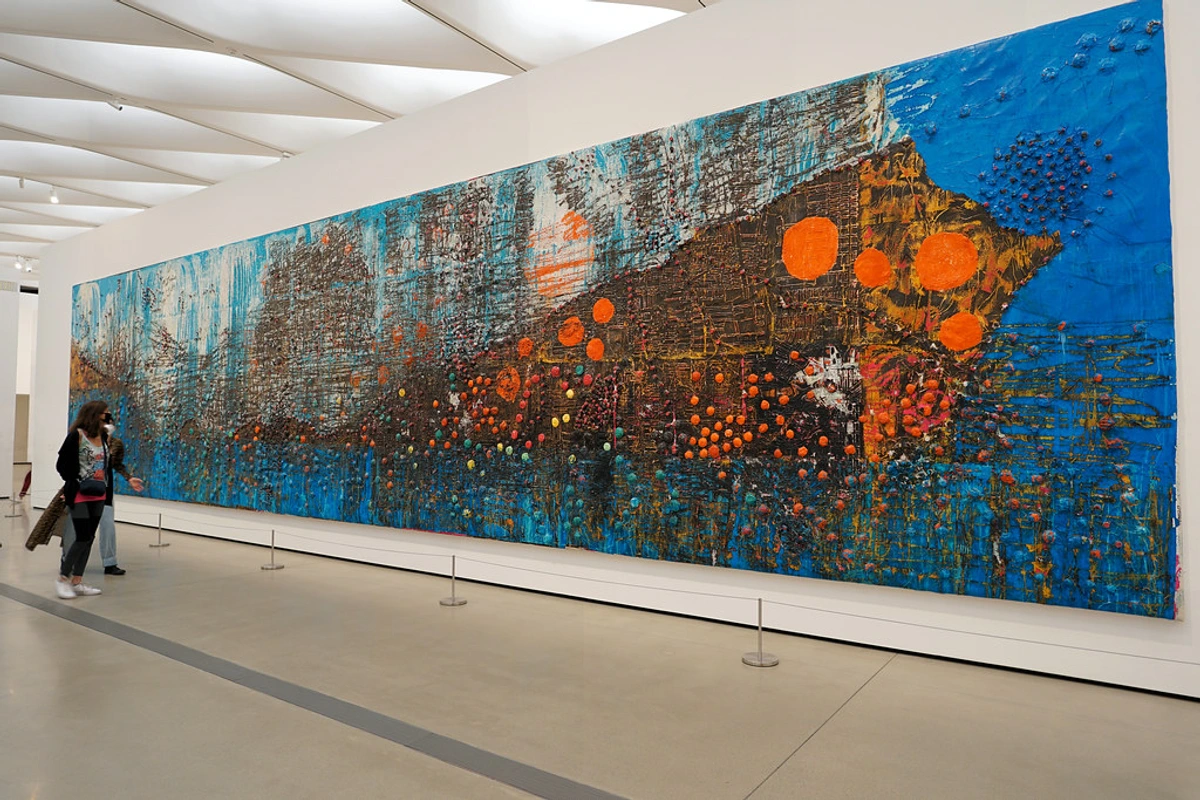
The Genesis of 'Social Abstraction': Materials, Message, and Meaning
Bradford’s artistic language, 'social abstraction,' is the very heart of his practice. It’s a profound conceptual framework that asserts the intrinsic social and political weight of his chosen materials, transcending mere aesthetics to deliver potent commentary. Before we get into the nuts and bolts—or rather, the paper and sanders—we have to talk about the 'why'. Bradford’s technique isn't just for show; it's fundamental to his message. He works with materials sourced from his own neighborhood in South Los Angeles, but his conceptual framework extends to any urban environment. We're talking about things you'd walk past without a second glance:
The Language of Urban Palimpsests
I like to think of a city as a living palimpsest—a manuscript where the original writing has been erased and written over multiple times, yet traces of the earlier script remain visible. Bradford’s art is a literal manifestation of this concept. He’s showing us that the urban landscape, much like those ancient texts, is an accumulation of layered histories, policies, and human interactions, where nothing is ever truly erased, only built upon or partially obscured. His work compels us to look for those faint, persistent traces of what once was.
The Core Concept: Social Abstraction
Before we get into the nuts and bolts—or rather, the paper and sanders—we have to talk about the 'why'. Bradford’s technique isn't just for show; it's fundamental to his message. He works with materials sourced from his own neighborhood in South Los Angeles. We're talking about things you'd walk past without a second glance:
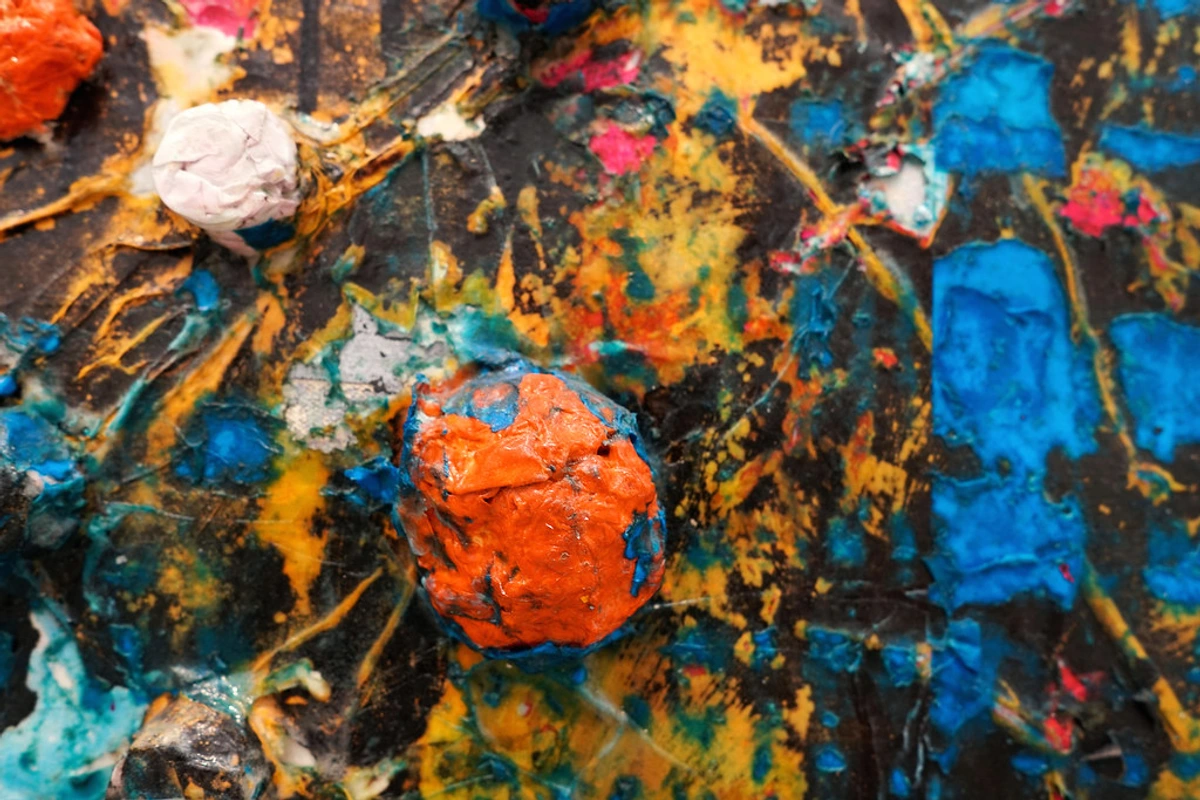
- Billboard posters: Ripped from hoardings, advertising everything from movies to lawyers, these larger-than-life fragments speak of commercial aspiration, consumer culture, and urban visual noise. They represent the grand, often fleeting, promises of city life. The sheer scale of these posters also reflects the overwhelming presence of commerce and advertising in urban environments, an almost aggressive visual assault that Bradford reclaims and recontextualizes.
- The Ephemeral Nature: These billboards are designed to be temporary, replaced as quickly as trends and campaigns shift. By preserving them, Bradford highlights their fleeting existence, turning transient messages into enduring historical artifacts.
- Merchant posters: Fliers for local services, often promising cash for homes or other deals, these smaller, more intimate documents capture the micro-economies, daily transactions, and often the struggles of a community operating beneath the glossy surface of mainstream commerce.
- Perm end papers: The tiny, delicate papers used in hair salons (he once worked in his mother's salon, a detail I just love), which carry the intimate, tactile history of personal care, communal gathering, and the unseen labor of beauticians. These are incredibly poignant materials, full of subtle narratives.
- Twine, caulk, and glue: The literal building blocks of his compositions, these utilitarian materials speak to construction, repair, and the underlying infrastructure—the very scaffolding—of the urban environment. They form the 'bones' of his abstract landscapes.
Each of these seemingly humble materials holds a wealth of information, a kind of embedded data set about the city and its inhabitants. It's like finding a series of lost journals, each scrap a page filled with silent stories. This is the profound elegance of 'social abstraction' – it elevates the discarded to the eloquent.
He famously terms his approach "social abstraction." This concept is not just pivotal; it’s the very intellectual backbone of his practice. It posits that the materials he employs are far from inert. Instead, they are deeply infused with the social, economic, and political fabric of a place—carrying the very DNA of their urban origins.
credit, licence Think about it for a moment: a faded billboard isn't simply colored paper; it's a spectral echo of failed aspirations, of shifting demographics, and the relentless, consuming churn of commerce. A "for lease" sign, painstakingly peeled from a wall, speaks volumes about economic struggle, gentrification, or the relentless march of urban redevelopment. And those delicate perm papers? They transcend mere tissue; they represent intimate connections to labor, personal beauty rituals, and the shared experiences of a community, echoing the very essence of human interaction, conversation, and care. This approach has clear parallels to other movements, as explored in the definitive guide to mixed media in abstract art techniques, materials, and contemporary masters.
By meticulously layering and then strategically tearing away at these seemingly mundane, often overlooked materials, Bradford isn't just making abstract art for art's sake. He's meticulously crafting intricate, tactile maps of human existence, creating abstract works that are intrinsically linked to real human stories, profound economic shifts, and the often-invisible histories deeply embedded in urban environments. It's a remarkably powerful way to render the invisible visible, to give resonant voice to the unspoken narratives of the street, inviting us to see beyond the surface. This commitment to 'social abstraction' is what elevates his work from mere aesthetic appeal to profound societal critique. His approach resonates with early 20th-century movements like Assemblage and Arte Povera, where artists similarly embraced found objects and 'poor' materials to challenge traditional notions of art and value. Yet, Bradford infuses this tradition with a distinct social and political consciousness, making his work uniquely contemporary and vital.

The Process: Building Up to Tear It All Down
So, how does a seemingly random pile of street detritus transform into a monumental, multi-million dollar artwork that commands attention in the world's most prestigious galleries? It’s far from a casual endeavor. Bradford's artistic method is a grueling, intensely physical process, combining elements of traditional collage, forensic archaeology, and sheer brute force. I've always thought of it as a dramatic two-act play, each act essential to the final revelation: the relentless Addition of layers, followed by the violent, yet deliberate, Subtraction.
Act I: Addition (The Layering)
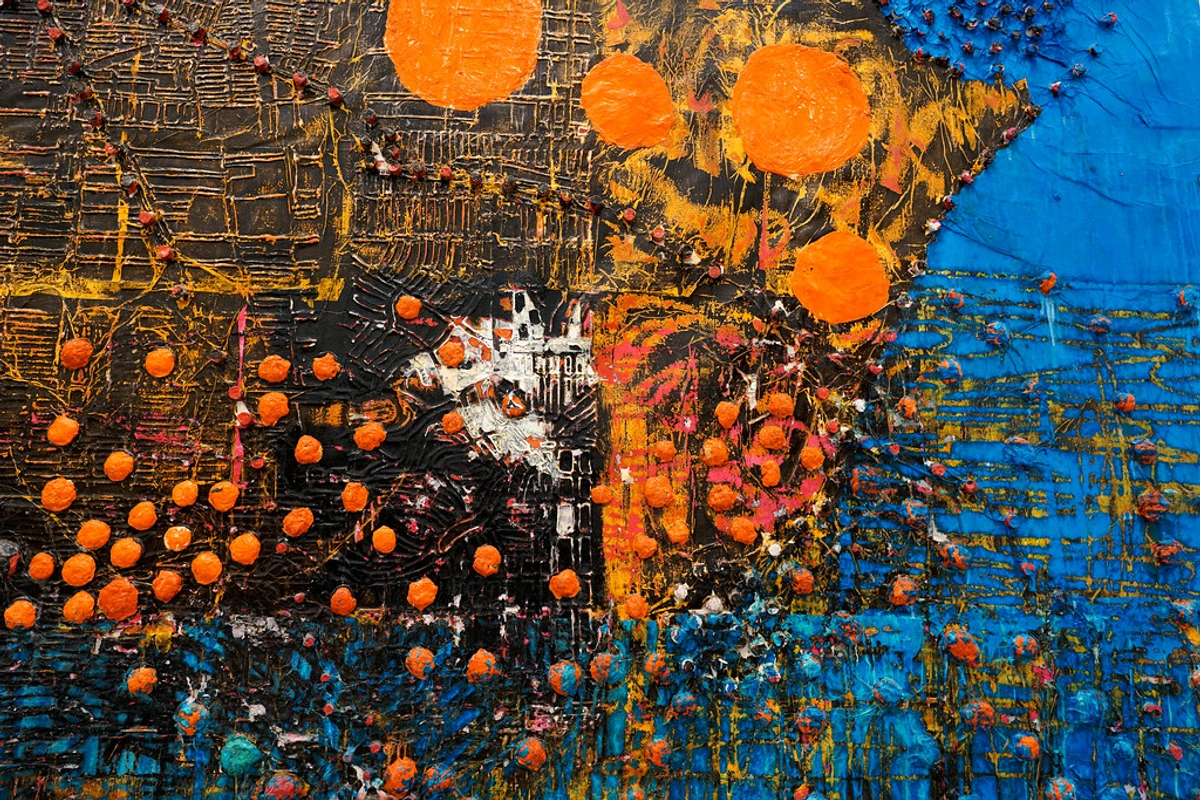
This is the intensely meticulous and physically demanding collage phase, an unwavering exercise in controlled accumulation. Bradford typically initiates his process by stretching a large canvas, much like any traditional painter, but that’s where the conventional similarities abruptly end. He then embarks on a relentless, almost ritualistic, process of adding layers – and when I say layers, I mean dozens, sometimes even hundreds, of sheets of paper. Each sheet is meticulously selected from his extensive urban scavenge hunts, imbued with its own forgotten history and texture. He'll apply one sheet, then a generous, often thick, layer of shellac or commercial glue, like PVA glue, to powerfully seal and bind it, followed by yet more paper, perhaps some strategically placed twine or caulk to meticulously create a linear grid or raised topographical elements. This is then followed by another robust coating of sealant, and so on. It’s a slow, deliberate, and extraordinarily physically demanding process of building a dense, heavy strata – a kind of man-made geological core for the artwork, reflecting the very sedimentation of urban experience. The choice of adhesives is crucial; they don't just hold things together but contribute to the overall rigidity, texture, and the unique sheen or matte finish of the final piece. It's a delicate balance between brute force and meticulous control, a testament to the artist's true craftsmanship.
The papers themselves are not incidental; they are absolutely crucial, acting as repositories of culture and commerce. They aren't just any papers; they are specific to his immediate environment and the narratives he seeks to unearth:
- Commercial Billboard Posters: These bring vibrant, often faded, commercial imagery and text, remnants of advertising campaigns.
- Merchant Fliers: Small, often hand-printed advertisements for local services, offering glimpses into community economics.
- Perm End Papers: As mentioned, these delicate, translucent papers from hair salons connect directly to personal history, labor, and intimate community spaces.
- Newspaper Clippings/Magazine Fragments: Sometimes these are incorporated, adding textual elements and snippets of current events, offering a fragmented archive of recent headlines, public discourse, and popular culture.
- Discarded Packaging: Elements from product boxes or bags, often with vibrant graphic design or instructional text, adding another layer of commercial context and the visual language of consumerism.
A Deeper Look: Materials and Their Multifaceted Roles
This table further details the materials and their roles, demonstrating Bradford's profound intentionality in every choice:
Material  | Primary Purpose in Layering | Broader Artistic Role |
|---|---|---|
| Found Papers | Primary source of color, texture, social context, and textual fragments; layers of urban history. Their inherent pigments and fading dyes become the actual 'paint' of the artwork. | These materials – discarded advertisements, fliers, newspaper fragments – serve as direct conduits to the socio-economic pulse of a neighborhood. They are the 'raw data' of his social abstractions, carrying inherent narratives of consumerism, aspiration, and daily life, reflecting the very fabric of urban existence. |
| Shellac/Glue (e.g., PVA) | Acts as a powerful adhesive, binding the myriad layers, and a clear, rigid sealant for durability. | Essential for creating the dense, durable strata that can withstand the later 'subtractive' phase. It's the literal binder of urban history, transforming fragile paper into a monolithic surface. Think of it as the historical mortar, holding fragmented memories together and solidifying fleeting moments. |
| Twine/Caulk | Used to create raised, topographical lines and grids, a form of 'drawing' that mimics urban infrastructure. | These elements are crucial for creating the illusion of cartographic details – highways, city blocks, or even abstract boundaries. They represent the unseen infrastructure that shapes urban life, subtly guiding the viewer's eye and creating a sense of systematic organization within the chaos. They are a form of elements of art line in action, defining boundaries and paths. |
| Paint (Acrylic, occasionally oil) | Sometimes used as a background wash, a unifying layer, or to highlight excavated areas, but rarely as a dominant feature. | While not the primary medium, paint plays a supportive, almost architectural, role. It sets atmospheric tones, defines certain areas, or intensifies colors revealed through sanding. It's often used subtly to either conceal or enhance the found materials, acting as a crucial but understated element in the overall composition. |
| Epoxy Resin/Tar | Occasionally incorporated for added texture, sheen, or to create denser, more robust sections. | These heavier, more viscous materials provide contrasting textures and often a dark, almost subterranean depth. They can suggest industrial elements, the grime of the city, or areas of profound density and obscured history within the urban landscape, adding a primal, almost geological dimension to the work. |

He might soak the papers to separate the colored layers, revealing new hues and textures, or use them as-is. This meticulous preparation highlights his dedication to controlling the accidental, extracting new visual information from discarded objects. The underlying principle is to build a complex, weighted surface – a true testament to the accumulation of time and societal presence. This deliberate act of accumulation isn't just about creating a physical mass; it's a profound conceptual gesture, mirroring the way histories, policies, and cultural shifts layer upon one another in urban environments. It’s a literal sedimentation of society, a tangible representation of how the past is never truly erased, but merely built upon. This layered approach is also a key aspect of my own practice, as I explore the unseen layers in my abstract mixed media, seeking to build depth and narrative far beyond the initial visual.
The Philosophy of Accumulation: Society's Sediments
I often think about how our cities themselves are built up in layers: new construction over old foundations, fresh paint over faded graffiti, vibrant commerce over forgotten struggles. Bradford's 'addition' phase is a conscious echo of this societal process. He's not just creating texture; he's creating a visual metaphor for the weight of history, the persistence of memory, and the constant, often overwhelming, presence of information and experience in our urban lives. It’s a monumental act of preservation, ensuring that these fragments of existence are not simply lost to the relentless churn of time, but are instead memorialized and given new voice. This deliberate act of burying and re-exposing is what gives his work its incredible depth, both physically and conceptually.
Act II: Subtraction (The Visceral Excavation)
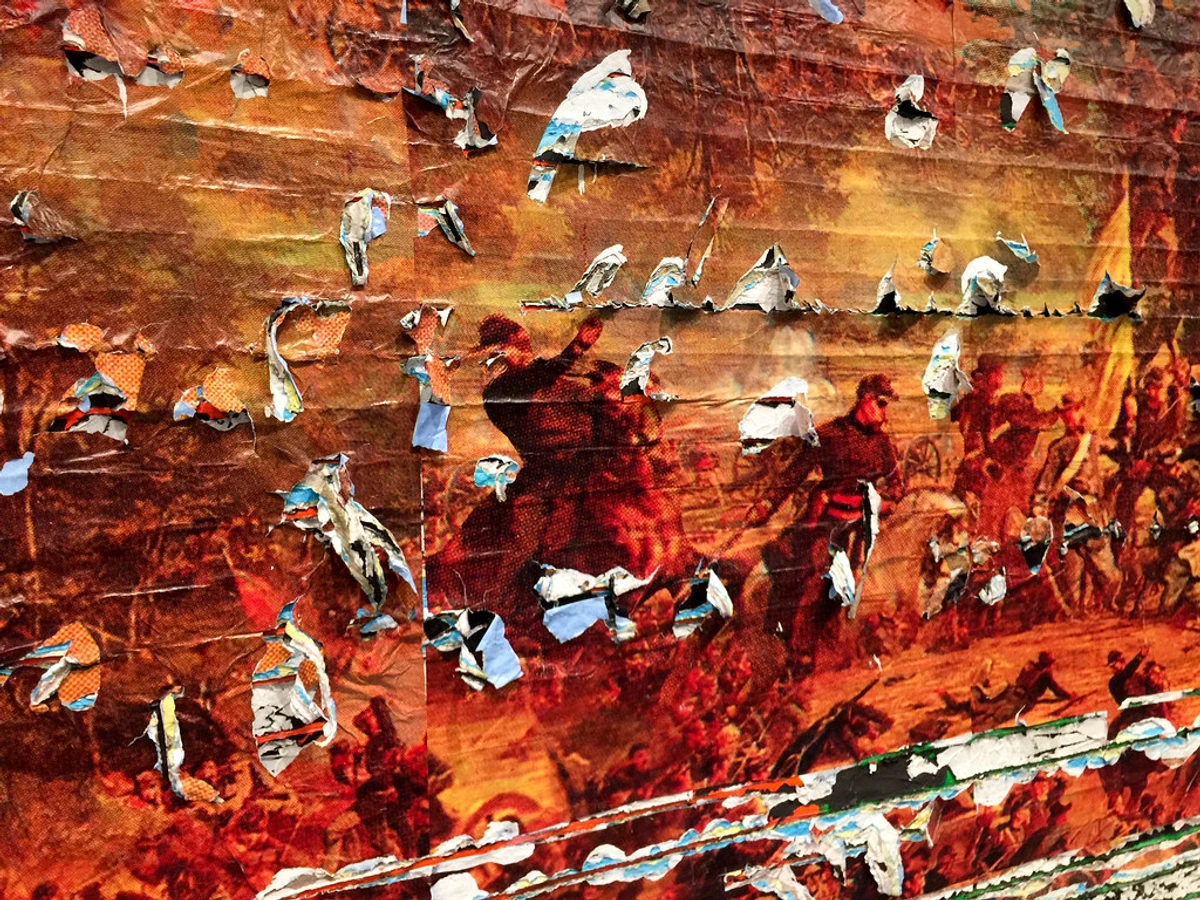
This is where things get truly compelling, and often, quite visceral. Once the immense, almost geological weight of the layered papers and adhesives has fully cured and hardened – a process that can take weeks – Bradford initiates the second, arguably more dramatic, act: subtraction. This is the décollage part of his process, a French term that literally translates to 'to unstick' or 'take off'. It stands as the direct, often aggressive, opposite of collage. Instead of meticulously building up, he's ruthlessly taking away, revealing the hidden histories and vibrant fragments that lie beneath the surface, much like an archaeologist unearthing ancient ruins. This dynamic push-and-pull between addition and subtraction is a hallmark of mixed media in art, creating a dialogue between creation and deconstruction. The very act of removal becomes an act of creation, a revealing of what has always been present, just out of sight. It's a truly profound philosophical underpinning to his intensely physical methodology.
His primary tool for this intensive archaeological excavation? A formidable power sander, though I’ve seen him use everything from industrial-grade knives to gentler hand tools. The choice of such an aggressive, utilitarian tool is itself a statement, blurring the lines between art-making and construction work. He's not just a painter; he's a construction worker, an archaeologist, and a storyteller all rolled into one, using tools typically associated with demolition to unearth profound narratives. This deliberate choice of tool amplifies the visceral impact of his work, forcing a confrontation with the often-rough realities of urban decay and reconstruction. His tools—from the aggressive power sander to the delicate palette knife—are chosen precisely for their ability to both destroy and reveal, to strip away the superficial and expose the profound. This process is intensely physical, almost a performance of labor, connecting the act of art-making directly to the arduous work of urban development and decay. It’s a dialogue between creation and deconstruction, where the scars left behind are as significant as the original layers.
I know, it sounds almost sacrilegious – wielding a heavy-duty construction tool, like a power sander, against what will eventually become a multi-million dollar artwork. But this is precisely how he 'finds' the painting, how he quite literally unearths the narratives he's painstakingly buried beneath layers of urban detritus. Through a precise combination of aggressive sanding, deliberate gouging, careful scraping, and sometimes, a more gentle peeling, he carves into the accumulated strata. Each pass of the sander, each rip of a tool, is simultaneously a destructive and a deeply creative act, revealing tantalizing glimpses of vibrant colors, haunting fragments of text, and rich textures that have been hidden, sometimes for dozens of layers. You might suddenly see a sliver of electric yellow from a long-forgotten advertisement six layers down, or the spectral outline of a word from a local flyer that now takes on a new, poignant meaning, transforming a mundane fragment into a profound revelation.
Crucially, this is far from random defacement. Bradford's subtraction is a highly intentional, almost forensic artistic gesture, echoing the work of an archaeologist meticulously unearthing relics. He carves deep grooves and channels into the surface that powerfully evoke the chaotic yet organized grids of a city, exposing networks of twine that visually mimic freeways, subterranean utility lines, or even the scars left by urban planning and socio-economic shifts. He creates weathered, topographical textures that are direct analogs to urban decay, the erosion of billboards, and the relentless, constant flux of the streetscape. The entire process becomes a compelling performance of discovery, revealing history, memory, and social narratives by stripping away the superficial and unearthing the profound. It's a powerful, tangible metaphor for how we understand our past and present – not merely by adding new information, but by uncovering and re-interpreting what has always been there, just beneath the surface, waiting to be seen. This aligns beautifully with how I approach exploring texture in abstract art in my own practice, always searching for hidden depths. It’s an almost spiritual act of revealing truth, where the beauty often lies in the scars and imperfections.
Beyond the Canvas: Large-Scale Installations and Public Art
While Bradford is renowned for his monumental canvases, his artistic vision extends far beyond the traditional gallery wall. He has increasingly engaged with large-scale installations and public art projects, leveraging his signature layering and decollage techniques to interact directly with architectural spaces and communities. These works often amplify his core themes of urbanism, social justice, and collective memory on an even grander scale, physically enveloping the viewer in the narratives of place.
One notable example is his powerful contribution to the 2017 Venice Biennale, where he represented the United States with "Tomorrow Is Another Day." His transformation of the U.S. Pavilion was extraordinary, with his deconstructed collages appearing to peel back the very skin of the building itself, creating a visceral commentary on American history and identity, particularly the experiences of marginalized communities. The exhibition included massive canvases and smaller, more intimate works, all contributing to an overwhelming sense of presence and history. These installations move his "social abstraction" into a three-dimensional, immersive experience, demonstrating that the boundaries of what constitutes a 'painting' are fluid and expansive. He actively uses the physical presence of the space to deepen the dialogue with the materials and themes, turning the architecture itself into a canvas for social commentary. I remember seeing images of that exhibition and being struck by how the art didn't just hang on the walls; it became the walls, blurring the lines between the art and the institutional space, making you feel completely enveloped in the narrative. It’s a masterclass in using scale and environment to amplify a message.
Art + Practice (A+P): A Commitment to Community
Bradford's commitment to social justice extends far beyond the canvas into tangible community engagement. In 2013, he co-founded Art + Practice (A+P), a non-profit organization located in Leimert Park, South LA. A+P is dedicated to supporting opportunity youth aging out of the foster care system, offering them crucial life skills, educational support, and job training. Simultaneously, it hosts high-quality art exhibitions and public programs, bringing world-class art to the community and fostering a vibrant cultural hub. This dual mission reflects Bradford's belief that art and social justice are inextricably linked. He views A+P not just as philanthropy, but as an integral part of his artistic and ethical framework, demonstrating that art can be a powerful catalyst for real-world change and a means to reinvest in the very communities from which his materials and inspirations are drawn. It's a testament to his holistic vision of an artist's role in society.
These ventures into public art underscore his commitment to engaging directly with the communities that inspire his work. He's not just making art about the city; he's making art with and for its inhabitants, transforming public spaces into sites of contemplation and collective memory. These projects often involve collaborations with local organizations and residents, further embedding the work within the fabric of the community. It’s an exciting evolution, showing how an artist can push the boundaries of their chosen medium to create truly immersive and impactful experiences that transcend the traditional gallery setting.
Beyond Technique: Key Themes and Interpretations
While Bradford's innovative techniques are undeniably captivating, it's the rich tapestry of themes he weaves into his work that truly elevates it to profound artistic statements. His art is never just about the process; it's a vehicle for powerful social commentary and an exploration of complex human experiences.
The Artist as Urban Archaeologist: Unearthing Hidden Histories: Unearthing Hidden Histories
Bradford truly embodies the profound role of an urban archaeologist, meticulously excavating the rich layers of history, commerce, and human presence embedded within his found materials. Each deliberate tear and every sanded-away surface reveals tantalizing fragments of past advertisements, forgotten flyers, and obscured narratives, effectively creating a powerful, living visual record of the city's ceaseless evolution. He doesn't merely observe the urban landscape; he actively participates in revealing the hidden histories of marginalized spaces, bringing to light the socio-economic strata and cultural shifts that profoundly shape urban life. It’s akin to how a diligent historian unearths forgotten documents or an anthropologist deciphers ancient artifacts, but Bradford’s unique tools are industrial sanders and shellac, and his vast archives are the very streets of the city itself. He's not just making art; he's actively asking us, compelling us, to look for the stories beneath the surface, to literally dig deeper into the layers of our shared existence, recognizing that every discarded scrap holds a piece of our collective past. This archaeological approach isn't just about discovery; it's about reclaiming narratives, giving voice to the voiceless, and asserting the presence of histories often deliberately ignored or paved over. It’s a powerful act of remembrance and resistance. He transforms what might be seen as mere detritus into a complex dataset, inviting us to become 'readers' of the urban environment, deciphering the subtle codes of its evolution and the narratives inscribed within its surfaces.
Mapping and Urban Topographies: Visualizing Societal Structures
A powerfully recurring motif in Bradford's large-scale works is the evocative sense of maps and urban topographies. The intricate grids formed by embedded twine and caulk, combined with the fragmented, layered papers, often coalesce into visual echoes of aerial city views, faded street maps, or the complex, pulsating networks of freeways and utility lines. These are never literal maps, mind you, but deeply resonant abstract representations that masterfully explore the complex elements of art line as a means to convey profound societal structures and critical urban theory:
- Boundaries and Borders: This speaks to how urban planning, historical redlining (a discriminatory practice that systematically denied services to residents of certain areas, typically based on race or ethnicity, severely impacting generational wealth and opportunity), and socio-economic divisions manifest physically, often serving as stark reflections of systemic inequalities and segregated communities. The lines he draws are not just aesthetic; they are often lines of power and exclusion, revealing the subtle yet potent structures of societal control that have historically carved up cities and continue to influence contemporary life.
- Movement and Flow: These elements articulate the pathways of people, goods, and information through a city, highlighting patterns of migration, the relentless churn of commerce, and the ever-present dynamics of communication. They suggest both connection and dislocation, the ebb and flow of human life within the urban grid.
- Invisible Histories: The layers within layers constantly allude to overlooked or deliberately forgotten narratives embedded within specific locations, serving to give voice to silenced pasts and marginalized experiences, bringing them to the forefront of our awareness.
- Systemic Structures: His compositions illuminate how power, infrastructure, and policy subtly, yet powerfully, shape daily life, revealing the often-unseen forces that govern urban existence and personal destinies. This is an almost diagnostic approach, laying bare the societal skeleton.
- Personal Geographies: While unequivocally abstract, these maps also powerfully reflect individual journeys and subjective experiences within these larger, often oppressive, structures, making the macro feel deeply, almost unsettlingly, personal, inviting viewers to locate their own narratives within his expansive vision. For me, these maps evoke the feeling of navigating a complex city, the sense of both being a tiny part of a vast system and yet, each turn and decision shaping a unique, individual trajectory. They remind me of the countless unseen paths, both literal and metaphorical, that define our lives within the urban labyrinth.
He’s not merely showing us a pretty picture of a city; he's inviting us, compelling us even, to actively contemplate the intricate, often unjust, systems that govern it and the myriad lives lived within its confines. It’s a powerful, almost diagnostic way to make us acutely aware of the unseen forces that constantly shape our urban environments, almost like looking at an X-ray of society itself, revealing its hidden bones and arteries. His maps are not simply representations, but profound statements about the power dynamics inherent in urban landscapes.
The Politics of Abstraction: Art as Social Commentary
Beyond merely reflecting urban topographies, Bradford's work actively engages with the politics of abstraction. He demonstrates that abstract art, often perceived as divorced from reality, can be a potent vehicle for social and political critique. By transforming mundane, loaded materials into grand abstract statements, he compels viewers to confront uncomfortable truths about power structures, economic inequality, and historical injustices without resorting to overt figuration or didactic messaging. The abstraction allows for a universal entry point, inviting empathy and critical thought rather than simply illustrating a narrative. It's a sophisticated play on form and content, proving that lines, colors, and textures, when imbued with intention, can speak volumes about the human condition and the forces that shape our societies. This is something I deeply connect with in my own abstract work—the idea that a feeling, an idea, or a critical observation can be conveyed through color, line, and texture without needing to literally depict it. It allows for a more open, often more powerful, interpretation.
Social and Racial Identity: Confronting Injustice and Celebrating Resilience
Bradford's formidable body of work is profoundly informed by his lived experiences as a Black man growing up in the complex socio-economic landscape of South Los Angeles. He directly confronts issues of social and racial identity, often subtly through his material choices and the monumental scale of his works, effectively transforming deeply personal narratives into universal commentary on the human condition:
- Gentrification: This theme is starkly evident in the literal erasure and transformation of neighborhoods, powerfully reflected in the layering and stripping away of old advertisements and public notices that physically embody what once was. His work makes visible the often-invisible forces of economic change, displacement, and the relentless march of redevelopment.
- Redlining and Segregation: His fragmented "maps" and delineated, often invisible, boundaries subtly allude to the historical and ongoing practices of redlining – a discriminatory practice that systematically denied services to residents of certain areas, typically based on race or ethnicity. These practices profoundly shaped urban demographics and continue to impact communities, leaving scars that his art brings to the surface.
- Resilience and Community: Despite systemic challenges and historical injustices, Bradford's work consistently celebrates the enduring strength and resilience of communities. This is often vividly portrayed in the vibrant, persistent colors and fragmented images that emerge triumphantly from beneath darker, more oppressive layers—a powerful, hopeful metaphor for survival, adaptation, and the unwavering spirit of human connection.
- Queer Identity: As an openly gay artist, his work also subtly, yet powerfully, touches upon themes of visibility, marginalization, and the complex construction of self within prevailing societal norms. While often expressed with a nuanced touch, this essential aspect of his identity profoundly informs his empathetic gaze upon the overlooked, the 'othered,' and the unspoken stories, contributing to the rich, multifaceted narratives embedded in his art. He invites viewers to find their own reflections within his broader social critiques, bridging personal and collective experiences.
His art, therefore, serves as a silent, yet powerfully articulate, witness to these ongoing dialogues, urging viewers to look beyond the immediate aesthetic and consider the profound societal implications deeply embedded within. It’s a masterclass in how art can communicate complex ideas without resorting to explicit didacticism, allowing the materials themselves to speak volumes. Furthermore, as an openly gay Black artist, Bradford's identity subtly, yet profoundly, informs his empathetic gaze upon the overlooked, the 'othered,' and the unspoken stories. His work champions the visibility of marginalized experiences, inviting viewers to find their own reflections within his broader social critiques and bridging personal and collective experiences. It's a powerful testament to art's ability to transcend labels and speak to universal human truths. His art refuses to simplify complex identities, instead presenting a rich, layered vision where personal experience and broad social commentary are inextricably woven together. This intersectionality is what makes his work so enduringly relevant and vital in today's world.
The Aesthetics of Decay and Transformation: Finding Beauty in Imperfection
There’s an undeniable, raw beauty in the processes of deterioration and transformation that is absolutely central to Bradford's aesthetic. He doesn't shy away from these natural (and often urban) forces; instead, he meticulously embraces and amplifies them:
The Allure of Imperfection: Embracing the Worn and Weathered
Bradford’s work powerfully reminds us that beauty isn't always pristine or perfectly preserved; often, and perhaps more profoundly, it’s found in the imperfections, the wear and tear, and the indelible stories etched onto the very surfaces of our world. It speaks directly to the power of imperfection in artistic creation, where the unexpected and the weathered often yield the most profound results. I find this incredibly liberating in my own practice – the idea that a flaw, a tear, or an unexpected texture can actually add to the richness and authenticity of a piece, rather than detract from it. It's about seeing the inherent aesthetic value in the cycles of creation and decay, much like observing the beautiful patina on an ancient bronze statue or the intricate patterns of cracked earth.
- Erosion and Weathering: He deliberately recreates and exaggerates the natural breakdown of urban surfaces over time, mirroring how billboards fade, paint peels, and walls crumble. This isn't just mimicry; it’s a profound commentary on the transience of material and the enduring narrative of place.
- Accidental Beauty: His method thrives on the unexpected. The torn edges, the serendipitous revelation of exposed layers, and the dynamic interplay of disparate materials often create astonishing visual harmonies that could never be entirely planned. This embrace of chance is a powerful lesson for any artist.
- Rebirth and Renewal: From the very act of decay and deconstruction, something new and profoundly beautiful emerges. His work champions the idea that even from apparent ruin, renewal and new meaning can be forged, a compelling metaphor for urban regeneration and personal resilience.
His art powerfully reminds us that beauty isn't always pristine or perfectly preserved; often, and perhaps more profoundly, it’s found in the imperfections, the wear and tear, and the indelible stories etched onto the very surfaces of our world. It speaks directly to the power of imperfection in artistic creation, where the unexpected and the weathered often yield the most profound results.
Connecting with Bradford's Spirit: Your Creative Journey into Layered Abstraction
Let's be absolutely real for a moment: most of us don't have access to a sprawling, industrial-sized warehouse studio, nor do we particularly relish the idea of filling our living spaces with fine dust from aggressive power-sanding (I certainly don't!). But here's the truly beautiful, liberating truth: you absolutely can draw profound and lasting inspiration from Bradford's revolutionary approach, directly within your own creative space. His work serves as a potent reminder that art isn't, and shouldn't be, confined to traditional mediums or pristine, untouched canvases. Instead, it can be powerfully forged from the most unexpected, humble materials readily available around us. Moreover, it demonstrates with undeniable force that a subtractive process – the often-overlooked act of taking away, of deconstructing – can be just as, if not more, creatively liberating and impactful than a purely additive one. It's about embracing the idea that the art is often already there, just waiting to be uncovered, waiting for you to peel back the layers and reveal its hidden essence. It's a wonderful concept that has deeply influenced my creative flow and how I approach my own abstract painting.
Here’s how you could adapt his ideas:
Bradford's Method | Home Studio Adaptation | |||
|---|---|---|---|---|
| Industrial Power Sander | Think hand-sanding with various grits of sandpaper to expose underlying layers, using a wet sponge or cloth to gently scrub away softened paper, or engaging in deliberate, careful peeling with a palette knife or even your fingernails. The goal is controlled removal, not just brute force. | |||
| Massive Billboard Papers | Your home is a treasure trove! Seek out old magazines, newspapers, security envelopes (those with interior patterns!), wrapping paper scraps, old book pages, discarded maps, junk mail, or even packaging materials. Any paper with inherent texture, pattern, or text holds potential. This is a chance to see the 'mundane' with new eyes. | |||
| Shellac | Acrylic medium (like gel medium or heavy gel), PVA glue, or Mod Podge are fantastic, accessible alternatives. They provide excellent adhesion and can create varied finishes, from matte to glossy, mimicking Bradford's sealing process. Consider exploring the best acrylic mediums for your needs. | |||
| Architectural Scale | While you might not create gallery-sized murals, you can still think big within your constraints. Work on a sturdy wooden panel (even a scrap piece!), a heavy-duty piece of cardboard or foam board for rigidity, or multiple smaller canvases arranged into a larger composition. This helps maintain the structural integrity needed for aggressive layering and subtraction, preventing your artwork from buckling. | |||
| Urban Scavenging (Conceptual) | Instead of street detritus, consider objects from your personal history or immediate environment. Old photographs, receipts, tickets, letters, or even fabric scraps can be integrated, imbuing your work with a personal 'social abstraction' narrative. | n | Layering Techniques (Accessibility) | Experiment with various layering strategies: transparent layers, opaque layers, or patterned papers. Try creating a subtle grid with masking tape before adding paper, then peeling the tape away after some layers have dried to reveal crisp lines beneath – a simpler version of Bradford's twine channels. This builds interesting exploring texture in abstract art. You can also play with different types of paint types for artists beneath your papers to see what emerges. |
| Embracing the Unexpected (Mindset) | This isn't just about technique; it's about embracing chance. Allow for your materials to guide you, to react to your touch in unpredictable ways. Embrace the 'happy accidents' that emerge from layering and removal – a tear that reveals a surprising color, a sanding mark that creates an unintended texture. This mindset cultivates adaptability and an openness to discovery. | |||
| Social Commentary (Conceptual) | While you might not be directly using street posters, consider how your chosen everyday materials (junk mail, old clothing, personal ephemera) carry their own 'social' weight or personal history. What stories are embedded in these objects? How can their transformation speak to broader themes of consumption, memory, or identity? It's about finding the 'data' in your personal environment and letting it inform your art. |
Try creating a small, layered collage and then see what happens when you try to 'excavate' it. It’s a fantastic way to break free from the preciousness that can often cling to a blank canvas. By embracing this process, you invite happy accidents and unexpected textures to guide your composition, often leading to far more interesting and authentic results. It's a deeply satisfying, almost meditative process, and one I explore in my own way in some of my abstract works. You can even see some of the results of my experiments on my /timeline, where I document my own creative journey.
Critical Reception and Enduring Legacy of Mark Bradford
Mark Bradford's distinctive approach to art-making has not only captivated audiences but has also garnered significant critical acclaim, establishing him as a pivotal figure in contemporary art. Critics often laud his ability to seamlessly merge socio-political commentary with a sophisticated abstract aesthetic, creating works that are both visually arresting and intellectually profound. His work is frequently discussed in terms of its unique contribution to abstraction, its engagement with urban sociology, and its powerful reflections on race, class, and identity, positioning him as a leading voice in the dialogue between art and social justice.
He is widely celebrated for, and has been recognized with significant honors such as a MacArthur "Genius" Grant, for:
- Innovating the Medium: His transformation of mundane, discarded materials into monumental, deeply resonant artworks has expanded the very definition of contemporary painting and mixed media. His pioneering use of décollage with industrial tools has redefined the possibilities of abstract art.
- Social Relevance: Critics consistently highlight how his art functions as a powerful form of social critique, offering insights into marginalized communities and urban systemic issues without being overtly didactic. He confronts uncomfortable truths with a compelling visual language.
- Formal Mastery: Despite the seemingly 'raw' nature of his materials, his compositions are recognized for their intricate formal qualities, including their sophisticated color palettes, dynamic textures, and complex spatial arrangements. His ability to create harmony out of urban chaos is truly remarkable.
- Global Impact: Having exhibited at major institutions worldwide and represented the U.S. at the Venice Biennale, his influence extends globally, prompting dialogue on universal themes of history, memory, and community. His work is held in the permanent collections of prestigious institutions such as the Museum of Modern Art (MoMA), the Los Angeles County Museum of Art (LACMA), and Tate Modern.
Bradford's legacy is continuously evolving, cementing his place not just as a painter, but as a chronicler of contemporary urban experience, whose work challenges viewers to look deeper at both art and society. His profound impact is recognized globally, and he continues to influence a new generation of artists. His work often stands in dialogue with other ultimate guide to abstract expressionism artists who used their art for powerful social commentary, but he has carved out a unique space through his specific material practice and social critique.
Frequently Asked Questions (FAQ)
What are Mark Bradford's key artistic periods or phases?
Mark Bradford's career can broadly be understood through several evolving, yet interconnected, phases that demonstrate a deepening engagement with his core themes and materials:
- Early Salon-Inspired Works (late 1990s - early 2000s): Directly incorporating perm end papers and elements from his mother's beauty salon, these works established his material-driven approach and nascent ideas of 'social abstraction.' They were often smaller in scale and more overtly textural, a direct dialogue with his immediate environment, exploring the intimate narratives of community and personal transformation.
- Mapping and Urban Infrastructure (mid-2000s): This period saw his work expand in scale, with a stronger emphasis on grid-like compositions and the incorporation of more overt elements resembling street maps, architectural plans, and urban decay, particularly using merchant posters and twine. "Mithra" (2008) is a prime example of this phase, where the city grid becomes a metaphor for societal structures and power dynamics.
- Monumental Abstraction and Socio-Political Commentary (late 2000s - present): His canvases grew to truly architectural dimensions, with the abstraction becoming more dense and layered. Here, his work explicitly confronts broader socio-political issues like gentrification, redlining, and queer identity, culminating in major exhibitions like the Venice Biennale's "Tomorrow Is Another Day" (2017) and "Deep Blue" (2018). His public art projects and the founding of Art + Practice also mark this period, extending his artistic impact beyond the gallery into direct community engagement.
While these phases provide a useful framework, it's important to remember that Bradford's practice is characterized by a continuous refinement and expansion of his foundational principles rather than radical stylistic shifts. He consistently builds upon his established language, always seeking new ways to articulate the intricate layers of urban life. His evolution is a testament to an artist constantly pushing the boundaries of his medium to address an ever-changing world.
What is décollage, and how does Bradford use it?
Décollage is a French term that literally translates to 'to unstick' or 'take off'. In the context of art, it stands as the conceptual and practical opposite of collage, which is about building up. Instead, décollage involves creating an image or effect by tearing, cutting, ripping, sanding, or otherwise aggressively removing layers of existing material to reveal what lies beneath. Mark Bradford's distinctive use of industrial power sanders to excavate and reveal underlying strata is a prime, and particularly aggressive, example of this technique. He transforms an act of destruction into a creative revelation, literally unearthing histories and narratives by stripping away the superficial. It's about revealing what's hidden, rather than just building anew, often leaving behind a beautiful, scarred surface that tells a story of its own.
What are some common interpretations of the 'maps' in his work?
The cartographic qualities in Mark Bradford's large-scale abstract works are among their most compelling and debated features. While never literal, these 'maps' invite a multitude of interpretations, frequently understood as:
- Sociological Blueprints: They are seen as visual representations of societal structures, delineating areas of privilege and disadvantage, lines of segregation, or the invisible boundaries imposed by economic and racial policies. They are the silent witnesses to the unequal distribution of resources and opportunities.
- Personal Journeys: Viewers often project their own experiences of navigating urban landscapes onto the canvases, seeing reflections of migration, displacement, or the transient nature of city life. The fragmented lines can evoke pathways taken or missed opportunities, making the macro feel deeply personal.
- Historical Archives: The layers of material, some revealed, some obscured, suggest archaeological sites where past events and forgotten histories are embedded, waiting to be unearthed. The 'maps' become palimpsests of urban memory, echoing the layered histories of neighborhoods and communities.
- Critiques of Power: They can be read as critiques of urban planning, gentrification, and the systemic forces that shape cities, revealing the power dynamics inherent in how spaces are designed, utilized, and controlled. The grids and channels, I think, are almost like an X-ray of society itself, laying bare its hidden structures.
Ultimately, the open-ended nature of these abstract maps allows for a deeply personal yet universally resonant engagement, inviting each viewer to consider their own relationship to the urban environment and its complex histories.
How does Bradford's work address urban planning and gentrification?
Mark Bradford's art frequently, and often subtly, addresses the complex issues of urban planning, development, and gentrification. His layering and stripping away of materials serve as powerful metaphors for the physical and social transformation of neighborhoods:
- Visualizing Erasure: The process of décollage, where old layers are torn away to reveal fragmented histories, directly mirrors how gentrification often erases the cultural and physical landscape of existing communities, replacing them with new, often homogenized, structures and narratives.
- The Mark of Displacement: By incorporating commercial flyers and
What are some of Mark Bradford's most famous artworks or series?
Mark Bradford's oeuvre is rich with powerful and iconic works, many of which are known for their monumental scale and profound social commentary. Some of his most recognized pieces and series include:
- "Mithra" (2008): A colossal 100-foot-long collage exhibited at the Hammer Museum, it evoked an ancient map or an archaeological dig, exploring themes of travel, migration, and the invisible borders of urban spaces.
- "Deep Blue" (2018): A massive, predominantly blue work that was a highlight of his exhibition at the Baltimore Museum of Art, widely interpreted as a reflection on the history of the Watts Rebellion in Los Angeles.
- "Tomorrow Is Another Day" (2017 Venice Biennale): His acclaimed exhibition at the U.S. Pavilion, where he transformed the architectural space with peeling, deconstructed collages, creating an immersive experience that interrogated American identity.
- "Merchant Posters" Series: Ongoing works where he directly incorporates thousands of merchant posters, often for predatory financial services, reflecting the economic vulnerabilities within his community.
- "Pinocchio Is Da Homie" (2008): A poignant piece that uses fragments of local signage and cultural ephemera to explore themes of authenticity, truth, and community identity.
These works, among many others, showcase his consistent exploration of social abstraction and his masterful technique of layering and excavation, cementing his reputation as a vital voice in contemporary art.
Does Mark Bradford use any paint?
Yes, he does, but it's crucial to understand that paint is rarely the star of the show in his compositions. Instead, he often integrates acrylic or, less frequently, oil paint as one of his many layers, serving as a background wash, a unifying tone, or to create a specific base color. Sometimes, it's used to highlight areas that have been excavated through sanding, bringing forward particular elements or intensifying colors. However, the dominant source of the vibrant colors, intricate textures, and visual complexity in his work undeniably comes from the myriad of layered and exposed papers themselves – the advertisements, flyers, and other found materials that form the true "skin" of his art. Paint, in his hands, becomes another material to be layered, manipulated, and ultimately, partially revealed or obscured by the subtractive process, creating unexpected color interactions and depth. It's a clever way to use a traditional medium in a completely non-traditional, supporting role.
How does Mark Bradford utilize color in his abstract compositions?
While his color palette often emerges organically from the found materials—the faded hues of billboards, the vibrant shades of discarded flyers—Bradford masterfully orchestrates these elements to create dynamic and emotionally resonant compositions. He uses color not just for aesthetic appeal but as a vehicle for meaning:
- Layered Revelation: Colors are often partially obscured and then dramatically revealed through his sanding process, creating unexpected juxtapositions and a sense of discovery. This mirrors the uncovering of hidden histories.
- Emotional Resonance: Certain colors might evoke specific moods or associations. Blues and grays could suggest urban melancholia or the vastness of the city, while pops of bright yellow or red might signify resilience, hope, or moments of vibrant life within a challenging environment.
- Symbolic Palettes: He might deliberately select or emphasize certain color combinations to subtly reference socio-political themes. For example, the colors of a national flag or specific cultural symbols could be embedded within the abstraction.
- Depth and Dimension: The interplay of transparent and opaque layers, combined with the textured surface, creates an incredible sense of depth. Color is not flat but exists in multiple dimensions, drawing the viewer's eye into the complex strata of the artwork.
Ultimately, for Bradford, color is another form of language, woven into the fabric of his 'social abstraction' to communicate complex ideas and evoke powerful emotional responses.
Why are his paintings so big? The Power of Scale in Mark Bradford's Art
Bradford's choice to consistently work on an architectural, often gargantuan, scale is deeply intentional and absolutely fundamental to his artistic vision. His subjects are, in essence, architectural and monumental themselves: the sprawling, complex city, intricate social structures, and the invisible maps of human experience that delineate our lives. The sheer, imposing size of his canvases is meticulously designed to literally envelop and immerse the viewer, creating a powerful, almost physical, encounter. Standing before one of his massive works isn't merely looking at a painting; it's like confronting a colossal cross-section of the urban landscape itself, a raw fragment of a city wall that pulsates with a multitude of untold stories and hidden histories. This scale amplifies the profound impact of his social abstractions, demanding attention, asserting presence, and powerfully inviting deeper contemplation of the macro and micro narratives embedded within, forcing us to confront the enormity of the issues he addresses and experience them almost bodily.
How does Mark Bradford's work address environmental themes?
While Mark Bradford is not primarily categorized as an environmental artist, his practice subtly but powerfully touches upon themes relevant to environmental concerns, particularly through his choice and treatment of materials. By exclusively using discarded paper, commercial detritus, and urban refuse, he implicitly comments on:
- Consumption and Waste: His entire artistic process is an act of reclaiming and transforming waste. He elevates the overlooked byproducts of consumer culture into objects of profound beauty and critical commentary, implicitly questioning our societal habits of discard and obsolescence.
- Urban Ecology: The materials he sources – billboards, fliers, signs of decay – are fragments of the urban environment itself. His work can be seen as an archaeological study of the impact of human activity on the built world, reflecting the literal layers of our ecological footprint in cities.
- Sustainability (Conceptual): Though not explicitly about sustainable art practices in a literal sense (his use of industrial glues, for example), the idea of giving new life and profound meaning to what is considered trash aligns conceptually with principles of recycling, reuse, and finding value in the undervalued.
So, while you won't see pristine landscapes or overt advocacy, Bradford's work offers a nuanced, material-based critique of the modern urban condition, prompting viewers to consider the hidden histories and broader implications of the objects that fill our daily lives.
What is Mark Bradford's artistic philosophy?
Mark Bradford's artistic philosophy is deeply rooted in the idea of "social abstraction," which posits that materials carry intrinsic social and political weight. His core beliefs center around:
- Art as a Mirror: He sees his work as a reflection of urban life, marginalized communities, and the socio-economic forces that shape our existence.
- The Power of the Discarded: He elevates overlooked and ephemeral materials (like street posters, perm papers) to the status of fine art, arguing that these fragments are rich archives of human experience.
- Excavation of Truth: His subtractive process is philosophical; it's about peeling back layers to reveal hidden histories, suppressed narratives, and the often-unseen realities of society.
- Activism and Engagement: While his art is not overtly didactic, it functions as a powerful form of social commentary, intended to provoke thought and dialogue around issues of race, class, and identity.
- Beauty in Imperfection: He finds profound aesthetic value in decay, erosion, and the accidental beauty created through the processes of urban transformation.
Ultimately, Bradford believes that art can be a potent tool for revealing complex truths about our world, inviting viewers to engage critically and empathetically with their surroundings.
What's the deal with the perm papers? A Personal and Poignant Touch
The inclusion of perm papers is indeed a beautiful and deeply personal biographical detail that grounds Bradford's abstract work in tangible reality. Before achieving global recognition as an artist, Bradford worked for many years in his mother's hair salon in South Los Angeles. He witnessed the piles of used, delicate end papers accumulating and recognized them not as waste, but as a rich, ready-made material steeped in human interaction and labor. Their incorporation into his canvases directly connects his art to his personal history, his mother's entrepreneurial spirit, the labor of care, and the intimate communal space of the salon. It's a poignant reminder that even the most mundane, discarded objects can carry profound weight and meaning, becoming potent symbols of community and identity within his art, and embodying the often-unseen labor of Black women in the service industry.
How does Mark Bradford engage with his community beyond his art?
Mark Bradford's commitment to social justice extends far beyond the canvas into tangible community engagement. A significant aspect of his practice involves active participation and investment in the communities that inspire his work, particularly in South Los Angeles.
In 2013, he co-founded Art + Practice (A+P), a non-profit organization located in Leimert Park, South LA. A+P is dedicated to supporting opportunity youth aging out of the foster care system, offering them crucial life skills, educational support, and job training. Simultaneously, it hosts high-quality art exhibitions and public programs, bringing world-class art to the community and fostering a vibrant cultural hub. This dual mission reflects Bradford's belief that art and social justice are inextricably linked. I think this is a truly powerful example of an artist not just commenting on society, but actively working to reshape it.
He views A+P not just as philanthropy, but as an integral part of his artistic and ethical framework, demonstrating that art can be a powerful catalyst for real-world change and a means to reinvest in the very communities from which his materials and inspirations are drawn. It's a testament to his holistic vision of an artist's role in society. A+P's success lies in its dual approach: nurturing human potential alongside artistic appreciation, creating a truly regenerative cycle within the community.
Who are some of Mark Bradford's contemporaries or artists he's often compared to?
Mark Bradford operates within a rich lineage of artists who engage with abstraction, collage, and social commentary. He's often compared to or seen in dialogue with:
- Robert Rauschenberg: For his pioneering use of "combines" (combining painting and sculpture) and his groundbreaking incorporation of found objects and everyday detritus into his canvases, blurring the lines between painting and sculpture. Rauschenberg's rejection of traditional art materials to incorporate the stuff of everyday life paved the way for artists like Bradford to find artistic value in the discarded.
- Willem de Kooning: For his aggressive, gestural, and highly textured surfaces, and his innovative approach to abstract expressionism, though Bradford achieves similar visceral effects primarily with layered paper and sanding rather than pure brushwork. Both artists share a raw energy and a commitment to process-driven creation.
- Jean-Michel Basquiat: For his raw energy, profound street art sensibilities, and his powerful, often confrontational, exploration of race, identity, and socio-political themes within his canvases. Basquiat's direct engagement with urban text and symbols finds an echo in Bradford's own use of found paper fragments as a social archive.
- Cy Twombly: For his enigmatic, calligraphic, and layered marks that often evoke a personal, almost archaeological script, suggesting layers of history and meaning beneath the surface. Twombly's layering of gesture and almost illegible text creates a sense of palimpsest, a concept very central to Bradford's practice.
- Abstract Expressionists (e.g., Jackson Pollock, Franz Kline): For the sheer scale, visceral energy, and emotional intensity of their work, which Bradford echoes through his physical process and monumental formats, albeit with different materials. He carries forward their emphasis on the artist's action and the expressive potential of abstract forms.
- Gordon Matta-Clark: For his radical "Anarchitecture" projects where he physically cut into buildings, exposing their internal structures and histories, a conceptual parallel to Bradford's subtractive décollage. Both artists deconstruct existing structures to reveal underlying truths and hidden narratives.
- El Anatsui: For his transformative use of discarded materials (like bottle caps) into monumental, flowing sculptural textiles, which, like Bradford, recontextualizes humble objects into grand statements about history, trade, and cultural identity. They both elevate the 'found' into the profound.
- Julie Mehretu: For her large-scale, complex abstract paintings that often evoke architectural renderings, maps, and layers of information, exploring themes of urbanism, globalization, and socio-political histories. Her work shares Bradford's interest in the cartographic and the layered narrative of space, creating intricate visual records of contemporary life.
While he draws from these influences, Bradford carves out his own distinct path through his unique material choices and the profound social context embedded in every layer. He stands as a powerful bridge between these various artistic traditions, constantly innovating while remaining deeply rooted in a critical engagement with society.
How does Mark Bradford title his artworks?
Mark Bradford's titles are often as layered and thought-provoking as his artworks themselves, offering subtle clues, personal references, or direct nods to the socio-political contexts that inform his creations. He uses titles to:
- Provide Context: Many titles directly reference the origin of his materials (e.g., "Merchant Posters"), specific historical events (like "Mithra," which alludes to migration routes), or geographical locations (e.g., "Watts"). These titles ground the abstract forms in concrete realities.
- Inject Personal Narrative: Some titles might be playful, poignant, or deeply personal, stemming from conversations he's overheard, phrases from popular culture, or reflections on his own experiences. "Pinocchio Is Da Homie" is a great example of this, blending street slang with a classic tale to question authenticity.
- Evoke Emotion or Inquiry: Titles can be deliberately ambiguous or poetic, designed to open up lines of inquiry for the viewer and enhance the emotional resonance of the abstract forms. They invite contemplation rather than dictating meaning.
- Reference Art History/Philosophy: Occasionally, titles might subtly engage with art historical figures or philosophical concepts, adding another layer of intellectual engagement. This demonstrates his deep knowledge and continuous dialogue with art's grand traditions.
His titles are rarely purely descriptive; instead, they act as vital entry points, enriching the viewer's understanding and deepening the conceptual framework of his complex abstractions. They are an integral part of the artwork itself, guiding our interpretation without being overly prescriptive.
What is the overarching message or purpose of Mark Bradford's art?
The overarching message of Mark Bradford's art is multifaceted but consistently centers on themes of social justice, urban experience, and the intricate relationship between personal identity and collective history. Through his "social abstraction," he seeks to:
- Bear Witness: To the often-overlooked realities of marginalized communities and the socio-economic forces shaping them.
- Archive the Ephemeral: To transform transient materials like advertisements and street posters into permanent records of a place and time.
- Provoke Dialogue: To encourage viewers to critically engage with issues of race, class, gender, and the distribution of power in urban environments.
- Celebrate Resilience: To highlight the strength and enduring spirit of communities that thrive despite adversity, finding beauty in the overlooked and discarded.
Ultimately, his work is a powerful invitation to look closer at the world around us, to understand that history and identity are etched into every surface, and that art can be a potent tool for revealing these profound truths.
Where can I see Mark Bradford's work?
Mark Bradford's impactful work is showcased in numerous prestigious museums and galleries across the globe, a testament to his global significance. Some key institutions that frequently exhibit or hold his work in their permanent collections include:
- The Museum of Modern Art (MoMA), New York, USA: A frequent venue for his major exhibitions and a repository of several key works.
- Los Angeles County Museum of Art (LACMA), Los Angeles, USA: As a native Angeleno, LACMA holds significant pieces that reflect his local influences.
- San Francisco Museum of Modern Art (SFMOMA), San Francisco, USA: Another West Coast institution with a strong collection of contemporary art, including Bradford's.
- Whitney Museum of American Art, New York, USA: Known for its focus on American art, it often features artists who critically engage with American society.
- Tate Modern, London, UK: A leading global institution for modern and contemporary art, which has hosted and acquired his work. (See more about Tate Modern here.)
- Stedelijk Museum, Amsterdam, Netherlands: A prominent European museum for modern and contemporary art and design.
- Hammer Museum, Los Angeles, USA: An early supporter and exhibitor of Bradford's work.
- The National Gallery of Art, Washington D.C., USA: Home to significant pieces that speak to American history and identity.
Given the touring nature of major exhibitions and the dynamic acquisition policies of museums, it's always an excellent idea to check the current exhibition schedules on the websites of these institutions or major contemporary art galleries for the most up-to-date information on where to experience his work in person. Seeing it in person, I promise you, is an entirely different experience than viewing it digitally.








How has Mark Bradford's work evolved over time? Growth and Expansion of a Vision
While Bradford's core techniques of layering and excavation have remained consistent, his work has evolved in scale, complexity, and thematic focus. Early works often had a more direct relationship to street-found posters and community fliers, with text fragments more readily discernible, almost like direct messages from the street. Over time, his abstractions have become increasingly dense and monumental, pushing the boundaries of scale and material integration, making the narratives more embedded and requiring deeper engagement from the viewer. He's also moved from exploring more localized urban narratives to tackling broader, global issues like the water crisis, climate change, and systemic inequalities, often through large-scale installations that extend beyond the canvas, transforming entire spaces into sites of contemplation. His dedication to community engagement also forms a more prominent part of his practice now, reflecting a holistic approach to art and social responsibility, demonstrating that his art is not only a visual statement but a force for tangible change.
Ultimately, delving into Mark Bradford's revolutionary techniques has been a profound revelation for me, reinforcing a powerful, almost spiritual truth: art genuinely is everywhere. It resides in the peeling paint of an old building, the sun-faded posters stubbornly clinging to a telephone pole, and the silent, accumulated history embedded within a seemingly forgotten place. His undeniable genius lies not just in his extraordinary technical prowess, but in his unique, almost alchemical ability to perceive the profound potential within that urban decay and, through a process of intense physical and intellectual labor, transform it into something profoundly moving, intellectually resonant, and universally compelling. He doesn't merely present us with an abstract map; he compellingly forces us to recognize that the map – the very blueprint of our shared human experience – has been there all along, patiently waiting to be unearthed, just beneath the bustling surface of our everyday world. His work is a powerful, urgent call to look closer, to question deeply, and to find the extraordinary in what we too often dismiss as ordinary. It reminds me that art isn't just about what you passively see, but what you actively choose to uncover, what layers you're willing to peel back – and honestly, that's a philosophy I can really get behind.
Inspired by groundbreaking artists like Bradford who fearlessly find beauty and meaning in the most unconventional materials, I, too, strive to explore diverse textures, layering, and the power of unexpected materials in my own abstract art. If this deep dive into his rigorous and inspiring process has sparked your own creative curiosity, if you feel that familiar itch to experiment, then I wholeheartedly invite you to explore my /timeline. There, you can see how I integrate similar principles of discovery and transformation, often embracing the unexpected and the imperfect in my own unique artistic journey. Perhaps, like me, you'll discover that the most profound artistic statements, the ones that truly resonate, often emerge not from perfection, but from the glorious messiness and hidden layers of life we walk past every single day. Go on, give it a try – you might just surprise yourself, and perhaps, even find your own form of 'social abstraction' in your everyday surroundings. After all, your art supplies might be closer (and less expensive!) than you think!
What is the typical size of a Mark Bradford artwork?
Mark Bradford is renowned for his monumental scale. While he does create smaller works, many of his most iconic pieces are vast, often spanning dozens of feet in length and height, approaching architectural dimensions. For example, his colossal "Mithra" (2008) measured 100 feet long, and his installations, like those at the Venice Biennale, can transform entire rooms. This large scale is deliberate, designed to physically envelop the viewer and amplify the sense of immersion in his urban landscapes. It forces a confrontation with the work, making it impossible to ignore the intricate details and broad conceptual statements. He wants you to feel like you're standing before a segment of a city wall, not just a framed picture.
What is the market value and investment aspect of Mark Bradford's work?
Mark Bradford is one of the most significant and sought-after contemporary artists globally, and his work commands substantial prices in the art market. His pieces are highly valued by collectors and institutions alike, often fetching millions of dollars at auction. This high market value reflects not only the aesthetic power and intellectual depth of his work but also his consistent critical acclaim, institutional recognition (including solo exhibitions at major museums and representing the U.S. at the Venice Biennale), and his profound influence on contemporary art discourse. Investing in a Bradford piece is often seen as acquiring a historically significant artwork by a master whose themes resonate deeply with ongoing societal dialogues. However, like all art investments, values can fluctuate, and it's always advisable to consult with art market professionals. His consistent presence in major collections worldwide further solidifies his enduring market presence and historical importance.
What is the role of text and language in Mark Bradford's art?
Text and language play a crucial, albeit often fragmented and obscured, role in Mark Bradford's work. While his art is fundamentally abstract, it is deeply rooted in literal textual fragments from the urban environment:
- Found Narratives: He incorporates actual text from billboard posters, merchant flyers, newspaper clippings, and other street detritus. These fragments carry their own inherent narratives—advertisements, political slogans, community notices—which he recontextualizes within his compositions.
- Subliminal Messages: Often, the text is partially sanded away, layered over, or otherwise rendered illegible. This creates a subliminal presence of language, suggesting unspoken histories, erased voices, or the transient nature of communication in a bustling city. You might catch a glimpse of a word, a letter, or a phrase that sparks a memory or a thought, even if you can't read the whole thing.
- Mapping Meaning: Just as lines and grids form abstract maps, fragmented text can act as linguistic markers, pointing to specific social, economic, or political realities. The presence of a