Mark Bradford: The Urban Archaeologist Who Excavates the Soul of Cities
Dive into Mark Bradford's world: from LA hairdresser to a master of social abstraction. Explore his unique layered process, powerful works, and profound community impact.

Mark Bradford: The Urban Archaeologist Who Excavates the Soul of Cities
Have you ever caught yourself staring at an old billboard, not at the ad itself, but at the way the paper has ripped and peeled over time? The unintentional layers, the faded ghosts of campaigns long past, the sheer history plastered onto a city wall. For me, that's often the entry point into understanding Mark Bradford's work. It's not just a painting; it feels like he’s performing an urban archaeological dig, peeling back the very skin of a city and hanging its raw, pulsating story on the wall.
Bradford isn't your typical art-world success story, the kind who breezes into a prestigious art school right out of high school. His journey is far more compelling, more... lived. He began by working as a hairdresser in his mother’s salon in South Central Los Angeles. Take a moment to imagine that. His first intimate encounter with materials wasn't oil paint or charcoal, but the delicate, translucent end papers used for perms. He saw them not just as functional tools, but as building blocks, a kind of grid, an invisible structure beneath the surface. That real-world, hands-on beginning, steeped in the textures and rhythms of a community, is baked into every piece he makes, anchoring his art in something profoundly human and visceral, even at its most abstract.
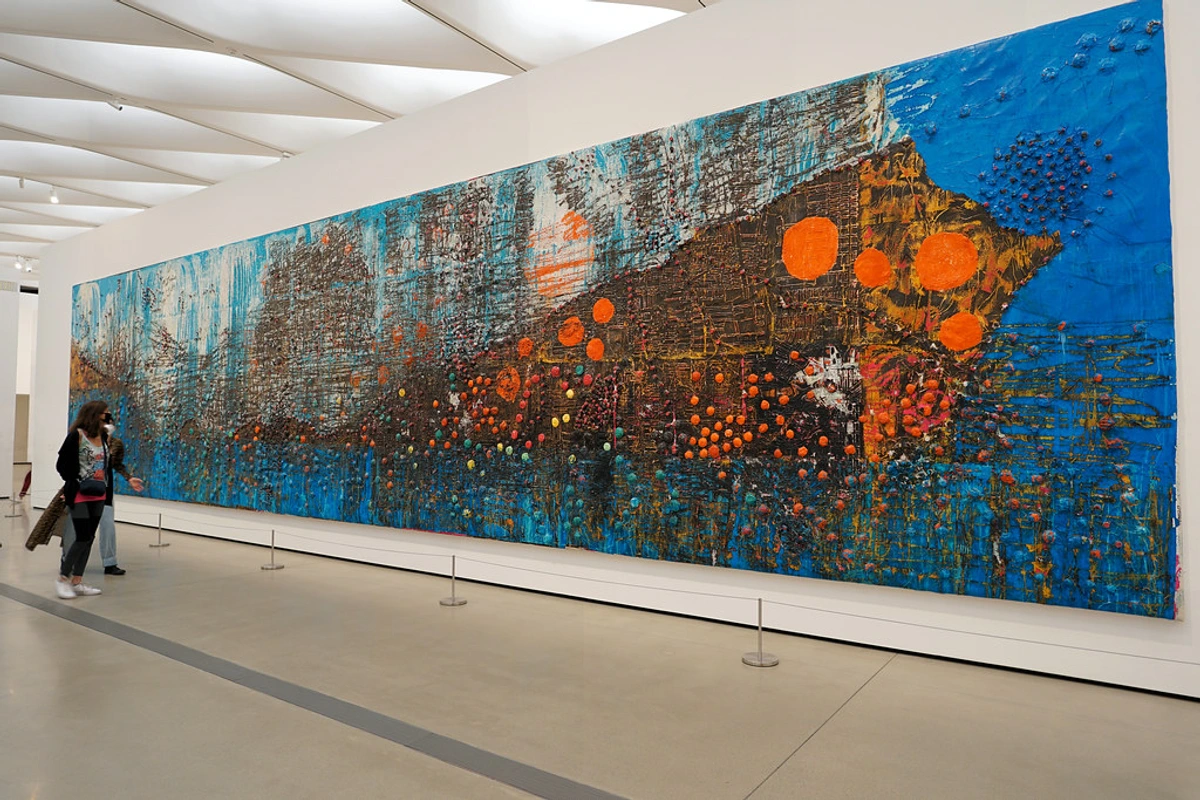
In this article, I want to take you deeper into who Mark Bradford is, the powerful stories embedded in his unique process, and why I believe his work stands as some of the most vital and thought-provoking contemporary art being made today. Let's peel back those layers together.
From Leimert Park to Global Acclaim: An Unconventional Rise
Bradford's path is a testament to the idea that there's no single, prescribed route to becoming an artist. It’s a journey that deeply resonates with me, challenging the notion of what an artist "should" be or where they "should" come from. He was 30 years old when he finally enrolled at the California Institute of the Arts (CalArts) – a deliberate step, not a youthful whim. This was a man already rich with life experience, a deep well of observations and insights drawn from years navigating the vibrant, often chaotic, and historically complex neighborhood of Leimert Park in South Central Los Angeles.
Leimert Park, a historic hub for African-American culture, jazz, and political activism, became more than just his home; it was his muse, his studio, and his material source. He wasn’t just observing the city from a distance; he was embedded within its fabric, experiencing its social energies, its joys, its struggles, and its ceaseless transformation firsthand. It's this intimate knowledge that infuses every single layer of his art.
He often refers to himself as a 'builder and a demolisher.' He’s not simply painting a picture of the city; he's actively using the city itself. He scavenges materials from the streets – discarded billboard posters, merchant flyers, comic books, carbon paper, cheap plywood, remnants of everyday urban life. These aren't just colors and textures to him; they are loaded artifacts, imbued with social and political meaning, carrying the very language of the urban environment. They are the silent witnesses to commerce, gentrification, community, and decay.
Social Abstraction: Art That Maps Society
'Social Abstraction' is the term most often used to describe Bradford's work, and I know it might sound a bit academic. But the core idea is actually profoundly simple and incredibly powerful. While many abstract artists, like Jackson Pollock, might have been exploring their own psyche and inner worlds through splatters of paint (a monumental achievement, don't get me wrong, and one I often reflect on when exploring what abstract art truly means), Bradford is using the language of abstraction to articulate and comment on society itself. He’s turning the raw material of urban existence into a complex, layered commentary.
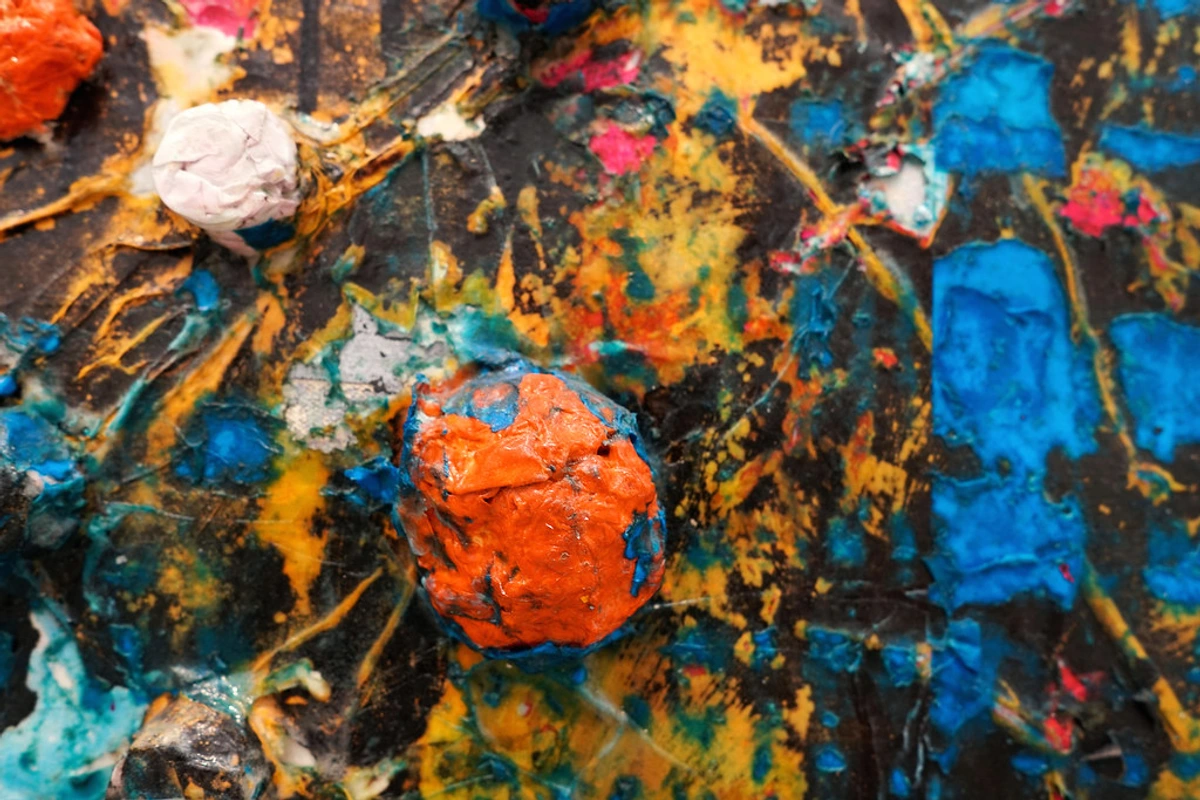
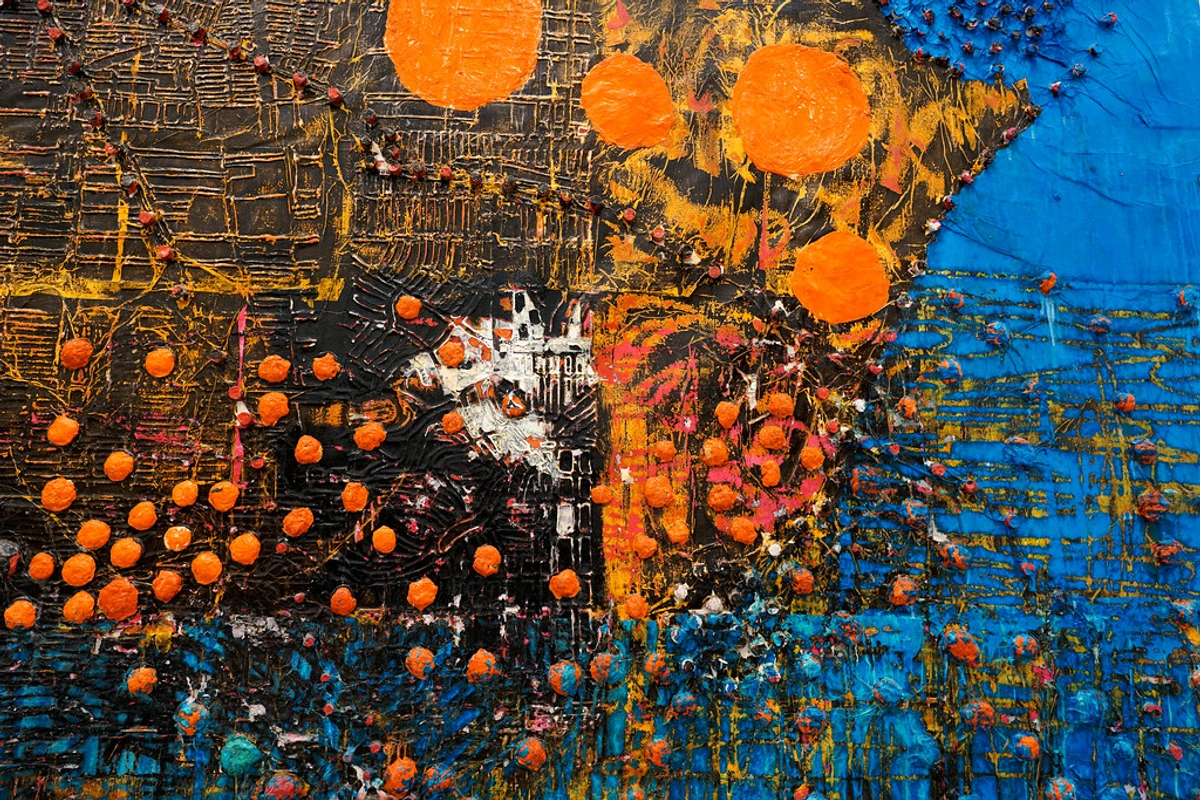
Think of his canvases as archaeological dig sites, or perhaps more accurately, as incredibly intricate urban maps. He builds up dozens, sometimes hundreds, of layers of scavenged paper and other materials onto a canvas or plywood support. This initial additive phase, a kind of mixed media collage, creates a dense, multi-layered surface. But that's just the beginning. Then, he transforms into the 'demolisher' I mentioned earlier, attacking the surface with an arsenal of tools: power sanders, razors, gouges, and even a blowtorch. He carves, sands, rips, and strips away sections to reveal the histories, memories, and narratives buried underneath. The texture that emerges, often thick and scarred, is a vital part of the story, something I deeply appreciate when considering the role of texture in art.
What ultimately emerges from this process often looks like a topographical map of a city, complete with grids, fault lines, and forgotten territories. The grid, a motif he first encountered in perm end papers, becomes a powerful symbol here – representing urban planning, social stratification, boundaries, and even control. His art becomes a physical record of social forces—maps of migration patterns, population shifts, the hidden pathways of commerce, and the lingering, often devastating, effects of historical policies like redlining.
The Power of Décollage, Not Just Collage
It's a crucial distinction when discussing Bradford's technique. While collage is an additive process – gluing materials onto a surface – Bradford is a master of its powerful opposite: décollage, which is about tearing away, stripping, and excavating. He doesn't just add; he removes to reveal. This process, in my opinion, is a profound metaphor for revealing hidden histories and shining a light on marginalized communities. It's not just showing you the glossy surface; he’s painstakingly uncovering what's been buried, forgotten, or intentionally obscured. As an artist, this approach of building depth and narrative through both additive and subtractive means is something I constantly explore in my innovative approach.
His painting technique, if you can even call it just painting, is a brutal yet beautiful dance between creation and destruction, a concept you can dive deeper into with a specific exploration of Mark Bradford's painting technique. He often uses power sanders and other industrial tools to wear down the layers, creating incredibly complex and textured surfaces that are part painting, part sculpture, part historical document. Imagine a sculptor chipping away at stone, but instead of stone, it's layers of paper, revealing an inner landscape filled with stories.
Technique  | Description | Mark Bradford's Application |
|---|---|---|
| Collage | An additive process. Materials (paper, fabric, objects) are glued onto a surface. | He uses this initially to build dense layers of found urban materials. |
| Décollage | A subtractive process. Parts of layered images/materials are torn, stripped, or sanded away. | He uses this extensively to excavate, reveal underlying histories, and create unique textures. |
| Bradford's Method | A hybrid and cyclical approach. He builds dense layers (collage) and then excavates them (décollage), often repeating the cycle. | His work embodies a continuous dialogue between accumulation and erosion, mirroring urban decay and renewal. |
Key Works: Experiencing the Urban Narrative
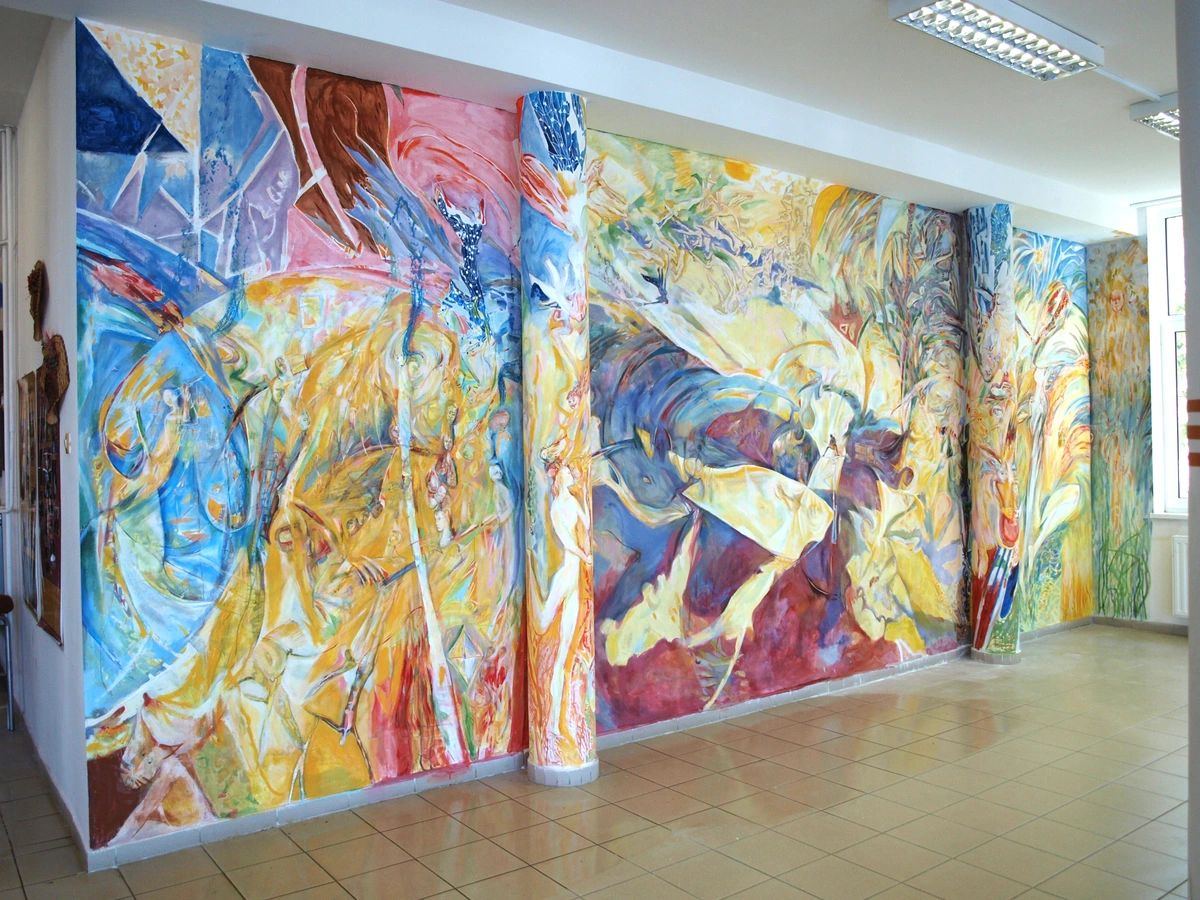
To truly grasp the power and immersive scale of Mark Bradford's vision, you have to look at his major works. These aren't just paintings to observe from a distance; they are worlds to step into, demanding your attention and immersing you completely in their layered narratives.
- "Helter Skelter I" (2007): This piece is absolutely gigantic, a swirling vortex of black, scarred lines that seems to explode and collapse at the same time. The title is a chilling reference to both the Beatles song and the Charles Manson murders, tapping into a dark, chaotic, and deeply unsettling chapter of Los Angeles history. When I look at it, I feel the raw, nervous energy of a city's underbelly, a perfect example of how he uses abstraction to map out not just a physical landscape, but a psychological and historical one.
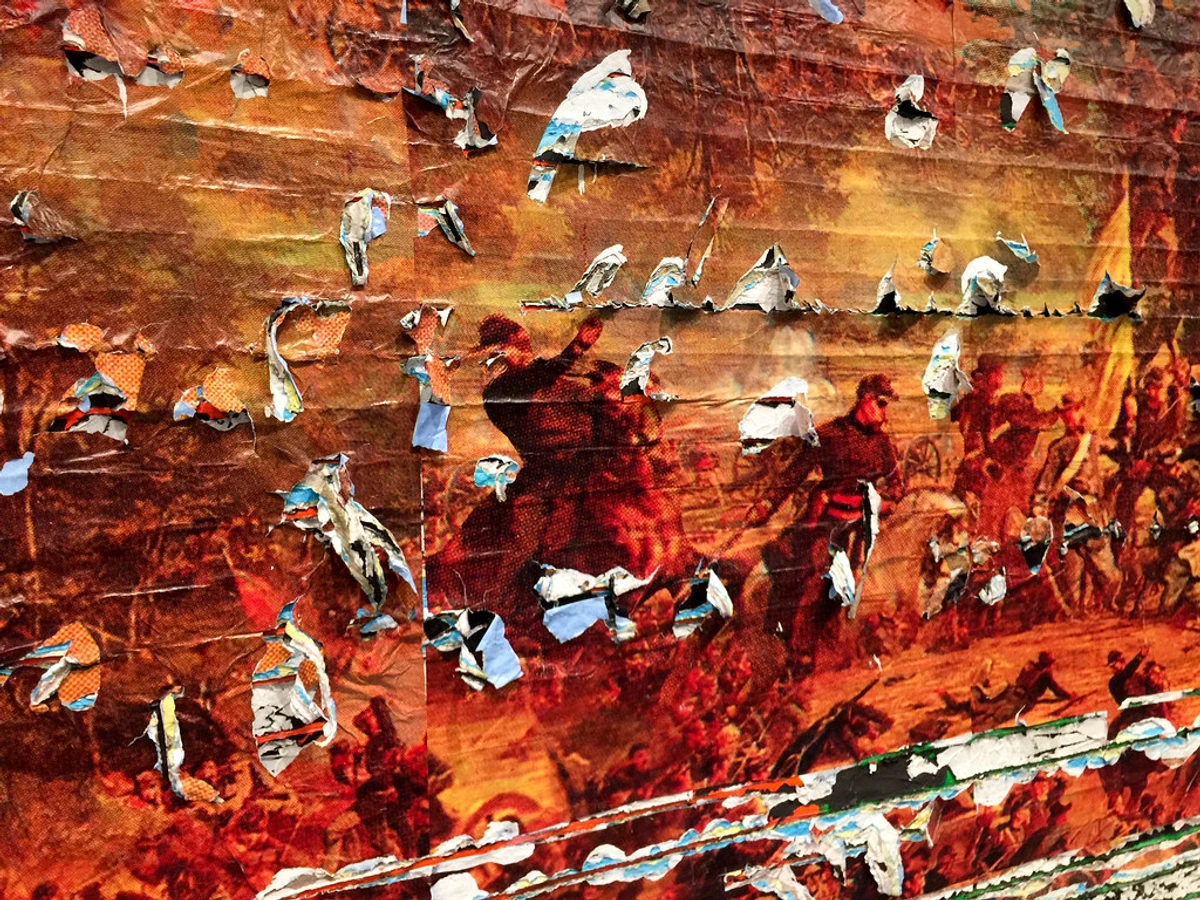
- "Pickett's Charge" (2017): For this monumental work, Bradford created a breathtaking, 360-degree installation for the Hirshhorn Museum in Washington D.C. It’s based on a 19th-century cyclorama painting – essentially, a massive panoramic artwork designed to completely surround the viewer – depicting the final charge of the Battle of Gettysburg. Bradford reinterpreted this pivotal historical moment using his signature décollage style, transforming a traditional, heroic narrative into a powerful, fragmented commentary on the myths, realities, and violent legacies of American history. The sheer scale makes it feel less like art and more like an architectural intervention, a profound re-examination of a foundational moment.
- "Tomorrow is Another Day" (2017): This was his powerful installation for the U.S. Pavilion at the Venice Biennale. The exhibition was less a collection of individual works and more a journey through interconnected rooms that felt alternately like ruins and sites of reconstruction. It was deeply personal, touching on themes like the AIDS crisis and the resilience of marginalized communities, but also universally resonant. It showed, with incredible empathy and grit, that even from decay and hardship, something new, vital, and beautiful can be painstakingly built.
Art Beyond the Gallery: Community and Impact
What truly makes Mark Bradford’s work resonate so deeply, beyond the visual spectacle, is that his commitment doesn't end at the studio door. It’s an approach that embodies the idea that art can be a catalyst for real-world change. In 2013, along with his partner Allan DiCastro and philanthropist Eileen Harris Norton, he co-founded Art + Practice (A+P).
This isn't just a side project; it's a profound extension of his artistic philosophy. A+P is a non-profit organization located right in his home neighborhood of Leimert Park. It provides contemporary art exhibitions and public programs for the community, making high-quality art accessible where it might not otherwise be. But crucially, it also collaborates with a local non-profit to provide vital services and housing for foster youth. For Bradford, art is not a luxury item to be cordoned off in an exclusive gallery. It's a fundamental tool, a powerful platform, and an integral part of fostering a thriving, resilient community. It reminds me that the creation of beauty can go hand-in-hand with the building of a better world.
FAQ: Your Questions About Mark Bradford, Answered
What is Mark Bradford's art style?
His style is called Social Abstraction. It's a powerful form of abstract art that uses abstract forms, layered textures, and a process of building and excavating to comment on complex social and political issues, urban environments, and historical narratives.
What materials does Mark Bradford use?
He predominantly uses materials sourced directly from his urban environment. This includes discarded billboard paper, various posters, newsprint, rope, caulk, and even the translucent end papers from his earlier career as a hairdresser. He meticulously builds these into thick, dense layers on canvas or plywood and then sculpts, sands, and carves into them.
How much are Mark Bradford's paintings worth?
Let's be real, his work commands significant prices on the international art market, with auction records often reaching into the tens of millions of dollars. The value reflects his unique, labor-intensive process, his critical acclaim, institutional presence, and the profound social commentary embedded in each piece. But honestly, for me, the monetary value is the least interesting part. The real value is in the crucial conversations his work starts and the powerful, often uncomfortable, stories it tells.
What are Mark Bradford's artistic influences?
Bradford draws inspiration from a diverse range of sources, reflecting his deep engagement with both art history and contemporary social realities. Key influences include Abstract Expressionists like Jackson Pollock and Willem de Kooning for their monumental scale and energetic surfaces, but he recontextualizes their abstraction with social intent. He is also influenced by artists who engage with urban environments and found objects, as well as the rich cultural history and social landscape of South Central Los Angeles itself.
Why is the scale of his work often so large?
Bradford frequently works on a monumental scale, creating pieces that can envelop the viewer. This deliberate choice serves several purposes: it reflects the overwhelming scale and complexity of the urban landscapes and social issues he addresses; it demands an immersive, physical experience from the viewer, moving beyond passive observation; and it grants his works a powerful, almost architectural presence, emphasizing their impact as grand statements about our shared world.
Where can I see Mark Bradford's art?
His work is held in the permanent collections of many major museums worldwide. You can find his powerful pieces at institutions such as The Broad in Los Angeles, the San Francisco Museum of Modern Art (SFMOMA), the Museum of Modern Art (MoMA) in New York, and the Tate Modern in London. His exhibitions are always highly anticipated, so keep an eye on museum listings for current and upcoming shows.
My Take: Why Bradford Resonates So Deeply With My Own Art Practice
So, why do I find myself returning to Mark Bradford's work again and again, poring over images, reflecting on his interviews? Because he fundamentally redefines abstraction for me. He proves, with breathtaking clarity, that abstraction isn't an escape from the world; it’s a rigorous, often brutal, way of digging deeper into it, of exposing its hidden truths and complex realities. He takes the overlooked, the discarded, the very junk and noise and decaying paper of our lives, and transforms it into something profound, beautiful, and undeniably urgent.
As an artist, I am deeply connected to the idea that art should tell a story, even when it's abstract. Bradford’s work is a masterclass in this philosophy. He reminds me that the materials we choose, the processes we commit to, and the layers we build (and, crucially, remove) are never neutral—they are packed with meaning, intent, and narrative. You can read more about my own thoughts on this connection between meaning and process in my article, Why I Paint Abstract: My Personal Philosophy and Artistic Vision.
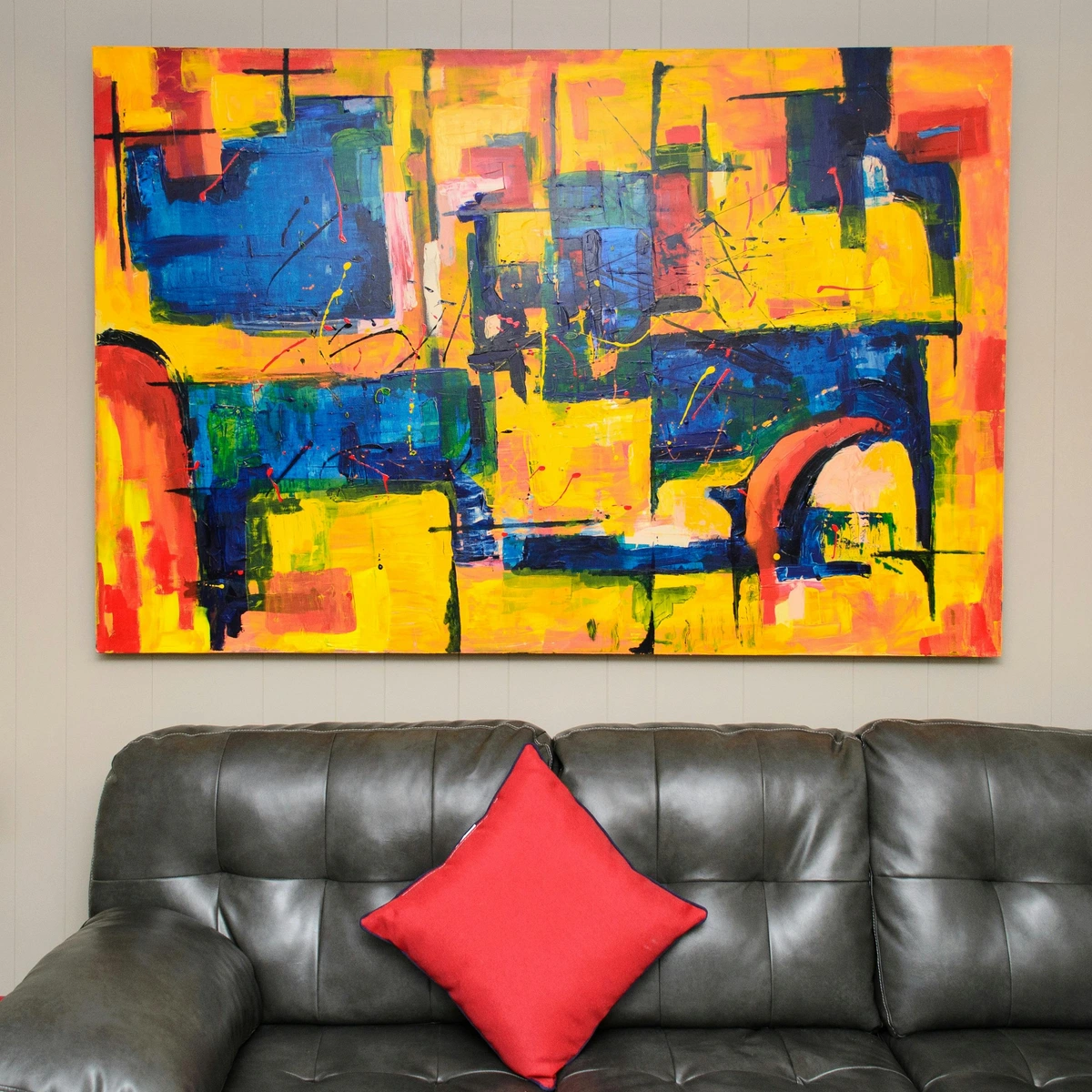


Mark Bradford’s art isn't just something to passively admire. It challenges us. It urges us to look closer, to question, to see the unseen narratives beneath the surface of our own cities and communities. So, the next time you walk past a peeling billboard, a graffitied wall, or a construction site, take a second. Pause. You might just begin to see a map of hidden stories, waiting to be excavated, waiting for you to truly see them.