Mark Bradford: Deconstructing the City – An Essential Guide to Social Abstraction
Dive deep into Mark Bradford's art. Discover his unique décollage process, his journey from a South-Central LA hair salon to global icon, and how his powerful, layered works illuminate urban life, social struggle, and unseen histories through "social abstraction."

Mark Bradford: The Urban Alchemist of Social Abstraction – Your Essential Guide to Unseen Realities
I remember this one time, wandering through a city, feeling utterly swamped by the sheer visual noise. Every surface was screaming—peeling concert flyers, faded political posters, hastily scrawled lost pet signs—all layered, ripped, and weathered. I just walked past, mindlessly. But then, almost a decade ago, I saw my first Mark Bradford piece. Suddenly, those walls weren't just urban decay anymore; they were canvases, whispering stories, and Bradford, the urban alchemist, was the only one who truly knew how to listen. It completely changed how I saw the city, transforming chaos into a profound narrative. This, for me, is the essence of 'social abstraction', his distinctive artistic style that transmutes the everyday textures and hidden narratives of urban life into potent social commentary. What he does, in essence, is make the unseen visible, elevating the mundane to the monumental.
His method is a kind of modern-day alchemy. He takes the lead—the seemingly worthless, discarded detritus of city life—and transmutes it into gold: art that is deeply valuable for its profound social insights and aesthetic power. While artists like Robert Rauschenberg or Kurt Schwitters also incorporated found materials, or a contemporary like Banksy engages with urban walls, Bradford’s unique methodology and deep commitment to social narrative set him apart. He doesn't just incorporate detritus; he elevates it into a powerful voice for our times, making the invisible social structures and forgotten histories of urban environments tangible.
Because what Bradford does, in essence, is elevate that very texture of city life—its hidden histories, its systemic struggles, its everyday ephemera—into monumental, breathtaking art. Calling him merely a painter feels fundamentally incomplete. It's like calling a brilliant chef a 'food heater' (and my cooking is definitely in that category, but I digress). He's more than that; he’s an urban archaeologist digging into forgotten layers, a social cartographer mapping unseen histories, and a sculptor who happens to work on canvas. He doesn’t just add paint to a surface; he strips away, he builds up, he carves out. This is where his unique approach, deeply rooted in the materials he unearths, reveals stories that speak to the heart of what it means to live in a modern city, particularly for marginalized communities. This raw, almost confrontational act of creation, similar to the visceral textures in some of my own work, connects deeply with my artistic philosophy.
So, if you’ve ever stood before one of his massive, intricate pieces and thought, "What am I even looking at? And why does it feel so profoundly true?"—you are absolutely in the right place. This article is your ultimate guide to truly seeing and understanding Mark Bradford, exploring his unique process, his profound thematic concerns, his most grounding essential works, and the enduring impact that defines his place as a vital voice in contemporary art. Let's dig in.
From Hair Salon to Art Stardom: A Path Forged in Real Life
You truly can’t grasp the profound impact and unique vision of Mark Bradford’s work without understanding his origins. He wasn't one of those prodigies who went straight from high school to a fancy art college, nurtured in academic theory from day one. His story is far more compelling, far more grounded in the gritty reality of urban life in South-Central Los Angeles. This was an area historically shaped by systemic socio-economic challenges, racial tension, and vibrant community resilience that defined the 1980s and early 1990s. This Los Angeles grappled with issues like deindustrialization, significant economic shifts, and the long shadows of civil unrest, all of which implicitly informed the very fabric of his everyday experience. These weren't abstract concepts to him; they were the air he breathed.
He grew up in South-Central Los Angeles, and for years, his world revolved around his mother’s hair salon in Leimert Park. Think about that for a second: the constant hum of conversation, the specific materials—hair products, permanent endpapers (those little translucent rectangles)—the sense of community, of people sharing their lives, their dreams, their daily struggles. He worked there as a hairdresser, absorbing the textures, the sounds, the very pulse of that neighborhood day in and day out. It’s no coincidence that those same endpapers, imbued with a subtle history of human touch and transformation, would later become a signature material in his art. These seemingly mundane, ephemeral materials—items designed to be short-lived and discarded, like flyers or newspapers—touched by countless hands, hold stories of identity, care, and collective experience. He wasn't just observing life; he was absorbing its very essence, its often-unseen layers. This hands-on, community-centered background provided him with an unparalleled understanding of everyday ephemera as cultural artifacts, directly informing his later artistic choices, forging his early perspective on how materials can embody human experience.
It wasn’t until he was almost 30 that he enrolled at the prestigious California Institute of the Arts (CalArts). Now, CalArts, especially in the 1990s, was a hotbed for conceptual art, post-minimalism, and critical theory. Artists emerging from such institutions were often deeply steeped in intellectual frameworks. This late start, for me, is his absolute superpower. He arrived in the academic art world not with a head full of abstract theories, but with hands full of real-world experience, unconventional materials, and a deeply ingrained understanding of community. This practical, lived knowledge gave him an unparalleled perspective, allowing him to bypass purely aesthetic concerns and dive directly into the social fabric of his art. It made him an innovator, unburdened by conventional expectations, and allowed him to bring a much-needed grounded perspective to the often-rarified world of contemporary art academia. He bridged the gap between the academy and the street, bringing the raw energy and social consciousness of one into the other.
Here’s a quick rundown of his journey, a timeline that speaks volumes about his trajectory and growing impact:
Year  | Milestone & Significance |
|---|---|
| 1961 | Born in Los Angeles, California. |
| 1980s | Works as a hairdresser in his mother's salon in Leimert Park, immersing himself in community life, absorbing the textures and stories that would later become central to his art. This hands-on experience became his primary art school. |
| 1991 | Enrolls at CalArts at age 30, bringing a unique, grounded perspective formed by lived experience to his studies, challenging academic norms with his practical knowledge. |
| 1997 | Receives his MFA from CalArts, marking the formal beginning of his career as a professional artist, poised to disrupt conventional art practices with his material-driven approach. |
| 2001 | First major solo show at the Studio Museum in Harlem, gaining significant critical attention for his innovative use of materials and cementing his emerging reputation as a significant voice in contemporary art. |
| 2003 | Exhibits in the prestigious Venice Biennale, an early international recognition signaling his rising global profile and the increasing reach of his socially engaged work. |
| 2009 | Awarded the MacArthur Foundation 'Genius Grant', a highly prestigious recognition of his groundbreaking and innovative work and its profound cultural impact. This award provides unrestricted funding to talented individuals to pursue their creative endeavors. |
| 2014 | Co-founds Art + Practice (A+P), a non-profit organization in Leimert Park, actively giving back to his community by providing vital resources, exhibition space, and educational opportunities for foster youth and local artists, directly connecting his success to social uplift. |
| 2017 | Represents the United States at the Venice Biennale with his acclaimed exhibition "Tomorrow Is Another Day," cementing his status on the global stage and showcasing his most ambitious work to date, drawing international attention to local struggles. |
| 2020 | Named an Artistic Director for the Getty Research Institute, further solidifying his academic and curatorial influence, bridging practice with scholarly inquiry and shaping future art historical narratives. |
What truly strikes me about this journey is not just the ascent, but the unwavering connection to his roots. It’s a powerful reminder that truly impactful art often springs from authentic, lived experience. Want to know more about my own journey? You can trace it in my artistic timeline.
It’s Not Paint, It’s an Excavation: Deconstructing the Canvas
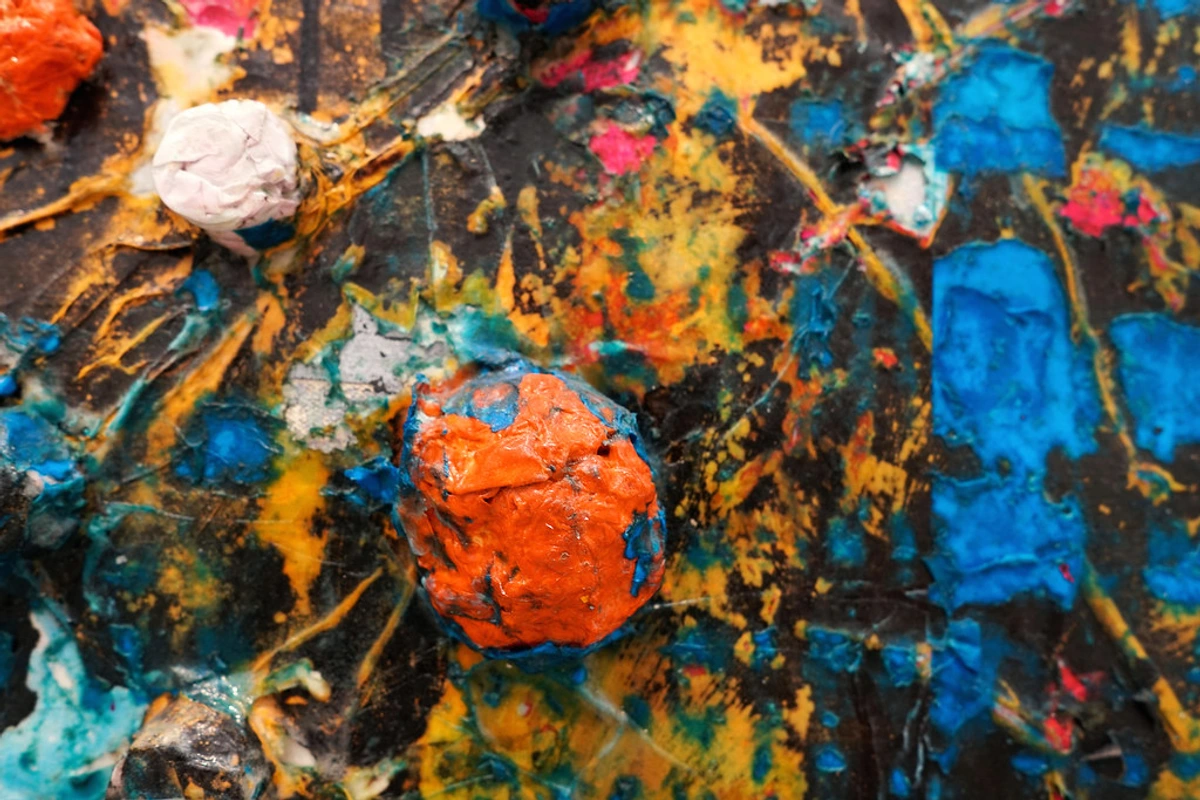
Okay, let’s get to the truly fascinating part: how he actually brings these incredible visions to life. When you stand in front of a Bradford piece, your eyes might register what looks like rich, layered paint, but what you’re actually seeing is something far more complex and tactile: dense, meticulously built-up layers of paper. This isn't your grandma’s decoupage, I promise. This is a deliberate, arduous process of building and destroying, creating a dialogue with the material itself, resulting in a surface that feels more like a topographical map of a city than a flat painting. You can almost feel the weight of history in those layers.
He uses a vast array of paper-based materials: discarded posters, peeling billboards, pages from comic books, fragments of maps, and, yes, those beauty-salon permanent endpapers that were once part of his daily life. These aren't just random scraps; each piece carries its own history, its own whispers of the urban landscape. His primary technique isn't collage—the additive process of gluing materials onto a surface to build up an image, like a bulletin board where new flyers are constantly stapled over old ones. Instead, Bradford’s mastery lies in décollage—a subtractive process of tearing away, cutting, sanding, and even drilling through layers to reveal what’s underneath. It’s an act of uncovering, rather than simply covering, and it directly mirrors the archaeological act of unearthing history from the city’s surface. He creates a visual record of erosion, revealing the scars and stories hidden beneath, much like nature carves canyons over millennia.
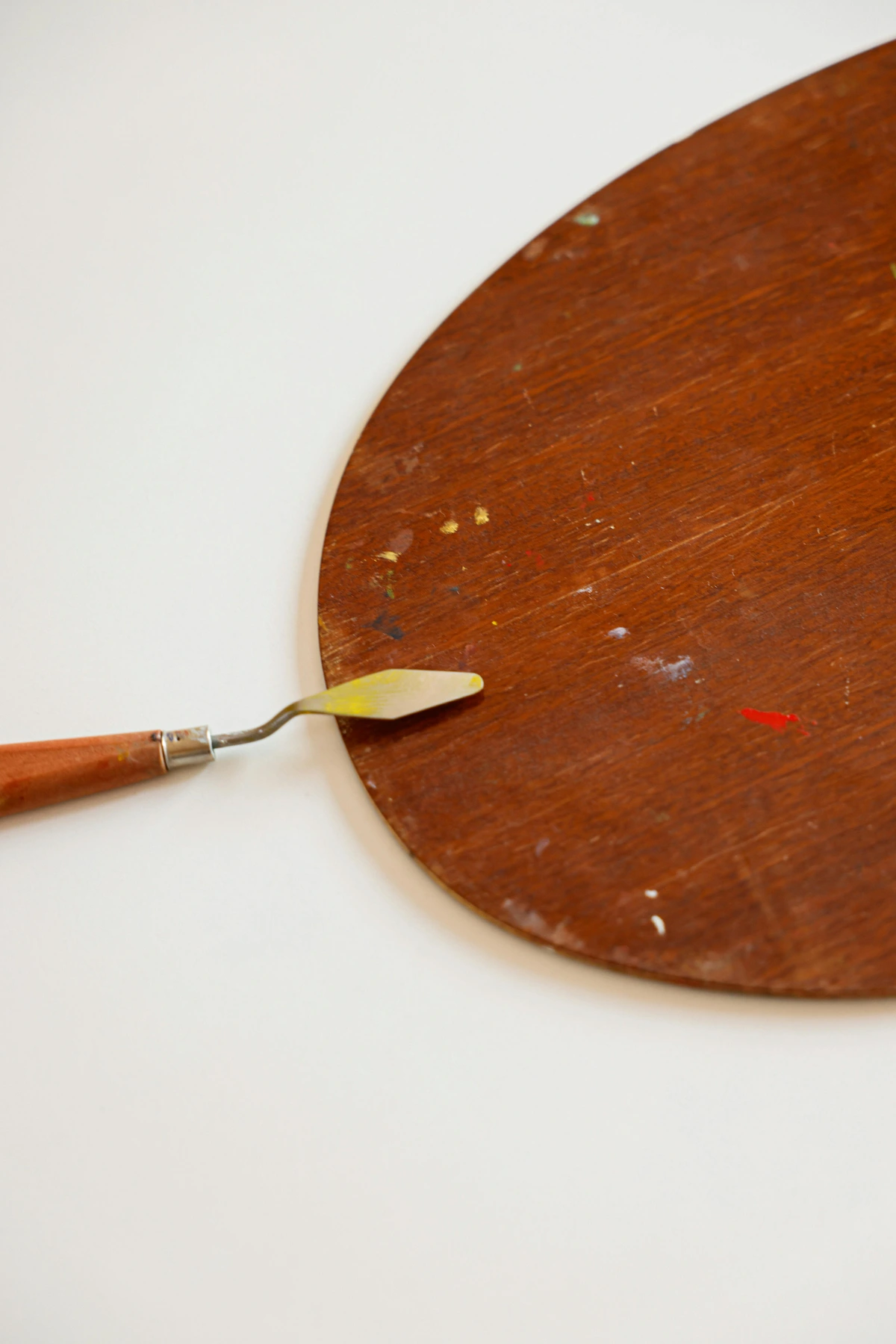
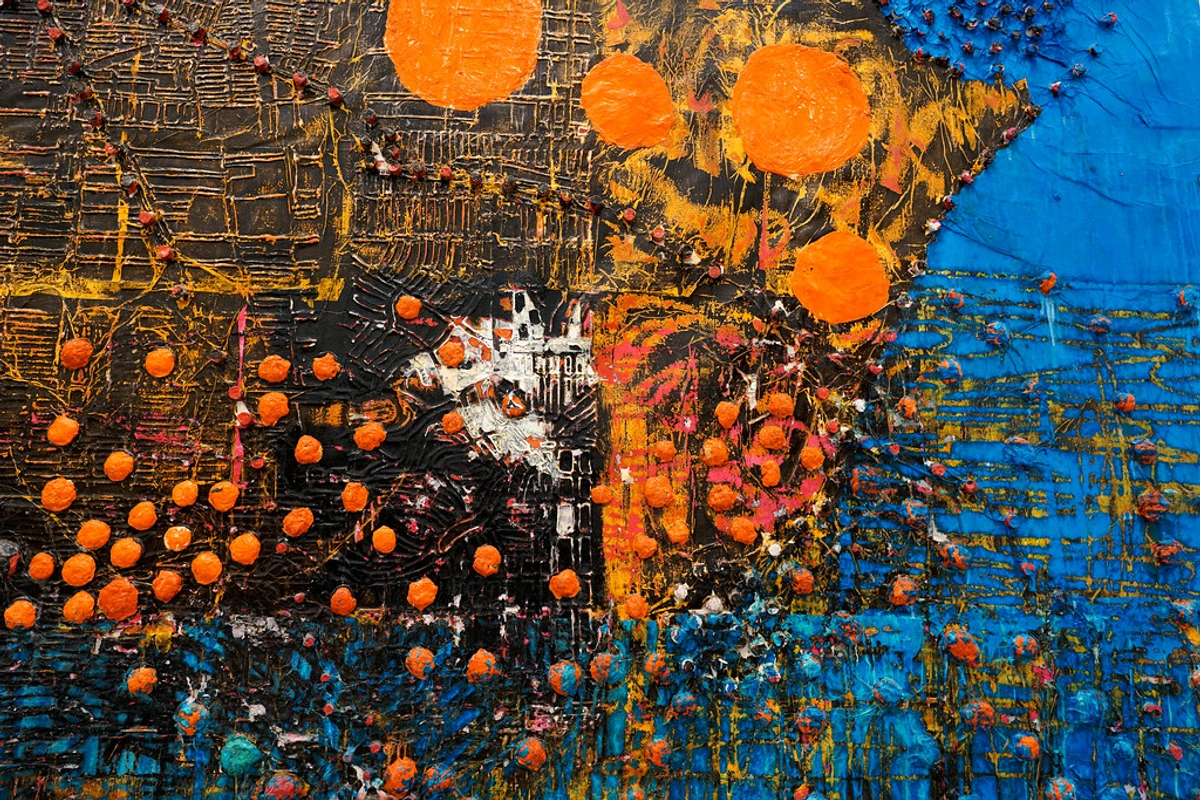
Imagine this: he builds what I like to call a "lasagna of paper," sometimes hundreds of layers thick, meticulously gluing it all down to a canvas using industrial billboard paste for its strong adhesive qualities and durability. Then, the real work—the physical, often brutal engagement—begins. He attacks the surface not with a delicate brush, but with power sanders, drills, and knives, gouging and carving deep into these accumulated layers. The sheer weight of the tools, the dust, the noise—it’s a performance of material transformation. The goal? To reveal the hidden colors, textures, and fragments of meaning from below. What emerges isn’t just a painting; it’s a topographical map of his own creation, full of unexpected canyons, intricate river-like channels, and grid-like structures that powerfully echo city streets, infrastructure, and even the invisible lines of social division. It’s a visually stunning, almost visceral experience—you can almost feel the grit and history emanating from the surface. I can almost hear it ripping and tearing, revealing the truth beneath.
It’s a physically demanding, almost combative process, a true fight with the material. This raw energy and emphasis on the act of creation deeply connect him to the spirit of Abstract Expressionism, bringing to mind artists like Jackson Pollock who made the physical gestures of painting a central, expressive part of the artwork itself. But where Abstract Expressionism often sought universal emotional truths through paint, Bradford roots his abstraction firmly in the social and the specific, excavating history rather than just expressing emotion. It’s art that demands to be felt, not just seen, and its raw physicality draws you into a deeper understanding of its layered narratives.
Let's break down some of his key techniques, which are more akin to construction and deconstruction than traditional painting:
Technique | Description | Impact |
|---|---|---|
| Collage (Additive Layering) | The initial process of adding various paper-based materials (like posters, newsprint, maps, flyers, permanent endpapers) onto a canvas surface with industrial glue. This builds the foundational, often text-filled layers. | Forms the rich substrate, embedding fragments of urban life and history from the very beginning, creating a visual archive of ephemeral city detritus. This initial, often dense layer is crucial for the subsequent excavation. |
| Décollage (Subtractive Excavation) | The subsequent, critical process of tearing away, cutting, sanding, and even drilling through these layered images to reveal what's underneath. It’s an act of deliberate uncovering, not just removal, akin to an archaeological dig. | Uncovers hidden narratives and forgotten histories, creating a sense of erosion, decay, and the scars left by societal forces. It mirrors both archaeological excavation and the relentless march of time on urban landscapes, making visible the "unseen" layers of human experience. |
| Sanding & Gouging | Bradford uses industrial power sanders, not just fine-grit paper, to aggressively excavate through dense layers of paper, glue, and sometimes paint. He also employs knives and other tools to gouge the surface, creating a rugged topography. | Creates deep, raw grooves, exposed edges, and reveals surprising juxtapositions of color and text. This mimics the wear and tear of urban environments, the violence of gentrification, and the powerful, often invisible, forces that shape communities. It’s a physical manifestation of societal friction. |
| Caulking & Drawing | He often uses black caulk, twine, or similar industrial sealants to draw lines, creating grid-like structures, outlines, or borders within the compositions. This acts as both a formal and thematic device. | Defines spaces, mimics urban planning and infrastructure (like roads, power lines, or even property boundaries). It powerfully suggests invisible boundaries, maps of social division, historical pathways, and the digital networks that now overlay our cities, highlighting how built structures dictate lived realities and perpetuate inequalities. |
What’s He Actually Talking About? The Layers of Meaning (Social Abstraction Deep Dive)
So, his work is visually stunning, undeniably cool in its execution, but what does it truly mean? This is where Bradford moves beyond mere technique into the profound realm of 'social abstraction,' a term that perfectly encapsulates his vision. His art is abstract—it doesn’t depict easily recognizable figures or scenes, yet it is profoundly, undeniably rooted in social, economic, and political realities. What he does is map the unseen forces shaping our lives, using the very debris of those lives as its language.
Unlike purely formal abstraction, which might focus on color and form for their own sake (think Piet Mondrian's precise grids or some early Abstract Expressionists focusing solely on paint's qualities), or conceptual abstraction, which prioritizes ideas above visual representation, Bradford’s abstraction is explicitly grounded in societal issues. His grids, for instance, aren’t just formal exercises; they are the visible scars of urban planning, power lines, or even redlining maps. It’s a powerful counterpoint, demonstrating that even non-representational art can be deeply loaded with specific cultural and historical meaning. It’s a method of communicating the complex human experience of urban environments without direct figuration, creating an emotional and intellectual resonance through texture, color, and fragmented information.
Mapping the Unseen: How Materials Become Messengers
The materials themselves are the silent storytellers. By incorporating ephemeral materials—items designed to be short-lived, like discarded posters, flyers, or newsprint—he directly embeds the economic and political pulse of the city into his art. These aren’t just colors and textures; they are artifacts of daily life, infused with the struggles, hopes, and resilience of real people. For instance, posters advertising predatory loans or low-wage jobs, often found in marginalized communities, become poignant symbols of systemic economic disparity. The intricate grids and lines he carves, often with black caulk, frequently reference literal maps of districts, echoing the devastating impact of historical practices like redlining (where maps were drawn to delineate areas, often based on race, deemed 'risky' for investment, leading to entrenched segregation, the creation of wealth gaps, and the perpetuation of cycles of poverty). You can see these unsettling cartographies in pieces like "Helter Skelter I," where the chaos feels both universal and terrifyingly specific to the urban American experience. His work often implicitly engages with critical race theory and urban studies, offering a visual critique of systemic inequalities.
His canvases become a microcosm of urban social spaces, embodying their complexities, contradictions, and histories. They can evoke the pathways of significant historical events, such as the Watts Riots in Los Angeles, or the destructive paths of natural disasters like hurricanes, revealing the deep scars left on a landscape and its communities. His work acknowledges these scars, but also the enduring spirit within these neighborhoods. It speaks to gentrification, displacement, and the ever-changing face of our urban environments, questioning who benefits and who is erased from the narrative. It’s an "urban palimpsest," a term I love because it perfectly describes a surface where old layers of history and lived experience are never truly gone, but continually scraped and rewritten, leaving traces of every past iteration visible through the artist’s excavation. He’s not just making art; he’s creating a visual archive of forgotten histories, a powerful testament to the resilience of those who endure. What stories do these unearthed fragments tell you? Like the layered stories in some of my abstract works, they invite a deeper, more personal reading.
Here’s a look at how specific elements in Bradford’s work translate into powerful social commentary, making the invisible visible:
Element/Technique | Direct Connection to Urban Life | Social Commentary & Impact |
|---|---|---|
| Discarded Posters/Ephemera | Everyday urban waste: advertisements for predatory loans, concert flyers, community notices, wanted posters from specific neighborhoods. | Reflects economic disparities, targeted marketing to marginalized communities, the transient nature of urban information, and collective memory. These materials often silently chronicle specific community struggles or political events, becoming an embedded historical archive and highlighting who is often relegated to the background. |
| Torn/Sanded Layers | Wear and tear on city walls, weathered billboards, decay of infrastructure, natural erosion, and even the deliberate erasure of public messages. | Symbolizes the erosion of history, societal neglect, the impact of time and discriminatory policy on communities, and the visible scars of struggle and resilience. It's a visual metaphor for the ongoing rewriting of history, the violence of gentrification, and the layers of forgotten narratives that are continually scraped and revealed. |
| Caulk Lines/Grids | Urban planning, infrastructure (roads, utility lines), literal street maps, architectural blueprints, and boundaries. | Directly references practices like redlining, highlighting social division, invisible boundaries, systemic racism, pathways of migration, and the imposed order versus the lived reality of cities. It emphasizes how rigid built structures dictate lives and perpetuate inequality, mapping unseen power dynamics. |
| Scale (Monumental) | The grandeur of historical painting, public murals, large-scale advertising, designed to overwhelm or impress. | Elevates marginalized stories to monumental importance, demands recognition, and creates an immersive experience of urban complexity, forcing confrontation with uncomfortable truths. It asserts the weight and significance of these overlooked narratives, making it impossible to ignore. |
| Visible Fragments of Text | Snippets of words, partial signs, numbers, incomplete sentences from found papers—often barely legible. | Represents broken communication, unheard voices, the struggle for identity, fragments of collective narratives, and the inherent difficulty of forming a complete, coherent picture amidst urban noise and societal fragmentation. It’s a communication that is both present and obscured. |
His art, then, becomes a powerful way of mapping history, power dynamics, urban decay, and resilience. He’s not merely painting a picture of a city; he’s constructing a living, breathing city on canvas and then, through the act of décollage, watching it conceptually erode, revealing its scars and hidden truths. In this profound commitment to using the language of the street to address complex societal issues, he shares a certain raw, unvarnished spirit with artists like Jean-Michel Basquiat, whose work also drew heavily from urban environments and street culture to critique social structures. And his focus on history’s buried narratives and giving voice to the marginalized also connects, albeit through vastly different methods, to the powerful work of Kara Walker, who uses silhouette and allegory to explore race, gender, and historical trauma. What insights can we gain when we allow the city itself to speak through its discarded layers? It’s a question I find myself returning to, again and again. Bradford challenges us to see the abstract not as an escape from reality, but as a deeper, more uncomfortable engagement with it. He compels us to confront the uncomfortable truths that lie just beneath the surface.
Essential Works: A Glimpse into His Vision
While it’s impossible to fully capture the sheer scale and immersive power of Mark Bradford’s work in words, a few pieces stand out as essential milestones in understanding his expansive vision and scope. They powerfully exemplify his process and thematic concerns, often garnering significant critical attention long before his major international breakthroughs. Each one represents a profound moment of social abstraction in action.
- Los Angeles (2001): An early but pivotal work that exemplifies his growing mastery of décollage and his commitment to local narratives. This piece, created around the time of his first major solo show, distilled the essence of his home city into a complex, layered abstraction. It was a clear statement of his artistic direction, establishing his reputation for transforming urban detritus into profound art and setting the stage for future, larger-scale explorations. It announced, unequivocally, what he was here to do.
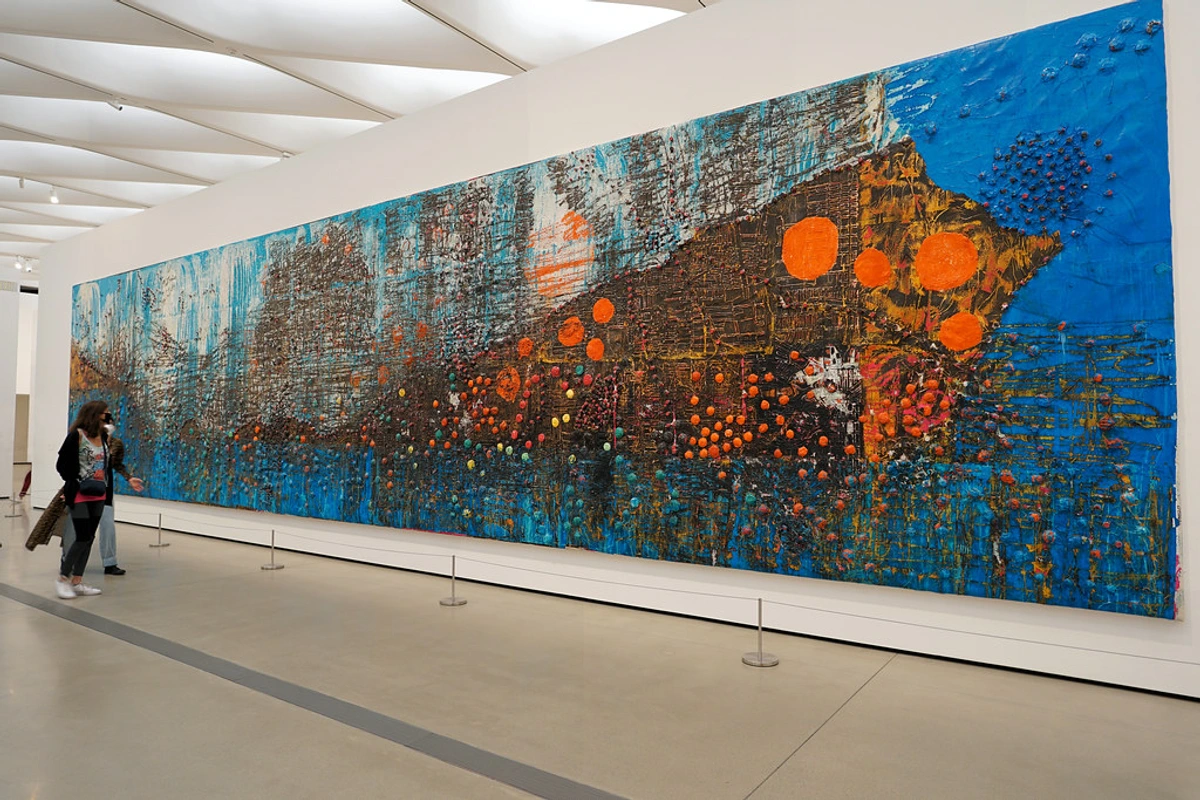
- Helter Skelter I (2007): This massive, sprawling canvas, measuring over 30 feet long, is a dizzying, complex map that feels like a cross-section of Los Angeles after a seismic event. Its title, while referencing the infamous Charles Manson murders, extends to a broader commentary on the unseen societal fractures, racial tensions, and explosive vulnerabilities simmering beneath the surface of seemingly stable urban life. Standing before it, you’re enveloped by a controlled chaos that reflects the profound anxieties of the early 21st century—a truly unsettling and magnificent piece, mapping the undercurrents of American society. I remember feeling a distinct sense of unease, a mirroring of that urban visual noise I first experienced, but this time, it was purposeful, loaded with meaning. This work was a significant turning point, earning widespread critical praise for its powerful social commentary and innovative scale.
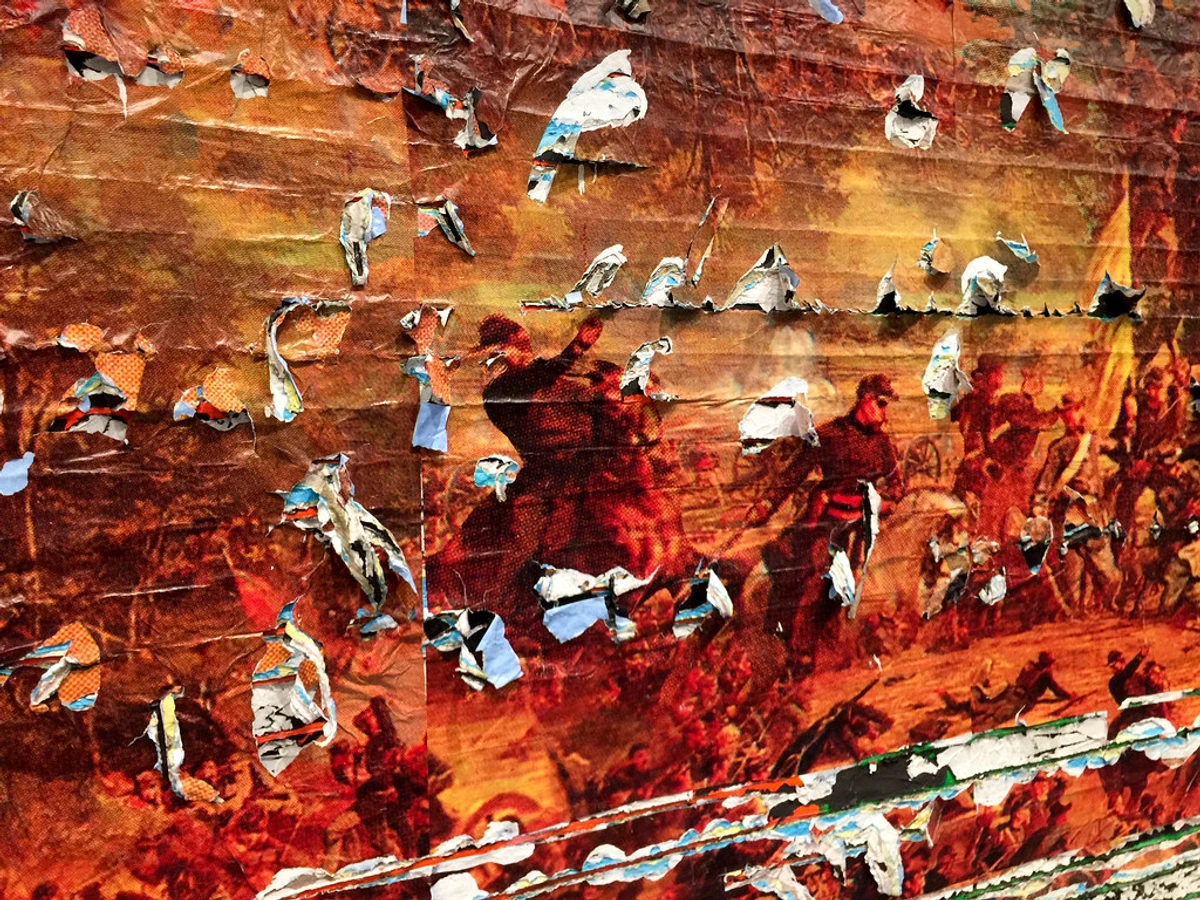
- Pickett’s Charge (2017): This was a monumental, breathtaking 360-degree installation created for the Hirshhorn Museum in Washington, D.C. It takes as its basis a famous 19th-century cyclorama depicting a pivotal Civil War battle. Bradford didn’t just recreate it; he transformed it. He created his own version, abstracting the conflict into a dizzying, brutal landscape of torn paper and rope, stretching 400 feet around the circular gallery. Walking through it, I felt utterly immersed, almost disoriented, the sheer scale forcing a visceral confrontation with the violence, the unresolved legacy of that history, and the cyclical nature of conflict that still haunts contemporary society. It was an experience that stayed with me long after I left, a powerful reminder of how history is never truly past, but rather constantly re-inscribed on our present.
- Tomorrow is Another Day (2017): This was his powerful exhibition for the U.S. Pavilion at the Venice Biennale. The title might sound hopeful, but the work deeply addressed themes of decay, ruin, and the often-overlooked, marginalized voices in society. It was an incredibly powerful, immersive experience that didn’t shy away from discomfort, using disused materials, found objects, and architectural interventions to create a dialogue about collective trauma, resilience, and the search for hope amidst adversity. This exhibition firmly cemented his status as one of the most important, conscience-driven artists of our time, showcasing his ability to translate profound social commentary into compelling visual language and demanding global attention for local struggles.
Which of these pieces would you most want to experience firsthand, and what do you think it would feel like to be physically enveloped by them? For me, the sheer scale of "Pickett’s Charge" was transformative; it’s an experience I won’t soon forget, much like some of my own larger works found at the den-bosch-museum.
Why Does He Matter Today? Bradford’s Enduring Impact and Artistic Legacy
Mark Bradford is not just a critical figure in contemporary art; he’s a giant. He found a way to make abstract art feel not just urgent, but profoundly, deeply connected to the tangible realities of the world we inhabit. He proved, beyond a shadow of a doubt, that you don’t need to paint a recognizable face to make a powerful, empathetic statement about humanity, about history, about community. He’s redefined the boundaries of abstraction, bringing it back to physical, lived experience in a way that feels utterly fresh and necessary.

His impact extends far beyond his canvases. He’s opened doors for countless artists, especially those working with found materials, exploring social commentary, or engaging with urban themes, demonstrating that art can be both aesthetically rigorous and politically engaged. His material innovation and courageous engagement with difficult subjects have inspired a new generation to look beyond traditional mediums and narratives, pushing the boundaries of what Abstract Expressionism started and bringing it into a truly contemporary, socially conscious realm. He asks us to look closer, to dig deeper, and to feel more profoundly.
Beyond his immense artistic contributions, he’s also a major force in the contemporary art market, with his large-scale works commanding millions at auction. This financial success is significant because it grants him both influence and resources. These high prices reflect the complexity, monumental scale, unique materials, and profound critical acclaim his works consistently receive, driven by strong institutional and private demand. But what I find even more compelling, more truly inspiring, is what he chooses to do with that success. This is where the "Art Market Paradox" comes into play: art born from the detritus of marginalized communities now fetches astronomical prices. Does this distance the art from its grassroots intent? Or does it, more powerfully, amplify its message to a wider, more influential global audience, giving these stories a seat at the most exclusive tables?
Through his foundation, Art + Practice (A+P), he provides vital resources, exhibition space, and educational opportunities for foster youth and local artists in the very same Leimert Park neighborhood where he grew up. They run a number of programs, from art classes and mentorship for young people to professional development for emerging artists, ensuring that access to art and opportunity isn't just a privilege. He’s not just making art about community and social issues; he’s actively, physically, and financially building and nurturing it. This commitment extends to his role as Artistic Director for the Getty Research Institute, where he influences broader scholarly inquiry into art and culture, shaping the future discourse around socially engaged art. That, to me, is the mark of a truly impactful artist and human being. His continuous engagement with his community, even from a position of global prominence, underscores the authenticity and unwavering commitment behind his art, making his practice a powerful model for socially engaged artistry.
Points of Discussion and Diverse Interpretations
While Bradford’s acclaim is widespread, like any impactful artist, his work invites diverse interpretations and thoughtful discussion. For instance, some might argue that the sheer scale and material density of his pieces can, at times, overwhelm the more subtle social narratives he intends to convey, making the message secondary to the aesthetic experience. Is it possible that the visual spectacle occasionally overshadows the quiet whispers of history embedded within? Others might debate the effectiveness of abstract art in directly addressing concrete political issues, preferring more literal forms of social commentary. These are complex questions, much like his canvases, and I think that’s precisely the point—he welcomes the conversation and pushes us to constantly ask: how do we best represent and confront our complex social landscapes? It’s a dialogue, not a monologue, and his art provides a potent starting point for critical engagement with our world.
FAQ: Your Mark Bradford Questions, Answered
To further clarify some common questions and delve deeper into Mark Bradford's world, here are some practical insights:
What is Mark Bradford’s unique artistic style called?
He refers to his distinctive approach as 'social abstraction.' It is a form of abstract art that deliberately incorporates and is shaped by materials, processes, and themes directly connected to specific social, economic, and historical contexts, particularly those of urban communities and marginalized populations. It distinguishes itself from purely formal abstraction by its explicit grounding in societal issues and its ability to map unseen power dynamics and human experiences within the urban fabric, making it both aesthetically compelling and politically resonant. His abstraction doesn't shy away from reality; it dissects it.
What primary materials does Mark Bradford use in his art?
His primary materials are overwhelmingly paper-based found objects and construction materials. This includes discarded posters, newsprint, billboard paper, magazines, advertisements, maps, and even beauty-salon permanent endpapers from his mother's salon. He also extensively uses commercial glue (like industrial billboard paste), black caulk, twine, and various industrial power tools (like sanders and drills) for his subtractive décollage processes, which give his works their unique sculptural and textural quality. Each material is chosen for its inherent history and social resonance, becoming an artifact within the artwork. He literally builds history into his canvases.
How does Mark Bradford’s work relate to maps and urban planning?
Bradford frequently uses the structure and visual language of maps as a foundational element. The grids, lines, and layered textures in his work often correspond to actual city streets, district boundaries, historical trade routes, and even discriminatory redlining maps. He explores how these man-made systems physically and socially impact communities, revealing hidden geographies of power, economic disparity, and struggle. His canvases often become metaphorical maps of urban experience and historical memory, documenting both the physical and social landscape, and challenging the viewer to consider the implications of these imposed structures and their lasting effects. It's an unsettling cartography of inequality.
Where can I experience Mark Bradford’s art firsthand?
His impactful work is featured in major museum collections across the globe, including The Museum of Modern Art (MoMA) in New York, the Tate Modern in London, The Broad in Los Angeles, the Hirshhorn Museum in Washington, D.C., and many more prestigious institutions. He is proudly represented by the international gallery Hauser & Wirth, so you can often find his exhibitions there as well. Major retrospectives and solo shows are frequently mounted at leading institutions worldwide, offering unparalleled opportunities to experience his monumental, immersive works. Check museum listings and gallery announcements for current exhibitions—I promise, it’s worth seeking out.
What is the typical price range for a Mark Bradford artwork?
Mark Bradford’s large-scale works frequently command significant prices at auction, often reaching into the millions of dollars for major pieces. Prints and smaller works, when available, would be less but still reflect his status as a globally renowned artist. These prices reflect not only his critical acclaim and institutional presence but also the monumental scale, intricate material complexity, and profound social commentary embedded in his unique works, all of which contribute to high demand in the contemporary art market. It’s a testament to the value society places on these unearthed narratives.
How are Mark Bradford’s large-scale artworks transported and installed?
Given the monumental scale and often delicate, layered nature of his works, Mark Bradford’s pieces require highly specialized art handlers and transportation. They are carefully crated and climate-controlled, often needing bespoke equipment and large teams for installation in museum and gallery spaces. The process is a complex logistical feat, reflecting the immense value and physical presence of his art, ensuring their preservation and proper display, and allowing their immersive quality to be fully experienced. Just imagine the effort required to move a 400-foot canvas!
What themes does Mark Bradford explore?
Bradford’s art consistently explores themes of race, class, gender, and social justice. He delves into the histories of marginalized communities, particularly in urban environments, addressing issues like gentrification, redlining, police brutality, and the AIDS epidemic. His work also celebrates resilience, community, and the power of individual and collective memory, often using the physical traces of these experiences as his artistic language. He creates a powerful dialogue between personal experience and broader societal structures, making the specific universal. He’s truly mapping the human condition within the urban landscape.
Final Thoughts: Seeing the City Anew
For me, the profound power of Mark Bradford’s work lies in its unflinching honesty. It doesn’t pretend our world is clean, pristine, or easily categorized. Instead, it fully acknowledges that our reality is layered, messy, scarred with history, and constantly in flux. By physically digging into his canvases, by tearing away and building up, he creates a powerful metaphor that reminds us that we, too, have to dig into our own histories—personal, civic, and national—to truly understand where we are now and where we might be headed. It’s a laborious process, much like creating art itself, a journey you can trace in my own artistic timeline, or perhaps even inspire your next purchase of art that connects with urban textures.






He doesn’t just make art; he makes you see the world differently. And really, what more can any artist hope to achieve? I remember that initial feeling of being overwhelmed by urban visual noise; after encountering Bradford, it transformed into a craving to understand the stories beneath. You will honestly never look at a peeling wall of posters, a discarded flyer, or the intricate grid of a city street the same way again. And that, I think, is a beautiful thing. Ready to see his layered narratives for yourself? The next time you walk through the city, stop, really look at its surfaces, and ask yourself: what hidden histories are these layers trying to tell me? I promise, once you start looking, you won’t be able to stop.