The Cubist Revolution: Deconstructing Picasso's "Les Demoiselles d'Avignon"
A deep dive into the radical Cubist techniques in Picasso's "Les Demoiselles d'Avignon." Discover how he shattered perspective, deconstructed form, and changed art forever.

Are You Looking at Art, or Is Art Looking at You? On Picasso's 'Les Demoiselles d'Avignon'
Have you ever stood in front of a painting and felt the unsettling sensation that the roles have been reversed—that you are the one being scrutinized, analyzed, and perhaps even judged by the figures on the canvas? It's a peculiar experience, standing before Pablo Picasso's Les Demoiselles d'Avignon. You've seen the reproductions, read the descriptions, but nothing prepares you for the raw, confrontational energy that radiates from it. This isn't a passive image to be admired from a safe distance; it's an aggressive encounter, a visual assault on everything you thought art was supposed to be. You don't just look at it; it looks back, dismantling you with its fractured gaze.
Have you ever stared at a painting and felt like it was staring back, dismantling you with its gaze? I get that feeling every single time I stand before Pablo Picasso's Les Demoiselles d'Avignon. You think you know it, you’ve seen the posters, but the real thing—or even a high-quality reproduction—has a confrontational energy that no textbook can capture. It’s not a painting you simply view; it's a declaration of war on everything art was supposed to be.
Finished in 1907, this isn't just a painting of five women in a Barcelona brothel; it's the detonation point for a new psychological and philosophical approach to reality, a movement we now call Cubism. It shattered a 500-year tradition of single-point perspective and polite representation. Today, we won't just list its features—we'll dissect the revolutionary techniques Picasso used, moving beyond the 'hey, that looks weird' reaction and into the 'holy cow, he just broke reality' realization.
The Brothel on Avignon Street: Context as a Catalyst
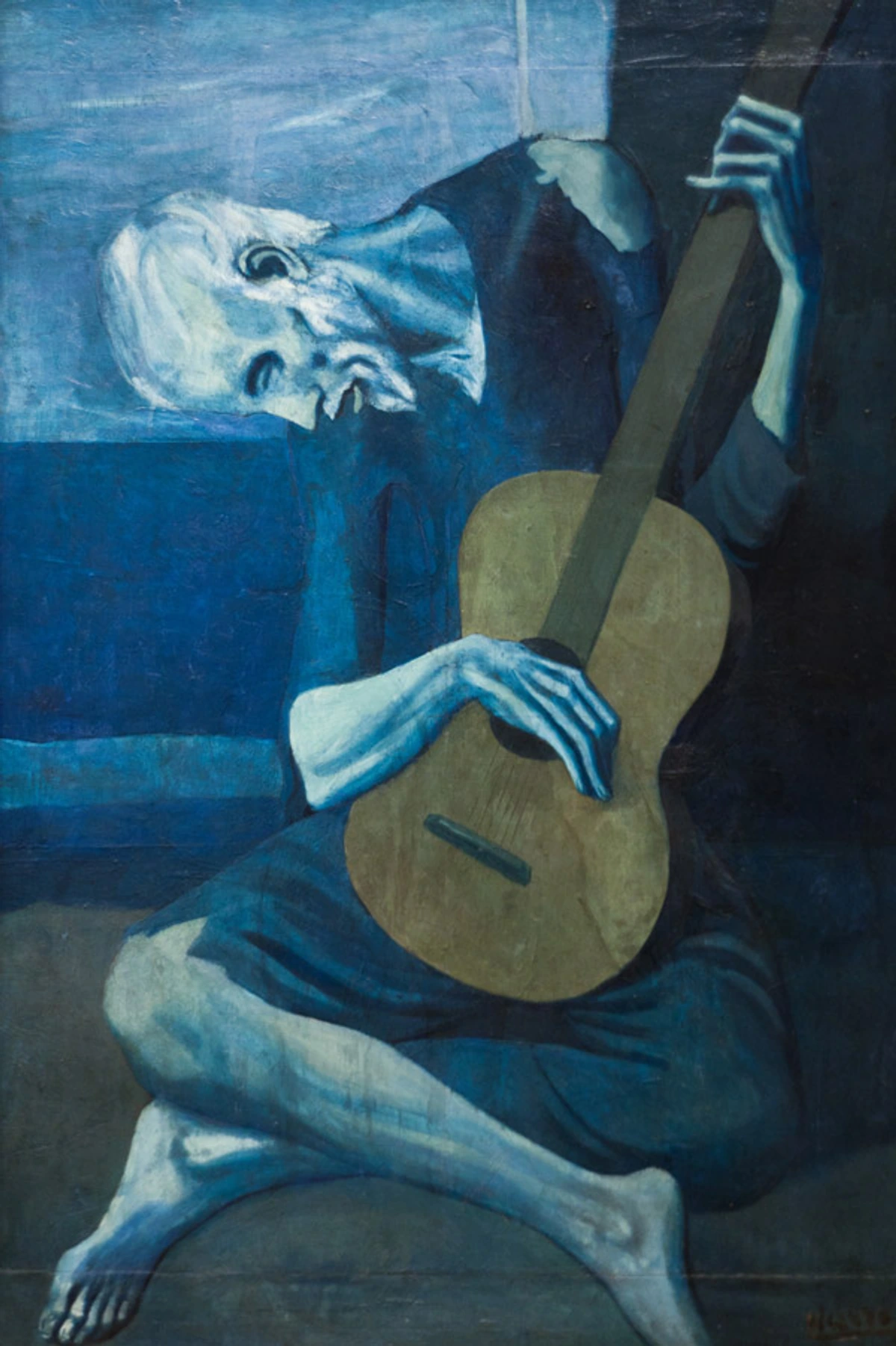
Before we dissect the canvas itself, it’s crucial to understand the world it was born from. The year is 1907. Paris is a cauldron of artistic and intellectual rebellion. Traditional academic art, with its polished surfaces and moralizing history lessons, feels stale and restrictive to a new generation of artists who'd witnessed the radical flattening of form in Post-Impressionism and the raw emotionalism of the Fauves. Picasso, a young but already formidable Spanish painter, was at the heart of this scene, having already cycled through his somber Blue Period and lyrical Rose Period.
His life was his studio, a chaotic mess of paintings, African sculptures, and intense conversations. It was here, surrounded by this intellectual pressure cooker, that he began working on what would become his most infamous canvas, fueled by a spirit of iconoclasm. He wasn't starting with a blank slate; he was starting with centuries of artistic tradition that he felt compelled to either honor or destroy. The initial working title wasn't the polite 'Les Demoiselles d'Avignon'; it was the far more confrontational 'Le Bordel d'Avignon'—The Brothel of Avignon Street. This wasn't going to be a polite scene; it was, from its conception, a visit to a Barcelona brothel, a subject that was raw, carnal, and utterly devoid of the mythological pretense that usually surrounded the female nude in art. It felt closer to the brutal honesty of Manet's "Olympia" than the distant goddesses of classical art.
The Tyranny of the Window: The World Cubism Revolted Against
To truly grasp the violence of the explosion, you have to first appreciate the perfection of the prison it was escaping. We have to talk about the 'window'—a concept laid out by the Renaissance architect Leon Battista Alberti. He proposed that a painting should be a transparent window through which we view a rational, orderly world. For nearly 500 years, this was the unspoken rule. A painting was a beautifully constructed illusion of depth, a contained space you could almost step into. Artists achieved this magic trick through a set of precise, almost mathematical, tools:
- Linear Perspective: All lines converging at a single, distant point on the horizon to create the illusion of depth. It was a mathematical trick to make a flat surface feel like a real space you could walk into.
- Modeling: Using light and shadow (chiaroscuro) to make figures look rounded, solid, and real.
- Idealized Form: The human body was depicted as whole, beautiful, and anatomically correct.
Art was about creating a convincing illusion. Picasso, along with Georges Braque, decided that this illusion was a beautiful lie. They asked: why should we paint what our eyes see from one single, frozen moment, a God-like view from a fixed spot? Why not paint what we know to be there—the top of the table, the other side of the head, the feeling of moving around an object? They were influenced by Paul Cézanne's late works, which treated natural form in terms of cylinders, spheres, and cones. This wasn't just a stylistic choice; it was a philosophical re-orientation of the artist's purpose.
This question is the intellectual engine of Cubism, the shift from retinal impression to conceptual construction. And Les Demoiselles d'Avignon is the first, messy, glorious roar of that engine starting up, before it was even called Cubism.
Dissecting the Visual Bomb: A Guide to the Revolutionary Techniques in 'Les Demoiselles'
So how do you build a bomb? It's not with random chaos, but with precise, calculated components. Picasso's revolution on canvas was no different. To understand how he forged this new reality, we need to dissect his toolkit, piece by shattered piece. Here are the techniques he used to detonate five centuries of artistic tradition.
So, what specific techniques did Picasso use to tear down the old world? The painting isn't just a random explosion of chaos; it's a calculated demolition job. To understand how he built this new reality, we have to dissect his toolkit, piece by shattered piece. Let's break them down.
1. The Picture Plane as a Broken Mirror
Remember that 'window' we talked about? The one that for 500 years framed a perfectly believable space? Picasso takes a hammer to it. Imagine a mirror, dropped and shattered, its pieces glued back together but at slightly wrong angles. That's the new reality of this canvas. The stable, unified space of the Renaissance is annihilated.
Look at the background. The sugary-pink curtain on the left erupts into a jagged blue shape that seems to exist in a different dimension from the women. Where does it start and stop? It doesn't. The floor, which should offer stability, splinters into sharp, diamond-shaped planes that tilt and slide, refusing to offer a solid footing. There is no recession into a believable depth.
This is Picasso's first, most aggressive declaration: there is no single 'correct' viewpoint. He is forcing you to abandon your god-like position as a stationary observer. You are thrown into the scene, forced to shift your gaze and your mental position constantly. You are not looking at a prostitute in a room; you are experiencing the fractured, disorienting energy of being in that room. The painting becomes an event, not an image.
2. The Body as Architecture: Geometric Simplification
Now, look at the women themselves. Where are the soft, flowing curves of a Titian or an Ingres nude? They've been replaced by something far more visceral. The bodies are built from sharp, aggressive triangles, wedges, and interlocking planes of color. Their limbs are not rounded flesh but angular constructions. Picasso is reducing the complex, organic form of the human body to its essential geometric architecture, pushing the method hinted at in Cézanne's late bathers into terrifying new territory. It's a raw, almost brutal, simplification that prioritizes conceptual understanding over sensual pleasure. You can feel the bones and the structure beneath the skin.
This isn't about making the women 'ugly.' That's a superficial reading. It's about revealing the underlying truth of their structure. He's analyzing the body the way an architect might analyze a building, breaking it down into its load-bearing parts. This process, sometimes called prismatic fracture, is about showing what the body is on a fundamental level, not just how it appears in one fleeting moment. The woman on the far left, for instance, is a series of stacked cylinders and sharp angles, a signal of the more severe analytic breakdown that was to come. He is showing you the 'blueprint' of the body, not its decorative facade. It's a move from sensual pleasure to intellectual power, from surface beauty to structural truth.
3. Simultaneous Vision: The Genesis of Fractured Perspective
This is the intellectual core of the painting's revolution. Picasso doesn't just distort the women; he shatters the very system of seeing that had ruled art for half a millennium. He gives you the view from the front, the side, and even from above, all at once. It’s a radical, unprecedented move that still feels impossible today.
Look closely at the figure on the far right, the one crouching down. Her nose is painted in sharp profile, a triangle jutting down from her forehead. But her eye is frontal, and her lower body seems to be viewed from above. He has collapsed multiple moments of seeing into a single, instantaneous image.
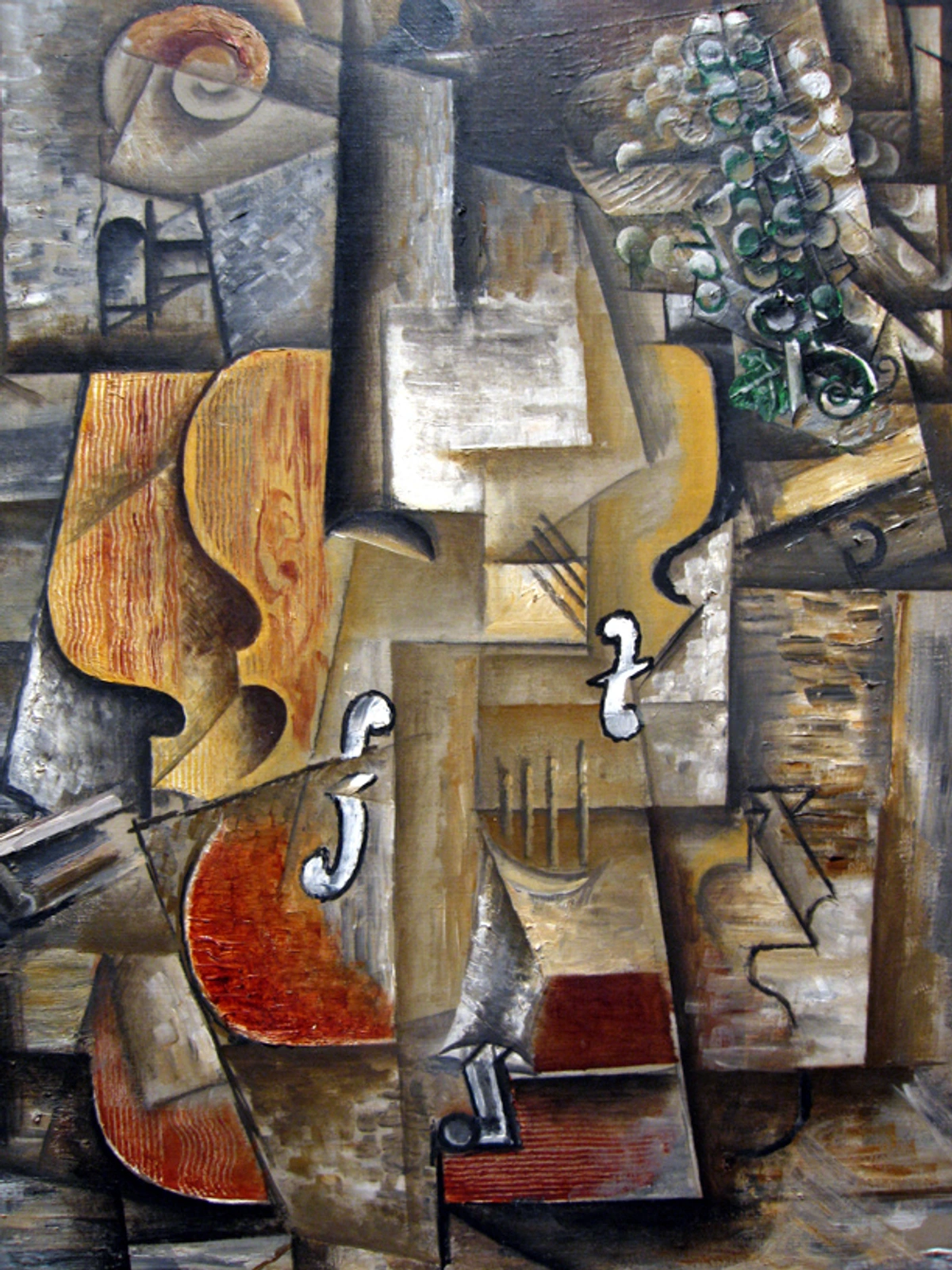
This is the direct, explosive ancestor of what would become Analytic Cubism. In the years to come, Picasso and Braque would push this idea even further, shattering objects and figures into a dense field of geometric facets that the viewer must actively piece together in their mind, stripping color down to near-monochrome to focus entirely on this cognitive puzzle. Les Demoiselles d'Avignon is the Big Bang moment for that entire way of thinking. It declares that the world is not a static thing to be seen, but a complex, multi-faceted reality to be mentally constructed. It's the birth of conceptual painting.
credit, licence

Look closely at the faces on the right. Their mask-like features are a direct result of this fractured perspective. This is where the painting moves from merely 'distorted' to truly revolutionary.
4. The Power of the "Primitive": A Transgressive Appropriation
Now, let's talk about those shocking faces on the right. Picasso was deeply influenced by African tribal art, which he saw in Paris's ethnographic museum at the Palais du Trocadéro. This encounter was not one of mere curiosity but of profound, seismic impact. He wasn’t trying to copy it; he was channeling its raw, symbolic power to blow apart the conventions of European painting.
The mask-like faces are a rejection of Western naturalism. In many African traditions, a mask isn't meant to look like a person; it's meant to represent a spirit or a concept. It is a vessel of meaning, not a portrait. The brutal, angular lines of the faces on the right are directly indebted to the aesthetic of Dan and Grebo masks from West Africa. By incorporating this visual language, Picasso infuses the figures with a primal, almost terrifying energy, what he called a "raison magique" or magical reason, that was entirely different from the academic reasoning of Europe. It strips away the veneer of civilization from the subject of the nude and turns the women into powerful, confrontational icons. This wasn't cultural appreciation in the modern sense; it was an explosive act of appropriation that forever changed the DNA of modern art.
5. The Ambiguous and Confrontational Space
Because the entire logic of the picture plane is shattered, Picasso masterfully destroys any sense of safe, psychological distance. The traditional space between the viewer and the viewed collapses. Are you a client in the room? A voyeur at the door? Or are these figures aggressively pushing their way out of the canvas and into your space? The painting feels physically close, intrusive, and inescapable. It violates the implicit contract of the picture frame. You are denied the privilege of the dispassionate observer. You are made complicit, a participant in the gaze, and the painting will not let you forget it.
Even the traditional anchor of a still life—the melon and fruit in the foreground—is denied its purpose. Instead of grounding the scene, they are just as fractured and menacing as the figures, their sharp planes mirroring the bodies. There is no calm, no neutral ground. The entire canvas is charged with the same violent energy. You are not a passive onlooker. You are an intruder, and the painting is staring you down, forcing you to confront its reality head-on without offering any place to rest.

The 'Les Demoiselles' Effect: A Technical Cheat Sheet
For anyone who wants a clear, concise breakdown of the technical DNA that makes this painting so revolutionary, here it is. Think of this as your decoder ring for the chaos.
Technique  | What It Means | Its Effect in 'Les Demoiselles' |
|---|---|---|
| Fractured Perspective | Depicting a subject from multiple angles at once. | The women's faces and bodies seem to shift and multiply, showing you front, side, and even back views simultaneously. |
| Geometric Simplification | Reducing forms to their core geometric shapes (triangles, cubes, etc.). | The organic softness of the female body is replaced by sharp, interlocking planes, revealing the underlying 'architecture' of the form. |
| Shattered Space | Destroying the traditional picture plane and single-point perspective. | The background and foreground merge, collapsing the safe distance between the viewer and the painting. You feel involved, not just observing. |
| Primitivism | Drawing inspiration from non-Western, especially African, art forms. | The mask-like faces introduce a raw, confrontational, and anti-naturalistic power that shattered European aesthetic conventions. |
| Aggressive Color | Using non-naturalistic, often clashing colors. | Pink, blue, and white don't describe light but generate a harsh, artificial energy that adds to the painting's confrontational mood. |
After the Shockwave: The Endless Ripple Effect of 'Les Demoiselles'
Les Demoiselles d'Avignon was so violent a departure that even Picasso's avant-garde circle was horrified. The painter André Derain was so disturbed he reportedly said that Picasso would one day be found 'hanged behind his great canvas.' It was considered ugly, barbaric, an abject failure. Picasso, sensing the shock, kept it hidden away in his studio for nearly a decade, rolled up for much of it. It wasn't officially exhibited until 1916 and didn't enter the collection of the Museum of Modern Art in New York until 1937. It was a painting too brutal for its own time, a visual Molotov cocktail lobbed into a polite artistic salon.
Yet, for the few who saw it—people like Braque, who slowly came around after his initial shock—its influence was instantaneous and absolute. It was, without any exaggeration, the Big Bang for modern art, the moment the space-time of the art world was irrevocably warped.
Phase 1: The Severity of Analytic Cubism (c. 1908–1912)
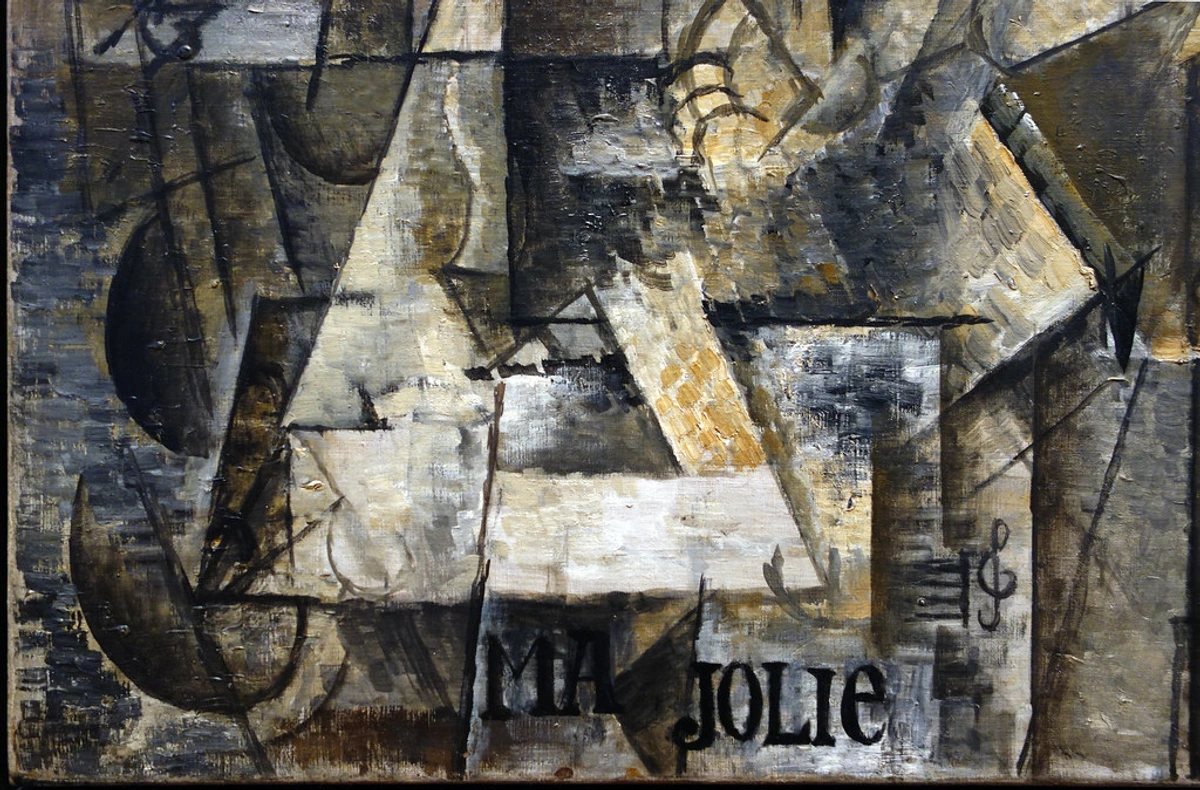
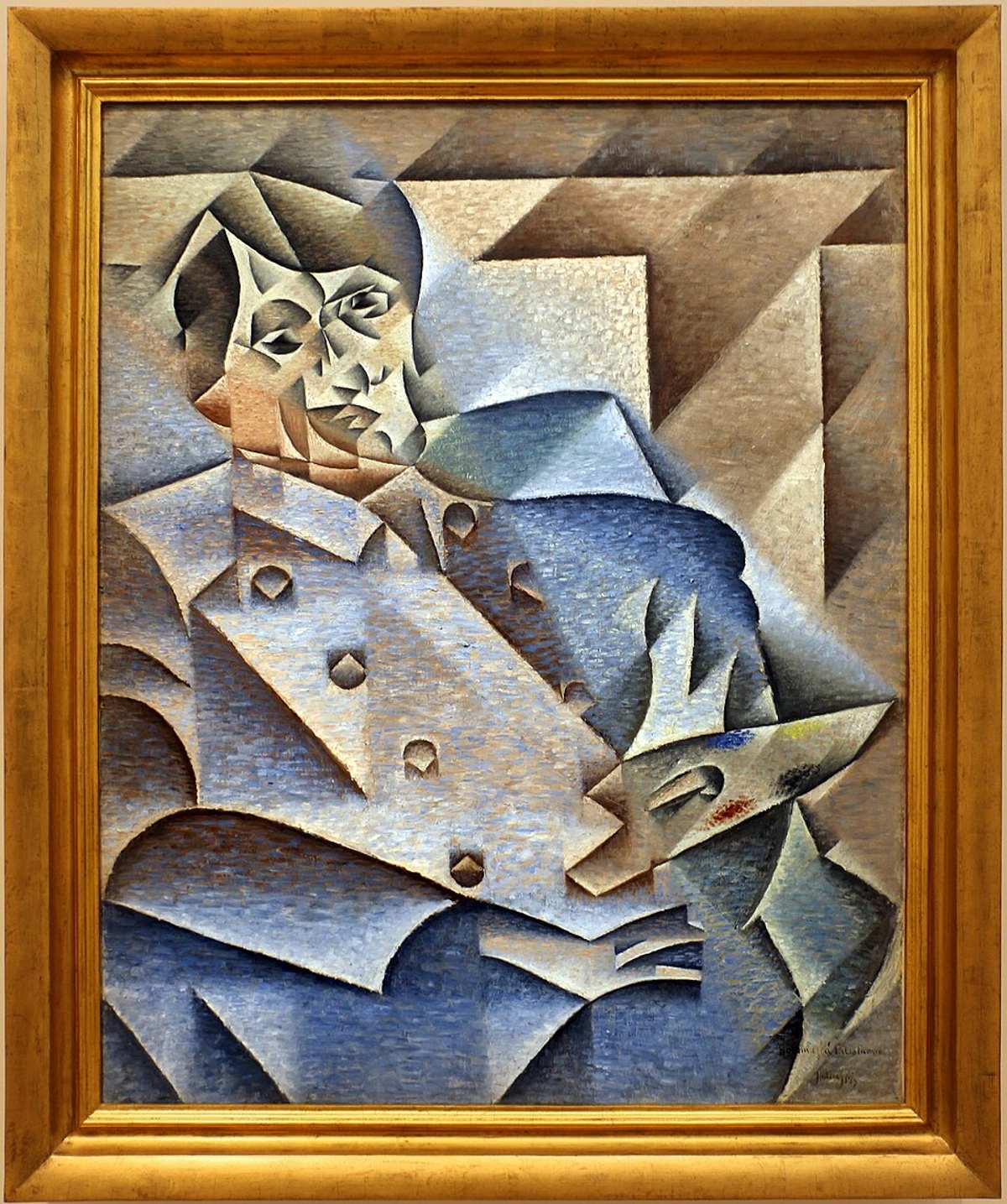
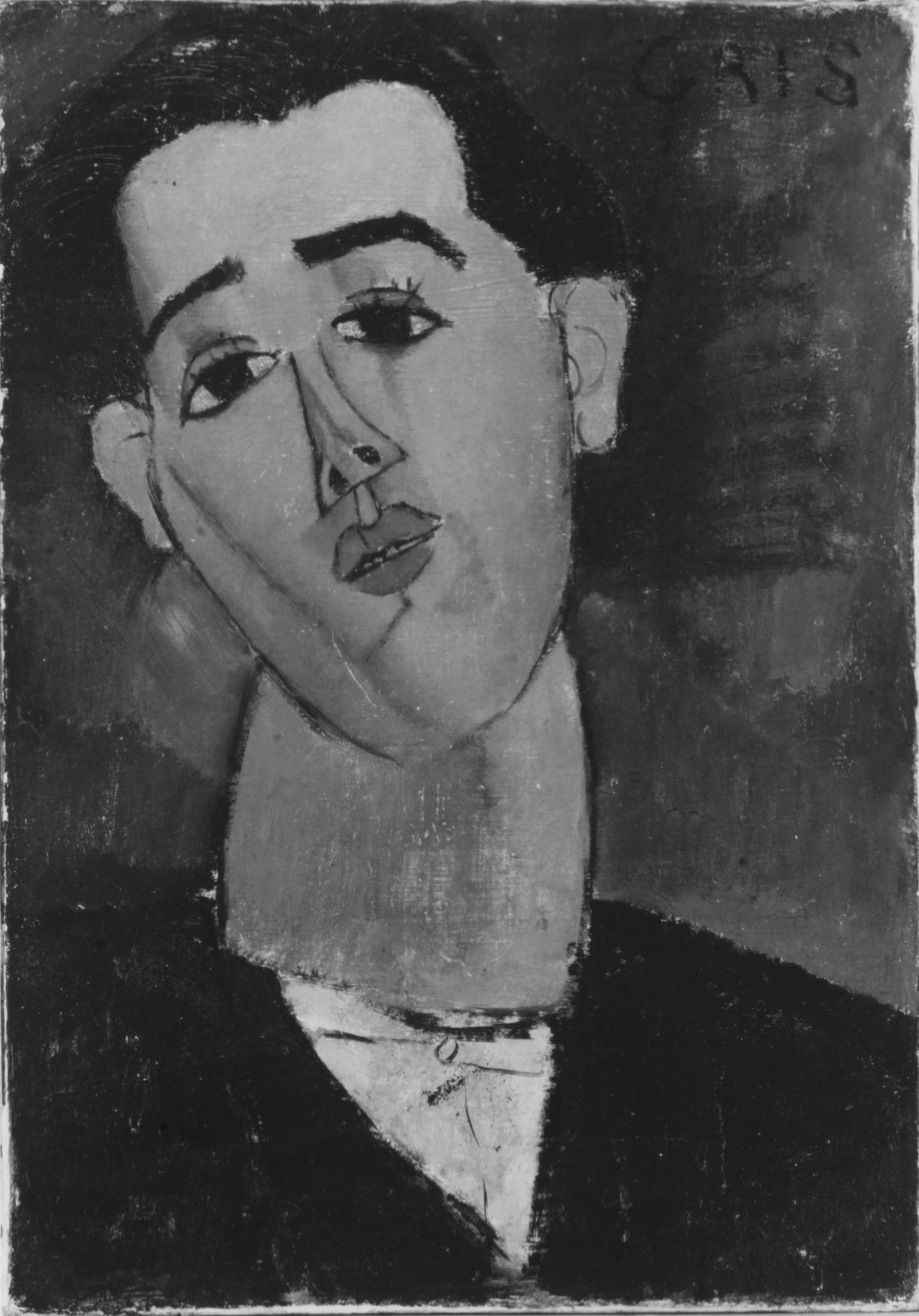
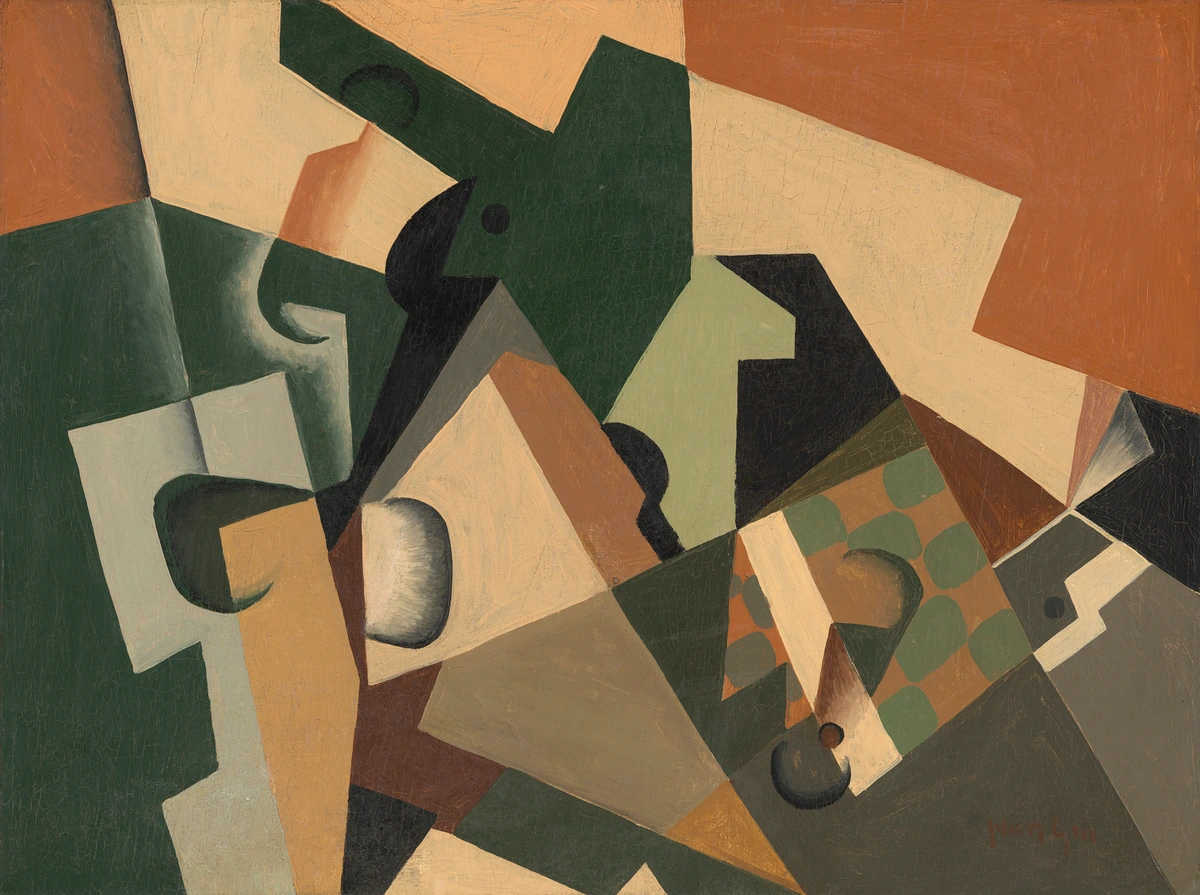
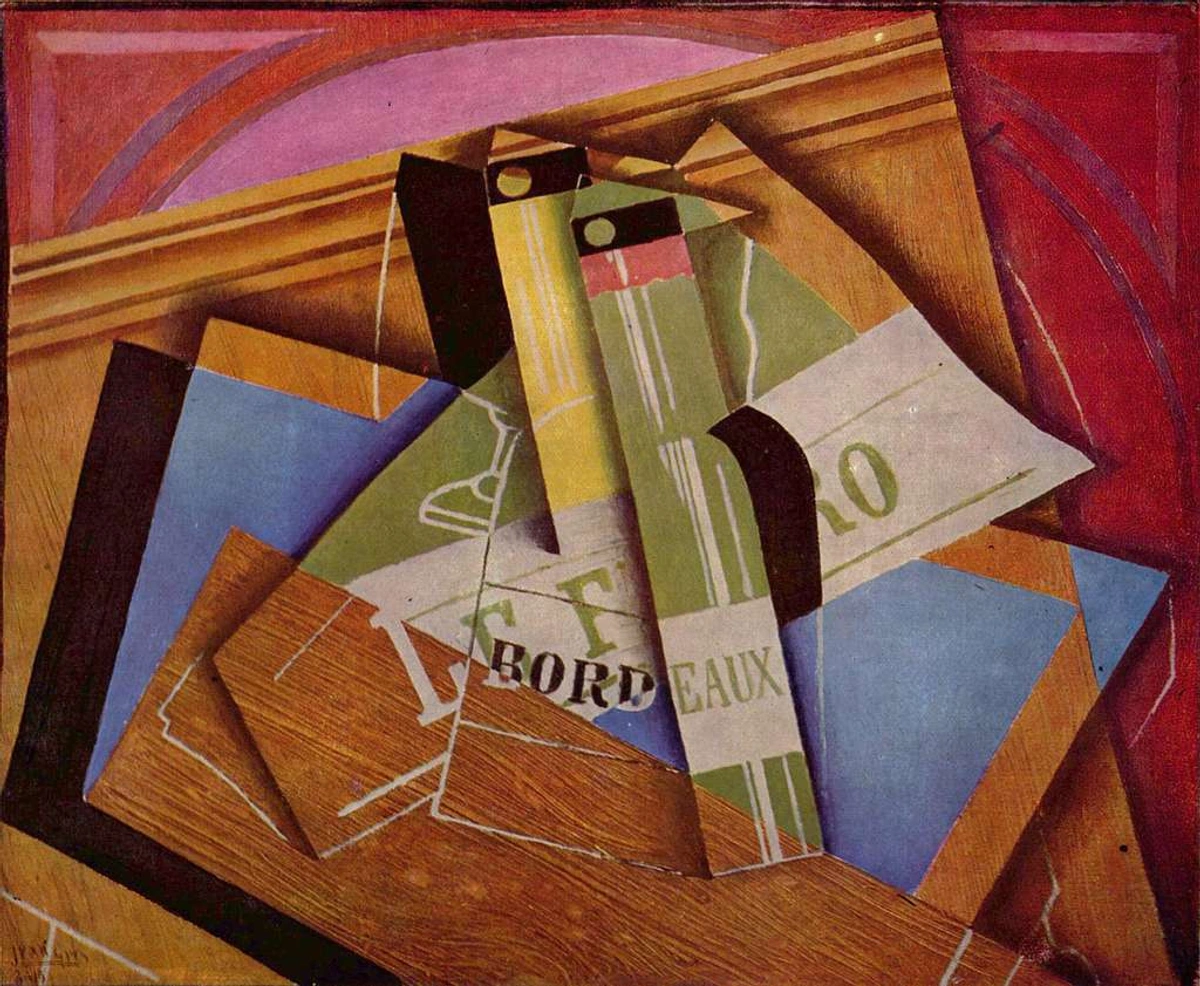
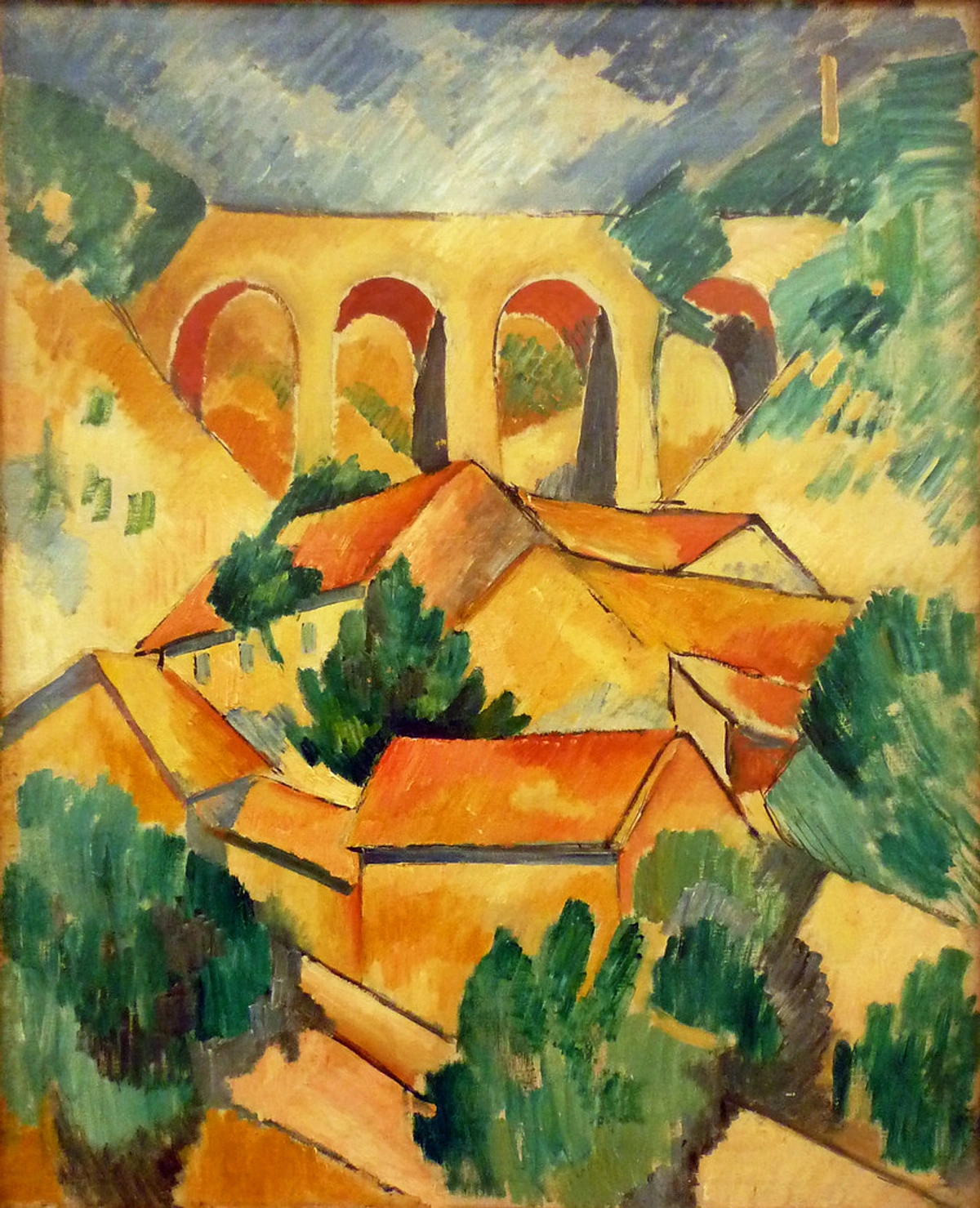
The first wave of influence was immediate. Picasso, along with his new partner in crime Georges Braque, took the disjointed planes of Les Demoiselles and pushed them to a new extreme. They began systematically deconstructing the world into a dense web of interlocking, monochromatic geometric facets—a style the critic Louis Vauxcelles would dub "Cubism" after derisively noting Braque's paintings were full of "little cubes." The color palette became muted—browns, ochres, greys, greens—because they were interested in pure form and structure, not decorative color or light effects. Paintings from this period are like intricate, unsolvable puzzles that force your eye and mind to work overtime to reconstruct a guitar, a bottle, or a human head. Artists like Juan Gris would later join this exploration, bringing his own rigorous mathematical order to the chaos. The jolt of Les Demoiselles had become a systematic exploration.
An Uncomfortable Mirror: The Enduring Challenge of Les Demoiselles d'Avignon
So, why should this matter to you, today? Because Les Demoiselles d'Avignon is more than a historical artifact. It is an active, enduring challenge to how we see the world. It argues, in the loudest possible terms, that reality is not a single, fixed thing observed by a passive viewer. Reality is a messy, complex, multi-faceted experience that we actively construct in our minds from a thousand different angles, memories, and glances. The painting hasn't aged a day because it poses a question we are still struggling with: do you trust the simple story, or do you dare to confront the complex, uncomfortable truth?
And the next time you stand before a piece of abstract or modern art that makes you think, 'I don't get it,' remember this painting. That feeling of confusion, of being confronted by something that refuses to play by the old rules, is a direct descendant of the shockwave that erupted from Picasso's studio in 1907. Picasso didn't just paint a picture. He broke the game of art so completely that we are all still learning how to play by his rules, over a century later. He proved that art doesn't have to be beautiful to be true. And sometimes, the most important truths are the most uncomfortable ones.
Unraveling the Mystery: Your Most Common Questions, Answered
Here are the questions people often have about this impossible painting.
Why is 'Les Demoiselles d'Avignon' considered the cornerstone of modern art?
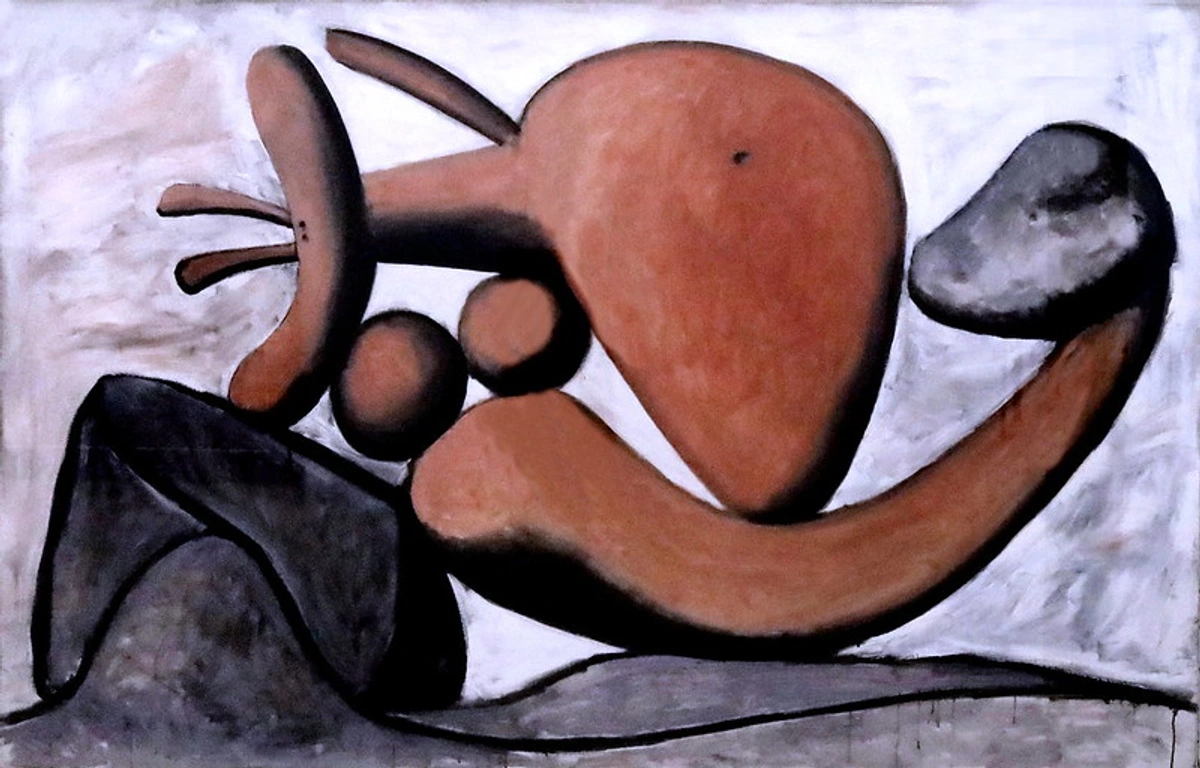
It's considered the cornerstone of modern art because it was the first painting to completely and deliberately shatter traditional single-point perspective. It proposed a new, conceptual way of seeing, where an object is depicted from multiple viewpoints at once to represent what we know rather than just what we see. It was the direct catalyst for the Cubist movement, which in turn influenced nearly every major art movement that followed in the 20th century, from Italian Futurism to Russian Suprematism, and on to Abstract Expressionism. It fundamentally changed the goal of art from imitation to conceptual construction.
Is 'Les Demoiselles d'Avignon' the first Cubist painting?
This is a classic art history debate! I'd say yes, it's the prototypical Cubist painting. It contains all the essential DNA of the movement: fractured forms, multiple viewpoints, and a shattered picture plane. While Picasso and Braque would later develop the full-blown, more systematic style known as Analytic Cubism, Les Demoiselles is the explosive, revolutionary breakthrough where it all began. Think of it this way: if Analytic Cubism is the scientific theory, Les Demoiselles is the crucial, paradigm-shifting experiment that proves the theory is even possible.



What is the meaning of the title 'Les Demoiselles d'Avignon'?
The title translates to "The Young Ladies of Avignon." It's a tongue-in-cheek reference to a brothel on Carrer d'Avinyó (Avignon Street) in Barcelona. The "demoiselles" (young ladies) were prostitutes. So, the subject matter is a direct, unflinching look at a group of nude prostitutes, which was itself a scandalous topic for a major work of art, stripping away the mythological pretense of the classical nude. It grounds the subject in gritty, contemporary reality, not mythology.
How did people react when they first saw it?
Most people were horrified. Even Picasso's own circle of avant-garde friends, including the writer Gertrude Stein and her brother Leo, were dismayed. Georges Braque, who would soon become his Cubist partner, was deeply shocked upon first seeing it and reportedly found it deeply disturbing. The painter André Derain famously said that one day Picasso would be found hanged behind the canvas. It was seen as ugly, barbaric, and a complete artistic failure. It was so controversial that Picasso kept it rolled up in his studio for nearly a decade. It took nearly two decades for critical opinion to shift and for the art world to fully catch up and grasp its monumental importance.