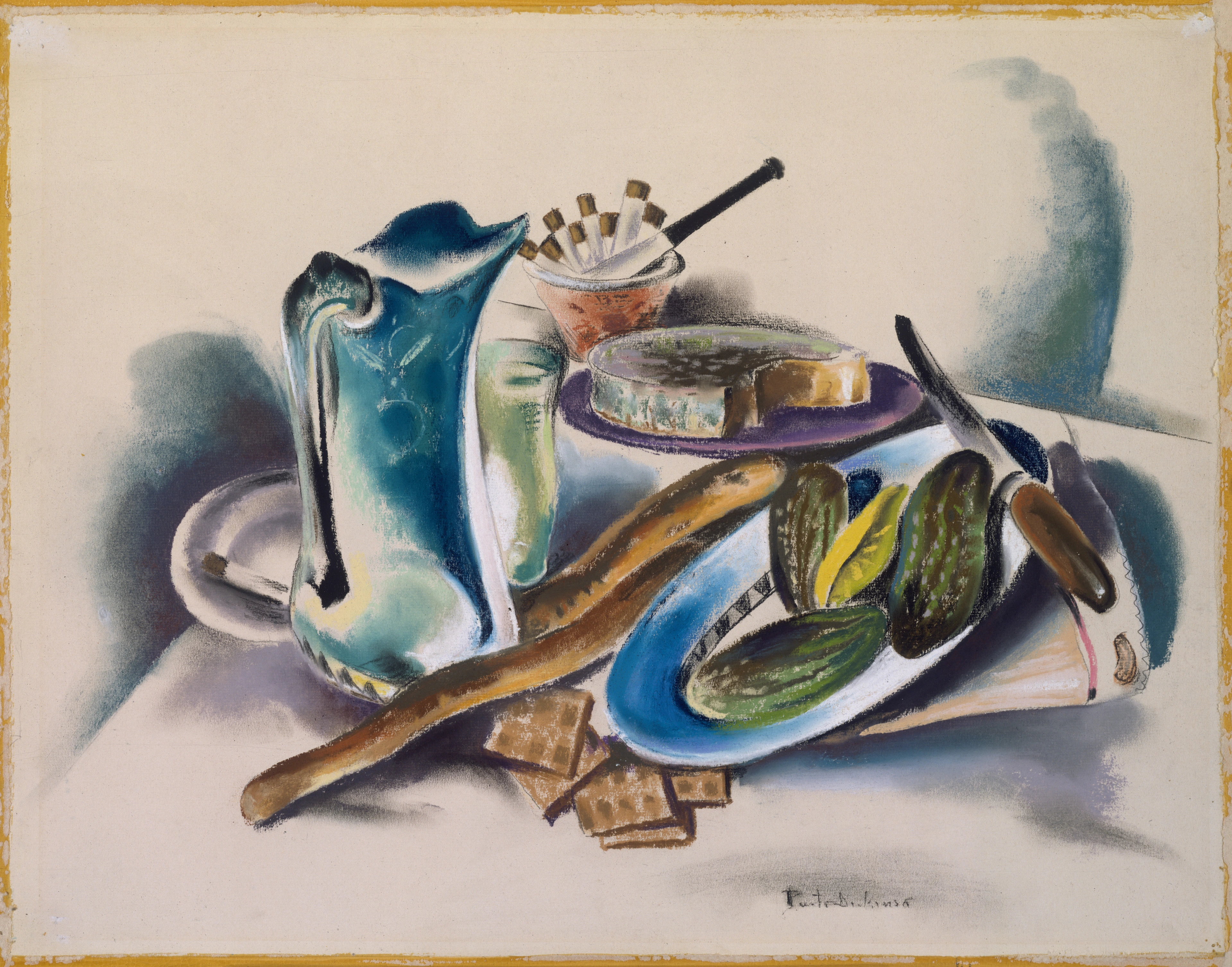
Juan Gris: The Quiet Architect Who Perfected Cubism with Logic and Color
Beyond Picasso and Braque, Juan Gris methodically transformed Cubism. Discover how his architectural precision, vibrant Synthetic Cubism, and intellectual rigor codified modern art, offering a blueprint for generations.

Juan Gris: The Quiet Architect Who Perfected Cubism with Logic and Color
When you think of Cubism, two names probably leap to mind first: Pablo Picasso and Georges Braque. They're the flamboyant rock stars, the chaotic pioneers who first shattered reality on canvas. For a long time, I thought their story was the whole story of Cubism. It’s an understandable oversight, honestly. But lurking just behind them, in those same smoke-filled Parisian studios, was a third man. A quieter, more methodical genius who took their explosive, almost destructive idea of deconstruction and meticulously refined it into something elegant, logical, and breathtakingly beautiful. While Picasso and Braque were smashing mirrors, Gris was carefully building a new one, piece by perfect, reasoned piece, laying the foundational lines and erecting a visual framework. His name was Juan Gris, and ignoring him is like listening to a band and only paying attention to the singer and lead guitarist, completely missing the bassist who's holding the entire composition together.
Juan Gris wasn’t just part of Cubism; he was the one who truly codified it, gave it a new, systematic language, and arguably, perfected its principles. He showed us that even revolution needs a blueprint. His disciplined approach offered a new direction for modern art, influencing not only subsequent Cubists but also artists exploring geometric abstraction for generations.
From Satirical Cartoons to Avant-Garde Canvases
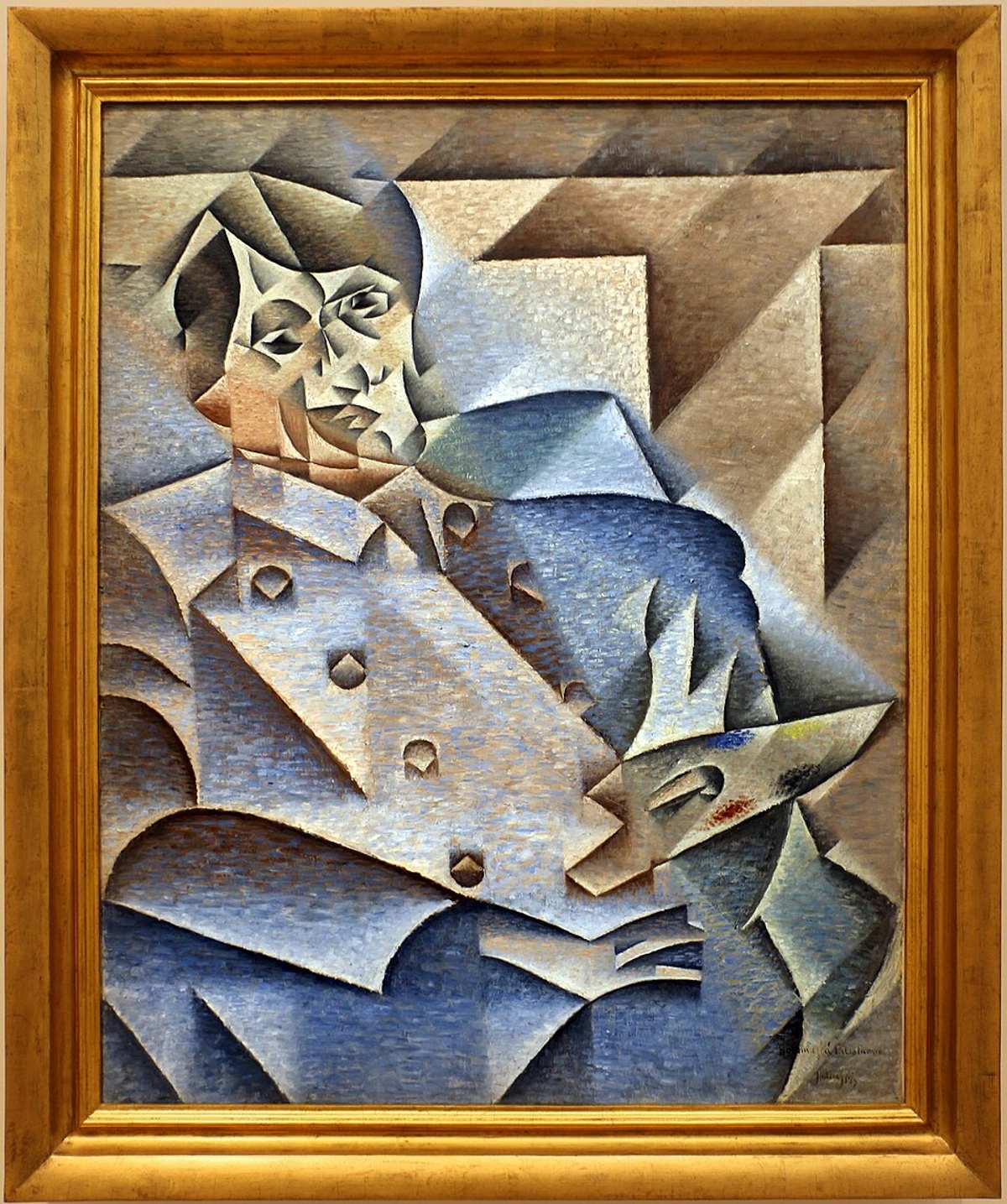
Born José Victoriano González-Pérez in Madrid, Gris didn't start out as a revolutionary painter. He was an illustrator and a satirical cartoonist. What I find so fascinating about this is that it means he had a deep-rooted understanding of line, form, and how to convey an idea with absolute precision – skills that would become his secret weapons in the world of Cubism. Imagine having to distill complex social commentary into a few precise strokes! It’s like boiling down a politician’s entire persona into just a few telling lines. That’s a level of control I deeply admire, a quiet confidence that speaks volumes in his later work.
In 1906, he moved to Paris and ended up in the famous Bateau-Lavoir, that ramshackle artist commune in Montmartre that was a true melting pot of avant-garde thought. It was a crucible for radical ideas, a place where art was being reinvented daily. This was where Picasso and his circle were truly turning the art world upside down. (I sometimes wonder what the rent must have been like in such a hotbed of genius… probably still more affordable than today's Parisian studios, but I digress!). For a few years, Gris mostly watched, absorbed, and continued his illustration work. He was studying, analyzing. Unlike Picasso's almost violent, instinctual approach, Gris was a thinker, a mathematician of sorts. I call him a mathematician because he approached painting like an architect designs a building, meticulously planning every structural element, every angle, every plane, before ever picking up a brush in earnest. It's almost like he was double-checking his equations, performing mental blueprinting before daring to put paint to canvas – a far cry from the impulsive splatters that often come to mind when thinking of modern art!
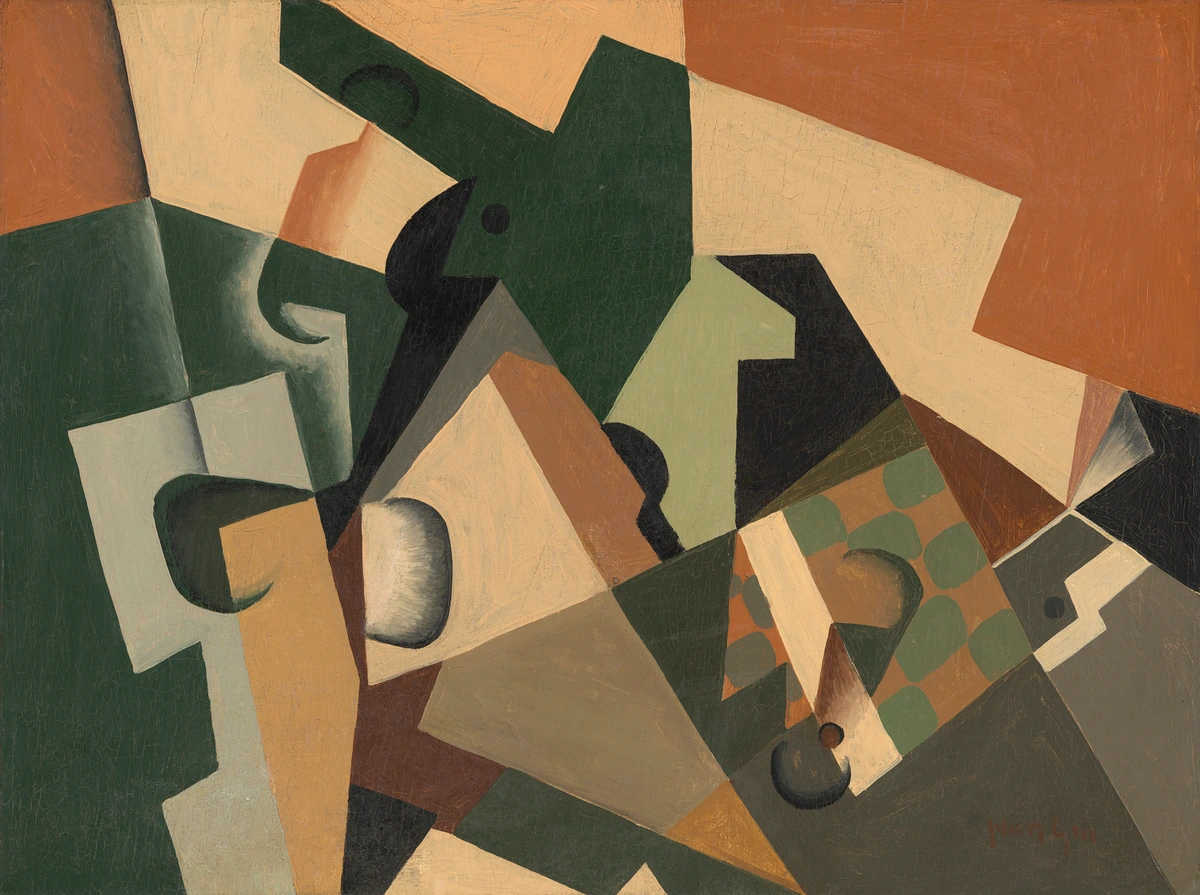
When he finally dedicated himself fully to painting around 1911, he arrived with a clarity and purpose that was startling. He wasn’t just smashing the mirror of reality; he was meticulously reassembling the shards into a new, more compelling whole. This methodical process quickly led to distinctive early Cubist works such as Homage to Picasso (1912) and Still Life with Bottle and Knife (1912), where you can already see his departure towards a more structured and coherent fragmentation.
The Gris Method: Logic Meets Art
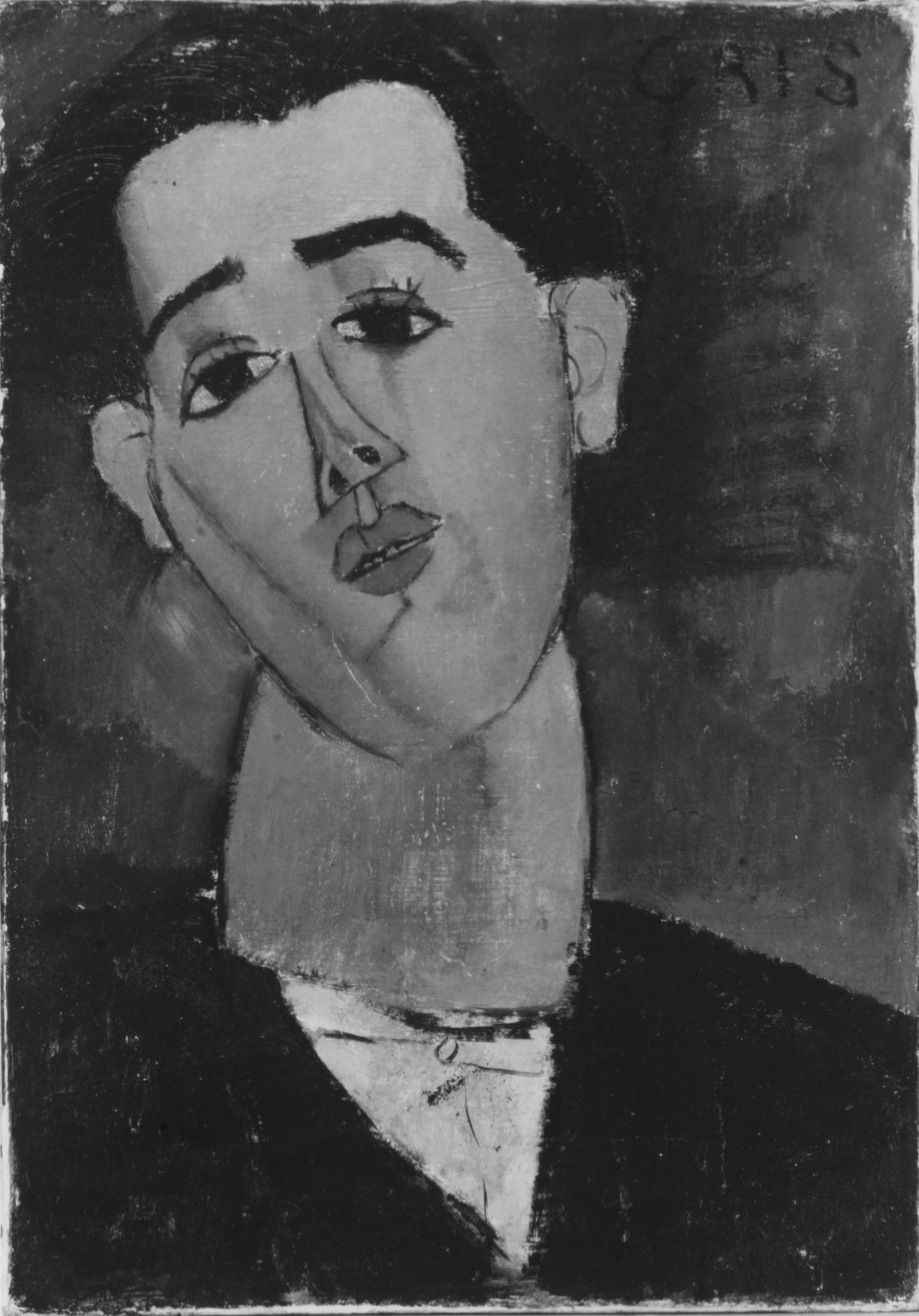
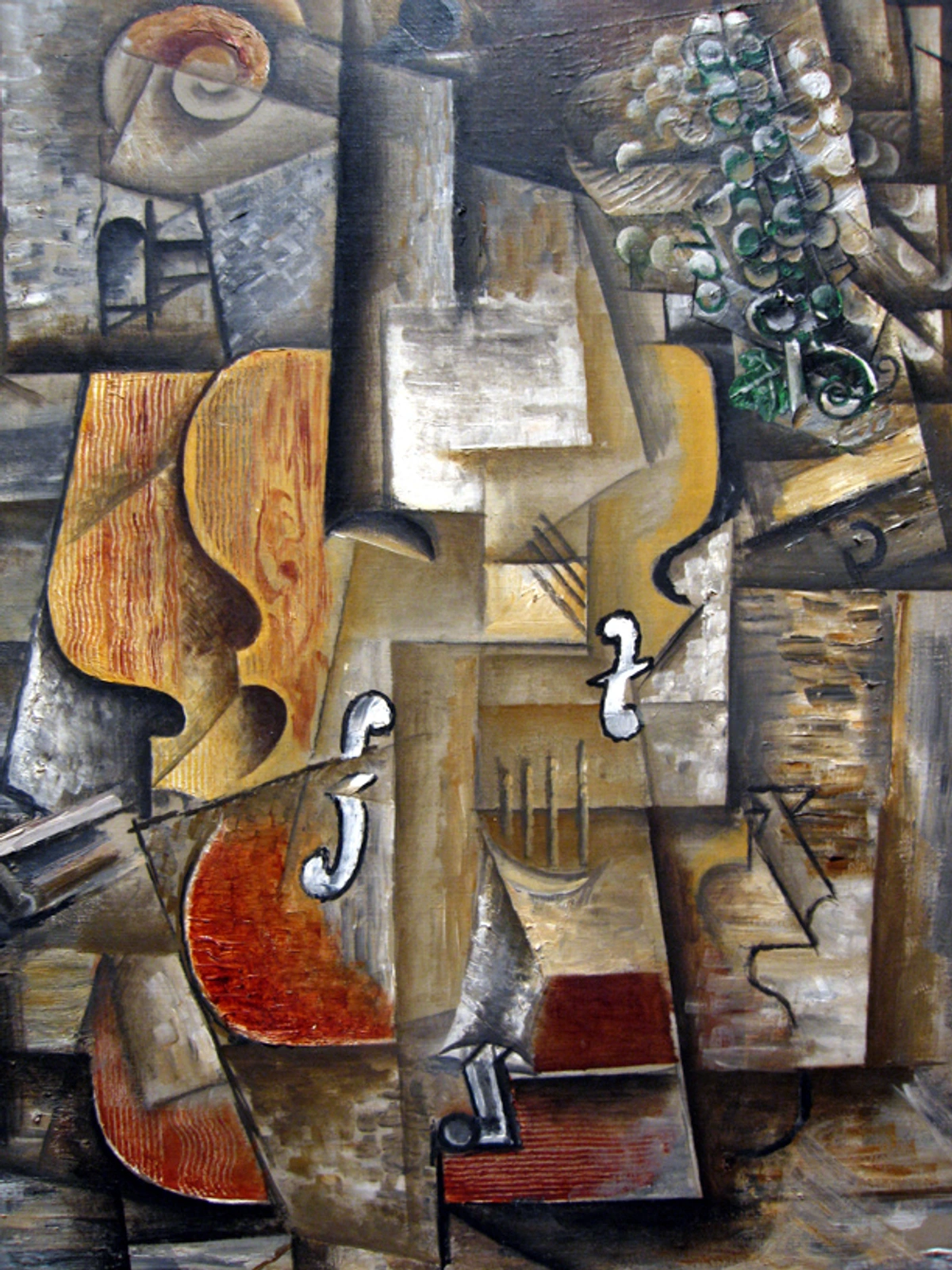
So, what actually made his work so different? What was this meticulous planning I’m talking about? I think of it this way: if early Cubism (often called Analytic Cubism) was about deconstructing an object into a mess of fractured planes and muted colors – imagine looking at a face from the front and the side simultaneously, with all the chaotic energy of a first attempt – Gris’s approach was almost the opposite. It was about constructing the idea of an object from pure geometric forms and vibrant color. He approached abstract art (art that doesn't attempt to represent external reality but achieves its effect using shapes, forms, colors, and textures) not as a spontaneous explosion, but as a carefully calculated assembly. It’s a subtle but profound shift. While Analytic Cubism shattered reality, Gris built a new, orderly reality from the fragments.
This later phase is known as Synthetic Cubism, and Gris was its undisputed master and theoretician. While Picasso and Braque experimented with synthetic elements, it was Gris who systematically developed and codified its principles, making it a fully realized artistic language. For instance, while Picasso’s Synthetic Cubism often remained more organic and intuitive, Gris brought a deliberate, almost architectural rigor, emphasizing flat, interlocking planes and crisp, clear outlines. He famously said, “I try to make concrete that which is abstract.” To me, this means taking the essence of something – the “bottle-ness” of a bottle, if you will, or the “guitar-ness” of a guitar (its defining characteristics, its very identity) – and building it on the canvas through deliberate shapes, harmonious colors, and often, textural elements that evoke reality without mimicking it directly. He would start with the abstract shapes and colors and work towards the subject, the exact opposite of how Picasso and Braque often began.
To make it clearer, here’s a little breakdown of the key differences:
Feature  | Pablo Picasso / Georges Braque (Analytic Cubism) | Juan Gris (Synthetic Cubism) |
|---|---|---|
| Starting Point | A real object (a guitar, a person). | An abstract concept or geometric grid. |
| Process | Deconstruct the object into fragmented planes. | Build up the image from shapes, colors, and textures. |
| Color Palette | Mostly monochrome (browns, greys, ochres). | Bright, harmonious, and often non-naturalistic colors. |
| Feeling | Complex, chaotic, sometimes difficult to decipher, often raw and emotionally charged. | Ordered, clear, architectural, and harmonious, more cerebral. |
| Key Innovation | Multiple viewpoints at once. | Integration of collage (papier collé) and pure color. |
| Materials/Techniques | Primarily painting (oil on canvas), sometimes incorporating text, with fluid, expressive brushwork. | Primarily painting (oil on canvas) combined with extensive use of papier collé (pasting paper/materials directly onto the canvas) and stenciling, characterized by precise, clean application. |
| Overall Impact | Disorientation and intellectual challenge. | Clarity, structure, and visual harmony. |
He wasn't just painting a bottle; he was building the essence of "bottle-ness" on the canvas. This required an incredible handle on composition and a masterful sense of balance. It’s an intellectual rigor that can sometimes be overlooked amidst the flashier narratives of his contemporaries. His vision represents a pivotal moment in modern art history, moving Cubism from explosion to elegant construction.
Masterpieces of a Methodical Mind
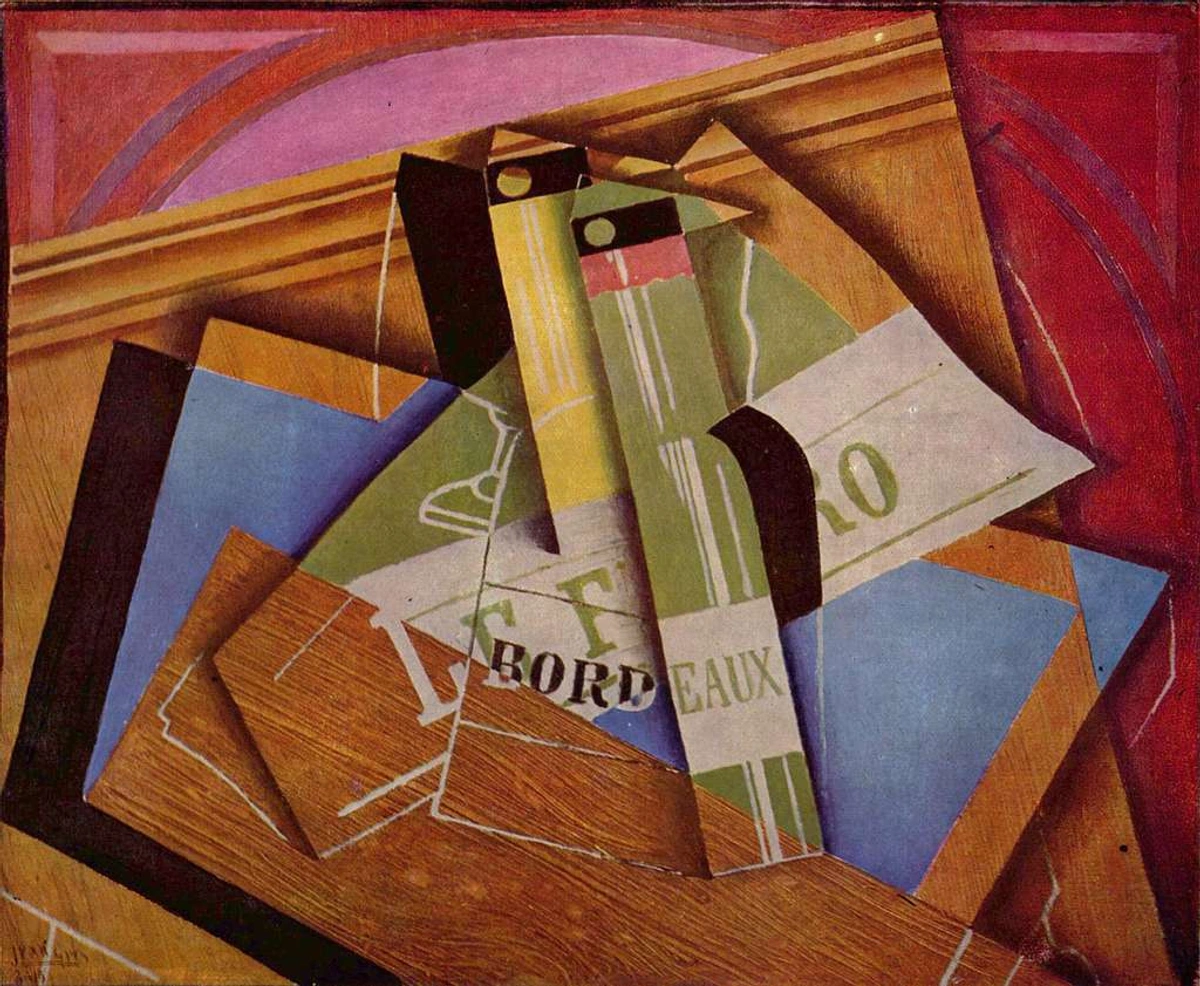
Because Gris didn't have the same wild, prolific output as Picasso, his masterpieces feel incredibly considered and deliberate. They're like carefully orchestrated visual symphonies, each note placed with intention. I invite you to look closely at works like Violin and Checkerboard (1913), Still Life with a Guitar (1913), or The Fruit Bowl (1914). In them, you don't just see fragments; you see a world meticulously constructed, where every element serves a precise purpose.
Vibrant Color
He uses bold blues, greens, and whites that aren't just for show; they define planes and create rhythm in the painting. Unlike the somber tones of Analytic Cubism, Gris's palette sings, adding a dimension of joy and clarity that makes his work incredibly engaging. When I describe his colors as "harmonious," I mean they are carefully chosen and balanced to create a sense of visual order, often using complementary or analogous hues to achieve a vibrant, yet calm, effect. His colors, like those in The Sunblind (1914), don't just describe reality; they build a new one, full of harmonious energy and a thoughtful exploration of how artists use color.
Papier Collé
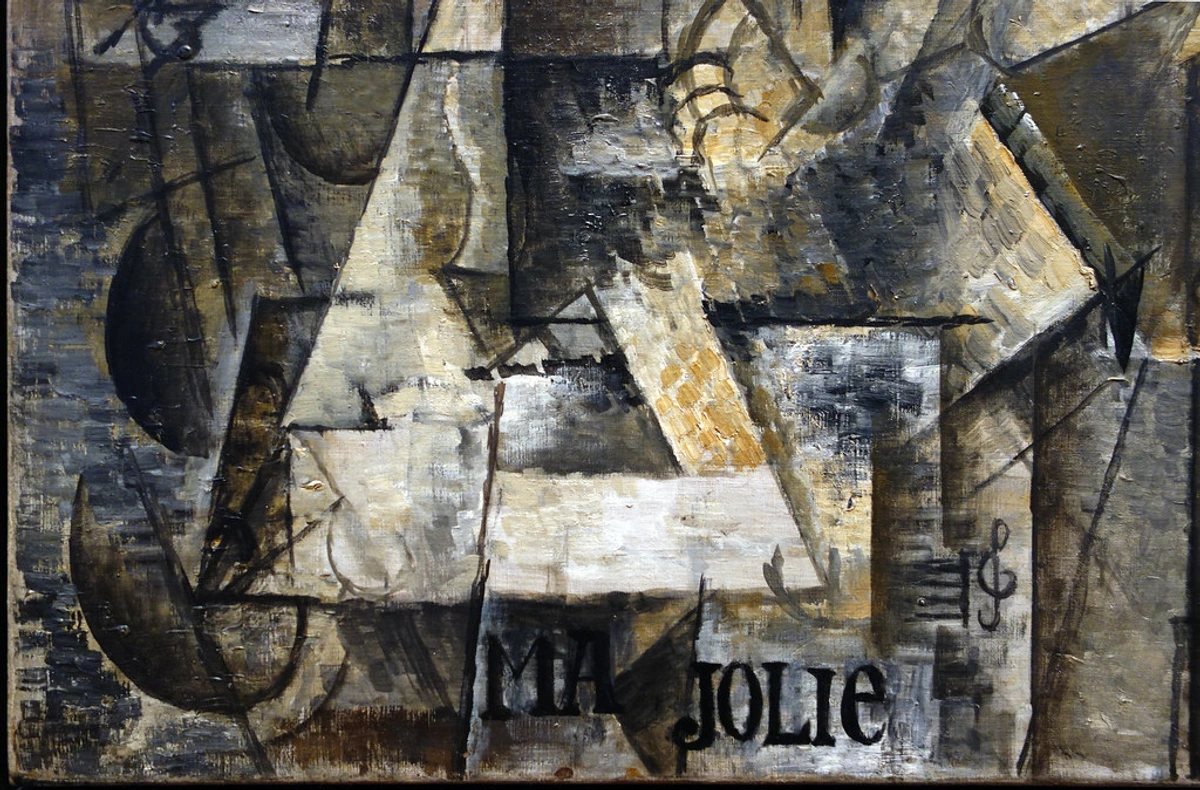
He seamlessly integrated bits of newspaper, wallpaper, and labels into his work. This wasn't a gimmick; it was a profound artistic statement. This technique, a core part of Synthetic Cubism, involved physically pasting flat materials onto the canvas, blurring the line between representation and reality. It was a way to flatten the space, play with the idea of what is 'real' and what is 'represented', and introduce new textures and subtle narrative hints. For instance, a newspaper clipping might offer a fragment of contemporary Parisian life, or a specific wallpaper pattern could evoke a domestic setting, creating a tactile dialogue between representation and reality, as beautifully explored in Still Life with Checkered Tablecloth (1915). To me, the ingenuity of papier collé is breathtaking, a precursor to modern collage art, executed with uncanny precision.
credit, licence
Grid Structure
Many of his compositions are underpinned by a strong grid, often using diagonals and intersecting lines that give his work an architectural stability. It's like he built a scaffold, an invisible framework, and then painted within it, a testament to his earlier training and his systematic mind. This structural integrity gives his paintings a calm authority, even in their fragmentation. His meticulous planning ensured that even when breaking things apart visually, an underlying order, a profound sense of construction, always remained.

His famous Portrait of Picasso (1912) is a perfect example of his approach. It’s clearly a Cubist work, fragmented and multi-faceted, but it's also incredibly structured, demonstrating that underlying grid. The light seems to fall systematically across the planes of Picasso's face and body, a deliberate arrangement rather than an impulsive one. It’s a tribute from one of the most important artists to another, done entirely in his own, unique language, a true masterpiece of considered construction.
His Enduring Legacy
Juan Gris died tragically young, at the age of 40, but his influence was immense, especially in the evolution of geometric abstraction (a form of abstract art based on geometric forms, often arranged in non-illusionistic space) and modern art. He showed that abstract art didn't have to be born from pure chaos; it could be born from intellect, order, and a deep love for harmony. While some might have seen him as merely following Picasso and Braque – a common but ultimately flawed misconception – his systematic refinement and distinct constructive approach proved him a visionary in his own right, propelling Cubism into its most developed and coherent phase.
His logical, structured version of Cubism paved the way for later movements like Purism (with artists like Le Corbusier and Amédée Ozenfant, who championed clean lines and machine aesthetics, directly echoing Gris's emphasis on geometric clarity) and De Stijl (led by Mondrian, emphasizing elemental geometric abstraction and primary colors, a clear lineage from Gris's foundational principles). Gris's emphasis on structural logic and geometric forms resonated deeply with these artists, providing a crucial bridge from fragmented reality to pure, harmonious abstraction.
Studying artists like Gris has been a cornerstone of my own artistic development, which you can see in my timeline. He teaches you that a revolution in art can be quiet, that a powerful statement can be made with precision as much as with passion. He provides a roadmap for how to create a new world on canvas, not by just breaking the old one, but by carefully building a better one. His belief that even revolution needs a blueprint and a harmonious structure is a principle that resonates deeply with the way art is approached today, where clarity and thoughtful composition are as vital as bold ideas. He reminds me that even when everything seems fragmented, there's always an underlying logic waiting to be discovered and brought to light. The next time you encounter a Cubist painting, take a moment to look for the quiet architect, the one who built the future of art, piece by deliberate piece. You might just find yourself captivated by Juan Gris's genius.
FAQ: Your Questions About Juan Gris, Answered
Who was Juan Gris?
Juan Gris (born José Victoriano González-Pérez) was a Spanish painter and sculptor, a pivotal figure in the Cubist movement. Often referred to as the "third Cubist" alongside Pablo Picasso and Georges Braque, he is recognized as the primary master and theoretician of Synthetic Cubism, bringing an architectural precision to the fragmented world of Cubism.
What is Juan Gris best known for?
He is best known for pioneering and perfecting Synthetic Cubism. This distinct style, a crucial step in the artistic evolution of modernism, is characterized by brighter, harmonious colors, a stronger sense of composition, and the widespread use of collage (papier collé) to build up an image from abstract shapes, rather than deconstructing a real object. His work brought a methodical and elegant structure to the Cubist revolution, influencing the trajectory of modern art history.
How is Juan Gris different from Picasso and Braque?
Gris's approach was more cerebral, mathematical, and systematic, in stark contrast to Picasso's and Braque's often more intuitive and spontaneous methods, especially in early Analytic Cubism. While Picasso and Braque primarily deconstructed subjects (shattering them into planes), Gris frequently started with an abstract geometric structure and worked towards depicting a subject, essentially building the image from harmonious colors and a clear, architectural composition. This shift from deconstruction to construction was profoundly significant, making Cubism a more adaptable and structured artistic language. Gris brought a sense of calm order and a highly refined visual logic to the fractured reality of Cubism.


What are some of Juan Gris's most famous paintings?
Some of his most celebrated works, showcasing his unique contribution to Spanish Cubism and general Spanish art, include Portrait of Picasso (1912), The Sunblind (1914), Violin and Checkerboard (1913), Still Life with a Guitar (1913), and Still Life with Checkered Tablecloth (1915).
Where can I see his art?
Major collections of Juan Gris's work are held in museums worldwide, reflecting his global impact on modern art history. Key institutions include the Museo Nacional Centro de Arte Reina Sofía in Madrid (housing a significant collection due to his Spanish heritage and its focus on 20th-century Spanish art), the Museum of Modern Art (MoMA) in New York (reflecting its commitment to early 20th-century European modernism and its comprehensive Cubist holdings), the Centre Pompidou in Paris (with its strong focus on modern and contemporary European art), and the Kröller-Müller Museum in Otterlo, Netherlands (known for its extensive collection of early modern masters, including a substantial body of Cubist works).